Settling into Singapore: Our New Part-time Home

Friday 10 March 2017

With Sylvia based here as the Regional President of Royal Canin we have a nice apartment, situated on the edge of Nassim Hill, close to Orchard Road and the Botanical Gardens, in a complex with a gym and a nice pool. It’s a great opportunity to explore Singapore and many of the surrounding countries. 

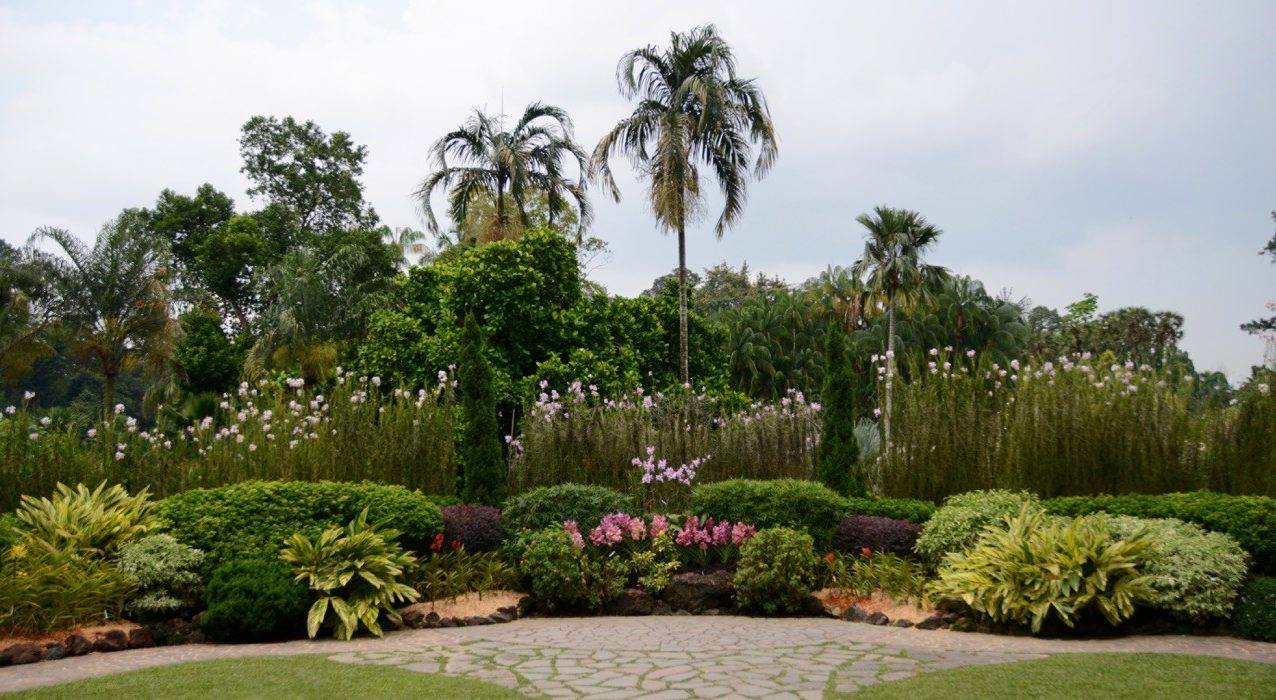
I started the day with a stroll through the Botanical Gardens. A few meters into the gardens and one has forgotten one is in a big city. After passing the orchid breeding house and the art museum there is not a building in sight, nor the sound of a vehicle.

There are a variety of large trees, plants and sculptures that can be best described by pictures. Passing through the gardens is a very tranquil experience there is a lot more to see here. 


At the other end of the garden I headed underground to the MRT. A short ride took me to the north south line. Deciding to try and get an overview of the city, and having found out this train line is some 6m above ground, I headed north. 

With a population of 5.7 million, of which approximately 2 million are foreigners, crammed into a mere  7797 sq km, I had imagined buildings to be crammed together with few open spaces sports grounds and few trees. Well I got that wrong – some really smart people must have planned this city. From the train I saw wide roads and large open spaces. Many tall apartment buildings seemed to be more tasteful than I have seen in other cities. The biggest surprise was the number of large trees along the roads surrounding apartments and commercial buildings. Someone has made a real effort to plant this place. 

As in most Asian countries washing hung from poles under many, but not all, apartment windows. Some places had pegs built into the building to put one’s pole on. In the last 17 years 75 maids, mainly from Indonesia, have fallen to their death hanging out washing or cleaning windows. 

There is a huge amount of construction going on around the island: new apartments, office complexes and infrastructure. 

Colour has been added to buildings to spruce them up. There are many water features and fountains along the way. 

The north line (red line) had taken me well up the island, then east, then south to Jurong East. The green line took me west to City Hall where I jumped back across to the red line  to Orchard Road and a stroll home.

A great way to see the city. 


 Saturday 11 March 2017

We took a stroll to Dempsey Hill to have breakfast at Jones the Grocers, a really nicely laid out place. The only problem is their poached eggs tasted like water! We probably won’t go back there again, especially after finding a place just down the road at Tanglin Mall that sells NZ free range eggs that taste like eggs. 

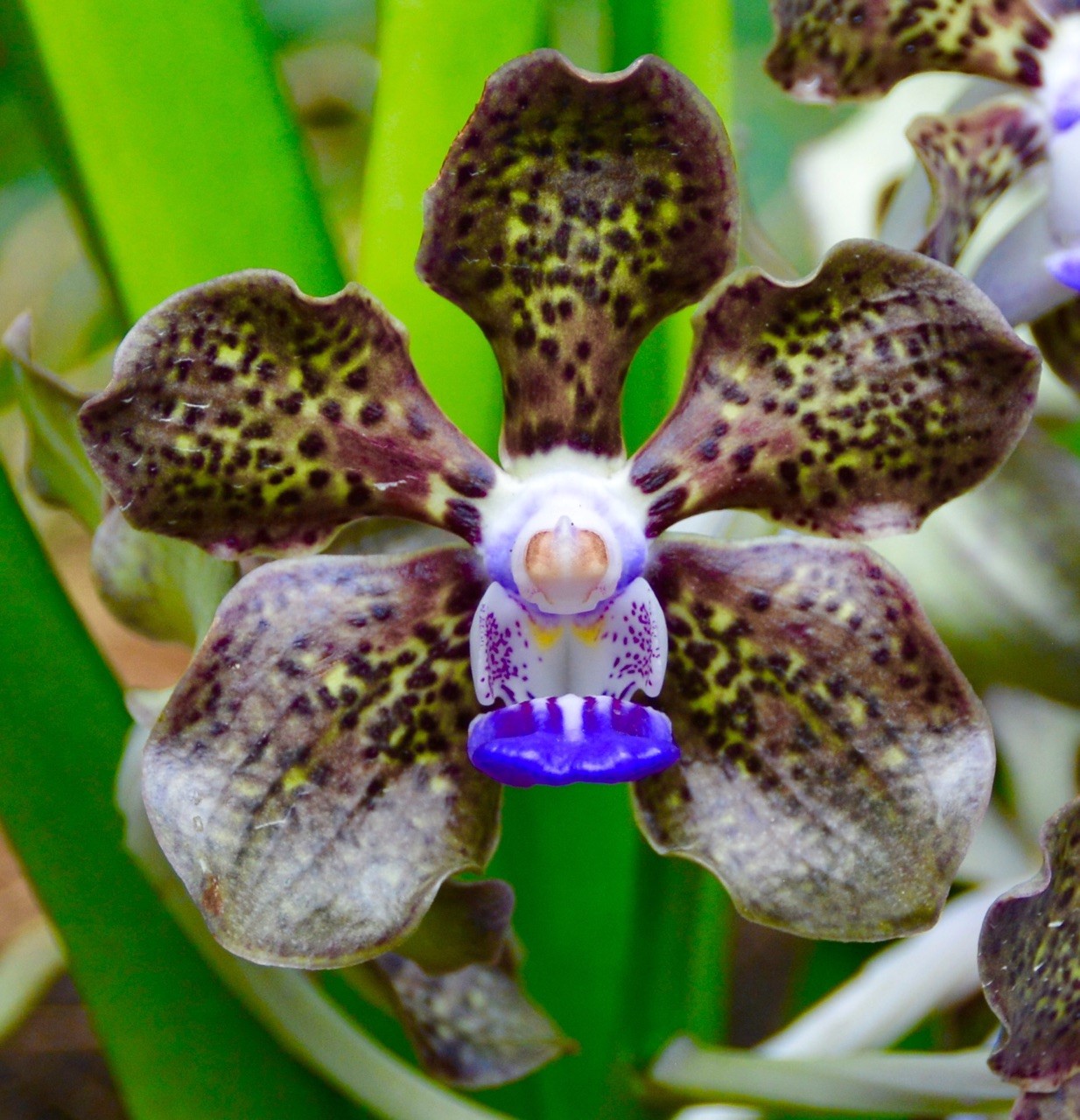
Later in the day we took a stroll back to the Botanic Gardens to check out the Orchid Garden. According to the signs ten percent of all plants are orchids – about 20 to 30 thousand species. The stunning range of flowers we saw there can only be described in pictures. 
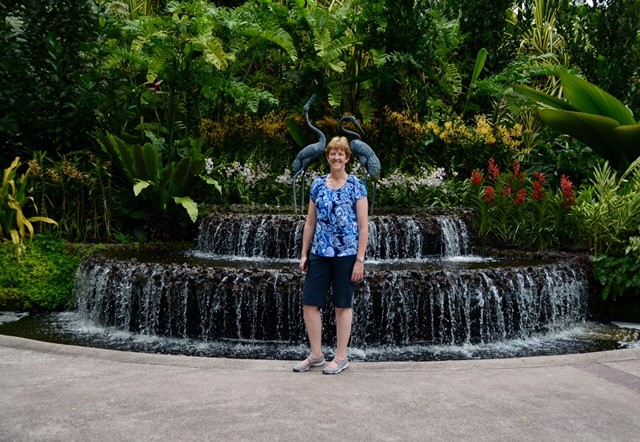
   

A stroll home through the rain forest completed a rather relaxing day. 


Monday 13 March 2017

I headed south along Tanglin road, passing a number of huge embassy buildings. The trees in the streets here mean one can walk and stay out of the hot sun. In my short time here I have learnt to carry a poncho and a dry bag for the camera as the heavens can open at any time.

Everywhere I have been so far the streets have been clean with not a piece of paper to be seen blowing around and no chewing gum stuck to the footpaths. Even the leaves rarely litter the ground. 

They also take things quite seriously here. In NZ we might have a very serious sign saying “Trespassers will be prosecuted!” Here is the Singapore version.

Soon I arrived at Telok Blangah Green and headed west into the park and up a hill, eventually coming across the Forest walk. This is a walkway that has been built through the forest at just below canopy height, which weaves its way 2 plus kms through the forest, eventually coming out at Hort Park. 

Along the way you look across the tree tops at buildings, some which look like containers stacked up, whilst also looking down into the bush below.

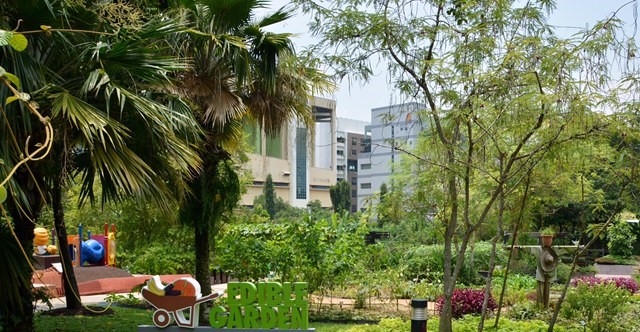
I continued west through Hort Park, where they have a range of gardens including a therapeutic one. I strolled through this one but it didn’t help my ‘by now a little tired’ knees feel any better!

Warning the next pic is not the result of a Colombian drug deal gone bad…

I think these guys must have been working hard or spent too long in the therapeutic garden. 

From there the path lead to Bukit Chanbu and another canopy walk. Part way along a sign points across the valley to where, when the Japanese invaded in 1942, a large military hospital stood. A doctor stood in front of the door with a white flag. The Japs bayoneted him and went on into the hospital and bayoneted the doctors and patients in the operating theatre before annihilating all but five people. Now we have Isis doing the same sort of thing.

At the end of the canopy walk the track took me alongside a lake and through a very tidy university to the Kent Ridge MRT station where I journeyed back to Orchard Road for the stroll home. 

A Stroll in the Stunning Abel Tasman National Park

Friday 6 January 2017

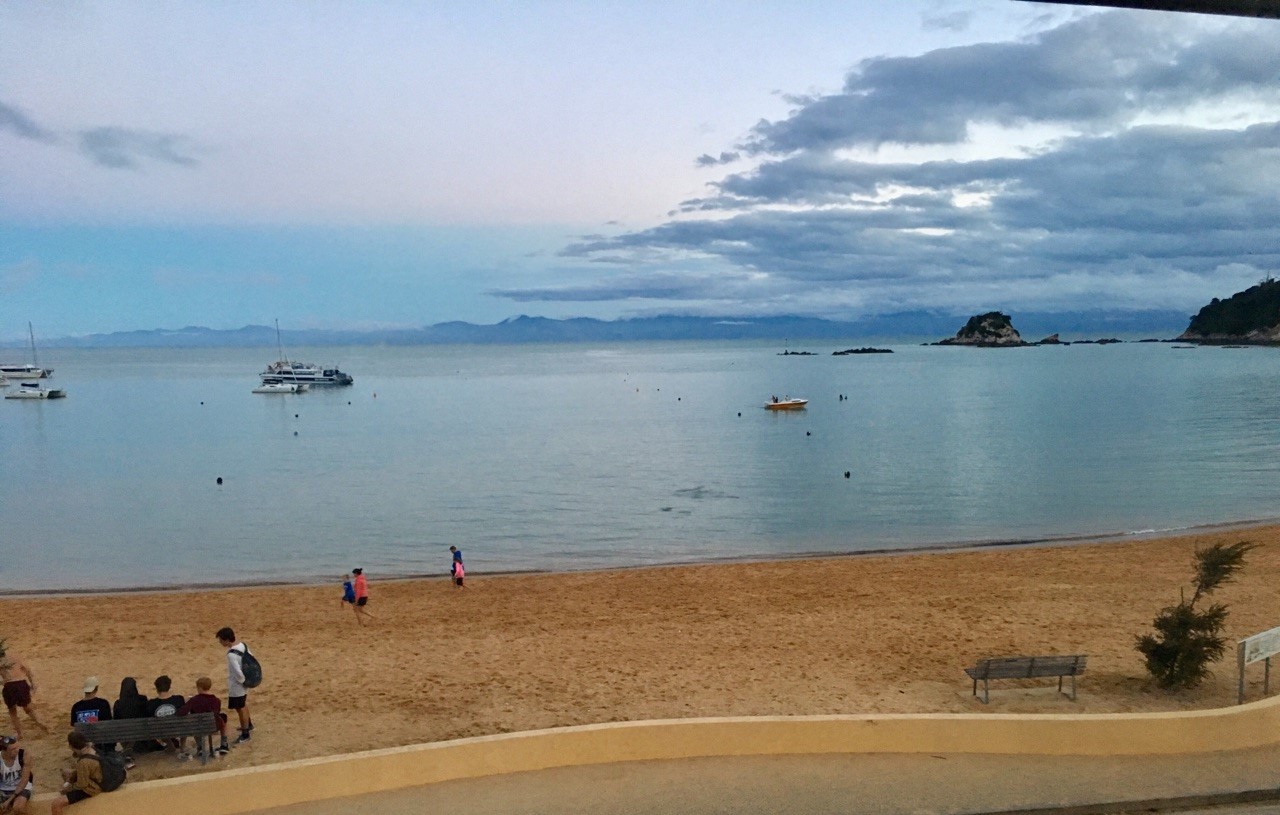
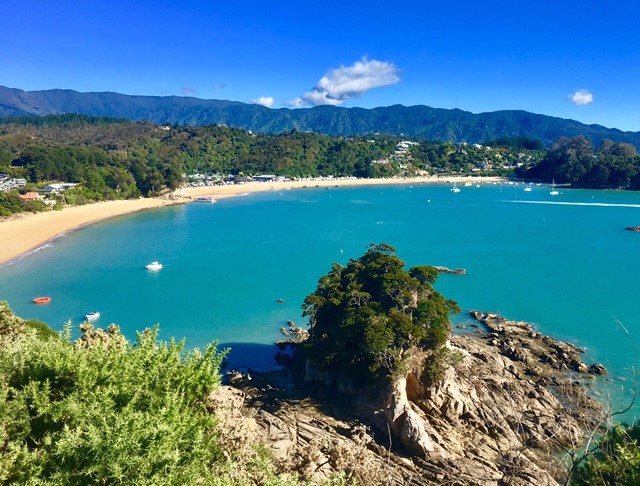
As Sylvia headed off to Singapore to hunt out an apartment for us I was very privileged to be invited to Kaiteriteri, in the north of the South Island, by Karl and Rachel and their son Sam. We stayed in an apartment overlooking the beach. Rachel’s extended family, mainly from Christchurch, were camped in one of the local camping grounds.

Karl and I spent part of the of the first couple of days walking some of the many mountain bike tracks and admiring the stunning scenery.

1 2 3 4 6

5  The post at the top of Cork Screw Track.

It was suggested that we should take a boat up the coast of the Abel Tasman National Park and walk part of the way back. A bit of research at the local boat kiosk and we came up with a plan: Take the boat all the way up the coast to Totaranui, then on the return trip disembark at Awaroa at 11am and walk the 24km down the track to Anchorage in time to catch the 3.45pm boat home.

7

Rachel went over later to get a ticket for her cousin Liz to be told that they had rescheduled us for a 5pm boat pick up as we couldn’t make it by 3.45pm. We boarded the shuttle boat at 8.45am on Friday morning. These catamarans are well set up with a bow gangway that is lowered directly onto the beach.

8

Heading up the coast we pulled in to have a look at Split Apple Rock.

9 10

We cruised up the coast with its many golden sand beaches; the colour apparently comes from rusting iron the the sand. We passed Adele Island (named after the Frenchman D’Urville’s wife) where a few seals basked on the rocks in the sun.

11

Several more stops and we reached Totaranui Bay and camp ground. This site has road access and was a farm until 1942 when it became part of the park.

12

We then headed back south to Awaroa Bay where we disembarked and began our stroll down the coast. The northern end of this bay was until recently in private hands and came up for sale. It was bought by the public and government and added to the park.

13 14

Peppers Lodge is located not far down the track with accommodation, cafe’s, bars and a pretty good looking vegetable garden – it’s a popular place.

15 16

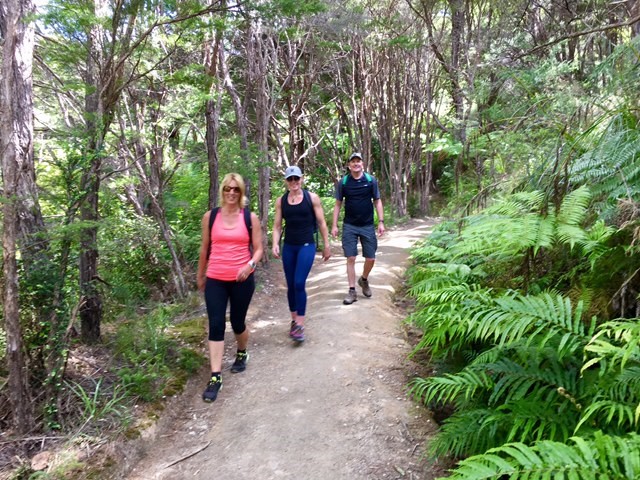
The track took us up over a ridge and down to Onetahuti Bay. The track is wide and well maintained with quite a few people going in both directions. The bush, mainly Manuka and ferns, is very pretty. Karl and Rachel (in pink) let me go ahead to take the odd pic.

17 18 19 20 21

Next was Tonga Bay. In 1907 granite was carved from the rock here and sent to Wellington and Nelson. The steps to the Nelson Cathedral came from here. All that remains is the winching block.

22 23 24

The track went over another ridge to Bark Bay where we stopped for a bit of lunch.

25 26

There were all sorts of people on the track, some in jandals or flash shoes, even hand bags had been brought along for the stroll. The beauty of this track is that one can get dropped off and picked up at many different places making for walks to suit all.

Another bit of up and down took us to Medlands Bay. The tide was still a little low so we could cross the inlet.

27

A weka grazed on the lawn at the hut, one of three huts along the track people can book to overnight in to break up the journey.

28

As we headed up the next ridge we looked down on some of the many kayakers present along the coast. Many people hire or bring there own kayaks to paddle the coast.

29

Falls River Swing Bridge was the next main attraction. At high tide shuttle boats can make it up here. Young seals are often seen chasing fish up the river.

30 32 33

Up over another ridge with more stunning views, we headed down to Torrent Bay.

34 35

When the tide is out the track goes across the estuary you can see in the background of the photo above. We were too late for that which meant an extra 4km stroll around the edge of the bay and over a few more ridges.

36

At 3.30pm we arrived at Anchorage just in time to catch the 3.35pm boat. When we arrived back at Kaiteriteri the lady at the kiosk was a little surprised to see us. We were sitting comfortably, beer in hand as the 5pm last boat of the day pulled in to drop its passengers.

37 38

This is just another  of New Zealand’s stunning places.

Bangkok and the Mandarin Oriental Hotel

Thursday 24 November 2016

Arriving late yesterday afternoon I made some enquiries about what to do in Bangkok. One suggestion was to take the public boat up the river. I went for a stroll around the local streets; as always I was intrigued by the jumble of power and telephone lines.

209

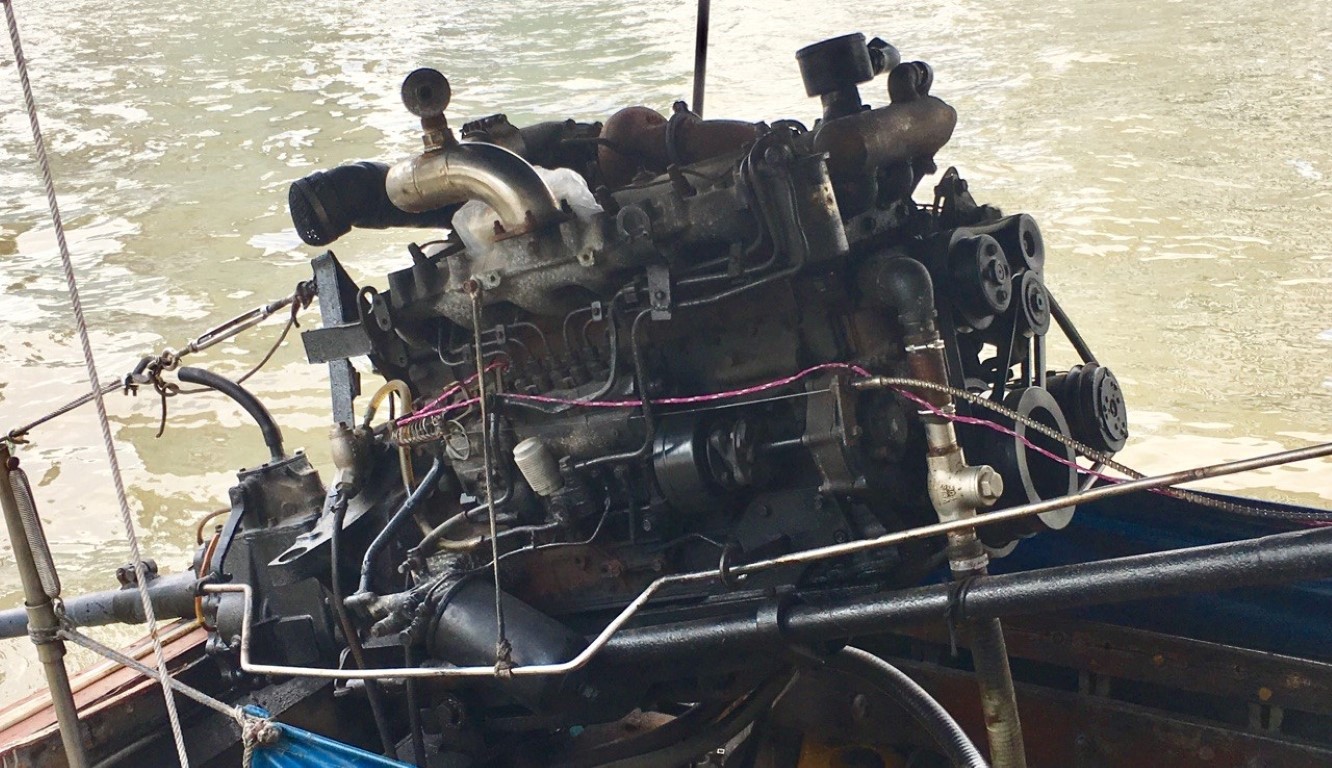
Returning to the Mandarin Oriental hotel there were a couple of dudes right outside the hotel entrance selling boat rides. After some negotiations I agreed to go thinking the rides were from the jetty at the end of the street. Not the case, I was bundled in a taxi and driven a couple of kms up river. The 1800 locals deal meant I had this long boat to myself for two hours. Powered by a big diesel motor with a straight drive prop off we went.

210 211

The Chao Phraya River runs right through Bangkok. For many years it was the city’s only access with all cargo coming in by boat. The river today is still busy with passenger boats and cargo barges.

212 214

Progress was slow going up the river.  It was quite choppy from other boats and a strong breeze. Some 30 minutes up river opposite the Grand palace, we turned left into a canal. The water is very dirty with rubbish often floating in it. The canal is quite a contrast with mostly run down houses and the odd business intermingled with temples all in good condition with bright colours and lots of gold paint.

215 216 217 218 219 220 221

Lots of other boats cruised the canal. At one point we stopped alongside a very small boat full of drinks and souvenirs; a lady tried in vain to sell some of it to me. Alongside the bank fish swarmed like bees in a feeding frenzy.

222

Next was a lock where a dozen or so boats huddled together, big motors idling away as the water rose. Surprisingly when the lock opened there was little smoke as the engines revved and the boats moved off.

223 224

Back on the river we stopped at Wat Arun Rajwararam, a Buddhist temple, consisting of a main stupa, which is at present under repair.  I had thirty minutes to look around. From a distance this looks quite spectacular but up close the detail is a little rough. It is surrounded by a number of smaller buildings, including a worship hall and a number of buildings containing gold Buddhas with the names of deceased underneath.

225 226 227 228 229 230 231

We headed back down river with the boat dropping me back at the hotel.

A trip to the hotel’s well-equipped gym, a massage, and  later a visit to the hotel’s cigar bar made for a relaxing evening.

232

Later I got chatting to a chap called Eric, his wife and daughter from Denmark. Eric had hunted a lot in Africa so we had a good yarn.


Friday 25 November 2016 – The Mandarin Oriental Hotel

I was somewhat intrigued by this place, especially after chatting to a few of the very attentive staff. A number I spoke to had worked here over twenty years. I set out to find out a little more and was taken on a guided tour by Benjamin, the Public Relations Executive.

We started in the original part of the hotel.

233 234

This was first established as a boarding house for seamen on a site nearby around 1860 by Captain James White.  In 1863 he drowned crossing the river, which in those days was the only access to the city.

Two Americans took over turning it into the first real hotel in Bangkok, calling it the Oriental hotel. In 1865 it was destroyed by fire along with 68 other buildings.

A couple of Danish captains then opened a replacement Oriental Hotel for a few years I think on another site. Some of the history is a little vague.

The oldest part of the existing hotel now is known as the Author’s room and was opened in 1876. This part of the hotel is stunning with rooms dedicated to a number of authors including Somerset Maugham and Noel Coward who both spent a fair bit of time here.

238 239

A group of expats one from NZ, two from Australia and one from the US, were enjoying a high tea in one of the lounges.

235

The next room we visited is dedicated to Ankana Kalantananda. She joined the hotel in 1947 retiring over sixty years later in her eighties. This is her office, which now well into her nineties she still visits on a weekly basis. In her early days hot water was bucketed to the rooms.

236 237

The Oriental employs around twelve hundred people to service its guests occupying the 368 rooms. The average length of service is fourteen years.

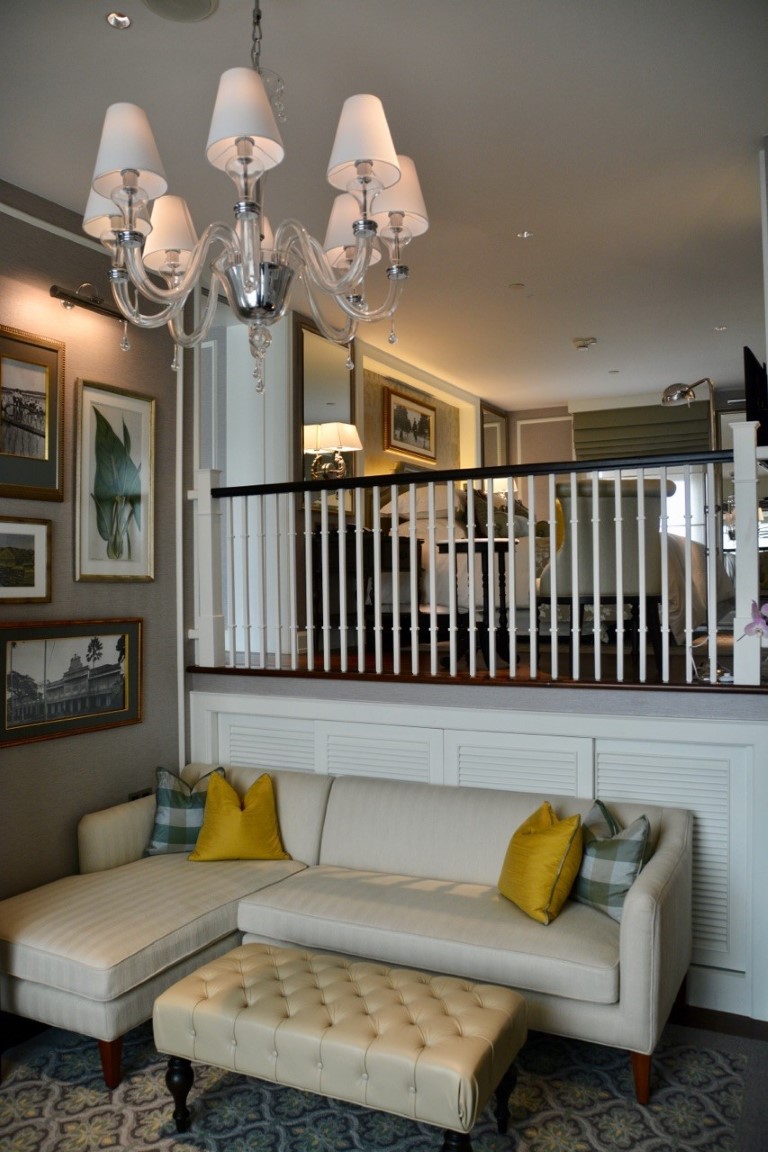
Next we headed into the Garden Wing. Situated at the back of the original hotel this 10-storey wing built in 1958 has split level suites overlooking the river. Recently refurbished these are rather nice. Many guests come here year after year, book the same suite and just hang out around the hotel.

  240 241 242

The main part of the hotel, the River Wing, with over three hundred rooms, was built in 1972. Each floor has a manager who sits at a desk near the lift greeting each guest. It offers great views over the river.

243 244

The huge lobby always has staff standing around to great people as they walk past.

245 246 247 253

There is a cigar bar, a lap pool and restaurants on the river bank serving varying cuisines.

248 249

At night all the boats on the river are well decorated.

251 252

Across the river is Spa, gym, conference rooms (which is where Sylvia has been spending her time) and a Thai restaurant. Two boats shuttle guests back and forth across the river. The gym is one of the best equipped hotel gyms I have visited with really helpful and attentive staff. They also run a cooking school at the restaurant.

254 255 256 257 258

We can highly recommend the Oriental Bangkok as a great place to stay.


Two Wet Days in Montepellier

Monday 21 November 2016

Established in 985, Montpellier is one of the few cities in France without a Roman heritage and one of the few in Southern France without a Greek foundation. With around two hundred and sixty thousand people, one third of whom are students, it is the eighth largest city in France.

I strolled to the main square where stalls have been set up for Christmas.

171 172 173

…past the Opera Comedia

175

…and through some narrow streets full of bars and restaurants.

176 177

At the edge of the old city is the Pallas De Justice and the Arc De Triomphe with a wide Boulevard leading to the Chateau D’Eau and a statue of Louis XIV on horseback.

179 180

Under this was a reservoir at the end of the Saint Clement Aqueduct built in the 18th century.

181

I followed this to the other end where the original reservoir had been replaced by a water tower in the 1940s.

182 183

Heading west I followed a rather unique tramline with grass growing across the tracks and rather colourful trams transporting people around the city.

184 185

Continuing west along the tramline I discovered the city is well laid out with lots of nice buildings, old and new.

186 187

I was rather surprised when I came across what looked like a car-wrecking yard full of cars and old caravans. It turned out to be a place where people are actually living. I presume this was a gypsy commune.

188 189

Apparently the word gypsy came about when these people moved to England and the English thought they were from Egypt – hence the name. One view is that they were Romani, part of the military in Northern India. When they were invaded by Sultan Mahmud Ghaznavi and these soldiers were defeated, they moved west with their families into the Byzantine Empire between AD 1000 and 1030.

The tram line then headed north and east back into the city.

190 191 192 193 194 195

It has been a good day out in spite of the weather and a great way to see this rather nice city.


Tuesday, 22 November 2016

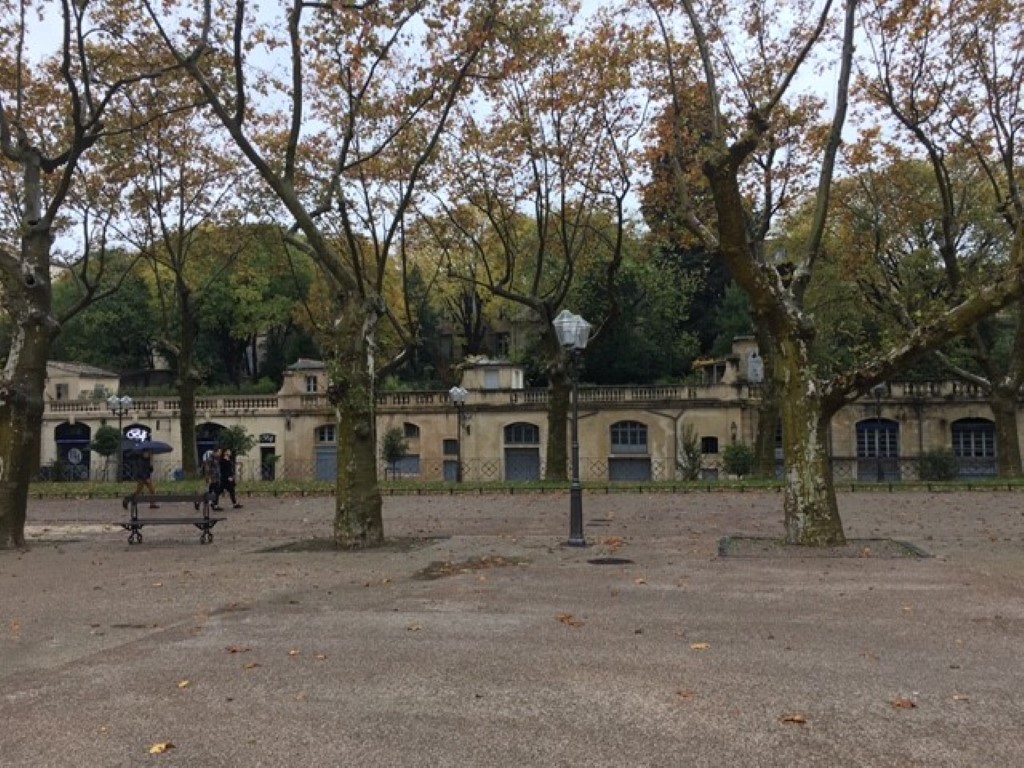
I headed east out of the hotel into heavy rain with thunder and lightening. Antigone, a 36 ha site to the east of the city, was originally the Joffre Barracks. In the late 70s it was redeveloped and with huge neoclassical structures it is very much in keeping with the old city. There is a Boulevard through the centre that leads down to the river Lez.

196 197 198 199
200 201 202 203

This style of building continues beyond the river with the large hotels and shopping complexes.

204

I headed back west to the main square for some lunch. Christmas decorations are being erected in the square; health and safety can’t be a big deal here as scaffolding is being erected with no safety harnesses.

205 206 207

Walking back through the shopping centre where security guards search bags as people enter, a beggar still kneels outside in the same place I saw him yesterday, today no doubt collecting more rain in his  paper cup than money.

208

I picked up Sylvia from the Royal Canin HQ at Aimargues; from there we drove to Marseilles to catch our flight via Frankfurt to Bangkok.

Madrid – My Favourite City

Wednesday 16 November 2016

Sylvia’s colleague Hannah had studied in Madrid a few years ago. She very kindly gave me a list of places to go.

We are staying at Hortaleza, about 10km from the city centre. It’s a stunning day with the only mark in the clear blue sky a short vapour trail. I decided rather than catch the metro a stroll would be nice as it’s always a good way to get to know a new city. Wow this is a nice town with clean tidy streets and lots of statues, parks and fountains along the way.

62 63 61

Heading for Parque De l’Oeste I spotted a tall tower sticking up above the buildings. It turned out to be across the road from the park and near the Arch of Remembrance.

64

I paid the three Euros and took the lift to the top. With expansive views over the city  and surrounding countryside it was just a pity the glass was not clean.

65 66 67 68

Behind the tower is the Museum of the Americas with a range of artifacts from most parts of the once Spanish occupied Americas.

70

I enjoyed a stroll through the Parque with its concrete-bottom-stream, ponds, statues and rather large rose garden.

72 73 74 75

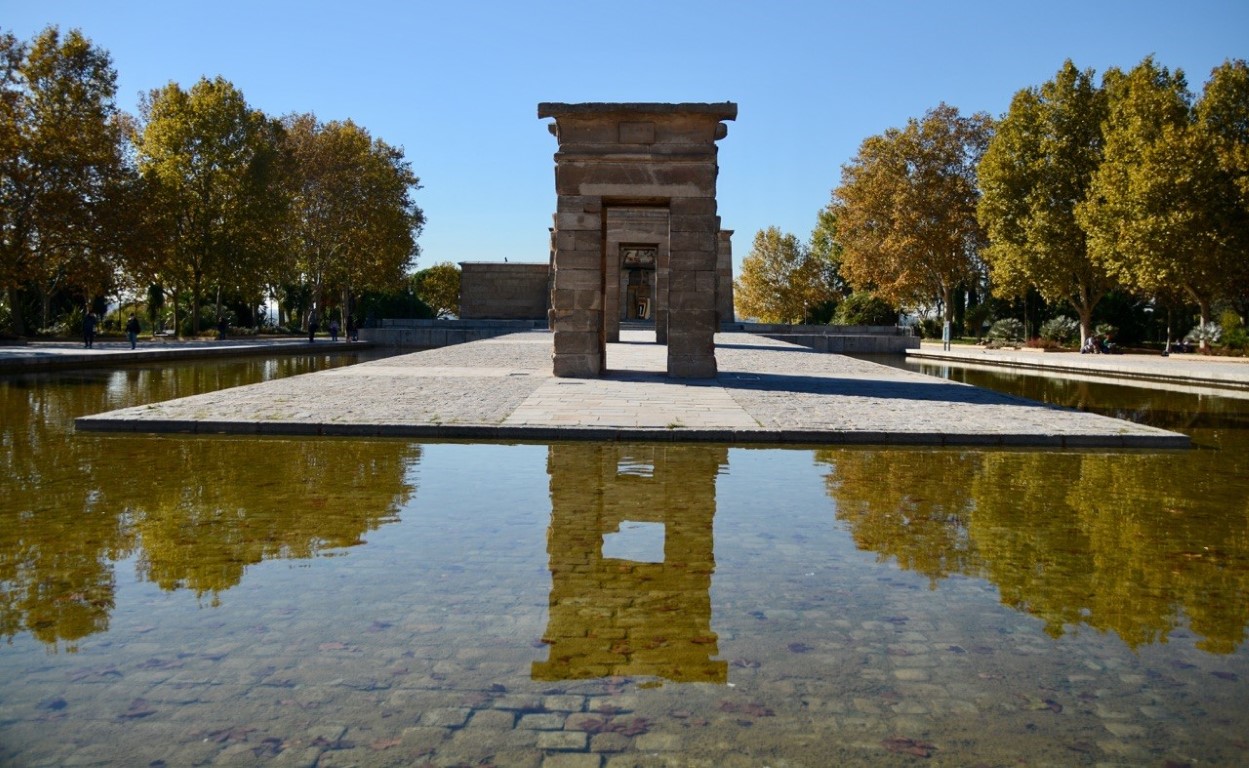
Passing some old gun emplacements I eventually came across Temple Debod. This was given to Spain by Egypt. Originally built in 200BC it was dismantled, shipped to Spain, railed to Madrid and rebuilt in 1970. Probably fortunately it is not very big.

76 77

The day over I caught the easy-to-navigate metro back to a station not far from the hotel.

78


Thursday 17 November 2016

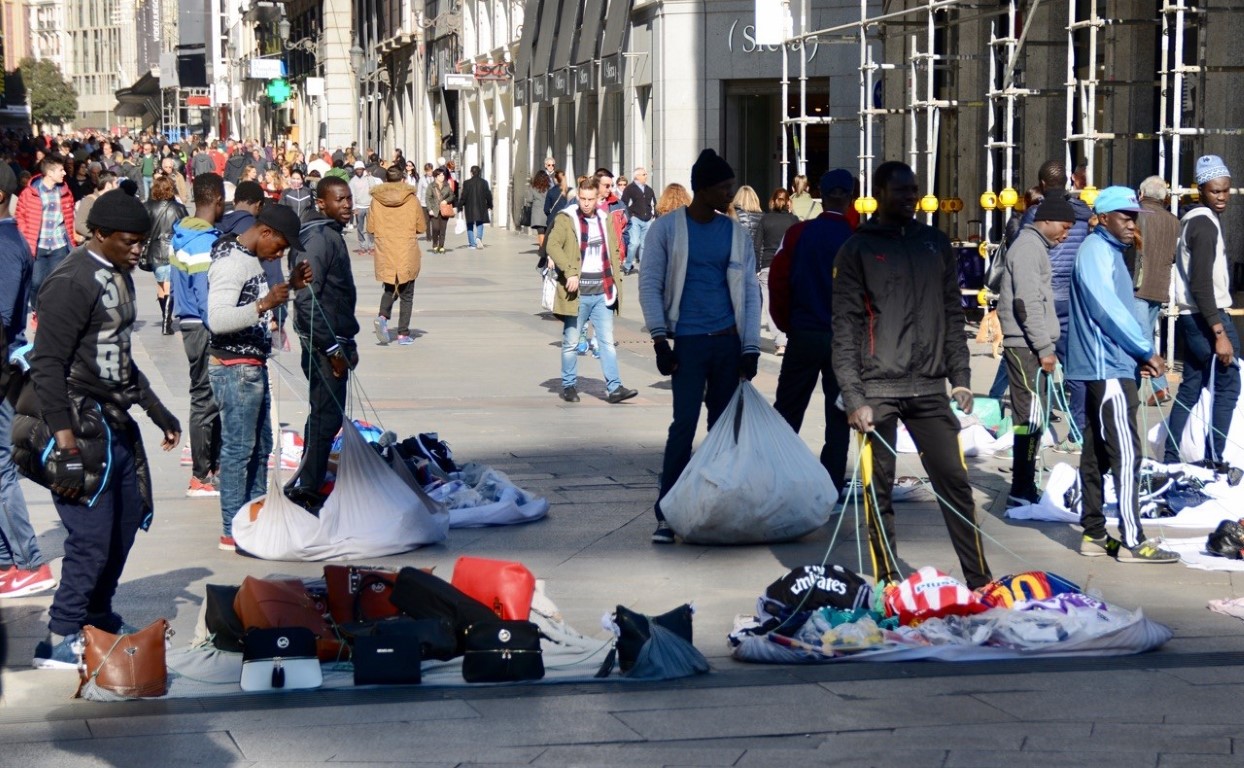
Getting off the metro at Opera I took a stroll around some local streets. This place is stunning with lots of squares linked by narrow streets, lined with beautiful buildings.  Lots of people are out and about, street vendors unpack their swags ready for a day’s trade.

79  8180

First stop of the day was the Royal Palace of Madrid. Like a lot of these places it has been around for hundreds of years, damaged in battles and destroyed by fire. Apparently it achieved its present state in the seventeen hundreds.

Housed in the southwest corner of the large courtyard is the armoury. This holds a large collection of armour, a lot on mannequins mounted on horseback. There is also a range of old weapons.  Unfortunately I discovered no pics allowed. I really must learn to read signs”

83 84 85

Moving into the main building I was blown away by the painted ceilings, most surrounded by gold leaf. Large ornate chandeliers hang from the ceilings in each of the large rooms.

 87  88

Passageways surround a large internal courtyard.

90 91

Covering over 130,000 square meters and with over three thousand rooms there is a lot we public don’t get to see. This place definitely gets first prize for its ceilings.

To the south is Cathedral Santa Maria, also a huge building.

92 93

The area surrounding the palace is like a well kept garden with restaurants in the buildings surrounding it.

94

I enjoyed a wine in the sun before heading across town to the Museo  Nacional de El Parado. After paying my 19 euro entry fee I soon came to realise this was an Art Museum! Most of the paintings were of the type you see in churches around Europe. Apparently most of these type of paintings were commissioned by the local bishops. By the number of paintings in this huge building there are obviously way more paintings than churches to put them in. In case you haven’t worked it out I am not really a fan of this kind of art.

This place was also a no picture place, or so I found out when I raised my camera to take a picture of the ornate ceiling. A woman sparked up as she leapt from the shadows with a string of words, none of which I understood, but I certainly got the message “no photos”

On the way to the local metro station I passed the Puerta de Alcalá. Opened in 1778 this is one of the older post-Roman arches in Europe.


Friday 18 November 2016

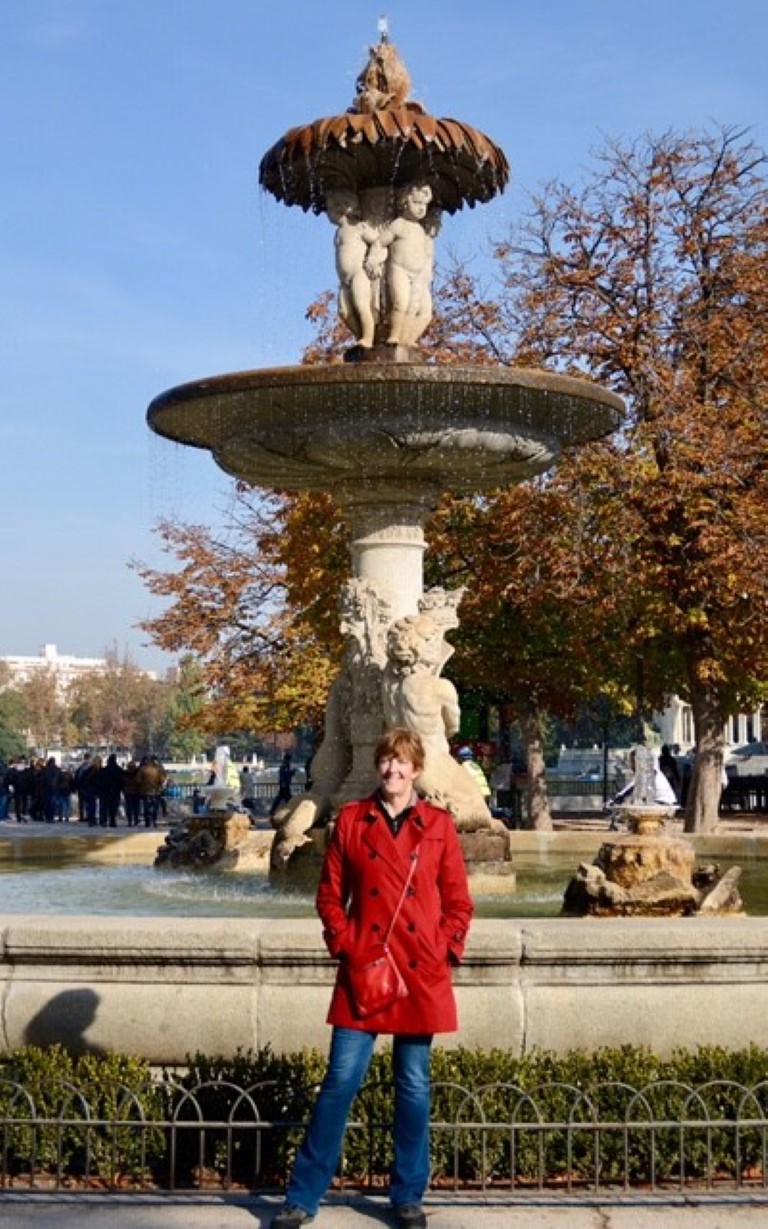
Having strolled past what looked like a large park yesterday I decided to take a look. Parque Del Retiro is a 1.4kmsq park that has been around since the 1500s. It was passed to the public in 1868 around the time of the overthrow of Queen Isabella.

96

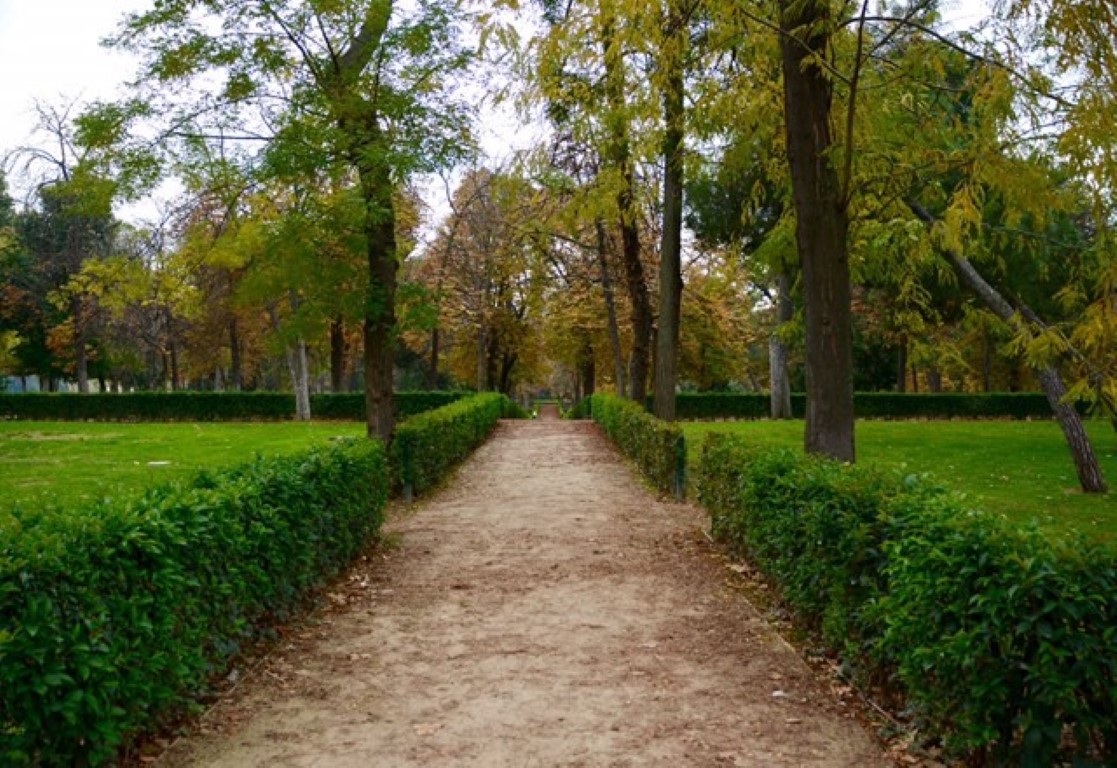
Even as one walks in the main gate the scenery is stunning. With autumn upon us the deciduous trees are displaying an array of golden, red and brown colours.

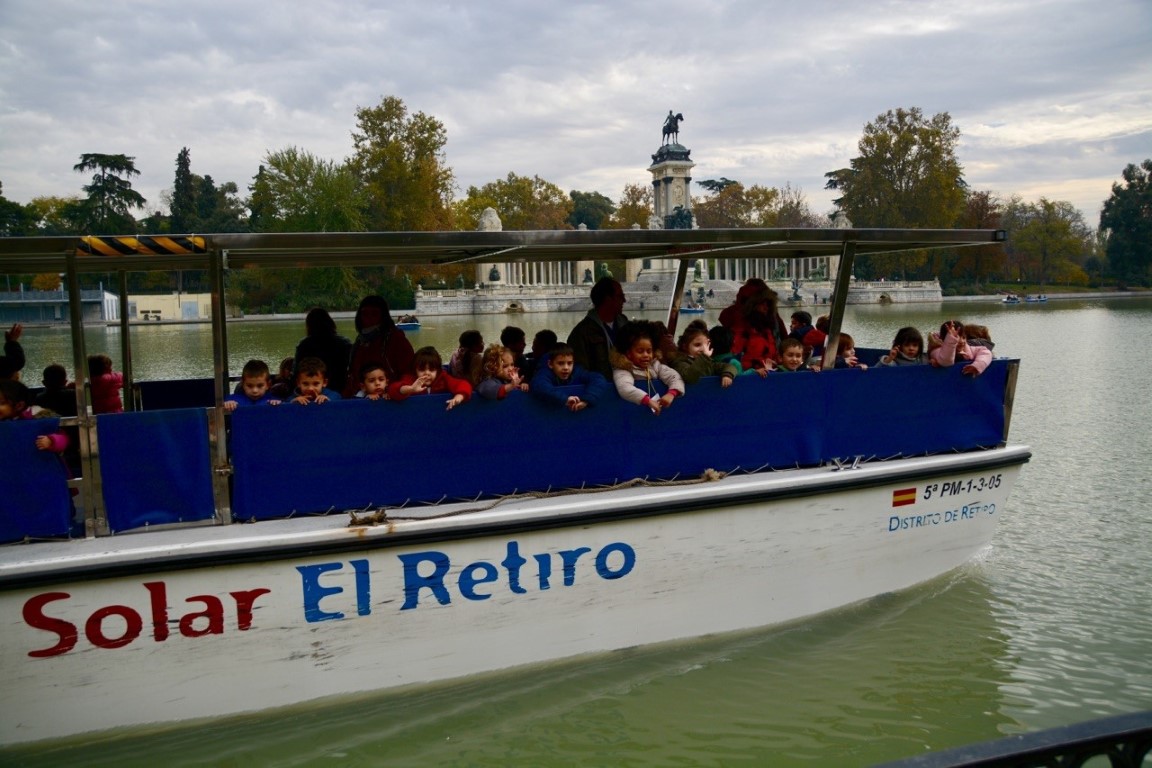
Not far into the park is a lake backed by a huge statue, the Monument to Alfonso XII, a king that ruled from 1857-1885. Opened in 1922 it’s pretty impressive as it sits with a commanding view over the lake. Atop the 30m high centrepiece sits the king.

  99 100 101 98

Topless mermaids sit on lobsters with turtles guarding the perimeter. Come to think of it every mermaid statue I have ever seen is topless. Lions led by boys guard the land side of the monument.

There is a lot going on around the lake: people row boats; a bunch of school children scream and laugh as a boat takes them for a spin on the lake.

102 103 104

Mounted police patrol the grounds. There is a boulevard of kings cast in stone “oops one queen as well” dating back to 612 ad.

105 106 107 108

Next stop was the Museo Naval de Madrid. This is really well done walking one through the Spanish naval history from the early 1400s. It describes how Spain was the first nation to create an Empire. Its navy dominated the oceans, trading from the Philippines to the Americas until Lord Nelson gave them a good spanking at Trafalgar. Dissected model ships give one an insight to the cargo and people spaces below deck.

111 112

There are exhibits from most eras. One display case holds a number of weapons from the early Philippines.

113

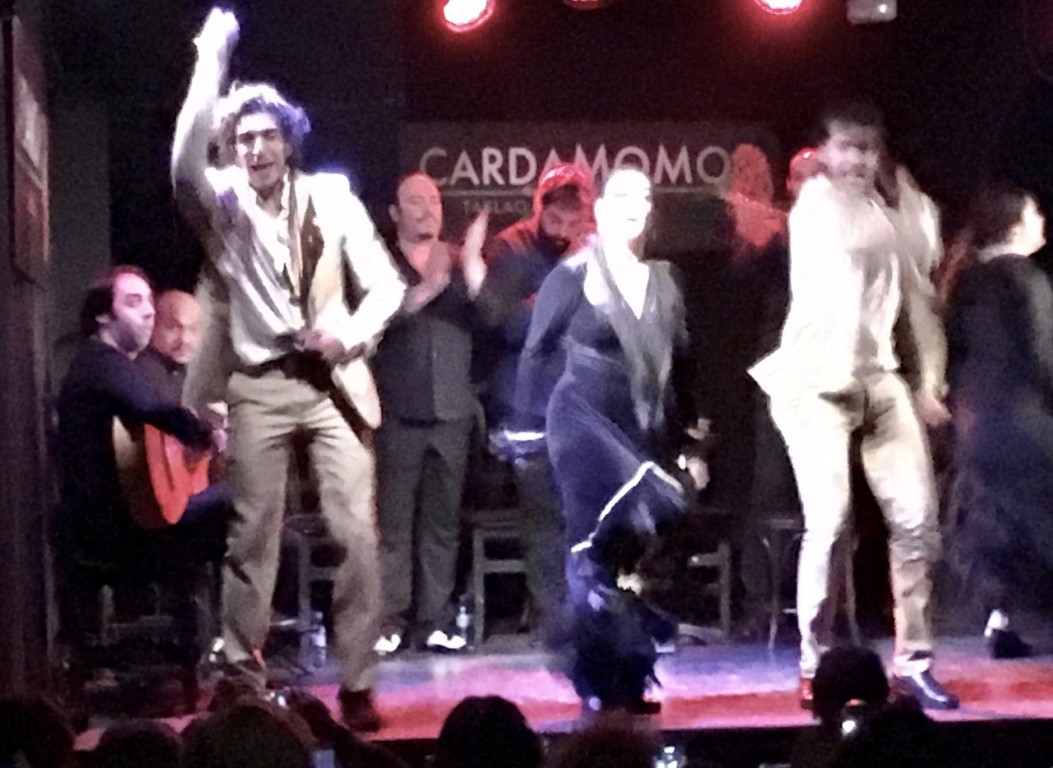
A stroll around the town eventually lead me to the Hotel Iberostar to meet Sylvia. Sylvia had booked us into a Flamenco show. Funny I always thought it was Flamingo dancing – apparently flamingo’s don’t dance!!

After a very nice Citadelle Gin and Tonic at a terrace bar we headed for the show. About eighty people packed into this venue, most on terraced seating with a good view six or seven musicians and dancers crammed onto the small stage. The dancing seemed rather aggressive with lots of foot stomping. To me it was like an aggressive version of tap dancing. Fortunately it only went for an hour, after which we strolled the nearby streets.

114 115

Many magnificent buildings and fountains are well lit at night.

116 117 118 120


Saturday 19 November 2016

We took a short stroll back to Parque Del Retiro to enlighten Sylvia to its beauty.

136

After looking at the lake and the boulevard we wandered down the south end where we discovered the Palacio de Cristal. Built some time ago it is now a place where people go and listen to sounds. Today it was a ship breaking through ice.

137 139

While looking across the park at the palace a couple of woman asked us to take their photo. We chatted for a little while and it turned out one of them has been reading our blog.

As we wandered around we came across Palacio de Velazquez, a nice looking Turkish-style building hosting an art exhibition that neither of us took a liking to.

From here we strolled northwest through the town. This city is itself like an architectural museum. Even apartment buildings, four or five stories high with their wrought iron balconies have a nice style about them.

140

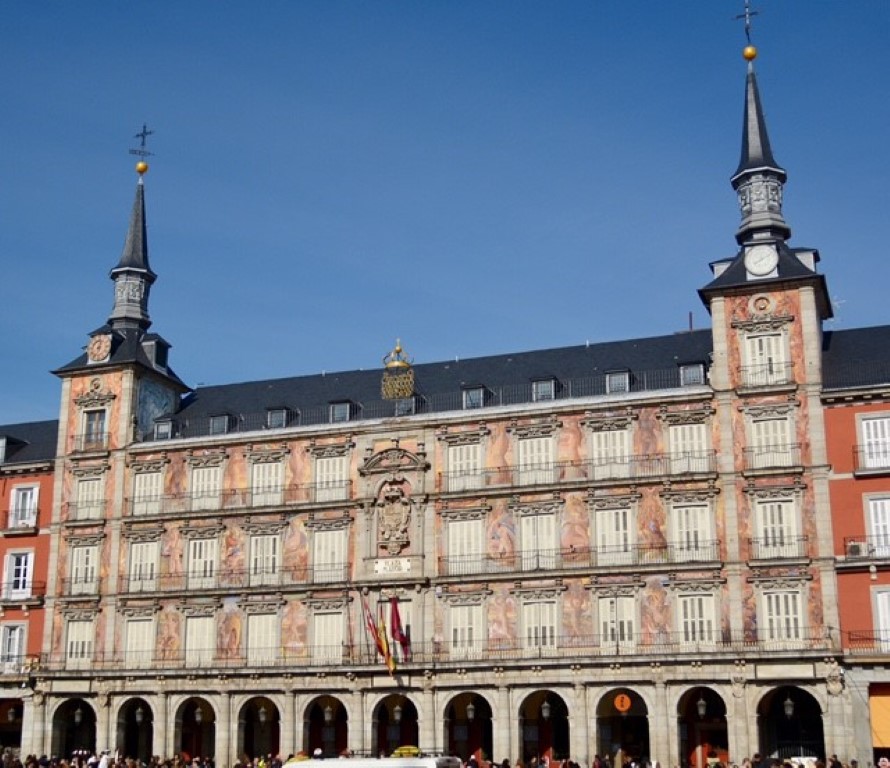
We wandered through the Plaza Mayor a large square surrounded by more well designed buildings.

141

We came across Mercado de San Miguel, a market packed with food, booze and hundreds of people.

142 144 143 146

Arriving at the Palace square we stopped for a drink at an outdoor bar overlooking this magnificent area hosting fountains, gardens and more statues of kings. In front of the palace they had the changing of the guard.

147 148 149

We took a look inside the Almudena Cathedral. This one is relatively new; building started in 1883 and it only took a hundred and ten years to build. The pope rocked up and consecrated it in 1993.

150 152 151

From here we strolled back across town with a stop at the milk bottle shop (named by me for its ceiling) where Sylvia bought a frock.

153 154 156 157 158 160 161 162 163 164

Eventually we arrived at the Museo National Arqueologico. The first part of this museum walked us through the evolution of man from 120,000,000 years ago until the evolution of us homo sapiens some 200,000 years ago. Apparently we haven’t changed much in the last 50,000 years.

Bone fragments of a little pre man guy a few million years old had been pieced together.

165

It appears that man didn’t start getting teeth cavities until he started consuming grain and pulses fifty odd thousand years ago.

Early man coming out of Africa created large settlements in Iberia (now Spain and Portugal).

There is an Egyptian section with lots of mummies lying around, as well as a large Ancient Greek section and many other interesting exhibits filling this large old building.

167 168

Sylvia was amused by the large footpath frog on our stroll home.

169 170

In the evening we enjoyed a meat platter at one of the many local eateries. Apparently Madrid has more bars and restaurants per head of population than any other European city. At night thousands of people are on the streets enjoying the night and vibe. We didn’t witness any yelling and screaming or violence as often seen on a Friday night in Auckland.


Sunday 20 November 2016

We had breakfast at the Westin Palace, a rather nice hotel nearby.

121

We then visited the Palacio de Comunicaciones. This was originally the post office, telegraph and telephone centre and was built in 1904 with steel columns  to allow big spaces, open to the ceiling. Now an exhibition space, it is well worth a look. Unfortunately the observation tower was closed today because of bad weather.

122 125 127 128

Around noon we took a taxi to Atocha Station to catch the fast train to Montpellier. We got to the first intersection to be turned back by the police. Large areas of the city seemed to be cordoned off. We don’t know why. Eventually the rather upset taxi driver got us to the station by circling around the city.The station has a Memorial rain forest in honour of 191 killed in the March 2004 train bombings in Madrid.

129

Soon we were speeding across the arid Spanish countryside, at times just over 300kph – a little faster than Japan’s bullet train.

 131 132 133

It’s Autumn in Brussels

Monday 14 November 2016

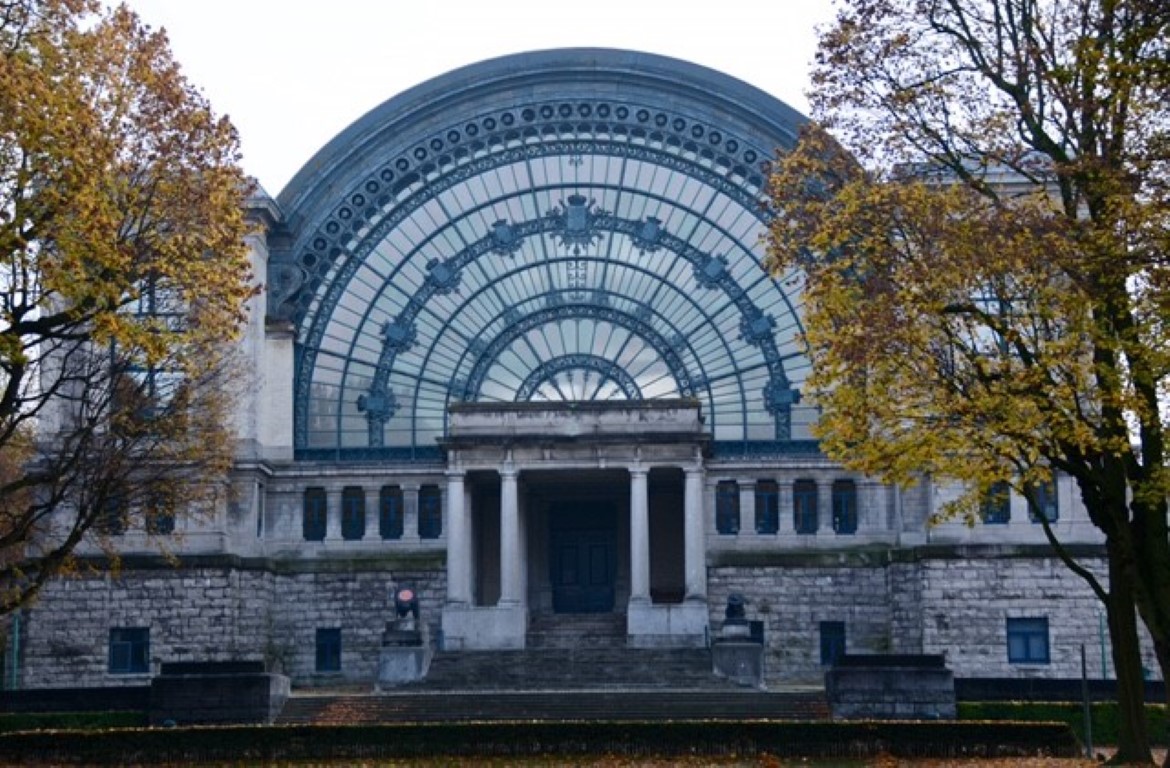
After a relaxing Sunday in DC we caught the overnight flight to Brussels. Having spotted a huge arch from the taxi on the way into town I decided to go and investigate. After short stroll from the hotel I came across Parc Cinquantenaire, or “Park of the Fiftieth Anniversary”

Most buildings of the U-shaped complex which dominate the park were commissioned by the Belgian government under the patronage of King Leopold II for the 1880 National Exhibition commemorating the fiftieth anniversary of Belgian independence. The centrepiece triumphal arch was erected in 1905 replacing a previous temporary version of the arcade by Gédéon Bordiau. The structures were built in iron, glass and stone, symbolising the economic and industrial performance of Belgium. The surrounding 30-hectare park esplanade was full of picturesque gardens, ponds and waterfalls. It housed several trade fairs, exhibitions and festivals at the beginning of the century. In 1930 the government decided to reserve Cinquantenaire for use as a leisure park. (Thanks Wikipedia)

9 10 11 12 13 14 15 16 17

Just past the arch on the right is a car museum and on the left a military museum which is closed Monday. The car museum was established in the 1980s with the initial exhibits coming from a private collection. It has an amazing collection of vehicles dating from the late 1800s. Included is a replica of the Jamais Contente 1889 electric car, the first car capable of 100kph. Apparently around that time there was some debate as to whether cars would be combustion or electric. Just imagine the visual pollution of power lines if they had gone electric!!

20  1907 Cadillac K

19 1900 Aster Threewheeler

19a Fiat 514 MM

22 1924 Bugatti 140kph

21 1927 Ford Model T

24 1926 Rolls Royce Phantom 1

25 27 26

I headed east from there looking back at the arch and past a fountain to the local metro.

28 29

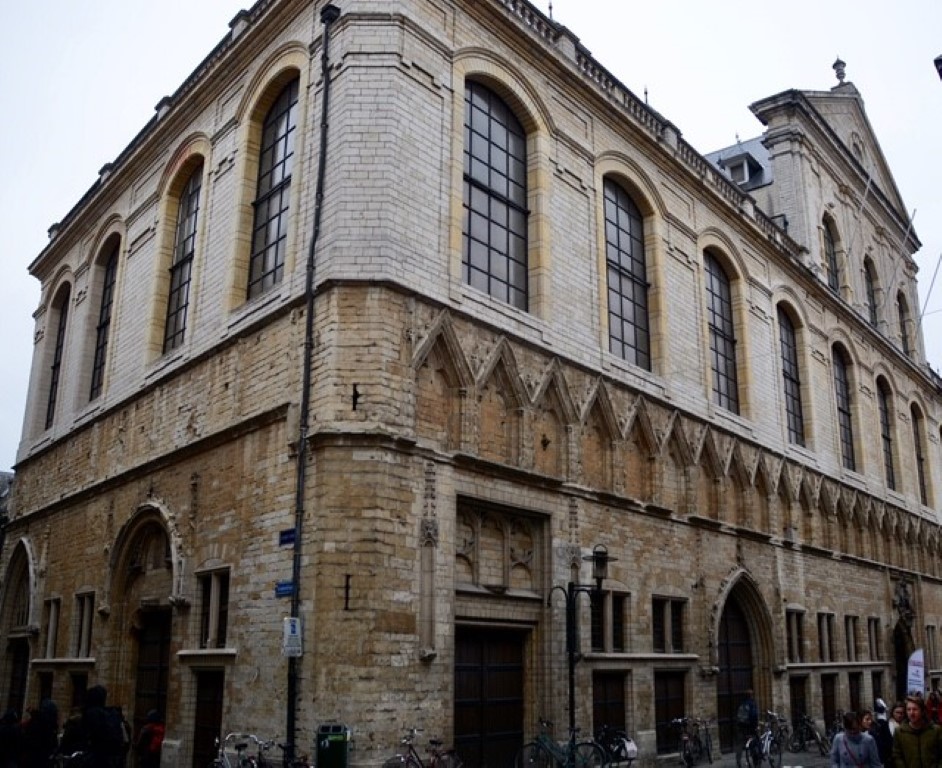
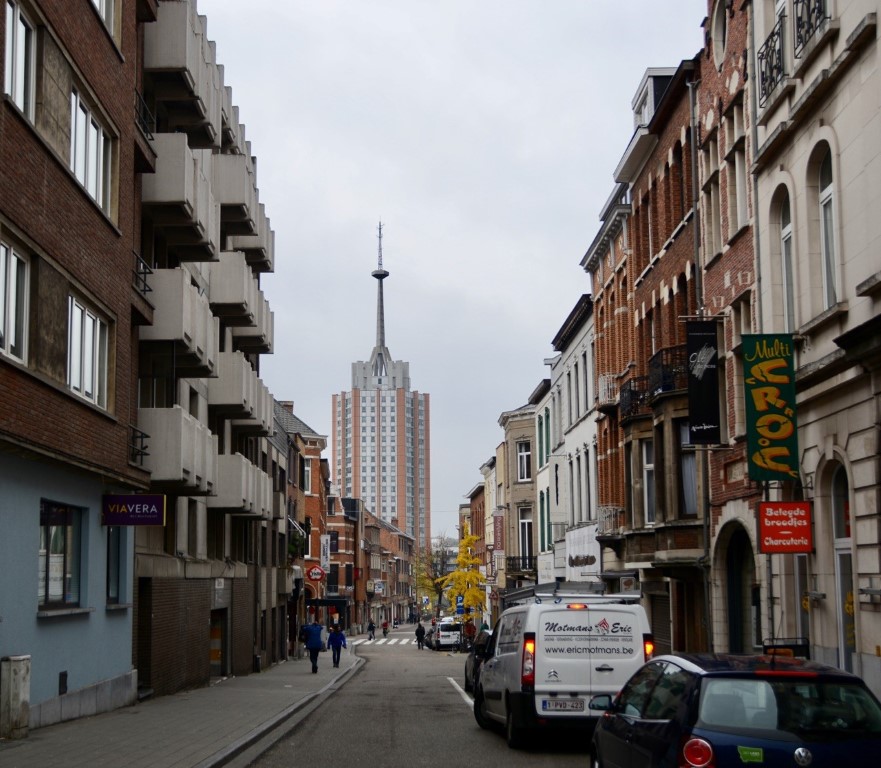
On the flight from DC a lady sitting next to had said Leuven, 20kms east of Brussels, was well worth a visit. I couldn’t work out how to catch a train from Merode so I caught the metro back to Madi then the IC (Inter city) train from there. At the end of the line I arrived in this lovely town- the home of Stella Artois. Badly damaged during both world wars it has been rebuilt in its original form. Two massive churches stand side by side in the centre with many others dotted around the town.

30 31

Even a new hotel has been built in a gothic style.

32

A stroll through to the other side of the town revealed some old tax collecting gates.

33

Some strange looking pieces of art drifted in a local creek

34

The university was in a very old building with a large abandoned church across the road.

35 36

A very old ruin sat in a nice park abandoned for hundreds of years. Little parks are prominent throughout the town.

36a 37 38 39 40

The lady on the plane was right it is a lovely town. It is truly outstanding the way these people are able to rebuild their city’s and towns to their original state in spite of the devastation they suffered.


Tuesday 15 November 2016

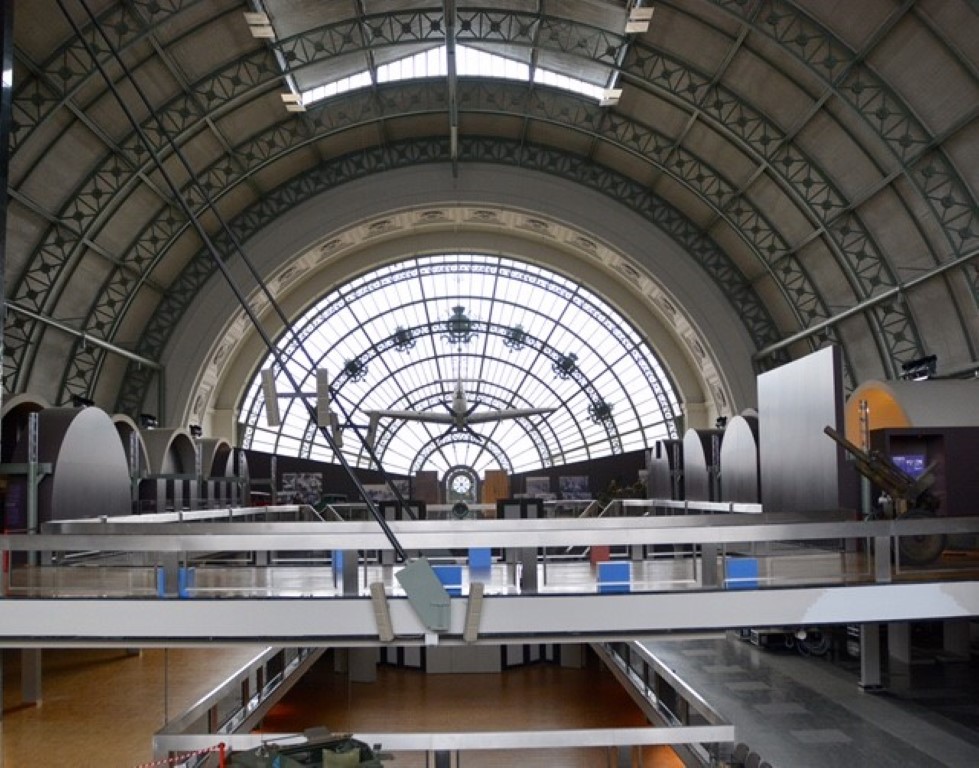
We woke to a foggy, wet day so I jumped on the metro back to the arch to check out the war museum. Established in 1880 this place houses an array of military artifacts. I headed first into the aviation pavilion. There are so many aircraft in this huge area that some are stacked up on poles or suspended on wires.

41 42 43

There is a section on airships with some burnt out cockpits on display. Its a must visit for one with an interest in aviation.

The next section on early European military is rather cluttered as though they have tried to cram in every exhibit they have from the era.

44 45

At the back is an exhibition on WWII with bunkers and command centres set up. A German V1 rocket is suspended in the centre of the huge pavilion.

47 48 46

That last hall contains a really well done section on the evolution of firearms. Each cabinet has a detailed description of how the guns inside evolved. From early flintlocks with a range of two hundred metres and a rate of fire of two to three rounds a minute, subject to fouling and misfires, to the invention of cartridge guns with a range in excess of a thousand meters and a rate of fire exceeding 20 rounds a minute.

Belgium has been a leader in the evolution of small arms over many centuries. Many innovations were first used by hunters before being adapted by the military.

49 50

One interesting piece is the volley gun. Although used in various forms back as far as the sixteenth century, in 1867 a Belgium gunsmith constructed a volley gun with 37 barrels and pre loaded plates that could fire 296 rounds a minute with a range of 1500 meters.

These were soon superseded by the Gatling gun and then the Maxim gun firing 500 rounds per minute.

51

The next section is a great display of armour and a good video on the evolution of the art of fencing. There is also a section on old matchlocks which first appeared in the fifteen hundreds.

52 53

Early canon balls crafted from stone and fired by a catapult were also on display.

55

In the back corner I found a stone spiral staircase. This lead to an attic full of more exhibits.

 57

Heading up the wooden stairs in the attic a door took me out onto the roof of the arch. With thick fog over the city visibility was limited but I am sure on a clear day the views from here would be stunning.

58 59 60

I took the metro back to the hotel do do some photo sorting and writing before catching the train to the airport to meet Sylvia for our flight to Madrid.

Washington DC

Saturday 12 November 2016

Sylvia had been at a conference in Washington DC all week. I arrived last night. Just down the road from the hotel a Statue of George Washington stood in the middle of a round-about on Pennsylvania Ave.

1

Off to the left some distance down on F Street is the International Spy Museum. Although most of the exhibits are pre 1970 this place is well worth a visit, displaying all sorts of gadgets and devices used in the spy world. Just now it is running a 007 exhibition covering the James Bond area from the beginning.

After exploring the museum we headed back onto Pennsylvania Ave and down to the White House.

2

The road is blocked off there just now with some construction going on. Taking a detour we made our way down to Capitol Hill.

3

A few people stood around with “Don’t want Trump” banners, but nothing like the numbers CNN had been banging on about on the morning news. We made our way down the National Mall past the Smithsonian and other Museums to the Washington Monument.

4 5

Last time I was here a couple of years ago this was surrounded in scaffolding being repaired from earthquake damage. Apparently the lifts are still not working so we couldn’t take a journey to the top.

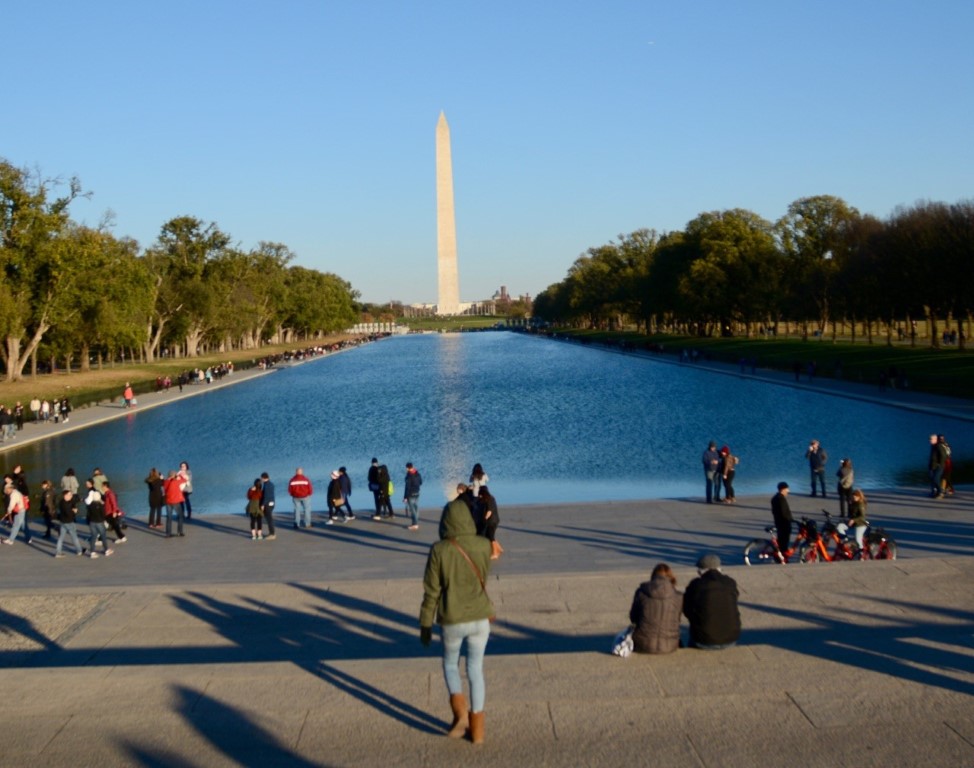
At the other end of the mall is the Lindon Memorial. Lots of people strolled around enjoying the fresh autumn day.   With a big memorial to WWII and others of many other conflicts it’s a special place to visit.

6 7 8

A dinner with long-time friend Paula rounded out a pleasant day in the US capital.

They get to keep their guns in Alaska….

Sunday 6 November 2016

After a fairly long day, mostly in the air, I arrived, via Denver, in Anchorage Alaska. Steve and Chantel met me at the airport.

1

Steve has been down to NZ a few times, both visiting and hunting. My friend Ross and I visited Steve just over three years ago and had a great time out hunting with him and his friends. (That story is in a 2013 blog)

An hour’s drive north and we were at Wasilla, where Steve runs an aviation business training mainly military pilots in bush and mountain flying skills. After a tasty meal of caribou I headed to bed. At this time of the year it is dark at 5pm and light at 8.30am.


Monday 7 November 2016

After Steve and Chantel had been to cast their vote (apparently Trump is the best of the bad choices in this part of the world given their passion for their outdoor lifestyle and hunting…) Steve and I headed to down to see Larry, the local taxidermist, to buy a lynx skin.

2

Larry is a keen hunter with a huge trophy collection. I am sure Noah would have been envious.

3

Next was a quick visit to the Bass Pro store. Something that intrigues me about Alaska is with only six hundred thousand people in the whole state they are able to support huge Bass Pro, Cabelas, Walmarts, and several sporting stores and supermarkets which all sell hunting and fishing gear to a greater or lesser extent.

4 5

We then headed to the Alaskan Fur Exchange. I am on a mission this trip to get hold of a bear skin we can get mounted back home for my friends, who have a lounge called the hunting lodge. The entrance has a display of game harvested by the owner over many years.

6

Luck was with us; we scored a good sized, mountable bear skin with a thick spring coat. I also picked up a few fox skins and Steve had got me a good deal on a bear skin rug.

7 8 9

Now the fun begins. All game in the US is managed to ensure numbers stay such that each species doesn’t become over or under populated. Both bears and lynx require CITES certificates to prove that they have been harvested legally. We went to the local Game Management office and picked up the forms. They are, to say the least, complicated. It took us three days and lots of phone calls to get them filled out and sent away.

That evening Barry, who we hunted with three years ago, and his wife Marleen, who runs the local Walmart with four hundred staff, came over for dinner. We had a good catch up over a tasty meal of moose and spaghetti.

10


Tuesday 8 November 2016

Steve and I headed up the north side of the Knik Valley where we dropped into a local range to zero a rifle. Up on the hill behind Dall sheep, one of Alaska’s most prized trophies grazed. These can only be hunted by locals who draw a tag or by visitors from out of state with an outfitter (guide) at a price of $20k. Rifle zeroed we took a stroll around the edge of a small lake. Steve set up a fake rabbit that toggled around along with a speaker to add the sound, in the hope of attracting a coyote.

11 13 16

No coyotes were coming to check us out today. We did however see a dozen or so bald eagles sitting in in a tree. They seemed to be flying out onto the lake digging up the salmon that had dies after spawning and were frozen in the ice.

17 18 19 20

Most of the birds were young as they don’t develop the white head until they are five.

On the way home Steve bought some semi-automatic rifles “just in cast crooked Hillary became president” and tried to take away all their guns. That night a sigh of relief came from my hosts – as they put it the best of two bad choices won.


Wednesday 9 November 2016

At daylight we took off in the Piper Super Cub (one of four they have here).

21 22

We flew east over Palmer and up the Knik valley landing beside the glacier, just across the river from where we had camped three years ago. We strolled up onto the moraine, sitting in cover and calling again for coyote. Every half hour we moved to a new location but the coyote weren’t playing today.

Soon bad weather started to roll in so we flew home.

23 24 25

The latter part of the afternoon we spent hanging some trophies that Steve and his dad Jay had harvested in Africa last year. Unfortunately Jay was killed last year when struck by the prop of an aircraft. An ex USAF fighter pilot, keen hunter and aviator, he had been a great host to us during our last visit. Jay’s name is now on a plaque at a local memorial for the many pilots who die flying in this rugged and rough terrain.

26 27


Thursday 10 November 2016

Most of the day was spent running errands and finally sending off the CITES papers. I finally got the freight sorted. Quotes had varied from over two thousand to two hundred and fifty dollars.

On the way to the airport we stopped to see Steve’s friend John and his family. John took us through his house and down some stairs into a hanger which opened up onto a small air strip. There he had an experimental Piper Super Cub; with a bigger engine, wings and flaps this plane can fly as slow as 25mph and up to 130mph. Most Cubs are able to fly between 40 and 90mph.

28

Cubs are very popular in Alaska because with the tail wheel keeping the back of the plane low it means that the wings are already at a good attack angle as soon as the plane starts moving. This enables the plane to take off in much shorter distances than tricycle planes, which have to gain a lot of speed to lift the wings to the same attack angle. I understand the tail draggers are much harder to fly. You are not allowed to use helicopters for hunting at all up here – even for transport in and out – hence the shorter take-off distance for the Cubs is very handy.

As we were leaving John’s wife had just finished cooking some Dall sheep steaks. Very tasty it was too. John had recently harvested this and had it mounted.

29

I must say I have been rather spoilt this week feasting on Dall sheep, mountain goat, caribou, moose sockeye salmon and Chantel’s cookies.

Nobody Beats Ireland 29 times in a row…

Saturday 5 November 2016

Whilst enjoying a glass of wine at the hotel in LA on Friday night I got a call from Steve letting me know that the All Black’s game was to start at 3pm Saturday, not 7pm as we had all presumed. A few phone calls to change the flight was a very costly process.

Arriving in Chicago and knowing that lockers have been removed from the airport I went to the Hilton Hotel where the bell boy stored my bags for a small bribe.

The blue train line took me into town then the red south to near the stadium. The footpaths were nearly as crowded as a Tokyo train station as sixty plus thousand people made their way to the game. Meeting Steve at the RV we headed into the stadium – a slow process as bags were searched and bodies scanned.

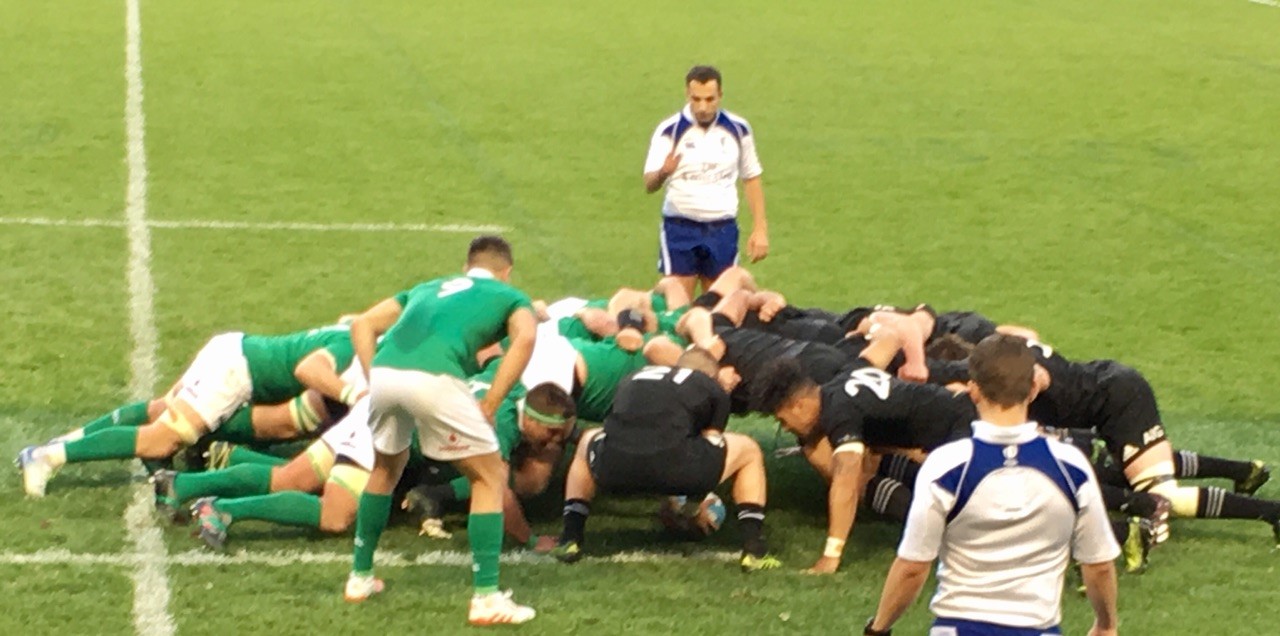
The game was underway as we took our seats three rows back from the field at Soldier’s Field Stadium. Being really close to the field we got a great view of the game, especially as most of the first half was played in All Black territory. In fact by half-time we wondered if we were actually watching the real All Blacks.

1 2 3a

After half-time we saw a glimpse of the All Blacks in action. Ireland then took control again getting a well-deserved win.

 4 5

After the game we caught up with a few friends outside the stadium and headed north with the crowd for a while, then getting a water taxi a few miles up to the city centre. The first stop was Harry Carey’s, lots of green jerseys and smiling faces.

Chris and Nadine who we visited earlier this year had come up from Florida.

6

We soon moved to  Howl at The Moon. Here a very serious Irishman told Steve “nobody beats Ireland 29 times in a row”. A rather loud but skillful bunch of musos played an assortment of instruments.

7

Some of the group headed home; Jack, Steve, John and I headed up town to Kingston Mines.

8

With a queue of a hundred or so at the door we headed instead to the Green Mill where the band enjoyed their music so much they played with their eyes closed. No talking was allowed. When Steve pointed out that the band was enjoying themselves much more than we were we moved on.

9

 We shared an early morning meal before parting. I caught the blue line train back to the airport at about 3:30am. The carriage was fairly full; one well celebrated Irishman made a rush for the door at the next station.

A man from Afghanistan told me how he had been working for the US and was hurriedly given US citizenship when he became a Taliban target and promptly moved to the US. Here he hates it and just wants to go home to his village in the mountains.

As the train arrived at the airport the call “last stop, everyone off the train” came over the PA. Over half the people in the carriage never moved. I realised they were homeless who must stay on the train during the early hours.

I gathered my bags from the Hilton and arrived in the terminal just as the lounge opened.

Well done Ireland!!

A weekend in Kyoto

Sylvia: Saturday 29 October

We flew into Osaka arriving late Friday evening. We managed to board the bus to Kyoto right at the last minute for a fairly easy transfer to our hotel in Kyoto.

Kyoto is very different from Tokyo – still clean and tidy (although not as clean as Tokyo) but older, a lot less busy and with mainly low-rise buildings.

181

We headed off for a stroll around the city and stopped first at the Kyoto Imperial Palace. The palace has history dating back to 794AD and was the imperial residence from 1331 until 1869 when Emperor Meiji moved the capital to Tokyo. During the intervening periods there was a repeated pattern or destruction by fire and reconstruction. Most of the current buildings date from 1855. The palace is situated in a large park with some impressive and peaceful gardens. I particularly liked the cedar bark roofs on the buildings.

188 192194 200

After the palace we continued our stroll, heading North to the base of the hills that surround the city. There we came to the impressive Kinkaku (Golden Pavillion), which is part of the Rokuon-ji Temple. This was the first place in Kyoto where we struck crowds. The pavilion is striking, set beside a pond in beautiful gardens, making for some impressive reflections, particularly with the leaves starting to change colours with the onset of Autumn. Several gardeners were hard at work keeping the moss gardens immaculate, working on their hands and knees and picking out any foreign objects, dropped leaves etc.

227 228 236 234 237

In the gardens surrounding the temple we had the opportunity to ring one of the large bells. When Roger stepped up he gave it an almighty thwack with the sound resonating around the gardens for some time, eliciting great “oohs and aahs” from the attendants.

224 238

Not far down the road we came across the Ryoanji Temple, a huge temple complex with many Zen gardens. Our final stop before returning to the city was Ninna-ji, a large Buddhist Temple complex with a five-storey pagoda. We headed back into the city taking advantage of the excellent public transport infrastructure.

212 220 246 249 251

After a brief stop at the hotel we headed out into the Gion area with its narrow alleyways filled with restaurants, bars and more people than we’d seen the rest of the day. We enjoyed an excellent Italian meal at a restaurant recommended by a work colleague and then wandered the streets of Gion enjoying the atmosphere. We visited the Kodai-ji Temple and enjoyed the light show, effectively highlighting the autumn colours, before calling it a night having clocked up roughly 24 kms of walking during the day.


Sylvia: Sunday 30 October

We decided we’d seen enough temples yesterday so decided to head out to Arashiyama on the western side of Kyoto. Arashiyama is a picturesque area of town, nestled in under the mountains with a river running through. We strolled along the river to the Bamboo Grove, a 500m long grove of tall bamboo that is quite ann  incredible sight.

257 268 262 263

We took time to wander around the park area with some lovely views over the river, then headed to the Iwatayama Monkey Park, home to over 120 Japanese macaques, all living freely within a large reserve. The summit provided views over the city and the ability to wander among the macaques.

269 280

I was keen to visit Ginkakuji, the Silver Temple, expeting something akin to the Golden Temple we had seen yesterday. We headed out to the Eastern side of Kyoto and while the site was impressive I still haven’t figured out why it is called the Silver Temple – perhaps it is silver inside!?!?

276 274 278 273

Once again we finished the day in the Gion area, this time sampling some delicious Japanese cuisine.

281