Bangkok

Wednesday 24 May 2016

Arriving in Bangkok yesterday afternoon we were picked up by a limo and whisked away to the Pullman Hotel. The hotel has a rather interesting atrium making one want to go and find a rope and some abseiling gear.

After inquiring at the desk about hiring a tuk-tuk for a tour of the city and being informed they don’t come out this far I settled for a hotel car and driver. Ken the driver was there waiting for me in the morning.

Our first stop was the Palace. I had to buy a pair of long pants as no shorts allowed. The grounds here are huge with dozens of buildings of all shapes and sizes. Gem stones glitter from many of the columns and walls.


One of the buildings (where it was shoes off and no photos) where people prayed and made offerings had a large gold structure in it.

As I passed through some buildings there seemed to be a long queue of people mainly dressed in black, some holding up signs.

Even some nurses were standing ready to assist.

This queue went on for hundreds of meters; I never did see the end or the beginning. After making a few enquiries it turned out they were all queuing for an audience with the king. Not that he is saying much as he died in October last year and will lie in state for a year. In the first few months after his death forty thousand people a day were queuing to see him; apparently it’s now dropped to ten thousand. The king here is highly respected and everyone I have spoken to speaks highly of what he achieved during his long life. His pictures are displayed all over the city.

As I made my way out of the grounds a group of Palace guards were undergoing a bit of drill. These guys are placed in guard boxes with an old 77-type radio all around the grounds. After taking these pics a security guard raced over and said no photos. Of course I didn’t take anymore!

As I left this grand place I wondered if the king ever visited all the buildings in the grounds.

Next stop was the Golden Buddha

This 5.5 ton solid gold Buda has an interesting history to say the least. Brought to Bangkok in the early 1800’s it was a plaster statue with coloured glass in the plaster. It was housed in a couple of different places around the town. In May 1955 while being moved to a new home a pulley rope broke and it crashed to the ground; some of the plaster chipped off and the gold was discovered. The theory goes that it was plastered over pre the mid-1700’s to prevent it being stolen. A key was found in the plaster, which enables it to be broken down into nine pieces that fit so well together that it looked solid. The theory is that it was made in India sometime after the 1300’s.

Next we made a brief stop at a Hindu temple where it seemed that people would buy food from stalls take it to a stainless steel bench in front of the shrine as an offering. When they left people collected the food and took it back to the stall for resale. Looked like a pretty profitable way to do business to me. With a lot more detail and colour than the Buddhist temple it is quite interesting. This was another no photo place but a got a couple from the outside.

There are many more temples and Buddha statues in Bangkok including the lying Buddha and the marble Buddha. Apparently there are over forty thousand Buddhist temples in Thailand with over thirty thousand still in use.

Time was ticking on and the traffic was very slow so we headed to the Vimanmek Mansion. With a large, gold, pagoda-like structure just inside the grounds this place is stunning. First I had to get into the grounds! I had given the pants I bought to get into the palace away as the driver had told me that was the only place that long pants are required. The guy on the gate here pulled me aside and indicating I needed to go get a sarong, pointed down the road. After looking around and not finding the local sarong salesman l headed back to the gate hoping some kind person coming out may sell me their old one. No such luck so the guy on the gate let me in without one. The grounds are stunning here.

This 72 room pad was completed in 1901 for King Rama V who, after a visit to Europe, decided he needed a castle-like palace. He only lived in it for five years after which it was used as storage. In 1982 King Rama IX gave permission for it to be turned into a museum.

As I joined the queue to enter I was taken aside and told to enter by another door. This turned out to be because I had a camera, which along with my phone was locked in a box and the key handed to me. I was also sold a sarong which was fitted for me.

Entering the main building I had to step on a box and was given a thorough pat down to make sure I didn’t have a hidden camera. These guys are real serious about the no photo rule. It’s a pity as the artefacts here are amazing. I am just sorry I can’t share them with you. There were huge silk tapestries, gold elephant chaise the king use to ride around in and much more that I can’t describe. The painted dome shape ceilings were also stunning.

This is a must see place, just take long pants or a skirt and ladies, cover your breasts and shoulders.

That evening I was lucky enough to be invited to dinner at the Local by Sylvia’s colleagues. We enjoyed a traditional Thai meal and great company.


Thursday 24 May 2017 – Ayutthaya

Mr Ken, the driver, picked me up at 0900 and we headed north to the old capital Ayutthaya.  The way the lady at the tour desk spoke the previous evening this was to be a three hour plus journey. Sixty seven kms and a little over an hour and we were there. Ken, my English-speaking driver, was really helpful and keen to please. He was always ready to tell me about the place we were heading. I learned pretty quickly “don’t ask questions” as with many so called English speaking guides in many countries it’s parrot fashion English. Ask even a slow speaking question and they haven’t got a clue.

Ayutthaya was the capital for a few hundred years until the late 1700’s when it was  captured by the Burmese. They held it for a while then burnt the hundreds of Buddhist temples down and buggered off back to Burma. Something the locals even now can not understand as that is not the Buddhist way.

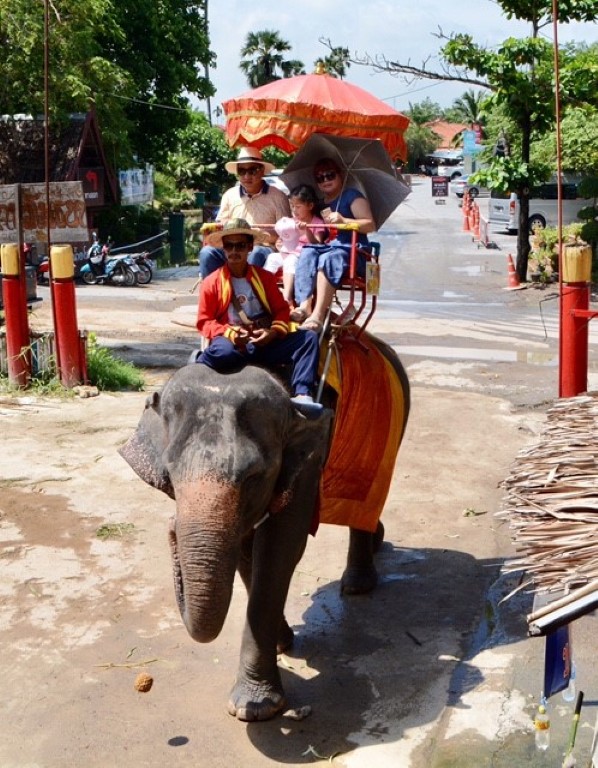
Soon we arrived at the local elephant ride place – Special deal today: 2000 locals or about 80NZD for an elephant ride, a snake show and a visit to the floating village.  My vision of standing on the elephant’s trunk and being hoisted onto its back soon turned out to be delusional. It was up some steps on to a stand; soon an elephant strolled alongside; a family of three got off and I got in.


Soon we were heading down the road and through the town. Motorbikes, trucks and cars raced past, the large beast not even slightly phased. Then a big red fire engine came slowly up behind us; the big fella was not happy, breaking into a sideways shuffle and making a loud trumpeting noise. The driver sitting behind his head also started making a bit of noise. As I was starting to wonder how good the ropes holding this seat in place were, the fire truck turned into a driveway behind us and the big fella calmed down.

After passing a derelict temple we turned down a side road. The buildings around here are generally quite rough and untidy with the odd nice place. Food stalls are dotted here and there.

Big fella would require some fuel from time to time and wander to the side of the road, helping himself to some local vegetation.

We passed another derelict temple. There must have been a massive rice factory here all those years ago.

Then we headed across a paddock, past yet another derelict temple.  The driver took my camera and dismounted. I took his place as he took some photos.

As we headed back to the yard out came a box of elephant teeth made into pendants. “500” he said. I declined and the box went away but soon came out again “300” this time. I am now the proud owner of an elephant tooth.

After dismounting I checked out the elephant shed.

As I was heading back to the reception a lady summoned me into a room with a bloody great tiger in it. It did look pretty tame and half asleep so I paid the money and had my picture taken.

There were some rather scrawny  sheep in a pen. And by the number of red phone boxes it is a favourite stop off for Dr Who.

Next was the snake show, which after receiving some directions I made my way through the various stalls to. I sat alone in the stand while a lady went around opening the many boxes trying, I presume, to find a snake awake enough to play. Eventually she dragged out a python, wiped it with a rag, called me over, and threw it around my shoulders.

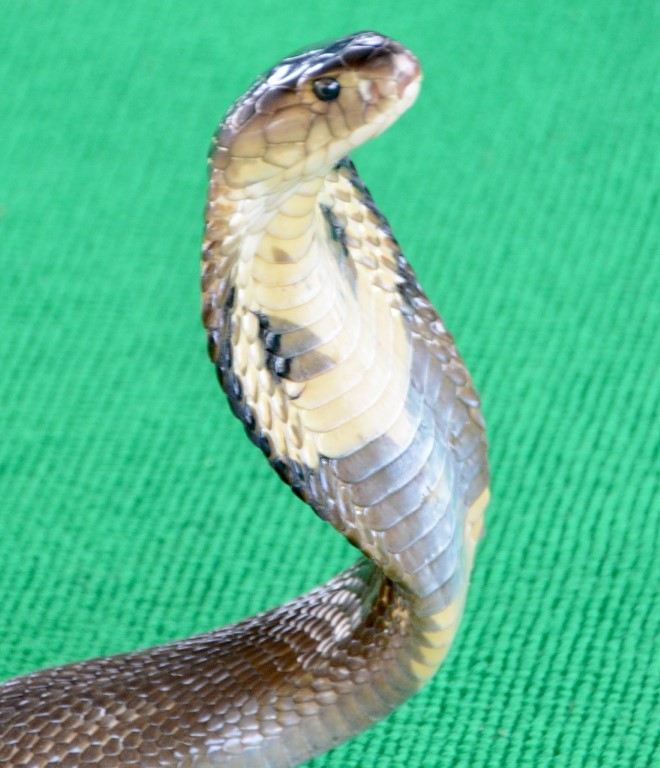
She than told me the snake man was having lunch so to come back in ten minutes. Back I came expecting to see a bit of snake charming like the guy in Nepal I saw once with a flute playing and the snake raising up and down in and out of the basket. This was not to be the case here – in fact this guy was no charmer but did everything he could to piss the snakes off.  With a stick with a hook on the end he hooked a cobra out of a box and tossed it on the floor, then followed with a king cobra. He then sat on the floor and started slapping them to get them to sit up and flare their heads. The Cobra has a diamond on the back of its head and the King cobra a white angled stripe.

Being the only spectator I stood up and moved a little to get a better pic. As I did this, distracting the bloke, the snake struck out and nearly got him. He looked a bit pissed off.  He signaled me to come and join him in the snake pit. Thinking they probably deactivate these snakes I wandered in and sat down beside the guy as instructed, comforting myself with the thought that too many dead tourists would not be good for business. I sat there as he continued his snake baiting performance. At one stage he had me holding the King cobras tail as both snakes looked at me, heads raised in the strike ready position. Fortunately I was out of range. He then wrapped the king cobra around me and held the head to my lips to kiss (sorry Sylvia they made me). Punishment over I was then allowed to leave the pit as he continues the show.

He then dragged out a python and tormented it into lunging at him. Another less angry python is strung around my neck – again for another kissing. (Sorry again Sylvia, this time just couldn’t resist)


Show over I then took a stroll around the so-called floating village. It was in fact on piles. With lots of colourful displays of food and made-in-China souvenir-type stuff it was worth a look.

Next we headed into the centre of town to visit the main temple. This is in the process of being restored and has some nice buildings in it. Climbing the steps to the top of the main temple I could see many brick spires around the city.


The temple is surrounded by statues apparently keeping the bad spirits away from the Buddha.

Crossing a bridge I came across what can only be described as unusual, unless you’re a chook lover or collector.  The reason for this display I could not establish but they surrounded this  fairly new, church-like structure.


An the way back I asked Ken the driver what the story was with the chooks. “One of the previous kings liked hens” was all I got back.


Friday 25 May 2017

I took a stroll into the main part of the city on Rama l Rd, where the main modern shopping area is, following the metro rail line, which runs 6 or 7 meters above the street. The footpath along the way is packed with traders selling everything from massages to gold watches. At one point a rail line runs across the road. Looking down the line people strolled about as there houses face, and seem to be accessed, from the line.

Narrow streets ran of to the sides packed with motor bikes. After walking through some huge multi-storey shopping malls I found my way to the Jim Thompson House and Museum. Thompson had served with the US military during WW ll in Europe being transferred to Asia after the war. He ended up leaving the army and staying in Thailand. Originally an architect by profession he became attracted to the Thai silk industry. Highly gifted as designer and colourist he revived and promoted the local silk industry. He also built a house by combining 6 Thai houses from out of town into one large house by Khlong Saen Saep Express, which is a canal still used to cart people around. Thompson disappeared in 1967. Apparently while in Malaysia on holiday he took an afternoon stroll in the jungle never to be seen again. The house is now a Museum. No photos are allowed in the main building. There was however some nice stuff displayed in some other small buildings.

Outside under a veranda some ladies spun silk.

While inside the heavens had opened in true tropical style. It cleared as I left so I took a boat back up the canal to the hotel.

With a walkway on each side, little shops and cafes have been set up in places.

Kuala Lumpur and Jakarta

Tuesday 16 May 2017

Landing at the Kuala Lumpur airport mid-afternoon I took a taxi to the Traders Hotel in the centre of town about 40k north of the airport while Sylvia went off with her colleagues.

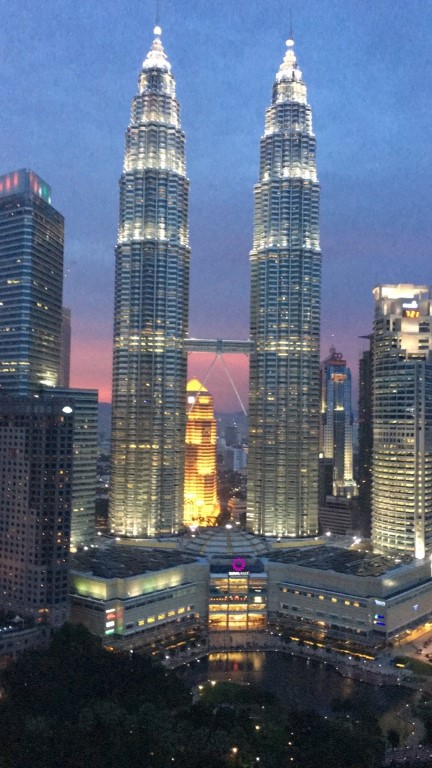
Twice before I have been to KL and never made it up the towers as they have been booked out or closed. The hotel and the towers are only a short distance apart separated by a park. Soon after checking in strolled across the park to secure a ticket for the next morning.

Back at the hotel I visited the Sky Bar on the 33rd floor. With its open windows one gets a great view of the towers and across the city from here.

As the sun went down we enjoyed a drink or two. The Sky bar complete with pool is a great place to watch the sun go down. Sylvia and some of her colleagues joined me for a drink.


Wednesday 16 May 2017

We woke to a clear blue sky. After breakfast Sylvia headed off to more meetings and I strolled across to the Petronus Towers. The bottom few stories are all very well presented expensive retail.

Prior to going up in the lift we received a briefing with the image projected onto a vapour coming out of a column.

First stop was the Sky bridge on the 41st floor. It is two storeys – one for us tourists and the other for the office workers to cross between towers.

The bridge, which weighs several hundred tonnes, is not attached to the towers but on rollers that prevent it getting crushed in high winds. Two struts mounted some distance below help hold it in place.

Back in the lift we head up to the 84th floor. At around 375m above the ground the views here are fantastic.


At 451.9m back in the late 90s these were the tallest buildings in the world. Now there is one on Dubai at 825m.

Mid-afternoon it was time to head to the airport. A Hotel taxi was going to cost 150 locals; an ordinary taxi 80 locals. I took the ordinary but. Luckily I asked if he took a card prior to the trip as he didn’t so I changed some money at the hotel. Arriving at the airport I handed him a 100 local note. Taking it he said he didn’t have any change. I took the note back and said “no change no pay”. Bugger me he found the change!!

Landing in Jakarta around 1900 one of Sylvia’s French colleagues had a small issue with immigration. Eventually we got a hotel car to the Sheraton Grand Hotel. Just over thirty kms took just over an hour – apparently a quick trip. After checking in and settling into the room I realised I had left my new apple computer in the seat pocket on the plane. One phone call to Malaysian Airlines and to my surprise it had been found. Well done to them! They may have lost the odd plane but they had found my computer – bloody well done.

After a drink at the bar, which is not only flash but has outstanding service as well, we retired for the night.


Thursday 18 May

After breakfast Sylvia went off on a field trip to visit specialty stores and vet clinics supplied by Royal Canin. I headed to the concierge to organise getting back to the airport. While the concierge was trying to set me up with a ride in a Merc a guy wandered up and suggested a blue bird cab – “they use the meter and are the only ones that don’t rip you off”. 90 mins later I was at the airport although the wrong terminal. A free shuttle eventually got me to terminal 2. After a lot of questions I eventually made it through customs to the lost baggage area. Computer in hand I made my way out. Oops! No customs form! But after some sign language they gave up and let me go.

Another hour plus in a taxi got me the fifteen odd kms and 200,000 locals to Ancol City. On the coast, this is a beach resort. Don’t expect to see any bikini clad women or blokes with six packs in speedos, here they all swim fully clad.

I walked several kms before I finally found a place to have a beer.

Behind sea walls, they have spent lots of money here turning this area into a pretty nice sea resort.

Every few hundred meters I was approached by someone offering me a boat ride in one of the old looking boats with a straight drive motor mounted on the side gunnel towards the rear. A guy would lower the prop and shaft into the water, holding it down with his foot as he operated the big wooden rudder.

There is a gondola that runs over part of the resort, lots of stalls, and people picnicking on the pavement in the shade of the trees rather than on the sand.

A jet plane is parked in a kid’s playground. Three young blokes approached me each wanting their picture taken with me. I realised I was the only European in the park.

Tracing the west end I negotiated a 100,000 local cab fare to get me back to the Sheraton. The ride was to say the least interesting.  Guys stood by the on ramp to the motorway; for a 500 local coin they stopped the traffic and let us in, innovation at its best. The traffic barley moves.

Hawkers rove the road selling their wares.

Eventually heading south, the traffic at a stand-still, the driver takes an off ramp and we cross a canal and head north again. Talking later to Brian at the bar we headed through the only really bad part of Jakarta, apparently controlled by gangs – even the police don’t go there. Unaware of this I found it a really interesting area, full of traders, lots of hand carts, tuk-tuks and motor bikes, I felt I was seeing the real Jakarta.


Eventually heading west then south, the driver was on a mission often driving down the shoulder of the road, hand on horn to push back into the traffic, then taking the empty bus lane to shorten the trip. On arriving back at the hotel the, on google maps, 24km trip had only taken just over an hour. He was pretty chuffed when I gave him 150,000 locals for his effort, about $15 kiwi. As I sit writing this there are six staff in the bar for the twenty odd customers.


Friday 18 May

Taking the advice of Brian, the barman, I headed to Kamal Muara, an area supposed to be renowned for its food outlets. The traffic was jammed as usual so I jumped out at the west end and walked from west to east. It looks like someone has tried to design a Vegas-type theme here with relatively new buildings built in an old style.

Not far down the road the new bit ran out. Footpaths are a bit hard to come by here. Even around the shops cars and people share the same space. In places there are covered storm water drains, which are good to walk on, but one has to be alert as the covers are often missing or broken.

I crossed the Cengkareng Drain (more like a river) and heading into more of an industrial area but with all the branded fast food outlets like Starbucks, McDonald’s etc. It is surprising in this not-exactly-clean city how clean people keep their cars.


Eventually the new buildings ran into ones that were partially finished but abandoned. I decided to take a different route back turning north into a tree lined street. Local (I presume) workers sat under the trees in groups eating their lunches, often supplied by people pushing handcarts or from the back of a vehicle.


According to the Ulmon Pro map app, the streets ran off this back to the east. However the west end had been fenced off. Behind the fence were nice houses on tidy streets.

The one entrance that was open was manned by security guards who wouldn’t let me in.

About a km down the road there was another security gate. This time the guard was in his box so I just waved and kept walking. This area was quite new with a range of mansions and attached apartments.

The local Eco Park seemed to be a good place for the local workers to take their afternoon nap.

Finding my way through another guard station got me back to the main road.

By this stage I had worked out that this place is really safe: one definitely is not going to get mugged by another pedestrian as there weren’t any.

Back on the Main Street it was getting rather hot. Bar Epigastro looked like a pretty good place to cool down and indeed it was. The local beer was nice and the staff friendly and helpful.

In what seemed like no time at all I was in a taxi heading for the airport to meet Sylvia for our flight back to Singapore.

Tracing the War History of Singapore

Saturday 6 May 2017- The Battle Box

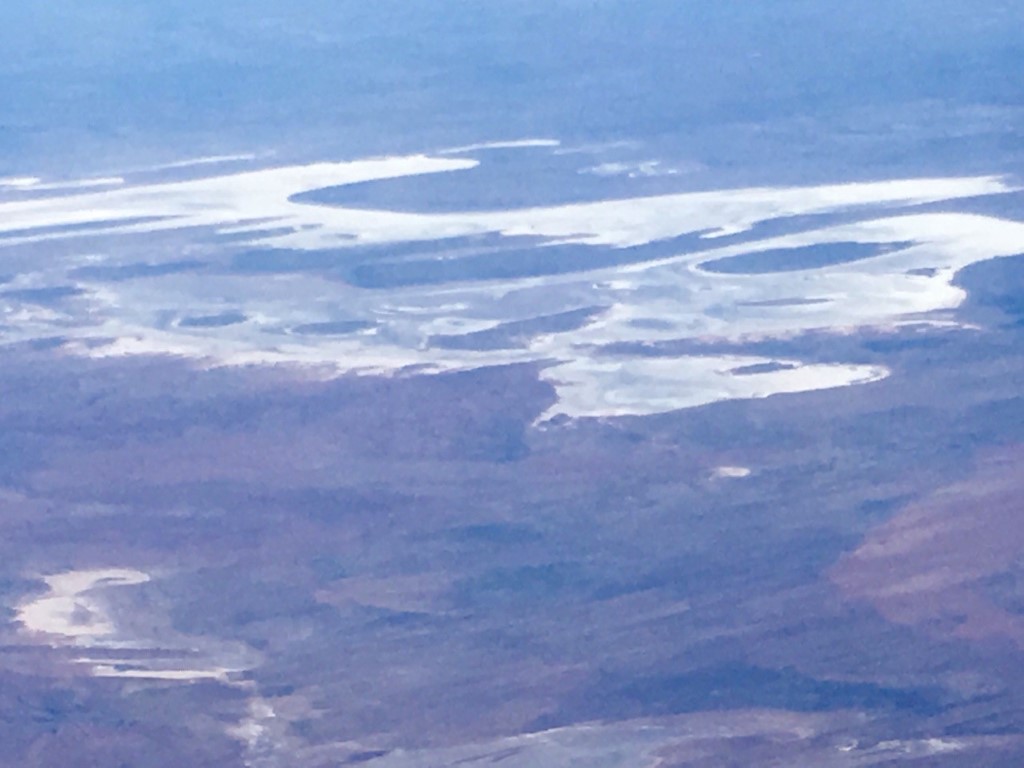
Several hours after leaving NZ out of Christchurch on Friday morning I realised we were tracking across Australia. From the air it looked a lot more attractive than it does on the ground. Large, what looked like, salt lakes fed rivers running north to the sea.

Cloud formations up through the pacific are always pretty spectacular. One could wonder if North Korea has fired that nuclear missile as the mushroom clouds form in the sky.

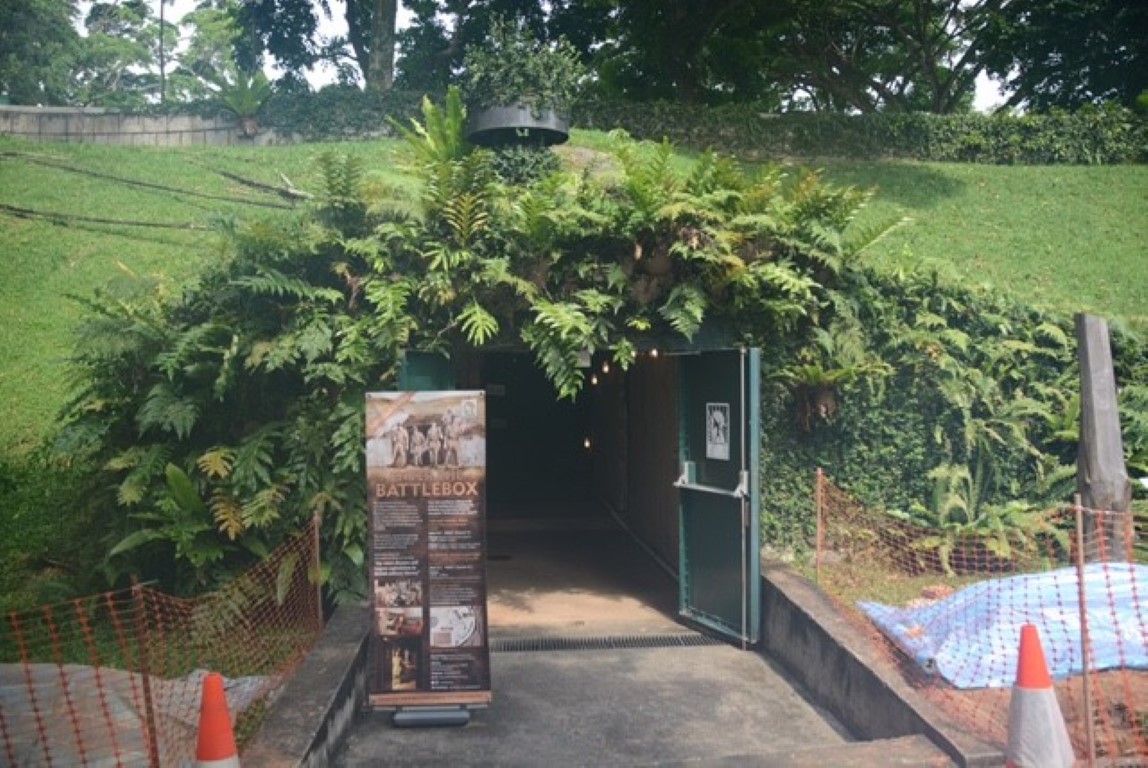
After a sleep in on Saturday Sylvia and I took a stroll down to the other end of Orchard Road to visit Fort Canning Park, home of the now famous Battle Box. Previously there was a fort on top of the hill of which only the gate is still standing.

Built into the hill with about ten meters of overhead cover and with one meter thick walls separating most of the 20-22 rooms the Battle Box was primarily designed as a communications HQ for the military in Singapore prior to WWII. Located a few meters from the new Fort Canning HQ with its two entrances on opposite sides of the hill plus a vertical escape shaft it gave good cover during bombing raids. It had its own air filtration system in case of gas attacks along with a ventilation system, generator and 6 dunnies, three each for officers and OR’s (other ranks).

The Japs landed in the north east of Malaya on 8 December 1941 with a large number of battle hardened troops from the China campaign, lots of tanks and six thousand bicycles so the infantry could keep up with the tanks. Although in the early stages the combined British forces put up a good fight it didn’t last long.

The superior Jap aircraft soon started annihilating the Aussie, Brit and some Kiwi planes, who before being all shot out of the sky withdrew to Indonesia.

Jap aircraft also sunk the battleships Prince of Wales and Repulse along with a number of destroyers on the 10th December, the same day Pearl Harbour was attacked on the other side of the Pacific. These were the only serious British naval assets in the area leaving no navy to come to the rescue. The British withdrew down the peninsular. By the 31 January the Japs had taken Malaya.

Intense bombing and artillery fire rained down on Singapore. Yamashita, the Jap general in charge, with about thirty thousand troops and running low on ammo and supplies decided to attack Singapore with its over one-hundred thousand strong army. On the 8 February they crossed the strait.

During this time around 500 people crammed into the Battle Box. Oblong pieces have been cut from the tops of steel doors, obviously to increase air circulation. In spite of all the rooms the place is quite small. In one of these rooms Percival, the Brit General in charge, and his senior team of seven made the decision to surrender on 15 of February.

The headquarters opposite the hill still stands but now as Fort Caning Hotel. A stroll down the nearby river revealed some nice sights.


Sunday 14 May 2017 – The Old Ford Factory

Taking a stroll through the Botanic Gardens and north along Bukit Timah Rd, around 10km later we arrived in a very sweaty state at the Old Ford Factory.  This was where the Japanese General Yamashita set up HQ during the invasion of Singapore.

Part of this building, including the room where the surrender was signed, is still there. Winston Churchill called it “The worst disaster and largest capitulation in British History”.

The museum walks one through from the pre-invasion to the occupation and a little of the rebuild after the Jap surrender in 1945.

Massive atrocities were committed by the Japs during the occupation, particularly by the Kempeitai (secret police) who beheaded people and stuck their heads on stakes around town complete with notes about how not to behave. Singapore’s name was changed to Sayonan-to, meaning “light of the south”. The Japs introduced an occupational currency, the locals referred to as “banana money”. At the beginning of the occupation 60g of rice was $5.00 ???? at the end $5000.00 ????. School classes were taught in Japanese.

By the end of the occupation what had once been a well off country was left in state of disarray and poverty. I must say from what I have seen so far they have done a great job of rebuilding the place. Interestingly there was no mention here about what happened to the captured British forces or civilians.

After the surrender the Jap general made all the hundred thousand plus captured troops line up on both sides of a main road and drove down the middle, cameras rolling to show off his victory.


Sunday 21 May – Changi Prison Museum

We took the MRT east out past the airport to Tampines. The station has a massive bus terminal clearly sign posted with stainless almost like stock yards to handle the queues. A bus took us through HDB (Housing Development Board) areas the 4 kms to the Changi Prison Museum.

Last week we received some cultural training as part of Sylvia’s assignment here. They explained how the HDB system works. People actually buy an apartment in these huge, well-kept apartment blocks. There is no graffiti, the buildings are clean and well maintained. There is a manager or two in each block. One of their tasks is to ensure that the welfare of the tenants is maintained. An example of this is if a family with kids is found not to have a computer and internet it will get sorted. If people are sick they will seek help for them. Privacy is not a big deal here so the people that count get to know what’s going on and who needs help. There are thousands of the blocks in this area.

The Museum is again like the previous two places a no photo area.

We grabbed an audio set and commenced the tour. This place is well laid out with a short section on the pre-invasion period, then it gets into detail on the captivity of both the military and civilian personal.

After the surrender most of the captured military people were marched east to Changi and imprisoned there. The Japs didn’t really know what to do with them for a start but soon realised they had a massive source of free labour. Many were sent to Burma to work on the railroad.

Initially men and woman were both kept at Changi however later the woman were taken to Sime Road prison. Originally designed to house 500, 5000 were kept there 10 plus to a cell. Changi was basically administered by the British officers with records kept. Many supplies were manufactured in the prison: sandals were made from car tyres; sunglasses from discarded X-ray film; radios were made and concealed in matchboxes. In one case one guy had a valve radio in a broom with the aerial integrated into his mosquito net. He would listen to the BBC through a rubber tube and write notes. His bunk was situated by the door and each morning he would place the notes in a hand that appeared round the door for distribution to the senior officers.

There are many stories of brave women and men that came to the prison each day to pass medical and other supplies through the wire in spite of often being beaten and or tortured. There was a very moving interview with a Dutch woman captured in Indonesia and shipped off to be used as a “comfort woman” (sex slave) by Jap officers when she was only 19.

Many of the prisoners taken to Malaysia, Thailand and Burma as slave labour died through beatings, starvation, malaria and other diseases.

There is an outside chapel which came from the prison situated in the internal courtyard.

Thanks Google for the pics.

There is also a covered but outdoor cafe set alongside the museum.

Just down the road there are the men’s and woman’s Changi prisons. The death penalty is mandatory in Singapore for drug traffickers, consequently drug addiction is rare here. Well done Singapore.


Saturday 27 May – The Bridge over the River Kwai

Leaving the hotel at 7.30 we headed northwest towards Burma. Our first stop some three hours later was Kanchanaburi War Cemetery. Here the remains of thousands of military personnel from the UK, Australia, Holland and USA are buried. 

Located across the road is a museum dedicated to both the survivors and the deceased. Another ‘no photo’ place it walks on through the whole horrible project. The Japs wanted access to Burma and Malaya through Thailand so the Thais who have never been colonised or conquered signed an accord with Japan allowing them access. At the same time the Thais declared war on the US and U.K. Japan had invaded Burma and wanted to use it to launch an attack on India and into Southern China. Their ships were getting bombed and sunk as they came up the west coast of Burma with Brit planes coming out of Calcutta. Hence it was decided to build a 485km railway through the mountains to link Thailand and Burma. 

With 80 odd thousand free labourers sitting in Singapore the project went ahead. Not only did they use 60 thousand plus prisoners, but  also over 150 thousand civilians, mainly from Burma and Malaya, were forced into slave labour.  Great promises were made by the Japs of good food, pay and medical facilities to entice them to work on the rail. One man tells how he was in town in Malacca one day as a sixteen year old when Jap soldiers approached him and offered him this great job with great pay etc. up north on the railway. He declined as he thought his parents would not let him go. They tied him up ant took him anyway. 

Figures are sketchy as the Japs destroyed most of the records at the end of the war but they reckon over 80 thousand of these people perished. 

One interview with an old British army guy talks about the song they used to whistle (made famous by the movie). “It was a bit rude really as it meant bollocks to the Japanese! We walked along whistling away and the Japs would often smile and wave!”

The museum takes one through how they blasted their way through cuttings by twisting and hammering steel spikes into the rock to hack holes for explosives. They built the wooden viaducts, some of which are still in use today. The conditions were terrible with many suffering from malaria, dengue fever and cholera. The Japs had a policy of minimising food for the sick as they thought this would encourage people to get well and go back to work for better food. They did let funerals be held so the British prisoners often buried records and diaries with the bodies as they knew the Japs had some respect for the dead and would be reluctant to dig them up. Many of these records were recovered when the bodies were exhumed to be re buried at the war grave and have helped piece together the story. 

We then continued our journey to the bridge itself. For some reason it was completely different than I imagined, located on the northwest edge of the town with lots of souvenir shops on the east bank and the ground around it flat. When we arrived the bridge was full of tourists with a sign at the beginning of the bridge warning “be careful taking selfies when train coming”. We crossed the bridge and heavy rain arrived. We sheltered in a hut as the rain cleared the bridge of tourists.

On the east side of the bridge there are some old engines and a truck displayed.


Originally a wooden bridge spanned the river while this one got built. When this bridge was bombed they reinstated the wooden bridge while repairs were made to this one. Next time they bombed both bridges with a very early version of guided bombs. 

We then headed further north, the plan being to to take a train ride. With a couple of hours to spare we headed to a cave. With the first section full of bats it was a bit stinky. Sylvia clung to me as the bats flew around reacting to the camera. 

After the bats the cave extended some 200m into the hill with some interesting stalagmites and tites among other formations. 

We than drove to Nam Tok Railway station, boarding the very old, on-time train at 3.30pm for an around 25km journey down the line. This is as far as the line goes now days although there is some talk of rebuilding it through to Burma. 


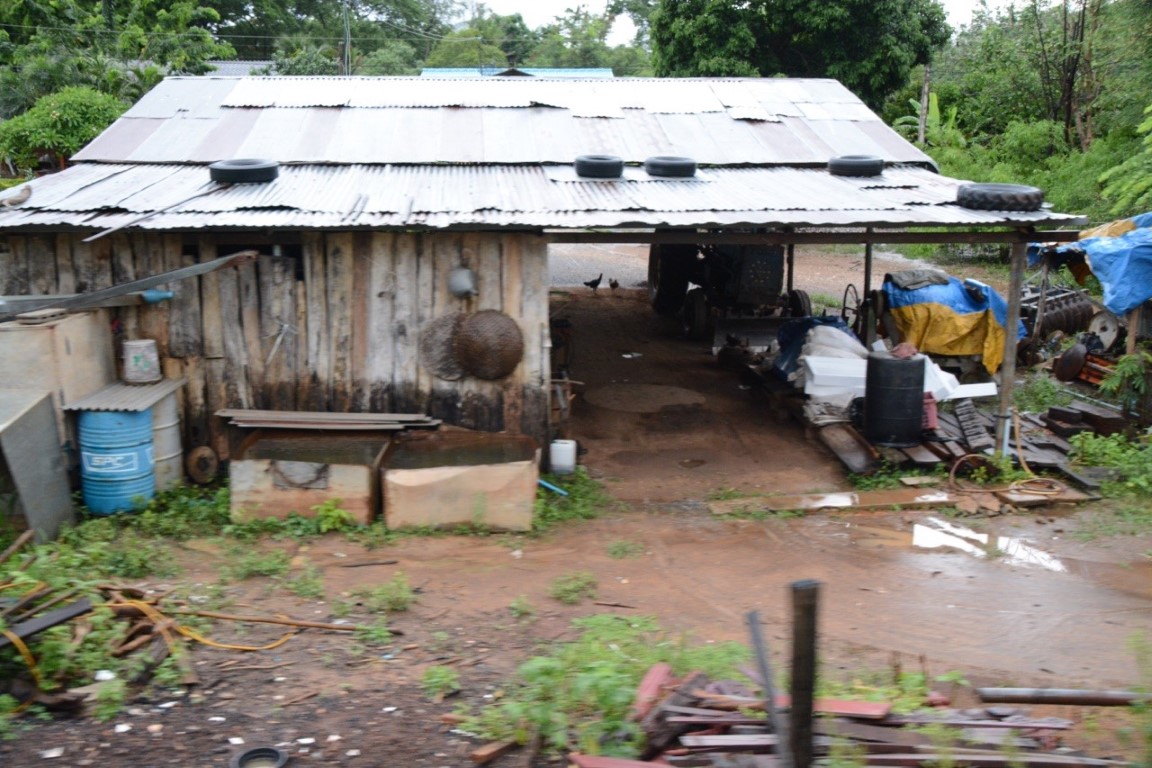
The train seemed to run out of ergs at one point, stopping and rolling back down the slope, but eventually got going again. Lots of houses have a lot of junk lying around the back of them. 

 We disembarked at a tourist resort type town where the rail went on a viaduct on the river edge. People stood on the edge to watch the train go past and others floated down the river in their matching life-jackets. Our driver was there to meet us for the three plus hour drive back to Bangkok. 


Malaysia and the Langkawi Airshow

Friday 17 March 2017

Last night my good friend, Glen, arrived from NZ. After spending an hour plus at the Hertz rental car counter dealing with an idiot (in spite of the booking saying and being priced for the car to be dropped off at KL airport in Malaysia on Monday he insisted we couldn’t take the car to Malaysia without paying extra money) I eventually picked Glen up late from terminal three and headed home.

At eight this morning we were on the road to Masai, just east of Johor Bahru in Malaysia. 

For years Glen has been doing business in Malaysia and has made many trips across the causeway. I have accompanied him on a a few trips but always by taxi.

We got through the Singapore check point at Woodlands okay as I had purchased a cash card at the airport to pay the toll. We get to immigration on the Malay side pull up at the barrier. 

Thousands of motor bikes pass through these checkpoints also. (They have an almost efficient system of processing the thousands of cars that cross the border daily.) 

The barrier won’t go up until we pay a toll. We need a Malay touch card. Glen waits in the car as I go off to buy a card. Bugger! they don’t take credit cards or Singapore money. The guy just points to another booth; the guy at that one doesn’t want to know. Eventually a friendly customs guy takes me up several floors to change the money then I buy a card and finally thirty plus minutes later I get back to the car, still at the barrier, and we are across the border.  

It’s been about four years since I last visited this part of the world. The development in that time is overwhelming.

A huge flyover motorway heading north that was under construction is now complete. Numerous forty-plus storey, well designed, attractive apartment towers have been completed with many more under construction. Land has been reclaimed on what was swamp and is now bristling with new buildings. But don’t worry not everything has changed – there is still plenty of rubbish and plastic bags drifting around. 

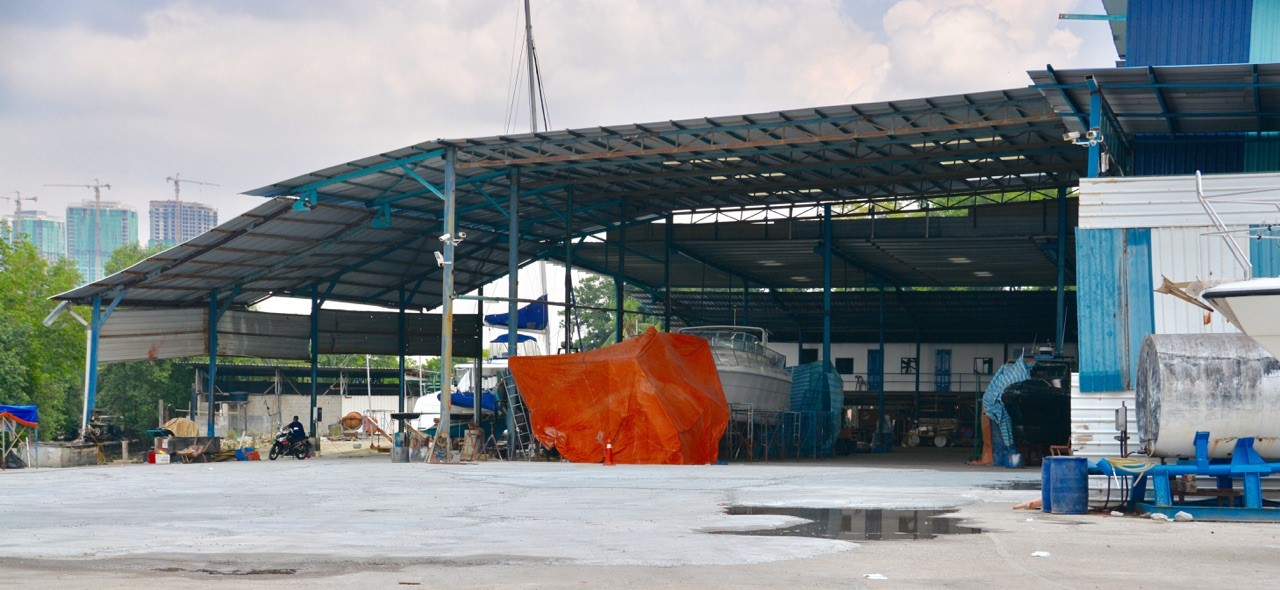
Eventually we arrive at Dalac a boat building yard. We walk the last few hundred meters as a truck with a big boat on the back is having trouble clearing the power lines and has blocked the road. 

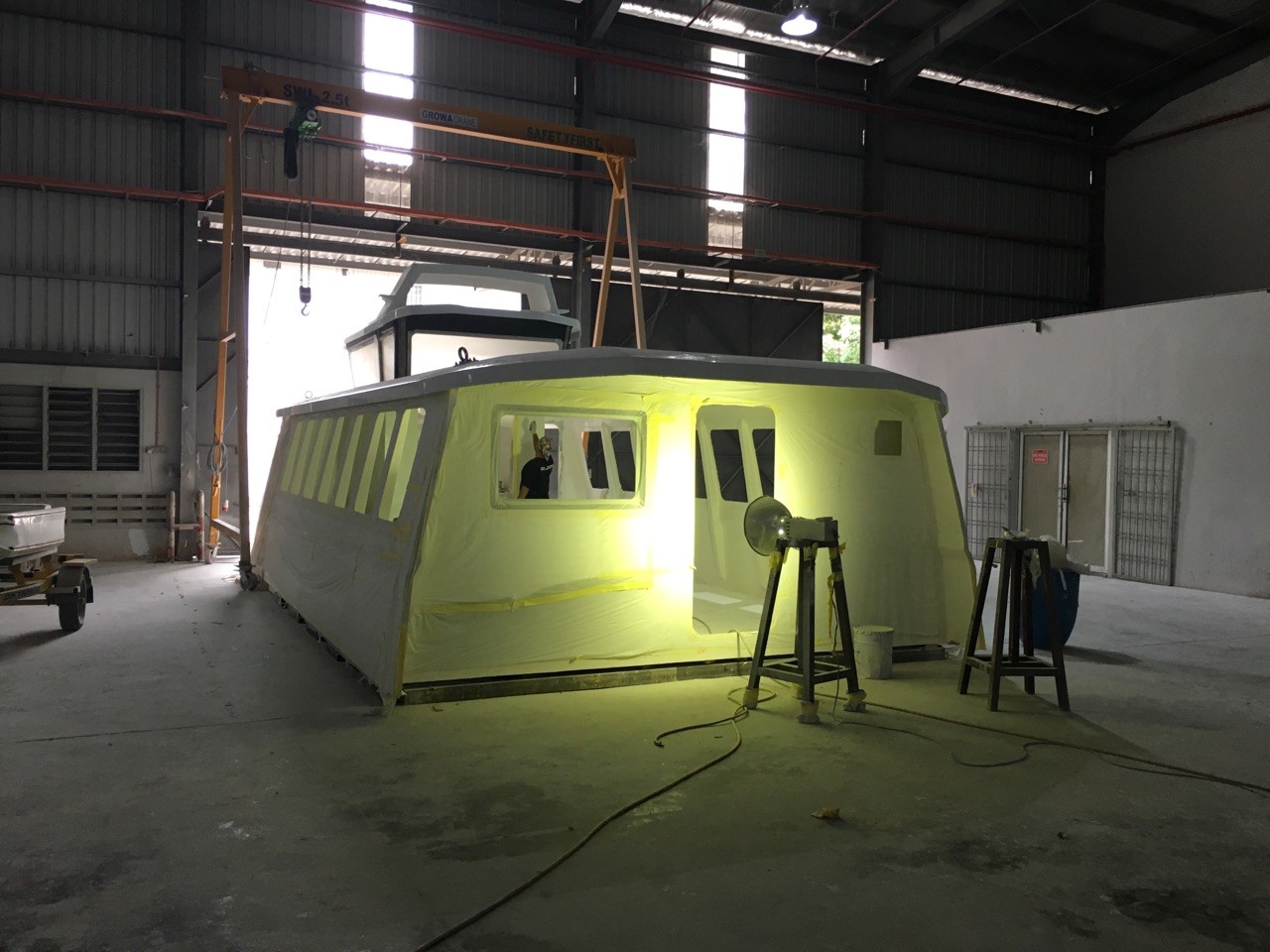
We had a meeting with Mr Goh and his two sons, who run the boatyard where they build military patrol boats and service a number of civilian craft from Singapore.

There is a big shed and a large yard with a couple of slipways and a boat lifter. Most of the yard is reclaimed land they they have done themselves using mainly fill from demolished building sites. 

Some of the workers sleep on site in containers. 

Next stop was a Todak Restaurant; a bass was scooped from a tank and on our table within ten minutes. From here you look across the fish farm to Singapore.

Just down the road from here people pay to fish in stocked ponds about 50x50m. 

After lunch we made our way back across the causeway to Singapore; the return journey went a little smoother. 

A little note for those renting a car in Singapore or Malaysia: The cash card in Singapore is essential – not only do you need it to cross the border but also for car-parking as they don’t take cash or credit cards. 

The Malay ‘touch and go’ card is not only essential to cross the border but can also be used for road tolls, of which there are many. I
t is also taken by some shops.
 

After arriving home and meeting up with Sylvia we took a taxi to Marina Bay, alighting at the Sands hotel. We walked under the road through the shopping centre; with all the top brands and incredible window displays this place is stunning.


All the restaurants we tried were booked out so we headed for the food hall. Complete with skating rink this place was packed. Eventually we grabbed a table and enjoyed a sample of the huge selection of food.

There is a light show running in the marina just now so we wandered out to take a look.

We took a stroll across the Helix Bridge before heading home.


Saturday 18 March 2017

Glen and I headed to the the Republic of Singapore Yacht Club, which is situated next to a huge container port.

 The club has a couple of large accommodation blocks and a couple of large boat storage sheds. Interestingly there were few yachts in the marina but mostly power boats.

Next we headed to the marina at Keppel Bay. There is a two story expressway that runs across the waterfront which is easy to navigate. It is well designed and attractive with trees on both sides.

Keppel marina is stunning, surrounded by a variety of well-designed buildings and full of a variety of nice boats. As I raised my camera to take a photo a polite security guard came over and advised me that I could not take photographs with a camera – I was allowed to use my phone or I could take photographs if he didn’t see me. We took stroll round to the side of the morning and took some photographs.

We then headed to a rather nice bar and restaurant, owned by and overlooking the marina, to enjoy a cooling ale and watch boats and people go by.


In the evening we went to a restaurant Sylvia had located called Salt on the 55th floor of the Ion Building in Orchard Road. We were joined by Naazli, a lovely local lady who had organised all the furniture and accessories for our apartment and done a magnificent job. Not only is the food great at this place but the views are stunning.

So far every day I have spent here has been smoggy so it is very hard to get good quality pictures.


Sunday 19 March 2017

Sylvia had flown out to France late last night. Glen and I headed to Johor Bahru. I still can’t get over how well the roading is done here: six-lane motorways with large, planted medium strips, grassy berms on each side lined with tall trees. It’s often like driving on a country interstate with not a building on site.

This time we were all organised with our cash and touch card. We crossed the Singapore Woodlands check point with ease.

Then we hit the causeway! It was jammed! Over an hour later we reached the Malay check point. After a brief meeting with a guy in Masai we headed back to the Dalac boatyard to check out a boat.

That done we began our journey to Malacca. Heading up the KL motorway the drive was easy. Three lanes each way with a wide medium strip this is a well maintained first class motorway. The speed limit is 110kph but in the fast lane cars tend to be exceeding 130kph. The jungle that once lined the land on both sides of the road has been replaced mostly with palm trees. Palm oil production started in Selangor in 1917 but really took off in 1960 to replace the country’s reliance on rubber.

Even as we turned off to Muir at Yong Peng the roads most of the way to the coast were lined with palms. Large processing sheds were dotted along the way.

Palm trees now take up 77% of agricultural land or 15% of the of the country’s land area. All fuel here comprises 5% biofuel from palm oil trees. Furniture is also produced from these.

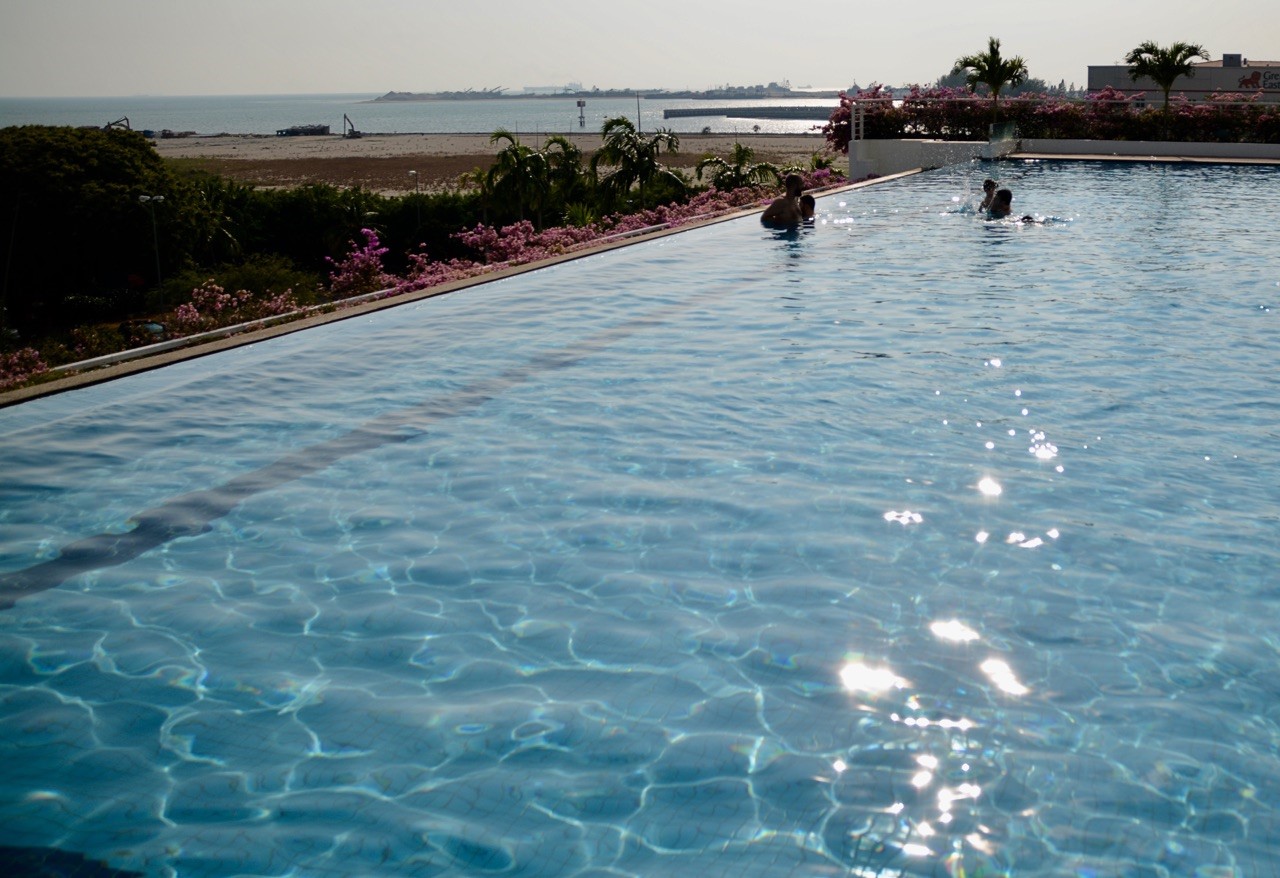
We passed through Muir and followed the road up the coast to Malacca where we checked into the Holiday Inn. With its infinity pool, executive room with a two hour happy hour, free food and drink, plus breakfast for only 400 locals or NZ$128, it was a good deal.

Our room on the 18th floor gave us a great view back over the city.

The city combines the old and new with many high rise apartments being built. Malacca is one of the cleaner cities I have visited in Malaysia.


Monday 21 March 2017

We drove to the outskirts of Malacca to visit a company called Brazen. Run by an Aussi guy called John who has spent the last 15 years here, its diversification is amazing. In their 10,000m2 factory they produce a huge range of products including carbon fibre buses, boats, body armour, building facades and much more.

John told us how most of his labour is imported as Malays don’t tend to want to do manual labour but rather drive a computer these days. The last group he had here were from Bangladesh; they are now being replaced with a group from Nepal. Malay immigration has strict, well-enforced rules on how long foreign workers can stay.

After a few hours we drove out to the main highway through more palm-oil plantations and up to the KL airport. The flight to Langkawi Island was short with an enthusiastic young Asian Air crew.

The 15 km journey from the Langkawi airport to the Bay View Hotel took well over an hour.

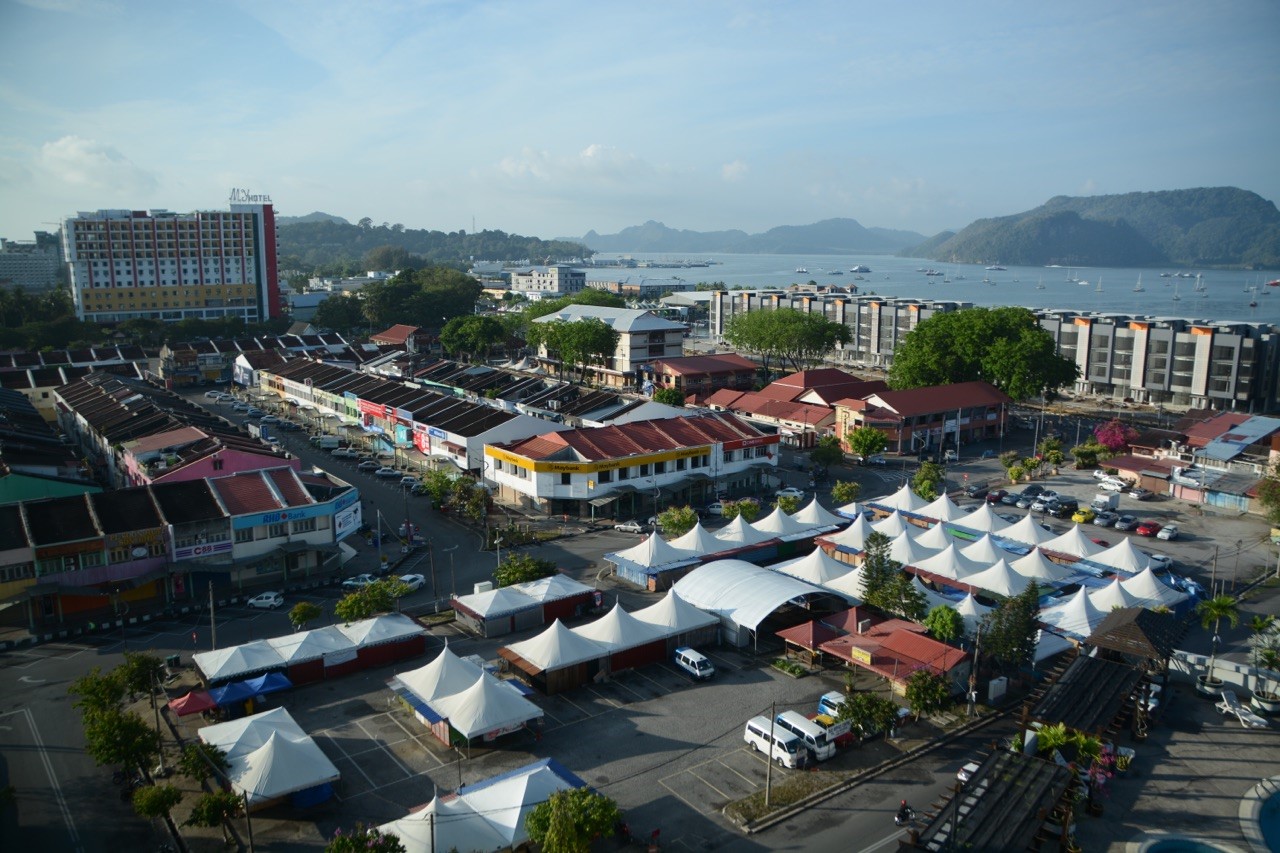
The hotel had once, no doubt long ago, been a flash one. Situated in Kual, I think the main town on the island, it has a four star rating. It was hard to tell which was more threadbare, the carpet or the towels. It does have great views though. On the water front there is a new accommodation and shopping centre being built. The area surrounding the hotel is safe but rough with shops stacked with what appear to be cheap “made in China” goods.


Tuesday 22 March 2017

We arrived at Lima 17 (Langkawi biannual airshow) and took a stroll around the tarmac where aircraft from many parts of the world were on display. It was all pretty casual with one able to stroll right up to most aircraft.

South Korean Black Eagles

Russian Knights


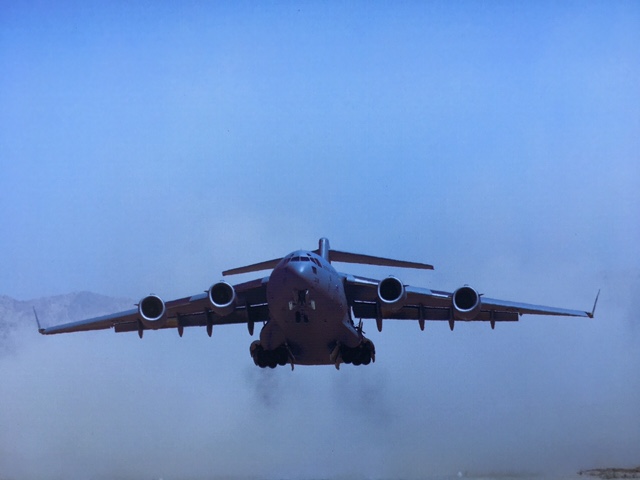
Inside C17

We then took a look in the pavilion. The amusing thing in here was on one hand a great display of rockets and weapons for shooting things down and blowing things up, then on the other a whole lot of things designed to counter one getting shot down or blown up.

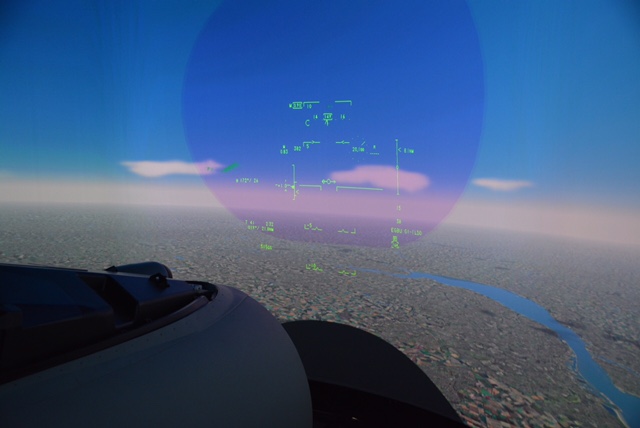
I watched a simulator demonstration on the British-built Typhoon. When they finished and the group left, the pilot asked me if I wanted a go. Silly question really! I jumped in the cockpit and he explained how it worked and told me that you can’t stall or do anything in this aircraft that will compromise it as the electronics won’t let you. If you black out it will recover, the auto pilot will take over and point it in a safe direction until you recover. All the data is on a heads up display. Thrusting the throttle fully forward we left the runway quickly and in no time at all were at 500 knots. Stick back into a vertical climb and in no time we were at 30,000 ft. After a few turns and a bit of looking around some targets started to appear. The aircraft is designed to engage these at a very long range. I didn’t even really have to aim, just flick a switch to arm up a rocket and pull the trigger. I had just hit the fourth target with 9 rockets and 99 rounds of 30mm still left to use when the local crown prince turned up wanting a turn so I had to bail. Fair enough to as they are trying to sell these to the Malays, as are the French with the Rafale.

At 2pm the aerial display started. A couple of Malay airlines flew over followed by two Russian SU-30MKM’s (Mig-fighters), then the Korean Black Knights.

We then took a taxi to Awan Porto Malai where the marine part of the show was taking place. We arrived just in time to catch the end of a rescue demo by the Naval Special Forces. As they are pulled out, clipped to a rope under a chopper, a flying water tank comes in and douses the fire.

We wandered the wharf area chatting to various people and looking at a few different military type boats.

After a beer we headed back to the hotel. We visited the hotel bar which has all the signs of a place going broke; no beer in the taps and a huge humidor room with lots of cigar boxes but no cigars. There I ran into Par, from Aimpoint in Sweden. I had met him several times before in both Las Vegas and Sweden. We had a good catch up.


Wednesday 23 March 2017

We went back to the airport for another look around. There is a lot of brass floating around today it must be the general’s day out. We took another tour around the tarmac.


We then watched another air display. First up was the French Rafale. The speed and manoeuvrability of this plane was far superior to anything else we had seen. This was followed by a display from the Russian Knights, tame by comparison but much easier to film.

After having a look through the tented marine displays we headed back to the marina.

I had walked through the VIP area, as it was pretty empty, to take a photo. I turned around to note a senior officer looking at me. “Oops maybe I shouldn’t be here.” He waved me over to take a seat next to him. He then explained they were doing a pre-run for the launch of a rescue app they were launching the next day. He went on to explain it as it played on the surrounding TV screens. Someone in trouble in their boat on the Malaysian coast presses the rescue button on the phone app and the navy comes to the rescue.

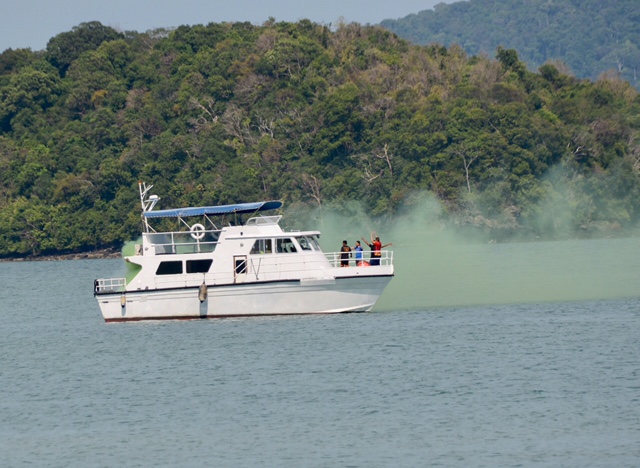
Green smoke billowed from a boat as a chopper flew in followed by a patrol boat.

The officer handed me his card – not only was he an Admiral but the Chief of the Malaysian Navy.

I went and found Glen who had got us a table overlooking the wharf. We were soon joined by Trevor and Beverly, who we had met earlier in the day. They run Aoro Innovations out of Davao City in the Southern Philippines. Trevor is ex Australian military. We enjoyed a good yarn over a few beers before heading back to the hotel.


Friday 24 March 2017

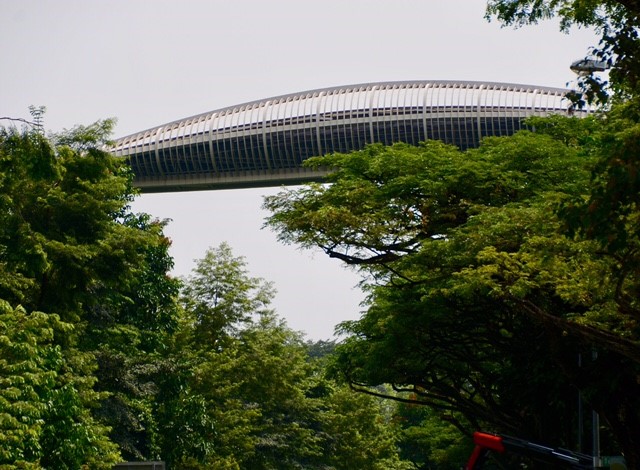
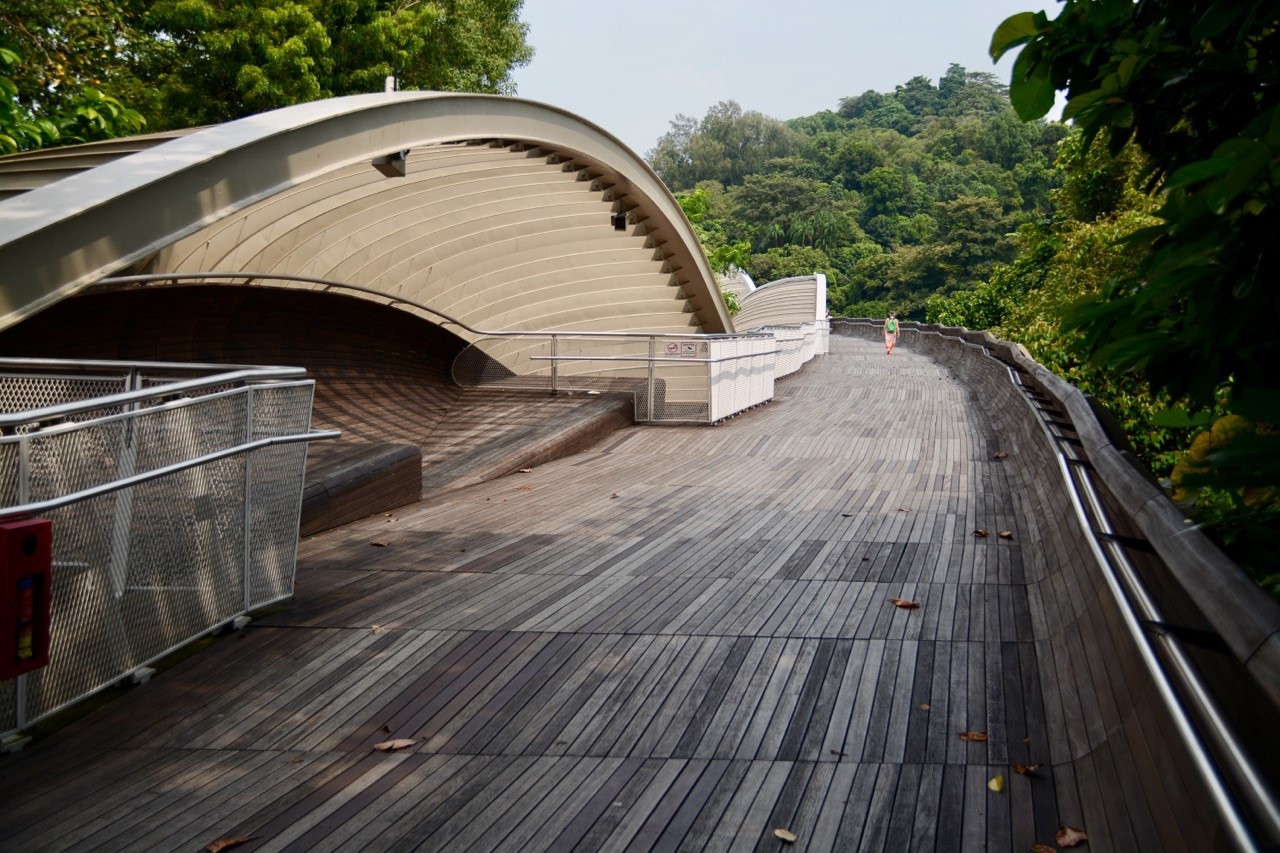
Back in Singapore, I took a stroll down Tanglin Road to Mt Faber Park. Across the road from where we live is a major police station and also Interpol. Heavily armoured vehicles with well tooled up cops are coming and going all day. A little way down Tanglin road there are a number of embassies, all with truck stopping devices that fold down. I went to take a pic of the UK one and a security guard started waving his finger. The Chinese guys didn’t see me. Arriving at the park I headed for Henderson Waves, a foot bridge that goes across the road to a path along the ridge. It has amazing views down to Keppel Marina and out across the water unfortunately into the smog.

The track leads to the top of the ridge where the cable car from the city and to Sentosa Island starts.

From here there is a path (well mainly steps) that lead to the Harbour Front and an MRT station, which took me back to Orchard Road.
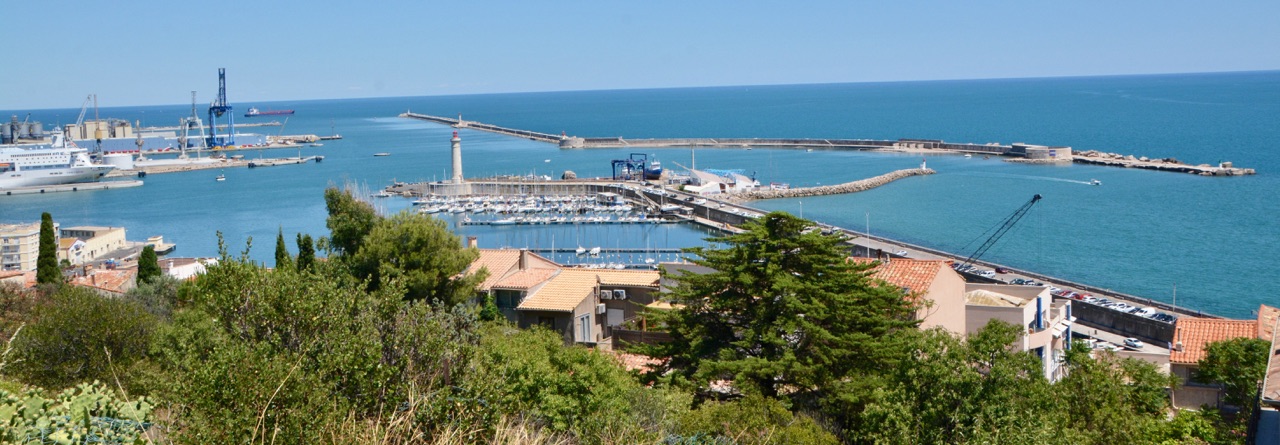


A brief jaunt in Shanghai

Tuesday 21 February 2017

Having had some replacement parts stuck in both knees on the 23 January I am not quite as mobile as I would like to be, so when one of Sylvia’s colleagues suggested checking out the Shanghai Centre at People’s Square just around the corner from the hotel it sounded like a good idea. 

Leaving the hotel an escalator took me up to the overpass crossing the busy Yan’an Road; steps took me down into Jin’an park. With its water feature and a couple of resident rhino statues this place is quite busy. People practice tai chi and kung fu and there was even a group of antiques doing line dancing – mostly in time to the music. 

On two sides of the park are large expensive shopping centres with all the top branded shops. Across the road is the huge Jin’an Temple 

I headed northeast along Nanjing road finding People’s Park less that 3km down the road.

The Urban Planning Centre is situated at the southeast corner of Peoples Park. This place is very well done, featuring six storeys about the city of Shanghai and where it’s heading in the future. There are large sections on the infrastructure. One water supply reservoir can supply 7.19 million cubic meters of water per day. That’s around a thousand glasses per day per person – pity you can’t drink it!

There is a 360° theatre, which takes you on a futuristic journey around the city, and many interactive displays. The best feature is a full scale model of the city as it’s planned for the future.

It’s a bit hard to see the detail in the pictures but this model has every building in the city on it. The population is around 24.25 million over the 16 districts. 

After several hours of looking around the center the knees we’re getting a little tired so I took the easy way and bought a ticket for the subway for the return journey. 


Wednesday 22 February 2017 

While at the Urban Centre I had seen an area called Lingang New City about 50km to the east, near the coast and with a man-made circular lake about 3 kms wide. It looked interesting so I jumped a train to take a look.

The train ticket system here is one of the best I have seen. You press English, press on the map where you want to go, it tells you how much and asks you if you want a return. Put the money in and out comes your ticket and change. A guy lurked nearby checking each machine for left change. 

The first part of the trip was pretty packed.

After a change of trains on to the new city line it was fairly quiet. The train rolled out through suburban Shanghai past a variety of buildings, old and new, with fields interspersed among them. The dirty windows and the smog made it difficult to get good pictures. 

The exit from the underground station opened up into a auditorium like area. 

A long escalator took me up to the lake edge. What I saw there was rather uninteresting. A sculpture in the middle of the lake was barely visible through the smog; the only shop was a container one.

Lots of tower cranes were visible nearby. I think I came five years too soon – the thriving bars and shops I imagined are yet to be built.

The bleakness of the place reminded me of the Craters of the Moon near Taupo in NZ. Soon I was back in the train heading home. 

Settling into Singapore: Our New Part-time Home

Friday 10 March 2017

With Sylvia based here as the Regional President of Royal Canin we have a nice apartment, situated on the edge of Nassim Hill, close to Orchard Road and the Botanical Gardens, in a complex with a gym and a nice pool. It’s a great opportunity to explore Singapore and many of the surrounding countries. 

I started the day with a stroll through the Botanical Gardens. A few meters into the gardens and one has forgotten one is in a big city. After passing the orchid breeding house and the art museum there is not a building in sight, nor the sound of a vehicle.

There are a variety of large trees, plants and sculptures that can be best described by pictures. Passing through the gardens is a very tranquil experience there is a lot more to see here. 


At the other end of the garden I headed underground to the MRT. A short ride took me to the north south line. Deciding to try and get an overview of the city, and having found out this train line is some 6m above ground, I headed north. 

With a population of 5.7 million, of which approximately 2 million are foreigners, crammed into a mere  7797 sq km, I had imagined buildings to be crammed together with few open spaces sports grounds and few trees. Well I got that wrong – some really smart people must have planned this city. From the train I saw wide roads and large open spaces. Many tall apartment buildings seemed to be more tasteful than I have seen in other cities. The biggest surprise was the number of large trees along the roads surrounding apartments and commercial buildings. Someone has made a real effort to plant this place. 

As in most Asian countries washing hung from poles under many, but not all, apartment windows. Some places had pegs built into the building to put one’s pole on. In the last 17 years 75 maids, mainly from Indonesia, have fallen to their death hanging out washing or cleaning windows. 

There is a huge amount of construction going on around the island: new apartments, office complexes and infrastructure. 

Colour has been added to buildings to spruce them up. There are many water features and fountains along the way. 

The north line (red line) had taken me well up the island, then east, then south to Jurong East. The green line took me west to City Hall where I jumped back across to the red line  to Orchard Road and a stroll home.

A great way to see the city. 


 Saturday 11 March 2017

We took a stroll to Dempsey Hill to have breakfast at Jones the Grocers, a really nicely laid out place. The only problem is their poached eggs tasted like water! We probably won’t go back there again, especially after finding a place just down the road at Tanglin Mall that sells NZ free range eggs that taste like eggs. 

Later in the day we took a stroll back to the Botanic Gardens to check out the Orchid Garden. According to the signs ten percent of all plants are orchids – about 20 to 30 thousand species. The stunning range of flowers we saw there can only be described in pictures. 


A stroll home through the rain forest completed a rather relaxing day. 


Monday 13 March 2017

I headed south along Tanglin road, passing a number of huge embassy buildings. The trees in the streets here mean one can walk and stay out of the hot sun. In my short time here I have learnt to carry a poncho and a dry bag for the camera as the heavens can open at any time.

Everywhere I have been so far the streets have been clean with not a piece of paper to be seen blowing around and no chewing gum stuck to the footpaths. Even the leaves rarely litter the ground. 

They also take things quite seriously here. In NZ we might have a very serious sign saying “Trespassers will be prosecuted!” Here is the Singapore version.

Soon I arrived at Telok Blangah Green and headed west into the park and up a hill, eventually coming across the Forest walk. This is a walkway that has been built through the forest at just below canopy height, which weaves its way 2 plus kms through the forest, eventually coming out at Hort Park. 

Along the way you look across the tree tops at buildings, some which look like containers stacked up, whilst also looking down into the bush below.

I continued west through Hort Park, where they have a range of gardens including a therapeutic one. I strolled through this one but it didn’t help my ‘by now a little tired’ knees feel any better!

Warning the next pic is not the result of a Colombian drug deal gone bad…

I think these guys must have been working hard or spent too long in the therapeutic garden. 

From there the path lead to Bukit Chanbu and another canopy walk. Part way along a sign points across the valley to where, when the Japanese invaded in 1942, a large military hospital stood. A doctor stood in front of the door with a white flag. The Japs bayoneted him and went on into the hospital and bayoneted the doctors and patients in the operating theatre before annihilating all but five people. Now we have Isis doing the same sort of thing.

At the end of the canopy walk the track took me alongside a lake and through a very tidy university to the Kent Ridge MRT station where I journeyed back to Orchard Road for the stroll home. 

A Stroll in the Stunning Abel Tasman National Park

Friday 6 January 2017

As Sylvia headed off to Singapore to hunt out an apartment for us I was very privileged to be invited to Kaiteriteri, in the north of the South Island, by Karl and Rachel and their son Sam. We stayed in an apartment overlooking the beach. Rachel’s extended family, mainly from Christchurch, were camped in one of the local camping grounds.

Karl and I spent part of the of the first couple of days walking some of the many mountain bike tracks and admiring the stunning scenery.

1 2 3 4 6

5  The post at the top of Cork Screw Track.

It was suggested that we should take a boat up the coast of the Abel Tasman National Park and walk part of the way back. A bit of research at the local boat kiosk and we came up with a plan: Take the boat all the way up the coast to Totaranui, then on the return trip disembark at Awaroa at 11am and walk the 24km down the track to Anchorage in time to catch the 3.45pm boat home.

7

Rachel went over later to get a ticket for her cousin Liz to be told that they had rescheduled us for a 5pm boat pick up as we couldn’t make it by 3.45pm. We boarded the shuttle boat at 8.45am on Friday morning. These catamarans are well set up with a bow gangway that is lowered directly onto the beach.

8

Heading up the coast we pulled in to have a look at Split Apple Rock.

9 10

We cruised up the coast with its many golden sand beaches; the colour apparently comes from rusting iron the the sand. We passed Adele Island (named after the Frenchman D’Urville’s wife) where a few seals basked on the rocks in the sun.

11

Several more stops and we reached Totaranui Bay and camp ground. This site has road access and was a farm until 1942 when it became part of the park.

12

We then headed back south to Awaroa Bay where we disembarked and began our stroll down the coast. The northern end of this bay was until recently in private hands and came up for sale. It was bought by the public and government and added to the park.

13 14

Peppers Lodge is located not far down the track with accommodation, cafe’s, bars and a pretty good looking vegetable garden – it’s a popular place.

15 16

The track took us up over a ridge and down to Onetahuti Bay. The track is wide and well maintained with quite a few people going in both directions. The bush, mainly Manuka and ferns, is very pretty. Karl and Rachel (in pink) let me go ahead to take the odd pic.

17 18 19 20 21

Next was Tonga Bay. In 1907 granite was carved from the rock here and sent to Wellington and Nelson. The steps to the Nelson Cathedral came from here. All that remains is the winching block.

22 23 24

The track went over another ridge to Bark Bay where we stopped for a bit of lunch.

25 26

There were all sorts of people on the track, some in jandals or flash shoes, even hand bags had been brought along for the stroll. The beauty of this track is that one can get dropped off and picked up at many different places making for walks to suit all.

Another bit of up and down took us to Medlands Bay. The tide was still a little low so we could cross the inlet.

27

A weka grazed on the lawn at the hut, one of three huts along the track people can book to overnight in to break up the journey.

28

As we headed up the next ridge we looked down on some of the many kayakers present along the coast. Many people hire or bring there own kayaks to paddle the coast.

29

Falls River Swing Bridge was the next main attraction. At high tide shuttle boats can make it up here. Young seals are often seen chasing fish up the river.

30 32 33

Up over another ridge with more stunning views, we headed down to Torrent Bay.

34 35

When the tide is out the track goes across the estuary you can see in the background of the photo above. We were too late for that which meant an extra 4km stroll around the edge of the bay and over a few more ridges.

36

At 3.30pm we arrived at Anchorage just in time to catch the 3.35pm boat. When we arrived back at Kaiteriteri the lady at the kiosk was a little surprised to see us. We were sitting comfortably, beer in hand as the 5pm last boat of the day pulled in to drop its passengers.

37 38

This is just another  of New Zealand’s stunning places.

Bangkok and the Mandarin Oriental Hotel

Thursday 24 November 2016

Arriving late yesterday afternoon I made some enquiries about what to do in Bangkok. One suggestion was to take the public boat up the river. I went for a stroll around the local streets; as always I was intrigued by the jumble of power and telephone lines.

209

Returning to the Mandarin Oriental hotel there were a couple of dudes right outside the hotel entrance selling boat rides. After some negotiations I agreed to go thinking the rides were from the jetty at the end of the street. Not the case, I was bundled in a taxi and driven a couple of kms up river. The 1800 locals deal meant I had this long boat to myself for two hours. Powered by a big diesel motor with a straight drive prop off we went.

210 211

The Chao Phraya River runs right through Bangkok. For many years it was the city’s only access with all cargo coming in by boat. The river today is still busy with passenger boats and cargo barges.

212 214

Progress was slow going up the river.  It was quite choppy from other boats and a strong breeze. Some 30 minutes up river opposite the Grand palace, we turned left into a canal. The water is very dirty with rubbish often floating in it. The canal is quite a contrast with mostly run down houses and the odd business intermingled with temples all in good condition with bright colours and lots of gold paint.

215 216 217 218 219 220 221

Lots of other boats cruised the canal. At one point we stopped alongside a very small boat full of drinks and souvenirs; a lady tried in vain to sell some of it to me. Alongside the bank fish swarmed like bees in a feeding frenzy.

222

Next was a lock where a dozen or so boats huddled together, big motors idling away as the water rose. Surprisingly when the lock opened there was little smoke as the engines revved and the boats moved off.

223 224

Back on the river we stopped at Wat Arun Rajwararam, a Buddhist temple, consisting of a main stupa, which is at present under repair.  I had thirty minutes to look around. From a distance this looks quite spectacular but up close the detail is a little rough. It is surrounded by a number of smaller buildings, including a worship hall and a number of buildings containing gold Buddhas with the names of deceased underneath.

225 226 227 228 229 230 231

We headed back down river with the boat dropping me back at the hotel.

A trip to the hotel’s well-equipped gym, a massage, and  later a visit to the hotel’s cigar bar made for a relaxing evening.

232

Later I got chatting to a chap called Eric, his wife and daughter from Denmark. Eric had hunted a lot in Africa so we had a good yarn.


Friday 25 November 2016 – The Mandarin Oriental Hotel

I was somewhat intrigued by this place, especially after chatting to a few of the very attentive staff. A number I spoke to had worked here over twenty years. I set out to find out a little more and was taken on a guided tour by Benjamin, the Public Relations Executive.

We started in the original part of the hotel.

233 234

This was first established as a boarding house for seamen on a site nearby around 1860 by Captain James White.  In 1863 he drowned crossing the river, which in those days was the only access to the city.

Two Americans took over turning it into the first real hotel in Bangkok, calling it the Oriental hotel. In 1865 it was destroyed by fire along with 68 other buildings.

A couple of Danish captains then opened a replacement Oriental Hotel for a few years I think on another site. Some of the history is a little vague.

The oldest part of the existing hotel now is known as the Author’s room and was opened in 1876. This part of the hotel is stunning with rooms dedicated to a number of authors including Somerset Maugham and Noel Coward who both spent a fair bit of time here.

238 239

A group of expats one from NZ, two from Australia and one from the US, were enjoying a high tea in one of the lounges.

235

The next room we visited is dedicated to Ankana Kalantananda. She joined the hotel in 1947 retiring over sixty years later in her eighties. This is her office, which now well into her nineties she still visits on a weekly basis. In her early days hot water was bucketed to the rooms.

236 237

The Oriental employs around twelve hundred people to service its guests occupying the 368 rooms. The average length of service is fourteen years.

Next we headed into the Garden Wing. Situated at the back of the original hotel this 10-storey wing built in 1958 has split level suites overlooking the river. Recently refurbished these are rather nice. Many guests come here year after year, book the same suite and just hang out around the hotel.

  240 241 242

The main part of the hotel, the River Wing, with over three hundred rooms, was built in 1972. Each floor has a manager who sits at a desk near the lift greeting each guest. It offers great views over the river.

243 244

The huge lobby always has staff standing around to great people as they walk past.

245 246 247 253

There is a cigar bar, a lap pool and restaurants on the river bank serving varying cuisines.

248 249

At night all the boats on the river are well decorated.

251 252

Across the river is Spa, gym, conference rooms (which is where Sylvia has been spending her time) and a Thai restaurant. Two boats shuttle guests back and forth across the river. The gym is one of the best equipped hotel gyms I have visited with really helpful and attentive staff. They also run a cooking school at the restaurant.

254 255 256 257 258

We can highly recommend the Oriental Bangkok as a great place to stay.


Two Wet Days in Montepellier

Monday 21 November 2016

Established in 985, Montpellier is one of the few cities in France without a Roman heritage and one of the few in Southern France without a Greek foundation. With around two hundred and sixty thousand people, one third of whom are students, it is the eighth largest city in France.

I strolled to the main square where stalls have been set up for Christmas.

171 172 173

…past the Opera Comedia

175

…and through some narrow streets full of bars and restaurants.

176 177

At the edge of the old city is the Pallas De Justice and the Arc De Triomphe with a wide Boulevard leading to the Chateau D’Eau and a statue of Louis XIV on horseback.

179 180

Under this was a reservoir at the end of the Saint Clement Aqueduct built in the 18th century.

181

I followed this to the other end where the original reservoir had been replaced by a water tower in the 1940s.

182 183

Heading west I followed a rather unique tramline with grass growing across the tracks and rather colourful trams transporting people around the city.

184 185

Continuing west along the tramline I discovered the city is well laid out with lots of nice buildings, old and new.

186 187

I was rather surprised when I came across what looked like a car-wrecking yard full of cars and old caravans. It turned out to be a place where people are actually living. I presume this was a gypsy commune.

188 189

Apparently the word gypsy came about when these people moved to England and the English thought they were from Egypt – hence the name. One view is that they were Romani, part of the military in Northern India. When they were invaded by Sultan Mahmud Ghaznavi and these soldiers were defeated, they moved west with their families into the Byzantine Empire between AD 1000 and 1030.

The tram line then headed north and east back into the city.

190 191 192 193 194 195

It has been a good day out in spite of the weather and a great way to see this rather nice city.


Tuesday, 22 November 2016

I headed east out of the hotel into heavy rain with thunder and lightening. Antigone, a 36 ha site to the east of the city, was originally the Joffre Barracks. In the late 70s it was redeveloped and with huge neoclassical structures it is very much in keeping with the old city. There is a Boulevard through the centre that leads down to the river Lez.

196 197 198 199
200 201 202 203

This style of building continues beyond the river with the large hotels and shopping complexes.

204

I headed back west to the main square for some lunch. Christmas decorations are being erected in the square; health and safety can’t be a big deal here as scaffolding is being erected with no safety harnesses.

205 206 207

Walking back through the shopping centre where security guards search bags as people enter, a beggar still kneels outside in the same place I saw him yesterday, today no doubt collecting more rain in his  paper cup than money.

208

I picked up Sylvia from the Royal Canin HQ at Aimargues; from there we drove to Marseilles to catch our flight via Frankfurt to Bangkok.

Madrid – My Favourite City

Wednesday 16 November 2016

Sylvia’s colleague Hannah had studied in Madrid a few years ago. She very kindly gave me a list of places to go.

We are staying at Hortaleza, about 10km from the city centre. It’s a stunning day with the only mark in the clear blue sky a short vapour trail. I decided rather than catch the metro a stroll would be nice as it’s always a good way to get to know a new city. Wow this is a nice town with clean tidy streets and lots of statues, parks and fountains along the way.

62 63 61

Heading for Parque De l’Oeste I spotted a tall tower sticking up above the buildings. It turned out to be across the road from the park and near the Arch of Remembrance.

64

I paid the three Euros and took the lift to the top. With expansive views over the city  and surrounding countryside it was just a pity the glass was not clean.

65 66 67 68

Behind the tower is the Museum of the Americas with a range of artifacts from most parts of the once Spanish occupied Americas.

70

I enjoyed a stroll through the Parque with its concrete-bottom-stream, ponds, statues and rather large rose garden.

72 73 74 75

Passing some old gun emplacements I eventually came across Temple Debod. This was given to Spain by Egypt. Originally built in 200BC it was dismantled, shipped to Spain, railed to Madrid and rebuilt in 1970. Probably fortunately it is not very big.

76 77

The day over I caught the easy-to-navigate metro back to a station not far from the hotel.

78


Thursday 17 November 2016

Getting off the metro at Opera I took a stroll around some local streets. This place is stunning with lots of squares linked by narrow streets, lined with beautiful buildings.  Lots of people are out and about, street vendors unpack their swags ready for a day’s trade.

79  8180

First stop of the day was the Royal Palace of Madrid. Like a lot of these places it has been around for hundreds of years, damaged in battles and destroyed by fire. Apparently it achieved its present state in the seventeen hundreds.

Housed in the southwest corner of the large courtyard is the armoury. This holds a large collection of armour, a lot on mannequins mounted on horseback. There is also a range of old weapons.  Unfortunately I discovered no pics allowed. I really must learn to read signs”

83 84 85

Moving into the main building I was blown away by the painted ceilings, most surrounded by gold leaf. Large ornate chandeliers hang from the ceilings in each of the large rooms.

 87  88

Passageways surround a large internal courtyard.

90 91

Covering over 130,000 square meters and with over three thousand rooms there is a lot we public don’t get to see. This place definitely gets first prize for its ceilings.

To the south is Cathedral Santa Maria, also a huge building.

92 93

The area surrounding the palace is like a well kept garden with restaurants in the buildings surrounding it.

94

I enjoyed a wine in the sun before heading across town to the Museo  Nacional de El Parado. After paying my 19 euro entry fee I soon came to realise this was an Art Museum! Most of the paintings were of the type you see in churches around Europe. Apparently most of these type of paintings were commissioned by the local bishops. By the number of paintings in this huge building there are obviously way more paintings than churches to put them in. In case you haven’t worked it out I am not really a fan of this kind of art.

This place was also a no picture place, or so I found out when I raised my camera to take a picture of the ornate ceiling. A woman sparked up as she leapt from the shadows with a string of words, none of which I understood, but I certainly got the message “no photos”

On the way to the local metro station I passed the Puerta de Alcalá. Opened in 1778 this is one of the older post-Roman arches in Europe.


Friday 18 November 2016

Having strolled past what looked like a large park yesterday I decided to take a look. Parque Del Retiro is a 1.4kmsq park that has been around since the 1500s. It was passed to the public in 1868 around the time of the overthrow of Queen Isabella.

96

Even as one walks in the main gate the scenery is stunning. With autumn upon us the deciduous trees are displaying an array of golden, red and brown colours.

Not far into the park is a lake backed by a huge statue, the Monument to Alfonso XII, a king that ruled from 1857-1885. Opened in 1922 it’s pretty impressive as it sits with a commanding view over the lake. Atop the 30m high centrepiece sits the king.

  99 100 101 98

Topless mermaids sit on lobsters with turtles guarding the perimeter. Come to think of it every mermaid statue I have ever seen is topless. Lions led by boys guard the land side of the monument.

There is a lot going on around the lake: people row boats; a bunch of school children scream and laugh as a boat takes them for a spin on the lake.

102 103 104

Mounted police patrol the grounds. There is a boulevard of kings cast in stone “oops one queen as well” dating back to 612 ad.

105 106 107 108

Next stop was the Museo Naval de Madrid. This is really well done walking one through the Spanish naval history from the early 1400s. It describes how Spain was the first nation to create an Empire. Its navy dominated the oceans, trading from the Philippines to the Americas until Lord Nelson gave them a good spanking at Trafalgar. Dissected model ships give one an insight to the cargo and people spaces below deck.

111 112

There are exhibits from most eras. One display case holds a number of weapons from the early Philippines.

113

A stroll around the town eventually lead me to the Hotel Iberostar to meet Sylvia. Sylvia had booked us into a Flamenco show. Funny I always thought it was Flamingo dancing – apparently flamingo’s don’t dance!!

After a very nice Citadelle Gin and Tonic at a terrace bar we headed for the show. About eighty people packed into this venue, most on terraced seating with a good view six or seven musicians and dancers crammed onto the small stage. The dancing seemed rather aggressive with lots of foot stomping. To me it was like an aggressive version of tap dancing. Fortunately it only went for an hour, after which we strolled the nearby streets.

114 115

Many magnificent buildings and fountains are well lit at night.

116 117 118 120


Saturday 19 November 2016

We took a short stroll back to Parque Del Retiro to enlighten Sylvia to its beauty.

136

After looking at the lake and the boulevard we wandered down the south end where we discovered the Palacio de Cristal. Built some time ago it is now a place where people go and listen to sounds. Today it was a ship breaking through ice.

137 139

While looking across the park at the palace a couple of woman asked us to take their photo. We chatted for a little while and it turned out one of them has been reading our blog.

As we wandered around we came across Palacio de Velazquez, a nice looking Turkish-style building hosting an art exhibition that neither of us took a liking to.

From here we strolled northwest through the town. This city is itself like an architectural museum. Even apartment buildings, four or five stories high with their wrought iron balconies have a nice style about them.

140

We wandered through the Plaza Mayor a large square surrounded by more well designed buildings.

141

We came across Mercado de San Miguel, a market packed with food, booze and hundreds of people.

142 144 143 146

Arriving at the Palace square we stopped for a drink at an outdoor bar overlooking this magnificent area hosting fountains, gardens and more statues of kings. In front of the palace they had the changing of the guard.
147 148 149

We took a look inside the Almudena Cathedral. This one is relatively new; building started in 1883 and it only took a hundred and ten years to build. The pope rocked up and consecrated it in 1993.
150 152 151

From here we strolled back across town with a stop at the milk bottle shop (named by me for its ceiling) where Sylvia bought a frock.

153 154 156 157 158 160 161 162 163 164

Eventually we arrived at the Museo National Arqueologico. The first part of this museum walked us through the evolution of man from 120,000,000 years ago until the evolution of us homo sapiens some 200,000 years ago. Apparently we haven’t changed much in the last 50,000 years.

Bone fragments of a little pre man guy a few million years old had been pieced together.

165

It appears that man didn’t start getting teeth cavities until he started consuming grain and pulses fifty odd thousand years ago.

Early man coming out of Africa created large settlements in Iberia (now Spain and Portugal).

There is an Egyptian section with lots of mummies lying around, as well as a large Ancient Greek section and many other interesting exhibits filling this large old building.

167 168

Sylvia was amused by the large footpath frog on our stroll home.

169 170

In the evening we enjoyed a meat platter at one of the many local eateries. Apparently Madrid has more bars and restaurants per head of population than any other European city. At night thousands of people are on the streets enjoying the night and vibe. We didn’t witness any yelling and screaming or violence as often seen on a Friday night in Auckland.


Sunday 20 November 2016

We had breakfast at the Westin Palace, a rather nice hotel nearby.

121

We then visited the Palacio de Comunicaciones. This was originally the post office, telegraph and telephone centre and was built in 1904 with steel columns  to allow big spaces, open to the ceiling. Now an exhibition space, it is well worth a look. Unfortunately the observation tower was closed today because of bad weather.

122 125 127 128

Around noon we took a taxi to Atocha Station to catch the fast train to Montpellier. We got to the first intersection to be turned back by the police. Large areas of the city seemed to be cordoned off. We don’t know why. Eventually the rather upset taxi driver got us to the station by circling around the city.The station has a Memorial rain forest in honour of 191 killed in the March 2004 train bombings in Madrid.

129

Soon we were speeding across the arid Spanish countryside, at times just over 300kph – a little faster than Japan’s bullet train.

 131 132 133