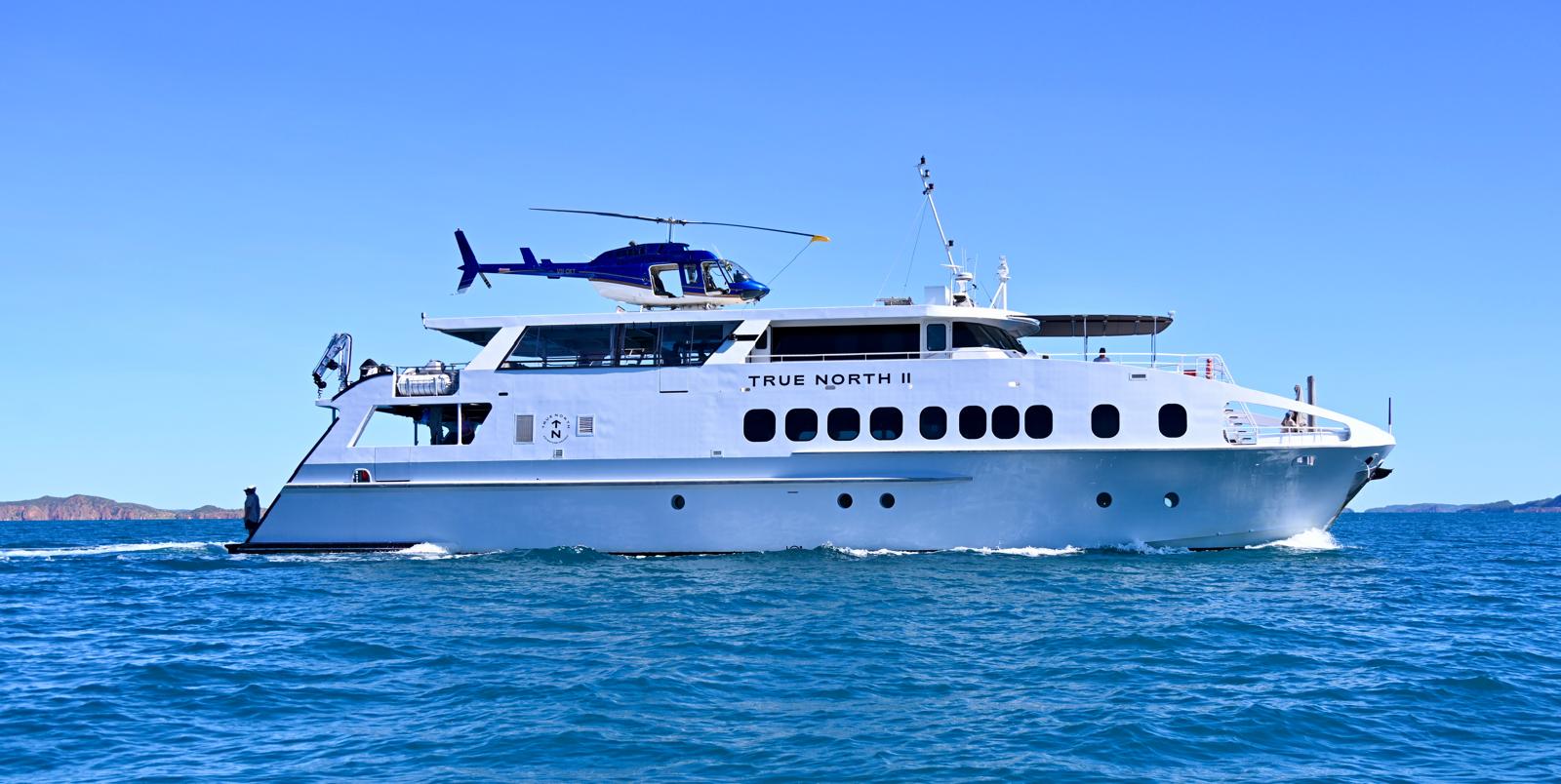
Thursday 28 May 2026: True North II, Buccaneer Peninsula – Sylvia
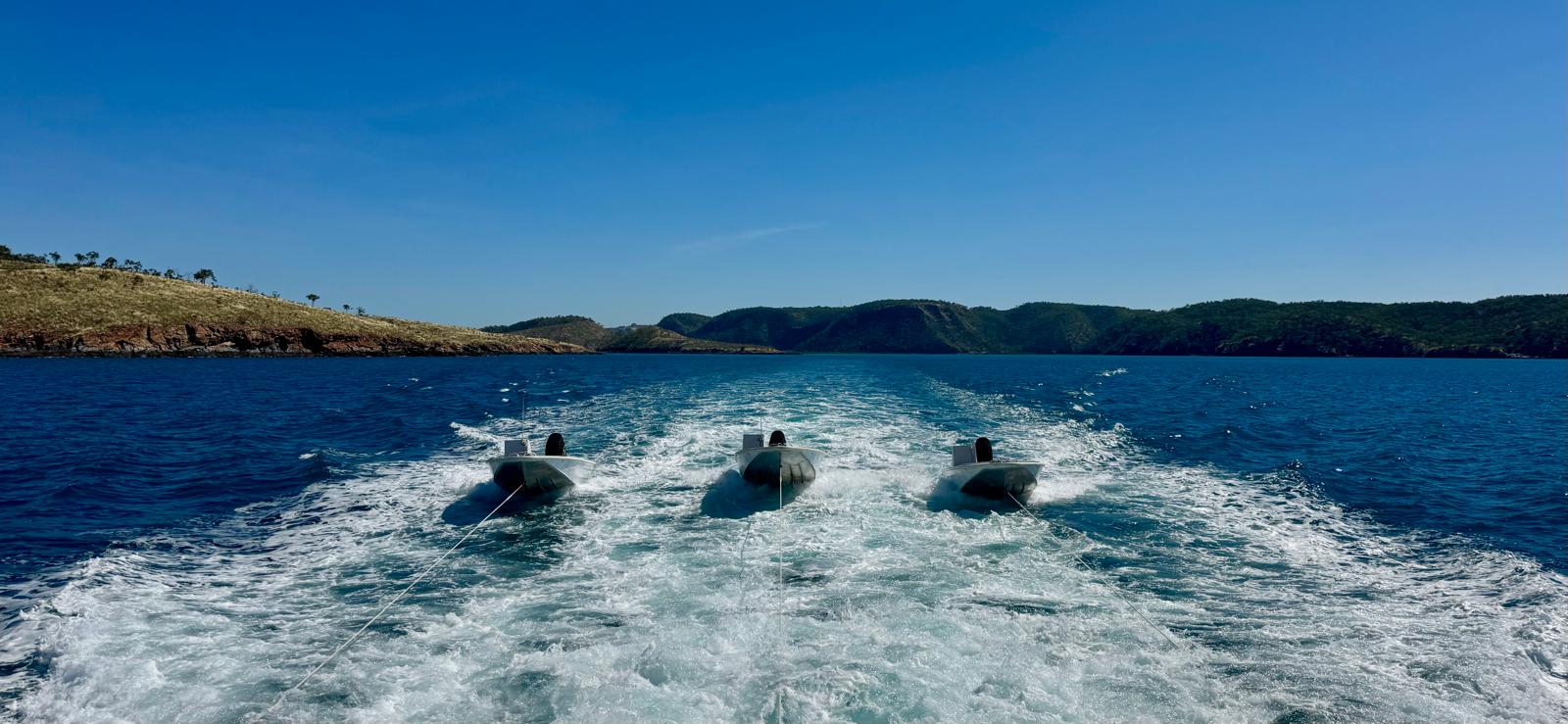
We woke early this morning after a peaceful night, with only gentler rocking as we cruised northward into the Kimberley’s. We had arrived overnight in the Buccaneer Peninsula, a large area of 884 island (more than 1000 at low tide). After a light breakfast at 7am we headed out for our first expedition. Most people took the tenders a short ride and walked up a short but steep slope to a water hole for swimming. Roger and I, along with two others opted instead to do a scenic cruise on one of the tenders, exploring the many nooks and crannies around. At one stage we passed through an arch that had been carved out by the sea and noticed hundreds of sea lice scuttling up the walls.
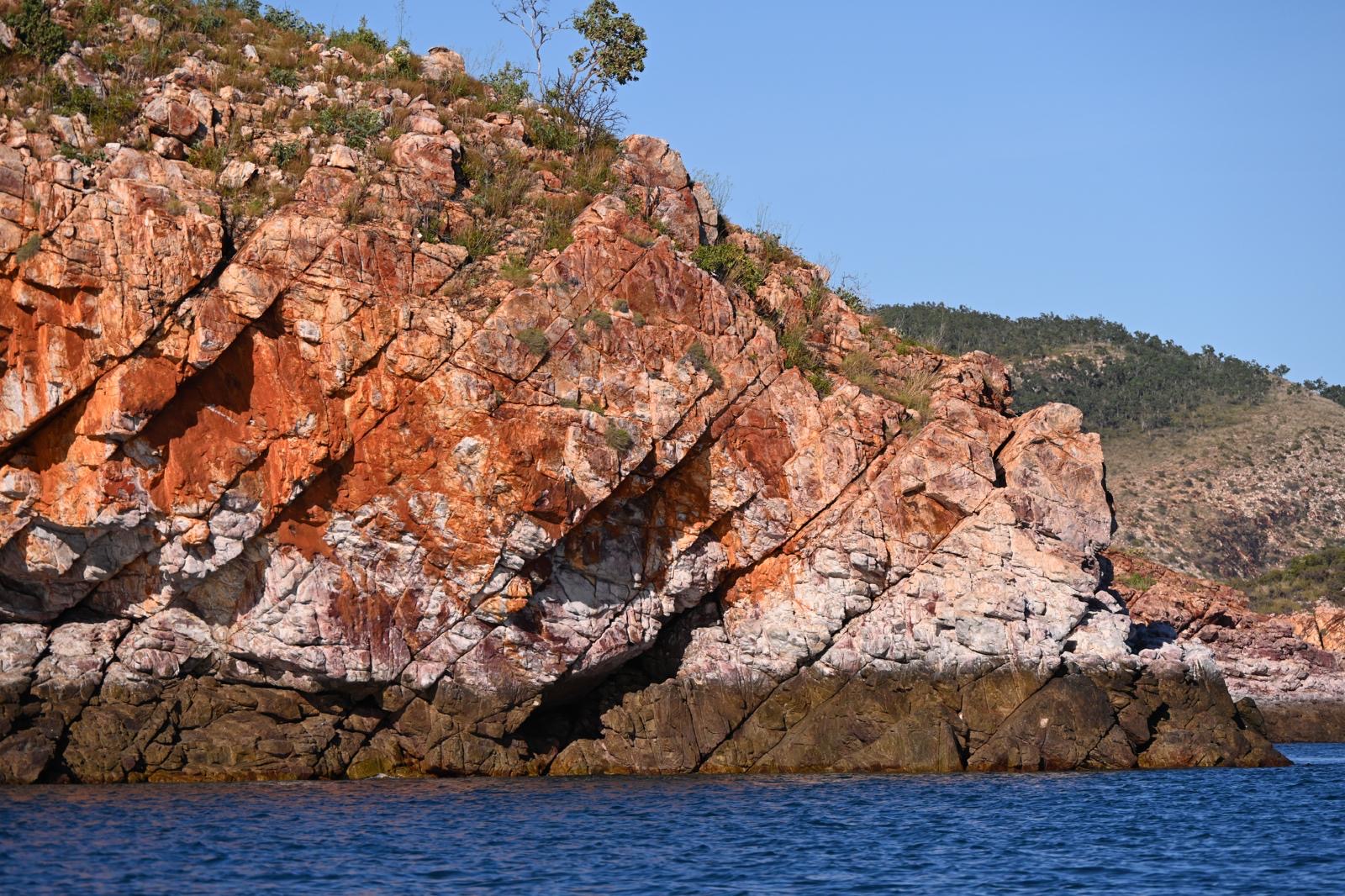

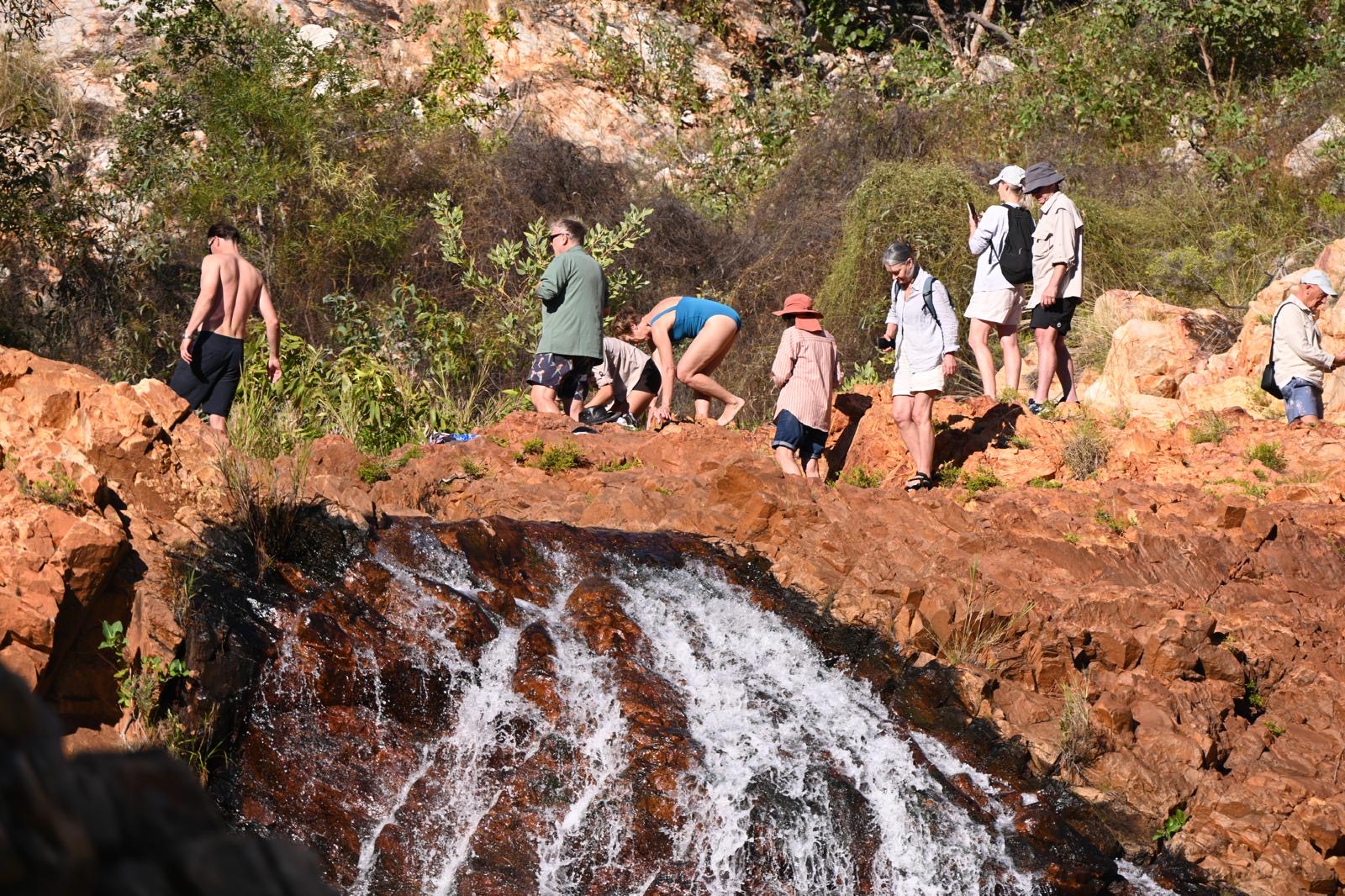
This area was mapped by a young man called Philip Parker King in 1822. Using the tools available to him at the time he made an incredibly accurate map of the area, which is very impressive.
The Kimberley Basin was separated from the rest of the Australian continent when Gondwanaland broke up and the many rock formations were formed when it crashed back into Australia millions of years ago at a rate of about 12cms per year. It certainly makes for some impressive scenery. Iron in the ground has turned the, originally purplish, rocks bright orange. Near the tops the colour has been washed away and they are almost white. These three colours contrast beautifully with the turquoise and blue of the ocean and the green of the limited foliage around.

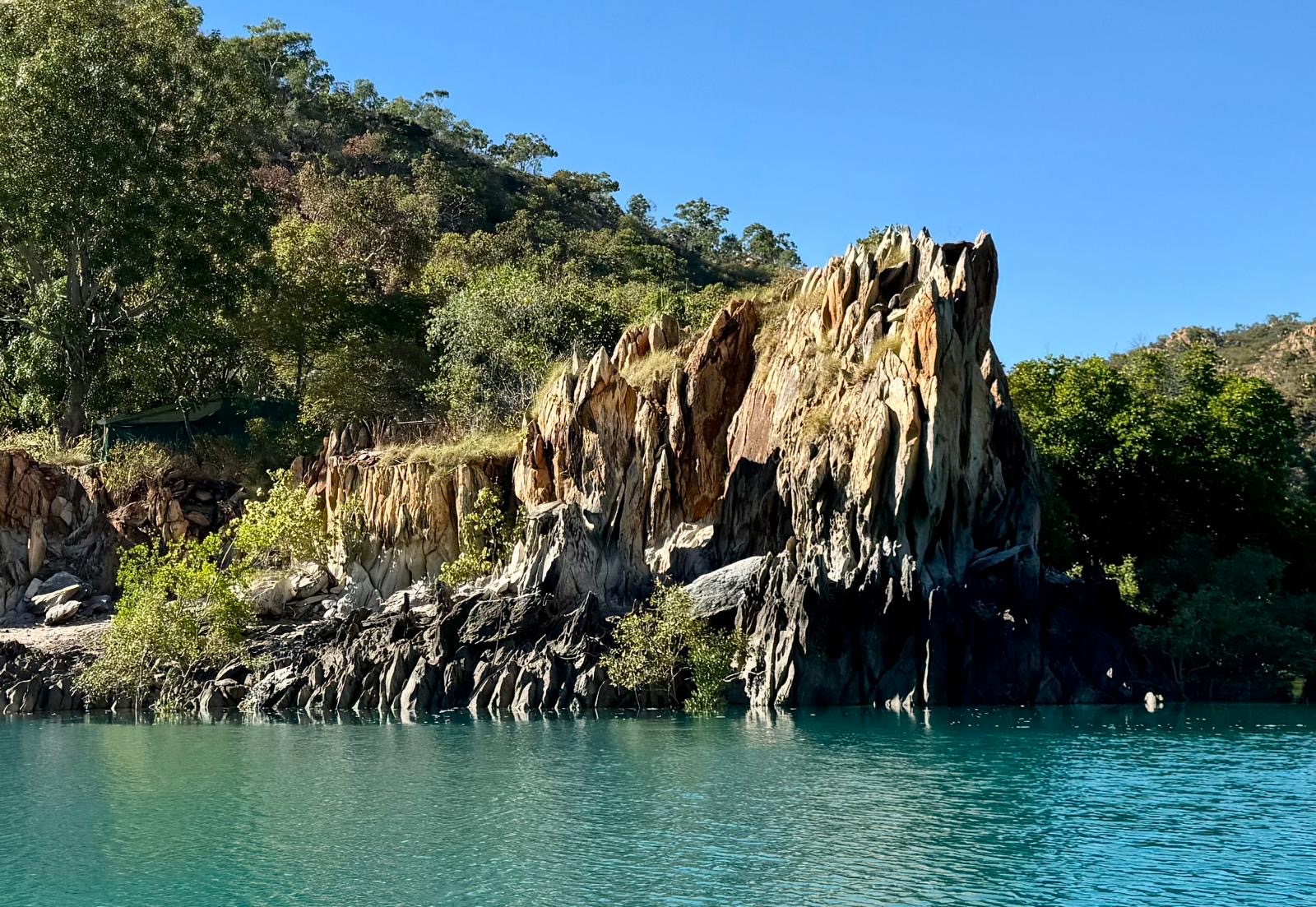
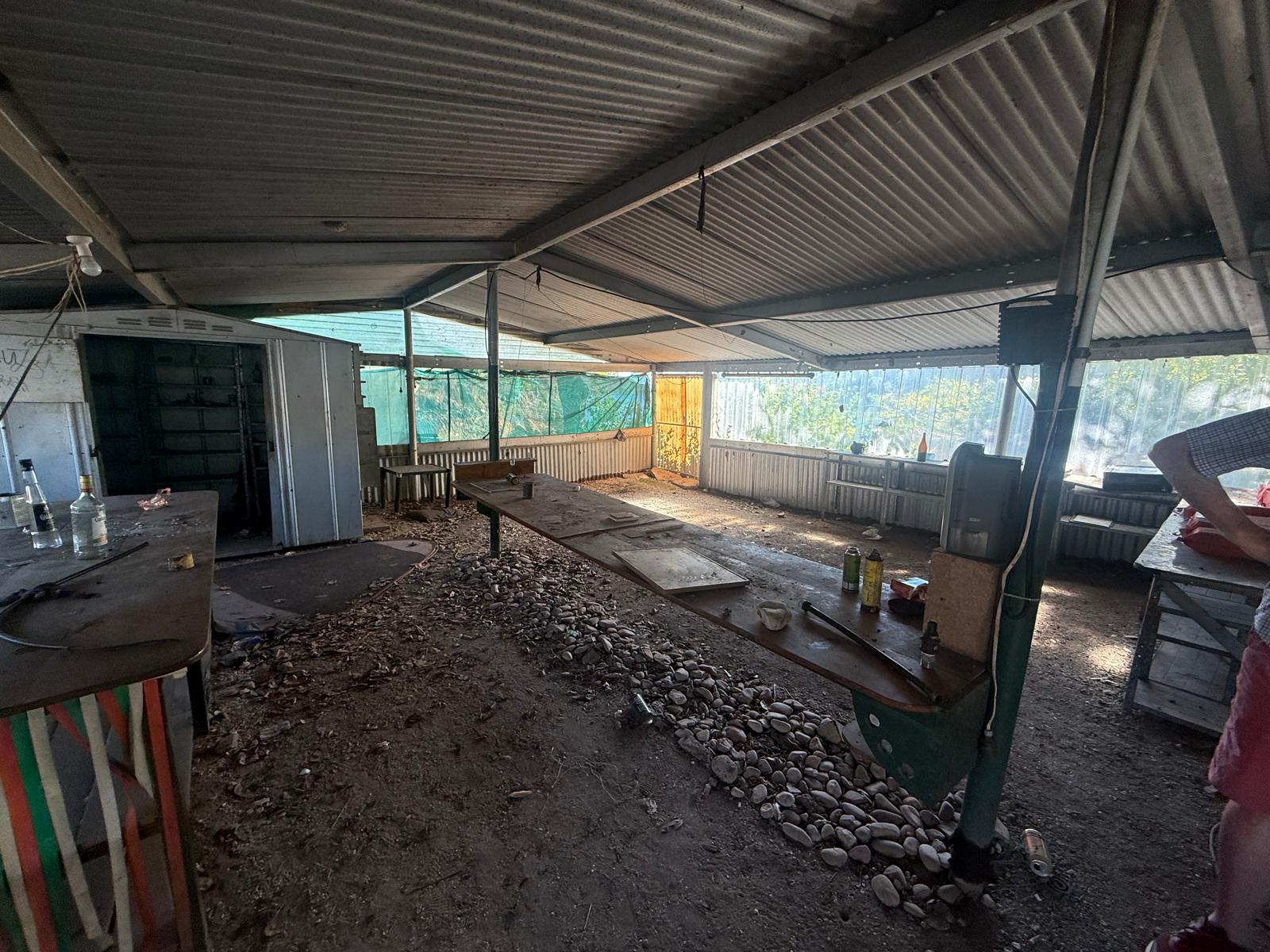
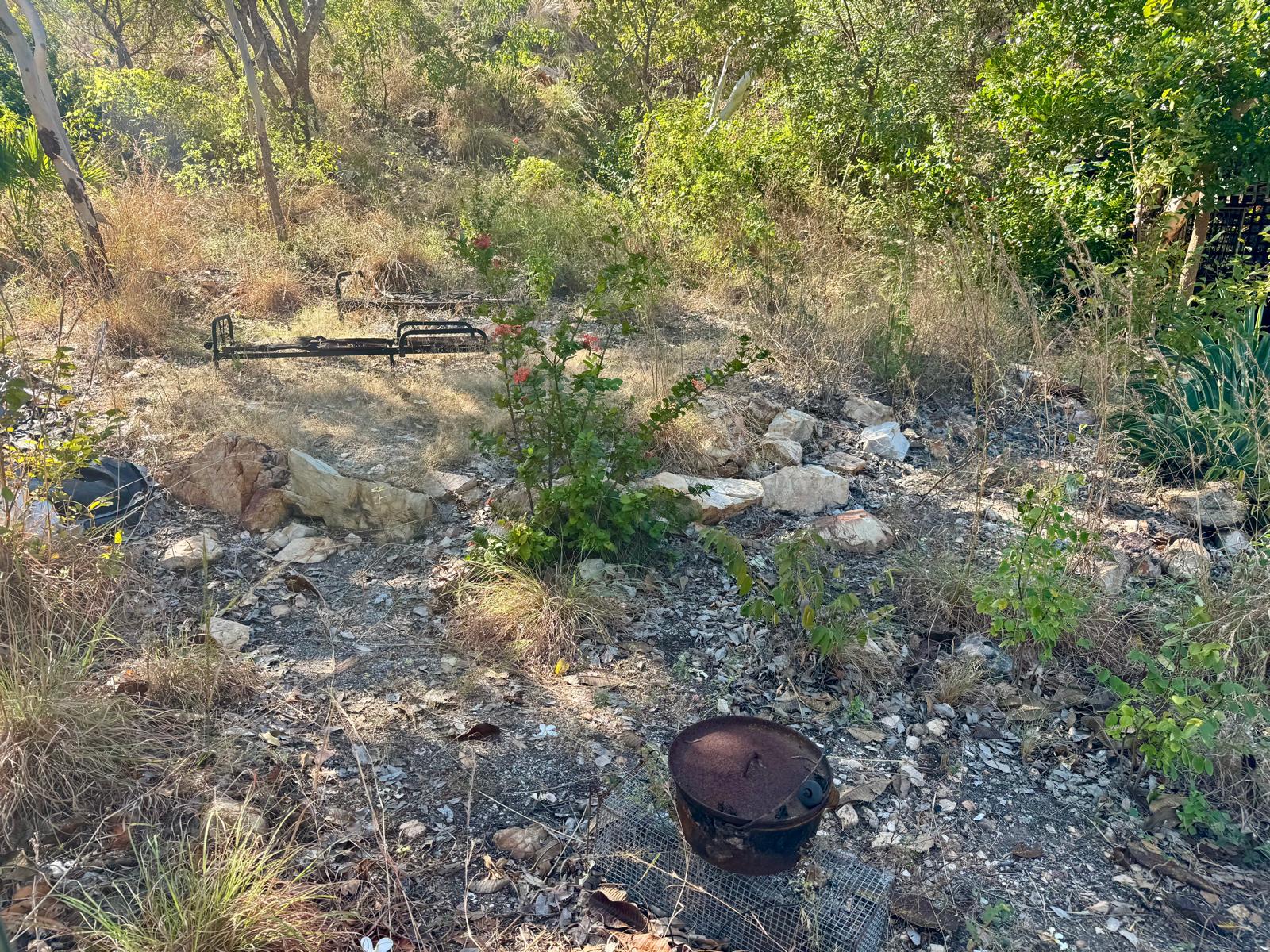
Eventually we arrived in a cove where we could see an old shack on the hill. Apparently a couple of sailors had decided one day to set up home there. They lived happily for many years and even had a bar set up that True North used to patronise. The wife wanted a swimming pool and her husband obliges, welding her a pool out of an old water tank. I think they called it Squatter’s Rest. It was pretty rustic. When the land was returned to the indigenous people they were originally told they could stay, but after a change in leadership they were kicked out. She died a few years ago but her husband, who must now be in his 80’s still lives in their trailer yacht.
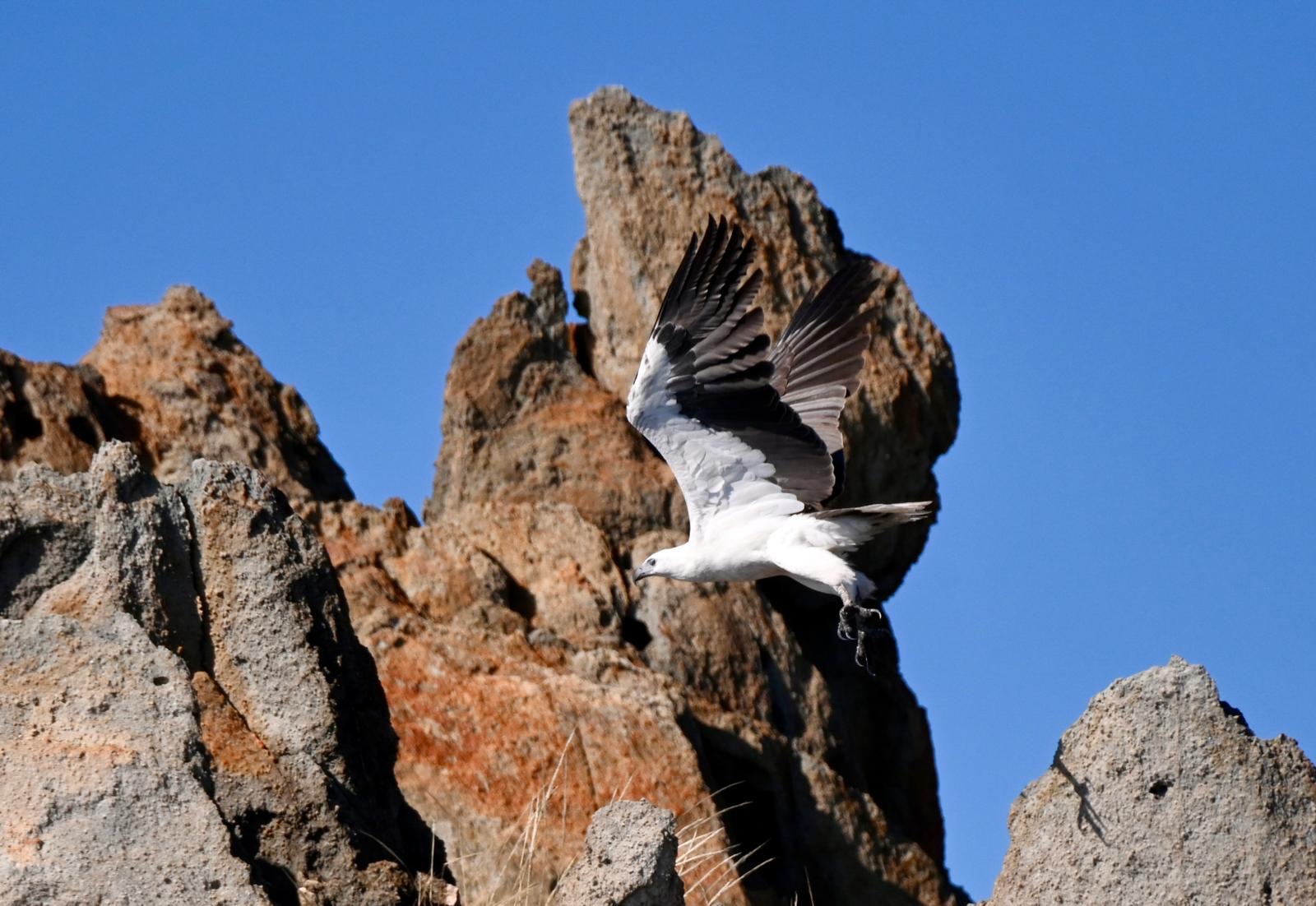
Sea Eagle
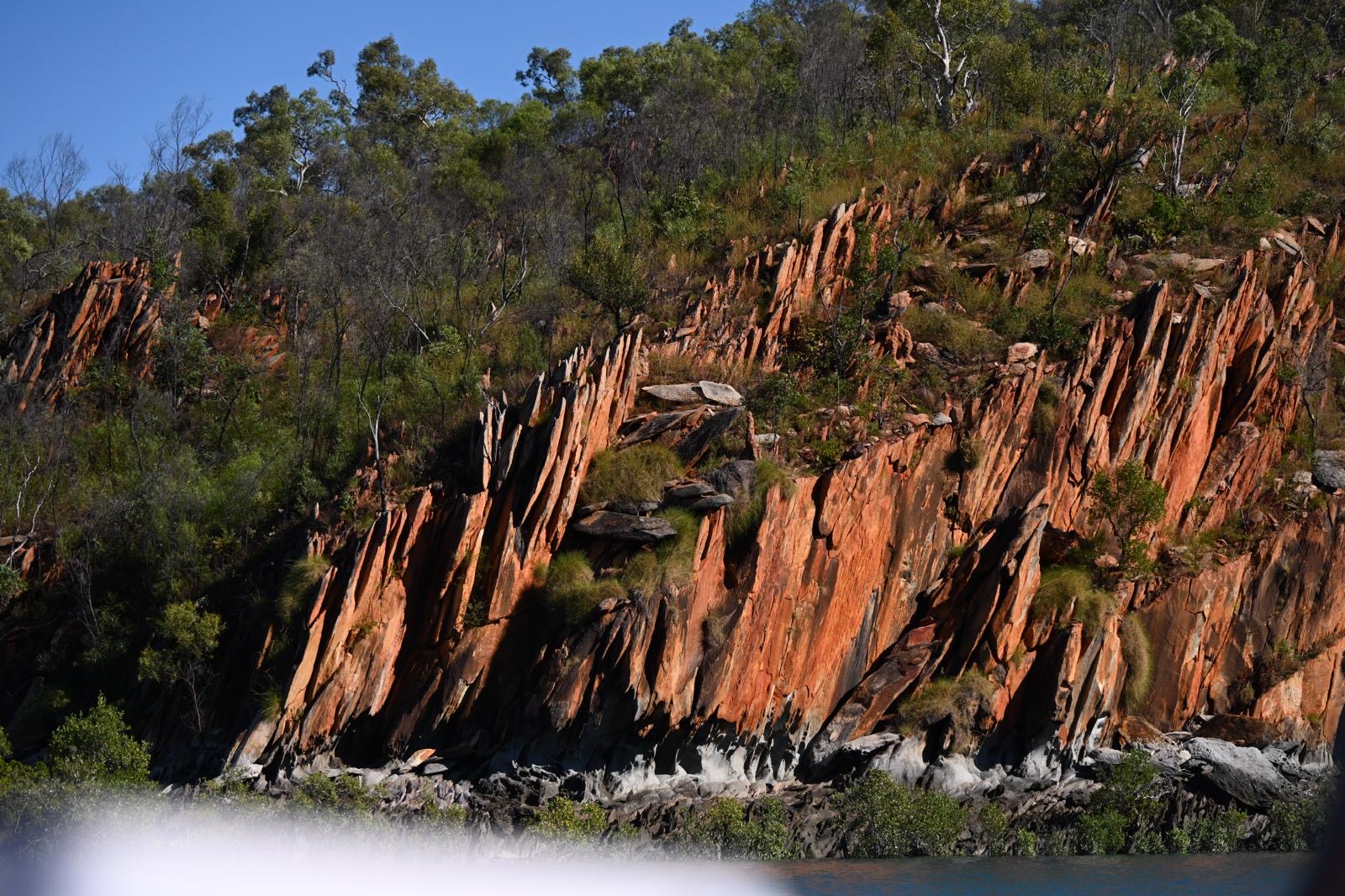


We returned to true North II in time for an emergency drill, followed by a briefing on the helicopter. At about midday it was our turn for our first flight and, after donning our life jackets, we boarded the chopper to fly first over the horizontal falls, which are formed by the massive tidal movements pushing water through narrow gaps in the rocks. We then flew over a couple of iron mining sites. Apparently some of the purest hematite in the world was mined here but the mine closed down a few years ago. I actually thought it was pretty sad to see the impact on the environment.

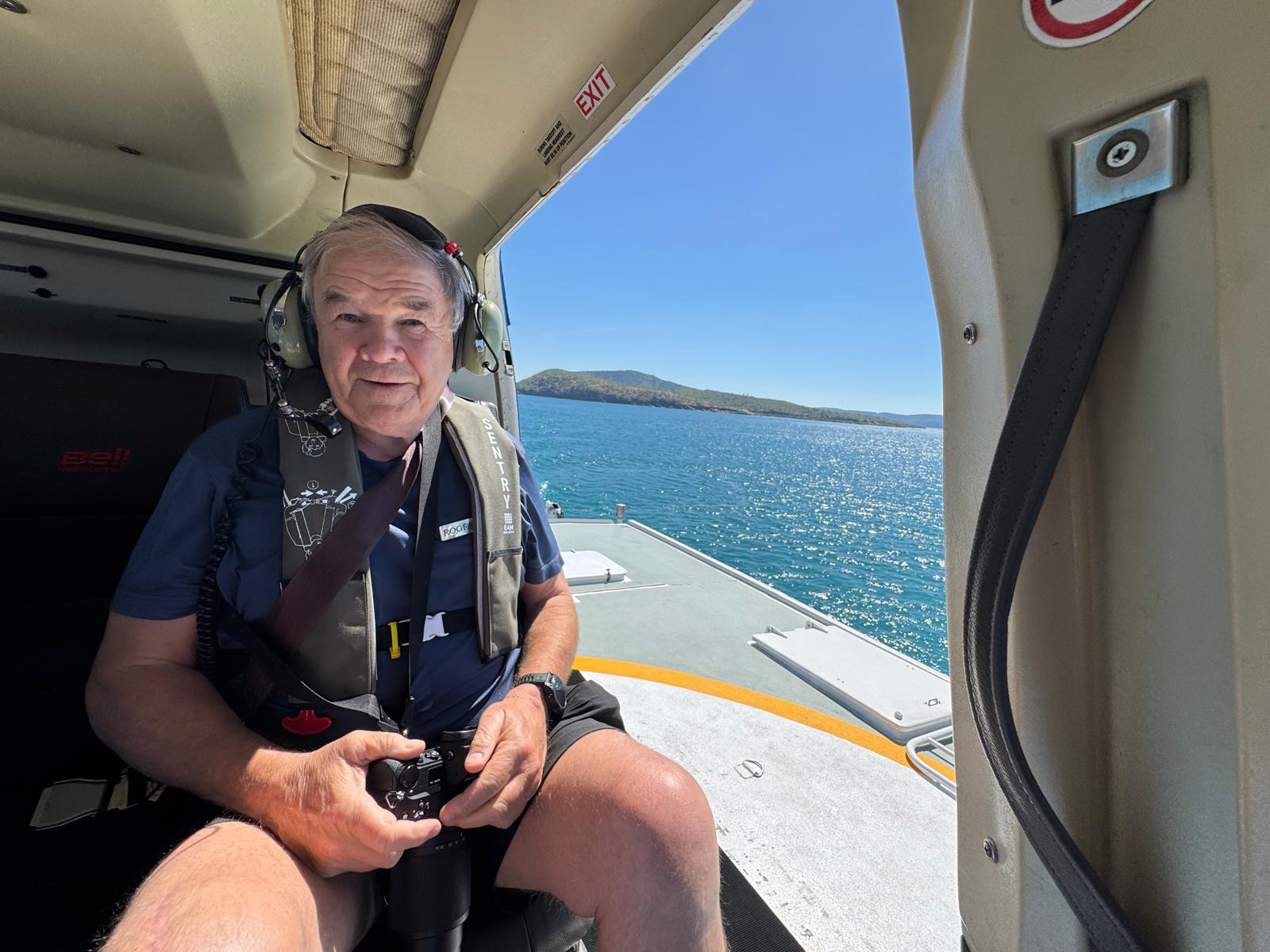

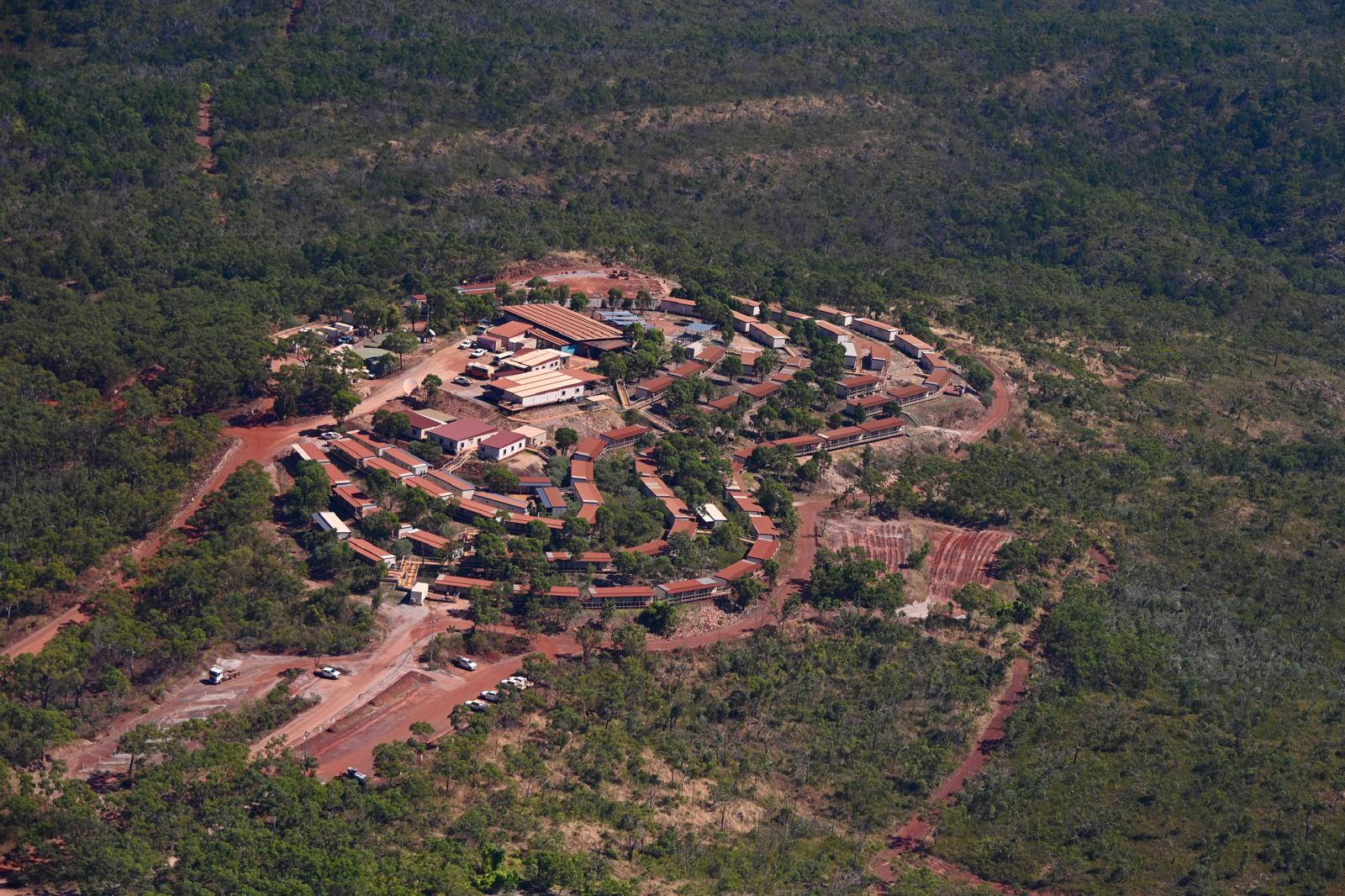


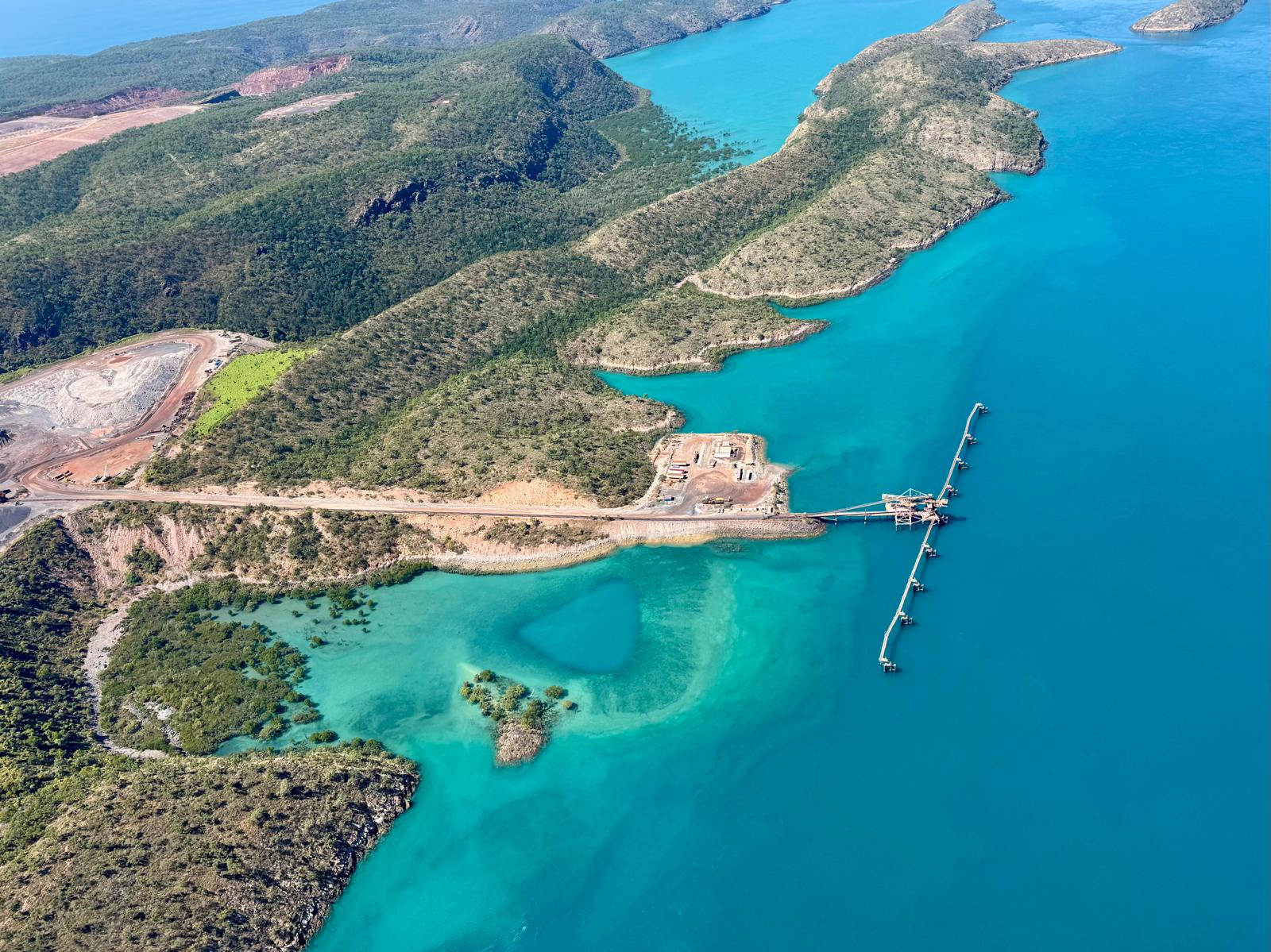
From the helicopter the colours of the Kimberley region really come to life. It is a pretty stunning place. We returned to the boat after about 40-minutes, just in time to join the other guests for a delicious lunch of chicken learn salad with crispy wontons. Another trip we will definitely not go hungry on…


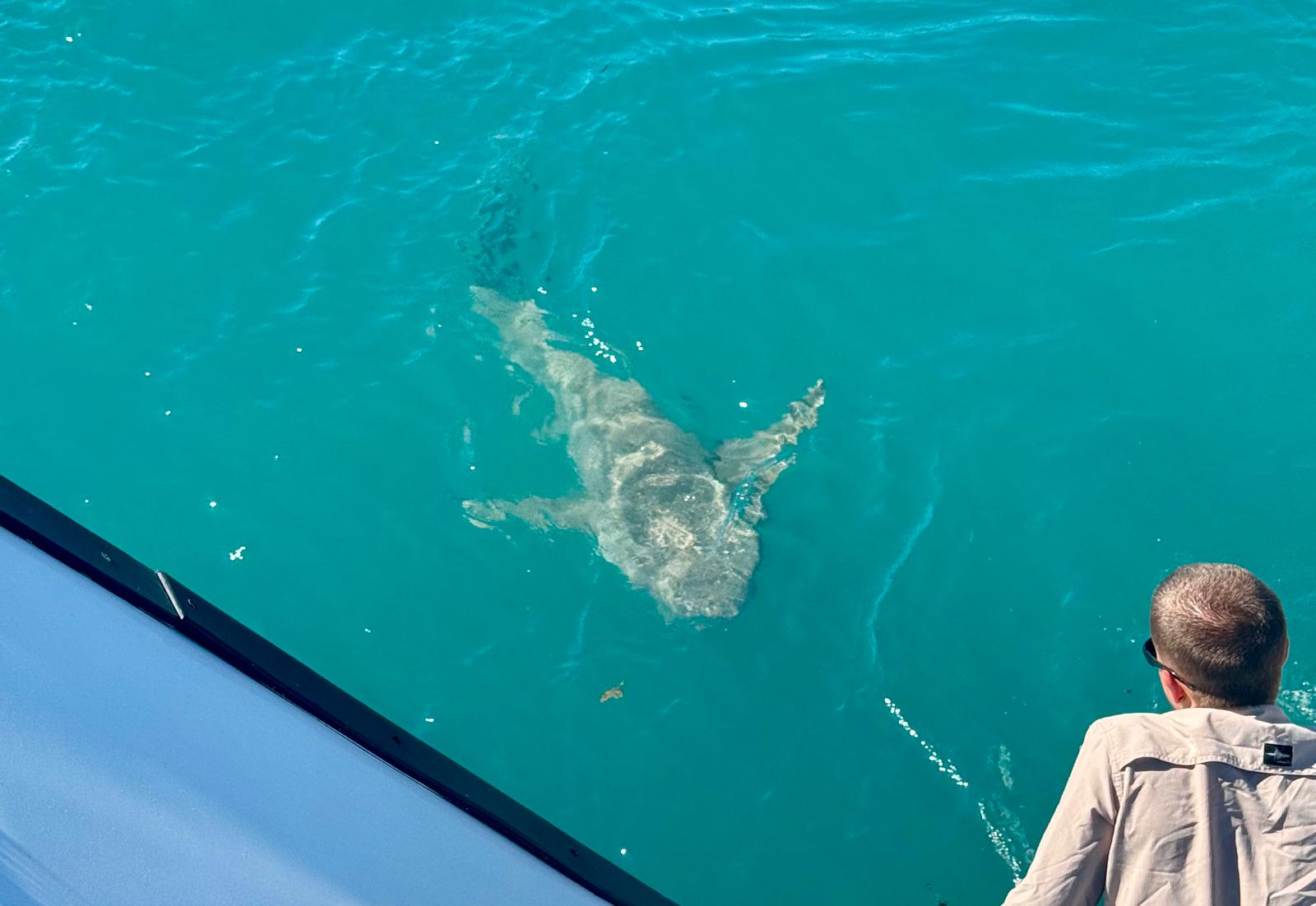
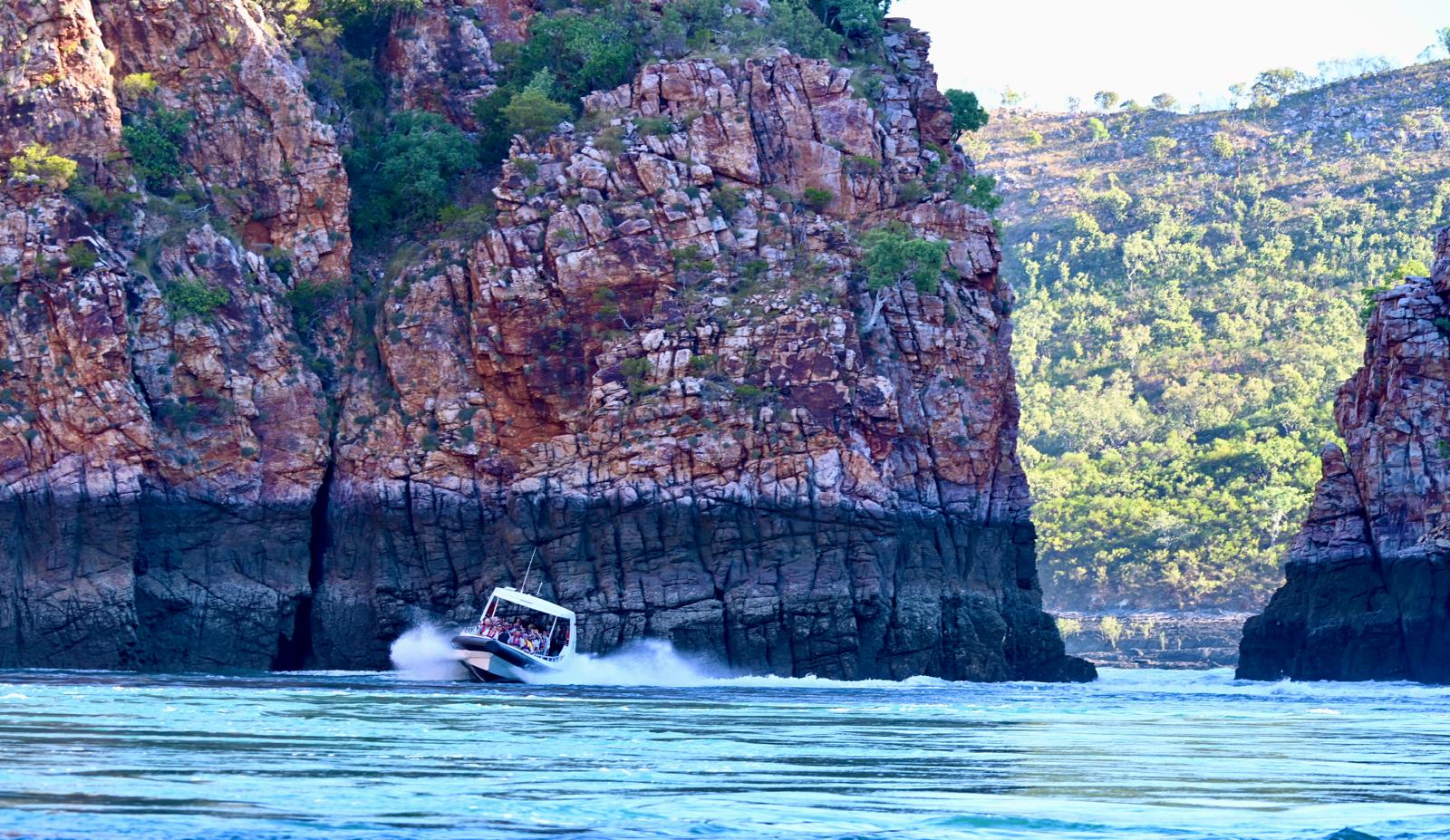
At about 2pm we climbed back into the tenders for our afternoon’s exploration. As we stepped onto the tender a nurse shark was circling calmly, nearly passing right below us at one point. First stop was the horizontal falls that we had flown over earlier. At peak tide today (neap tide period) the volume of one olympic swimming pool flows through the two cracks in the rock, one 17m wide and the other 9m wide every second. We were not allowed to go right through but were able to motor about half way in through the current and then turn and come back out again. It gives a good sense of the force of the water, which was very hard to capture in photographs. A few boats are allowed to go all the way through but they had stopped giving out licenses by the time True North II started operating in the area.


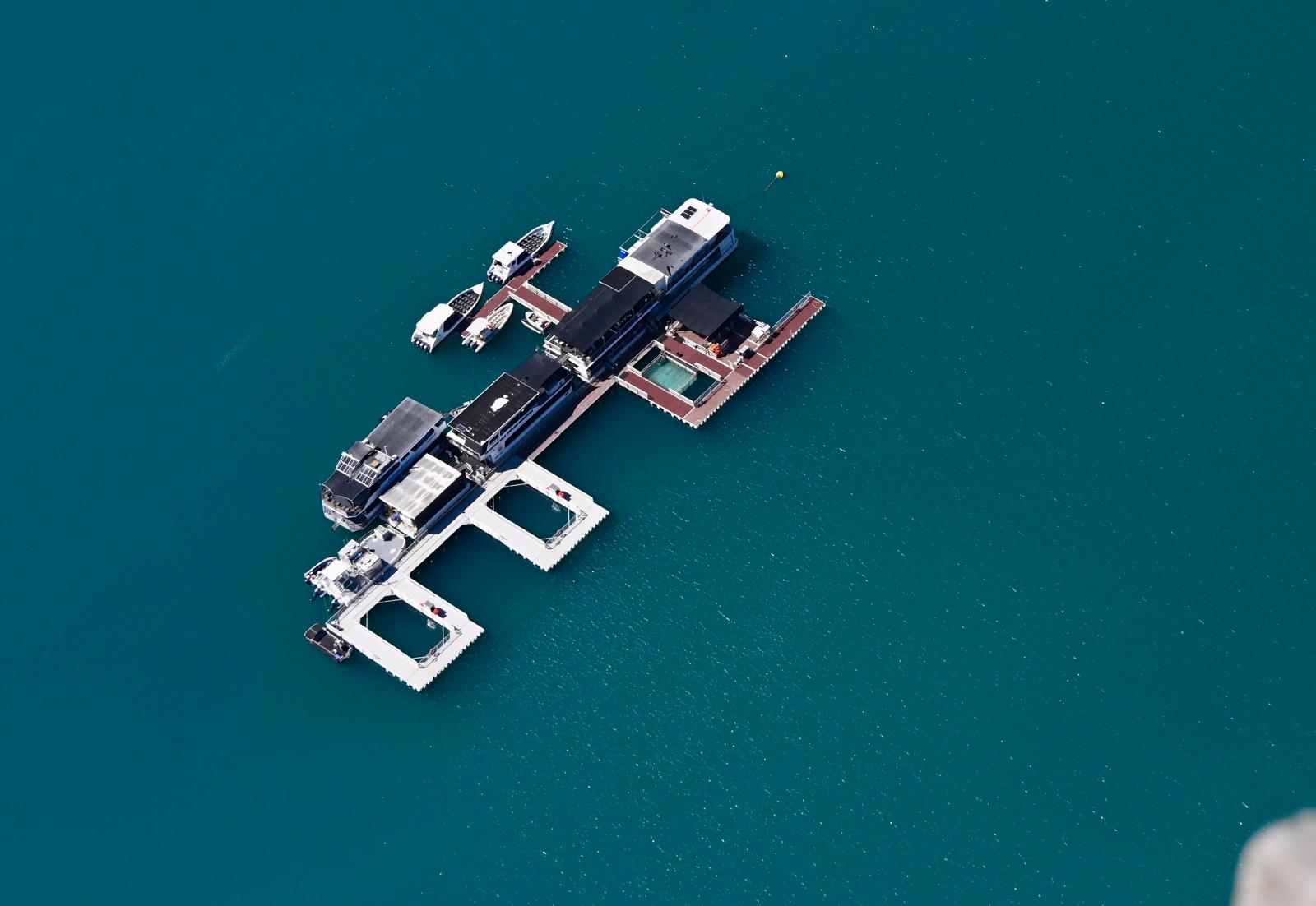
There is a large installation nearby where people fly in on seaplanes and board fast jetboats to go through the gaps. Some stay overnight on the pontoon area and others fly back to Broome or Derby the same day.

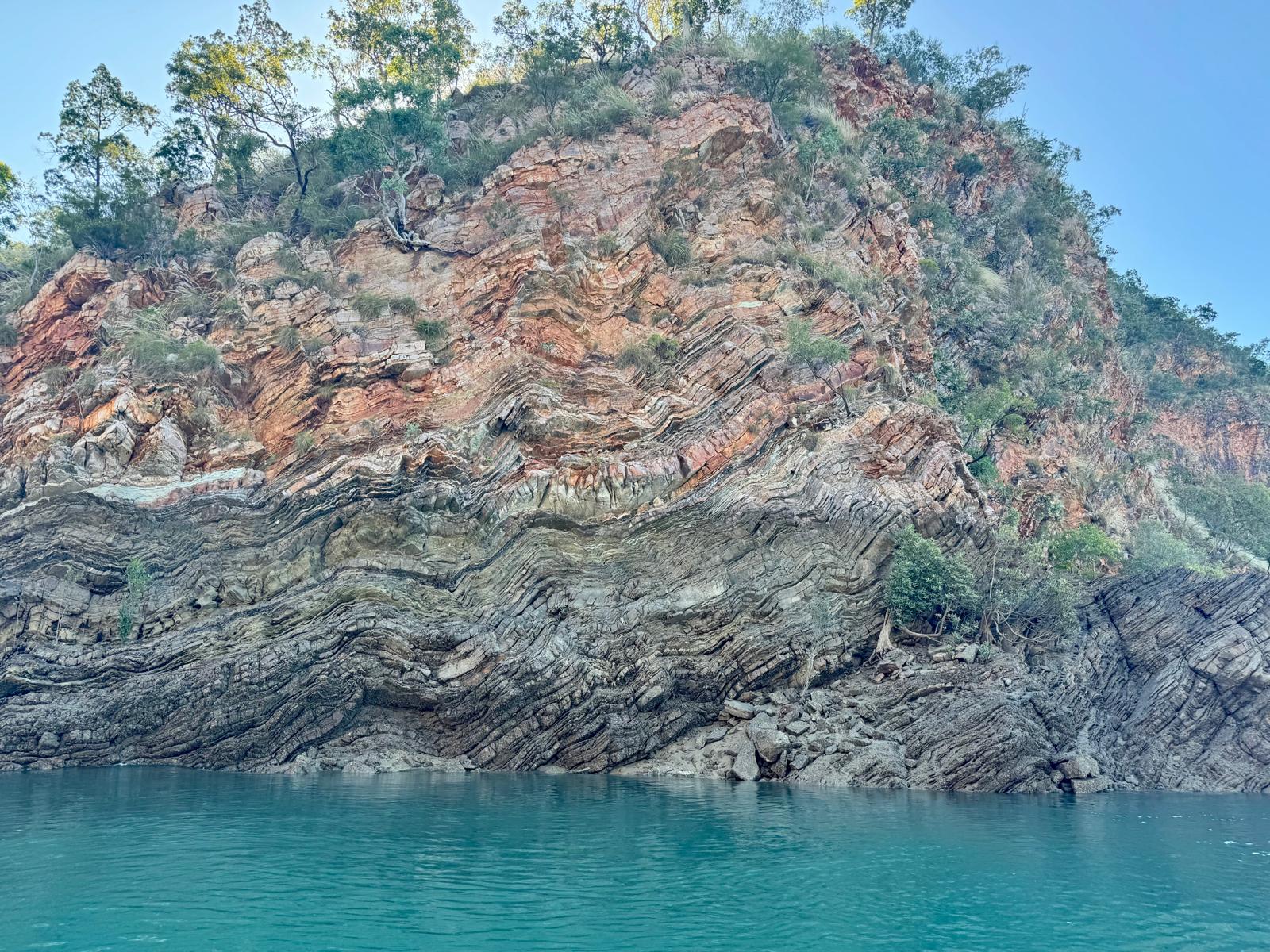
We next motored around to explore Cyclone Creek. This area showcased the many layers of sandstone, the youngest, Pentecost sandstone being 600-800 million years old and the oldest, King Leopold sandstone dating from about 1.814 billion years ago. In some places different volcanic rocks project through the layers of sandstone, which themselves are angled and warped in many different patterns, highlighting the ferocity of the land movements that created this area. We motored as far as we could down the creek without getting stranded on the still outgoing tide. At one point a number of bright orange fiddler crabs stood out on the grey mudbanks. We came across a ~2m salt water crocodile lying lazily on the surface of the water. Unfortunately it sank out of sight as we approached. I am sure we will see many more on the trip.


Fiddler Crab

We made our way back to the Horizontal Falls which were by now pretty much at peak flow before returning to True North II, as four seaplanes taking off from the pontoon, and the ship’s helicopter taking off with the last group of guests for their aerial flight made a great spectacle. The moon was rising over the cliffs behind the boat as we tied up and disembarked for the evening.
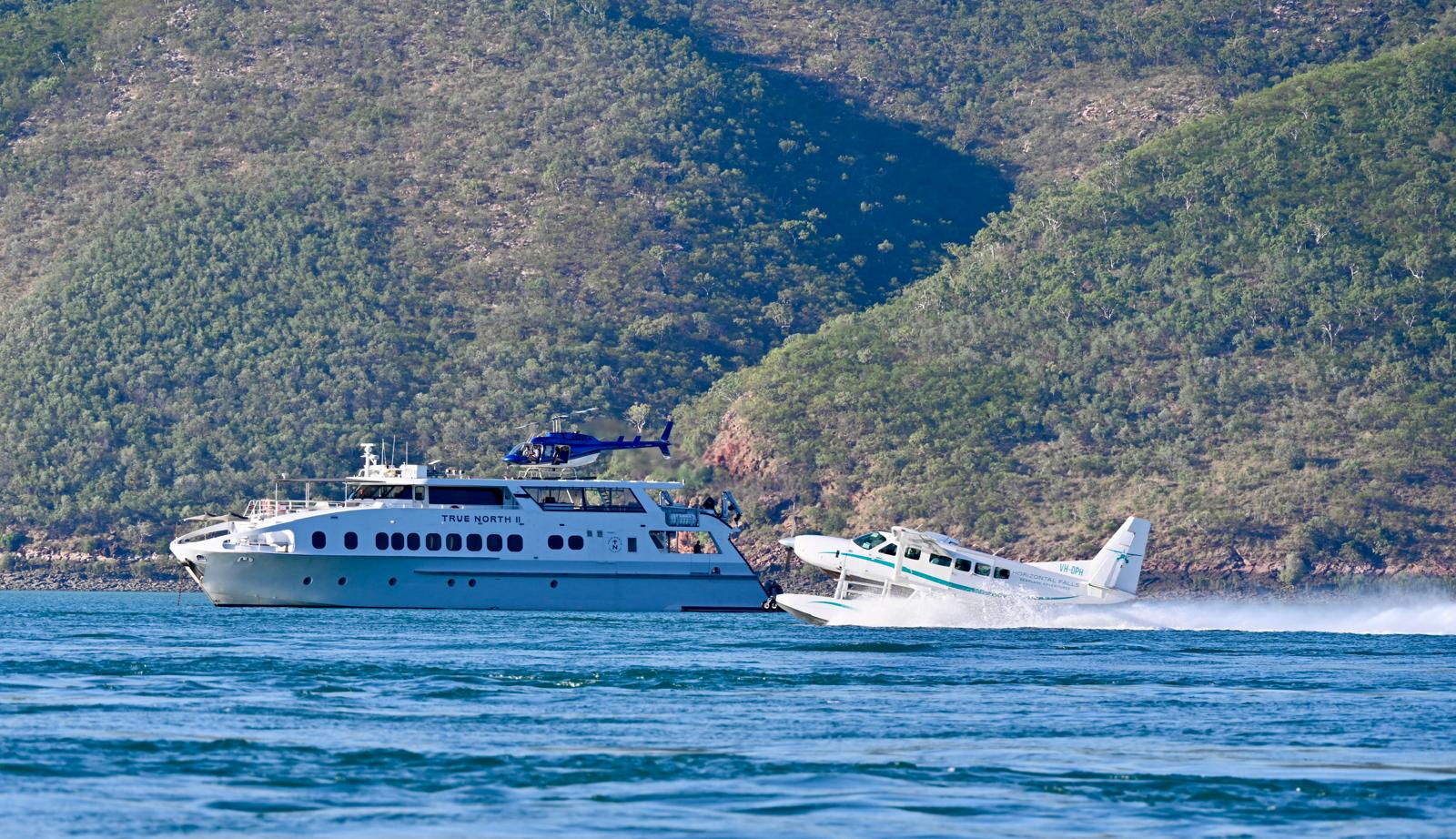
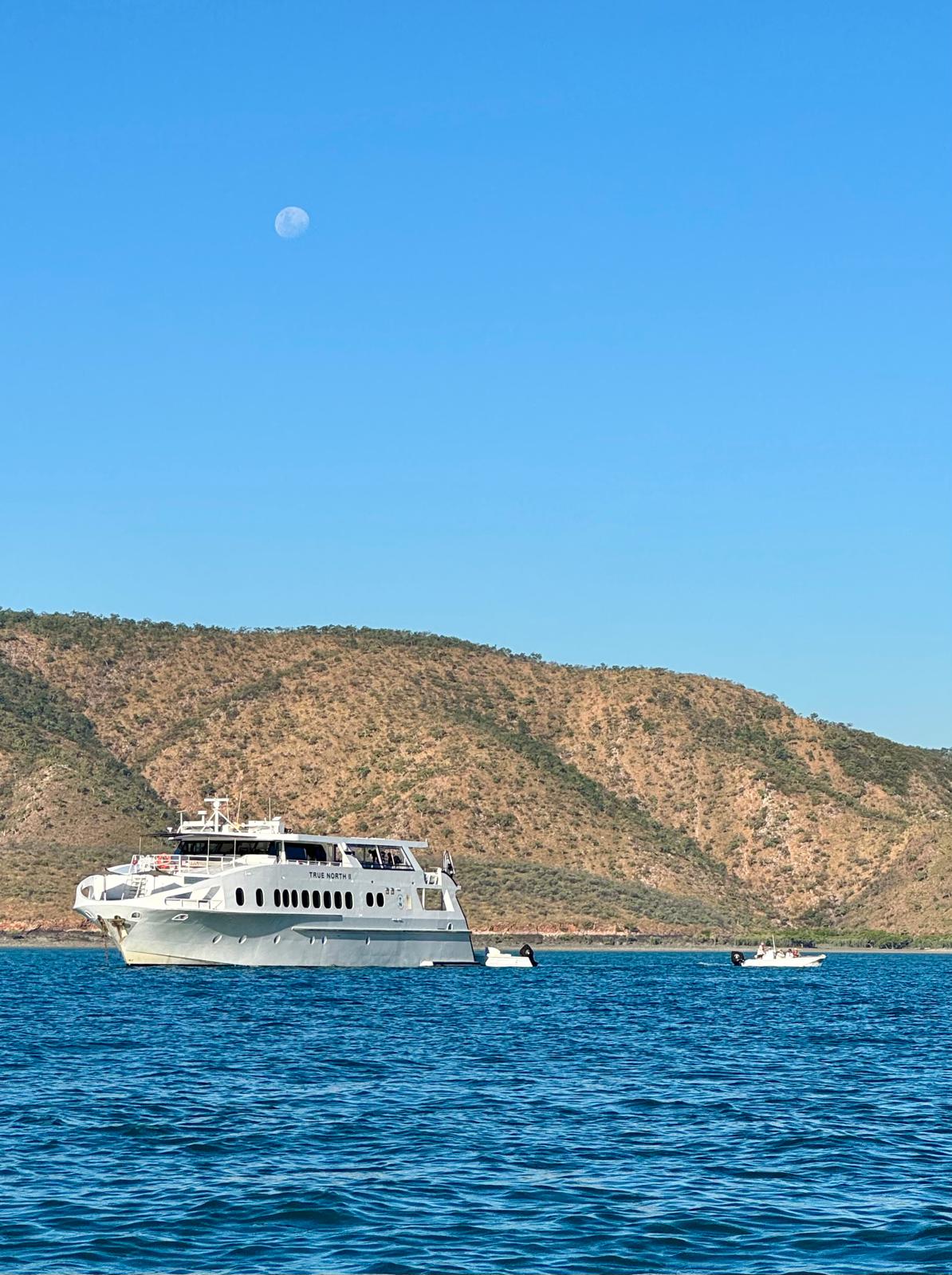
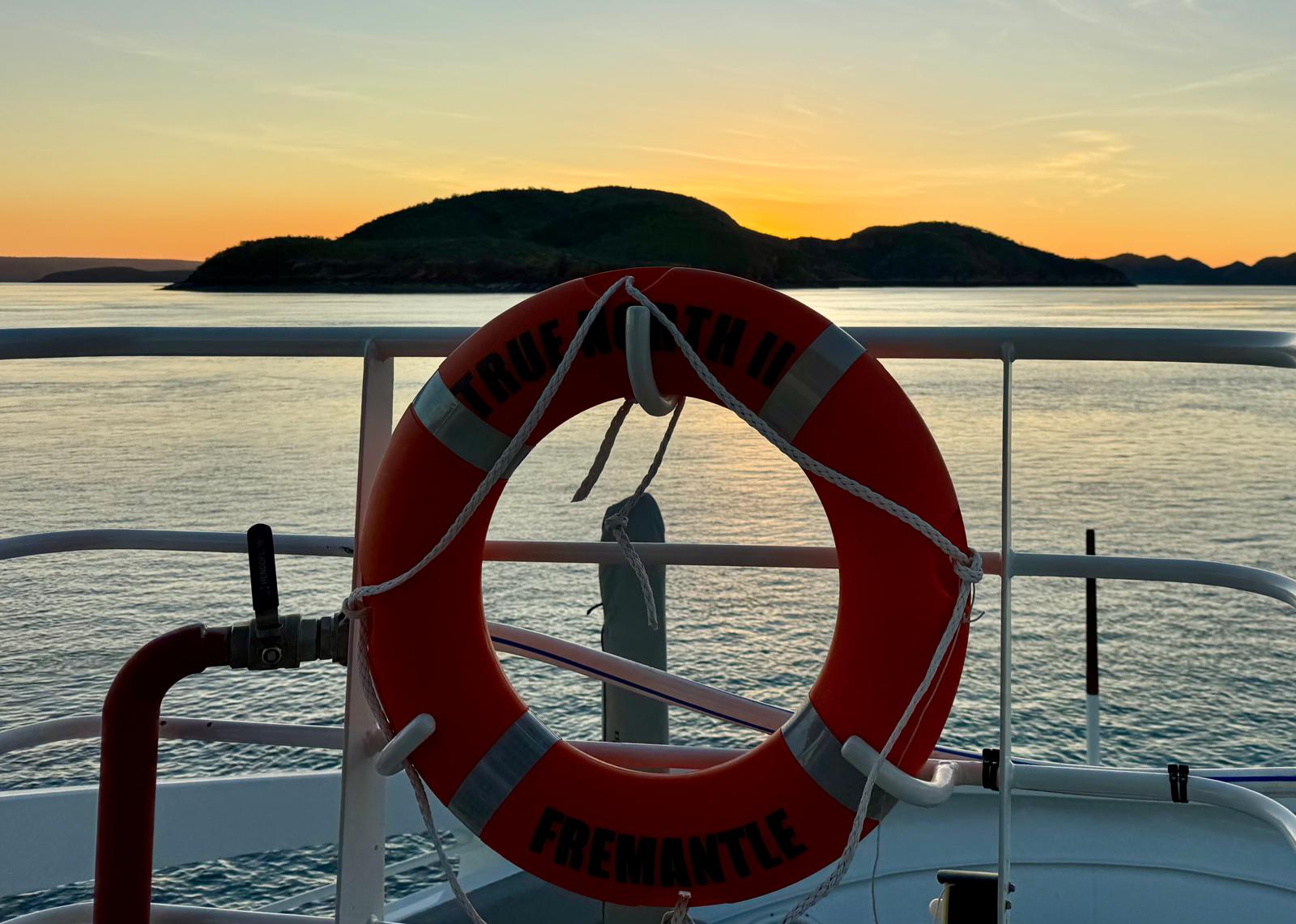
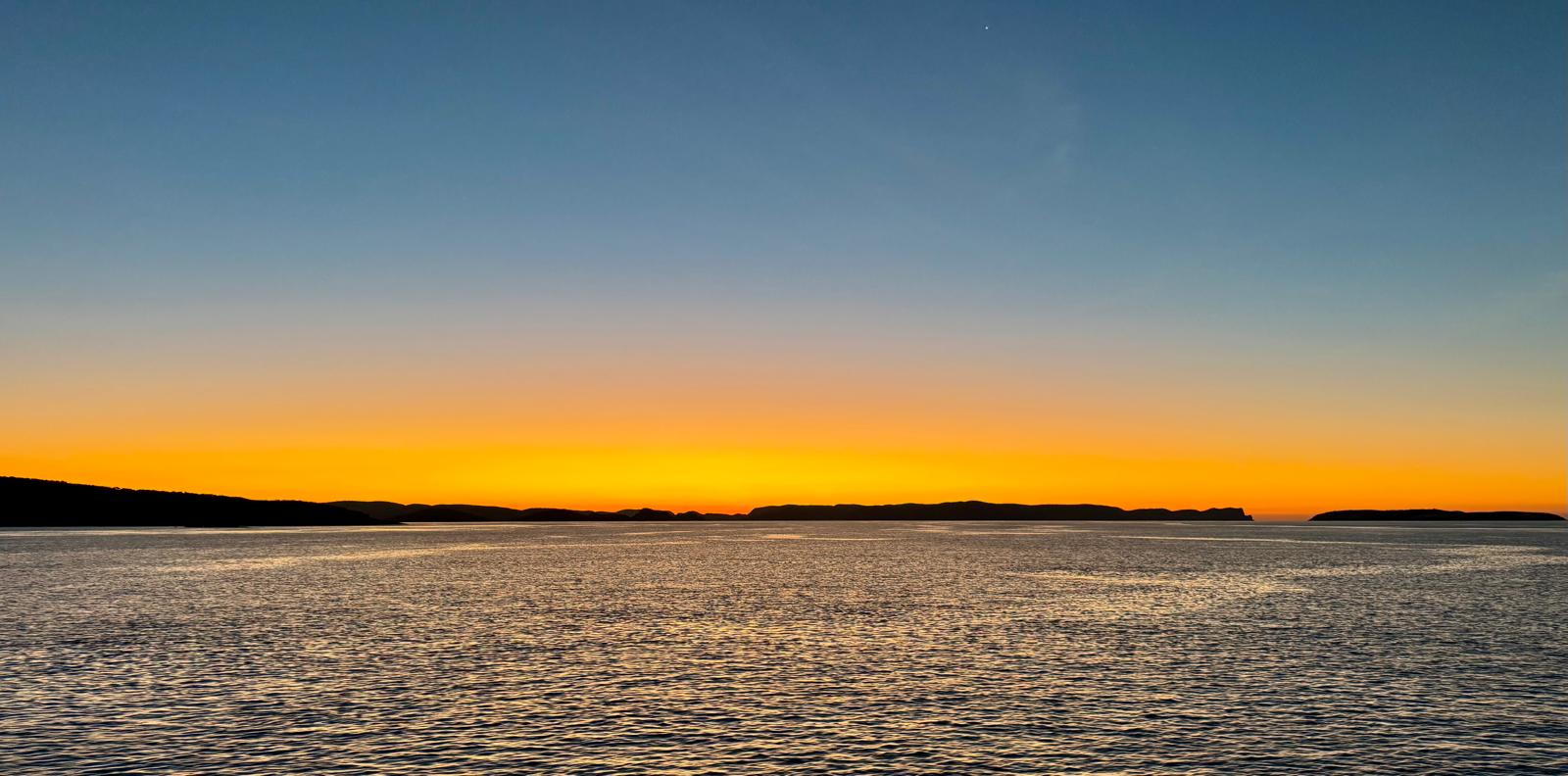
Back on board we enjoyed sunset over drinks at the bar followed by another delicious meal. All of my favourite foods were featured tonight… bar snacks of blue swimmer crab, followed by a delicious lamb rump with tomato pepper sauce and courgettes and then chocolate fondants with vanilla ice cream for dessert. The food is divine and the portion sizes are just right so you don’t feel over full.
Friday 29 May 2026: True North II, Raft Point, Red Cone Creek and Montgomery Reef – Roger
It was about 0630 when I walked out to the dining room to have everybody sing happy birthday to me. Sylvia obviously told them it was my birthday although she denies that and says that they knew through the form we filled out. Will the truth ever come out?

After breakfast we were on the team with Lloyd again and headed out to a nearby peninsula, where there were some tuna running. We threw a couple lines over the back and trolled for a while but nothing was biting. The colours around here are quite amazing with the emerald-blue-green water, the red rocks and the nice ‘almost painted on’ high tide mark, which is a black line that runs horizontally for miles and miles. Above that there is a white line on the rocks which is caused by the king tides that happen only a couple of times a year. Lloyd is incredibly knowledgeable about this area and told us of a boat that got stuck on a rock near here with the rock piercing the hill. The boat was held in place by the engines and they flew in an underwater welder by flying boat. He welded up the hole as they removed it from the rock, which is now named after that boat.


Intermediate Reef Egret
Our next stop was at some graffiti done by the locals 40 or 50,000 years ago, now called rock art of course. How they managed to find this particular piece of rock to put these drawings of their hand prints on, in such a place that it is still around thousands of years later, while many of the other rocks in the area have crumbled into the sea, is beyond me. It looks like they even survived the last Ice age. The rest of the team climbed up into the rocks for a closer look while I stayed in the boat with Lloyd.

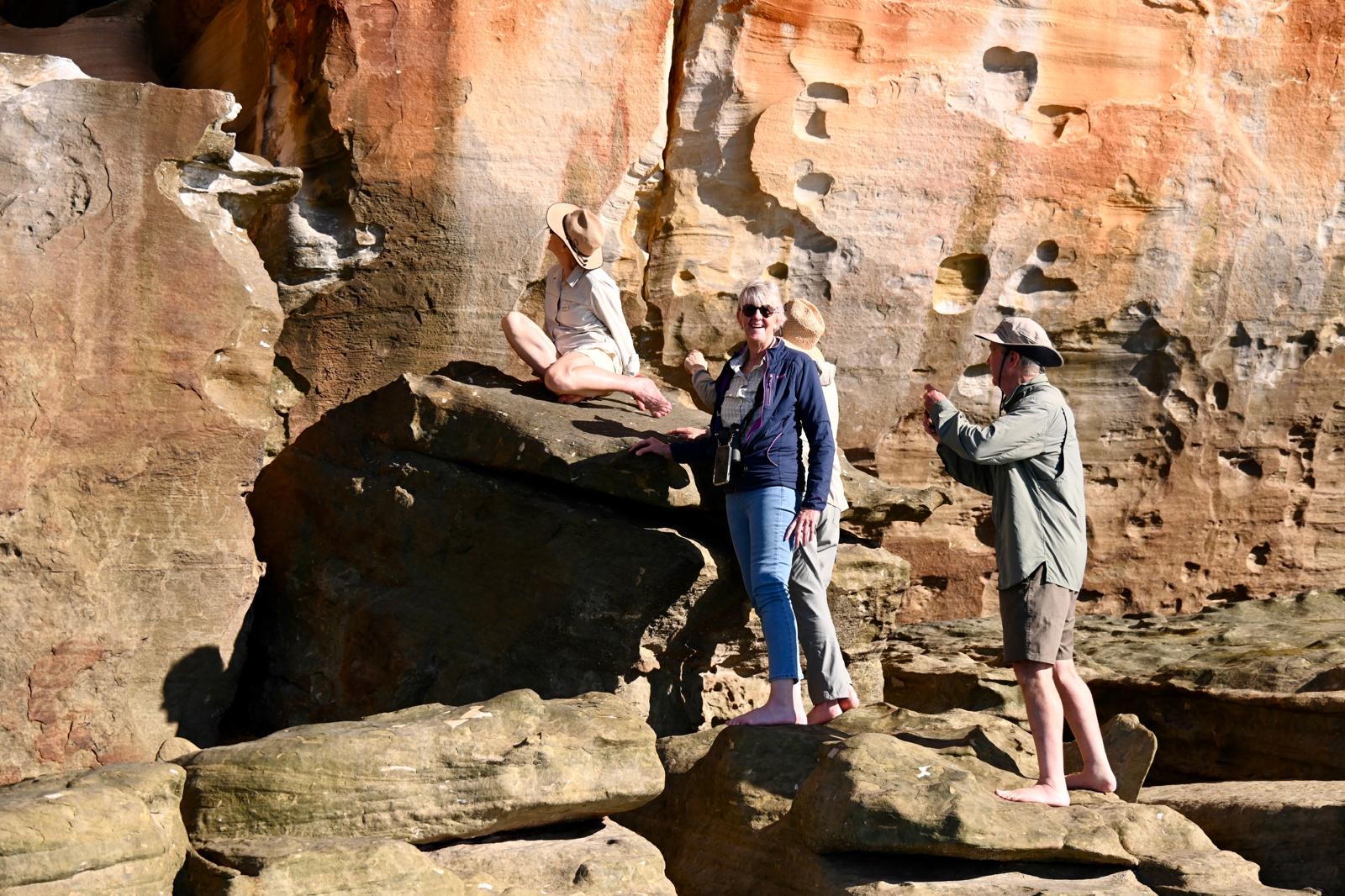
From there we headed up a creek, covered on each side by mangroves, looking for an unsuspecting crocodile. We had covered over 20km on the journey and it was time to head back to the ship. When we arrived we were treated to freshly baked scones with lemon curd, cream and strawberries.

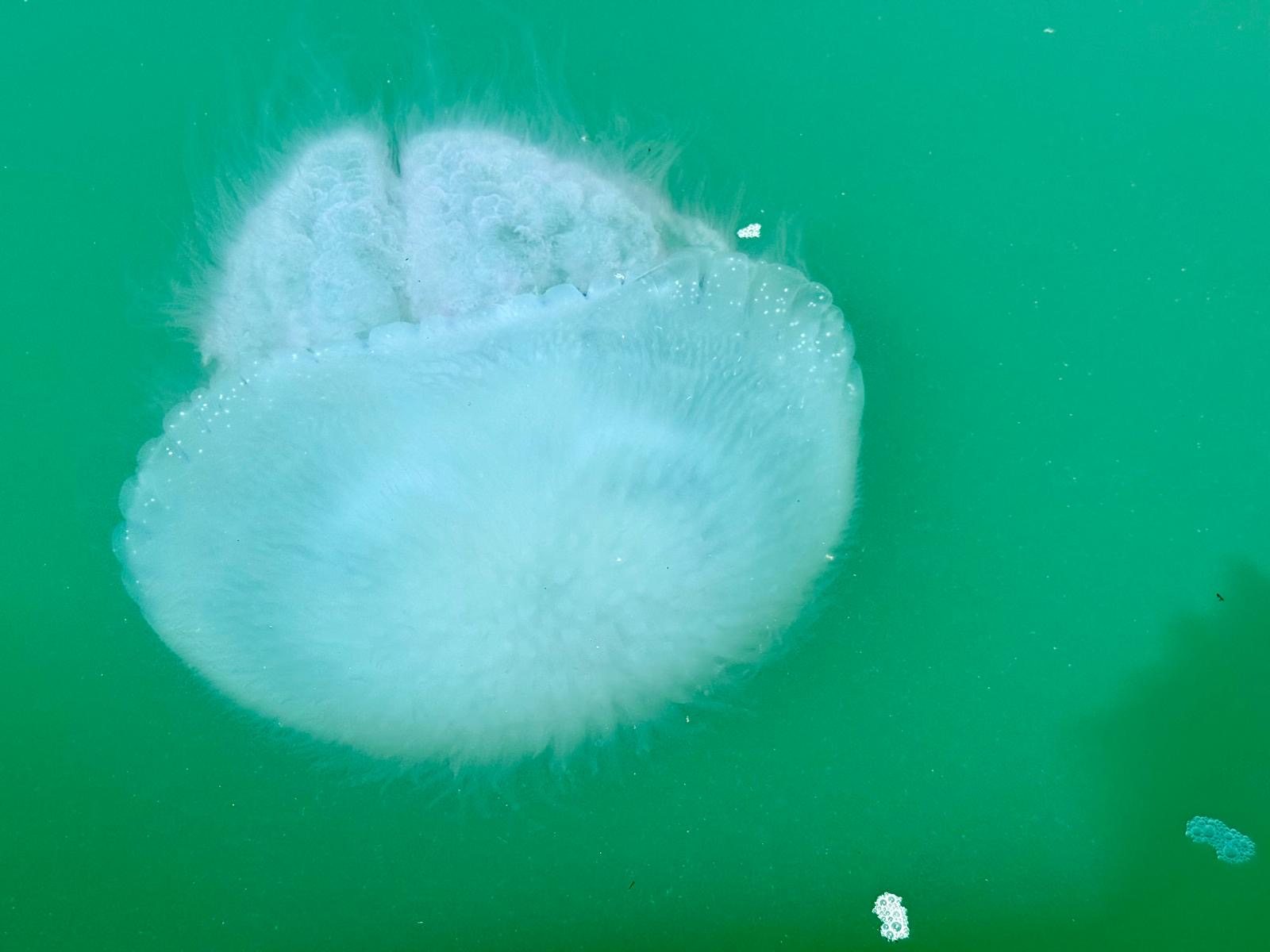
Morning tea over, we caught another tender, this time with Max. We headed off up Ruby Creek once again surrounded by mangroves. Along the way we saw a turtle and a number of tomato jellyfish that we nearing the end of their life. They apparently get eaten by the turtles. We arrived at a waterfall at the end of the creek, which runs up a cliff. Some of the group have gone for a climb up there to swim in a pool. Lloyd was in the other boat and we rafted up so he could give us a bit of a rundown on some of the aboriginal customs around here. They used to build mangrove rafts and float out on the tide to some of the local reefs to catch fish, and then float back in when the tide came in. He also told us how nowadays they use helicopters to drop firelighters so the undergrowth is burned off every couple of years to stop large fires by reducing the amount of fuel available. It’s interesting how this practice seems only to be done in the northern territory and Western Australia. New South Wales and Victoria don’t do this and have massive fires which cause a huge amount of damage.


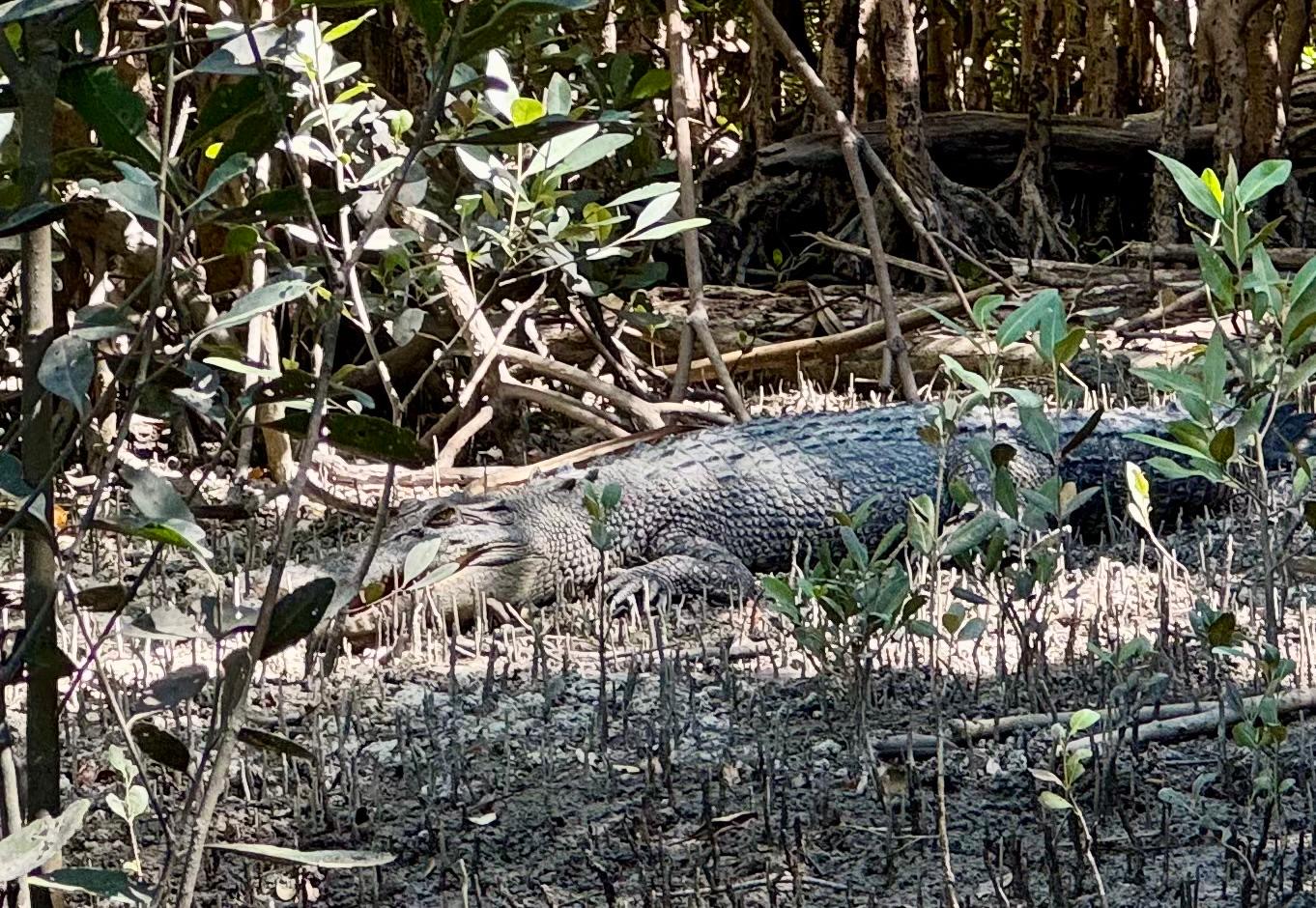
On the way back down the creek we spotted a 3m-plus crocodile lying up on the bank in the bush. In actual fact what happened was that Lloyd had spotted a bit of plastic and gone to get it and then realised this male crocodile was lying there so the plastic got to stay. Apparently these crocs can move pretty fast even though they look very docile.
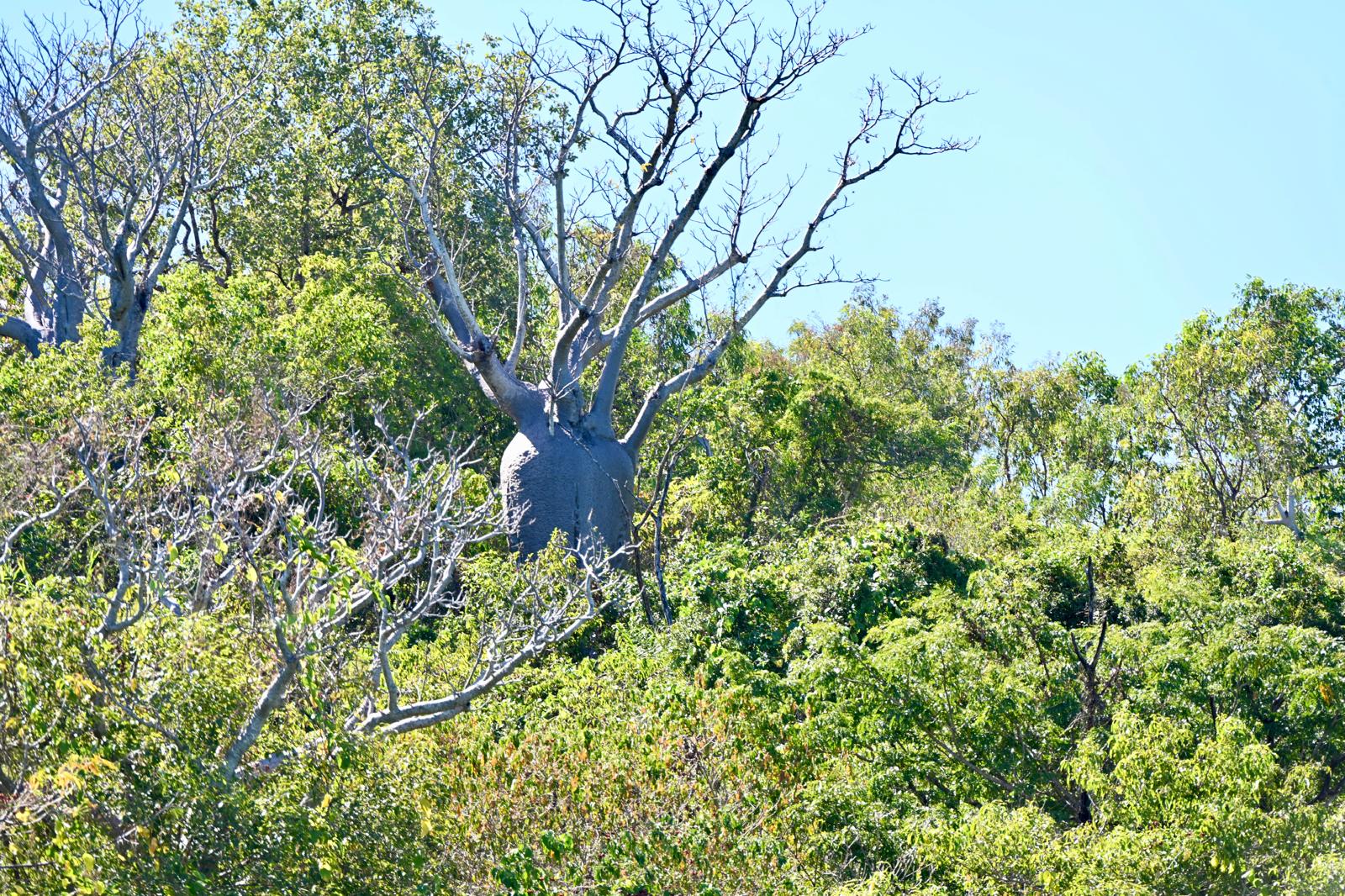
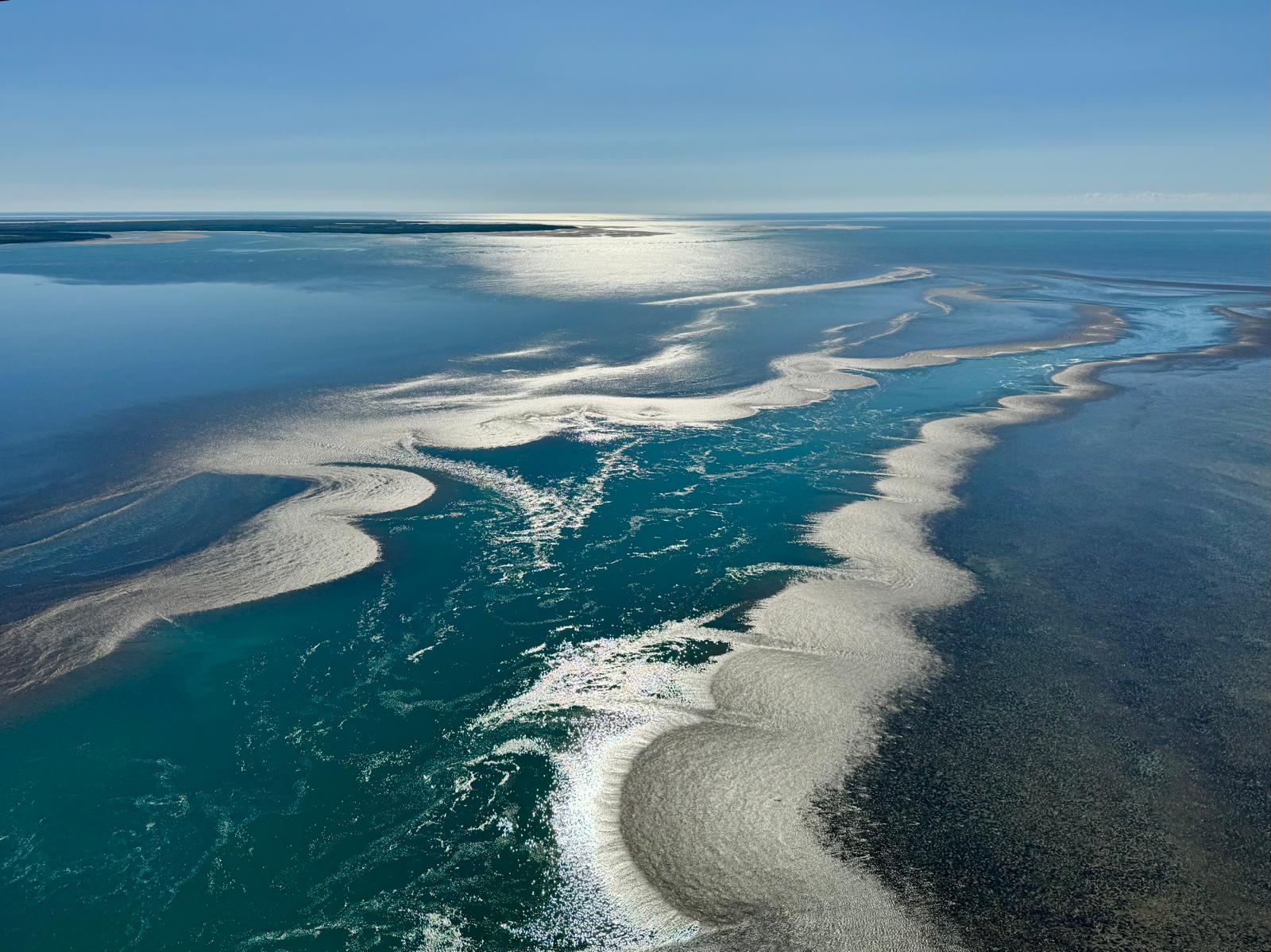
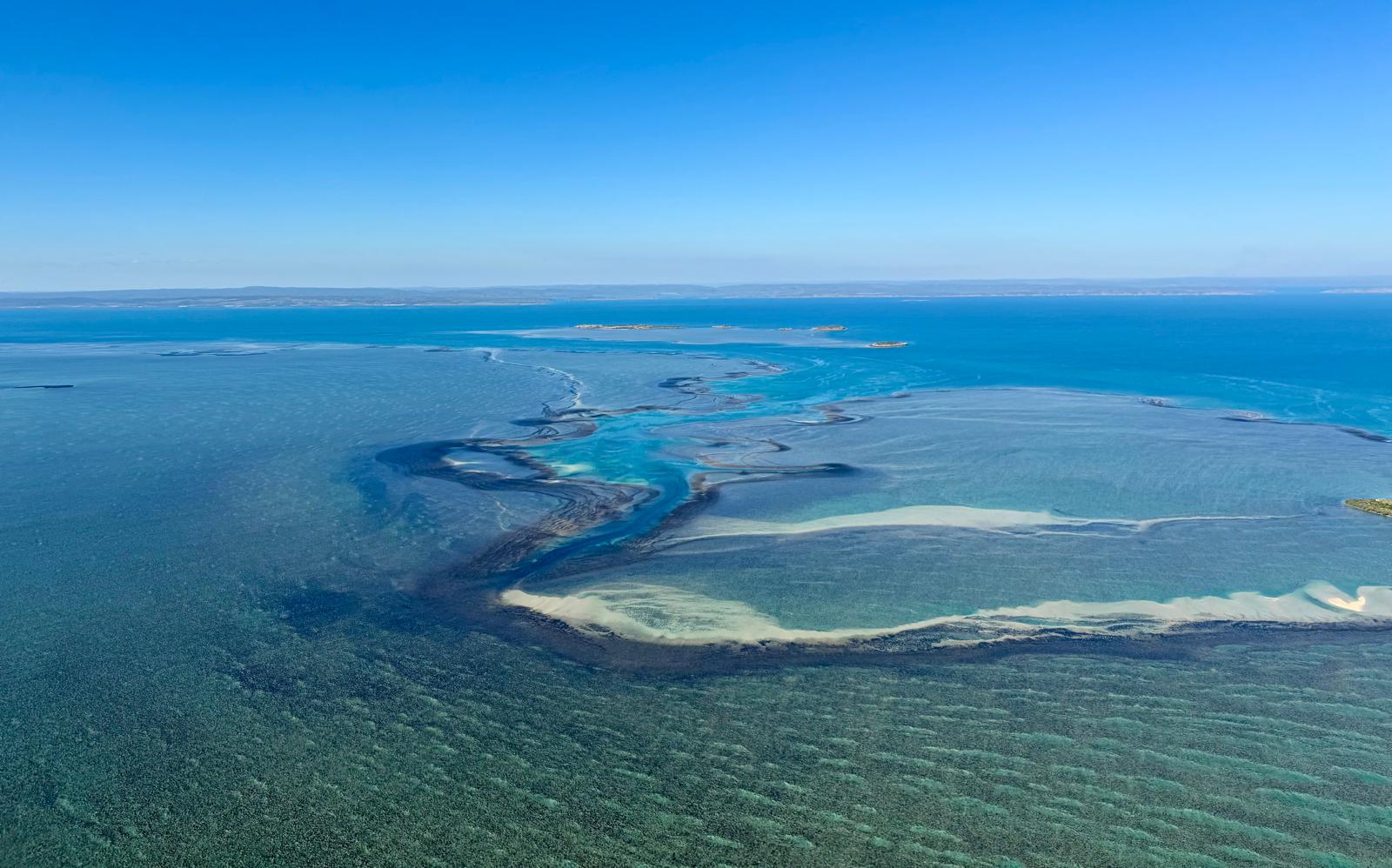
Back at the Main channel we headed up another creek, where we saw a large number of baob trees, similar to those that we saw in Madagascar a number of years ago, but a lot smaller. We headed back to the boat for lunch, after which we were the first group up for the scenic helicopter flight over Montgomery reef. This reef covers some 400 km² and basically when the high tide comes in it floods the whole thing and when the tide goes out the water gushes off the side of the reef continuously for 12 hours until the next high tide arrives filling in the water again. As we flew over the reef we saw turtles, manta rays and a couple of crocodiles lazing around. The 20-minute flight over, we hopped on a tender, this time piloted by Lucy, who took us through the channel between the reef where the water gushes in. There were many turtles up this channel which now and again stuck their heads up for a quick breath before disappearing again. A number of birds hung around and there were lots of fish also feeding on the small fish that would be pulled off the reef by the outgoing tide.



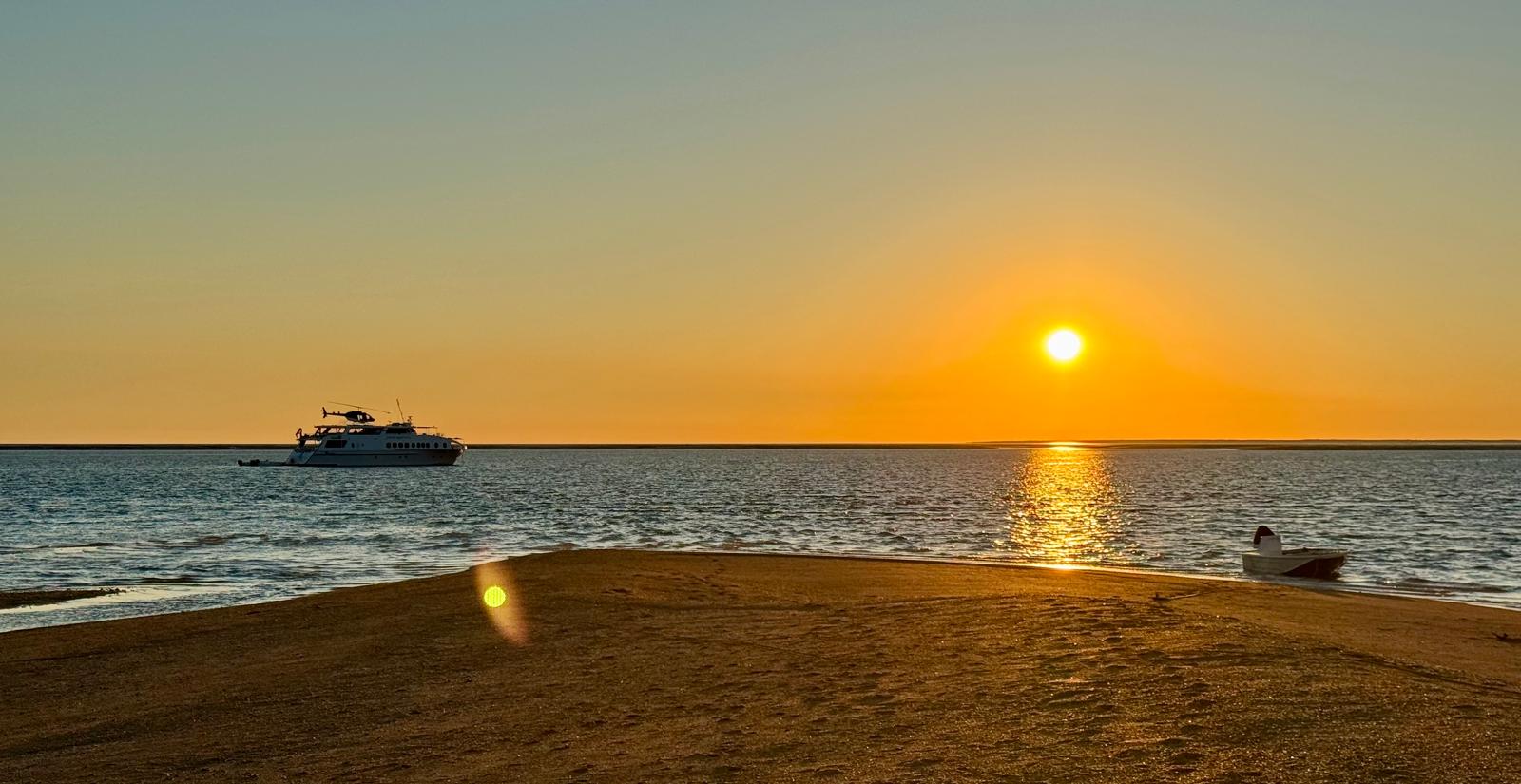
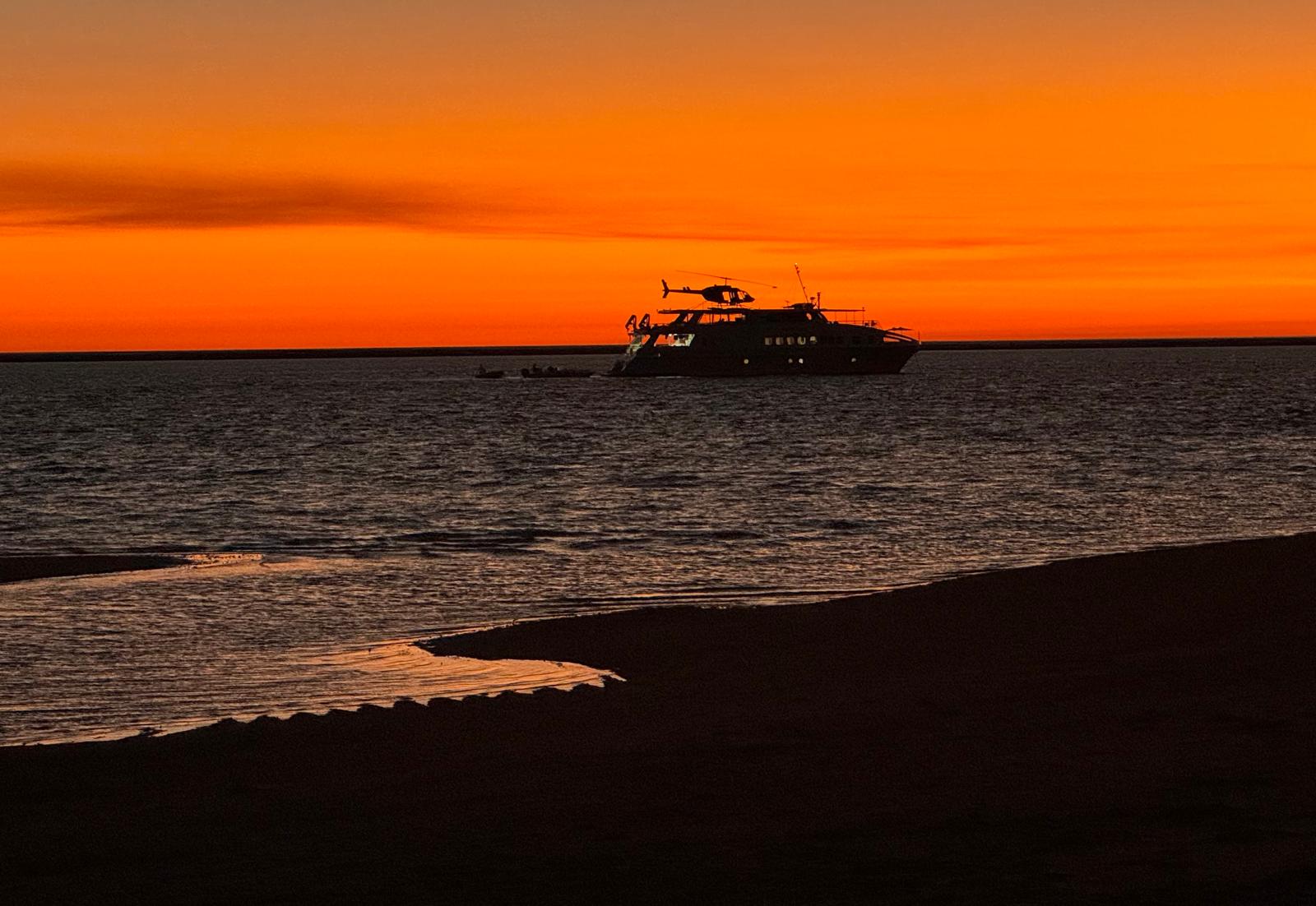
Soon after arriving back at the boat we were ferried out to a little sand bank (cay) that had appeared as the tide went down. There the staff had set up chairs, a drinks table and a fire. As we departed the True North II, a small school of dolphins played just off the port side and we went over to check them out before heading to the cay. People played cricket or football for a while and we stood around and chatted over a few drinks. Then the staff produced a can of petrol and lit the fire they had prepared. Soon the sun was setting and the tide was coming in so it was time to head back to the boat, which by this stage was sitting in the water against a backdrop of a beautiful orange sky.



At dinner I was again serenaded with many rounds of happy birthday. The guests seemed to find the whole thing very amusing. The chefs had prepared a delicious chocolate cake, which we all enjoyed for dessert.
Saturday 30 May 2026: True North II, St George Basin and Prince Regent River – Sylvia
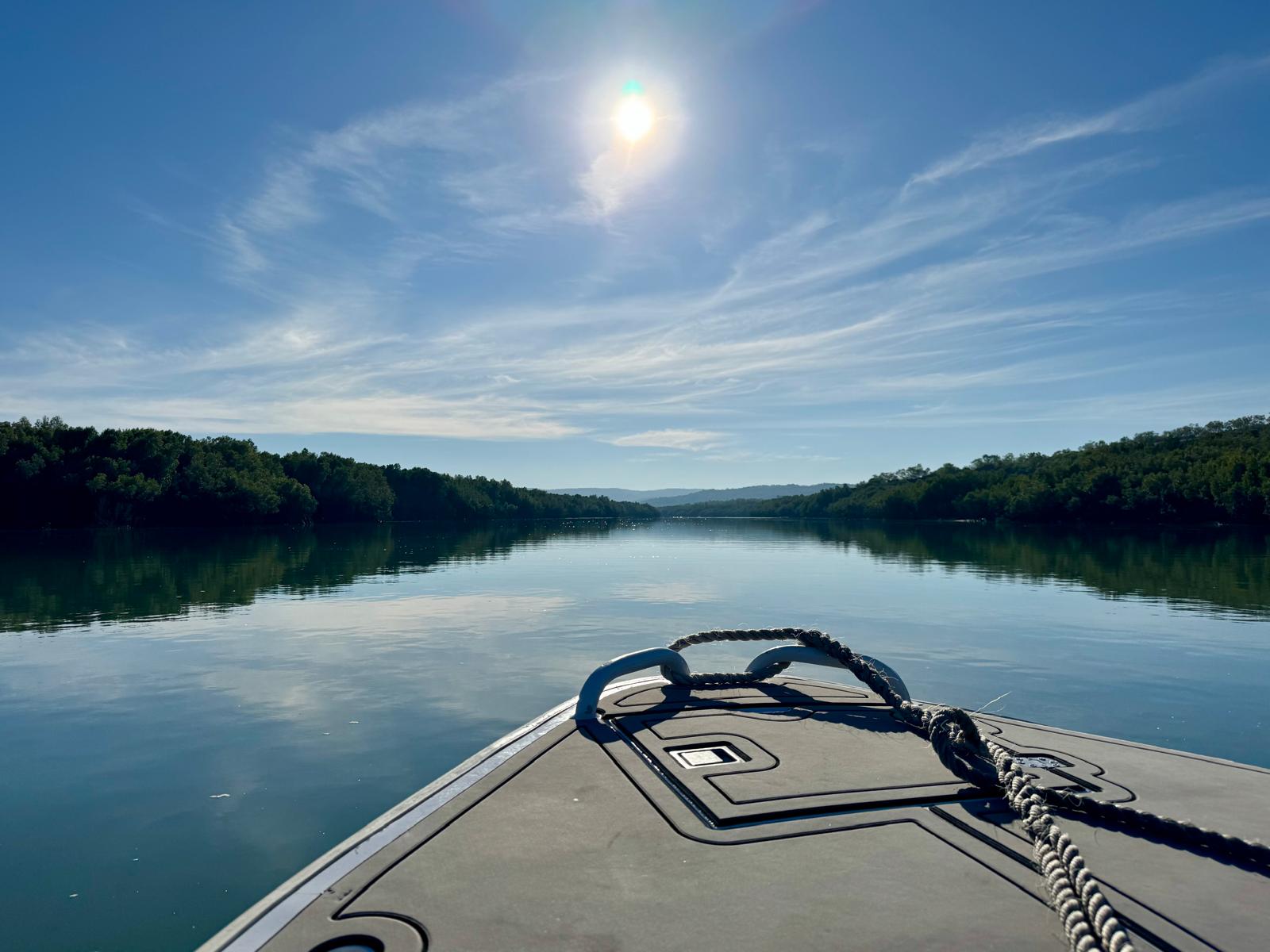
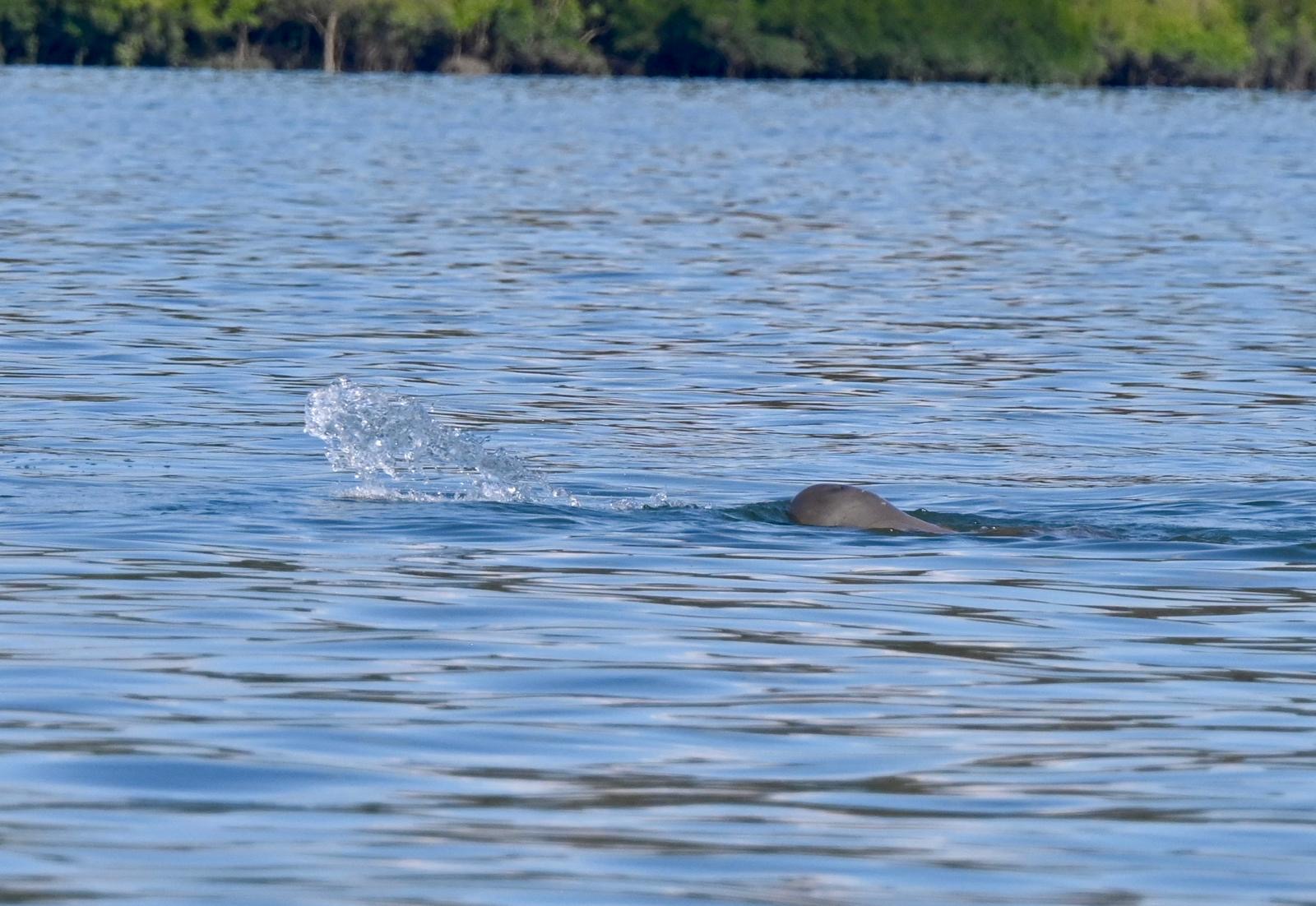
We were up in time for the sunrise again this morning with breakfast available from 6am, and our first excursion, a sightseeing ride around the St. George Basin, departing at 7am. We set off up the river, with Lloyd, our guide, as always providing some really interesting information. We meandered into several mangrove-line waterways, spotting numerous birds and a couple of crocodiles. As we were making our way back to the mothership we came across a pod of snub-finned dolphins. These funny looking creatures have a bulbous head and a very short fin. Lloyd had been explaining to us that they are known to use a very unusual fishing technique, whereby they spit water ahead of them to corral fish. Apparently this has only been observed quite rarely. He had just finished this explanation when the dolphins started spitting. It is hard to capture well on camera as they are only up out of the water for seconds at a time but we did get one semi-reasonable shot. It was very entertaining and we stayed with the pod watching for quite a while, while a few bridal terns circled overhead, occasionally diving to take one of the fish the dolphins had rounded up.

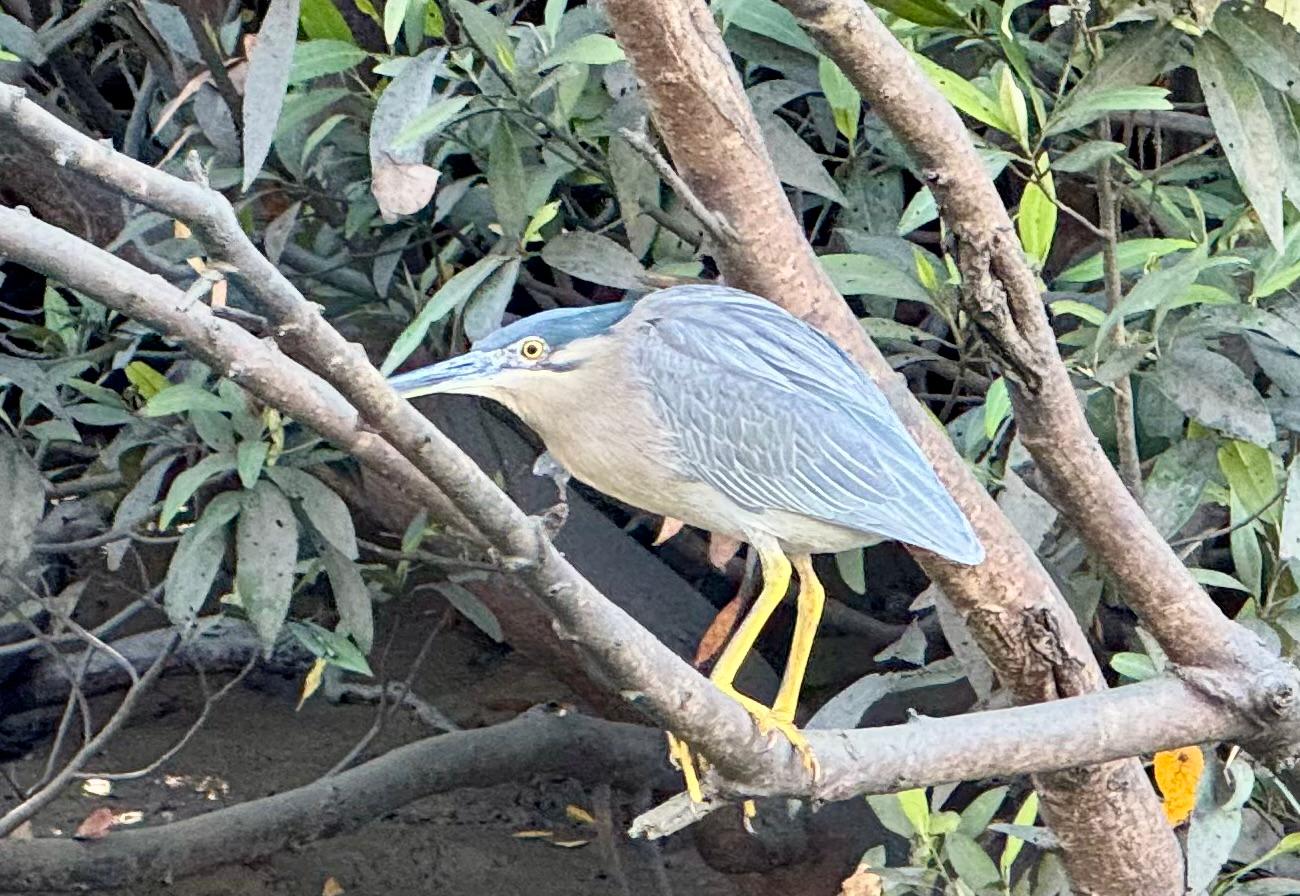
Striated Heron


Snub Fin Dolphin
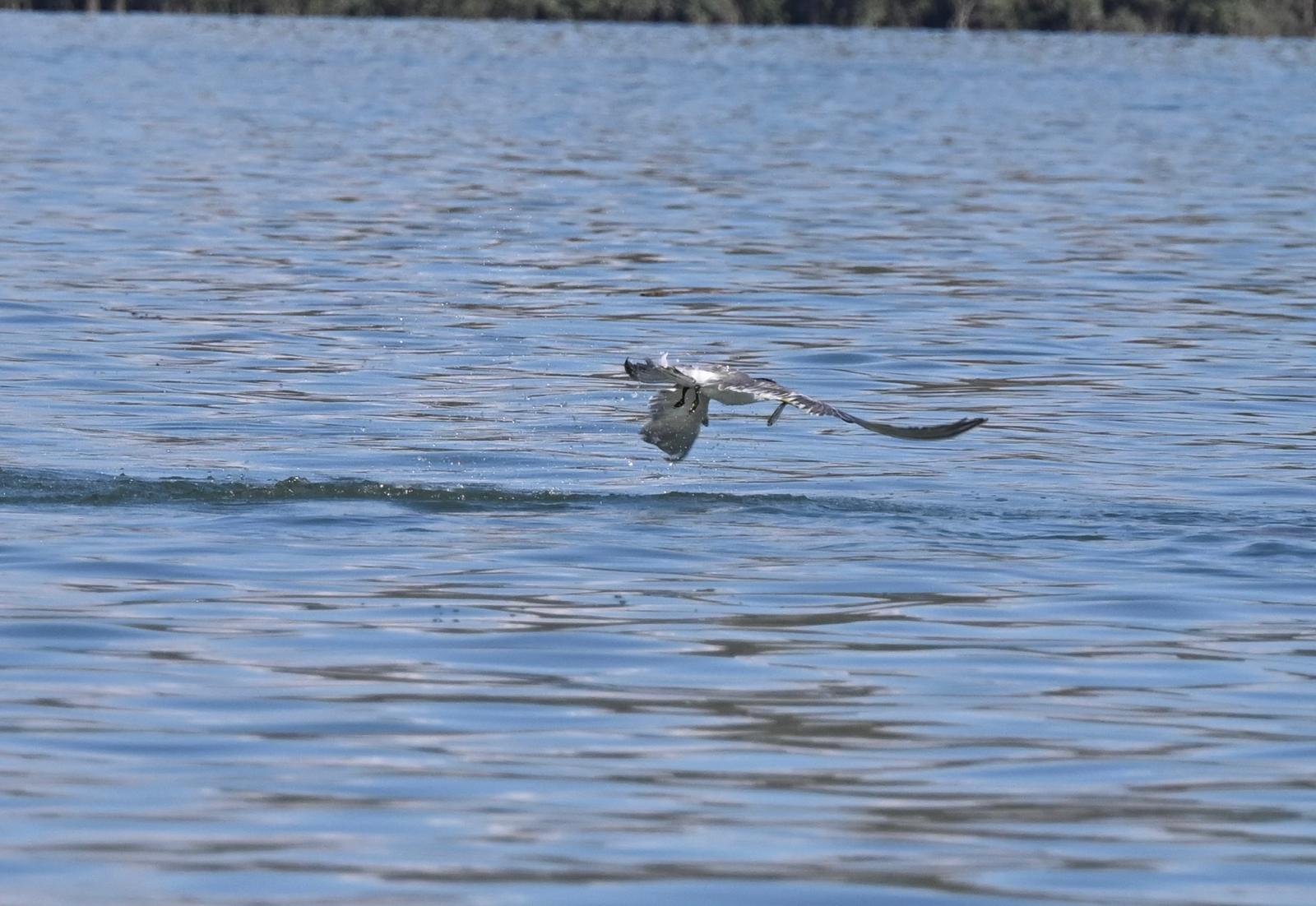
Bridal Tern
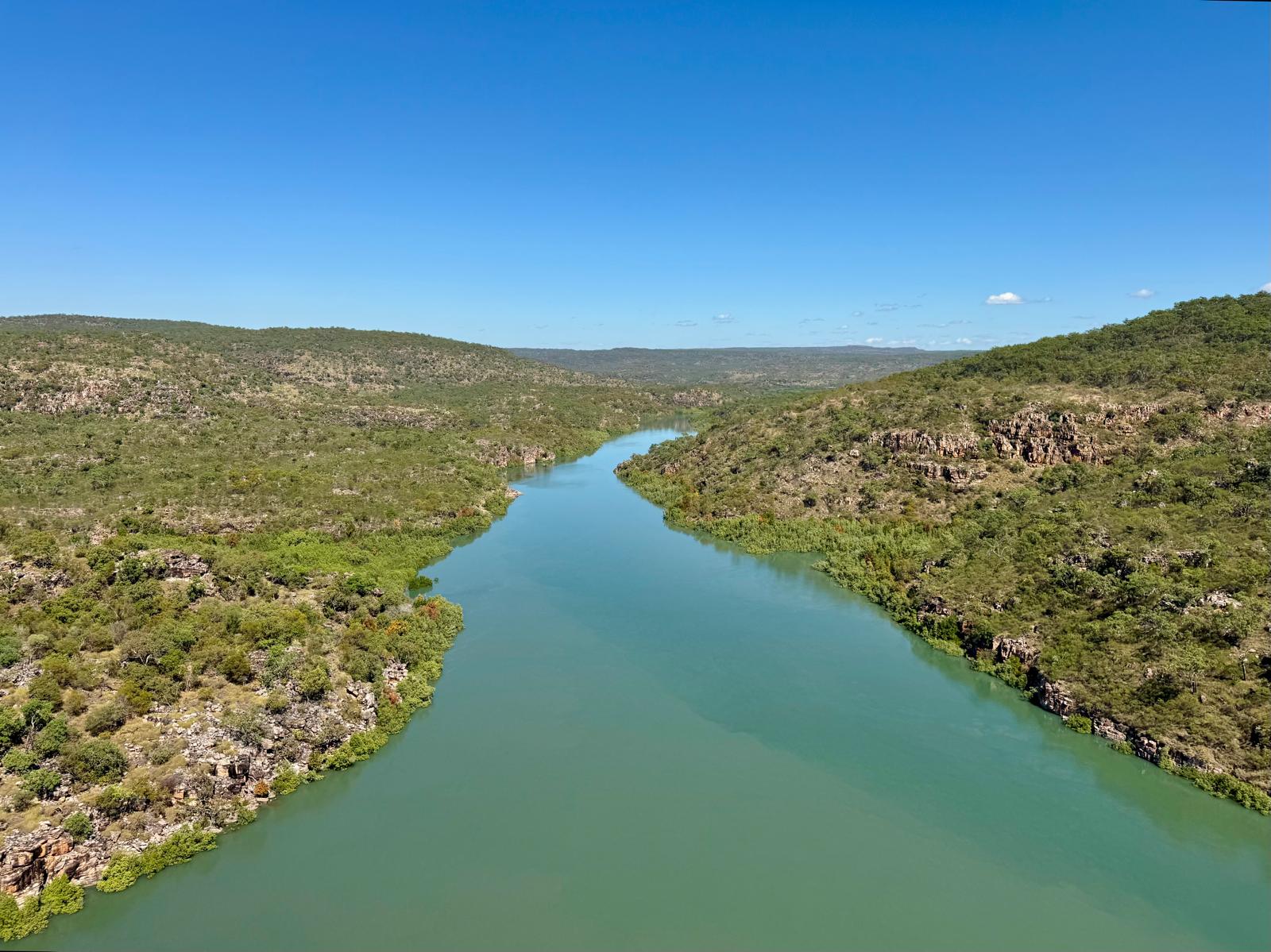
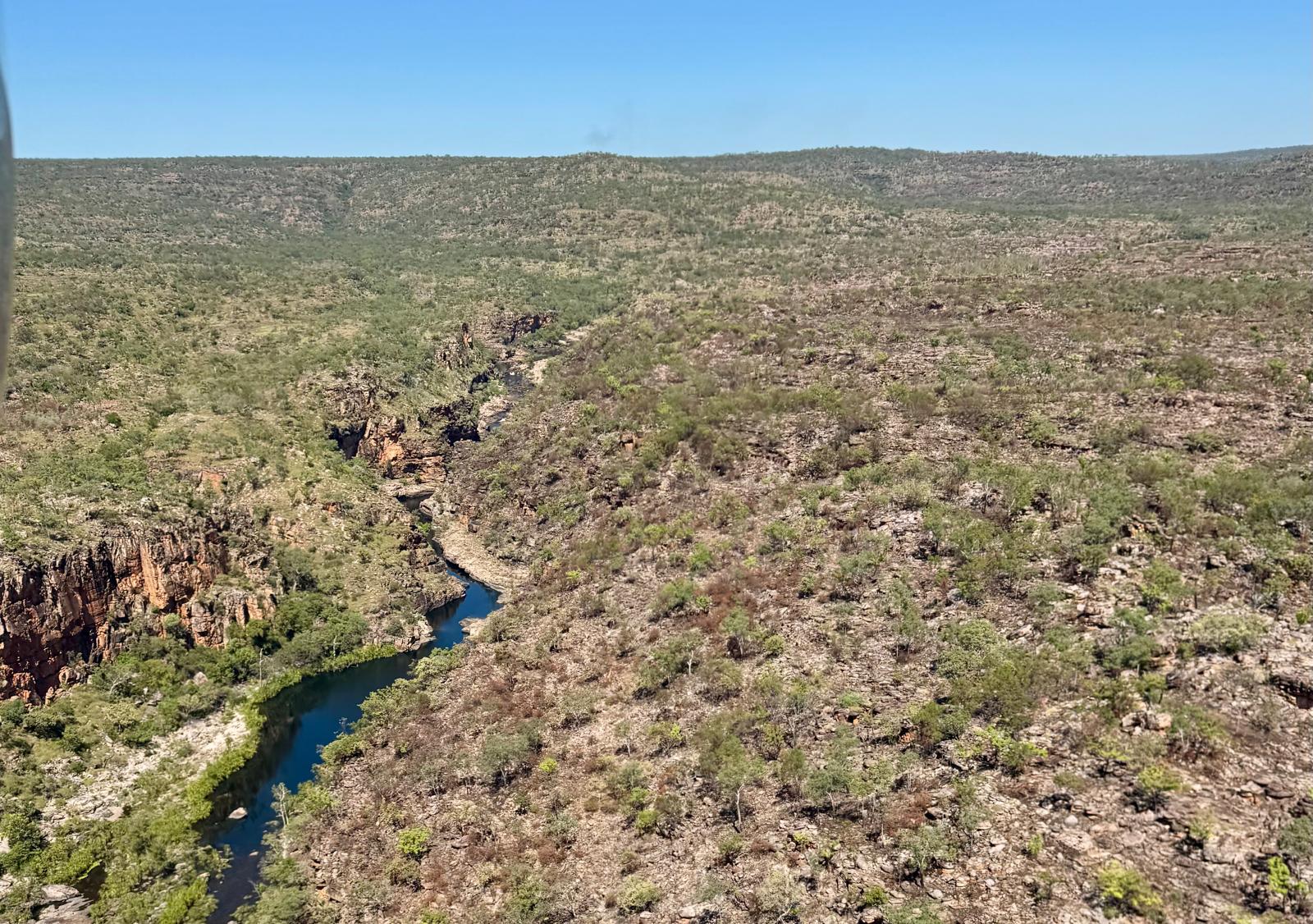
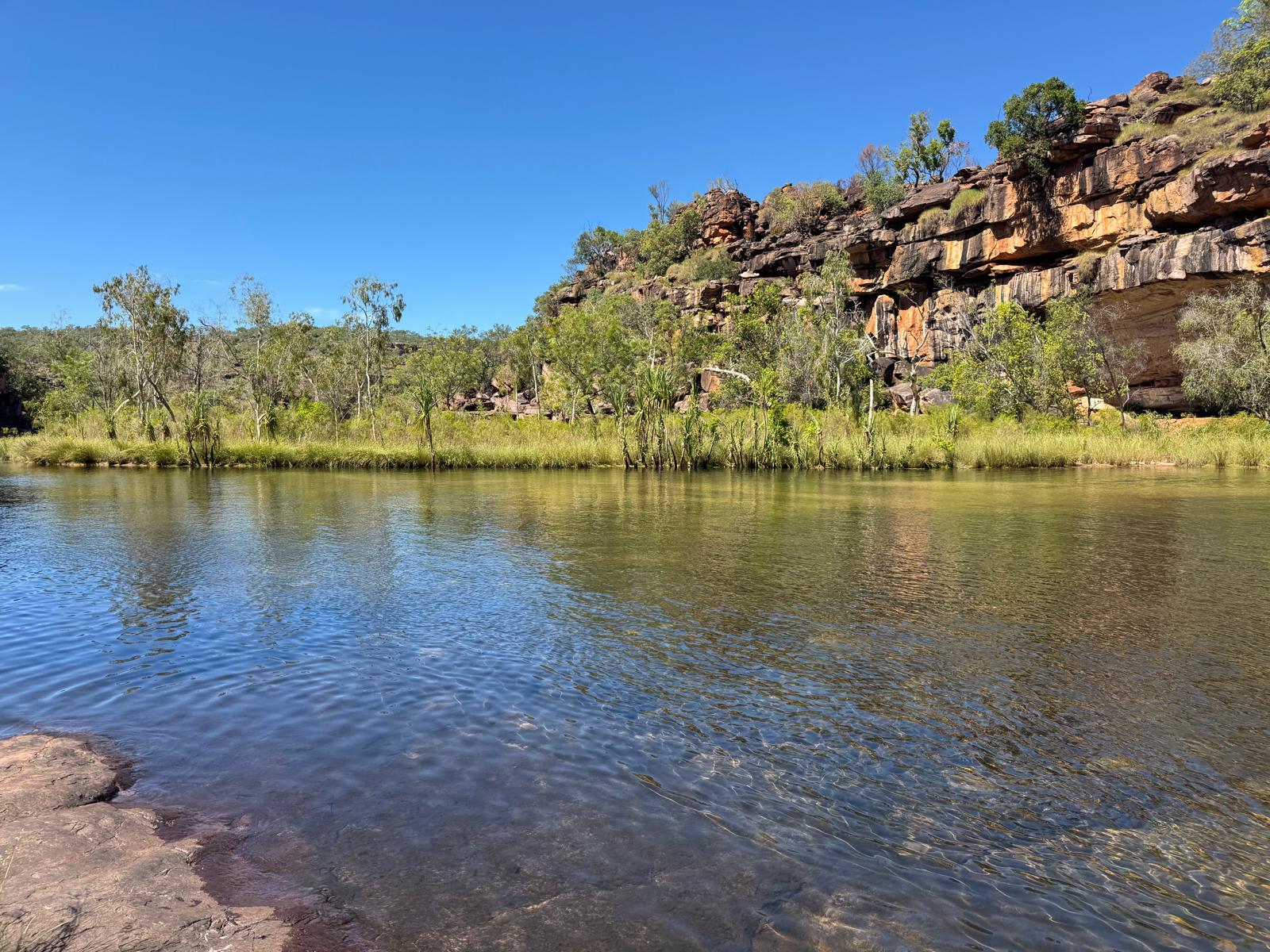
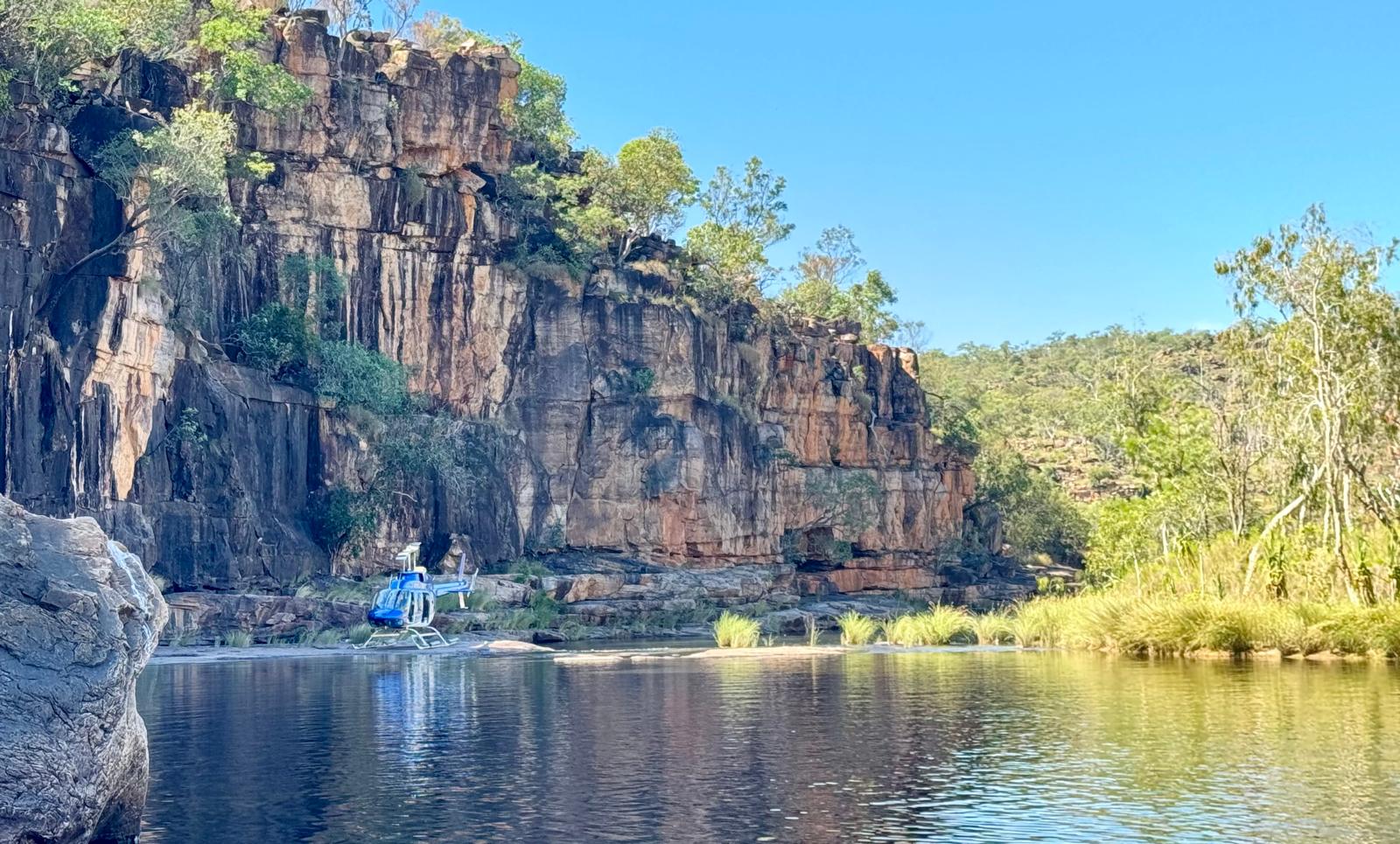
Back on board we had a brief break before heading out on the helicopter, flying over the Prince Regent river, which carves a nearly straight path down an old fault line. Occasionally we could see waterfalls on the tributaries leading in to the main river. After a fairly short flight we turned and headed up Quail Creek, landing in a stunning spot where the crew had set up chairs and were cooking a barbecue lunch. We swam, ate, wandered around exploring the area and examining the rock art across the river, relaxed and generally had a fabulous time. Eventually it was time to reboard the chopper and head back to True North II. It is hard to really capture the idyllic essence of this place, even in photographs.




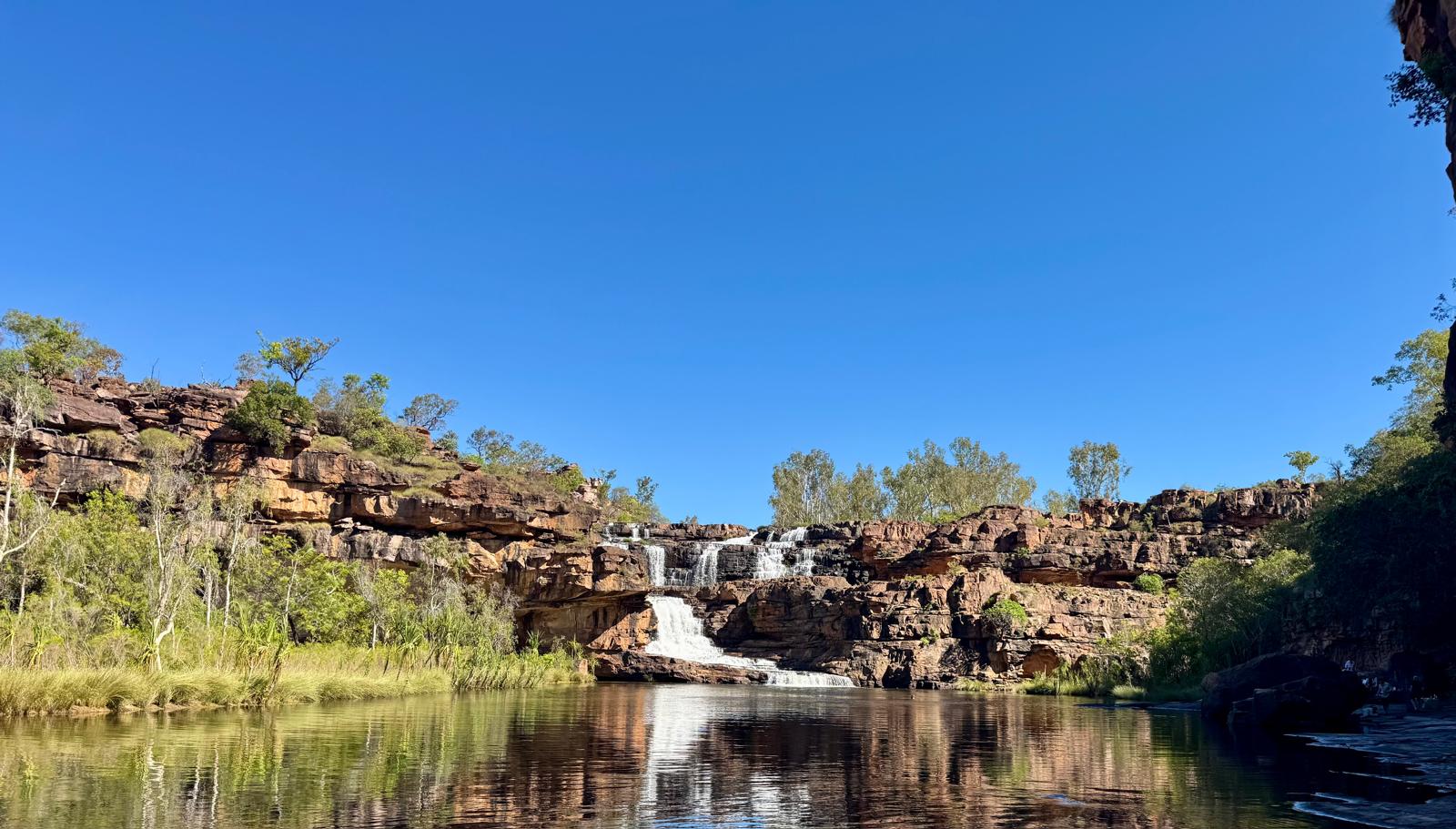
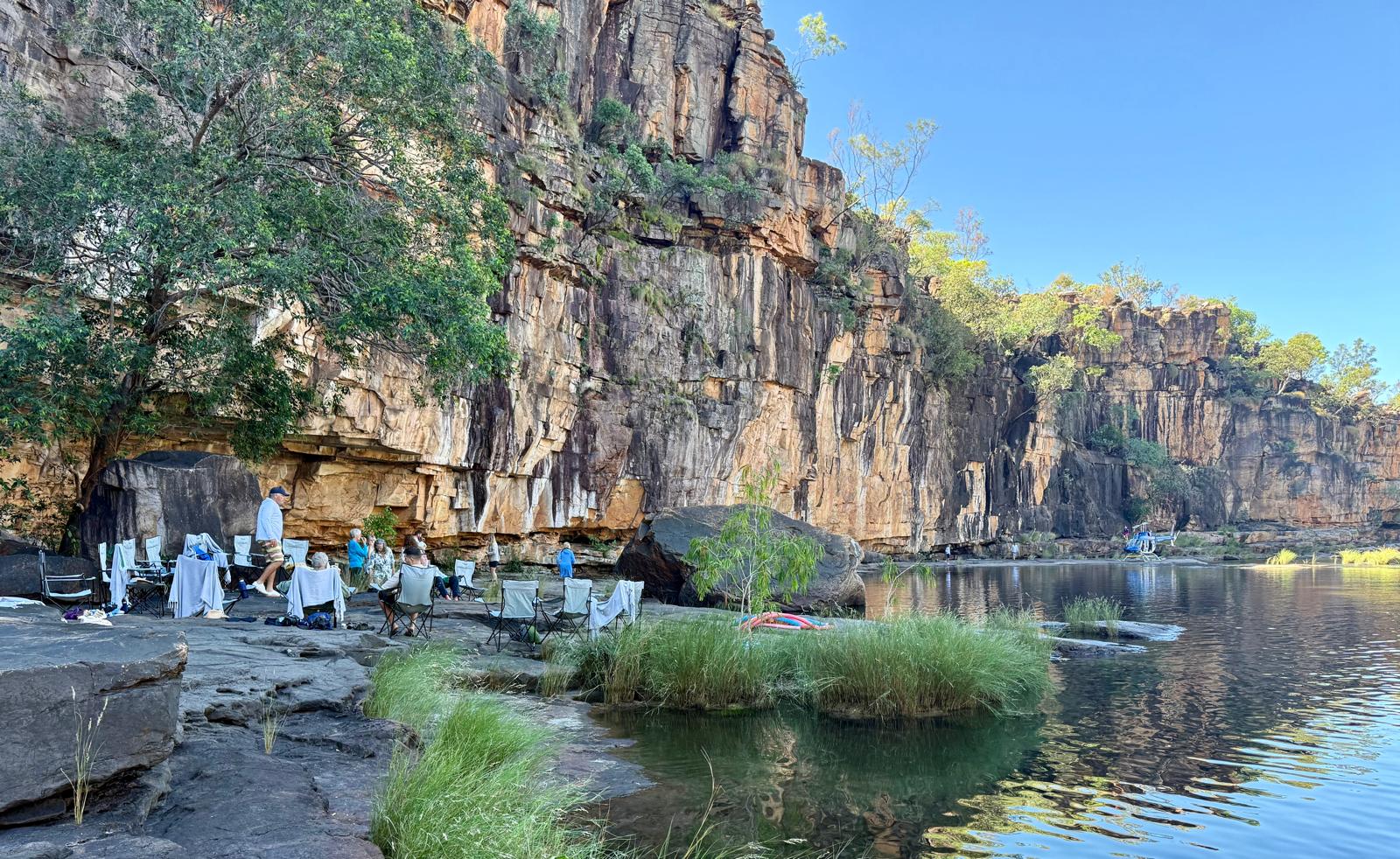
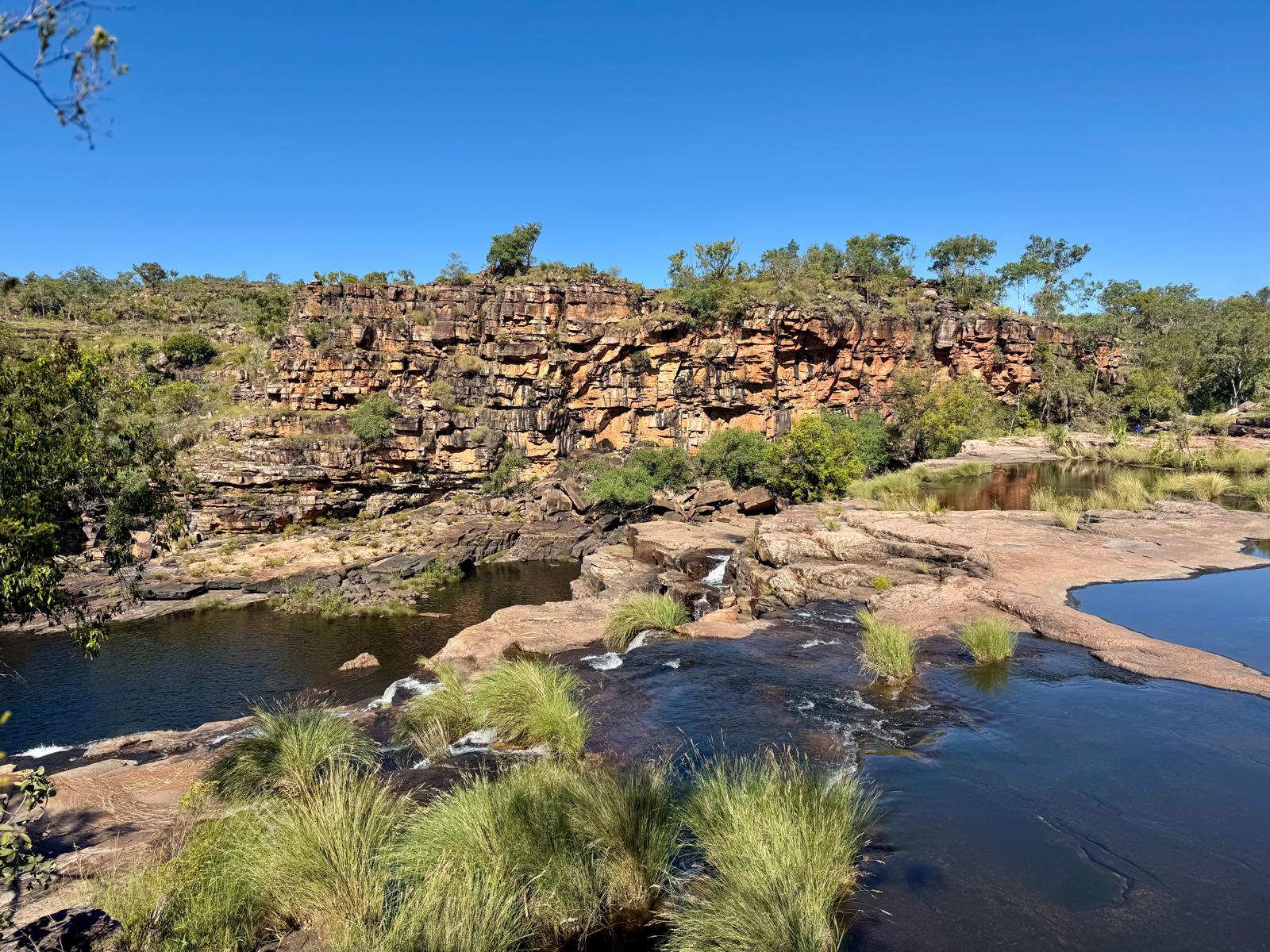
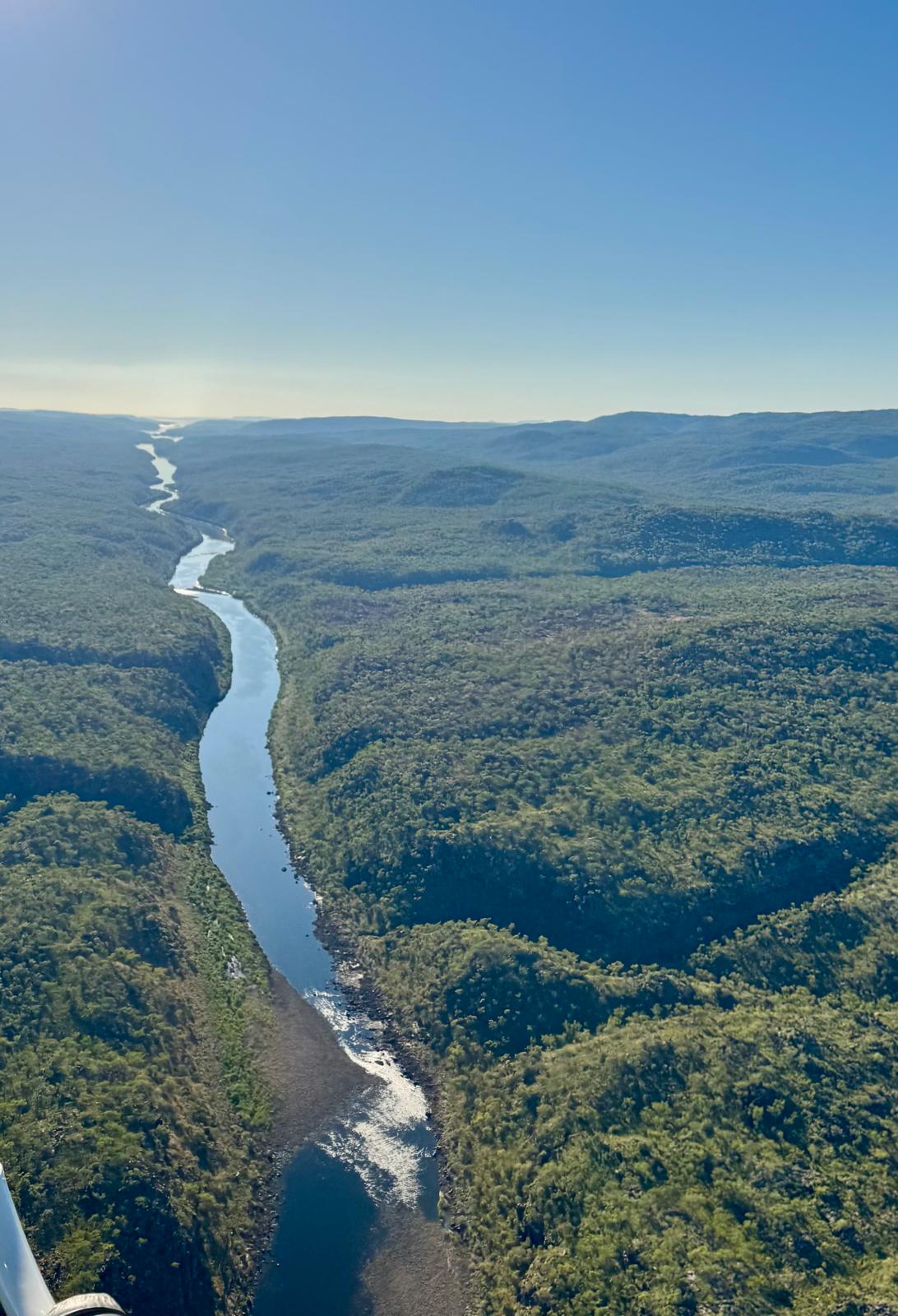
Back on board we headed up to the bow where the team had set up a bar and some tuna sashimi, caught by some of the guests out fishing a day or two ago, was served. We then had another delicious dinner of confit duck leg with a divine beetroot, pumpkin, pecan and feta salad, followed by an equally tasty dessert. We are up early here so not long after dinner it was time to retire for the night. While out on the picnic Roger had done a few pushups and was challenged to do some one-handed. In typical Roger fashion he obliged. Before we retired he was challenged again by some people who had missed the first show – and of course, he complied again… much to my chagrin.
Sunday 31 May 2026: True North II, Prince Regent River and King’s Cascade – Roger
Breakfast was at 0600 and around 0700 we were on the tender, just Sylvia, me and Lloyd, our guide. A smallish croc was hanging around as we headed downstream to Camp Creek. It was good timing as the tide was coming in. We headed up Camp Creek spotting some chestnut rails that we hadn’t seen before. At one point we passed a large rock, known as Suzuki Rock. Just after low tide it was several metres high, but it got its name because a guy came around the corner on a tender going flat tack on a much higher tide with the rock covered. He rammed into the rock and the motor ripped off. As the tide dropped the motor was left sitting on top of the rock.

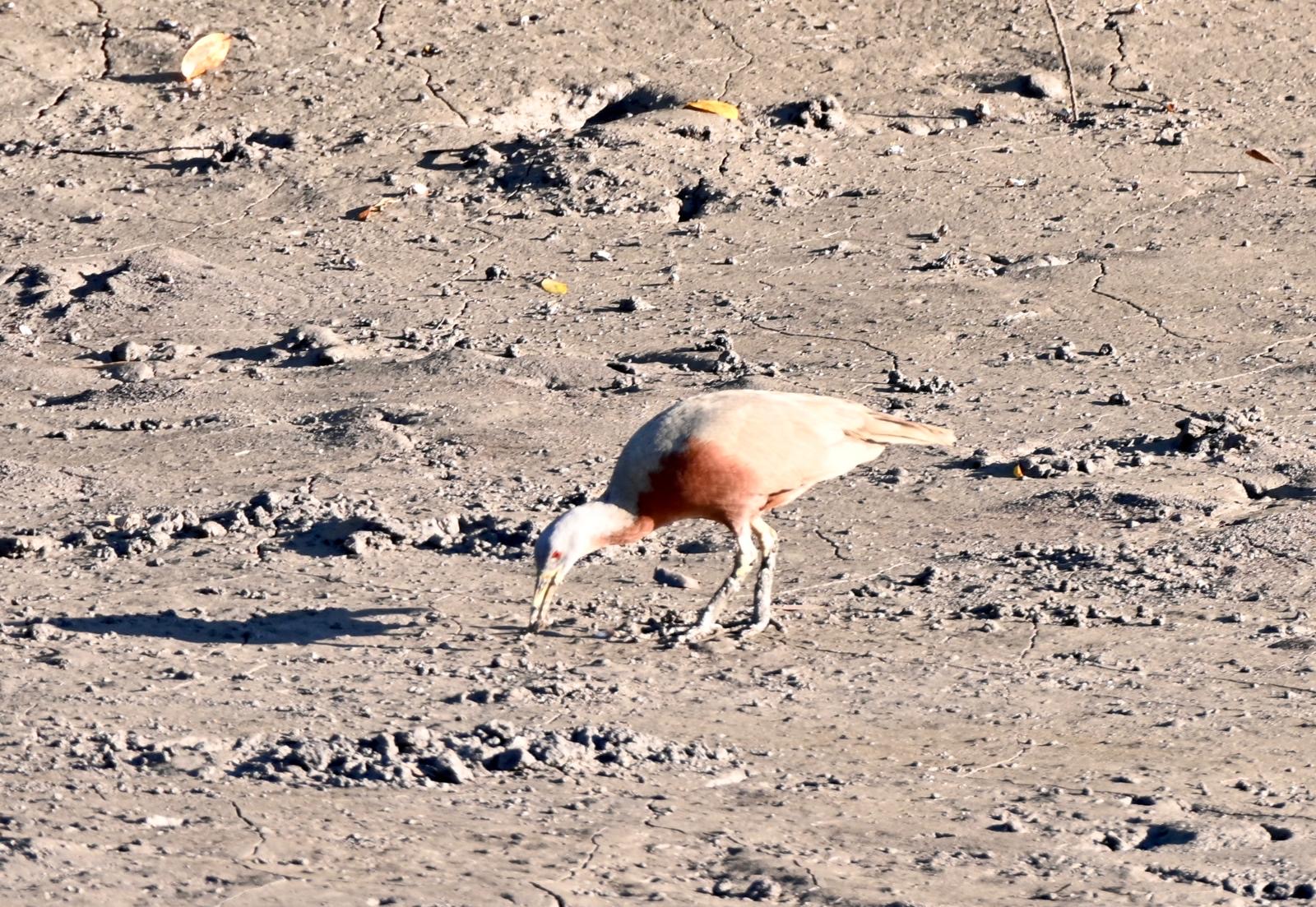
Chestnut Rail
A little way after that we turned up a small stream getting stuck in the mud for a short time until the tide came in a bit. On the left-hand bank was a fruit bat colony, the noise of which was almost unbearable and the smell even worse. We sat there and watched as a couple of kingfishers landed in the nearby trees and some Brahmini kites flew past, also landing in the nearby trees.
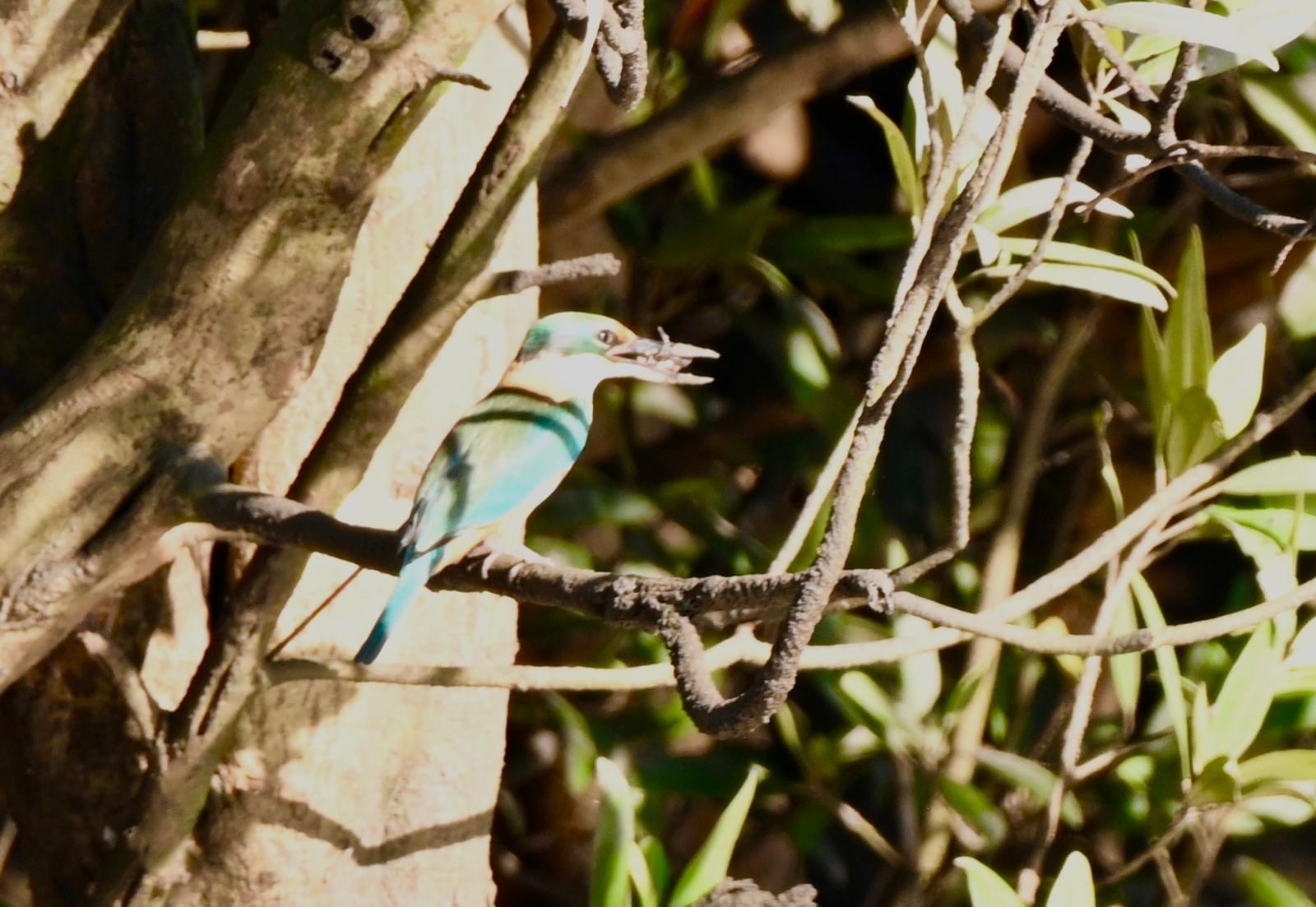
Sacred Kingfisher
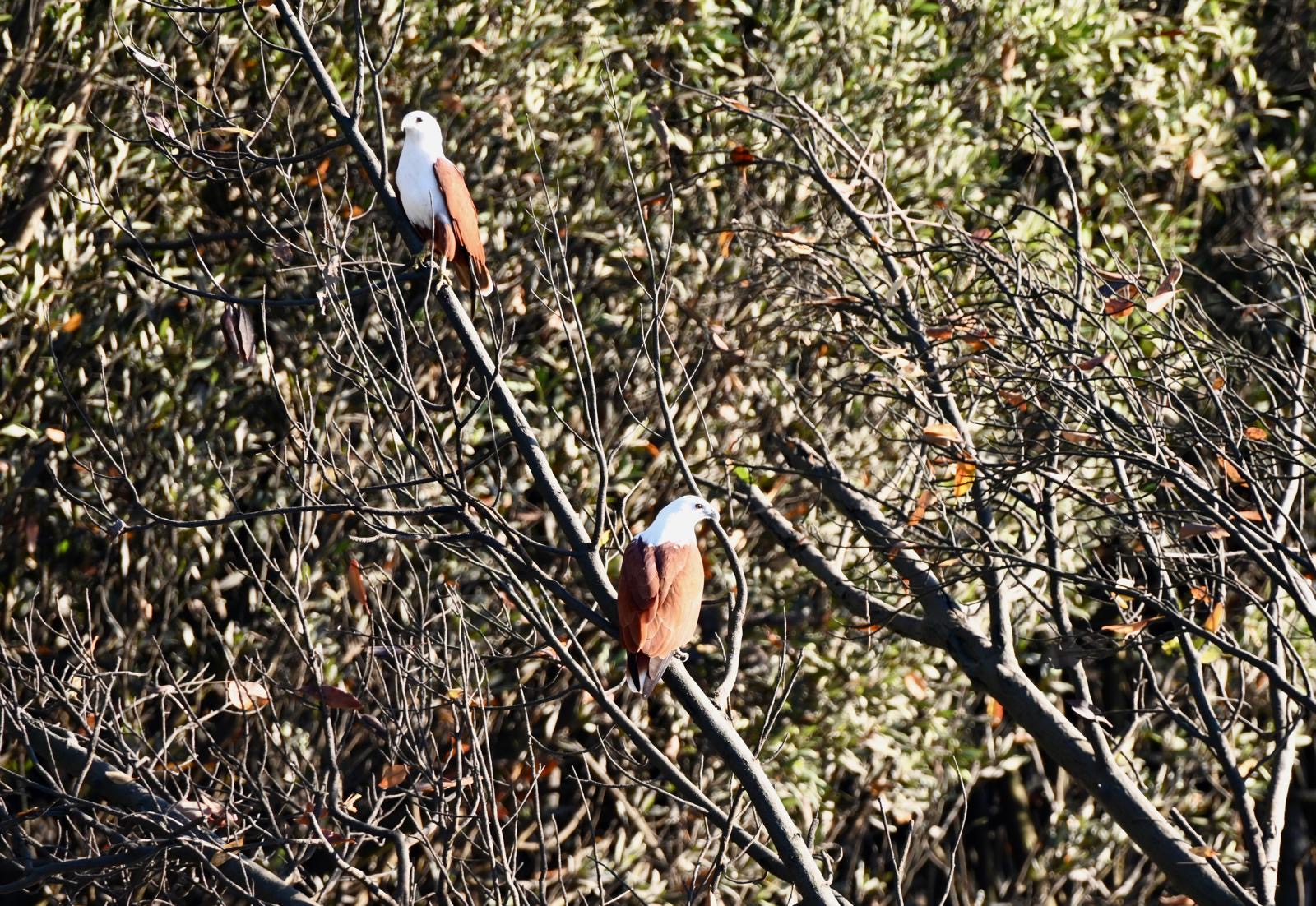
Brahminy Kite
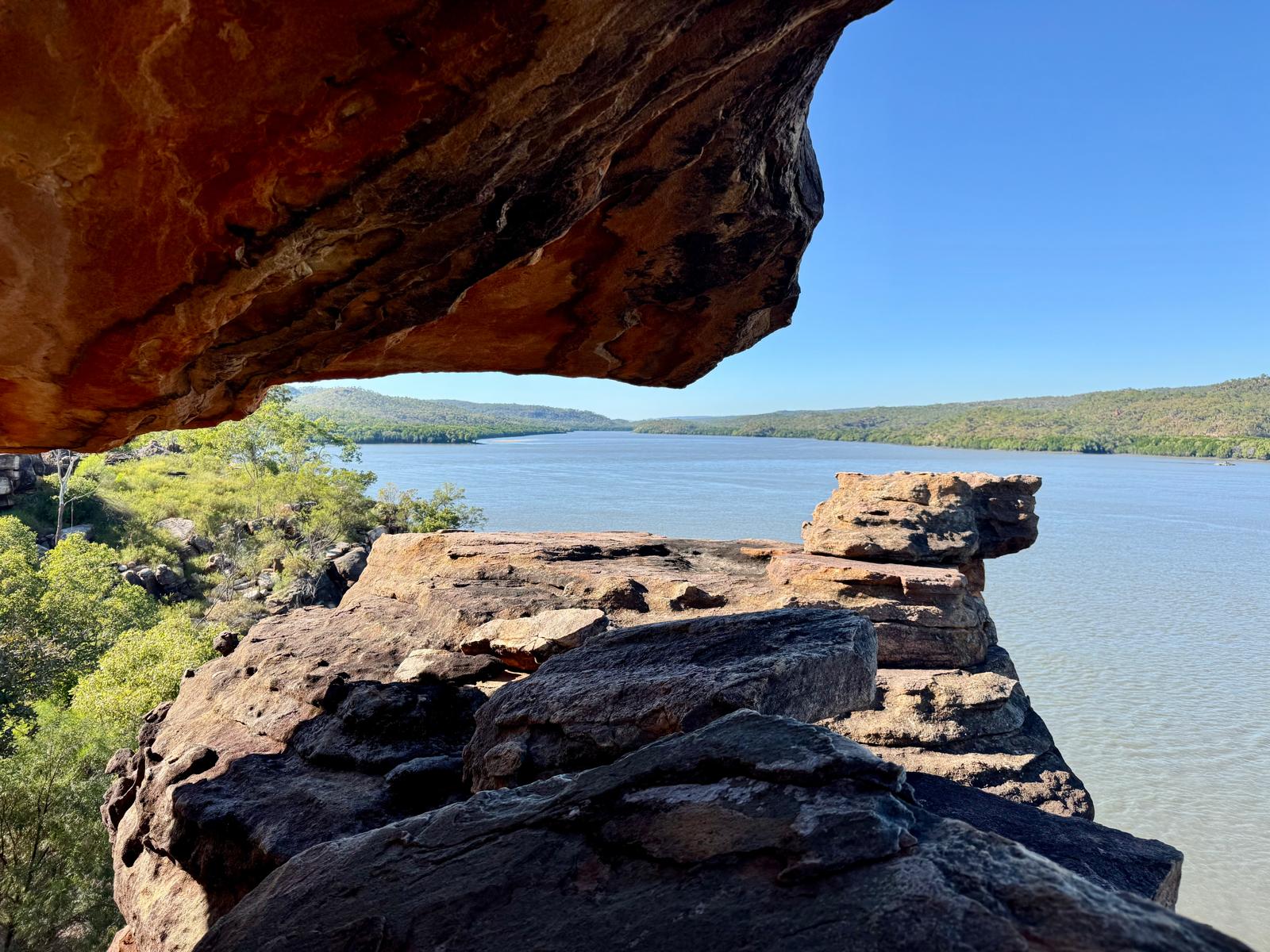
We headed back down Camp Creek and turned back up the river, passing a couple of other boats before pulling up by some rocks where we clambered about 20m up the hill to look at some more graffiti. Nobody knows exactly how old this stuff is but they think between 20 and 40,000 years ago. The ochre or dye used penetrates into the limestone rock and as it was positioned under an overhang it seems to have survived the journey through time. There was an image of a rock wallaby in one place and not far from there were a number of figures that were people in elaborate headdresses. We climbed back down to the boat, which in the short time we had been up there had risen about a meter as the tide was coming in. Heading downstream we soon reboarded the True North II where we enjoyed some morning tea.
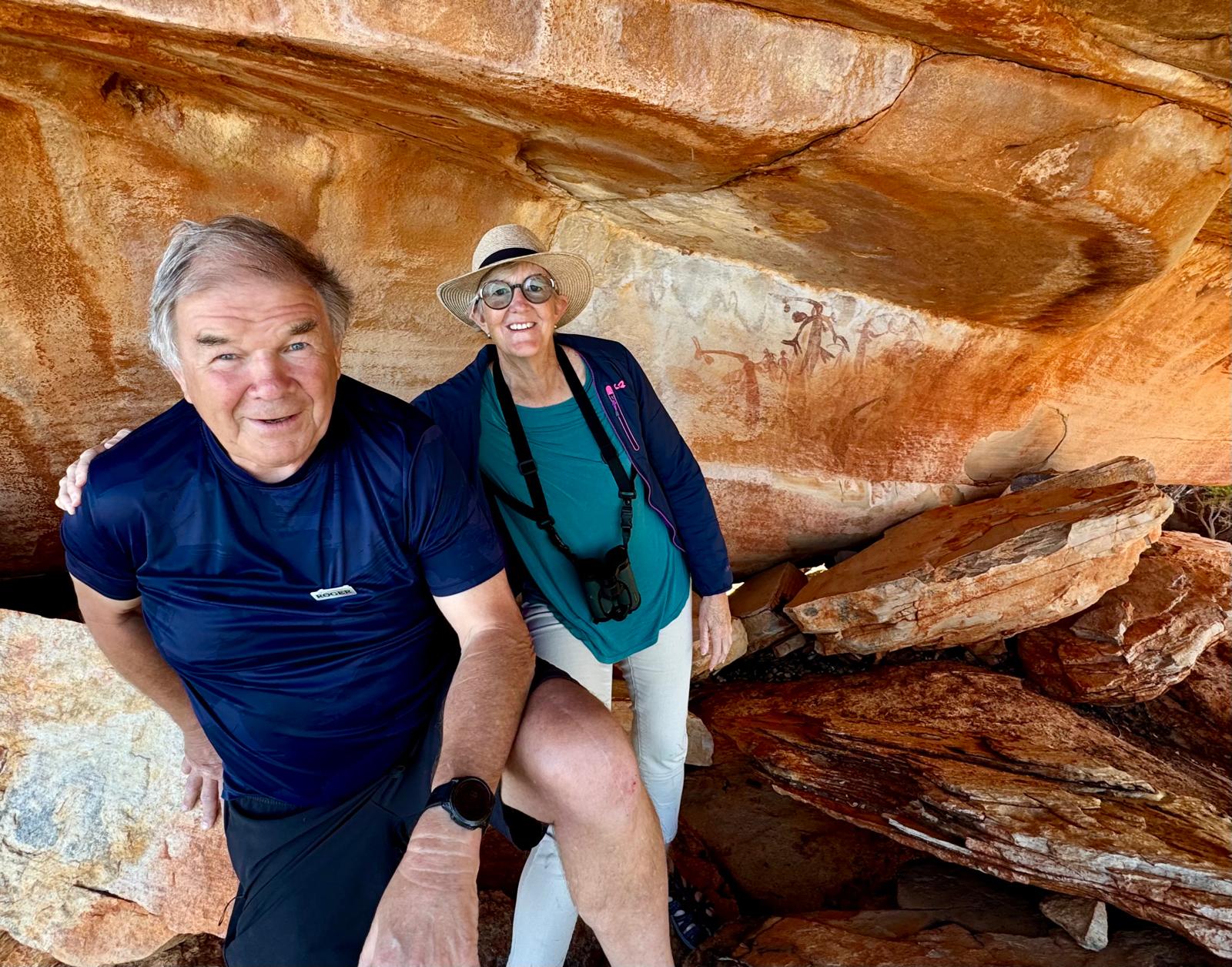
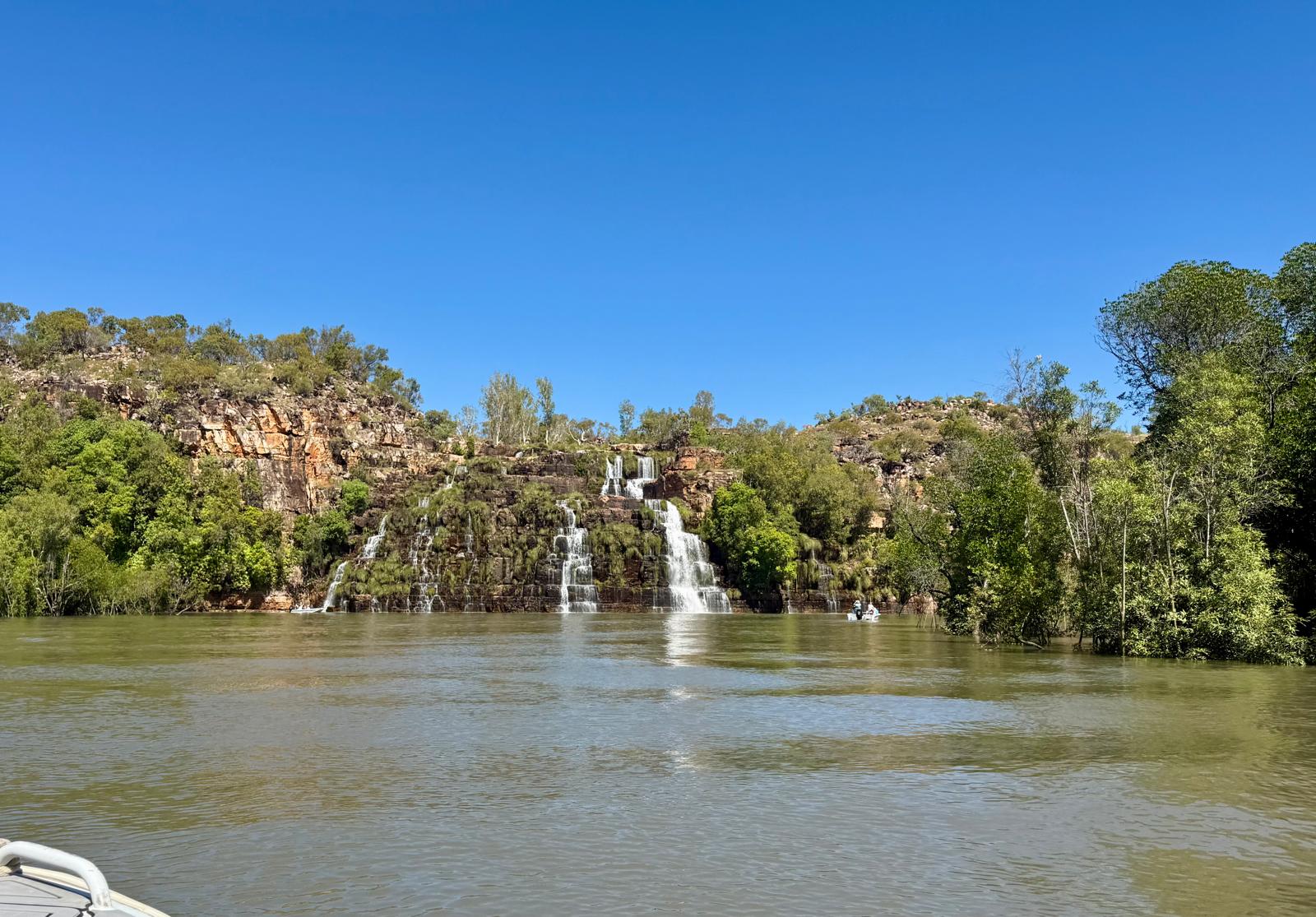
Soon we were back in the tenders again, heading up stream again and then turning right into a rather magnificent series of waterfalls. Apparently here, in 1987, a woman had been taken by a rather large crocodile. We disembarked from the boats and climbed up the hill past the top of the waterfall eventually coming to a large pool, which was fed by another small waterfall. We stripped down to our togs, dived in and swam across to the other side, which was quite a pretty area with more pools above the main pool or fed by small waterfalls. After hanging out there for an hour or so we headed back down into the tenders to go back to the True North II. We then headed up the river to the waterfall nosing in right against the large flow of water. We gathered together and had our photos taken under the waterfall. This exercise over we enjoyed a delicious lunch.


After lunch we relaxed for a couple of hours and then a group of us went out with Lloyd again. We drove around various bays looking at the rock formations while, Lloyd who is very knowledgeable, was able to tell us about everything that goes on in the area. The various tribes one from the north side of the river and the other from the south side of the river had managed their populations over the last 50,000 years with various customs and traditions ensuring that they maintained their tribe and that no inbreeding took place.


Back on board the True North II we had a presentation on pearls by Guia, one of the staff originally from Italy. She gave everybody rundown on how the pearls were seeded in the large oyster shelves and eventually harvested. There was also an opportunity to buy strings of pearls or pearl earrings and other things.
At around 1830 we all sat down and enjoyed another great dinner prepared by our two very professional chefs in the small kitchen or galley as they call it the sea.
It’s really impressive to see how all the staff here work together so well making the experience so enjoyable.
Stunning photos, what a beautiful part of the country and the food sounds amazing. I second Rosie’s comment, Love your hat Sylvia, it suits you!
What a fabulous trip! You two sure do know how to enjoy life … it’s wonderful to see. Love Tina & Greg x
Good point Jo thanks for that info.
Stunning but I will argue a point with Roger regarding controlled burns which are done in NSW and QLD but it’s a whole lot trickier than Broome. First of all the population is so much more in NSW so letting a control burn get out of hand and destroying a house is a PR nightmare which has happened a couple of times. The bush is so much thicker in eastern NSW so once fire has caught hold boom plus I’m not sure BBQing Koalas is too popular here. The window for doing such burns is very narrow and really creating fire trails and fire breaks is probably more effective in most parts. No bushfires happen in Bourke as the scrub is much more sparse so I’m yet to see a bushfire of any magnitude out there in the 20 years ive been going there.
Wow! What a trip. Fabulous photos and such interesting sharing.
You both write so well – we almost feel as though we’ve been there! (Wishing!) You two sure know how to pick your adventures.
Thank you again for a wonderful, pictorial exposition. Love your hat Sylvie. Seems like a brave place to go swimming. Great waterfall shot with the two of you. Xxx
Amazingly old rocks. And amazingly well fed on all these trips.
Most interesting! A little different from what I imagined – a great experience. Great photos
great post yet again all great to see and read