A Weekend in Prague

Saturday 25 June 2016

Hotel Alchymist has etched into the door step 1517. With arched ceilings and gilded furniture it’s pretty nice. It has chandeliers in every room and in the basement is a bubbling pool and massage rooms.

42 43 44 45 46

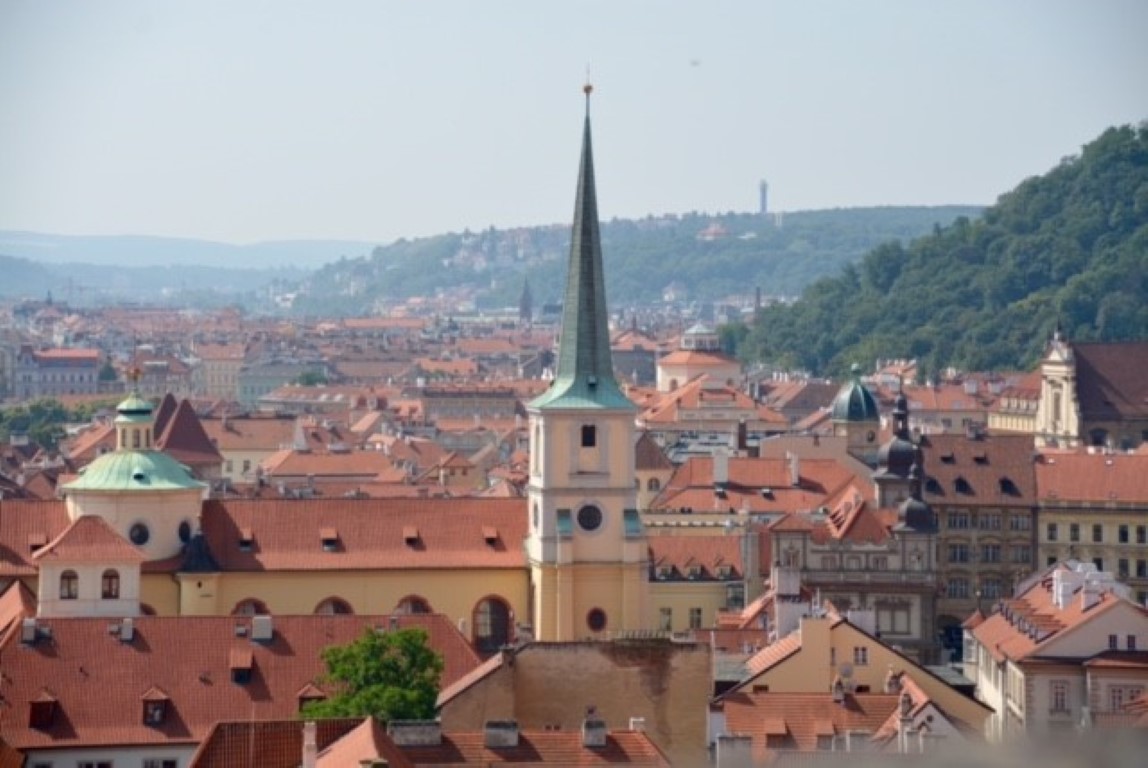
After a hearty breakfast we strolled around the corner and up the steps to the Prague Castle. The view over the city from here is stunning. Some three hundred spires around the town pierce the hazy sky.  It’s pretty evident that the camera is for a good workout today.  We stroll around the castle gazing at the variety of structures, some totally different than others, but all seem to blend together in a powerful statement of magnificence.

47 48 49 50 51 52 53

From the castle we strolled into the old town. Old trams in great condition rattled down the streets. Vintage style cars ferried tourists around.

54 55 56

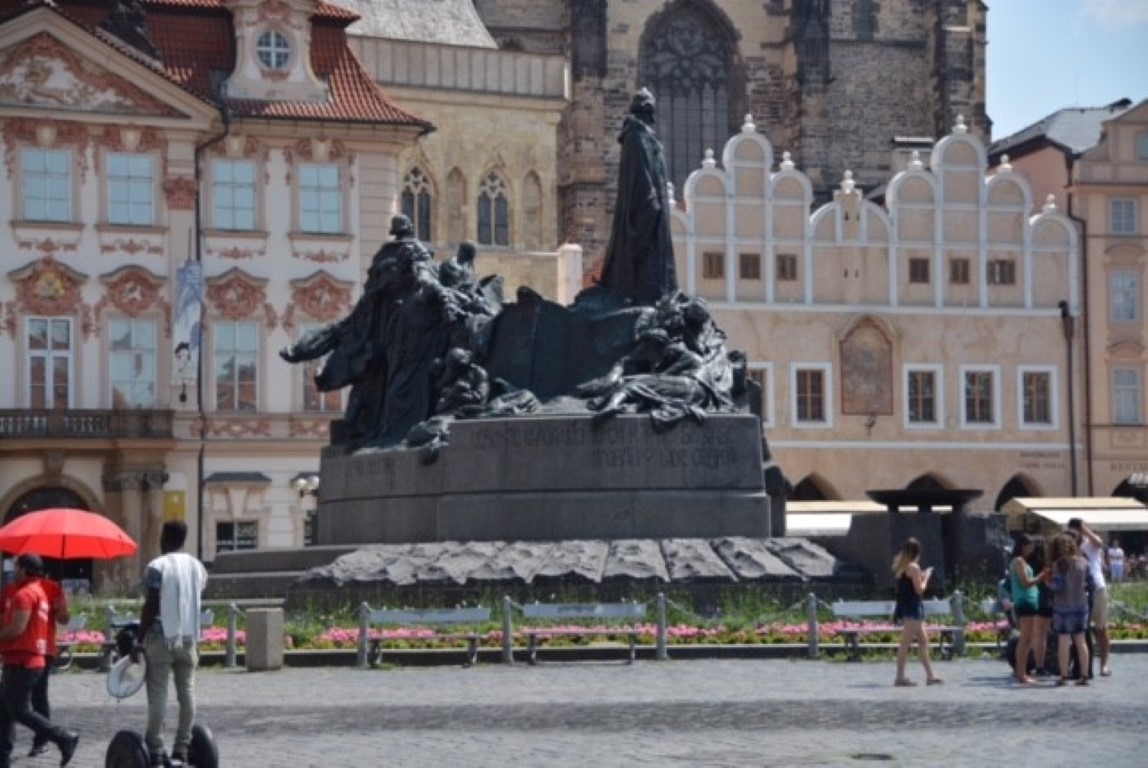
Everywhere you look it is clean, tidy and the buildings are in pristine condition. In the Old Town Square we sat in a cafe and watched the Astronomical Clock do its stuff. Built way back in 1410, the king of the time liked it so much he had the eyes removed from the guy that built it to prevent him building something better for someone else. Thousands of people pack the square. We discovered that many of the buildings in this square were built in the twentieth century but in a style keeping with the rest of the town.

57 58 59 60 61

We wandered the streets in awe of what we saw.

62 63 64 65

Coming across the dancing buildings we spotted people on the roof. “There must be a bar up there” so up we went. As we admired the view down river some of the largest rain drops we have felt began to strike. We just made it into the covered area before getting drenched.

66
67 70

When the rain stopped we wandered back down the river and across the Charles Bridge (built in 1357) back to the hotel.

71 74 72

We were 20 meters from the hotel when the rain hit again followed by large hail stones which pounded there way across town.

75

We enjoyed the complimentary wine and cheese in the hotel before heading downstairs to the impressive spa area for massages – the strong Indonesian masseuse pounded my body back into shape


Sunday 26 June

We strolled back up to the Prague castle and bought tickets to go inside a number of the buildings. The first records of civilisation in this area date from between 3600 and 2500 BC. The castle area started to be built in the 8th century with the first stone buildings erected in the mid-1100’s. The castle area covers 70,000 square metres, making it the largest ancient castle in the world. It is dominated by the St Vitus cathedral. It has housed kings from a number of different dynasties and is currently the official residence of the President of the Czech Republic.

40 41 DSC_5261 DSC_5262

Our tickets gave us access to the old palace, several museums and of course the cathedral. One area show-cased numerous suits of armour, weapons and the torture chamber and prison area, which displayed several horrific looking implements. In one area people wore traditional dress and demonstrated several different medieval skills including black smithing, leather work and armour making.

DSC_5287 DSC_5281 DSC_5279 DSC_5278 38 DSC_5272 DSC_5305 DSC_5302

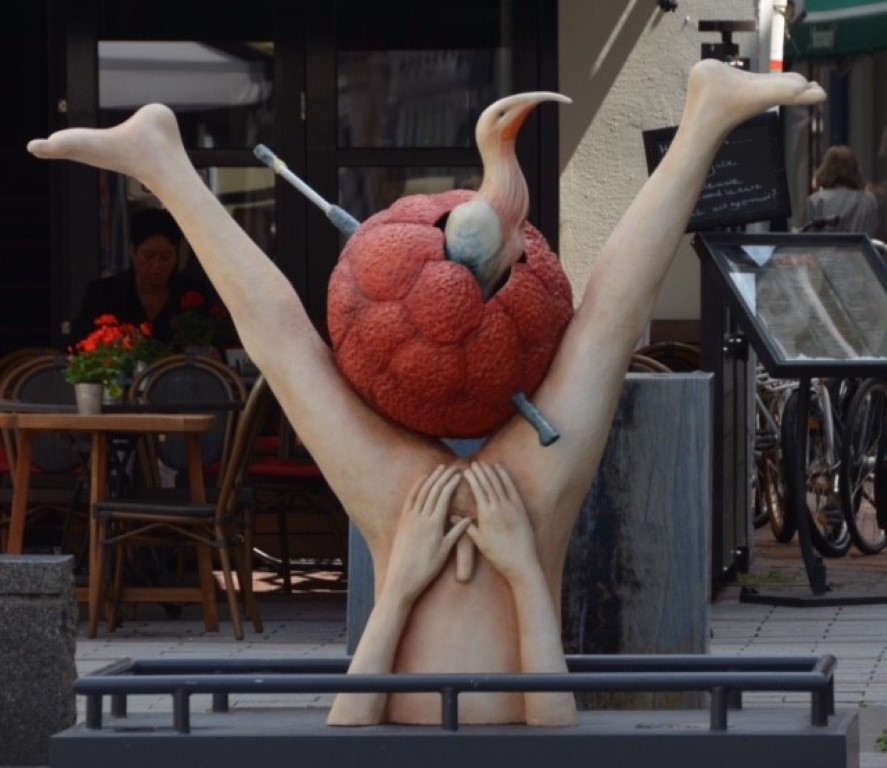
After exploring the castle we decided to take a three hour private Segway tour around the city. Roger was only on the Segway for two minutes before our guide pronounced herself scared. It was a great way to get a good overview of the city. One of the more amusing sites was the ‘Pissing fountain’. Sculpted by David Cerny it apparently depicts the government pissing on the country. We passed several more of his works including some faceless babies crawling up the space tower, apparently the ninth ugliest building in the world.

37 DSC_5320 DSC_5326 DSC_5322 DSC_5324

Our guide was a bit of a hoot, entertaining us with tidbits of history tinged with her irreverent sense of humour. Roger had somehow managed to run his battery flat about 2.5 hours in, and just as we arrived at the beer garden near the Monastery (which we had been told sold the best beer in Prague). It was a good place to wait for a replacement battery to arrive so we could finish the trip back to the hotel.

36

Back to Barcelona

Tuesday/Wednesday 21 & 22 June 2016

With the unusual feeling that I had managed to everything done we were again off to the airport, this time with Sylvia’s son Nathaniel who happened to be departing around the same time for the US to further his PhD studies at UCLA.

We are on the Emirates Boeing 777 200 seventeen hour flight to Dubai. These guys do it bloody well. Somehow when I get on an Air NZ flight they go on about the awards they have won. Their crew generally try hard but the rest of their outfit do everything they can to piss people off. The Emirates crew are gushing smiles and enthusiasm. The new release movies are actually new. The food is great and the service excellent. Four hours sleep and five movies later (the best being Whisky Foxtrot Tango and 13 Hours). We landed in Dubai for the 45 minute taxi to the gate. I felt a bit cheated as the comfortable flight had been under 17 hours.

We cruised into the lounge to find they still have a smoking area, not a little glass room like you see in most airports but part of the lounge. A couple of hours later and we were on the A380 to Barcelona.

26 27

As we taxied out to take off I looked out the window to see another A380 taxiing alongside us.  Apart from being pressurised at 6000ft the best feature about this plane is it has a bar at the back of business class. The last time I stood at a bar on an aeroplane was on a Continental DC10 in the eighties on a flight from LA to Houston. I enjoyed a few drinks with Kelly the attendant who skillfully ensured no one went thirsty.  She informed us she is off to climb Kilimanjaro later this year.  A few drinks at the bar and a couple of movies and the seven hour flight was over.

28

We are staying in an area called Fira about ten kilometres from the city centre. We checked in to the rather different Renaissance Hotel. With its outside painted with plants, white sterile room and fern shaped windows it was a little unusual.

29 30

Sylvia had to go to a dinner meeting at a hotel down the road. I took a cab with her and strolled back. I decided to take a quick look in the Ikea store across the road from our hotel. It was far from a quick look, the store is huge and set up so you have to walk the whole thing to get out.

A visit to the roof top bar of the hotel revealed a swimming pool and great views over the city.

31 32 33 34 35


Thursday 23 June 2016

Sylvia headed off for a day of to a day of meetings. I strolled through a few streets and up towards Montjuic. This area houses the stadiums built for the 1992 Olympics. All seem to be still in pristine condition. The park also contains a large monument overlooking the city.

1 2 3

I had looked on Google and seen what appeared from the air to be lots of small apartments symmetrically laid out. It turned out to be a cemetery, similar to those I had seen in Peru three years ago. Thousands of people are interred here. Each block is six graves high with glass fronts and mobile ladders around to enable people to climb up and place flowers for their loved ones.

4 5

A stroll up onto the ridge revealed stunning views over the port and out to the Mediterranean. Lots of large ships waited at sea to enter the port.

6 7

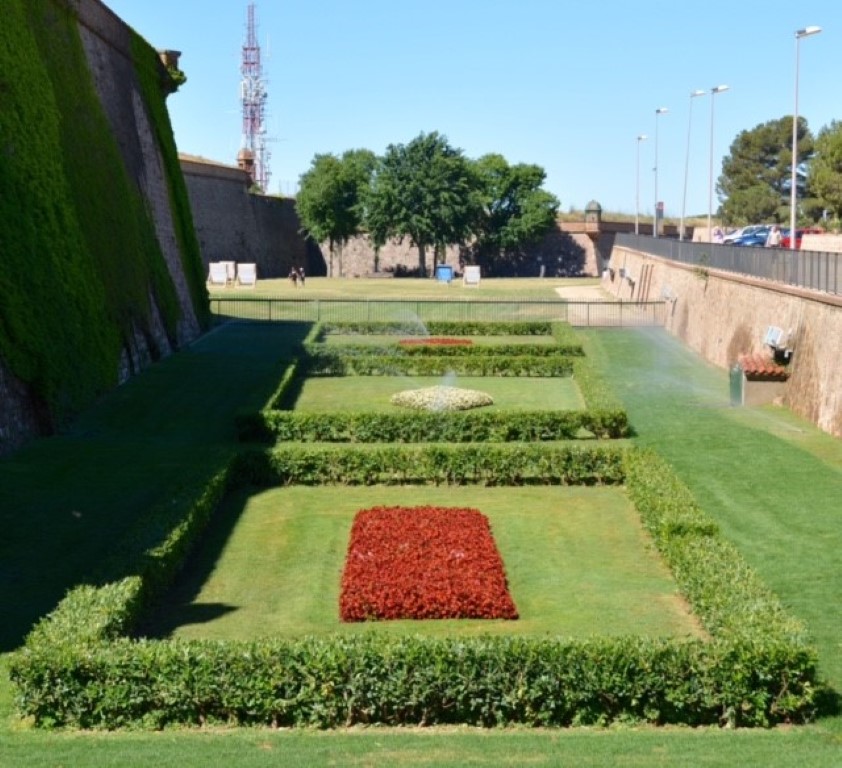
At the top of the ridge is Montjuic Castle. Situated on a cliff several hundred meters above the sea it has commanding views up and down the coast and over the docks and city centre. Back as far as 1000AD a lighthouse stood on this feature. The first fort was built in the mid 1600s. Modified at the end of that century it became a castle. In the mid 1700s it was demolished and a new flasher castle built, which is what we see today.

8 10 9

Pre the days of missiles or heavy artillery it would have been very hard to defeat. In the mid 1800s it shelled the city to quash an uprising by the peasants. Old and new guns still dominate the cliff top.

11 12

In the castle part there is a museum walking one through the history of the fort.

13 15 14

On the lawn of the well kept moat archers practiced with there bows on this stunning blue skied Mediterranean day.

16 17

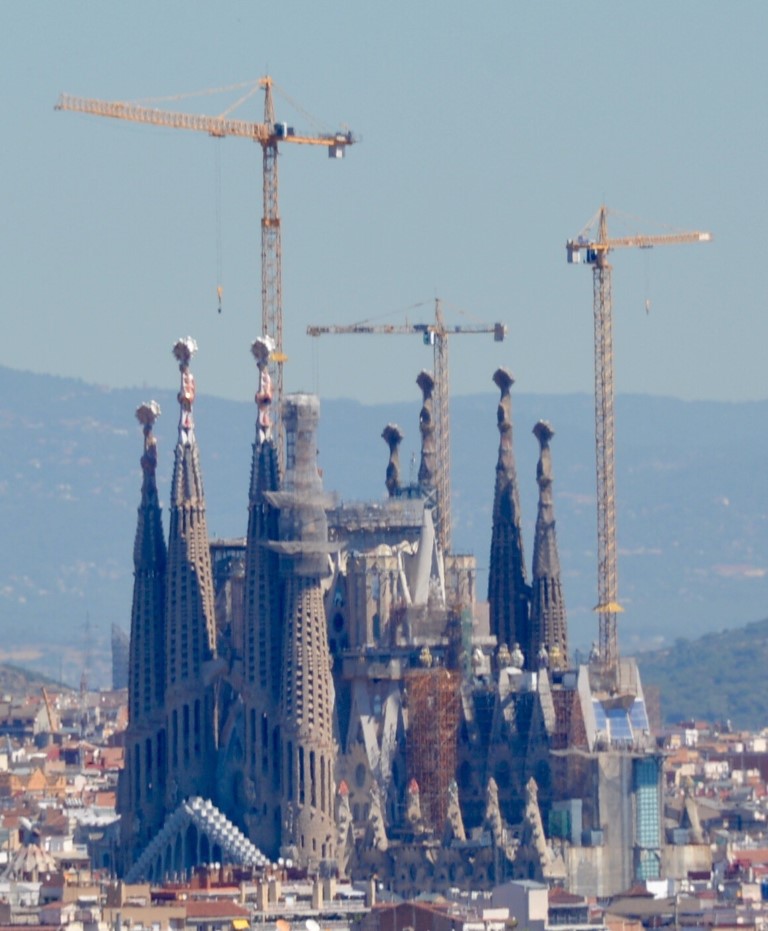
Down the hill a little as the Port Vell Aerial Tramway. Opened in 1931 this has one car each cable. Leaving the cliff it takes you out across the port. The views are fantastic. Gaudi’s Cathedral and the Bullet are prominent as they protrude above the surrounding buildings.

18 19 20 21

A lift ride to the ground and I was at the beach. I found a beach bar with shade – it’s 36º and the beach is packed. There are chairs and umbrellas for rent on the white sand with the clear blue sea in the background. People lie back and relax in the reclining beach chairs. Many of the woman lie topless or play games on the sand.

22 23

The heavily tattooed Italian barmaid tells me how she works here in the summer and travels in the winter to South America. She would love to travel to NZ but its just too expensive and far away.

I take the cable car back up the hill and stroll back around the side, dropping into the intensive housing area. Six-storey apartments line the beautiful streets lined with trees with many little town squares. Shops and banks line the streets.

24 25

Further up the road there is a large stadium and more stunning buildings. I wonder why we can’t achieve this in the new housing areas we are developing in Auckland. Surely our politicians must travel and see such places.

Arriving back at our hotel Sylvia and I sit at the rooftop bar taking in the beauty of the city and discussing her busy day.


Friday 24 June

I took the metro into the city for a visit to the Maritime Museum. This is a ship yard dating back to the back to the 1700s. It has miniature ship displays. The main exhibit housed in this grand structure is a replica of the Royal Galley of St John of Austria, built to celebrate the fourth centenary of the battle of Lequnato. The original vessel was built in the dockyards in 1571. It would take the whole NZ Rowing team plus some to propel it.

IMG_0750 IMG_0751

There is also a replica of the submarine Leciteno originally built in 1859.

IMG_0752

A short stroll back to the subway and with a little difficulty i managed to get the right train back to Fira. The subways here are super clean and efficient.

IMG_0753

Being a holiday there were no taxis available so we caught the underground train to the airport. With no doors between the carriages one could see the train bend around corners.

IMG_0754

Arriving in Prague we jumped the fastest taxi we had ever travelled in. Seat reclined so he could just reach the steering wheel we headed down the motorway at 160kph. Pulling into the street of the Alchymist Hotel we were stopped by police. The driver reluctantly got out to open the bonnet and boot as a guy scanned the underside of the car with a mirror. The hotel turned out to be next to the US embassy.

IMG_0755 IMG_0757

At the end of a rope in Takaka

Sylvia – 17-19 June 2016

We have often talked about how we should also blog about our travels in New Zealand and having just returned from a quick weekend visit to Takaka I was again struck by the incredible beauty of this country and decided to actually do it!

I left Roger in Auckland for the weekend as he had a big dinner to attend on Friday night (and well into the wee hours of Saturday morning by the sounds of it…).

It was a stunning day with not a cloud in the sky so the flight into Nelson offered up fantastic views of Golden Bay, Farewell Spit and the Marlborough Sounds. By the time I had snaked my way over the 25km long Takaka Hill  and arrived in the little piece of paradise that is the Golden Bay area I had already fully unwound from the week.

My daughter, Beka, and her partner, Tom are currently living in their bus, Bronson, with their two dogs, Ruby and Daisy. Beka is studying art and spends four hours or so a day painting and drawing. The rest of the time they are rock-climbing and exploring the beauty of New Zealand. This was my opportunity to do a bit of the same, albeit staying in a warm motel rather than the bus.

IMG_6476 IMG_6475

Saturday dawned another brilliant day. I drove out to Pohara where Beka and Tom had camped for the night and after catching up and admiring Beka’s art we headed to Cathedral Rock where I was encouraged to do my first climb of the day. This was so much better than climbing in the Blue Mountains. The rock is limestone, so much smoother, the crag was in the sun, so mice and warm, and there were phenomenal views back over Golden Bay. I get so much encouragement from Beka and Tom, even when I scrabble and yell “help!”. Eventually I made it to the top of Tales from the Sea!

IMG_6455

The little black dot is me….

IMG_6474

Beka on Ambrosia about 5 years ago (I can't carry a camera with me)

Beka on the climb about 5 years ago (I can’t carry a camera with me)

There is no climbing for the kids near Pohara so we headed to Payne’s Ford nearer to Takaka where they were able to work some of their projects. Beka was climbing Dancing on a Skewer and Tom was working on a first ascent. Unfortunately shady and colder but still a lovely spot. I always get a kick out of watching them climb. Beka set up another short climb (Green Day) for me in that area and even allowed me to belay her which was a privilege. We packed up just on dark and headed into town for a delicious meal at one of the local cafes.

On Sunday morning we drove out to Minthorpe. The brooding sky added to the atmosphere as we wandered first along the beach and then back through the forest to the car. All too soon it was time to head back over that hill to Nelson for my flight home. In many ways I am glad that hill exists – it probably keeps to a minimum the number of people who visit this little piece of paradise. It is certainly well worth it for any who do.

IMG_6442 IMG_6437 IMG_6433 IMG_6432

A Long Shot in Texas

Week Commencing Monday 30 May 

Chris dropped me off at Tampa where I started the journey to Amarillo via Dallas. At Dallas there was a line-up of small E80 twin tail engine jets that feed the small cities. Arriving in Amarillo I discovered it is not only famous for the song, but is also the home town of Colonel Rick Husband, Mission Commander of the Space Shuttle Columba which disintegrated on re-entry in February 2003. His statue stands with pride in the terminal building.

133 132

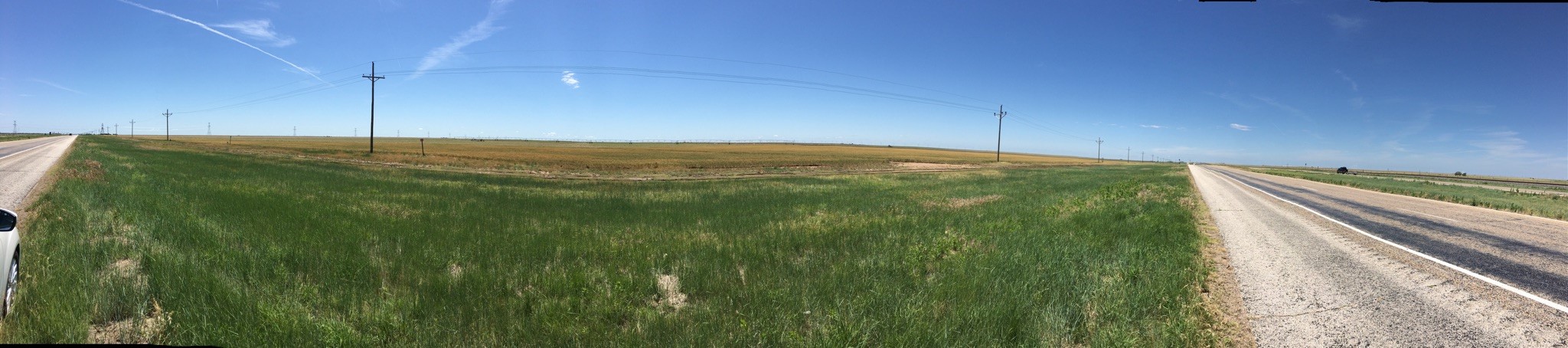
Hiring a car I headed northeast. The land here is flat – in fact dead-flat. A few miles out of town I stopped the car and got out to look around. One can see the horizon in every direction. The last time I saw this was in the Kalahari Desert in Botswana.

134 135

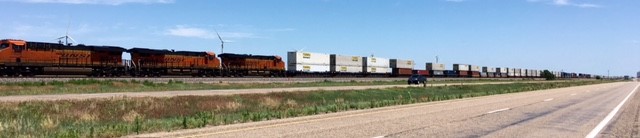
A train rolled down the track towards me, stacked two storeys with containers. It was so long I couldn’t see the other end. I am not a train spotter but I couldn’t resist filming this one going past. Speeding along at around sixty miles per hour it took over one and a half minutes to pass by. That’s a mile and a half of train!

136

Everything is big around here. Huge green paddocks stretch out on each side of the road. I was expecting a desert but saw instead large, green, fertile pastures, some with irrigation. Hundreds of wind turbines cluttered the land twenty miles out of town.

137

An hour or so up the road the land started to gain a bit of form with some small hills and gullies. This is oil, gas and cattle country.

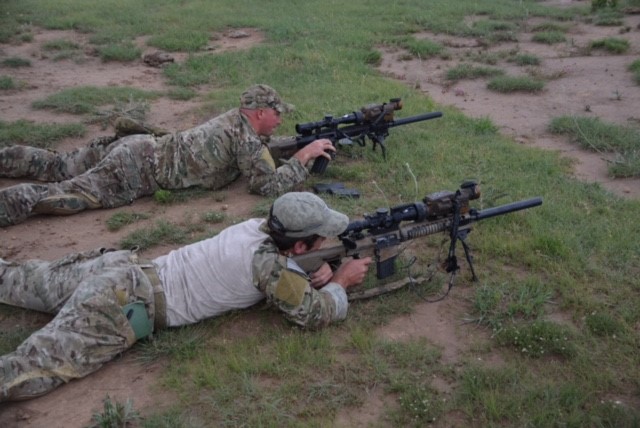
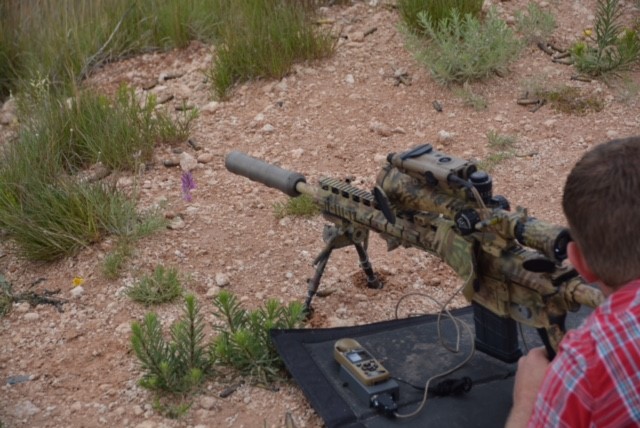
I am privileged to have been invited up here by Todd, the founder and chief instructor of Accuracy 1st. Todd is a specialist in long range rifle shooting. In conjunction with Kestrel Wind meters he has helped to develop a ballistic programme to calculate how to make long shots.

138

I pull off the main road onto a dirt road and the GPS soon tells me I have arrived – paddocks all around not a house in site. Heading down a hill I come to a ford. Wading in to check the depth of the brown water it’s pretty clear this little ford will not make it through. Back up the road I find a house and am greeted by Todd’s wife Shannon.

Their son Will runs me up to the 360 degree range. On the ground are a group of US army marksmen who are here training. The firing points are on a hill top which allows the team to move to different positions and calculate the wind at different angles. The close targets from 200m to 4 or sometimes 500m are  a 12″ steel disc, beyond that out to 2000m they are generally a 12″ disc with a square steep plate about 16″ wide below them. When hit a rewarding ding travels back to the shooter. Long rang shooting is a combination of science and skill.

139 140 141 142

Quite quickly the day is over and I head into the local town of Canadian and book into a hotel for the week.

143

The next morning we settled into a house down the road from the ranges for lectures by Todd. Kestrel wind meters in hand Todd takes us through the process of entering the data. He knows this instrument so well that he doesn’t even need one in his hand to talk us through it.

It goes like this “arrow down to gun, press the centre button, arrow down three, press centre button, down two” etc. It’s hard to keep up.

He talks about truing the gun. For a 7.62 rifle: zero at 100m then another zero at 700 before the bullet goes transonic – make adjustments. Another zero is done at 1100m. By making adjustments to the zero the kestrel adjusts the ballistics to the flight of the bullet (algorithm) so that the bullet path is accurate in 10m intervals to over 1000m.

We head out to another range and put into practice what we have learnt. We shoot targets from 300m working our way out to just over 1000m. The la Rue 7.62 semi auto rifle Todd has loaned me has a 3 to 25 power Nightforce Scope on it with a trimmer three reticule (cross hair). This has graduated lines running down and out to the sides to assist in calculating the wind.

At one stage we are buzzed by a very fast aeroplane. Sometime later Eddie, the pilot, complete with Stetson, turns up at the range.

144 145

That night back in town I front up at the Stumbling Goat Saloon for dinner. Steve the barman tells me that pizza is half price tonight. “I think I will order a small one” I say. “No no” he says, “you’ll need a big one”. A big one I ordered. When it arrived it was huge! I looked at the 130kg plus Steve and realised why he had recommended the big one.

Back to the lecture room the next day, as it rained all day, learning how to judge range to the target by sizing objects on the scope reticule. Todd is a master at arithmetic, instructing us in how to calculate wind speed at an angle using short formulae.  Then it’s back out to do some more practice.

That night I headed to the supermarket to buy some beer for the team. “Excuse me where is the beer department?” “We don’t have one came the reply!!” “What?” “Yea man, Hemphill is a dry county, you could drive 20 miles up to the next county and get some but they are closed!”

I headed across to the Goat and ordered a drink. I commented to the barman about the dry county. “Yea and it’s going to stay that way because the mayor owns this place so it works well for him”.

The next day we sat out the rain in lectures heading out mid-afternoon to practice. There are lots of experts passing through here testing out and getting Todd’s advice on developing their new technology. We got to try out some pretty cool stuff, after which I got invited to a BBQ at the training centre to meet a whole bunch of people up there testing different shooting aid devices.

146 147

Friday morning we did a shoot with no aids having to judge the range off the reticule (milling) and trying to work out the wind from the mirage and movement of grass etc. I need lots more practice at that.

All too soon it was time to drive back to Amarillo. It had been a great week. A big thank you to Todd and Shannon for their hospitality, and to the US Army marksmen for welcoming me into their group while sharing lots of their skills and humour.

It seemed like in no time at all, after the flight over miles of flat country, Sylvia was there to meet me at the airport gate in Houston to catch our flight back to NZ.

148 149

A weekend in Tampa

27-30 May 2016.

Landing early Friday evening out of Nashville, Chris picked us up at the airport.  Old mate Chris is over here from NZ doing a stint for the NZ Defense force with his wife Nadine and their two children Jacob and Lucy.

109

Nadine prepared some fantastic evening snacks over which we chatted for some time. The girls headed off to bed about 11. Having not caught up for a while Chris and I headed for the deck for a cigar and a chat – the next thing we knew it was 4am!

The next morning we had a guided tour of Tampa, exploring the piers and big houses along the shore front.

110 111

In the afternoon we headed across one of the three Tampa Bay bridges to a great café on the shore front. They had a small area in the water roped off where the kids could bathe under the watchful eyes of their parents. Miami vice type boats cruised past, most with one or two bikini clad woman on board with the guys in t-shirts and shorts.

114 112 113

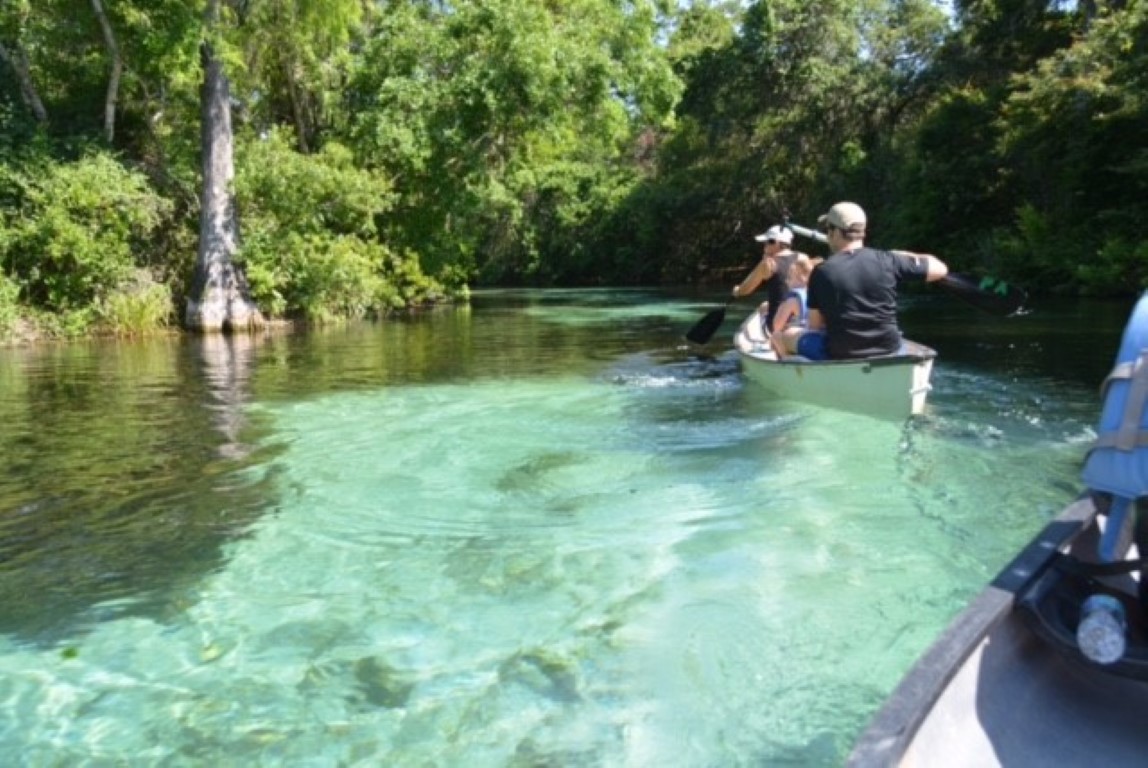
On Sunday we took a drive a couple of hours up north to the Weeki Wachi Springs. Nadine had organised the hire of a couple of Canadian canoes. This place was well organised and soon they had us in the river and paddling our way down stream  amongst the many other people in canoes, kayaks, or just floaties. The water was crystal clear as the river weaved its way through the jungle.

115 118 119 120

The trip was around five miles. As we got a couple of miles down stream we passed large houses set back from the river in the bush. There was a chance here of spotting a Manatee; these are sometimes referred to as a sea cow. As we paddled our way past some small houses set on the river someone called us over to point out a Manatee feeding against the bank. We watched as, she and her calf sucked up the weed growing on the rivers edge with their soft mouths.

116 117 121 122 127 128 123 125124

Reaching Roger Park and the end of our journey we paddled across to a local bar for a late lunch. Back in Tampa we dropped Sylvia at the airport for her flight to Nashville. I left the following morning after enjoying another pleasant evening in Tampa.

126  130 131

A Big Park in Mexico

Sunday 22 May 2016

A comfortable 14h 40min flight landed us in San Francisco. US immigration recently introduced fast access with passport scanners like the ones we have had in NZ for several years. Sylvia slipped through with ease on her US passport. I was thinking maybe third time lucky but not so… my ticket gets the big cross on it. After 20mins in a line I make it to the ‘do not speak to me’ immigration guy. Asking why I always get the cross he said “suck it up man your name’s too common, the guys that designed the system were no good!” At least I know now why.

We took the Bart train the 30 mins into the city getting off a short stroll from the ferry building. Strolling along the wharf edge towards Fisherman’s Wharf the place was full of people. Numerous restaurants line the piers along with market stalls, bars and entertainment. As we get opposite Alcatraz Island just about every business has Alcatraz incorporated into their name. Dozens of sea lions lie on pontoons, watched by a hundred or so people on the pier.

1 2 3 5 4 6 7

A Chinaman plays a one string harp with a speaker in a plastic bucket to amp up the noise. Skate boarders and beggars hold their spots. “Let’s be honest! I need money for weed” says one guy on his sign. “This broke ass nigger needs money” says another.

We pass a WWII submarine and merchant ship tied alongside. Arriving at Fisherman’s Wharf it is packed with people, many queuing for food especially crabs.

8
9 10

Further down the old cable car trams now run as a tourist attraction. I had ridden these in town in the eighties so we flagged the hour plus wait for trip.

11

There are few Europeans in the streets as we stroll back to the ferry terminal along the street. Interestingly less than half of the eight hundred thousand plus population here are white Americans. Asians make up 33% followed by Hispanics and others pushing it out to 56%. A big change from 1940 when whites made up 95% of the population.

12 13


Monday 23 May 

Touching down in Mexico City just after 5am, the immigration process was quite quick. A driver was waiting with a sign and in 45 mins delivered us to the Gran Fiesta America Hotel near the Chapultepec gardens.  After dropping our bags in our room we headed up the VIP dining room on the 16th floor. Here there is a stunning view out over a huge park. After a short sleep Sylvia headed off for a store tour.

14

Around noon I headed out into the park. Paseo de la Reforma, a main road, heads through the beginning of the park. Alongside the road is a display called Balon (golden ball). Hundreds of large soccer balls line the footpath, painted and decorated in different ways.

15 17 16

I crossed the busy road looking for a way into the western part of the park but all gates were closed. A know down the road I found a street heading west and soon access to the park – well a small part of it anyway. Varying statues dominated this park. Groups of old people sat at tables around the park playing cards.

35 33 29 1924 27 36

Eventually I found a track leading to the main park. Finding the entrance to the Zoo I was stopped at the gate. My three Spanish words, “ola senor and gracias” were not much help. With me smiling helplessly and the guard using a large range of sign language, all but drawing his gun, it was established that everything is closed Monday.

Chapultepec Park is apparently, at 640 hectares, the largest city park in the Western Hemisphere. As I was to discover the accessible park is considerably less than that. As I strolled south I had a pidgin English chat with the navy armed guards (one took his magazine off his M16 to show me the live rounds) on the gate of a large fenced off area containing the president’s pad.

Further on I crossed an over bridge looking into a military compound. Along with a couple of locals I watched a parade underway for a while until a security guard came and told us to bugger off. Luckily he didn’t see me take a pic.

37 38

I wandered through bumper boat lakes then a fitness area including a running track. Crossing another set of roads the park became a wilderness surrounded by a high fence. I think the area once contained a reservoir. As I continued south on the foot path alongside the fence large houses with security fencing overlooked the scruffy park on the other side of the road.

39 40 41 42

I passed an equestrian facility. I approached the gate hoping to take a look. Not understanding a word the guy was saying it was still very clear I wasn’t welcome. At around the eight km mark I finally reached the end of the park. Heading north along the road on the west boundary alongside a high wall there were more unwelcoming equestrian places. This was followed by a huge cemetery with large tombs running a couple kms along behind the wall. Crossing an over bridge I had a view back to the city, just at the boundary of the wall of smog constantly surrounding the city. On the way home I passed a huge adventure ground complete with roller coaster.

43 45 44 46 47

The evening we spent in the VIP lounge on the floor above us enjoying food and drink. Just to the west there is a fourteen lane road that is constantly packed with traffic while we are in the bar.

48

With somewhere between seventeen and twenty two million people in this city (depending on what you read or who you talk to) I now realise why when flying in here the city is so vast. There are few high rise apartments.


Tuesday 24 May 

After a short stroll through the park I arrived at the path leading up to Castillo de Chapultepec. At 2325 meters above sea level this, the only Royal castle in the Americas, has quite a history. Built for a Spanish general in 1775 it became a military establishment, then the home of emperor Maximillian I. Then it again became a military fort, captured by the US Marines in a bloody battle in 1847 where six cadets aged 14 to 16 fought to their death after the rest of the Mexican army had buggered off. More recently it has been an observatory (that must have been before the smog) and is now a really well done museum. With grand lawns, several huge sweeping marble staircases and rooms opening out on to the surrounding balconies it is a relaxing place to wonder around. The doors are open onto the balcony with each room roped off with a sign in Spanish, I presume explaining the different themes in each room. There are a number of firearms on display, in particular a number of variations of the Gatling (early multi barrelled machine gun).

49 50 51 52 53 54 56 6061 106 105

Back down the track a little way there is the Galeria De Historia, Museo del Caracol. This building spirals down as you walk from exhibit to exhibit. Most exhibits are clay figures in scenes rolling through the history of Mexico. It’s a pity AJ wasn’t here as interpreter as again this is all in Spanish.

62 64 63


Wednesday 25 May 

We woke to an extended view over the city as heavy rain had washed some of the smog out of the sky.

At 9am a driver and a guide picked me up at the hotel and we headed out into the heavy traffic. Our first stop was Templo Mayor, a bunch of Aztec ruins in the middle of town.

65

Next was the Basilica of Our Lady of Guadalupe. Here there are a bunch of churches, the oldest of which has a significant lean on it. Apparently this is a big problem in the city as a long time ago the area was a lake and it is hard to find good foundations to build on. Hence there are not many old tall buildings here. Thousands of people flocked into the square in the middle of these churches, some in costumes, others just coming to pray. The area is famous for the Basilica of Our Lady of Guadalupe, who apparently appeared here many years ago. There is a painting of her behind and under the altar of the new church. There are so many people that come to see this that one has to stand on a conveyor to look up at the painting.

 66 67 68 69 70 71 72

Back in the van we headed north out of the city – the traffic had died off now. At one point I spotted on the hillsides thousands of colourful small houses stacked in close together. These are apparently squatters who have built illegally; by the looks of it there are way too many to tear down.

73 74 75

Well out into the country we arrived at the Teotihuacan Pyramids to clear blue sky overhead with the wall of smog well south of us. Our first stop was a shop that made jewellery “out of real silver”. They also carved stone and had a big cactus plant that tequila comes from. I got to drink the sweet liquid from the centre and was shown a version of paper used centuries ago, along with a needle and thread that also come from this plant.

76 77 78

A short drive had us at the moon pyramid, built around 200 BC and abandoned like the rest of them in this part of the world about 750AD. These ones were discovered in the late sixties, uncovered and are still in the process of being restored. This complex is quite large stretching probably 3ks. The moon pyramid faces down the length of the complex with the sun pyramid off to the west side facing east. Apparently this was the religious part of a community at its peak holding some two hundred thousand people.  When unearthed after a thousand plus years of nature taking it over it basically had to be rebuilt. I am sure the cost has been more than recovered from the millions of visitors. It’s a bit of a pity NZ didn’t have a few people rocking around two thousand years ago building stuff out of stone.

79 80 81 82 84 85

Gacov, the guide, has a well-rehearsed English patter  on what took place here, some of which I understood. I discovered asking questions was not an option as his English was totally rehearsed. He bailed back to the van leaving me to stroll up the structures and look around.

Next was the El Jaguar for lunch – a great buffet as various drummers and musos wandered in to strut their stuff. With nice gardens and good food it was a pleasure to visit.

No! We are not done with pyramids yet. Templo de Quetzalcóatl is the smaller one of the three at the southern end. This area had apparently been the local market area. They are still digging and restoring around here. Lots of the stone is now held together with concrete. There is a plant at the back and they wheelbarrow or bucket it in. This was the most interesting part of the site.

86 87 88 89

The drive back to town was relatively painless as we beat the rush hour and missed the massive teacher’s protest that was apparently about to happen.

When Sylvia turned up after a long, hard day at the office, we took a stroll around the area and found a great Mexican place where we enjoyed some delicious tacos.


Thursday 26 May 

Altar a la Patria is a statue erected in honour or the six boy soldiers who defended to their deaths the Chapultepec Castle. One wrapped himself in the flag and jumped (it’s a big drop) from the castle to prevent the flag falling into US hands. From this memorial runs Paseo de la Reforma. This Boulevard was built for Emperor Maximillian to give him good access from his castle to the city.

90

A morning stroll down here revealed the first part in the park is a walkway displaying art.

91

Then one hits the real world – the traffic is bumper to bumper. I waited to cross at the lights. The green walking man started flashing but the cars just kept on coming until a policeman blowing on his whistle and waving a baton eventually brought them to a halt.

92

Street sweepers with their witch’s brooms sweep away amongst the cars. I have a funny vision of them getting to and from work on their brooms in formation. There are fountains and statues at some intersections. Streets weave on and off the boulevard at all angles.

  93 94 95 96

Further down the street there are a number of photos portraying something that went on here in 1914. Funny I thought these type of Mexicans only existed in the movies.

   97 98

Turning down a side street I find it blocked off by police with riot shields. I turned a few streets later to find I was behind the shields. In this area I discovered a massive dome type structure with a lift inside to go up and view the town. Unfortunately it was not open. The police presence around here was intense like they were waiting for some real action.

99 101 102 103

The area surrounding where we are staying is supposed to be the safest in Mexico. By the number of police and security guards around I am not surprised. Even in the park police were lurking behind trees and on street corners. It would have to be a pretty dumb bandito to try anything around here.

I took a detour through the back streets back to the hotel. There is no one sitting around like you see in a lot of cities in this part of the world. Streets are tidy and clean and people look like they are on the move with a mission.

Around 1pm a Uber guy picked us up and drove us to the airport using an app called Waze, which somehow works out the fastest route through the thick traffic. At one intersection the driver had to kind of push his way through traffic on a red light to get across a blocked intersection. We made it to the airport in good time.

At check in Mickey Mouse and that bloody duck appeared again. My US ESTA visa number didn’t come up when the helpful man scanned my passport. He asked me if I had the ESTA number on me. For years I carried a piece of paper with it taped in the back of my passport. A US immigration bloke tore it out last year telling me I did not need it. I got a new passport and a new ESTA late last year. I did write the number down but did not stick it in. They gave us a Wi-Fi code to look it up after explaining it was there on Sunday wasn’t going to work. No luck on-line it seemed to have evaporated into thin air. I went through the long, six-page process of applying online for a new one. Getting to the end it told me I already had one and applying for the new one would cancel the old one and may take 72 hrs. A gamble had to be taken. Dreading the thought of being stuck in Mexico I pushed go. It gave me an application number, which the guy on the check in accepted. We raced to board with a slight hold up at security. Someone must have passed out some ‘fxxk with Roger James’ pills this morning.

A huge thunderstorm delayed the flight for over an hour so right now it looks like a night in Houston. That’s if immigration lets me in as my big thumbs on the iPhone have changed my first name to Riger!!

I am writing this as we go. We finally got our take off turn. The pilot gunned the engine brakes on hard to gain maximum thrust, like he didn’t want to miss our chance to get airborne. As the Equipo Embraer climbed steeply we bumped around as though on a very rough road. Eventually the air settled and food was served.

Then “this is your pilot speaking. Houston control has told us the weather is too rough to land so we are going to fly around in circles for the next 55 mins. I just have to check the fuel, (I look to the wing waiting for him to climb out with a stick) then we may divert to San Antonio.” What’s more it’s quite fine up here.

104

There wasn’t enough fuel on the stick so we now sit on the terminal at San Antonio refuelled and waiting for the weather to clear in Houston.

A Couple of Days in Hong Kong

Monday 16 May

Arriving at 7am after the 11.5 hour flight from London, Sylvia headed for the rather dingy Cathay arrivals lounge where she spent the day waiting for her connecting flight to NZ. I jumped the speedy airport express and in 30mins was in a taxi heading to long time friend Pat’s place. Taxis here don’t take cards so the poor driver had to take me to a money machine after i handed him a card to pay. After dropping my bag at Pats I went for a stroll.

Hong Kong can best be described by saying they drive on the left but walk on the right. Heading into the wet markets where the locals get their food it’s utter chaos – raw meat hanging unrefrigerated, the smell of rotting vegetables and raw fish.

14 3

In spite of Pat leaving excellent instructions on how to bus and train to his work I decided to walk. On the stroll to the ferry terminal I encountered major construction work with guides standing around to direct one through the detour route. A quick ferry trop to Tsim Sha Tsu with its flash Rolex and Tiffany shopsturned into normal cheap shops not too far down the road.

16 19

It was interesting to note that all the shops are grouped together. You get a block of toy shops then kitchen and so on. So if you want to buy a big pot you have about six big pot shops all together.

20

The streets are jammed with cars, the footpaths with people. The pace is slow. It’s a constant effort to avoid the head down people with eyes glued to there mobiles. A few kms out the ground starts to rise, the footpath intertwined with merging motorways; at one stage it runs out so a dash across the road and over barriers is required. The road heads up around the west side of Kan Shan Country Park. Here monkeys run along the guard road on the edge of the foot path. One I watch steals some food from a rather angry iguana.

4 7 11

A couple of hours into the journey the road starts dropping down to the Shi Tin and Shing Mun River area. Here high rise apartments rise with a back drop of the jungle on the hills behind. A huge sewerage plant is nestled in the gully. The foot path descends steeply to the flat land at the bottom. “Moments like these i do wonder just how long my knees are going to last”

10 8

The last 5ks are flat, the last two or so along the banks of the smooth waters of the river. The foot and bike ways are wide with lots of activities including line dancing and board games being played out along the way.

5 18 21 17

Arriving at the Hong Kong Sports Institute i was greeted by Pat. Pat is the Scientific Conditioning Manager at this huge complex which trains elite athletes for both the Olympic and Asian games. Apart from all the normal sports they also train jockeys Karate, Kung Fu and fencing athletes. Pat and I did karate together through the eighties, he was also an instructor at the then Institute of Sport, the gym I went to. Much more funding is put into sport here than in NZ with elite athletes being paid quite well. Unfortunately photos were not allowed.

After a tour of of the many areas we caught the train and bus back to town. We had missed the rush hour but it still seemed a pretty packed train to me. Back in town we visited a few local bars where Pat was greeted with a big smile and handshake. We dined at Beef & Liberty on Wing Fung St where i had the best burger i have ever tasted, along with a nice bottle of Pinot.


Tuesday 17 May

Pat kindly had organised a late start so we strolled up to his local breakfast place. It’s amazing to observe the construction going on around here. They seem to build in places one would think impossible. Tall buildings being renovated have bamboo scaffolding running twenty stories plus high.

6 23

Pat headed off to work and I took an east-bound tram to check out the city. After covering not much distance in an hour of the same scenery (tall buildings with small shops at the bottom) l headed back.

I found a temple at the top of Stone Nullah Lane. Here people came to do their thing by lighting large bunches of incense, kneeling and shaking them, before distributing them in various parts of the temple.

22 12 13 unknown

This old lane apparently used to be a river running to the shoreline at the bottom. It is full of small engineers, sheet metal, mechanics and other work shops. A BMW sits on the street outside one shop bonnet up and injectors removed. Space is at a premium in this town.

9

As I write this we are about to land in Auckland. I actually have quite a bit of work to do before Sylvia and I leave for Mexico and the US on Sunday.

Touching History in the South of France

Friday 13 May

Hotel Mercure in the town of La Grande Motte was in keeping with the town “old and ugly”. Having cooked our way through the night I asked the guy on reception if they could take a look at the aircon. “Air conditioning either all on or all off” came the reply. “Not summer yet so all off”. We commented that the room was very hot. “Open the window” was the response. There is no opening window “Open the door”… at that point we gave up!

Situated on the Camargue, a large river delta, famous for its pink flamingos, white horses and black bulls, grapes dominate the land here and wild poppies dot the fields.

31 333432 ISAY3583

La Grande Motte apparently was the brain child of Charles de Gaulle in the sixties, the idea being to stop the less well-off people of France spending their money in Spain. The whole town was designed by Jean Balladur, who claimed to have got his inspiration from the pyramids of Central America. Having just checked out a few of those pyramids I don’t see the likeness.

    DSC_4021 DSC_4011 GCHO4683 CVZW8716 CCAT5664

Eight thousand locals in the town get two million visitors a year, most during the summer. According to Google de Gaulle even sent a bunch of agents in here to get rid of the mosquitos.

If you are in one of the boxes looking out over the long white sand beach to sea I’m sure it’s a nice place to be.

IMG_4117 IMG_4116


After a lazy morning we took a 160 km drive southwest and visited the mediaeval city of Carsassonne. The Romans first threw this place together about 1000AD.

43 44

Various people occupied it including the Trencavel Dynasty, one of the most powerful families in France. Pope Innocent III called for a crusade against the heretical types living here and in 1209 the fort was besieged and overthrown. After the siege the outer wall was built making it impenetrable.  For quite a while it guarded the border between France and Argon (Spain) until France moved its border further south. After that it fell into disrepair until in the early 1800’s the architect Violl-le-Duc came along and spent years restoring it. Now a UNESCO world heritage site it has shops and restaurants and is an exciting and interesting place to visit. The views over the surrounding town and countryside also enhance the experience.

DSC_3896 DSC_3968 DSC_3937 DSC_3934 DSC_3929 DSC_3915   DSC_3901 DSC_3899 DSC_3903


Saturday 14 May

Using Apple’s “places nearby for breakfast” to guide us we strolled along the long, white, sandy beach. It turned out most of the places listed on the app for breakfast didn’t open until noon. Maybe being a holiday town breakfast here is lunch.

Driving seventy km northwest we arrived at a magnificent structure. Described as the greatest bridge ever built in classical times, Pont du Gard is 360m long 50m high and on three levels.

35

Two thousand plus years ago a bunch of Romans stacked up the stones to create a viaduct to carry water to the town of Nimes.

41 39 36  42

Still in good nick, although no longer carrying water as the water race on either side disintegrated long ago, it is now a major tourist attraction. There are walks to do through olive groves scattered through the local bush. Restaurants and bars sit alongside the river below the bridge along with a prehistoric cave.

37


On the way back we came across the Camargues Gardoise. Situated on a road in the middle of a swamp this too was built by the Romans. We believe it was some form of toll gate.

40

The day ended with a tasty meal at one of the many waterside restaurants surrounding the local marina.


A Big Bang in Hackenburg


Tuesday 10 May

A stroll around Metz revealed a solid beauty.

25

This place was kicked off by a bunch of Celtics some three thousand years ago. The Romans rocked up in 52BC and made it one of the biggest and most prosperous cities in the region. It became part of France in the mid-1600s. In 1870 France had a scrap with Germany who ended up owning this region until France took it back in 1918 as a war prize.

8

Amongst all that they stuck up a cathedral with 42 meter high vaults and 6500 square meters of stained glass.

 IMG_0455 IMG_0490 IMG_0476

Being Gothic there is no gold or fancy stuff in side. Like most European churches it took over three hundred years to build.

IMG_0513 IMG_0496 IMG_0478

The town is well laid out with wide streets and solid stone buildings, some surrounding large parks. The large stone railway station was built by the Germans in the late 1800s.

I picked up a rental car from Avis around noon after struggling to find one. “I must learn to book in advance online”. Just under an hour north east of Metz I arrived at Fort Hackenberg. It had been a bit hard to establish timings for tours etc. as info from the net and the local tourist office were at odds with each other.

On arrival I used my one French word “bonjour” and a few hand signals and the guy pointed to a sign saying English tours at 2.15pm.

The car park faces a concrete bunker about 30 meters long and about 10m high with a few gun slots. Quite deceptive in what lies behind.

IMG_0457

At 2 a bus load of mostly old US people turn up and a very friendly guide lady with great English begins the tour. In a room just inside the entrance she explains the layout of the complex at 1.6km wide and nearly as deep the diagram is deceptive as our experience begins.

IMG_0440

Off we go down a large tunnel to inspect the magazines. This place is bloody solid – the Germans proved that when they piled most of the ammo left into a magazine threw it in and blew in to as the retreated from Paton’s advancing army in 1944. The blast didn’t even collapse the magazine let alone the tunnels.

IMG_0498 IMG_0480

We strolled around the complex, visiting kitchens, generator rooms, fuel tanks, water tanks, dentist rooms, doctor rooms, engineering work shops and much more.

IMG_0459 IMG_0442 IMG_0501 IMG_0484

Next were the four museum rooms.

29 IMG_0469 IMG_0491 IMG_0472 IMG_0451 IMG_0509

Back out in the main tunnel we boarded one of the original trains powered by an electric engine.

IMG_0492

After a noisy kilometre plus ride passing many tunnels along the way we arrived at the northern part of the complex. There is no access to the eastern wing as it is too dangerous to enter. A hundred and forty plus steps up a spiral staircase lead us to the main gun. This disappearing turret with its two 135 short barreled howitzers still works. Our guide gave us a demonstration. They don’t however get to fire the guns anymore. There is a nuclear power plant just down the valley!! The guns were supposed to have a range of 6200 yards. There were several other pop up turrets in the complex containing 75mm guns.

IMG_0473 IMG_0452 IMG_0450

A short distance away is another 135mm gun that shoots out through a wall protected by a heavy steel shutter when not being fired. A fire control system similar to that used in ships is used to indicate elevation and direction.

IMG_0453 IMG_0493

A device for releasing hand grenades sits on the wall – our guide gave a demo of how it works.

IMG_0474

We went outside through a nearby door to find ourselves on a hill surrounded by turrets of various sizes – some for observation, some for mortars and others for close quarter engagement with machine guns.

IMG_0511

A stroll across the top of the hill revealed a side of the complex that was a bit shot up. Apparently as Paton’s army advanced up the valley an enthusiastic bunch of seventeen Germans engaged them with the three 75mm guns causing a fair bit of grief to the advancing army.

Apparently a French chap who had escaped from German capture and had worked here, pointed out that the guns could not traverse very far to the left. Paton’s boys set a couple of 155mm howitzers up on a hill a couple of miles away and blew holes in the walls right by the guns. It was at this point the Germans buggered off. Not before, as mentioned earlier, trying to blow the place up,

IMG_0494 IMG_0519

The Maginot Line was named by the media as Andre Maginot presented the project in Parliament at the end of 1929. France was worried after the WWI experience that the Germans might attack again. The real inventor was Paul Painleve, a mathematician and left wing politician. Constructed between 1929 and 1939 it consisted of some six hundred forts stretching the seven hundred kilometres along the French border from Luxembourg to Switzerland.

IMG_0454

The Hackenberg Fort was one the first, largest and most sophisticated. Like the rest of the forts it was handed over to the Germans with guns and ammo and intact when the French surrendered on 25 June 1940. Some French troops stayed on to train the Germans on the guns and fort equipment. For anyone with the slightest interest in war, guns, tunnels and innovation I highly recommend a visit to Hackenberg.


Wednesday 11 May

A month ago I was having a beer with a bunch of mates in downtown Auckland. I was introduced to a guy called Tone the Bone. I mentioned I was going to northeast France and he recommended a visit to Verdun.

Seventy odd kilometres west of Metz is the highly decorated town and First World War battle ground of Verdun. In the early part of the war the French moved many of its soldiers and armaments away from the region to strengthen other fronts. With a number of forts built facing the then German border it was thought it unlikely that this area would be attacked.

Hearing this the Germans secretly amassed in the border forests artillery, supplies including cement and building materials and all the rest of the food, ammunition etc. needed to support one hundred thousand soldiers.

On 21 February 1916 the Germans opened up with a 10 hour artillery barrage firing over a million rounds. At the end of the barrage the German troops moved forward expecting little or no resistance. They got that wrong. The scrap went on for three hundred days with around (depending on which place you visit) three hundred thousand killed on each side. Apparently there were more people killed here than wounded.

Just like other parts of the Western Front the conditions were atrocious.

The addresses in the local tourist books and the GPS in the car wouldn’t work for me so as with yesterday I got the lat/long from Wikipedia.

My first stop was The Douaumont Ossuary.

IMG_0512

There I watched a movie on the battle then climbed the tower to look over what once was devastated farm land and forest. Thousands of crosses grace the fields below with the view extending out over forest which has created a wooded sanctuary over the 100 kilometre red zone where nine villages were wiped from the earth.

IMG_0441 IMG_0460 IMG_0481 IMG_0499

In one part of the cemetery there are some round top wooden grave markers, these are for the Muslims.

IMG_0443 IMG_0502

In the crypt under the Ossuary lay the bones of around one hundred and thirty thousand unidentified soldiers from both sides. These can be viewed from small windows in the stone foundations.

IMG_0483

Next stop was the Verdun Memorial. This doubles as a museum. Well presented with a great range of artefacts from both sides. In parts one walks over glass under which lies imitation mud scattered with all sorts of war memorabilia.

IMG_0462 IMG_0445 IMG_0504 IMG_0487 IMG_0465

Next just 3ks down the road was Fort de Vaux. Like many forts in the area it was built in the late eighteen hundreds after the 1870 French German war.

IMG_0448

Here I was handed an IPod type device, which contained an excellent commentary on the battle that raged for months until the Germans finally captured the fort. Communications severed, a signal lamp was used to communicate with a local fort. When that was destroyed by a shell, pigeons were used. The last pigeon to leave the fort, weak from disease and gas attacks, carried a message ending in desperation with “this is my last pigeon”

IMG_0506

Gas carrying shells are on display. It appears this relatively small complex was at times shelter for hundreds of men.

IMG_0489 IMG_0471

Next was Fort Douaumont. A cornerstone in the Verdun defences it was captured by the Germans a few days into the battle. A sergeant snuck in with half a dozen men and caught the French crew napping. Not a shot was fired. Interestingly this 1880s fort has a number of disappearing guns which from the outside look the same as the ones at Hackenberg. The internal mechanisms are way more cumbersome though.

IMG_0495

Someone had stuck a flyer on my car for Logis Hotel Le Village Gaulois. The flyer made the place look quite good. The helpful staff at Fort Douaumont made the phone call and booking for me. In the flyer the Logis Hotel looked very good. In reality I can highly recommend one does not stay there.


Thursday 12 May 

The drive to the town of Verdun took me past the American cemetery where over 14,000 US soldiers lie. Situated under a hill in Verdun is a huge fort, La Citadelle, which was built in the mid -1800s and contains a maze of tunnels. Only a very small portion is open to visitors.

On arriving a group of us were lead down a short tunnel where we mounted a nine seat cart. This automated machine then took us on a journey through a number of displays, stopping every now and then to look at a number of holograms, where officers argued and acted out their orders. Eventually we dismounted and walked through a memorial area where the eight unknown soldiers were gathered before being sent to Paris for burial. This would be the ideal place to visit first as it gives a good overview of the 300 day battle of Verdun.

ITRD4986 IUOT1225 QLBK1867 QSEU7384

The drive back to Metz was fast and easy, rolling along at 130kph most of the way. Dropping the rental car back at the station was to say the least amusing. There were four barriers to get to the car park. With my “bonjour” and Pidgin French I eventually made it through all four, with no doubt much frustration for the poor bugger on the other end of the intercom.

Three hours on a faster train through some lovely French farmland with bright green and sometimes yellow pastures, had me in Basel Switzerland. A helpful bus driver even hopped off his bus and helped me get the bus ticket to the airport. After a flight to Paris, then another to Montpellier arriving at 1030pm I was met by Sylvia.

A Weekend in Amsterdam

Friday 6 May 2016

Arriving in London via Hong Kong, after 24 hours 25 minutes in the air, we took the 15 minute ride on the Heathrow Express to Paddington station. A lady dismounting the train wasn’t quite fast enough! Her bag was still inside as the door closed with just the handle protruding from the door.

RUWD7100

A short tube ride and a short walk had us at the very comfortable Charlotte St Hotel.

We spent the evening dining at a local Italian Restaurant with Evan and Kristin, friends from NZ.


Saturday 7 May 2016

We enjoyed a fantastic breakfast at the hotel.

IMG_4040
Terminal 5 at Heathrow was packed as we made our way to board our BA flight to Amsterdam.

Sylvia has been here before. I was surprised by the extent of the flat land, green fields and waterways. The taxi from the runway was quite long, at one stage crossing a motorway before proceeding through an area with a bus depot on one side and houses on the other. For a while it was like the pilot was going to drop us off in town!

An efficient train and tram ride got us to within 300 meters of the Banks Mansion Hotel, situated on the banks of the Herengracht (canal) in the centre of town.

DSC_3525
After checking in, a stroll through the streets and over a few canals took us to the Blue Boat Company for a canal tour.
DSC_3633 DSC_3554 DSC_3558 DSC_3598 DSC_3601 DSC_3596
Amsterdam got its name from the damming of the Amstel River in 1270. The original canal was used as a moat to help defend the city from bad guys. Over the years, as the city expanded, more dikes and canals were dug to reclaim the marshy lands, also serving as a transport system for what became a nation of worldwide traders. Large dikes now wall off both North and South Seas forming a large lake called the Het that protects the city from rising seas.

Picturesque towers that once served to help guard the city still stand, long since surrounded by the ever expanding city.

DSC_3638
The buildings on each side of the canals and streets are stunning with their unique gable ends – some bell shaped others stepped or pointed. In some cases they are built leaning back or forward others to the left or right.
DSC_3568 DSC_3565 DSC_3561

Some lean out at quite an angle up to the first floor then go straight up for the floors above. Were they built like that to gain a few extra square meters on the upper floors or did the builder have a problem with his plumb bob? With a lot of these buildings being three to six hundred years old there are many theories. This is truly the Venice of the north but with much better maintained buildings.

The tour took us past the house of Ann Frank, the church where Rembrandt is buried, and along past the central Railway station. Bicycles are stacked up everywhere here including under bridges and on wharfs. Apparently over eight hundred thousand are in town – more bikes than people. Most are old and upright and speed amongst the pedestrians and cars with what seems like an unchallenged right of way. About ten percent of these are stolen each year.

 IEIF8536 DSC_3620 DSC_3589
In the evening we took a stroll down to the red light district. With many more bars, restaurants and cafes than red lights the area was packed with people. The sickly smell of dope wafted through the air on frequent occasions. Interestingly a local friend informed us that in spite of dope being legal here few locals smoke it.
OEMP3415 DSC_3642 IMG_4053

Sunday 8 May

We took a stroll to the Vondel Park where people ran, strolled and even slept on the grass, enjoying the sunshine. Tulip gardens stood out in various parts of the park, some on islands in the waterways.

 IMG_0458 IMG_0486

Next was a visit to the WWII Resistance Museum, which was established in the eighties. Well laid out, it told the story of the Dutch early surrender after Rotterdam was bombed five days into the German invasion and how various factions of the community sided with the Germans, others set up a resistance movement and assisted in hiding people who were destined for concentration camps. There is also a section on the role of the Dutch East Indies role during the Pacific war.

IMG_0447 IMG_0470
A short stroll from there took us to the Partage Cafe where we met up with Anne and Mila for a nice relaxing lunch and a long chat about what we had all been up to since we met in Caye Caulker, Belize earlier this year with AJ and Cam.
 IMG_0449

Another short stroll took is to the Canal Museum. This is a very interactive museum more about the building and expansion of Amsterdam than the canals. They paid for the expansion of both the city and its fortification walls by selling off lots of land in advance.

Interestingly piles for the houses were driven 15 meters through the soft marshy land into the sand below. All these were driven by hand using a suspended block and many ropes off the main rope with twenty plus people hauling up and dropping a heavy weight on the wooden pile. The top of the piles are left buried under ground with a footing on top to prevent air getting to the piles and causing rot.

IMG_0507
Amsterdam in the 1600’s


Monday 9 January

We took up Anne’s suggestion and hired a couple of upright bikes. With Sylvia in the lead and navigating we made our way across town to the Amstel River. There is a wide sealed bike and sometimes car road that runs alongside the river.

 IMG_0477 IMG_0514 IMG_0439 IMG_0497 IMG_0479

 It’s a lovely summer’s day, the fields are lush with green pastures, sheep and cattle graze in some paddocks while hay is being harvested in others. The river has many rowers speeding along in their slim boats. Large mansions and nice houses are in places set back from the river. We pass a couple of redundant old style but well-kept windmills along the way.
 IMG_0500 IMG_0482

Reaching the picturesque town of Oudekerk aan de Amstel we cross the river and head back down the other side.

At midday Sylvia heads to the airport for her flight Montpellier. I get on the Inter City train (not very fast) for the 7 hour trip to Metz in eastern France. All the way to Brussels the land is dead flat. Every bit of land that is spare is growing something or being prepared to grow something. Grass has been cut and hay bailed.

The traditional Dutch windmills are few. Towering above the land in many places are the big power generating mills.

 IMG_0461
Heading east out of Brussels we hit some low rolling hills, all well farmed with stately farm houses set between the picturesque tidy villages.
IMG_0444 IMG_0503
The only sign we have crossed the border into Luxembourg is a txt from Vodafone. The countryside and buildings look the same. A train change in Luxembourg and we are heading south into the Moselle region of France. Once again Vodafone announced our arrival in France. I checked into Hotel Metropol just across the square from the station.
IMG_0485