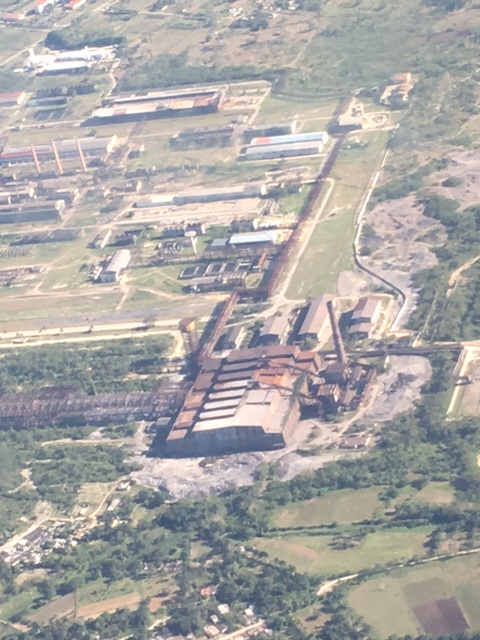
Through Mexico and Home….

Monday 29 February

A morning stroll around Corozal revealed a lovely sun rise as I left the “in need of tlc” Blue Iguana.

 Mexico 1_2 Mexico 1_1 Mexico 1_3

The town is supposed to have some grand old buildings; in ten kms of walking I only discovered mainly old buildings, dirty streets and a pretty run down town.

Mexico 1_4 Mexico 1_7 Mexico 1_6 Mexico 1_5

After breakfast we headed to the bus depot to catch the 9.30 bus to Chetumal. Lucky we were early as it left at 9.10.

Mexico 1_8

The border crossing into Mexico was relatively easy getting off and on the bus at both the Belize and Mexico crossing points. The bus dropped us off in town and a cab took us to the terminal to catch a much better bus to Tulum.

Mexico 1_9

The drive to Tulum was great until we came to a broken down bus. We took the passengers on board – standing room only. It got a little hot as the air con couldn’t handle the extra bodies. After a little over four hours we arrived in Tulum and settled into The Weary Traveler, with its large kitchen, dining area and a pool.

Mexico 1_10


Tuesday 1 March

A stroll to the beach revealed a high fence along the roadside with thick bush between it and the beach. The only access is through gated resorts. I strolled past the security into one. An outdoor restaurant overlooked the white sand beach, which had many thatched sun shades set up on it.

Mexico 2_1 Mexico 2_2

After a hearty ‘cook your own’ ‘as much as you want’ breakfast at The Weary Traveler, we strolled out to the local Tulum ruins. At one point the foot path was littered with toy animals of various colours.

Mexico 2_3

A large carpark and lots of shops surround the entrance road to the ruins. Guys stand around holding large iguanas, waiting for punters to get their photos with them. Maybe from the size of them lose the odd finger too? Further down the track iguanas run around beside the road.

Mexico 2_4 Mexico 2_5

The ruins are for the most part pretty ruined with only a few structures still holding together. Lizards jostle for position in holes in the structures. Surrounded on three sides by a stone wall, I can see why they picked this location. With the fourth side being the cliffs above the stunning beach it’s a great place to hang out.

Mexico 2_6 Mexico 2_7 Mexico 2_8 Mexico 2_9 Mexico 2_10 Mexico 2_11 Mexico 2_12 Mexico 2_13 Mexico 2_14 Mexico 2_15

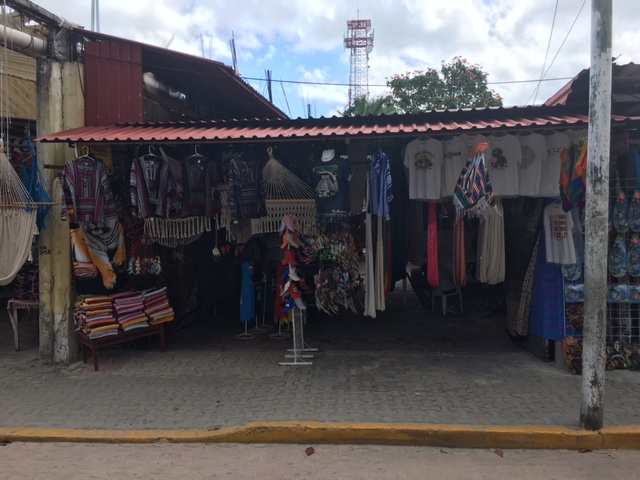
Back in town we had a look around the shops, which are colourful and packed with stock.

Mexico 2_16 Mexico 2_19 Mexico 2_18 Mexico 2_17

While we were walking around town that evening Cam spotted what he claimed was the Holy Shower, who we had met and he had been infatuated by in Caye Caulker. This time he has appeared in another form although unusually he had little to say!! (The Holy Shower that is not Cam!)

Mexico 2_20


Wednesday 2 March

We strolled down to I Tours for our 9am tour to Chichen Itza.

Mexico 3_1

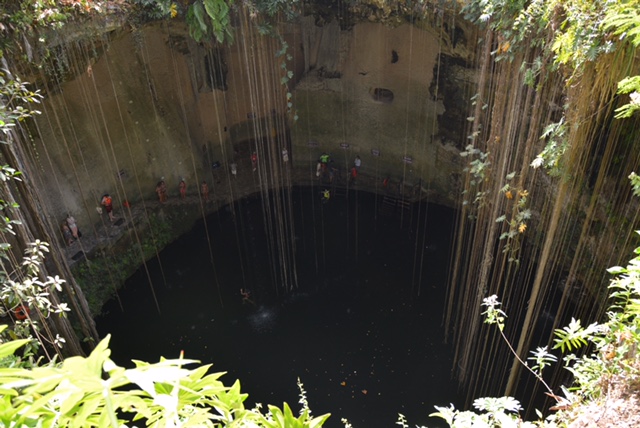
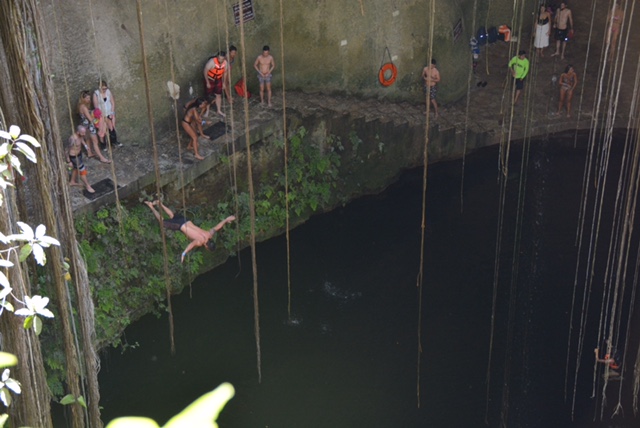
At 10am we were finally on a large bus and underway. At one minute past ten the guide, Beto, started giving us a briefing in a combination of English and Spanish, most of which we couldn’t understand. Faaaaak this guy’s talk button was stuck on transmit! Sixty minutes later he finally stopped – even Cam couldn’t out-do this guy. Kaitlyn, a young Canadian woman sitting beside me, slept through most of it. First stop was the sink hole with a large car park, shops and a well managed set of lockers and changing rooms. The surface of the water was about 30 meters below ground at the bottom of a round hole. Steps run down the side and there is a ledge to jump off which is well controlled. They say the water is 50m deep and links up with a series of holes across the state.

Mexico 3_1a Mexico 3_2 Mexico 3_3 Mexico 3_4

A jump or dive, a quick swim and we were back on the bus to a large buffet restaurant for a good meal and to watch the worst, most boring dancing we had ever witnessed. I don’t think anyone will be rushing off to learn traditional Mayan dancing.

Mexico 3_5 Mexico 3_5a

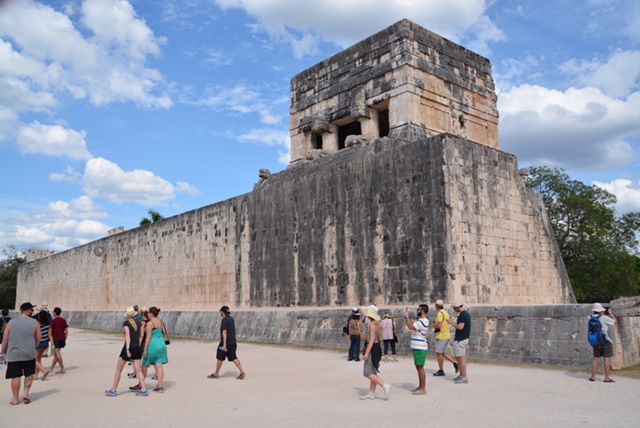
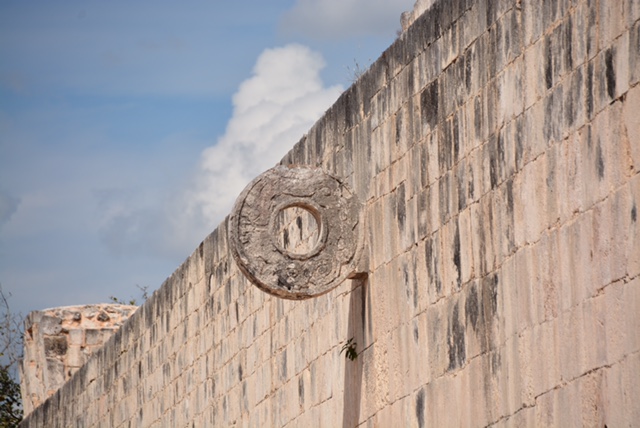
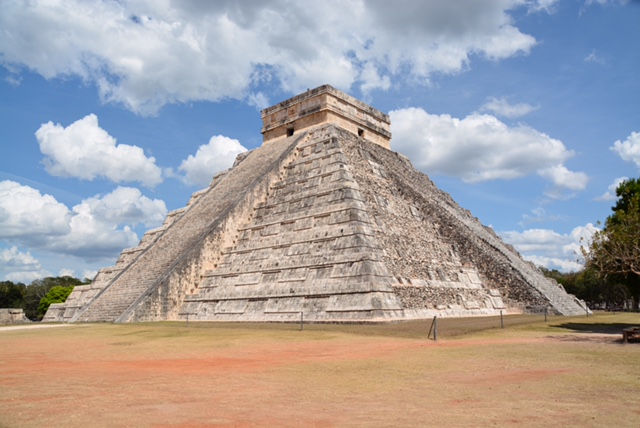
Finally we arrived at Chichen Itza. According to the guide and the brochure this is one of the new seven wonders of the world. With a wall around it to separate it from the workers it was the rulers temple with a central pyramid and a number of various buildings. It seems to have been in use for around one thousand years, being abandoned in the eight hundreds like many Mayan ruins. It can best be described by pictures both of the ruins and the retail industry in the way of stalls situated throughout.

Mexico 3_6 Mexico 3_19 Mexico 3_18 Mexico 3_17 Mexico 3_16 Mexico 3_15 Mexico 3_14 Mexico 3_13 Mexico 3_12 Mexico 3_11 Mexico 3_10 Mexico 3_9 Mexico 3_8 Mexico 3_7

We stopped briefly at de Valladolid, a Spanish city with a large church from the fifteen hundreds, on our return journey.

Mexico 3_20

Back at The Weary Traveler we chatted and shared the day’s experiences with others staying there. We have gained a lot from fellow travelers in regard to where to go and what to do along the way. The beauty of this back pack style accommodation is that people mix and mingle freely, something not common in expensive hotels.

Mexico 3_21

A stroll around the corner to what had in three nights become our local – two for the price of one deals on margaritas and pina coladas, (which I have to confess I have begun to like) might have encouraged us.

This is the end as I fly home tomorrow AJ and Cam have one more day.

Mexico 3_22

And into Belize…

Wednesday 24 February

Yesterday at Tikal a lady called Fiona, from Scotland, had told me about the ATM (Actun Tunichil Muknal) caves in Belize near San Ignacio. AJ and Cam decided to head through to Caye Caulker as planned on the 7:30am bus. I had to catch the 4am bus to the border, then taxi to San Ignacio.

This is how buses work around here: “Be there at 3.45am. The bus well get you to the border at 7.30am.” Well the bus finally got there at 5.15am. We got to the border just after seven; a taxi got me to the tour office at 8am in time for the tour.

We headed east along the main road, then south on through farmland. Stands of mahogany trees stood in dead straight lines, as did citrus trees and crops of corn. A forty minute stroll took us from the car park to the mouth of the cave.

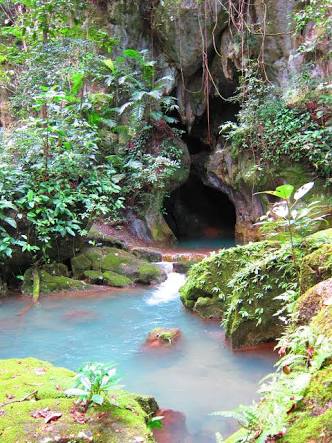
Discovered by a group of archaeologists in the mid eighties these caves are the most interesting I have seen. From the entrance we swam a short distance to some rocks, then for the next two and a half hours a lot of the time was in the water, sometimes pushing between rocks or through tunnels to get to the next cavern. The stalactite formations were amazing, some looking like large chandeliers, others like huge pipe organs. At one point there were perfectly round holes in the ceiling. Like post holes they reckon these had been formed by whirl pools millions or years ago.

Eventually we reached a large cavern several hundred meters long. Here the Mayans had made offerings to the gods and sacrificed a few people. They believe this took place in the sixth and seventh century during  the drought that eventually drove the population from the region. The amazing thing about this place is the guys that discovered it decided to leave it as they found it. You wander through the place between clay pots – some still complete, amongst the skeletons of the poor buggers that were sacrificed. The rest can only be described in pictures. Unfortunately cameras were not allowed so I have borrowed a few pics off the net.

Guatemala 11_1 Guatemala 11_2 Guatemala 11_3 Guatemala 11_4 Guatemala 11_5 Guatemala 11_6 Guatemala 11_7 Guatemala 11_8 Guatemala 11_9


Thursday 24 February

The original plan was to get a cab back to the border and catch the bus I came on yesterday from there to Belize City. Locals said there was an express bus that left every hour from San Ignacio to Belize City for ten locals; the cab back to the border was forty locals. I arrived at the bus terminal before ten but the express bus didn’t show. About ten thirty a bus showed up and a guy that looked like he was running the show said I had to get on. “There is no express bus until tonight”.  On I got for an entertaining four-hour, 120km trip.

Guatemala 12_1 Guatemala 12_2

This retired, or should I just say tired US school bus, with cracked windscreens and a door that didn’t close, vibrated along reaching speeds of up to 35mph. It stopped through some towns every hundred meters or so. Arriving in Belize City a short taxi ride got me to the water taxi. The ride to Caye Caulker took half an hour.

Guatemala 12_3 Guatemala 12_6 Guatemala 12_5 Guatemala 12_4

AJ and Cam were waiting at Jeremiah Inn. They had spent the previous night at Dirty McNasty’s, a real party place, so had relocated this morning. We headed up the end of the island to the Lazy Lizard with Anna And Mila, a couple of Dutch girls staying at the inn. There we played a version of petanque.

Guatemala 12_7 Guatemala 12_8

We headed to Frans, a street side place for dinner, where we got chatting to a bunch of people from Minnesota who were building three-meter by three-meter houses in Belize city through a church mission to house the poor. A rather unusual chap, calling himself the Holy Shower, whom AJ and Cam had chatted to the pervious evening, arrived briefly on the scene at one point.

Guatemala 12_9


Friday 26 February

Wow what a great day out! At 9am we rocked up to Black Hawk Tours, www.blackhawksailingtours.com

Guatemala 13_1

Soon we were fitted with snorkel, mask and flippers. A short stroll to a jetty and we were on their yacht motoring north. Gulls and frigates swooped in to try and grab a fish the crewman held up.

Guatemala 13_1a Guatemala 13_2

Reaching our first snorkel location in a marine reserve we tied up to a buoy as the boat became surrounded by nurse sharks and other fish. Hundreds of fish, the odd stingray and a few sharks stayed close to the boat as we entered the water.

Guatemala 13_8

Blue Tang

Guatemala 13_6

Horse-eyed Jacks

  Guatemala 13_4 dGuatemala 13_3 Guatemala 13_7

We swam around with them for forty minutes before boarding the boat to the next location.

Guatemala 13_9-2 Guatemala 13_9

Arriving at the new location we followed our guide Harry out into a channel. A large green sea turtle was feeding on the bottom surfacing periodically for air

Guatemala 13_11 Guatemala 13_12a Guatemala 13_12

Next we came across a tunnel that the guide dived down and swam through followed by a French girl, Alex, an experienced diver who cut through the water with ease.

 Guatemala 13_14 Guatemala 13_15 Guatemala 13_16

A green moray eel came out of its hole so I dived down for a close up.

Guatemala 13_17

Next the guide grabbed a basking shark by the tail and started stroking its belly which it seamed to enjoy.

Guatemala 13_18 Guatemala 13_19 Guatemala 13_20

Schools of small fish gathered on the bottom while bigger ones drifted around.

Guatemala 13_21 Guatemala 13_22 Guatemala 13_23

Back on the boat the sail went up and we headed for another spot where only a few people went in. The rum was opened and poured; salad and buns were served. Jeanette from Phoenix was celebrating her birthday as we sailed home.

Guatemala 13_24 Guatemala 13_26


Saturday 27 February

A lazy start to the with boiled eggs on toast cooked by Anna. Its cook your own breakfast supplied here at Jeremiah’s Inn.

A stroll around the island revealed some interesting architecture. The island is basically a beach even the roads are mainly sand. There is an sealed airstrip that runs east west close to the south end of the island. A few trees and mangroves provide a bit of greenery. The odd lizard scurried about on the edge of the track one about 300mm long.

Guatemala 14_1 Guatemala 14_k Guatemala 14_j Guatemala 14_i Guatemala 14_h Guatemala 14_g Guatemala 14_f Guatemala 14_e Guatemala 14_d Guatemala 14_c Guatemala 14_b

A sign warned to watch out for crocs. Quite a number of jetties jut out into the blue-green waters of the Caribbean. I discovered the local power station six or so container housed generators.

Guatemala 14_2 Guatemala 14_3

We spent the afternoon relaxing and talking to various people. In the evening we went to a local restaurant with Anna, Mila and their Dutch friend Tom.

Guatemala 14_4

I also received exciting news from home that Daughter Victoria and Leighton had become engaged.


Sunday 28 February

As we left Jeremiah’s Inn we were greeted by heavy rain for the short walk to the wharf.

Guatemala 15_1

Forty five minutes on the ferry and we were in San Pedro. We strolled the 300 meters to the other (west) side of the town to check the departure of the Thunderbolt ferry to Corozal. With a few hours to spare we dropped into Ashley’s Smoothie Shack back on the east side. The service in this tiny shack was incredible. They even let us leave our bags there while we hired a golf cart for a tour of the town.

Guatemala 15_2 Guatemala 15_3

Heading north the town turned to resort type places. The cobbles turned to a concrete road, which soon turned to a shingle track. We found a causeway joining the island to the mainland through the mangroves. Some ‘what had been resort’ buildings were abandoned and derelict, some well maintained, many more under construction. Often in amongst mangroves it is not the sort of place any of us would have imagined someone building resorts.

Guatemala 15_4 Guatemala 15_7 Guatemala 15_6 Guatemala 15_5

At three we were seated in the cabin of the thunder bolt as its twin outboards propelled us and around twenty others quite quickly up the west side of the island.

Guatemala 15_8 Guatemala 15_10 Guatemala 15_9

An hour and a half later we stopped at Sarteneja to drop off and pick up passengers. Thirty minutes later we arrived at Corozal just south of the Mexican boarder.

Guatemala 15_11 Guatemala 15_12

After disembarking we strolled a few hundred meters around the waterfront to The Blue Iguana, our accommodation for the night. We had passed Scotty’s Crocodile bar and restaurant on the way so headed back there for a rather tasty dinner.


Exploring Guatemala

Thursday 18 February

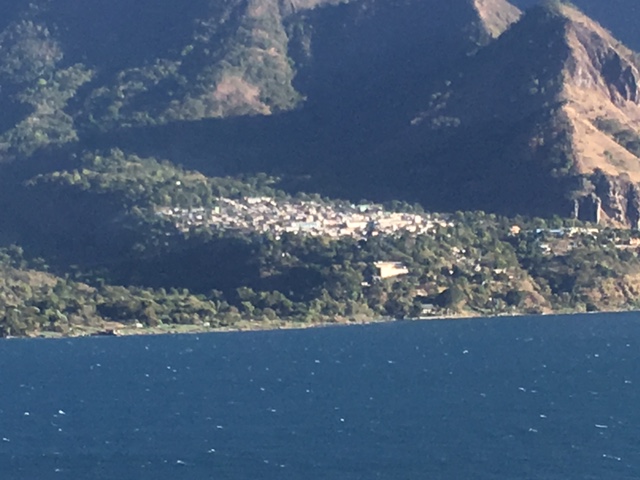
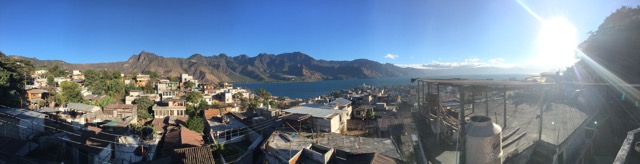
The morning stroll revealed lots of building work going on around San Pedro, a town of around eleven thousand. The tricycle motor taxis buzzed the narrow and in some places very steep streets – most too narrow to drive a car through. At the top of town a lady very kindly let me go onto the roof of her house to take pictures over the town and across the lake.

Guatemala 5_1 Guatemala 5_2 Guatemala 5_4Guatemala 5_3

Like many houses here the rebar pokes skyward, waiting for the next story to be added on. Here too it is not until the house is finished that one has to pay the tax; most houses are unfinished. There are also some very old stone cottages.

Guatemala 5_5 Guatemala 5_5a

It’s Cam’s birthday today so off we went to Pinochio, a local hostel/restaurant where he shouted us breakfast.  A stroll through the town revealed stalls selling all sorts of tourist nick hacks.

Guatemala 5_6 Guatemala 5_7 Guatemala 5_C Guatemala 5_B Guatemala 5_A

Next we took a boat across the lake to San Marcos. This is a small hippy-like town with lots of Europeans running bars and other businesses. We had a long chat to a lady from the US who was teaching laughing yoga there and running a retreat this coming Sunday. Lots of people strolled the narrow streets, some with dreadlocks, many inked up in a big way.

GUatemala 5_8 Guatemala 5_9 Guatemala 5_10 Guatemala 5_11 Guatemala 5_12

The guy riding shot gun on the beer truck was very happy to have his picture taken as he stood across the road watching the truck being unloaded.

Guatemala 5_13

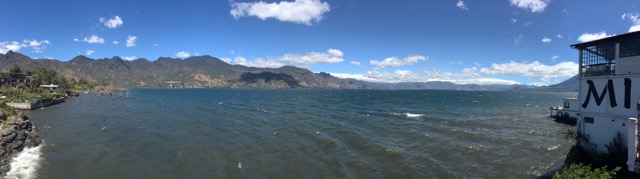
After a stroll around the very small town we sat at the waterfront bar to admire the views across the choppy lake before heading back to San Pedro.

Guatemala 5_14 Guatemala 5_15  Guatemala 5_17

In the evening we stopped at a charcoal BBQ on the side of the street to discover behind it was El Rancho restaurant. It looked a bit rough but we heard the food was good. The only spare seats were at a table with three Aussies. After a bit of banter we settled in for a great night. Frank, Dave and Joe, all in there early twenties, have been traveling for a few months in Mexico, Belize and Nicaragua prior to this. They had some great stories to tell, which made for a late and entertaining evening. The food was great and by far the best value for money we have struck. The toilet out the back down a dirt track consisted of a concrete pad a bowl a bucket and rough boards around it.

Guatemala 5_18 Guatemala 5_19 Guatemala 5_20


Friday 19 February

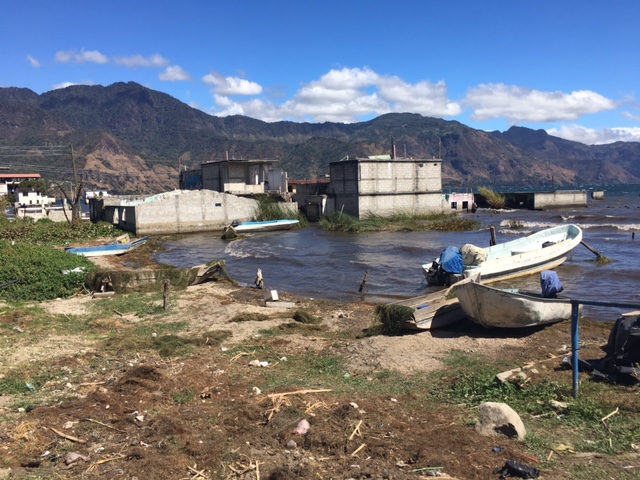
After a lazy start we sorted a car to take us to Puerto Barrios for tomorrow morning, after which we took a stroll out to the east side of town at the lake edge. There are houses submerged in the lake. A little Google research told us that no one really knows why this crater-lake with no outlet rises and falls, sometimes up to fifty years apart. The locals who have lived here for generations build well above the lake edge. It’s newbies to the towns that get caught out.

There are a couple of theories:

  1. That ash from volcanoes, along with silt from farmlands block the aquifers that drain the lake, then along comes an earthquake and shakes the silt out and the lake lowers.
  2. That it’s caused by volcanic activity.

Apparently some time back, when the lake was a lot lower, people came to town wanting to buy the shorefront land below the local’s houses. The locals obliged, selling off the land below their houses. Up sprung restaurants and houses on the shore line at towns around the lake. After extended rain in 2005 the lake rose a couple of metres quite quickly and kept rising, eventually gaining five metres to the height it sits at today.

Guatemala 6_1 Guatemala 6_2

We strolled to the end of the paved road where Cam and AJ tuned back. Continuing around the road I came across numerous nice houses set above the shore line. People worked there market gardens by hand. A little further a sign states that a 2,800 people subdivision is being developed; further around a 10,000 people one is about to start. After about four kms the road runs out and turns into a horse track up a hill from which one gets a great view of the lake.

Guatemala 6_3 Guatemala 6_4 Guatemala 6_5 Guatemala 6_6 Guatemala 6_6a

While walking back I stopped to talk to some stonemasons. I showed the boss a video of the new wall we built at home. He called each of his workers over to have a look. They were impressed.

Guatemala 6_7

Heading back around I visited the roof-top restaurant at a lake-edge hotel to take a picture. As I lifted my foot to step back the wind caught my jandal taking it off my foot into the lake where it disappeared. I am now the owner of hippy type jandals.

Guatemala 6_8 Guatemala 6_9

In the evening we again stopped at El Rancho for a light meal, this time eating at the street table beside the grill. The local friendly dogs surrounding and under the table were chased off by the owner with a stick, only to return when her back was turned.

As we were enjoying our meal a woman asked how the food was. “Excellent” we said, so Nikki and Jonny joined us. Nikki, from Anchorage in Alaska, had ridden her CBR600 Honda motorbike down from Alaska. She had stopped in San Diego to get her tyres changed and met Jonny (the tyre changer and also a biker). The two fell madly in love and are now heading down the rest of the Pan America Highway to the bottom of South America. Nikki had previously worked her way around fifty states in her pickup truck starting out with a hundred bucks in her pocket.

Guatemala 6_9a Guatemala 6_10

As I have mentioned before the great thing about travel, particularly back-packing, are the people we meet and the stories they have to tell.


Saturday 20 February

Leaving San Pedro at 6am we got just down the road when I realized I had left some things behind. The van stopped and I ran back to the hostel.

We went back over old ground to to the turn off to Antigua. Our two drivers were the best we have had so far. First we stopped at a restaurant for breakfast, then every few hours at gas stations where they changed over and we got to get necessary provisions such as beer. Heading through the north side of Guatemala City we saw houses perched on the steep slopes of a canyon.

Guatemala 7_1

As we headed northeast the surrounding country changed from flat, market-garden country to steep scrub and bush covered hills. The traffic came to a stand still near El Rancho. It turned out two big trucks traveling in opposite directions had clipped each other on a bridge. We scooted down the side of the traffic to a few hundred meters short of the bridge where we waited thirty minutes to get across. The traffic was backed up for over ten kilometres on the other side.

Guatemala 7_2

Further northeast large valleys grazed dairy cows, some standing outside sheds ready for milking.

Guatemala 7_3 Guatemala 7_4

After ten hours we reached Puerto Barrios, a rough looking town hosting the east coast port for Guatemala. A boat was leaving for Livingston a few minutes after we arrived. The trip took us past what appeared to be a resort area with lots of jetties protruding from the jungle. Small boats fished for shrimp, pulling the nets in by hand.

Guatemala 7_5 Guatemala 7_6

At the wharf a local tout, “Cachi”, lead us down the road to Casa Norstra. After dropping our gear off he then took us across town to a bar (bamboo shack) overlooking the sea. Here the two other customers were glued to the screen of a video jukebox that blasted out a thumping noise.

Guatemala 7_7

A stroll down to the beach revealed lots of rubbish and untidy houses and other buildings. Cachi then guided us to Restaurante Margoth. At that point he departed with a “thank you for coming to my country my friend”. Margoth was apparently Livingston’s first restaurant and served up a great fish meal.  

Guatemala 7_8


Sunday 21 February

We were woken early to the sound of tropical birds. Turning left out of the casa I headed for a stroll along the coast for a couple of kms. So far all the roads we have seen here are concrete. The road then headed into the jungle areas had been cleared for farming. I heard coming from a house the sound of an old single banger engine spark into life. Looking inside the family welcomed me in to watch the process of grinding corn and making dough from lt. The road eventually turned to a shingle track.

Guatemala 8_1

In places there are clusters of a few houses, some made of bamboo, others of timber. I passed a large, round, abandoned swimming pool, then a hole-in-the-wall shop stocking eggs and other provisions. A bunch of cows were in a muddy floored shed ready for milking.

Guatemala 8_2 Guatemala 8_4 Guatemala 8_3

On the return journey along the concrete road many dairy-type shops were now open, as were workshops and other small businesses. At a school young girls sat behind old typewriters tapping away. Large fillets of shark were being laid on racks to dry in the sun.

Guatemala 8_5 Guatemala 8_6

We had a cheap and tasty breakfast on the roadside by the wharf.

 Guatemala 8_7

The boat was soon ready to depart. Lifejackets on, we did a run around the waterfront picking up some other passengers, two from the casa we had stayed in. Large flocks of pelicans sat on fishing boats anchored in the bay. The odd heron stood out with its white plumage.

Guatemala 8_8 Guatemala 8_10 Guatemala 8_9

The journey up river to Rio Dulce was a smooth one with the outboard driving us along at a good speed. Like on the Amazon, young kids paddled boats alone all over the river, some fishing, others just going places.

Guatemala 8_11

There are a real contrast of houses along the river from bamboo shacks to mansions. As we neared our destination large, open-sided sheds had been constructed over the water alongside houses. Large launches were parked in these, obviously to keep the sun off the gin bottles!!

Guatemala 8_12

As we pulled in to the jetty next to a large arched concrete bridge people were washing themselves in the lake.

Guatemala 8_13

We checked into Casa Posada Del Rio at 380 locals for the night – one of the more expensive places we have stayed. This town is built in the main road and has few other streets. We strolled up the road looking at the many stalls and street food outlets. We ate a tasty dinner on the street.

Guatemala 8_14 Guatemala 8_15

Down a side alley by the water we found a lovely café where we were able to sit and admire the view over the water while watching small boats coming and going from the many launches and yachts moored in the lake.

Guatemala 8_16


Monday 22 February

We rocked up at the bus station at 9:15 for the 9:30 bus to Flores. People piled on to the already ‘standing room only’ bus. Then there was no more standing room so we waited for the 10:30 bus. We even got a seat on this one; four hours standing on a shaky bus would have been hard work.

Guatemala 9_1

The people on the bus were friendly, the guy next to my offered me the window seat as I had a camera. We headed north through a variety of country including jungle cow farms and various crops.

Guatemala 9_2 Guatemala 9_3 Guatemala 9_4

The ride was quite bumpy. We stopped at one place to get off and stretch etc. Two soldiers watched over us with their assault rifles slung around their necks. A minister got on at that stop giving, I presume, a sermon as we headed up the road, at times shaking his bible viciously. Of course at the end of his message he came around asking for money before getting of at the next stop.

A van took us across to Flores where we checked into Hotel Mirador Del Lago with views out over the south east part of the lake. Lake Peten Itza is quite high just now flooding onto the adjoining foot path. This was followed by a three wheel taxi tide off the island to find a money machine.

Guatemala 9_5 Guatemala 9_6 Guatemala 9_7 Guatemala 9_8

A visit to the town square revealed a fiery red sunset.

Guatemala 9_9

We met Marilyn, a woman from the US, who traveled on the bus with us and joined us at our hostel. She had been doing volunteer work at a place down the river from Rio Dulce. With no power and quite basic conditions, in spite of using a mosquito net and repellant she got the Zika Virus. It started with a sore throat and stiff neck, then a rash developed over her body. After a week it cleared up. A local English doctor assured her that there will be no after affects and it only seriously affects pregnant woman. It is apparently part of the dengue virus family but at the lower end.

Guatemala 9_10


 Tuesday 22 February

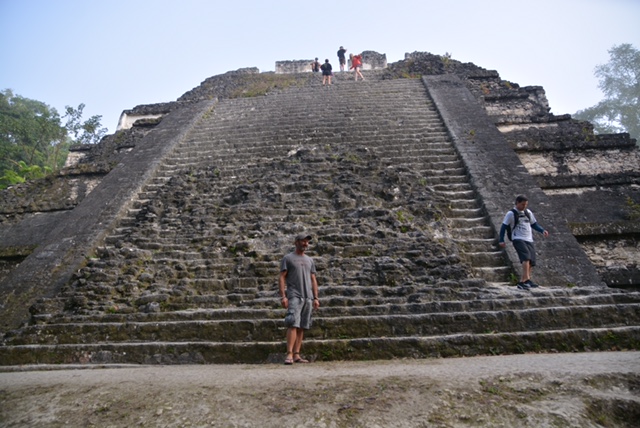
On a three am bus we headed to Tikal. Tikal is the remains of the religious part of a Mayan city. Apparently construction started around 900BC. The city remained with its population increasing to over two hundred thousand until 900AD. Apparently years with little rain depleted resources and the city was abandoned. Rumours of its existence had been passed down through generations but it was not rediscovered until 1948 by a local from Flores. At that point the structures were just large mounds with trees growing on them. In the late fifties the restoration process began. Now with over a million visitors a year the restoration process still goes on. It is thought that the America’s population originally came from the Mongolian region crossing the then frozen Bering Strait around twenty thousand years ago.

On arrival we were lead in darkness by a guide through the grounds to the a large, east facing temple. There we climbed a hundred and seventy steps to sit in silence and wait for the sun rise. As we sat a weak, red glow appeared in the sky before the mist got thicker and it disappeared.

Guatemala 10_1 Guatemala 10_2

Daylight upon us, we climbed down and were guided around the many structures and features including a huge pit, where some of the stone had come from to build the pyramids. These were later sealed and used to store water.

Guatemala 10_3 Guatemala 10_6 Guatemala 10_5 Guatemala 10_4

Arriving at the main area between the king and queen’s pyramids the process of sacrifice was explained to us as the many sacrificial stones were pointed out. We then got a chance to wander around the various structures including climbing the queen’s but not the king’s pyramid. Back in the day all the forest in the area was felled as fuel for the kilns they used to bake crushed limestone and turn it into a mortar for the construction.

Guatemala 10_7 Guatemala 10_8 Guatemala 10_9 Guatemala 10_10 Guatemala 10_11 Guatemala 10_7a

Prowling the grounds was a large wild turkey, which looked like someone had stuck corn to its head. Its gobble started with a drum-beat sound from its stomach and rose up through its neck, ending in a blood-curdling scream. We also heard howler monkeys in the trees. Long wide ant trails ran along the ground in places. Animals with a pointed nose and long tails foraged by the side of one track, unfazed by our presence. I was unable to establish a name for these.

Guatemala 10_12 Guatemala 10_15 Guatemala 10_14 Guatemala 10_13

As we headed out of the park around 9.30am the crowds began to arrive as the sun got hot. At 400 locals our early start had been well worth while.

The evening we spent sharing experiences with a group of German tourists. Paul and Robert were on the road for a few months and Frauke for a year. All plan to head to NZ one day

Guatemala 10_16


Guatemala: Antigua

Sunday 14 February

After breakfast at Hostal Guatifriends we caught the red bus into the city centre. The red bus is one of the roughest I have ever ridden. The mounts are broken on some seats, the back door hasn’t closed properly, and its general state is rough.

Guatemala 1_1

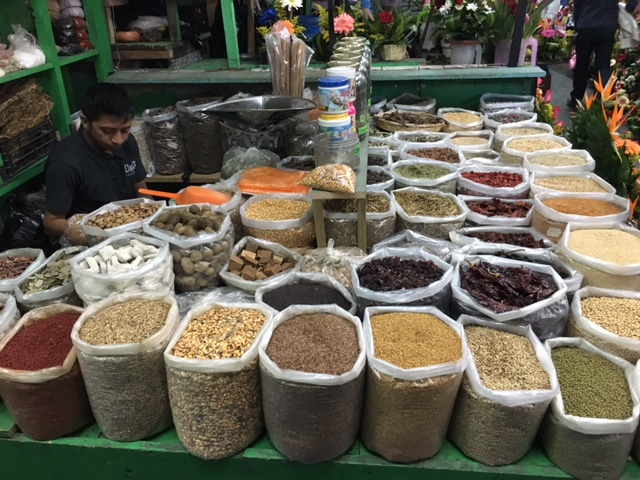
I stroll through one of the local markets revealing an amazing range of food. Meat, fish, fruit, seeds and much more – all displayed to catch the shopper’s eye.

Guatemala 1_2 Guatemala 1_3 Guatemala 1_4 Guatemala 1_5

Further up the hill we found Parque La Concordia, surrounded by large old buildings and full of a colourful array of stalls. This is a busy thriving place. You can buy just about everything here.

Guatemala 1_6 Guatemala 1_6a

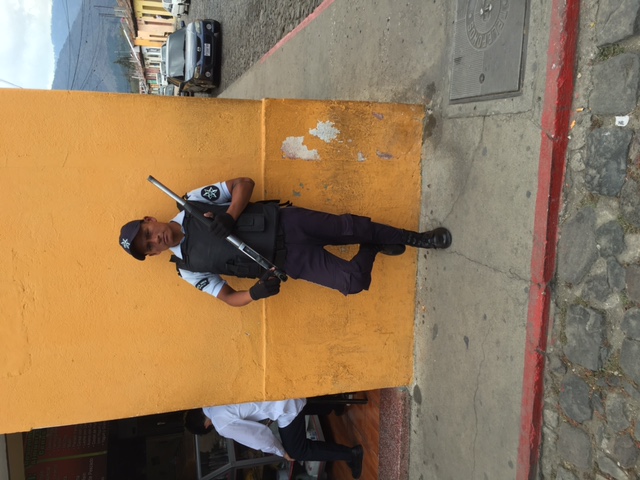
Guatemala has a reputation for being a dangerous city. Yes there is lots of razor wire, bars on windows and police with, in some cases, assault rifles, no different than many other South and Central American cities, but the people we came across were friendly and non-threatening.

After lunch a guy from the hostal drove us to Antigua in a van. He insisted on giving AJ a rundown of the town’s history. The traffic was very thick and slow and at one stage the van started to skid sideways as the driver applied the brakes too hard and too late only just avoiding an impact with the car in front.

We checked into Hostal Casashalon in Antigua. A stroll around a few streets revealed a roof top bar where we got chatting to Derek and Mimi who are working here as missionaries. Derek, originally an ex US Navy submariner, had sold up everything in the US a couple of years ago to come here and do God’s work, as he put it. He met Mimi here, they married and work together at their mission, endeavouring to teach people how to improve their lives.

 Guatemala 1_7 Guatemala 1_8

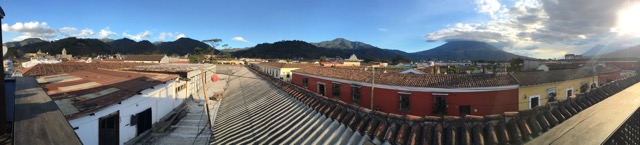
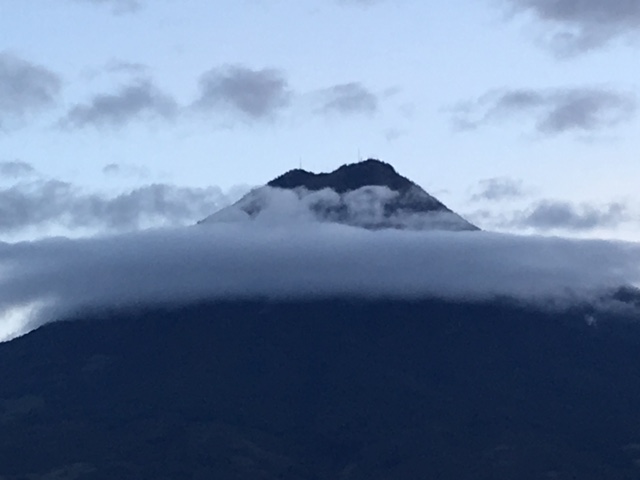
As we sat chatting the clouds cleared from two local volcanos: Agua close by and dormant; Fuego still puffing out smoke a little further away. The setting sun lit up the western sky with a bright orange glow.

Guatemala 1_9 Guatemala 1_10 Guatemala 1_11

We then went to a local restaurant which was huge, resembling in some ways a museum with high ceilings. Walls draped in plants, side rooms set up with different furniture, and great food it made for a very enjoyable evening.

Guatemala 1_12 Guatemala 1_13 Guatemala 1_14 Guatemala 1_15


Monday 15 February

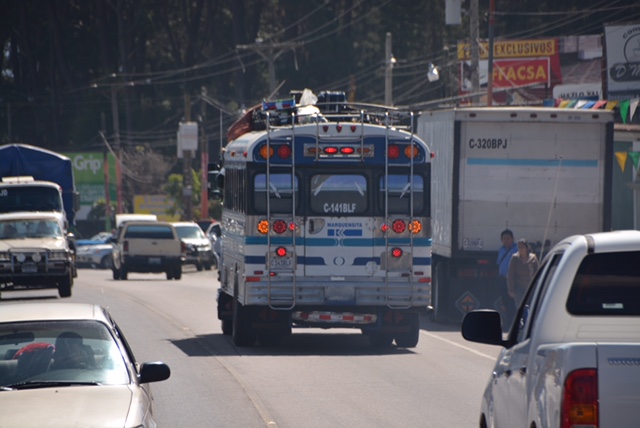
Derek and Mimi picked us up at 10am. We sat on a plank on the back of their ute as we headed east, cruising though farm land with the fields being tended by groups of people with large grubbers. Old US school buses, decoratively painted and now local transport, raced past us.

Guatemala 2_1 Guatemala 2_2 Guatemala 2_3 Guatemala 2_4

We stopped at a gas station where a guy with a pump action shotgun looked on – common site here. One shotgun guy even stands guard at the end of the counter at a local pizza shop.

Guatemala 2_5 Guatemala 2_6

After heading up through a few villages we reached an old Mayan ruin. Iximche was built many years prior to the Spanish arrival. Apparently they did a deal with the Spanish who jointly occupied it for some years hence its survival.

Guatemala 2_7 Guatemala 2_8 Guatemala 2_9 Guatemala 2_10

On the way back we stopped at what had been a church built by the Catholics. St Simon church, as it is now known, is a place where the local Mayan people worship some strange looking effigy with alcohol, money and other stuff. They build small fires on the tarmac outside with all sorts of stuff including large cigars which they also smoke while the fire burns.

Guatemala 2_11 Guatemala 2_12 Guatemala 2_13 Guatemala 2_14

Derrick and Mimi dropped us back at our hostal. The evening was spent strolling the streets and looking at the many tourist orientated shops and bars.

Guatemala 2_15 Guatemala 2_16


Tuesday 16 February

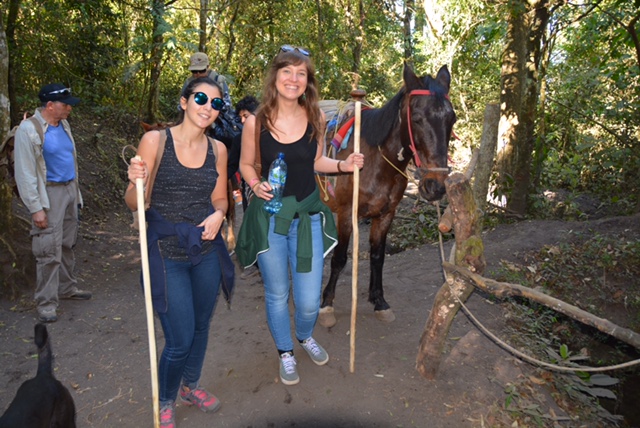
Just after 6 we were picked up in a van that did a tour around town picking up the rest of our group: a couple from El Salvador; one from Italy; three from France; one from Ireland and one from Japan. Most had good Spanish skills. A two hour drive and we arrived at the base for our three kilometre stroll up Pacaya an active volcano. We all chatted away as we strolled up the hill. Horses, riders and their team of friendly dogs followed us just in case someone needed a lift.

Guatemala 3_1 Guatemala 3_2 Guatemala 3_3 Guatemala 3_4 Guatemala 3_5 Guatemala 3_6

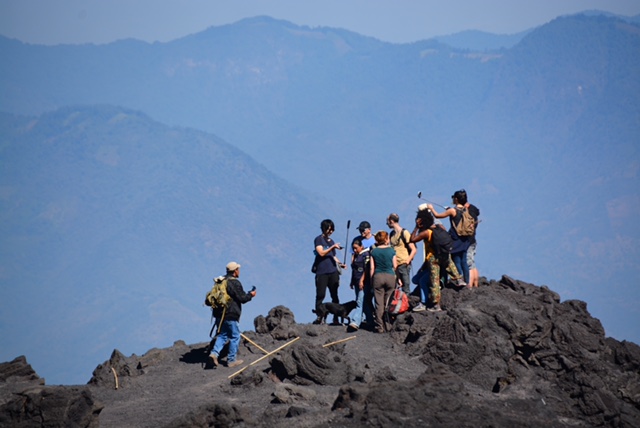
A couple of view points gave us great views of the valley and surrounding volcanos. When we reached the highest point several hundred meters below the main crater, which we could see smoke coming from, we looked down on a cold lava flow and the surrounding country side. After a few photos we strolled down to the lava flow. Advertised as “roast your marshmallows over red hot lava”, it turned out to be more “heat your marshmallow up with a bit of steam coming from the ground”.

Arriving back at the base we chatted over a beer and fed the dogs who could catch food every time thrown from any angle. On arriving back in Antigua we took a stroll through the local markets; these are like a rabbit warren spread out through a huge old building full of nooks and crannies. In the evening we were joined on the roof top bar by Sophia and Julie who had been on the volcano trip with us, before heading to a nice restaurant for a great meal.

On the way Cam was targeted by a woman selling scarves; he now has a pink scarf to go with his pink shorts.

Guatemala 3_7 Guatemala 3_8 Guatemala 3_9


Wednesday 17 February

Antigua was the third capital of Guatemala. The first being Iximche the Maya site we visited on Monday. After too many punch ups there it was moved to the Valley of Almolonga, keeping the same name. In 1541 a lahar from the the volcano Agua wiped the place out. In 1543 the Spanish founded Antigua as the capital. The city is well laid out with streets running north south and east west. In 1665 Guatemala’s first university was built here.

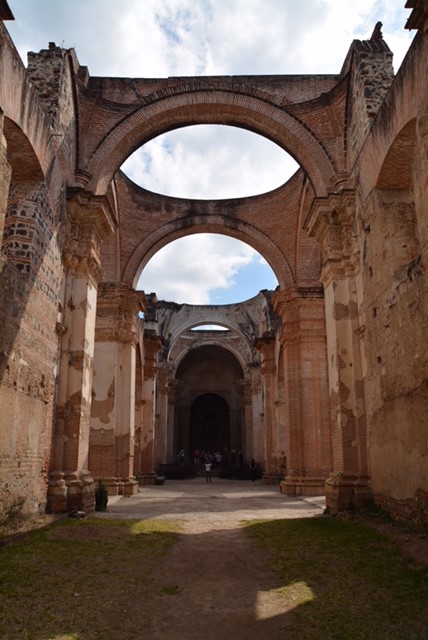
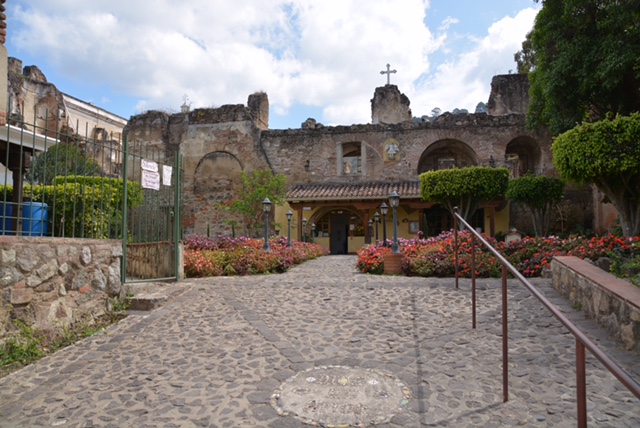
In the early 1700’s a number of major earthquakes flattened large parts of the city and its many grand churches. The remains of a llot of the churches are still here today. This also coincided with eruptions of the Volcano de Fuego, which also damaged the city. In 1776 the Spanish ordered the capital be moved again to Guatemala City where it remains today.

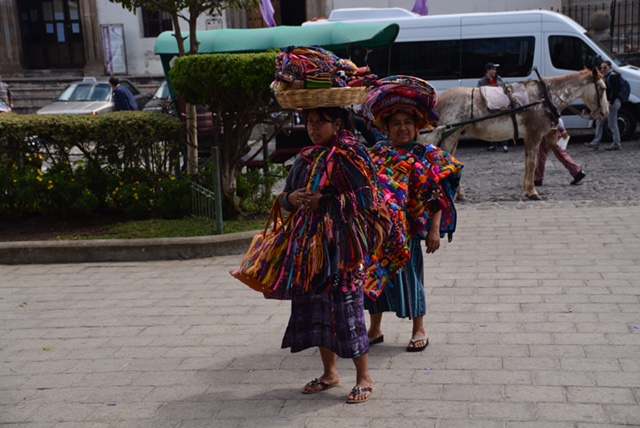
We spent the morning roaming the city looking at the ruins, parks and people going about their daily business. One thing of interest was the public laundry in one of the parks. We had driven through towns seeing woman still using these. Dairies here are well stocked and very tidy here. The Mayan woman still wear their traditional costumes.

Guatemala 4_5 Guatemala 4_1 Guatemala 4_19 Guatemala 4_18 Guatemala 4_17 Guatemala 4_16 Guatemala 4_15 Guatemala 4_14 Guatemala 4_13 Guatemala 4_12 Guatemala 4_11 Guatemala 4_10 Guatemala 4_9 Guatemala 4_8 Guatemala 4_7 Guatemala 4_6 Guatemala 4_4 Guatemala 4_3 Guatemala 4_2

Around one we were picked up by a van for our trip to San Pedro. The four hour trip passed quickly as we were with a great bunch of fellow travelers; a couple from Perth; a guy from the US and a two guys from Israel. The road was good, the driver like he was on some playstation game. At one point we watched a guy come out of the back door of one of the colourful buses, climb up a ladder on the back  onto the roof and start untieing the luggage ready for the next stop.Eventually the road headed up into some hilly country before winding steeply down to the lake.

Guatemala 4_20

And back to Havana…

 Sunday 7 February

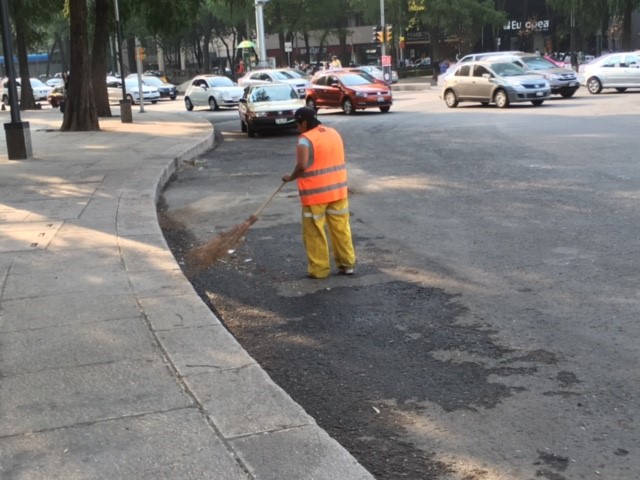
A short stroll through the square and down the hill to the waterfront revealed clean streets surrounded by rougher buildings than previously seen in Cuban cities. Against the polluted water was a tidy area. A woman was sweeping the promenade with what looked like a witch’s broom.

 Cuba 6_2 Cuba 6_11  Cuba 6_9

After a good breakfast and a dose of Wi-Fi at the square we drove around the waterfront and through some less than tidy suburbs before heading north. At one point Miguel stopped and pointed out a park where the locals had gathered and slept during a recent earthquake.

Cuba 6_1

There is a modern highway heading out of town, but like most roads it is full of potholes. Although it’s left hand drive here Miguel drives on both sides of the road to try and preserve this almost new, badly made, Chinese car. We turn off the motorway heading up through mainly sugar plantations. Stopping on a bridge in the Milla province we witness guys in large rubber tyre tubes casting nets and catching fish in the lake.

Cuba 6_6

People ride the backs of large trucks while others are stacked into what can only be described as truck buses.

Cuba 6_5 Cuba 6_14 Cuba 6_15 Cuba 6_13

We stopped along the way and brought some rather greasy sausages which were hanging an string over a half 44 gallon drum bbq. We tried to buy water at the stall next door but, as with the petrol stations we had stopped at for the same purpose, plenty of rum and beer but no water.

We drove through Holgiun onto the seaside town of Gibara. The town was ravaged by the 2008 hurricanes. Many buildings have since been restored including two brightly coloured up market hotels.

Cuba 6_7   Cuba 6_10 Cuba 6_4 Cuba 6_3

At a local bar Cam, now in his pink shorts, was befriended by a local chap called Mani, an expert in cigars and many other things – he claimed. He took us to a local outdoor music bar. A pretty good bunch of musicians entertained a crowd of locals, from kids in push chairs to grandparents. Cam’s new-found friend had by this stage finished his bottle of rum. Yes you guessed it! He needed money for another one; the friendship was terminated.

Cuba 6_17 Cuba 6_18 Cuba 6_16

We dined at Villa Caney, our Casa. All the Casas we have stayed at so far have been clean and well done up with tiled bathrooms and bright furnishings. This one also has its own restaurant. The food was amazing with Dari, a keen enthusiastic waitress, who ran all the tables on her own. She was back to serve us breakfast at 8am

 Cuba 6_8 Cuba 6_12


Monday 8 February

A morning stroll up the hill revealed an area of dirt streets and shacks. Houses, some like huts, have wooden shutters instead of steel; streets are dirt and the houses small. A lady wheels a cart full of bread along the dirt road as locals come out and stock up. The highest point on the hill is occupied by a decaying Spanish fort. A large textile factory is set further back on the hill.

Cuba 7_1 Cuba 7_2  Cuba 7_7 Cuba 7_8

An old man stands at the dirt intersection swaying as he grasps tightly on to his bottle of rum; another lies on the ground with his hand out and an empty rum bottle leans on his leg. Here in Gibara is the first time we have seen people looking intoxicated. Last night at the event apart from Cam’s friend Mani a few others were looking a bit worse for wear.

Cuba 7_3 Cuba 7_5

After breakfast we headed west a short distance towards a beach some ten plus kms away. The shingle road was just too much for the cheap BYD car so we had to turn back

In Holguin we stopped to get a service done on the car. Just down the road was a statue to Che Guevara. This man must be the most painted and carved in stone guy in the country. He also figures on t-shirts, hats, flags and many more items. Castro is a long way behind him. All the heroes of the revolution are remembered all over the place. Slogans are printed on bill boards and other places. The only other place I have seen so much indoctrination type material is Hanoi in Vietnam.

Cuba 7_4 Cuba 7_9

We stopped in Las Tunas for a drink and sat in the park to get some Wi-Fi. Heading west along the road we had travelled on a few days earlier there is little new to report. We reached Ceigo de Avila just after five where we settled in for the night. This is one of the less attractive cities we have been to with few bars and restaurants.

While strolling down a street close to the main square a siren sparked up just down the road; huge clouds of what looked like smoke were filling the street. It looked like the fire engine was on fire.

Then the flashing lights started moving towards us. A large man ushered us into a restaurant and closed the doors, smoke billowing against the windows. “What was that?” we asked. “Just the mosquito spray machine”. Apparently this happens every couple of days.

Cuba 7_10 Cuba 7_6

A meal at a small restaurant for 2 locals each rounded off a long day over 300km of travel.


Tuesday 9 February

A stroll out to the north side of Ciego da Avilla, founded in the mid-eighteen-hundreds as a military town, revealed little we hadn’t seen before apart from a few small wooden houses, which are unusual in Cuba. After breakfast we hopped on a Colonial styled horse-drawn coach. Made of steel with car springs they looked the part from a distance. We headed out to look at the last remains of a seventy eight kilometre wall built by the Spaniards in the mid-eighteen-hundreds to divide the country and protect the affluent west from the rebels from the east. What we thought was just down the road turned out to be several kilometres away. The horse took it in his stride, at a trot both ways he never broke sweat. There was only a tower left of the wall built by slaves and cheap Chinese labour.

Cuba 8_1 Cuba 8_2 Cuba 8_4 Cuba 8_6

Next we headed to Sancti Spiritus where we went to a rather interesting house with the ceiling being held up by timber type scaffolding. There we did what may have been a dodgy deal on some Cuban Cohiba cigars. Lunch at La Dona restaurant close by was excellent at 7 locals each including beer.

Cuba 8_8

We arrived at Caibarien about 4pm. This partly falling down town is situated on the northern coast and famous for its crabs; one day in the future may be a thriving tourist town. After booking into Hostal La Del Norte we took a drive out to Cayo Santa Maria. There is a causeway some twenty kilometres long to reach this string of islands which are now joined by a continuing causeway. They contain an airport and many resort type hotels. We took a stroll into one which had its own shopping centre, numerous blocks of units and a large swimming pool, beyond which is an amazing white sand blue water beach.

Cuba 8_11 Cuba 8_9 Cuba 8_5 Cuba 8_3 Cuba 8_7

On return to the casa we were greeted with a meal of shrimps, lobster, crab, fish, rice and salad.

Cuba 8_10


Wednesday 10 February

My morning stroll was through a mainly suburban area with mostly single-story houses. The odd two-story house had an external concrete spiral staircase.

 Cuba 9_1 Cuba 9_2 Cuba 9_3 Cuba 9_4


A ditch with a trickle of black slimy water ran between the street and most houses; each ditch exited straight into the sea. Two fisherman poled what looked like a raft across the bay.

Cuba 9_5

After breakfast we had a look at the local square where they are restoring some old buildings. Next we reached the close by town of Remedious. In the square we found a number of really well restored buildings, among them some of the nicest bars we have seen in Cuba. There were a number of tour buses in town and tourists wandered the shops and bars.

 Cuba 9_7 Cuba 9_8 Cuba 10_10

Heading west we came to Santa Clara where the tomb and largest monument to Che Guevara is. Apparently he won a great battle here which was instrumental in the overall victory for the revolution. Under the tomb is a small museum with a rather officious lady in her fishnet stockings exerting her authority. I had to wait outside while Cam and AJ went through as i was carrying a camera. She was insistent that my toes were behind the line as i waited. The museum covered his life – all in Spanish – with displays of his doctor days in Argentina to the end in Bolivia portrayed mainly in photos with a few weapons and copies of letters and other memorabilia. Above the tomb is a large statue, like most in Cuba rather crudely sculptured.

Cuba 9_9 Cuba 9_10 Cuba 9_12 Cuba 9_11 Cuba 9_9b

Heading west and then north we drove through large sugar cane plantations, many farms with pivot irrigation. We passed through many small towns where we presume a lot of the labour for the farms and mills came from. At the town of Colon there was a statue to Cristobal Colon (Christopher Columbus) and one of the many old steam engines on display around the country.

Cuba 9_13

Around 4 pm we arrived in Mantanzas a costal city of around three hundred thousand people.

Cuba 9_14

After settling into Hostal Italy we strolled the streets batting off gold-chained cigar and anything else you might want salesmen before eating at a local Italian restaurant.


Thursday 11 February

Leaving Mantanzas around 9 we took the coast road west to Havana. This turned out to be one of the most picturesque routes we have taken during our two thousand plus kilometres traveled over the last nine days. Not far out of town we were traveling along a ridge with the sea to our right and a large open valley to out left.

Cuba 10_11 Cuba 10_7 Cuba 10_8

As we headed further west the coast became more industrialised with large oil fired power plants, oil refineries and a little later on a gas fired power plant. We think they have struck gas and some oil around here.

Cuba 10_2 Cuba 10_13

This was also one of the better roads with little swerving required to avoid potholes. A bit about driving in Cuba: Don’t worry too much if you see a car coming towards you on the wrong side of the road – it’s just avoiding potholes and will move over before it gets danger close. When passing, even when on a four or six lane road with medium strip!, always sound horn at least three times as you approach the vehicle in front. This is to make sure he knows you are there and doesn’t suddenly swerve into your path to avoid a pothole. Potholes are really bad here. We hit one a few days ago and had to stop and inspect all wheels and the undercarriage of the rather flimsy BYD Chinese car. Driving at night is not allowed in a rental vehicle. Having walked around at night a bit it makes sense as horse carts, bikes and some cars don’t have lights. When driving through towns or cities don’t expect clear streets; people will be standing yarning, kids playing soccer, dogs sleeping; just toot the horn and they will move. When one pulls in at the petrol pump the price on the pump may read .89 cpl. When you finish filling the price will have jumped to 1.20. We couldn’t actually work that out – we can only guess that the guy behind the counter sees three Gringos get out of the car and up goes the price.

Arriving at Hostal Italy we sorted out the final payment with Miguel. The slippery bastard tried to remove more money from our wallets than he was entitled to –  as we expected. AJ put up some fine Spanish and he got what he deserved and left sad faced with his tail between his legs. Do not trust this man.

Cuba 10_6

After getting our room sorted we took a stroll into town and spent a relaxing afternoon chatting over a drink or two while watching a guy wring the juice from sugar cane, mix it with rum and sell it to passers by.

Cuba 10_5 Cuba 10_3 Cuba 10_9 Cuba 10_4 Cuba 10_12


Friday 12 February

The day started with a with a walk to the local internet park we had discovered the previous evening.

Cuba 11_1 Cuba 11_2

We then ventured into the Holel Inglaterra next to Pargue Central for a coffee. There we met a US lady called Peach. Peach has been living in Cuba on and off since 2010 doing, as far as we could establish, voluntary aid type work. She gave us a pretty good run down on how the place works. Apparently most people live on or close to the poverty line. A good wage is forty to fifty CUC a month. A pair of jeans costs 40 CUC. Most people to live have something going on the side, usually in the black market. An example was a group of people in a town with a brewery who had a deal going with the security where they would sneak in drink bottles, fill them with beer and sell them on the street. The free medical programme here is stifled by bureaucracy and a lack of medical supplies with most people that front up with minor and some times major ailments being told to come back later. Cuba can’t buy medical supplies as it has no international credit. Apparently their doctors are highly sought after with many leaving to work overseas. Cuba is intent on maintaining a population of only Cubans with little if no immigration allowed. Recently China wanted to bring its own workers to build some infrastructure but was told no way “train and use local people” the project was binned. The conclusion of the conversation was that most Cubans are desperately unhappy with the system with most wanting change and many leaving the country creating a declining population.

Cam retreated to the hostal, AJ and i took a stroll down Obisbo street where we discovered a small roof top dar called La Dona. There we sat and listened to some of the best singing we have heard in Cuba. What is really great about most of the music in Cuba is they don’t normally have amplification equipment. Cam joined us later and we settled in for the afternoon.

Cuba 11_3 Cuba 11_4 Cuba 11_5

Later we dined at Europa just down the road.

Cuba 11_6

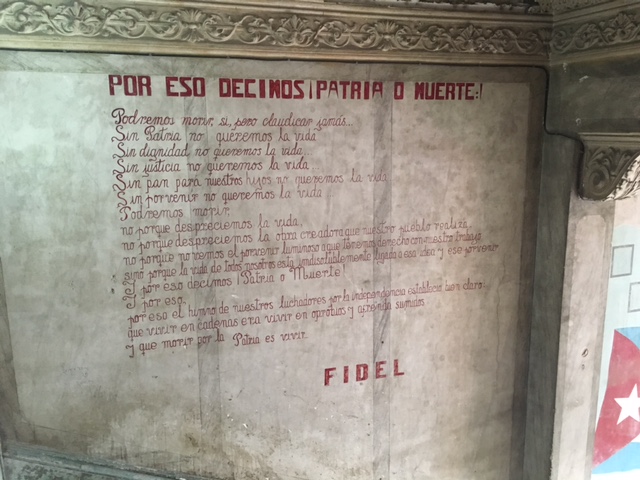
On the way home we visited La Guajira a few doors down the road from our hostal. This is a rather large old family home being restored from the top down. The top floor accessed via a spiral marble stair case has a roof top bar with great views over the city. The next level down there is a very flash restaurant. Below that timber studs hold up part of the restaurant floor, as the two levels below are still being restored. A wall on the main stairway contains what looks like a patriotic scripture by Fidel.

Cuba 11_7 Cuba 11_8 Cuba 11_9 Cuba 11_10 Cuba 11_11 Cuba 11_13 Cuba 11_12 Cuba 11_14


Saturday 13 February

AJ left for the airport at 5am. He is flying via Panama as advanced party into Guatemala. After breakfast Cam went of to do some Wi-Fi stuff. I took a stroll through the a local indoor market. People are really innovative here. As they sit at there stalls they are making all sorts of stuff from baskets to leather belts.

Cuba 12_1 Cuba 12_2

Outside in the park butchers tents had been set up carving up mainly pigs with offal laid out on the tables and a set of scales to weigh the meat as its sliced off to the customer request. Very few flies around this town maybe the get killed with the mosquitoes.

Cuba 12_4 Cuba 12_3 Cuba 12_3a

Down the road a man sits at a small table on the foot path wearing a mask as he refills disposable cigaret lighters.

Cuba 12_5

Back in our street there are some excavations going on. It looks like some new underground power cables ate being installed. No heath and safety stuff around here. Its keep alert and your eyes ope or you will fall in a hole and hurt yourself.

Cuba 12_6 Cuba 12_7

Men lean over the open bonnet of an old Lada trying to get some life out of the old girl. It’s a very common sight here to see cars being worked on; we’ve even seen axles pulled out on the roadside.

Cuba 12_8

A look in La Guarida (we visited last night) reveals construction work underway. A man on a rope lowers a small bucket which is filled with red gravel before being hauled back up again.

Cuba 12_9

Concordia (our street) is one way for cars most of the time but two way for bike taxis and other small vehicles. Back at Hostal Italy, packed and ready, we wait for our cab, which our host has organised. Forty minutes after it was supposed to arrive we finally flag one from the street. The battered old Lada with a friendly driver gets us to the airport.

Cuba 12_10

While checking in the guy behind the counter offers to change our locals (CUC) one for one USD. Not sure how that works or if it is official or dodgy. People changing USD on the way in get .83 USD for one local.

As we fly out to Mexico I look out the window feeling privileged to have seen the Cuba as it is today – a way most people believe it won’t stay for much longer once it is opened up to the world and the US embargoes removed making way for rapid growth. Will all those unique things such as horse and bike taxis and horse and bullock drawn carts become uneconomical and disappear forever ???

Cuba 12_11 Cuba 12_12 Cuba 12_13

After immigration Customs (bags searched) we spent a relaxing four hours in the Air Mexico lounge before boarding a small twin jet Equipo Embaraer 190 to Guatemala.

Cuba: Heading East

Wednesday 3 February

After breakfast at Casa La Mar 3719 we strolled off down the road to La Punta Gorda, a peninsula with some rather ostentatious buildings situated amongst the local houses shops and restaurants. In the distance we spotted what looked like an observatory but turned out to be a nuclear power plant that has never actually functioned.  An Australian lady spotted us and came over for a chat. Marnie had sat beside Cam on the flight to Havana.

Roger 35 (Medium) Roger 36 (Medium)  Roger 40 (Medium) Roger 51 (Medium) Roger 57 (Medium) Roger 39 (Medium)

After a bit of banter we finally accepted a lift from the local tricycle taxi. These guys peddled us off down to a local bay where thirst was quenched with a 3L vessel of beer. Our taxis then stopped by our Casa where Miguel had finally turned up with the car. He was supposed to meet us at 0930. It turned out he had driven to Havana and back last night to drop off the money we had given him. A nearly 800km round trip hardly made sense to us. The bike taxi guys peddled us to an old cemetery famous for its artistic statues (in the guide book). It turned out to be a rather run down with a lot of damaged tombs.

Roger 50 (Medium)

Miguel picked us up and after dropping Marnie off in town we headed for Trinidad.  We stopped at La Covacha, situated slightly above the road with a thatched roof and no walls on a concrete pad. Chooks wandered around amongst us as if waiting their turn for the pot. A ring tailed lizard also put in an appearance. The food was great.

Roger 55 (Medium) Roger 38 (Medium)

Soon we approached the sea, driving east along the coast through a few little towns and beach resorts. Trinidad is an old town with relatively narrow streets.  Arriving at Hostal Onidia we again found one double and one single bed, in spite of AJ’s instructions to Miguel. The hostess was rather pushy trying to make us order breakfast while the husband tried to talk us into a box of Cohiba cigars for 50 locals. Two turtles swam in a small put waiting to be cooked.

Roger 46 (Medium)

A stroll up the road to the local park revealed lots of tourists and locals on phones and computers soaking up the local Wifi. We chatted to a few people then headed up to the old part of town, which hosts numerous shops filled with art, carvings and expensive restaurants.


Thursday 4 February 

We relocated to Casa Yanelis just around the corner with 3 single beds. Miguel was late again but not by much as we got the Casa man to go and get him. He has now been given the message. Once by me in sign language, once by Cam in a version of Spanish he may not have understood and lastly by AJ in Spanish.

Next we ventured to the Museo Historico Municipal, once a stately home, now a museum with a few, in some cases badly kept, artefacts from the local area. The climb up to the tower was entertaining as we squeezed our way up a spiral staircase. The view was well worth it. The city is a lot smaller than I expected with no modern buildings. Batsista, Castro’s predecessor, declared the town a heritage site in the fifties.

Roger 42 (Medium)

Brunch was enjoyed at El Taco Local.

Roger 52 (Medium)

A visit to Peninsulas Ancon revealed a stunning beach with thatched umbrellas and white coral sand.

Roger 58 (Medium) Roger 45 (Medium) Roger 33 (Medium)

Back in the old part of town we spent the afternoon listening to music and chatting to people. One couple from Denmark had their 18-month old son and five-year old daughter with them. They had spent three weeks in NZ last year with their children.

Roger 49 (Medium) Roger 47 (Medium)

It is dark here before seven. On the way home we stopped at Fruty Fruty Horario for dinner. This three table restaurant fed the three of us with a tasty pork and rice meal and a drink each for thirteen locals.

Roger 20 (Medium) Roger 29 (Medium)


Friday 5 February

An early morning stroll out to the east and west side of Trinidad revealed a tranquil beauty. With no cars buses or trucks about apart from the odd tractor the clip clop sound of well-shod horses was all one heard.

Roger 56 (Medium) Roger 16 (Medium)

A man with a large bag of bread rolls went from door to door, as did another man with his string of onions and garlic stretching from almost the ground over his shoulder and back again. Horses and carts laden with building materials made their way at a good clip towards the centre of town. Others laden with fruit and vegetables stopped in the street with locals gathered around. Children made their way to school on foot in tidy uniforms, some spinning large string powered tops on the cobble stones as they went.

 Roger 53 (Medium) Roger 13 (Medium)

People often leave their front doors open. Even rough looking houses are clean with nice looking old furniture inside. Riders lead teams of unsaddled horses through the streets. Saddled horses wait patiently outside houses feeding from large bowls.

Roger 18 (Medium)

The 260km journey to Camaguey was an interesting one, driving alongside the valley of what were once the sugar fields that established Trinidad some five hundred years ago, then through the hills into central Cuba before heading northeast through Sancti Spiritus, famous among other things for its old English style Punto Yayabo bridge.

Roger 7 (Medium)

As we turned east the land became even more fertile with paddocks full of stock and large sugar plantations. Chimneys from the sugar mills pumped out black smoke while harvesters in the foreground reaped the cane from the fields.

Roger 31 (Medium) Roger 24 (Medium)

At our destination we discovered a city built 500 years ago with streets designed to protect it from pirates such as Morgan and Bligh. The streets are at all different angles which makes the city really interesting.

After settling into our Casa we took a stroll to the nearby square where we were entertained at a bar by a really cool band. As well as the musicians they had a young singer/dancer who was brilliant.

Roger 17 (Medium)

We strolled a few blocks further and found another square with a band setting up as locals sat around logging on to the local Wi-Fi. A few hundred meters on through a flash mall type street we found another square with another band and more Wi-Fi. It looks like the retail sector is still learning when it comes to window displays! There were many police and security people present here, something we have not seen before.

Roger 26 (Medium) Roger 6 (Medium) Roger 15 (Medium)Roger 12 (Medium) Roger 23 (Medium)


Saturday 5 February 

The early morning stroll saw the city awakening, the last of the street sweepers finishing their shift in grey overalls, cleaning both footpaths and streets with small brooms. This town too is very clean; even as I reached the outer suburbs with dirt streets the foot paths had been swept and little or no litter lay about. I spotted a team of men lined up with what from a distance looked like weed eating machines. They turned out to be spray machines for killing mosquitos. Interestingly we have only seen one of since we have been here.

Roger 4 (Medium)

A small factory was making furniture – like one used to see in NZ in the nineties. Louvers are on many windows here.  Horses and carts line up like trucks waiting to go about their daily business.

Roger 28 (Medium)

Obesity seems to be a big problem here with both sexes. It is surprising as there is definitely no fast food here, (in fact the service makes it slow food) no coke and few fizzy drinks.

The petrol stations are stocked with beer, rum, spirits and a few food items. It’s usual to see people sitting drinking beer in a cafe at nine am. We have yet to see anyone showing signs of intoxication. Buildings are being restored, the facades held up by timbers and in some cases small trees.

roger 1 (Medium)

Miguel is two hours late. We had paid him 500 locals last night. The whole deal is dodgy to say the least. This is how I think it works!! We organised the car through Taxi Vinales Cuba; they organised the driver; he rented the car from Cubacar. He had to pay them in stages as he obviously has no money. We pay, he pays. Last night he went all the way back to Havana to make the payment – a round trip of over eleven hundred kms.

Finally on the road we headed east through farmland and a number of small towns and a couple of cities.

Roger 30 (Medium)

The sugar cane harvest was well underway here with large plumes of smoke appearing in the distance from the burning of stubble. Most of the harvest seemed to be done by harvesters. In one place we spotted a team of bullocks carting manually harvested cane. We stopped to take photos. As we watched the team was unhitched from the dray. I took a stroll down to see the bullocks. The driver suggested I mount one of the beasts. As I swung my leg over the bullock took a few steps. I had visions of the beast doing a runner leaving me sitting the ground. He was just steadying himself and stood still with me on his back. We donated the drover a part bottle of rum I had taken from the Tropicana Show.

Roger 10 (Medium) Roger 9 (Medium)

All the horses and bullocks we have come across on this journey have been extremely well broken. We have never seen one shy even as big trucks pass close by puffing out large plumes of black smoke.

As we head south there are mandarin stalls on the roadsides. Strings are threaded through the centre so they hang in neat lines.

Roger 14 (Medium)

As we are closing on Santiago de Cuba Miguel is tiring so we watch and chat to him to ensure he stays awake. The city is quite big with lots of propaganda signs about the revolution. Castro started the first revolution here. The town dates back to the early fifteen hundreds. Eventually we find a Casa after many we try are full.

We head into the main square where a religious ceremony is taking place at the huge cathedral built in 1515. Hundreds of people watch from the square. We enjoy a meal on the balcony of the Hotel Casa Granda opened in 1915. From there we have a grand view of the proceedings.

Roger 5 (Medium) Roger 19 (Medium)

We then took a stroll up a busy pedestrian street to another square where music played and young children were given rides on carts pulled by goats. Young men sat around drinking beer and run. Pre-teen girls roamed the streets in short skirts and shorts many with smart phones.

Roger 22 (Medium)

Finally we settled into a local bar where a super salesman spent twenty minutes selling Cam a box of 30 assorted Cohiba cigars for just 30 locals.

Three Rough Blokes meet in Cuba…

Saturday 30 January

After a relaxing start to the day we headed to the airport. Once again old cars puffed out black fumes while drivers and passengers alike draped arms out open windows or rested elbows on sills, just like you used to see in NZ prior to aircon in cars. Sylvia has a long trip in front of her via Cancun, Houston and London to Singapore. We have had a wonderful time in Cuba so it is as always hard to say goodbye.

I finally caught up with AJ and Cam at Hostal Italy in the old town after they couldn’t find me at the airport. Casa Hostal Italy is clean and well presented with a lounge and dining room as you enter from the street. We have arranged by sign language a large room with 3 single beds and a bathroom.

Roger Cuba 1

We took a stroll into town visiting several bars where bands played easy listening local music. We enjoyed dinner at Dona Eutimia. After a visit to Bosque Bologne in Obispo St we strolled the kilometre or so back to the hostal.

Roger Cuba 2 Roger Cuba 12

As we approached the hostal Cam realised he had left his phone at the bar. A fast stroll back to the bar and the phone was handed back by one of the bar staff.  On the return to the hostal we stopped at the Alegria for a celebratory drink. At this family-run, rather basic but patriotic bar, apparently visited by Castro, we had a good chat and a fair bit of banter with the locals turning what was going to be an early night into a very late one.


Sunday 31 January

From the Central Square we took the same tour Sylvia and I had done last Wednesday, this time in a 1958 Oldsmobile. With its original motor the oil fumes were pretty strong.

The rest of the day we spent looking around the town with visits to the markets, some shops and old buildings. We stopped at Restaurant America on the way home where we shared a large dish of pork, beef, chicken, lobster and rice. Including a water each it cost 19 locals for the three of us.

Roger Cuba 4 Roger Cuba 3 Roger Cuba 5 Roger Cuba 11 Roger Cuba 21 Roger Cuba 8

The area on our route home is dominated by prostitutes in very short skirts and tight fitting tops. They try hard to strike up conversations as we stroll past. On Concordia the street where our hostal is there are a few basic food outlets, some just a window with a cafe sign above it. Here also you can still get your fan or electric pot fixed.

Roger Cuba 6 Roger Cuba 9


Monday 1 February 

At breakfast we met Ignoe, a lady from Spain, who works for a research foundation who work with other international agencies to improve living conditions in Cuba. Ignoe was telling us that after the iron curtain came down the flow of Russian money to Cuba stopped. They had no fuel, no cars on the road and very little food and clothing. This is referred to by the locals as the “special period”. It is with the help of these international organisations parts of the city have been restored.

Roger Cuba 37

Next I rang Cubavanalustaxi.com. The plan was simply to confirm our car for tomorrow. Here nothing is simple. I ring the number – they hang up. After four times of that they ring back. “We have no record of your email!!” Asking if we can get a car anyway we get the response “we will find out and ring back”. I explained we were going out. “Just ask anyone to for their phone, ring once and we will ring back”

After checking emails at the internet place and trying the car company again on their phone, we got a cab over the river and took a stroll around part of the Three Kings of El Morro Castle, a fortress on the headland built in the mid fifteen hundreds.

Slightly upriver is San Carlos De La Cabana. Built between 1763 & 1774 it is one of the largest forts in the Americas. With river to the south and multiple moats to the southeast and west, it must have impregnable. As mentioned a few days ago this place has a tobacco shop that houses an 81m cigar. We paid the 6 locals and took a stroll inside.

This place at 700 plus meters long has a mass of what we presume would have been barracks storage and cook houses. It is well kept with internal stairs running down to the moat in places. It now houses a couple of restaurants and the odd coffee shop. There are a lot of people in uniform walking around. The women, like others in uniform, wear fishnet stockings. Wide ramps lead up onto the walls and roofs so you can walk from one end to the other.

Roger Cuba 24 Roger Cuba 33 Roger Cuba 36 Roger Cuba 18 Roger Cuba 20

After we took a look at the cigar in the shop, where a guy dressed like a waiter stood perfectly still the whole time we were in there; it was only his eyelashes moving that gave him away. There are lots of these people around town staging themselves as statues etc.

A closer look at the outdoor military museum revealed some innovate weapons. One in particular was an old Mig that had been turned into a rocket. There is also the remains of a US plane shot down during the 62 missile crisis era. We went to the buildings next door believing they were the museum but they turned out to be the admin buildings.

Back across the water at the internet place (no internet “broken”) I called the car company again but still no luck in finding us a driver that spoke English. I had earlier said we would accept one with no English but no luck there either.

After Cam called a friend of a friend we had a beer or two then went to try a couple of rental car companies. They had nothing for today. We said we wanted a car tomorrow, “can’t book come back tomorrow”.

Back at the hostal I rang the car company again: “we have a car with Spanish speaking driver”. We leapt at it job done at last.

We headed back into town to Europa in Obispo St for a good meal followed by a drink and cigar at a local bar.

Roger Cuba 29


Tuesday 2 February 

The stay at Hostal Italy Concordia # 462 has been fantastic. Sergio and Anya along with son Alejandro who run the place keep it spotless. They are friendly very helpful providing a tasty and filling breakfast.

Our driver Miguel with an almost new BYD (better your life) Chinese made car was on time. After a petrol stop we were soon heading east then southeast through farm land. This part of the country is very fertile with mobs of cows and pigs. As we hit the bottom of the Bay of Pigs we continued around the coast a little. We stopped for a map check to find we were on a road to nowhere. Communication with our non-English speaking driver was a little difficult in spite of AJ’s good Spanish. We turned back and stopped at Playa Giron for a very tasty lunch. The area is the site of the US-backed 1961 invasion which was over in 72 hours. With some sandy beaches, a pretty coastline, very blue water and a couple of small towns it’s all very picturesque.

Roger Cuba 13

Roger Cuba 27 Roger Cuba 32

After lunch Miguel once again headed off in the wrong direction. Eventually on the right road we headed through some jungle, then into rich farmland. Old tractors worked the fields among large irrigation units. We came across big bags of what looked like grain lying on the edge of the seal. Then a trail of what turned out to be rice spread hundreds of meters along the edge of the road with people scooping it up and bagging it. This is apparently how the dry their rice.

Roger Cuba 39

Arriving in Cienfuegos, famous because of singer-songwriter Benny Moore, a French built town in the early eighteen hundreds with wide streets and avenues, we were soon settled in a local Casa. We strolled up the street and along a mall we found a roof top bar where we tried out their unreliable WiFi. The fiery red sunset from here was well worth the visit as were the eight flautists who began to play with great skill just on dark.

Roger Cuba 38 Roger Cuba 31 Roger Cuba 28 Roger Cuba 23 Roger Cuba 26 Roger Cuba 30 Roger Cuba 22

We stopped at Te Quedaras for dinner. This upstairs ‘rip the tourist off’ restaurant turned out an overpriced, poor quality meal.

A week in Cuba: Havana and Vinales

Roger: Saturday 23 January

A stroll out the back of the hotel to the beach confirmed that the pictures on Hotel.com had been doctored up considerably. Sitting by the pool were three blokes from up near Chicago. Ben, Chris and Andrew had just arrived and told they couldn’t check in until 2pm. We left their bags at reception and took a wander up the road. This part of town was probably pretty flash when built at least 50 years ago but nothing much has been done since.

DSC_1930 (Medium) DSC_1931 (Medium) DSC_1933 (Medium)

The trip to the airport revealed more run-down buildings.

I met Sylvia at the airport. She had got her visa in Cancun at the check in queue for USD25 – in about 3 minutes. I had got mine in NZ by applying to the consulate and sending passport and $80 – it took a couple of weeks! Aboard the late Russian Tupelov 204 we made the 1hr 20 flight to Cuba. Customs and immigration was a walk through.

Cash is king in Cuba. We headed to the ATM on the second floor at the airport. My Air NZ smart Mastercard was not too smart – it would not work. We changed some Euros at the money exchange. A 25 local taxi ride took us to the Hotel Parque Centrale.

After dinner at the rather unique hotel restaurant we adjourned to the lobby bar and the pleasant odour of cigars. The man on the cigar trolley lit me, with great finesse, a Cuban. We joined a lovely English couple, Dan and Amy from Stratford for a port and a good yarn.

A little about Cuban history: Columbus rocked up here in 1492. The place had been inhabited for 4000 years by inhabitants having come from South America. The Spanish built a fort in 1503. Morgan and Drake, pirates raided through the 1500’s causing the Spanish to send an armada and fortify the place. The English in 1762 ruled for eleven months then exchanged it for Florida with the Spanish. In the 1860’s the Independence movement started. Finally in 1902 with the help of the US it became independent.

In the 1950’s Castro and his merry men started the revolution. After being jailed and let out a few times including a stint in Mexico he finally took over in 1959. The US tried invading at the Bay of Pigs with ten thousand men but they were defeated in less than seventy two hours. In October 1962 the Russian missile crisis nearly put the world into atomic war, only avoided by President JF Kennedy’s good management. In 2008 after three successive hurricanes they started western reformation. In 2015 Obama finally recognised Cuba.


Sylvia: Sunday 24 January

We had a lazy morning, feeling the effects of the 3-hour time difference. We had breakfast in the hotel before heading out to explore the old part of Havana. Hotel Parque Centrale is right on the Central Park (funny that) in the heart of Old Havana. There are always loads of old style cars parked outside waiting to take people around the city but today we opted to walk, wandering down Obispo towards the bay, marvelling at the thickness of the old buildings, the variety of colours, the general cleanliness (relative to other parts of Central America anyway), and the friendliness of the locals. Despite being warned about touts and hassles, we found people would ask once if we wanted a taxi/restaurant etc and after a polite “no thank you” would smile and leave us alone. I feel as safe here, if not safer, than anywhere else I have been, and certainly safer than I do in downtown Auckland, Melbourne or Sydney.

 DSC_1953 (Medium) DSC_1972 (Medium) DSC_1954 (Medium)  DSC_1968 (Medium)

We took it pretty easy, strolling down to the Main Square where we bought a second-hand guide book from one of the many stalls, and then to the Museum Castle of the Royal Force. From here we had great views over the bay to the large fortresses and giant statue of Jesus. The moated castle was built in the 1600’s and set the standard by which all other forts in the area were designed.

DSC_1988 (Medium) DSC_1992 (Medium)

There are many amazing buildings and lots of lovely little squares and plazas here with some pretty incredible street art as well. Much of the old city is pedestrian only with many of the bollards actually old canons and cannonballs. We spent a bit of time wandering around the San Jose Arts and Crafts Fair which had loads of different paintings and photographs as well as other art and crafts.

DSC_2030 (Medium) DSC_2005 (Medium) DSC_2007 (Medium) DSC_2013 (Medium) DSC_2027 (Medium)  DSC_2002 (Medium) DSC_2034 (Medium) DSC_2033 (Medium)

Eventually we headed back to the hotel and up to the bar on the top deck for gin and tonics and a cigar with a fantastic view over the city. The requisite band was fantastic – the flute in particular was impressive – enough so that we actually purchased the CD. Then down to the main bar for more drinks and cigars… the smell of cigar smoke is quite pervasive – people start smoking them early in the morning and even women seem to smoke them – they certainly haven’t picked up on the no smoking rules that seem to have been adopted by most of the rest of the world.

We had a delicious dinner in the hotel’s steak restaurant – perfectly cooked steak, great wine and chocolate soufflé. So much for not being able to get good food in Cuba!


Roger: Monday 25 January

A stroll to the old square revealed a bunch of cartoon style statues surrounding a water statue. In the corner of the square is a naked woman riding a rooster cast in bronze. The square is surrounded by European-style buildings several hundred years old in good condition with wrought iron railings. We went to check out a couple of museums to be told closed Monday.

DSC_2064 (Medium) DSC_2062 (Medium) DSC_2063 (Medium)

Coming across a very old fort with a now empty moat we strolled around the front to take a look inside and discovered it was the police station.

The museum of the revolution was open – a grand building with a dome tower. The exhibits were mainly photos taking one through all the revolution attempts. It is rather self-centred and badly put together. The building next door contains the boat Castro came from Mexico on surrounded by tanks, planes and other armaments but is closed just now.

The rest of the day was spent strolling the streets visiting the odd bar. We took a taxi to look at a couple of Casa’s for AJ, Cam and I to stay in next week. The guy was really helpful in getting us sorted.

DSC_2045 (Medium) DSC_2054 (Medium)

A drink on the roof top bar at the hotel was followed by a bar hop including the El Floridita Bar (Ernest Hemmingway’s watering hole) to the Dona Eutimia restaurant by the Cathedral Square. We can highly recommend this place; with only eight tables it has amazing food and is really cheap. Bookings are essential.

IMG_2132 (Medium) IMG_2109 (Medium)


Sylvia: Tuesday 26 January

We slept late this morning and just made it to breakfast before the restaurant closed. It is a beautiful sunny day and after giving up on the hotel internet we headed back to the internet café we had found yesterday to check up on a few things back home then back to the Tobacco Museum that was closed yesterday. Someone had obviously taken a bit of care with collecting a lot of tobacco-related paraphernalia but overall not a particularly inspiring place.

Next we wandered back to Old Square and visited the Camera Obscura. This is on the rooftop of a tall building on the corner of the square. There are great views over Havana from the rooftop but the really interesting part came from the “camera” itself, one of only 6 in the world with the rest in Europe. The “camera” is basically a large periscope that reflects a live image onto a concave screen inside the room. The guide was fantastic and used the “camera” to point out the different sites of Havana.

IMG_2144 (Medium)IMG_2106 (Medium)

It was finally time to try out one of the old cars After a bit of haggling, Roger settled on an old 1959 Dodge convertible – apparently the only one in Cuba with its original motor. We agreed on a two-hour tour of the city and cruised off, music blaring and Roger videoing… Our driver, Yulieski was great, pointing out the different sites. We first headed under the tunnel under the bay to some of the forts across the other side, stopping also at the cigar exhibition where the Guinness world record 81m cigar is displayed curling around the ceiling in a Perspex tube. Back under the tunnel again we drove into the ‘newer’ part of town to see the Jose Marti Revolution Square with its tall tower and large iron work etchings of Che Guevara and one of the other revolutionary soldiers.

DSC_2082 (Medium) DSC_2085 (Medium) DSC_2088 (Medium) DSC_2110 (Medium) DSC_2089 (Medium) DSC_2099 (Medium) DSC_2103 (Medium) DSC_2106 (Medium)  DSC_2124 (Medium) DSC_2126 (Medium)

Next stop was the Nacional de Cuba Hotel, which prior to the revolution was a large casino and now boasts the hall of history with photos of many famous people. Yulieski assured us they serve the best mojitos and pina coladas in town so of course Roger had to have the typical Cuban mojito and cohiba cigar, while Yulieski and I each settled for a natural (no rum) pina colada – very tasty.

DSC_2127 (Medium)

In the evening we headed first to Sloppy Joes, the original, established in the early 1900’s and still decorated in the same way. There we had drinks and burgers among photos of various guests both past and present. After another drink and a cigar (for Roger) back in the hotel bar we caught a taxi to the Tropicana show, under the stars out in the suburbs about 20 minutes from the city centre. The show was impressive with amazing costuming and about 50 dancers and singers as well as a full orchestra. There was even a special guest appearance from some outstanding opera singers: three tenors and four sopranos, one of whom was male! The first time I have ever seen a male soprano. Our taxi driver had waited for us and returned us to the Parque Centrale at about 1am.

IMG_0998 (Medium) IMG_2262 (Medium) IMG_2256 (Medium) IMG_2269 (Medium)


Roger: Wednesday 27 January

At 0815 I was waiting in the already formed queue at about number 15 outside the local bank. About 0845 I finally made it to the door to be told by a nice banker with good English that “it’s the day we pay the old people until 1030”. I was sent to the money exchange four blocks down the road. They would not take my Air NZ Smart Mastercard (so much for smart) so I headed back to the bank and eventually got the arrogant security guard to get the man with good English.

Back in the queue and when they ran out of old people I got to see a nice chap at the counter, also with good English. Still no luck with the smart card. Luckily my back-up Visa worked or we would have had to go to plan C which I won’t go into. If you’re coming to Cuba bring enough cash to pay for everything in Euros; the USD incurs a 13% charge.

At 1100 our taxi to Vinales turned up. About thirty minutes later we were clear of the thick petrol and diesel fumes spewed out by the pre-1960 cars and trucks which seem to make up at least a third of the traffic.

The highway is a three, then two lane highway. About 70kms into the journey, through what is scrubby farm land, we stop at a thatched-roof diner. The guy behind the counter in bow tie and waist coat (seems to be a theme here) makes us a coffee and soon we are on the road again.

We pass many trotting horses and two wheeled carts along the highway. Under overbridges people sit in the shade, I think waiting for a bus. The further west we go the more cultivation we see. Houses are colourful often sited alongside tall thatched tobacco barns.

DSC_2164 (Medium) DSC_2167 (Medium)

We reach the valley of Vinales and stop at a viewing spot. The view over the valley is spectacular with the limestone karst mountains (mogotes) in the background. There is a guy there with a big bull all saddled up ready to go. Yes you got it! I couldn’t resist.  Short as the ride was it was amusing.

DSC_2207 (Medium) DSC_2208 (Medium) DSC_2215 (Medium) DSC_2213 (Medium)

Down the hill and through the town and we arrived at Villa El Habano (http://elhabano.alwaysdata.net). This is a stunning place with rocking chairs on the courtyard outside our room. Sylvia is really good at finding us neat places to stay through researching trip adviser and other reviews.

DSC_2220 (Medium)

After a beer and a cigar we took a stroll into town. The place is well kept with nearly every house being painted a different bright colour. We wandered around various streets one leading out into the paddocks. The people are really friendly smiling and waving as one takes movies or pictures. Old cars, trucks, horses, bikes and tractors make their way up and down the streets. Just about every second house is a casa. There are 800 casas (private homes licensed to rent out rooms for accommodation) in Vinales, each with between one and five rooms. Only the pictures can really describe and I hope give you a feel for the place.

DSC_2229 (Medium) DSC_2231 (Medium) DSC_2233 (Medium) DSC_2235 (Medium) DSC_2236 (Medium) DSC_2248 (Medium) DSC_2252 (Medium)

Arriving back at our Villa some two and a half hours later we relaxed in the rocking chairs until a superb dinner was served on the porch. Chicken for Sylvia and Pargo fish for me accompanied by rice beans and salad. One can see how this place gets such great reviews. 25 locals a night for the room, dinner 8 to 10 locals, beer and wine very cheap and they have better internet than we were able to get in Havana!

Yuray, the owner, gave us a bit of rundown on how it all works here. Back in the 90’s they had little in the way of food, clothing etc. and intermittent electricity.   Reforms have now meant that he owns his Villa (Casa) and pays 25 locals in tax on each room per month and a further 10% on his total turnover. He seems very happy with this having expanded from one to five rooms over the past few years.

A little about tobacco: Columbus when he rocked up here found people puffing on cohiba (tobacco) through tabago’s (pipes). This act was called “sikar”. He must have had a few puffs and enjoyed it as he took a bunch of the stuff home with him. Soon the whole of Europe was puffing away with tobacco being grown commercially in Cuba from the 16th century.


Sylvia: Thursday 28 January

This morning we were up much earlier. A delicious breakfast was provided for 4 locals each including omelette, toast, fruit, flan, ham, cheese, juice, coffee etc. At 8:30am our guide for the morning Yubier, from www.horseridinginvinales.com arrived to take us into the national park. Roger mounted Chocolate and I was on Lucerno. We headed into the park for four hours at a sedate walk. Chocolate lead the way and while extremely well-broken in and used to the trek you could actually get the horses to obey instructions from the reins.

Our first stop was a tobacco farm. In the National Park area no mechanisation is allowed so everything is done manually. In this area the main crop is black tobacco but other crops like manioc, rice, maize, tomatoes, pimentos, coffee, cocoa and sweet potatoes are also grown. The farmers must sell 90% of the tobacco to the cigar factories but can keep 10% for their own use and to sell to tourists.

DSC_2268 (Medium) DSC_2269 (Medium) DSC_2270 (Medium) DSC_2272 (Medium) DSC_2274 (Medium)

From a tiny, dust-particle sized seed, the plants reach 1.2m in about three months. They are then dried for a minimum of four months and are then fermented with fruits, cinnamon etc for 45 days. In total it takes twelve months to go from seed to cigar (I know the maths doesn’t quite work but that is what I gleaned between his broken English and my broken Spanish.) Only tobacco grown in a very few parts of Cuba is used for habano cigars (the best apparently) – including this area. Leaves from the same plants are used for different brands of cigars. Cohiba cigars (apparently the best of the best) are made only using the three top leaves, then the next leaves are used for Montechristo, down to the leaves for Patageros and at the bottom for cigarettes only. Cigarettes will also often contain yellow tobacco as well as black. The Romeo y Juliettta’s that Roger favours are from a mixture of the upper and middle leaves. Apparently Fidel Castro used to favour Cohibas and Che Guevara Montechristos.

Once the leaves have been dried and fermented the cigars are rolled – not on the thighs of Cuban women much to Roger’s disappointment. Our guide demonstrated how the main vein from the leaf is stripped – apparently it contains 70% of the nicotine and is discarded for cigars but left in cigarettes. He then rolled a perfect cigar, retaining the best leaf for the cover – all in less than 3 minutes. Here at the tobacco farm you can buy cigars that are made from the same tobacco as the big brands for a fraction of the cost. Roger was very impressed with the one he had been given on arrival and proceeded to purchase 25 – all bundled together and wrapped in a palm leaf to keep them safe. Apparently they will keep that way for 2-3 years.

Back on the horses we headed to our next stop, passing plenty of other tobacco farms, pigs, chickens, cows, horses and other crops growing. This area is stunning with large, flat-topped limestone mountains or mogotes dominating the landscape. In one area we saw people planting out tobacco plants and in another the ground was being prepared by a guy being pulled around on a farrow-type thing behind two yoked together oxen. Eventually we arrived at an open-air café with fantastic views over the surrounding area. This place brewed and sold locally grown coffee.

DSC_2276 (Medium) DSC_2293 (Medium) DSC_2291 (Medium) DSC_2297 (Medium) DSC_2316 (Medium) DSC_2319 (Medium) DSC_2332 (Medium) DSC_2334 (Medium)

After about 4-hours we arrived back where we started. It had started to rain and Yubier had been fantastic. He gave me his raincoat to keep the camera dry (I just needed to keep his cigarettes, wallet and cell-phone in the pockets) so I fared much better than Roger who was quite sodden by the time we got back.

Yuray, our host at Villa El Habano then arranged a driver, in a 1954 Plymouth with a 4 cylinder Russian Volga motor (it does 7 kms/litre here in the mountains and 9kms/litre on the motorway) to take us to the Caverna Santo Tomas, a huge seven-level cave that runs for 46kms. They take tourists through level 6 and 7 – helmeted up and with head-torches. With all the rain the ground was pretty slippery underfoot. We were with a group of about 20 and a couple of the older women struggled a bit, slipping and falling a few times. The cave itself is impressive and it was really enjoyable to be able to walk through one with no footpaths, railings or other safety features – just a natural cave with only a couple of wooden ladders to help with the steeper sections. It has loads of stalactites and stalacmites and we also saw some vampire bats, a crab and a frog. Apparently there are also scorpions, tarantulas and snakes, although the latter, large boa constrictors, are found primarily in the subterranean rivers – thankfully!

DSC_2347 (Medium) DSC_2349 (Medium) DSC_2357 (Medium) DSC_2359 (Medium) DSC_2363 (Medium) DSC_2378 (Medium)

On the way back to our casa we stopped to take pictures of a large mural painted directly on the mountain back in the 1960’s.

DSC_2395 (Medium) DSC_2399 (Medium) DSC_2398 (Medium)

After a fairly active day it was nice to relax outside our casa, catching up on emails, blog etc. Roger is definitely enjoying the cigars he purchased; apparently they are the best he has ever had. We enjoyed another delicious meal, prepared by our hosts before calling it a day.


Roger: Friday 29 January

After another great breakfast at Villa El Habano we headed to Pinar Del Rio. This place is a little more city like being the capital of the region.

Patriotism is alive and will in Cuba, particularly in this region with lots of statues and signs about the revolution; Che Guevara features dominantly on many of them. “While one guerrilla is alive there will still be a revolution”.

Our taxi waited while we toured the local cigar factory. About 40 workers roll around 150 cigars each a day. Sitting a benches in rows of four each person completed the whole process. The initial roll is placed in a plastic mould with a dozen others. The trays, up to ten at a time, are then pressed in an old manual wind down press. The trays then go down to a tester who puts each cigar in a machine to test the air flow (if they are rolled too tight they are too hard to smoke, too soft and they burn too fast). Then it’s back to the roller who puts the outer skin on. They do all this while bantering and laughing as a bunch of tourists lean over the rail watching. There are strictly no photographs allowed.

Cuba 1 Cuba 2

The ride back to Havana was a bouncy one as like most cars here the yellow cabs suspension needed some attention.  Arriving at Hotel Capri at just after 1pm we were told come back at four (rooms not ready).

We took a stroll down to and along the Malecon. Surf was breaking over the wall onto the road as we viewed the odd statue. This area (the new city) does not have the character and charm of the old part of town. There are a few well maintained buildings which are mainly Embassy’s. The US one being the largest most modern and most secure.

DSC_2405 (Medium) DSC_2408 (Medium) DSC_2411 (Medium)

We ended up at the National Hotel for a drink and a cigar. A stroll through the garden afterwards revealed a couple of 280mm canons used to engage the USS Montgomery at 9000 Yards in 1898 during one of many wars with the US. Interestingly it didn’t state if any hits were made!

DSC_2422 (Medium)

Just below the canons are a maze of tunnels with a display on the October 1962 nuke missile crisis. A large number of Russian military were deployed on the island including ground to air missile batteries, fighter aircraft and much more. It was a U2 spy plane that spotted nukes being unloaded from a ship that nearly set off a nuclear world war, with R12 and R14 mobile nuclear missiles located in three different places. With the R12 ranging most of the US East coast and the R14 the whole of the US things got a little tense. Castro wanted the US out of Guantanamo Bay. In the end the US took its nukes out of Turkey and Russia took theirs home.

DSC_2417 (Medium)

Arriving back at Hotel Capri we were told there was a problem with two floors. They sent us off back to the Hotel National with a voucher.

After checking in we strolled along the Malecon to the La Abadia restaurant, highly rated on the net. Service was poor and the pork tough and cold. Cheap as it was, we rated it poorly, especially with the constant roar of traffic from the Malecon.

The other way to Cuba

Monday 18 January

While Roger was in the Shot Show in Vegas my sister, Debbie, and I decided to have a few days reliving our childhoods at Disneyland in LA. This is something we have done a few times and we always have a great time, soaking up the atmosphere and generally running around like 10 year olds.

We had a very easy flight to LA. Debbie had been upgraded to Business class, her first time not in economy. It was great to be able to travel together and Air NZ definitely do Business class well. We both got plenty of sleep on the flight.

On arriving in LA we encountered the same congestion and madness at US Immigration as Roger had the day prior. I have a US passport so entered through that queue, which was long but moved very quickly. Debbie, on her NZ passport took considerably longer with lots of being shunted to a different queue, only to be shunted back again. After about 90 minutes she made it through. This is where our challenge started!

I had been patiently waiting, sitting on my cart (with both our bags) at the bottom of the stairs leading down from immigration, knowing there was no way she could miss me there. After about two hours I stood up to stretch my legs and realized, to my horror, that there were two sets of stairs! I went back to the NZ baggage carousel and realized that there were no other bags from our flight left. Surely Debbie wouldn’t have gone through customs without me I thought, checking my phone. She had – causing quite some consternation with the customs officials arriving in the US with no luggage.

Eventually we reconnected and caught a taxi – about an hour’s drive to the Disneyland hotel. The check-in was quick and easy and we received our passes to the parks, dropped our bags and headed off. We had a dinner booking in the California Adventure Park, which also gave us access to a reserved viewing area for the World of Colour show later in the evening. We managed to fit in several of our favourite rides as well. The World of Colour show is very impressive (yet hard to describe) with numerous fountains creating the backdrop for the story of  Walt Disney’s dreams. The whole park is lighted up in multiple colours as the fountains shoot high into the air. They are somehow able to project movies onto the spray created by the fountains as well.

After the show we headed back to the hotel for an early night.


Tuesday 19 January – Friday 22 January

Staying at one of the Disney Resort hotels gives you an extra magic hour each morning with admission to one of the parks one hour before it opens to the general public. This alternates between the parks: Tuesday and Thursday we were at Disneyland and Wednesday and Friday it was at California Adventure. The best part of this is that you get to do a whole lot of rides quite quickly as there are relatively few people in the park. In Disneyland we really let out our inner children and start in Fantasyland riding all the real kiddie rides. In California Adventure we make a bee-line for the Radiator Springs racers, where we also make use of the single rider line to really minimise our queue time. After a few visits we now have this down to a fine art, managing about 25 rides a day between our extra magic hour and using Fastpass effectively. We also walk about 15km a day so that helps to make up for the cinnamon buns and ice-cream!

IMG_0498 (Medium) IMG_0499 (Medium) IMG_0858 (Medium) IMG_0854 (Medium) IMG_0867 (Medium)  IMG_0859 (Medium)  IMG_0877 (Medium) IMG_0887 (Medium) IMG_0891 (Medium)

On Wednesday evening we had dinner in the Blue Bayou restaurant which is part of the Pirates of the Caribbean ride. The atmosphere is amazing and the food is excellent. This dinner also gave us access to preferential space for the evening Paint the Night show and the fireworks spectacular. Although I have been to Disneyland several times and gone to many shows I have never watched the fireworks – an incredible spectacle and I could only wonder why I hadn’t bothered before!

One of the best things about the trip was just catching up with Deb. Both of us have busy lives and it was a rare treat to get to spend so much time together – and even though we minimize queuing time we still had plenty of time waiting around where we could just chat. We got to scheming… but watch for more of that in the future…

On Friday evening, tired but happy, we headed back to the hotel, picked up our bags and taxied back to the airport, Debbie to catch her flight back to NZ and me for the long, overnight haul through Houston to Cancun to meet up with Roger.


Getting to Cuba: The Shot Show in Vegas

Sunday 17 January

I am again fitting in the Shot Show in Vegas on the way to meet Sylvia for a week, then Cam and AJ, in Cuba.

On arriving in LA, after a reasonably comfortable flight NZ6 from Auckland, I discovered Mickey Mouse and Donald Duck had taken up residence at US immigration. Thanks to Helen Clark my passport had hit the 5 year mark recently and had to be renewed. They have passport  scanners at US Immigration!! You got it – there is a but coming up. A fat man in a light blue uniform stands saying “ETSA passports over here if you have visited since 2008. First time passports over to counters 52 to 58” then goes back to telling his female colleague how shit his marriage is. The queue was only a dozen or so. Two hours after getting off the flight I finally cleared customs. They just kept shoving people in front of us.

I made the United flight to Vegas with thirty minutes to spare. A window seat allowed (after a bit of a sleep) a good view over the barren hills and desert of Nevada. This scenery continues right up to the edge of Vegas. Even the city looks barren as we land in the centre, only 5kms from the Treasure Island hotel on the strip.

desert desert2 Containers

After checking into the Treasure Island Hotel I headed across to the Venetian hotel to pick up my pass for the Shot Show.


Monday 18 January

After a text from good friend Michael (formally Sure Fire Michael) I headed to Battlefield Vegas. Here they have a gun shop and a range plus a few tanks and other military equipment. After meeting up with Michael, Eric from Aim Point in Sweden, and Husam a Colonel from Saudi we got to look at a few new toys and test-fire the new Perators OSS Suppressor.

Next was a forty minute drive north to the Home Guard Shooting Range. Four ranges were operating at full noise as hundreds of people tried out the many different guns on show. Marathon Targets had some robotic targets there. These guys are on a 4-wheel platform and are programmed to fall over when hit. Stuart (who I met here last year), an ex Aussi SF guy based in Dubai, was running the stand and insisted on handing us 30 round magazines so we all had plenty of shots as the robots raced around from cover to cover. We ran into lots of people from all over the world who we had met here previously. There is a no photo rule out here.

In the evening we met for dinner at one of the many restaurants in the Venetian. We were also joined by Mikko and Yari From Finland. I first met these guys in a sauna in Helsinki in 2015 and again at the Show that year. Travis who visited us in NZ last year also joined us. I first met Travis down at Fort Brag three years ago and still have the Mayflower t-shirts he put up as prizes at a shoot we had there. Magnus (at well over two meters and 230 kgs – he was formally the worlds strongest man) from Sweden also joined us. I had met his brother Torbjorn (formerly Sweden’s strongest man) in Sweden. He helps promote Aimpoint. We all had a great catch up, the responsible ones heading of to bed after dinner. A few of us headed to the bar at the centre of the Casino. After chatting to a few people it was suddenly after 3am. Micheal was still at the bar after midnight something no one has witnessed before!!!


Tuesday 19 January

The Shot show begins. With 1600 exhibitors spread over 63,000 sqm over 3 floors, it’s massive. There are 60,000 plus people that visit each day from all over the US and a hundred different countries. It opens at 8.30 in the morning – the huge hallways leading to it are packed.

The first day I managed to cover most of level one, making a list of stands to go back to. The product range is huge; there are even undies with built in pistol holsters.

At 4,30pm we meet at the Aimpoint stand (they have beer). It’s a great chance to catch up with the many people one knows here. It was great to see Bill, a retired SF Colonel I met in DC 3 years ago and again here last year; Gary and Simon from Sportways Distributers NZ, who I had got to the show through (thanks); and Frank and Kris from Papakura Camp NZ to name just a few.

This was followed by dinner and a yarn at a bar then it was suddenly 2 am.


Wednesday 20 January

Before heading into the show I took a stroll around the Wynn, Palazzo and Venetian hotels, which are all linked up with high ceilings, statues, displays and many upmarket shops. There is a canal running through the Venetian with electric gondoliers singing to their guests as they motor past the many shops and restaurants. Around 20 years old and in immaculate condition these places can best be described by pictures.

IMG_1984 (3) IMG_1983 (1) (Medium) IMG_1987 (Medium)

The day passed quickly as I investigated target systems and shooting range building processes.

Later in the day Micheal took me to a suite in the Venetian. There I met Peter, an ex Aussi Commando. He and his colleagues have developed a head camera “Mohawk.com” for the military as in the past they have been adapting Go-Pro and other products that don’t quite do the job properly.  This is a good example of the innovation and product development you see at the Shot Show.

After dinner I snuck off for an early night.


Thursday 21 January

After a final day of looking at products we headed to the El Dorado Cantina, a Mexican Restaurant. This was the first time (apart from crossing the bridge from the Treasure Island Hotel to the Venetian) i had ventured outside since Monday.

At the restaurant along with Eric and Michael were Dusty and his 3 DEA colleagues, who I had met the previous evening; Ron, who I have met at two previous shows and his three Dutch Marine colleagues who were first time at the show; John an ex Canadian SF ,who I met in Vancouver three years ago who now works for Arcteryx; Sean and Chris from Aussi, representing Beretta (Sean is a former olympic clay target shooter) and a couple of others who’s names I have forgotten. One thing I enjoy so much about the shot show is the great people one gets to meet. Everyone has great and interesting stories to share.

A short taxi ride and I was back at Treasure Island for a farewell drink with Gary and Simon.


Friday 22 January

I was lucky to have arrived early for the flight as the queue for security was the longest I have ever seen. It was however compact, going backwards and forward then around columns. They guy who put up the ropes must have filled spaghetti tins by hand in the past.  The queue moved surprisingly quickly – a card was handed to me as I entered the queue with the time on it, 29 minutes later i was through the other side.

I got to have a good chat to Tim and Jennifer from Colorado,, who had been at the show on the way through . They are keen snowmobilers and bikers, among other things.

Flights in the US are struggling just now as most of the east coast airports are closed due to snow. Some of the boys can’t get out of Vegas until Monday but my flight left pretty much on time.  Flying out over the gulf from Houston I counted over seventy ships either anchored or heading into the ports.

Arriving in Cancun I got a shuttle to the Casa Mexicana Hotel. It’s not one Sylvia would stay in. In fact it’s pretty old and run down and in quite an untidy area. The guy on the desk flagged me down a cab to a local restaurant the lady on the shuttle counter had recommended. La Parrila turned on a good meal with a great atmosphere including a a bunch of musicians serenading people from time to time.

IMG_2089 (8) (Medium)

A 30min late night stroll home revealed some dodgy looking places with lots of bars on windows and broken glass set in the tops of walls. The people I passed on the streets seemed pretty friendly though.