Trans Mongolian Railway: Irkutsk to Ulan Batar

Roger:
Friday 17 July

Sylvia wasn’t feeling too good so stayed in bed. I took a stroll out to the east side of town. The streets are dirty, not with rubbish, but even sealed roads have in places thick patches of mud on then. Even in the centre of town there is a fine layer of dirt on the streets.

On the way I came across a bear shaped object with wire mesh over dirt that was being stuffed with grassy stuff. There were several of these around town in various shapes.

IMG_1143 (1024x753)

Arriving at the water front a wedding is being photographed with the bride standing on a pile of stones trying to look seductive, the guy on flat ground in front trying to look tough.

IMG_1144 (1024x754) IMG_1145 (1024x754)

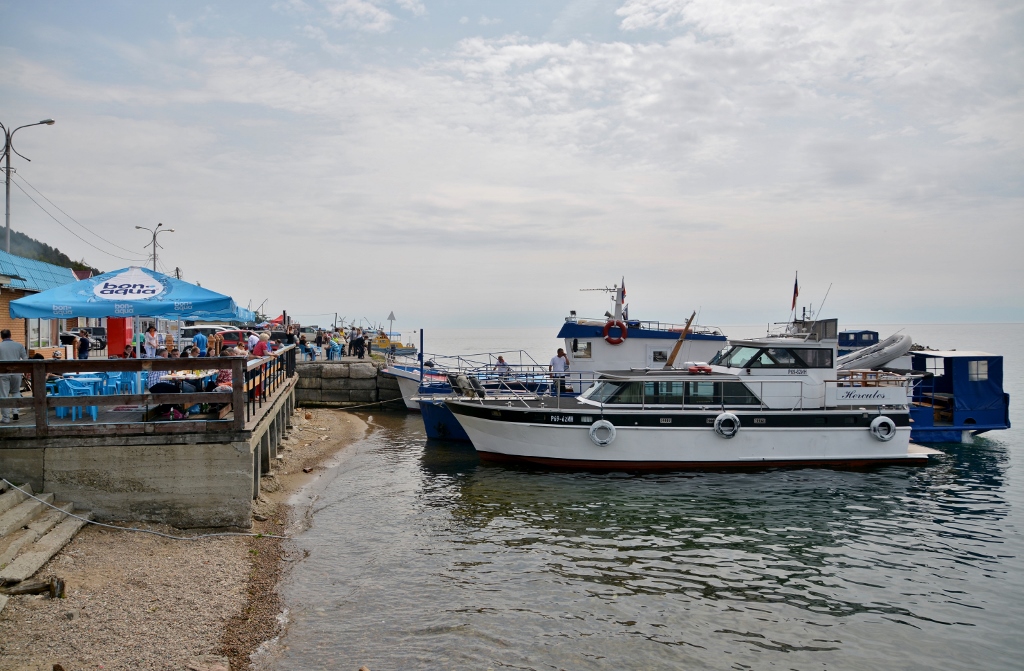
Eventually I arrive at the icebreaker Angara Museum. This is actually the ship which has been parked up here since the 60’s, It holds the record as the world’s most refloated ship as it has been swamped a few times. A grumpy lady took a hundred locals off me, filling out several forms and handing 2 to me. She sent me off down some steep stairs and a ladder into the engine room. Four big steam cylinders had powered the single propeller. Two huge boilers supplied, no doubt, a good head of steam. I had struck a group with a guide and interpreter so found out a little history.

IMG_1142 (1024x747) DSC_9742 (1024x683) DSC_9745 (1024x665) DSC_9741 (683x1024)

There were two of these ships built in the UK in kitset form and assembled locally. The first, the Baikal, built around 1896, carried 2000 passengers and 6 rail wagons, followed a couple of years later by the Angara, which only carried passengers. At this time the rail finished at the west side of Lake Baikal and started again on the east side. The boats were the link. They steamed back and forward until 1904. The rail link around the lake had to be completed as the boats were unreliable due to ice and bad weather. The Russians were fighting a war against Japan and needed continuity of supplies. When the revolution came in 1917 the icebreakers were armed up with machine guns and canons by the Reds (Bolsheviks) when the White Russians captured Irkutsk. Apparently the war went on around here until 1920. The Baikal was hit while in Port Baikal and caught fire – eventually the top part was scrapped, the rest sunk in the lake; nobody seems to know where. The lake is over 1400m deep so I guess it will stay hidden. The Angara was used as a prison for a little bit after the war until they took the prisoners up on deck one by one shot them and tossed them overboard. She then went back into general service on the lake until 1962. It’s probably the dirtiest and worst kept museum I have seen. I did get a smile out of the woman on the way out though.

A stroll back into town to the information centre was next. There I found a really helpful bunch with good English. They marked the map for me on the location of a military Museum and a shop where one could buy Matryoshka Dolls. I headed off to the Museum which was just an old empty building; the doll shop didn’t exist either. Were they just taking the piss??!!

DSC_9752 (1024x664) DSC_9777 (1024x683)

I strolled around a bit more of the town and headed back to the hotel. The receptionist was the only one of three who spoke English in spite of the guide book telling us they all did. I asked her why most of the people I had seen, especially the men, looked really grumpy. “That’s because they are – no one is happy here!” On inquiring why, “It’s 40c below here in winter and people are poor.”


Sylvia:
Saturday 18 July

I was feeling much better after a good rest up yesterday and we headed off to see Lake Baikal. Roger had made enquiries yesterday and had sorted out directions to a bus that would take us to a boat that would take us to Lake Baikal. The boat was due to leave at either 12 or 12:30 depending on who he asked… It seems to me that the people in Irkutsk either don’t want to help or really don’t have a clue. We couldn’t find the bus anywhere and once we realised it would be too late to take the boat we started looking for other options. Eventually we found a minibus heading to the lake. Apparently they leave whenever they are full and you pay per seat so we piled in and headed off an hour and twenty minutes down the road.

Lake Baikal is the largest body of fresh water in the world. Its surface area is not huge but it is the deepest lake at 1637m and holds 23,000 cubic km of water, which is over 20% of the world’s fresh water. (By contrast Lake Taupo holds 59 cubic km.) We reached the “resort town” of Listvyanka, a small, fairly uninspiring town on the edge of the lake with a four-storey, multi-coloured “wedding cake hotel” across from where the mini buses stop. The water in the lake is very clear and apparently cold. There is a species of seals that lives in the lake, the only one to live solely in fresh water.

 DSC_9755 (1024x683) DSC_9757 (1024x671)  DSC_9758 (1024x679) DSC_9762 (1024x686) DSC_9759 (773x1024)

After a quick bite to eat we wandered long the shore of the lake to the museum, apparently the only one in the world dedicated to a lake. The exhibits were unfortunately only in Russian. Of most interest to us were the aquarium showing the many different species of fish in the lake, the two very rotund seals that seemed very bored in their small tank, and the photo exhibit on the top floor with photos of different areas of the lake from the 1950’s and present day highlighting the changes.

 DSC_9766 (986x1024) DSC_9771 (1024x683)

Having met several people on the train who were spending more time in Irkutsk and/or at Lake Baikal, many of whom didn’t stop at Yekaterinburg at all, we felt pretty good about our decision. Irkutsk is the only place we have been to that we both would not have minded missing altogether. We caught another minivan back to town and after a quick bite to eat headed off to the railway station to catch our train to Ulan Batar.


Roger:
Sunday 19 July

When I wake to the loud hailer at the station we are on the east side of Lake Baikal.

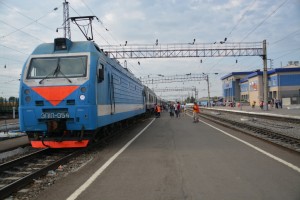
From Irkutsk to the border town of Naushki in a straight line is less than 300km but the train trip is over 800km. This is definitely the slow train to China, averaging around 50 km/per hour to the border. Once we eventually leave the trans-Siberian line and head south it is on an old style single track which still has the clickety-clack sound as the wheels go over the joins. The land becomes a little barren as we head south with huge flat areas surrounded by brown hills. There are the odd paddocks with large irrigation units. Small mobs of cattle are often accompanied by a herder. Grass is being cut in places by machine but hand stacked in the paddocks.

 DSC_9785 (1024x509) DSC_9832 (1024x683) DSC_9814 (1024x671) DSC_9794 (1024x683)

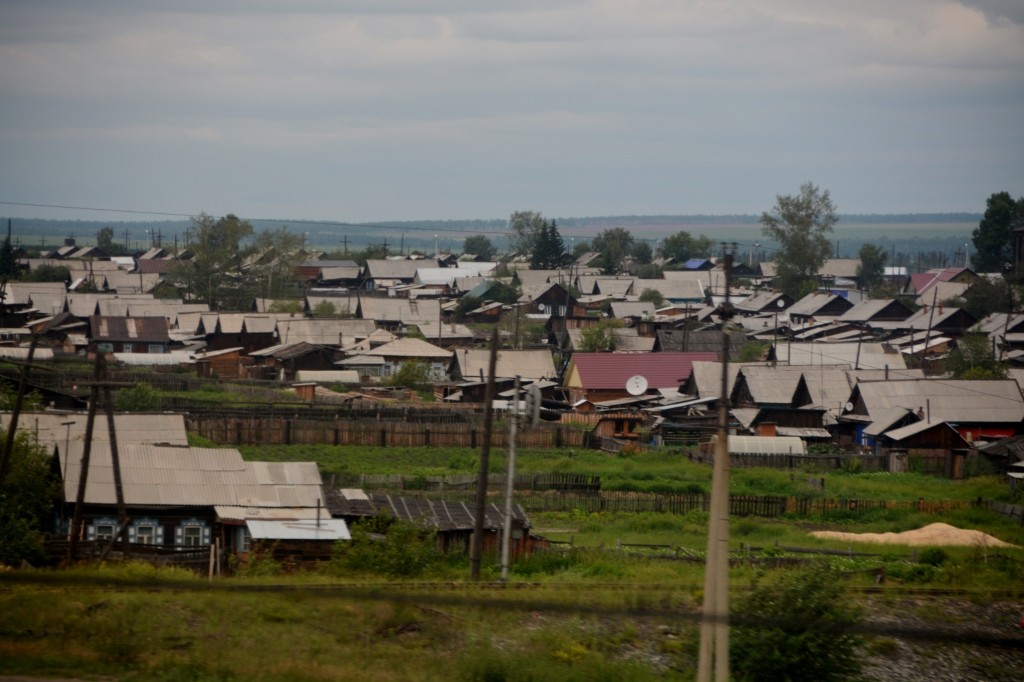
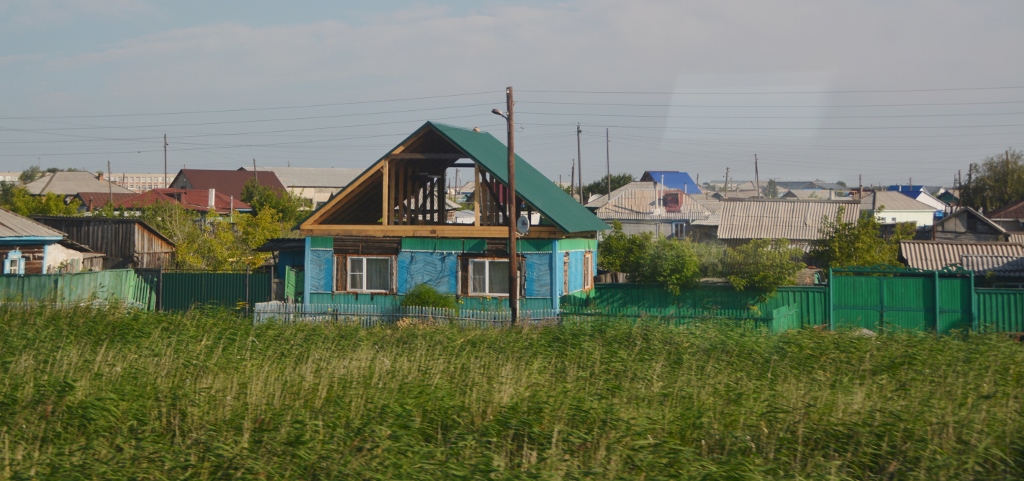
We pass an abandoned military air field and a few derelict factories before traveling alongside Goose Lake where hundreds of small boats carry one or two fisherman dangling their lines hopefully in the clear water. All the towns we pass through have the same ramshackle houses we have seen previously. These have bigger gardens and often small corrals to hold stock. We even see the odd mob of sheep.

 DSC_9835 (1024x683) DSC_9843 (1024x679) DSC_9847 (1024x663)

At 1345 local time we roll into Naushki. After total confusion as to whether we were allowed to leave the train we did anyway – it turns out we actually had to as they took the train off somewhere else for a bit. For some reason, being a border town with immigration border control etc., I had expected shops, restaurants and a tidy little town. With a “don’t know the reason why stop here” a look around and a nice meal would be good. Wrong, wrong, wrong! The railway station and the building alongside were in good nick. Passing through the station past the uninterested police we stepped into another world. This place is far worse than any town we have seen from the train. A walk down a dusty road revealed an almost nice building containing a cafe. The food was ok too. They didn’t have change for my thousand local note but produced an Eftpos machine, which was not really in keeping with the surroundings. The rest of the place was a total shambles.

 DSC_9874 (1024x683) DSC_9873 (1024x683) DSC_9868 (1024x683) DSC_9876 (1024x683)

Back in the station waiting room we had a chat to two young Aussi blokes who had been to Ukraine and visited the now defunct nuclear plant at Chernobyl. They are heading to North Korea after Beijing. Eventually we were asked to get back on the train to hurry up and wait for the border control people. Its 30 degrees C outside and hotter in the stationary train. An hour or so later they turned up. A dog sniffed its way up the corridor then a guy looked at our passports, another guy turned up with a PDA, entered and checked passports. Next an agile chick turned up and searched our cabin as we stood outside.

Eventually, bang on time at 1750 we rolled out of the station. There are tall barbed wire fences on each side of the track, a guard house down the track a bit then we are in no man’s land. A bit further down the track we stop while a bunch of Mongolian soldiers lift the barrier then run round to form up on a white line in front of their post after the train goes through.

 DSC_9886 (1024x683) DSC_9889 (1024x683)

Next stop is Sukhbaatar about 20km on where we have another long wait on the train while the Mongolian customs collect our passports and go through the same process.

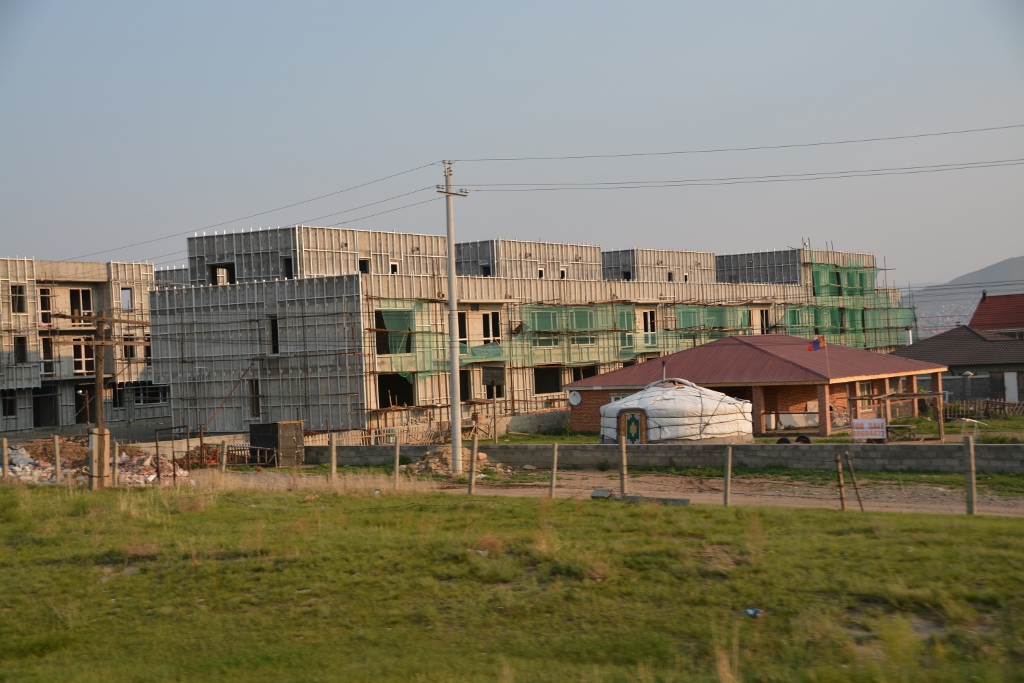
Mongolia is suddenly a different world. The ramshackle villages of Siberia have suddenly become tidy paddocks with fences. Even the odd derelict factory has a semblance of tidiness about it. Gers (yurt is the German word) stand in fields or alongside houses as we head south alongside a bright red sunset.

 DSC_9920 (1024x683)


Sylvia:
Monday 20 July

At 0430 the locked door to our compartment is thrown open, the lights switched on and our grumpy provodnitsa says time to get up. We are due to arrive in Ulan Batar at 0550 and had set our alarm for 0520 thinking thirty minutes would be plenty of time. The best laid plans…

Arriving in Ulan Batar bang on time we are met at the station by our guide. It is too early to head off to the National Park and the only restaurant open is a Mongolian one that doesn’t smell at all appetising at this hour so we head off to look at the Zaisan memorial and Buddha park. This memorial is a tall, thin, soviet style monument that was built to commemorate unknown soldiers and heroes from various wars. The climb to the top was rewarded by great views over the city. It is a really interesting city with a mix of old Soviet era apartment blocks, new modern glass buildings, smaller houses and even the odd ger. At the base of the hill is a 16m tall standing Buddha.

 DSC_9938 (683x1024) DSC_9937 (1024x683) DSC_9940 (683x1024)

This killed enough time for the Rosewood Café to open – a delightful place where we were able to get a very good breakfast.

Next we headed off to Hustai National Park about 100km southwest. This reserve has been set up to protect the reintroduced takhi or Przewalski’s horse, a sub-species of wild horse that became extinct in the wild here and was reintroduced from zoos. There are now more than 340 in the area and over 500 in Mongolia. They are a pale tan colour with zebra stripes on the back of their legs and larger heads and shorter legs than the common domestic horse.

We picked up a local guide at the Park entrance and headed off, spotting marmots, an eagle and a vulture as well as a couple of groups of takhi. We stopped at one point to climb a hill to get closer to the takhi and were distracted by the different grasshoppers and insects we saw as well. Driving further into the park we came across some very old stone statues that had been carved during the Turkish rule in the 6th century. There were also 500 odd deer stones that lined a pathway – that they called the pathway to heaven.

 DSC_9943 (1024x454) DSC_9952 (1024x683) DSC_9960 (1024x682) DSC_9976 (1024x683)DSC_9965 (1024x678) DSC_9970 (1024x684)  DSC_9987 (1024x684)  DSC_0006 (1024x683) DSC_9996 (1024x486) DSC_0007 (683x1024)

Our next activity was to arrange to stay with a local family for the night in their ger. We passed several groups of stock (horses, cattle, sheep, goats) and eventually came to a small group of gers. A few people had rounded up some goats and sheep in a pen to mark them. Our guides approached and it seemed an agreement was reached. We headed off to the ger with one of the young men now in tow and were welcomed by the woman of the house. This family of seven live in two gers. They move them at least twice a year – once to the ground nearer the river, where we were, in summer and once nearer the mountains where it is warmer for the winter. They have about 300 sheep, 300 goats, 40 cattle and 60 horses. There were a couple of calves and a dog lying outside one of the gers and a small group of young goats playing nearby – apparently they have to keep them close to protect them from birds of prey. We were invited into the ger and given some Mongolian milk tea, some sort of bread biscuit that tasted like mutton fat, some sheep’s milk cheese and some fermented milk “vodka”, all of which were definitely acquired tastes! It was agreed that we would go back and have lunch at the tourist camp where we had picked up the local guide and then return for dinner and the night.

 DSC_9993 (708x1024) DSC_9989 (1024x683) DSC_0008 (1024x683) DSC_0017 (1024x683) DSC_0018 (1024x683) DSC_0031 (1024x659)

Before we left we were invited to the other ger to see the fermented milk process. The milk is boiled and then the condensed steam is collected. A frog was jumping across the floor and a 5-day old baby goat was snuggled under a small table in the ger. Two young children ran about playing with balls. Outside we watched a guy on horseback unsuccessfully try to chase three other horses to corral them. Eventually the guy from our ger left and got on a horse himself. He successfully lassoed one of the horses from about 20 metres away.

 IMG_1169 (768x1024) DSC_0012 (683x1024) DSC_0026 (1024x683)

We headed off back to the tourist camp where we dropped off our local guide. By this stage we were more than a little concerned about our guide. He had limited English, had not been well briefed and had not given us a good briefing on our three days, we had no briefing on how to behave with the family in their ger and we had gotten very lost on the way back to the tourist camp and been driven around on rough roads for over two hours. We were now told that lunch at this camp was too expensive and we had to go to another one further up the road. When we arrived there the restaurant (and it seemed the whole camp) was closed. By this stage we were tired and hungry and the idea of a long drive back to the ger, a probably unappetising meal and no idea of how to behave properly we decided to call it off and head back to UB for the night. We also decided to fire this guide and start again as we had lost confidence in the company.

Negotiations completed we headed back to UB and checked into our hotel for the next three nights. A lovely Japanese dinner rounded off the evening.


Roger:
Tuesday 21 July

After a great sleep in a comfortable bed and a good breakfast at the Kempinski hotel we taxied into town. The first task was to find Great Chinggis Expeditions where we were to pick up our tickets for Thursday’s train to Beijing. The instructions were sort of clear. Eventually we found the run down building with a locked steel door. We punched in a number, pushed open the very creaky door, went up some poorly lit stairs, found room No 37, knocked loudly on the door a few times and finally a woman opened it revealing a nice set of offices. It felt a bit like something out of Dungeons and Dragons. Tickets in hand we headed back to the Square.

Chinggis Khaan Square, as it is now known, is also a memorial to Sukhbaatar, who was the guy that finally got independence from China and basically gave the country to Russia in 1921. The new 2006 memorial to Chinggis is huge, housing a State Museum and behind that government buildings. Interestingly there are a lot more military people around here than in Russia – they have the hard faces and do not make eye contact or acknowledge a thank you or hello. The State Museum had lots of really old stuff dating back to 300BC. This included gold horse harness decorations, swords, coins etc.

 DSC_0040 (1024x683) DSC_0046 (1024x683) DSC_0048 (1024x683) DSC_0051 (1024x683)

Across the road is the National Museum of Mongolia. This place had the oldest stuff I think I have ever seen. Cave drawings dated back to 4000BC and there were all sorts of artefacts counting down the time of man’s development in Mongolia. This included a skeleton lying in a box from 600BC. A costume room showcased the remains of costumes from 1200AD, each with a new replica beside them to show what they would have looked like. The time line flowed through the evolution of Mongolia including the Turk’s rule of the 6th Century and a big section on Chinggis and his sons, who during the 12th and into the 13th century ruled most of Asia. Another big section is on the independence from China in 1921 and covers a bit about life under Soviet rule. The last section covers the break away from socialism, which ended after a huge number of protesters went on a hunger strike in the square.

DSC_0061 (683x1024)

A stroll along a few streets revealed lots of people out with brooms and brushes trying to keep the place clean. Crossing the road at a pedestrian crossing takes a bit of getting used to; if you just stand and wait they don’t stop; walk and they don’t look like they are going to stop but do just in time. They drive on the right side here but only about 20% of the cars are left hand drive. It all seems to work.

DSC_0062 (1024x683)

We paid a visit to the Victim’s Museum, which was once the home of Prime minister P Genden and one of the oldest buildings in town. He pissed off the Russians at some point and was taken to Moscow by the KGB and shot. Apparently his replacement towed the line but several other high ranking politicians were at different times invited to Moscow for ‘retraining’ with a deadly end. An old enthusiastic guy took us inside and pointed at various posters indicating the victims from various provinces during the USSR reign. Some 23-40,000 people perished. It appears a lot were executed on trumped up charges. One room contains skulls dug up from a mass grave, most with bullet holes to the head. `The walls of many rooms have photos of people- most were executed but some imprisoned. The odd one has an explanation in English. Many were executed during the Japanese invasion of 1935 when a minister came down from Moscow with a list of names suspected of spying for the Japs. Buddhist leaders were also seen as a threat and eliminated.

 DSC_0065 (1024x683)

Our next stop was the bar on the 23rd floor of the Blue sky tower. Here we enjoyed probably the best lamb burger we have ever had, followed by a stroll back to the hotel with a bit of shopping along the way.

DSC_0077 (1024x683) DSC_0076 (1024x683)


Sylvia
Wednesday 22 July

We were met in reception at 9am by our new guide, Munk, arranged through the hotel. He is a self-confident young man who spent 10 years studying and living in London (aeronautical engineering) and returned to UB a couple of years ago. After a brief stint with Mongolian airlines he decided to set up his own travel agency. His English is good and he answered a lot of the questions we have gathered along the way.

We headed off towards Terelj National Park, about 80km northeast of UB. Despite being somewhat overrun by tourist camps and hotels (the Mongolians definitely have a very different idea of a National Park to the rest of the world) it is still a beautiful area with fantastic rock formations and lots of grassy plains, dotted about with gers and the associated wildlife. A new one for me here was the yaks; several of these long, woolly cows grazed in the area. It must be incredibly hot for them with their thick coats but they seem pretty laid back.

 DSC_0096 (1024x683) DSC_0094 (1024x683)

Right near the end of the valley we get out of the car and mount our horses for a two hour ride, across the river, through the woods, passed a few yaks and gers and up a hill. I was a little nervous at first having not ridden in a long time but Roger was very comfortable, even when his horse gave a few kicks. Apart from the flies it was very pleasant riding and we stopped at the top of the hill for fifteen minutes or so to give the horses a rest and take some photos before returning.

 DSC_0119 (1024x683) DSC_0132 (1024x683)  DSC_0135 (1024x683) DSC_0139 (1024x683) DSC_0178 (587x1024) DSC_0184 (1024x666)

Just around the corner we stopped for a Mongolian style lunch – lots of fatty mutton, first in a broth-style soup and then in some fried dumplings!

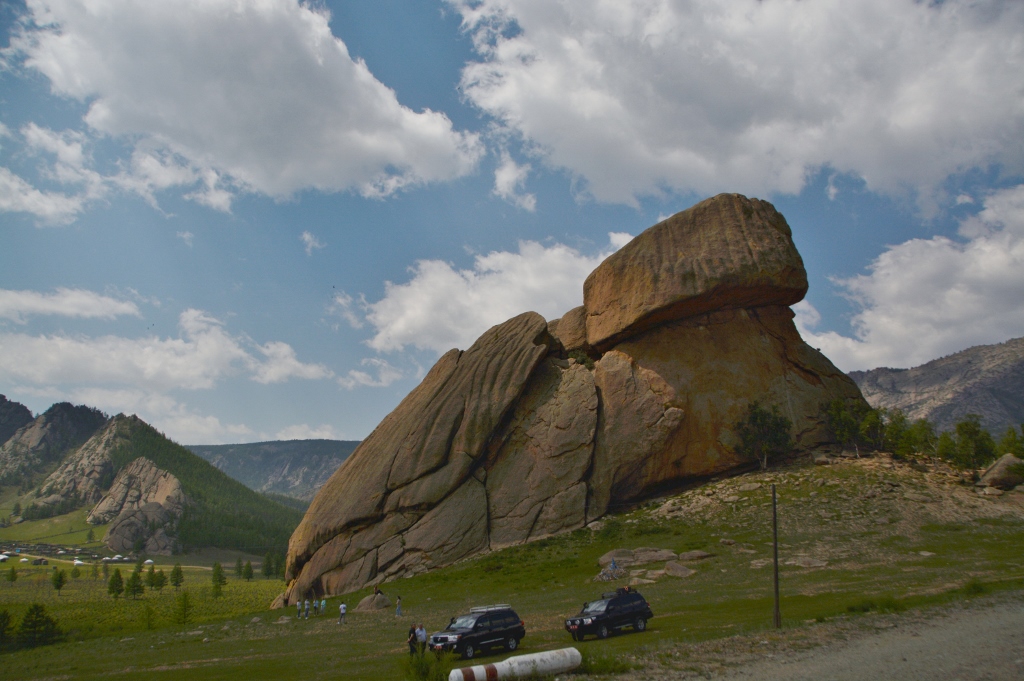
We headed next for the famous, and aptly named, turtle rock. We had great views from the top and enjoyed the squeezy climb at the ‘neck’ between the ‘head’ and the ‘shell’. Across the way we could see a couple of Bactrian (two-humped) camels, unique to Mongolia, taking people for rides and also a couple of guys wrestling, one of Mongolia’s main sports.

 DSC_0196 (1024x681) DSC_0194 (1024x655) DSC_0213 (1024x671) DSC_0236 (1024x684)

We then stopped briefly at a cave where about 150 Buddhist monks had sheltered during the Soviet-era persecutions.

Driving further east we came upon the huge Chinggis Khaan statue. Built in 2007, one of many Chinggis Khaan monuments erected to reflect the new nationalist pride of this nation, this 40m tall, shiny stainless steel statue of Chinggis on horseback is quite a landmark. We climbed the stairs and walked out onto the mane of the horse with good views over the surrounding plains and a close up view of Chinggis Khaan. In the basement is a museum featuring some more old artefacts and a bit more information on the rule of the Mongolian empire in the 13th and 14th centuries.

 DSC_0247 (1024x683) DSC_0253 (683x1024) DSC_0254 (661x1024) DSC_0266 (683x1024) DSC_0276 (683x1024) DSC_0271 (1024x683)

We then headed back to our hotel where we had a lovely meal and started to prepare for our early departure in the morning.

On reflection Mongolia is a stunning country with much to offer but tourism here is challenged. They seem to be pricing themselves out of the backpacker market but the quality of service is not at the level you would expect so value-for-money is not great. I hope that they sort this out over the next few years as I think there is great potential in the country.

Trans-Siberian Railway: Moscow to Irkutsk

Sylvia:
Saturday 11 July

After another lavish breakfast, which for Roger again included champagne and caviar, we headed off in separate directions. I had forgotten to collect our tickets for the Trans-Siberian railway and had to find my way by metro across Moscow to a guard station to pick them up. Of course, at the first metro station I went to with my route all planned out (it is not that easy to find your way around with all the stations marked in the Cyrillic alphabet which I never learned before I came, despite my good intentions) I discovered that one of the main lines I had planned to use was closed for the day for construction work! No matter, I quickly recalculated and managed to collect the tickets without too much fuss.

In the meantime Roger had decided to visit Lenin’s mausoleum in the Red Square (it is closed Fridays so we were unable to see it yesterday). Getting there 45 minutes early he went for a stroll around the square, examining the new building we referred to in yesterday’s blog and some similar buildings behind the square. His conclusion – if you want to build something to last built it out of real stone, not look-alike.

DSC_9032 (1024x683) DSC_9031 (1024x683)

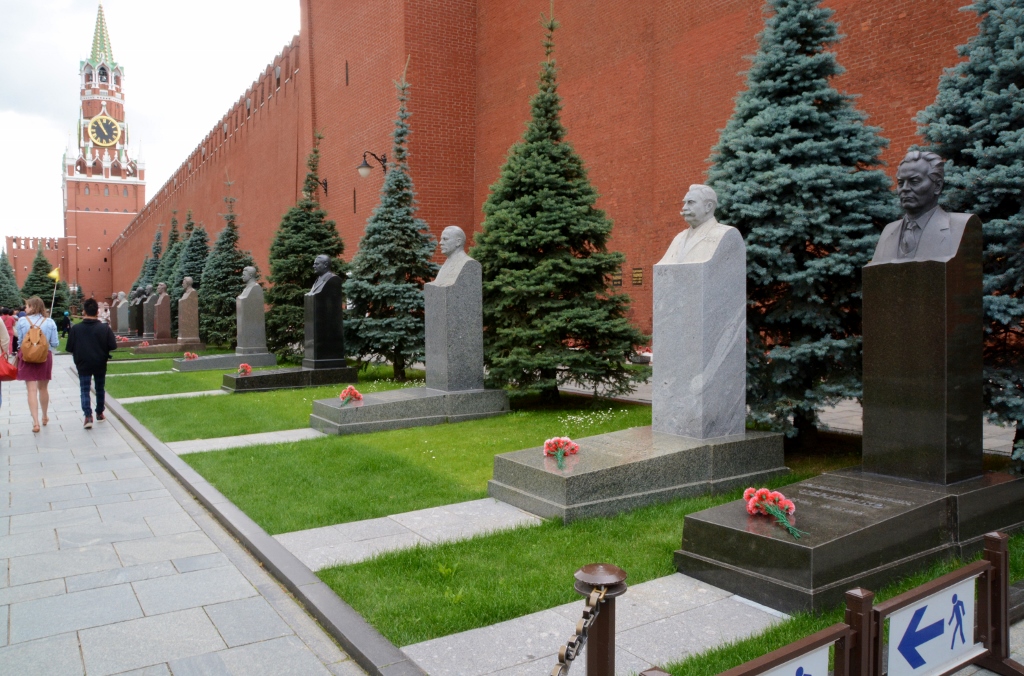
We had read yesterday that there used to be huge queues to visit Lenin but that these days there were few visitors, Roger was surprised to find an hour-long queue at 9:50am when he made it to the entrance area. Entering the tomb the young guys in front of him were told to remove their hats and get their hands out of their pockets. Descending down a large staircase, he turned  to the right where the glass coffin is raised about 2m above the floor with a staircase ascending alongside it to a platform and then down the other side. He reported that to his surprise Lenin appeared to be a tiny chap in comparison to the many statues depicting him around Moscow and St Petersburg. The story goes that his body is preserved in a special fluid that is changed every 2 years to keep him, complete with moustache and goatee in place. Maybe the preservative shrunk him – or did they make the statues too big? There is also some debate as to whether the body is in fact made of wax. This is Russia – who knows? Behind the mausoleum are buried many other post-revolution Russian leaders including Stalin and Brezhnev.

DSC_9036 (683x1024) DSC_9037 (1024x676)

Anyway, he eventually made it back to the hotel about 10 minutes after me and just in time for us to check out and make our transfer to the Yaroslavsky station. We had been advised to arrive at the station at least an hour early to allow time for security etc but security was quick and efficient which just meant we had a lot of waiting time. Roger did a bit of hunter-gathering to ensure we had provisions for our trip while I watched the bags.

DSC_9043 (1024x624)

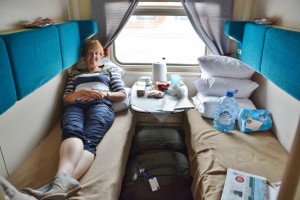
Eventually we boarded our train – greeted by our provodnitsa  (Roger calls her the hostie chick). Our cabin is remarkably spacious with two seats that fold down into beds and a table. We have a door that locks and toilet facilities at the end of the carriage. There is a dining car a few carriages down and several people come past offering snacks, souvenirs etc. A few hours in we receive a carbohydrate heavy snack.

 DSC_9049 - Copy - Copy (683x1024) DSC_9050 (1024x683) DSC_9046 (1024x683) DSC_9047 - Copy - Copy (1024x683)

Unfortunately I was feeling very unwell so slept the first 2 hours or so and woke feeling much better. Roger had been enjoying the scenery and meeting some of the other passengers in our carriage.

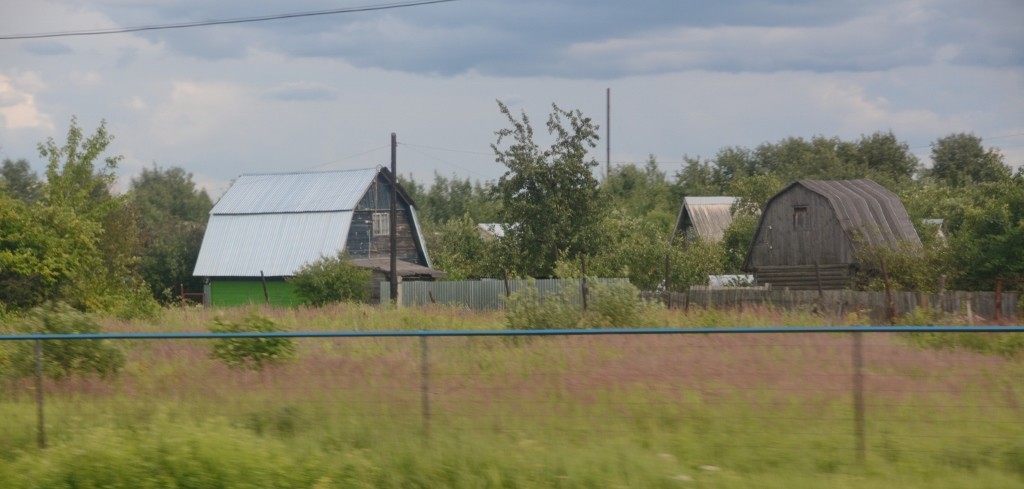
In general this is a very relaxing way to travel. It is very much about the journey and not about the destination. The world rolls past our cabin window at about 70km/hour – lots and lots of untamed woodland with the odd village and/or city, many looking pretty dilapidated and run down. There are lots of old wooden homes with large garden plots out the back and some factories that look pretty discarded. At several places we pass large railway maintenance yards filled with pre-made stretches of track, already on concrete sleepers stacked up. We often pass freight trains so I would imagine these tracks need pretty regular maintenance.
DSC_9072 - Copy - Copy (1024x489) DSC_9081 - Copy - Copy (1024x669) DSC_9097 (1024x684) (1024x684) DSC_9179 (1024x683)  DSC_9265 (1024x683) DSC_9174 - Copy - Copy (1024x683) DSC_9110 - Copy - Copy (1024x678)DSC_9210 (1024x683)

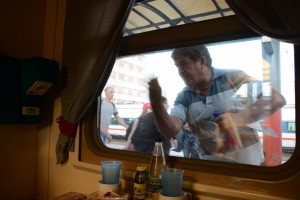
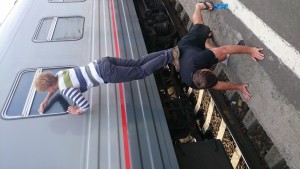
We spend time dozing, writing, reading, doing sudokus, gazing out the window and just generally relaxing. At the occasional stop, Roger races out to clean the windows – Whichever window is on the platform side gets a good clean.
 DSC_9128 (1024x683)

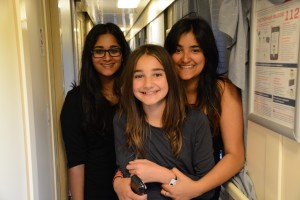
In the evening Wendy and Ash, a couple from England, and their three children pile into our cabin for a chat. They have trained from London (with a brief flight detour when they were deported from Belarus for not having the correct visa) and are travelling through to China, then on to Japan and eventually Thailand. We will get off in Ekaterinburg tomorrow but their first stop is not until Irkutsk some 50-odd hours later. They are very well-travelled and we enjoyed chatting for an hour or two while the sun set over the Volga river.
 DSC_9145 (1024x683)
DSC_9143 (1024x683) DSC_9130 (1024x644)

In second class, the cabins are the same but with four passengers and bunk beds. Having Wendy and Ash in the cabin with us for a while was great but I am very grateful for the extra space we have travelling on our own in first class. With extra luggage as well it must be fairly tight in those second class cabins.

Eventually the motion of the train rocks us to sleep for the night.


Roger:
Sunday 12 July

I am woken by the carriage rocking around on a bit of rough track. It’s broad daylight and a check of the clock tells me its 4am.

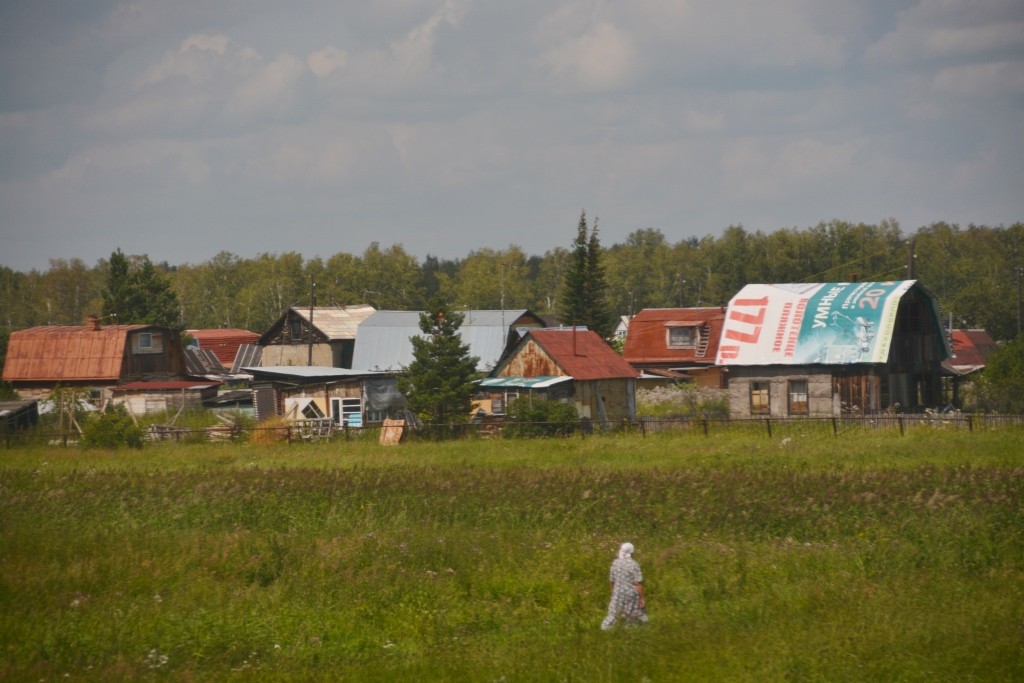
The countryside is much the same as yesterday. Large chimneys with their faded red and white paint mark huge rundown buildings, I presume once massive factories of the Soviet past. We have passed hundreds of these. Most houses visible from the train are rundown – mainly made of wood and asbestos roofing. They are still lived in with large piles of firewood stacked outside fuelling the thick grey smoke emerging from the small chimneys. It is 22 degrees C so I presume cooking is done on these fires. The green shrubs, occasional large untended fields and deciduous trees create a pretty scene. I can only ponder why this huge country with all the resources required to make a wealthy nation can look so run down and hard to live in.

DSC_9121 - Copy - Copy (1024x676)  DSC_9202 - Copy - Copy (1024x683) DSC_9490 (1024x683)  DSC_9616 (1024x665) DSC_9113 - Copy - Copy (1024x660) DSC_9588 (1024x481)

Back in Moscow and St Petersburg cars came from Western Europe, Japan and Korea. Even the cars stopped at the rail crossings out here are not made in Russia.

26 hours and 1814 kilometres from Moscow we pull into Yekaterinburg. We say goodbye to the hostie who is full if smiles as she stands by the door on the platform. The bottle of vodka we gave her must have worked.

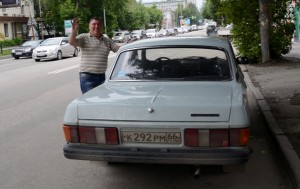
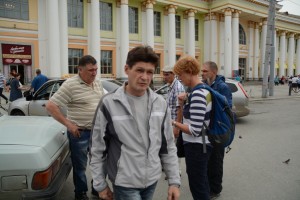
Outside the station we approach a taxi driver, a serious chap with a large motor leaning on his rather large Pontiac-like, Russian made car. Immediately another guy approached – “I speak English, I am just here to help”, then there were three of them seriously discussing our destination. Eventually the huge boot opened, our bags were in and we were on our way with Mr Serious. Paying the guy his rubles and taking a photo of his car finally got a smile.
 DSC_9280 (1024x683) DSC_9282 (1024x646)

At first glance this is a rough hard town with hard-looking people trying hard to move into the 21st century. From what I have seen so far it looks like Lenin’s legacy has not been all that good for the people. I ponder what would have been if the reds hadn’t come into power.

We wandered less than a block from the hotel and found a huge, modern shopping mall still going strong at 8pm on Sunday evening. The contrast is amazing here. Three floors up we found a superbly decorated Kazan-style restaurant where the tucker had really nice, almost Middle Eastern, flavours and the staff were excellent, responding really well to communication by pointing.

IMG_1087 (1024x768)


Sylvia:
Monday 13 July

Today has been a fairly dreary, cold (by my standards anyway – Roger still coped in shorts and a t-shirt all day) and, at times, drizzly day. I think fairly apt for exploring this town.

Yekaterinburg was established in 1723 as an iron and copper industrial town. It has had a chequered history since then as the capitol of the Urals region, technically still 260kms outside of Siberia. In 1917 the Romanov family were murdered here after the revolution. The area became a major centre for defence-related industry during the Soviet era and was closed to foreigners during this time. Boris Yeltsin grew up in the area. Then in the 1990’s the town became infamous as a mafia centre and there were several high profile killings between the two rival gangs that lived in the area. Our time here has focused on exploring different facets of many of these things.

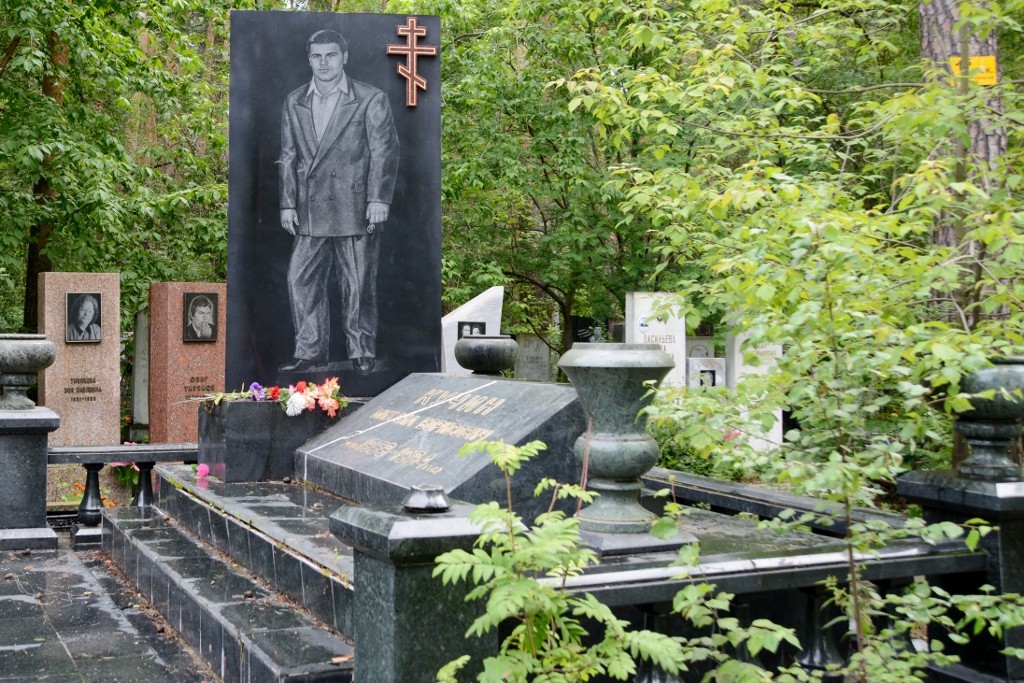
The staff at the hotel have been incredibly helpful and patient, trying very hard to understand our many requests and taking time to help us make arrangements to see different things. First up we had decided to go and visit the infamous Mafia Cemeteries where several of the mafia mentioned before were buried, complete with life-size granite etchings of themselves – the bosses in suits and the enforcers in leather jackets and loose trousers. This one generated a few giggles from the girls behind the reception desk but we managed to get it sorted. We were picked up by a taxi driver in his nearly new Lexus who drove us around and waited for us – for 2/3 the price we paid for our clapped out taxi to the hotel yesterday… I enjoyed ribbing Roger about that one – even though he says he knew we were “being stroked” yesterday.

It is quite astounding to see these full size etchings and at some of the graves even picnic tables and chairs for visitors. But back to the contrasts in Russia, despite the huge expense of the graves, the cemetery was really rough, particularly compared with some of the immaculate ones we have seen in other places this trip.
 DSC_9286 (1024x683) DSC_9287 (681x1024) DSC_9300 (667x1024)

Right next door to the cemetery is the World War II memorial with some amazing etchings to commemorate Russia’s involvement in the war. I don’t think it matters which side you are on in any war, the human toll is still the same.

We headed back to the hotel and set off on a walking tour, first passing the Yekaterinburg Circus, and then a giant stone computer keyboard randomly placed alongside the river!?!?! We then headed to the 52nd floor of a large building which has been established as an observation deck overlooking the city. The views were quite incredible despite the howling wind. The city actually looks better planned and more modern from higher up.

 DSC_9320 (1024x324) DSC_9319 - Copy - Copy (1024x681) DSC_9327 - Copy - Copy (1024x596) DSC_9346 - Copy - Copy (1024x683)

Continuing along we stopped at the History of Yekaterinburg museum, built in some famous guy’s old house. Most of the exhibits were in Russian only but it was still remarkably interesting as there were lots of interactive maps and videos etc. One in particular was really impressive – a large book that when you turned the pages had different pictures projected on to it showing the city in the 1700’s, 1800’s and now. We even watched a couple of 3D movies about the place – with note cards provided in English.

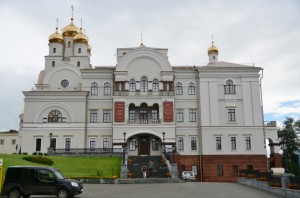
Our next stop was the Church of the Spilled Blood, built on the spot where the Romanov’s were murdered. The guide there was incredibly lovely, showing us around and ensuring we had our pictures taken in the right places. The exhibits here were in Russian and English and, having first heard their story when I was a child, it was really interesting to get a sense of the time around their deaths and the senselessness of it all. In the basement there were a whole lot of exhibits about World War II as well.

 DSC_9364 - Copy - Copy (1024x683) DSC_9359 - Copy - Copy (1024x677) DSC_9354 (823x1024)

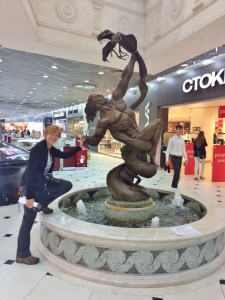
We wandered back through the city marvelling at the many monuments and quirky statues about. We even stopped briefly at a shopping mall where I was amused to see Roger being fawned over by three sales women and one salesman while he bought a couple of shirts. I think he quite enjoyed all the attention – perhaps it just took four of them to make sense of what he was saying – or was it just outstanding service?
IMG_1118 (768x1024) IMG_1115 (768x1024)  IMG_1093 (853x540) DSC_9369 - Copy (1024x928) DSC_9366 - Copy - Copy (1024x602) DSC_9484 (1024x683)


Roger:
Tuesday 14 July

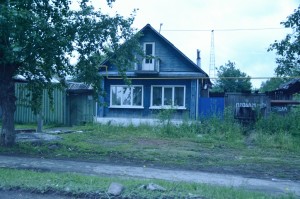
We took a cab organised by the hotel heading north out of the city through the suburbs. It’s a pretty rough looking town. Like most eastern cities the road is very wide with two sets of tram tracks running along the overgrown grassy verge between the roads. The square box shape trams look very, very old – maybe 50’s era.  Old looking apartments and other buildings turn into small wooden lace houses serviced by above ground gas mains as we get further out of the city.
 DSC_9479 (1024x680)

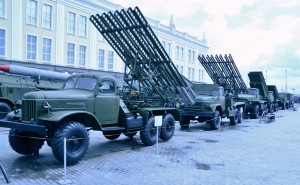
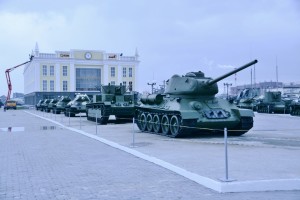
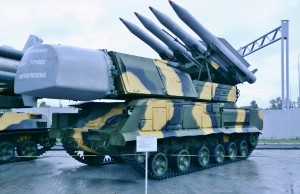
We are stunned on reaching our destination. The Museum of Military Technology is mainly outdoors. It is immaculate, the grounds clean, tidy and well laid out. There is a WWII monument at the entrance. Inside the gates are every tank, artillery piece, and rocket launcher used by the Russian Armies from 1939 through to 1990. There are also planes, trains, boats and much more. Probably our favourite was the fully armoured train. Unfortunately the indoor museum was closed. At a glance it looked like it contained a collection of old cars, small planes and, I presume, much more.
  DSC_9378 (1024x682)  DSC_9410 (1024x663) DSC_9415 (1024x667)  DSC_9425 (1024x679) DSC_9426 (1024x631) DSC_9460 (1024x683) DSC_9468 (1024x431)

The same taxi later took us to the station; the fare in his Toyota was 250 locals. I knew the man with the big motor had ripped us off on the way to the hotel – 600 locals he charged us! I reckon taxi drivers all over the world must go to the same training school. I can never bring myself to trust the bastards.

Back on the train we head east to complete the 5153 kilometre journey to Irkutsk.

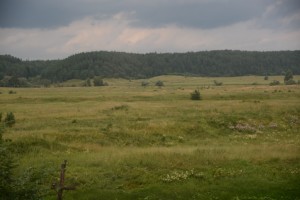
As we roll out of town passing again large disused factories and ramshackle houses the land flattens out. It’s really pretty country. Green prairies with clumps of silver birch type trees. Some of the unfenced fields are cultivated, others grow crops, and in places hay has been stacked in heaps on the fields. The odd village we pass has the same ramshackle small houses. Occasionally we pass a relatively modern factory that looks like it’s actually producing something.

 DSC_9599 (1024x683) DSC_9616 (1024x665)DSC_9579 (1024x371)     DSC_9612 (1024x683)

On the last leg our cabin was well prepared with cups, snacks etc. The friendly hostie chick gave us cards to lock the cabin. No such luck this time! The hostie is a big, strong, grumpy woman who looks like she used to pull trees for a living. Any questions receive the arms up in a cross, which we figure out pretty quick means no.

Back in 1975 my mother took this train from Vladivostok to Berlin – over 11,000km. She travelled on her own in a second-class carriage non-stop. I recall her saying the only happy looking people she saw were soldiers, of which there were lots. We have commented several times during this trip about how impressive it was for her to do this trip on her own, particularly back during the Soviet era.


Sylvia:
Wednesday 15 July

Our journey continued today in much the same fashion. We stop for 20 minutes or so a few times at stations like Omsk and Novosibirsk where we can stretch our legs and replenish our supplies.

DSC_9567 (1024x683) DSC_9637 (1024x671)

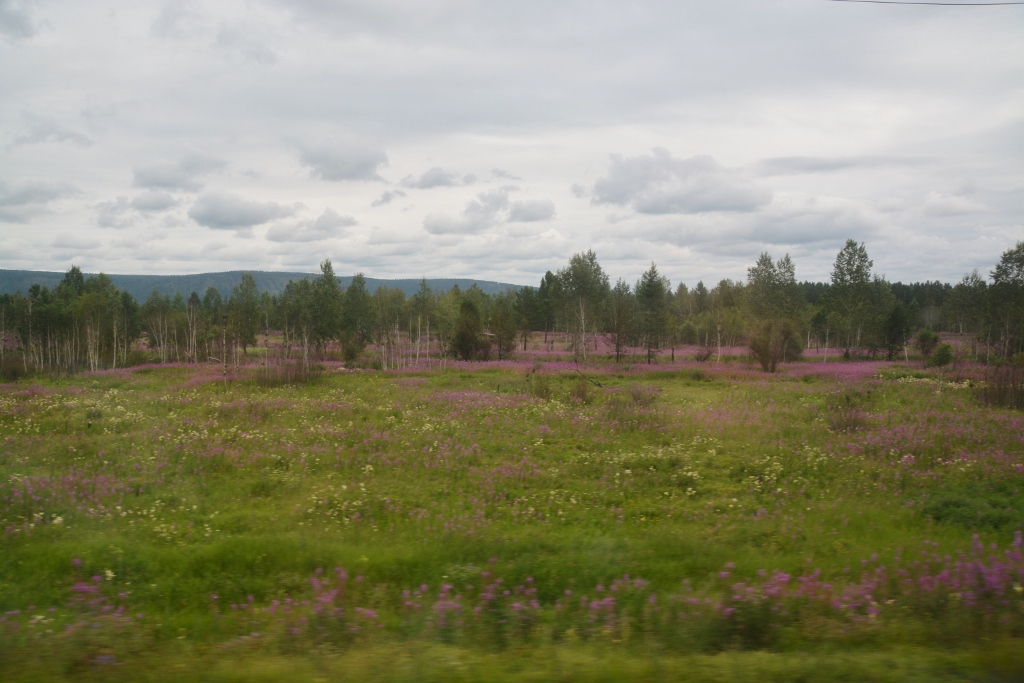
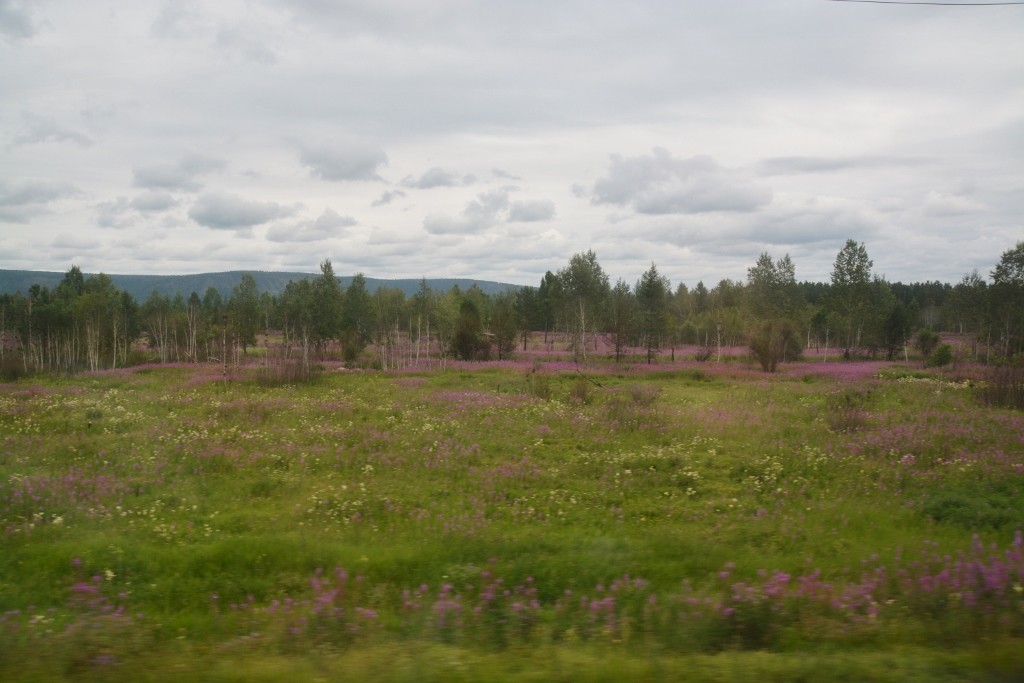
Russia is a huge, vast country but so far the scenery has changed little. We have commented several times that it is pretty countryside – wide, flat fields with the odd stand of trees and cluster of houses. One of my enduring memories is likely to be the fields and fields of wild flowers, mostly purple and white, we pass along the way.

 DSC_9659 (1024x456) DSC_9664 (1024x683)

In our carriage are other tourists like us travelling through to Irkutsk or further, and the odd local who is as likely to stay on board only until the next station. It certainly keeps the hostie busy changing over the linens in the rooms.

Tonight Roger whipped up a gourmet dinner of 2-minute type noodles with a bottle of Chardonnay. I broke up the chocolate for dessert. Truly a testament to our cooking skills. At least we had managed to find a couple of forks today. Last night we had to slurp our noodles soup style. And in truth, it was probably better than breakfast. Roger went off hunter-gathering at one of our stops this morning and did a half-decent job: the okay half – a sausage in bread kind of thing; the not okay half, some super smelly fish things that we had to wrap up and discard as soon as we started opening them, and the smell was still lingering in the carriage some 30 minutes later. This, I think is all part of the training experience.


Roger:
Thursday 16 July

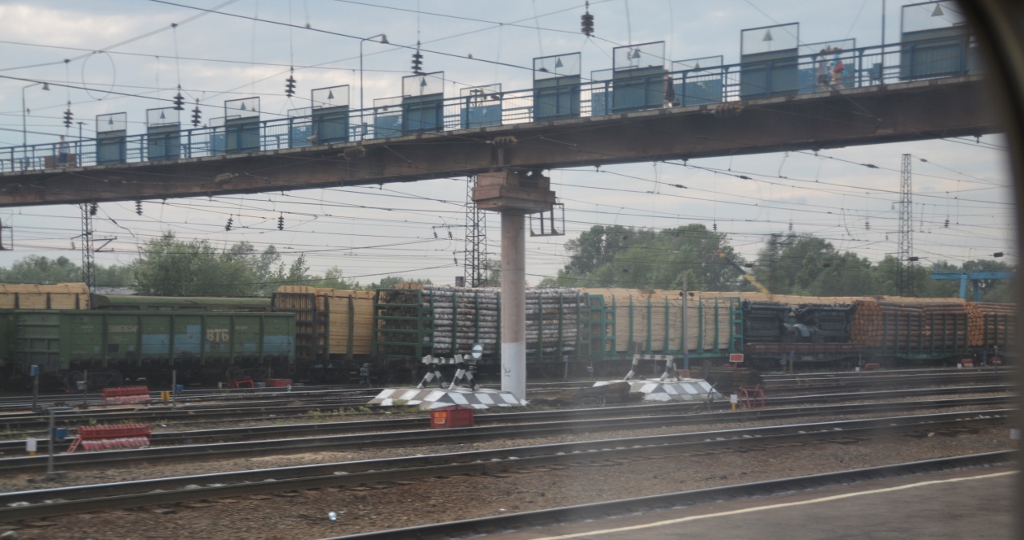
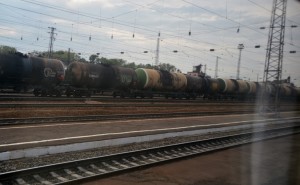
The first part of the day the country was similar to yesterday. Flat with areas of pine forest. Eventually we moved through some rolling, almost farm land, country but there was no sign of stock. We pass lots of freight trains. This after all is apparently the busiest rail freight corridor in the world. We pass thousands of cylinder like carts apparently carrying oil to Novosibirsk where it is exported via the Black sea.

DSC_9673 (1024x682) DSC_9704 (1024x632)DSC_9682 (1024x452)    DSC_9702 (1024x682)

Interestingly since we entered Siberia we have not seen any gold domed churches.

We met a lady called Oksana who is traveling to Irkutsk. She is an economist and university lecturer from a city south of Moscow. She was explaining that when all the redundant factories were privatised in the 90s most went broke. They have now been replaced by smaller operations which are more competitive. When asked which was the better system she explained that a free economy has ups and downs whereas a managed economy has slow but steady growth. It would however take 120 years to prove which is better in the long run.

She also explained that the sanctions from the Ukraine debacle are good for the Russian economy allowing local manufactures to get traction in the market. About 30% of the cars we see on the road are actually manufactured in Russia.

As we close on Irkutsk 5153 Ks from Moscow we are starting to see more actual paddocks with a few cows and horses in. There are more signs of farming with huge recently harvested fields, even the odd paddock of hay bales.  This is very rolling, picturesque country still dotted with ramshackle villages.

DSC_9727 (1024x411) DSC_9732 (1024x662) DSC_9693 (1024x668) DSC_9712 (1024x540) DSC_9688 (1024x682)  DSC_9728 (1024x664)

The trains run on Moscow time so as we approach Irkutsk at 1911 hours the clock in the carriage says 1412. We have moved through 5 time changes on this journey.

There are 9 cabins in this carriage. We have a couple from France, Fred and Fred; a couple from England, Imran and Sonali; a father and son, Gus and Daniel, from Ireland; and Oksana from Russia, all getting off in Irkutsk. Pablo, from Spain, is going non-stop all the way to Vladivostok.

We have had a few stops along the way, some just two to ten minutes, and a couple for thirty minutes when they change the engine and the tappers go along with their long-handled hammers and tap the wheels, springs and other bits, I presume detecting faults by sound. I thought these guys went out at the end of the steam days.
DSC_2591(3) (576x1024) DSC_9564 (1024x683) DSC_9708 (1024x683) DSC_9709 (1024x683)

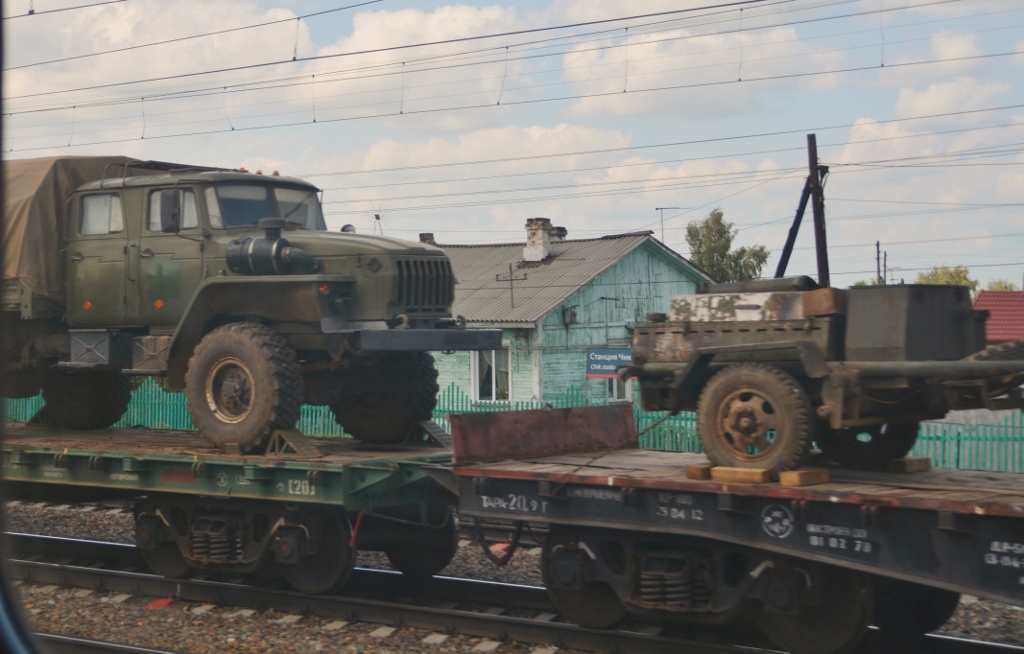
We passed a number of trains loaded with military vehicles and some LAVs.
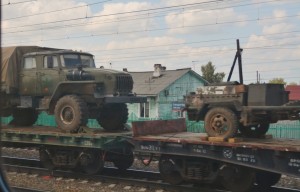
 DSC_9617 (1024x654) DSC_9625 (1024x570)

As we arrived in Irkutsk the grumpy hostie raced through each cabin taking sheets etc.

We headed out to the station entrance to await our pre ordered ride to the Hotel Kupechesky Dvor who eventually turned up after a couple of phone calls. The hotel is well located with lots of restaurants nearby, at one of which we enjoyed some very tasty venison dumplings.

St Petersburg to Moscow

   Roger:
Wednesday 8 July

Heading down the passage of the Hermitage hotel we struck a Russian bride all frocked up. Down in the rather grand foyer a few pieces of brass spark up as the groom and about twenty people stand around. As we get to the ATM in the foyer the bride arrives down a sweeping staircase. The ceremony conducted in the foyer is over faster than I can get money from the machine – bubbles cracked, music playing and the gathering continues in the foyer.

DSC_8274 (1024x683) DSC_8276 (1024x682)

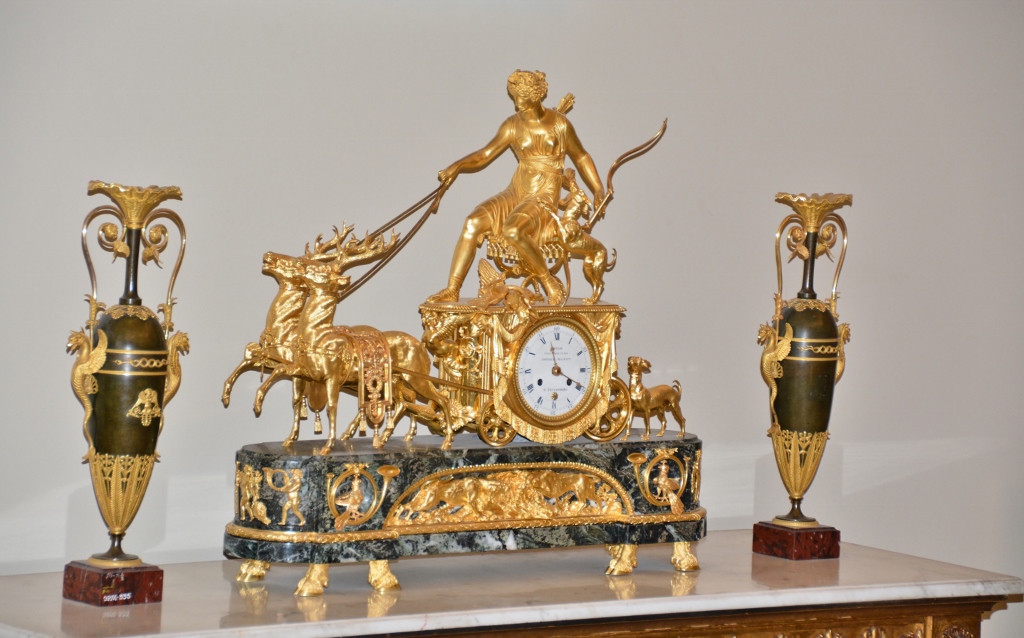
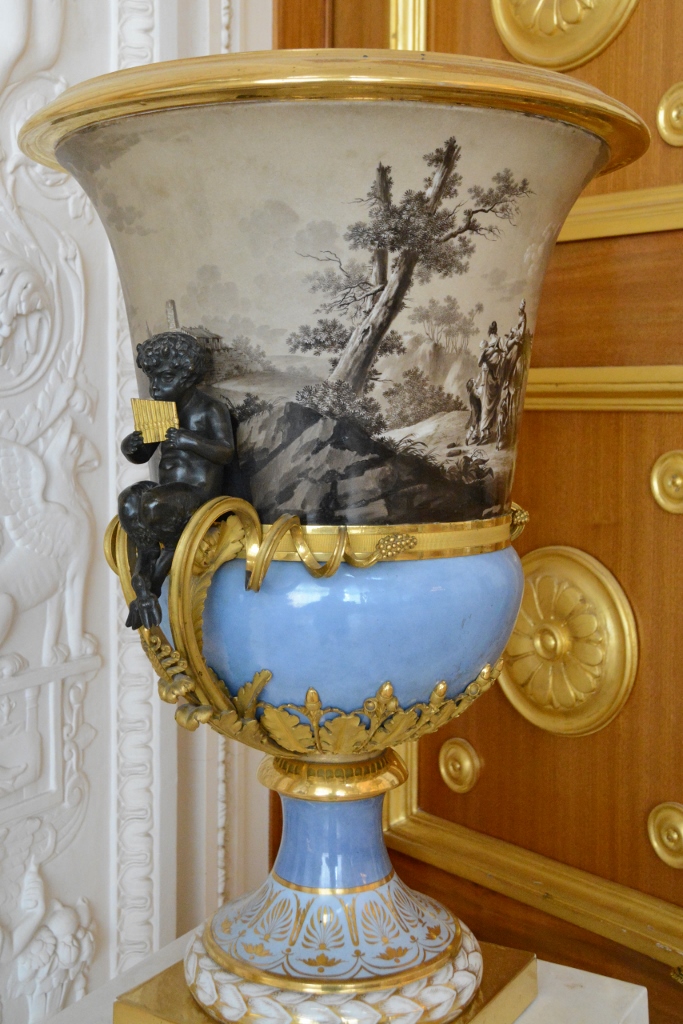
We had booked a ride to the Winter Palace in the hotel van. Just as well as we were ticked off a list as we boarded. The Hermitage museum was originally the Winter Palace of the Romanovs, the last Tsar family to rule Russia. They were in Ekaterinberg when the revolution took place. Subsequently they were rounded up and given the chop. The palace is overwhelming in every way. Some rooms are lined with gold, silver and marble from all over the world. Ceilings are spectacular and furniture outstanding. There are solid gold clocks, statues and ornaments. The museum also goes into a building that is attached to the palace. It has statues of big strong blokes holding up the entrance. Room after room is lined with different marble and filled with artefacts from various parts of the world. I am sure I haven’t done justice to this must visit place. It is by far the most impressive palace/museum I have seen.

DSC_8281 (683x1024) DSC_8284 (684x1024) DSC_8289 (690x1024)DSC_8290 (1024x681) DSC_8282 (1024x683)DSC_8291 (1024x638) DSC_8295 (1024x682)  DSC_8308 (1024x683) DSC_8307 (1024x664)  DSC_8300 (1024x683) DSC_8299 (1024x861) DSC_8296 (808x1024) DSC_8303 (701x1024) DSC_8316 (683x1024) DSC_8317 (1024x683) DSC_8322 (1024x773) DSC_8323 (1024x681) DSC_8328 (1024x682) DSC_8331 (1024x683) DSC_8337 (683x1024) DSC_8338 (494x1024) IMG_1020 (768x1024) DSC_8339 (1024x671)

Leaving the palace we strolled across the river to the St Peter and Paul fortress. Built in the early 1700’s it houses a large, gold covered cathedral spire and dome of the Grand Ducal Crypt in the centre.  The inside of the cathedral is also gold lined in Baroque style. There are quite a few bodies lying around inside marble casks. Generations of royals are entombed here including the last Tsar and family who were relocated here in the 1980s. The fortress also contains the fort prison, with its large cells where some people stayed for over 30 years, the old mint and lots of other buildings.

DSC_8356 (1024x541) DSC_8357 (1024x683) DSC_8366 (1024x683) DSC_8368 (1024x678)  DSC_8371 (1024x445) DSC_8374 (1024x665)  DSC_8378 (683x1024) DSC_8380 (1024x666) DSC_8381 (1024x683) DSC_8382 (1024x683) DSC_8383 (1024x683) DSC_8384 (1024x683) DSC_8386 (1024x683)

A stroll back across the river took us to the Church of the Spilt Blood with its many onion-shaped spires – unfortunately closed on Wednesdays but very impressive from the outside.

DSC_8391 (1024x683) DSC_8400 (1024x661) DSC_8397 (808x1024)

A stroll back up past the Palace took us to the navy academy also complete with gold spire. Two statues one of Peter the Great and the other the Bronze horseman were surrounded by nice lawns and gardens.

DSC_8405 (672x1024) DSC_8444 (683x1024) DSC_8412 (1024x683)

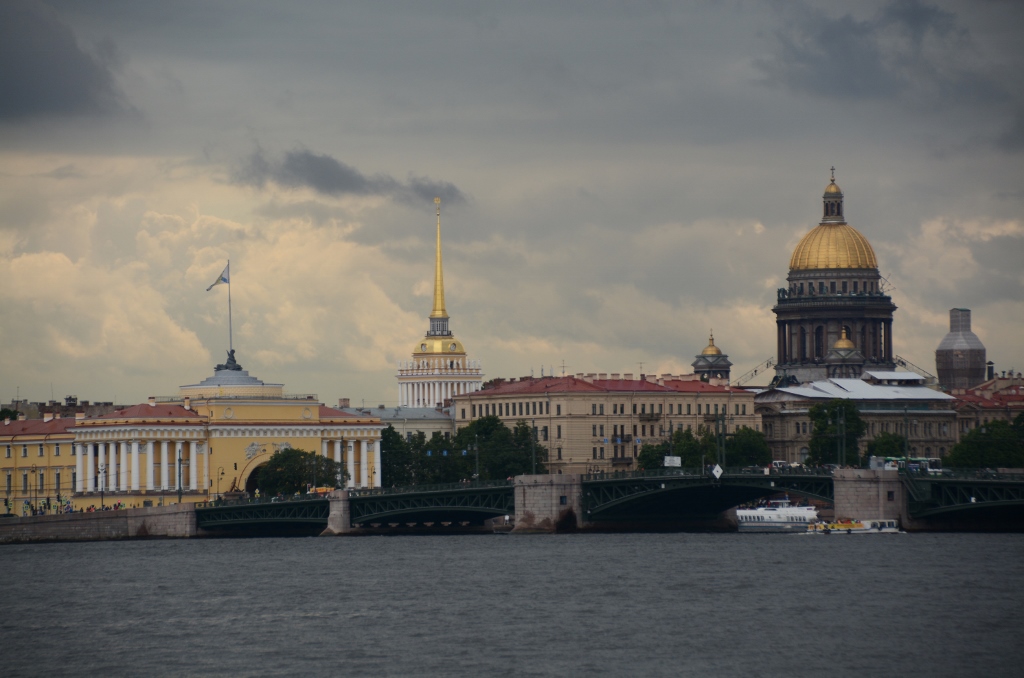
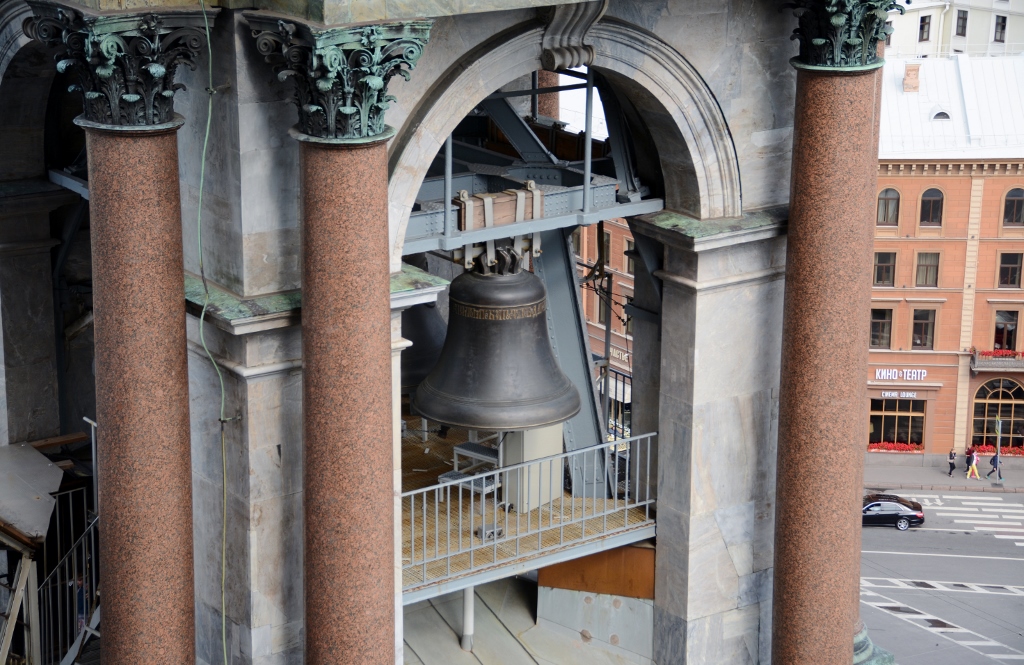
200 odd spiral steps, with stops for the unfit buggers above us, took us to the Colonnade of St Isaac’s Cathedral. The dome on this is coated with 300kgs of gold. The views over the city from here are really good. There are many gold spires and domes around the city visible from here – many not even marked on our map.

DSC_8408 (683x1024)
DSC_8421 (1024x665) DSC_8428 (1024x683)  DSC_8432 (1024x683) DSC_8435 (1024x683)

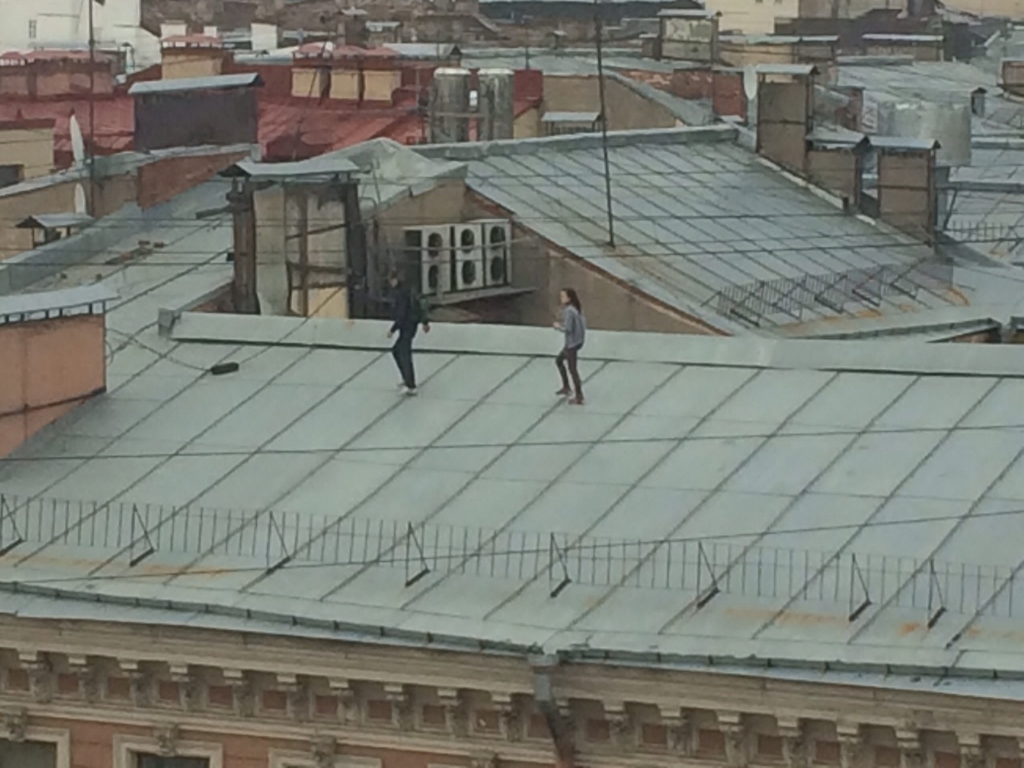
A stroll through the streets alongside and across 3 canals took us back to the Hermitage Hotel.  On the roof top bar we were attended to by a great young waiter. From Near Irkutsk he is studying here before heading to Norway. I mention this guy because his enthusiasm and English were outstanding. The service right throughout the hotel is of a high standard. It is from the roof top we see a guy with a backpack on and a girl making their way across the roof tops of the adjacent building five stories up. Had they been on the Orient Express? Were we being followed? Or were the just out having fun?

IMG_1031 (1024x370) IMG_1037 (1024x768)

It was from the rooftop that I realised why this city of treasure and extravagance seemed to appear somewhat dull. It is flat as far is the eye can see and apart from the odd spire or dome all the buildings are pretty much the same height – although mostly different and many ornate they run in a straight line down the wide streets.

DSC_8450 (1024x683) DSC_8401 (1024x683)


Sylvia:
Thursday 9 July

We had a lovely, lazy morning this morning, catching up on news, calling home and generally enjoying a bit of a lie in in the luxurious surroundings of the Hermitage Hotel. We had a late breakfast just before 10 and checked out of our room at 12. We had arranged a transfer to the train station for our trip to Moscow at 12:50pm so spent the remaining time sitting in the lobby, people watching and chatting.

The train station was a big bustling affair and once we figured out the sign system was pretty easy to negotiate. Our train was ready for boarding nearly straight away and our seats in the premium coach were very comfortable. Roger was particularly impressed when one of the attendants cleaned the outside of our window just before we departed.

IMG_1038 (1024x768)

Overall the train here was better (newer, flasher) than those we have been on in other parts of Europe but the track quality definitely seems inferior and we felt much more motion, particularly early in the trip. We rattled along quite comfortably though at speeds varying between about 130km and 220km/hour, stopping occasionally (for a minute only) at small towns along the way. I got a bit of a kick out of the announcements which always started (in English anyway) “Dear passengers”.

At one stop, Roger delighted in the fact that construction workers are the same the world over, taking a quick photograph of a young man leaning on his shovel. In fact. Roger took general great delight in photographing many things out the window – we both agree that I will have a bit of deleting to do tonight when I edit as taking photographs from a moving vehicle is always pretty hit and miss.

DSC_8461 (1024x683) DSC_8482 (1024x683)  DSC_8488 (1024x683) DSC_8522 (1024x683) DSC_8611 (1024x667) DSC_8657 (1024x683) DSC_8711 (1024x683) DSC_8735 (1024x683)

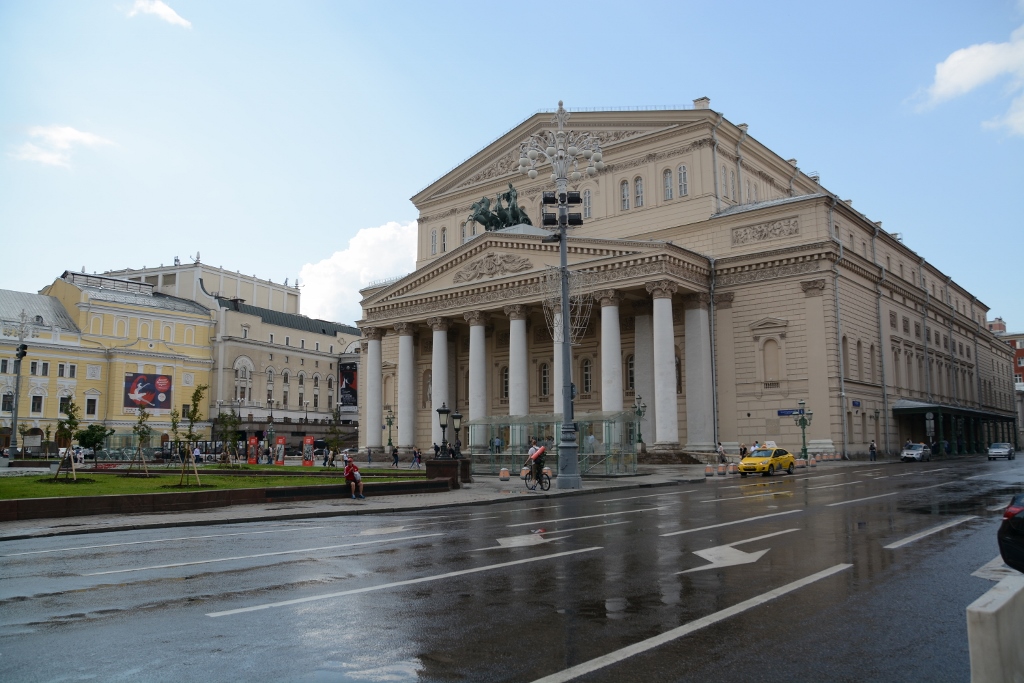
After arriving in Moscow we transferred to our hotel, The Metropol, a real Moscow icon, first established in the early 1900s. It is gorgeous with lots of stained glass and marble. We didn’t have much time to admire it as we had tickets to the Bolshoi at 7pm – we arrived at about 6:30pm. Luckily the Bolshoi is just across the road so we had time to change and wander over. The ballet was in the smaller of the two theatres but stunning nonetheless.

DSC_8934 (1024x571) DSC_8932 (1024x683)

Although I had originally been a little unsure about ballet, I was mesmerised. We saw a comic ballet and the quality of the dancers, their athleticism and perfection of timing was outstanding, as was the orchestra. I was quite surprised at half time and again at the end of the show how quickly it had gone.

IMG_1044 (1024x768) IMG_1041 (1024x768)IMG_1045 (1016x640)

Afterwards we enjoyed a quiet drink in the hotel bar and soaked up some of the surroundings before retiring for the night.


Roger:
Friday 10 July

The day began brilliantly with champagne and caviar for breakfast. The harpist stroked the strings sending soft mellow notes into the dining room at the famous Metropol Hotel. This place has got to have the biggest variety of breakfast I have ever seen – omelettes to caviar and everything in between.

 DSC_9016 (1024x664) DSC_9022 (1024x683) DSC_9021 (1024x683)

A short walk took us to the Kremlin – a big fort surrounded by a brick wall, originally built as a wooden fortress in the 12th century. First we visited the armoury museum with great displays from carriages to frocks. Only a small section on arms but large displays of silver and gold plates, goblets etc.

DSC_8788 (683x1024) DSC_8847 (1024x683) DSC_8820 (1024x683) DSC_8828 (1024x683)

Next was the Diamond Fund. This place has enough carats in it to feed the South Island rabbit population for years. One case of rough diamonds had thirty thousand carats in it alone. Another housed 12 large platinum nuggets, the largest weighing 7.8kg. There are dozens of gold nuggets the biggest weighing 36kg. The place goes on and on with crowns and jewels of all shapes and sizes. Unfortunately pics weren’t allowed.

 DSC_8812 (1024x626)

We strolled around the grounds looking in and at various churches domes coated with gold.

DSC_8832 (1024x683)

There is the world’s largest bell – at over 200 tonnes it never rang as a chunk fell out when it was cast.

 DSC_8839 (717x1024)

There is also what was the world’s largest canon or Tsar’s canon – never fired – to fire its big balls would have taken so much powder it probably would have blown apart.

 DSC_8845 (683x1024)

Parts of the grounds are out of bounds as I found out when going to cross a road to take a pic of some old canons. A whistle blew as a policeman came running towards me waving his baton.

 DSC_8849 (1024x683) DSC_8855 (1024x683)  DSC_8847 (1024x683)

Red Square was next. Apparently Lenin still lies here visible in a preservative that is changed every two years. The tomb was closed today. Down the end of the square is the St Basils Cathedral complete with onion domes. This place was totally different inside than we expected. A maze of passageways and small rooms containing icons and other religious paraphernalia. Mainly brick and not well finished it appeared quite rough.

 DSC_9013 (1024x665) DSC_8901 (1024x683) DSC_8892 (683x1024)DSC_8907 (657x1024)

A bite to eat at the Beverly Hills Diner created a bit of amusement.

 DSC_8918 (1024x683)

We came across the old KGB headquarters – not sure what it is now. Apparently there used to be a KGB Museum but it closed for an unknown reason. We also found the no longer open Gulag Museum.

 DSC_8921 (1024x683)

We did find a Napoleon and WWII exhibition on at the patriotic Museum of 1812. The Napoleon one was really well done even including the sled he escaped Russia in after getting his arse kicked.

  DSC_8941 (1024x683) DSC_8943 (1024x664)

Exploring the Metro (subway) turned up a few surprises. First built in the 1930s and added to in the 50s lots of the stations are like memorials – described as a palaces for the people. Statues, mosaics and other art works grace the main stations deep underground.

 DSC_8954 (960x1024) DSC_8967 (683x1024) DSC_8994 (683x1024) DSC_8973 (1024x679) DSC_8983 (1024x679) DSC_8985 (1024x683)  DSC_9007 (1024x649) DSC_9008 (1024x428)

We popped up from the metro about 4km from the city centre enjoying a stroll through a nice pedestrian mall part way back to our hotel. Moscow is a really interesting city with a great variety of buildings and culture. For interest: Most of the old building here appear to be plastered brick. To the northeast of the main stone building in Red Square there is a new building being built in the same style but using a stone look-alike cladding which you can see cracks appearing in already.

DSC_8916 (683x1024) DSC_8913 (683x1024) DSC_8878 (613x1024) DSC_8868 (1024x683)

Visiting Friends: Chatillon en Diois, France and Berlin, Germany

Sylvia:
Friday 3 July

We have a leisurely start this morning with breakfast in the Shangri-La hotel before taking the metro to the Gare de Lyon where we catch our train to Lyon at 10:58am and then on to Valence. The TGV whizzes along quickly and we arrive in Valence on time. We catch a taxi to the train station in the centre of Valence (about 10 mins) and then a bus to Die, about an hour away. We pass fields of sunflowers and lavender as we wind our way up the picturesque Drome valley.

  DSC_7962 (1024x449)

Good friends Wayne and Laure meet us at the bus stop in Die and drive us the 15 minutes to Chatillon en Diois, a gorgeous medieval village where they have a home. Laure spent much of her childhood here and they both seemed happy to show us around. At about 40 degrees it is very warm and we delay heading out until after 5pm when it has cooled down at least a little. It is amazing how much cooler it is in their renovated stone home – in the cave downstairs it is 16 degrees.

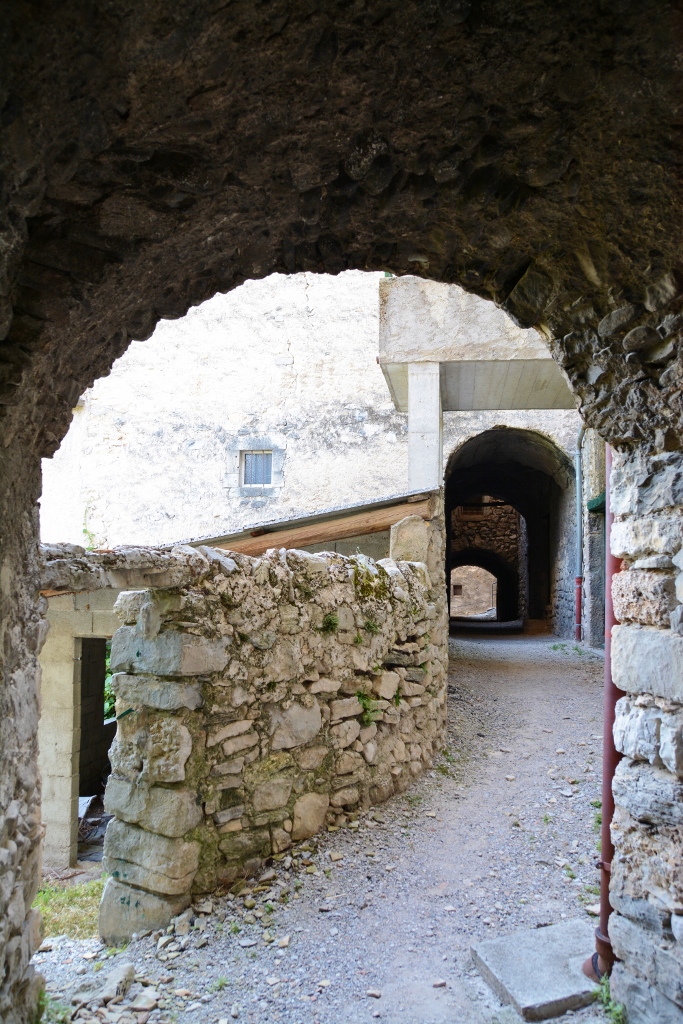
We wander around the small town, through tiny viols (small alleys) and narrow streets, passing many water fountains, where pure, fresh water flows directly from the limestone in the mountains. Laure points out many of the local points of interest including the impressive homes that belong to members of her family, including one large chateau that was abandoned when she was a child after a large rock fell into it from up the mountain while renovations were underway – luckily the workers had all left for lunch just before and no-one was hurt. The village dates from medieval times and was originally a Protestant village. The Catholics came in and took over, demolishing the castle and building a cathedral. The remains of the castle can be seen on a hill. There are now both Catholic and Protestant churches in town.

DSC_8050 (1024x683) DSC_8047 (1024x677) DSC_8097 (683x1024) DSC_8044 (1024x680)

We stop for apperitifs at a lovely little bar up the road from their house. The local Clariette de Die, a sparkling white wine, is delicious. We spend an enjoyable (long) evening with Wayne, Laure and three friends from the village, Adrienne (Dutch), Djinn (Scot) and Christine (local). All but Christine speak good English and we have a hilarious and entertaining time with both French and English being spoken. We head upstairs to the pool for nightcaps after dinner and eventually retire around 1:30am.


Roger:
Saturday 4 July

Laure was feeling a little under the weather (I think it’s called the ouzo effect) as we drove down the pretty farming valley. Grapevines, sunflowers, freshly cut hay and lavender fields line both sides of the road. Laure and Sylvia shopped their way around the markets while Wayne and I found some shade and a brew. Back to Chatillon for a beer at the bar across the road from their house. They have it well sorted here with three bars/restaurants within a minutes of their huge, four-level house. Houses are all joined together here with parts built back as far as the 1400s.

DSC_8100 (1024x683) DSC_8103 (1024x684)

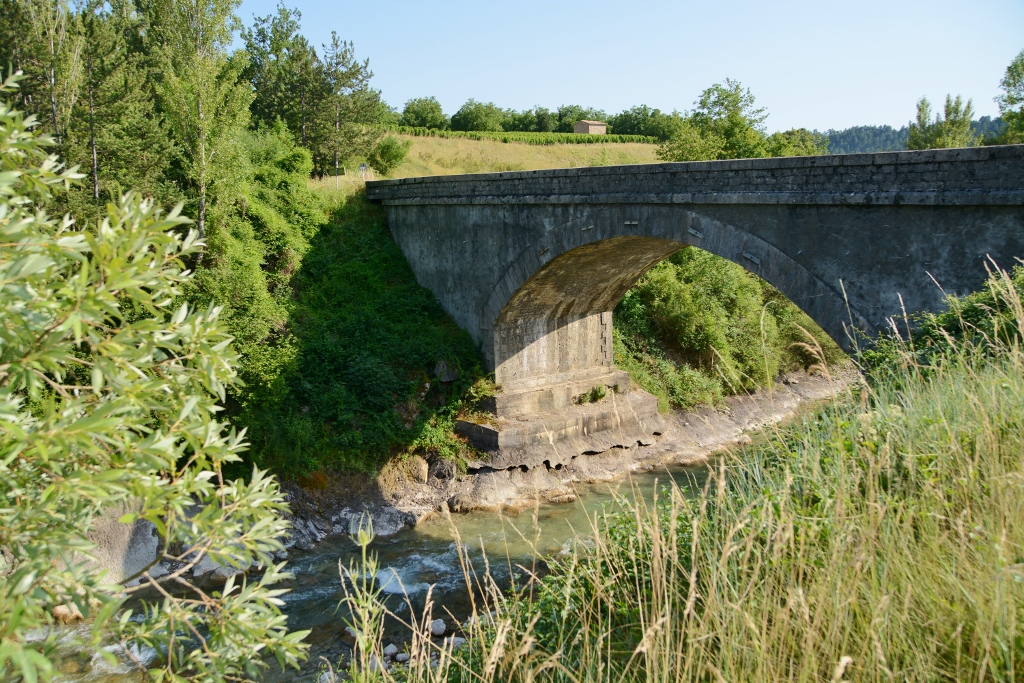
After a rather delicious, Laure-prepared lunch Wayne took us for a drive through the Gorge des Gats. The road follows the clear water of the Drome River up through the valley. There are huge cliffs – rising in places straight up from the valley floor, neat rounded stone barriers and neatly manicured hedges. Tunnels carved through the rock on the winding road lead us to the end of the valley.

 DSC_7971 (1024x683) DSC_8003 (1024x683) DSC_7990 (1024x651)

Back at the village we take a short drive out the other side of town to look at the track leading up to the Glendas, a point at the top of some cliffs 1500 meters above the village. In the past a favoured weekly stroll for Wayne. It’s 42 degrees as we head back to the house.

DSC_8039 (1024x683) DSC_8058 (683x1024) DSC_8026 (683x1024)

An evening stroll down alongside the river and market gardens, returning through the bush on the other side rounds of the day.

 DSC_8078 (1024x682) DSC_8083 (1024x683) DSC_8092 (1024x682) DSC_8086 (1024x683) DSC_8091 (683x1024)

We are joined by Laure’s parents, Alan and Silvie, for a dinner Laure has spent the afternoon preparing.  Alan and Silvie have a house here but commute to Paris by TGV on Monday for work returning on Friday. Great food wine and conversation whiles away the evening.


Sylvia:
Sunday 5 July

Today is a travel day. We are up early, leaving the house at 6:30am – Wayne drives us to the Valence TGV station with only a few minor detours on route. From there we catch the train to Lyon where we connect (after a bit of a delay) with the train to Frankfurt and on to Berlin. The trip to Frankfurt passes fairly easily with us variously sleeping, catching up on blogs, reading and enjoying the scenery. There had been a minor delay in Lyon but the time was mostly made up by the time we reached Frankfurt.

DSC_8104 (1024x683) DSC_8113 (1024x683)

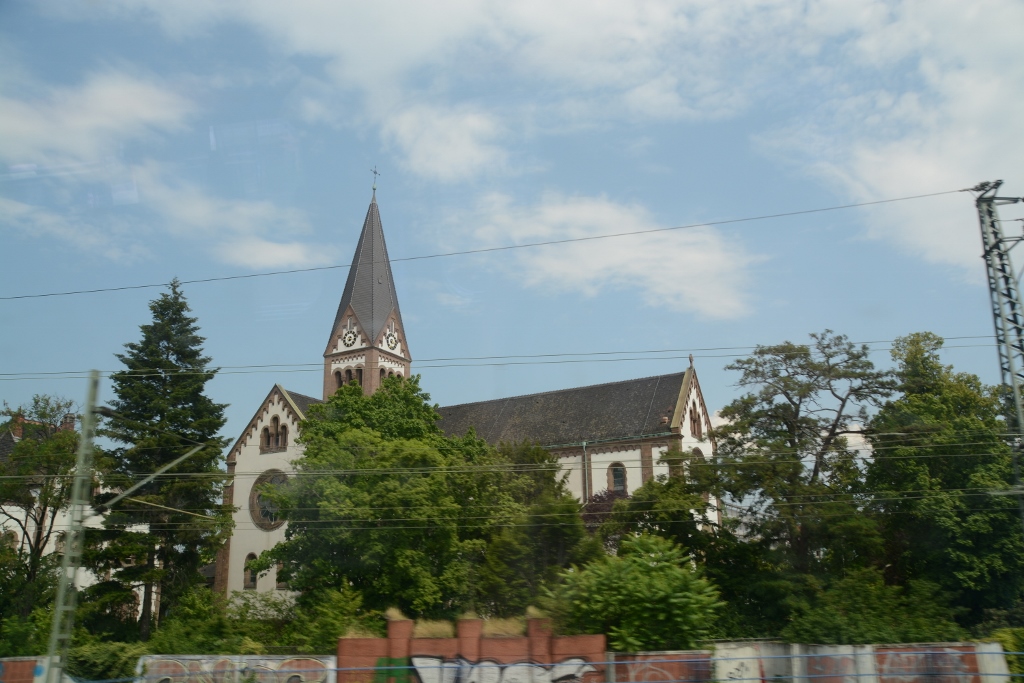
German efficiency was definitely not on display when we reached Frankfurt. There was a bit of chaos as the train at the platform we were scheduled to depart from had broken down and no-one seemed to know where we would be leaving from, resulting in lots of very confused looking people running around. Eventually the correct platform was advised and we got away about 40 minutes delayed. We thought we’d buy something to eat on the train but the air conditioning in the dining car was on the fritz and it was declared too hot for staff so we were limited to snacks and drinks. We made reasonable progress, despite torrential rain at one point, until we hit Braunschweig where we sat for nearly 2 hours waiting for the tracks to be cleared. All in all, not the German railway’s finest hour. All of this of course is not helped by the fact that neither of us is able to speak any German and no English announcements are made. We eventually arrived in Berlin and caught a taxi to our friend Constantin’s apartment, arriving at about 1:30am to a warm welcome and a glass of champagne.


Roger:
Monday 6  July

At 10am we enjoy a German breakfast Constantin has prepared. Constantin, whom we met with his wife Petra in Botswana in January, lives in New York and spends a few months a year in Berlin, the city he was originally from and where his three sisters still live. Petra is still in New York arriving later this week. The lovely apartment they have here is in one of the few buildings that was still standing after WWII.

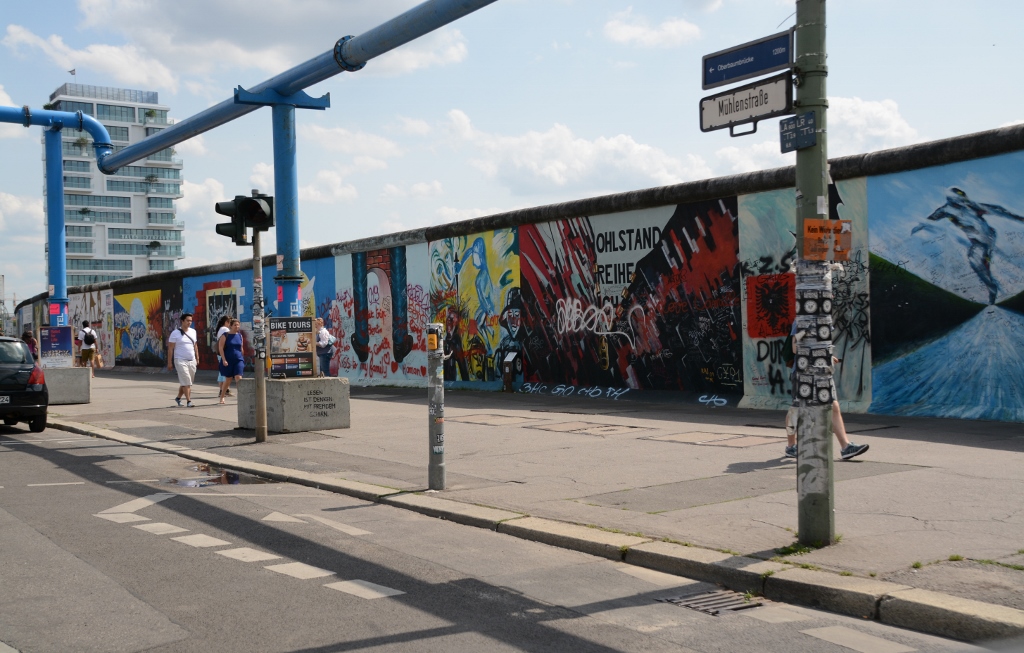
We drove into the central city passing pieces of graffiti-covered Berlin wall still standing. From 1961 until 1989 it divided this city. We took a cruse in a river boat giving us a good appreciation of the many old museums and prominent buildings, including the parliament, in the city. It is easy to spot those that existed pre WW11 as they still bear shrapnel marks as do the walls on each side of many new bridges.

DSC_8118 (1024x683) DSC_8205 (1024x653) DSC_8190 (1024x683) DSC_8247 (1024x665) DSC_8163 (1024x683) DSC_8165 (1024x683) DSC_8160 (1024x355) DSC_8272 (683x1024)

We then drove around parts of the city heading north east out into the countryside. We were surprised by a number of nice country buildings in what had been the east bloc.

Heading back into the city we struck very heavy slow traffic which gave us plenty of time to look at the buildings. We got a great look at the recently restored, large, gold Victory Column, erected in 1873 to celebrate the Prussian victory over the Danish.

DSC_8262 (683x1024) DSC_8264 (656x1024)

There are lots of parks and trees in Berlin which is great as apparently at the end of WWII not a tree stood in the city.

In the evening Constantin’s twin sister joined us for dinner at Manzini, a local Restaurant. Dorothee had spent many years in the German Foreign Service working in many countries including Australia, ending up as Consul General in a number of countries. She has many interesting stories to tell.


Sylvia:
Tuesday 7 July

Another travel day… After another delicious, Constantin-prepared breakfast we headed for the airport where we boarded our flight, first to Helsinki and then on to St Petersburg. All was pretty uneventful except for a little “stress” when Roger discovered that he had misplaced his business-card wallet when we were laid over in Helsinki. He initially thought it might have been stolen at one of the security points but eventually decided it must have fallen out of his pocket in the first plane. We made a few calls to lost and found but no luck so we boarded our flight to St Petersburg expecting to have to follow up once we arrived in Russia. Imagine our surprise and pleasure when the cabin crew turned up at our seat and handed the wallet to Roger. I think he was also feeling a bit sheepish if truth be told.

We arrived in St Petersburg to much cooler weather – about 10 degrees – and pouring rain. We had an easy transfer to the stunning Hermitage Hotel where we checked in and settled in for the night in preparation for a day’s exploring tomorrow.

Venice to Paris

Roger:
Tuesday 30 June

 We leave the Villa Tuttorotto with its Roman artefacts in the basement at 0500 for a short stroll through the old city, bag wheels clacking over the rough cobble stones. The locals must get pissed off with early departing tourists. The Venezia Line ferry departed at 0630. We were a little surprised to find we were heading south to Pula. We had originally tried get the ferry from there and they said there no sailings from there today.

There was a tour group on board; their guide rabbited on in great detail about what they would do for the day in Venice. We had a great chat with the Aussi mum and daughter sitting next to us who had just been to a wedding in Croatia. Both were well travelled and enjoying life. After a short stop in Pula we headed for Venice. Land was sited around 11.00 as we passed a couple of islands. The waterways were full of small boats.

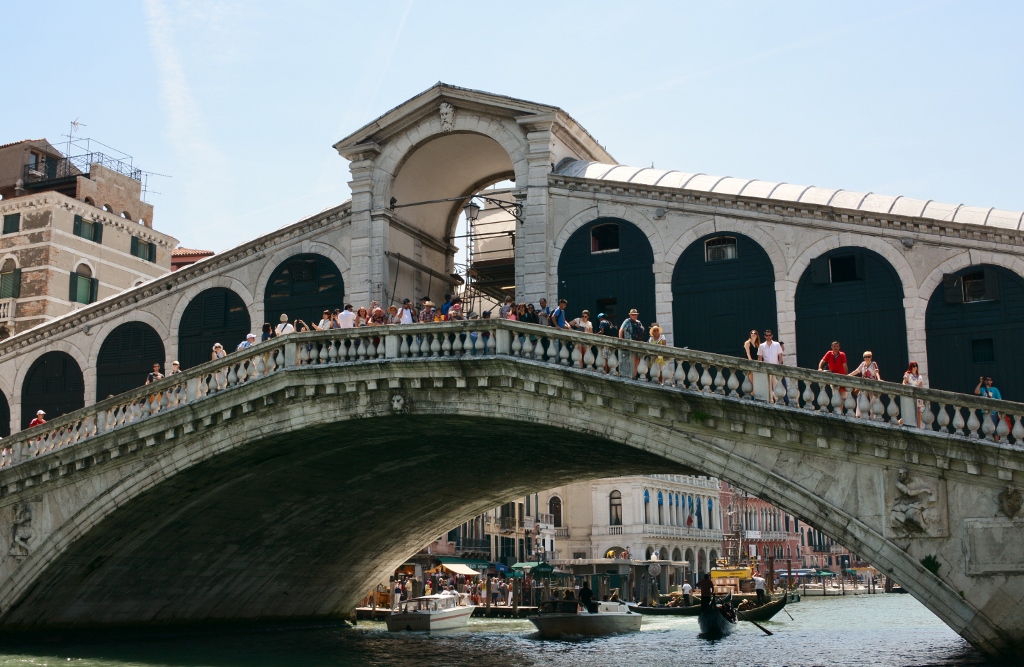
After docking we caught a vaporetto (water bus) to the Hotel Antiche Figure opposite the train station. Staff in this hotel are incredibly helpful as they have been in the last three. After being upgraded to suite with its own lounge we head into town. Back on the vaporetto I am somewhat surprised at the state of the buildings along the Grand Canal. Most look like the need a bloody good scrub and others a coat of paint.  It’s all happening – water taxies, gondolas at 80euro for 30 min, dirty old police boats, and many more jockey for space on this waterway. We pass under the Rialto bridge, once famous butcher shops now just shops. Opening in 1591 it is the oldest bridge in town.

 DSC_7719 (1024x681) DSC_7742 (1024x666) DSC_7738 (1024x680) DSC_7733 (1024x679) DSC_7739 (1024x667) DSC_7753 (1024x678)

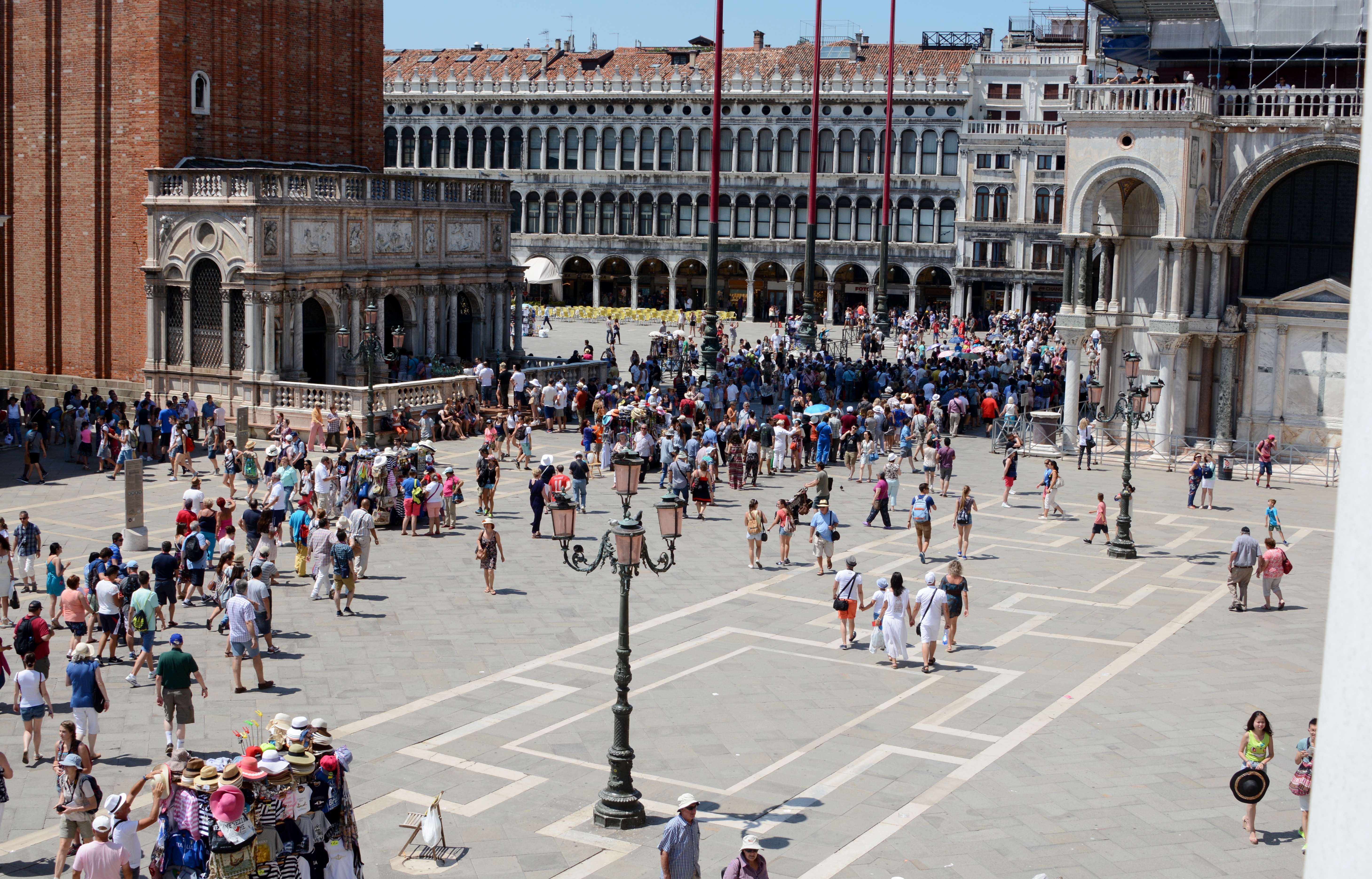
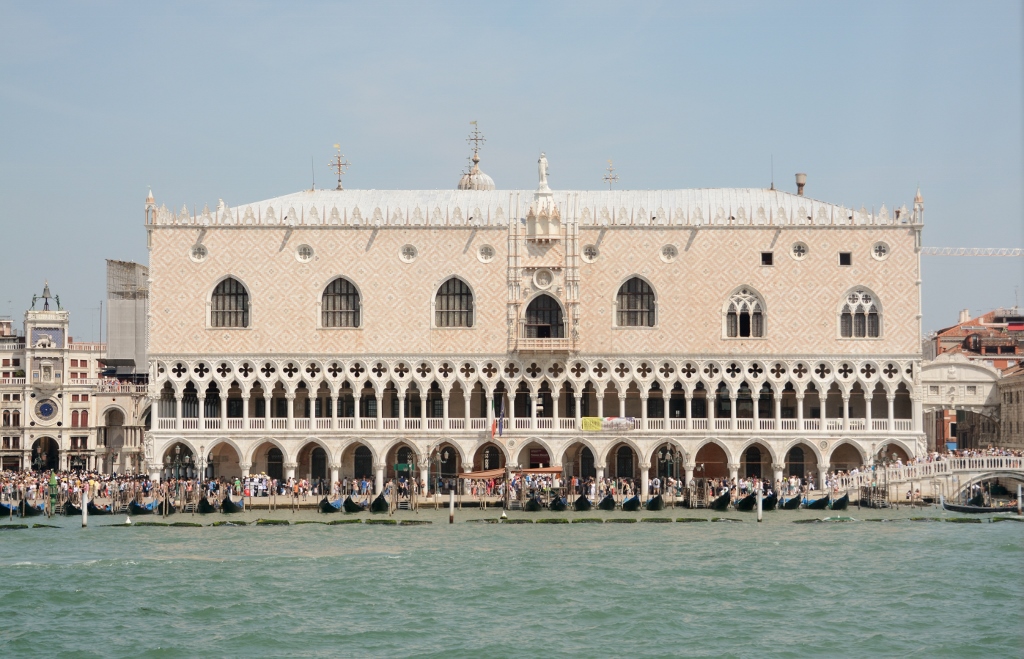
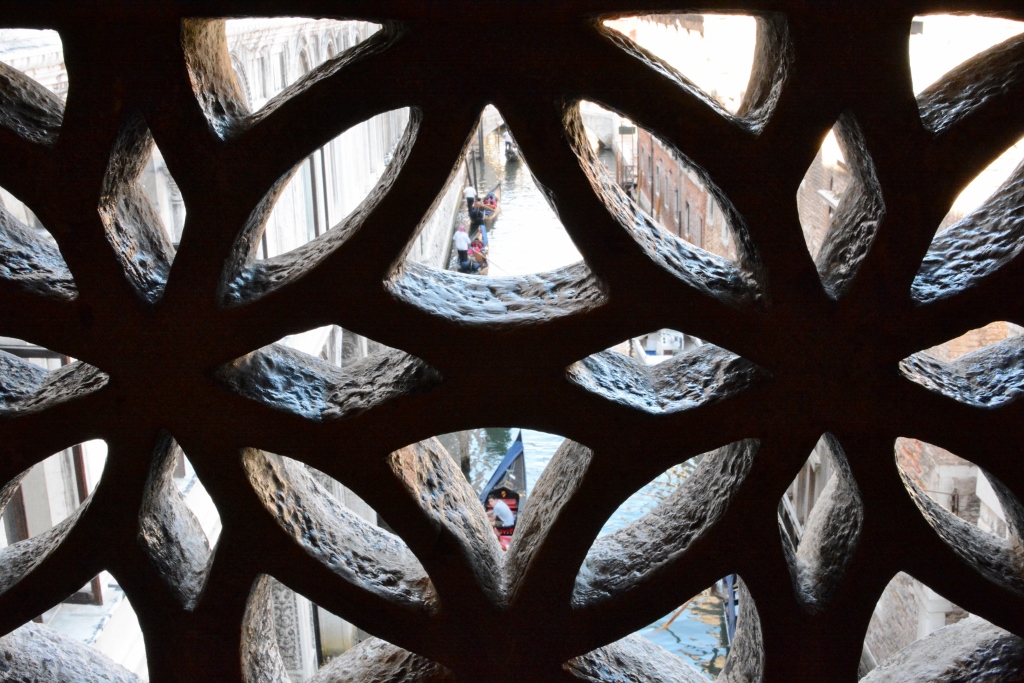
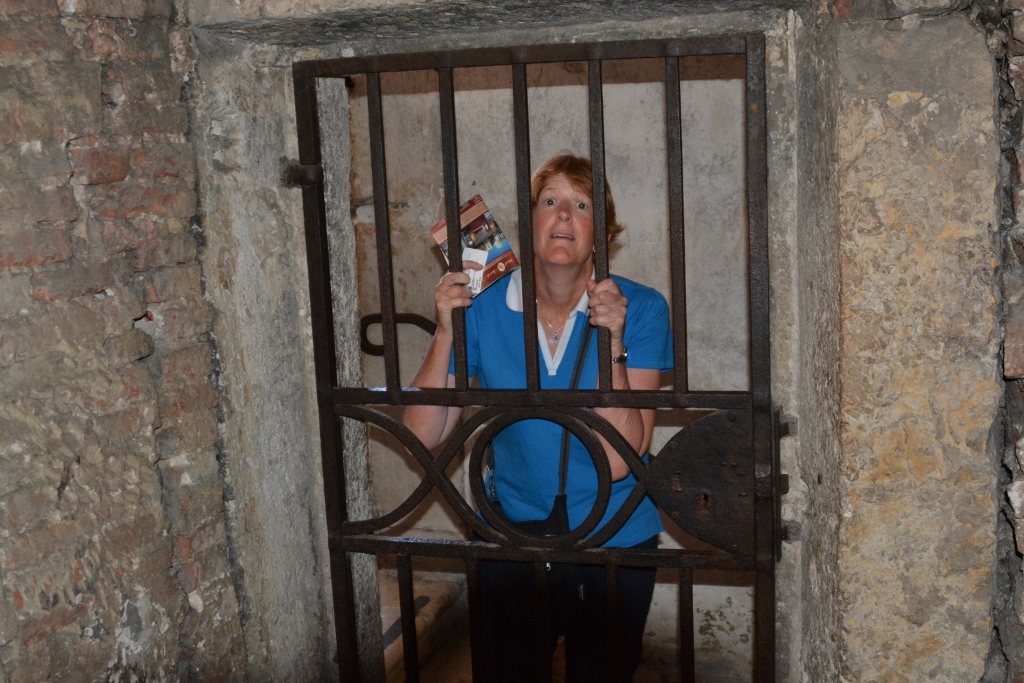
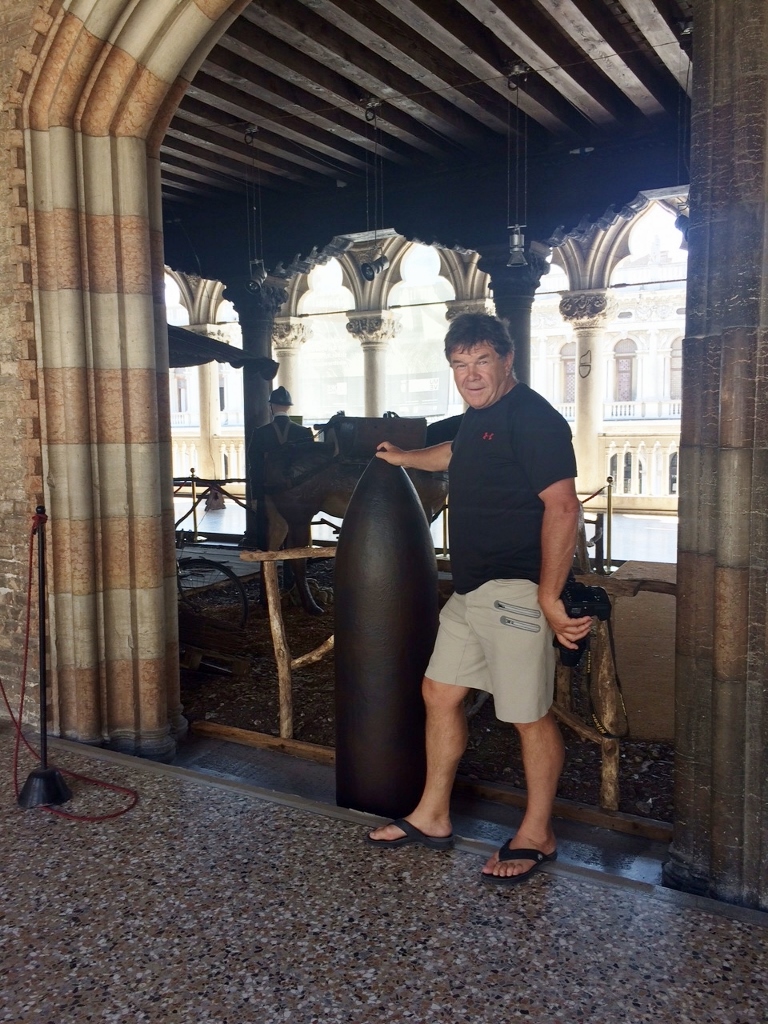
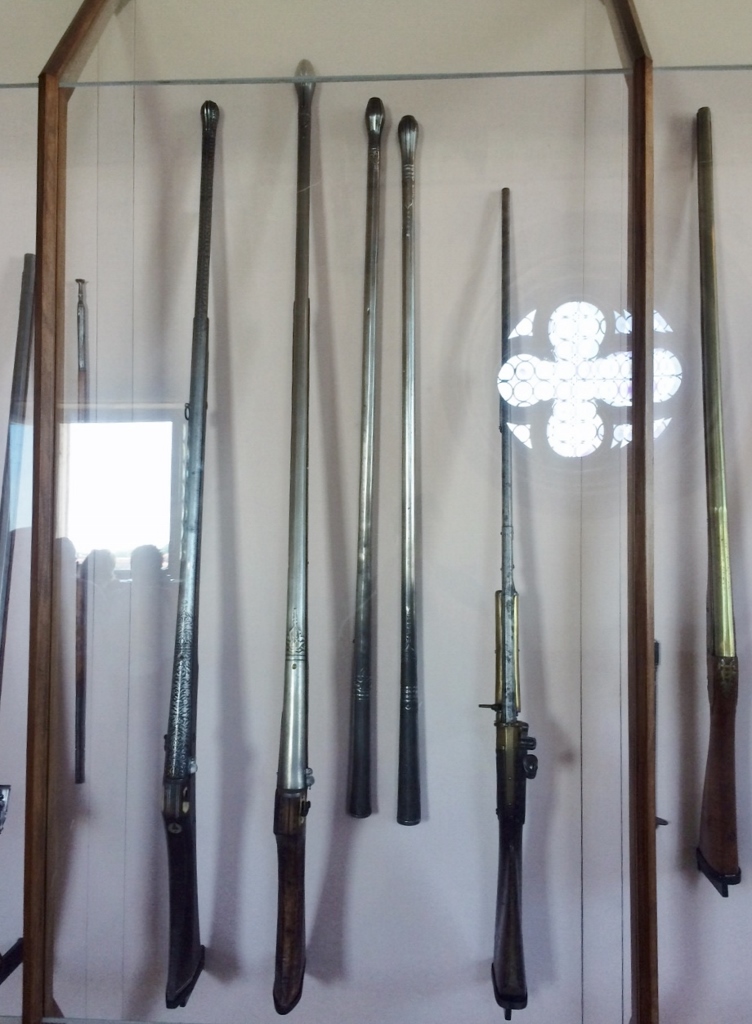
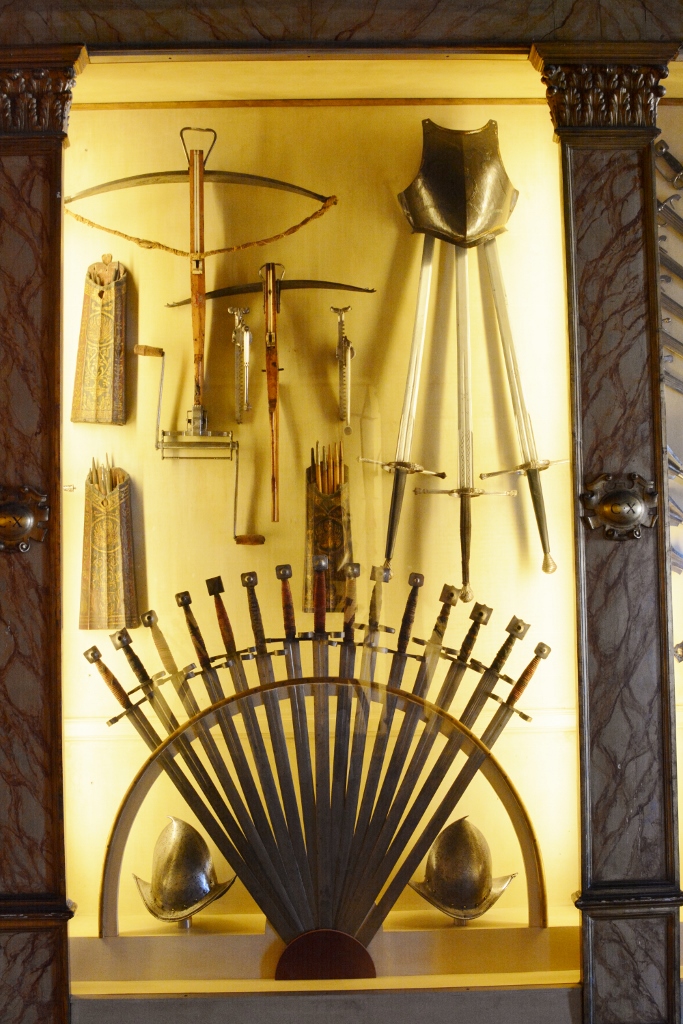
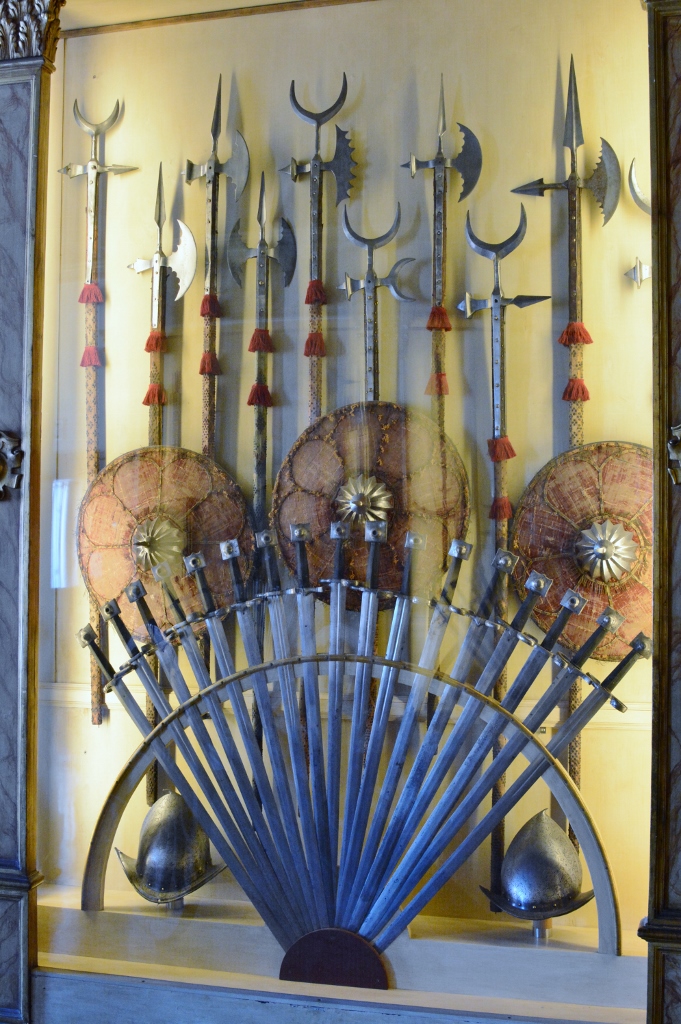
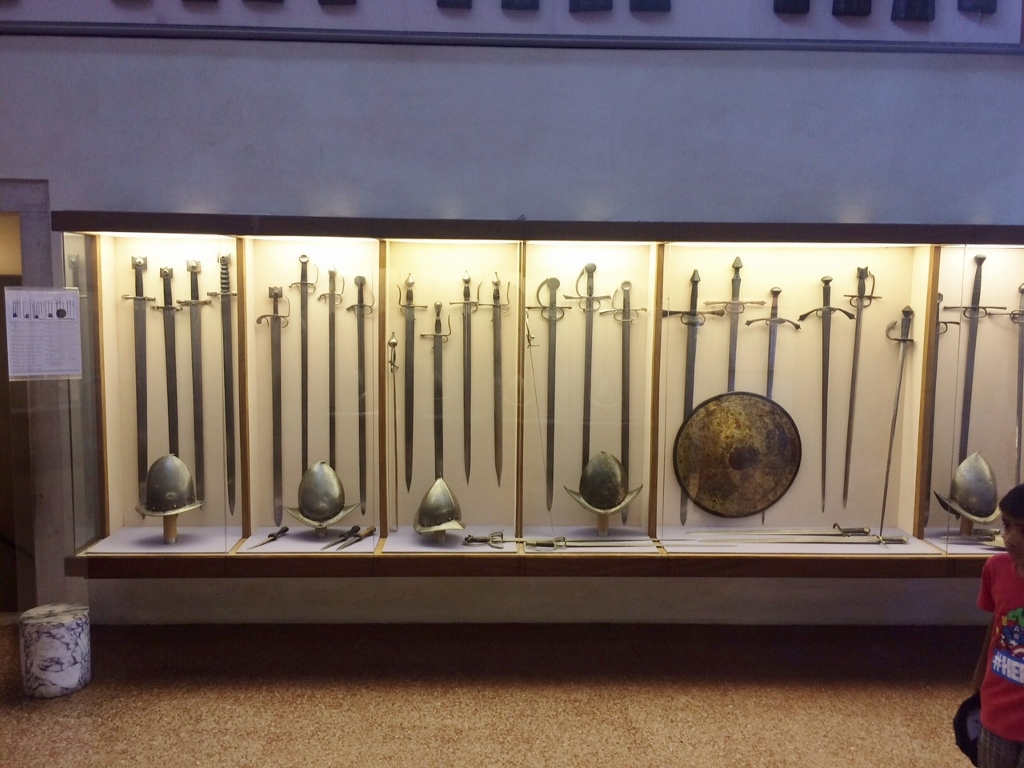
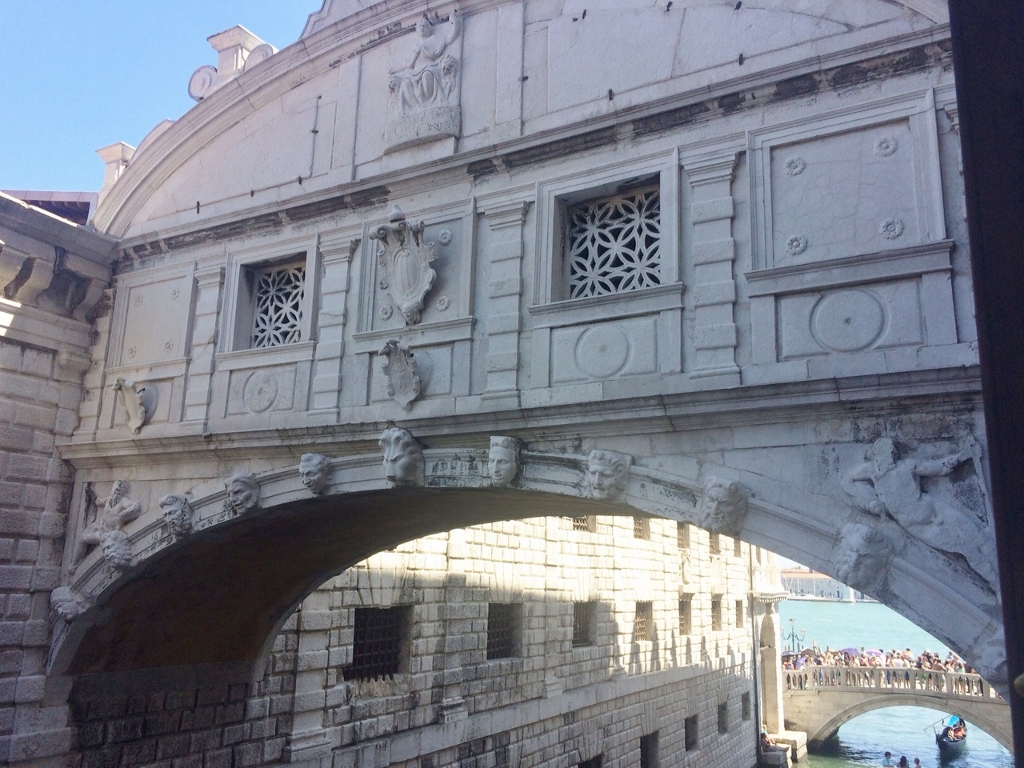
Arriving at a people-packed St Marks Square we head to the Palazzo Ducale (Doge’s Palace). Up the stairs we find a well laid out exhibition on the history of the Italian army from WWI through to the 1970s. But not a word on WWII? From there we moved through rooms with gold lined ceilings and massive paintings done hundreds of years ago. Next was the armoury – this is really well done with large displays of swords, armour, bows, arrows and firearms dating back to the matchlock days. We crossed the internal Bridge of Sighs to the prison. I still can’t work out why the kings of old seemed to want to have a bunch of bad buggers and traitors living right next door to them as is common in Europe. There are several floors of large stone cells with rounded roofs, some with solid wooden beds. .

 DSC_7759 DSC_7701 (1024x659) DSC_7770 (1024x683) DSC_7776 (1024x683) IMG_0925 (768x1024) IMG_0931 (752x1024)

DSC_7765 (683x1024) DSC_7764 (681x1024) IMG_0929 (1024x768) IMG_0939 (1024x768)

From there we strolled through many alleys (some blind), over many quaint bridges including the Rialto. There are many shops, selfie-stick sellers and handbag touts along the way.

A nice meal including a salad with shaved horse meat rounded of the day.


Sylvia:
Wednesday 1 July

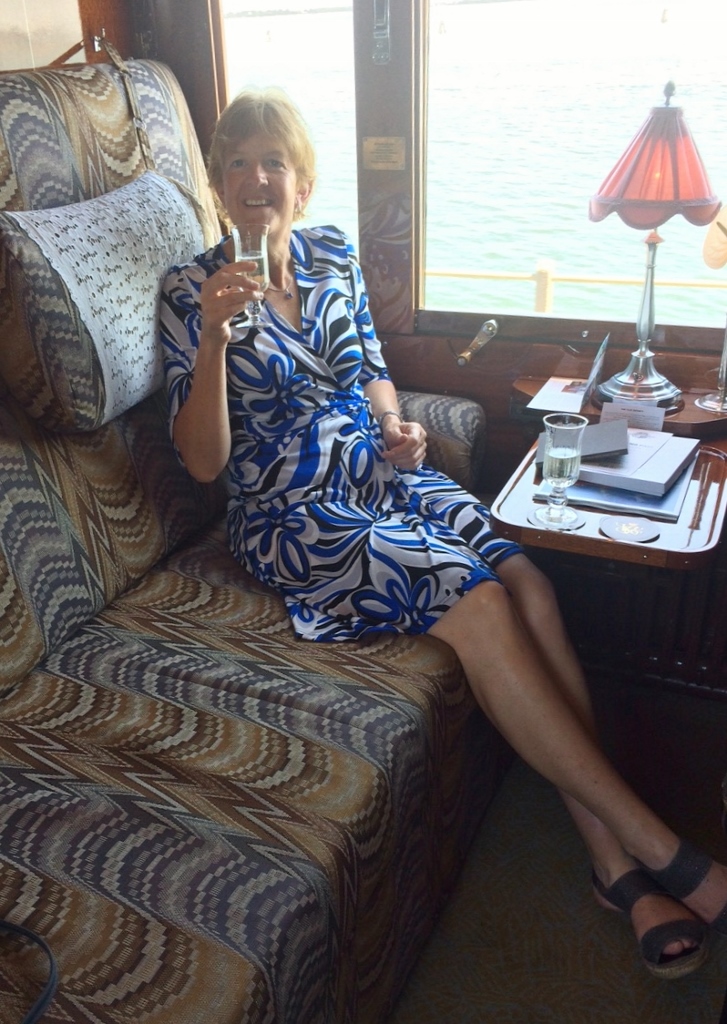
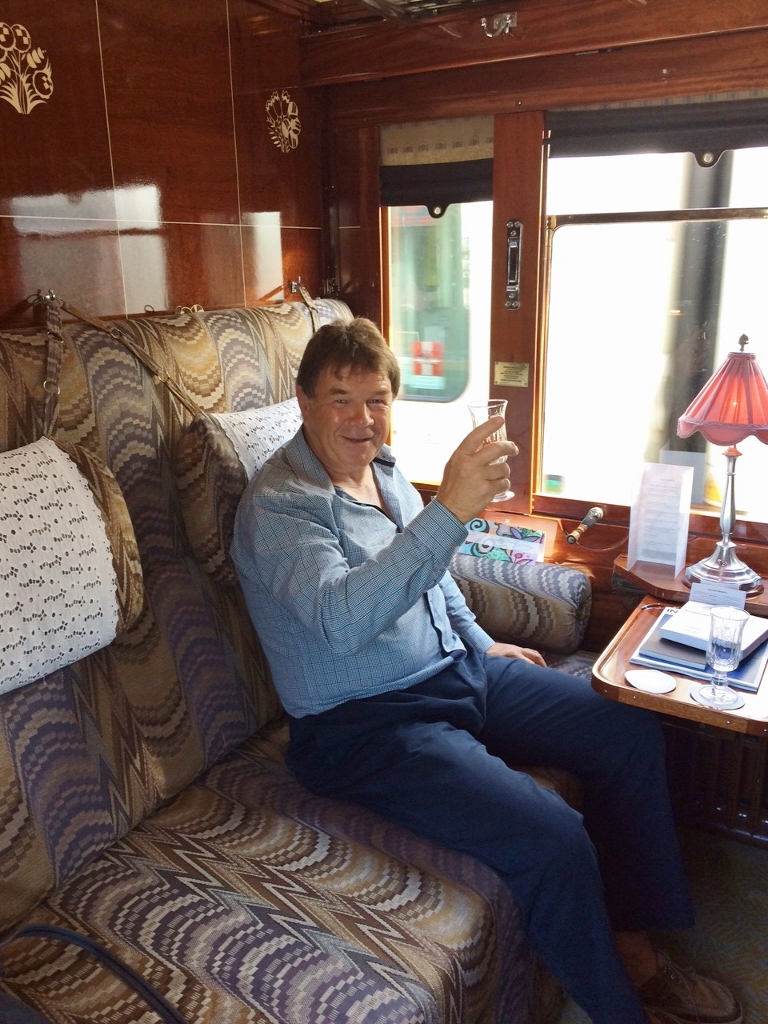
This morning we woke, packed and walked over the bridge to the railway station to board the Orient Express to Paris. Everything from the check in process through to embarkation is handled with amazing courtesy despite the heat. The poor porters and stewards are dressed in full 1920’s style outfits complete with hats and gloves and must be sweltering. I feel a bit sorry for Roger who is sweating up a storm in his long pants and collared shirt. Our steward Georgie shows us to our cabin – G5, complete with robes, washroom with luxurious toiletries, plush furnishings and Prosecco. We settle in and watch the world pass by outside our window.

 DSC_7810 (1024x683) DSC_7809 (1024x683) DSC_7813 (1024x674) DSC_7815 (1024x682) IMG_0952 (727x1024)

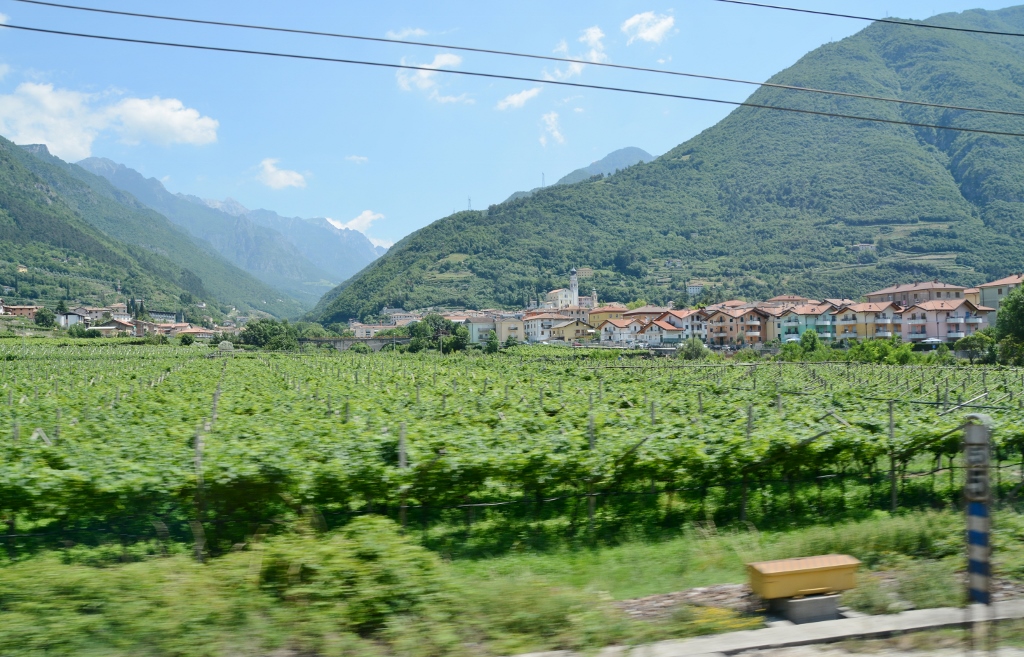
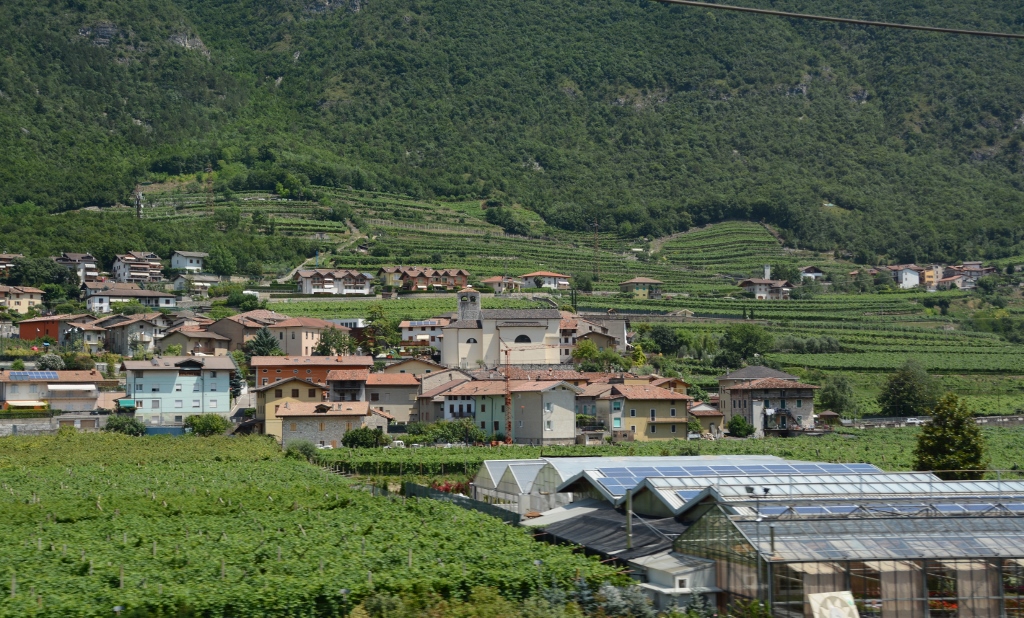
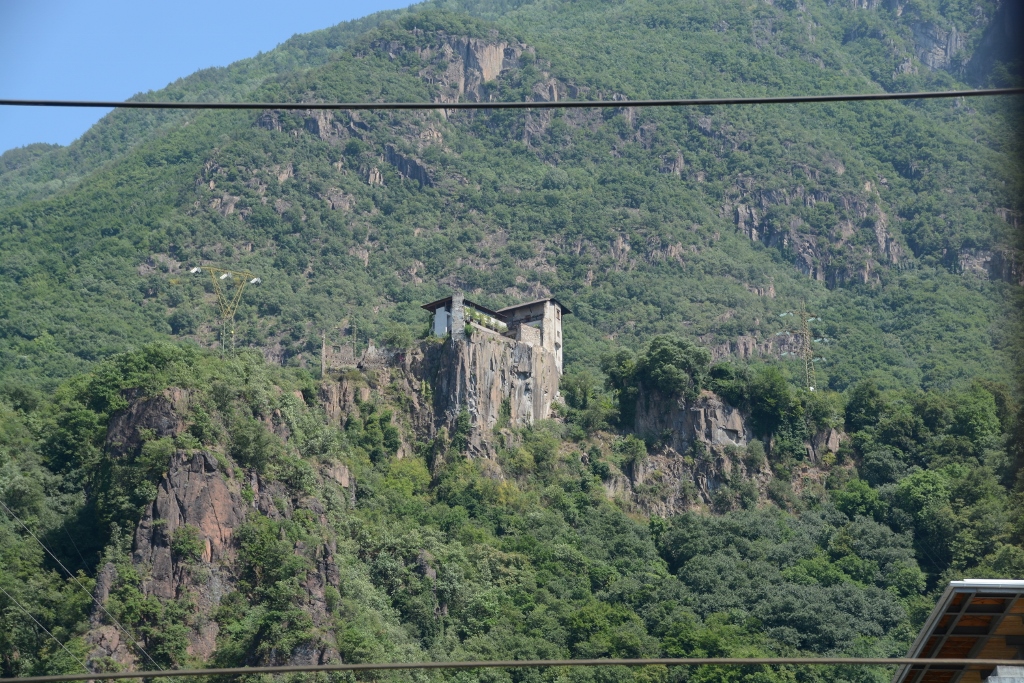
What a fantastic way to travel – we average about 70km/hour and have fabulous views of the countryside, mountains, valleys, vineyards and picturesque houses with their window boxes overflowing with colourful flowers. We will pass through Italy to Austria, Switzerland, Germany and into France.

 DSC_7856 (1024x657) DSC_7865 (1024x618) DSC_7899 (1024x683) DSC_7910 (1024x683)

Lunch is served in the dining car – a three-course affair with silver service. The dining car is again in the old style and very plush. Back to the cabin we rest and read. I am really enjoying reading the diary of Lieutenant Colonel Malone (as referenced in the Gallipoli section – “No Better Death: The Great War Diaries and Letters of William G. Malone” – edited by John Crawford). Not easy reading but helping to give me a real first hand sense of life in and around WWI and the Gallipoli campaign.

It seems we have only just got back to our cabin when afternoon tea is served – we will certainly not go hungry on board this train! A few hours later and we head back to the dining car – all dressed up with Roger now adding a jacket and tie. When we are moving, with the windows open we get a good air flow and it is not too hot but when we stop at a station it gets very warm on board. Of course there was no air conditioning in the 1920’s. Four courses for dinner which we enjoy with a lovely couple, Brian and Jill from England. They were both in education, and have a strong interest in autism. Retired now, they are taking this trip in memory of an aunt who passed away and left them an inheritance – she had done the trip with her husband some time earlier. The food is fantastic – I am very impressed that they can cook and serve such top class food on a moving train.

DSC_7849 (1024x662) DSC_7820 (1024x683) IMG_0955 (1024x768)

After dinner we retire for the night. Our cabin has been transformed, now with bunk beds and luxurious linens. We fall asleep to the clattering and occasional whoosh as we pass through a tunnel.


Roger:
Thursday 2 July

The door bursts open. There is a big person with no face, just a skull, in full body armour, MP5 at the ready. “What did you do with it?” “What?” I say, trying to look surprised. “The body!” He shoves the muzzle into my face. Big mistake I think removing the gun from his hands as a kick is delivered from the bed to his head. A second kick sends him across the passage and out the open window into the path of an approaching freight train. Obviously not a cop or a nun as it had come alone. 

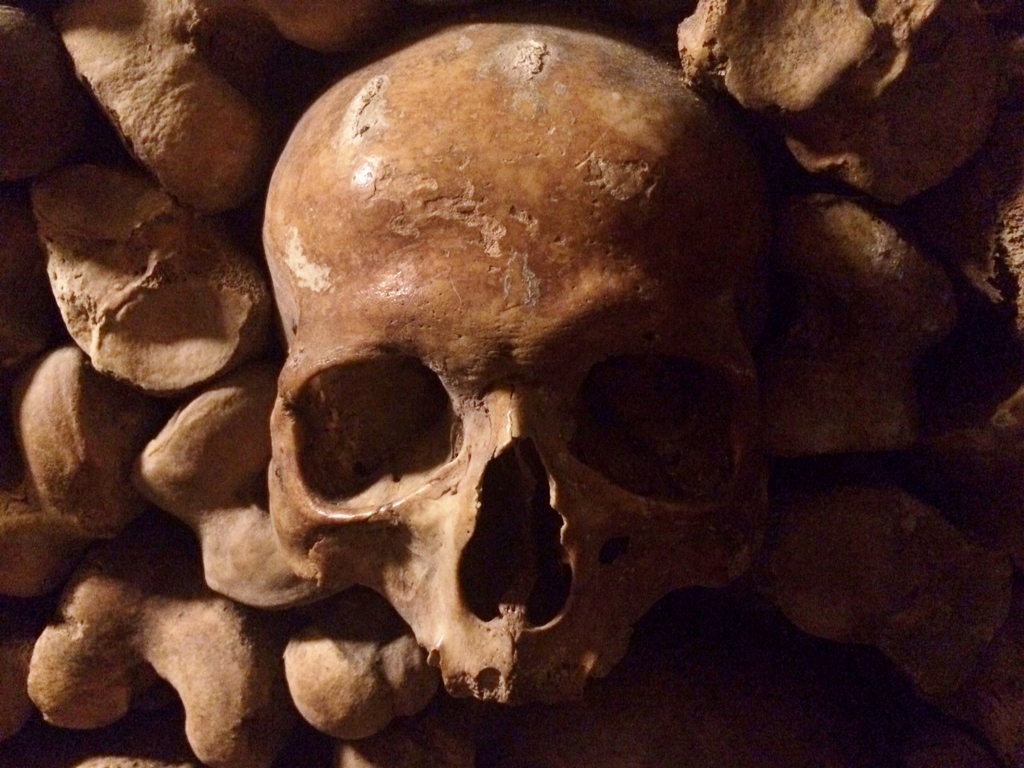
Backpack on, heading down the passage as the train slows, I am out the door, rolling down a grassy slope for a stroll in the French countryside. Suddenly the ground opens. I am swallowed up into a deep cavern. Hitting the ground running there is block encased tunnel that goes on forever, running and running as the ground closes in behind me. Rounding a corner the noise stops. There they are surrounded by bones, the crossed sculls all resembling the attacker on the train. 

IMG_0974 (1024x768) IMG_0980 (1024x768)

 Well we were on the Orient Express – there had to be a bit of excitement!

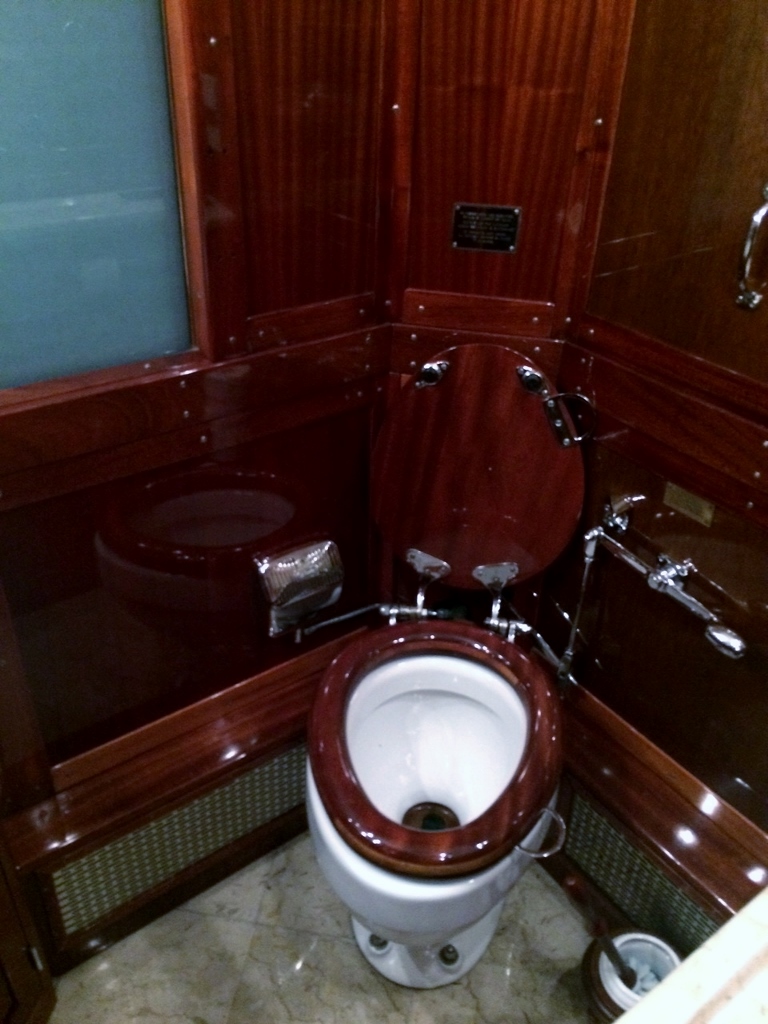
The detail on the train is amazing. All the carriages have been restored to the state they were in in the 1920s. All that is different is the running gear, a small electric fan and a power point in the room. The detail of the logos inlayed into the wood panelling, hand basin in a closet in the room, the old but new pump operated dunny down the passage serving the nine cabins in the carriage, no air con, wifi or other modern stuff. This is as it was and bloody well done.

IMG_0948 (768x1024) IMG_0956 (768x1024)

 Rising around 0630 Georgie arrives to turn our two bunks back into seats. This takes him around a minute. Everything – mattresses, blankets, pillows and ladder are neatly stowed away as the bunks fold back into a spacious couch. A very French breakfast is served. Bang on 0730 we pull into the Paris East station, the end of our journey.

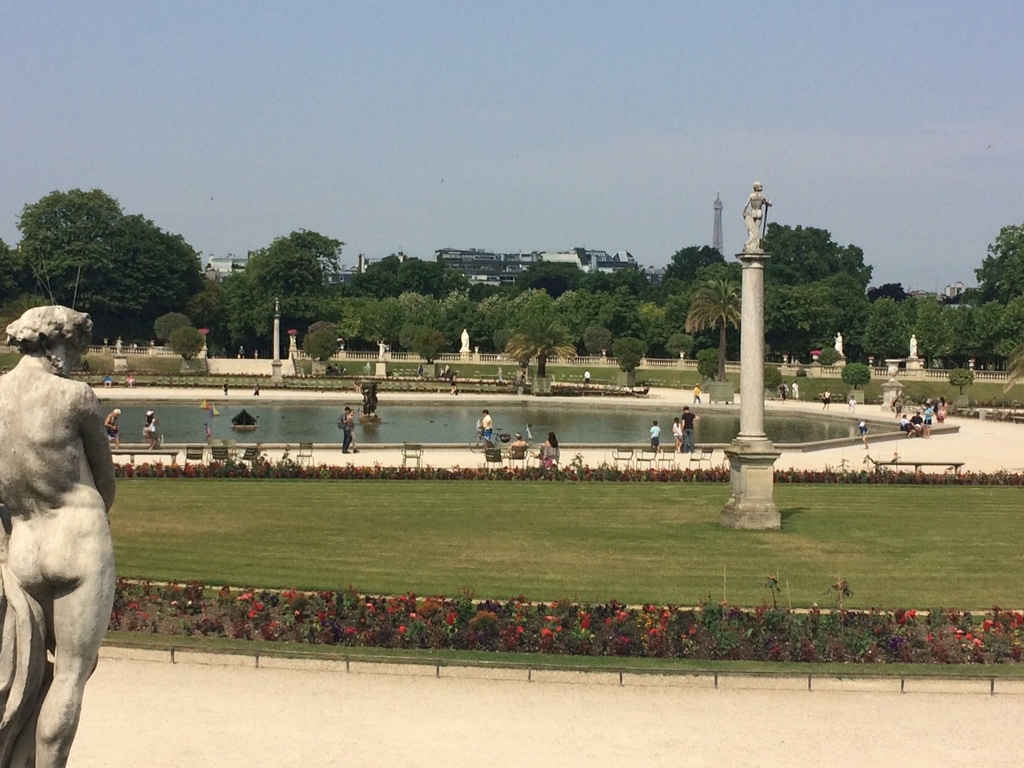
After checking into our hotel across the river from the Eiffel Tower we caught the Metro (subway) to the Latin Quarter.  Wandering the streets we came across the Pantheon and the university. A lot of the buildings around here, apart from the churches, are very similar – all six or seven stories and made of stone. We came across the Jardin de Luxembourg. Most of the grounds are gravel and seem to be growing more chairs than plants, although there was a nice patch of grass surrounded by flowers in the middle.

 IMG_0965 (1024x768)

A few more kms down the road we came across the Catacombs (no it’s not a cat cemetery) where hundreds of years ago the Romans mined the limestone to build Paris. As we stood in the queue, which extended almost a full circle around the park, we did a little research.  In the late 1700s apparently they needed some more building space. Over the next hundred odd years they dug up some 6 odd million bodies and stacked the bones in a large section of the tunnels. Two and a quarter hours later we headed down what seemed to be a never-ending spiral staircase.

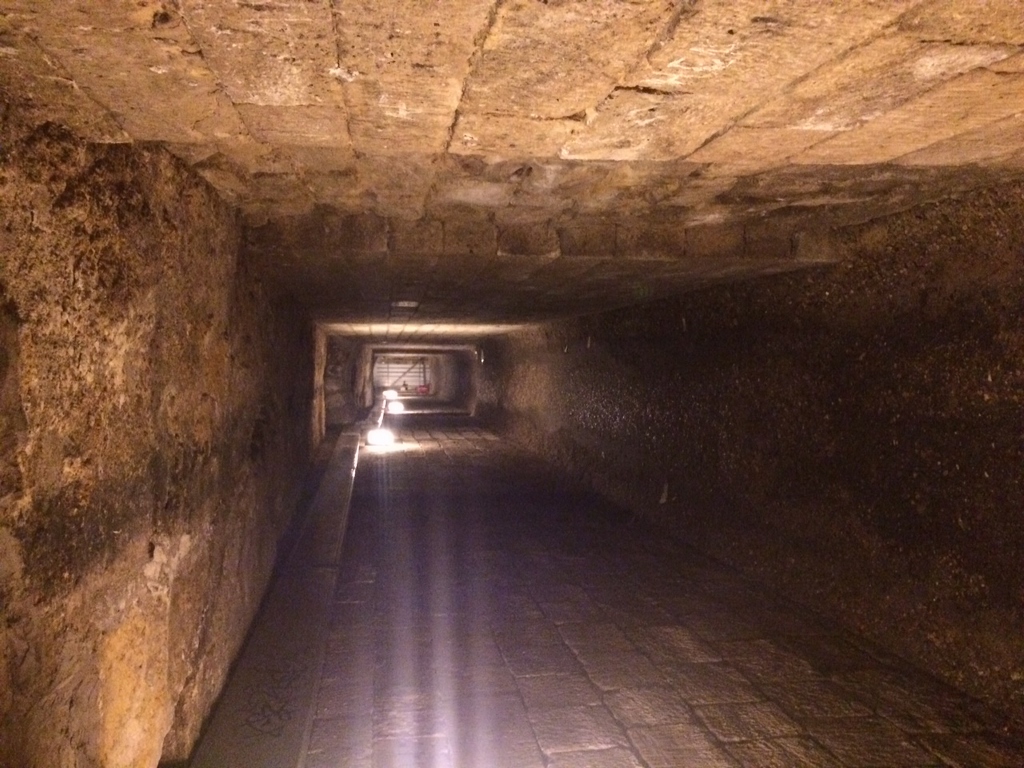
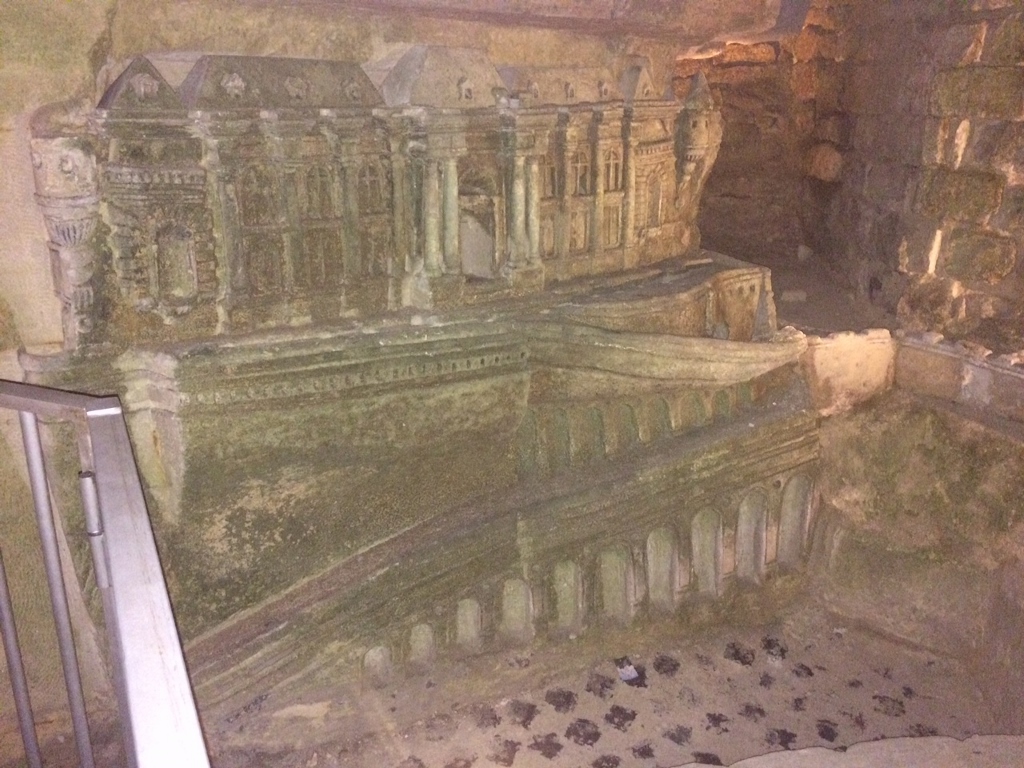
Then we headed off along a maze of stone or brick lined tunnels with columns in larger areas holding up the roof.  In the 1800s parts of the city around here started to sink so a bunch of engineers raced down here and sured it up. Many of their names are engraved in bricks along the walls. In a couple of places miniatures of forts and castles have been carved into stone. I am sure we are only seeing a small part of this underground maze.

IMG_0969 (768x1024) IMG_0970 (1024x768)

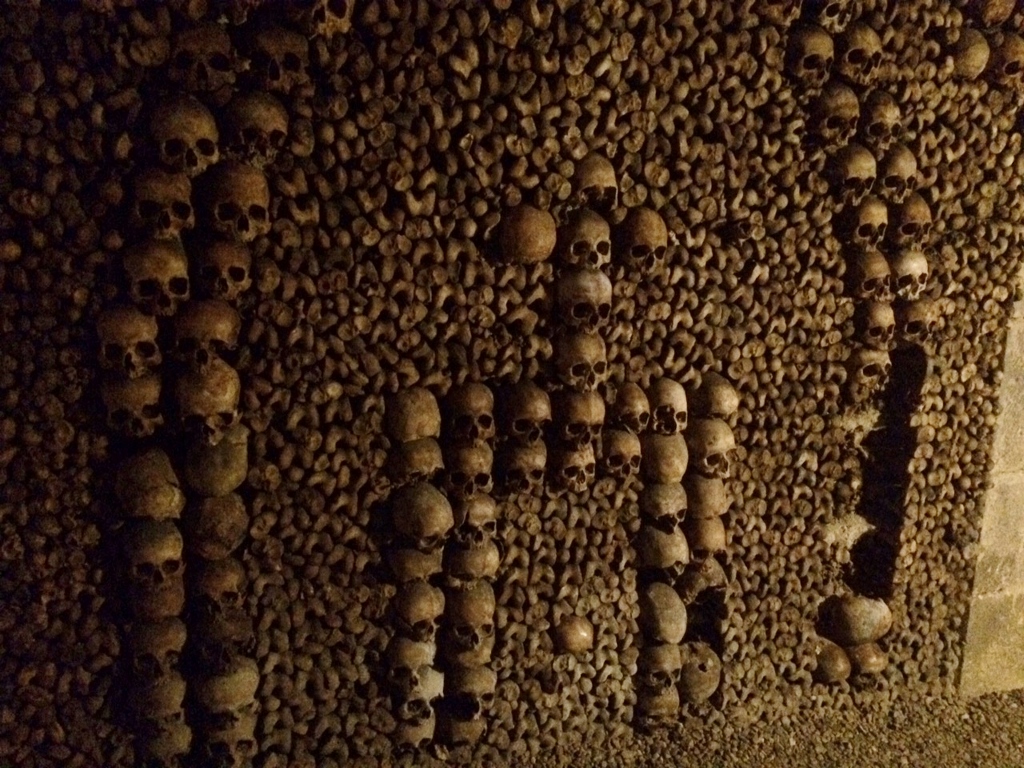
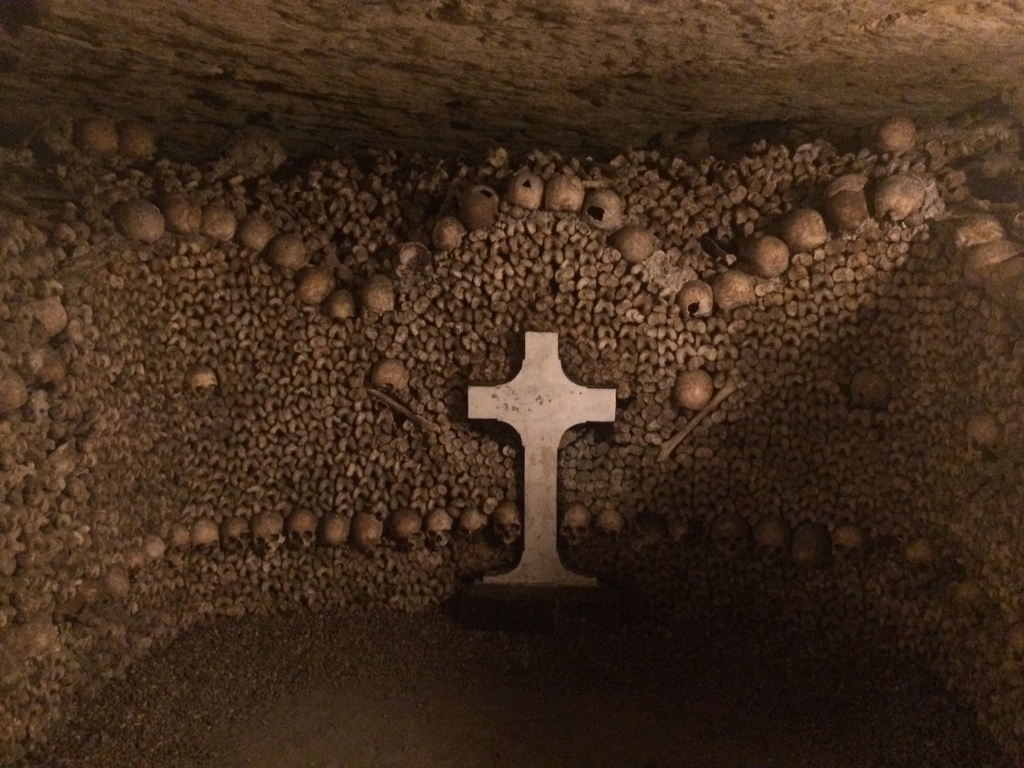
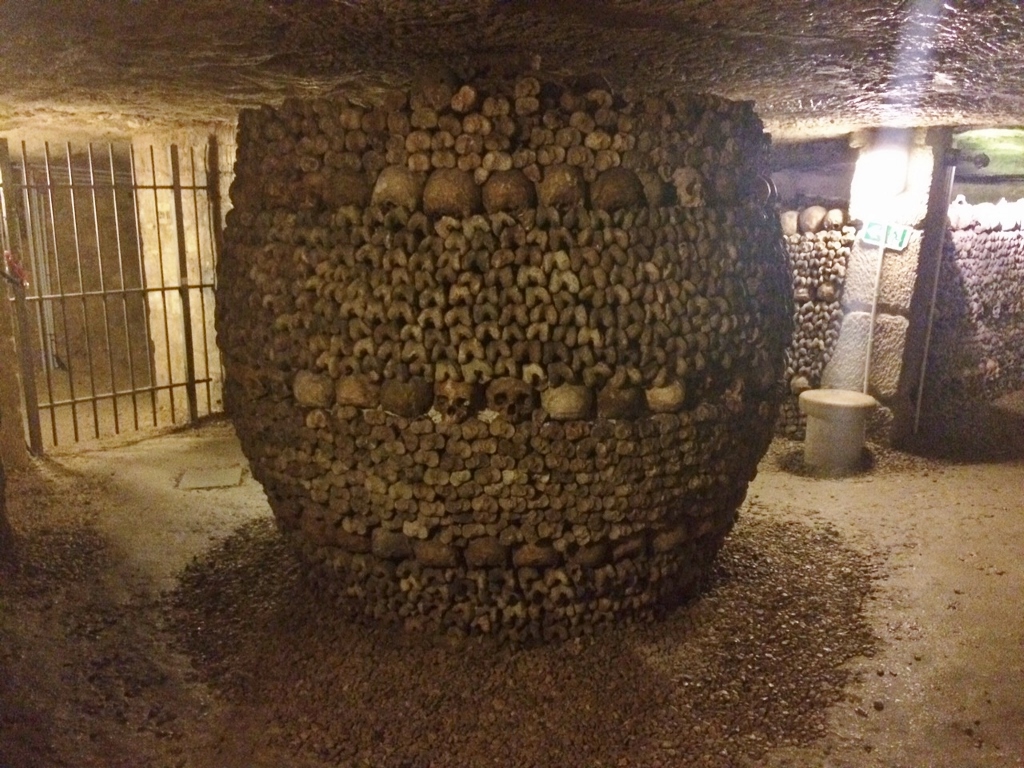
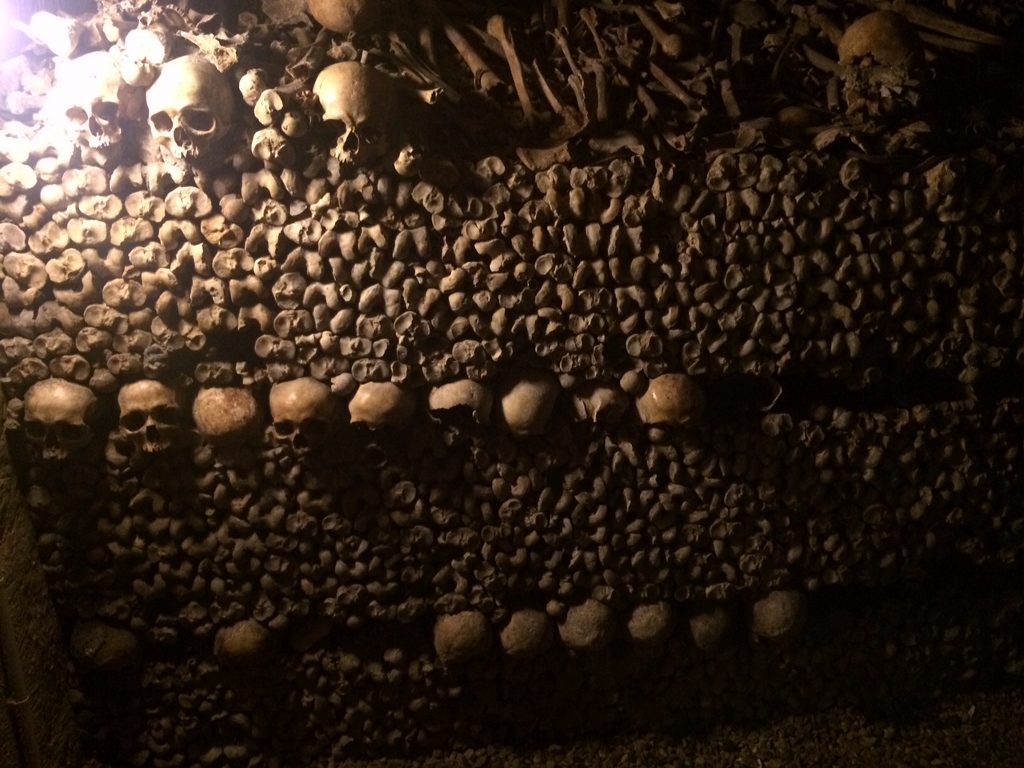
After about a km we come across the bones. Amazing, stunning, macabre!? I am not sure how to describe these neat stacks and stacks of bones 1.5m plus high with rows of skulls running through them. In places loose arm and leg bones have been tossed on top. The skulls have no teeth, there is no sign of pelvic, collar bones, spine or ribs. These tunnels seem to go on forever. Again I am sure we only saw part of what must be there. If one believed in the afterlife these people must have been pretty pissed of paying for a plot then being dug up and stacked here. This place is a must see.

 IMG_0978 (1024x768) IMG_0981 (1024x768) IMG_0972 (1024x768)

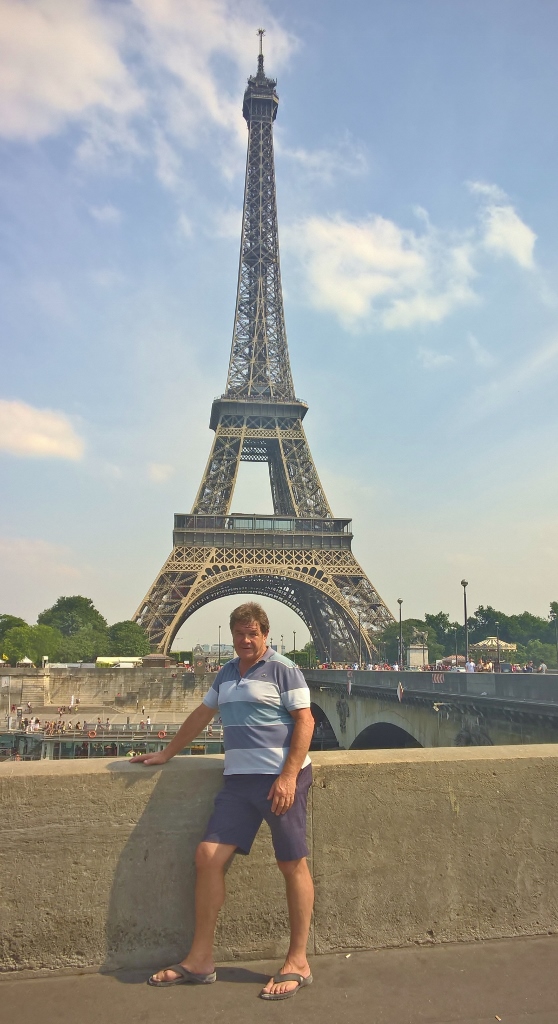
A stroll through the streets took us under the Eiffel Tower on route to our hotel.

WP_20150702_16_05_58_Pro (680x1024) WP_20150702_16_31_52_Pro (558x1024)

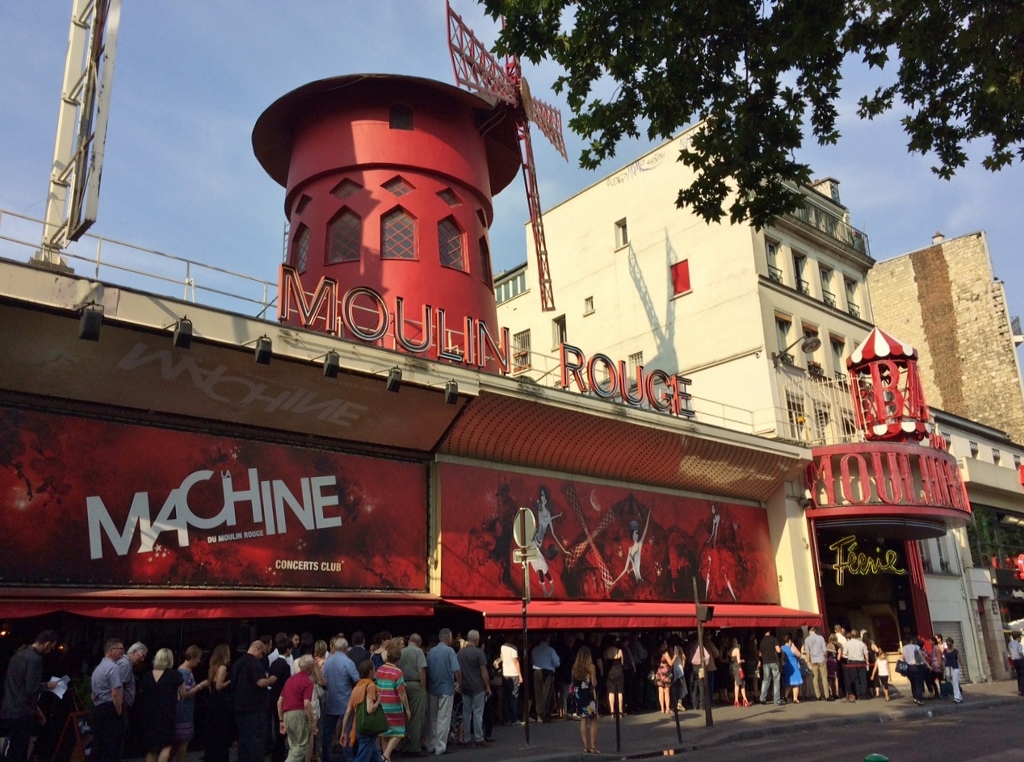
The evening had arrived and it was back on the metro to Moulin Rouge. Sylvia had got us tickets to dinner and the show at this famous place established in 1889.  The meal was fantastic including a bottle of bubbly. We were seated right by the dance floor. When the show started a stage came out so close I could have rested my elbows on it. The show encompassed everything from Broadway style to Cirque du Soleil. At one point the stage withdrew and up came a large glass tank with 3 three meter plus snakes in it. A girl dived in and entwined herself with the snakes. There is lots more. This is also a must see in Paris.

IMG_0982 (1024x762)


Croatia by Land – Plitvice Lakes and Rovinj

Roger:
Sunday 28 June

Up early we were at the number one entrance to the Plitvice Lakes before nine. The lovely Irene at Villa Irene had suggested we get there before the tour bus crowds arrived. By nine we were zigzagging our way down the hill passing groups of Asian tourists wired for sound! It seems to be a thing in Croatia. Each member of a tour group has a box of a particular colour draped around their neck, a cord to one ear. Somewhere near by a guide rabbits on into a mike creating a no doubt colourful and creative story about what they are seeing.

There is a stringy eighty meter waterfall on the other side of the river. This sets the tone for what we are about experience. These lakes with their clear turquoise blue are staggered in altitude, the water flowing and seeping through the trees before dropping down mainly clay cliffs into the lake below. Trout, some quite large, swim near the edges but just out of tickling range. They must not realise that it is illegal.

We strolled from the bottom up the right side of the lakes, at times well up in the open beach forests. There are quite a few signs on the roads and carparks around here warning of bears. It is hard to describe the beauty of this area – hopefully the pictures will do that. After around four hours of walking and admiring this special place we caught the boat back down the lake. A climb up through a steep cave and a side-path to the eighty meter waterfall and our visit was over.

DSC_7594 (1024x683) DSC_7575 (1024x683) DSC_7411 (1024x682) DSC_7404 (1024x678) DSC_7413 (1024x683)   DSC_7440 (668x1024) DSC_7430 (683x1024) DSC_7549 (683x1024) DSC_7442 (1024x683) DSC_7445 (1024x683) DSC_7460 (1024x683) DSC_7463 (1024x684) DSC_7508 (1024x683) DSC_7533 (1024x683) DSC_7538 (1024x683) DSC_7550 (1024x683) DSC_7554 (1024x683) DSC_7431 (1024x680)

 Some 30ks to the east we visited the Barac Caves. Our guide Katerina spoke excellent English with a great sense of humour. After a brief explanation of a couple of caves we couldn’t enter we arrived at the main cave. Helmets issued we waited at the mouth while she raced in to unlock the gates and turn the lights on. The cave goes in some 200m with huge stalactites hanging from the ceiling and some stalagmites protruding from the floor. In some cases these had joined up. In a pit of these 20 million year old caves speleologists had found animal bones from prehistoric lions, bears and hyenas which were much larger than their current descendants. Another pit at the back of the cave had revealed the body of a German WWII soldier. No other human remains have been found. Our guides humour and chatter made our 50 minutes pass quickly.

 DSC_7601 (1024x683) DSC_7617 (1024x682) DSC_7612 (683x1024) DSC_7613 (681x1024) DSC_7627 (683x1024)

A trout from the local waters at a nearby restaurant brought a day in this new found paradise to a close.


Sylvia:
Monday 29 June

We packed up this morning and left the very comfortable Villa Irene to drive to Rovinj, on the coast of Croatia in the Istria province. On the way we decided to stop and visit Kuterevo Bear Sanctuary. I had been a bit sceptical at first but we decided to visit anyway and I am very glad we did. It was a bit out of the way around some windy roads and stunning country scenery with lots of alpine-style houses all with colourful window boxes filled with flowers. Eventually we arrived in this very small town with lots of colourful painted signs. The sanctuary started in 2002 and rescues orphaned bear cubs. It is staffed entirely by volunteers and runs only on donations. The volunteers each paint a sign when they leave, hence all the colour around.

  DSC_7646 (1024x682) DSC_7647 (1024x683) DSC_7650 (1024x683) DSC_7638 (1024x683)

Because the cubs are so young when orphaned they can never be released into the wild. They currently have 3 young cubs and 4 full-grown male bears that have grown up in the sanctuary. They also have 3 adult bears that have been sent to the sanctuary when zoos have shut down. We met a young kiwi volunteer, Rebecca, a very enthusiastic young woman who has been volunteering at this sanctuary for the last 3 months and is hoping to extend for a further 6 if she can resolve her visa issues. She had previously volunteered at shelters in the UK for birds of prey, wolves and monkeys. She took us to look at some of the bears and explained how things work. I was very impressed with the state of the bears and the tidiness of the enclosures. They try and feed as natural diet as possible and while we were there a group of volunteer scouts were cutting down trees to clear space for an extra enclosure. The bears seemed to be greatly enjoying chewing on the fresh leaves as they were thrown into their area.

There are about a thousand wild brown bears in Croatia, one of the largest populations of bears in Europe and the sanctuary is doing what it can to try and educate people on how to live in harmony with them.

After leaving the sanctuary we headed to a nearby town where Rebecca had recommended a place for lunch! It was certainly interesting. We wound our way up a narrow road to the top of a hill where an old monastery has been turned into a bar/restaurant that obviously gets visited by tour buses given the number of tables. It has stunning views over a valley where we could see people working their farms by hand – cutting hay with scythes and turning it over with pitch forks. It is a bit like going back in time several years. We were the only people in the place and if I had more inclination that way could have even felt a bit like we’d walked into a vampire lair or something – haunted by lost nuns perhaps given all the religious paraphernalia on the walls. We had lunch but it didn’t redeem the place.

We continued the drive to Rovinj around more windy roads with lots of switchbacks – fun for Roger, not so much for me. This included driving up the coast from Sveti Juraj through Rijeka, which provided some great views along the way. Eventually we arrived in Rovinj, a quaint seaside town with more narrow cobblestone streets and spent quite some time navigating our way around trying first to find our hotel and then the rental car place to drop the car off. Roger says I am very good at finding great, hard-to-find, boutique hotels. Villa Tuttorotto certainly fits that description, but was worth the hassle as it is lovely with its seven rooms, balcony with sea view (great for cigar smoking with a glass of bubbly) and fantastic service. We had plenty of time to relax and wander the picturesque, narrow streets before retiring for the night.

DSC_7685 (1024x683) DSC_7682 (1024x683) DSC_7681 (1024x683)

DSC_7676 (683x1024) DSC_7658 (683x1024) DSC_7684 (683x1024)


Cruising the Adriatic – Part 2

         Roger:
Wednesday 24 June

 We had anchored for the night off an island opposite Hvar in the lee of an approaching storm.  Around eight we headed up the coast of the Hvar island. The sea was quite lumpy – Bruno the chef came up from the galley looking a little pale and sat out the ride in the saloon with the rest of the crew. Ogi the skipper paid attention to the sea in front as visibility was limited. An hour or two later we rounded the point into the Starogradski Zaljev, the inlet to Stari Grad. Stari Grad is apparently the oldest city in Europe – settled by the Greeks in 300BC.

DSC_7298 (1024x431)

Tying up at a jetty just outside the now town, alongside the Hotel Arkada – originally built in the 70’s under the Tito regime. Apparently all rooms of equal size so the commoner could stay alongside the general and enjoy the same comforts. Abandoned in recent years it has now been bought and is being renovated by a hotel company.

 IMG_0766 (1024x768)

We enjoyed a late breakfast before a ten minute stroll into the town revealed the prettiest town we have seen in Croatia. Very old two and three storey buildings adorn small quaint cobbled alleys. We collected a walking map from the rather uninterested guy at the information centre. Heading up the hill on a track that is supposed to meet the walking track we come to a gate by a cell-phone tower. After some persuasion Sylvia agrees we need to duck through the holey, barbed-wire fence to find the walking track on the map. Through the fence on the other side we strike dense bush full of sharp vines. Abandoning the attempt to get to the tourist track we stroll back to the town. Mapping is not one of their strong points around here.

IMG_0757 (768x1024) IMG_0764 (1024x768)

Back at the boat Sylvia enjoys her massage as I chat to the crew over a nice bubbly. The weather is now fine as another day in paradise draws to a close, but not before an enjoyable dinner with the crew. Eighteen year old Bruno learnt to cook over the internet and really knows how to put together a great feed.

DSC_7313 (1024x683) DSC_7315 (1024x683)


Sylvia:
Thursday 25 June

 We were up bright and early this morning as we had planned to catch the 8am bus back to Hvar town to meet up with friends Steve and Karen and their three children. We had originally hoped Steve and Karen would be able to join us for the full cruise portion of our trip but they were unable to organise babysitters. They decided to come to Croatia (Korcula) anyway and with a bit of wrangling and some great help from Captain Ogi we had arranged to meet them in Hvar this morning (they were up even earlier, catching the ferry from Korcula) and have them join us for the remainder of the trip through to Split.

When we arrived at the bus stop a very entrepreneurial taxi driver was touting rides for the same cost as the bus so we hitched a ride with him and a young couple from Washington State, thinking we’d arrive good and early. The detail in the ferry timetables here is about as good as the detail in maps and as it turned out the ferry had docked an hour earlier than on the schedule so they were waiting for us anyway. No matter, we enjoyed catching up over coffees, cocoas and pancakes for the boys, before they all walked up to look at the Hvar fortress while Roger and I minded the bags. We then jumped in another taxi back to Stari Grad where two of the boys and I took the first dinghy back to the boat while the others explored a bit of the old city, meeting us back at Queen of the Adriatic about 30 minutes later.

All aboard, rooms sorted out and we headed to the island of Solta about a 2-hour cruise. Solta is a small island off the coast of Split. We moored in a wee bay and caught the dinghy to a small café for a late lunch before sailing around to another bay where we were able to dock for the night, tied up next to a few other boats. It was good timing, our first night at dock as we ran out of water just after arriving so could fill up easily.

 DSC_7318 (1024x683) DSC_7303 (1024x683)

Bruno took several of us in the dinghy to a small bay where we swam, then back to the boat for some sun-bathing and general relaxing (my turn for a massage) before dinner. Tonight Igor had arranged a wine tasting with dinner but things don’t always go as planned. Poor Bruno had been planning an octopus dish but had significant challenges with the oven so the main course kept being delayed. In the end we had four courses, each with a different wine from Istria… a delicious shrimp cocktail, a cheese and cold meat platter, ice-cream sundaes, and then a fantastic octopus stew – an unusual order I know but the octopus was well worth waiting for. The wines were pretty good too. A local band was even covering some good songs in a bar across the bay providing some atmosphere for the evening.

DSC_7364 (1024x683) IMG_0780 (1024x768)IMG_0778 (1024x530)


Roger:
Friday 26 June

Setting of from the island of Solta we headed east to the island of Brac. Bruno cracked out a great breakfast for the now seven of us. Mid-morning we rounded a headland into Bobovisca on the island of Brac – a small, but deep, bay surrounded by hills where the stone stackers have been at work over many decades on the now mostly defunct vineyards. I know I have mentioned these before but I am still staggered by these rows and rows or sometimes piles and piles of stones lifted and stacked to expose a bit of soil to plant a few vines.

 IMG_0801 (1024x768)

We took the dinghy to the south side of the bay where a path begins running around the inlet in front of the pretty orange and white houses. Of the hundred plus houses in this bay only around ten people live here all year. As with most villages on these islands they have holiday homes. At the back of the bay we found a narrow lane heading up hill. The clanging of a bell revealed a donkey and its newborn foal.  The top of the lane reveals a large old church and a few houses and other buildings. We headed north along a narrow but two lane road with great views over the bay and out to sea and came to a ridge overlooking the town of Lozisca. It has a tall bell tower which sparks up as we are admiring the beauty of this orange and white town. The three bells chime away for the best part of 15 minutes. Asking a local also admiring the view I am informed that this happens every noon. With interest we noted that some of the roofs in this town were covered with a slate-like rock much thicker than slate.

 IMG_0792 (1024x391)

IMG_0797 (1024x768) IMG_0786 (768x1024) IMG_0800 (768x1024) IMG_0799 (768x1024)

The road eventually guided us back to the bay where we found a summer cafe and enjoyed a chat in the shade. Back on the boat we all enjoyed a swim. Sylvia met the challenge of leaping the three plus meters from the bow sprit into the clear blue sea.

Good friends Steve, Karen and their 3 boys have been living in the south of France for the year so. Through some great timing we are really lucky to have them join us. Karen a journo by trade writes a really great blog called Cat in My Throat. www.catinmythroat.com

DSC_7356 (1024x683)

Prior to dinner Igor takes us through an olive oil tasting. Four oils are presented to us in shot glasses. Never having drunk olive oil before it was an interesting experience. One from Italy three from Croatia they varied from mellow to spicy.

IMG_0813 (1024x768)

Bruno impressed us again by serving up a BBQ which included Cevapcici sausages – slightly spicy and I think made from lamb they were a great treat. We spent the rest of the evening relaxing and chatting. Steve and I were last to retire having solved a few of the world’s problems over some rather nice red wine.


Sylvia:
Saturday 27 June

After seven glorious nights our time on Queen of the Adriatic has come to an end. This morning we docked at Split and had to say goodbye to Ogi, Bruno, Igor, Matea and the boat. Steve, Karen and family had to catch the ferry back to Korcula and Roger and I had a rental car to sort out so it was farewells all around.

DSC_7386 (1024x392)

After arranging the car and stowing our luggage Roger and I wandered around the old city of Split. Whilst not as clean as Stari Grad I was impressed with the old cathedral, bell tower, baptistery and the remains of the palace and city walls, some dating back to the 4th century. I always love wandering the narrow cobbled streets, finding cafes and bars tucked away into corners and never knowing what we might bump into. In one old ruin that had fantastic acoustics we came across an amazing a Capella group singing in a bid to sell a few CD’s.

 DSC_7387 (1024x683) DSC_7389 (1024x683) DSC_7392 (683x1024)

After a quick gelato stop it was time to drive to Plitvice Lakes, about a 3-hour drive. Inland Croatia doesn’t look that different from the coast around this area with lots of low scrub and hills with granite/limestone poking out the top. Closer to the Plitvice Lakes area the mountains got higher with more interesting rock formations and the trees got taller and denser. By the look of the road signs there are lots of deer and even bear around but no sign of any yet.

We checked into our apartment hotel in the small village of Seliste Dreznicko and spent the late afternoon, relaxing, catching up and reviewing maps etc in preparation for our visit to the National Park tomorrow.

Cruising the Adriatic – Part 1

Roger:
Saturday 20 June

After a great breakfast at Hotel Kazbek in Dubrovnik we took a bus to the old city.

This is the first actual city I have visited which is effectively a fort. Most such places seem to house castles. This place is indeed impressive with a still lived-in city completely surrounded by huge fortress walls built in the 1400s. We wandered around alleys and up steps and popped out through a hole in the wall to find a well-placed bar on rocks 20 plus meters above the clear green sea. The place is a maze with some alley’s leading to someone’s front door. There are lots of shops, restaurants and a couple of large churches.

DSC_6972 DSC_7069 DSC_7009  DSC_7087 DSC_7008

Eventually some steps lead us up to the top of the fortress wall. The chick in the box, who was a little annoyed I had interrupted her phone conversation, took 200 locals of us before the guy outside the box would let us through. Tickets in hand we headed off around the wall. From every part of it you see different aspects of both the city within and surrounding suburbs. The wall zigzags back and forward, up and down. Surrounded on nearly three sides by water the views are really cool. It took us over an hour to walk the wall as there are just so many interesting things to see. At the east side away from the sea is the highest point above the now dry moat. A funny thing I noted. Most bell towers no longer have bell ringers but electrically operated knockers to strike the bells. These guys have done it a bit better with men shaped knockers who swing a hammer to strike the bells.

DSC_7063 DSC_7020 DSC_7056 WP_20150620_10_27_47_Pro DSC_7077 DSC_7072 DSC_7081 DSC_7014 IMG_0671

Next was supposed to be the cable car but the weather had closed it so we took a stroll back around the coast to the hotel where we spent the afternoon sorting pics and catching up.

Just before 5 we got a cab to Zator where a rubber dingy came to the wharf to pick us up. We headed out to the Queen of the Adriatic. Bugger me it was a bit bigger than I expected. The crew of this 27 meter yacht were a little surprised when only the two of us came aboard. Captain Ogi introduced us to the crew – Igor the steward, Bruno the chef, and Matea the physiotherapist/ masseuse.  Stacked with more wine, beer and spirits than we could drink in a year we cruised on up the coast sipping (well maybe sculling) champagne. I really think we might just have to pick up a couple of hitchhikers to assist us. The crew are all over us in a great way. We can feel right from the start that they want us to have just the best time.

DSC_7102 DSC_7119 DSC_7094

A light (by request) and very tasty dinner of prawns is served as we cruise into our mooring for the night off the island of Sipan. Here we sat up on the front deck watching the sun set before calling it a day.

DSC_7151 DSC_7158


Sylvia:
Sunday 21 June

This morning we woke as the boat started around 7am. We cruised to the island of Mljet about four hours away. While we were cruising we had breakfast, Roger had his first massage and we generally caught up and relaxed. The countryside along the way is pretty consistently rugged hills covered with trees with granite showing near the top. We anchored in a lovely sheltered bay off the town of Polace, which has some old Roman ruins clearly visible from the boat.

 DSC_7159 DSC_7199

Mljet is a long thin island which has two connected “salty lakes” – actually large coves that are nearly closed to the sea. One of the lakes has an island in it with an old Benedictine monastery and church. We tendered ashore and walked over the hill to one of the lakes where we caught a small boat to the island. The water in the lake is a beautiful turquoise green and very clear. At the top of the island are more Roman ruins and an old stable, complete with donkey.

 DSC_7173 DSC_7176 DSC_7193  DSC_7187 DSC_7190 DSC_7188

We returned to our yacht for a HUGE lunch – I swear they are determined to have us leave this boat several kilos heavier. This required a necessary rest to digest before we did anything else. Eventually though, after laying about in the warm Mediterranean sun it was time to jump in for a swim. Roger managed a great dive off the bow!

Late afternoon we headed back to shore where we hired bicycles and rode around the lakes. This was a fairly gently ride except for the 1.5km climb each way to get over the hill. At least the climb got our blood pumping a bit. At the end of the lake we had to catch a water taxi across the opening to the sea. Roger and the boatman greatly enjoyed the bikini-clad scenery, which bent over at just the right moment.

 IMG_0698 IMG_0690

Back to the Queen of the Adriatic again and it was my turn for a massage. It is such an amazing thing to be up on the bow of a beautiful boat in such a lovely, peaceful location enjoying a wonderfully relaxing massage! Truly bliss!

Another quiet evening enjoying the peace and quiet, the champagne, (for Roger a cigar or two) and the company… What more could we want?


Roger:
Monday 22 June

 A bright blue sky covered us as we headed north into a strong breeze and relatively calm seas. Around ten we moored of the town of Orebic at the end of the Peljesat peninsular.  Just back from the sandy beach is a large hotel-like building. Bruno ran us carefully ashore as the water is quite shallow. We were met at the jetty by Ivo Cibilic, sales manager for the Korta Katarina winery. www.kortakatarinawinery.com

It turns out a US couple have brought what was a hotel and are restoring it. Behind it the have built a winery. When we said we were from NZ Ivo’s reply was “Nobilos from the island of Korcula -big competition. Today is a public holiday for anti-Fascist day, hence we are having a private sitting.

DSC_7248

We are first taken to the cellar which has the latest vats and wine making equipment from Italy. Ivo explains how the process works: the red wine having to stay settled in the vats for a long time to draw its colour and flavour from the skins; the white a quicker process. Back upstairs we inspect the shop before being led to the restaurant with its orange brick arched ceilings. Built recently with obviously great skill, I am buggered if I know how they get all the bricks to stay up there. A table has been set, complete with antipasto platter, by the window offering a picturesque view over the bay.

DSC_7220 DSC_7236 DSC_7222DSC_7223

Ivo presents with great enthusiasm and passion a white wine, Posip, which we taste with a tuna paté and bread. Next is their Rosé, accompanied with mussels and anchovies. Then comes a full-bodied red – Plavac Mali, accompanied with meat and vegetables. Ivo was born here and went off to study viticulture at university, returning here some years later. He explained how even as a child he drank one-finger of wine. One-finger means one finger of wine in a glass topped up with water.

DSC_7228 DSC_7232

 Back on the boat I receive my daily massage from Matea as we motor the short distance to the island of Korcula. Pulling into a bay the anchor is dropped as we back into the rocky beach, lines tied to rocks each side of the stern to hold us at 90′ to the shore to make room for other boats in the small bay.

The dingy runs us around the corner into the village. On the point there is a fortress housing the old home town of Marco Polo. Back in the 1200s this was part of Italy and nearly every shop makes mention of Marco Polo and has touristy memorabilia for sale. A smaller version of the old city at Dubrovnik, this place is stunning.

DSC_7277 (2)  DSC_7278 DSC_7279

 Back on the boat we partake in our daily swim followed by Sylvia’s massage. Bruno prepares our steak dinner while on the rock behind us a woman lies naked enjoying the Mediterranean sun.


Sylvia:
Tuesday 23 June

I woke as the engines started this morning after one of those long nights where every time I nearly got to sleep a mosquito buzzed past my ear. Never mind – it’s all part of the fun. We had a five hour cruise this morning to Hvar, a large island not too far from Split. The wind was relatively strong but most of the time was coming from straight behind us so it was fairly pleasant out on the forward deck and Roger and I lazed the time away (Roger enjoyed a massage) until we reached a less sheltered area and moved down to the table at the aft while the boat rocked and rolled her way to Hvar. Nothing too serious or unpleasant but definitely some motion.

We anchored off the main city of Hvar, which is now a tourist destination with lots of bars and nightclubs. Originally it was built as a fort in the 16th century to defend the interior of the island from marauding pirates and invaders, although there have been defences in this area since the first half of the 1st millenia BC and was the site of a Byzantine citadel in the 6th century AD. Houses and shops have only been built near the sea since the 1800’s.
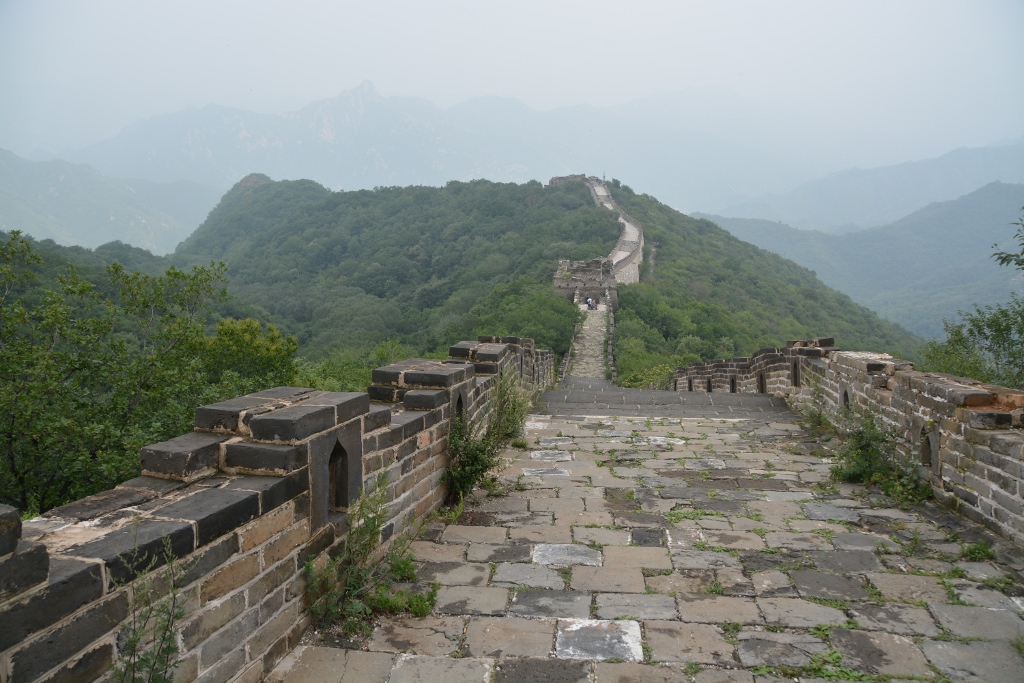
       IMG_0751

We walked up to the fort and explored the towers and dungeons. The views from the fort, like from all the others we have seen were stunning, the deep blue and turquoise of the sea, contrasting with the white houses, orange roofs and vermillion bougainvillea . The prisons were particularly austere, small cells deep below the fort with a tiny window and a thin chimney for ventilation. I cannot imagine how uncomfortable it must have been to have been imprisoned there.

 IMG_0741 IMG_0723 WP_20150623_13_58_16_Pro WP_20150623_14_09_20_Pro

 We had decided we needed to have a bit of exercise to walk off some of the very tasty, but huge, meals that Bruno has been preparing for us. At 18 years old he is incredibly mature and has a wicked sense of humour. He seems to really understand flavour and last night prepared an amazing bruschetta, followed by the most incredible steak with gorgonzola sauce, all finished with chocolate fondants with vanilla ice-cream. From the town we had seen another fort higher up, this one built by Napoleon, now an observatory. We made our way through the bush behind the original fort down the slope to a small valley where we walked along a road until we came to the path up the hill. There were even better views from the top and it was great to have the opportunity to stretch our legs a bit although I found the heat somewhat challenging. It is interesting that Roger seems to be adjusting to the warmer temperatures better – he must have an incredibly efficient thermostat!

IMG_0733 WP_20150623_14_55_33_Pro

 We made our way back down the road to the port where we were met by a guide who took us for a drive across the island to another wine tasting. We were both in awe of the hard work that has gone into this island. It is an incredibly stony place and all over the island the stones have been painstakingly cleared and piled up into small walls and terraces to clear land. This was originally planted with grapes but there was a parasite in the late 1800s that wiped most of the grapes out. Much of the country has now gone to scrub but there are parts where they still grow grapes, others where they have olive trees and in a few areas lavender. All needs to be planted and maintained by hand and the ground continually cleared of stones.

IMG_0742 IMG_0738 WP_20150623_16_18_04_Pro

 We arrived at the Dubokovic winery and had the opportunity to taste one rosé, two white, three red and one dessert wine. I think the only one we really liked was the dessert wine, Prosek, which means first kiss. We also sampled some local olive oil that is infused with different herb oils – rosemary, basil, sage and chilli.

IMG_0747

 Bruno met us at the port and took us back to our boat. It was my turn for a massage – incredibly relaxing after all the walking today – before dinner, luckily a much lighter affair tonight.

We are now about half way through our time away. When I look forward it seems short but when I reflect back it seems a very long time since we arrived in Norway. Regardless, we are having a wonderful time and I cannot remember feeling quite so relaxed.

Turkey: Istanbul and Gallipoli

Roger:
Tuesday 16 June

The day began at 5am with the weird sound from the speakers from the surrounding local mosques. Opening one of the little boxes beside the bed containing ear plugs I realised why. The hotel Neorian provided an interesting selection of Turkish breakfast. This included everything from dates, nuts, mixed vegetables, cheeses, fruit, meats and eggs to a good selection of breads.

Our guide Ilke was waiting in reception to accompany us to the hippodrome, originally a sports stadium where chariot racing took place under the Romans. The obelisk, a statue which came from Egypt, was erected there by slaves who pulled it up by ropes in AD390 in about 28 days. It still stands today.

DSC_6643

Next was the Blue Mosque. Built by one of the Ottoman Sultans in the 1800’s it has 6 minarets. He got in a bit of strife for this as only Mecca is allowed 6 minarets so he had a seventh built and sent it to Mecca – problem solved. This place is huge with large domes and running water at taps outside to allow folk to wash feet, hands and face before entering. There is an upstairs gallery for woman who even now cannot pray with the men. Sorry feminists. The gallery is now closed as people started stealing the Izmit tiles (of which there are thousands), which were the last made by a famous factory. They now sell for upwards of 5k pounds each in London. The women now pray in a screened off area at the back on the ground floor.

DSC_6639 DSC_6645  DSC_6670 DSC_6647IMG_0567DSC_6651 DSC_6649

Next stop was the pink mosque or Hagia Sofia. This was originally a Christian church built in the 300’s (even bigger than the blue mosque) and was then converted to a mosque some centuries later. All the paintings and drawings were whitewashed over and later plastered over as they are not permitted in a Mosque. Now a museum, many of the paintings including some impressive mosaics are being uncovered and restored. There are hollows in the marble by the huge doors where guards stood. An impressive cobblestone ramp takes us to the upper balcony where the women prayed as one of the sultan’s wives refused to be carried up stairs.

DSC_6655 DSC_6662DSC_6664 DSC_6673 DSC_6675

Next was the cistern (reservoir) built around 400AD. This held 85 thousand tons of water to supply the palace and mosque in case of a siege. The water came by viaduct from a forest 19km out of town. With huge columns and arched ceiling it is a real feat of engineering. In one area columns are stood on large blocks with Medusa’s head carved into them – obviously pulled down from somewhere and reused here.

 DSC_6679 FullSizeRender7 FullSizeRender9

People lived here in caves back as far as 8000 BC. As Constantinople it was ruled by the Romans for centuries and at one point (the Byzantine era) was the capital of the Roman Empire. The Turks migrated here from East Asia, as far away as India and China, around 600 BC. The Ottoman Empire rose after the demise of the Romans.

They brought in slaves from as far away as Romania and parts of northern Africa, educating them and converting them to Muslims to build their population and empire.

Next we caught a ferry from near the spice markets. What seems like a river is really the Bosporus Strait, 30km long and connecting the Marmaras Sea with the Black Sea. This was a good way to get a bigger feel for this city of 14+ million people. Up on the hills in parts houses and flats look like they are squeezed in. In the distance numerous cranes tower over new 30+ story apartment blocks. Close to the water are many mansions, shops and restaurants. Two large suspension bridges cross the water. This strait is the dividing line between the Asian and European continents.

 DSC_6684 DSC_6690DSC_6686   DSC_6700 DSC_6720 DSC_6725 DSC_6732 DSC_6750

At the second bridge the boat turned back, dropping us off half way back on the Asian side. From there we took a ferry across to the Ottoman Sultan’s summer palace which turned out to be a rather flash pad. Built in the 1860’s it has nearly 300 rooms, 60-odd bathrooms, 40 hallways and huge entertainment areas. Each room or hall we entered had a magnificent chandelier, the biggest weighing over 4 tonnes. Behind the palace is a building that housed around 200 princes and the harem of around 200 want-to-be first ladies.  That Sultan must have been a rather busy chap.

  DSC_6758 DSC_6767 DSC_6768 DSC_6697 IMG_0610

Leaving our guide we took a tram back to the spice markets. Not only do they have piles of colourful spices but gold and silver jewellery and many other products for sale as well.

 IMG_0620 IMG_0618 IMG_0621

In the evening we headed to the roof top of the Adamar Hotel where we watched the sun go down with a great view over the city while enjoying a romantic dinner for two.

 DSC_6783 DSC_6773 DSC_6787 DSC_6784 DSC_6801 DSC_6797DSC_6780 DSC_6808

The funniest thing I saw all day was a group of women in a full burkah with only slits for their eyes, one wearing sunglasses and carrying an iPhone and selfie-stick.


Sylvia:
Wednesday 17 June

 After another Turkish breakfast this morning we wandered up the hill to visit Topkapi Palace a huge group of buildings that was initially built in the mid-1400’s as the home of Ottoman Sultan Mehmed. There are huge ornate gates, a massive palace where all the official meetings were held and the harem area where the wives and concubines lived, looked over by the black eunuchs. There was also separate housing for the crown princes (sons of the sultan). We opted to wander around on our own and started with the palace kitchens with their huge pots and pans as well as some lavish dishes and platters. Neither of us was overly interested by the room with all the Muslim relics – many swords and things belonging to the prophet including supposedly the staff of Moses. However we both really enjoyed the armoury with its elaborately decorated swords, daggers, bows, quivers, guns and armour.

IMG_0626 DSC_6839 DSC_6854 DSC_6818 DSC_6820 DSC_6821

The harem area was also very interesting with loads of coloured tiles on many of the walls and stained glass in some areas. I think I would have got tired of all the detail and longed for something plain after a while. Interestingly, the concubines were some of the only women in Muslim history to be educated as the Sultan did not want his potential offspring to be the children of uneducated women.

 DSC_6832 DSC_6833 DSC_6838 DSC_6850DSC_6848

Overall I was just blown away by the obvious wealth and opulence.

Our next activity was to drive the 350-odd kilometres to Gallipoli. I must admit to being quite happy to let Roger do most of the driving, particularly in Istanbul. It is a pretty busy city and the traffic just seems to merge, stop and start with no real sense of order. It took me a few minutes to get the GPS working and there was nowhere for us to stop so Roger just had to drive, deciding to head towards Fatih as it kind of looked like faith. Good call – it ended up being the right road.

Driving out of Istanbul we passed huge apartment buildings, some still in construction, some painted in rainbow colours and several very plain all looking the same. As we got out of the city I had expected quite dry, barren and somewhat rugged land and was pleasantly surprised to see field after field of golden wheat, interspersed with green fields of what looked to be potatoes and the odd patch of darker green woods. This, with the odd glimpse of the Marmaras Sea or later the Dardanelles made for quite a picturesque journey and once out of the city the traffic eased and we made good time on a four-lane highway.

 DSC_6857 DSC_6959 DSC_6961

We stopped just past Tekirdag to try the local specialty, kofte – spicy meatballs that look more like sausages to us and come about 8 to a plate with salad and bread. Very tasty but way too much for lunch! We drove past Gelibolou, which is the town at the beginning of the Gallipoli peninsular and on to our accommodation for the next couple of days, the Gallipoli Houses. This is a small guest house close to the ANZAC cove area run by a Belgian man and his Turkish wife. As it is a fair distance from anywhere they provide breakfast and a four course dinner which provides a good opportunity to meet the other guests, on this occasion a few rather large, loud Aussies and a couple of English people.


Roger:
Thursday 18 June

 It’s 3am at the Gallipoli Houses. We are woken by what sounds like a naval barrage. It’s the loudest and longest barrage of thunder I can recall with lightning lighting the whole room while the thunder is continuous.

At 5am Mohammad sparks up on the local mosque speakers. It’s not a song and not a poem and of course I can’t understand a word of it.

Over 30 cemeteries were built on the Gallipoli peninsular containing the remains of 19,000 commonwealth servicemen, of whom only 6,000 were identified. A further 2,500 who were believed to be buried are commemorated in the cemeteries with Special Memorials. The remainder of those buried in unknown graves, or whose remains were never found make up the 27,000 named on six different memorials in the area. Unlike in Flanders, unnamed burials are not marked so there are large open areas in some of the cemeteries.

      IMG_0676

Around 9am we headed off to ANZAC Cove. We drove up and back along the shore past the many cemeteries and memorials. Then up the loop road stopping at Lone Pine cemetery where a large monument stands in honour of the fallen. We took a stroll down a track to try and get an appreciation for the ground. Heading further up the loop road we stopped at Johnston’s Jolly and Quinn’s Post where there are still out lines of both Turkish and Anzac trenches only meters apart.  There are many Turkish memorials and cemeteries along the road, some of which we stopped at. All the huge Turkish flags are flying at half-mast today in honour of Suleyman Demireal a past leader of Turkey who died yesterday.

 DSC_6871 DSC_6873 DSC_6885 DSC_6881

After a few more stops we arrived at Chunuk Bair. Here the New Zealand monument stands, built so it could be seen from the sea as when it was built the powers that were thought no one would visit it. We took a stroll some 500 meters down the hill to Farm Cemetery, a well-kept piece of ground in the middle of this rugged and scrubby land. It is sad to see the head stones, designed by Scottish Architect Sir John Burnet are now starting to show wear from rain and hail. They were designed as a box to cater for the soft ground. Unfortunately I doubt most of the names will be unreadable in another hundred years.

 DSC_6899 DSC_6900

Continuing down the loop road past more Turkish memorials we reached the Kabatepe Museum. It is interesting to note the first Turkish memorial did not appear until the 1990’s. This recently developed museum, although lacking continuity, has some fantastic displays and is well worth a visit.

 DSC_6905

Heading back to the Cove we took a stroll up to Plugges Plateau where more people are buried. Continuing up the ridge some way we dropped down into Shrapnel Valley making our way down the creek through the scrub coming out at the cemetery.

 DSC_6909 DSC_6915

We continued along to the ANZAC commemorative site situated by the beach. Strolling along the beach and looking up into the steep ground above I now have a much greater appreciation of how difficult it must have been to fight up through the gullies onto the ridges behind. This is something that one can never appreciate looking at pictures, watching documentaries or reading books. Furthermore as noted at Flanders we will never really appreciate what those brave men went through.

 DSC_6912 DSC_6913 DSC_6917 DSC_6916

We then headed south to the Helles area. I understand my grandfather was at the landing at W Beach now named Lancashire Landing.  He was commissioned in the field there. Many of the officers were killed during the landing. We parked the car at the west end of the Lancashire area and strolled across the tops of the steep banks rising 30 to 50 meters almost vertically from the sea. There are a number of circular brick structures which may have been gun emplacements. Over a kilometre to the east we were suddenly looking down onto W beach. Approximately 200m wide with high ground on each side – back then layers of barbed wire were stretched across the beach. The men were towed close to shore in row boats and cut loose to row ashore. With heavy machine gun and rifle fire coming from the high ground all around it is astonishing how anyone even made it ashore let alone through the wire.

DSC_6920 DSC_6921 DSC_6937 DSC_6929 DSC_6932

Six Victoria Crosses were awarded at W beach that morning. My grandfather, David Price-Owen survived Gallipoli, going on to Palestine as a British officer in the Bengal Lancers. He rode in a large cavalry attack, apparently with Lawrence of Arabia in 1918. He stayed on in the Bengal Lancers, based at the Khyber Pass, until medically retired from the army and given six months to live in 1922. He lived until he was over 80.

New Zealanders fought and perished from Helles in the south right up to Suvla in the north not just at ANZAC cove as many people perceive. “We must remember them”.

We headed back up the east side of the peninsular watching many large ships heading in and out of the Dardanelles. Along the way there is a fourteenth century fort at the narrowest part of the channel. There are a huge number of statues and cemeteries around the Peninsular commemorating the Turkish involvement as well.

DSC_6954 DSC_6952 DSC_6940 DSC_6890 DSC_6896

As we walked in for dinner a lady we had met briefly the previous evening and seen breakfasting with Sir Peter Jackson that morning asked us to join her for dinner.

Anita Young, an abstract artist here painting scenes of Anzac cove, is the granddaughter of the legendary Lieutenant Colonel Malone who fought and died at Chunuk Bair. Sir Peter had flown her here in his private jet, we think partly as thank you for sharing her grandfather’s diaries and letters with him and also as he is probably a good bloke who appreciates the sacrifices people have made. We had a very interesting time chatting to Anita about her grandfather’s exploits, the plight of her grandmother, her painting and her contribution to the WWI exhibition now on at Te Papa. Her website is www.anitayoung.co.uk.


Sylvia:
Friday 19 June

 I lucked out and got another travel day and am very glad I didn’t have to write about yesterday as I found it quite challenging. I am incredibly glad to have had the opportunity to visit both Gallipoli and the Western front this trip but I am hugely saddened by the seeming waste of healthy young lives. I have also come away with a bit of a passion for the need for more education around the wars. I was woefully ignorant about what went on. Most New Zealanders will have heard of Gallipoli and will know that we lost a lot of men there. We remember the landings every ANZAC day. Even though we talk about commemorating all soldiers on ANZAC day we make very little mention of the Western front and many more of our soldiers died there. I suspect many kiwis have never even heard of Passchendaele and it was there that NZ suffered its highest ever casualty rate in a single day from any disaster. The opportunity to visit these places and experience even in only a small way what our soldiers experienced is a huge privilege.

This morning we had breakfast with Anita again and she was kind enough to show us some of her paintings and some photos dating back to 1915 when the war was underway. We will look forward to seeing more of her work when we get to Te Papa to see Peter Jackson’s exhibition there – she recommends early next year when it should be finished.

We headed back to Istanbul for our flights, first to Zagreb and then on to Dubrovnik, driving first past ANZAC cove again and through the Suvla area. The drive seemed quicker somehow and went very smoothly with only a wee challenge in finding the rental car drop off which required a few circuits of the airport. Perhaps it was the detailed discussion of the workings of hand-grenades that helped pass the time.

The two flights were fairly painless – the first slightly delayed which meant a pretty short layover in Zagreb. We were met at the airport in Dubrovnik and transferred to our hotel for the night. It was dark when we arrived but we could still appreciate the prettiness of the town. Our driver was very enthusiastic and informative. Dubrovnik is apparently a very safe town with tourism being the major industry of Croatia. Unfortunately though, the country has a very high rate of unemployment, which means many of the young people are leaving the country. He also gave us a good run down on the recent home wars and the different makeup of the countries that were once part of the old Yugoslavia: Montenegro, primarily Greek Orthodox; Croatia, primarily Roman Catholic; Bosnia-Herzegovina, primarily Muslim; and Serbia, predominantly Serbs. He said that things seemed to be relatively settled here and expressed hope that the current generation would be more sensible than their parents.

Having moved the clock forward an hour when we hit Turkey we have moved it back again now we are in Croatia – the same time zone as Belgium. This will be the last time on our trip that we put the clocks back. From now on in, any time-zone changes will be forward, closer and closer to home time.

London and Belgium

 Roger:
Friday 12 June

A late relaxing start to the day. The Charlotte St hotel where we are staying has a great breakfast in its well decorated restaurant. It was a good chance to catch up on a few things before heading off to the Tower. As with most people from out of London we found the tube (train) system very efficient.

Arriving at the Tower of London we joined a tour with one of the 35 Beefeaters. This ex-army Warrant Officer was quite a hard case and very good at telling the many stories about the tower.  Pointing out Tower Hill where most of the executions took place he explained how after the head had been chopped off it was stuck on a pike, carted through the streets and placed by the river to deter wannabe bad buggers. The headless bodies were buried in the chapel. One guy did get to keep his head as it was recovered and sewn back on. Someone had realised after the event that they didn’t have a painting of him.

The tour continued through the grounds finishing in the chapel. The tower was built by William the Conqueror in 1078 as his residence. It was mainly used as a prison from the 1100s on. After the tour we watched the changing of the guards then went for a look through the tower. I was last here in 1984 when, from memory, there were racks and racks of various weapons and armour throughout the tower. Now it is more of a museum with lots of arty type displays and exhibits. I think I preferred the old set up. Obviously the tourist dollar rules.

 IMG_0488 IMG_0487 IMG_0480 IMG_0490

Next was the crown jewels. A long queue lead us through passageways with displays and sometimes movies on the walls. Eventually passing through a couple of very substantial safe doors weighing 2 tons each we entered a chamber of  wealth. The collection is amazing – from huge gold plates to emerald studded swords and crowns. A conveyor takes you past the main stuff. No photos allowed. A stroll around the walls of the outer fort walls constructed later concluded our tour. I highly recommend a tower visit for those that haven’t been.

 IMG_0476 IMG_0491

Later that evening we were sitting outside the hotel enjoying a drink when along came Dave – a well-to-do chap from Manchester, in town visiting his actor son. Dave was somewhat upset that this son had come to see him wearing cheap, non-branded sunglasses. So upset in fact that he had given him his Raybans!!


Sylvia:
Saturday 12 June

 Today was another travel day. Another delicious breakfast at our Charlotte St Hotel and we were off to catch the Eurostar to Belgium. Despite the requirement to check in 45 minutes early it was a quick and painless process and we were soon underway – the countryside, first of the UK, then the chunnel, France and finally Belgium whipping by at a mere 320 kmph. We arrived in Brussels just after 2pm, only 2 hours after leaving London.

Our first taste of the Belgian psyche came when we went to pick up our rental car to be told the office closed at 2pm. When I explained that I had been clear about our time of arrival and the fact I was coming on the train when I booked, the woman seemed nonplussed – “Lots of people say they are coming on the train when they are not”! Nonetheless she begrudgingly checked us in, eventually warming up and even gracing us with a smile before we left.

We were planning to go and see Kirstie in a cycle race at about 4:30pm and thought we’d have just enough time to drive to Bruges, check into the hotel and drop our bags off and still make it to the race. Things were not to be quite so simple – there were roadworks in the street next to the hotel and we could not access. Bruges has lots of very narrow, and often one-way, streets and we ended up spending at least 45 minutes driving around trying to find the hotel, including at one stage finding ourselves in a dead-end street having to reverse out past a large Mercedes van and a number of parked bicycles with loads of pedestrians and cyclists giving us dirty looks. We eventually arrived at the hotel and were told in no uncertain terms – “we emailed you to let you know about the roadworks and how to get to the hotel” – oops, my bad!

By this stage we were clearly late for Kirstie’s race so dropped the bags and headed back out to drive to Besele-Waas, unfortunately encountering severe delays due to roadworks. We arrived at about 5:30pm just in time to see Kirstie race past at the front of the third peloton before her whole group got dropped from the race. No matter, Roger enjoyed a couple of Belgian beers while we waited for Kirstie to cool down and have a shower and then we all headed back to Bruges for the night.

 FullSizeRender FullSizeRender6

Bruges is a beautiful city with a long history and some gorgeous buildings dating back to the 13th century. We had a typically Belgian dinner at the square and enjoyed catching up on all Kirstie’s news.


Roger:
Sunday 14 June

We wandered down to the rather picturesque square in Bruges. Some artist has stuck a big mirror sculpture in the middle which stuffs it up a little. Youngest daughter Kirstie and her friend Tamara who had driven over from Holland were there to meet us. Kirstie, now a NZ Track Cyclist, is riding for a local road cycling team for a few weeks during the off season. The breakfast at one of the many cafes in the square was huge. Tamara had brought a book along she had had done with all the photos of her and her boyfriend Tom’s recent trip to NZ in it. We dropped Kirstie off at her place in Aalst as she had to train and study for an exam for her Masters in Sports Psychology.

FullSizeRender10 FullSizeRender8

We drove to Ypres to visit the Flanders Museum – In Flanders Fields. It took us a bit of looking around to find it. We had not realised it was in a large ancient church-type building. I hadn’t realised that the whole town here had been wiped out during World War I. What looked like a large Gothic church turned out to be the museum – originally built in around 1300, completely destroyed during the war then rebuilt completely after the war as an act of defiance to the Germans. We climbed the 230 odd steps to the tower where there is a breathtaking view over the city and surrounding farm land. This gives one a true appreciation of the extent of devastation this whole area suffered. The town has been rebuilt in the same style of houses and buildings that existed before the war maintaining the quaintness of this Belgian area.

DSC_6606 DSC_6615 DSC_6608 DSC_6612

 The museum gave us some appreciation of the hardships suffered by not only the soldiers but also the civilians during the three odd years the battles stagnated over this land. There are many screens here where a character comes forward and tells their story then fades into the darkness as another appears. Most of these stories are from letters written by solders nurses and doctors from both sides. Weapons and uniforms from both sides are on display.

From there we drove to the Passchendaele Memorial Museum. This is situated on the historic and stunning grounds of the chateau of Zonnebeke. Adjacent to the museum is a small fishing lake. Entering what looked like a small building we were treated to a maze of passageways and exhibits. Gaining an appreciation for the different armies and regiments that fought here and the courage and bravery of men. There is an excellent representation of weapons from the smallest pistols and knives to large artillery guns and shells. All sorts of other kit and tools are also well laid out. Sections for each country display badges, uniforms, and campaign and gallantry medals awarded during the campaign.

FullSizeRender15 DSC_6617

Heading down some steep steps we find ourselves in a representation of the underground bunkers where officers and men, at times, lived to stay protected from the constant shelling. Basic operating theatres, cooks, blacksmiths bunk rooms commander’s quarters and much more is all represented here. Eventually this led us out into the trenches – a great representation of how each army built their trenches. As we moved through some hundred meters of different styles of trenches and materials used we got a small appreciation of how men fought, died or survived.

Missing is the mud, rats, cold, constant shelling, sniper fire, going over the top, watching mates fall injured and dead alongside you, and much suffering the stupid decisions made by senior British officers and generals. We can only respect the sacrifice that so many people made and still do so we can maintain our freedom. Lest We Forget.

Close by is Tyne Cot Cemetery. This was the German front line for some time. It was captured by the Australians in October 1917 and used as an aid station. 340 soldiers who died of their wounds were initially buried there. Between 1919 and 1921 it was extended to a full cemetery. Of the nearly 12,000 buried there only 3,800 are known by name. We wandered the rows of grave stones, all well maintained with flowers growing in front of them. We spotted many head stones with the fern on them representing NZ soldiers. Most had no names. There are over 500 New Zealanders buried here. On the back wall there are some 35,000 names of solders who perished and their bodies have never been identified.  New Zealand personnel of which there are hundreds have their own alcove.

DSC_6620 DSC_6624 DSC_6626 DSC_6618IMG_0537

 When I think about the devastation that prevailed on these people fighting for king and country, initially largely with inexperienced officers and newly trained men, I cringe every time politicians reduce our defence spending. Lest we forget.

Having run out of day we headed back to Bruges in time to catch the last horse carriage ride from the square around this old and beautiful city. Many buildings date back to the 1200s. Gentle curves in streets would indicate it was originally built from the river front. Some 12km of canals were added, 4 of which are still in use as a tourist attraction. The horse clip clopped over the cobble stones at a fast trot. People waved and took photos. I endeavoured to do a royal wave back. We stopped while the horse was rested and refuelled. The lady driver gave us a very scripted talk about various buildings but was reluctant to be drawn into conversation. Of note the council building was built in the 1300s and could be easily mistaken for a church with its gothic look.

FullSizeRender31 FullSizeRender25

FullSizeRender35FullSizeRender13


Sylvia:
Monday 15 June

It seems I have lucked out and landed all the travel days for this blog. Makes for quick, easy writing. We had a straight-forward drive to the airport in Brussels this morning which meant plenty of time at the airport before our flight to Istanbul. A good chance to catch up on blogs, photo-editing etc.

The flight to Istanbul passed without event and we picked up our rental car. We encountered a bit of a delay while we got the GPS sorted so it could be read in English and then heavy traffic on the way into the city. In the end, it took us longer to get from the plane to the hotel (about 44kms) than it did to fly to Istanbul from Brussels – over 3 hours in fact. So it was with relief that we got checked in and wandered to a nearby café for a quick bite to eat. Our hotel is located right in the heart of old Istanbul near the Grand Bazaar and other major attractions. Should make for a good day of sight-seeing tomorrow.