A weekend in the Atacama Desert

Saturday 23 April 2022

Up early, we headed across the road to the to the LATAM terminal to board our flight to Calama.  A two-hour flight north took us over large desert-like ranges with large solar farms and mines dotted along the way. There was even the odd town along the way. A driver met us and a nice Brazilian couple at the exit. We mounted a ford transit van and headed north out of town, passing a couple of wind and solar farms as we headed north to San Pedro de Atacama on a well-maintained, sealed road. There is a little rather hardy vegetation spaced out in places across the desert.

A little over an hour later we arrived at the Nayara Alto Atacama,  a little oasis in amongst what is bare-rock and river bed. The staff welcomed us and we had a quick briefing on the afternoon, evening and early morning activities that we were to participate in. We quickly settled into our room before heading off to a rather delicious BBQ lunch. This place has been well put together with green paddocks, ponds and the odd llama grazing behind the fences.

After lunch we enjoyed a massage before heading out in a van with two other couples for a journey into the salt mountains. Heading back out onto the main road we turned south, driving several miles before turning right (east) onto a good shingle road on a large flat valley. This road is surprisingly smooth and there are a few vehicles on it. After a few minutes we turned left (north) and headed down a not so well kept road. Heading up a slight hill we stopped on a low ridge and dismounted, where our guide gave us a run down on how the interesting formations had come about. 65-odd million years ago this had all been under the sea. Over many millions of years the Nazca and South American plates have been opposing one another, thus raising the land up from beneath the sea.  It is essentially salt, rock, sand and lots of minerals. Nothing visible to the naked eye grows here. Features such as rocks are sand blasted by the southerly winds that carry sand at around 100 kilometres an hour. Infrequent but heavy rain also has an effect, washing away any soft material and leaving large grooves in this moon-like landscape. The white stuff in the photos is salt.

Several other vans and a rugged bus were also in the area. We drove on to another stop inspecting a large piece of rock that had been mined in the past. Standing in silence we could hear the cracking as the salt expanded in the veins of the rock.

Another short drive had us standing on a ridge where our guide pointed out a large sand drift in the lee of a small hill. There is a  mountain range to the east and the Andes Mountains to the west with the salt mountain range in between them. There is absolutely no sign of vegetation here. It is the highest and driest desert on earth. The average rainfall is 1-3mm a year. Some rain stations in the desert have never recorded rain. By the look of the terrain, when they do get rain it comes all at once.

We continued out into a flat part of the desert where our guide and driver set up a wine and cheese table while we watched the sunset and the colour on the mountains change. We could also see the sun reflecting of  he buildings at the Alma, the worlds largest radio telescope station.

Around here the sand has almost buried large trees, which still keep growing in spite of the sand. We also had a good chat to Mike and Charlotte (on the right) from London, who have spent a couple of weeks in Chile.

We headed northeast, the track bringing us back onto the main road just north on San Pedro. Back at the Alto Atacama camp we relaxed for a while then at 8pm we took a stroll up a  onto small hill with a guide to star gaze. The milky way was quite prominent in the clear sky with various star groups standing out such as the southern cross. After a late night and an early start I almost dozed off as we lay on the bed type chairs looking at the sky.


Sunday 24 April 2022

At 0500 we arrive at the reception ready to hit the road to the geysers. On the board the trip shows a start time at 0530. Sylvia is not impressed as she would have loved another 30 mins sleep. The poor bloke that had written the time down wrong on our sheet did later apologise.  After a cup of coffee or two, the two couples joining us, one from Brasil and the other from New York, turned up. We mounted the van for the hour and a half drive to the geysers. Apart from being stopped by the police to see we had the correct paperwork the journey was uninterrupted. A steady climb took us up to 4500m before dropping down slightly onto an almost plateau, where we often deviated off the road onto desert tracks to avoid the corrugations in the shingle road. At first light we arrived at the geyser field.

We stopped for a bathroom visit and were told as we alighted the van it was -10 degrees C. The air was really dry so it didn’t feel that cold – or else they were exaggerating the temperature to add to the experience. We mounted up again and drove a short distance to the steam field. These were defiantly not the biggest geysers in the world but the people who hadn’t seen geysers before were certainly excited. We wandered through the field as our guide provided some explanations. They have tried to generate electricity from these fields with little success, there is and old piece of such equipment sitting rusting in the field. Unlike geyser fields around Rotorua in NZ there was no  smell of sulphur. Even though we are at 4300 meters the nearby volcanos of the Andes tower above us. One such still active mountain has a road to the top from where they used to mine sulphur.

After a couple of strolls around the geyser field, at one spot waiting 10 minutes for the geyser to blow off a bit of steam, we  headed back down the road we had come in on. Stopping by a small wetland the guide and driver set up some chairs and prepared a rather nice breakfast as we relaxed in the sunshine. The pond was surrounded by a tussock like plant – even in a climate this dry and still at 4000m add water and stuff grows.

As we drove away I spotted a sly Andean fox waiting to race out and see if we had left any scraps behind.

Heading back down the hill we passed another pond hosting water birds and a mob of vicuna with young ones in tow. These are often hunted by the locals for their nice fur and meat. Crook, teal and Andean geese floated around on the water (or walked on the ice) as if oblivious to all us tourists studying them.

The contrast of colours in this area are really quite outstanding and not what one would expect in such a dry barren place. As we headed further down the hill we stopped on a steep incline where the guide pointed out a couple of green rabbit type things with long tails apparently these viscacha are quite good eating.  Another wetland a little further down the hill, just past a small village, had the four varieties of Pink Flamingos found in this part of the world all feeding in little groups on a fresh water pink shrimp. There was also a little hut near the pond designed for the rangers to take shelter in.

On the drive back to the hotel we got to see some great views across the plains as well is some rather large cactus plants on the side of a canyon. Arriving back at the hotel we had lunch and a massage and all to soon it was time to head to the airport for the flight back to Santiago – a great weekend break over far too quickly.


Monday 25 April 2022

The morning was spent catching up on some work stuff in NZ; most of the afternoon was spent trying to change a booking with Aerolineas Argentinas airlines. I have mentioned before that travel has got a lot harder post Covid! Well these bastards set out to confirm that. I had the fare to Buenos Aires booked for Wednesday night instead of Tuesday. Sylvia had had a go at changing it yesterday online with no luck. I had a go on line but it just could not be done – well not by me either.  I then went for a stroll down to their local office just down the road. A sign on the window “closed until further notice! Phone ….!” Back at the hotel I tried the phone, no luck! Then the WhatsApp number by message (not allowed to ring that one) following the prompts which ended with “we will get someone to contact you”. That was two days ago and yes, you guessed it, that someone is no one!! I headed down to the hotel reception and got help from a very helpful staff member who spoke english. She rang all the numbers and got the same message on each number she tried: “we don’t answer the phone, contact us on WhatsApp”. My interpretation “You’re a customer, we want nothing to do with you! Piss off and fly with someone else!”. In the end we just booked another fare and went to the airport early to check in, where a very helpful woman sorted it out after checking with her supervisor and me paying another 75USD.


Tuesday 25 April 2022

A driver picked me up mid-morning and we headed to the National History Museum, situated next to the Plazade Armas (a revered city plaza with many statues). A bunch of school children were in full noise as they marched around the plaza protesting, about what I am not sure.

Chile was taken by the Spanish in the mid 1500s although there was little gold here compared with Peru. Pedro de Valdivia, an army captain recognised the agricultural value and with around 200 men ventured into the country, overpowering the locals and founding Santiago in 1542. The greatest resistance to Spanish rule came from the Mapuche people, who opposed European conquest and colonisation until the 1880s; this resistance is known as the Arauco War. Valdivia died at the Battle of Tucapel, defeated by Lautaro, a young Mapuche toqui (war chief), but the European conquest was well underway.

The country was basically ruled by the Spanish until the early 1800s when a war of independence was fought in 1818. Chile declared itself independent although this was not recognised by Spain until 1840. Apart from the normal political punch-ups things rolled along until the early 1970s when Chile headed down the socialist path under Allende’s presidency. In 1973 a coup, backed by the CIA, saw Allende shoot himself and Pinochet take power. At this stage inflation was running at 600% ( I hope NZ is not heading that way under our socialist orientated government). Since then Chile has been through many ups and downs but appears to be on an up just now although there is a fair bit of unrest and a lot of change coming with a newly elected left-leaning government and the constitution being rewritten – apparently by a committee of some 150 citizens… watch this space.

A stroll through the local streets took us to the Museo Chileno De Art (art history Museum) where some of the aftifacts looked like some of the pre European NZ stuff. Maybe there was a copyright breach way back.

Not far away is the presidential palace where i could only observe from behind a low fence as the local military in their smart uniforms and shiny long boots stood guard. The police here still wear polished leather belts and holsters

From there we strolled back to the car, passing the demonstrating students gathered around a large statue of a horse in the Square of many statues. Next I was driven to the military museum, which took one on a journey of the country’s years of conflicts and military history, including escapades into Antartica.


The last stop of the day was the Sky Costanera. At 300 meters high it has a good view of the city and i am sure on a better day a good view of the surrounding countryside. Looking down on the city I was surprised to see a complex and and very modern infrastructure in relation to the roading system with roads seeming to run both underground and above ground, crossing over each other with ease; there appears to be a lack of congestion from where I sat. With just under 6 million people it is a big city with wide streets and some nice buildings, let down a little by the amount of graffiti on many buildings. A short stroll took me back to the hotel. At 5.45pm the driver picked me up and we cruised past the Royal Canin office to pick Sylvia up on the way to the airport for our flight to Buenos Aires. A big thanks to the team at Royal Canin for organising the driver and the places to go.

Good friends in Hawaii

Saturday 16 April 2022

Arriving at Auckland airport there were a few more people around than in January. Still none of the airline lounges are open and many of the shops are closed. The one cafe open has a constant queue of waiting passengers.

Once again I am flying on Fiji Airlines with a stop in Nadi. I did ring Air NZ to book a fare to Hawaii but was told “we don’t fly to Hawaii until July”. I suggested that I could fly to LA with them then they could book me on United to Hawaii and back to LA. The answer I got back surprised me. “No we can’t do that – we don’t fly to Hawaii until July”. Hence I went on line and booked with Fiji, saving over a thousand dollars.

This time the flight was full to Nadi, where I waited a couple of hours in the very nice business class lounge there. The lounge was quite full with people flying back to to the US after a relaxing holiday at one of Fiji’s many discounted resorts. In the 1980’s planes couldn’t make it all the way to the US so there were always one or two stops along the way. The next leg of the flight to LA was also full in spite of which the service on the flight was up there with what one would get on Singapore or Emirates.

Arriving in the US immigration had their sights on me again. The lady behind the counter said “we can’t find your ESTA do you have a copy of it?” Since an incident in Mexico a few years ago I have always carried a hard copy. I handed it over and she said “wait over there”. Soon an immigration officer turned up and said “follow me”. This time it was to a room with a hundred odd people in it. “Stand or sit over there and do not look at or touch your phone”! After what seemed like an hour I took my phone out to look at the time and was immediately pounced on. A few hours later I was called to a booth where the guy tapped some keys, stamped my passport and handed it to me. I asked what the problem was. Apparently when the airline had scanned my passport the 9 at the end had come through as a 0.  Stopping at the counter they gave me a chit to give to the airline who would put me on a later flight no extra charge. Racing out of the terminal, jumping a bus and then a bit of walking I made it to the United terminal. People let me jump the queue for security after which I ran to the gate, which was the furtherest in the terminal, just making it as the last person to board my original flight.

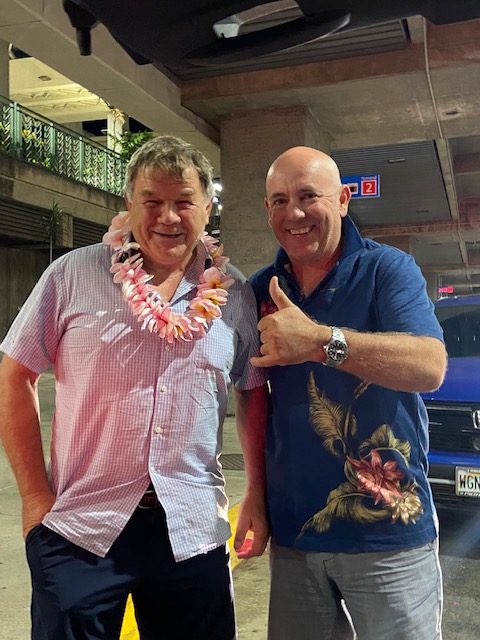
Five hours later we landed in Hawaii where I was met by good friends, Dave, Chrissie and daughter Ruby. Dave is over here as a Liaison Warrant Officer for the New Zealand Defence Force on a two year posting which finishes at the end of this year. I am their first visitor.

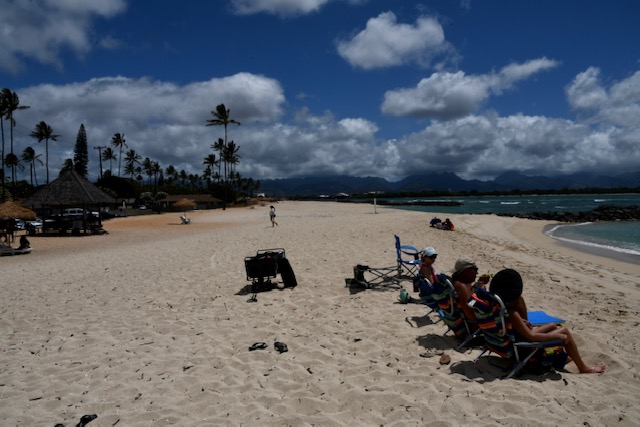
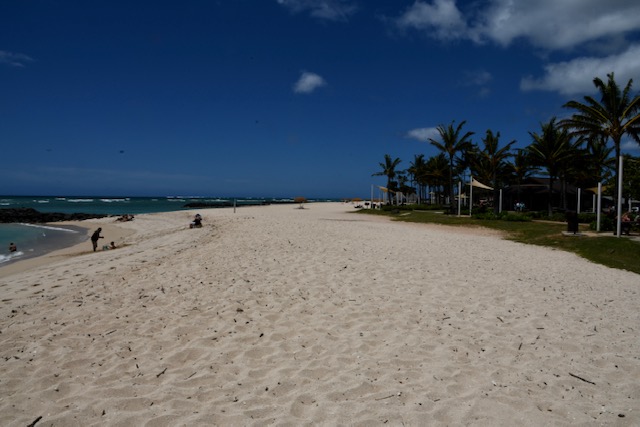
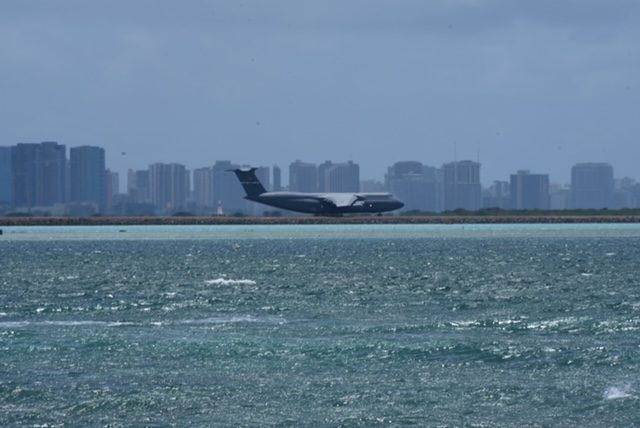
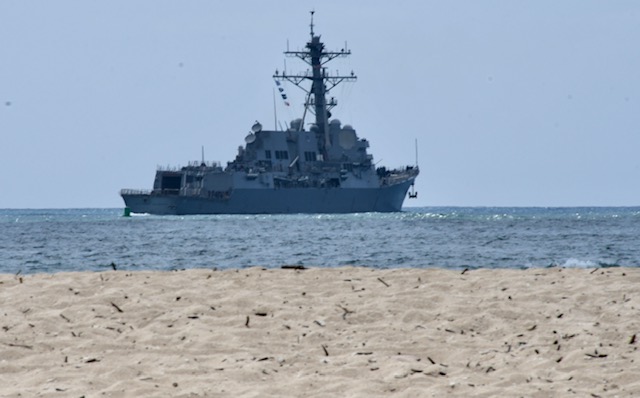
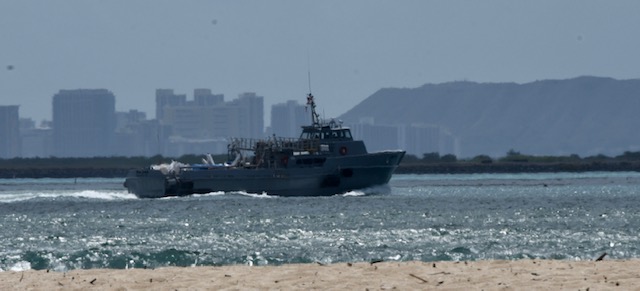
Dave and Chrissie live just across the road from Ewa Beach on Iroquois Point, which is situated in the west side of the entrance to Pear Harbour. All the naval craft sail in and out of the harbour not far from their house. Across the other side of the harbour entrance is the three runway airport which both military and civil share. There is a constant trail of civilian aircraft landing and taking off and every now and then there is a more intense roar of jet engines as the military F22 raptor generation jets take to the sky.

After a good catch up Chrissie headed off to bed. Dave and I headed over to meet the neighbour, Aaron, a 20-year-plus veteran of the US Navy. Still serving as a Chief Petty Officer he is a great bloke with lots of stories to tell. After a few good yarns it was time to hit the hay.


Sunday 17 April 2022

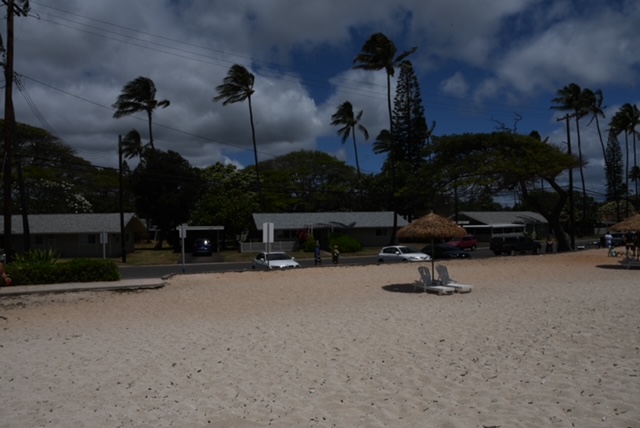
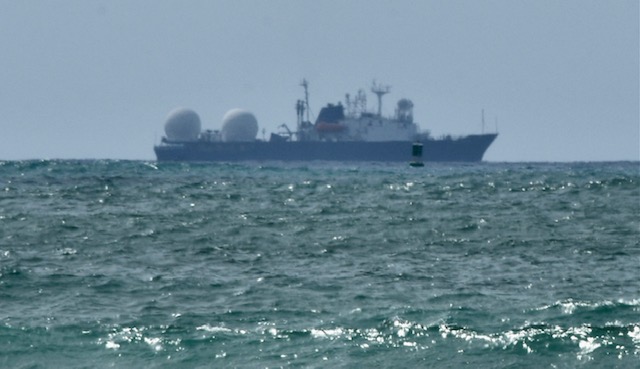
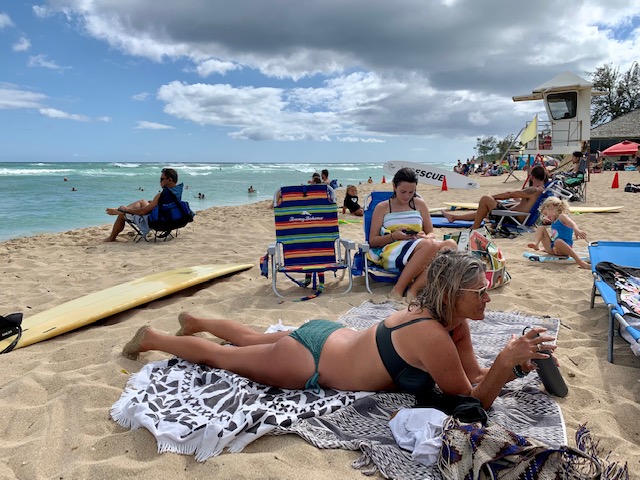
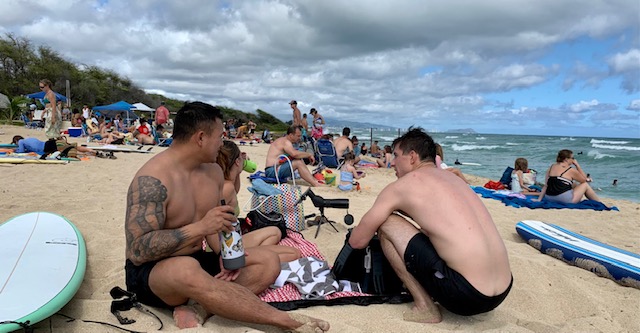
After checking out the beach across the road and watching a couple of naval ships go in and out of the harbour we headed over to Barbaras point to join some friends of Dave and Chrissie, who work for the local FBI SWAT. We relaxed and chatted the afternoon away. People swam and surfed, some on the airfoil boards skimming across the waves effortlessly.


Monday 18 April 2022

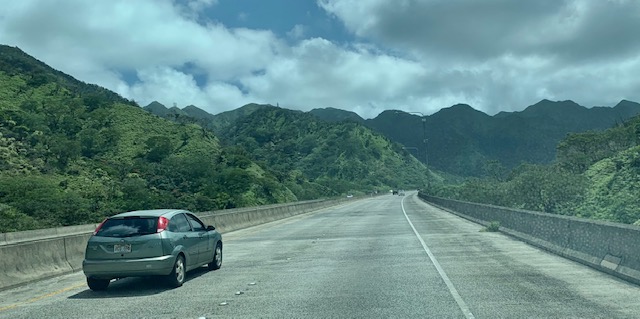
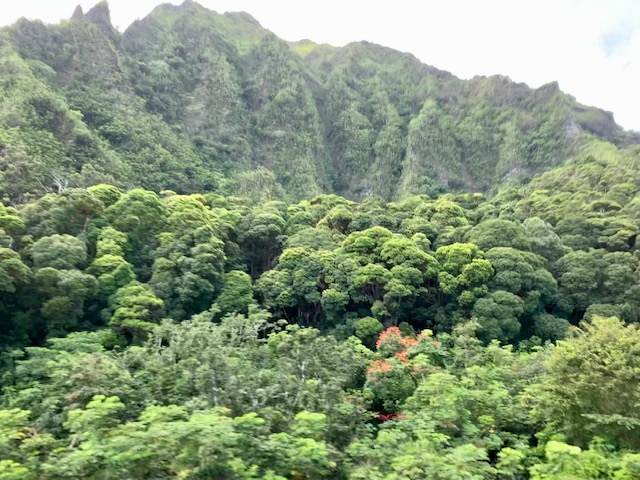
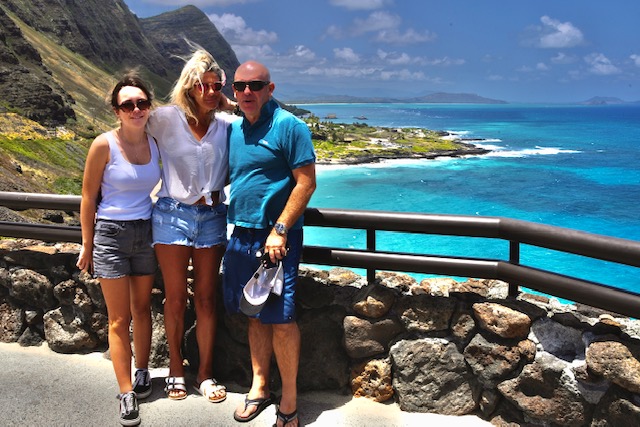
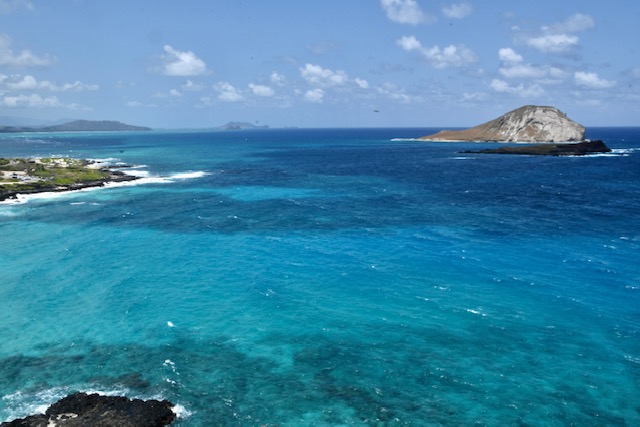
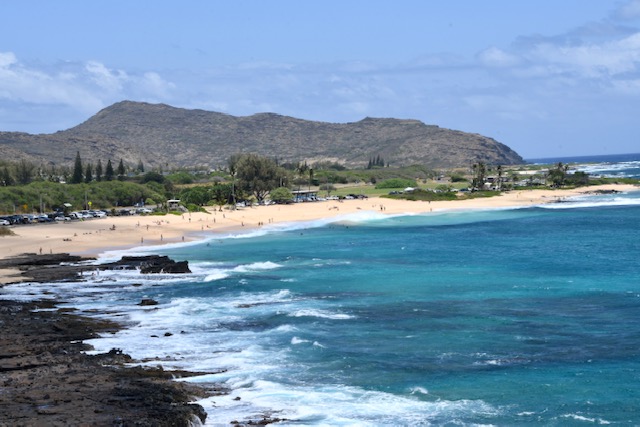
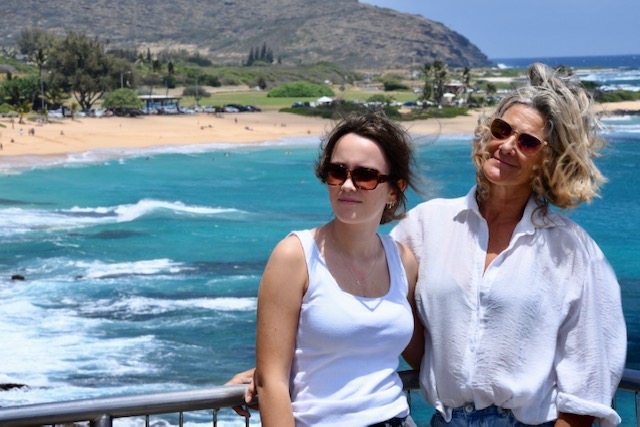
We headed around the harbour and into the hills on highway 3. A tunnel took us to the windy side of the island where the steep hills are covered in thick bush as the rain gets dropped there as it hits the island. We dropped in to Old Paly Rd Whiskey, which is run by a retired US Marine Colonel who Dave works with. Then it was off round the coast, stopping at a lookout above Wailamaio Beach for a look across the colourful water.

Next stop was a blow hole next to a beach famous for movie sets. The colour of the water here is quite striking.

We stopped at a beachside park and enjoyed a picnic lunch before heading to Diamond Head where a tunnel takes one through into the crater. Dave showed his military ID and was given free entry and thanked politely for his service. I had been up on the head when visiting Hawaii in 1988. Back then one could just wander up a track on the hill to the top at no charge. Those tracks are all closed and it looks like the money is rolling in. We enjoyed a pineapple flavoured sorbet watching many people paying for the walk up the hill on the old railway track used to ferry ammunition and supplies up the hill to the gun emplacements.   Back in the late 1800’s a number of cannons were installed in the crater to defend the island, able to lob shells 8 miles out to sea.

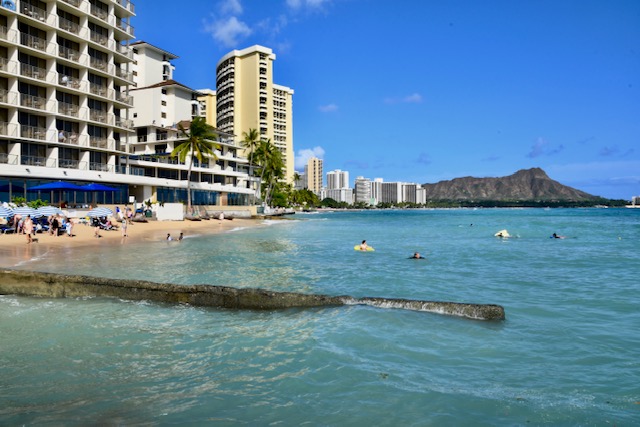
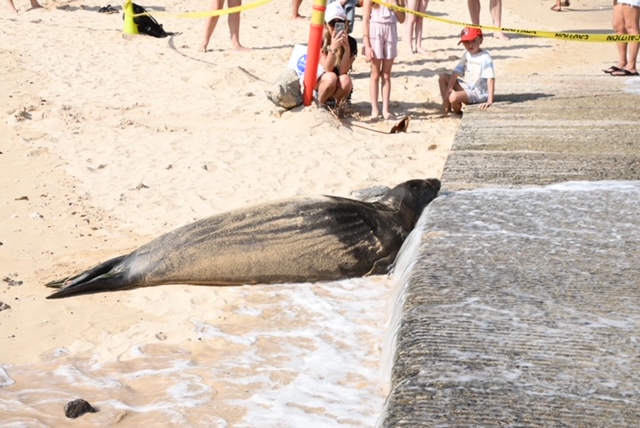
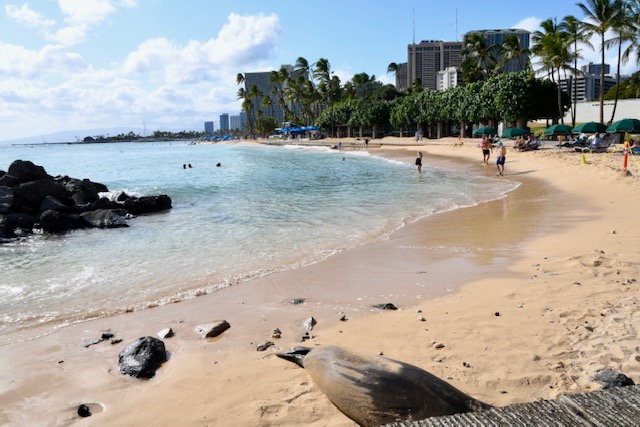
A short drive found us in the Waikiki Beach part of town amongst the expensive shops, bars and restaurants. After parking in a parking building we took a stroll through town in the direction of the beach to visit the military museum, which turned out to be closed on Mondays. Behind the museum is the famous Waikiki Beach, which was, as usual, swarming with holiday-makers, some who who had received an overdose of the sun. By the pier lay a  monk seal guarded by cones and tape and supervised by a local conservation officer making sure that no no one went near this rare and protected species. A short stroll back into town and we visited the bar to quench our thirst. Interestingly, even though the US is well behind on some forms of banking as they’re still using cheques, here, after setting up a tab at the bar, you paid by scanning a QR code on the table and simply walking away. Once I figured it out it seemed to work well and I didn’t get charged twice. We enjoyed a meal at Duke’s Lane Market Restaurant before heading home.


Tuesday 19 April 2022

We wake up to find there is no water in the area due to a leak somewhere. This means the local schools are closed for the day along with some other public services. Like any big city in the world, this one has its infrastructure problems. Recently fuel from a big storage area under a hill, where the fuel is stored for the Navy and reserves to the island (apparently billions of gallons), leaked into and contaminated the bore that provides water to this part of the island. There are also, from time to time, power outages  and traffic jams.

There are around a million people living on the island of  Oahu. Around 50,000 of those are serving military personal plus around 80,000 family members. After tourism the military is the next biggest contributor to the island’s economy.

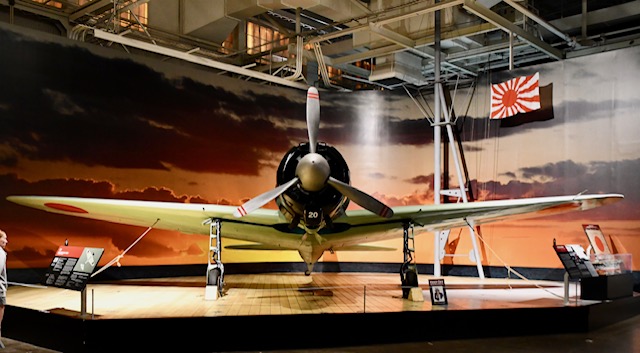
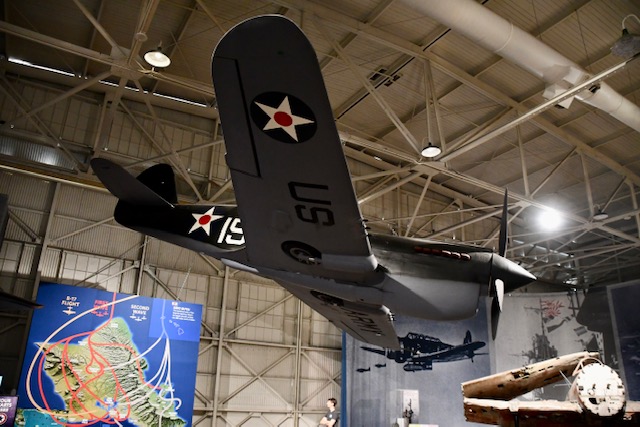
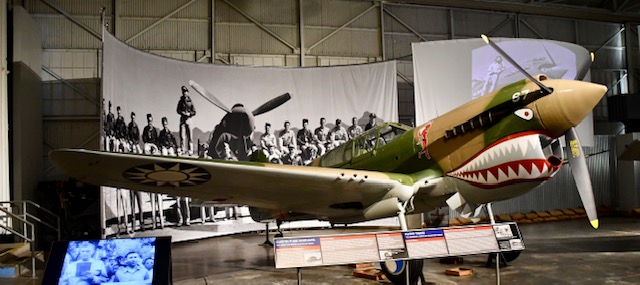
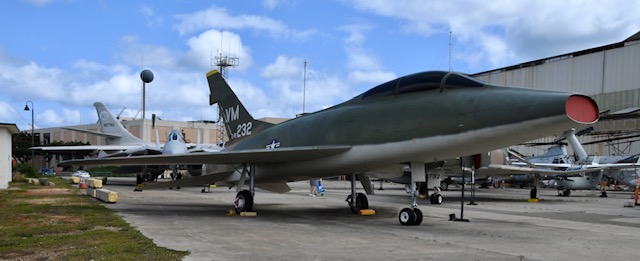
Mid-morning Dave dropped me off at the Pearl Ridge Shopping Centre, where I spent the next couple of hours trying to find a PCR Covid test in preparation for the next leg of the journey. Finally I located a place at Pearl Harbour shopping centre a few miles down the road. It was a drive-through place but they did let me walk through and the staff were very helpful. I never did get the results of the test though. After completing the test I headed to the Pearl Harbour museum.  There I boarded a bus, which took me across to Ford Island, where I visited the aviation museum. This is split over two hangars, one of which still has bullet holes in the glass from the Japanese attack of Pearl Harbour in December 1941. There are large range of aircraft dating back to World War II with a large complement of modern fighter jets and military helicopters, many parked outside between the two hangars.

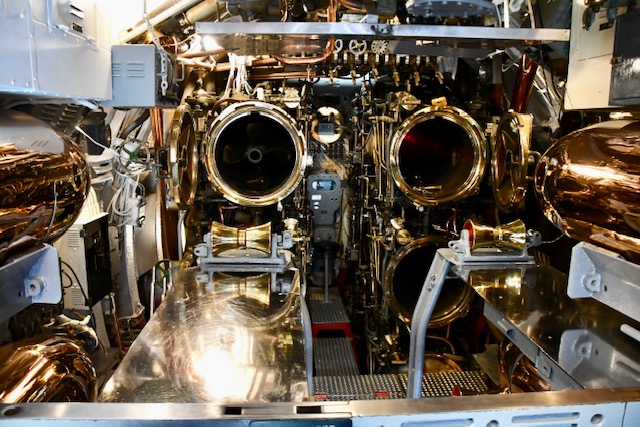
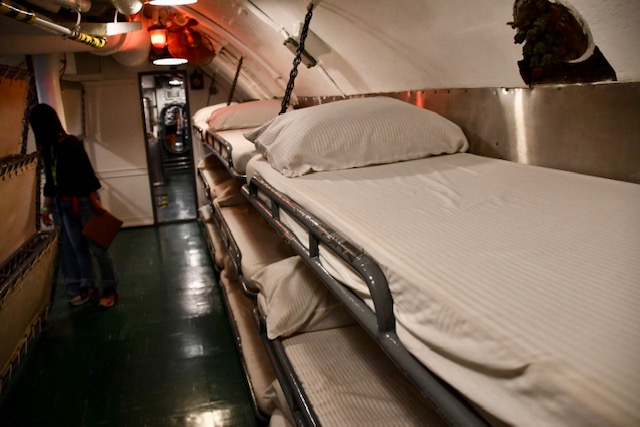
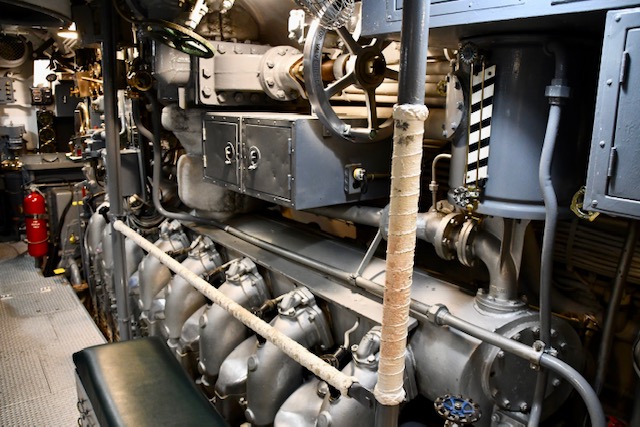
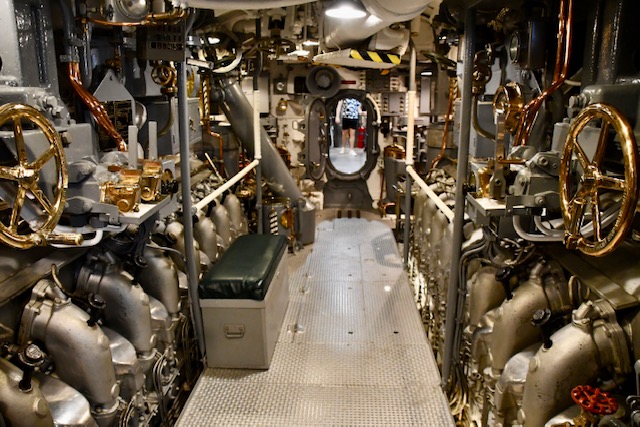
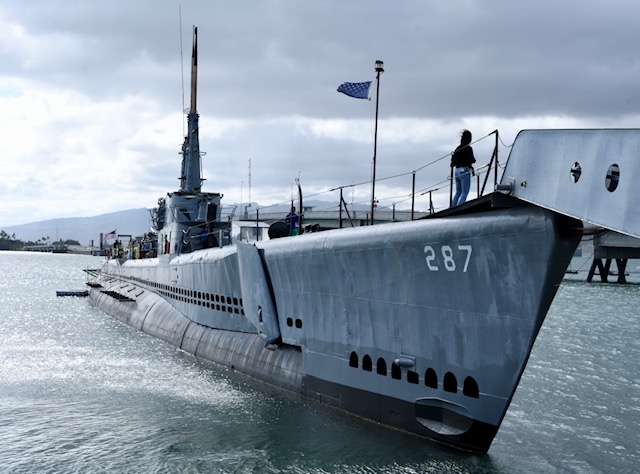
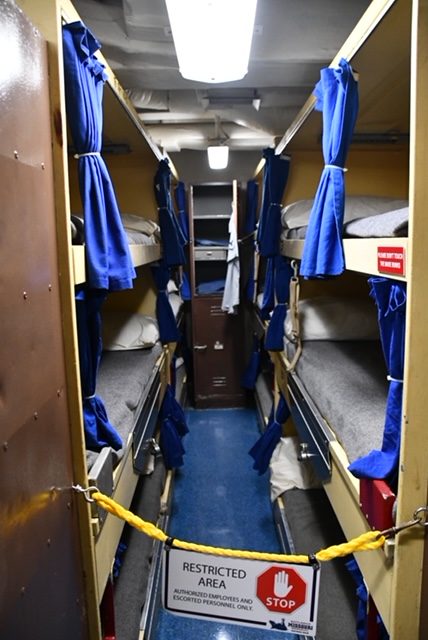
Next stop was a visit to the US Bowfin submarine that has been tied up at Pearl Harbour since 1981 as a tourist attraction. Launched in 1942, it played a part in the Second World War, serving throughout the Pacific and sinking more than 15 enemy ships. With 10 officers and 70 crew it would’ve been quite a cramped place to live. No doubt in those days the crew was kept occupied polishing the large number of brass objects on the ship. With 4 large V16 diesel engines which charged the batteries (these could only be run on the surface or down to periscope depth) it had a range of 20 thousand miles.

Dave picked me up on his way home from work. We spent a quiet evening chatting, our conversations often interrupted by the loud roar of the raptor jets practising their night flying around the island or a C17 cargo jet thundering down the runway amongst the many civilian flights coming and going.


Wednesday 20 April 2022

The water came back on during the night but schools are still closed. Dave dropped me off at the military museum in town just before it opened at 10am. Just after 10, having had a wander around the outside, I headed to the door which was still locked. A closer look revealed a sign “Closed for alterations February to December 2022”.

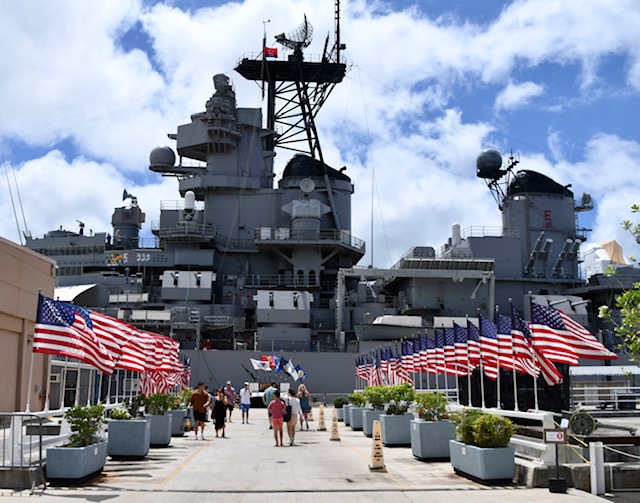
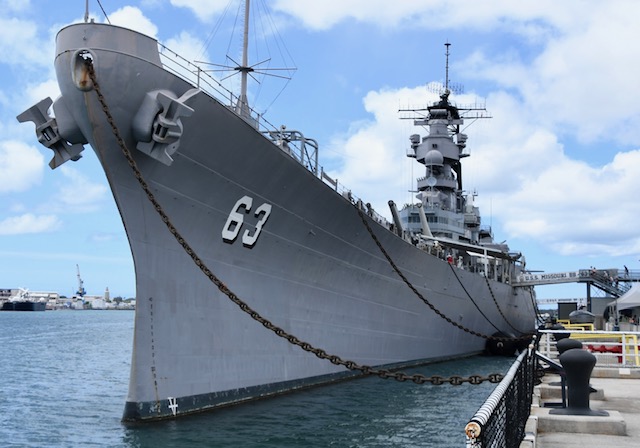
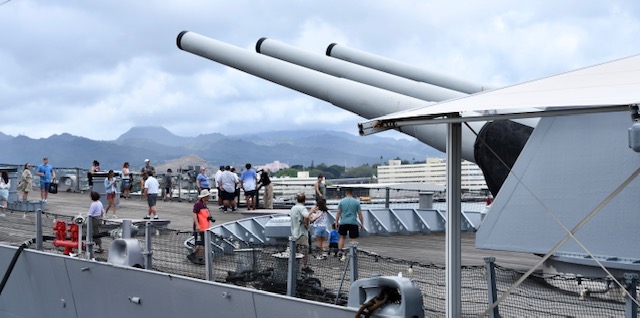
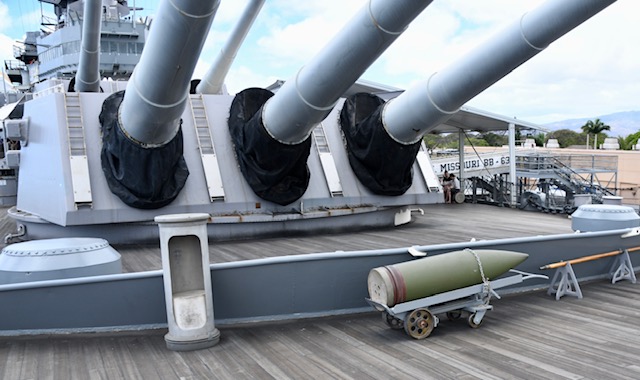
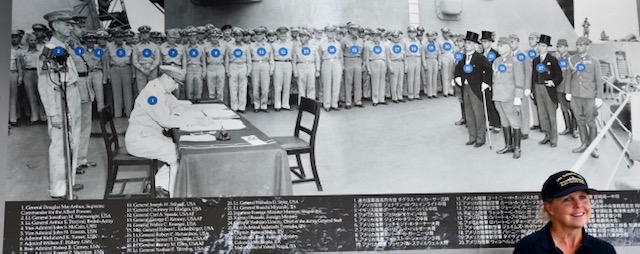
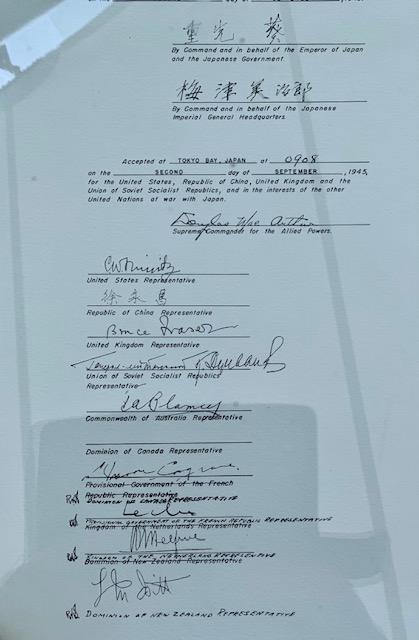
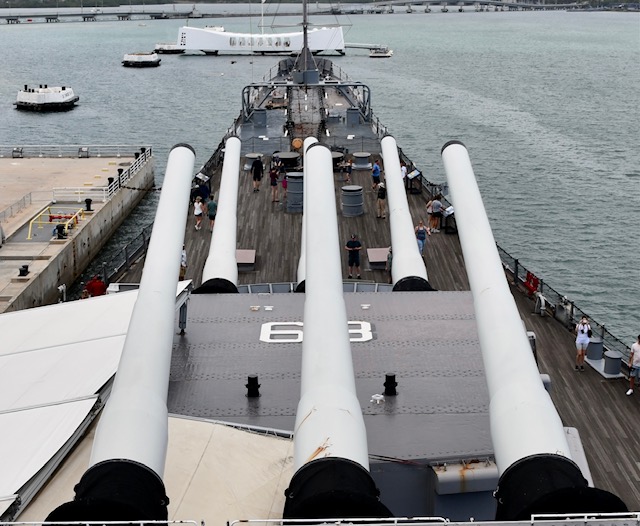
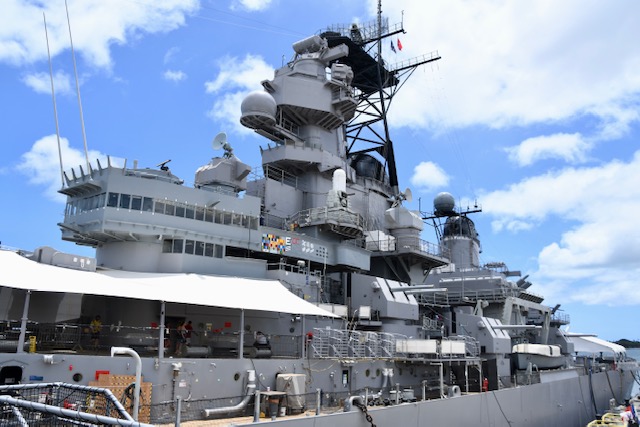
Booking an Uber, I headed back to Pearl Harbour catching the bus again over to Ford Island, this time to visit the Missouri, the 63rd and second last battleship ever made by the US Navy and the last to be finished. Launched in January 1944 the 57,540 ton battleship, with 9 x16 inch guns and other armaments, was truly a magnificent ship. 270 meters long and 36 meters wide it originally had a crew of 2700. This was reduced in the 1980s to 1800. It was where the Japanese signed the surrender at the end of World War II and there is a display on the deck where this was done, including a copy of the surrender document, which the Canadians signed on the wrong line pushing everybody else down, with New Zealand just about off the page.

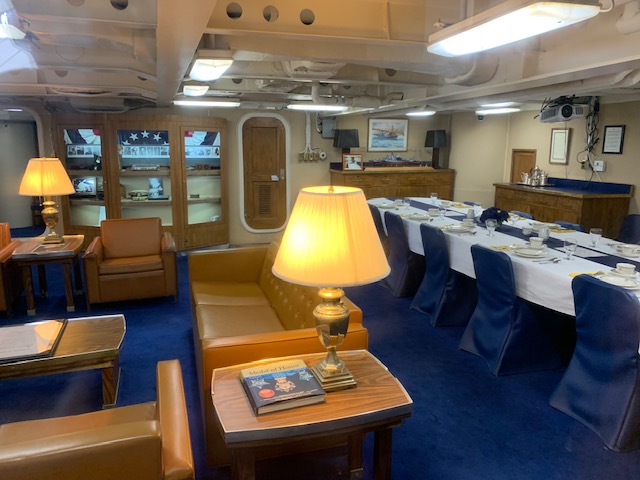
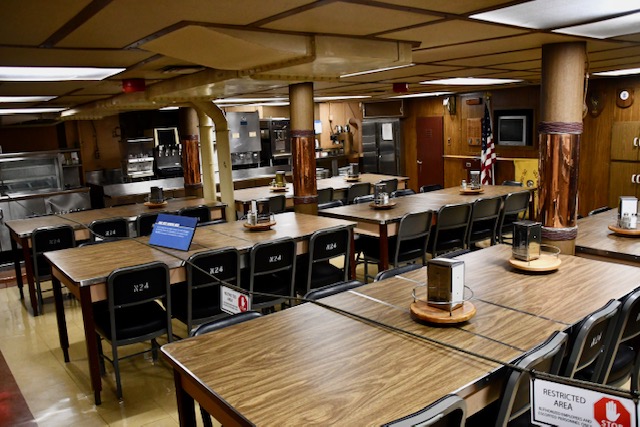
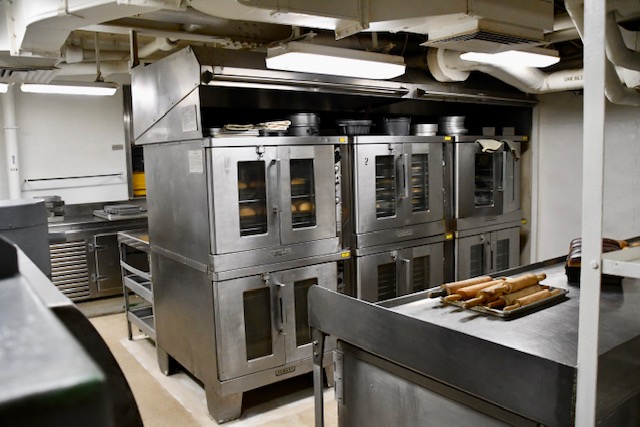
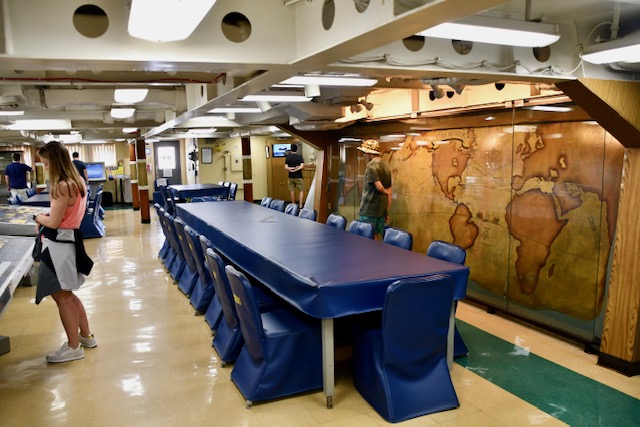
Only the main and one other deck are open to the public at present; even just navigating these spaces takes a good couple of hours and I’m sure a lot longer if you stop to read every sign. The ship saw action in World War II, Korea and was last involved in conflict in the 1990 Gulf war, firing a few cruise missiles into Iraq. Although struck from the Navy register in 1995 the ship did not arrive at Pearl Harbour until 1998, where it now attracts thousands of tourists a year. I’m sure as time goes on the lower decks will be open to the public and I will definitely be back for another visit. Its 16 inch guns could send  a 2700lb shell 23 miles in 50 seconds. Each gun operated individually; they could rotate over 300 degrees but were only fired when the barrel ends were over the water to prevent damage to the ship. Compared to the submarine there is lots of space on this ship with a large mess or dining hall for the crew, where president Roosevelt queued up with the sailors to get fed when he and his wife were travelling on the ship. There is a separate mess for the petty officers, the warrant officers, officers and senior officers. The ship has its own bakery, a post office and even an Internet room, which no doubt was added later.

Dave picked me up and we headed back to Ewa beach for some dinner before I was dropped at the airport for the flight to LA.


Thursday 21 April 2022

Arriving at LAX at 6.30 am I stayed airside heading for the International Departure terminal, hoping to set myself up in the lounge for the day. However, partly due to Covid, most of the lounges were not yet open, the Star Alliance lounge not opening till 10 am. As I had not received any results from the Covid test in Hawaii, which according to the documentation was required to into Chile, I headed out of the terminal to find a locally situated testing centre. Taxis have been banned from LA International airport, I presume for congestion reasons, so I managed to get a bus to a taxi terminal and then a rather grumpy taxi driver to the local 911 Covid testing centre. I think the taxi driver was a bit pissed off that I wasn’t going far enough and informed me that there was a minimum fee of $20.

The PCR test was really easy- after parting with 189USD I stood at the counter and the lady reached through from behind the glass and stuck the stick up my nose. I received the results 2 1/2 hours later.

Arriving back at the terminal I could not get through to the lounges as I did not yet have a boarding pass. The entering Chile process is rather complicated. You have to go online, fill out forms and wait for them to get approved. Eventually after several hours I got as far as the checkout process, which then informed me that due to Covid I couldn’t check in online. I had to wait for the checkout counter to open, so at around 2 o’clock I headed there and checked in. My Covid test wasn’t required and according to the  counter staff hadn’t been for several days. Nobody had updated the website. I did have to show a certificate to say that I had Covid insurance and that I had filled in the C19 form and that was about it – much less complicated than it appeared online.


Friday 22 April 2022

After a sleepless 10.5-hour overnight flight from LAX we touched down at Santiago Airport in Chile, where after a complicated form-filling process at the airport I made my way to the  Holiday Inn, where I spent the day catching up on a few things while waiting for Sylvia to arrive from Mexico, where she had been visiting the Royal Canin team for the past couple of days, having also visited Bogota from France in the early part of the week .


It’s a Hard Road Home

We talked a bit in the last post about traveling in the world of Covid. In Europe it’s reasonably easy. Leaving Europe to head to South America is a little more difficult. Forms and more forms. Tests and oops the results don’t arrive so its another test. Luckily Sylvia is really good at that stuff. There is that question in one’s mind, “what happens if I test positive for covid in Colombia?” All one can do is deal with it if it happens. Will lose isolation spot in NZ but go back to France after a negative test.


Friday 18 February 2022

Sylvia arrived home from work early so we could make it to the Montpellier Airport for our 7.45pm flight to Paris. Just making the flight with seconds to spare we made it to Paris, where a taxi awaited us. Part way to the hotel Sylvia gets a second call from another taxi driver who is waiting for us at the airport – we still don’t know how that happened. Arriving at the Renaissance Hotel in the Marais area of Paris we settled in for the night.


Saturday 19 February 2022

We woke to a blue sky with views over the chimneys to the Sacré Cœur church. Heading down to breakfast we observed that the hotel had been recently done up in the 1970’s style. We were here, well thats not quite true, Sylvia was, to check out some Royal Canin Pop-up stores, which have been set up to research the market in relation to cats and dogs. A short walk from the hotel passing the the Place de la Republique we arrived at the  A la Découverte de Royal Canin pop-up store.

One of the team was there to greet us and took us on a tour through the store. Just inside the entrance there is an area where people can take selfies and have them sent to them. There is a wall where people can write notes . Next there is an interactive screen one can stroke and the fur on the screen moves, dates come up which one can click on and the history of Royal Canin comes up.

Friendly staff greeted people as they came in; some bring their cats to get photographed by an onsite photographer. Her lovely dog had to be held away from the studio door while the cat pics were underway. People can also choose a personalised carry bag. There is an interactive programme which helps people chose the right cat or dog to suit both their personality and living environment.

As we wandered back past the memorial a protest had sparked up in support of the Tigre region in Ethiopia.

We jumped on to the metro which took us under the Seine River to the St Germain area where we enjoyed lunch and some people watching before wandering down to the Royal Canin L’Atelier Félin.

We were welcomed to the shop by a couple of the team members. This shop specialises in cats and in the back is an area where people can meet with a specialist to discuss cat behaviour and nutrition.  There are also some interactive screens and a friendly bunch of staff ready to offer advice to customers on what to feed their cats. Royal Canin specialise in specific food to suit your pet’s lifestyle, breed, age and, with a veterinarian recommendation, specific conditions that they may suffer from. Downstairs there is a large range of product available.

From there we strolled back to the hotel, crossing the Seine River and passing the Saint-Eustache church, enjoying the attractive streets of Paris.


Sunday 20 February 2022.

The drive to the airport was fast with little traffic until we got to the vicinity of the terminal where cars came to a standstill; our driver kept driving up the outside lane then cutting in to the traffic probably knocking 20 minutes off our journey. It quickly became obvious we wern’t the only people leaving the country.  Heading through the priority queues and striking one of the best counter guys ever, we were soon in the lounge meeting up with Sylvia’s team members Sarah, Sophie and Mathieu, who were accompanying Sylvia on the market visit.

Landing in the concrete jungle of Sao Paulo we were picked up in a couple SUV’s and headed northeast along really good, up-to-5-lane motorways. Three hours later we arrived at the Marklin Hotel in Sao Carlos around 10pm local time.


Monday 21 February 2022

We met for breakfast at 7am with a number of the Royal Canin leaders who had driven up from São Paulo last night. Sylvia and the team headed off to the Royal Canin factory in the nearby town of Descalvado. I took a stroll around the local streets. Like most South American cities there must be some really good barbed-wire salesmen here, with most walls around houses topped with barbed-wire. The streets were tidy and well-kept with good footpaths and well maintained berms.

I followed a large stormwater drain down to an intersection with a large statue of Jesus (quite common in this part of the world). There are also a few blocks of high rise apartments dotted around the city, with its population of 250,000.

At noon Plinio, a very enthusiastic manager from Royal Canin, picked me up and drove me around the rest of the city pointing out large condominium areas on the edge of town all fenced and with manned gates.

From there we drove through the local farmland to the town of Descalvado where the Royal Canin factory is. The area is full of lush farmland growing corn, coffee, grasses for stock and sugar cane. Interestingly there are four pet food factories in the town. They were originally set up here as there was an abundant supply of protein such as chicken, pork etc., and corn, however the government has started subsidising the growing of sugar cane for the manufacture of bio-fuel. Most local farmers have switched to the cane as, with the subsidies, there is more money in it. Hence the ingredients have to be sourced from much further away now pushing up the cost of production.

Arriving at the factory Sylvia and her team were still on the factory tour. I sat in the staffroom and chatted to a couple of friendly people. Sylvia and the team arrived and a few speeches were made before we headed off on the drive back to Sao Paulo, this time in a bullet-proof car. After checking into the Raddison Hotel around 8:30pm we turned in for an early night.


Tuesday 22 February 2022.

After breakfast Sylvia headed off for a day visiting stores and veterinary clinics. I headed off on foot to explore a little of this concrete jungle. With 12.4 million people crammed into 1521 km2 the central city is full of multi-storey tower blocks, many over 20-storeys high. Lots of old buildings are being knocked down and new apartments blocks going up. The city is 465 years old and the largest in Brazil and in the southern hemisphere. Heading southwest I came to the Parque Ibirapuera, a large, well-kept park with a couple of lakes and lots of pathways, trees and many stalls getting set up for the day’s trading. I was surprised at the number of people out exercising or just strolling. There are a number of museums and pavillions in the park – all closed as I was a bit early, or closed for Covid.

Next to the park is a large monument “Obelisk of Sao Paulo”, 72 meters high; construction began in 1947 and was completed in 1970. It is dedicated to the victims of the Constitutionalist Revolution of 1932. The monument itself is fenced off however underneath there is a large chamber with lots of names on the walls and several chapels.

I strolled back through another park where I saw a homeless man hauling his kit, tent included, up into a tree. From there I wandered the streets discovering another park in the middle of town, fenced and with phone and power wires strung up like cobwebs. The streets were busy crammed with cars and pedestrians.


Wednesday 23 February 2022:  Travel starts to get a bit more challenging…

After breakfast we headed to the airport for our flight to Bogota via Panama. Arriving at check in the nice lady behind the counter asked for our Covid vaccine certificate and our yellow fever certificate.  We all looked at her a bit surprised. Luckily I had my yellow fever certificate with me in a satchel I carry with all I might need one day – stuff like a spare Passport, hard copies of vaccination certificates etc. Sylvia had left hers in France and Sophie had never had the jab. The firm’s travel agent had dropped the ball on this one and not advised them of the requirement of having the vaccine at least 10-days before traveling out of Brazil to Columbia. After many phone calls and checking all over the terminal for a vaccination place it became apparent that there was no way Sylvia and Sophie could make the flight. I had to go on my own as my flight to NZ was booked out of Bogota.

I boarded the plane feeling sad for Sylvia, Sophie and the Royal Canin team in Columbia who had been looking forward to the boss’s visit for some time.

Arriving in Bogota late in the evening I was met by Tomas (the Royal Canin country manager) and his driver, who I figured out very quickly from the bulge in his jacket, was packing a gun. We headed to the car park, our driver bringing up the rear, and mounted a Toyota SUV with bullet-proof windows and armour in the doors etc. Recently one of the managers, moving with his family to Bogota, arrived at the airport with his family. The family and most of the baggage left in a bullet-proof car while he went in a taxi with the rest of the baggage. On the journey, while stopped at the lights, two blokes walked up and smashed the window to the taxi, held a gun to the manager’s head and took all his valuables, computer, passport etc. There have been lots of people here held up at knife point at ATM’s and phones snatched out of peoples hands etc. Crime has risen in Bogota with a large number of young refugees coming from Venezuela.

Arriving at the Four Seasons I was checked into a very nice suite, booked obviously for Sylvia. Tomas joined me for a drink and, being originally from Argentina, a chat about rugby.


Thursday 24 February 2022

While enjoying a good breakfast at the hotel I received a message from Mauricio, who was to be my driver for the next few days. He was waiting in the car park downstairs. Soon we were on the road and heading through the slow and dense traffic. Our first stop was the Bataro Museum. This was a mixture of some rather different art, a section about the drug wars, an area on currency over the years and a few other bits and pieces, none of which I really understood as it was all in Spanish. I did however manage to set off an alarm when stepping back too close to a painting when taking a photo.

Next sop was the military museum where I struck a really friendly bunch of people, working out I only spoke english a young soldier was called down from the next floor to take me on a tour. Rodrigos had spent time clearing mines dotted around the country left over from the FARC; about 25% of these still remain. He guided us through the museum with items in relation to various conflicts dating back to the independence war with the Spanish in the early 1800s, and many conflicts that have followed including wars with Ecuador, Peru, Panama and a number of revolutions. There have also been operations against pirates and still ongoing guerrilla war which seems to be igniting again with the FARC. A treaty was signed with them in 2016, which is represented by a gold AK-47 with a spade on the bottom of it displayed in the museum. I had been forwarded a security briefing that a confrontation with the FARC had taken place that morning some 500km north east of Bogotá where 23 terrosits  were killed so it looks like it’s not over. Columbia also took part in World War II and in the Korean War and there were good displays and equipment used in these conflicts and also a good history of the Army, Navy and Air force. All the staff are very friendly and two soldiers based outside guarding the place with their Czechoslovakian made AKs were keen to have their photo taken with me.

Next we strolled down the street past the presidential palace and round the back to the police museum. This had a good section on Pablo Escobar, including a poster with the 100 million Peso reward offered at the time of his capture. Not sure if anyone got paid out. There were areas on crime detection, bomb disposal and other bits of history.

We strolled back across the Plaza de Bolivar and past the Cathedral Primada de Colombia. Lots of traders and stall holders were set up around here selling both food and general merchandise.

Next stop was at the bottom of the hill which has Monseratt on top. We brought a ticket for the steep cable railway carriage which hauled us to the top.

Dismounting the car we headed up the many steps to the church as the rain closed in, the views over the city fast disappearing. After a quick look at the church we headed back down the steps to a large restaurant to enjoy a local lunch. On leaving the restaurant I had a few problems paying as their eftpos machine was not getting a signal, and to make matters worse I had no locals in my wallet; luckily it sorted its self so I avoided the embarrassment ment of having to ask Mauricio to pay.

We mounted the car and headed back down the hill, passing the upcoming car on the way.

Next we headed to the gold museum; with its large vault doors this place was simply amazing. All the gold objects had been dug up from various Inca and Mayan tombs, some dating back thousands of years. It can only be described by the  few pictures I took as i don’t have the words to describe it. The leaders, kings or rulers from those times really left us a legacy from the burial rituals that took place in their belief in the afterlife. I left thinking that from our time now there will be nothing left on earth when we move on to give those 1000 years in the future any inclination is to how we have lived in the past few hundred years. I don’t think any of our leaders today or the wealthy people amongst us will leave behind them a legacy such as left by these great rulers of the time. There was a shop on the ground floor where one could purchase gold plated copies of some of the jewellery worn back in those times.

Arriving back at the hotel I enjoyed an excellent massage at their spa, administered by a masseuse who was incredibly strong in relation to her size.

That evening I enjoyed a dinner with the Royal Canin Colombia leadership team, which had been organised for them to socialise with Sylvia and Sophie. They are a great group of people all dedicated to making a better life for cats and dogs.


Friday 25 February 2022

Mauricio was waiting bright and early, our first stop being a testing centre to get yet another covid test. The first place did not do the tests for travel however the next stop was successful with the aid of the camera on google translate to get the form sorted. The staff were really friendly and with no one waiting we were soon on the road out of town.

Heading to the Salt mine at Zipaquira, 45km from Bogota, I have never seen so many busses all on a seperate road alongside the highway; they were at times nose to tail almost like a train. Long bus stations are alongside the bus road catering for thousands of people. One would think with all those buses there would be little traffic. That was not the case – it took us 2.5 hours to make the journey. Even as we entered the toll road with its fully digital gates the traffic only reduced a little.

Arriving at the mine site we bought a couple of tickets and headed down the drift into the mine. Like many mines the main tunnel had tunnels off to each side where they had pulled out huge quantities of salt. A lot of these have been turned into catholic type shrines with crosses and various coloured lighting in them looking very effective. The main tunnel wound its way down into a big area which had round columns, churches, shops and even an Egyptian area with gold painted statues and a story about the Egyptian leaders etc. There was also a spa and lots of coffee and souvenir shops.

Finally we ended up at the salt mining experience. At a counter we were given a hat with a light on it and headed off into some small tunnels with no lights and a rope to guide us  through the small tunnels to get the full experience of what it was like to be a miner in the old days. Popping out into larger tunnels every now and again and being able to look down in to the halls below it was an interesting experience.

Finally we arrived at the salt face and were given a pick and told to get some salt, it didn’t exactly fall of the walls and it took a fair few swings to get a good hand full of salt.

We wandered down to the end of the tunnel and hopped on a little train and were taken out of the line on a lower drift and back up to the main site.

After some lunch and a drive through the local town we headed back to Bogota.

On arrival at the hotel I thought it would be a good idea to check in for tomorrow’s flight to Guatemala then Los Angeles.  We had booked the flights back on the Opodo app: WARNING DO NOT USE! It had come through in French. I did the check in to see I had a seat in economy after paying for business class. I rang the UK number which would not take the booking number and cut me off. I then tried that horrible chat bot thing. An hour or so of that I got to talk to a human, well it told me it was. It must have been infected by a bot because after telling me to ring a  Belarus and then a Swiss, and finally an English number none of which worked I basically got nowhere.

Later that evening Tomas and his wife Josefina picked me up and we headed out to a very nice Japanese restaurant for a very enjoyable evening.


Saturday 26 February 2022

I woke at 0500 and decided I had better see if the check in for my flight to Guatemala had gone through. It had so I decided to check in for the next leg to LAX. It wouldn’t let me check in so I had a closer look to find that  they had put me on the flight to LAX the next day meaning I would miss the LAX to NZ flight and the quarantine date. Not wanting to try the bot again I just booked another fare for today. Arriving at the airport nice and early Mauricio escorted me around, gun still on hip. Arriving at the Avianca Airlines counter the staff were very helpful and got me a business seat sorted to Guatemala. The next one they said I would have to sort there. I said goodby to Mauricio and boarded the flight.

I  sat down and checked my phone to see there was an email from Avianca to say they had cancelled my next booking due to suspicious activity. Arriving at Guatemala I spent some time at the counter sorting that out and just managed a seat down the back as the flight was full.

Arriving in LAX I headed to immigration and struck quite a friendly chap at the counter – well he was until he flicked my passport open at a page with a visa to Turkmenistan on it. Instantly he was my friend no more. After some minutes of questions on why and what I travel for and a look at our blog site he said I cant get the system to work for you – wait over there. He closed up his booth and disappeared returning 20 to 30 minutes later with a Chinese woman. “Come with me”. She led me into a room with a long stainless steel bench. After some minutes of questions holding her clip board close to her chest so I couldn’t see what she was writing down. I said “excuse me I don’t mean to be impolite but if i don’t get going I will miss my flight to NZ and have to stay here till the 13 of March as I will miss my quarantine spot. She said “we wouldn’t want that”, got my passport stamped and sent me on my way. I checked in at Fiji airlines and the lady on the counter said you had better hurry as the gate is 30 minutes away. I headed through security and entered the tunnel that now goes right under the airport to the gate on the other side, my name being called as I was 150m from the gate. The plane was a brand new Airbus 350-900 with a really comfortable business class lay out, very attentive and enthusiastic staff who didn’t disappear and hide after the meal was served like most cabin crew do these days.

Arriving in Fiji I was watching a movie and never even felt the plane land. After 5 hours in the lounge at Nadi I boarded the A320-200 for the flight to Auckland, along with 8 others!!! 4 in business class and 5 in economy class  and a few crew down the back doing some study.

As i write this I am in my last day of quarantine and will hopefully be out and free tomorrow unless someone in the government changes their mind.


A visit to Thun, Switzerland – the home of B&T precision gun makers.

Friday 11 February 2022

Thank you to all those commenting on the Blog. We really enjoy reading your comments.

Feeling slightly guilty about the  ease of  travelin Europe and having looked up on line that there were no Covid restrictions preventing us from traveling to Switzerland, we set off by car at noon for the city of Thun. With people being responsible and using easily available RAT tests to monitor Covid, and self isolating as required, business continues with minimal interruption. The driving in Europe is pretty easy, especially in France with good quality toll roads, and we sped along at 130kph reaching the Swiss boarder at Geneva in around 4 hours, passing Orange, Lyon and Grenoble. At the border we were pulled to one side to purchase a road toll pass for 40E, which is valid for the year. Just out of Geneva heading up the east side of the lake the traffic came to a standstill, the GPS telling us it was going to be 55 minutes to cover 5kms. After 15 minutes or so we were directed to turn off to the left and headed up a narrow winding road which we followed for about 15 minutes before heading back onto the motorway, having bypassed the traffic jam. The motorways here are great too with a speed limit of 120kph. With a great view of the alps across the lake we continued northeast heading up into the hills towards Bern.

Passing Bern we headed southwest, arriving at Thun around 7pm. Checking into the Seepark Hotel on the lake front we headed into the restaurant where we enjoyed a Michelin star dinner before turning in for the night.


Saturday 12 February 2022.

After a late breakfast we took a stroll around the waterfront into the town centre, built around the canals that run through the town and passing the old Scholoss Schandu (Castle Hotel), built in the 1800s. Not far down the canal we boarded the Schiffahrt for a cruise of Lake Thunersee. Heading a short distance up the canal we were soon out on the lake.

The scenery on the lake is up there with one of the most picturesque boat tours I have ever done; up there with a trip on the Earnslaw on Lake Wakatipu in the South Island of New Zealand. We managed to secure a table on the top deck and enjoy a leisurely long lunch as the boat made its way up the left side of the lake, stopping at many picturesque towns to drop off and pick up passengers. There is a real mix of the old and the new including large mansions from the 1800s intermingled with the more modern chalets and houses grouped together and spread out over the hillsides.  About half way up the lake the boat started to criss cross its way up the lake calling in on villages on each side. Mountains run up the right (west) side of the lake, all spectacular and of different shapes. Just about all have a building or mast on top. Some houses are perched in places that look impossible to access.

I decided to get adventurist and try out a local cheese dish (raclette). A little burner was placed on the table powered by some candles, the idea being to melt the cheese and drizzle it over the potatoes that came with the dish. Not quite enough heat made it a long, slow process, by the end of which I was a little cheesed out.

Many houses along the way had boat sheds alongside or underneath with the boats conveniently all raised above the water on a hoist.

A road runs along side the lake sometimes heading up into the steep cliffs and cantilevered out over them with many narrow tunnels carved into the solid rock.

Reaching the top of the lake we headed into a canal that took us into the town of Interlaken where people take the train to head up to the many ski fields in the area. The sky above the town was full of Paraponts  with their pilots dangling below them as they glided through the very calm and clear skies.

There we waited a few minutes while people disembarked and boarded before starting back down the lake.

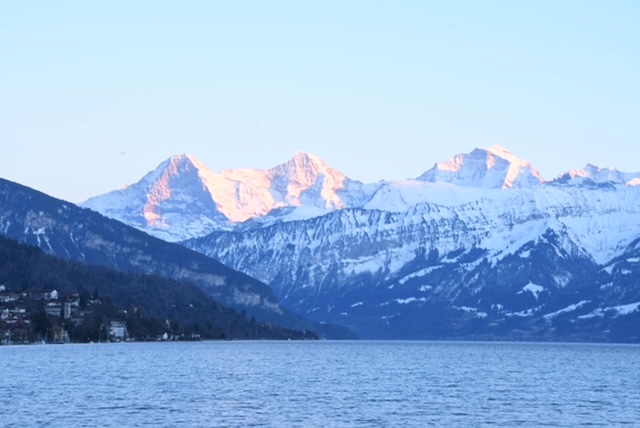
There is a canal that links with Brenzersee, a second lake, and during the summer they extend the cruise to include that lake too. It was great to see the landscape from the other side as we headed back down the lake getting a double dose of the scenery. The odd boat was on the lake fishing for Northern pike and trout. As we looked back up the lake towards the end of the journey we had great views of the three great mountains this region is famous for; the Eiger (left), Munch, and Jungfrau. There is a railway line that runs under the summit of Munch to take passengers to the Jungfraujoch, a restaurant and observation area including an ice tunnel through the glacier, that Sylvia had visited back in 2001. It is situated in the saddle between Minch and Jungfrau. At night from the hotel one can see lights up there.

Disembarking we took a stroll through the town passing over the wooden bridge, that contains the old the wooden weir that controls the outflow of the lake, to the local castle, also now a hotel, built around 1200AD. Some nice young tourists from Albania asked that we take a couple of photos of them to which we obliged.

On the way back to the hotel we passed the thousand plus year old  Scherzligen church with history going back to 900AD


Sunday 13 February 2022

After a relaxing morning and a late breakfast Sylvia headed off for the drive back to Nimes. Early afternoon Casca, from B&T, picked me up. We headed along the lakeside road which gave me another perspective of the stunning landscape. After passing through the narrow tunnels on the cliffs and the narrow cantilevered bridges we arrived at Interlaken where we enjoyed a yarn and a drink in a very nice cigar bar. It was again a stunning day with great views of the surrounding mountains. We then headed down the west side of the lake stopping at the village of Aeschi bei Spiez where Mark lives to enjoy a late lunch at the Chemihutte, a large busy and well-run restaurant overlooking the lake.

Casca gave me a rundown of how the village works: each household, as in most towns, contributing to the maintenance of the town and the local bomb shelter where everyone has a spot reserved. Most towns and cities in Switzerland maintain such structures. Since the mid 1800s the Swiss have been digging fortifications and shelters to protect their population from invaders. In 1882 the 15K Gotthard double track rail tunnel was completed with fortress tunnels linked to it. More tunnels and fortifications were added over many years and during WWII. This is known as the “National Redoubt” and secured the mountainous central part of Switzerland providing a defensive area for a retreating Swiss army. They also have huge underground complexes containing hospitals, nuclear shelters and more. Some have been closed over more recent times. Many are now museums. Switzerland is one of the few countries that still has national service, where people between 18 and 20 are called up to do military service. This is well supported by the population as last time the left wing pushed for a referendum to remove it 72% of those that voted wanted it maintained. People I have spoken to over that past few days that have served all believed that it gave them a good start to life, learning self-discipline, independence and much more. With reservists and regular soldiers they have an active army of some 120,000. People that object to military service do a stint working for the community such as in rest homes.


Monday 14 February 2022

Casca (Technical Support Manager Europe for B&T) picked me up from the hotel and we made the short trip to the B&T Headquarters and factory in an industrial area on the edge of town. Casca, originally from the US, has been in the gun business for many years, having worked for several of Europe’s other firearms producers. I was taken to a conference room where Casca gave me an in depth presentation on the extensive product range. This was a real insight into the prestigious side of Swiss precision engineering, attention to detail, good organisation and logistics. Today the business is 31 years old, started by company owner Karl. Starting as a mechanic and having just completed a stint in the Swiss army, he started making suppressors. Over the years the products have developed to include a range of rifles, assault rifles, submachine guns, pistols, suppressors and accessories. Employing a hundred people, they maintain guns for the Swiss Army and supply guns and accessories to police and militaries world wide. They now also have a factory in the US.

Their latest product is the APC9 Pro weapon System that has a selection of lower receivers to accomodate different types of magazines. This weapon was recently adopted by the US Army as the next generation Sub Compact Weapons. Part of what won them this tender is that 15 weapons were disassembled and all the parts thrown into one box and reassembled from the mixture of parts. All the reassembled guns worked perfectly when reassembled with the mixture of parts. True precision engineering.

They make all the accessories for their guns as well as accessories and suppressors for other companies. Another innovation has been to research the ability of police to shoot, which worldwide is not too good. Even at 2 meters one has a 62% chance of being missed by a new cop.

As a result of this they have developed the universal weapon with a stock to give police a better chance of hitting a target at a longer range with less chance of hitting an innocent bystander .

The presentation included the full range of products including guns for firing less-lethal  ammunition. The non lethal 40mm launcher fires a foam type projectile to incapacitate a person causing them minimum harm. A number of these have been sold to the NZ police.

After lunch I enjoyed a tour of the factory with its large number of well laid out C n’C machines.  That evening Karl picked me up at my hotel and we went into town for a meal at a very nice Italian restaurant, where we we chatted about the growth of B&T over the years and the city of Thun with its low crime rate and good standard of living. I met Karl and his team at the MilPol (Military Police) show in Paris last year and they very  kindly invited me to pay them a visit.


Tuesday 15 February 2022

Arriving at B&T mid morning Casca took me into one of the internal shooting ranges where I got to try out a number of their 9mm Sub Machine Guns and a couple of pistols. Over many years I have fired many sub machine guns. These ones are excellent with excellent recoil management, accuracy and trigger operation. All are fitted with Aimpoint sights making it easy to engage the target. Some I fired had suppresser fitted and some without.

Next I tried out the USW (Universal  Service Weapon) with its fold out stock, which extends the pistols accuracy considerably.

Next I got to shoot the YP9 (Veterinary Pistol) Modelled off the rare Wellrod, originally made for the SOE during WWII. The VP9 is bolt action with a 5 round magazine. It is a suppressed pistol, primarily used by vets for quietly putting down wounded or sick animals in urban areas. It comes complete with a well laid out case including accessories. One of the suppressors, like the Wellrod, has rubber baffles to make it very quiet.

Original Wellrod Pistol

The range visit over, I enjoyed another lunch with Karl, Mark and a couple of others.

Next was a tour of their shop/show room with its great range of B&T firearms plus a range of outdoor clothing and products. Out the back they have 10 and 25m shooting ranges.

The visit over Casca dropped me back at the hotel passing on the way the local Tank practice range right on the edge of town. Thun has a major army training centre where most of the Swiss soldiers come at some point of their training. Swiss soldiers still take their firearms home with them where they keep it until the next training session. There is little gun crime in Switzerland.

I really enjoyed the experience of visiting B&T and enjoying the people and the opportunity to see true Swiss precision in action.


Wednesday 16 February 2022.

After an early breakfast during which I watched a young lady come down to the lake front, as she had done the day before, strip down to her bikini and go for a dip in the lake – the water was probably a little warmer than the -2 degrees showing on the local outside temperature – I strolled the short distance to the local train station. Like most of Europe there are a selection of tracks and a number of platforms. The countryside is interesting with a mixture of farmland and villages almost adjoining . A train change at Bern and soon we were underway to Geneva, heading into the mountains and then down alongside Lake Geneva arriving at the station in about 2 1/2 hours. Then a 2 1/2 hour stopover at the station in Geneva. There are no places to leave bags at stations any more so I had to hang around the train station before boarding the train to Lyon. Interestingly on the trip through Switzerland nobody came and asked for my ticket and there was no sign of any police or military. As soon as we crossed the French border police boarded with a sniffer dog and went right through the train the dog sniffing every bag. I just took my mask off to have a drink and a policeman said “put it back on as there is a €150 fine if you don’t”. For some time the line followed the Rhone River through the hills before heading out into the rolling country and arriving at Lyon. After another couple of hour break we were sure soon rolling out through the suburbs of Lyon. Interestingly, like in many places in Europe, people have planted their vegetable gardens alongside the railway line or within little fenced off plots, which look to be well cared for and maintained. Arriving at Nimes’s Pont du Gard station about 15 minutes late Sylvia was there to pick me up and we headed home for a quiet evening.

Friday we head to Paris for a couple of days as Sylvia has some meetings there, then to Sao Paulo in Brazil for 3 days, then Bogotá in Colombiaro. From there I head back to New Zealand where I’ve managed to fluke a quarantine spot. Sylvia will head back to France.


To Sweden to Hunt

Monday 17 January 2022

Arriving at Auckland International airport it was even worse than last time. This time I am on an Air NZ flight to Los Angeles; unlike with Emirates there is no business check-in, not that it mattered too much as there were few people there. This time once through customs, and security, ‘duty expensive’ (free) was open but no cafes, restaurants or other shops.


Boarding the 787, the business class area was reasonably full. Down the back everyone had a row of seats to themselves; the aircraft has a capacity of around 250 passengers and there were only about 80 on board. Landing in LA 11-hours later it was a different story with lots of people around but only half the number from the pre-Covid days. A few hours in the lounge and then onto Las Vegas for the Shot Show. Arriving in Vegas, being a creature of habit, I checked into the Treasure Island hotel at half the price I paid a couple of years ago. Soon I was in the bar on the ground floor, catching up with good friends Dave and Mike. Dave is living in Hawaii just now and is able to travel freely. He, wife Chrissie and daughter Ruby had come over a week early to do some skiing in Utah.


Tuesday 18 to Thursday 20 January 2022

The Shot Show got underway this year, unlike other years there was no range day on the Monday. Dave and I had been invited along as a guest of Aimpoint, who manufacture the best red dot sights in the world. Heading into the show it was pleasant to see that there were not the crowds that are normally there; in previous years if one stopped in one of the many aisles you would get shoved along. I headed straight for the Aimpoint stand, which had been in the same place for years, to find it had been moved from the back to the front near the main entrance. Not only was the number of visitors down but there were quite a lot of suppliers absent, some with signs up in the space they normally occupy saying “see you next year”. The Strip also hosted less traffic than usual.

The first night we were invited to the Aimpoint function at the Hofbrauhaus Las Vegas, set up like a large German Beer hall with beer served in huge steins. There we enjoyed a great meal and a good catch up with a few people we hadn’t seen for a while. At one point a couple of blokes came in with two long wooden horns and blew away.

Having had a bilateral release done on my knees on the 20 December I was not able to cover the distance around the halls at the show as well as in previous years, only walking 4 to 5 kms per day.  As usual there were lots of new products on display, one a remote controlled mini gun in 5.56 caliber with a variable rate of fire. Could be handy for reducing the south island rabbit population!! Robotics are becoming a big thing in the defense world; one such item was a dog-like device that when kicked over simply turned its legs around and stood up the other way.


Friday 21 January 2022

Arriving at the Vegas airport early I was informed I had to do some online tracing forms for the UK government. I had booked a Covid test to be done within 48 hours of arriving in London as required. The Virgin check in staff just said take a seat and do the form online. At some point I had to put in the form the booked Covid test number; it did not work. I asked the staff who said that happens; you just have to book another Covid test. I did this with no success. Eventually I asked for the supervisor, who directed me to an obscure number hidden in the test reply. That sorted I checked in and boarded; the airport even has gaming machines at the boarding gates for people to get their final fix.

Again on a 787, this time with only 50 people on board, I did note that the standards of crew presentation and service had declined since I last flew with Virgin a few years ago.


Saturday 22 January 2022

Landing in London I headed to get my Covid test at the airport. The process was friendly and easy; the nurse doing the test said you will get your results in 30 minutes by email and I did. 35 pounds for a test with the results in thirty minutes made the one I got in NZ before leaving at a cost of $375.00  with results in six hours look super expensive.

I headed to the ticketing machines for the London Express and hadn’t got there when a friendly lady stepped in front of me and said “are you looking for a ticket on the express?” Yes! “I can do it.” She pulled out a little screen, booked me a return ticket, I tapped my card and a little box on her belt spat out a ticket. She explained where to go to catch the train and in a few minutes I was heading into Paddington station at 160 kilometres per hour.

Arriving at Paddington I got the Tube to a station near the hotel. As I was exiting the station I looked at my phone. As I did a service guy steps up and says “where are you heading sir?” I told him the Como Metropolitan Hotel. He said don’t worry about a taxi just jump on bus 6 and it will take you straight there, then walked outside with me and pointed out the bus stop.

My friends Richard and Melissa had sorted me a stay at the Como Metropolitan. On arrival the staff welcomed me and the duty manager showed me to my room on the ninth floor overlooking Hyde Park. The service I received here over the next few days was outstanding to say the least.  I opted for a massage at the spa and the guy with hands of strength gave such a good massage I went back the next day for another one. The food in the Nobu Japanese restaurant was outstanding.


Sunday 23 January 2022

Late morning I headed to Clapham on the tube to visit my cousin, Molly, who had just returned from an isolated few weeks in hospital. Just before she was due to come out her husband Murray had been taken ill and also gone to hospital. Because of Covid neither had been allowed visitors. Molly’s sister, Anne, and Murray’s sister, Roz, had come from Wales and North England respectively to lend a hand while Molly recovered at home. Anne is my only other cousin, who I had only met once before on a trip to Wales in February 2008. After a long relaxed lunch Anne and I wandered up to the park (Clapham Common) to walk her dog and chat. By this time the light was fading on this dreary London day and it was time to head back to the hotel for a quiet evening. I had forgotten just how deep the underground is under London, with the long  escalators hauling one back to the street level when dismounting at Clapham. Also the the number of no-longer-used chimneys that grace the old buildings in this part of south London.


Monday 24 January 2022

The first task of the day was to get a second Covid test to let me into Denmark and Sweden. This I did at Victoria station, another swift and friendly experience. Unlike NZ the Brits have really got their testing sorted. Hoping the results would show up negative after all the people contact in Vegas, 30-minutes later I logged on to the test site to confirm a negative result. Testing positive would have meant staying in London and isolating for 10 days – not something I had planned for. I had at this stage had a ‘do nothing email’ from the NHS saying i had been in contact with someone with Covid, probably from the flight and the efficient contact form we had done before leaving the US.

Later in the day I joined Anne for a stroll in Battersea Park, which is situated beside the Thames river. Another dull London day and the bare trees didn’t make for the best park I had ever seen. I am sure it is a lot better in the summer. In spite of the weather there were lots of people out and about, many walking dogs. We enjoyed a late lunch at a cafe in the park and a bit more of a stroll before the day ended. It was really great to catch up with Anne after all these years.


Tuesday 25 January 2022

I headed off early to Heathrow on the Express, arriving in plenty of time for the flight, which did not have a gate showing this early. I decided to go the the Star Alliance lounge at gate B as SAS airlines is part of that. After a long walk to the lounge I was told go back to gate A and use the Lufthansa lounge. Off I headed and on arriving at the lounge I checked the walk app on my phone to find it had been a 3km journey! As we flew out of London on a nearly empty plane the country was covered in a thick cloud as far as one could see.

Arriving in Copenhagen there was not a question about Covid; it was just a quick check of the passport by a friendly immigration lady and off to catch the train to Malmo in Sweden. After crossing the long bridge between the two countries we stopped at the first station, where police came through the carriage wearing gas masks, checking passports and covid tests. Arriving at Malmo I taxied to the Malmo Live hotel, where I had a room on the 11th floor with good views over the city.

After spending the afternoon catching op on a few things I headed to the 25th floor restaurant. Greeted by a very engaging maitre’d called Cassie, I was seated at a table by the window with great views over the brightly lit city. I ordered the main dish of halibut. My friend Ross and I had caught a few of these in Alaska some years ago. The food was great as was the atmosphere and the service from the staff.


Wednesday 26 January 2022

Erick, from Aimpoint, picked me up from the hotel early afternoon and we headed off to pick up a few provisions in preparation for tomorrow’s hunt. My friend Dave and I have known Erik and the Aimpoint team for many years and a couple of years ago we helped with the making of Aimpoint Hunts The Globe 4 in New Zealand.

Arriving at the hunting lodge,a former golf course, we had a look around. The former club rooms have been turned into a trophy and meeting room with trophies on the walls. One part of particular interest is the collection of rows of deer heads dating back to the late 1800s.

That evening we were joined by several people who had driven from various parts of Sweden and Denmark for the hunt. After a great roast pork dinner and a good yarn we headed off to bed just after midnight to ready ourselves for the hunt in the morning.


Thursday 27 January 2022

We were up early, but not as early as Erik, who had headed out in the dark to put up signs ready for the hunt. After breakfast we gathered in the lodge for a briefing, which was all in Swedish, not  a word of which I understood. Fortunately Erick had asked Carl (on the left in photo below) to accompany me to make sure I didn’t  shoot anything I wasn’t supposed to. There is a fine of E1000.00 if one shoots a sow above a certain size; there were only a number of fallow deer that could be shot including one big stag.

After the briefing we headed off in a convoy to the hunting grounds, peeling off near the stand people had been allocated. A short walk from the car we arrived at our stand, overlooking a swampy bit of bush. I climbed up and Carl joined me. The beaters with dogs worked the woods around us to drive out the game. We had been in place only a few minutes when a roe deer wandered out of the scrub and stood 10m away looking at us. “thats a young buck – no shooting him” Carl said in a whisper;  he wandered off back into the scrub none the wiser.  The dogs sparked up nearby and then we heard a shot – someone had got lucky. Then a young boar came racing out of the scrub, running right past our stand with a dog on his heels. Another no shoot as the dog has to be at least 5m behind to shoot. Eventually a small pig dashed in and out of the scrub but too fast for me to take a shot. After an hour or two we moved back to the vehicle and drove to an RV for a debrief, where  everyone reported what they had seen and what had been shot.

We then headed off to the next stand; as we were approaching a fox took off from right beside the stand. Someone in the next stand got him as he went past. The dogs and the beaters passed by several times. As we looked into the trees we sensed something behind us, looking around just in time to see half a dozen fallow deer disappear into the trees. That session over we headed back to the lodge for a fantastic lunch.

The next stand was at the top of a little gully with a good view through the trees. The wind funnelled up the gully and at about 5 degrees C, after an hour and a half it got a little chilly. Again we heard lots of shots from the surrounding stands but nothing came our way. That’s hunting, it’s just really great to be out there doing it.


After another debrief we headed back to the lodge where the game were laid out: 2 foxes, a number of deer including a big fallow stag, and a number of pigs.  The beaters lined up on one side of the game, the hunters on the other and a short ceremony was carried out to show respect for the game. Magnus Samuelson, formerly the world’s strongest man, who, along with his brother, stars in many of the Aimpoint hunting movies, was also in attendance.

Most people headed off on their long drives home with Erik, Magnus, Janne and I staying another night. It was great having a good catch up with Magnus, who I hadn’t seen since making the movie in NZ in 2019. The four of us chatted the evening away enjoying a traditional meal on a board.


Friday 28 January 2022

Erik headed off very early to go an a hunt at another place, where he didn’t have to do the organising. The rest of us enjoyed breakfast before we headed off, Magnus to do some filming. Janne, who I had shared a room with the first night (my snoring didn’t even wake him or was he just being polite) dropped me off at the Malmo railway station before heading home to Stockholm.  I took the train to Copenhagen airport.

Arriving at the airport very early for my flight I strolled up to the Brussels airlines counter and said to the lady behind the counter “checking in for the 1500 flight to Brussels”. She looked at me a bit surprised. I jokingly said “am I not allowed on your airline?” She said “not to Brussels today as there is no flight”. I gave her my passport and she checked and found that I had booked for tomorrow. Bugger! She said “don’t worry people do that all the time but most turn up a day late”. Emily was very helpful and suggested I could stay the night and explore Copenhagen or get a flight with SAS and I may be able to bet a refund from Brussels Airlines. Soon I had a flight organised an SAS flight and a refund underway from Brussels Airlines. I checked in and headed through security to the lounge. Magnus had given me a couple of cans of a new protein drink he is developing which I had put in my jacket pocket. Security confiscated them. They wouldn’t even let me drink them there due to “Covid”. After a few hours in the lounge I headed to the gate and got on the plane to realise that I had left my jacket in the lounge. Bugger! some days just don’t go well.

As we flew south over Germany the whole of Europe seemed to be coated in cloud. Descending down through thick cloud to land at Brussels, as I left the arrivals I was stopped and asked to show my tracing form, an online document that I didn’t have. Moving back behind the line I filled it out but it would not work. A helpful staff member had several goes but he failed too. I went back to the checkpoint where they got the police involved, who very kindly gave me a paper copy to fill out.

I was met at the exit by my friend Rian. He is based in Brussels as the NZ Defence Attaché with his wife Jo and son Liam. They were quite excited to see me as I was only the second visitor they had had since arriving in mid 2019. They have spent months in lockdown and even now Rian only gets to go to the office once a week. We spent Friday evening siting around the kitchen table having virtual drinks with with a bunch of generals from some of the other partner forces Rian works with. We enjoyed a variety of pies supplied by the Australian general along with some nice wine as they were celebrating Australia Day .


Saturday 29 January 2022

After breakfast Rian and I headed east on the motorway towards Luxembourg. Rian is somewhat of an authority on military history; a few years ago when he was based in the US he took me on a very interesting tour of Gettysburg. This time we were heading for the town of Bastogne, where the Battle of the Bulge took place towards the end of WWII. This is when the Germans, at this point losing the war, decided to make a big push against the Allies and turn the tide by pushing right through from the Ardennes area to Antwerp to cut off Allied supplies. They split the allied forces and encircled the lines so the Axis powers could negotiate a favourable peace treaty. On the 16 of December 1944 due to a combination of allied overconfidence, preoccupation with offensive plans and lack of air reconnaissance due to bad weather, the germans  attacked a weakly defended part of the allied lines with around  410,000 men 1,500 tanks and assault guns, 2,600 artillery pieces and a thousand odd aircraft.

The Americans put up tough resistance on the north shoulder to the west around Eastbourne Ridge into the south around Bastogne and blocked the German access to key roads to the northwest and west that they had counted on for success.  The battle lasted until the 25 January 1945 with the Germans advancing less than 100 kilometres at the furthest point, only to be driven back again. With close to 100,000 casualties on the German side and the loss of many tanks and aircraft this weakened the German forces considerably. It was the toughest battle the Americans endured during WWII. The Allied forces suffered nearly 70,000 casualties and lost many tanks and aircraft also.

First we visited a museum in Bastogne; this was once the German officer’s mess and is run privately by a couple of keen collectors. It has really good displays and battle maps plus a room one can sit in that simulates the bombing and fighting in the town.

Many of the items in this 101 Airborne Museum had been collected locally, much of it having been left behind at the time of the conflict. Bastogne was held during most of the battle with supplies being parachuted in and reinforcements making it through to the town.

After the museum we enjoyed some lunch in town before heading to the the Bastogne War museum, which unfortunately was closed for maintenance. Across the road is the US Mardasson Memorial. Tall and shaped like a US star it is impressive. The names of all the fallen US soldiers are engraved on the walls of the memorial as are all the States. In spite of the foggy Belgium weather (apparently its been like this for months) the views from the top gave a good appreciation of how hard this country would have been to fight in with its open rolling hills and valleys.

Next we drove out to Foy where Easy Company (famous from the movie ‘Band of Brothers’) from the 101 Airborne were dug in only 100m from the German lines, with the trees in the forest giving them some concealment. The shell scrapes are still visible. A memorial stone has been placed near the site with the names of those that died here on it. The movie Band Of Brothers has revitalised interest in this area.

From here they attacked the town of Foy with the company spread out across the town, having no communications and being pinned down by snipers. Lt Ronald Speirs made a dash through the German lines, running down the main street to communicate with the rest of the company. That done he then ran back the same way. As I understand it, the Germans were so taken by surprise that they hardly even made a serious attempt to kill him. Standing on the corner, looking up the main street near the houses that had the snipers in and that still have bullet holes showing, it’s hard to believe he survived one run let alone two.

We than went to another forest with fox hole remnants, where some German soldiers had turned up with a white flag. They had a message for the US General asking him to surrender within two hours or artillery was going to devastate Bastogne causing large amounts of civilian casualties. The Germans were blindfolded and taken to the General’s HQ. The answer they got from General McAuliffe was “NUTS”. Typed up on a page, it was handed to the Germans and they were sent packing. The artillery barrage never eventuated.

The siege of Bastogne was finally broken on 26 December when George Patten’s third army broke through from the southwest. The 101 Airborne was not pulled from the front until mid- January. I am sure that it is only man’s passion for peace, love of country, family and friends that allows people to survive the harsh conditions with little food and temperatures of -28 degrees C. Many men from many nations gave up their ‘today’ so we can have our tomorrow.

On the way back to Brussels we stopped at the lovely little town of Dinant, the home of the saxophone. It straddles the Meuse River with a connecting bridge lined with large saxophones and is a cool place to visit. It has a cable car that runs up to a castle on the cliff, lots of cafes and restaurants and some great looking buildings.

Arriving back in Brussels we headed to a local Lebanese restaurant for a very enjoyable evening.


Sunday 30 January 2022

After breakfast we headed out to watch Liam play soccer at a local field, which is divided up into several courts so the young kids can play on a smaller pitch.

Next it was of to the Brussels South Charleroi airport, quite away out of town, as I was flying Ryan air, one of the few airlines that flies direct to Nimes from Brussels. A taxi home and I was in time to drive to Montpellier to pick up Sylvia from the airport there as she had just arrived back from New Zealand.

Exploring the Northwest Coast of France

Sunday 31 October 2021 – Sylvia

We woke early this morning having gained an hour overnight with the end of daylight saving. After a lovely breakfast in the hotel we headed off. We had decided to start in Dunkirk yesterday and plan to drive our way slowly back to Nimes over the next eight days. We headed first through Boulogne Sur Mer, apparently the largest fishing port in France. It may have been because it was raining but we were not inspired enough to stop. We continued on through rolling farmland. It is all tidy and well tended, mostly cropped with only the odd fenced paddock housing a few cattle. The light was pretty watery and the sky still had the orange tinge of sunrise until about 11am. The leaves though are starting to turn  with some good autumn colours in some spots.

From Boulogne Sur Mer we took only minor roads rather than ferries and passed through many picturesque villages. We drove through Le Tréport and got our first glimpse of the massive white cliffs that seem to make up a lot of the shoreline around here. Wherever the cliffs stop are little villages and ports. The buildings are really pretty, a mix of half-timbered houses and brick and stone, mixed together in intricate patterns. Most of the houses are quite narrow and three-four storeys tall.

Roger was intrigued as we drove past a nuclear power station. We had to drive all alongside the extremely intimidating looking fence to try and get a glimpse of the place. Of course the visitor centre was closed.

We drove through Dieppe, quite a large port town. Many of these coastal towns have car ferries to England. We stopped at Veules-les-Roses, a really picturesque village that is said to be one of the prettiest in France. We had hoped to have lunch there but all the restaurants were full. I guess on a rainy Sunday there is not much else to do but eat out… It was the same at St-Valery-en-Caux. Eventually we gave up trying restaurants and made do with a delicious french baguette sandwich, from one of the boulangeries, that we ate in the car.

We passed another nuclear power station and managed to get a bit of a glimpse of some of the cooling bunkers. I am going to have to try and find one that has an open visitor centre somewhere between here and home to keep Roger happy.

We carried on, passing through Fecamp and Eretat before heading back on to the main road for the last stretch to Honfleur. This is just across the Seine from Le Havre – we had to cross two huge bridges, including the Pont de Normandie.

Honfleur is a stunning town, full of incredibly pretty buildings and set on a small port area. We wandered around the harbour, stopping for an aperitif and a cigar in a small bar before heading up the hill and back around to our apartment for the night. Even Roger commented that every building is calling out for a photograph to be taken. It is obviously a very popular spot as we found it hard to book a hotel here last night, finally ending up with a very well-located apartment.

One of the stand out buildings here is the Church of St Catherine, France’s largest wooden church, that dates from the 15th Century.

We finished the day with dinner and some people watching in one of the local restaurants.


Monday 1 November 2021: Roger

We left the apartment early and headed west, eventually getting on the motorway right across the Normandy coast, taking a detour through Bayeux, then heading to Cherbourg-en-Cotentin. We headed straight for La Cite De La Mer (the maritime museum) where we entered through a large building housing a variety of underwater vehicles.

Out the back as if in a dry dock is parked a Nuclear submarine.

This Le Redoutable, the first of 6 of the Redoutable class was built in Cherbourg starting in 1964, launched for fit out in 1967, then going into operation in 1971. At 128m long with a beam of 10.6m it was the first French submarine to have a bunk for all 120 crew and fifteen officers.  With its nuclear reactor encased in lead just behind the control room with a tunnel through to access each end of the boat it carried 16 intercontinental ballistic missiles with a range of over 2000 kilometres. All 16 missiles were designed to be launched at once to different targets with the submarine being stabilised by numerous small propellers not far below the surface. Two of these warheads would detonate with more force than all the explosives uses in both world wars. When the missiles launched they would be surrounded by compressed air until they broke the surface, never coming in contact with the water.

With the reactor generating heated steam it drove a turbine at 6000 rpm which, through a reduction box, dropped the revs to 100 to drive the large bronze screw propelling the boat at up to 25 knots underwater.  The hull was especially designed to contract as it submerged to a depth of 300m. Voyages generally lasted 70 days with little need to surface as the equipment on board produced clean air and water.

There were two alternating crews each doing a 70 day stint at sea. With a spacious wardroom for the officers, a mess for the sailors and a even gym area it was a great advance for the submariners. We entered at the back with an audio guide, which gave an excellent commentary as we moved through the boat covering two of the 3 decks and exiting near the bow through the torpedo room with its 4 tubes and 15 torpedos, each with a range of 15 kilometres. At the rear of the torpedo room is an escape hatch.

There is a large galley where each night the bread is made, wine was carried and drunk a little on board. Interestingly they banned walkmans as it meant the crew became too insular.

On exiting you could see onto the ballast tank which surrounded the hull and was filled with sea water to submerge the water pumped out with compressed air to surface.

The commentary given by an ex captain made it very clear that this vessel and its missiles were designed to be used as a deterrent to war: “we have these and will use them only if we have to so don’t piss us off”. It is a maze of pipes, wires, dials and switches, which would have kept the maintenance crew busy with 8000 spare parts and the machinery to make anything they did not have in stock. One non technical item that really stood out was the inclination gauge.

This particular boat was retired in 1991 with is reactor section removed and a blank section put in. I have been on a number of submarines over many years; this one is by far the most spacious.

Next we toured a well set up display on the fate of the Titanic. This was really well set out with an introduction going through the time line of the ships building and its stop here on its only voyage.

We enjoyed a really nice steak in a lovely restaurant  by the waterfront then headed up the hill to the Liberation museum, which unfortunately was closed on Monday. From there we drove the 3 hours to Saint Malo where we had booked into a hotel behind the old city walls.

Founded in the first century BC it developed over the centuries into a walled city ruled by various people – it became an impregnable city, at one stage occupied by pirates. In 1944 it was bombed and shelled by the allies and the Germans burnt it to the ground. In 1948 the locals decided to rebuild it in the original style and by 1960 it was complete. It is now a thriving tourist town full of shops and restaurants. The cathedral is the only original building still standing. Tomorrow we look forward to walking the city walls.


Tuesday 2 November 2021: Sylvia

After a fairly early breakfast in our hotel, Quic en Groigne, this morning we headed back to Mont Saint Michel. We had driven past yesterday but the weather wasn’t great and we were short of time so we decided to leave it until today. I am so glad we did! The weather this morning was perfect. I have wanted to visit this incredible historic site for a very long time. It is a huge abbey perched precariously on a small island about one km from the shore. These days there is a raised road and walkway for accessing the site – a must given the unpredictable tides. It was first developed as a monastic site in the 9th century and like so many other historic places has seen its share of battles over the years.

Today it is one of the most visited places in France, hosting some 2.5 million visitors a year. A dozen monks and nuns of the Jerusalem Order live in two independent communities here and celebrate the divine offices three times a day.

(Photo of a photo hanging on the abbey wall)

We parked and wandered the roughly three kms to the island, marvelling at the view. The tide was out but it was still incredibly stunning. It is hard to imagine how this was built so many years ago.

We wandered through the narrow streets and alleyways heading ever-upward towards the abbey. I had booked tickets on line and we wandered straight in. The abbey itself is huge with great, cavernous rooms, huge foundational pillars, loads of medieval arches and some spectacular views over the surrounding countryside. One room displays a number of relics including a crown and sword, supposedly belong to Saint Michel himself.

It is a truly inspiring place and one that the pictures don’t really do justice to.

We stopped on the way back for lunch in a small restaurant with magnificent sea views. We have learned our lesson from the past few days and were there early enough to nab a fantastic table right in the window. I kept thinking how crowded it must be here in summer and how glad I was that we had visited in November instead.

After lunch we made our way slowly back to St Malo to walk the ramparts. One thing I have noticed driving around this area is a number of trees that look like they have pom-poms on them. As they are losing their leaves, an epiphytic plant that grows on the trees is becoming more visible… quite an unusual sight.

The walk along the ramparts at St Malo definitely didn’t disappoint. In fact, after being a little underwhelmed by the place when we arrived yesterday, today I really got a sense of the city and its incredible history. Amazingly you can walk all around the walls at absolutely no charge and we really enjoyed wandering along and exploring the different perspectives and angles.

There are a number of fortified islands around here, which can be seen from the ramparts. With it being nearly high tide, the waves were crashing against the shore quite spectacularly even though the weather today is quite calm. I can’t imagine what it must be like here in a storm. Large seagulls seemed almost tame, hanging out on the walls. I saw many different people ‘talking’ to them…

About halfway around we stopped in at a cafe/bar so Roger could indulge in his daily cigar and wine ritual. I finally succumbed and had a crepe… OMG – why did I wait so long… delicious!

We finished up the day by wandering out along the sea wall to get fabulous views back over the city. All in all it’s been a great one.


Wednesday 3 November 2021: Roger

Up early we left the Quic en Groigne hotel and its friendly man on the desk, who wished us well for our journey. It had been a while since he had had anyone from NZ stay. We headed for Brest, a 3-hour drive through the pleasant and tidy French countryside. We have noted that things are much tidier in this part of France than down in the south.

Brest has been for many years a famous French ship-building port with ship-building starting there in the 1500s. Pre WWII the French had a large submarine and naval base there, complete with pens to service them. When the Germans were handed it they continued to use it as a naval base, kicking out the French locals as they fully occupied the city with its many medieval buildings and city wall. Towards the end of the war the city was occupied by elite german paratroopers, submarine crews and navy crews. With heavy guns dug in around the city they were eventually under allied attack. It was not until 19 September 1944 that the American VIII corps, assisted by British tanks, after days of intensive shelling and 3 days of hand to hand fighting, freed the city. The city was left in ruins and had to be totally rebuilt after the war with the West German government paying compensation to help rebuild the city. The port was never able to be used by the allies as intended to bring in supplies to support the war effort in Europe.

We took a stroll around the cliffs above the the extensive port on the Penfeld River. We spotted a cable car crossing the port and jumped on while it took us to a large building that was once a ship building workshop, and now has large spaces that kids race around on roller blades and scooters below the gantry cranes still in place.

We headed into a restaurant for an early lunch having learnt that places fill up at noon; this place was packed just after 12pm. After lunch we took a drive alongside the naval yards with their large dry docks and many ships in port, passing the still used nuclear submarine penstocks.

The naval museum in one of the few old buildings left in town opened at 1.30 so we went in for a look. Well set out, it took us through the town’s maritime history with models of  early sailing ships, some up to 80-meters long with a hundred plus cannons and 700 crew. One area was full of wooden carvings and another showed the modern ships and subs. When the slave trade was abolished a large prison was built in Brest to provide labour for the ship building – there was quite a section on that also.

We had noticed a different language on some of the signs around town and discovered that this was a Celtic language spoken in the Britanny area prior to French, originating from the UK people who inhabited the area way back.

The tour over we headed to Lorient, some 200kms down the coast; another naval town where the Germans had built a submarine base during WWII. The three large pens still stand today and, although bombed during the war, were used by the French navy up until 1997. They are now a museum and a rescue centre.

After checking into our hotel we took a walk down to a rooftop bar called Vertige. On arriving we were greeted by a very friendly barman called Willian. He had lived in both Scotland and Australia and spoke excellent English. He advised us to check out a bar in Bordeau called the Cafe Francais. We enjoyed the views over the harbour and the penstocks as the sun set.


Thursday 4 November 2021: Sylvia

It was a frigid morning this morning as we set out for the museum. Roger was perfectly comfortable in shorts and t-shirt as usual, while the rest of us mortals were wrapped up in jackets and scarves and still freezing.

First stop was the Flora Submarine museum. Like all the other museums we have seen it was very well done with some great audio-visual displays show-casing the making of the submarine base here and what happened during the war. There was also an impressive section with multiple screens highlighting some of the events of WWII and the ensuing Cold War. We were also able to board and explore the old submarine. It was interesting after having seen the nuclear submarine the other day how much smaller this one was. Hot-bunking was required, and the sailors only got one shower – at best – in 30-45 days at sea.

Our next stop was a guided tour (in French only) of the submarine base. This area was captured by the Germans in June 1940. They started building the pens shortly thereafter. There are three different buildings with the capacity to house about 27 subs. The first two built have only one dock with water in it. For the other docks they would have to be  sailed into a cradle, winched up out of the water between the two lots of pens and then towed into the dry dock by a tractor thingy. The submarine we visited earlier is now sitting on one of these contraptions. This apparently took only 45 minutes. Each of the two buildings had a concrete roof, 3.5m thick which was impenetrable to all the available weapons at the time.

Between 1941 and 1943 Churchill ordered heavy bombing of the area and as the war continued heavy aerial cover over the Atlantic meant subs stayed submerged as much as possible. The third block (K3) was built between 1941 and 1943 and is the most imposing. It houses 5 wet docks and two dry docks. In places its roof is 7-9m thick – enough to stop the tall boy bombs, which were made later in the war from passing through. There is still a crater on the roof where one landed. There were open galleries at both ends to help disperse the bomb blasts. The entrance was protected from torpedoes by two warships which were sunk in front of the building with a series of cables strung between them. The wrecks are still visible today. Anti aircraft batteries were placed on the roof – with over 250 guns around the city (150 > 50mm).

Lorient and Saint Nazaire were the last parts of mainland France to be liberated after the May 10 1945 surrender of the Third Reich. The French installed a submarine base here on 19 May 1945. The area played an important part in the Cold War and also had an air base and most escort ships were built here. However the area never supported the newer nuclear submarines and was closed in 1991.

We then headed to Saint Nazaire. This area is famous for a Commando Raid, Operation Chariot, where a US WWI frigate, that had been donated to the British Navy, HMS Campbeltown, was loaded with explosives and driven into the lock gates effectively shutting down the only dry dock in the south of the British channel capable of taking the larger German battleships such as the Bismarck. It wasn’t fully repaired until 1948. It is incredible to think of the bravery of the men that carried out that raid. Many died, many were captured and just over a third made it safely back to England after the raid. Five received the Victoria Cross. There is a monument here to the commandos.

Saint Nazaire also has a disused submarine base but it is much smaller than the ones in Lorient. There is a large bridge over the Loire river here and we noticed many cruise ships in port that seemed to be wrapped in shrink wrap. I wonder if they are being mothballed here with the downturn in cruising due to Covid.

We then drove to Nantes where we had booked to stay at the Radisson Blu hotel. From the outside it looks like a huge old bank. This looks like quite an interesting city but it was getting late by the time we arrived. We headed across the road to an excellent bar and restaurant, Aristide, where we had a truly excellent meal, one of the best I have had in a very long time.


As I write this I am struck by the irony, knowing our plans for tomorrow, that I have ended up with this blog to write and Roger will end up with that one…


Friday 5 November 2021: Roger

We headed off early to Puy du Fou, an amusement park about an hour out of Nantes – or should have been! As we headed out of the carpark the car GPS sent us up a narrow street then a left turn; we were following a delivery van and ended up in an area that we were not supposed to be. Typical of central cities in France they have retracting bollards to keep people like us out. Anyway it was like playing in a maze; each street we went down, and there were many, was blocked off buy bollards. A guy even banged rather loudly on Sylvia’s window and pointed in the direction of a large church – maybe he was suggesting we go and pray as that was no way out. Eventually we followed a delivery van out, hoping like hell that the bollard would not come up as we passed over it – I had visions of the car being jacked up. It was quite an amusing episode although Sylvia didn’t quite see it like that.

At around 9.45 we arrived at the park, taking a stroll through the Le Monde Imaginaire de La Fontaine, which was basically a kids story area with the odd rabbit, cow, goat and sheep plus a few mannequins and statues of various other animals. I was thinking “I hope it gets better than this”. Next stop was Le Bal des Oiseaux Fantomes, and did it get better! It was outstanding! The outdoor stadium filled up as we sat on wet wooden seats (some of those that knew had brought plastic to sit on). Soon the wet seats were forgotten as the show began and out from a rock a princes arose, dressed in white; a song began as doves flew off from above her bed.

It got better and better as the story was told in song, not that I understood a word. Spoonbills swept low over the crowd followed by a variety of birds including ravens, hawks eagles and even some marabou storks, some swooping so low over us from behind that you felt a rush of air as they passed by.  Knights on horses rode past in front of us, the ground in the centre opened up with birds, people and animals emerging. Then from a balloon above a falcon dived vertically, followed by eagles which circled and then dove down to falconers stationed around the stadium.  At the end there must have been two hundred plus birds in the stadium in a choreographed symphony.

Next stop was the Vikings; this time there was another princess involved and a battle took place as raiders came to attack the locals. There were loud bangs and warm flashes of flame, which Sylvia appreciated as it was a little chilly. At one point a mob of longhorn cattle chased people along the road; wolves, horses, sheep, goats, owls and other animals took part. There were some great acrobatics as people dived off buildings into the water, did back flips and other antics and then fought each other. The highlight was when a viking ship rose out of the water with statues on board only to spring to life and join in the fight. The king appeared out of a trunk that had been thrown in the water, then brought peace to the town and magically disappeared leaving an actor just holding his clothing (not sure how they did that). Then to finish it all off the soldiers from the boat jumped back on board beating drums and holding flaming torches as the boat disappeared beneath the water (not sure how the did that bit either – a lot of breath holding maybe).

Next we stopped at one of the many restaurants for some lunch, served by people in period costume. Sylvia had hoped to warm up but the place had no doors or windows. Interestingly the hundreds of people that had attended each show just seemed to disappear into the surroundings as apart from going in and out of the shows there were no crowds.

We wandered through some of the well made villages with artisans at work then down to Verdun. This quite long  walk-through exhibit portrayed the conditions during the WWI battle of Verdun in eastern France, where a thousand troops died every day for a year. Constantly there was the sound of rifle, machine gun and cannon fire during the 15 minutes it took to walk through. Live actors were stationed at places like the hospital and fire control head quarters and at one stage a soldier in full kit, including gas mask pushed his way along the passage past us. The ground shook and flashes occurred in places to add to the realism. Hymns came from a makeshift chapel, alcoves held men in hammocks, provisions, cook shops and rations. I had only taken my i-phone with me so could not get any good pictures.

Not far away was Le Secret de La Lance. Another princess having a few problems ends up taking on the whole British army almost single handedly with a bit of assistance from the odd knight in shining armour and a magic lance. Once again lots of animals took part and there was indeed some great stunt riding as riders bounced of the ground on each side of their horse as it galloped past, the sort of thing i used to try on my horse as a kid except i ended up on the ground the horse leaving me there as he galloped off riderless. These guys were great and well practiced and the horses well trained. There were lots of pyrotechnics, soldiers running up and down walls, sword fights and acrobatics, the princess coming out on top, not that again I understood a word of the story. Even Sylvia only picked up bits and pieces. Walls disappeared and rose from the ground, the castle did a 360 degree turn, draw bridges went up and down – another really well done show! We only realised later that you can listen in English on an app with earpieces.

The Le Signe du Triomphe was the next stop, set in a oval colosseum-like stadium seating a few thousand people – we were back to Roman times. This time another young lady had a few problems; the emperor stood in the stadium dishing out harsh justice while one of his soldiers rescued a young lady from a bunch of slaves, a battle ensued intermingled with parades of people and animals through the arena. Apart from camels, horses, cows, dogs and goats there was even a bunch of very obedient geese on parade. More fighting, the slaves were herded into a wooden box, then the barriers around the stadium were raised further and the other animals removed. A man and a woman with whips entered the stadium then out of a hole in the wall comes a tiger that jumps up on the box and dives inside through a hole in the top. Next an almost white lion wanders in and takes his place on a pedestal, followed by three lionesses who mount the stage only to be chased off by the woman, who all the trouble is over. Finally the emperor is chased across the stadium by a hyena. That part over the barriers go back down while chariot races and other things carry on. The show concluded with the soldier and the woman united as they are paraded out of the stadium. There are some 1500 animals used throughout this park, all that we saw in great condition and well trained; apparently the birds are free to come and go as they please, among them are a number of endangered species.

Last stop for the day was Le Mystere de La Perouse. This is another walk-through exhibit about La Perouse, the explorer sea captain who was sent by King Louis XVI with two boats to explore the world. Setting off in 1785 to explore and collect specimens he headed to South America, rounded the horn, went up to Alaska, across to Russia and down to Australia then finally disappeared when the ships were wrecked in a storm off the Solomon islands. It was years later that evidence of the wrecks were found. The walk is through the provisions taken (there was a truck load of wine), then through the ship in which interestingly they have the ceiling moving to give one the impression that the whole thing is moving. There are imitation cabins and large displays of the specimens he collected from rocks to animals. Another well set up piece of amusement.


Saturday 6 November 2021: Sylvia

I am a little sad that our holiday is coming to an end. We have certainly covered a fair amount of mileage and have enjoyed listening to a number of different podcasts on the way.

Red shows the ~5 hour drive we have left to do tomorrow.

This morning we set off from Nantes – luckily without getting stuck in the maze first – and headed to La Rochelle, a lovely port city and the fourth of the five places the Germans had set up submarine bases. We didn’t visit the submarine base this time but wandered around the old port area, with its three towers and ornate gates. There are numerous cafes and restaurants, which all filled up around 12 as the locals (and us) settled down for a leisurely lunch.

We have been incredibly lucky with the weather this trip. Whilst it has rained on and off, every time we have stopped to do something or needed to be outdoors it has cleared up. It has not been warm and at times has been really cold – there was a good frost still on the ground in the shady patches we drove past at 10:30 this morning, but really we cannot complain.

After lunch we got back on the road and drove to Bordeaux. The whole area here is pretty flat with lots of farmland. Interestingly, whilst there is still a lot of cropping around here, there are also a lot more cows and sheep around and the majority of paddocks are fenced, which we haven’t seen much further north.

Bordeaux is an amazingly beautiful old city with a huge cathedral and a large area closed to the majority of traffic, filled with shops, restaurants and bars and loads of people. We had booked a small boutique hotel right in the centre, near the cathedral so were able to stroll around the town from their easily. The city is built on the banks of the Dordogne River.

After our customary cigar and wine stop, during which we met, and chatted to an interesting chap from the UK, who has recently bought, and is renovating an old house in the city here, we wandered back to the hotel for a quiet evening. Tomorrow we will have to drive home so I can get back to work on Monday but I would definitely like to come back and spend a bit more time in this town.


Sunday 7 November 2021: Roger

After a good nights sleep at the boutique Cardinal Hotel (definitely a ‘Sylvia hotel’) we headed through the streets of this very well preserved old town to the river where we turned left following the river down stream. Just on the edge of the city are more german built submarine pens, the 5th and most southern on the Atlantic coast. Other bunkers were also built in Germany, Norway, and Belgium to service the 1162 submarines used during WWII ,of which 785 were sunk. We hadn’t intended to visit another one of these however we saw that here they had turned the pens into a digital art centre. Not really being into abstract art I was a little sceptical prior to arriving. As it turned out I found it well worth the visit. The water is still in the pens with board walks between the bays and many of the digital images being reflected in the water. The art rolled through on the walls, floors and on the water making all sorts of images by numerous famous artists. Some rooms at the back also had separate displays.

Around 11am we hit the road for the 5-hour drive back to Nimes. About 200kms southeast down the A62 we came to Toulouse (known as the pink city for its many terracotta brick buildings), where we headed into the centre for lunch. It is another city in its original state with its reddish bricks on many stylish buildings. Arriving in the central square we headed into an underground carpark. The stairs leading us up into an area with many restaurants. We sat down in the outside seating at the busiest one, Le Grand Cafe Florida, established in 1874. The service and the food was great with lovely buildings surrounding the cafe.  After lunch we took a brief walk around the city centre before heading southeast and watching the country change into the arid lands of southern France. Autumn colours are now evident particularly in the vineyards.

We picked up Sylvia’s car from the railway station and then dropped the rental car off at the local airport and suddenly another great holiday was over.


Paris to Caen – The Normandy Coast

Monday 25 October 2021

We still have a couple of more days in Paris so I headed off on the metro up to the second arch in Paris, the Grande Arche de la Defense. Inaugurated on 14 July 1988 for the bicentenary of the French Revolution, the structure stands 100m above the ground, weighs about 30,000 tons, and from what I can see seems to be office blocks on each side. It has a kind of a museum and gallery just under the roof and you can access parts of the roof but not all of it. It has great views over the city but the weather wasn’t that crash hot today. The gallery contains an exhibition of photos taken by the paparazzi over the years of various people of royalty and fame. There are lots of modern buildings surrounding it, some quite colourful.

From there I jumped back on the train and went to the other end of the No1 line to check out Fort Neuf de Vincennes, which I had discovered by accident on my first trip to Paris many years ago. Getting off the train I just did a walk by as I had toured the place back then. With its large moat and tall stone walls it’s pretty impressive.

Getting back on the metro in the front I realised that I had forgotten that these trains have no driver and are controlled from a control centre. Dismounting at Bastille I made my way through a maze of tunnels up onto the street and along the canal where lots of privately owned boats are tied up. People own these and cruise the many rivers and canals in Europe. It sounds like quite a good scheme to me – one day maybe…

A short walk up the river and I was back at the Louvre having taken in the views of a few more buildings and bridges along the way. At one point there were 30 odd police vans, lights and sirens going, heading in a hurry along a street. There must have been a big police lunch on somewhere. I enjoyed a leisurely lunch at a streetside cafe before making my way back to the hotel.


Tuesday 26 October 2021

Joined by my US friends, brothers Michael and Eric, we taxied to the Gare East Station and caught the train to a little town about an hour and a half northeast of Paris called Chateau-Thierry. The plan was to visit a famous US Marine WWI battle site. Eric is a former Marine as was his father Bob.

Arriving before noon on an overcast day we headed to a local restaurant for lunch, after which we planned to get a taxi out to the the town of Belleau and visit the famous battle site.

Around 1230 Micheal gets on the phone to order a taxi. Bugger, none available so we thought we would try getting a rental car. Oops, they are all closed for lunch until two. We were leaving in the train at 3pm. We wandered the streets trying to find a place that might be open, only to be assisted by a friendly passing woman who did not speak english. Through google translate she directed us to the local Carrefour (a large retailer that also has rental cars). Arriving there Eric hands over his passport and US drivers licence; things are looking good until the computer tells the staff they won’t accept the US drivers licence. We are still not sure exactly why. I don’t have my passport so I produced some other ID, including my APEC card and NZ drivers licence. Bingo we are on our way.

Arriving at Balleau we headed to the famous dog fountain where clear water is dispensed through a spout in the devil dogs mouth. Surrounded by some old buildings it is a beautiful spot. Micheal and Eric drink water from the spout, a long held tradition. Across the road there is a museum which is closed today.

From there we headed to the Belleau Woods where the great battle took place. The Marines charged across open ground sloping towards the german positions, facing 200 machine guns and over a thousand german soldiers all dug in and ready to fight. The French forces were attacked by the germans on 1 June 1918, and punched a hole in the lines to the left of the marines. The marines conducted a forced march of 10kms to fill the gap. The german advance was halted at Belleau Wood. The germans attacked the marines at one point across open country; the marines held their fire until the germans were 90 meters away then mowed them down, the germans retreating.  The French commanders repeatedly called for the marines to turn back. Captain Loyd Willians uttered the now famous words “retreat? hell we only just got here!” On the 6 June the marines advanced into the woods across open ground suffering many casualties.  Another famous bunch of words were from First Sergeant Dan Daily of the 73rd machine gun regiment and recipient of two Medals of Honour “come on you sons of bitches, you don’t want to live forever”.

We headed into the forest where a memorial stands with a number of guns and large shells used in the battle. There are also a number of plaques with information on them about people who were decorated and a map of the battle. It’s over a hundred years since the battle took place but some of the trenches and shell craters are still visible.

Next we visited the memorial, erected  to honour the thousands who lost their lives in the area, including over 3000 marines. Above the memorial are the remains of an old hunting lodge that was mostly destroyed. Finally on the 26 June 1918 the woods were taken after 5 major attacks by the marines, many of them involving hand to hand combat. Over the 26 days the allied line advanced less than 2 kilometres. It is really important that we remember and respect all those brave men from all nations that fought so hard to give us the freedom most of us enjoy today. Lest We Forget.

As a young soldier in the 1970s there were still many people around that fought in the second world war but few from the first world war. It is impossible to teach those growing up now all the history in relation to these wars but it is important that people at least have an understanding of the sacrifices that were made by so many.


Wednesday 27 October 2021

We caught the train from Saint Lazare Station in Paris to Caen on the Normandy Coast. It took us some time to find the right machine to print a ticket as there are no ticket offices open here.

Arriving in Caen we picked up a rental car and headed to the Memorial Museum which has a particularly good section on the Normandy invasion. From there we headed to the town of Bayeux where Micheal and Eric had booked an apartment. I chose to stay in the Hotel Churchill. This town was the first freed from the occupation of the germans during the invasion. It has Street names such as Churchill and Montgomery. We headed to a restaurant alongside the town’s small canal for a late lunch before looking around the town and visiting the cathedral. I checked into the Hotel Churchill to be greeted by Matthias, who welcomed me to the hotel and explained that when you leave just hang your key on the board in the foyer – very trusting, there must be little crime here.


Thursday 28 October 2021

At around 9.30 we headed to the town of Saint Mere Eglise, famous for the Airborne guy who got hung up on the bell tower of the church and played dead after being shot at by a number of germans. He survived but when they got him down he was stone deaf as the church bells had been ringing while he was hanging around up there. They have an outstanding Airborne museum there. With a number of small buildings the first called the C47, which has a C47(or DC3) surrounded by great displays.

Next was the Neptune building where you walked onto a gantry which vibrated and on the side are a bunch of power troopers and to the front the two pilots. Vibrations and gun fire gave it a good sense of reality. It brought back some great memories of doing my first jump from a DC3, which NZ was still using in the seventies, without he gunfire of course.

Next we moved through to the Regan Hall with lots of propaganda posters from WWII. Last was a Waco building which houses one of the many gilders used to land forces into the area during the invasion. It was surround by various  displays of items carried by the soldiers on board including some old relics that have been dug up over the years from the surrounding fields. After that we wandered the streets surrounding the Square. One house has a plaque on it noting that a parachutist had landed in their yard only to be captured by a german that was billeted there.  At the end of the square there is a plinth to the various airborne units with some very profound words on it.  “THEY GAVE THEIR TODAY FOR OUR TOMORROW”

From there we went to Pointe du Hoc where around 300 brave men of the US Rangers assaulted the cliffs to take out the guns there. By the time they got to the top only 90 were still fighting fit only to find the guns were not there but had been moved back several kilometres. They eventually found the guns and destroyed them, saving many lives of those that landed, still with horrendous losses, further down the coast. I had visited here in 2014. Back then one could wander into the gun emplacements and among the huge shell craters that still remain from the massive shelling, delivered from the many Royal Navy ships prior to the landings. But health and safety has made it all the way here too; it’s now all fenced off.

Looking along the cliffs gives one an appreciation of just how hard it must have been for those brave men to assult the clifs while under heavy sustained fire from the Germans.

Next we headed to the Omaha Museum, situated just short of the beach. This gave us a different perspective again with lots of equipment and relics used by the brave men that came ashore under extreme conditions and heavy fire to assist in the freeing of Europe. A theatre showed a movie in both English and French, showing right back to the preparation of the invasion from the many thousands of troops that came across the Atlantic from the US to the UK starting months earlier. This built up a force of around five hundred thousand that took part in the invasion. In total secrecy these men boarded ships in the south of England with a diversion being further north by placing General Paton there with a bunch of blow up tanks. As the germans believed he would be involved in the attack and due to many other diversions the German General Rommel moved many of his troops east along the french coast. Many items essential to soldiers such as cigarettes, sewing kits, boot polish and various other things are on display in various places throughout the museum. The rope ladders and and grappling hooks fired up to the top of the cliffs from the barges below were also on display. There were also some of the many obstacles that were placed on the beach to prevent the invasion, hence the troops had to land at low tide to prevent the landing craft from being sunk by the obstacles and mines attached to them.

We next headed down to the west end of the Omaha Beach where some of the German bunkers and machine possitions can still be seen.

Next was a stop at the pristine US Omaha Cemetery  where the the headstones of over 9000  American soldiers are placed in dead straight lines with the grass mowed to perfection, the trees trimmed and the whole place kept in excellent order. Mike and Eric had lost the brother of their great grandfather at sea off the Omaha coast where, Kenneth C Quinn was a cook on what they believe was a rocket ship, which struck a mine of the Omaha coast. His body was never found. We searched around and found his name on the wall remembering those that were missing and never found, a very proud moment for both Eric and Micheal.

By this stage we had run out of day so we headed back to Bayeux to the Cave for an excellent dinner and some nice wine.


Friday 28 October 2021

I checked out of the Hotel Churchill and picked up the boys and we headed to look at the Mulberry B, one of two wharves that were built on the coast, this one at Arromanches-les-Bains (Gold Beach) in the middle of the 100 kilometre long invasion coast.  First we stopped on the cliffs overlooking the remaining structures still off the coast. The other, Mulberry A, was built off Omaha but was largely destroyed by a major storm not long after it was set up.  B was used for 10 months in 1945 when other french ports were freed to bring in supplies. During that period over 2 1/2 million men, 500 vehicles and 4 million tons of supplies would leave before it was fully decommissioned. Bearing in mind that that the Allies didn’t break out of the Normandy area until late August 1944 there must have been a huge amount of supplies piling up on the coast awaiting the advance.

It is always the thought of the logistics management that I find incredibly intriguing and making sure that every soldier gets ammunition, food and water no matter where he is on the battlefield.

We visited the museum there before heading down to the beach where one of the bridges is still on display, as are some gun emplacements and other relics, including smaller parts of the wharf washed up on the beach. Each museum we visited had a theme relating to the particular area making them each a well worthwhile visit. There are many we haven’t seen in the area – one would need weeks to visit them all. This one had great displays of how the 125 large concrete forms were towed from England and sunk parallel to the coast, then pontoons were set up with steel bridges between, each float running to the shore to take the thousands of vehicles, men and equipment that were offloaded from the mini ships. Some of the displays even moved up and down to represent the movement of the sea. There was also other remote memorabilia around the room representing a lot of the equipment once again that the soldiers used as they came ashore.

Around 1PM I dropped Micheal and Eric off at the Caen Station (I found out later they couldn’t get a train until 5pm). Then I headed off along the coast, some 400km to Dunkirk. By chance I had ended up with a hotel on the beach. The Merveilleux Hotel is only a couple of years old and at this time of year cheap, and much better than I expected. As I was alone I had booked somewhere cheap. It was pleasantly surprising to find such a nice place with very friendly staff.

A stroll along the beach lead me to a bar where I sat and watched the sunset and looked at some of the WWII images of the evacuation of Dunkirk from 26 May to 4 June 1940, thinking how much those people gave so people like me could sit here today.


Saturday 30 October 2021

After a good breakfast I went east along the beach to where large blocks of multi story apartments have been built. With a sealed walking and biking track above the sand it stretches out about 10 miles.

From there I took a drive around the town on the way to pick up Sylvia from the railway station. She had worked her way through the French Bureaucratic process and headed to South Africa on Tuesday night for three days of meetings, and had flown back to Paris overnight then caught the train to Dunkirk and now joins me for a week of well-earned holiday.  We headed to the Operation Dynamo Museum, past the many waterways and canals that are present in most costal french cities.

The museum was set out really well with a number of alcoves taking us through the great evacuation step by step. It was at Churchill’s instruction that the navy got every civilian boat over a few feet across the channel to rescue and evacuate the hundreds of thousands of troops with their backs to the sea, surrounded by the superior german forces. This mission started in secret without telling the French as they wanted to use Dunkirk as a resupply port for their all but defeated troops. Some 240,000 troops were evacuated from the port which was under constant bombardment from the Luftwaffe and close to a hundred thousand were taken off the beach.

The evacuating troops had destroyed the engines in their trucks, so when an enterprising engineer NCO decided to used the trucks to build a wharf they had to be pushed into the sea and lined up like a pier so the troops could walk across to board the many boats arriving to rescue them. Over a hundred thousand French troops were evacuated, many who went back to fight in the south of France later that year.

There were many interesting items on display including the front end of a rather rusted out truck only found in the sea in 2009. The displays were well done and it was easy to follow the time line through what took place. One interesting item was an armoured Skoda canon with a MG34 machine gun mounted above the canon barrel; I hadn’t realised that Skoda made such things.

A thousand British and sixteen thousand French troops gave their lives at Dunkirk.

As we left Dunkirk we realised that most of the city must have been rebuilt since the war.

Mid-afternoon we arrived in Calais. After checking into the Hotel Meurice we headed to check out the Hôtel de Ville (the city Hall), a mainly brick building with a bell tower. Building was started in the late 1800s but not finished until 1925 and required repairs after WWII. We took a tour up to the bell tower where we looked over the city and watched some of the 37 ferries a day that run between here and England, coming and going. There are remains of old forts and an old theatre in the town, the rest of the buildings look post WWII. In the distance we could see the White Cliffs of Dover.

We took a stroll down to the beach where the local dragon moved slowly past, occasionally puffing smoke and fire. It must have been a rather long, slow ride for those mounted on top. The large beach area, complete with dividing fences was pretty much deserted with summer over. Our walk back to the hotel took us past the old watch tower and a monument of the local famous corsair (pirate), Tom Souville.

As we walked through a park near the hotel we came across a really well done statue of De Gaulle and Churchill.

Paris October 2021

Tuesday to Friday 19 October 2021

Sylvia dropped me off at the Nimes Pont du Gard railway station where I caught the fast train to Paris Charles de Gaulle airport, which is close to the Expo centre which was hosting the MOLPOL exhibition for the rest of the week. I checked into the close-by Hilton Hotel, which I can highly not recommend, then caught the local metro to the show about 20 minutes down the line form the airport. There I caught up with Erik and the team from Aimpoint.

The show only occupied one of the stadiums at the exhibition centre so it wasn’t huge. Aimed at both the military and the police there was quite a variety of products on display. What is really interesting is the rapid advancement in technology, particularly in the area of drones. In the past few years many new companies have come on the scene to counter drones around airports, nuclear and other important compounds. Many have drone detecting radar and then net type guns to shoot them down, others claim their systems will identify the location of the operator, jam the communications and take control of the drone and land it in a safe place while capturing the operator. It’s a bit like when man invented the bow and arrow and along came shields to stop the arrows.

Slim fitting body armour for men and woman woman made to oder in Colombia apparently has been well tested in that part of the world.

Another interesting bit of equipment was a 20mm rifle made in Croatia with a large cylinder on top to help manage the recoil.

Bullet proof vehicles were also on display with shot up parts to demonstrate how effective they are.

A device that hooks onto the back of a rifle scope so the commander can see the same image as the sniper before he takes the shot.

I also met some new people, in particular Karl and his team from B&T Gun Manufacturers in Switzerland, who I joined, along with the Aimpoint team, for dinner on a few occasions.

By Friday the show had quietened down so I left early and went for a stroll to check out a Concord I could see from my hotel room on the edge of the airfield. These were a supersonic passenger plane (2179 km/h) that were in service across the Atlantic – London New York in under 3 hours. It operated from 1976 until 2003. In 2000 one crashed in Paris after hitting some debris on the runway that had fallen off a previous aircraft when it took off. All the crew and passengers died. Interestingly the Russians produced the supersonic TU-144 which went into service in December 1968, but only was used as a passenger aircraft for 3 years after a couple of crashes. It was used for cargo until 1983.


Saturday 20 October 2021

Sylvia arrived by train from Nimes in the very early hours of the morning. After a bit of a sleep in, we headed into Paris to the La Maison Champs Elysees Hotel, not far off the Avenue Champs Elysees. Here we met up with our friends Micheal and Eric who are visiting France from the USA for a few days. After checking in Sylvia and I  went on a stroll checking out the sights. Crossing the Seine we walked along the south bank looking at the truly outstanding architecture of the city. After passing the Grand Palais, which is closed for renovations we crossed over again to look at the Obélisque De Louxor, originally from Luxor in Egypt and moved here in 1830, and Place de la Concorde. With its gold top and hieroglyphics on all sides it is quite impressive. There were originally two of these and the other still remains in Luxor. We continued up river to the Louvre, which I had walked past a number of times but never got around to visiting. There was quite a queue but we were able to book online and jump into the lineup and half an hour or so later we were heading down the stairs under the glass pyramid structure that sits in the middle of the grounds. Along some corridors and up some stairs and we soon entered the first of many stunning galleries. The architecture in this building is quite amazing. I’m not sure about some of the artwork though, probably just best described in the photos attached. We did take a look at the Mona Lisa where hundreds of people queueing up to see it and get a close look. I used the zoom on the camera to get a closer look.

As we wandered through the building and the various halls and up-and-down many stairways it was quite overwhelming with a massive collection of artefacts, statues and other items dating back more than 5000 years. I’m sure we didn’t see it all. One could probably spend several days here to see everything.

As we left the building and strolled back, amongst the thousands of people, towards the obelisk we came across a circular pond surrounded by chairs with people sitting facing the water as if waiting for something to happen, but in reality just passing the time or needing a rest. We strolled back to our hotel and enjoyed a glass of wine with Micheal and Eric. Paris is a bit like Las Vegas everything is a lot further away than it looks and it’s quite easy to clock up quite a few kilometres just on an afternoon stroll. It’s interesting how they have blended the new buildings in with the old and most of the buildings are no more than five or six stories high.


Sunday 21 October 2021

After a good breakfast at the hotel we took a stroll down the Avenue Champs Elysees to the Arc de Triomphe. (Arch of Triumph).  This 50m high Arch was first commissioned in 1806; it took two years to complete the foundations. It was built to honour those that fought in the French Revolution and the Napoleonic wars. It was not completed until around 1836. Bodies of unknown soldiers from WWI are buried underneath it. It has a spiral staircase that runs up each side and is a really interesting place to visit for the memorial type area inside of the top and then you can go onto the roof and have a good look around Paris and see the 12 avenues joining at the location. We were lucky we got there relatively early but as we were leaving the crowds were starting to build. We are also lucky that it was a stunning day and we could see across most of Paris apart from a bit of haze.

After winding our way down the many stairs, or steps should I say, to the bottom we headed back down the street to the river and then up the river and jumped on a boat just near the Louvre. Sylvia had booked us a lunch cruise on the La Grand Pavois. Casting off at 1230pm we headed up river, taking in the magnificent architecture of the many outstanding structures alongside the river and passing the island with the Notre Dame cathedral on it, which is currently closed after the big fire that happened there a couple years ago, until we reached Pont de Bercy where we turned around and headed downstream, this time passing on the other side of Notre Dame. We continued on down river past the Eiffel tower where the boat did a one and a half turn around so that we could take in the views in all directions. Looking back up the river was a miniature of the Statue of Liberty.

It is interesting to see the variety of boats tied up alongside the river and in places the road platform is cantilevered out over the river. Another thing that’s really interesting is the variety of bridges; in some places the bridges have been built beside each other and then a viaduct across the top carries the local Metro. The engineering and effort that has gone into building the city is quite amazing. The food and the wine was great. A photographer walked around the boat and took photos of everybody and then came back with an iPad and tried to sell them to us but no such luck in our case. The boat pulled back alongside the river bank about 230 and we strolled our way back to the hotel as Sylvia had to catch the train back to Nimes in the early evening.

She is having a few problems with the French bureaucracy at the moment and getting her residency permit sorted out. She was actually supposed to fly to South Africa today but has had to go back to Nimes and meet with the bureaucracy  as she can’t leave the country and come back in until they’ve done something special with her visa so on Tuesday she has a meeting with the authorities and hopefully will get permission to fly to South Africa on Tuesday night and she’ll come back and join me in Dunkirk on our return from South Africa next Saturday. That’s if she gets to go otherwise she’ll come by train and join me anyway.

Mathilde and Morgan a nice young couple sitting next to us looked like they were also enjoying the cruise and the excellent food.


A Weekend in the Loire Valley

Again thanks to all those that made lots of comments on the last post. We are thinking of you all back in NZ with the country struggling after the delayed effort in getting people vaccinated.


Friday 1 October 2021

I picked Sylvia up at work at noon and she plugged into the GPS Chateau Moulins that we were going to do a drive-by on on the way to our, accommodation at Relais des Trois Chateaux. The route took us  south through Montpelier then northwest through to Toulouse on what was about a 6-hour journey. As we drove down the road heading to the Chateau Moulins,  I pointed to the big barn across across the paddock and jokingly said there it is. Well that’s exactly where the GPS took us. There are in actual fact eight ChateauMoulins in France and we had picked the wrong one. On checking the map we were still some 230km and two-and-a-half hours from where we had wanted to go!!! But anyway we had a good look around some different countryside as we headed to our hotel, eventually arriving around 8:30pm.  The food was good, the service average, even for France, and the workmanship in the recently renovated bathrooms was worse than terrible but we settled in there for the night.


Saturday 2 October 2021

After breakfast we headed for our first stop of the day, Chateau Chenonceau. The site has been some sort of chateau or fortification since about the 11th century. Like many of these buildings it was burnt down and rebuilt between 1515 and 1521. In 1535 the chateau was seized by King Francis I for an unpaid debt to the crown. After Francis’ death in 1947, Henry II offered the chateau as a gift to his mistress, Diane de Poitiers.

She was apparently one of the prettiest women in France and spent her life maintaining her looks by having cold baths and wearing lots of make up. As it turned out, when Henry, as a seven-year old prince, had been sent off to Spain, through some dodgy hostage deal, Diane, some 20-years older than him, had kissed him goodbye and he fell in love. Later when he became king he took her on as his mistress. She went on to build the magnificent gardens, the arched bridge across the river and the halls on top of it, but in 1556 when the king died the Queen had it taken off her. (For some reason she was a bit jealous of Diane who had supervised the education of their children among many other things).

Anyway Diane didn’t do too badly out of the deal as she got another castle down the road, which apparently with its land was worth more than this place. She became quite a renown business woman with a large silk plantation among other things. We were quite intrigued by some of the gadgets in this castle – a good example is a pump to pump water up to the kitchen from the river and another was a spit roasting device in front of one of the massive fireplaces where a weight was hanging out the window on a rope to turn the wheel which in turn rotated the roast on the spit in front of the fire.

During the First World War the large halls above the bridge over the river were used as hospitals, the model of this setup is displayed in one of the outbuildings at the moment. In good French style they grow and make their own wine and there’s a winery in one of the other buildings as well the old stables filled with a number of carriages and other modes of transport including a couple of old Bentleys. There’s also a large vegetable garden and lots of houses which various people associated with the castle nowadays live in.

Next stop was Chateau de Chaumont-sur-Loire. This was originally built around 973 to keep an eye on the border between county Blois and county Anjou. It stayed in the d’Amboise family for 5 centuries. In 1465 Louis XI had the place burned down to punish one of the family for annoying him. It was later rebuilt and stands pretty much in the same form today.

Like other similar places you don’t see the whole thing because parts are under restoration or locked off for other various reasons. This place is undergoing ongoing maintenance and it’s not as nice and well-presented inside as the previous place but still very interesting to look around, and the grounds, stables and other buildings are all in really good nick making the visit well worth while. This is the place Diane De Poitiers was given when thrown out of Chateau de Chenonceau. She finished off the construction and the structure that is here today is as it was in 1566. We can still see the pock-marks where bullets have struck the wall at some stage in the past and wonder about all the stories the building could tell if it could talk. When we read about these places I’m sure we only get a glimpse of what’s taken place over the last thousand years.

Next we headed up alongside the Loire River, stopping at a sign that says restaurant. Driving into the carpark we don’t see a restaurant. The car park is full so we park on the side of the road. On the other side is a cliff and on a closer look at the bottom of the cliff is the entrance to Le Pied dans le Plat. It’s a restaurant inside a cave about 40m deep and 20m wide with lots of rock bolts in the ceiling. The place is pretty full but they give us a table down the back behind what is the dance floor. It turns out that the cave was dug by hand around 400 years ago. After a good meal we continued up-river noting that in this area there were several cave business at the base of the cliff.

Next stop was just a drive by of the Chateau Royal d’Amboise, another place knocked up in the 15th century and visited by kings and literary figures such as Leonardo da Vinci through to the 19th century. On the hill above the town and the river it has commanding views over the area.

Last stop for the day was the Chateau Royal de Blois. This place has been a chateau since pre-854 when it was attacked by Vikings. It was rebuilt in the 10th and 11th centuries. In the 16th century the red brick wing was added. In 1515  when Francis I took power a new wing was constructed at the request of his wife with one of the period’s most important libraries, which later became part of the national library. It has an external spiral staircase on this wing that looks outstanding. Following the arrows going up and down various spiral stairs we worked our way through the place with all its extravagance of the times on display in various rooms. Again large parts are closed off so as usual we never got to see it all. There is a garden at the back which looks out over the city below, with its huge churches and orange-clad-roofed stone buildings.

Driving back to our hotel Relais de Trois Chateau, which is certainly no chateau in comparison to what we have seen today, the countryside is mainly cropping. Interestingly this so-called valley to us seemed more like a large plain with a rivers and canals running through it. There are still large fields of sunflowers, the flowers now dead, awaiting harvesting along with corn and other crops. Only a change of crop defines the paddocks – there is little to no sign of stock hence the reason for no fencing.


Sunday 3 October 2021

First stop was the magnificent Chateau de Chambord. This place is by far the most impressive of what we saw. Construction started in 1519 in what was a swamp area, cold enough to freeze the balls off a brass monkey and damp enough to rust them. In summer it was hot, humid and plagued by mosquitos. On the good side it was surrounded by some great hunting. It was in fact designed as a hunting lodge for King Francis I (1494-1547) in the French Renaissance style, using both French and Italian designers including Leonardo da Vinci. They think he was responsible for the concept of central grand staircase with its two spiral sets of stairs and the tower on top. The construction was slow to get underway intrupted by the Italian war from 1521 to 1526. Building resumed September 1526 at which point 1800 workers were on the site. The king only visited the place for a total of 7 weeks before he died; each time furnishings and food had to be brought in advance – a major exercise requiring some 2000 people.  The exiled king of Poland lived there from 1725 until 1733, during which time it was furnished. The French revolution in 1792 saw the place stripped and everything including the doors sold; some doors were burned to keep the place warm during the sale.

The place is huge with with canals and waterways remaining from when the swamp was drained In the 1930’s it was taken over by the state and restoration started after WWII.  The 13,000 acre property was fully walled.

Unlike in other chateaus there are no arrows directing you through the place. This is good as the rooms are so big there is space to just wander. There are many spiral staircases other than the main one some which are locked off. There is quite a large chapel and lots of parts that are closed to to public. One thing that is really common in these chateaus that I haven’t mentioned before is really bad art of various types, but mainly abstract, and to our eyes most of it is very untasteful or to  put it bluntly bloody awful.

It seems pre-Covid there were some 700,000 visitors going through the place. Tourism might be bad for our carbon footprint but it does a great job in preserving places such as these. There is no way anymore will be built. As we looked through this place we were discussing how big the wealth gap must have been in those days, or was it that there were a lot more available resources and less people demanding them.

Not too far down the road is Chateau Fougeres sur Bievre. In 1030 this manor house belonged to the Count of Blois. During the 100  year wars it fell into English hands; they abandoned it in 1429. In 1470 Peerre de Refuge, adviser to the  Duke of Orleans and treasurer to Louis XI turned it into a miniature fortress.  It did a stint as a spinning mill  from1812 to 1901, became a historic monument in 1912 and passed to the french government in 1932.

This place is almost quaint, built around a courtyard the buildings are quite narrow particularly the northwest side, which is only a couple of meters wide.  We entered from around the back following the arrows which took us up and down narrow spiral stairs and at one stage into the roof space. Some of the bedrooms are set up as they were and in places posts and beams have been put in place to hold up the sagging ceilings.

Last stop for the day was Chateau Cheverny. This property has been in the hands of the Huraults family since the late 14th century. Once a forttres and taken by the crown because of fraud, King Henry donated it to his mistress Diane de Poitiers. Looks like she did pretty well out of that one kiss!! She didn’t spend much time there and sold the property to the former owner’s son, Philippe Hurault, who built the current chateau.

After the revolution in 1802 the family stripped of its wealth sold the property, but bought it back in 1824. It’s been open to the public since 1914 and they boast it has only been closed to visitors twice, once when the present owner got married the other when the queen mother visited. The family still live in the chateau, tucked away in probably quite large apartment down the right-hand end.

The place is well-preserved and arrows guided us up and down stairways and through most of the building. Out the back there are grounds and a cafe in what was the old orangerie building, and out the front, near the stables, are the 150-odd French hounds, still used for hunting and much larger than the english fox hounds. There is also a trophy room, which one can view from the door. The old stable area is off limits as it is used as an admin area by the family. There are large well kept grounds along with a vineyard.

Arriving back at the hotel at around 5pm there were no staff around, not even a drink available so we headed back over to Blois for a meal. The first place we went into had menu’s on the tables; Sylvia went to the bar to ask for some food and was told “no Food”. We had a drink and left. The next place wasn’t much better – the waitress, busy perusing her phone, eventually got up, sent us to sit outside and went back to her phone. We went to the pizza restaurant down below and had a great meal and surprisingly good service – not common in these parts at all.


Monday 4 October 2021

We set of at 0715 as Sylvia had a meeting at 1400hrs. The drive back was a lot shorter and took us through some quite interesting countryside, lots and lots of farmland and some spectacular bridges and viaducts put in to get keep the traffic moving at 130 kph.


Saturday 09 October 2021

We took a drive out to Aigues Mortes and enjoyed a great pizza lunch at one of the many restaurants within the city walls. The place was pumping as some sort of carnival was going on. Outdoor bar areas had fences around to make sure those entering had their Covid jabs. We decided to walk the city walls, getting a ticket at the entrance. About 3 meters thick, with towers at intervals and great views over the city it was quite interesting.

One thing that is prominent in all these old places is the size of the fire places they must have had a big team of lumber jacks to keep the wood up to them.

Heading along the southwest part of the wall we looked down on an arena where it looked like some form of bull fighting was going to tale place. We waited and watched as a truck came and sprayed water around the outside edge of the arena. Eventually a bull was released, not into the arena but to the outside, taking the crowd by surprise. The people leaning on the post and rail fence had to jump into the arena to escape the leather bound horns of the bull.  At one stage he actually ran up to the grand stand scattering those seated in that part. Next he made his way into the arena and the people jumped out apart from a few who stayed to challenge the bull as he pored the ground, tongue hanging out, ready to take on all comers. As soon as he made his move these people would run and jump over the rail to safety. There were some hay bales in the middle of the arena which a number of people decided to sit on and torment the bull and eventually the bull knocked the top bale off sending the three squatters to the ground and then, as if saying “okay I won” he trotted off back to his pen. The bull had a great time entertaining the crowd and went home alive and well at the end of it.

Settling in to France

Firstly thanks to all those that wrote comments on the last blog. It’s actually really good to be in this place of interest and able to write a few stories again.

Over the years Sylvia and I have travelled quite a lot and Sylvia has lived in Australia, Singapore and the US, as well as New Zealand. For me to actually sort of move to another country, apart from a year in Australia in the 70s, is a new deal. Setting up in France and not speaking the language is quite an interesting experience. In the past I’ve managed to make my way around the world by ‘pointing and paying’ but here it is a little different doing things like joining the gym, opening a bank account, finding a physiotherapist to work on my recently broken Achilles, and also last but not least at the new French lessons (poor teacher). I have found everybody so far to be really friendly and helpful even though I don’t speak the language and have to drag out my phone and use Google translate, but with a smile and a laugh we seem to be able to get there in the end.

It’s becoming pretty obvious I haven’t travelled for a while as on a number of occasions I have gone to the wrong side of the car, and on one occasion even got in and had a brief moment of ‘where did the steering wheel go?’.


Sunday 12 September 2021

It’s a sunny day as we head northeast to Avignon, about 45 mins from where we live. I noticed on the map a place called Tarascon, on the Rhone River, and we decided to take a look at it. We crossed the Rhone and drove through the town past some of the rather picturesque canals, stacked with many boats.

The road led us across the river again to the Chateau of Tarascon. More of a fort than a Chateau it was knocked up by the princes of Anjou at the start of the 15th century. Complete with a moat, thirty plus rooms, and a few battle scars from when, in 1652, Prince Fronde had a crack at it. It is apparently one of the most beautiful medieval castles in France. We took a look through – the self-guided tour was well set up, leading us through, I think, most of the rooms in the place. Although the layout was pretty much the same on each level the ceilings were often different, some stone and some wood. Some rooms had art (well I think it was art) displayed in them. Like most forts it eventually lost its importance. From the 18th century until 1926 the place was used as a prison. Eventually after climbing many stone spiral stairs we ended up on the roof, from which there are great views across the city with its huge cement works and other industry, and of course some other old fortifications.

From the roof the the spiral stairs led us down through the parts we hadn’t seen. The castle surrounds a courtyard, obviously built that way to let light in from all sides. There is also a dungeon, which we were denied access to.

From there we followed the river until we reached Avignon. First used as a fortress by the Romans in the 1st century, then then modified over the years. In the 13th century double walls were erected to protect the locals from the king of France, Louis the eighth, but in 1266 he fronted up and took over the place, filled in the moat and had a lot of the fortress pulled down. But then a few years later the people of Avignon erected new walls 30 to 40 m beyond the previous ruins. In 1309 Pope Clement V moved the papacy from Rome to Avignon and decided to extend the city walls further to protect the city from the many bands of bad buggers that roamed the Rhone valley back then.  (4300m of walls still stand today). During that period the 11,000 sqm Palace for the popes was constructed, along with a cathedral next door. It is interesting that all the stone for the city and its walls came from across the river. From what I can establish there were some six Popes that lived there before the papacy returning to Rome in the 1400’s.

We parked in the underground car park and headed into the large courtyard alongside the castle, where we took a seat at one of the many restaurant tables in the square enjoying a relaxing lunch and some people watching. We saw a train coming and going pulled by a small tractor and towing carriages with tourists on board so we decided to give it a go. It turned out to be quite a good way to see the place including a commentary in a language of one’s choice on the plastic head phones, which gave a good history as it weaved its way through the narrow streets, up high from where one can see more forts on the other side of the river, eventually taking us outside the walls and past the famous Pont D’Avignon (Avignon bridge) before heading back into the fort again. After the tour we took a stroll to the city square outside the Palace D’Avignon (City Hall) before heading home having had a really interesting day out.


Tuesday September 14 2021

I had said to Sylvia when Ifirst arrived “it looks like they get some flooding around here from the size of the ditches on the road sides”. She said that they say “if it rains really heavy stay where you are as the roads can flood”.

I was about to leave the gym at Vauvert (about 15kms from home) and was chatting to someone under the canopy when heavy rain came through – as heavy as I had seen in Singapore. Within minutes there was ponding around the place then it stopped, so I headed to the car and drove down to a local restaurant, Le Cartel, with its friendly staff, which I frequent quite often.

It poured down! I sat in the car for a little while, waiting for it to ease. Lightening was hitting the lightening rods on nearby buildings as the storm got more intense. Eventually I made it into the restaurant, where the power was off but the staff were very accommodating, and I sat and waited out the storm. Part of the carpark turned into a lake; luckily I had parked on the high ground. Sirens wailed around the area as emergency services went to assist people. After a couple of hours the rain stopped, the power came back on and I had some lunch, which I thought would give the traffic a chance to clear. Apparently there had been 95mm of rain or 6 months worth in two hours. The sky cleared a bit so I decided to head home. I got a few kms down the D135, a local road, and the traffic going in my direction was stationary. After waiting a while I headed back, then north, trying to find a way through. I found a road with little traffic on and forded a few ponds to then come to a road closed sign. All the other roads were clogged with traffic so I headed back to the D135 and sat in the car with the line moving a car length every now and again probably only from people turning around and heading back. After a very long time and a bit of map study I headed back to Vauvert, through the town to some high ground. Even there the road had taken a hammering with big wash outs and in one place I had to drive along the footpath to avoid a deep pond. Avoiding obstacles and heading through a couple of small towns I eventually made it home 3 hours after leaving Vauvert. I was really lucky I had stopped at the Le Cartel as roads had turned to rivers, the local canal had overflowed and many cars were washed off the road. One still sits parked across a roadside drain.

Arriving home the house was fine apart from no power as the mains had tripped out. The local road is covered in stones washed out of the vineyards, to the point in places it looks like a truck has been up and laid shingle on top of the seal.


Friday 17 September 2021

Every year at the Nimes Arena, which was constructed by the Romans in 70 BC and is apparently the best kept of any of the Roman era arenas, they hold a bull fighting carnival over several days. This is apparently the only one left in France where they actually kill the bulls. Having seen these events dramatised in movies I thought I had better go along and see the real thing. I was lucky to get a seat in the front row. Arriving early, having walked through the carnival beginning outside the stadium, I watched the crowd filter in, people bringing cushions and drinks, and the guy next to me me lighting up a Cuban Cigar. The crowd was about 50-50 men and woman. Men walked along the lower wall carrying large trays of drinks and snacks. Sand on the arena floor was clean and the sand raked smooth with two oval white lines painted on the sand. A brass band played high up on the terraces at the east end of the arena.

Before the start time of 5.30pm the stadium was pretty full and on time a parade of all the participants (bulls excluded) takes place. Two women on horseback lead the parade, next are some solid looking horses wearing a large mustard-coloured heavy cape, then men on foot followed by a couple of two-horse teams with a swingle tree rigged up behind them.

Then the action begins: to tire the bull out matadors with pink capes set themselves up at three points around the arena behind a barrier offset from the arena wall with a gap too small for the bull to get through. The  gates open at the east end of the arena and a black bull comes out of the tunnel and looks around as if to say “what are all these stupid people looking at!”. A man comes out from behind the barrier and waves his pink cape, the bull charges, the man runs back behind the barrier as the man at the next barrier runs out with his pink cape, the bull charges and so it goes on until the bull tires a bit, then the pink cape men take it in turns to play matador with the man holding the cape out and stepping aside as the bull charges.

Then out come a couple of the leather-clad horses, this time blind folded. The bull charges the horse, sometimes getting its head under the horse and lifting the front or back legs off the ground. As this is happening the rider, carrying a lance with a short spike on the end, plunges it into the back of the bull around the shoulder area. The men with the capes then run around to draw the bull away from the horse. This is repeated a few times; the horses never flinch.

Next men with no capes run across the arena to the bull and try to lunge two colourful darts complete with barbs into the back of the bull above the shoulder, jumping aside as they do it to avoid the bull’s horns. These now hang off and must be rather uncomfortable as the bull runs around being challenged by the pink capes.

The bull is now running a bit low on energy and it’s time for the matador, complete with red cape and chest puffed out, and looking like a cock strutting his stuff around the arena.  He bows to the officials at the west end of the arena then tosses his hat on the ground and begins waving his cape at the bull. The bull comes in as fast as he can, head down at the red cape, the matador steps aside and struts around as the crowd cheers. After a lot of this the matador is handed a sword from the side and continues to torment the bull. Eventually as the bull charges he side steps and lunges the sword down between the bull’s shoulder-blades, I presume aiming for the heart with his fine meter-plus long sword. From what i witnessed if this is done well the bull dies pretty much straight away. If not the bull is still slowly running around being distracted by the pink capes while the matador goes to the sideline and is handed another sword. He then lunges at the bull, the sword entering the back of the neck and the bull drops like a concrete block. The crowd goes wild, people standing and cheering as the Matador takes a bow, walking around the ring; people throw him flowers and hats and various other objects. The flowers are kept and the rest are thrown back. At the same time people rush out through the tunnel with buckets, shovels and rakes collecting the bloodied sand, raking over the sand so that it’s nice and smooth for the next challenge. While this is happening the team of horses come out and attach a chain to the balls horns and drag it from the stadium quite quickly. The next challenge is underway. There were six bull fights that night with three matadors taking part. Each fight was similar to the last one and I couldn’t help feeling sorry for the bulls. It’s been a tradition in this part of the world for hundreds of years so one has to respect that as part of the local culture but I probably won’t be going back to see another bull fight any time soon. Well it was in someways quite an interesting experience.


Saturday 18 September 2021

Today was the annual grape harvest day at Royal Canin’s head office and factory. About 130 adults and 50 kids turned up to help pick the acre of grapes.  The harvest was apparently smaller than usual as a frost had hit the area earlier in season. The quality was, they reckon, very good though. In less than two hours the 2.2 ton of grapes were picked and we were enjoying a BBQ and some of last years wine. It was great to meet some of the many people Sylvia works with and observe the compound next door where Royal Canin keeps some of the worlds best cared for cats and dogs. They are looked after in this compound where they are all fed with the various Royal Canin products to ensure the product is to the highest standard a pet can eat. For helping out we were given a case of wine from last year’s harvest – a nice drop it is too.

The harvest over, Sylvia and I headed to Aigues-Mortes, a walled city near the coast. In the 13th Century, King Louis IV was looking for a port to dispatch his crusades from. His son, Phillip III the Bold, built the walled city over thirty years and it still stands today. It’s a really nice place to visit with small shops, cafes and restaurants, narrow streets and few cars allowed to enter. With 1.6 km of walls overlooking the salt flats and the Mediterranean it’s a place we are sure we will visit frequently.


Sunday 19 September 2021

We took a drive to Saint Guilhem le Desert. Situated on the west side of the edge of the Herault river, a town of under 300 people. It was established as a monastery in 806 by Saint Guilhem and being an out of the way place has survived pretty much intact. It’s a rather unique little town that is built in a gully with the creek running under the houses and is full of small cave-type shops at street level with the houses on top. A town square with restaurants and good food turned out to be a great place to have lunch.  It’s only a couple of hundred meters from the top to the bottom of the town but very intriguing how the buildings have almost been weaved together making it an interesting place. After lunch we followed the road up the river though the arid countryside in this part of France. There were a number of dykes along the river and even what looked like a power station.