The Kingdom of Bhutan: Part II – Paro

Sunday 25 February: Tiger’s Nest – Sylvia

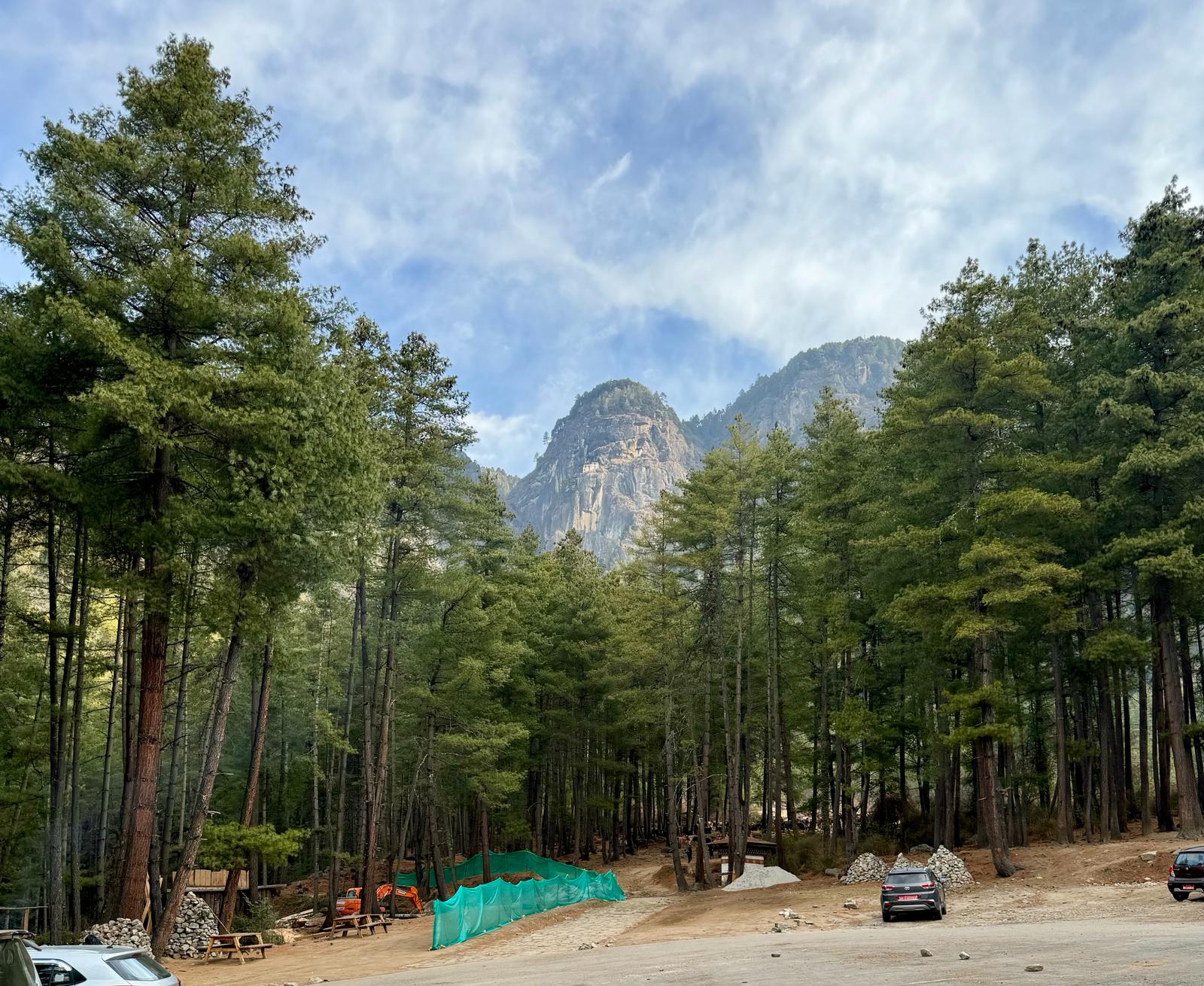
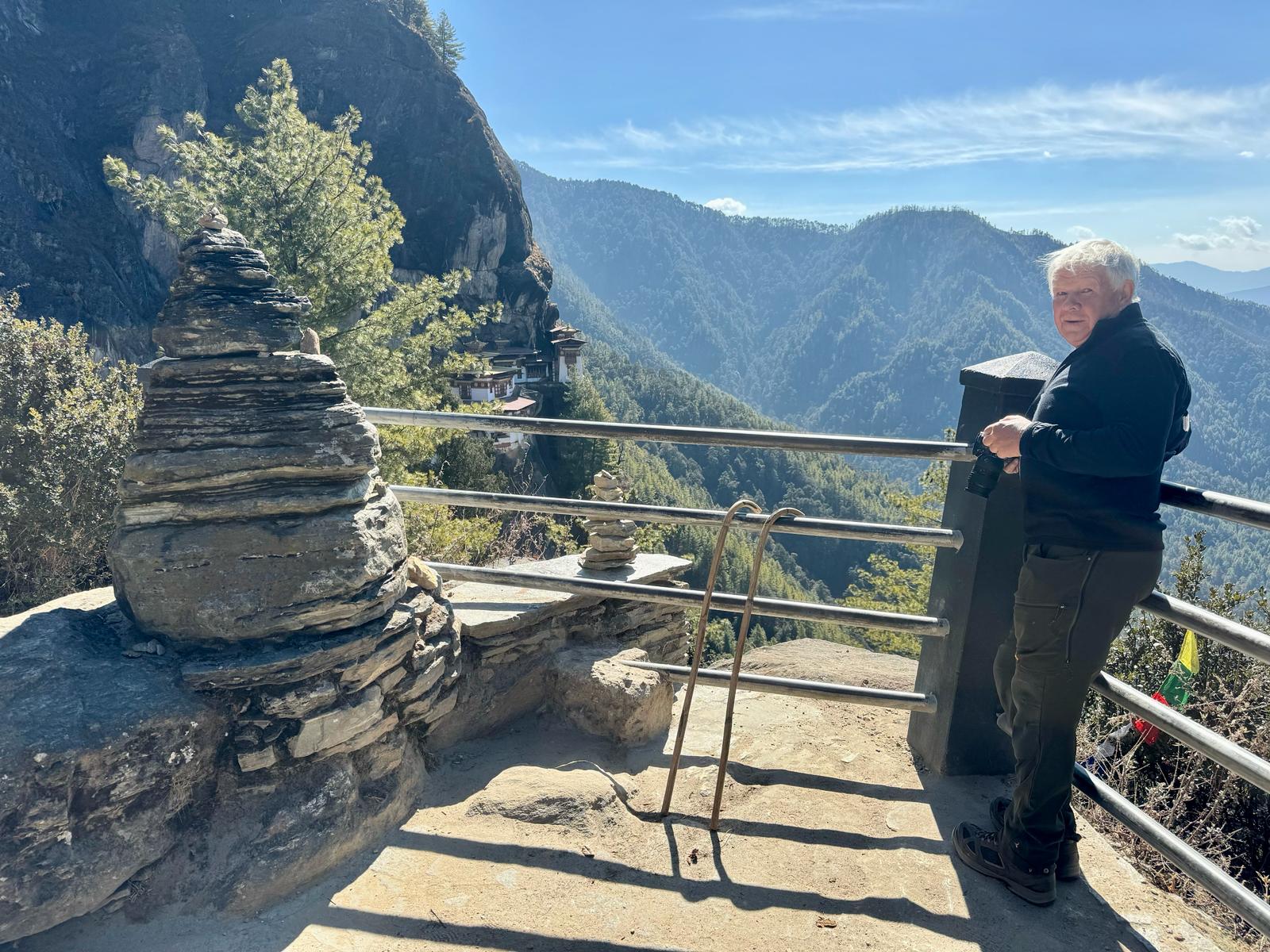
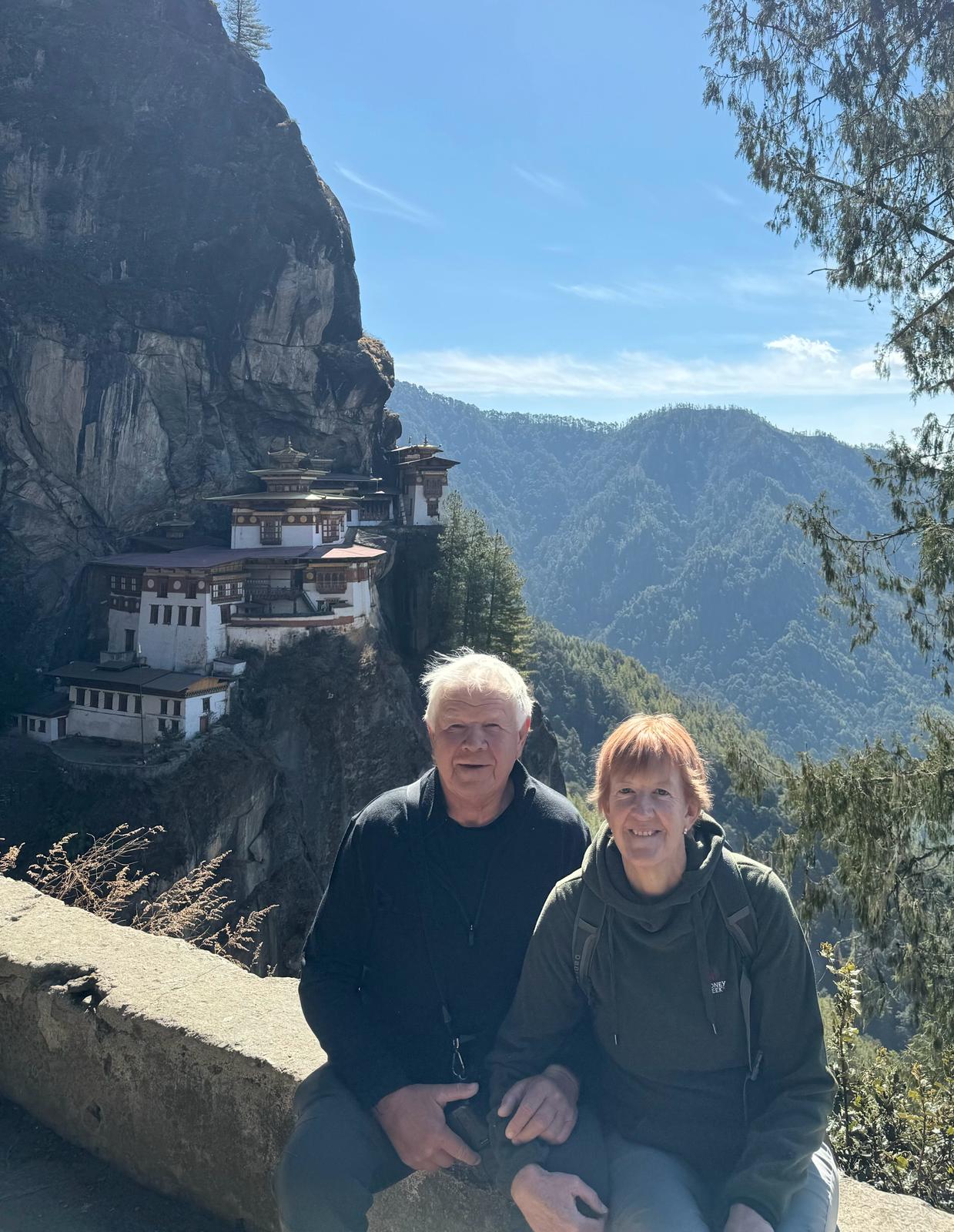
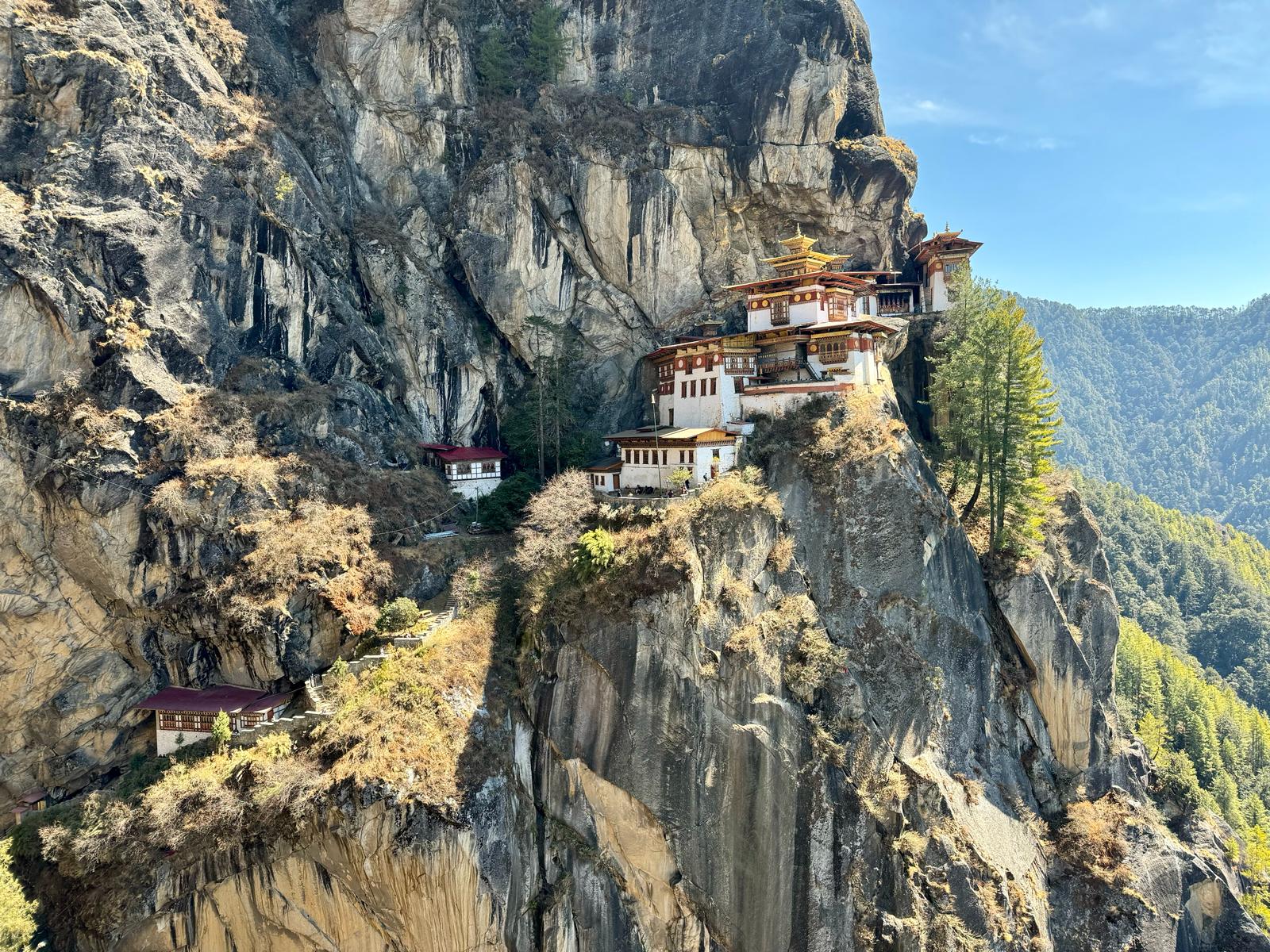
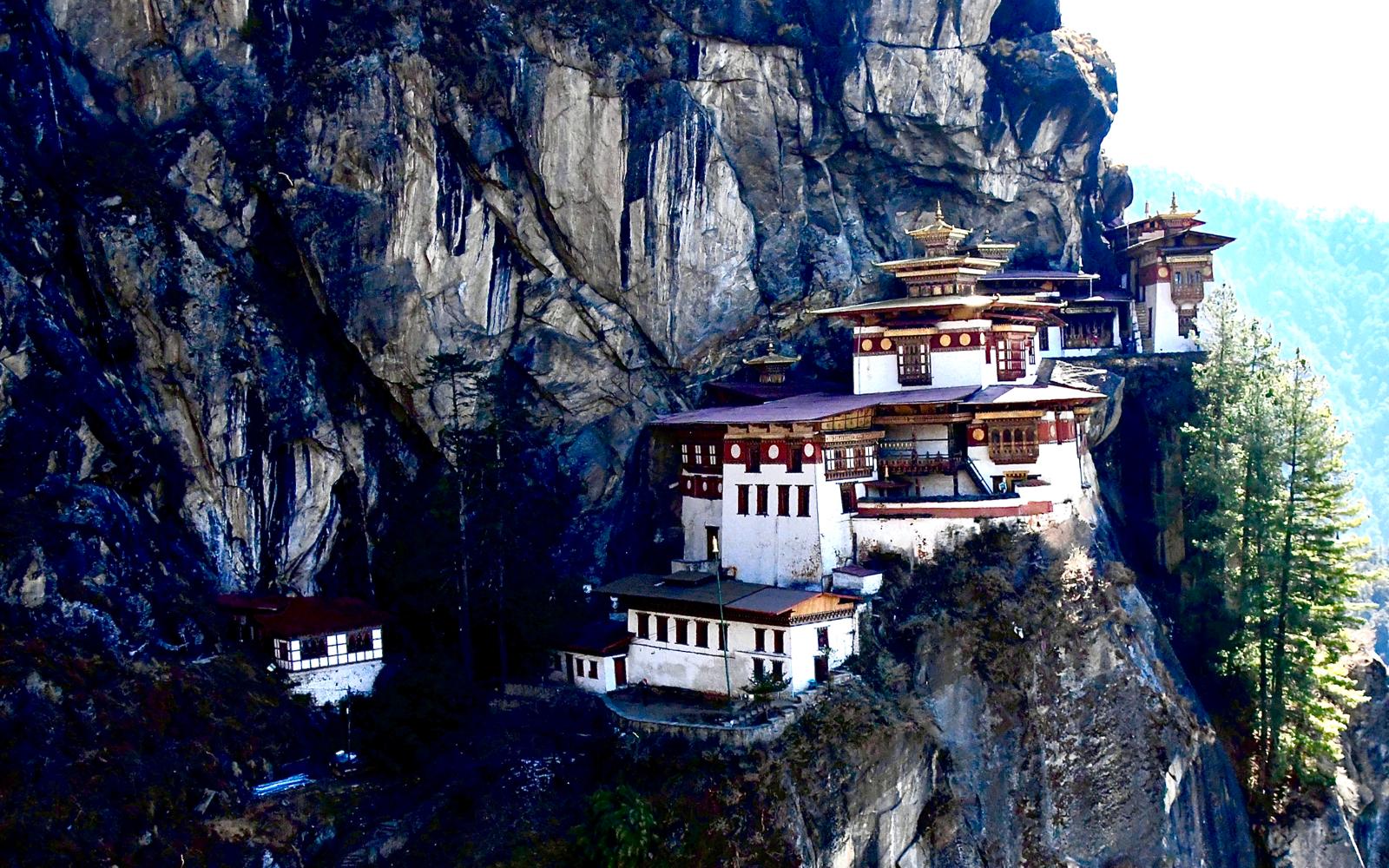
Breakfast arrived at our villa at 6:15am this morning and we metChimi and Singye at 7:00am to head for the base of the Tiger’s Nest walk, abut a 45 minute drive away, on the other side of Paro town. The Tiger’s Nest is probably the most iconic site in Bhutan, a monastery built in the 17th century that is perched precariously on the side of a cliff at about 3,093m. It is called the Tiger’s Nest as apparently the second Bhudda ‘flew’ to this site to meditate on the back of a tiger.

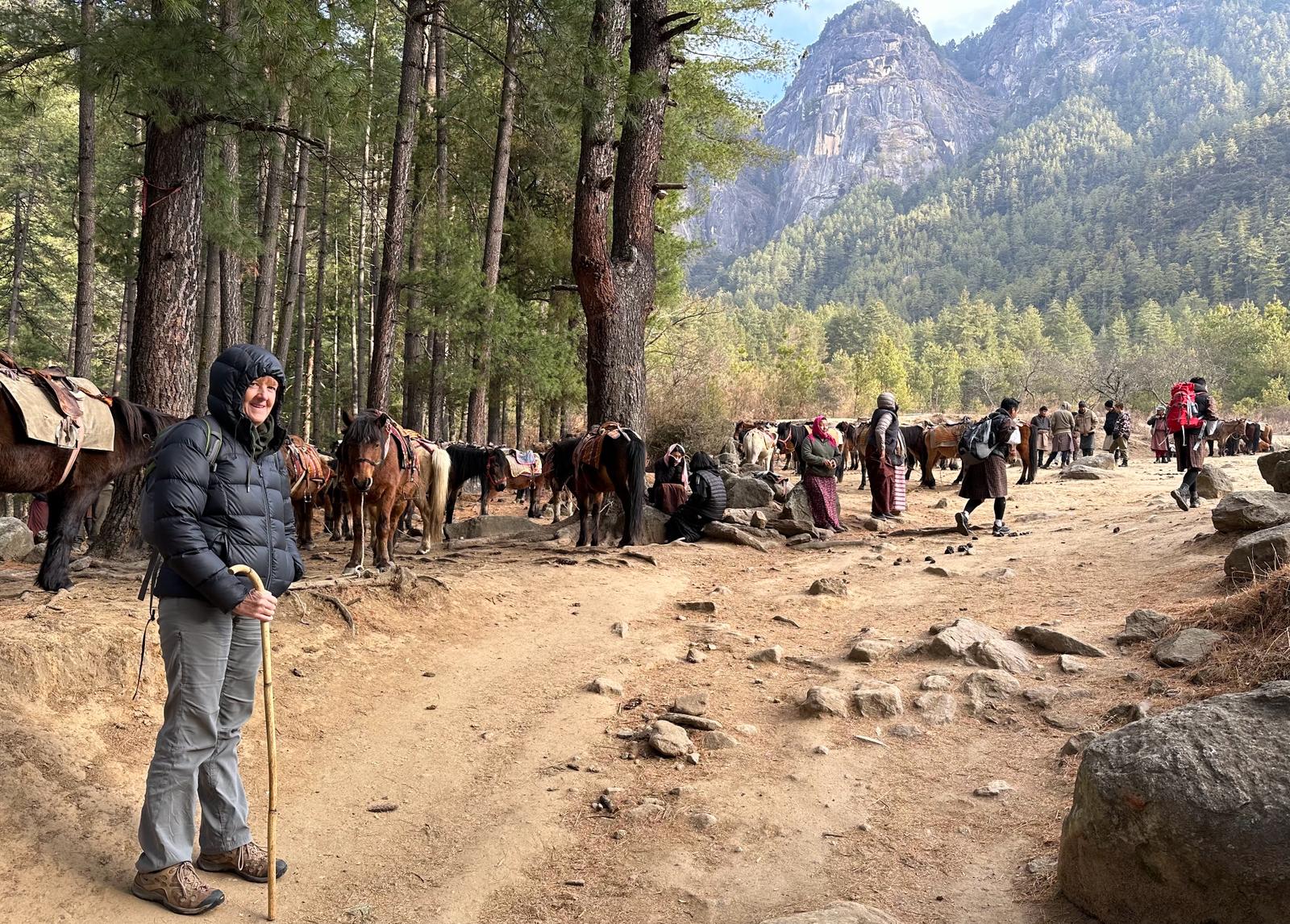
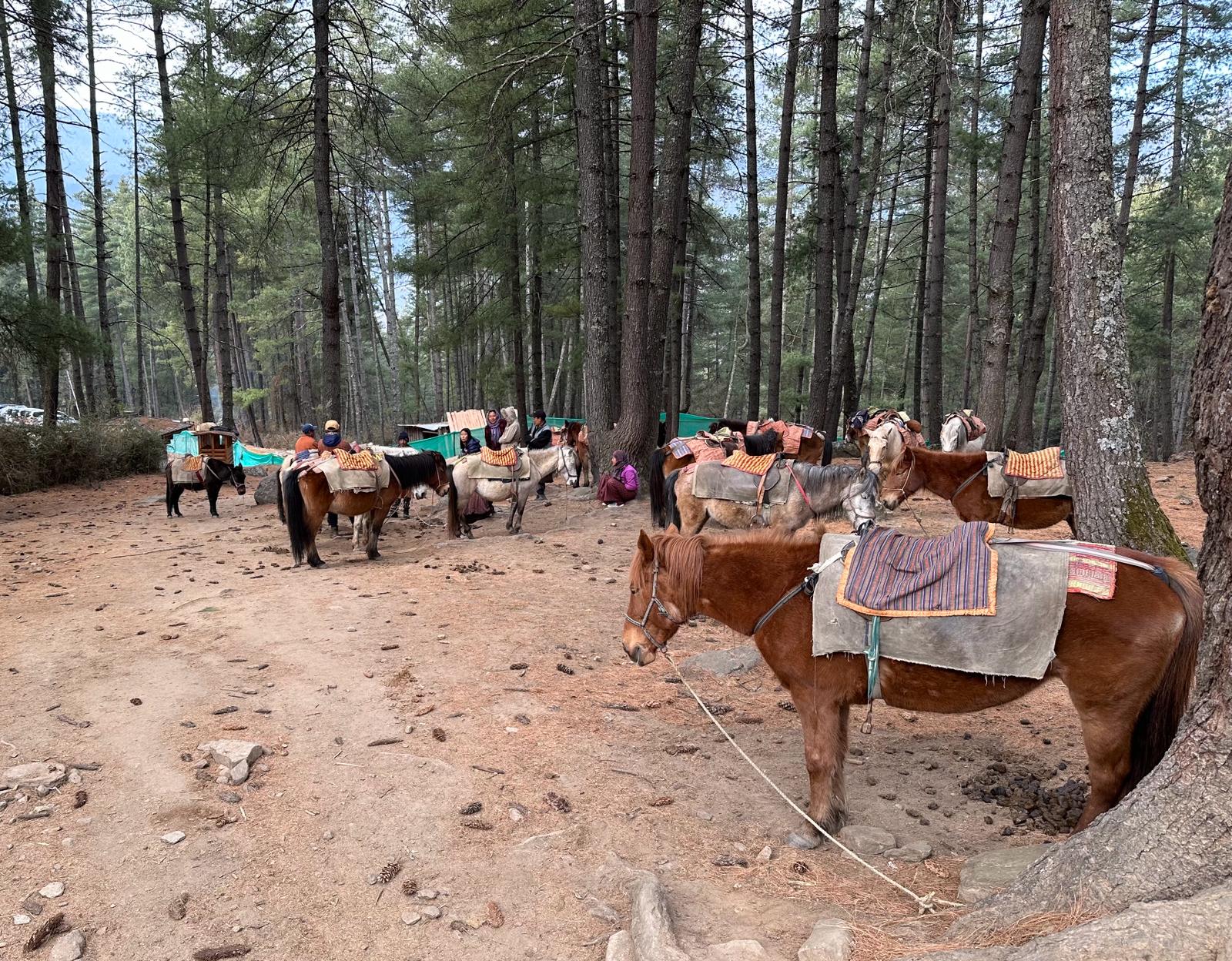
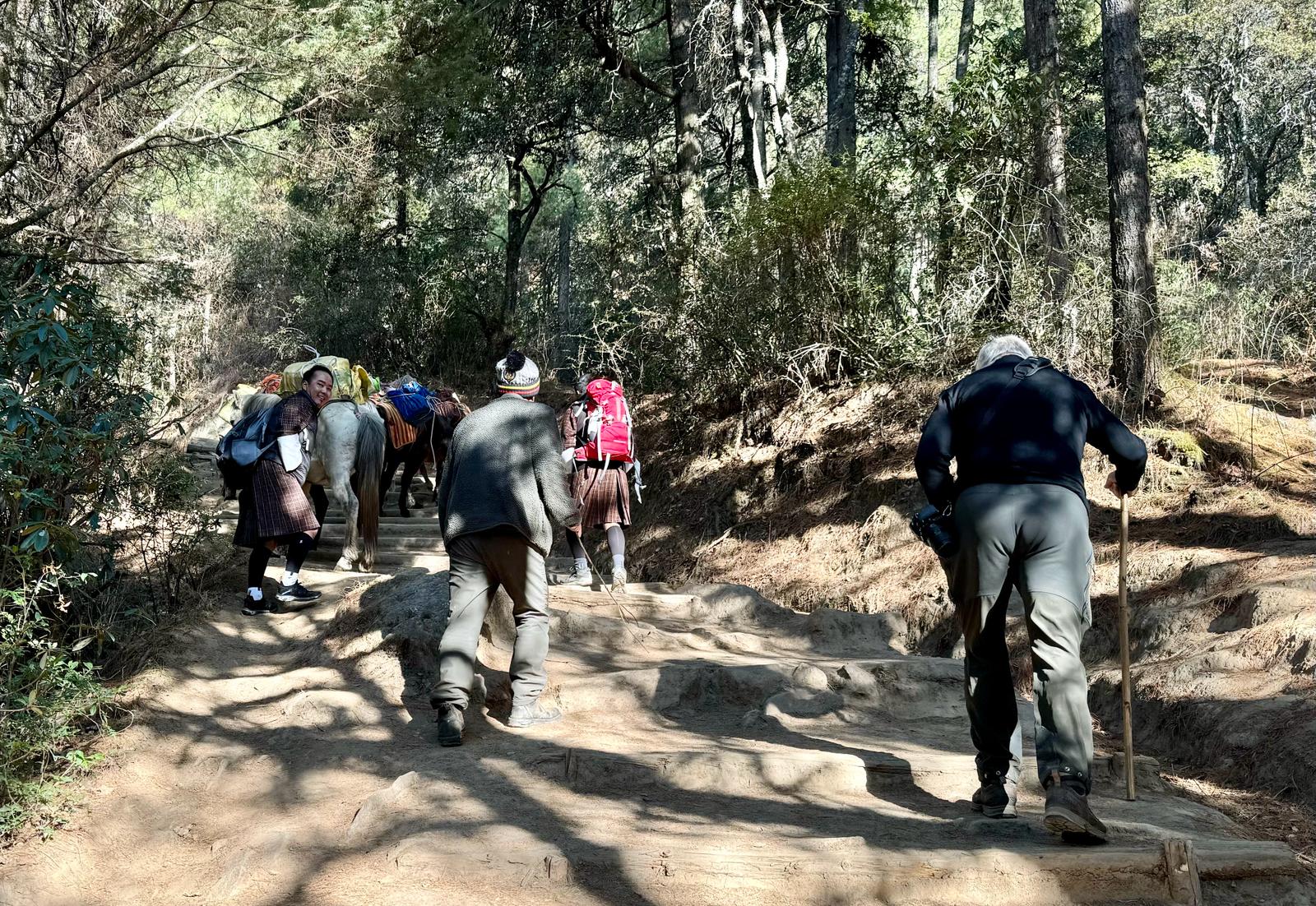
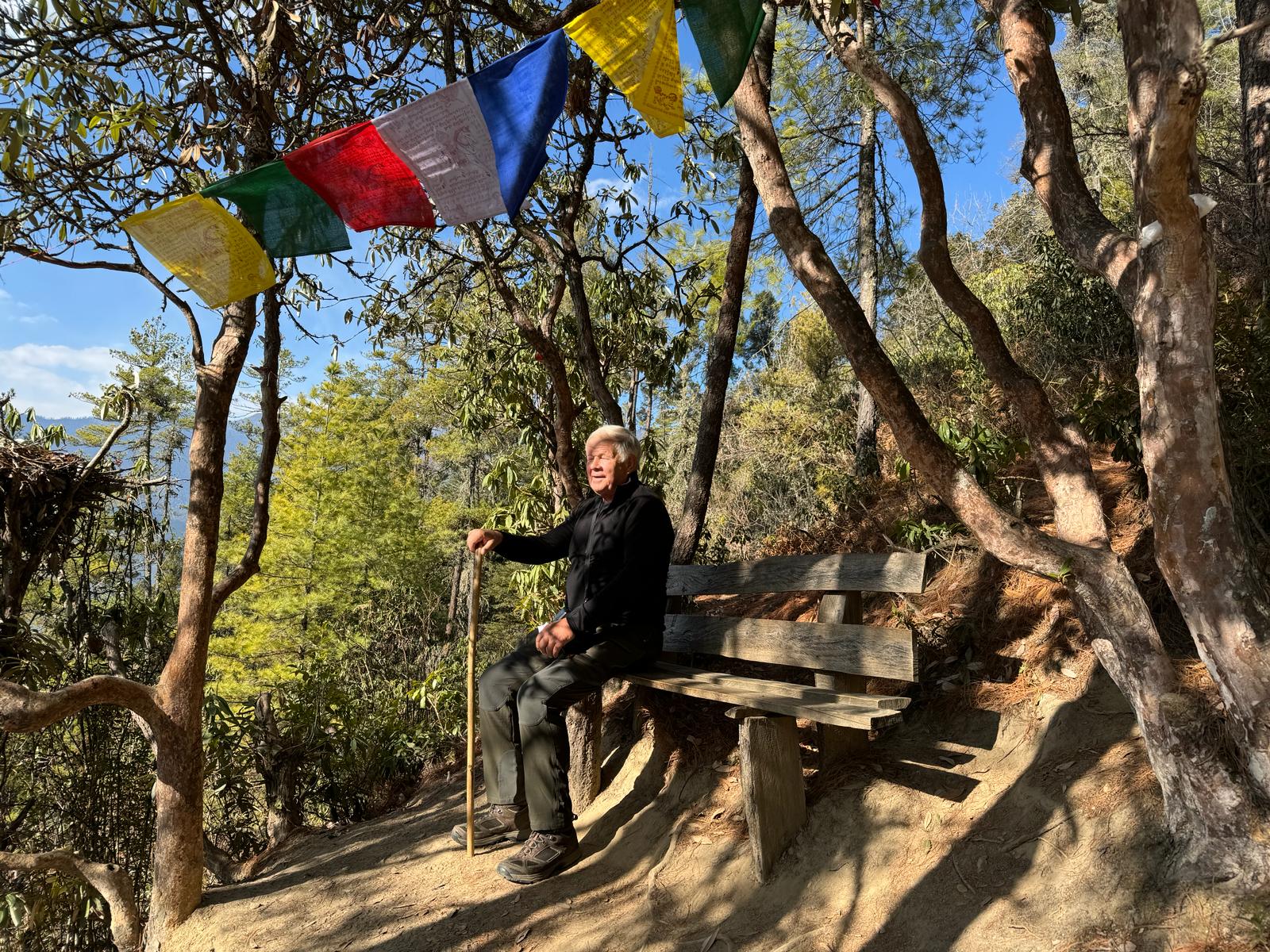
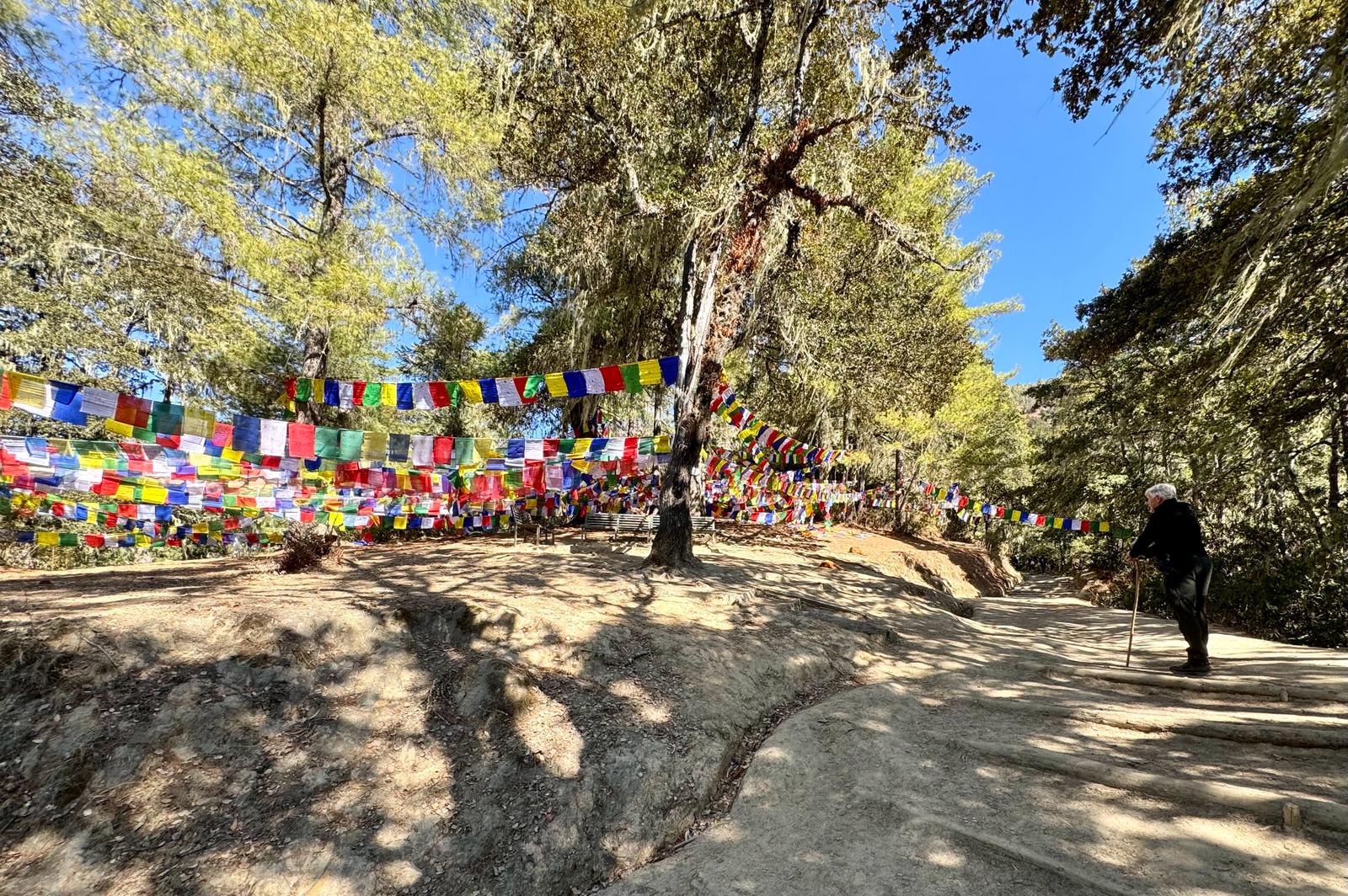
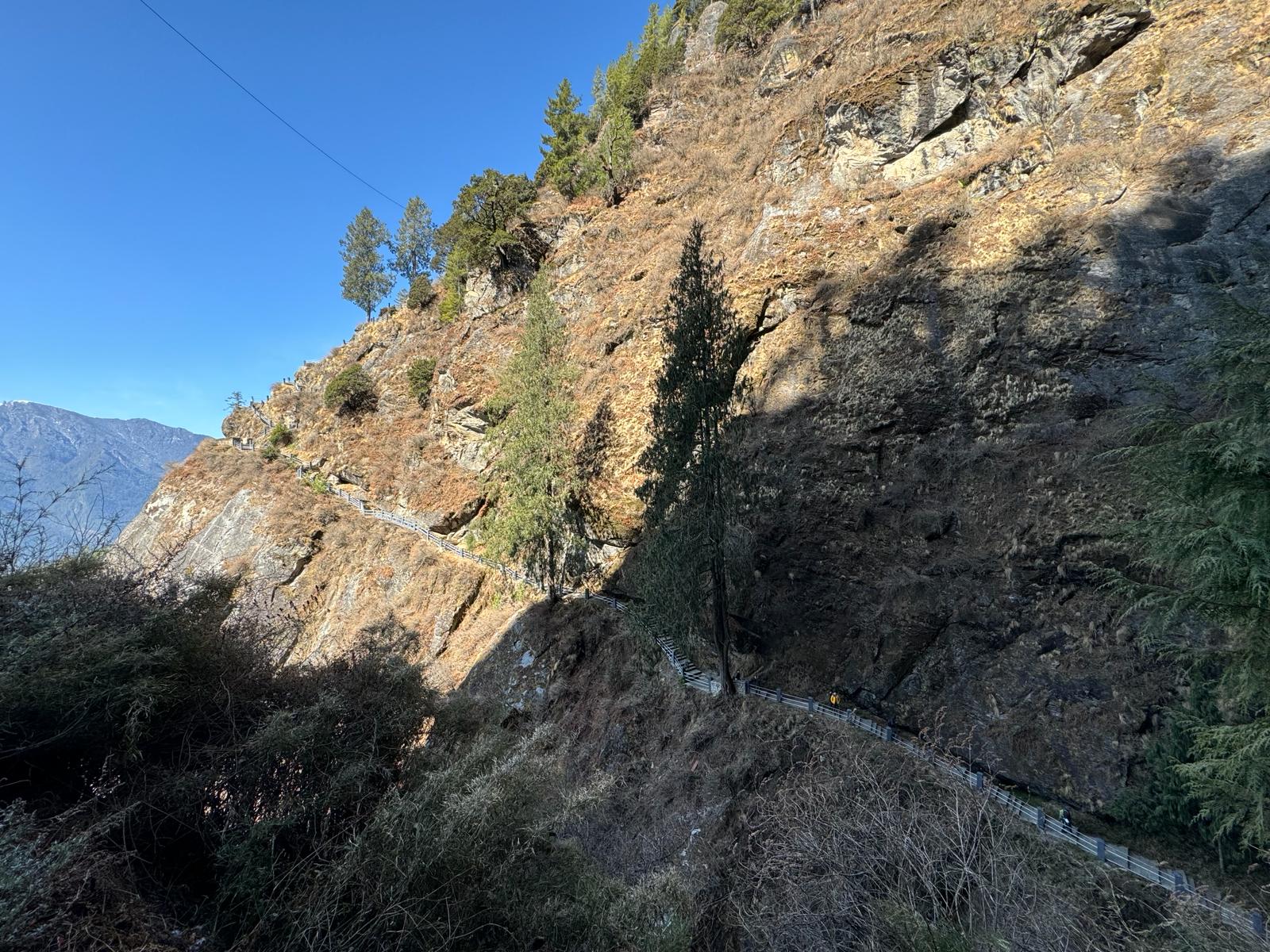
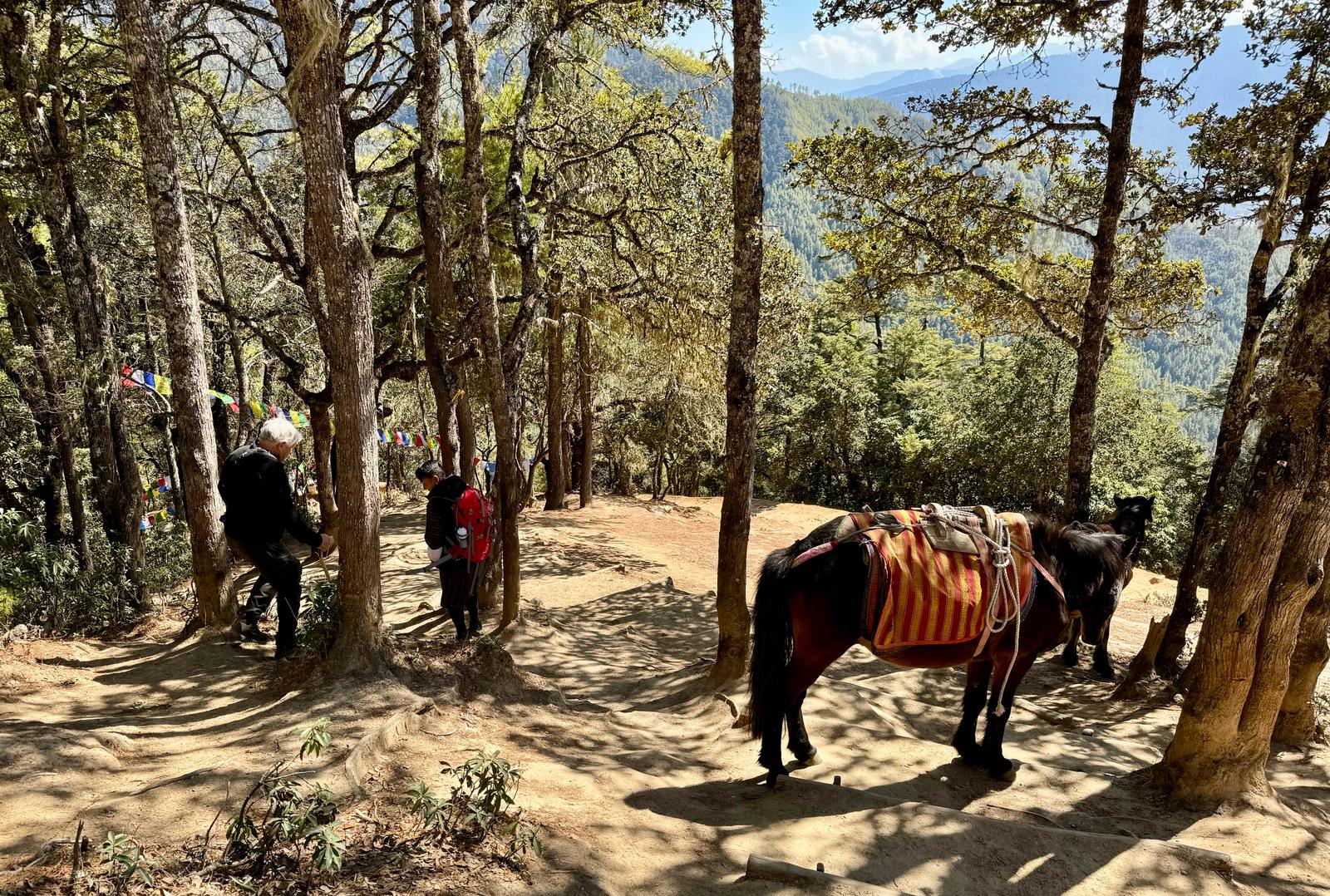
We arrived at the car park at 2,599m. Chimi purchased our tickets and we started off at just after 8am, passing a large number of mules that were gathered, waiting either to carry goods up to the cafeteria or tourists the first half of the hike. We opted to walk ourselves and set off at a slow but steady pace, gradually gaining altitude on a well-worn track. In parts there were fairly steep steps, but it is not a strenuous climb, or at least wouldn’t be if it was a couple of thousand metres lower.

A few people raced past us only to stop for a breather a little way ahead. We plodded on steadily, passing them again, making me think of the hare and the tortoise. At one point we got a bit caught behind a mule train that was slowly making its way up the hill – before the track split off and they continued on a slightly less steep but longer path and we continued on the main path.

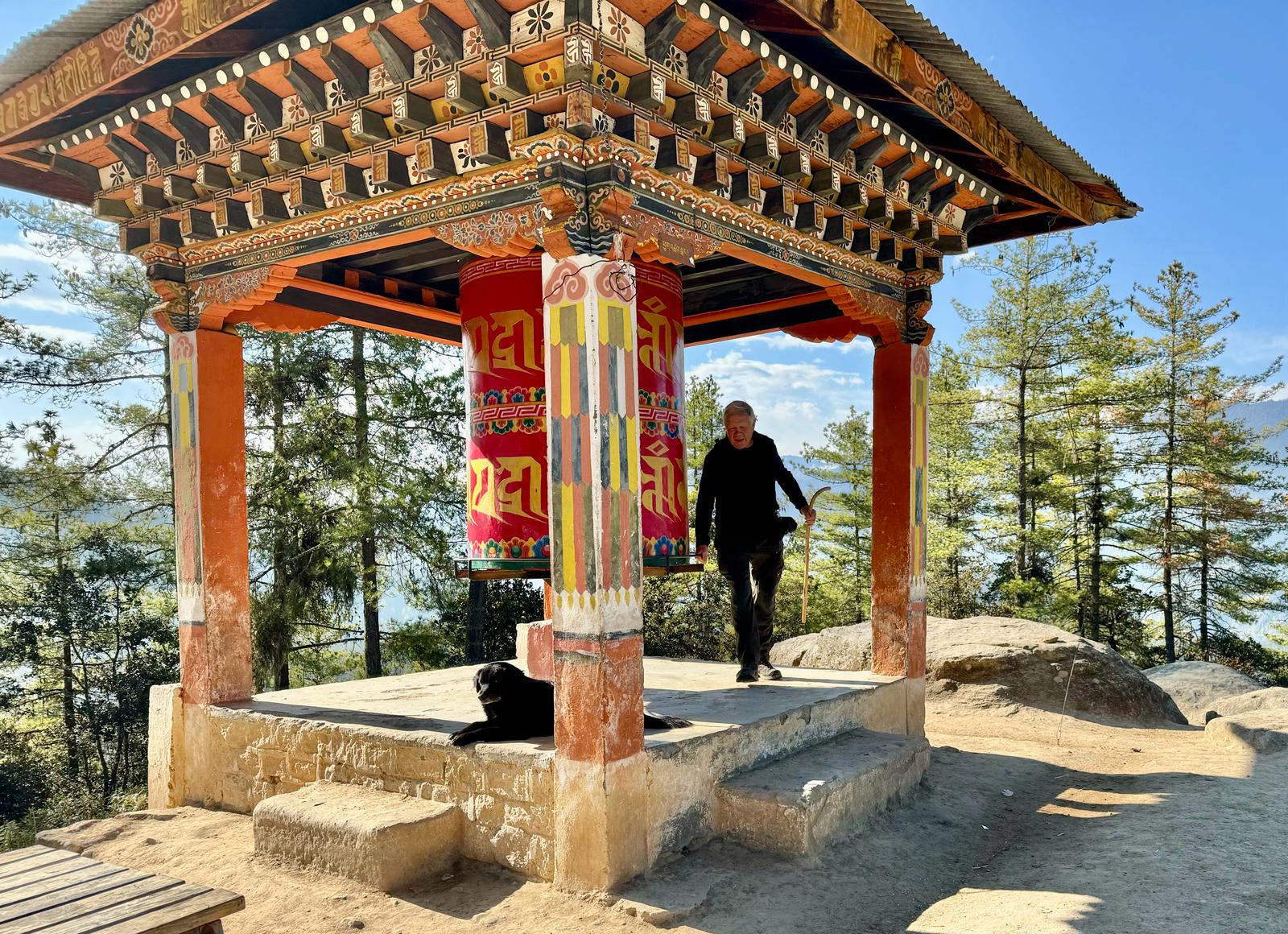
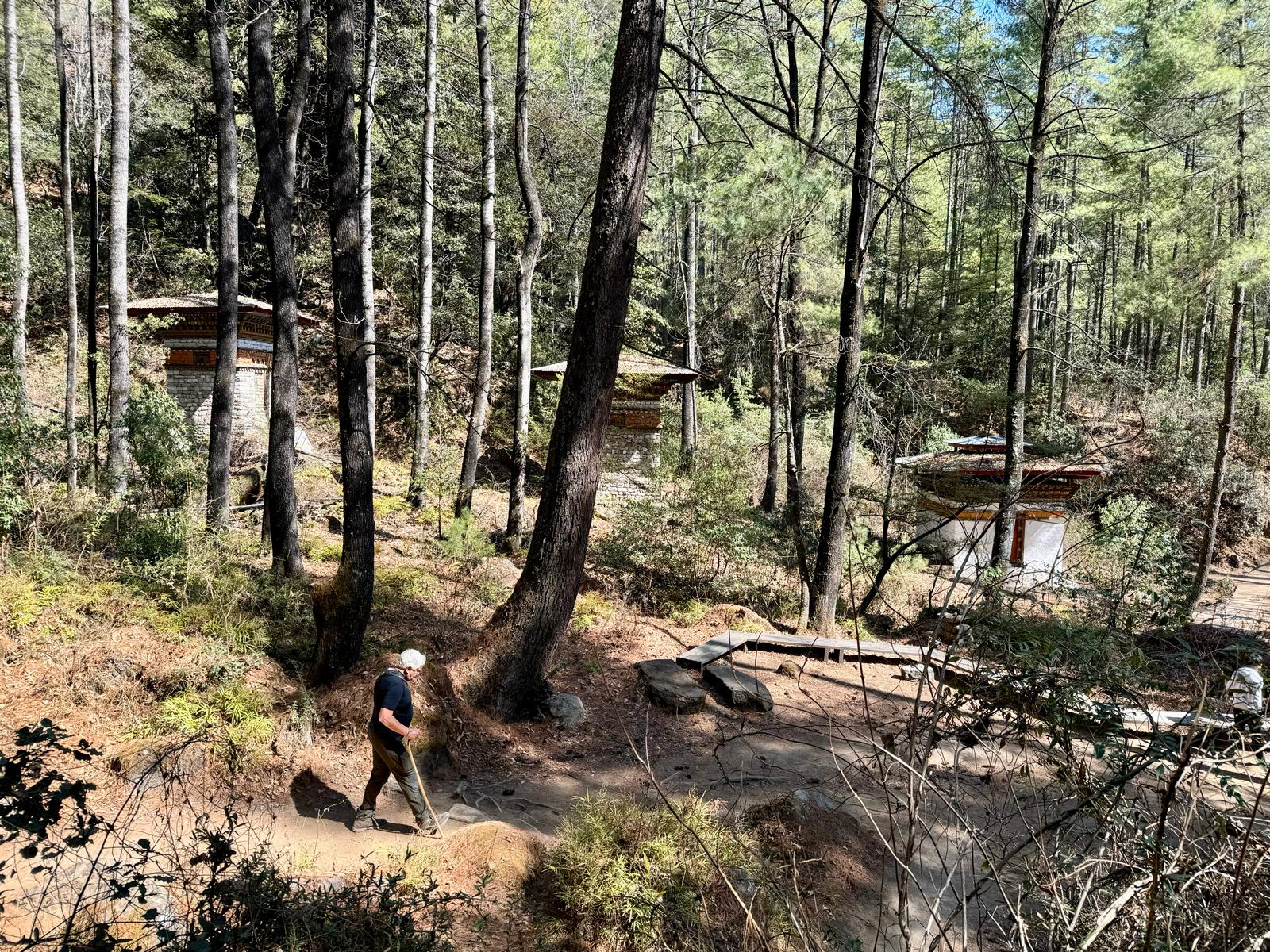
Just before the halfway point we came across a large prayer wheel and Roger gave it a few rounds in hope it might help his knees. Then we arrived at the halfway cafeteria at 2,903m, which has fantastic views to the Tiger’s Nest. Roger enjoyed a cup of tea and we chatted with some of the other tourists making their way up.

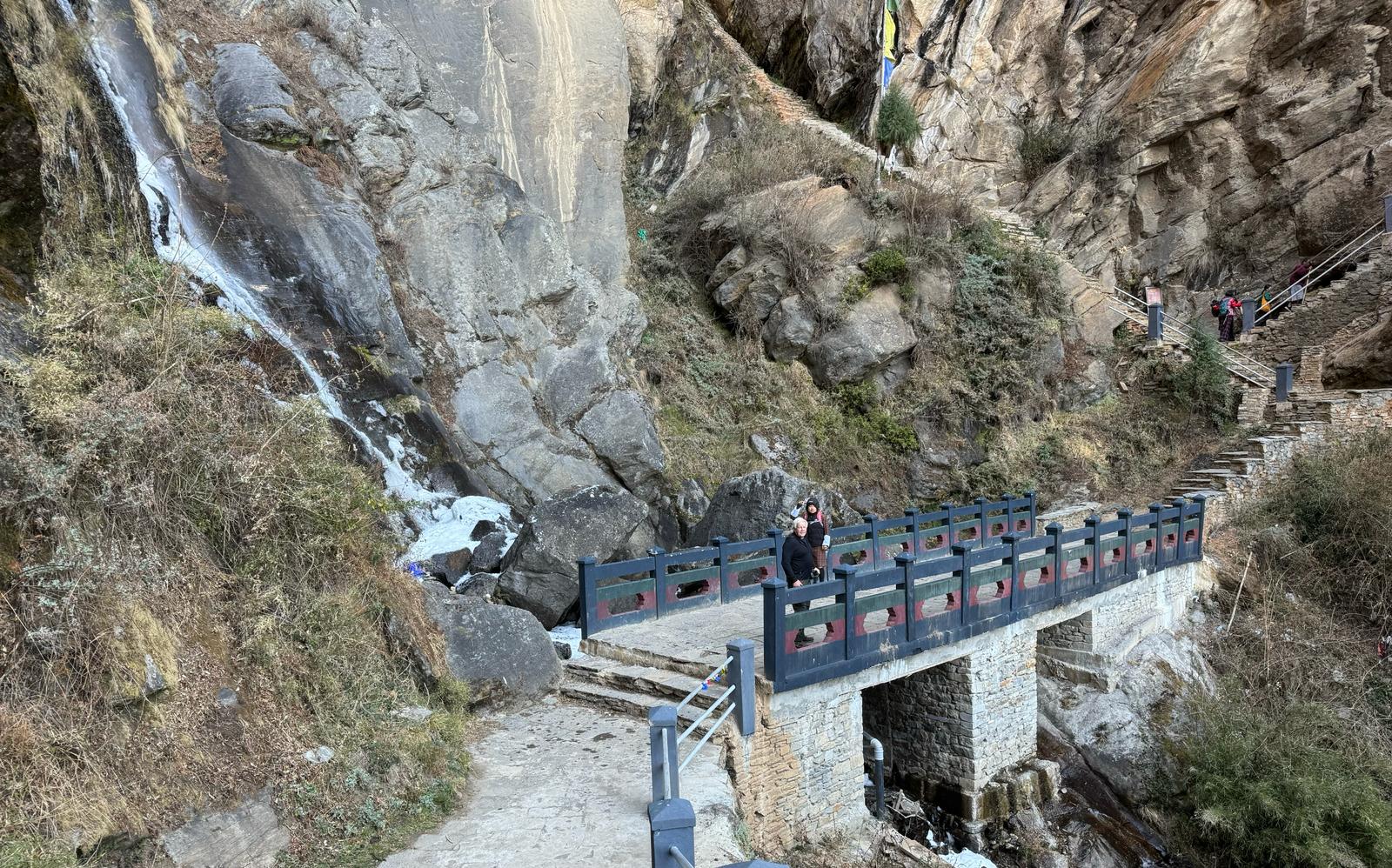
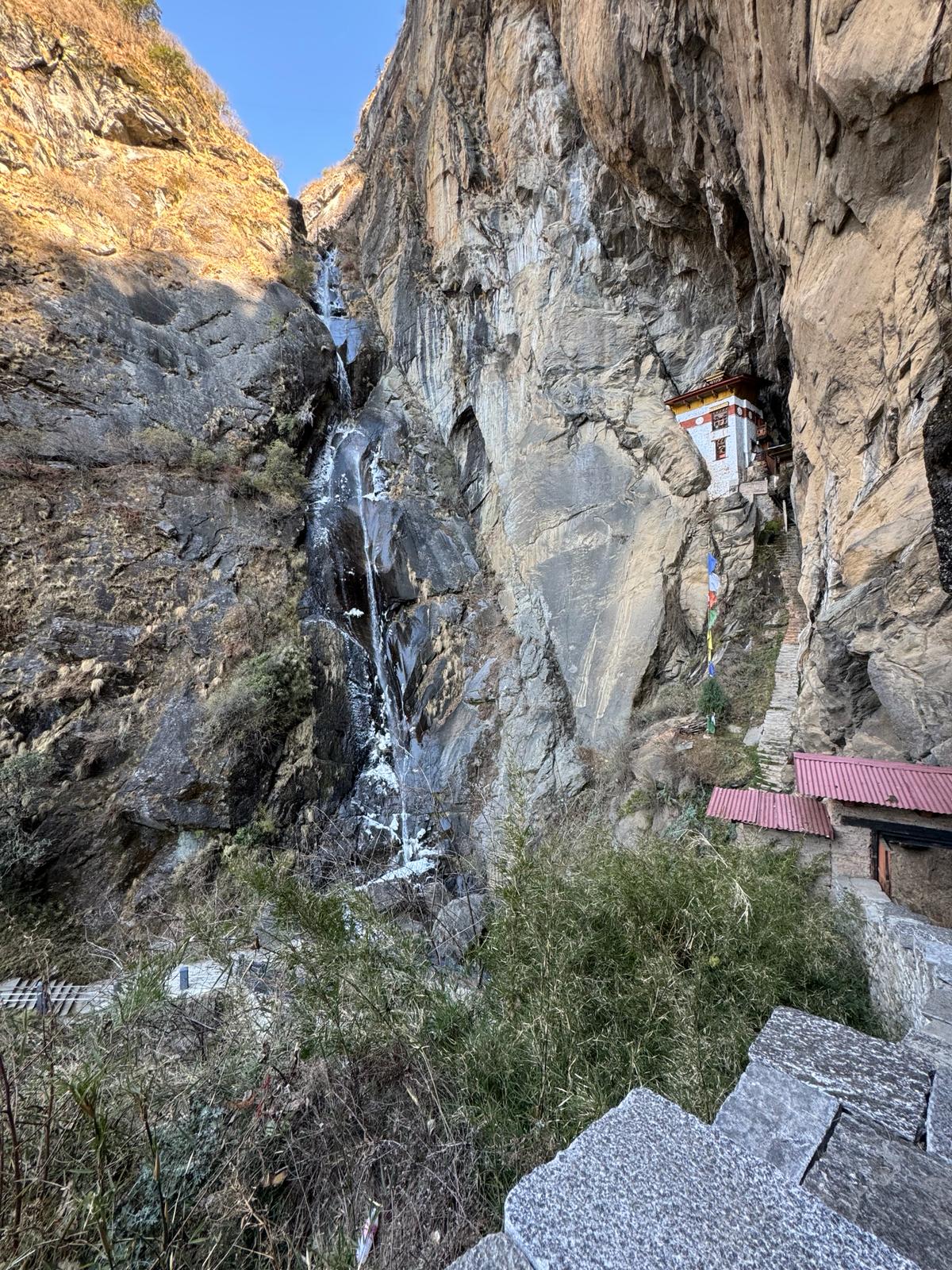
The track continued up for a while then levelled off and wound along the ridge. There are several other temples, monasteries and other buildings, some even higher than the Tiger’s Nest, but none perched quite so spectacularly. The track peaks at about 3,105m. Eventually we came to the top of a long stone stairway going down the side of the mountain. We could see the Tiger’s Nest almost directly opposite on the other side of the valley. We made our way down the steps to a small bridge at the bottom of a waterfall. By this time the wind had picked up and was blowing pretty strongly. Just before we made it to the bridge there was a loud crash as a big chunk of ice blew off the waterfall. Across the bridge, we started climbing again heading now directly to the temple complex.

Arriving at the temple we had to leave our bags, phones and cameras in the lockers before we were able to enter the complex. It is such a shame as the complex itself is impressive and some of the views back across the temple’s gold embellished, pagoda-style roofs were magnificent.

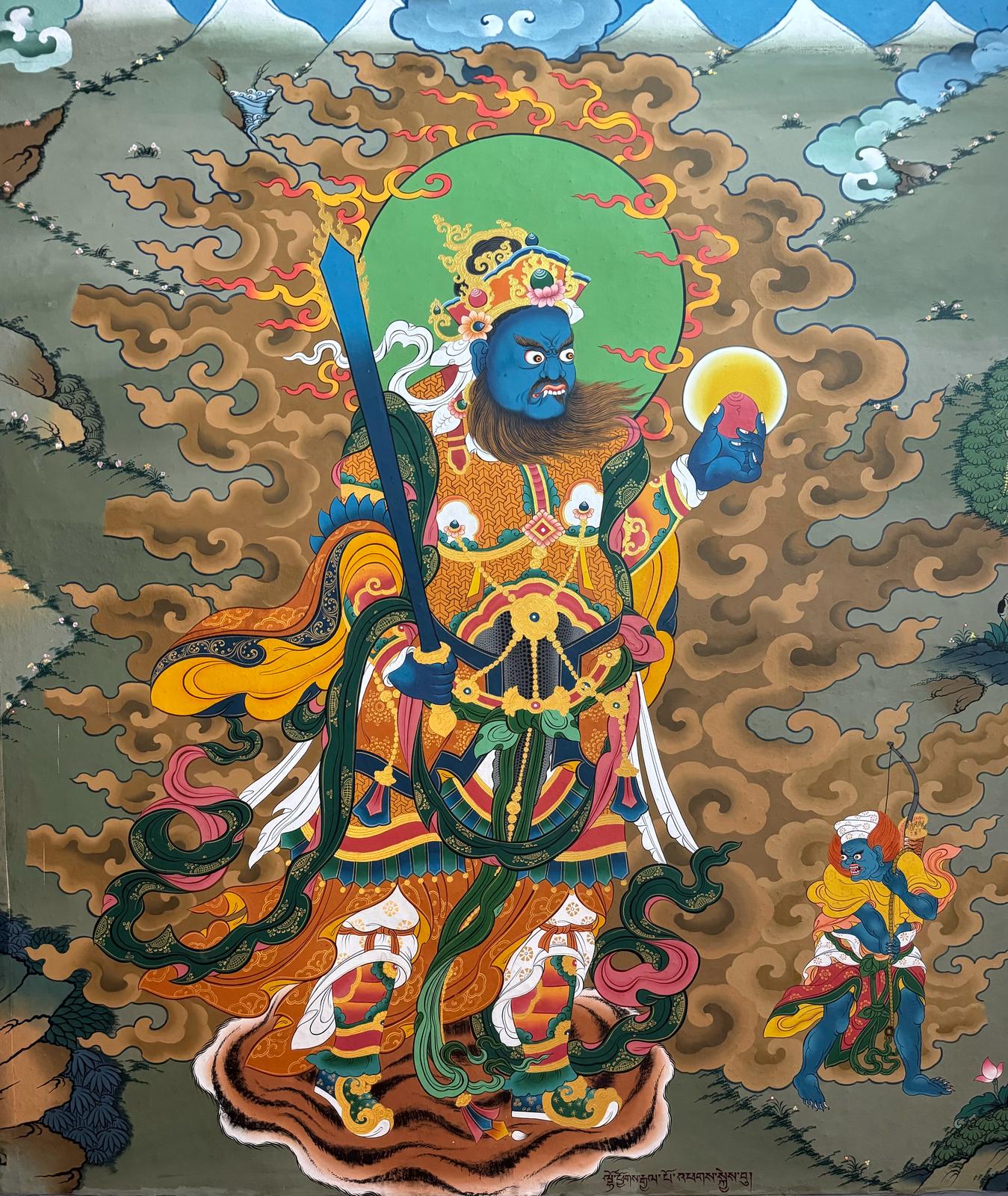
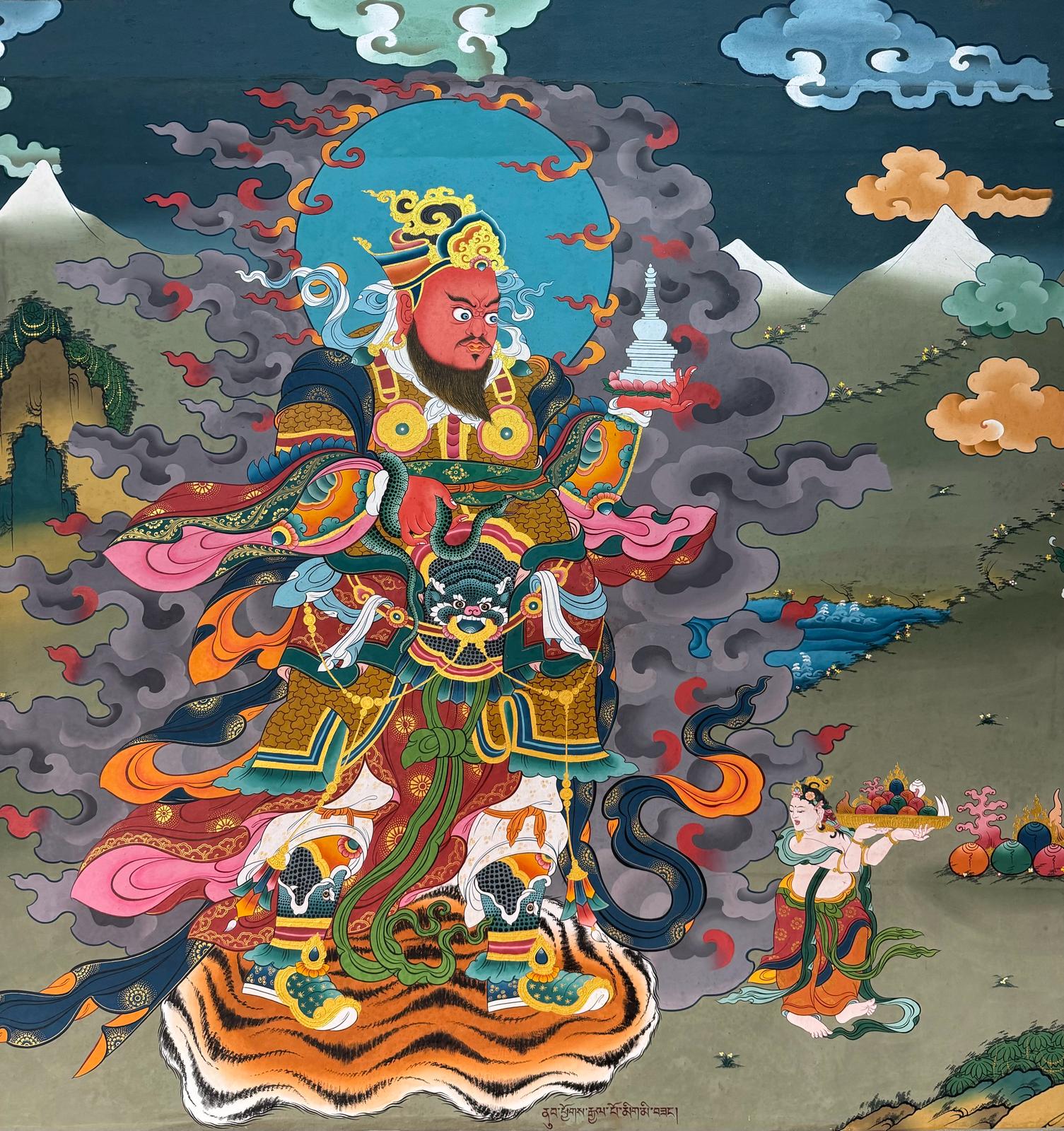
Chime led us, in stockinged feet, through 5 of the 12 or so temples in the building, stopping to prostrate himself in each one and explaining the meanings of some of what we were seeing. In the second temple we watched while he rolled some dice to determine something of his future. The first roll was not good so he went to the monk, seated in the temple, for cleansing, before rolling again. Happily the second roll had a better outcome. Apparently they are allowed to roll up to three times. Some of the icons in the temples are really impressive.

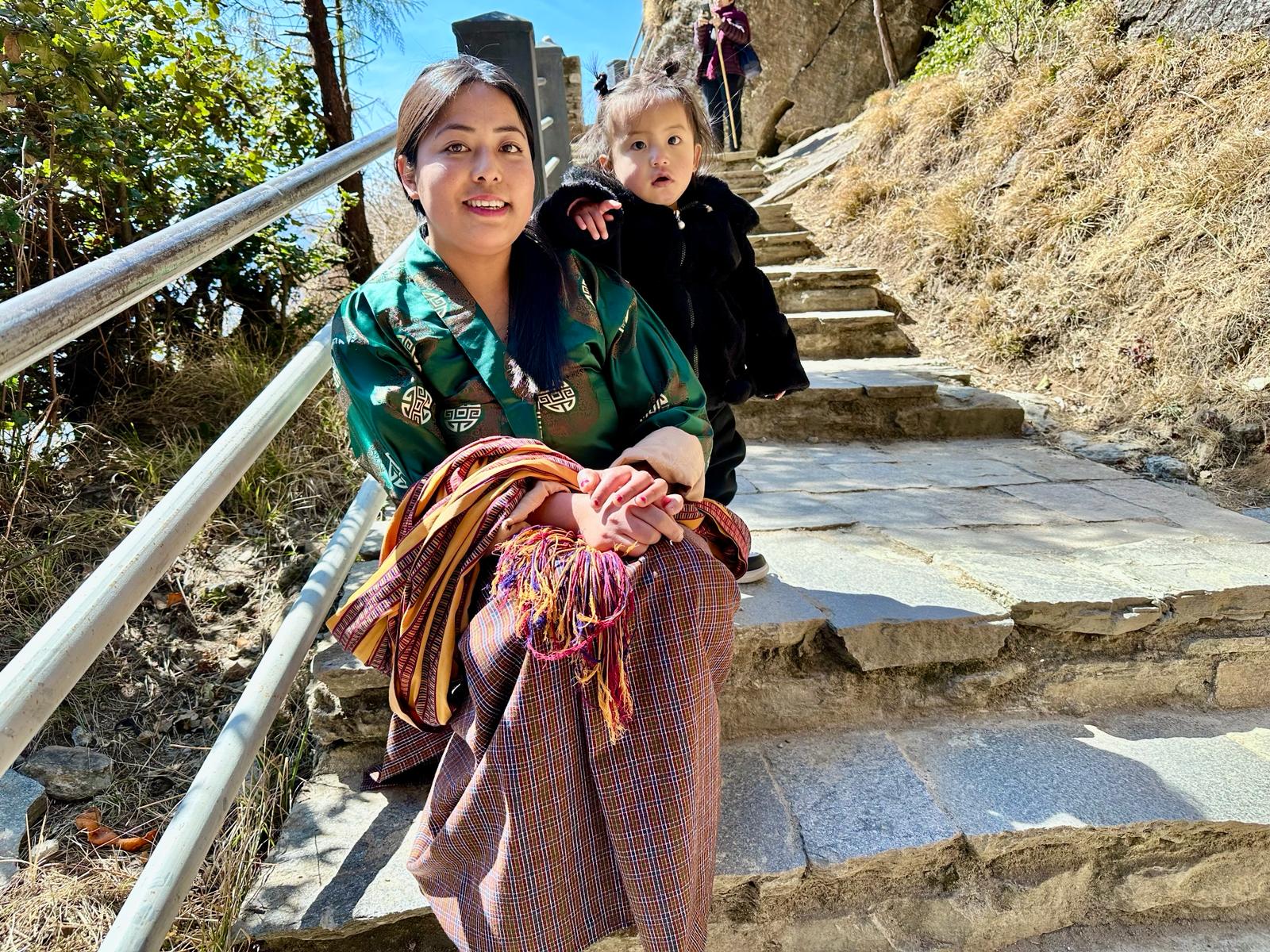
Exploration of the temple over, we started back the way we had come. I think perhaps the toughest part of the whole walk is the climb back up the steps on the opposite side of the valley but we maintained our slow and steady pace. I am glad we set off early as we started to pass large groups of people making their way up, some carrying babies or infants up to be blessed. Apparently once you have visited the temple even once, you will reach enlightenment, either in this life or a future one.

At the highest point we stopped in a small shelter and enjoyed the lunch that had been prepared for us at the hotel and carried up the track by Chimi and Singye. They really look after us and go out of their way to ensure we are comfortable. Both have been working in the industry for a very long time, are well educated and provide great information without overwhelming us.

After lunch we made our way slowly down to the car, passing many mules, still saddled up about halfway up after dropping off their ‘loads’. We arrived back at the car just before 2pm and headed back to the Six Senses Paro property. This hike was a fantastic experience. The photographs really don’t do it justice at all.

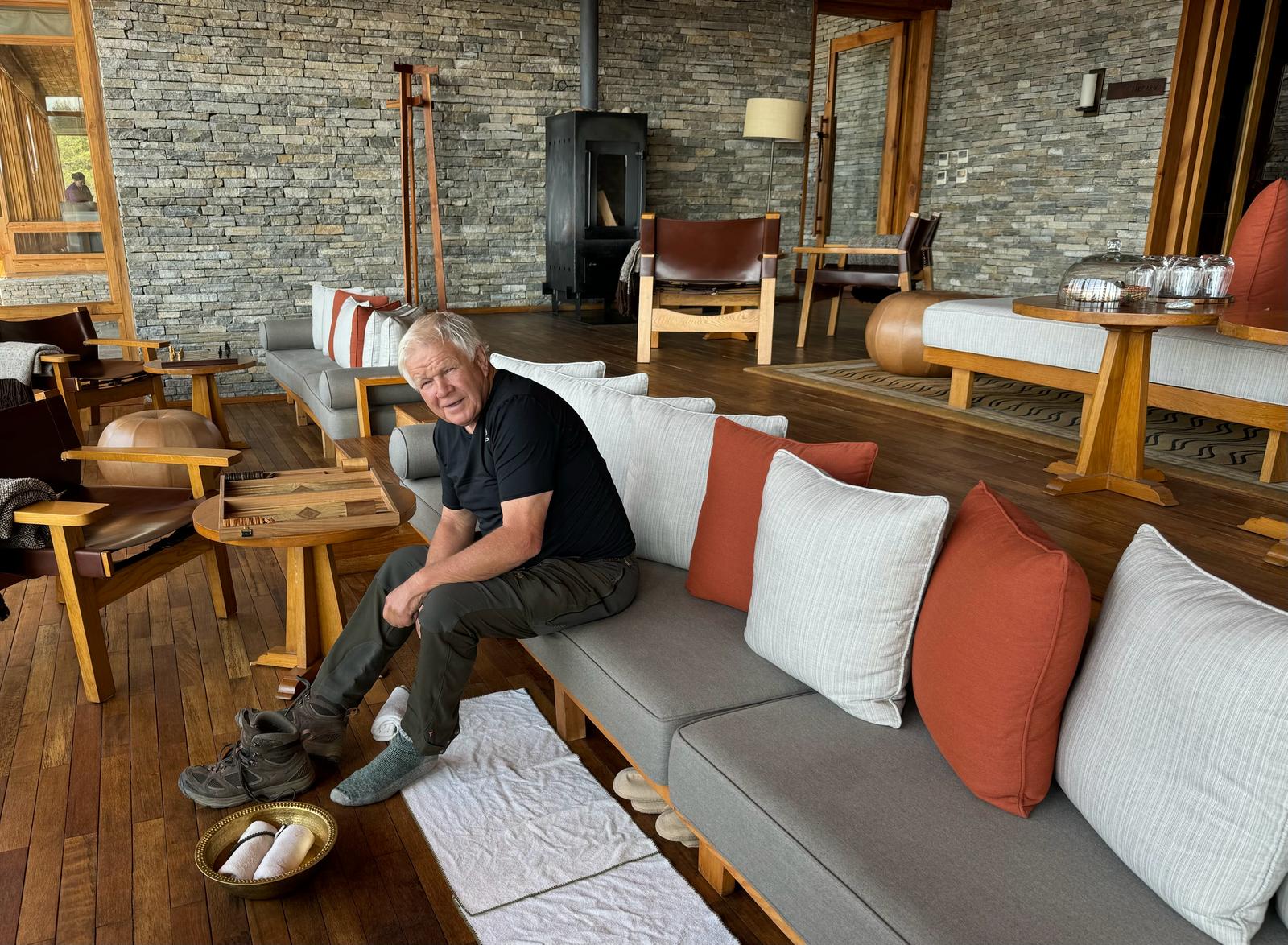
On the way to the hike in the morning we had seen two men prostrating themselves along the side of the road, probably on a pilgrimage to somewhere. They were still making slow progress when we headed back. Arriving back at the hotel we were met by the lovely staff, who informed us that because we had just done the hike we would receive a 15 minute foot massage. What a lovely surprise! We were seated in the lounge area, served a delicious glass of hibiscus lemonade, our shoes and socks were whisked off for cleaning and our tired feet were pampered. We had already booked 90-minute massages at the spa and they accommodated us a little early, which was super nice. A great way to ease the aches and pains.

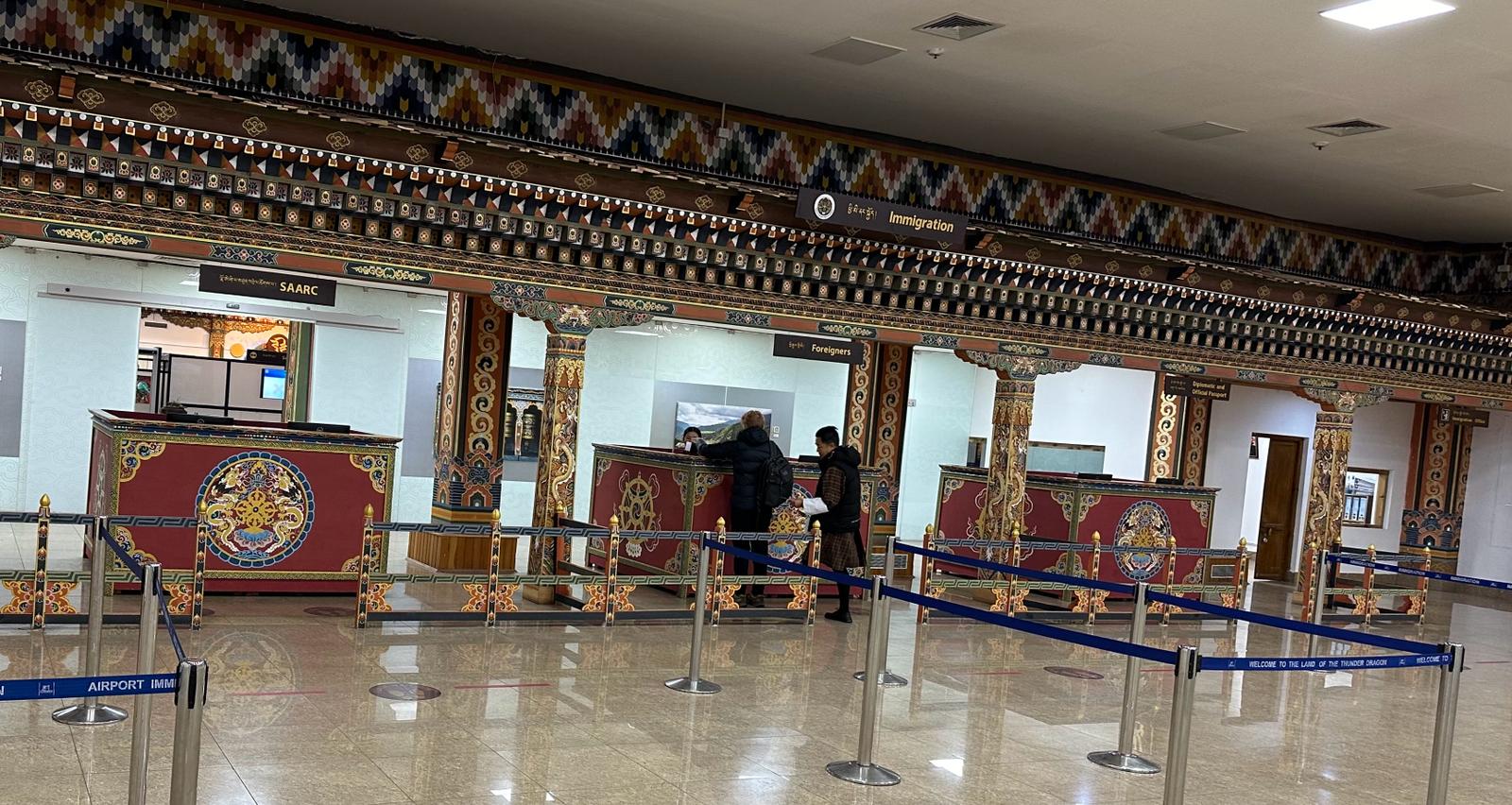
After the massages we enjoyed a delicious meal in the hotel dining room before retiring to our room to edit photos, catch up on the blog, and relax for the evening. We have been incredibly impressed with the service orientation here. Nothing seems to be a bother and someone seems to anticipate our every need. And it is not just the outstanding staff here at the Six Senses. Even the staff at Immigration were friendly and welcoming, something I have not experienced to the same extent anywhere else in the world. I am definitely a fan of Bhutan and its people.


Monday 26 February: Paro – Roger

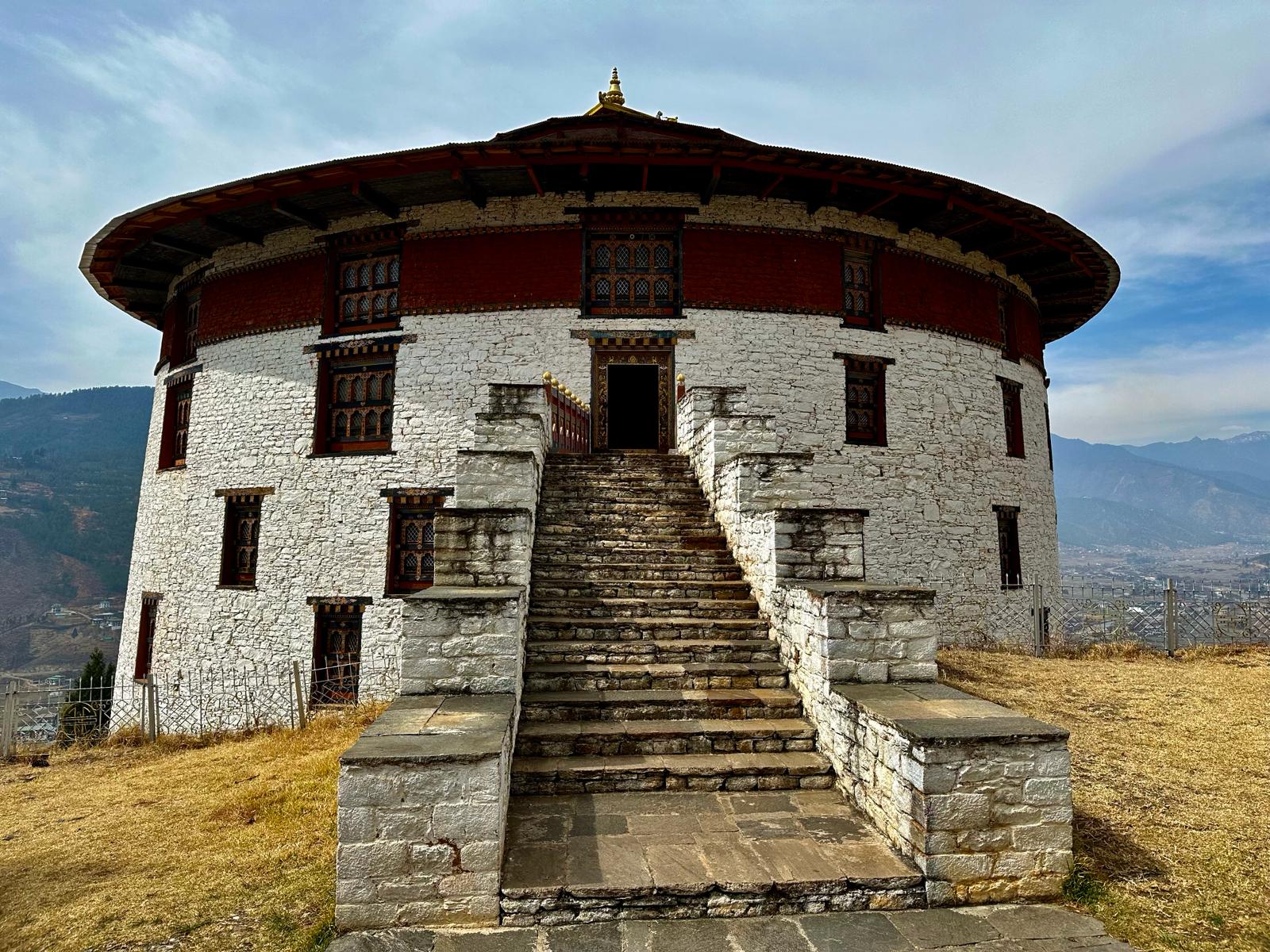
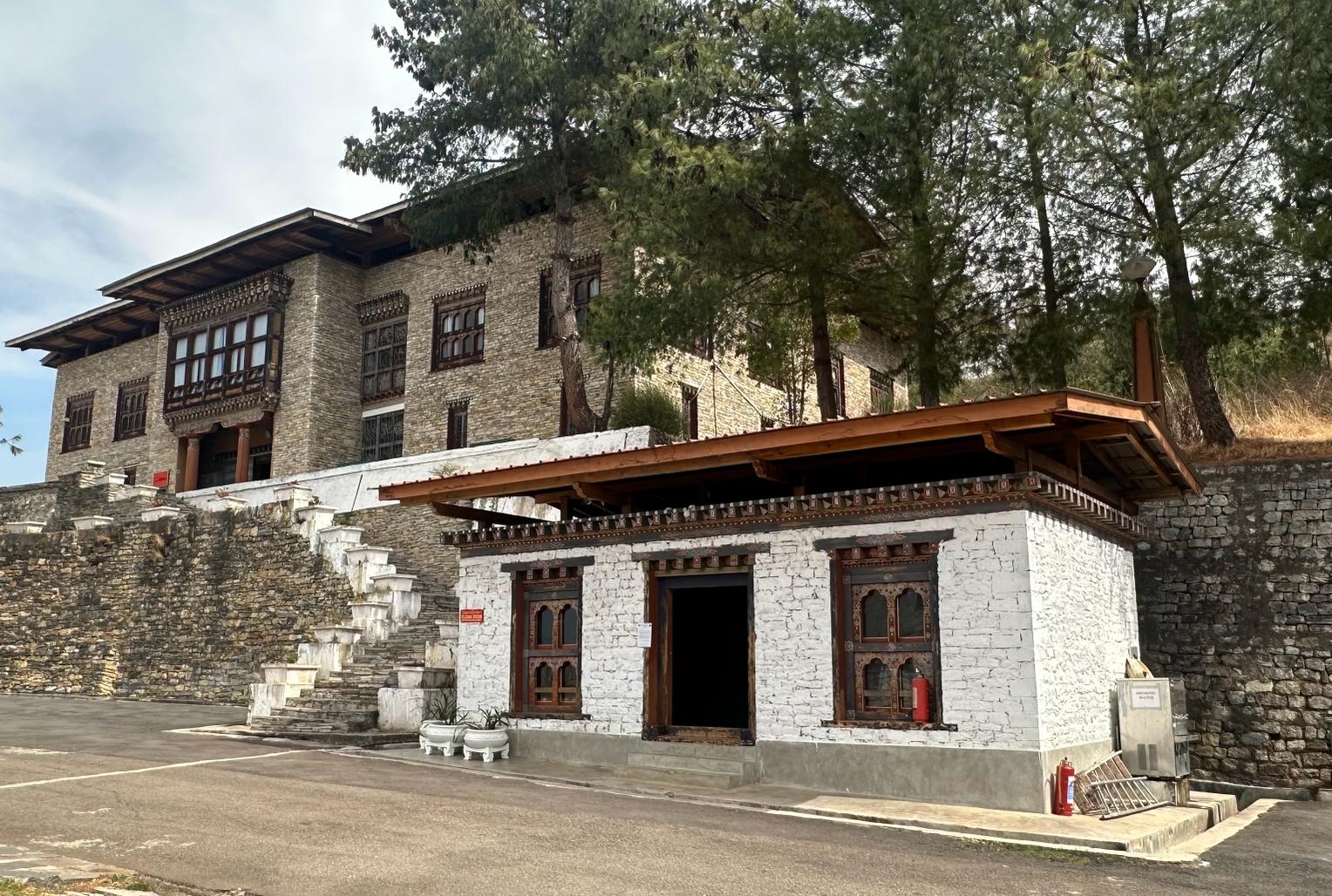
We had a late start this morning with Chimi and Singye meeting us at 10am. We headed off down the rather bumpy dirt road to where the tar seal starts, which just happens to be where the National Museum of Bhutan is.

Understanding what goes on here with Buddhism and how it all came together is quire difficult, despite Chimi’s patient explanations, as it is made up of numerous buddhas, lamas, other enlightened beings and royalty. So I am going to quote a little bit from Wikipedia. “The consolidation of Bhutan occurred in 1666 when Ngawanag Namgyal, a lama from Western Tibet, known as the Zhabdrung Rinpoche, defeated the three Tibetan invasions, subjugated rival religious schools, codified the Tsa Yig an intricate and complicated system of law, and established himself as the ruler over a system of ecclesiastical and civil administrators. After his death infighting and civil war eroded thee power of the Zhabdrung Rinpoche for the next 200 years. In 1885 Ugyen Wangchuck was able to consolidate power and began cultivating closer ties with the British in the sub-continent.” His family still rules to this day with the current king being the fifth. It was in 1972 that Jigme Singye Wangchuck, the father of the current king ascended to the throne. He developed the Gross National Happiness philosophy that guides a lot of Bhutanese life today.

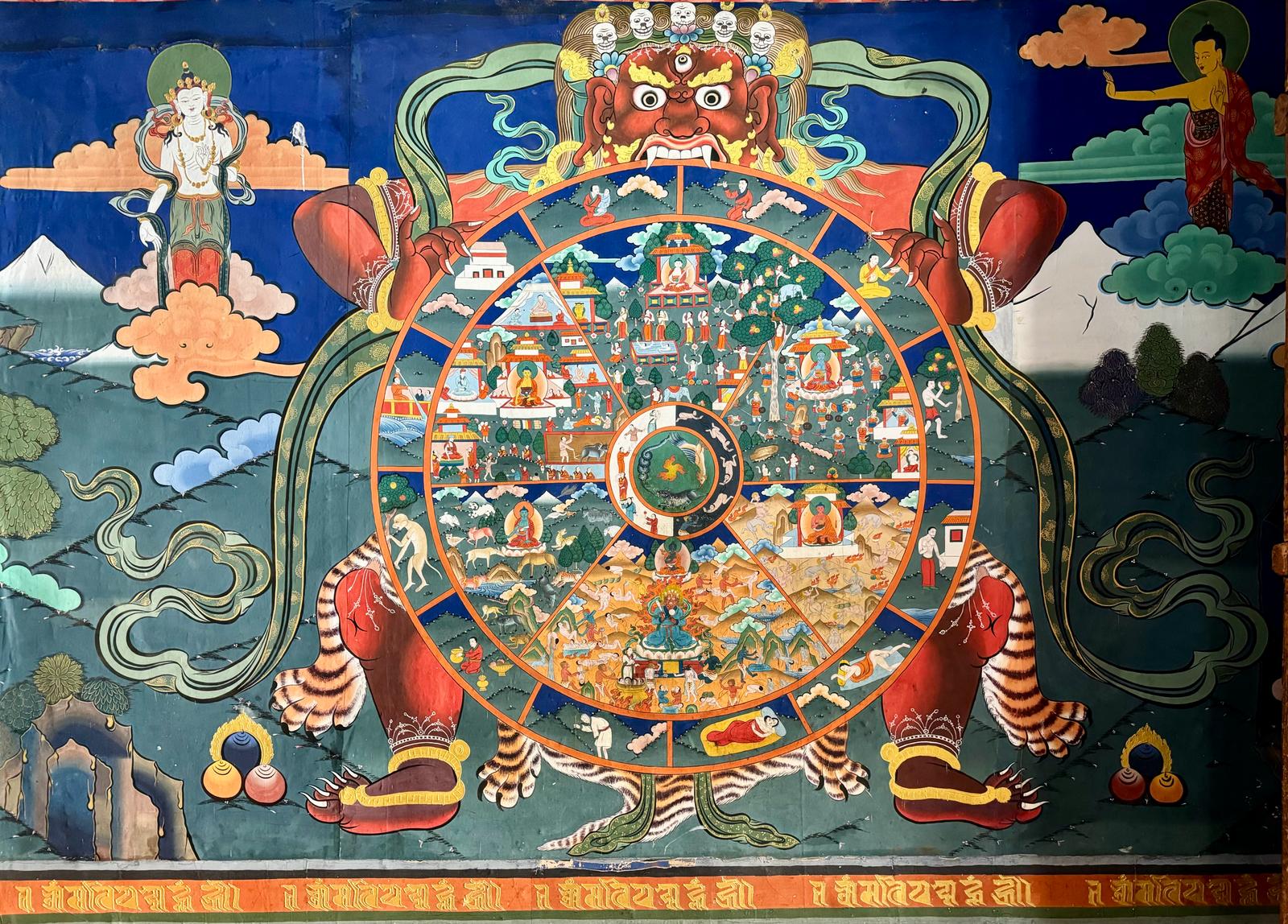
After having our cell-phones removed at the ticket office we ascended the steps into the cylindrical building, which houses the national museum artefacts. There were stone axes and knives dating back to ±2,000 BC, which shows that man has been hanging around here for a while. There was a huge amount to take in as we passed various types of Thanga paintings, then came to a couple of shrines, the first of which was four sided, with numerous depictions of Buddha and other enlightened beings, each of which was numbered. Chimi patiently explained as Sylvia asked a number of questions, with most of the answers going right over my head. During my 30-odd years of studying karate I had come across the Buddhist ways and been to a number of Buddhist meditation centres, both in NZ and in the US, but I find the Buddhism here to be much more detailed and sincere, The attention to detail in their shrines compared with others I have visited in various parts of the world is much more particular.

The path led us up little stairways andd through little passages, passing all sorts of artefacts, until we started to descend, passing areas, on clothing, stamps, coins, royalty, and royal costumes. One little circular alley we went through was full of teapots – here one had to keep one’s head down as the ceiling was very low. There was even a section of matchlock long rifles and powdered-primed swivel canons. Eventually we popped out of the bottom of the building and wandered our way up the path to the ticket office, where we collected our phones. It’s really hard to describe these places accurately without having pictures.

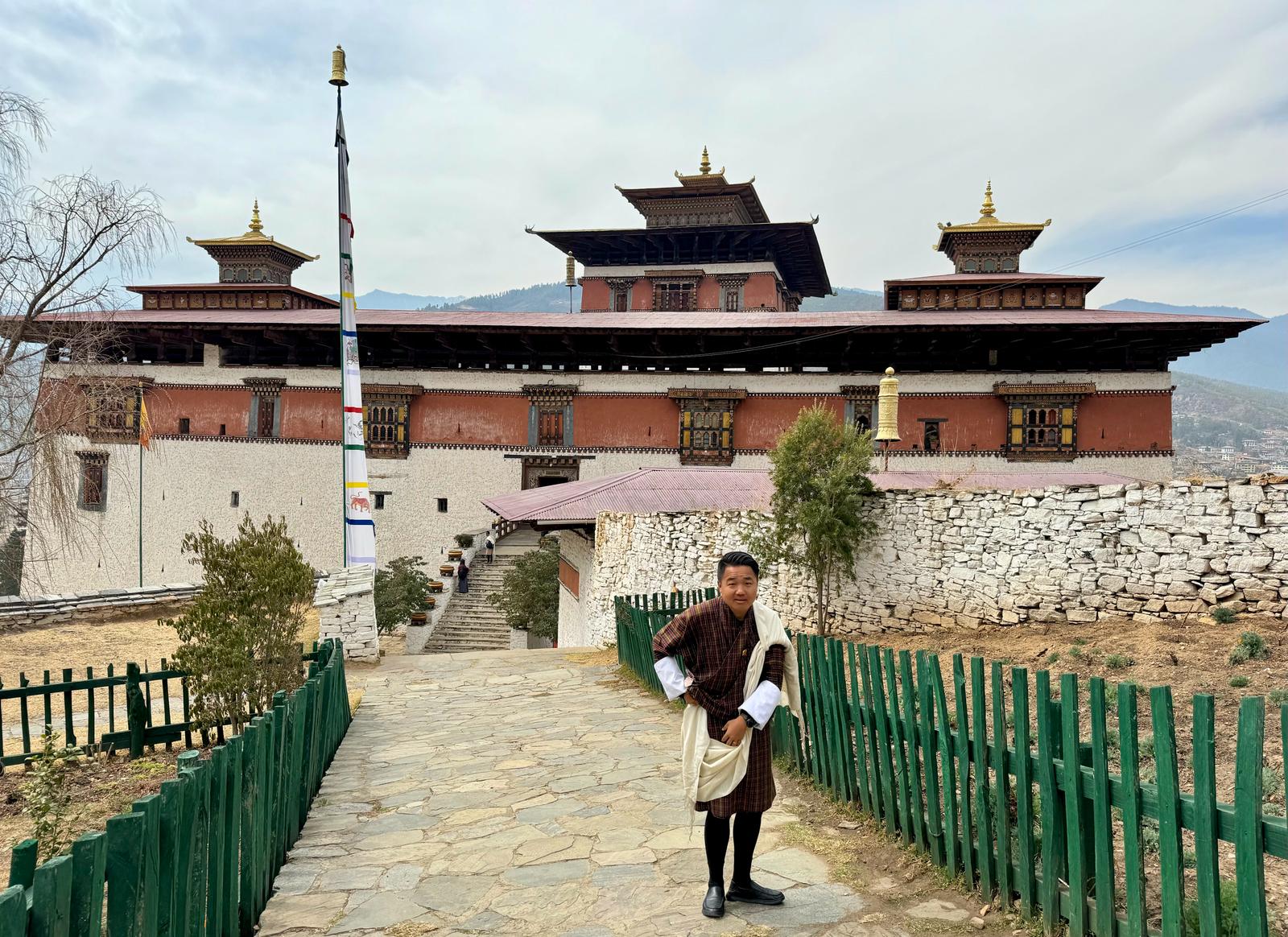
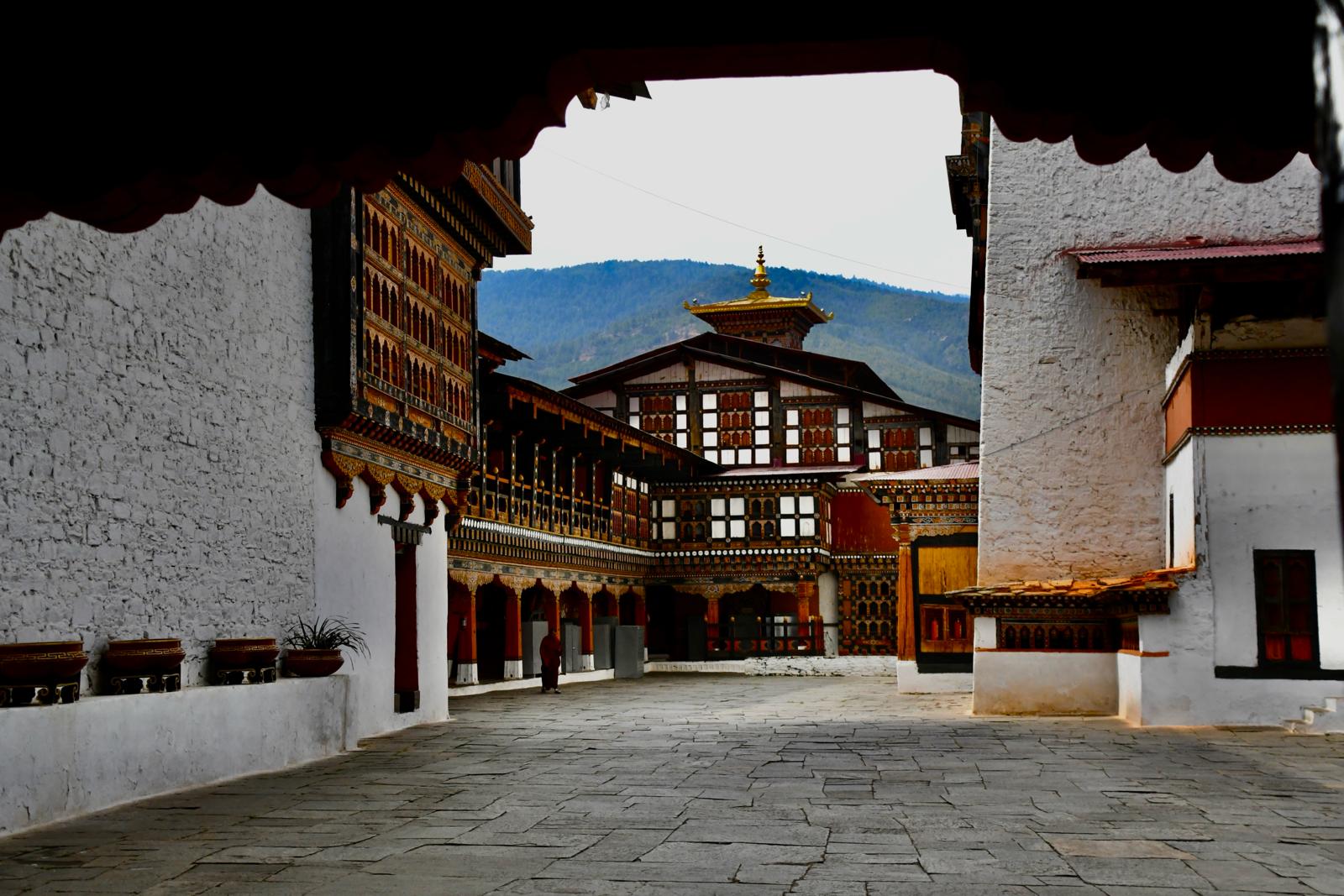
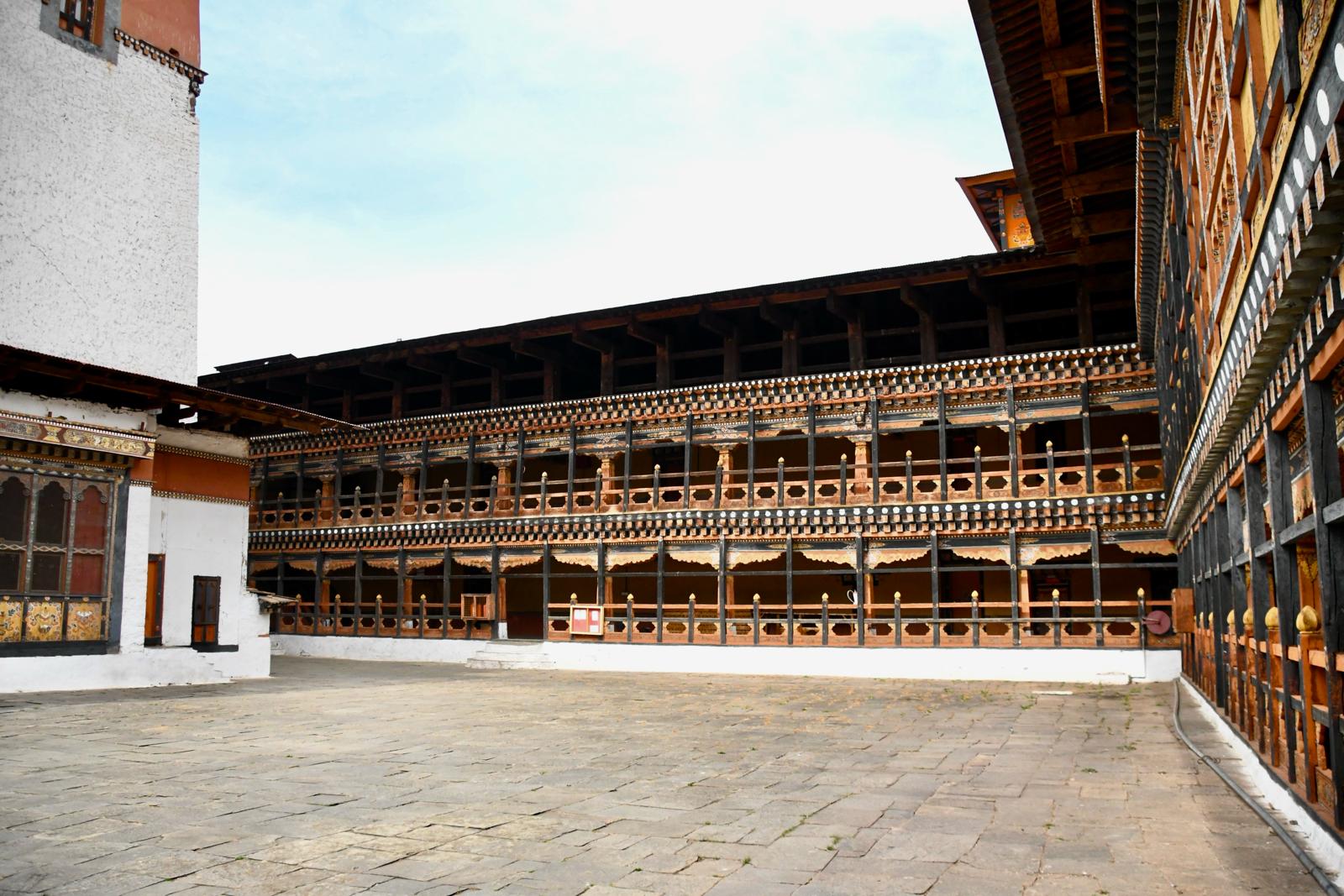
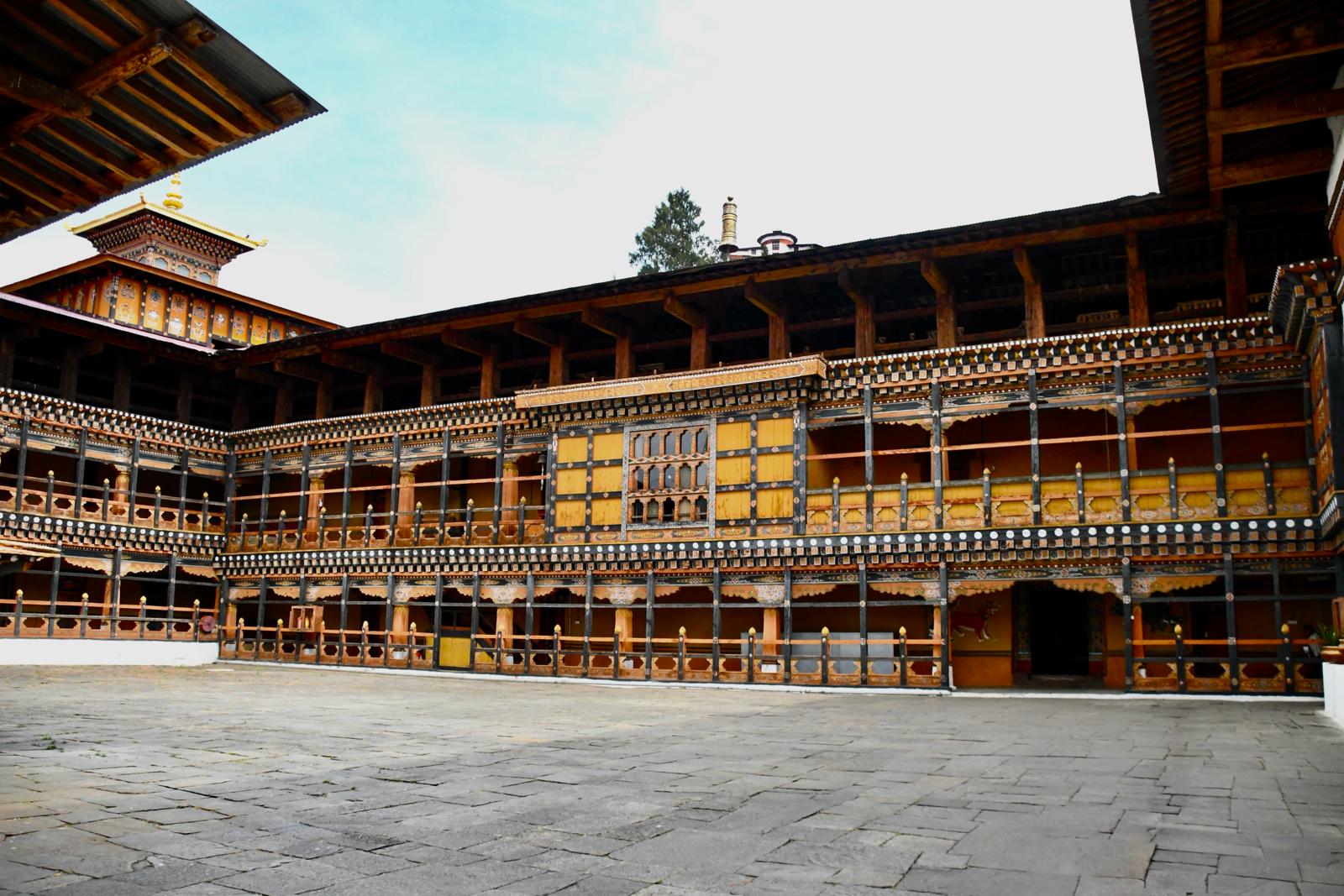
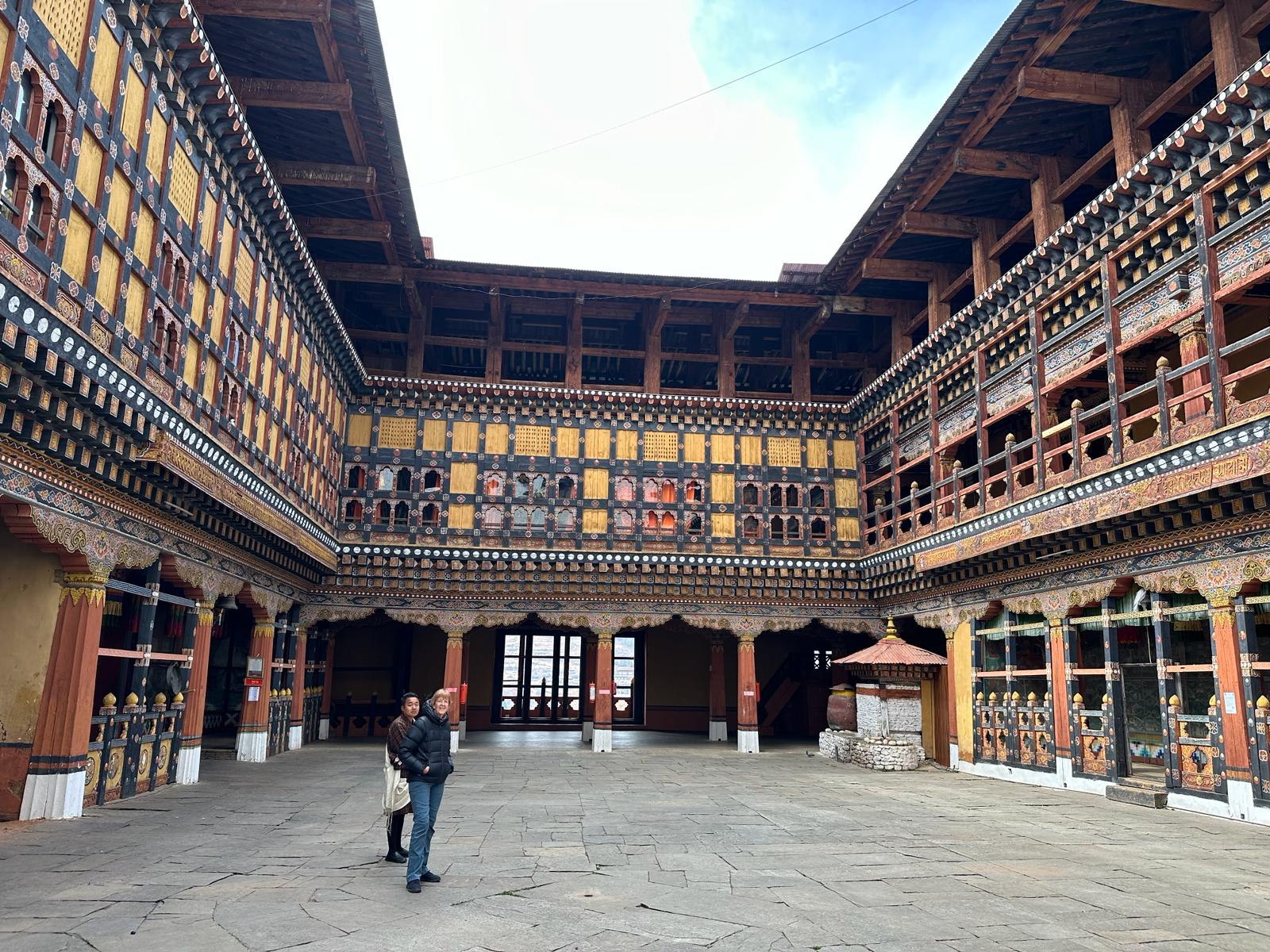
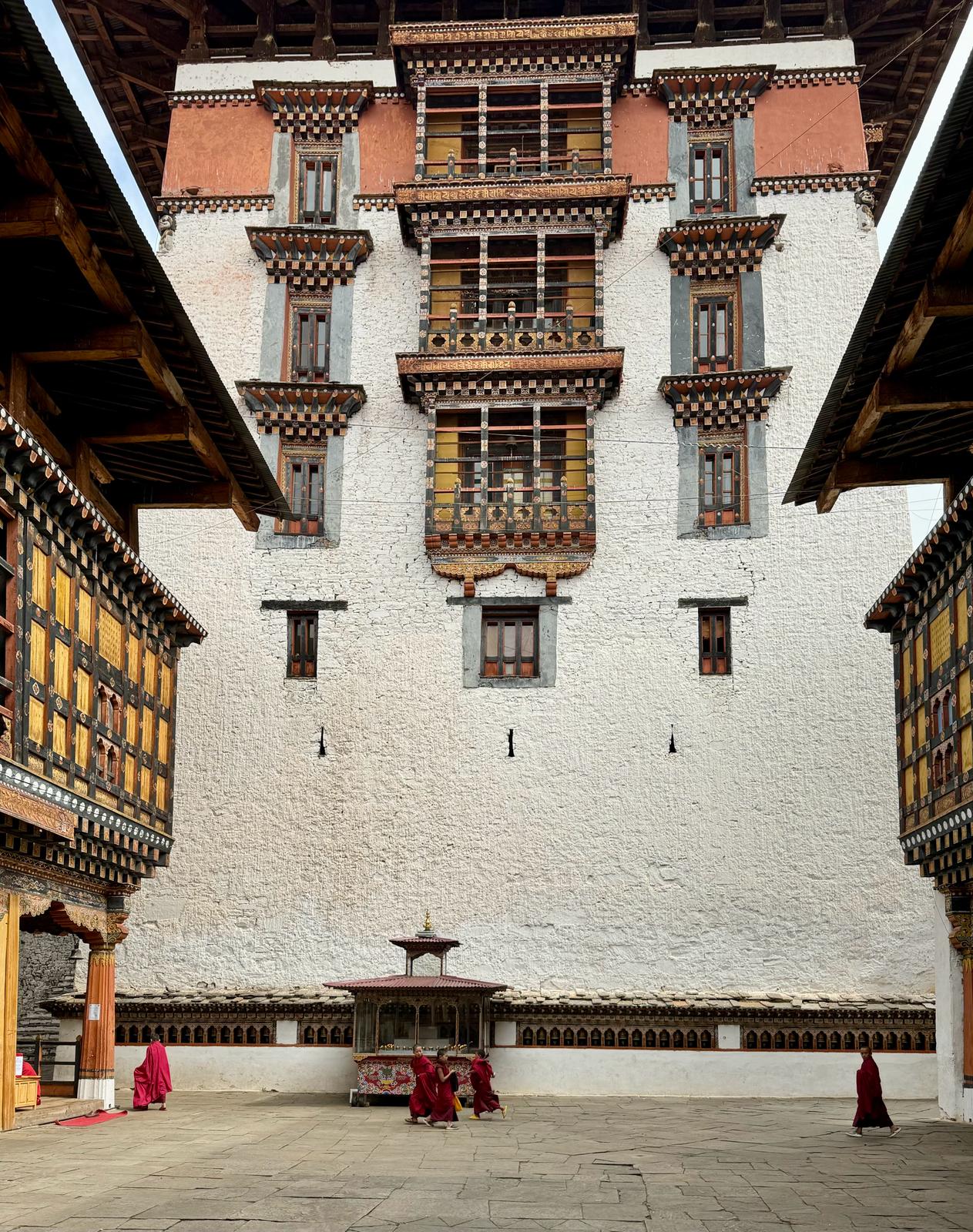
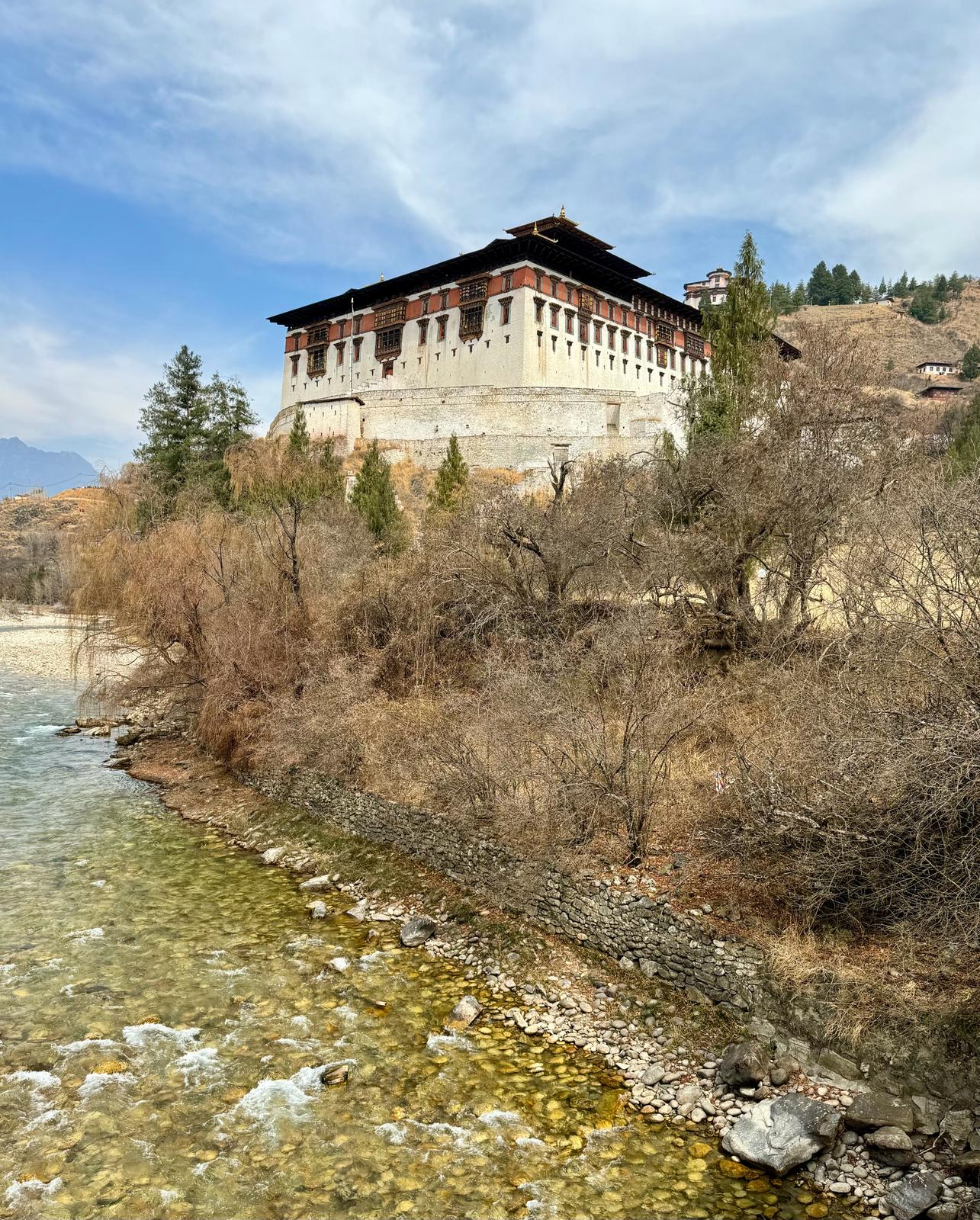
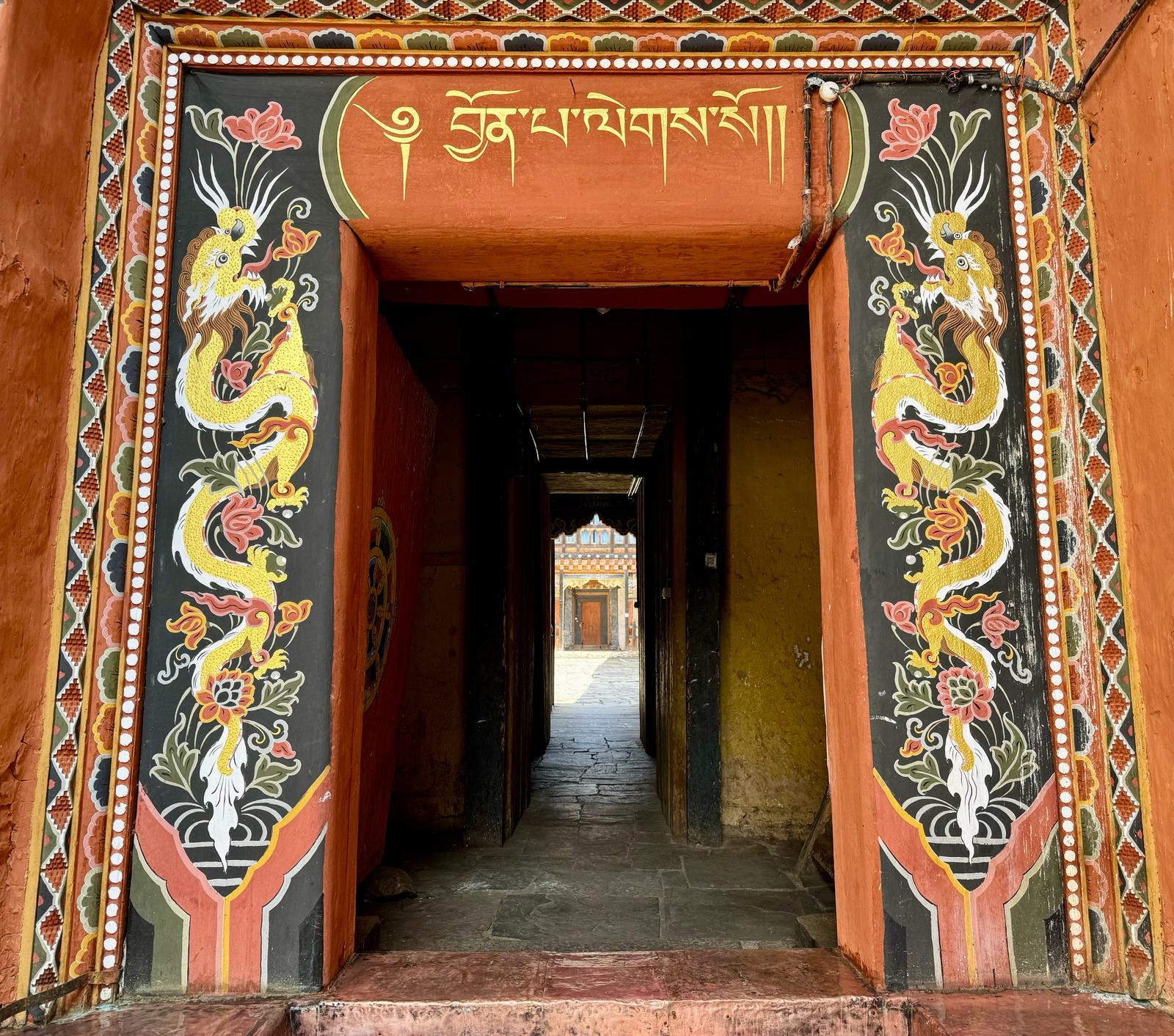
From here we drove down to the Rinpung Dzong, or fort, which houses regional government offices and the monastic (religious) administration.  Once again the attention to detail in this place is quite incredible. We wandered through courtyards and down stairways into the temple where the monks pray at the bottom of the building. Chimi, once again, explained the various statues and representations to us.

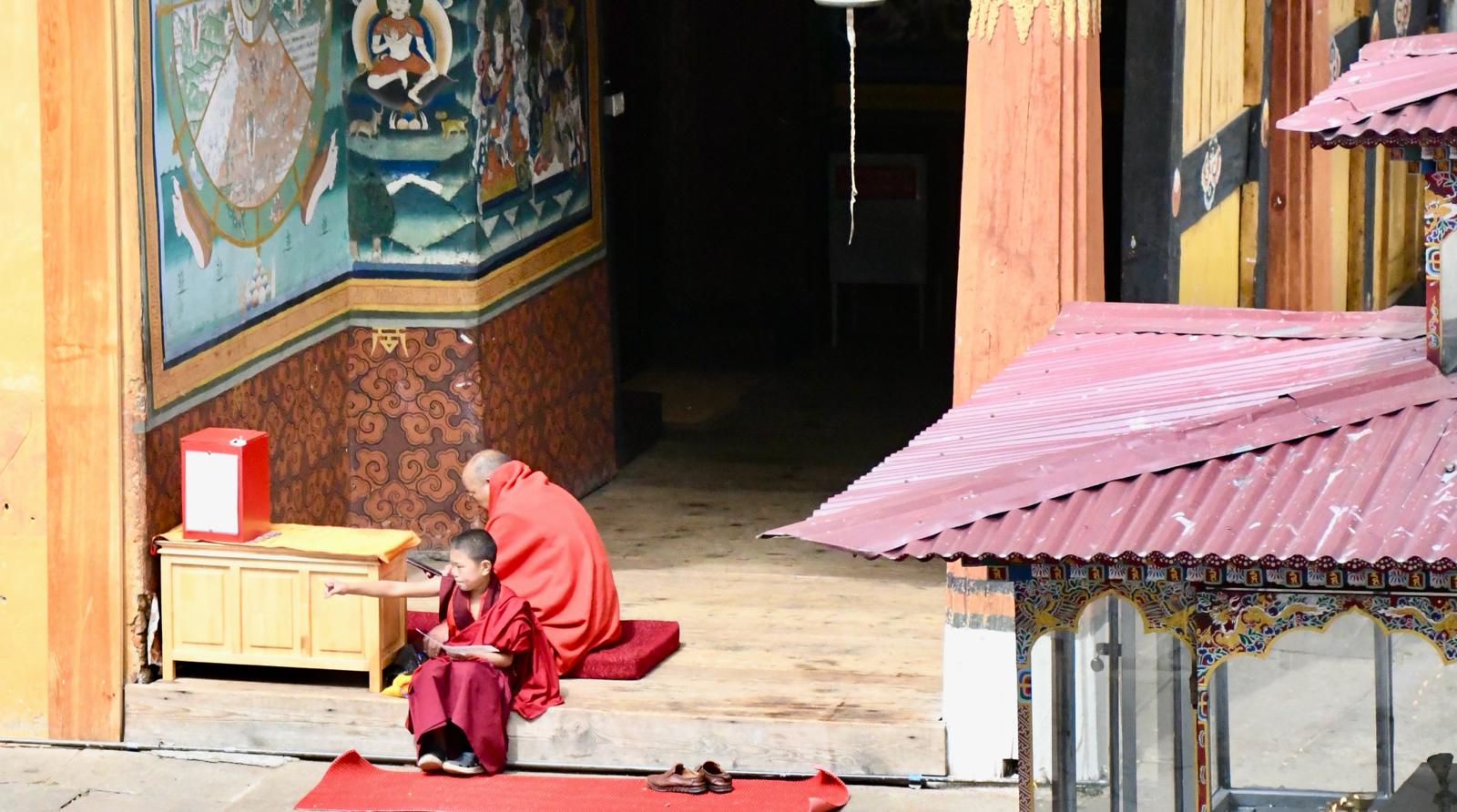
Feeling my knees after yesterday’s hike, I thought we may pop out the bottom of the building and head into the town. But no such luck. As we left the temple a bunch of young trainee monks, still in their childhood, raced around playing during their lunch break as we ascended the stairs back to the main entrance.

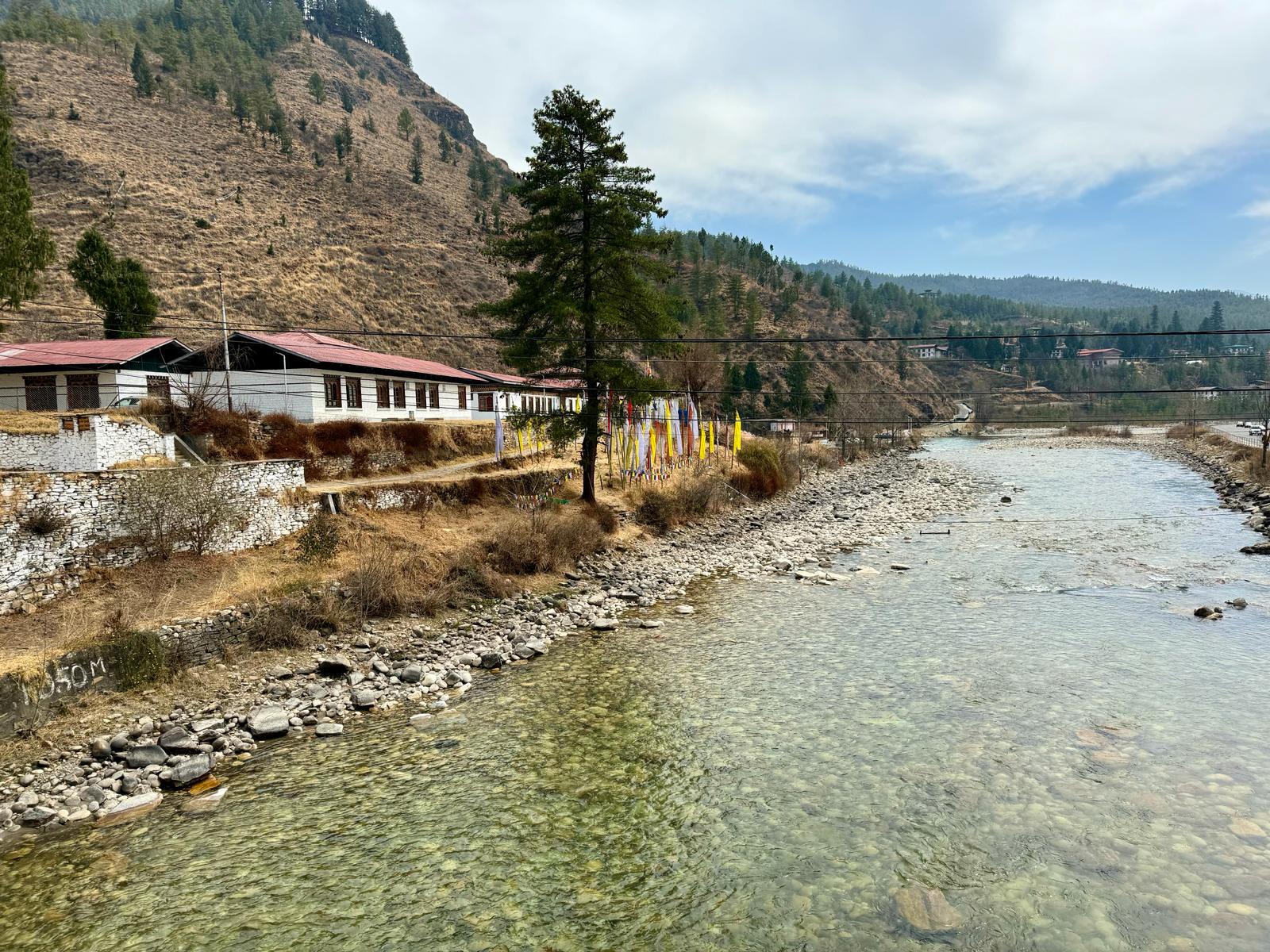
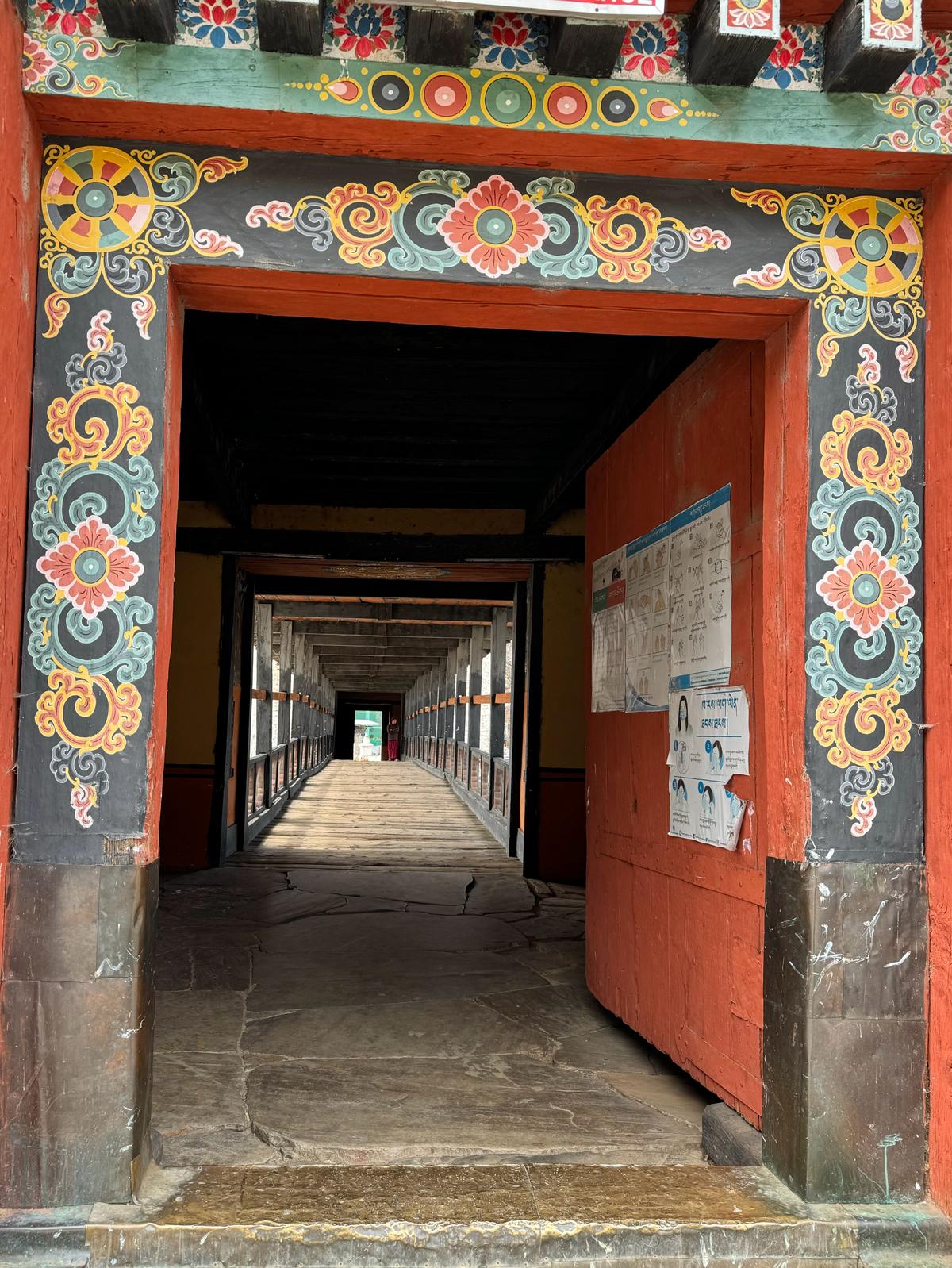
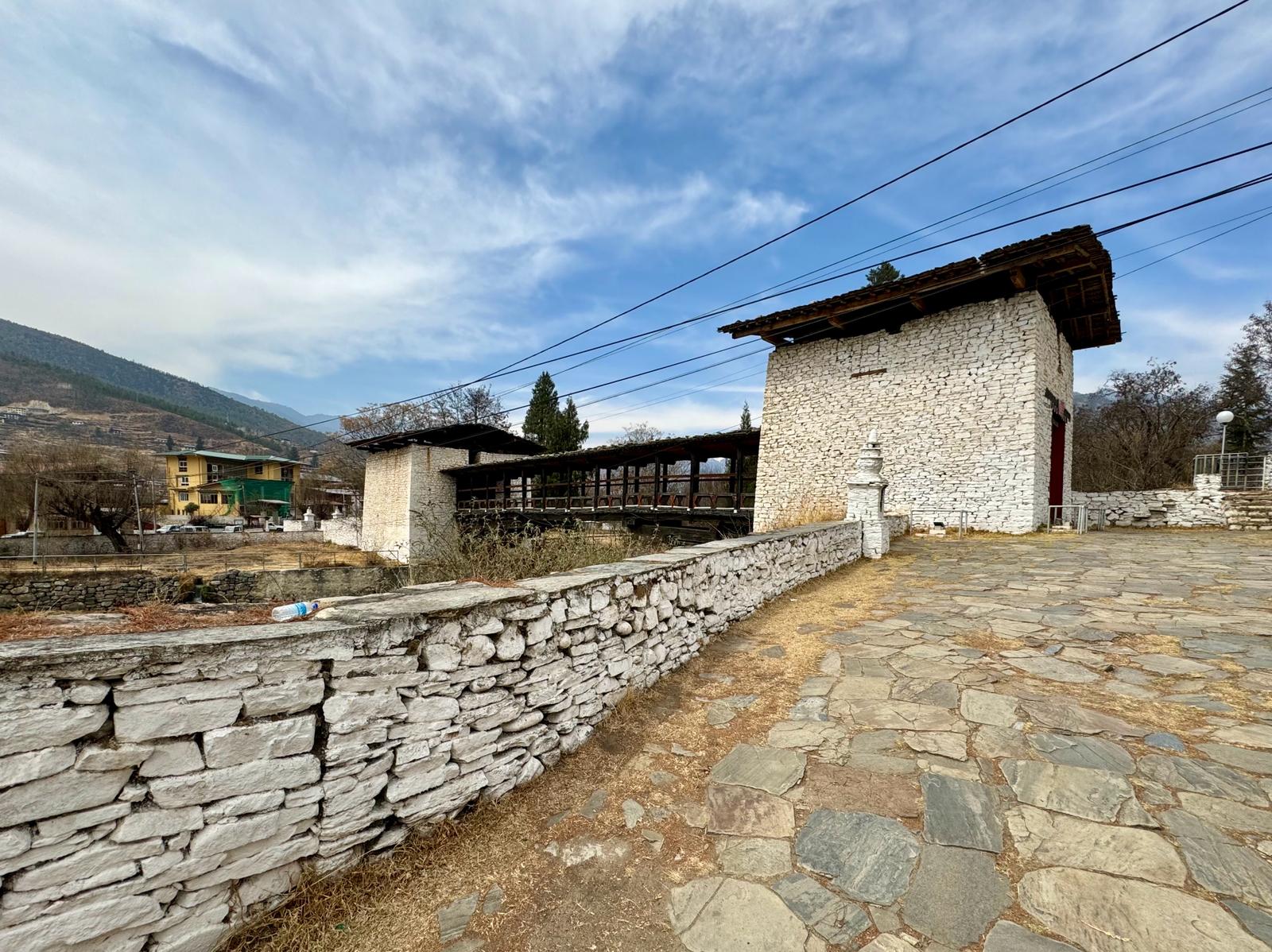
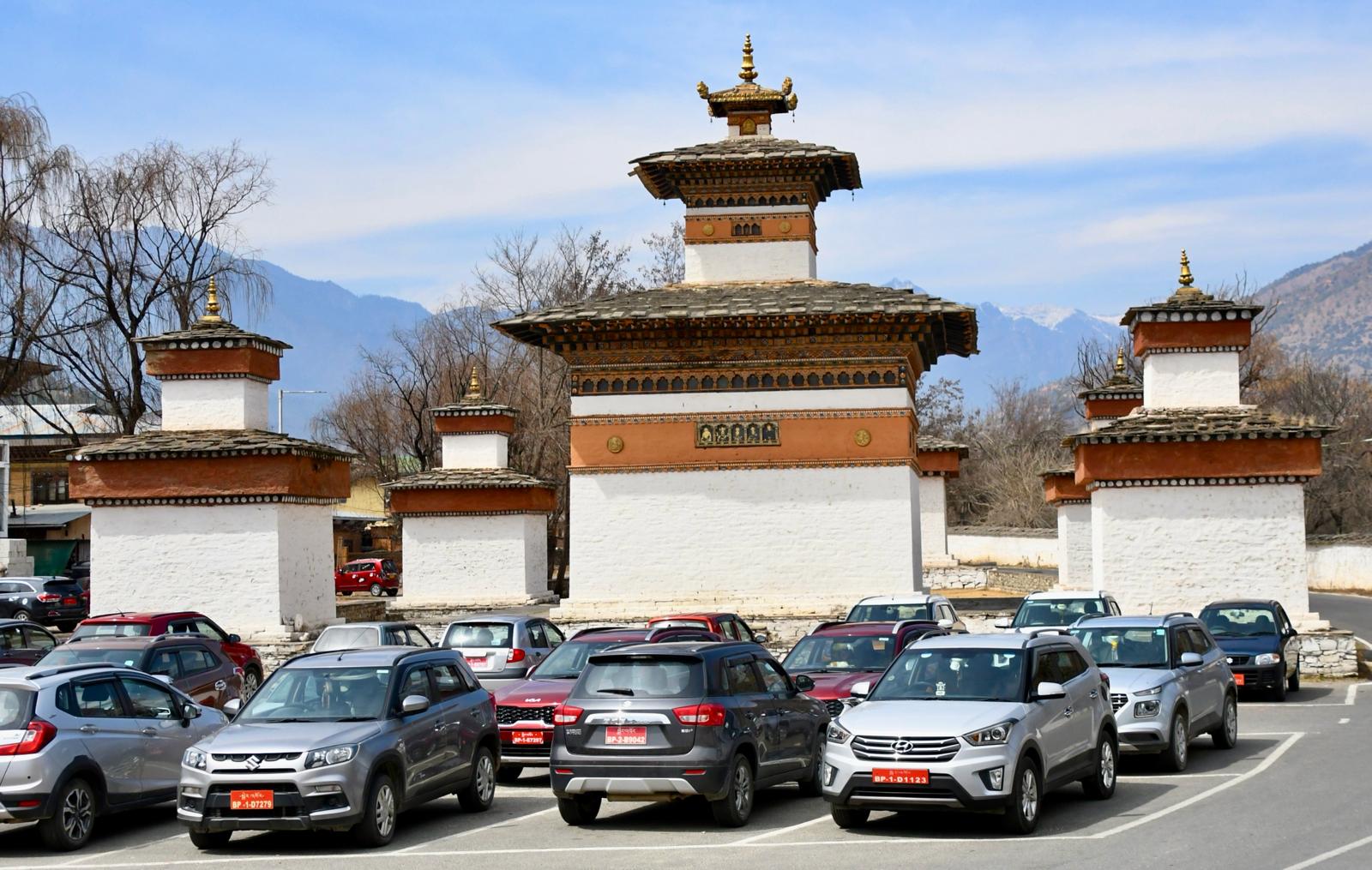
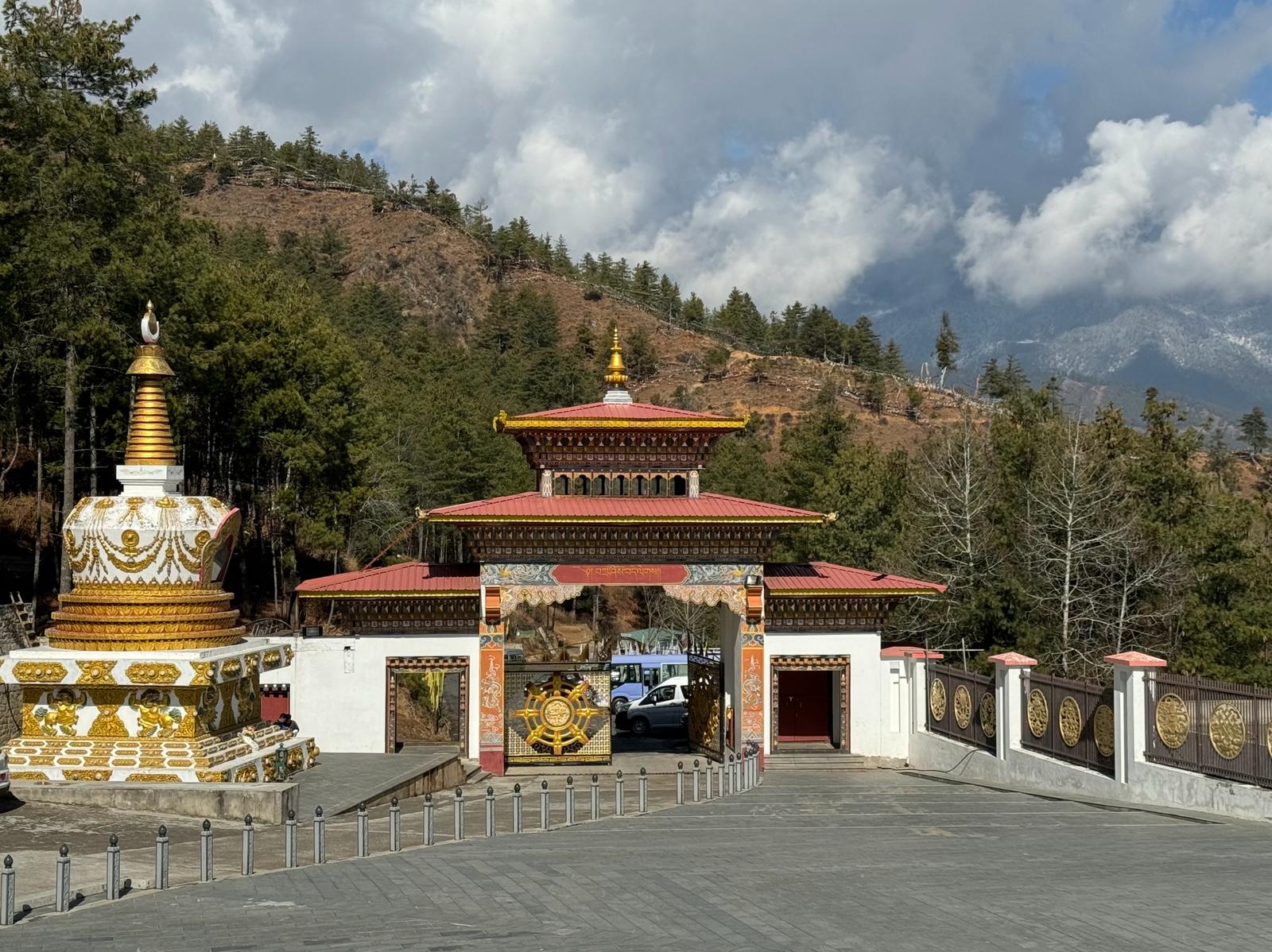
From there we took a stroll around the side of the Dzong on a gentle sloping path taking us to the Paro Chhu River and the Nyamai Zampa, an ancient traditional cantilevered bridge. Exiting the other side we were adjacent to five stupas, two large and three small, where Singye picked us up and drove us to Kyuchi Lhakang, which we had tried to visit a couple of days ago.

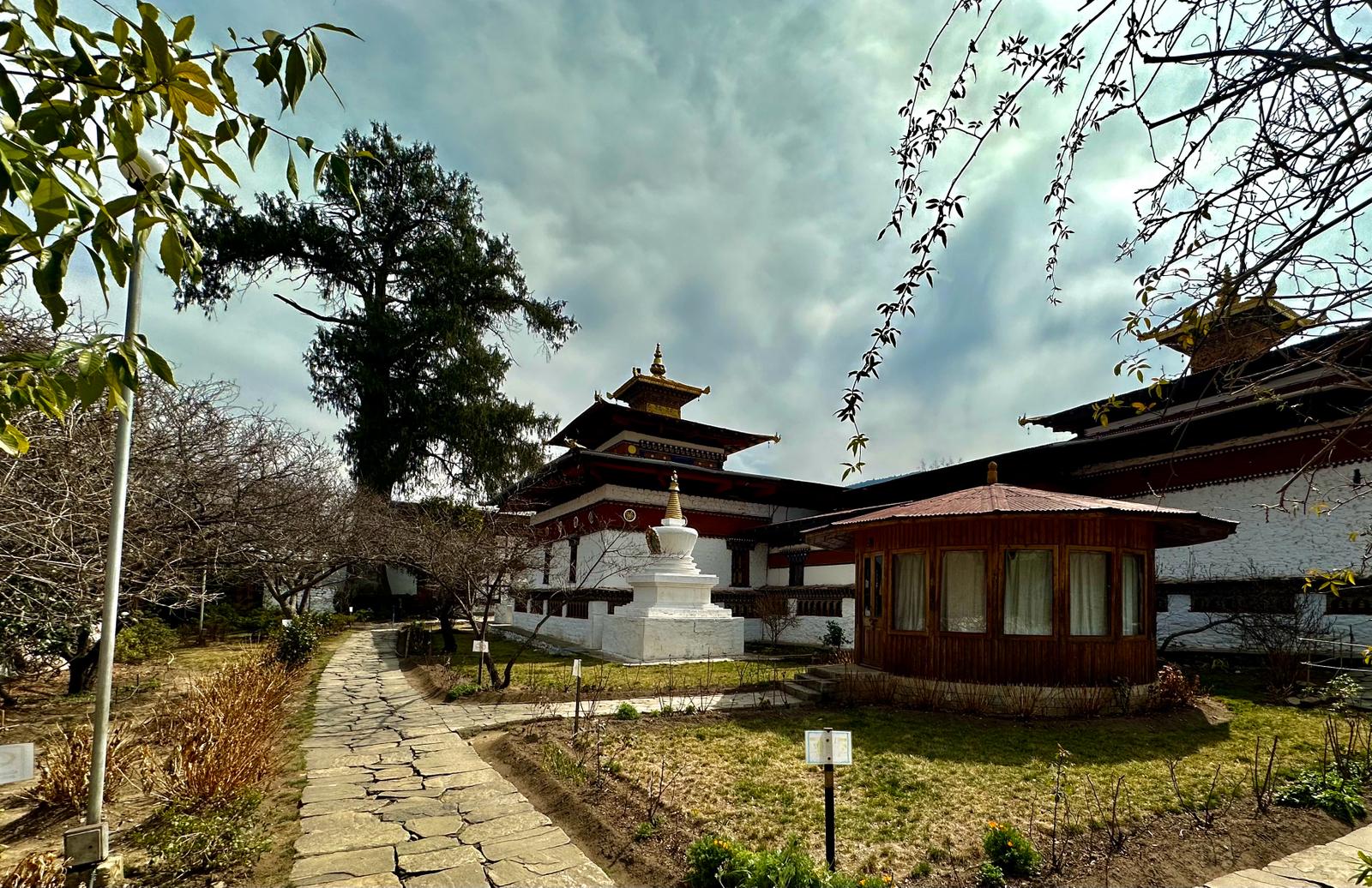
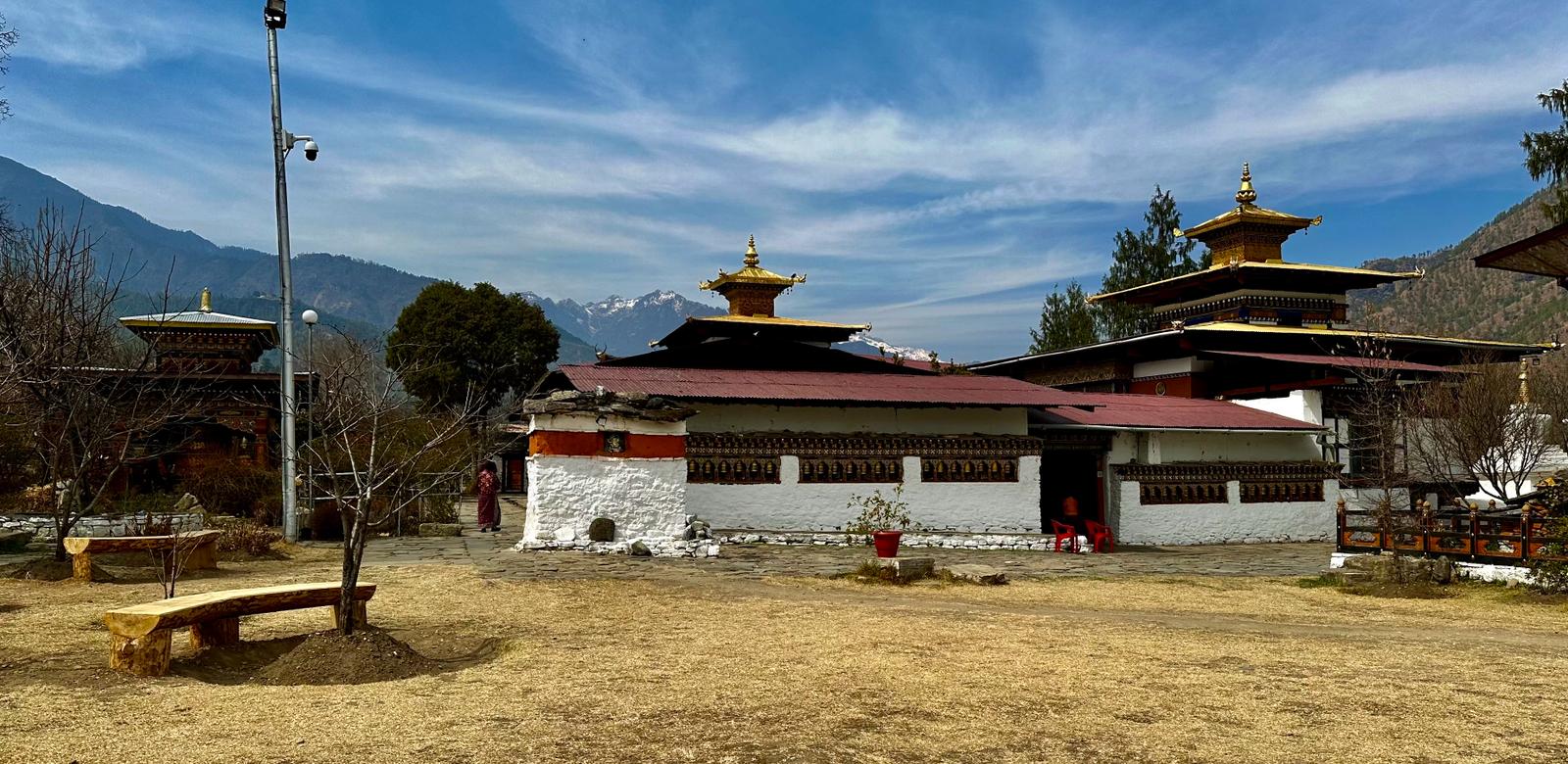
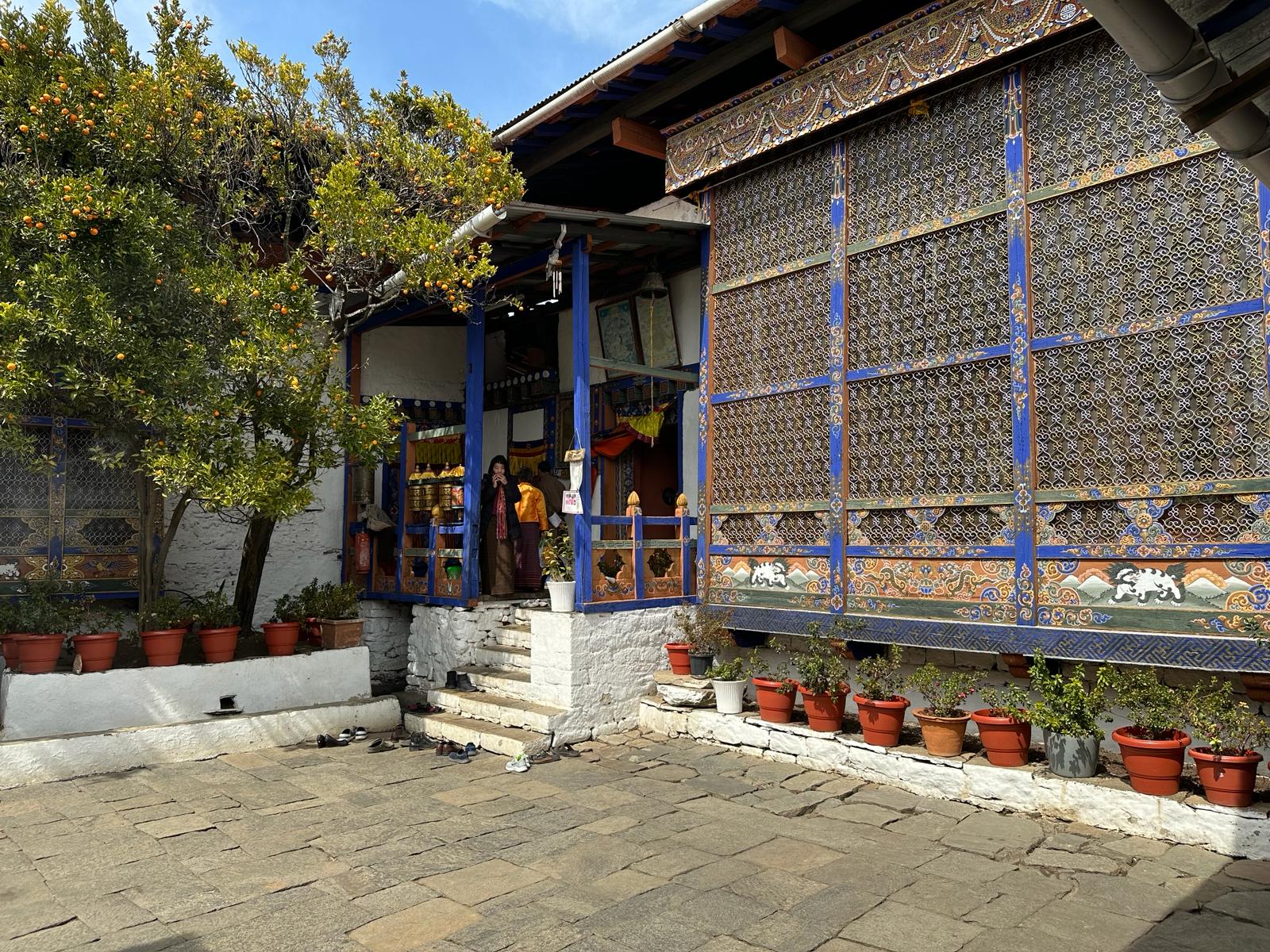
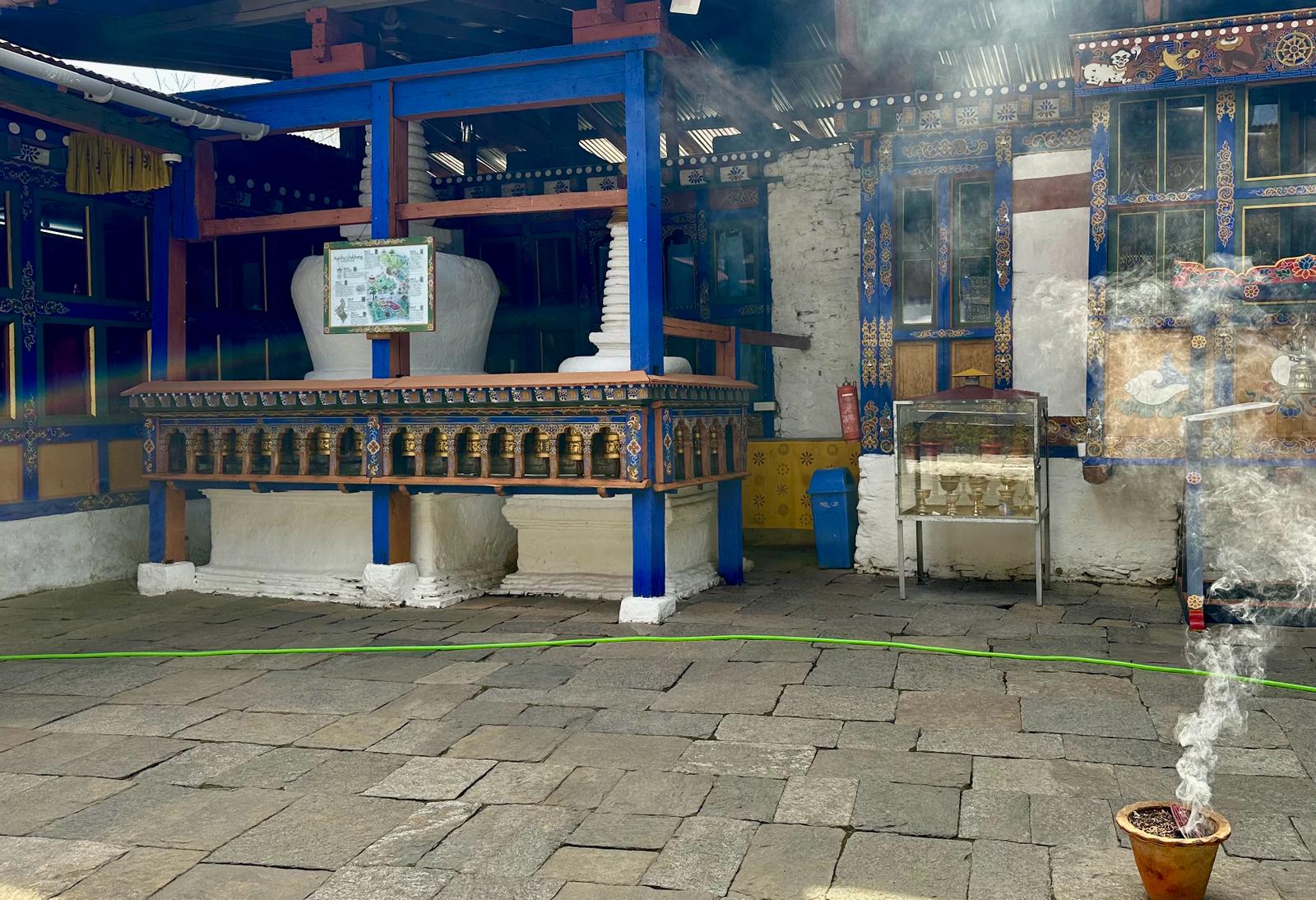
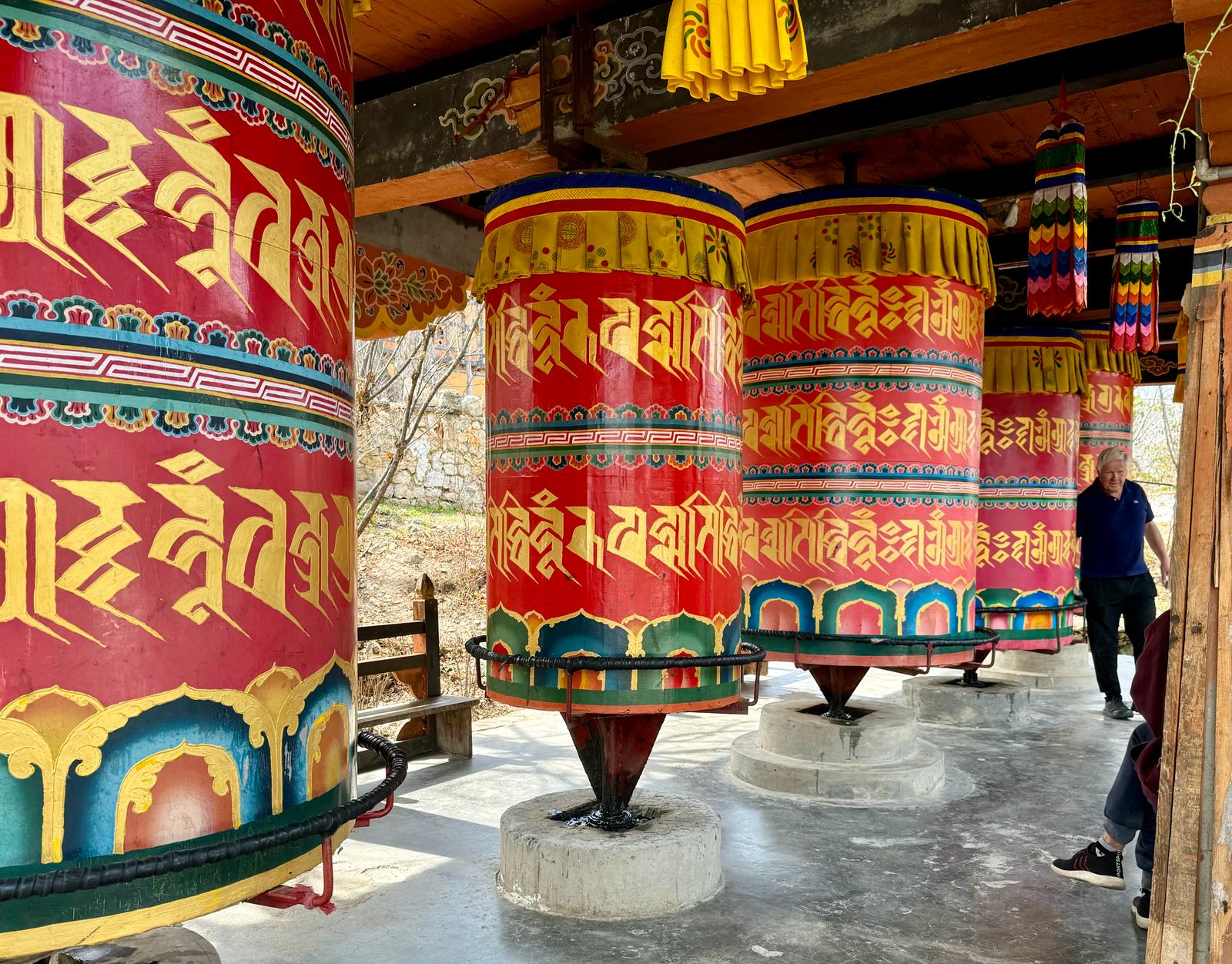
Established in the 7th century this is one of the oldest temples in Bhutan and has well manicured and laid out gardens, lots of prayer wheels and in the internal courtyard two temples, both of which we visited. It’s interesting to watch, because each time we enter one of these temples Chimi goes through. His prayer rituals and prostrations (getting down on his knees and touching his head on the floor and performing various other rituals). With the number of these we have visited over the last couple of days he should be right up there in the Buddhist good books.

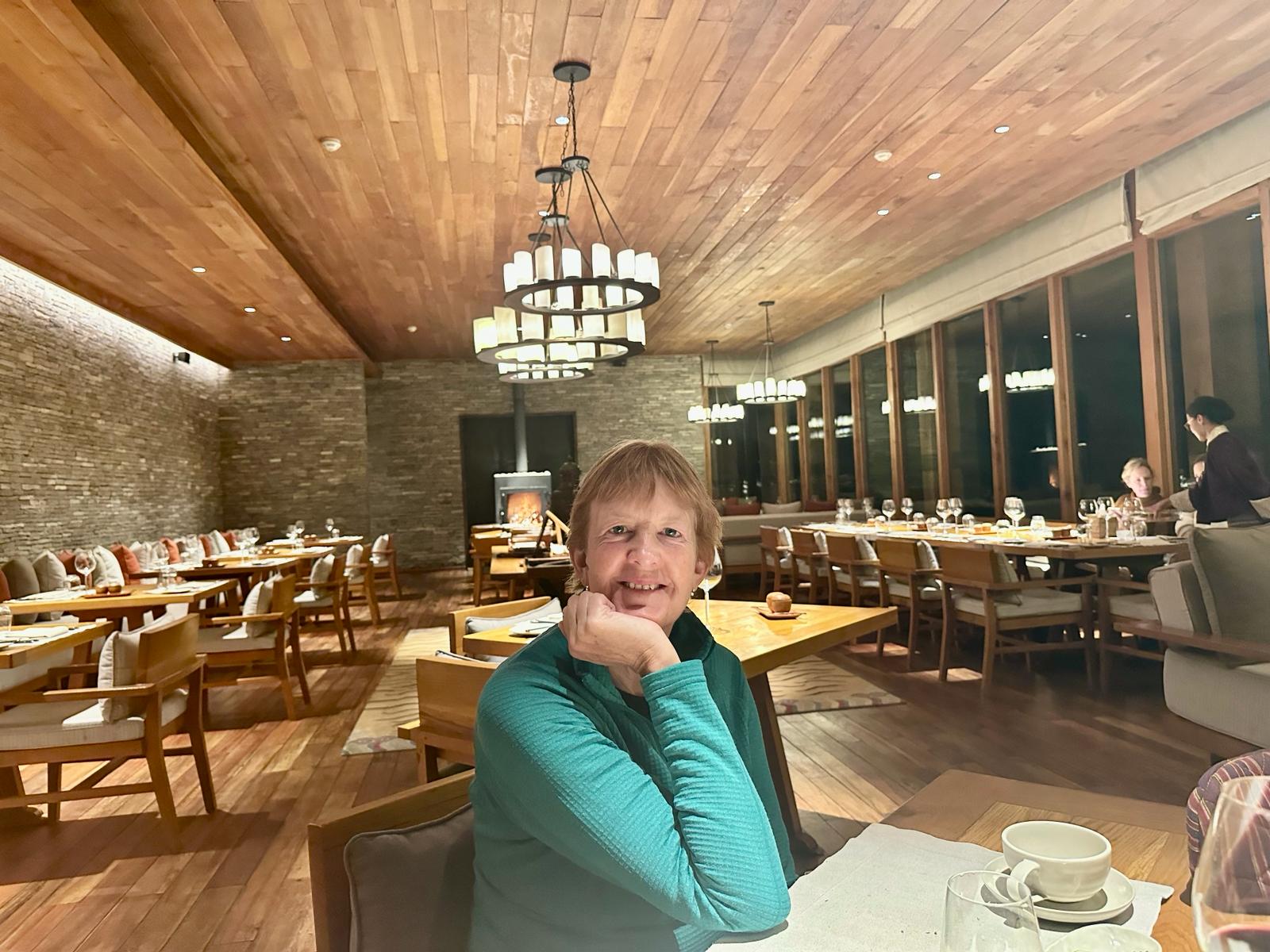
From there we drove back up to the Six Senses hotel and enjoyed a very relaxing lunch wth few others in the restaurant. The attention to detail and the excellent service provided by the people that work at Six Senses can only be described as outstanding. It’s difficult to open a door for yourself as someone seems to appear from nowhere and grab the door handle before you get there.

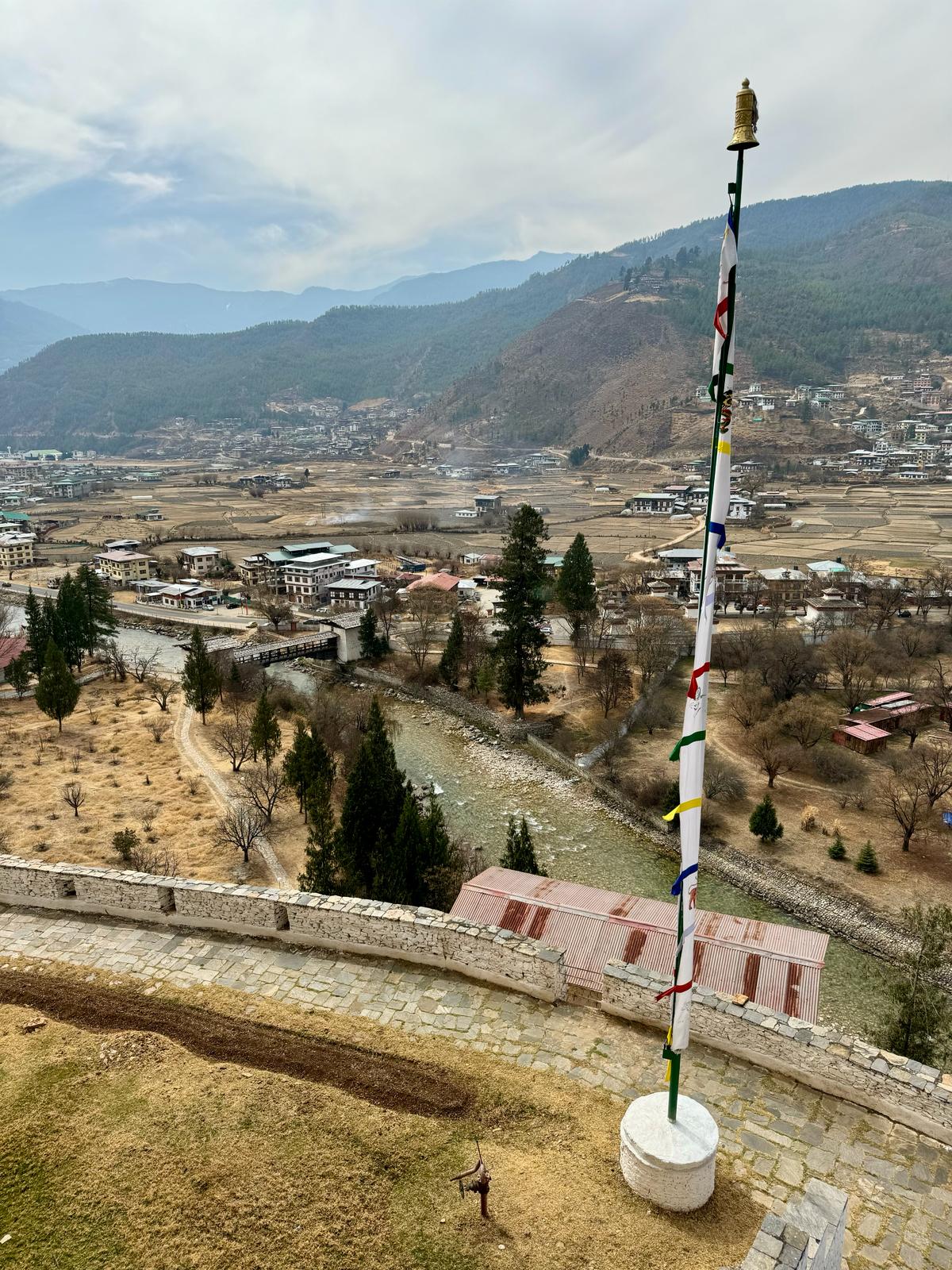
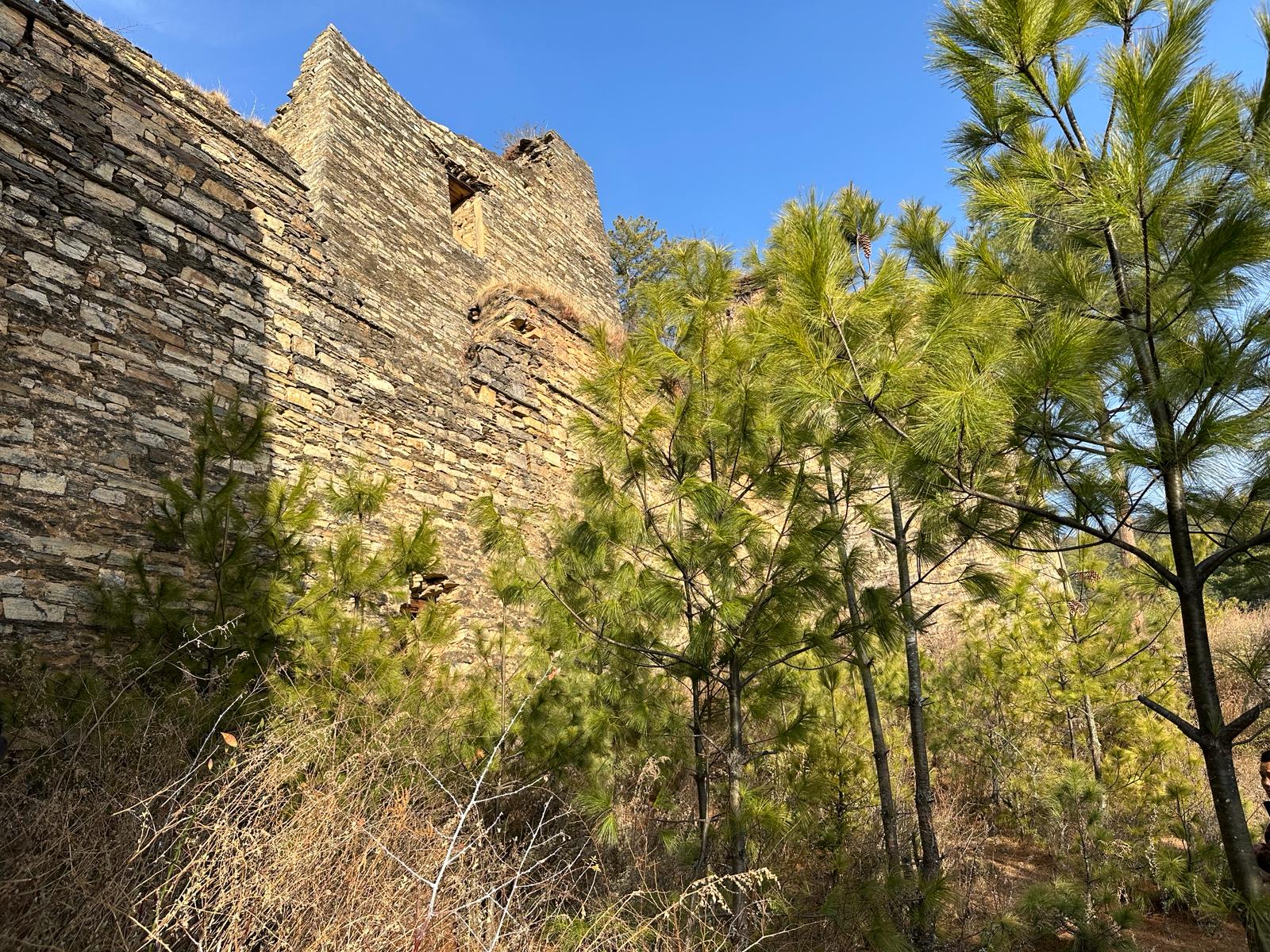
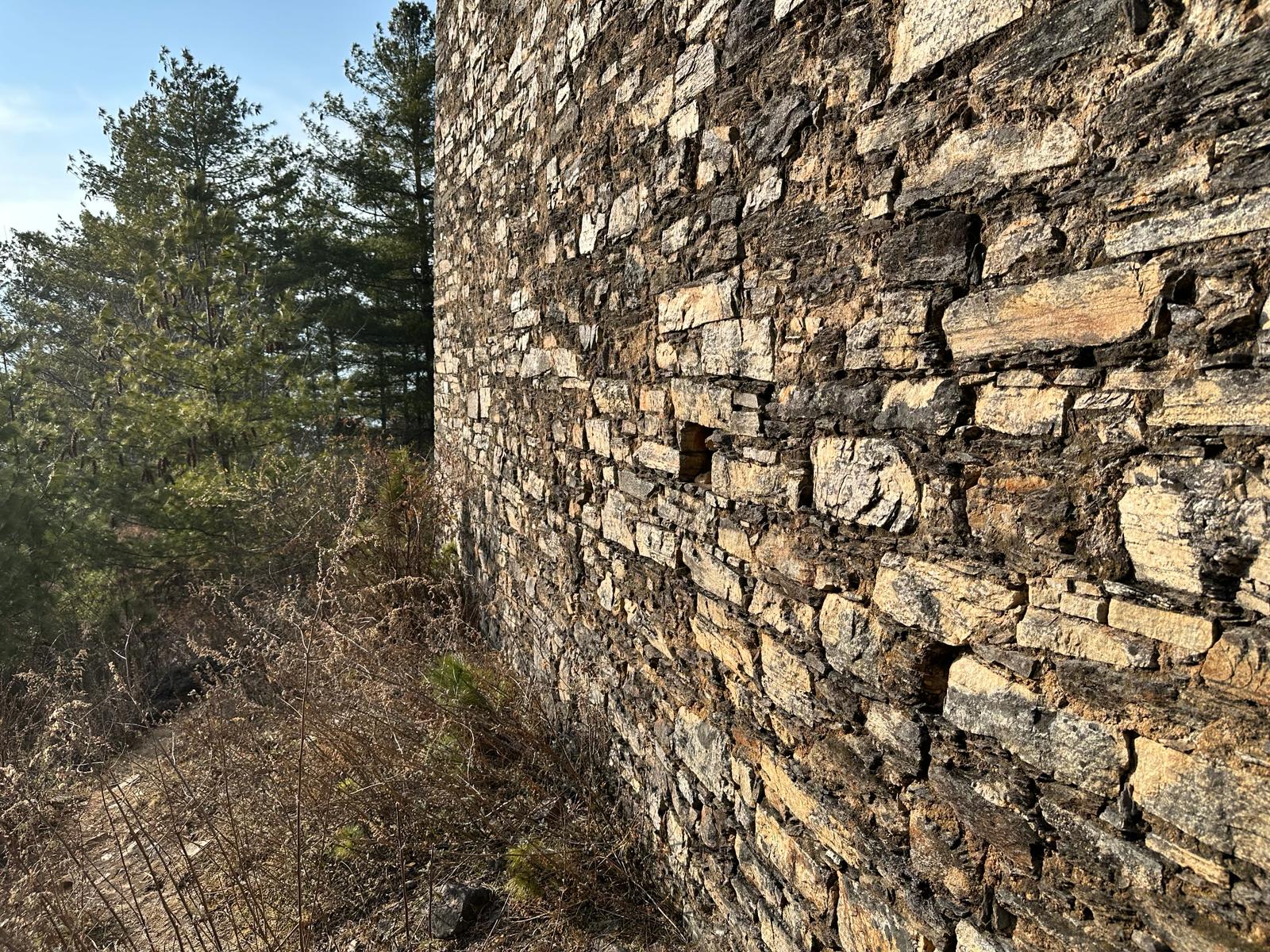
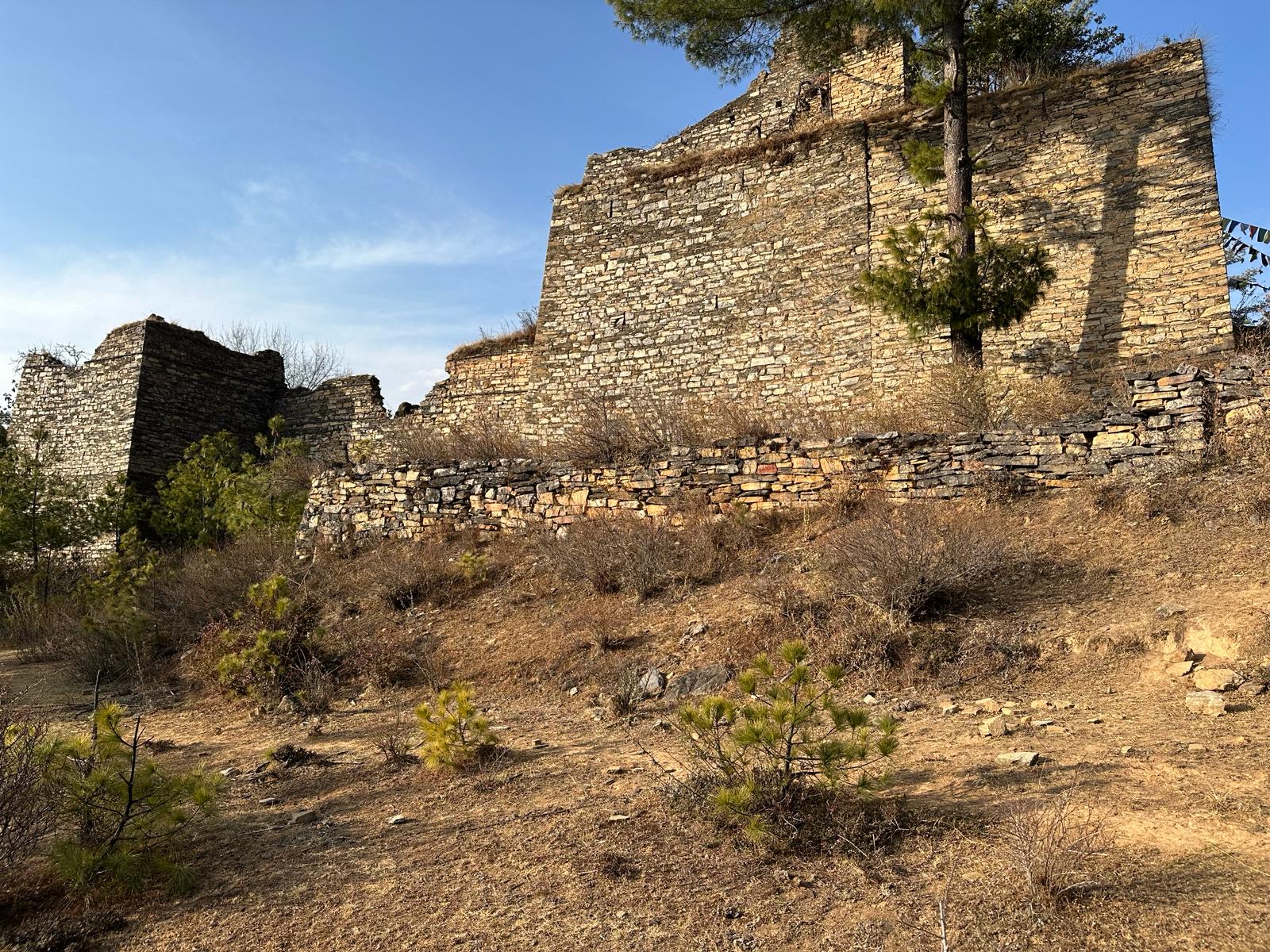
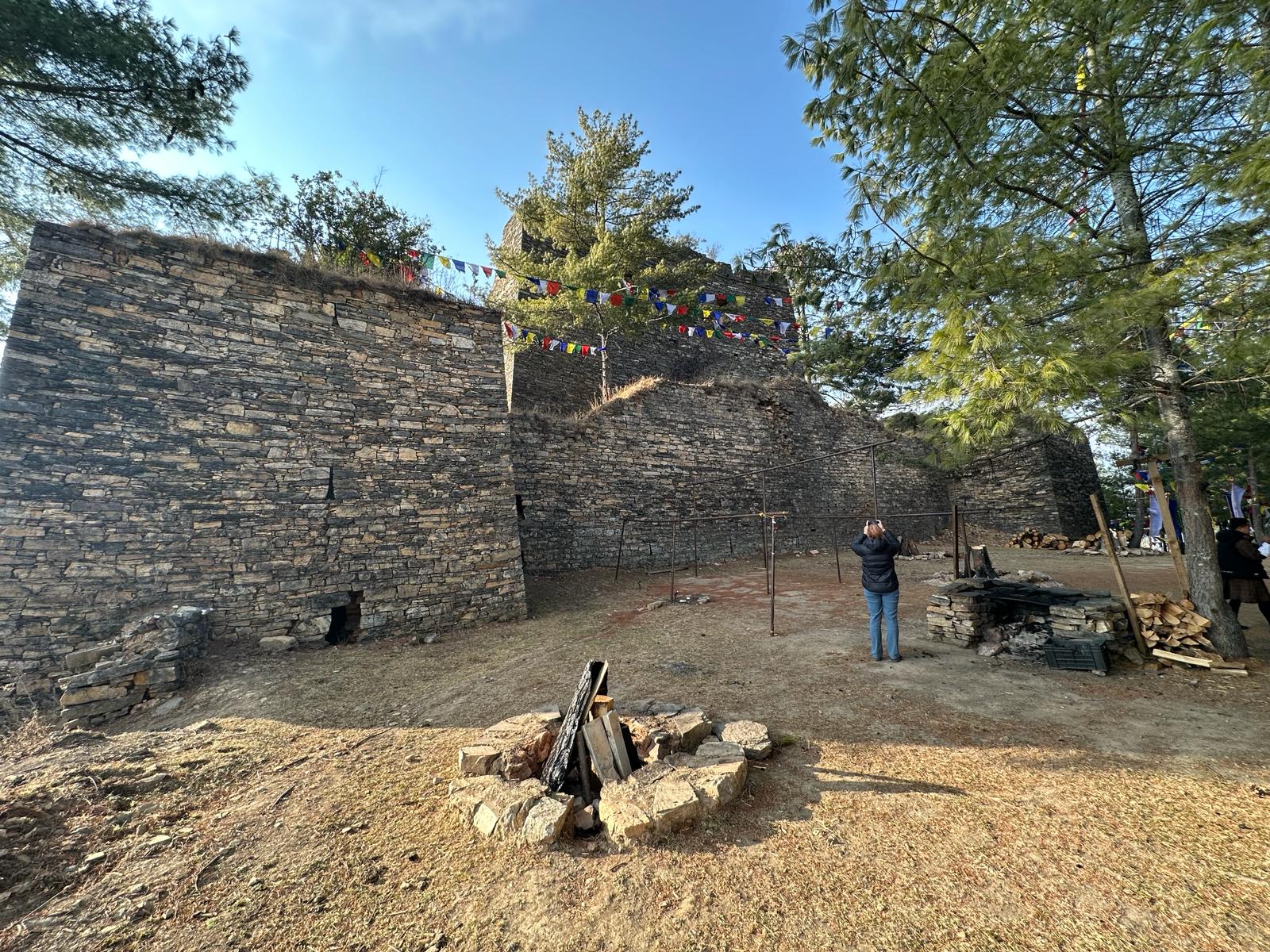
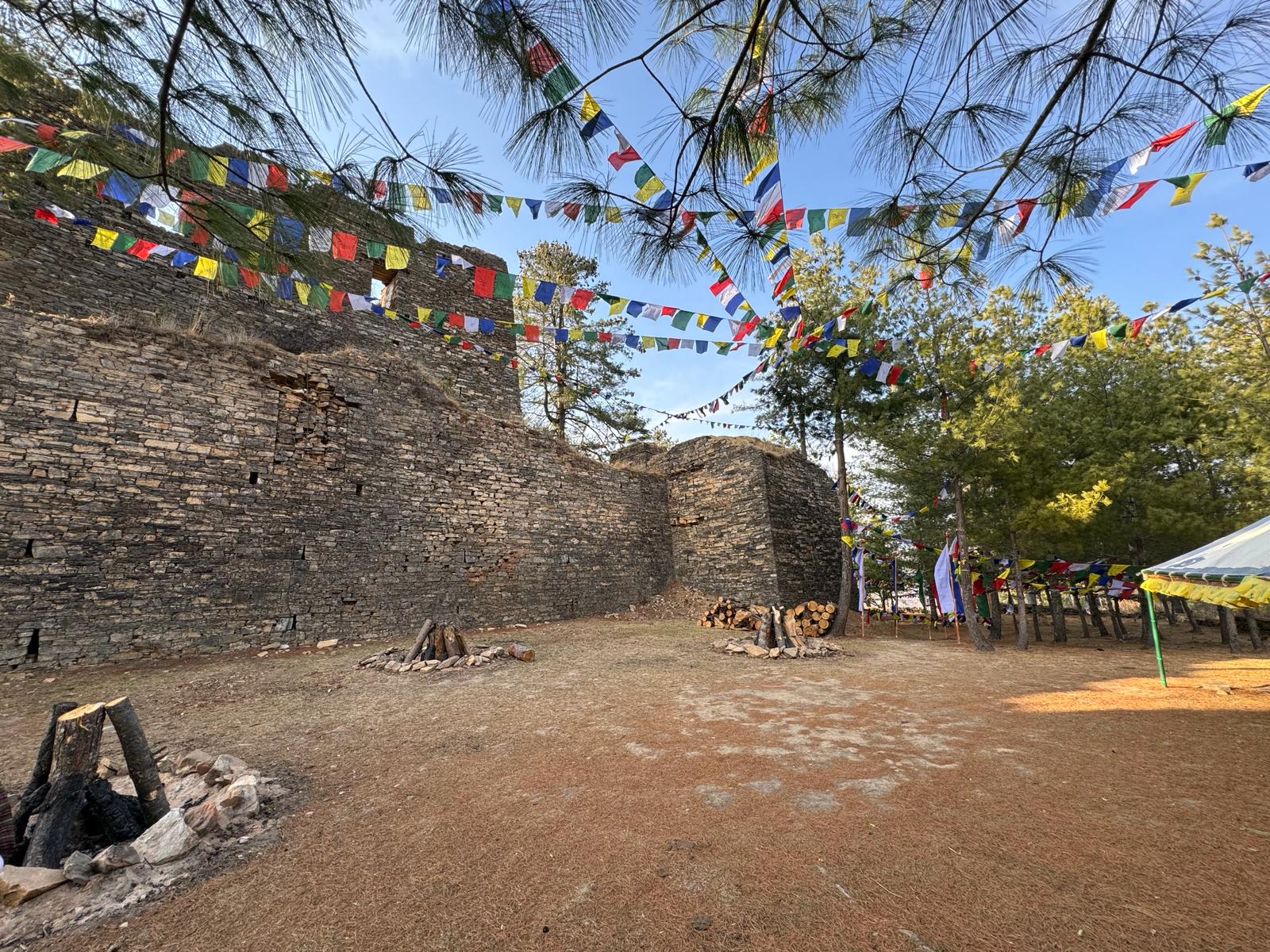
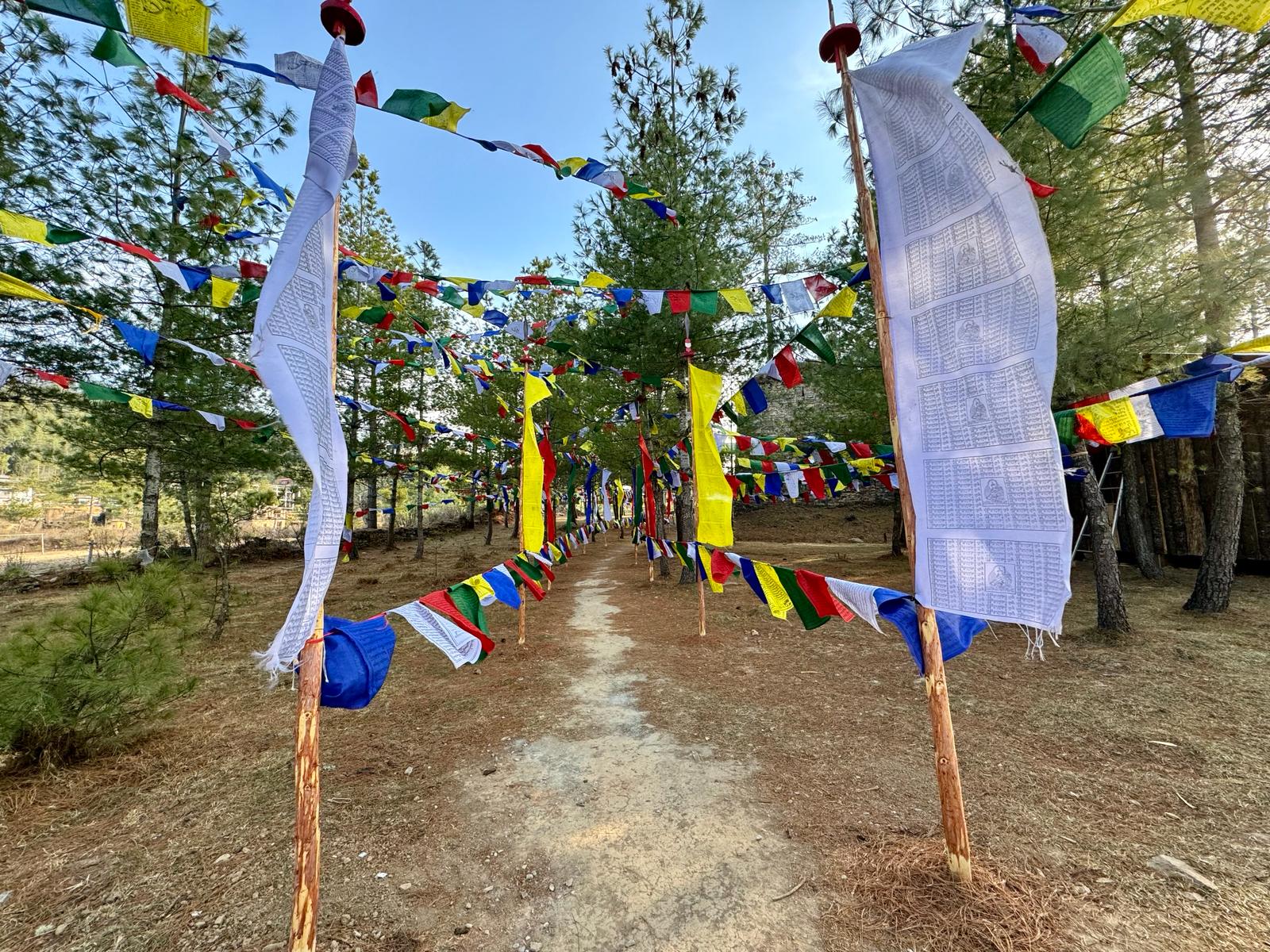
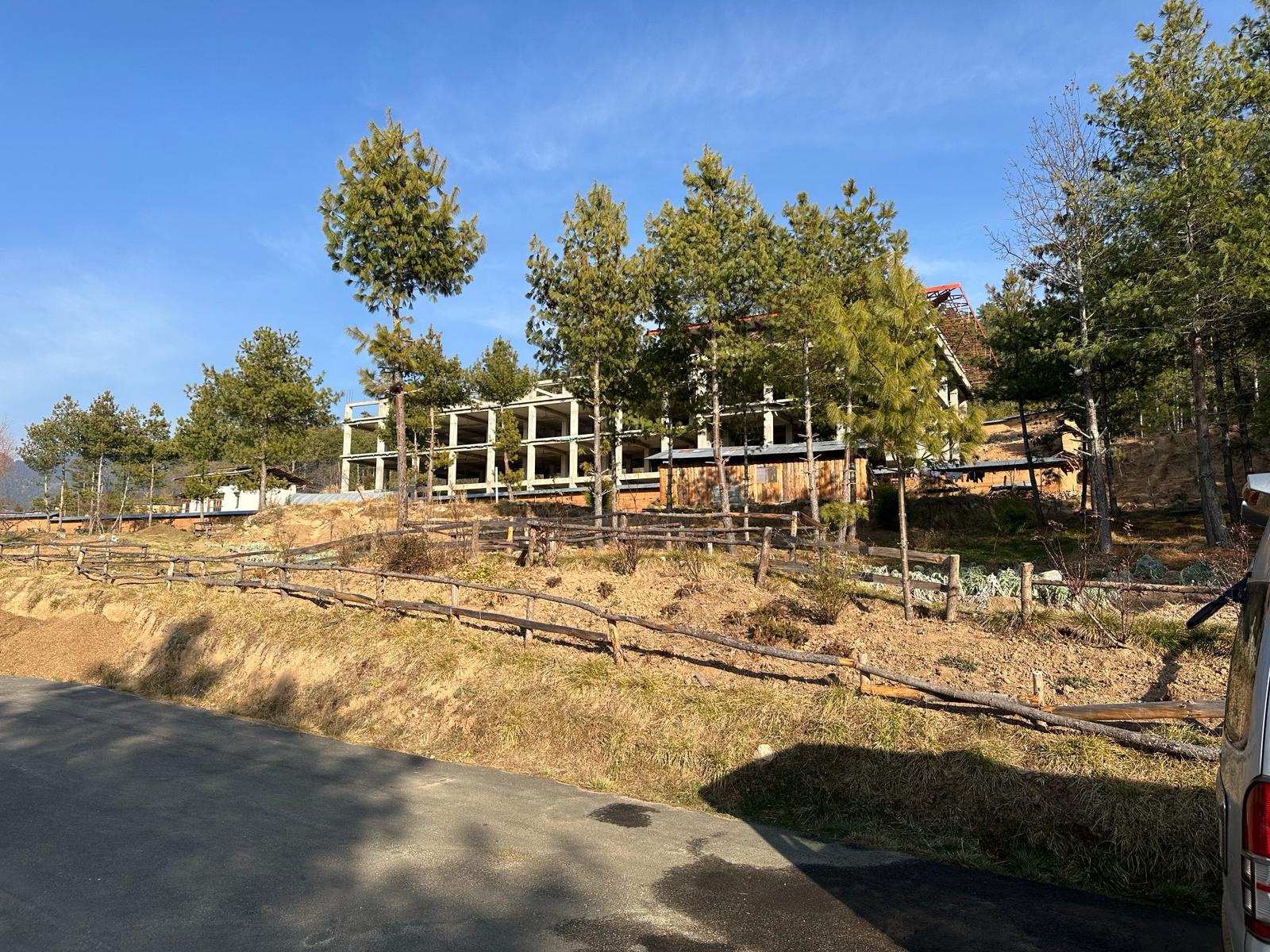
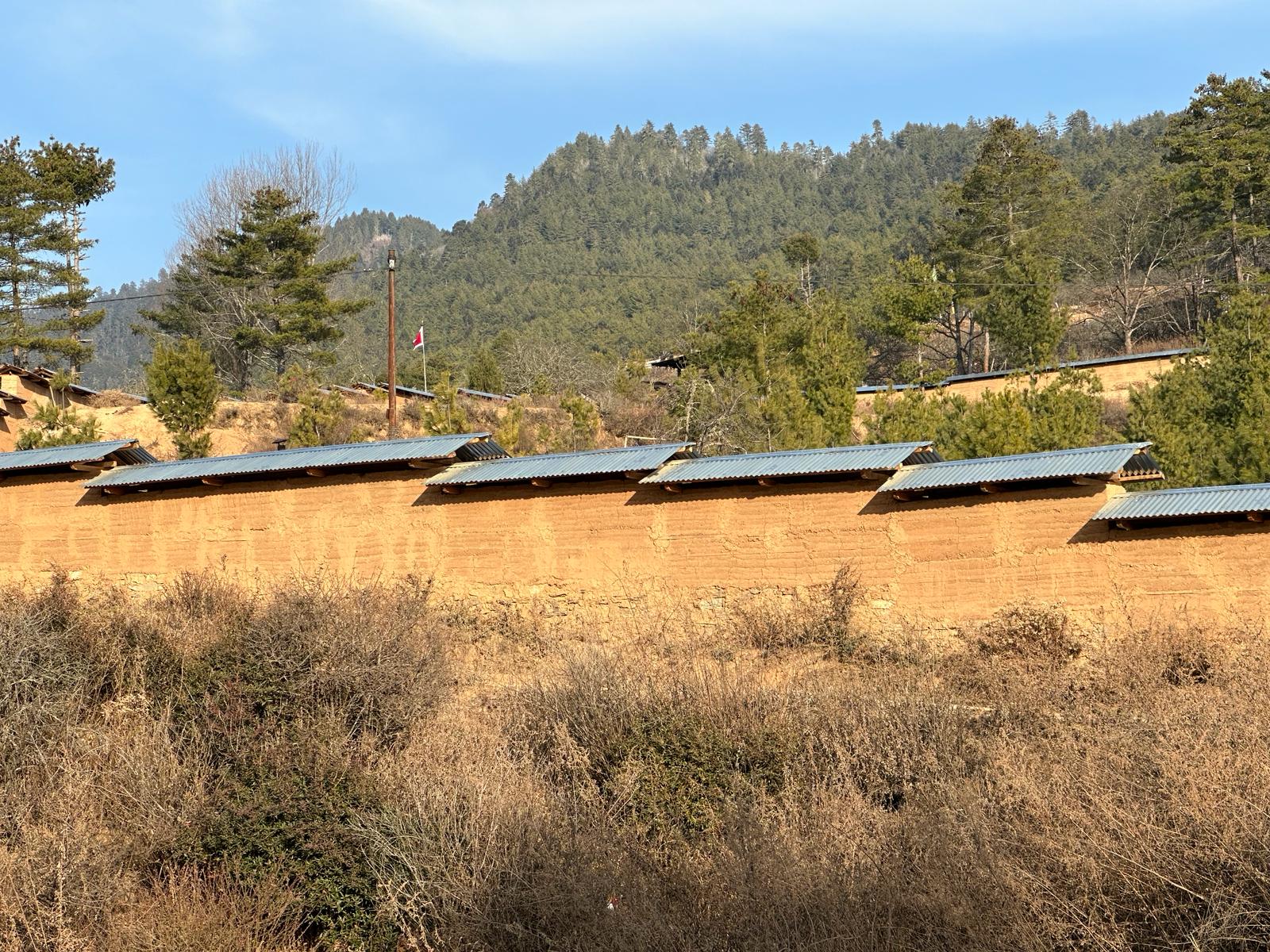
After lunch we rested for a while and then went for a stroll to have a look at the 15th century ruins, which nobody seems to fully understand the origin of. It looks as though the external walls have been cleared at some stage but the inside of the fort is still full of dirt and has trees growing out of it. There is an area beside the ruins where they hold special dinners, which is decked out in prayer flags. On the other side of the road from the main gate to the Six Senses there is a monastery surrounded by walls and just on the other side of the wall is a house flying a red and white flag, which apparently means this person is in meditation – do not disturb. There is a massive new building being constructed inside the walls that when completed will house some 500-700 monks.


Tuesday 29 February: Paro to Bumthang – Sylvia

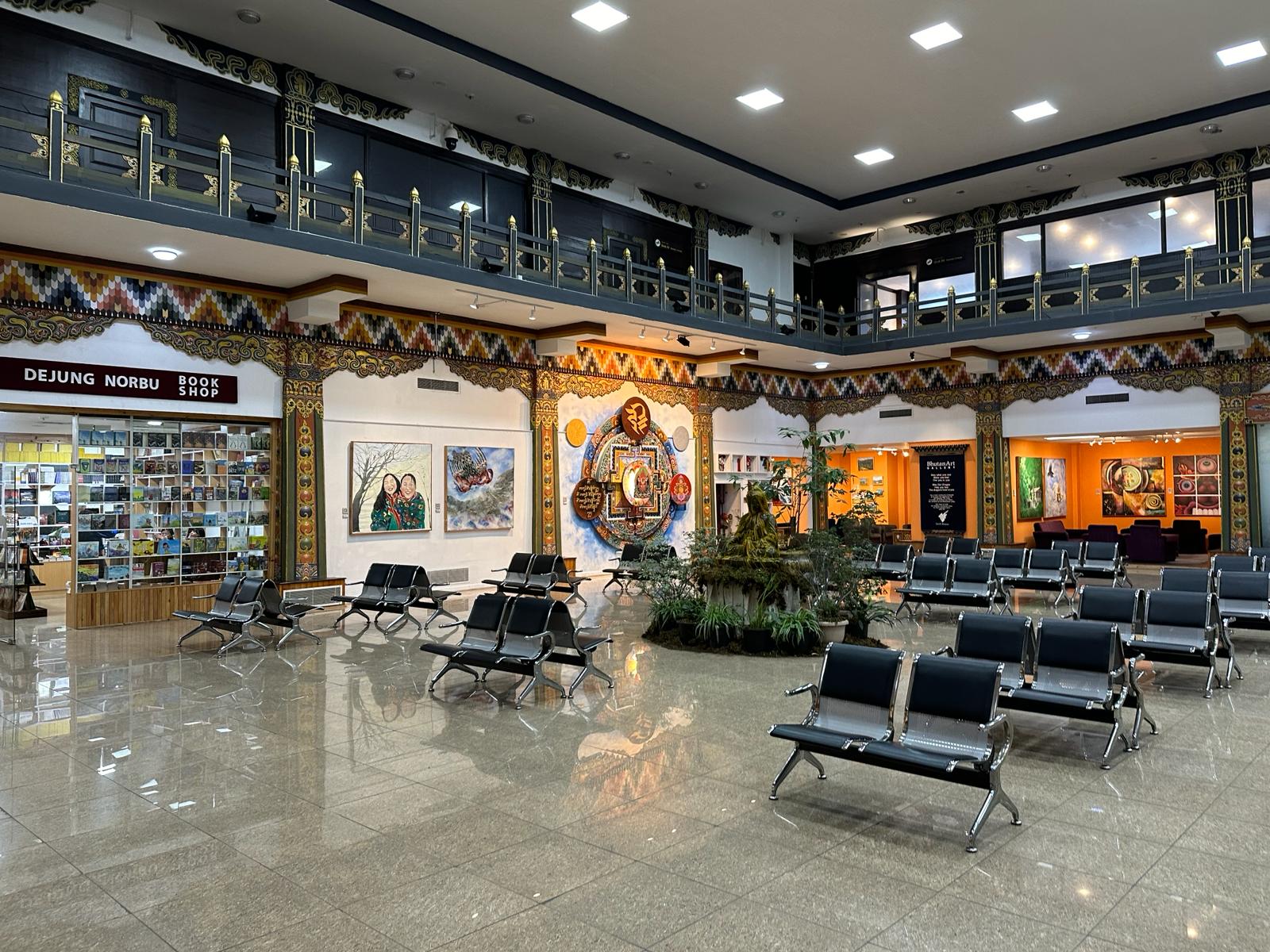
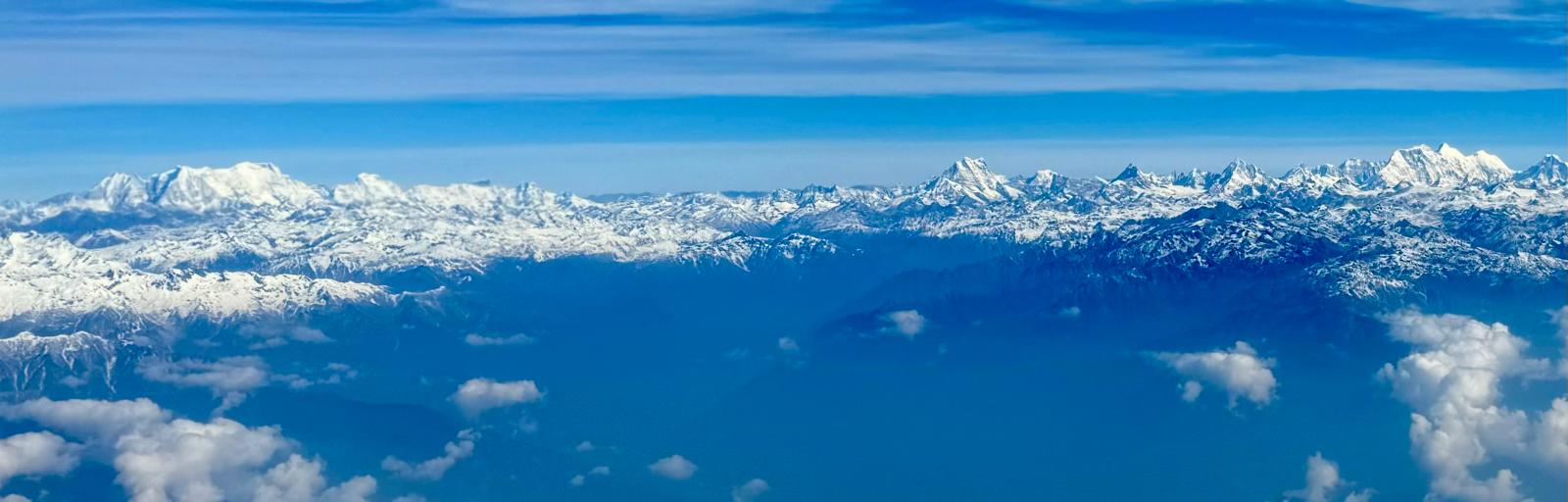
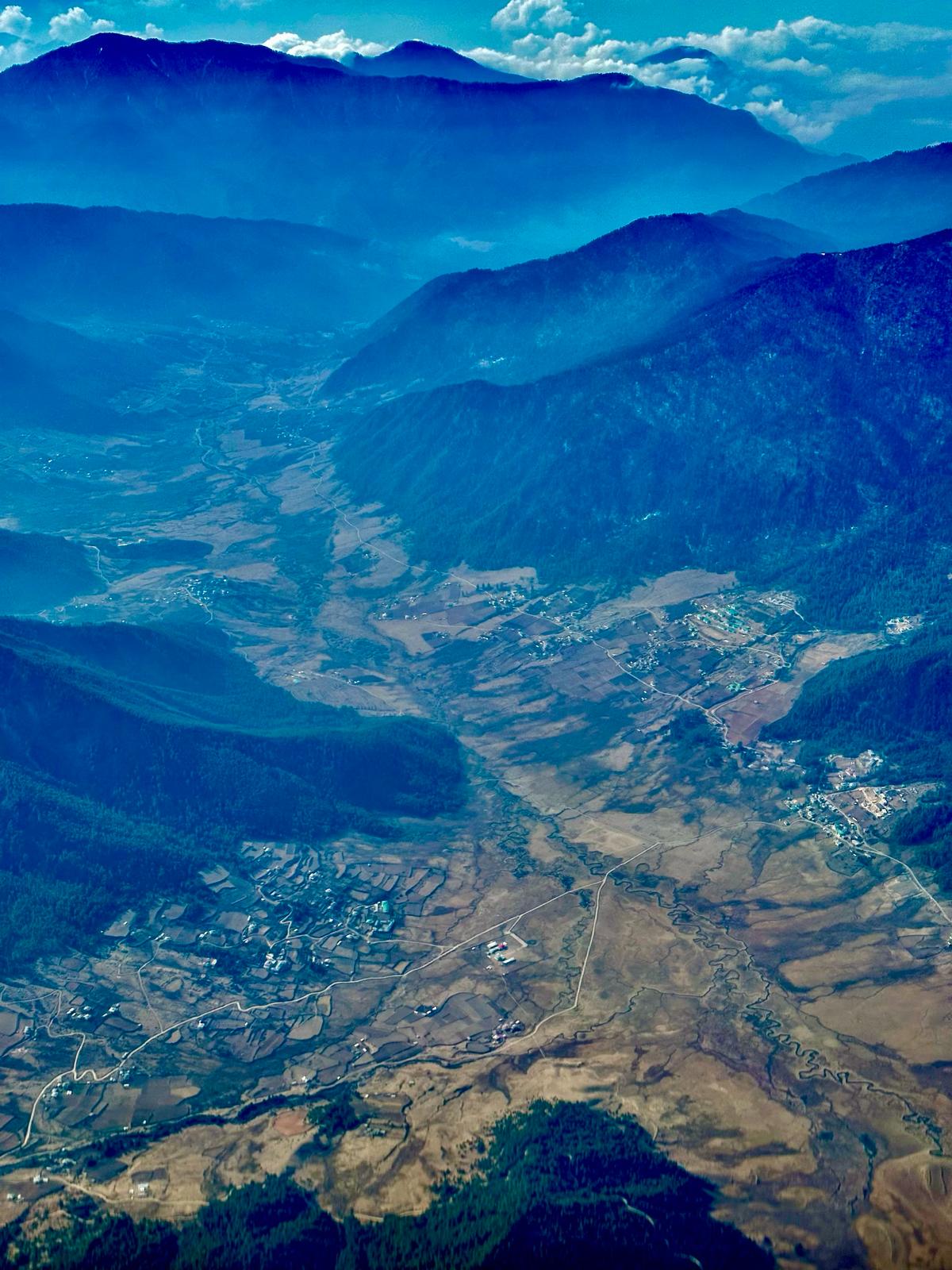
We were up bright and early this morning to meet Chimi and Singye at 6:30am for our transfer, via the bumpy dirt road, to the Paro airport for our 8am flight to Bumthang. The airport is huge, clean, elaborately decorated and incredibly efficient. We made it through check in and security and waited in the gate area for our flight, which eventually departed about 8:56am. Being a pilot in this country takes some skill with the airports in narrow valleys and flying up over mountainous terrain. We had amazing views over the Himalayas and down into the inhabited valleys of Bhutan during our roughly 30 minute flight. The lovely man, sitting on the opposite side of the aisle from me, was very obliging and happily took photos and videos out his window on my phone for me. The ATR 40 was not even half full and many of the passengers were staying on board to go to the next destination.

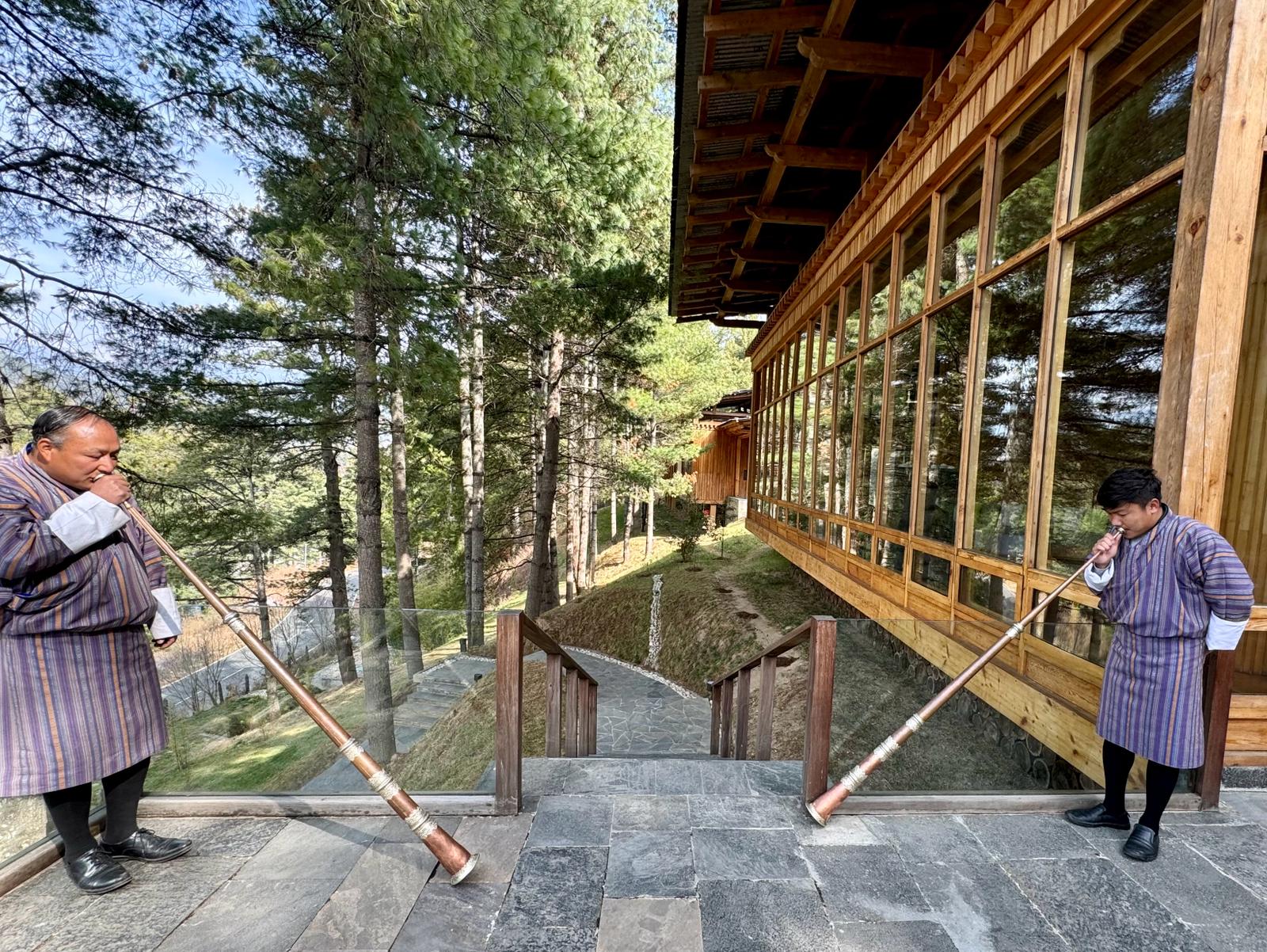
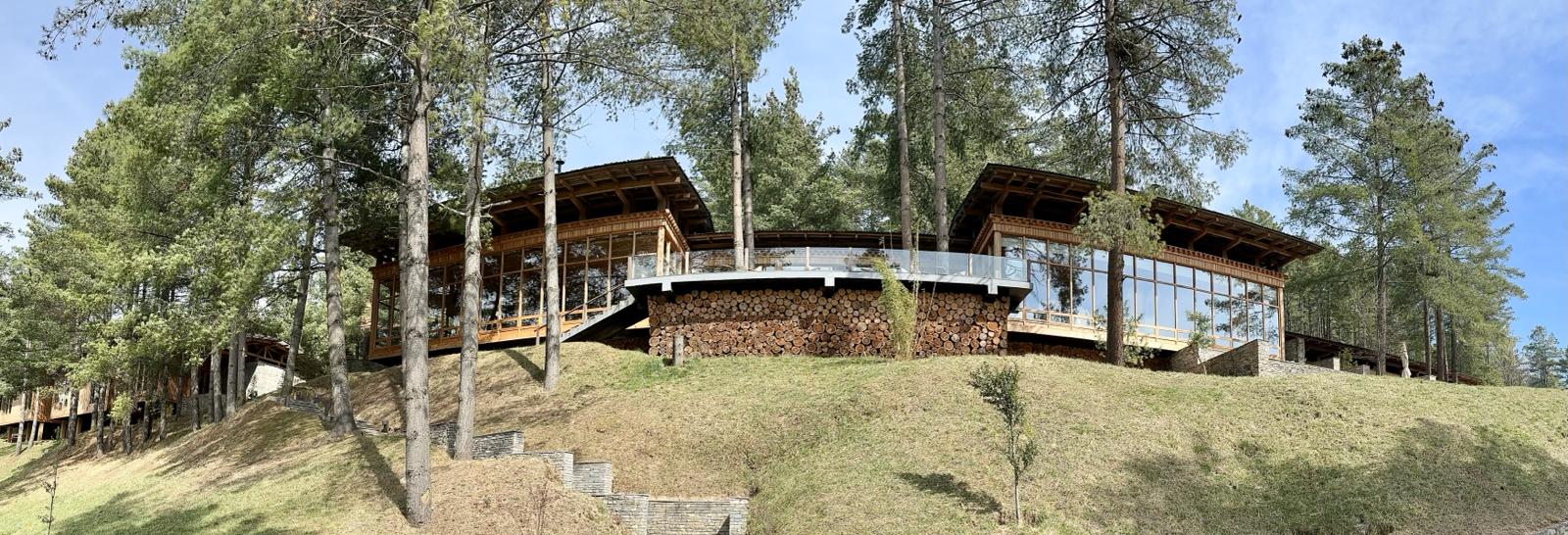
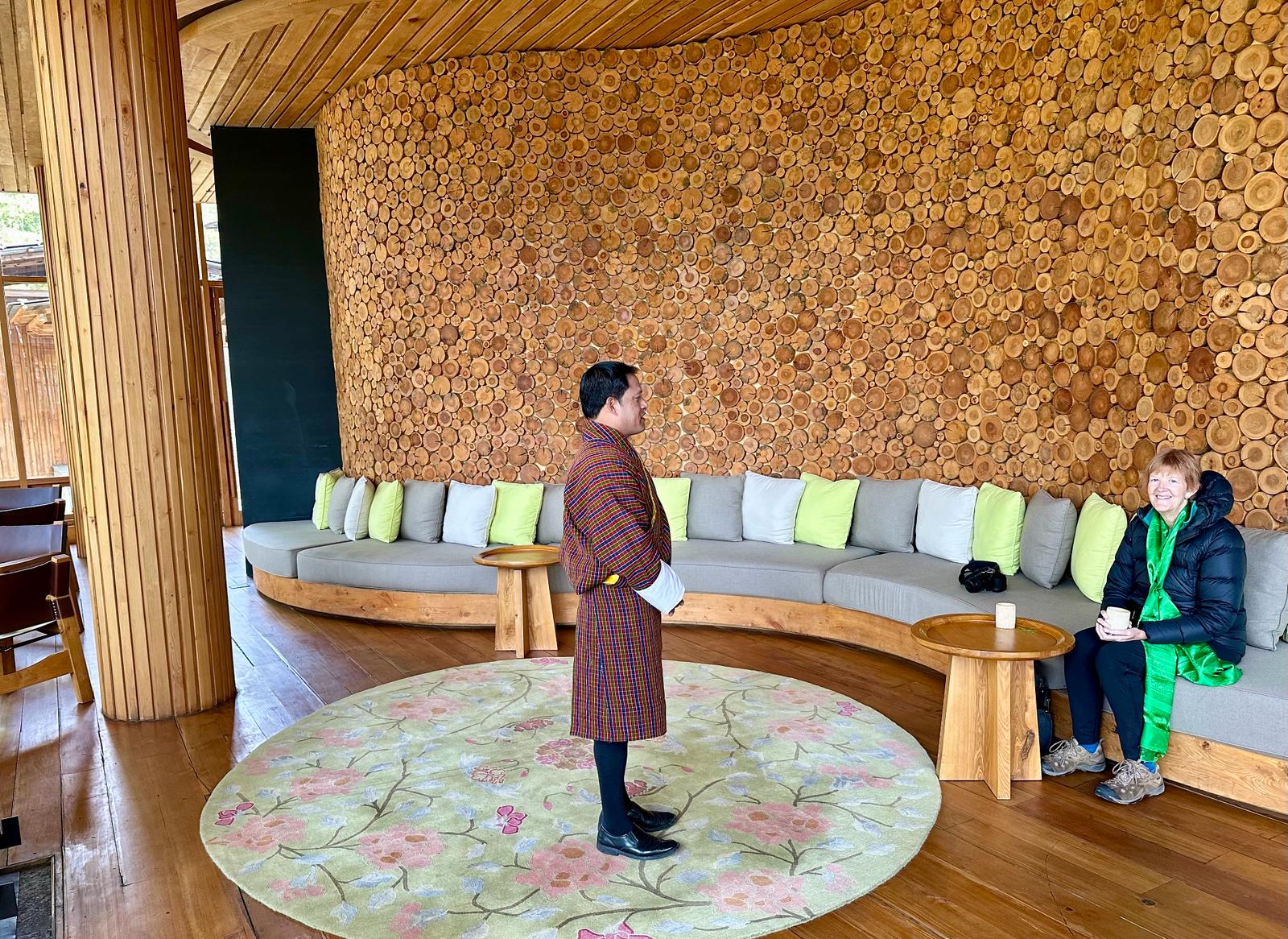
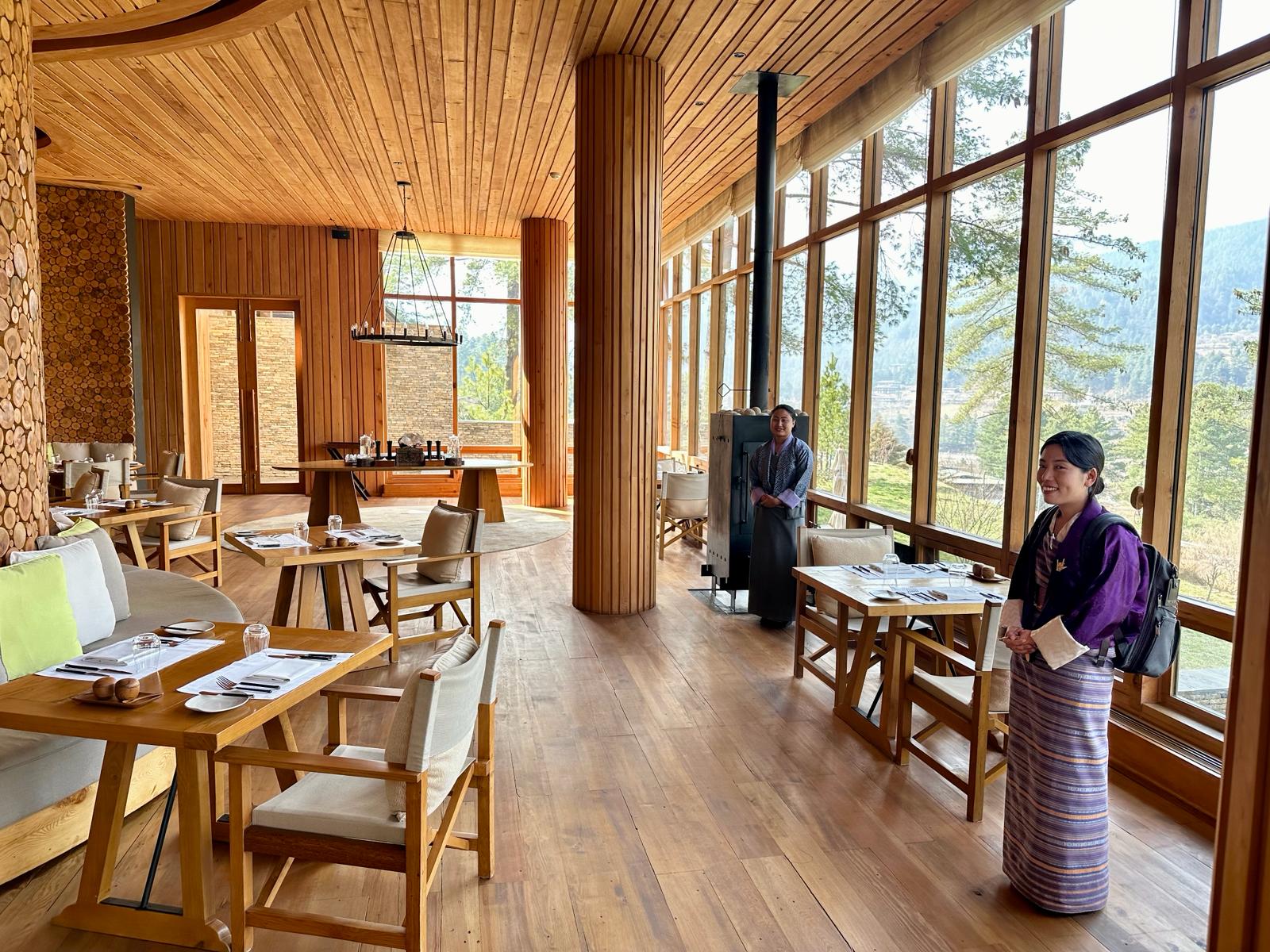
After collecting our bags we were met by a new driver as Singye is driving here and will be with us tomorrow. It will take him 8-10 hours to drive the ±295 kilometres from Paro, all on two lane sealed roads but winding his way up, down and around the mountainous terrain. Chimi had joined us on the flight. We checked in to the Six Sense Bumthang “Forest within a Forest”, about 5 minutes drive from the airport. It is very peaceful here; the hotel is set within the blue pine forest and overlooks the Bumthang Chhu River. The staff were, as always, incredibly welcoming and met us with two men blowing traditional horns. We were shown around this small hotel (only 9 rooms) and after settling in and unpacking we headed to the restaurant for a late breakfast. Apparently we are the only guests here at the moment although there is another couple arriving later tonight.

Breakfast is always accompanied by ‘healthy shots’ one, two or three shot glasses of different juices made from local ingredients intended to boost some form of our health. It might have worked better today if I hadn’t indulged in the local version of french toast with local fruits – which was absolutely delicious.

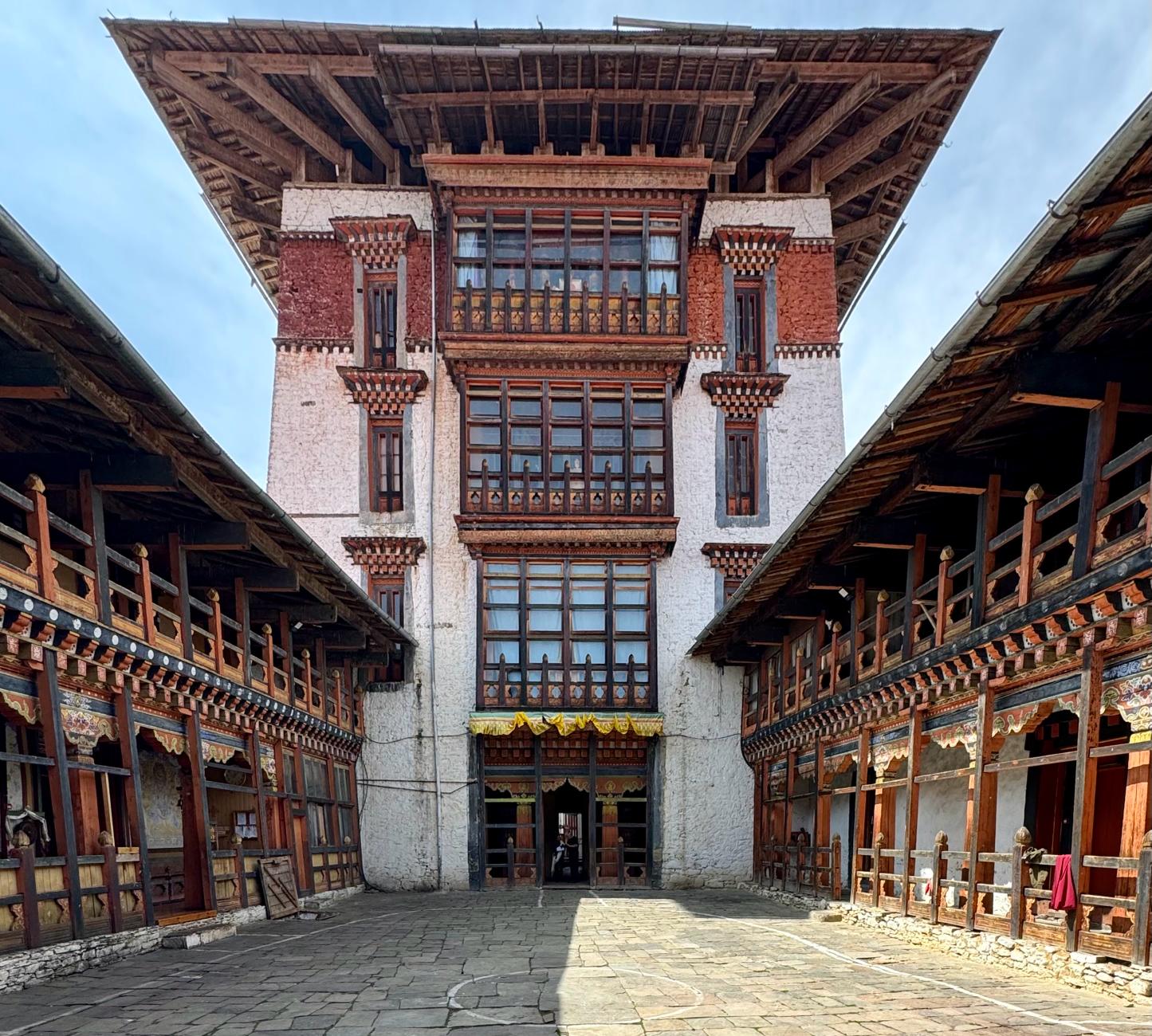
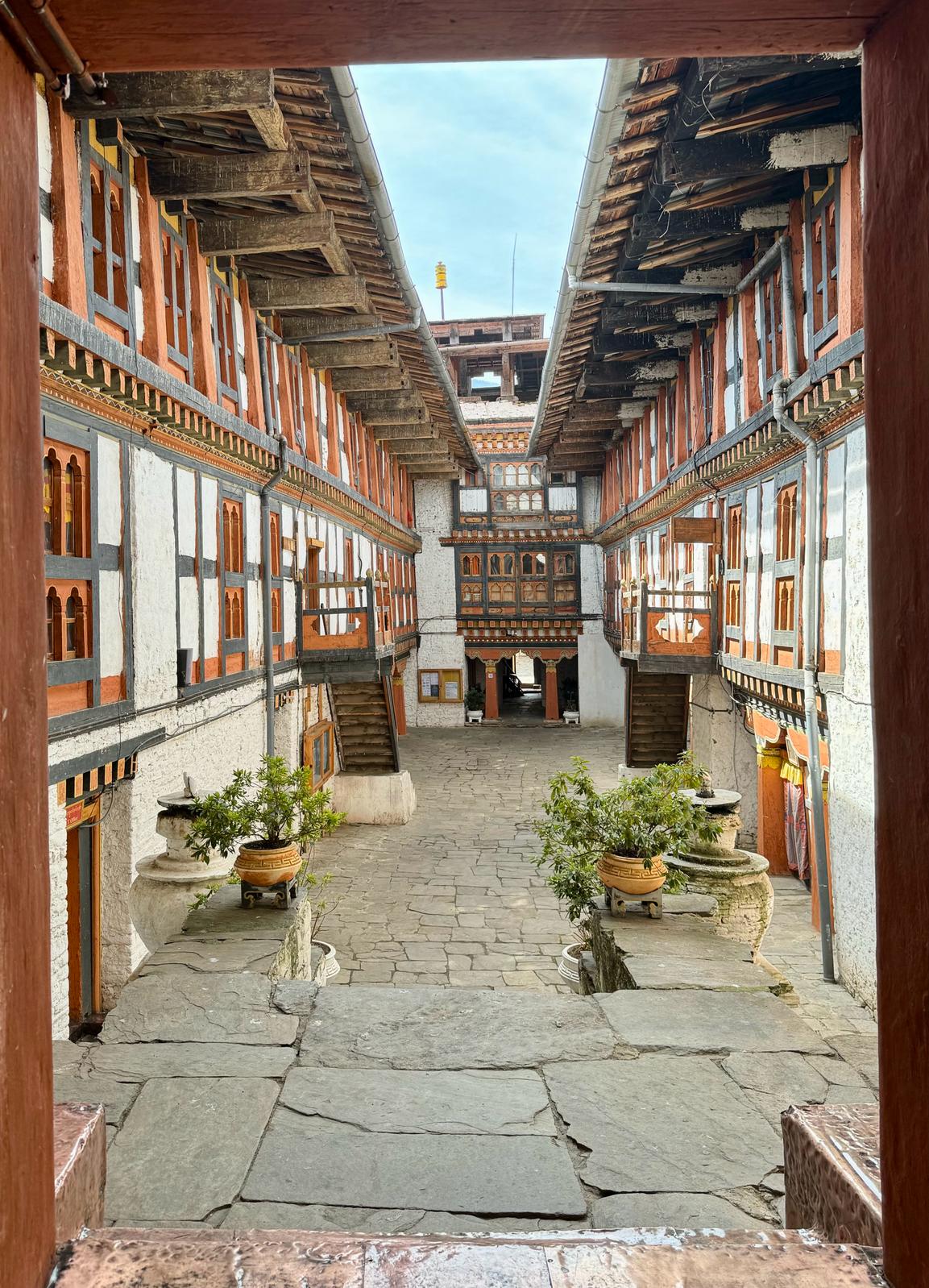
After breakfast we met Chimi and headed to the Jakar Dzong (Seat of Regional Administration and Monastic Order) , which overlooks Chamkar town on the other side of the river from the hotel. I am gradually starting to understand more about Buddhism, the different Buddhas, Bodhisattvas and Arhats (disciples) depicted in the different temples we are visiting, and even starting to recognise a few of them. Chimi has been extremely patient in his explanations and answering our questions.

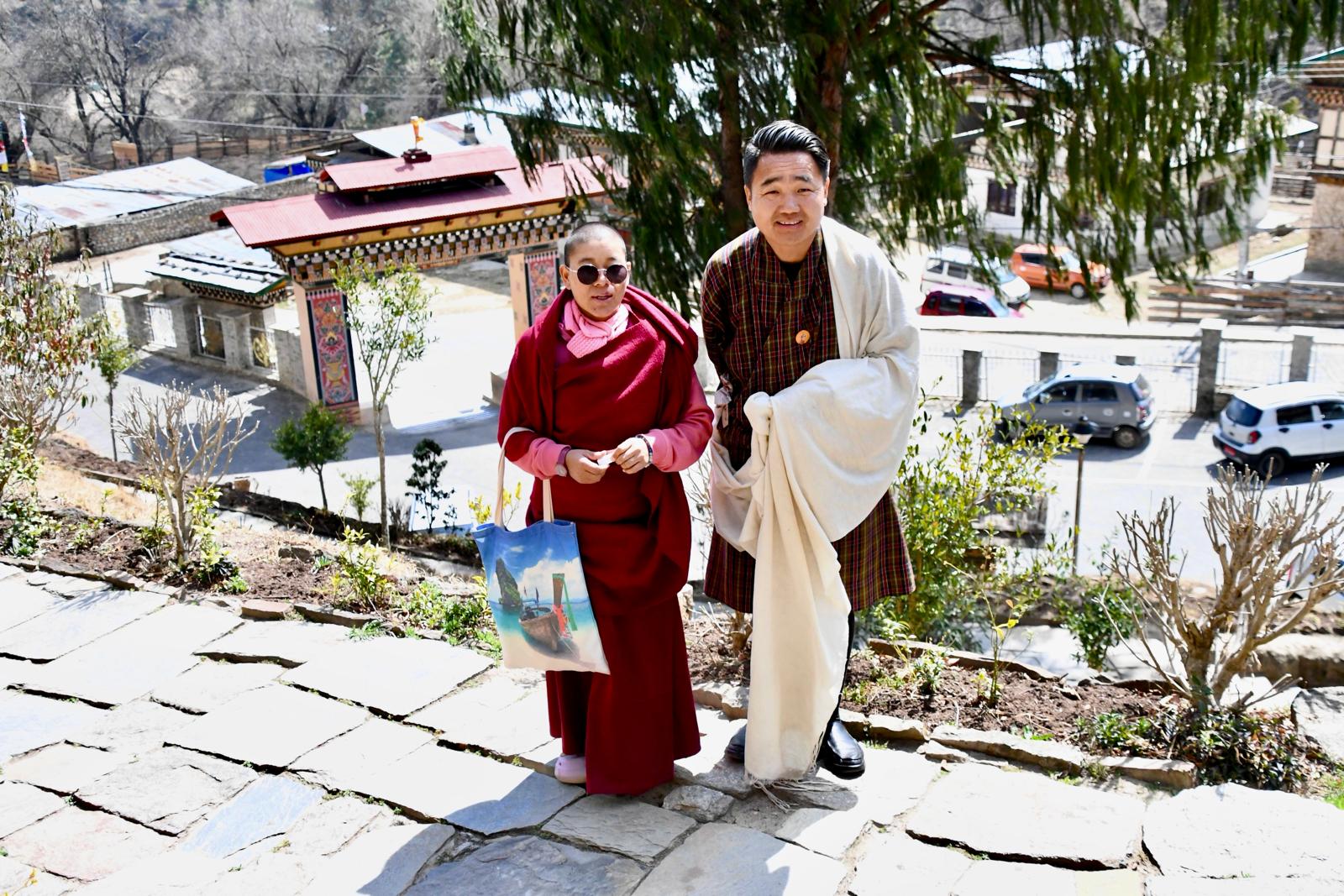
This lady apparently runs a nunnery we will be visiting in a couple of days. We met her leaving the Dzong as we were arriving.

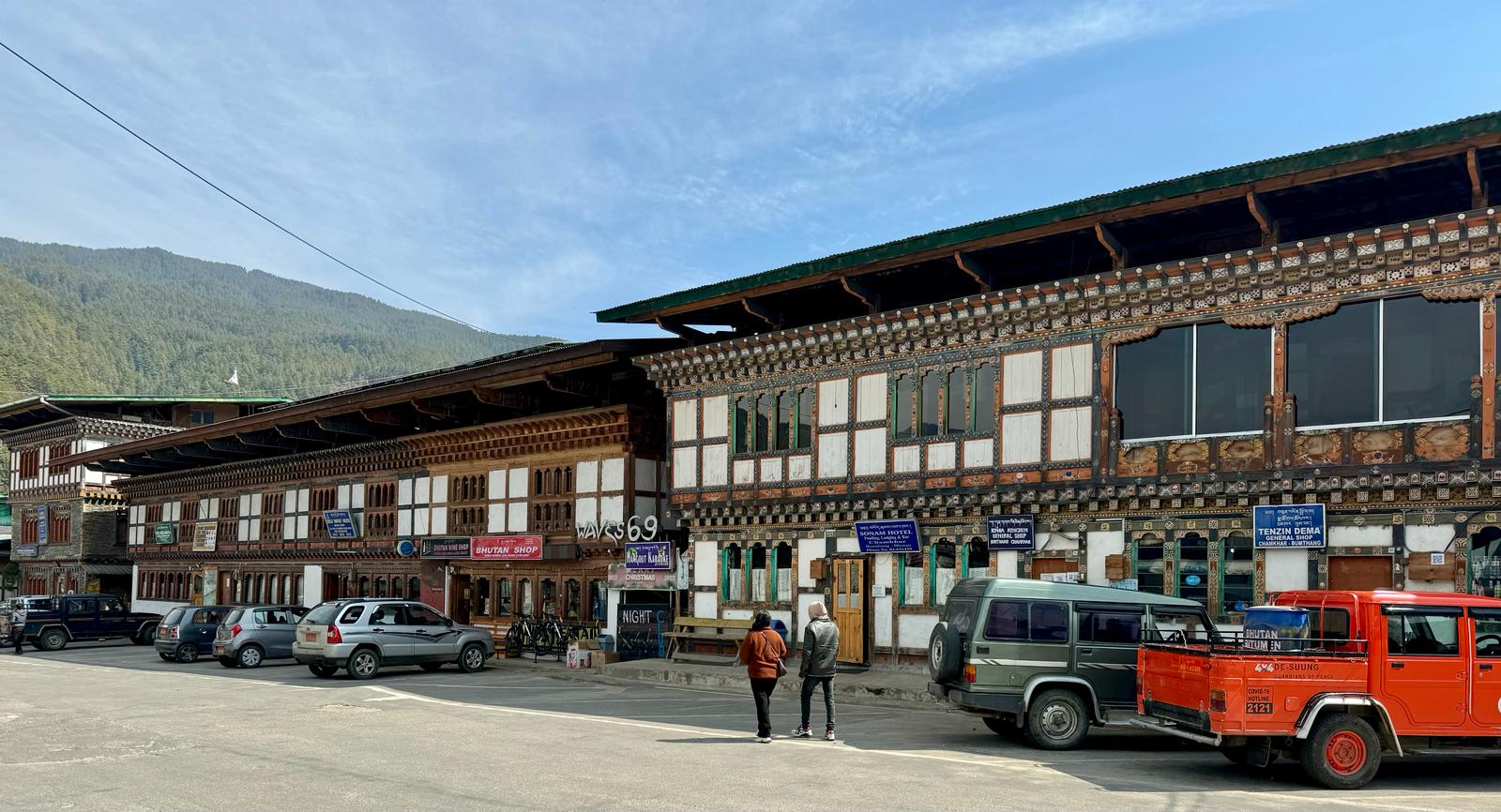
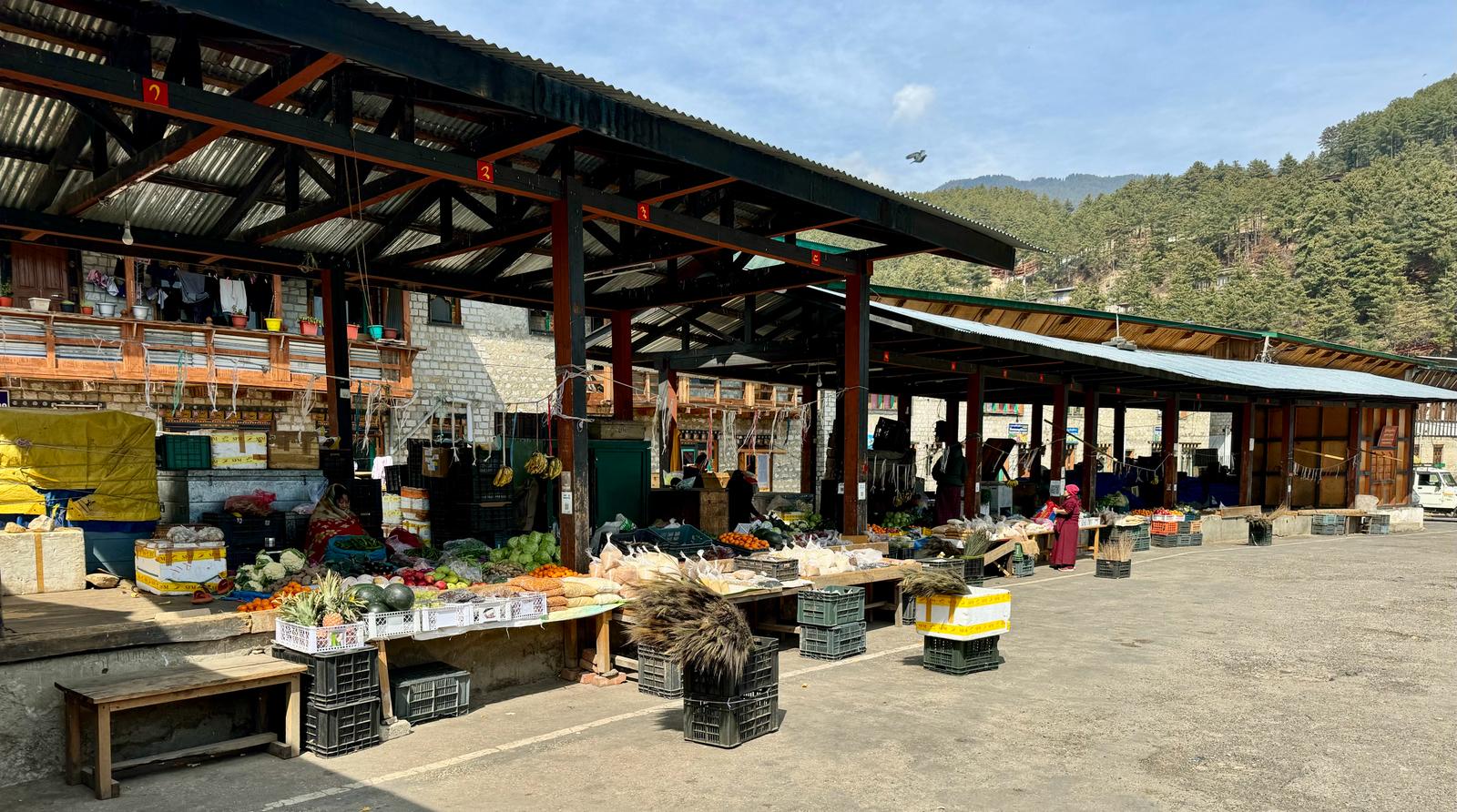
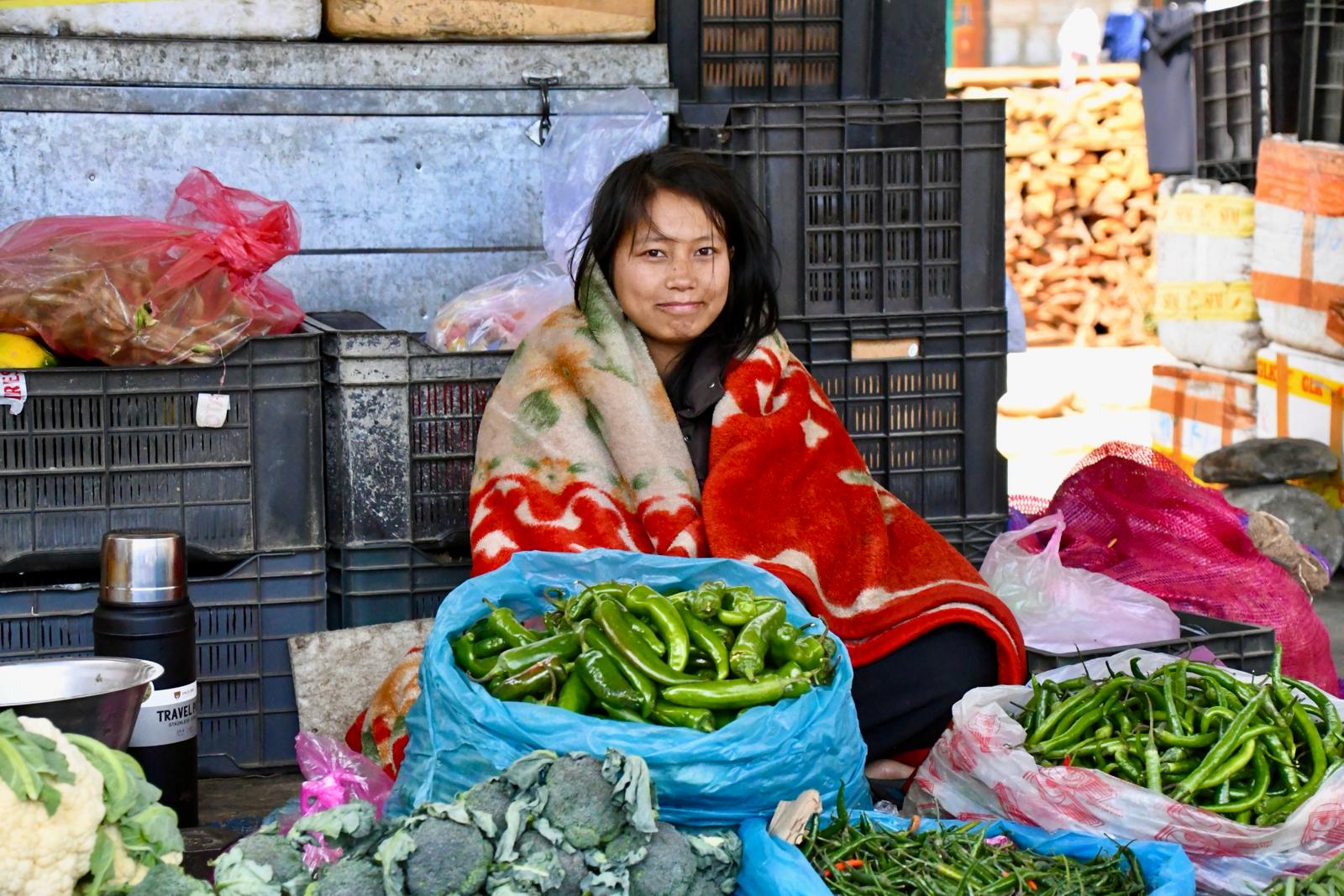
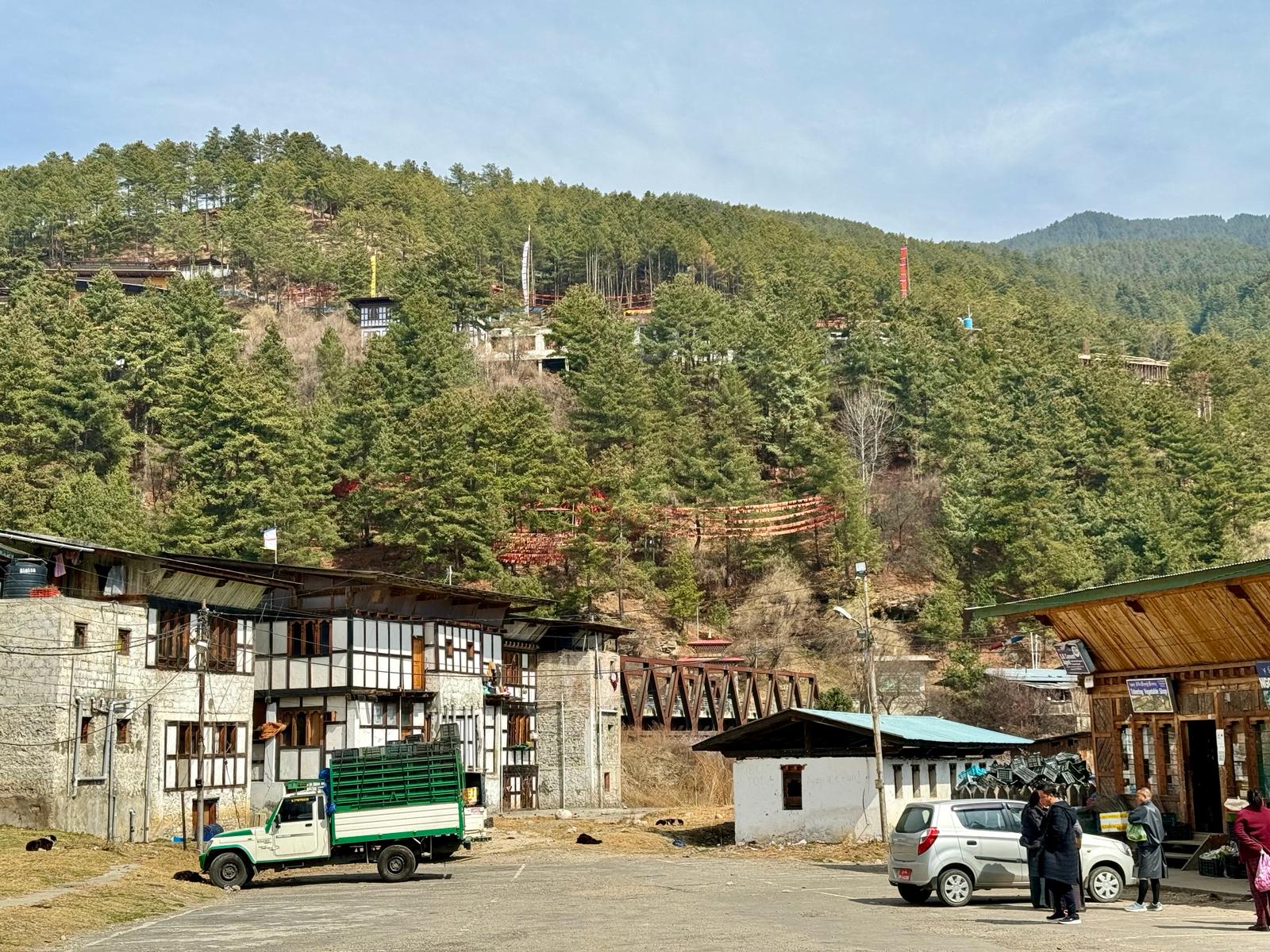
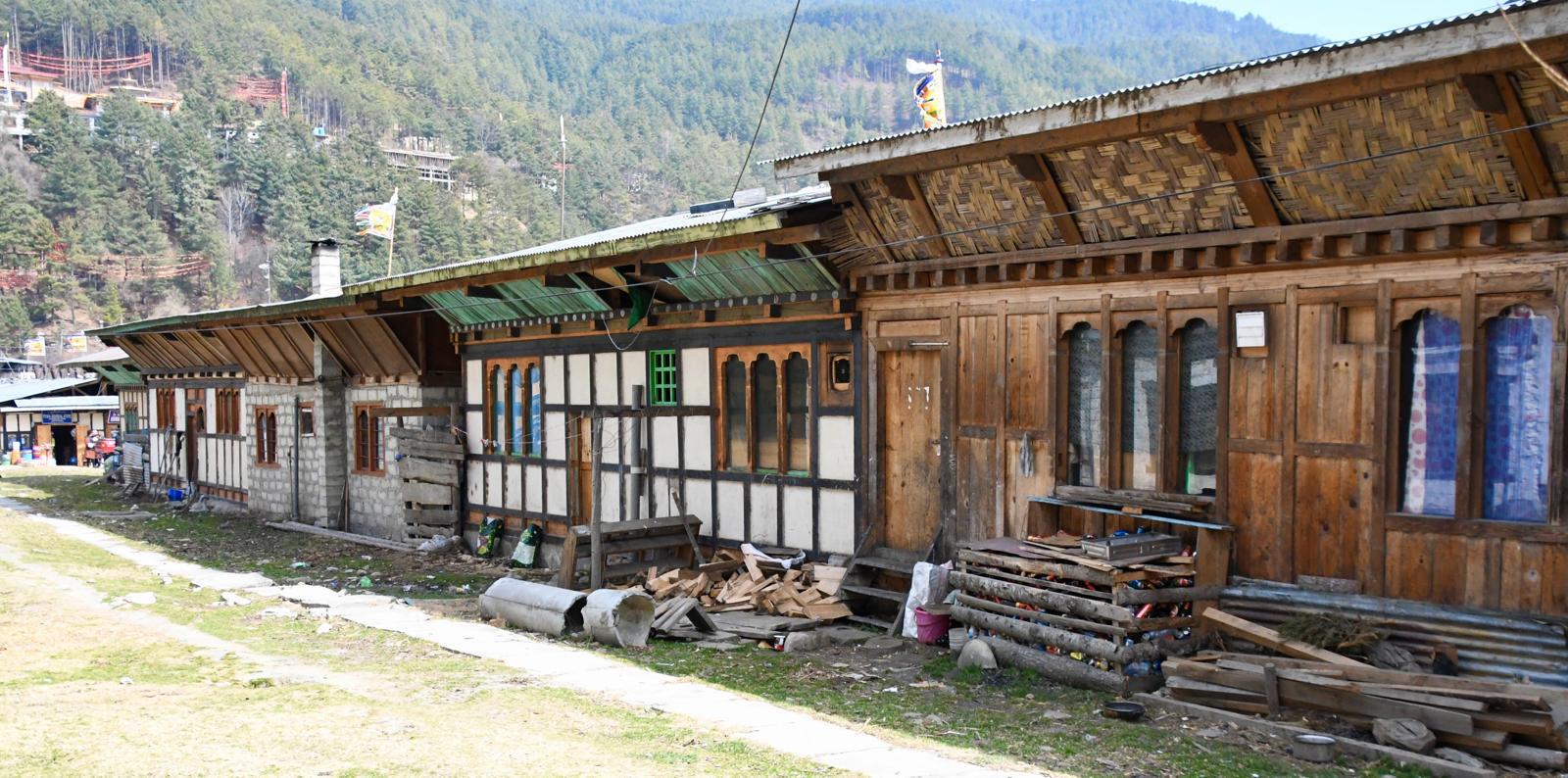
Next we spent some time wandering through Chamkar town. There is a huge amount of forest around here and we saw a lot more buildings with wooden facades, and many houses with huge piles of firewood stacked outside. We came across a small outdoor market, selling lots of vegetables. As in the other towns we have been to, people seem very friendly and welcoming.

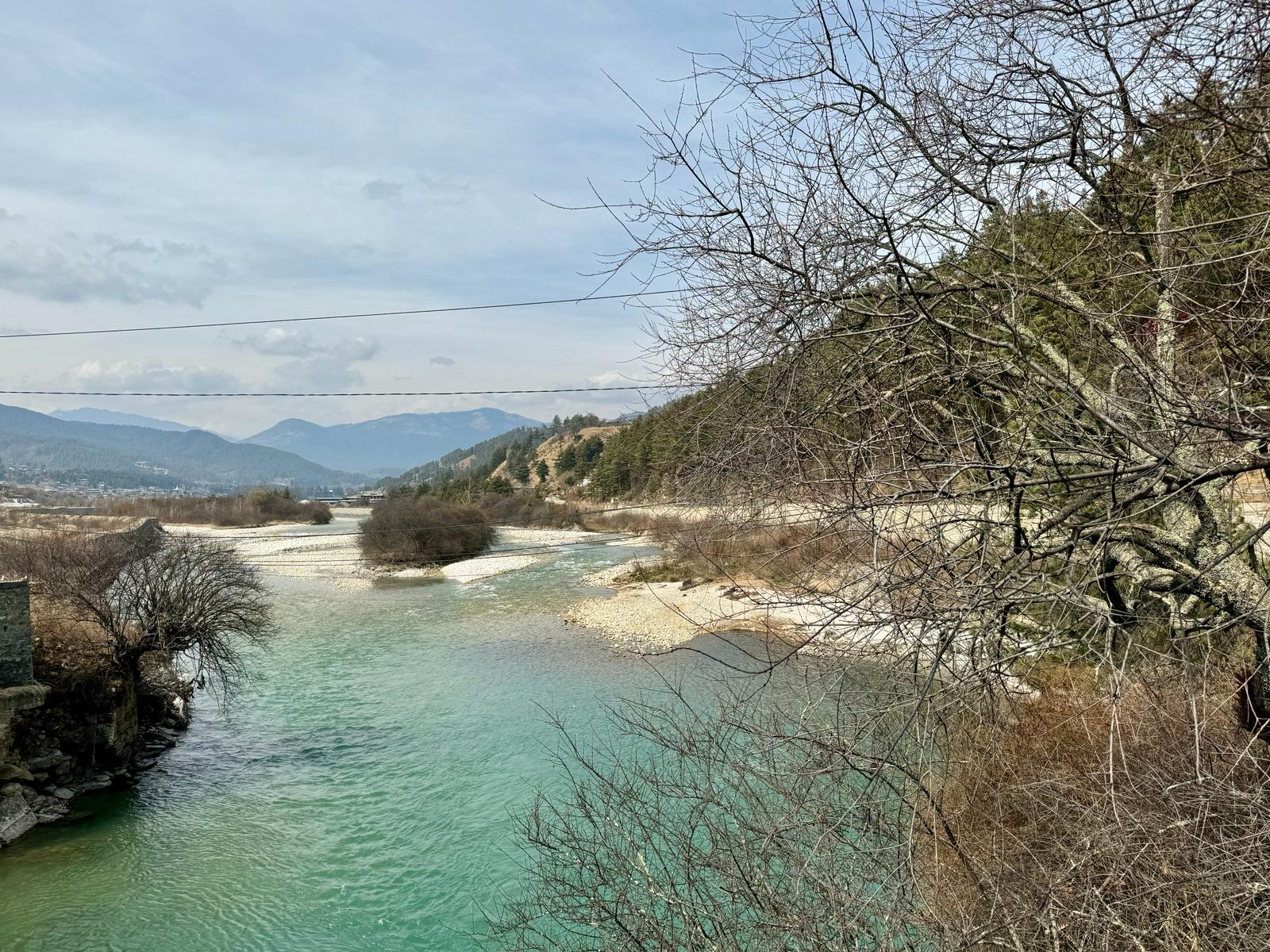
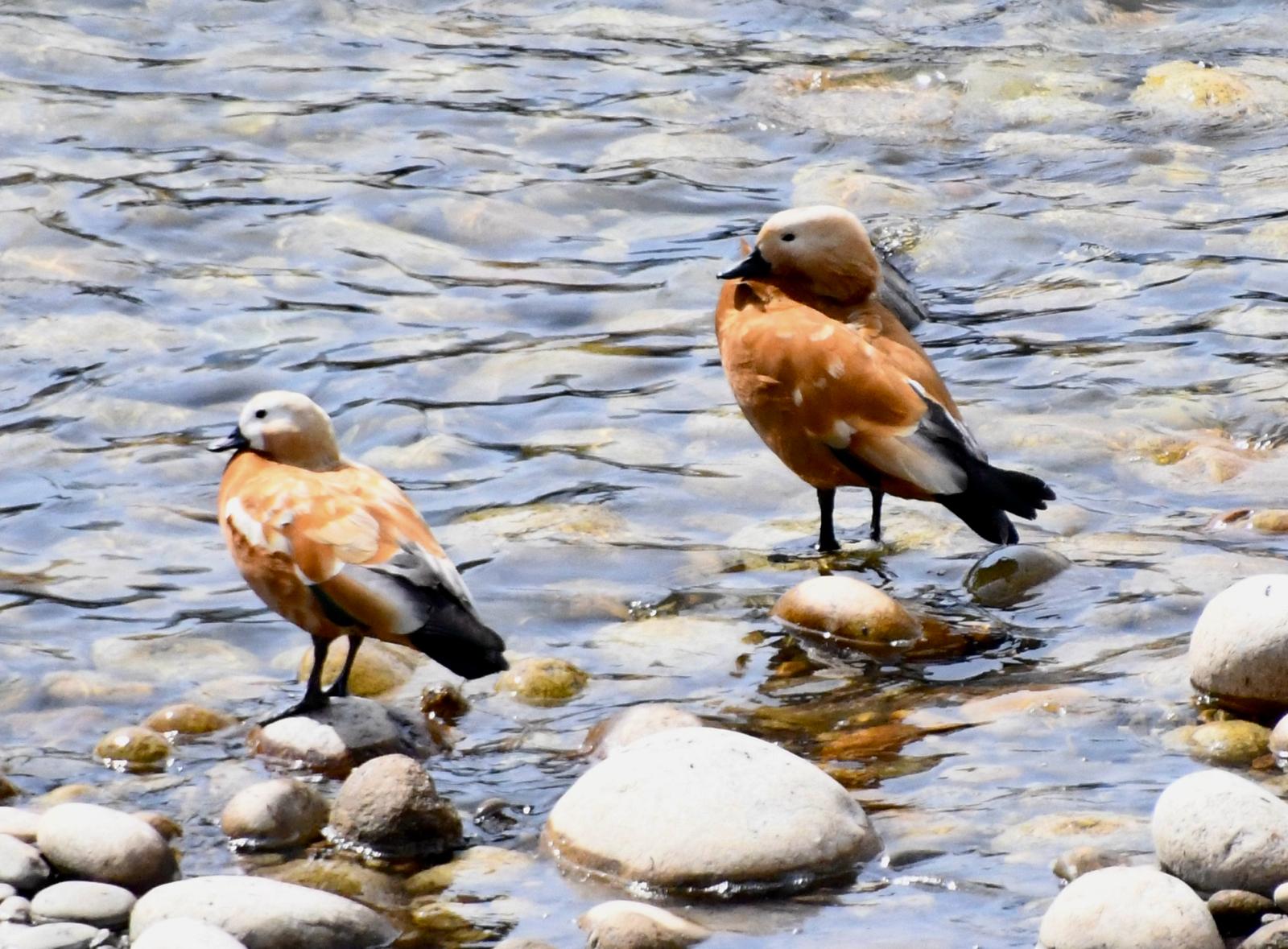
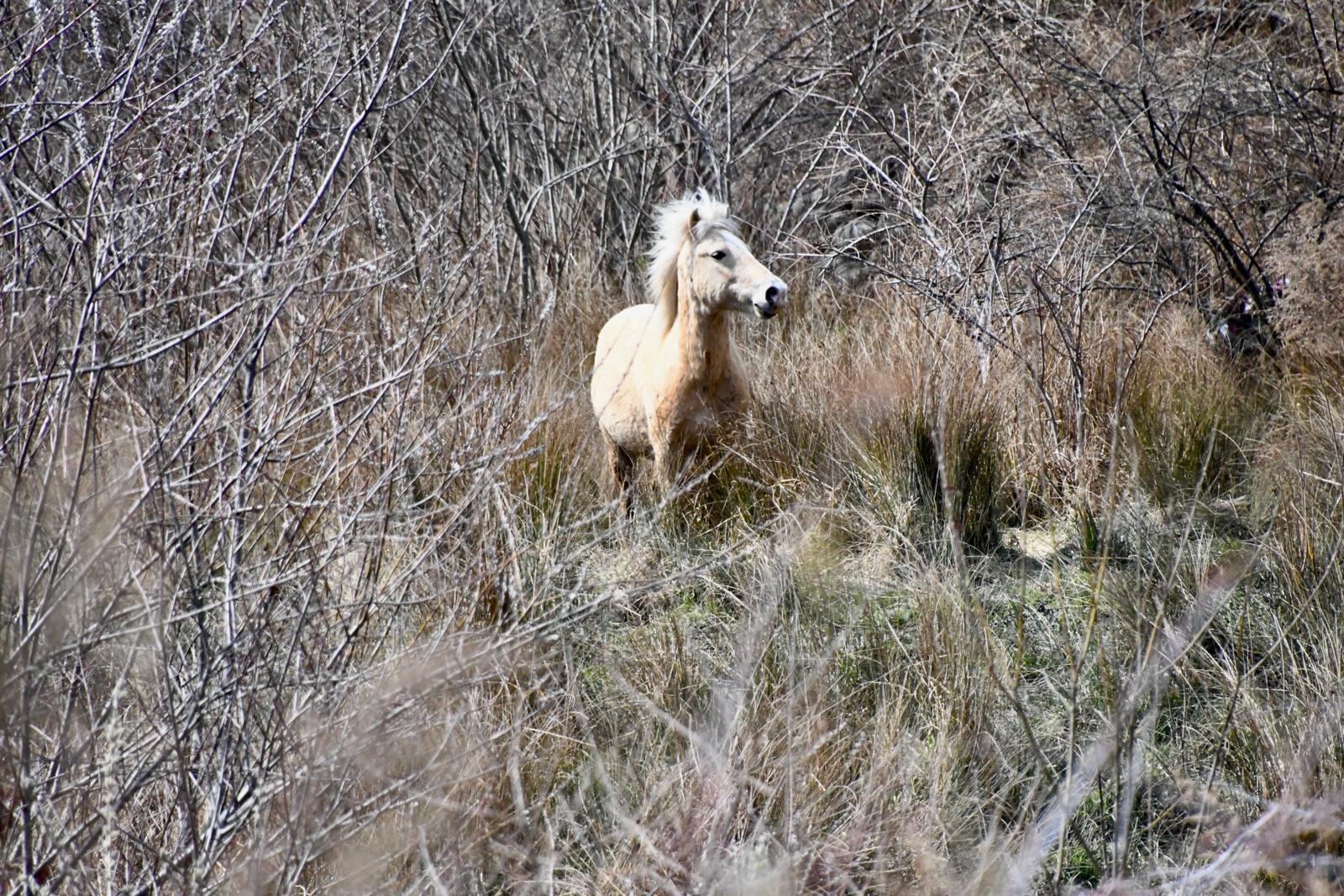
We continued to wander across the bridge out of town, enjoying the fresh breeze and the sound of the river, while admiring the numerous red flags flapping outside one of the large, privately owned monasteries. We spotted a couple of ruddy ducks by the river, and as we walked on a bit further several horses ran up and down through the trees on the other side of the river to drink. Eventually we hopped back in the car and returned to the hotel for a restful afternoon.

The Kingdom of Bhutan – Part I: Thimphu

Wednesday 21 February 2024 – Roger

It’s around 2100 when we head to Auckland International Airport. The way through security is really slow with only one lane open. We then went to the currency exchange – warning: do not buy currency here unless you order in advance – we got 10% less in USD than we would have got for the same amount had we ordered a week ahead.

We are booked with Air NZ to Singapore but on a Singapore airlines flight. We get to the Air NZ lounge to see a sign at the coffee counter saying for the sake of the environment they no longer use paper cups. Then we head over to the food counter to find paper plates and wooden cutlery. Someone in the hierarchy there must be a little confused.

Thursday 22 February 2024 – Roger

At 0120 we departed for Singapore supported by the excellent service from the airline crew.

Today is a special day for my long-time friend Gary, who is having his farewell from the NZ Army after 54 years service, many of them as an officer in the NZSAS. We joined the army together on the 6 January 1970. Thank you Major Gary S for you dedication to NZ and our army.

Arriving in Singapore we headed to the Marhaba lounge to await the Drukair (Royal Bhutan Airlines) transit check-in to open.

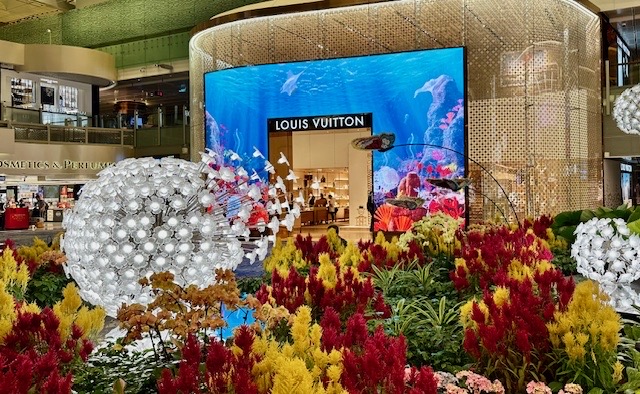
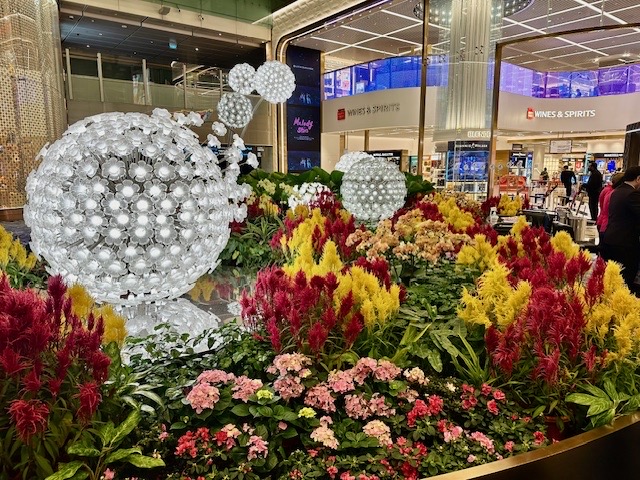
The Butterfly Garden at Changi Airport

It was around noon when we bussed out to the Drukair airbus 319. There we sat for close to an hour before clearance to take off was received. Four and a half hours later we touched down at Guwahati in India, where a few people got off and two boarded. We then took off again for the !30 minute flight to Paro in Bhutan.

View over Guwaharti

It was the last 15 minutes flying that got really interesting, The pilot did warn us it was going to be a bit bumpy “just normal”, that it was normal to fly close to the terrain, and we may not be able to land if the wind was too strong. This turned out to be a really interesting bit of flying as we flew down a narrow valley with large houses perched on the sides of gullies on each side of the plane. The land around them is all terraced with thousands of years of growing rice in the summer and turnips broccolini and such in the winter. The large houses often house several generations of one family/ It was definitely one of the most spectacular approaches I have done to a landing.

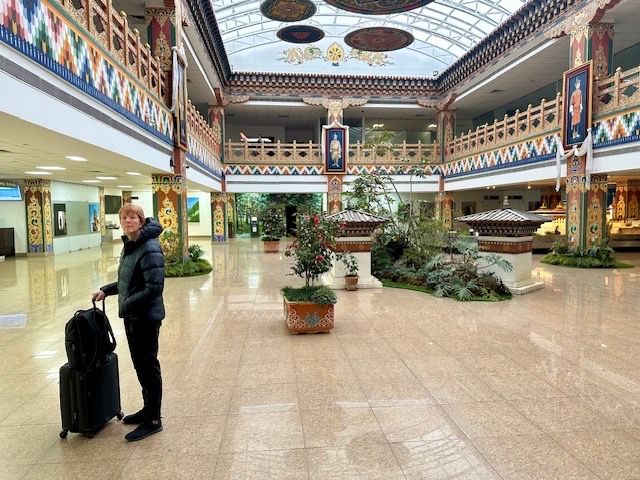
The architecture at the airport is very traditional and the immigration staff very friendly. We changed $300 USD receiving 28000 locals. After purchasing a local SIM card we headed outside to be met by our guide, Chimi, and driver, Singye, from Six Senses. They will be with us for our stay in Bhutan.

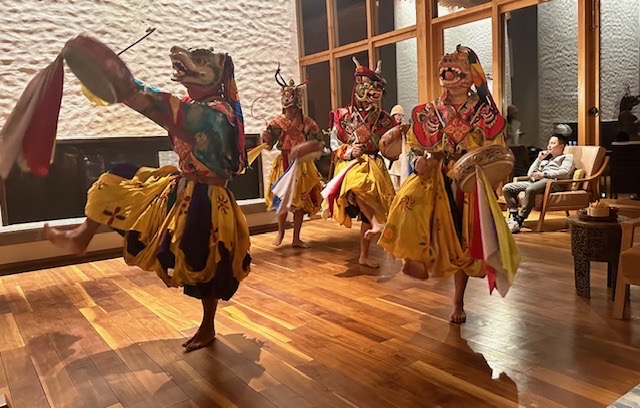
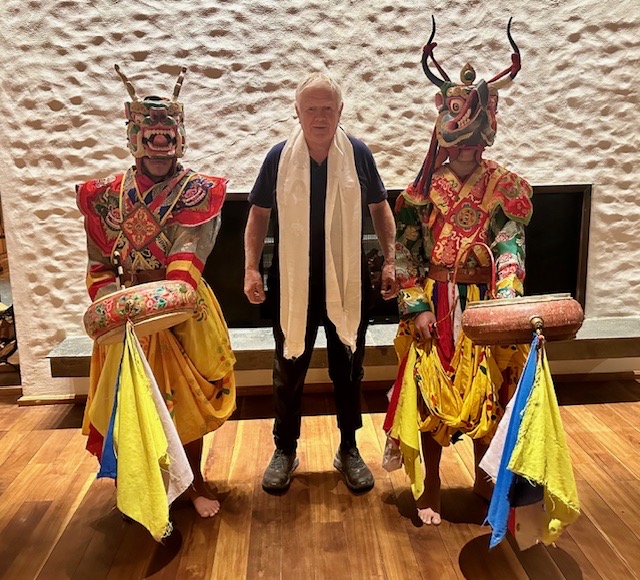
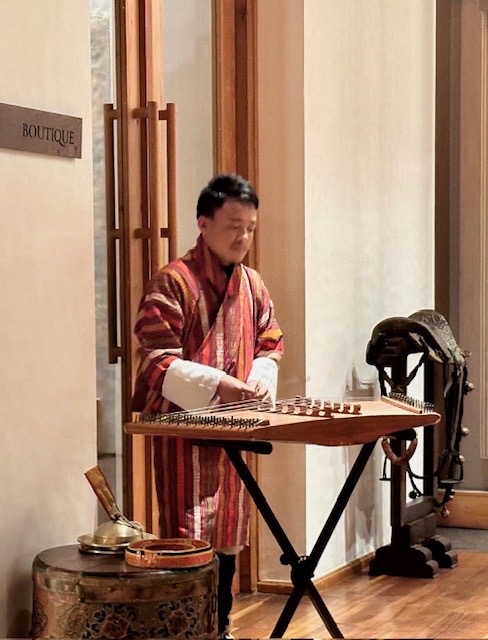
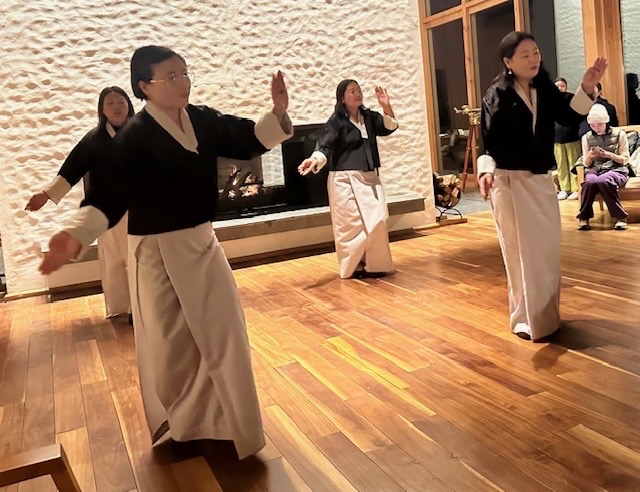
The drive to the Six Senses Thimphu (2,738m) was just over an hour with the road following the Paro Chhu River to Thimphu, where we turned off to head up the hill to the resort. As we arrived and were welcomed we were invited to watch some traditional dances, a weekly event here, before being shown our palatial rooms and heading off for a 90 minute massage.

Friday 23 February: Thimphu – Sylvia

We woke this morning to a stunning view from our enormous villa. I can see why Six Senses has named this place the Palace in the Sky. It had been dark when we arrived yesterday and I hadn’t realised how high the mountains around here are. After enjoying a delicious breakfast in the dining room, overlooking Thimphu and the 52m high Buddha Dordenma, we headed off at 9am with Chimi and Singye to start our tour of Thimphu, which is the capital city of Bhutan and the largest with a population of ±115,000.

Our first stop was across the way at the giant Buddha. This temple was initially commissioned in 2005 and opened to the public in 2015. Outside it is impressive – inside, it is by far the most incredible temple I have been in. The detail and workmanship is outstanding. There are hundreds of small Buddha’s lining the walls and the pillars are all beautifully engraved. Unfortunately photos are only allowed outside so you will have to use your imagination for the inside.

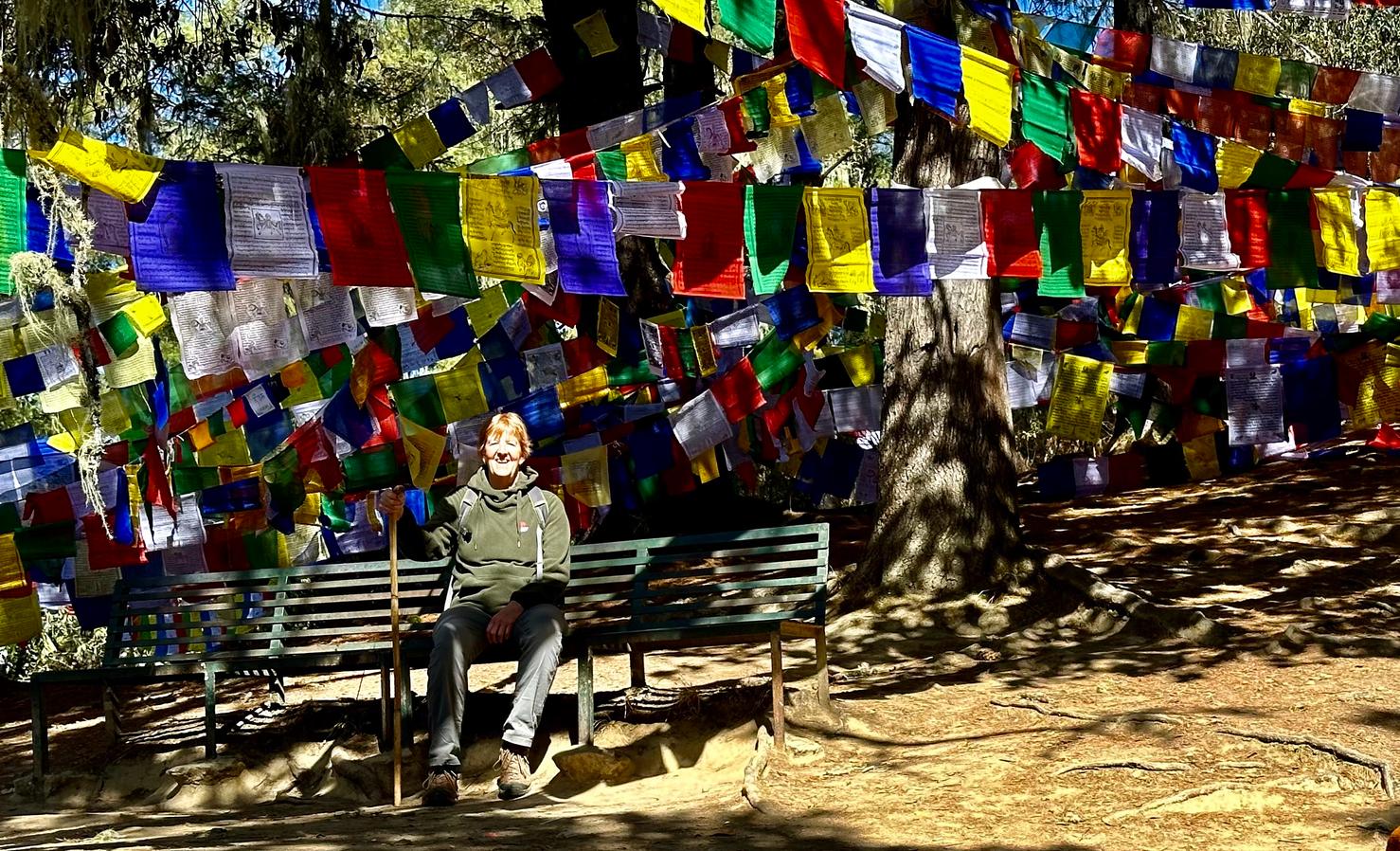
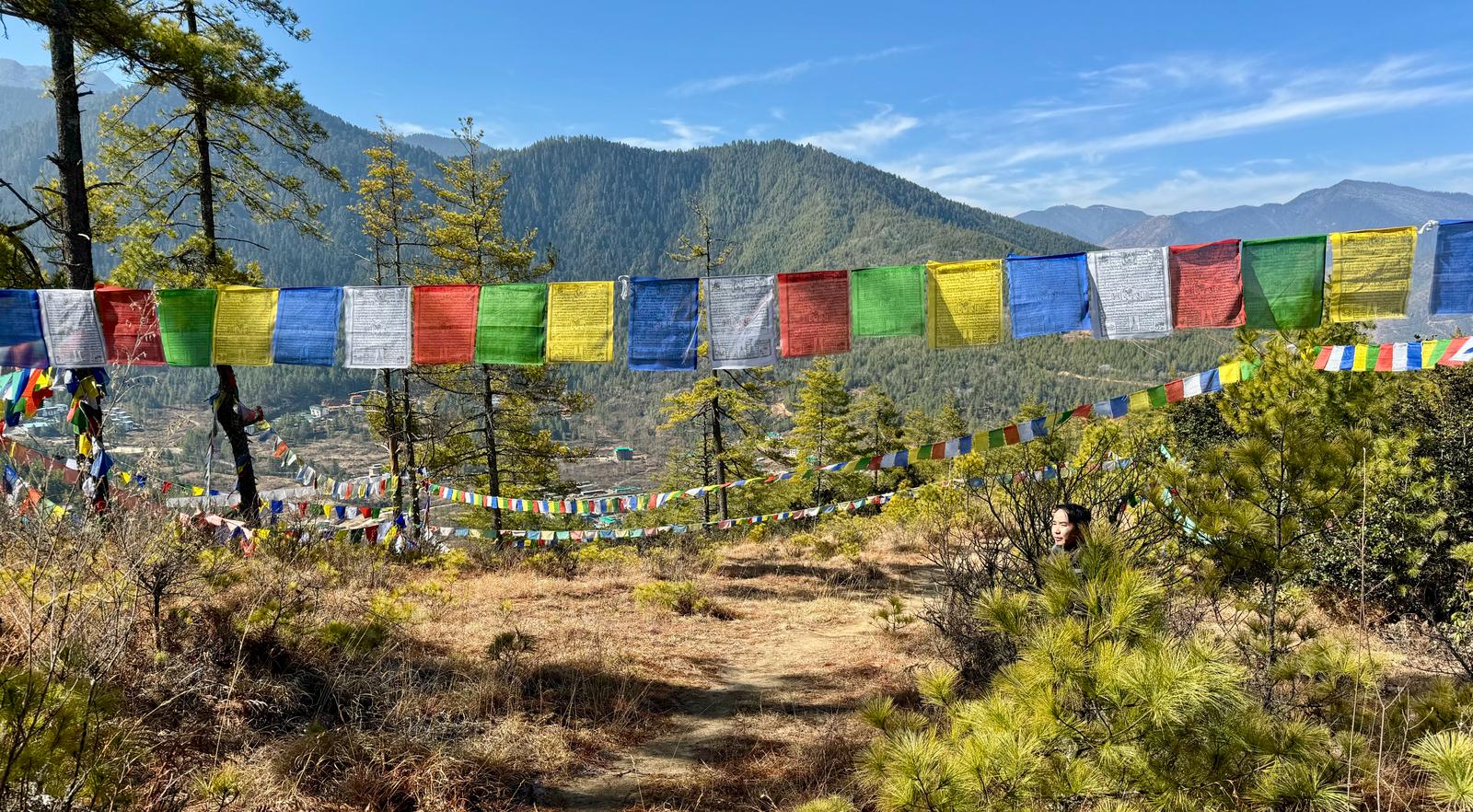
On the way down the hill we stopped to take photos of the Thimphu city. Apparently the buildings with red roofs are governmental and those with green roofs are privately owned. Prayer flags are everywhere, with the five colours representing different elements: red – fire; green – water; blue – space; white – air; yellow – earth. There are also many clusters of large memorial flags scattered on the hillsides.

We next headed to the Memorial Stupa, or Thimphu Chorten, which was built in 1974 in honour of the third king of Bhutan. Building a chorten, or even circumnambulating one is said to accumulate good will. Chortens are receptacles for offerings and generally contain some sort of religious relic. People come from dawn to dusk to circumnambulate the chorten and today, being the King’s birthday holiday, there were crowds of people doing this. We joined in, stopping to spin the prayer wheels first, then walking clockwise around the chorten with the many others who had made the trip here, almost all in traditional Bhutanese dress. Apparently while they may wear western clothing for casual affairs, when visiting a religious or government site, working in an office etc, traditional dress must be worn. This is one of the many ‘rules’ in place that maintain a sense of the traditional Bhutanese culture, one of the key facets of the Gross National Happiness measure.

Many older women sat outside a smaller building alongside the chorten where one lights butter lamps as an offering of wisdom and light of knowledge to eradicate darkness.

Our next stop was the Royal Takin Reserve, a large area set aside for the preservation of takin, the national animal of Bhutan. It has now been expanded to include other injured animals. We were very impressed with the amount of space and also with the many raised walkways that had been built.

Takin

Takin

Yak

Yak

Himalayan Serow

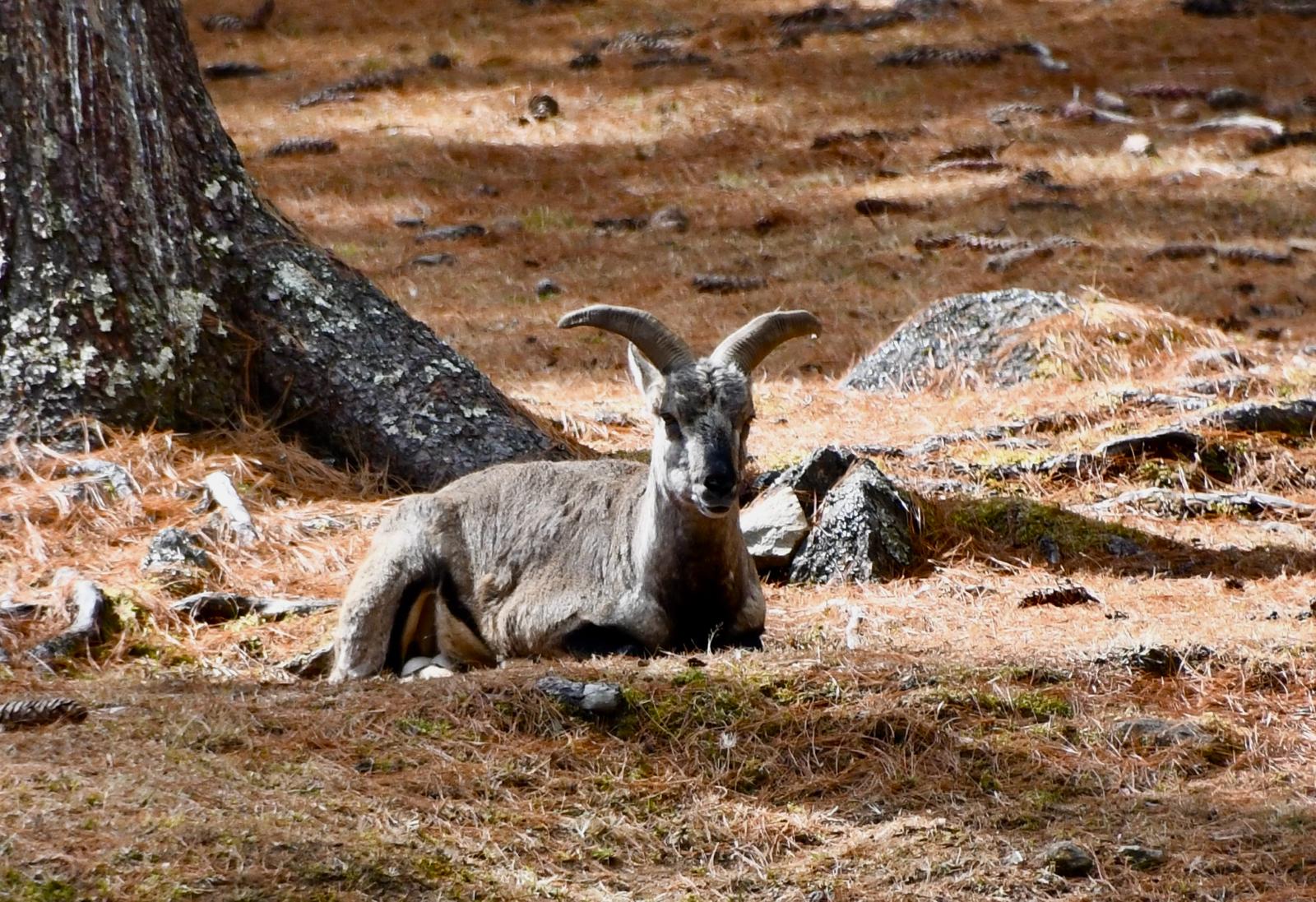
Blue Sheep

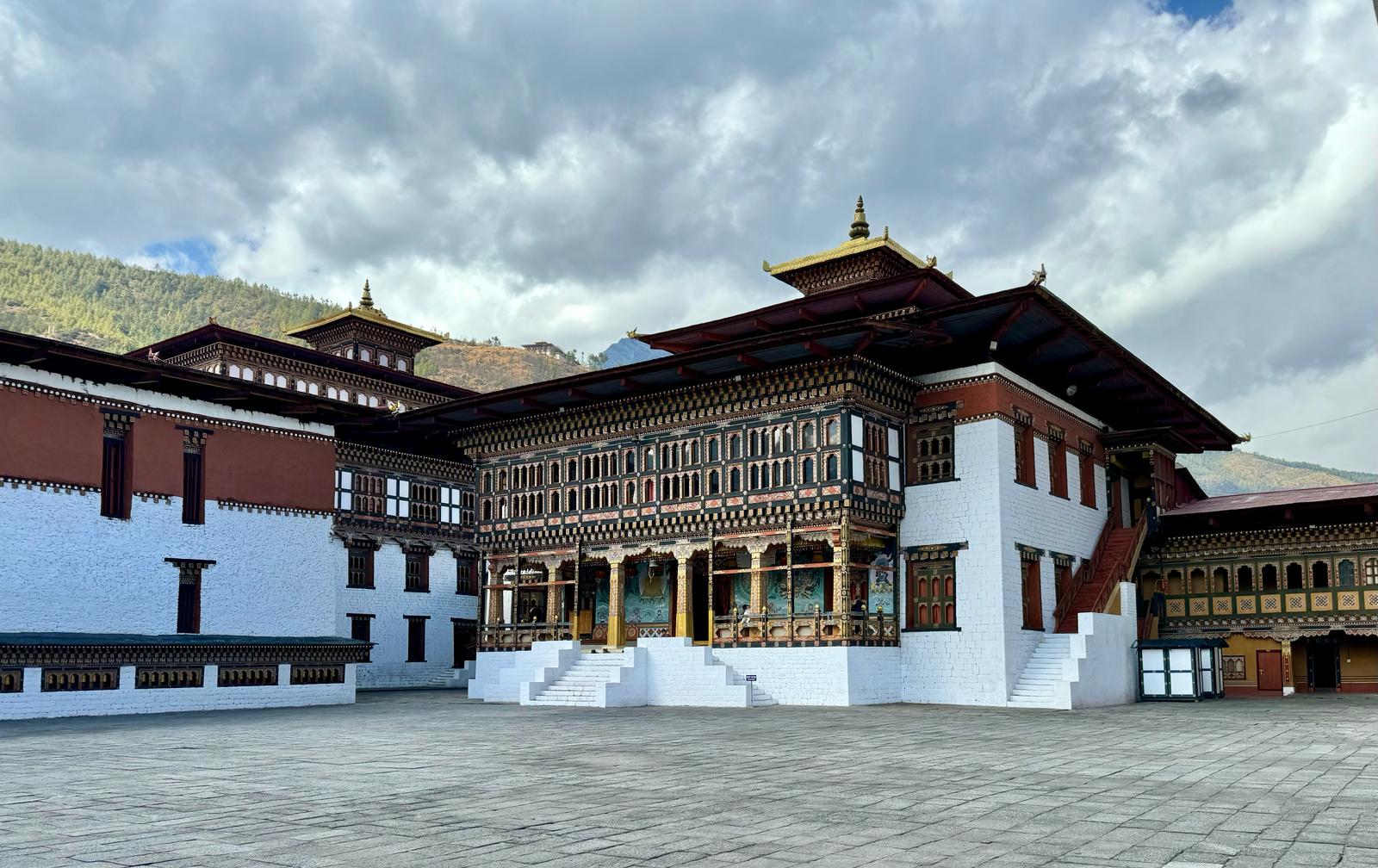
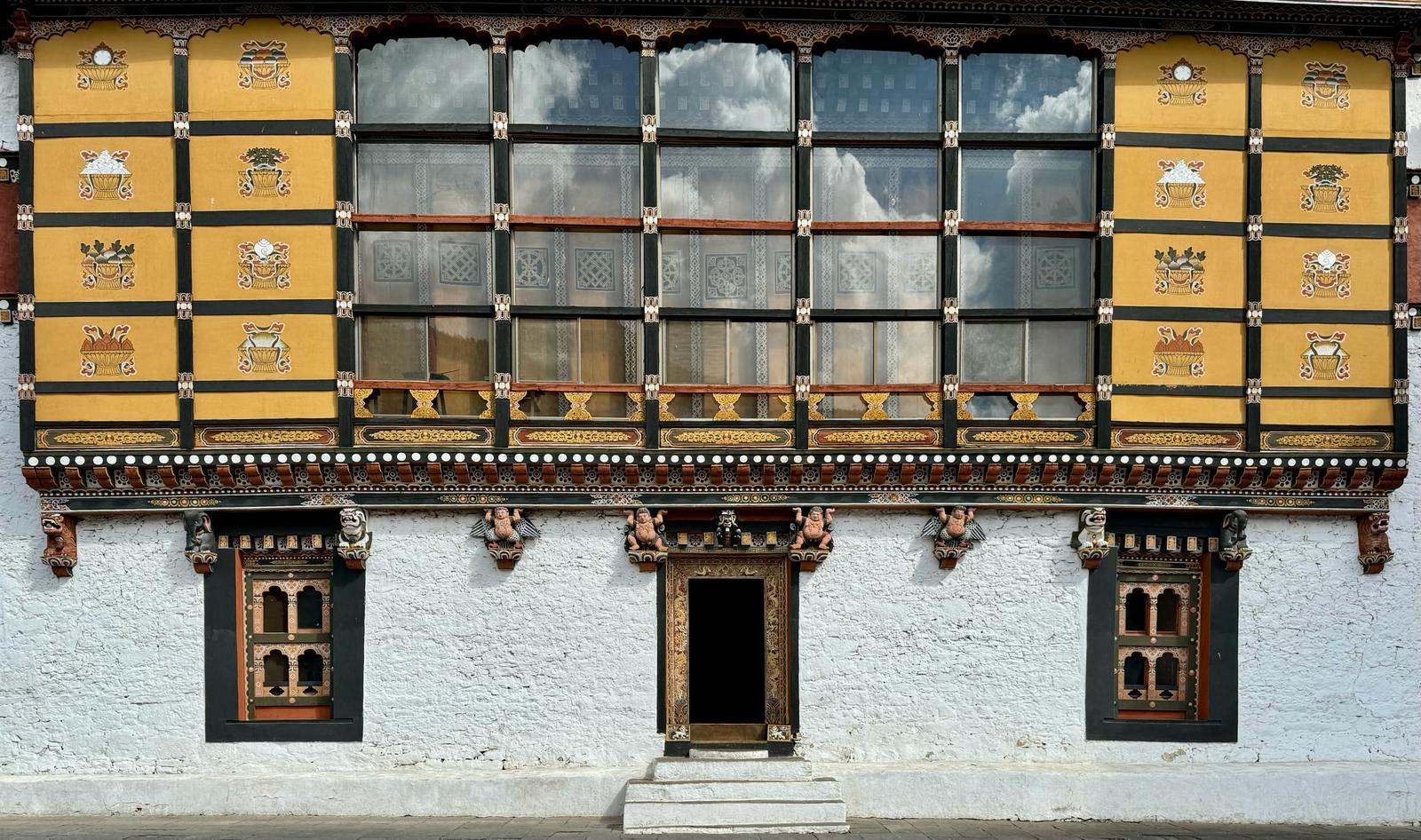
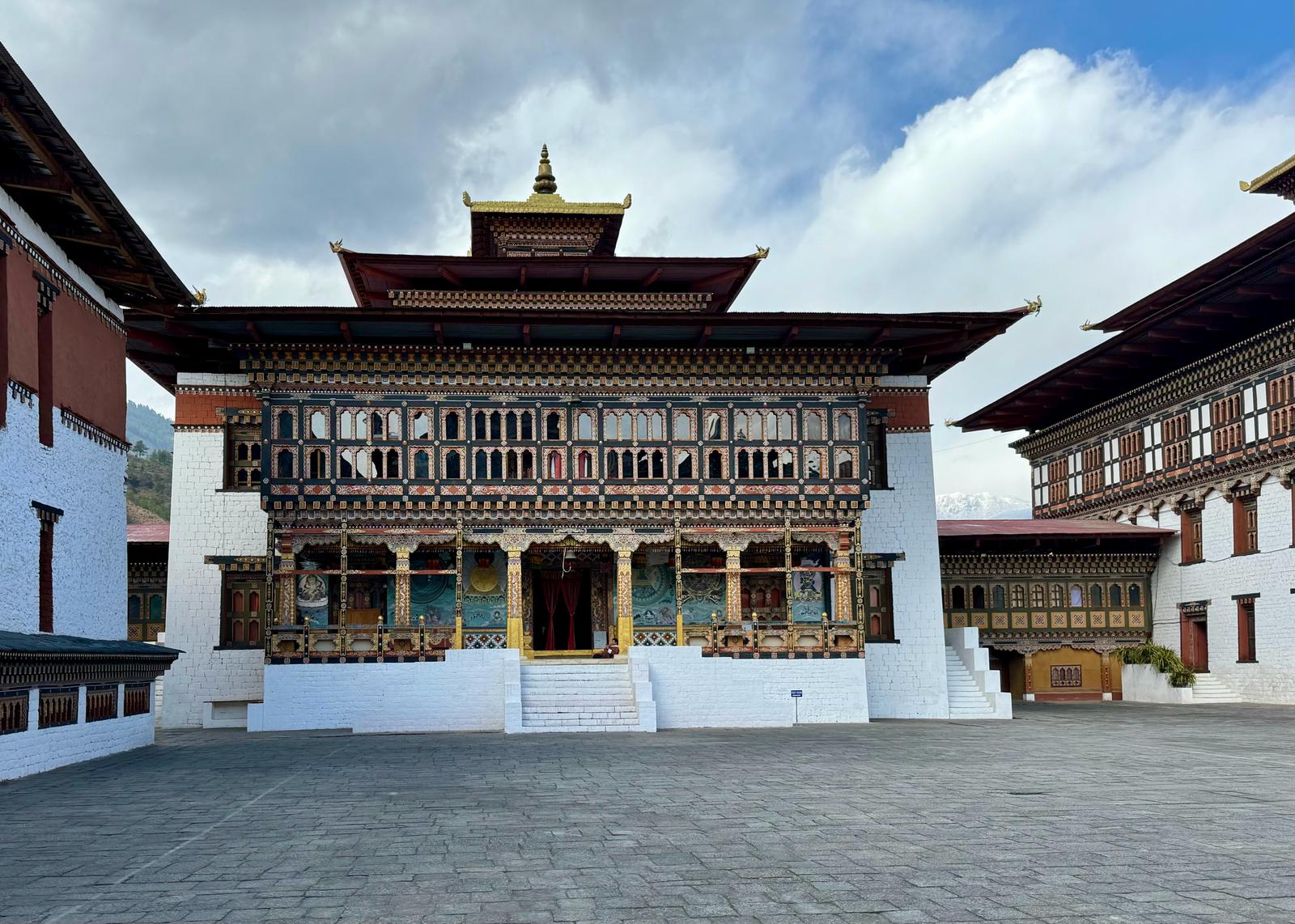
After enjoying a delicious lunch at a Six Senses cafe in town, we visited the Tashichho Dzhong, which was first built in 1216 as a place of residence for monks and then expanded in 1745 to house government ministers and officials. It is now an important religious and administrative center and is an impressive piece of architecture. The Bhutanese flag flies proudly outside.

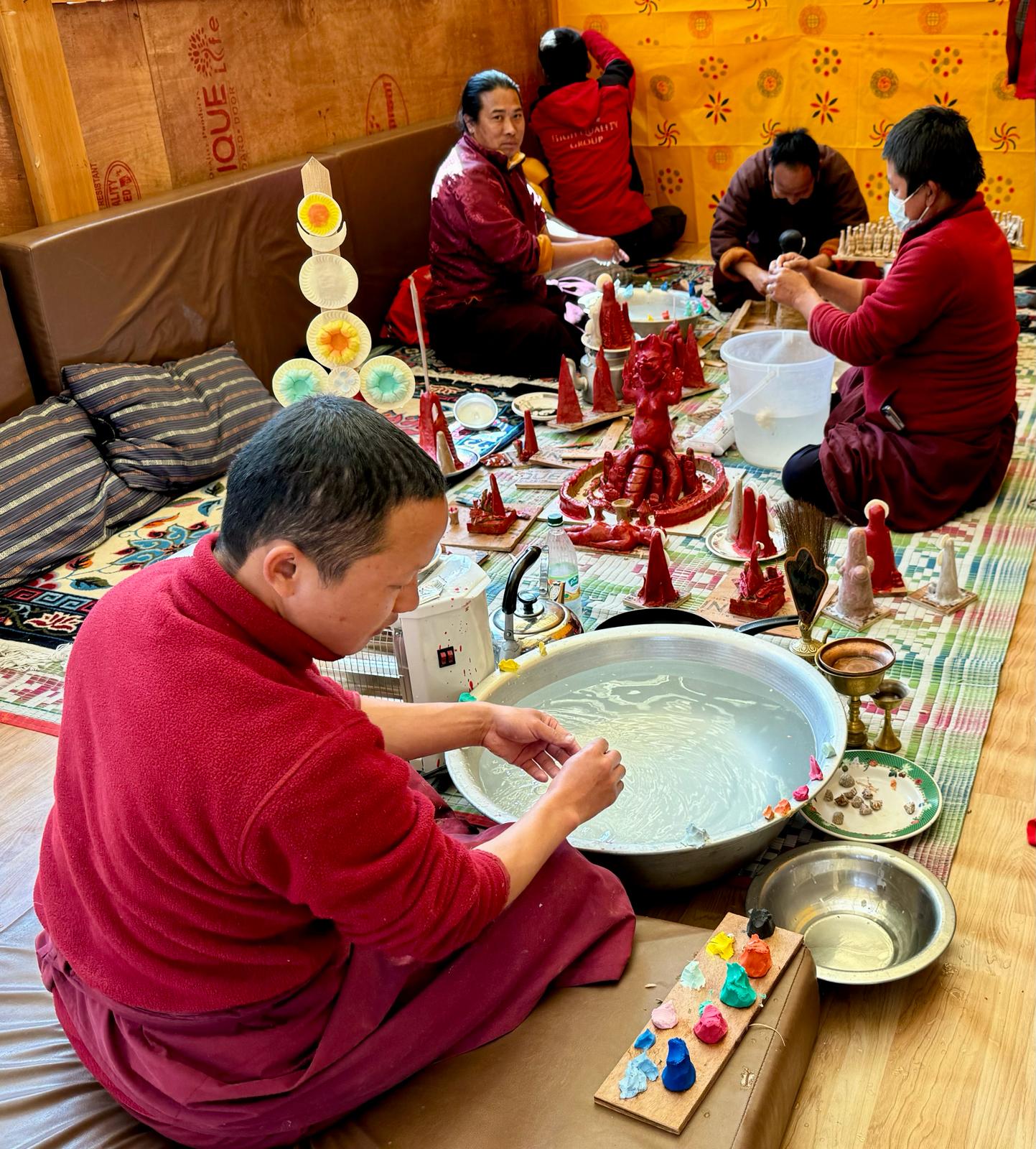
We called in to a specialty art centre, where we got to see a lot of the traditional Bhutanese art. Some of the artists were making wax statues for offerings.

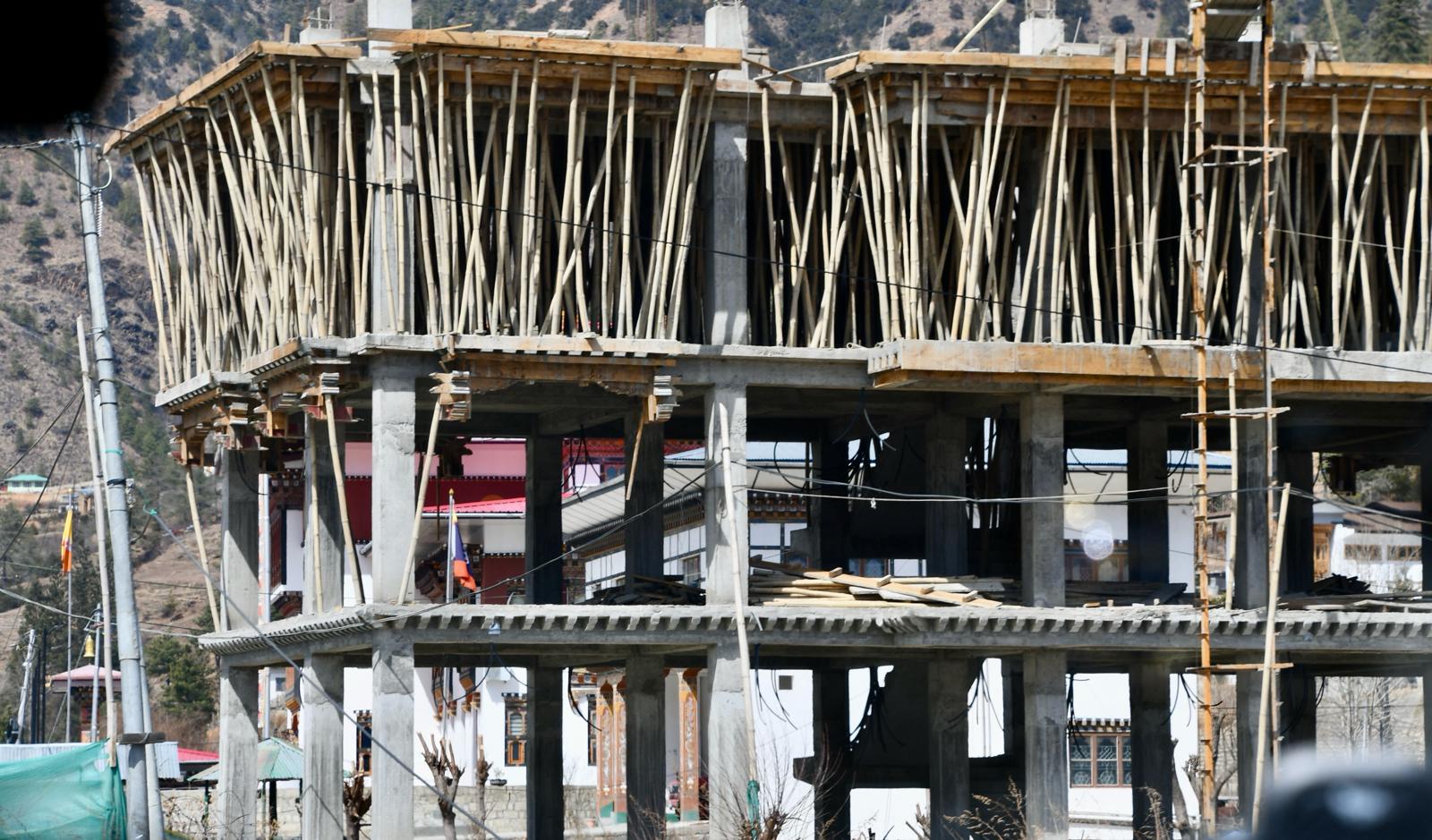
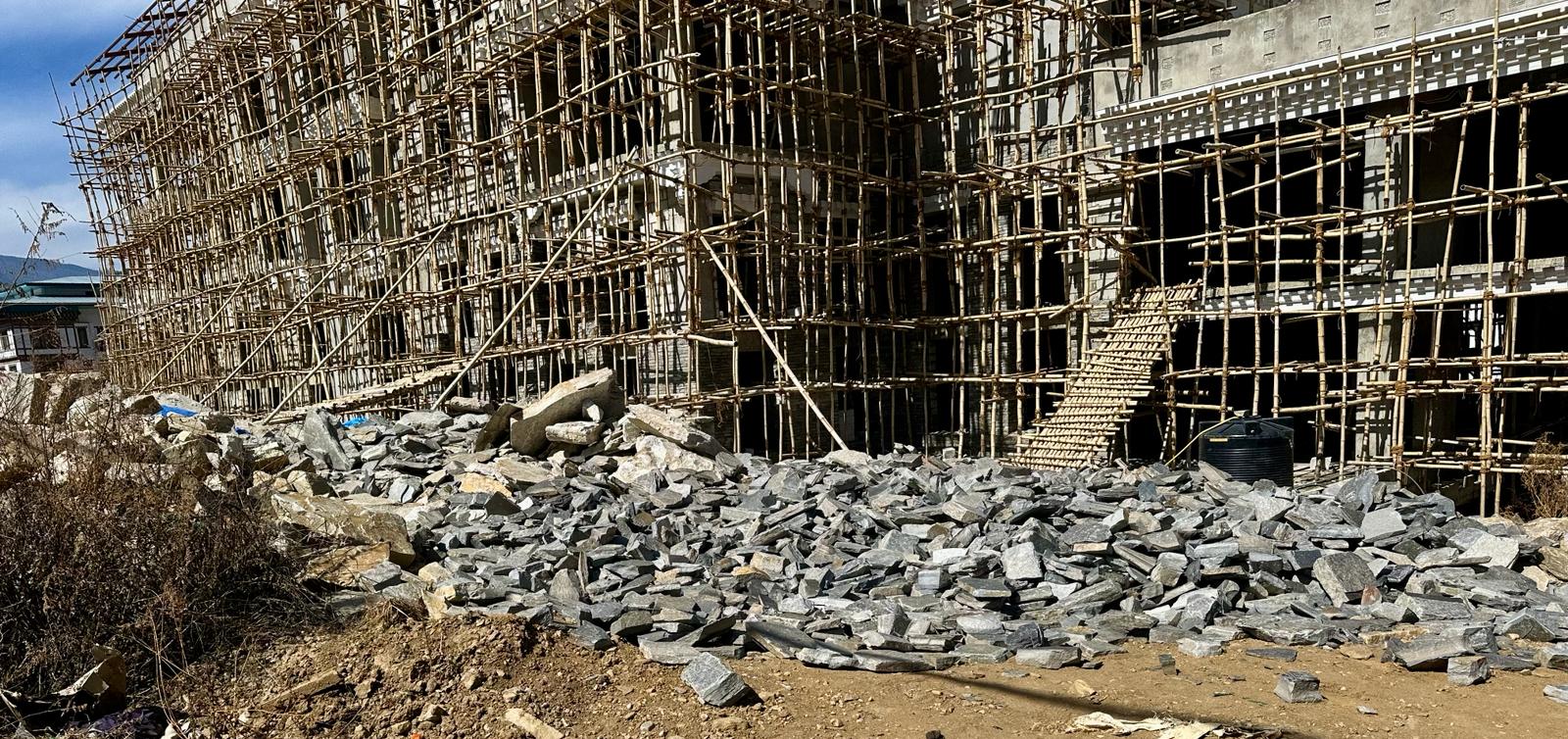
Our last stop was the centre of town where we wandered down the Main Street and tired to take photos of the decorative architecture. Being a public holiday there was a bit of a festival atmosphere. In the main square we were amused to see a merry go round playing “The wheels on the bus go round and round” and a tent where people were playing bingo. There is a huge amount of work that goes into the painting and embellishment of the buildings. It is hard to really capture in the photos. There is also a lot of development in the town, with many building sites and lots of bamboo scaffolding. There are no traffic lights in Bhutan and at the major intersection the traffic police direct the traffic with  exaggerated hand gestures.

We returned to the resort, stopping briefly to admire one of the more traditional bridges along the way. It was nice to take a bit of time to relax in our stunning room. We had booked a traditional Dotsho (hot stone) bath at 6pm. I think I now have an even better understanding of the frog in boiling water analogy. This was definitely an experience… we were each in our own rooms and got into a large wooden bath, with khempa, a medicinal herb added, to help ease muscle aches and pains. Five river stones that had been heated for over three hours in fire were rolled down a chute and added to the bath, sizzling and steaming as they hit the water… it heated up significantly. Fifteen minutes later they offered to add more stones – no thank you for me, six more for Roger. Another ten minutes later and I braved two more stones, Roger another three. Bottles of water had been provided and a bowl with three face towels in some ice water. It was all I could do to stop myself tipping the ice water directly in the bath – I had the iced towels on my head and around my neck and still I was over-heating. Roger apparently enjoyed it immensely… no ice towels required. I have to admit, that I do feel very relaxed but this only reiterated for me the limited range of temperatures at which I feel comfortable.

Saturday 24 February – Roger: Thimphu to Paro

It was about 6:30am when we wandered down to the gym, which has a great view of the golden Buddha, sitting high above the city of Thimphu. After completing our respective programs we wandered back to our villa for a shower.

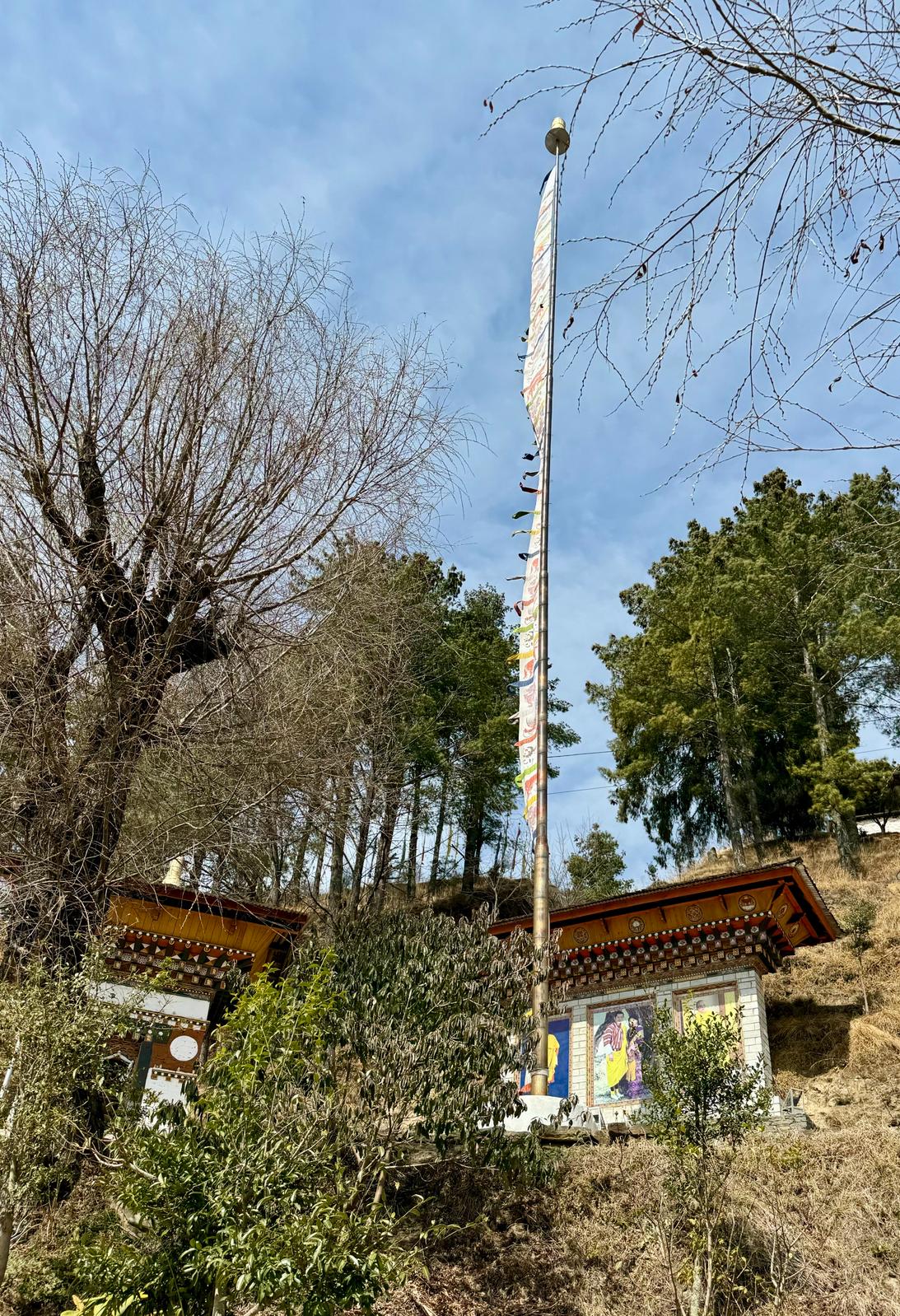
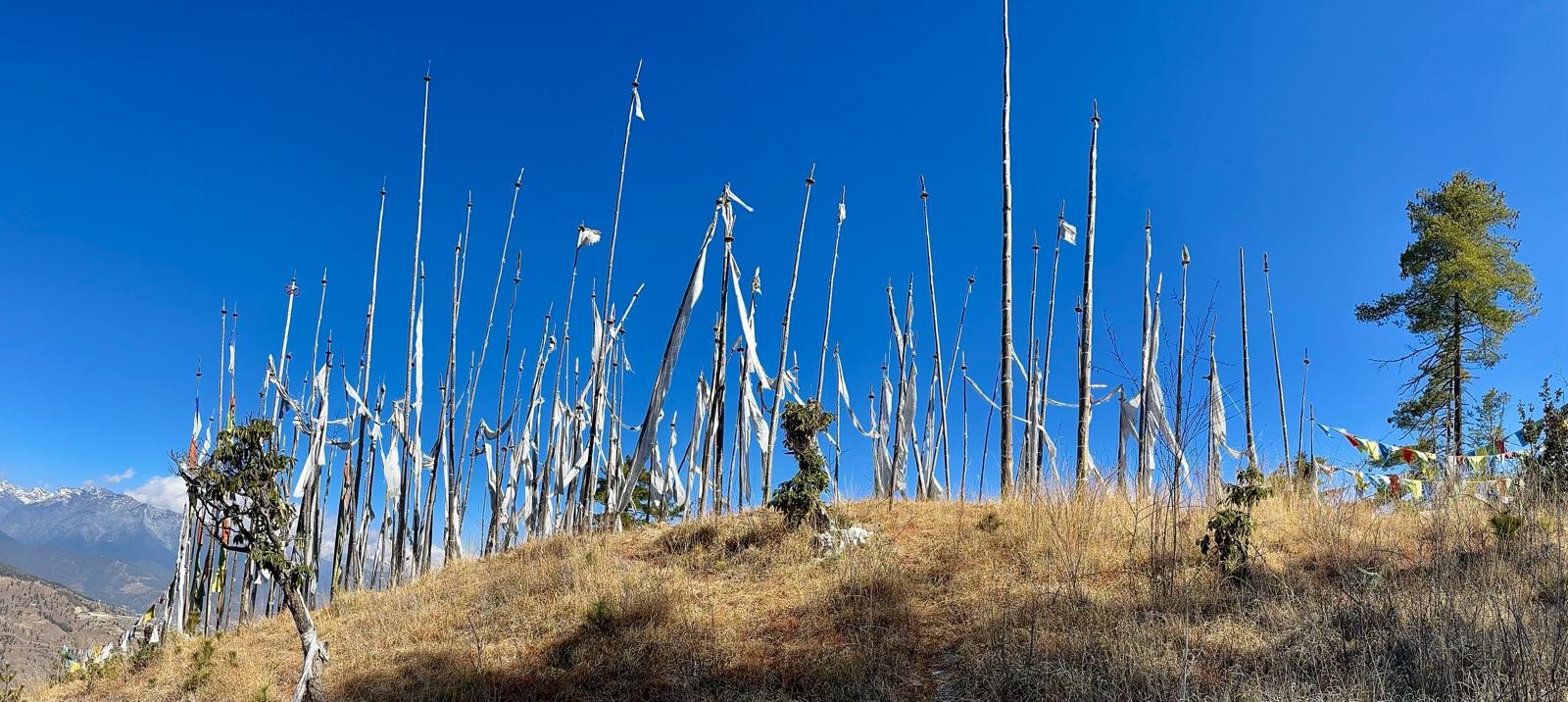
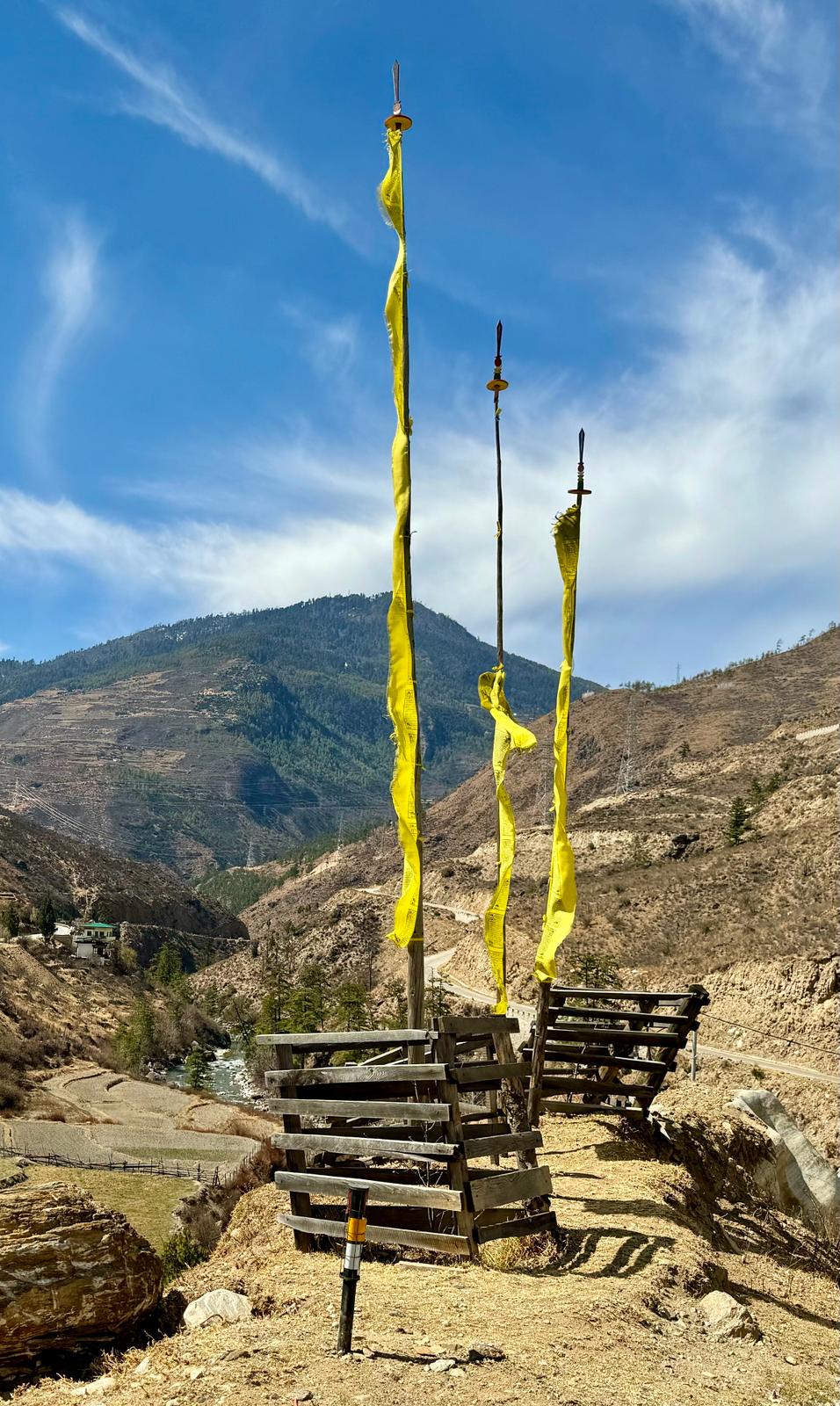
We packed up then headed to breakfast before meeting Chimi and Singye, who took us for a stroll up the hill behind the resort. The track took us up through a pine forest to a prayer memorial with prayer flags on vertical poles. These are placed there after somebodies death – 108 is believed to be an auspicious number although one is just ass effective. The white symbolises air and wind. The base of the pole is dug into the ground to symbolise the connection with the earth and the dagger-like thing on top points upwards to represent the connection with the sky. These particular flags were in quite a state of disrepair;  apparently after a year they are supposed to be taken down and burnt but a lot of people don’t get around to doing this. We had a great view from the memorial over the Six Senses resort.

From there we wandered down the hill, overlooking the vast developments in the valleys below, as Thimphu rapidly expands. We passed lots more prayer flags on the way down. As we arrived back at the resort we stopped in to look at the magnificent indoor, heated infinity pool with its view out to the Buddha.

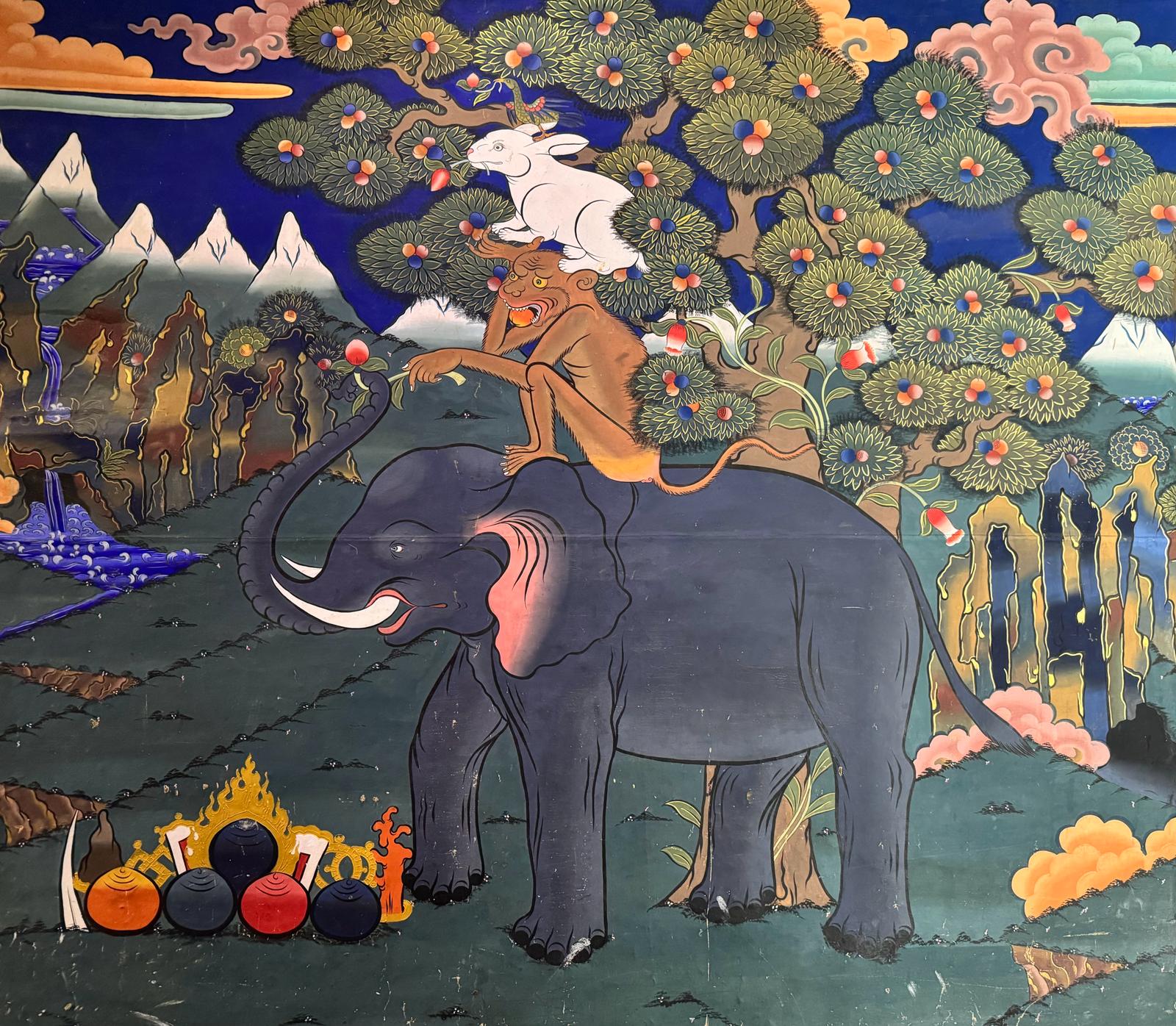
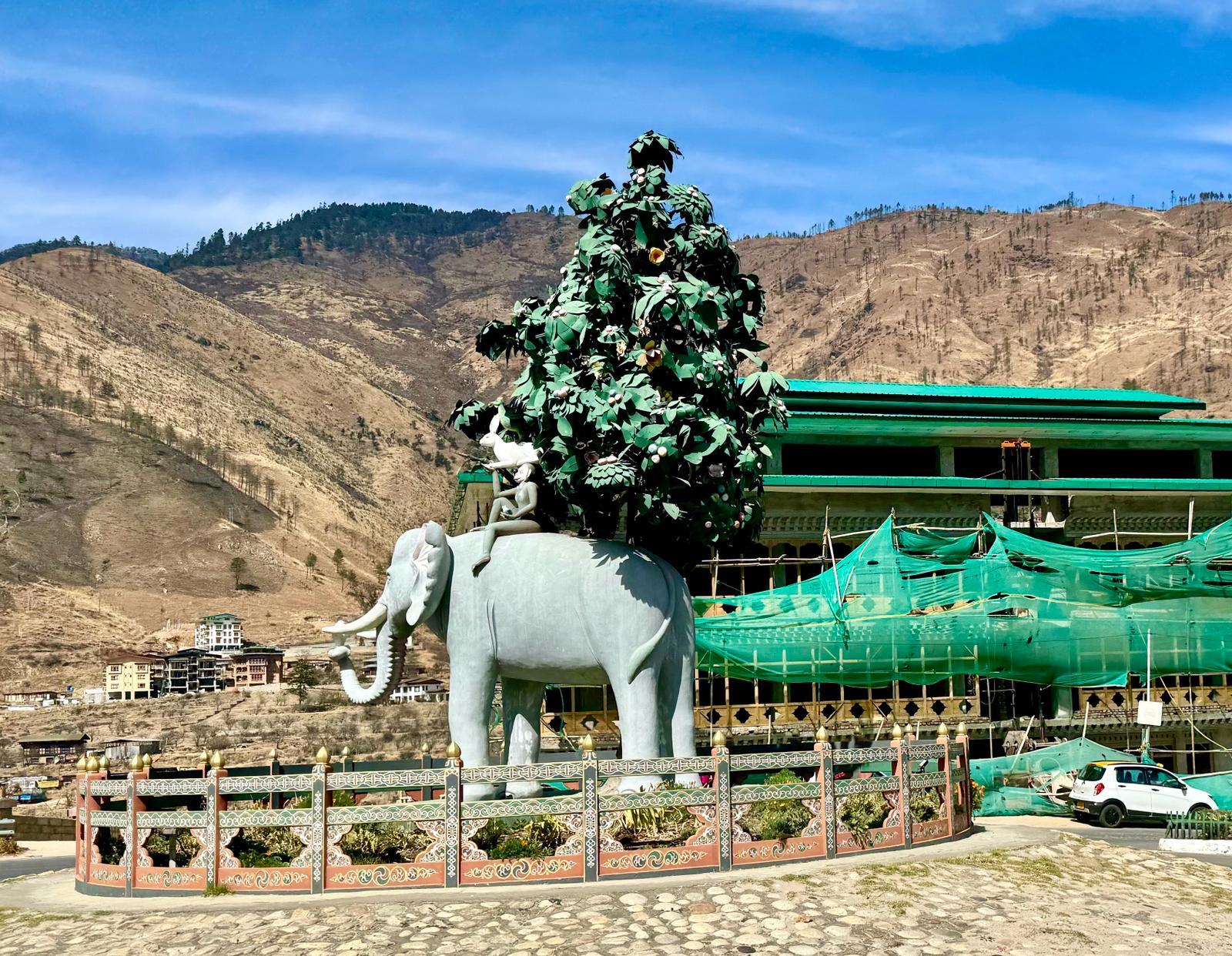
Soon we were on the road to Paro, passing lots of new construction sites as we headed down the hill, turning at a roundabout at the bottom of the hill with a statue of an elephant, a rabbit and a monkey in the middle, apparently representing harmony in the Buddhist religion.

We continued down the valley alongside the Wang Chhu River. Along the way we passed many more prayer flag stations hosting the vertical flags representing the five elements. Large power pylons are quite prevalent along the valley as the largest income earner for Bhutan is electricity, created from the many hydro dams in  the country. This is followed next by tourism.

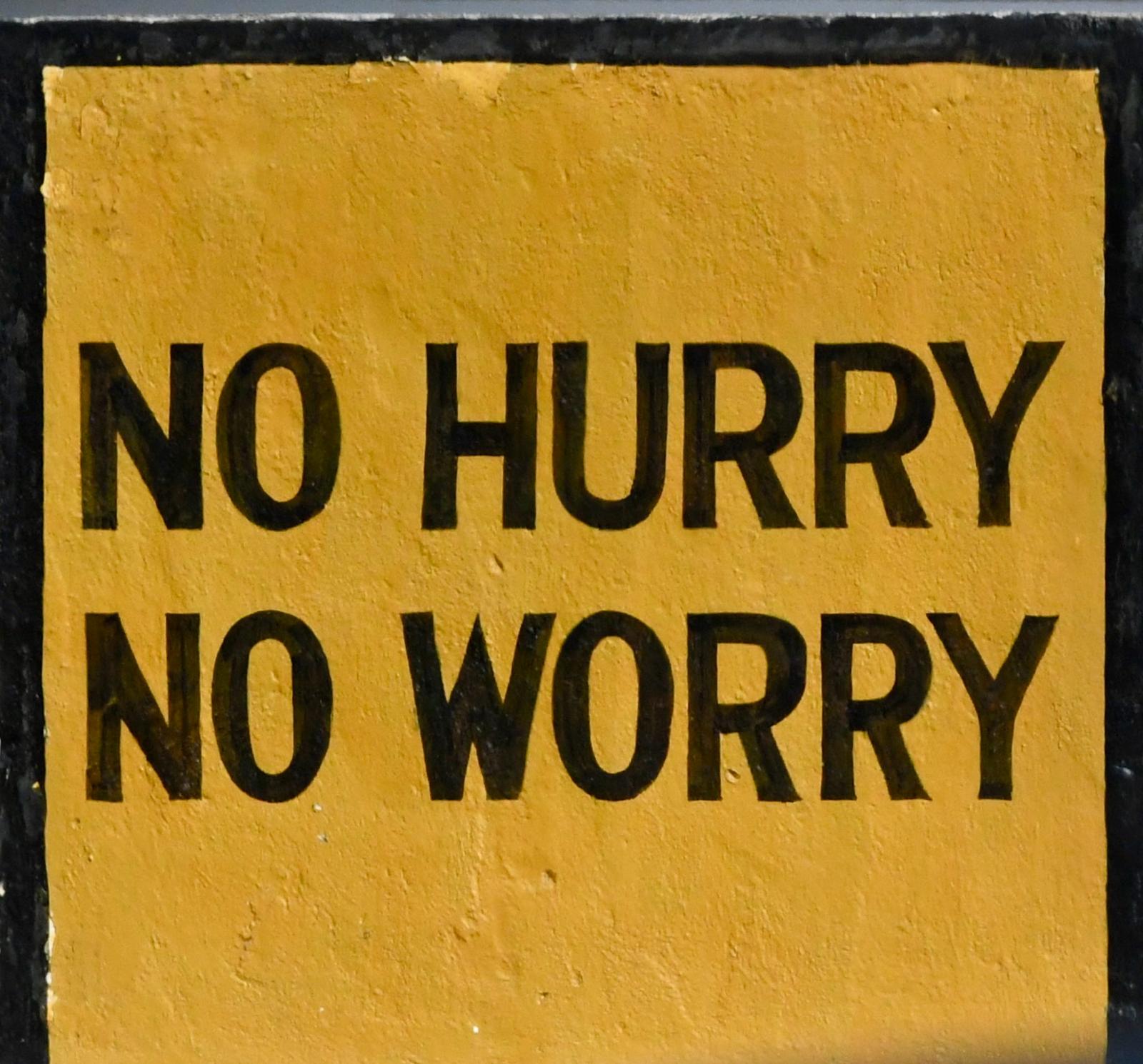
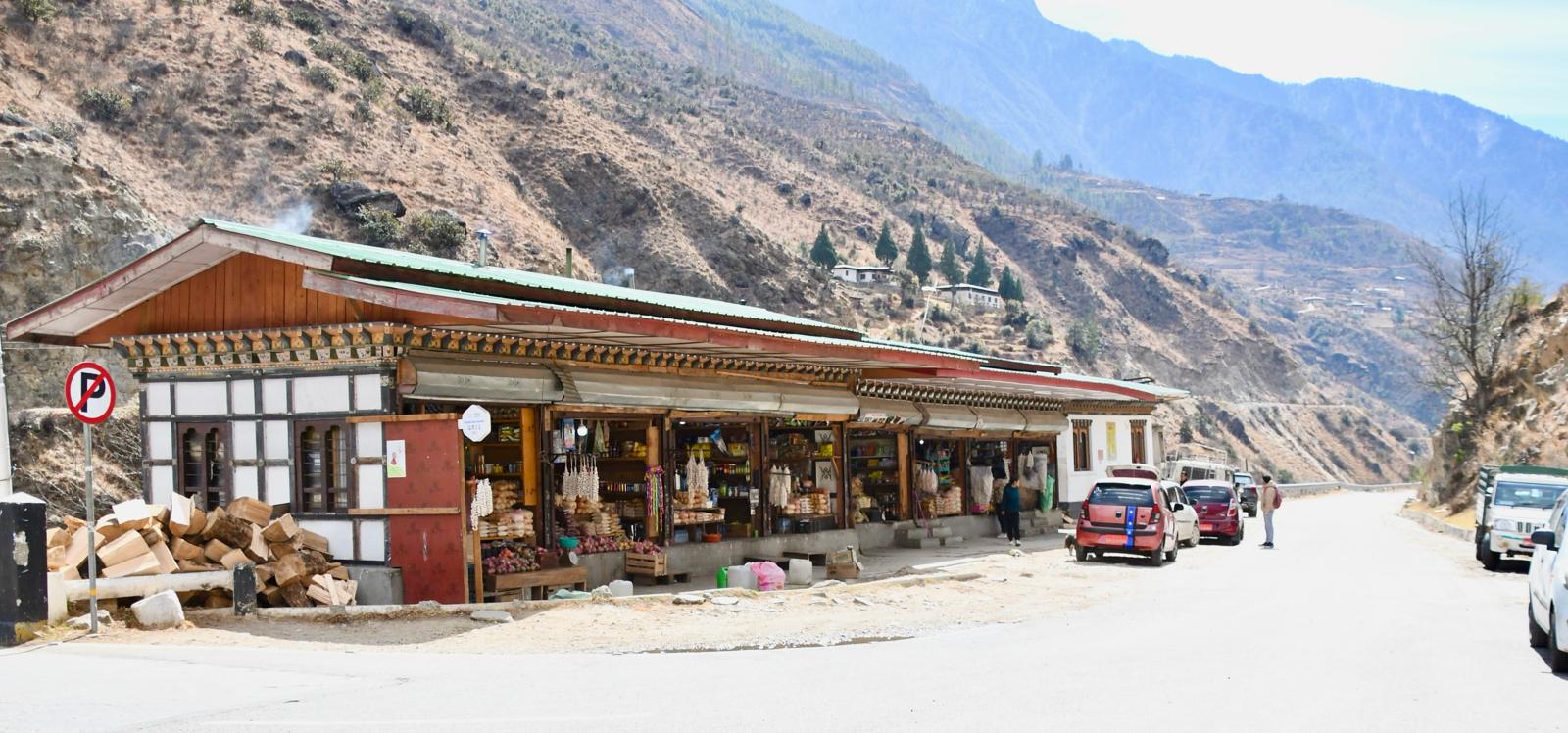
People drive very slowly and respectfully here and there are signs along the highway, encouraging safe driving. One in particular appealed to us: “No hurry No worry”. There are lots of stalls and markets on the side of the road as well as the odd petrol station.

After about 40 minutes, we came to a point where the Paro Chhu River converges with the Wang Chhu River and heads south to India. Three chorten stand on the riverbank at the intersection of the rivers, apparently to ward off the evil spirits where the waters meet. Looking back as we crossed the bridge was a 3m by 12m billboard with a photo of the king and queen on it. The king, now in his early 40’s, under the Bhutanese law, will have to abdicate from the throne at the age of 60, as his father did before him, to allow his oldest child to take over the throne.

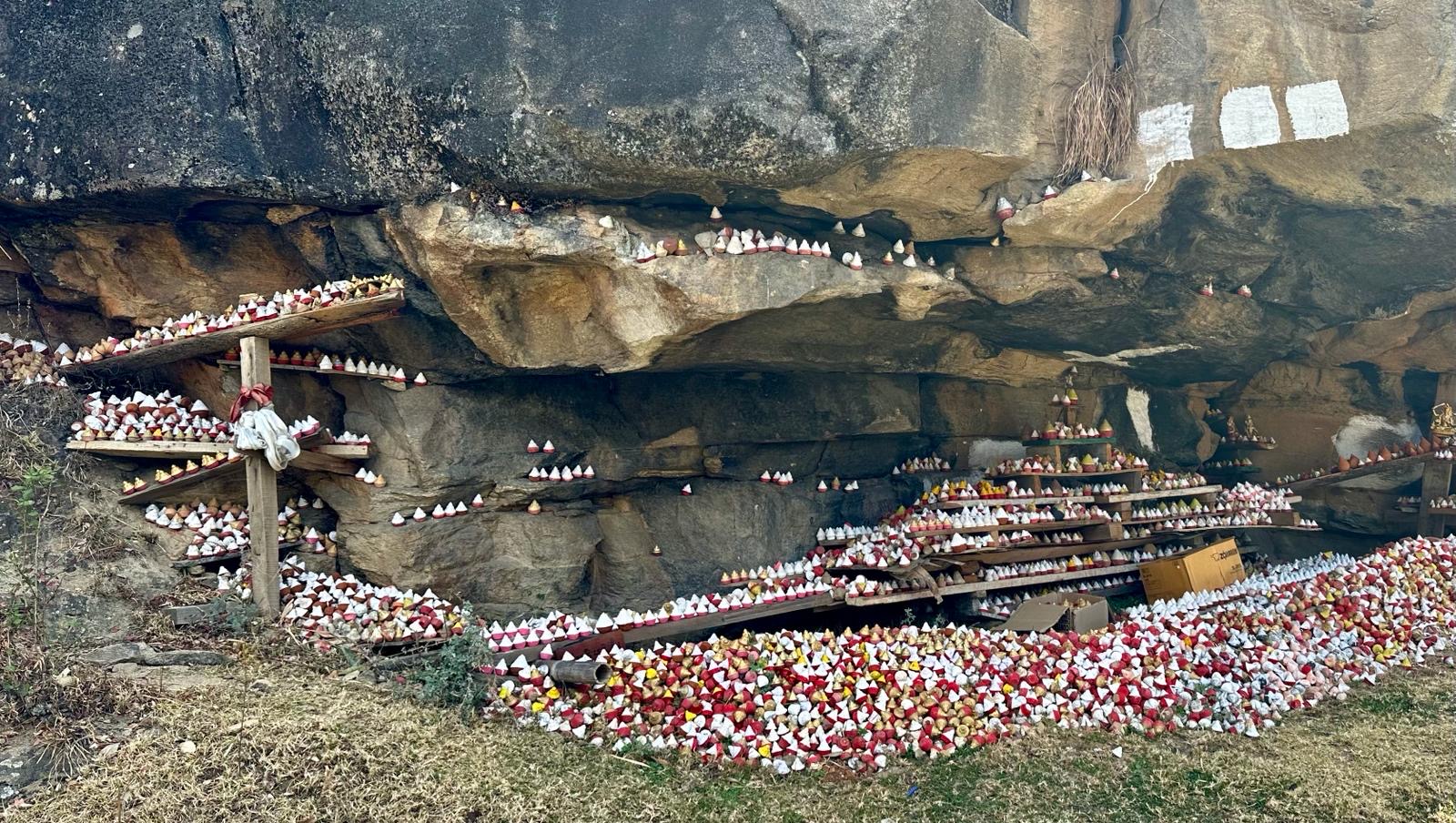
As we carried on up the valley, Sylvia had been talking about these little cupcake things stuck in holes in the bank along the roadside. Eventually we came upon a whole bunch of them stacked up higgledy piggledy. These miniature stupa or chorten each contain a relic and bring good will.

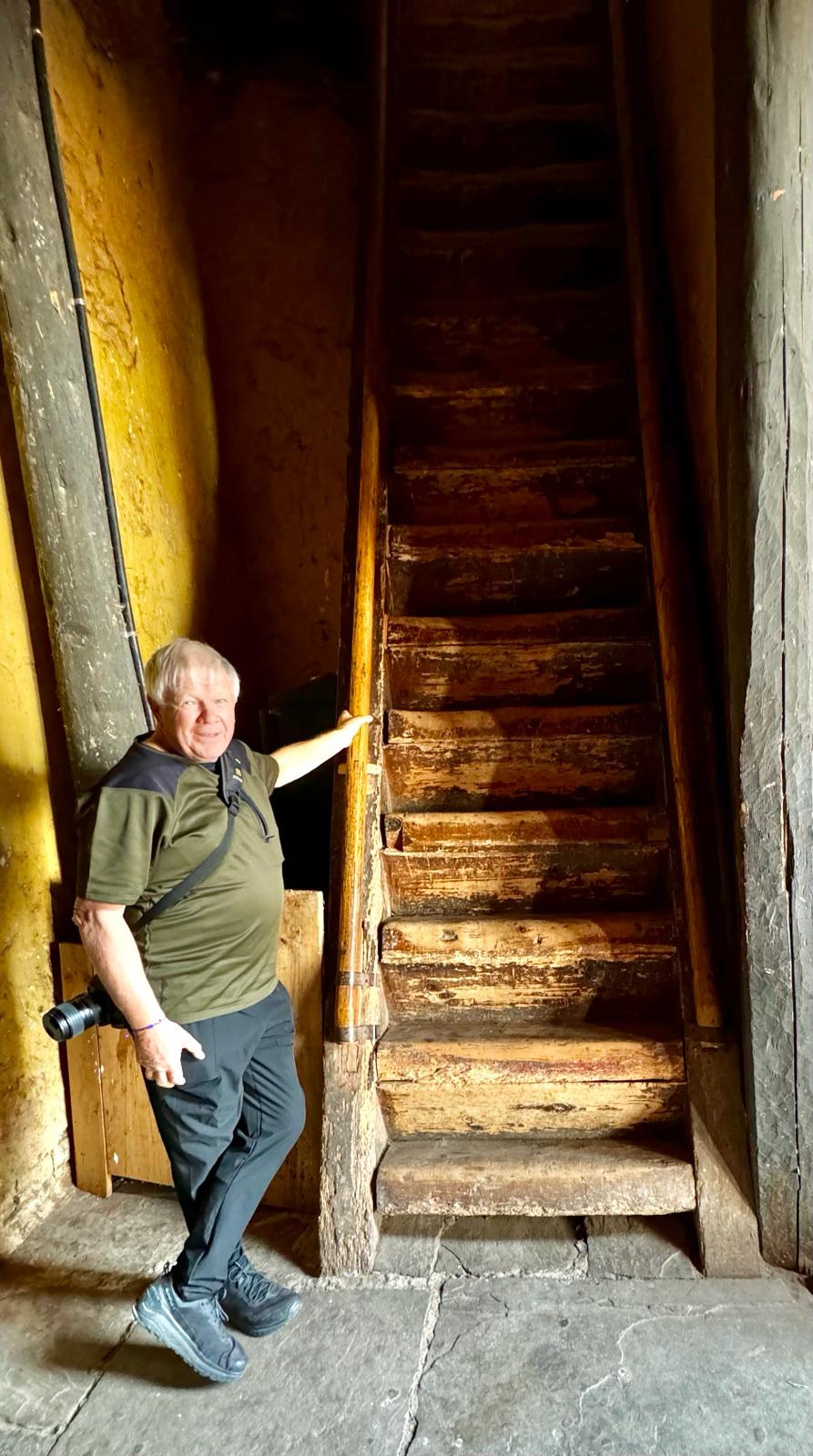
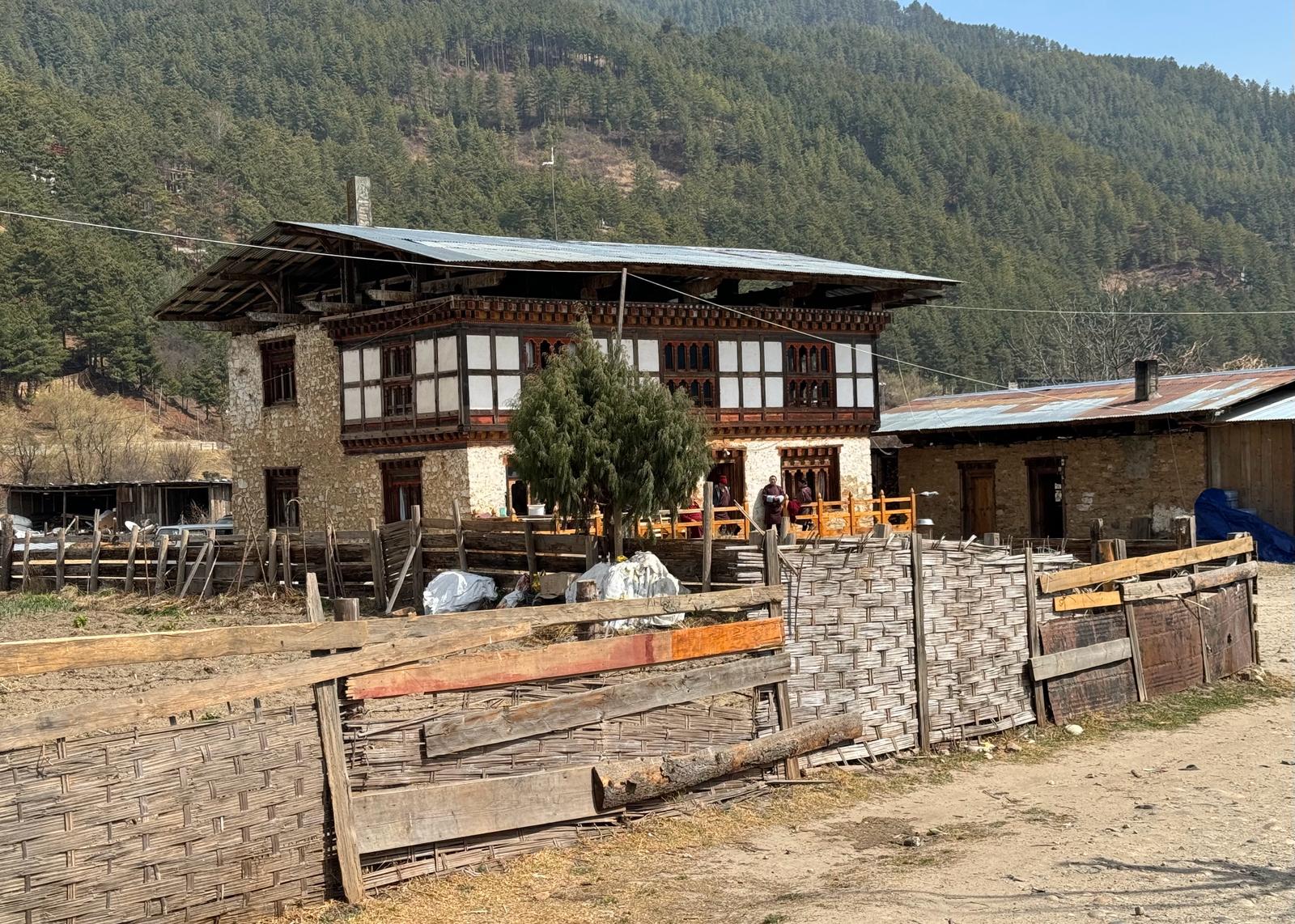
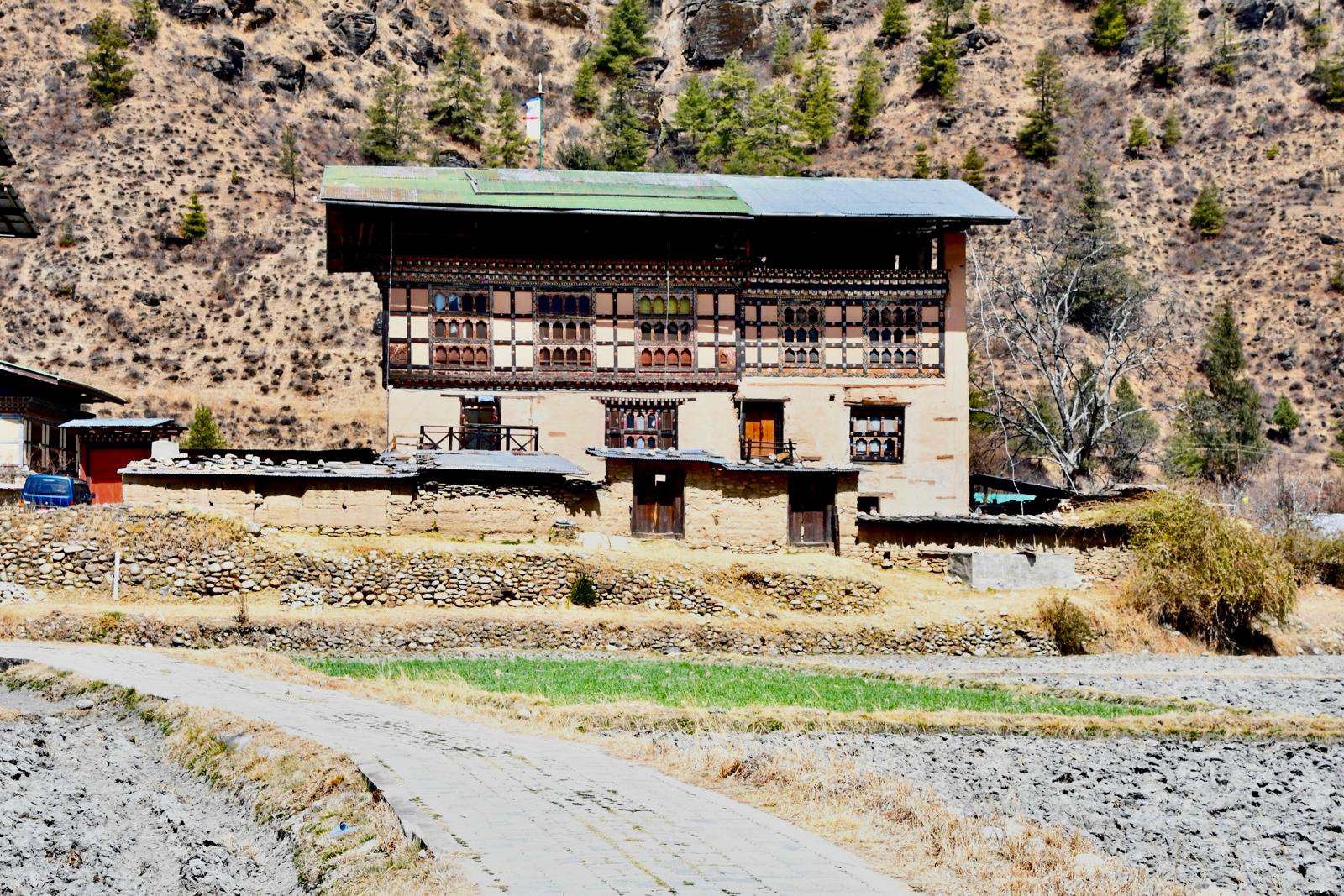
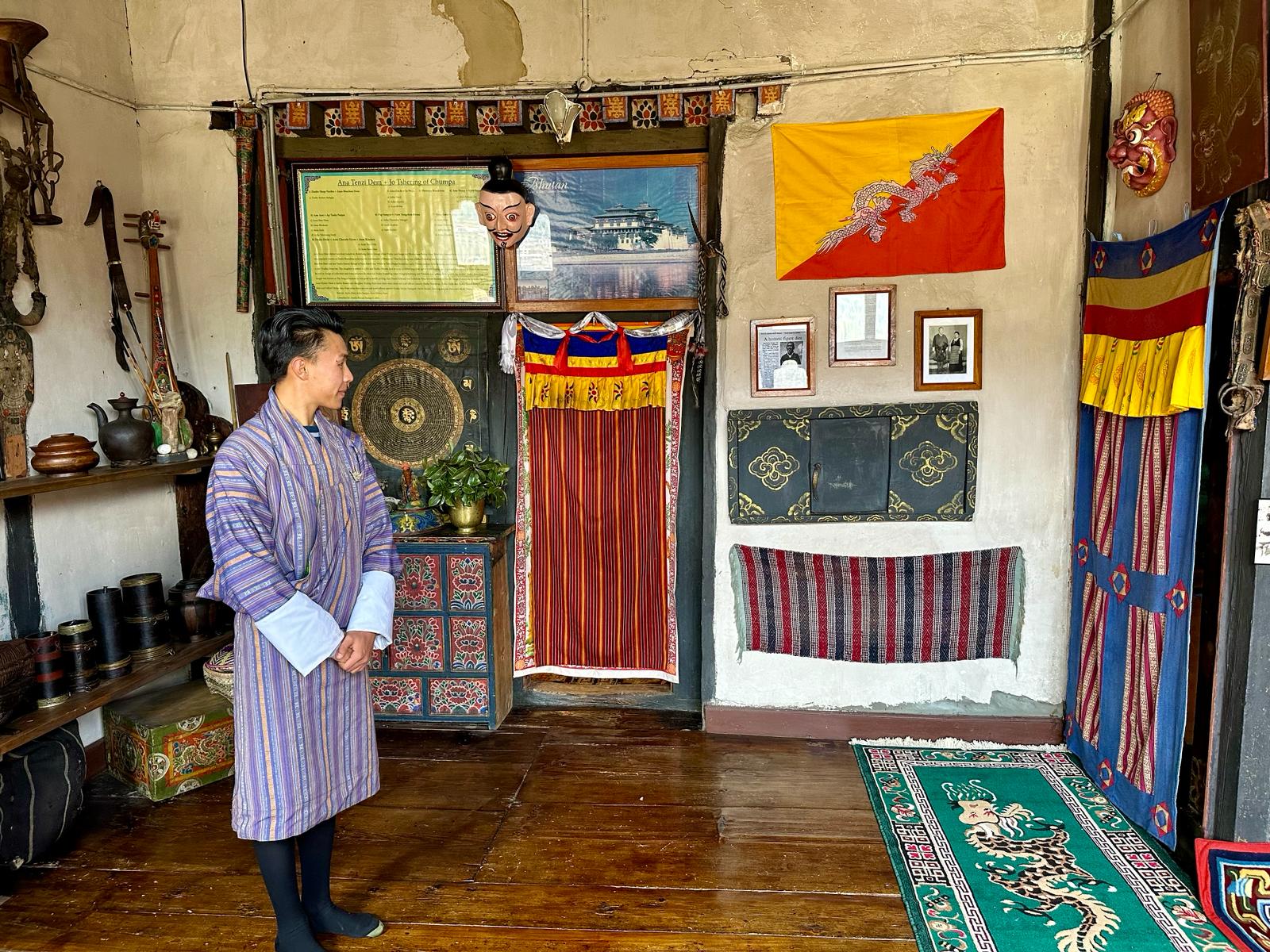
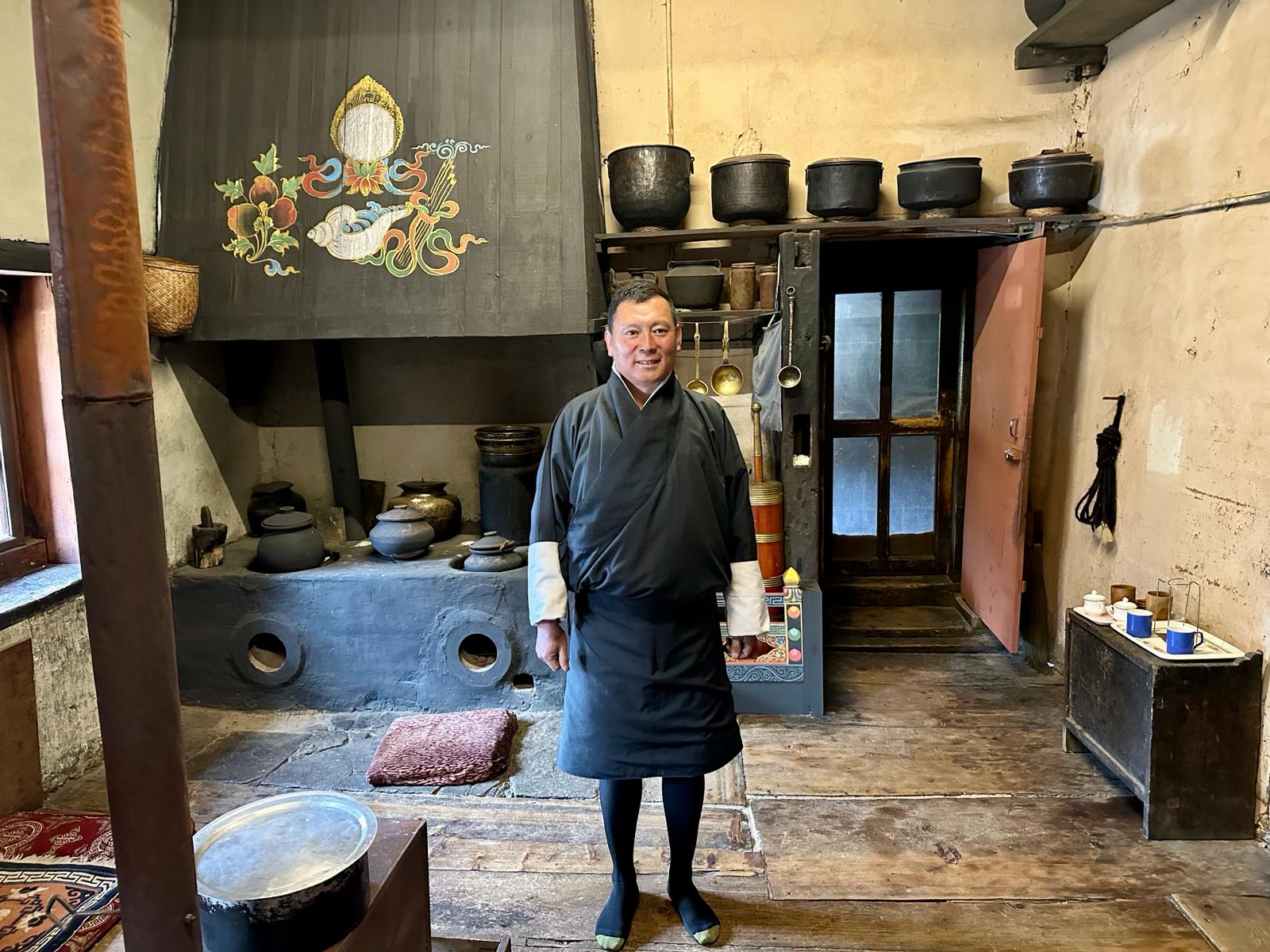
We headed into Paro, passing the airport, and through the town to a small farm, where we were hosted by Mr Sonam Dargay, the owner of the three acres and also a traditional maker of prayer flags. The farm and prayer flag making tradition have been in his family for generations. Part of the traditional three storey house is over 300 years old. Before entering the house there was a vessel of water which we dipped a branch into and used to sprinkle water around to bless our entry to the house. We then climbed some steep stairs to the first, and then up to the second floor, where we passed through the kitchen and were seated in the living room. There we were served a very nice traditional lunch. One of the Six Senses staff was there to interpret as the farmer explained to us how he cultivated his three acres of land, growing rice during the summer and potatoes during the winter. Out the back of the house he also has a large vegetable garden where all the vegetables we ate for lunch had been grown.

We were then taken to another room, which off to one side has a large altar room, which most houses in Bhutan have, but not all as big as this one. We sat down where Mr Sonam Dargay painted in ink made from black soil onto a die. Each die represents a different mantra and is used to print on a different coloured prayer flag. The flag is draped over the top and we used a leaf to rub back and forth to bring the ink through onto the flag. Sylvia did this for one set of flags and I did another. At the end we were each  presented our set of prayer flags.

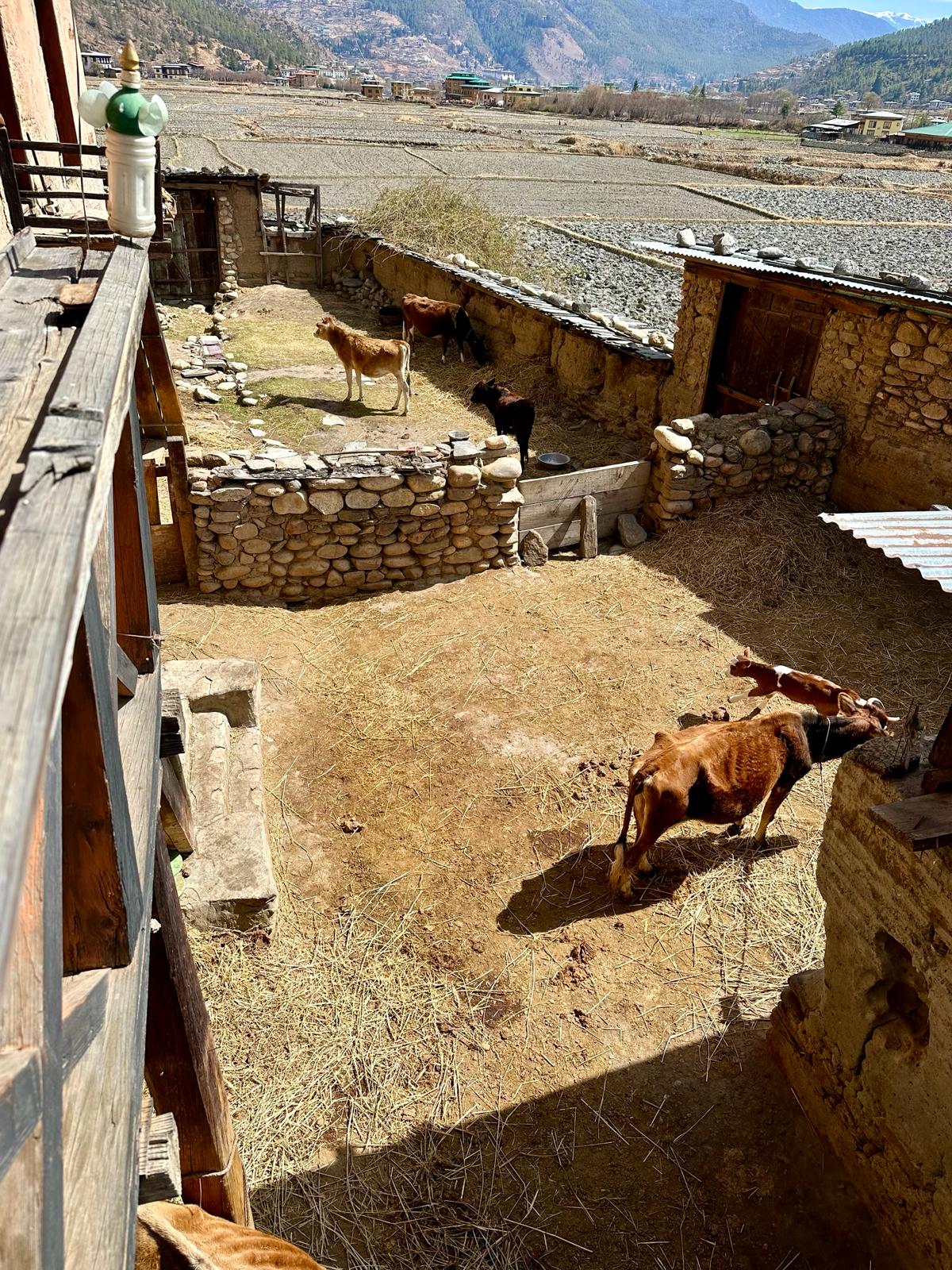
I had seen cattle in the yard outside the house and asked if the stock were kept under the house. The farmer said yes and agreed to let us have a look. We descended the steep stairs back to the first floor then another steeper set outside to the ground floor. About two thirds of the ground floor is used to house his five cows and one calf, in the other third he stores the rice that will feed the family until the next harvest season. In the back room he pointed out a large box filled with rice and sealed with cow dung, which will stop insects getting into the box so the rice can last for up to three years. As we left Mr Dargay pointed out an old ox yoke and plough leaning up against the wall that is no longer in use as he proudly showed us his new tricycle walk-behind rotary hoe that he now uses to cultivate the land.

This was such an enjoyable and unique experience, it was hard to leave as Mr Dargay had been a very hospitable and engaging host, eager to share his knowledge of both farming and prayer flag making.

From there we headed to the Kyichu Lhakhang, one of the oldest temples in Bhutan. When Chimi went to buy tickets we were turned away as the king’s grandmother, now in her nineties, was on her way to visit and foreigners were not welcome in the temple during her visit. We headed back towards town stopping on the side of the road as her convey passed us heading in the opposite direction with their lights flashing.

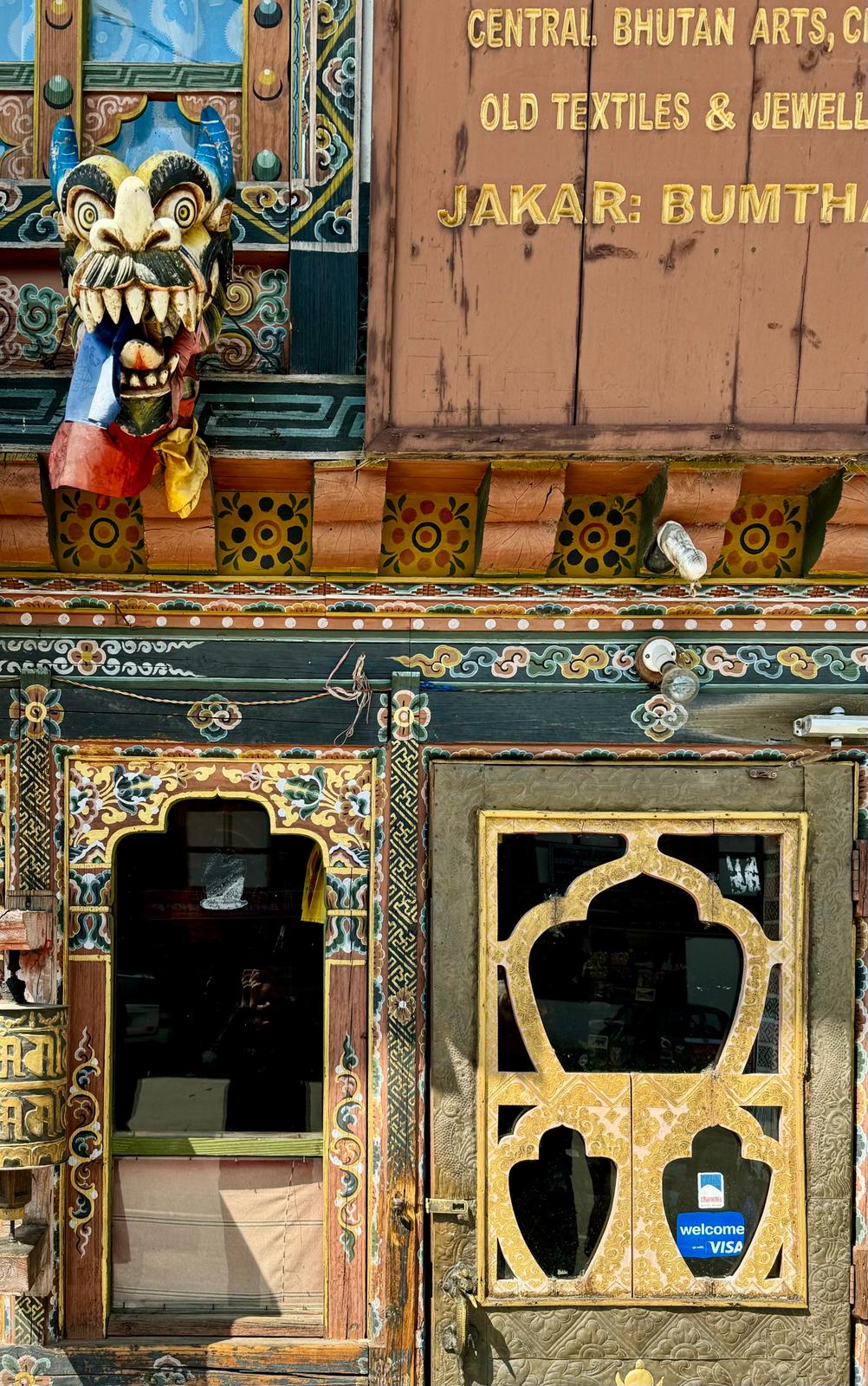
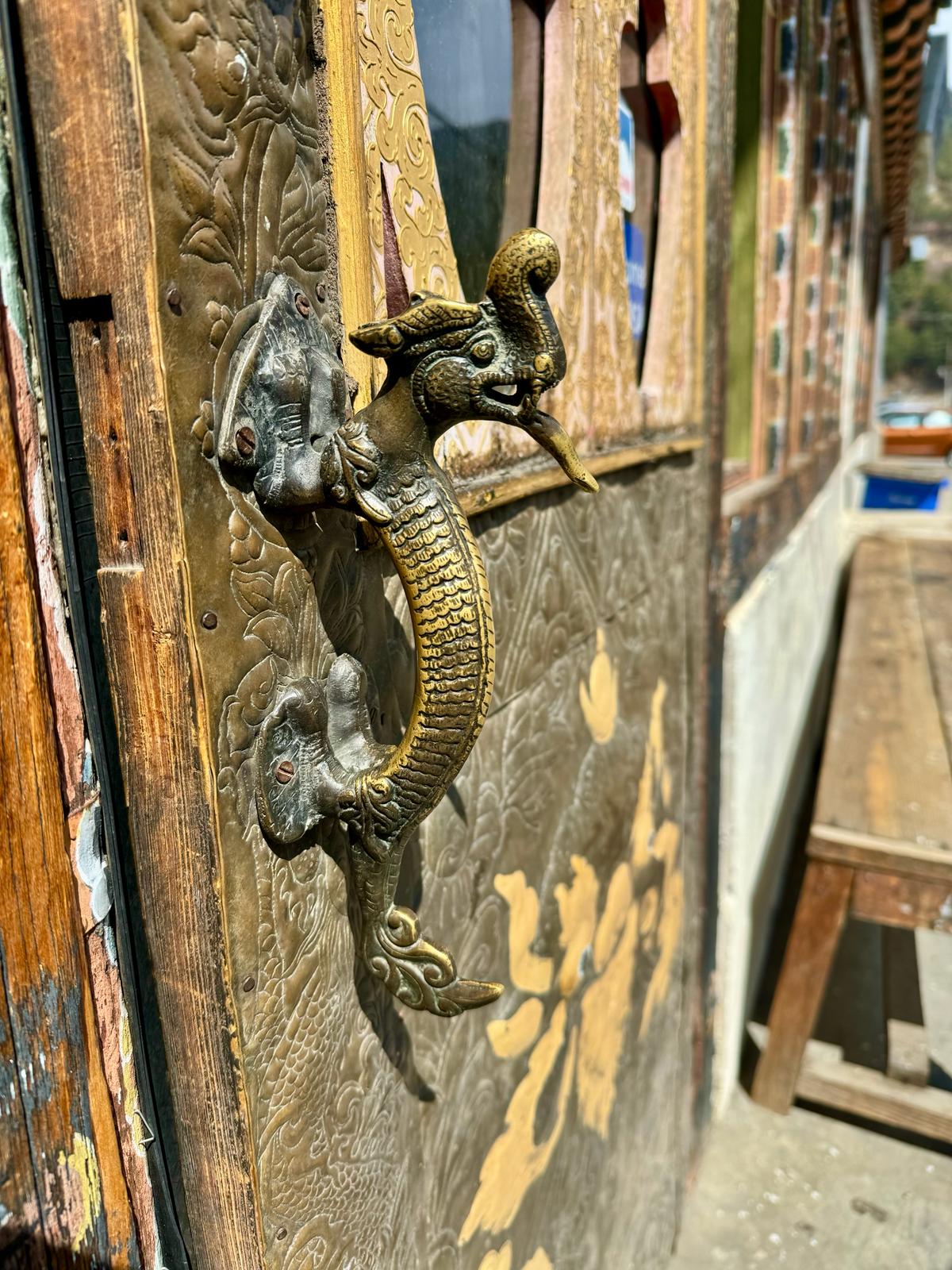
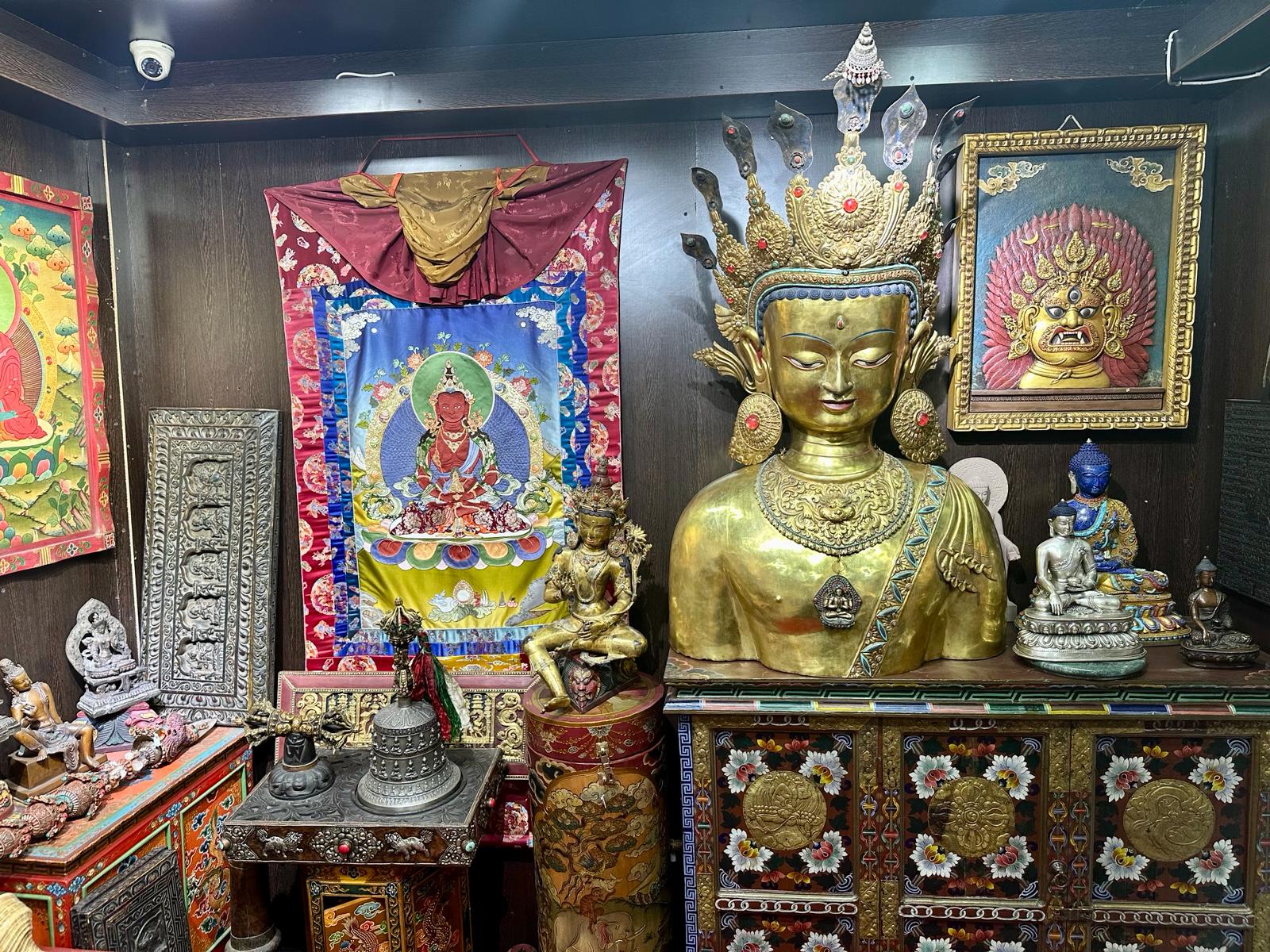
We continued into the centre of town, which is indeed a tourist town, with Paro being the main point of entry to the country. It is completely full of tourist shops filled with a variety of things from a variety of colourful penis shapes, to very expensive teapots and much more. One particular shop we had a look inside had quite a collection of old masks, teapots and other relics that can best be shown in photographs.The buildings here are quite unique, painted in different colours and ornate designs.

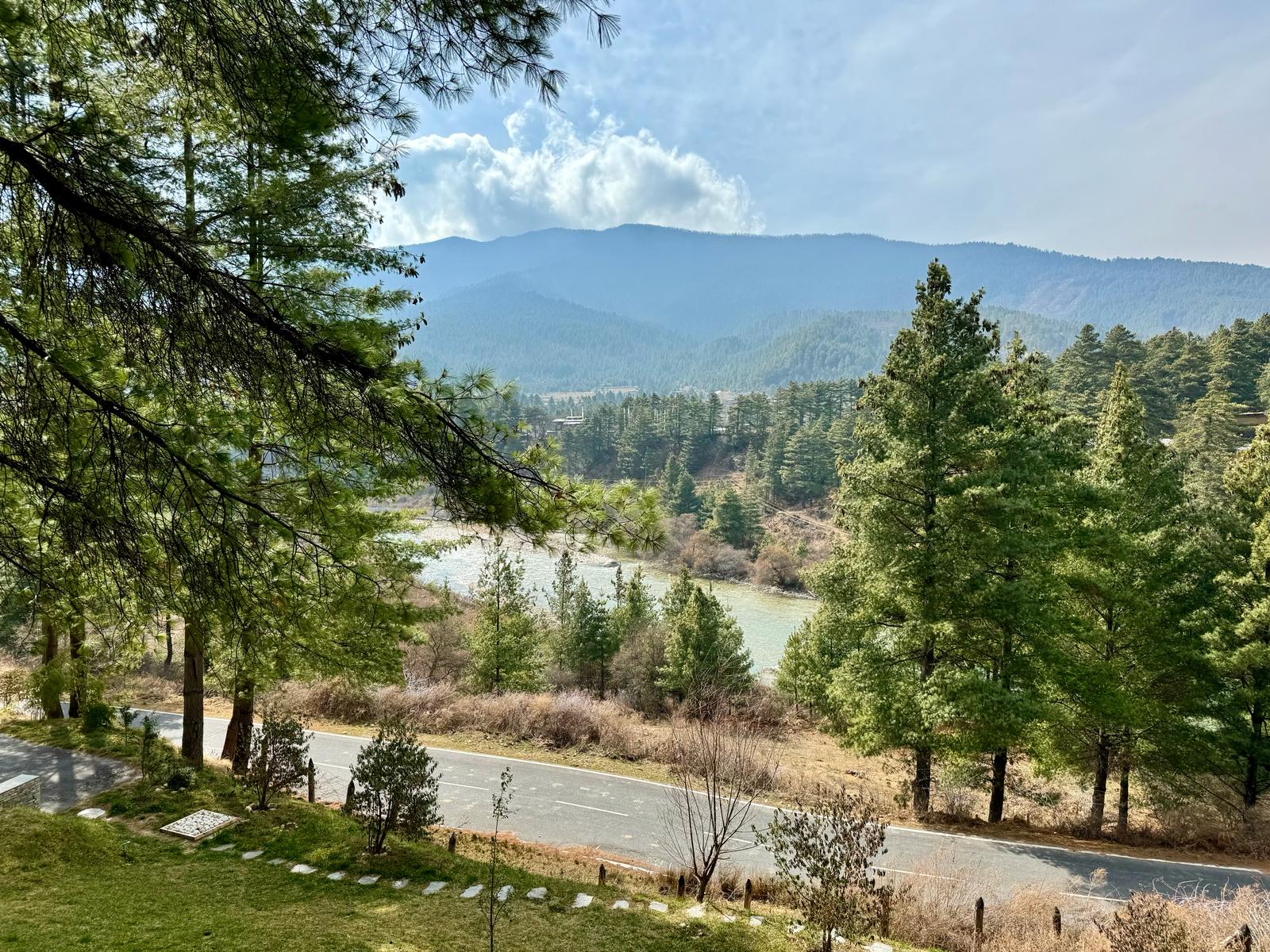
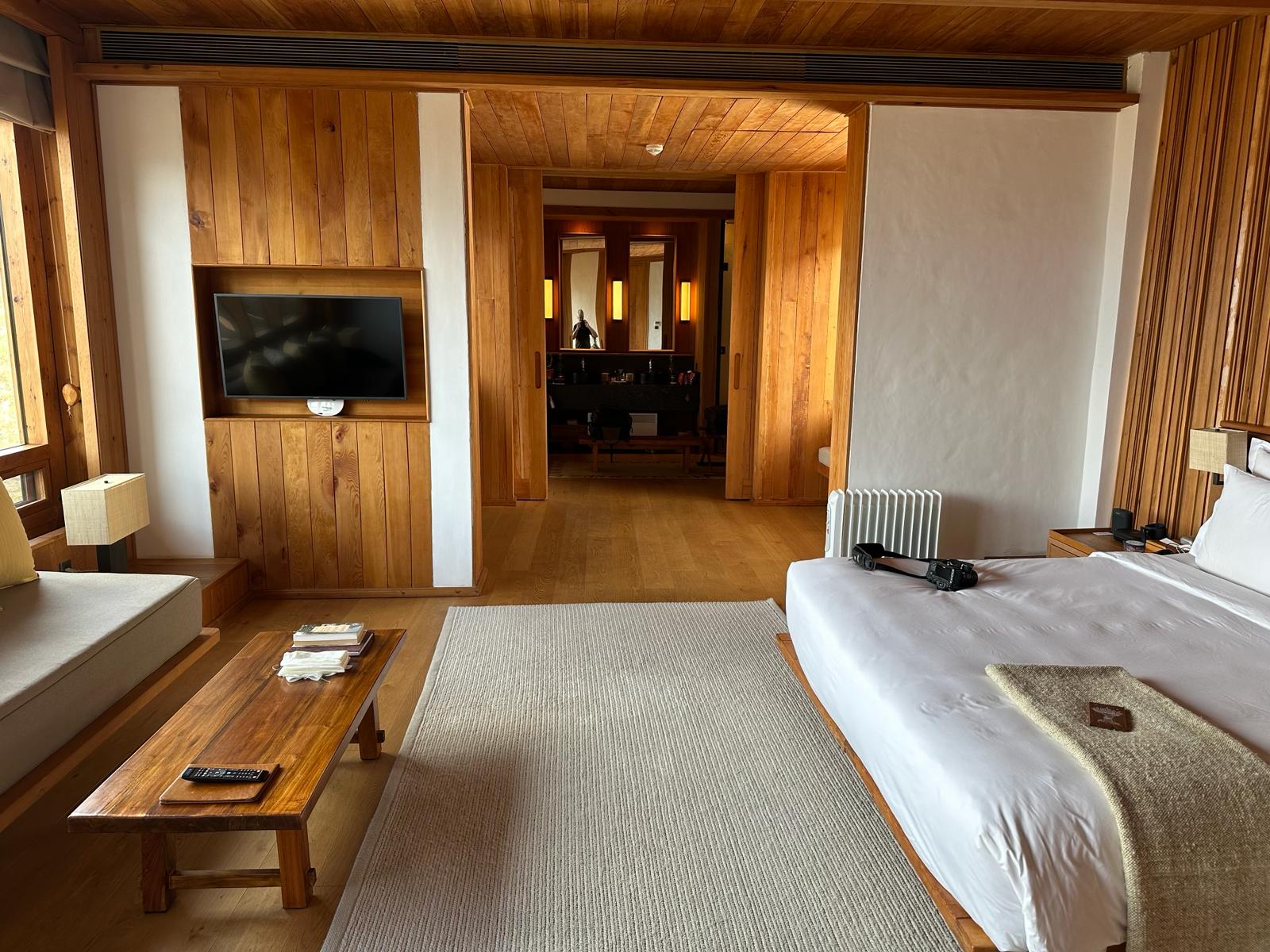
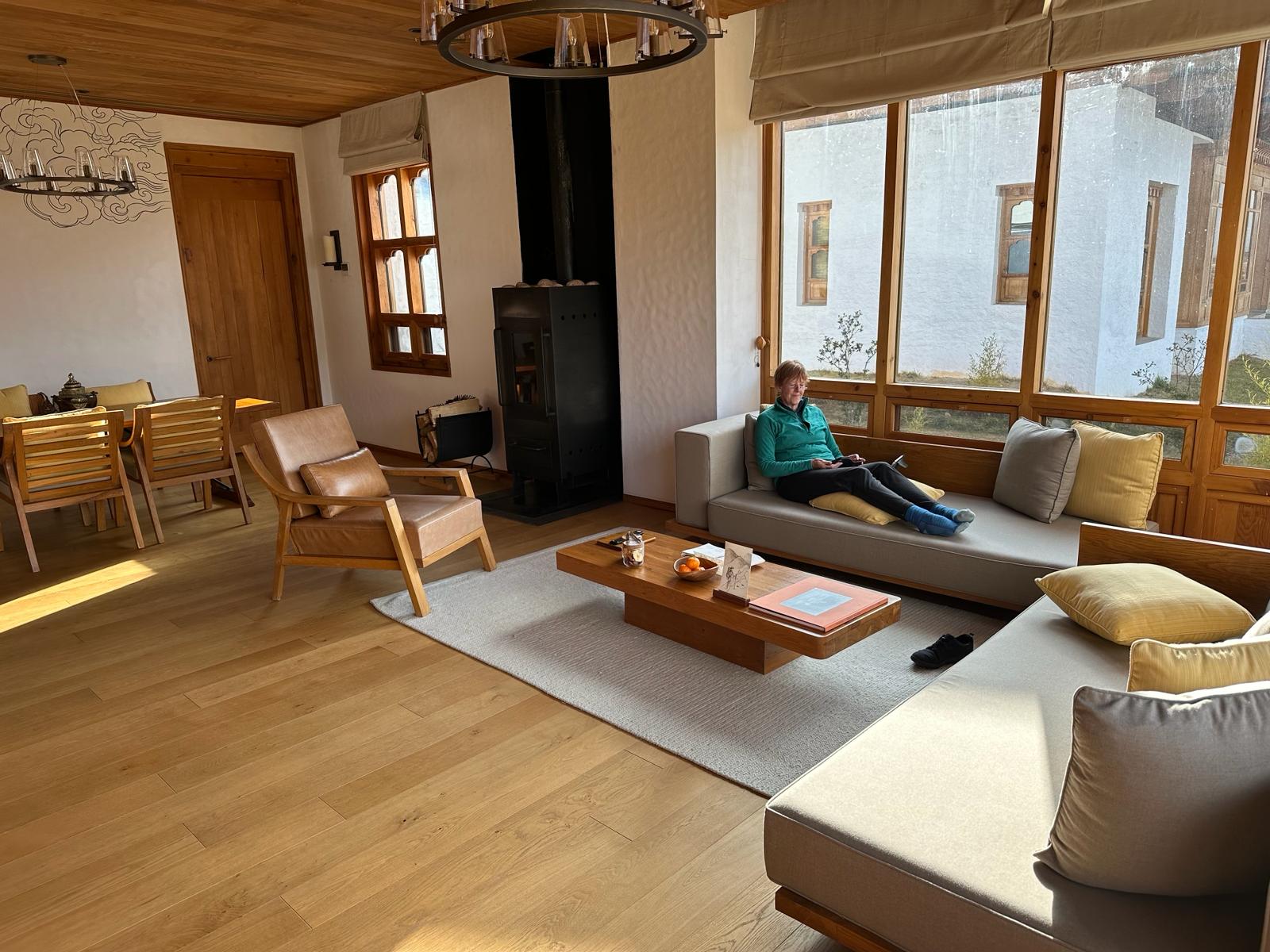
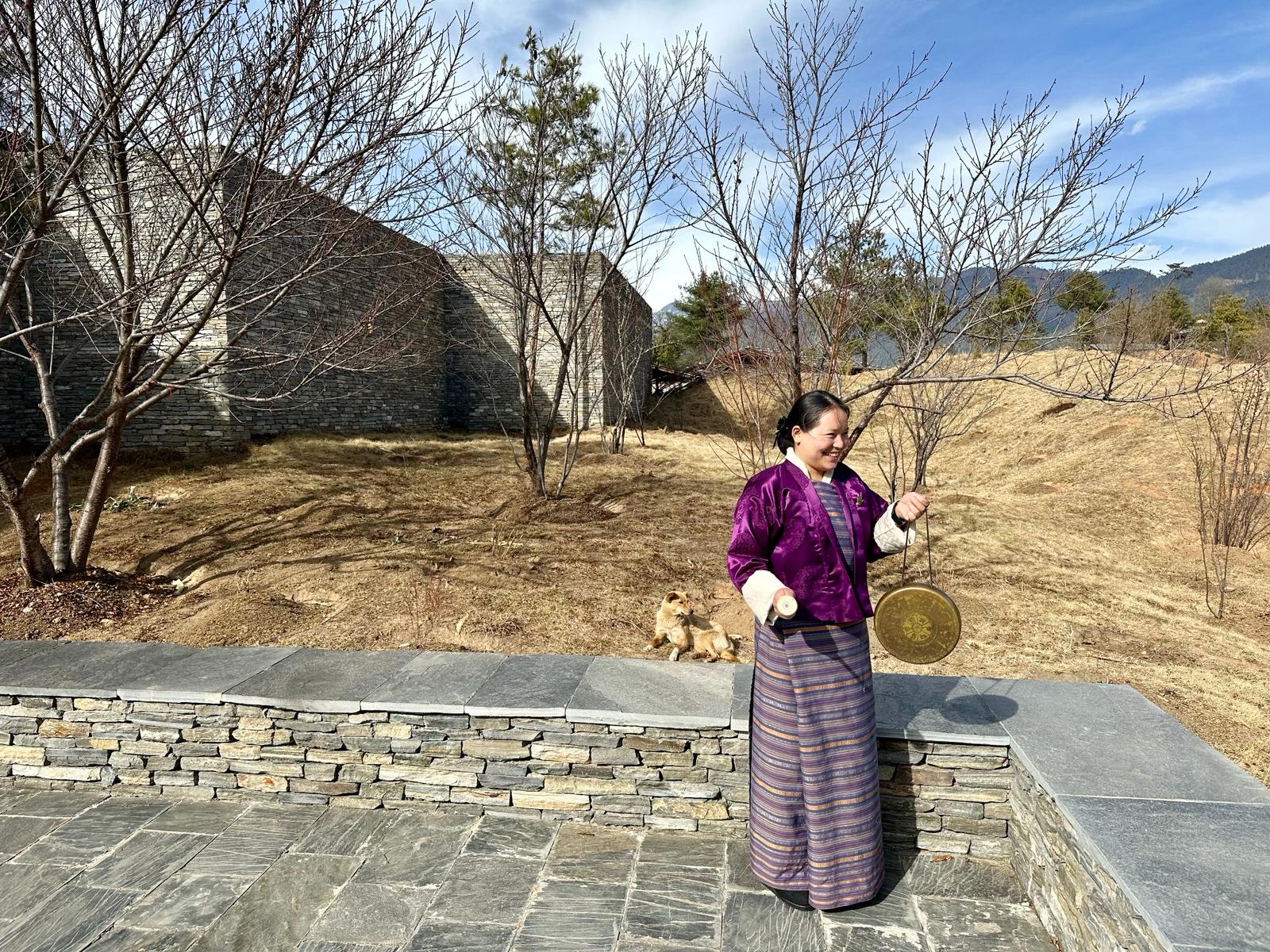
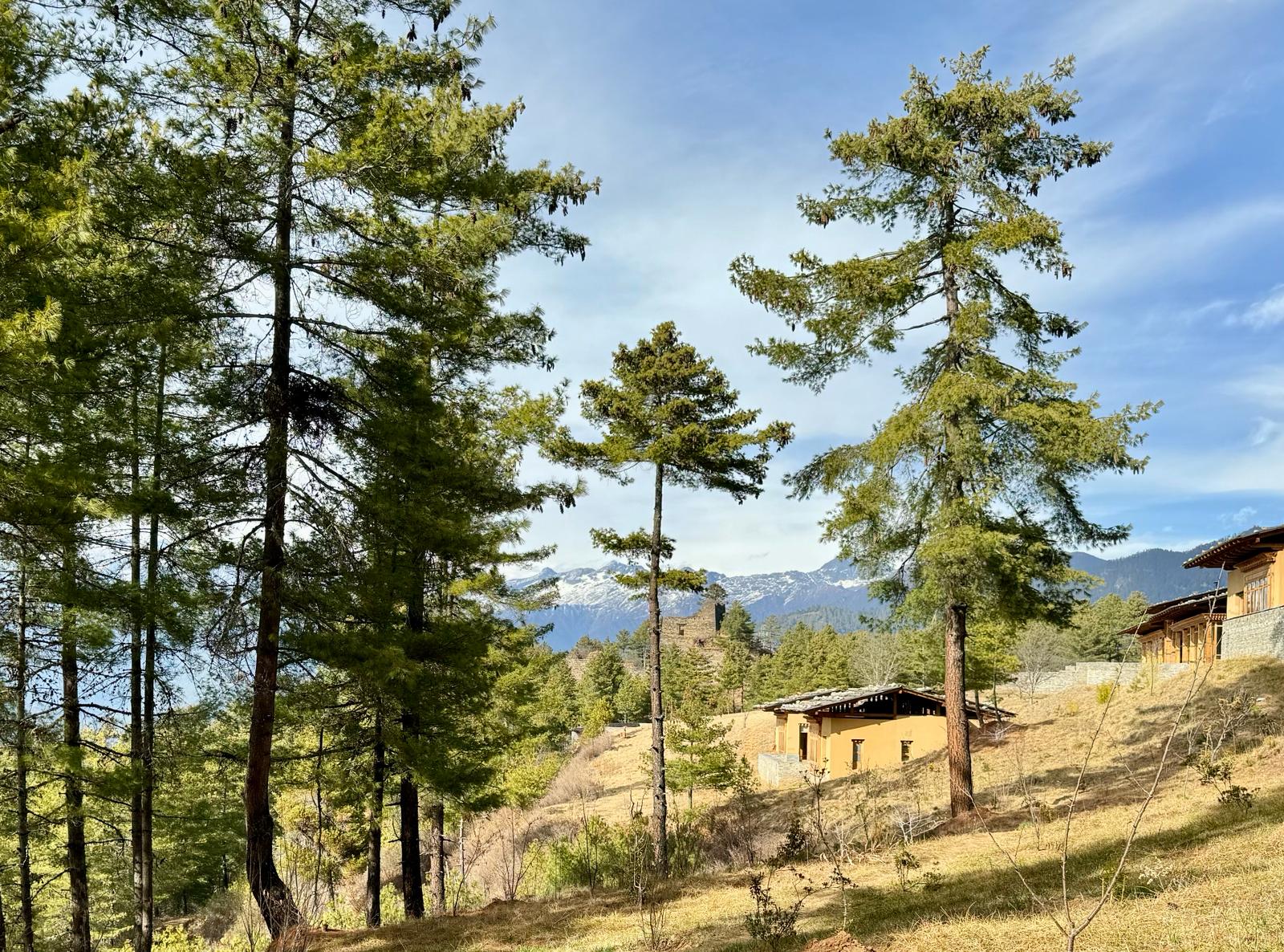
From town we headed up the valley passing many new buildings under construction and lots of rice fields, before heading up a steep dusty road, winding its way through apple orchards, pine forest and passing many houses, often with large stacks of timber sitting alongside them, covered with corrugated iron. We eventually arrived at the Six Senses Paro “Stone Ruins” at an altitude of 2,873m. We were greeted by the very friendly staff and a lady ringing a gong, escorted inside and served a welcoming drink before being escorted across to our villa. From here we have a view of the 15th century stone ruins after which this property is named, and also a view through the pine trees to the valley about 1,000m below us.


Vegas, Arizona, DC – January 2024

Sunday 21 January 2024

With last year being a bit lighter on travel I spent only around 200 hours in planes, having based myself in New Zealand the majority of time. This is my first trip overseas since October last year, when we returned from the Philippines and Singapore.

Sylvia worked several weeks from New Zealand last year and on Tuesday she departs for her last work trip to Mexico and Brazil.

I actually gave Air New Zealand a try this  time; in the past we stopped flying with them because their Customer Service has been so bad. I just happened to ring up and find somebody really really helpful so decided to give them another try – also because the flight was the most convenient, and on a 777 which has wider seats in business class than the 787, on which they have made the seats narrower, no doubt to fit in some extra seats down the back.

Hundreds of people queueing for a taxi at Vegas Airport.

Arriving in Las Vegas I headed to the Circus Circus hotel, which is further down the street from the Venetian convention centre. In the past I’ve normally stayed at Treasure Island, which is just across the road from the convention centre, but over the last two or three years it’s become horrifically expensive and pretty rundown. Circus Circus was less than half the price and a bit average. After checking in I headed to my room in the building away from the main hotel on the ground floor with the passageway stinking of a combination of marijuana and some other horrible smell, probably vapes. The room had no fridge or safe so I rang them up and asked what had happened to these two things. The woman said the safe is in the wardrobe, just look inside the wardrobe; no safe! What about the fridge… “we don’t supply a fridge”.  After some discussion she said she would move me to another room on the next floor  and they would give me a free fridge. I headed over to reception, got a new key, and headed up to check out the room on the first floor. As I walked in I was looking at the safe, which is in the side of the wardrobe with the door open, which made it pretty obvious – there was probably one in the wardrobe downstairs but with the wood panel blending into the wardrobe, and in the poor lighting was pretty hard to see. As I arrived a guy turned up with a little fridge that was so battered it looked like it had just come from a Las Vegas shooting range or demolition yard. Anyway,  I plugged it in  but it was so noisy so I unplugged it and never bothered to use it. I suppose one gets what one pays for and as I was only in the room to sleep it didn’t really matter.

Monday, 22 January 2024

In the morning I went for a bit of wander down to the Venetian to pick up my pass for the show, which was supposed to have come through from Aimpoint. For some reason this hadn’t happened so I ended up having to do my own one, which took a little bit of time but wasn’t too much of a problem and  cost only a few dollars. Probably time I paid after freeloading on Aimpoint and others over the last 10 years.

That done I got a message from my friend Michael, who had just flown in from Washington DC and had checked into the Venetian. We took a ride down the strip to Tacos El Gordo. Many people queued up to get tacos, piling large quantities all sorts of stuff on them and heading to the counter to pay. There are a lot of big people in here; it made me feel quite skinny.

Tuesday 23 January 2024

I spent the day checking out the downstairs pavilion where all the smaller companies are. There are always lots of new devices and inventions – I have watched over the years many start off down here then end up on the main floor above.

As is normal at 4:30pm it was time to head for the Aimpoint stand, which has now been moved to the front of the main pavilion is apparently Sig and somebody else pulled out of the show last year. This is always a great chance to catch up with the many people I have met here and other places over the years.

When they cleared the place out at 5:30pm Michael and I headed for a bar where we enjoyed chatting over a drink before getting an Uber out to an area called Hamilton out of the main city. A company called Centre had invited us to their armoury for drinks and nibbles. This place is pretty impressive – just about every firearm one can think of stored in the various armouries  in the building, including some well kept old Gatling guns and other stuff from the past. Established in 1949 they operate as a training organisation for different firearms and other things. With offices in New York and Vegas they have an excess of 25,000 firearms, which are used to train people on and also rent them out to make movies such as the Godfather etc. It was the type of place where one could’ve spent a day or so looking around but which had don’t touch and no photographs signs displayed all over the place (which I didn’t notice till it was too late).

Wednesday 24 January 2025

About 1pm Magnus, Torbjorn and I wandered across to the steak restaurant at Treasure Island where we enjoyed a great catch up and a good meal as we watched out the window as scantily clad  woman wandered up and down the street trying encourage people to get their photographs taken with them. This is the first trip to Vegas that I have experienced rain and weather a little on the cold side.

Thursday 25 January 2 024

After another day of exploring the pavilion and looking at many different items I headed in the evening to Top Flight Golf, where Aimpoint was holding a function. After enjoying a meal with Eric, Magnus, Bryan and Michael, I watched a few people drive the golf balls down range with the flight of the ball and where it rolled to at the end the flight being shown on a big screen at the edge of the stand.

Friday, 26 January 2024

Mid-morning I caught the Spirit Eli flight to Phoenix, picked up a rental car and drove the 188 miles down to Hefford in Southern Arizona near the Mexican border. I had forgotton just how big everything is here as I headed down the I10 freeway  passing through Tuscon.

It was 2016 when I last caught up with Murray and Row. Murray and I used to do karate together many years ago and he is now in his seventies. He works as a supervisor in the security side of things at the local Air Force Base and is an Arizona Ranger and spends a bit of time teaching people to shoot and how to defend themselves.

Saturday 27 of January 2024

We were up early and headed to the Sierra Vista shooting range, about an hour’s drive away. There a group of about 10 people had gathered for a board practice shoot. They were a friendly bunch with one of the guys running things taking us through a number of drills and a little time shoot at the end. Shooting Ranges here, like in New Zealand, are highly regulated with safety being of the utmost importance. The afternoon we spent looking through Murray’s guns and doing some simulated shooting and range set up at his workshop.

Murray second from the left

Sunday, 28 January 2024

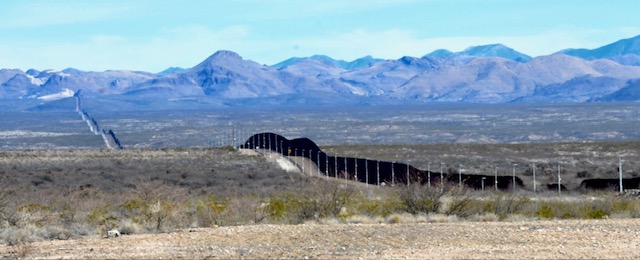
We took a drive down to the border of town of Naco, as I wanted to check out Donald Trump‘s new wall. Naco was famous as the base of the buffalo soldiers. They were named buffalo soldiers because of their short curly black hair like a buffalo. The border runs through the town with the new Trump wall being 30 foot height and the old wall now on the south side of the new one being 15 foot high, with lots of barbed wire hanging on the side of both of  where they have been finished.

There are many of these observation stations on the hills to the south of the border.

Remains of the old border barrier on the left under the lights.

Where the old wall joins the new wall

Here there is a  border crossing point, which is surveilled by many cameras checking cars and pedestrians as they proceed between the two countries. Several towns are split in two by the border and have been that way for many years.

We had a look around the town, observing one of the cartel houses – no doubt the owner has American citizenship. We headed east along the wall – in the placed where it has actually been finished there are large coils of barbed-wire hanging on the south side of the wall and tall spotlights every 35m about 10m south of the wall. Every third one of these poles has a camera on it, which means between the west end and the east end there must be millions of cameras – how they find enough people to watch them I’m not sure. It’s midwinter down here so the country is very brown with scrub on most of it and the tall ocotillo cactus plants with their short, rose-like spikes poking up to the sky. As summer comes these apparently develop bright red or blue flowers which look quite spectacular and the desert and all the scrub turns back to green.

There has been a huge amount of money spent on this new wall and in places where the wall had originally been some there are some steel RSJs and a bit of barbed wire on top. They have been pulled back to the south and are still sitting there adjacent to the new wall. Despite the media telling us that Biden stopped the wall building it seems to be still going on.  There is some quite steep country with concrete being laid alongside the wall of vehicles to drive back-and-forth, I presume to try and catch the illegals as they cross the border. In places such as creek beds there are steel gates in the wall, no doubt so they can be opened up when there is intense flooding to stop debris piling up against the wall and causing it to collapse. In two places these gates have been left open with just a single strand of barbed wire across them. Apparently there are still lots of people crossing the border illegally and often they just hand themselves in. Apparently they are given some money and a cellphone and then appear in court sometimes up to 5 years later. They go north to join their relatives and don’t seem to go home, or so the story goes.

It was late in the afternoon we arrived back at Murray‘s place and put the guns we had taken with us away. Apparently the cartels out here can cause a bit of trouble and it’s better not to travel unarmed.

Row had prepared us a nice meal and we spent the evening chatting and catching up

Monday, 29 January 2024

Mid-morning we headed it off to Tucson, where Murray had booked us in to take a tour of a Titan II nuclear missile silo. Arriving at the site, we headed into the main building, which is a kind of a museum with lots of information about the 18 Titan II missile sites in the area.  Each rocket carried one 9 kiloton nuclear warhead. These were operational from 1961 to 1982. Each silo and control room in this area was buried very deep into the ground. When agreement  between the Soviet Union and the US was reached to decommission the sites the silos were blown up and left open so the Russians could see from their spy satellites that the site had been destroyed. This is the only site remaining and has glass over the top of the silo and the doors half open with concrete barriers behind so the Russians can see it is still deactivated. The construction of this place  is pretty impressive – the whole control centre in this silo is on large springs with surrounding concrete containing reinforcing bars up to an inch and a half thick.


The tour group gathered and after watching a short video we were lead into the yards and down 9 flights of stairs to the first blast door. This weighs 6000lbs and is made of steel filled with concrete, with large locking lugs. On the change of crew the new guys arrived outisde, rang the bell and on video camera, had to read the password from a piece of paper which was then burnt and dropped into a steel coffee cup prior to the door being opened, which took them into a chamber. The door closed and then the second blast door opened allowing them access to the blast-proof corridor leading to the control room. The six crew then handed over with the old crew and the shift was changed. Maintenance crews, of which there were up to 20 plus on site at times, went through the same process. There is a room above the control room with bunks and another room below where 30-days rations were stored and meals were prepared. One of the two commanders on each shift had to remain in the commander’s chair at all times with a 2IC occupying the seat next door. While off duty, people were encourage to watch movies and play computer games.

The next two paragraphs were copied from Wikipedia a I think it explains things much better than I could:

  • The order given to launch a Titan II was vested exclusively in the US President. Once an order was given to launch, launch codes were sent to the silos from SAC HQ or its backup in California. The signal was an audio transmission of a thirty-five-letter code. The two missile operators would record the code in a notebook. The codes were compared to each other and if they matched, both operators proceeded to a red safe containing the missile launch documents. The safe featured a separate lock for each operator, who unlocked it using a combination known only to themself.
  • The safe contained a number of paper envelopes with two letters on the front. Embedded in the thirty-five letter code sent from HQ was a seven-letter sub-code. The first two letters of the sub-code indicated which envelope to open. Inside was a plastic “cookie”, with five more letters written on it. If the cookie matched the remaining five digits in the sub-code, the launch order was authenticated.The message also contained a six-letter code that unlocked the missile. This code was entered on a separate system that opened a butterfly valve on one of the oxidizer lines on the missile engines. Once unlocked, the missile was ready to launch. Other portions of the message contained a launch time, which might be immediate or might be any time in the future.

When that time was reached, the two operators inserted keys into their respective control panels and turned them to launch. The keys had to be turned within two seconds of each other, and had to be held for five seconds. The consoles were too far apart for one person to turn them both within the required timing.

The site could handle an indirect strike (a mile or more away); anything closer was considered a direct hit ,which would in all likelihood destroy the complex.  I got to sit in the commanders chair and go through the process of turning the key to simulate the missile launch along with the assistant seated across the desk from me.

After the launch the crew (if no word was received from the outside world) would wait it out for up to 30-days before exiting the site via the main stairs of the escape tunnel through the air intake shaft.

After the presentation we headed along the 250ft tunnel to the rocket silo. This too is reinforced and on springs to protect it from both the vibration of the launch and indirect attack. Another blast door gave us access to the silo containing the Titan II rocket. Glass windows have been placed in the silo casing so we could see the rocket. With a mixture of liquid fuel it could be launched in around 30 seconds. Prior to launch some 9000 gallons of water was dropped into the back of the silo to reduce noise and vibration, which could destroy the rocket.  Large vents went to the surface to let the steam out created by the launch.

From there we made our was back along the tunnel to the stairs and had a look around  the yard and down into the silo from above.


After the tour we headed for some lunch before checking out a local sports shop and heading home. We had planned to go the the Safari International Museum, which had a large collection of mounted wild game, however it is now permanently closed.

Tuesday 30 January 2024

At 0500 I was on the road for the drive back to Phoenix Sky Harbour International Airport, hopefully with a bit of time up my sleeve for traffic etc. I recall driving across the US in the 80s and 90s with a large map book, which was in some ways better than the car nav as one could see the whole journey and all the roads and streets. Somewhere north of Tucson the off ramp I was supposed to take was closed. This meant heading all the way up the I10 then branching off near the airport. Lucky i had left a bit early. The rental car return was easy; just park the car in a line, leave keys in and walk away! The train back to the terminal came quickly and soon I was at the gate ready to board the flight to Reagan airport in Washington DC.

I get reminded every time I come here remember just how big everything is.

Arriving in DC I had a bit of a cold and Mike suggested I might like to stay in the local Old Town Hilton at Alexandra. I spent the next couple of days staying there away from people apart from the visit to Bob and Edith’s diner next door for some food.

Thursday 1 February 2024 

In the Evening Mike picked me up and we headed to his place for dinner and a brief catch up with his brother Eric, who I have caught up with in many parts of the world. Eric had just flown in from the middle East where he had been for work.

Friday 2 February 2024 

Mike dropped me off at the airport early and soon the first leg of the LA flight to Chicago was underway. On reboarding on the next leg I was seated way down the back, jammed up against the window looking at the clouds for the next 4-plus hours. I had thought I had got a really good business class trip from Phoenix DC to LA but didn’t read the fine print on the last leg. I had spotted this once before when looking at a fare on American Airlines – cunning buggers.

LA to Auckland was on Air NZ with excellent service from the cabin crew.

The next trip is to Bhutan on the 22 February. Sylvia retires from Mars and Royal Canin on the 17 February after 30 years of dedicated service to many parts of the business.


A Day in Almaty Kazakstan 2 October 2023

Monday 2 October 2023

We arrived in Almaty last night and were given a VIP escort through customs before being driven to our hotel by Glebe, the Royal Canin country manager.

Sylvia had a breakfast meeting with Janibek,  the Ukrainian GM, who lives in Almaty, before heading off to visit the company office and do a tour of some of the local businesses.

After a visit to the hotel gym I took a stroll south along the street by the Novotel, passing a number of small shops  and a number of stalls under what looked like a number of soviet style apartments.  We had visited this city in 2019 so I had seen most of the main sights. Several kilometres down the road I came across  a nice park with some interesting statues and a small lake with fountains and a restaurant on an island at one end. Passing through the park and a kids amusement park, I came across the zoo. Heading around the back of the zoo I came across a busy main road which I followed for a while before heading into the back streets with lots of houses and businesses behind high concrete and steel fences. It was all quite peaceful with few people about. Eventually I hit another main road with a large statue of a past hero from last century. Cutting across another street I found my way back to the hotel.

I had the privilege of being invited to join a dinner with Sylvia and her team in the evening. A van picked me up from the hotel, loaded with the small, tight-knit Royal Canin team. Kazakhstan is a relatively new business with a small, enthusiastic team, growing this business in this large country which cover some 2.7 million square kilometres.

About 30 minutes southeast of the hotel we arrived at the Kazaah Ayul Restaurant, situated on a hill with a view of the lights of the city. We enjoyed a really enjoyable meal of local cuisine, including horse meat and beef bones that we scraped the marrow out of with a small fork. Roman, one of the managers, was telling me how he had driven his car here from Ukraine, some 8 thousand kilometres in total, 4 thousand of it across Kazakhstan after he had ferried across the Caspian sea from Azerbaijan, having driven through Romania Bulgaria and Turkey.

United Arab Emirates and Oman (Rogers 100th Country)

Monday 25 September 2023

On arriving into Dubai late yesterday, we checked into the Fairmount Palms, where Sylvia is attending a conference.

This morning I took the shuttle into the Dubai Mall, about 20kms from here. There I had booked a VIP visit to the tower; at 825 meters tall it is still the tallest building in the world. There are apparently 167 floors with a penthouse,  pool and mosque at the top. The tour takes one up to the 126th floor with a counter for canapies and drinks. At around 450m it’s nowhere near the top, “bugger”! From there you wander down to the 124th floor, which has an outside deck. Unfortunately visibility is not too good as the desert dust hangs in the air. Apparently in the winter, after the very odd bit of rain, is the only time the dust leaves the sky. That must be when they make all the clear sky videos.

Looking down over the balcony really gives one an appreciation of why Base Jumpers like to leap from such places (bugger! I no longer own a parachute)

After the tower I headed through the huge mall to the aquarium, which takes up a small part of three floors, the top one being a tropical jungle walk. The lower ones are underwater tunnels with a variety of fish. There is also a large ice skating rink in the mall along with a massive collection of branded shops. It was late afternoon when I caught the shuttle back to the hotel.

Tuesday 26 September 2023

Catching the shuttle back to the Dubai mall, I hopped aboard the big red bus for a hop-on-hop-off tour of Dubai. Part of the tour took us around the downtown and old part of town, passing the financial district, the downtown palace and lots of tall buildings before reaching the old town along the creek.

Entrance to the Dubai main palace

One of the many tourist boats (dhows), tied up at the old town (new buildings made to look old)

A restored fort from the days when the area was mainly surrounded by sand.

In spite if the magnificent infrastructure around this city most of these boats are unloaded by hand; boxes carried down gangway on shoulders of immigrants.

The Dubai Frame is the largest in the world with an enclosed walkway on the top side.

Wednesday 27 September 2023

I spent a relaxing morning with a trip to the gym and exploring the grounds of the Fairmont Palm. These mainly consisted of two swimming pools, one for adults, the other for families, both surrounded by beach chairs where people just lay around in the 37 degree heat. Not my idea of a holiday!

At 1530 a driver picked me up for the drive to Abu Dhabi to catch up with my friend Stuart, who looks after this region for an Australian company that makes robotic targets for the military. The traffic was light and soon we were on the 6-lane highway heading south, passing oil refineries, power plants and a huge water park with its greenery. The driver pulled into the last exit at a service area made of old car parts. There was a big cement works in the distance across the desert. We crossed the city boundary from Dubai to Abu Dhabi, continuing on the now four-lane, smooth highway, which runs all the way to Saudi. Soon the road sides were fenced, with green trees and shrubs growing in abundance. The driver told me this land belongs to one of the sheiks and contains date, camel and other farms. Every shrub and tree is irrigated with desalinated water from the sea at 2.80 USD per 1000 litres.

An aluminium Plant – sorry about the lack of clarity; it’s hard to get good photos with the dust particles hanging in the air.

Arriving at Abu Dhabi we did a drive-by of the Louvre art museum, which is alongside another massive religious museum under construction. We then drove to Stuart’s apartment block on the coast, where we enjoyed a good catch up over a few drinks and dinner. Stuart’s wife is in the US just now about to complete a 42km marathon swim from  Carolina Island to San Francisco. She has already swum the English Chanel and around Manhattan Island among others.

Abu Dhabi version of the Louvre

This structure is part of a religious museum being build near the Louvre.

The view from Stuart’s apartment

After a good catch up the driver picked me up and we headed back to Dubai. The driver, from India, has been working here for seventeen years; he has a wife and three children back home, who he gets to see for his two months return home every year. He shares a room with five others in Dubai as rent is expensive. All the hotel staff were either from India or the Phillipines.

Thursday 28 September 2023

I grabbed the shuttle. First stop was supposed to be the Mall of the Emirates but the driver skipped that and took us straight to the Dubai mall. He very kindly took me back to the Mall of the Emirates on his return journey. My good mate, Dave, had once told me he’d sat in a bar there and watched people skiing so I went to check it out. Chairlifts and all it was a fully fledged ski field, with toboggan area and various other snow sports going on.

From there I wandered through the mall, past hundreds of shops, found the metro and headed back in the direction of the hotel. Departing the metro I got in the last car to look at the view until a lady said something to me which I did not understand at first; she then said again “this car is for woman only”. Looking around, I realised I was the only bloke in the car so rapidly apologised and retreated to the next car. I then caught a tram and then a monorail, which took me out to the end of the Palm Jumeirah, to the large Atlantis the Palm hotel and water sports area.

After a brief look there I got back on the monorail, dismounting at the Palm Tower. I purchased a ticket for the journey to the top. This involved sitting through a couple of movies on how the place was constructed, with a few million tons of rocks put down as a foundation and then a few more million tons of sand poured on top. An outer wall was created to protect the whole establishment. There are now several thousand bungalows, thousands of apartments and hundreds of hotels situated on this, the first of the Palms, completed in 2008. The lift then took us up 54-floors onto a deck surrounded by sloping glass windows, where we had a good view across the Palm but not much further because of the dust. Interestingly the videos we had just watched must have been filmed after one of the unusual rainy days here as the skies were crystal clear. From there several flights of stairs led to the roof top where there was an uninterrupted view with just a low glass barrier on the edge that you could see over giving a much better view of the surroundings.

Dubai is quite an impressive place with its modern infrastructure and numerous tall buildings, many they have tried to build in the Arabian style. It reminds me in some ways of a version of Vegas. Apologies for the poor quality of the pictures unfortunately the ever present dust and maybe some smog hangs in the sky most of the year.

From there I wandered back to the hotel. That evening we headed out to dinner with Sylvia’s team to an excellent Moroccan restaurant, which had been organised by Selma, the wife of Abdel, who is part of Sylvia’s team and lives in Dubai. Abdel also runs desert ultra marathons, the longest being some 250kms over 5-days. We enjoyed a sumptuous meal with the team from all over the world.

Friday 29 September 2023 – Oman (Country 100 for Roger)

At 10am we were picked up in a GMC Suburban, heading east out of Dubai and then northeast through miles and miles of endless desert, dotted with an amazing number of buildings, including a large hospital and numerous cement plants. Greenery was planted along parts of the motorway and camels roamed, seemingly quite freely although the very smooth multi-lane highway was well fenced. There were many large cement and, I presume, power plants along the way, and of course many Mosques.

The road meandered east across the southern part of the Musandam Peninsula and then north to Dibba al-baya, where we crossed the border into the northern part of Oman. Soon the road went from its luxury state in the UAE to a shingle track running alongside a wadi (dry river bed). Eventually we turned off and arrived at a guard house. A big sign at the guard house stated 4WD drive vehicles only.  We then headed up a steep cobbled road, that snaked its way to the top of a ridge, passing a number of overground power cables that would provide power to the resort we were heading to. As we started heading down the other side of the pass we stopped at a look out for our first glimpse of the Six Senses Ziggy Bay, which with all its trees and beautiful seaside looked a real oasis in the barren countryside. 

As we pulled in to the gate a man sounded a large gong to announce our arrival. After being welcomed, Julius, originally from the Philippines, drove us on a buggy to our villa, number 15, which was clearly marked on the outside with what looked like the number 10, apparently 15 in Arabic. It is one of 85 villas in the resort, all made of stone. Looking at the hills around here they wouldn’t have had to go too far to get the stone for building.

Inside the villa the air conditioning was pumping away and we settled in, enjoying the beautiful view across the private plunge pool to the beach, before heading to the bar for a late light lunch. Later in the afternoon we enjoyed a massage and then went down to the beach for an incredible ‘around the world’ dinner. They had set up tables and chairs surrounded by buffet stands with a wide variety of cuisines from all around the world. The setting was made even more stunning by the full moon, which glowed orange and reflected beautifully in the calm sea. We were quite surprised by the number of guests at dinner as during the afternoon we had hardly seen anybody.

Each villa has its own pool for those that don’t like the salt water there are several other pools around the resort

A bar by the beach later transformed into a restaurant

The round the world restaurant with a selection of food from around the world

Saturday 30 September 2023

At 8am we headed to the Spice Market, which is one of a number of restaurants around the resort, where we enjoyed a relaxing breakfast before being picked up and driven to the other end of the bay, incidentally by a local. Like the hotel in Dubai, the majority of the staff here are from the Philippines or India with some of the local men employed as drivers or security staff and some of the local women as cleaners. At the other end of the bay is a small village that has been built by the resort to accommodate the locals, many of whom are fishermen.

The village built by the resort to house the locals.

The tower is part of the desalination plant for the resort.

Arriving at the wharf a dhow awaited us, somewhat larger than I had expected for just the two of us. We boarded and were guided to a cushioned area on the upper aft deck, behind the wheelhouse. The Philippino guide, Alex, gave us a run down on where we were headed, while the Indian skipper and 2IC skilfully manoeuvred the boat away from the wharf and out to sea. As we looked back on the village Alex pointed out the desalination plant on the hill behind the village and told us that  ship calls in here on a regular basis to collect fresh water to distribute to tanks in the bays along the peninsula.

On the hill is the desalination plant to supply water for the village and collected by a ship to fill the water tanks up the coast.

There is another restaurant on the hill above the power cables we did not have time to visit.

The Indian Skipper, who skilfully guided the boat out of the harbour and on our voyage.

We headed north alongside the barren, rocky peninsula, where bits of green vegetation clung to rock faces, where it seems impossible that anything would grow. A bit over an hour later, we anchored at Santa Bay, home to about ten small cottages, which Alex explained are owned by fishermen, some of whom own several such dwellings along the peninsula. They generally have a Pakistani caretaker who lives there and cares for the animals while they are away.

This fisherman has 4 x 400 horsepower outboard on the back of his boat – good thing fuel is cheap here.

A double kayak was lowered over the back of the dhow, which we climbed into and paddled to the shore. Sylvia was a little apprehensive about landing on the beach when she saw a couple of people watching us. I clambered out and wandered up the beach. They both shook my hand, one in white with the traditional head-dress, being the fisherman, the other thickset chap wearing a hat his Pakistani helper. They headed off to their boat, boarded and sped off, I assume to go fishing. We left the debris-strewn, white sandy beach and paddled back to the dhow where we donned some snorkelling gear and swam over the nearby coral reef, observing several different types of fish and the odd sea urchin.

Back on the dhow we enjoyed  a light lunch before weighing anchor and heading out to sea for a spot of fishing. With no luck at the first spot, in about 40m of water, we moved to another spot, where we observed a sea snake surfacing near the boat. One of the crew was quite excited when he caught what he called a hammer jack, which he said was a very expensive fish.

We then motored back to the port, with clear visibility down to about 500m as the dust gathered in the skies around us. Apparently, on a clear day, you can see the hills in Iran across the gulf of Oman. At night the waters here are heavily patrolled by police boats to stop the refugees coming across.

Late afternoon we headed back to the spa for another massage and then enjoyed a cocktail in the moonlight at the bar on the beach.

Sunday 1 October 2023

We enjoyed another delicious breakfast at the Spice Market restaurant before being picked up at 9:30, back in the GMC Suburban for our journey to Dubai airport for our flight to Almaty in Kazakhstan.

A visit with my sister Racheal in Frankfurt:17 to 20 September 2023

Sunday 17 September 2023

A mid morning flight from Marseille landed me in Frankfurt around noon, where I was met by Rachel and, after checking into my hotel in a not too flash part of Frankfurt, we drove to her flat in the village of Steinbach, about 20 kms from Frankfurt.

Her youngest son, Killian, and wife, Lada, live close by. In the evening her oldest son, Tristan, with his wife, Desere, and young daughter, Fiona, along with Killian and Lada came for a roast diner Rachel had prepared.  We spent the evening catching up on the family events since the last time I had visited a few years ago.

Later that evening Tristan and Desere dropped me back in town at my hotel.

Monday 18 September 2023

I took a stroll around the local area; this is one of the dirtiest cities I have seen for a long time. Not only were the streets cluttered with dirt and rubbish but dirty, untidy, rough-looking people stood around in groups on the footpath obviously with nothing to do. A stroll down to the walkway alongside the Main River was a little tidier but I still had people trying to stop me and extract money. A 7 km circuit took back to the hotel, which considering the area was actually quite nice with friendly nice staff.

Rachel joined me early afternoon and we enjoyed a long lunch at a local, very nice Thai restaurant talking about the many great places we had lived in the South Island of New Zealand during our childhood, among other things. Racheal headed off home later in the afternoon and I spent a quiet evening in the hotel.

Tuesday 19 September 2023

Racheal joined me late morning and we took a stroll down to the river and boarded a boat for a cruise on the river. Like all big cities there is lots of construction going on and many modern buildings. Some old structures such as some old cranes still remain in place. We went up the river for about 30 minutes then turned near a lock before heading downstream for about an hour then back to the start point.

On disembarking the boat we strolled back through the old town, which was rebuilt after the war with the old style buildings in keeping with once what stood here. This part of town is much better with a prominent police presence and no dodgy people hanging about. We stopped at a pleasant outdoor restaurant with good service and enjoyed a nice meal and a good chat. Suddenly the day was over and Rachel headed home to prepare for work tomorrow. We had been lucky that her days off had coincided with my visit.

Wednesday 20 September 2023

My flight was not until the afternoon so I went for a stroll through the massive railway station. Descending several levels, I discovered a metro at one level running east and west and at another level running north and south. It always intrigues me what amazing infrastructure European cities have, much of it built decades ago. In this case it opened in 1968 and carries over 130 million passengers every year. I emerged from the underground into the main railway station. Constructed in 1886 it has 26 platforms. From here one can travel anywhere in Europe on a fast train although strikes are very common on German rail.

After lunch Killian picked me up and ran me to the airport for my flight to Marseille. The airport appeared to be a shambles; we were bussed to the plane but on arrival a tanker refuelling the plane blocked the way.After he moved on we dismounted from the bus and boarded the aircraft. There seemed to be gear and planes everywhere. I am not sure how the driver even located the right aeroplane. It is quite common to be bussed to planes at many airports but I have never seen what looks like such a shambles, however at the end of the day it all worked.

The Quarries of The Van d’Enefer – 16 September 2023

Saturday 16 September 2023.

We were privileged to have a visit from Sylvia’s Mum, Rosie and partner, Lardy, along with her uncle Roger, aunt Wendy and their friend Alan, who had al arrived just before I headed to London. They had spent the week while I was away exploring the local sites and relaxing by the pool.

Sylvia had read about this old quarry in the Baux en Provence region where bauxite, used in the manufacture of aluminium, was first discovered in the 1800’s. Like the submarine pens we had visited last year in Bordeaux it has been turned into a digital art gallery.  Situated only 45 minutes east of here we headed off for a morning drive.

In 1935 this was set up as a quarry to extract limestone for local construction. We headed up a rather narrow road and managed to find a park just across the road from the entrance. When we first entered before the show it almost looked like the place had been boxed up and concrete poured. The marks, it turned out, were from the saw cuts. One person used a hand saw to cut the stone, extracting about 2 square meters in blocks each day per person. This turned out apparently to be the most efficient way to do it. The place is quite impressive with large columns left in place to hold up the roof.

The art show got underway with art from an array of artists from Vermeer to Van Gogh. This is best described in the pictures.

After the show was over we moved into the Cafe for some lunch but within 30 minutes we were ushered out to make way for the people coming in for the next show.

We made our way back down the narrow road through the valley passing a number of large chateaus to the old city of Arles with its 200 year old stadium situated on the banks of the Rhone river.

There our visitors enjoyed a wander around the old city.

Lardy, Sylvia and her mum (right) on the banks of the River Rhone


London and the HMS Belfast 12 to 15 September 2023

I was in London attending the Defence and Security Equipment International (DSEI) trade show, which I am not going to write much about. I did get to try out the new helmet for the Typhoon pilots, with its heads up display linked into the plane’s cameras. If you look down you can see the ground through the cockpit. It contains excellent night vision and enemy planes come up in red and can be seen miles out – important as everything is happening very fast.

Some of the many tank gun rounds on display

One of the many remote control artillery pieces on display

A modern light armoured vehicle

The BAE 5.5 inch gun with its 5 plus metre barrel, range 70 kilometres

One of the many tanks on display

A remote control rescue vehicle for supplying the troops and evacuating casualties from the battle field.

The interactive Typhoon helmet with heads up display

A mock up of the Typhoon which they allowed me to have a try out of the cockpit.

Another interesting bit of information that I picked up from a BAE guy who manufacture the 155mm guns is that the barrel life on a full charge is around 2000 rounds before they lose accuracy and range. Hence some barrel-makers in Russia, for guns that are firing up to 80,000 rounds a day through a number of guns, must be rather busy.

On Wednesday evening Jim, who had been recently hunting with us in NZ, took Mike, Eric and I to a private club, where his friend, Jeremy, joined us. We enjoyed a nice dinner and great conversation while surrounded by memories of the SOE, who the club was set up for after WWII. It sill sells its own beer displaying the famous aircraft often used to insert SOE agents into France

Friday 15 September 2023

For some years now I have been on the mailing list for the Imperial War Memorial War Museum. There have been a number of articles on the the light cruiser HMS Belfast, which has been tied up between London Bridge and the London Tower Bridge on the River Thames since it has been a museum ship since 1971. Launched in Northern Ireland in 1938, it served the Royal Navy until decommissioned in 1961. At 185m long with two forward and two aft gun turrets, each with 3 x 6-inch guns it’s one of the best museum ships I have visited. It has 5 decks open to the public going right down as far as the shell rooms, of which there is one for each turret. The charge rooms, which are one deck below that are not open yet. On each side of the ship are three 4-inch gun turrets, one of which had a volunteer working on it, telling me it’s nearly back to its fully operational state. He said he really enjoys it when they get to fire blanks through them on ceremonial occasions.

HMS Belfast Town Class Light Light Cruiser 613 ft 9 Inches (186.99 m)

One of the 6″ guns in the aft turret

Some of the later added electronic warfare equipment.

One of several mess halls

Crew slept in all parts of the ship always ready for action stations

Gun turret rotating equipment

One of the two brigs – not the most comfortable space on the ship

The shell room where at the back shells were primed with the required settings then laid down ready to be sent up a lift to the turret.

The admirals bridge just above the captains bridge as this ship normally headed up a fleet.

The massive tangle of steam pipes running the the ships turbines

One of the three boilers

A diagram of the boiler: the fuel is fed into the pink area, which heats the water to steam in the three blue tubes to power the ship.

A steam powered generator to power the ships systems

London Bridge from the captains bridge

During its career the ship served in all the world’s oceans, including escorting convoys through the Arctic to the Soviet Union. With a thousand crew and upgraded with electronic warfare equipment it is quite an impressive ship. I wandered the corridors and gangways checking out the four 3-drum boilers that created enough steam to power the four steam turbines that drove the ship through the water at up to 32 knots, while also powering the ship’s generator. At the Normandy invasion in 1944 the ship fired 4000 rounds from its 6″ guns helping in the destruction of the many German gun emplacements along the coast 

A Dove Hunt in Argentina…

Monday 28 August 2023

After meeting Sylvia at Auckland International Airport in the early evening, we boarded the 12.5 hour LATAM flight to Chile about 6:30pm. We arrived in Santiago for a short stop over before heading on to Buenos Aires, where we checked into the Sofitel Hotel at about 8pm on the Monday evening.

Tuesday 29 August 2023

After a night with very sleep, (probably the worst jet lag I’ve ever had – I thought by now I’d at least be well practiced) I headed back to the airport to catch the flight to Cordoba, leaving Sylvia in Buenos Aires to catch up with her team there. Cordoba is Argentina’s second largest city with a population of about 3 million people, situated approximately 700 kms northwest of Buenos Aires. It could be called the farming capital of Argentina as the eastern side of the country is basically flat and divided into thousands of fields. This area was originally known for its beef until some bright spark decided there would be more money in crops so they ripped out a lot of the fencing. Shortly after, the crops had several years of failure. At this point the farmers didn’t have the money to put the fences back in so nowadays cattle are mainly farmed in feedlots by large crop owners who use the grain to feed the cows to produce some of the world’s best beef.

A big problem in this part of the world are doves, of which there are a number of species, all of which wreak havoc with the crops. Many years ago farmers tried poisoning them but the side effect of that was that this poisoned the hawks, eagles, foxes and everything else that ate the doves. About 30-years ago dove hunting lodges started to be set up around the area, of which there are now around 30, catering for between 20 and 40 hunters each. People come from mainly the US, but many other parts of the world as well to help keep the population of the little buggers down. Sylvia shouted me this trip for my recent birthday.

At Cordoba I was met by one of the managers from the Sierra Brava Lodge, and driven about an hour northwest to the lodge. Arriving at the lodge, I put my kit in the room and was taken to the gun room by Jose, the armourer, where I selected two twenty-gauge Benelli semi-automatic shotguns and a Benelli under and over. I then joined Roy and Rodney, from Florida, for lunch. Soon we were in the vehicle heading out for the afternoon shoot. Thirty minutes later I was dropped off by a little hide, consisting of some dead bushes poked in the ground in a semi-circle up to about stomach height. 500 rounds of ammunition and a couple of guns were dropped off along with Raul, the loader, and we were into it.

Every time I fired a shot, or two, or three, or four, I’d turn the gun towards him and he shoved in some more rounds. The birds just kept coming. I’m not sure, but I think we arrived about 2:30 and suddenly it was 5:00, the birds quietened off and I looked down to see that I had gone through just under 500 rounds. During that time, the Benelli semi-auto started to have quite a few stoppages, the barrel getting extremely hot – I had to be really careful not to touch it – and in the latter part I switched to the under and over.

Back at the lodge, a drinks table and comfortable chairs were set up out the front of our rooms and Roy, Rodney and I sat and chewed the flat over a couple of drinks before dinner. They have been coming dove shooting for 13 years and have shot at many lodges around the country but this one is by far their favourite as it offers the best food, service and shooting. At 7:30 we moved into the dining room, joining Daniel, the manager, for dinner at a table that would easily cater for twenty people, which is the maximum that this lodge caters for.

Over dinner I gained a good insight into the history of dove hunting in the area, some of which I have already mentioned. Sierra Brava was set up about 15 years ago, by a couple of blokes who had been coming to the area dove hunting for years. The building itself is originally a Pony Express stop on the route from Buenos Aires to Bolivia, built in 1874. The owners found it in ruins and have put it back together. It is now a historic site.

Around the walls, both in the dining room and outside, are dozens of plaques with people’s names on them. They start with 1,000 birds shot in a day – both Roy and Rodney have their names on these – and they go 2, 3, 5, and 10,000, the 10,000 being the world record board, with seven names on it, two people shooting 10,000, one 11,000, two 12,000, one 13,000, all from Texas, with the world record holder Toby Thomas, also from Texas, shooting 14,066 doves in a day. Apparently he started shooting at first light, with five guns on the station, and continued shooting until last light – apparently firing something like 18,000 rounds. That’s a bloody good day out shooting.

After dinner we headed back out to the drinks table, where I enjoyed another short chat with Roy and Rodney, before they headed off to the airport for their 1am flight to Florida.

Wednesday 30 August 2023

At 8:00 I joined Daniel for breakfast. By 8:30 we were on the road heading for today’s shooting stand. Hitting the main road, we turned left, headed to Jesus Marie, where we turned east and headed about 10kms down a dirt road to a recently harvested cornfield. There a little stand had been set up backing onto some trees in the middle of the paddock. I continued with the under and over, which I had shot much better with in the latter part of yesterday. The birds just kept coming and I just kept shooting. About 10:00 the numbers quietened down a bit. By that stage we had been joined by a number of hawks and eagles, which glided above us, oblivious to the lead flying through the air. I was really careful not to undergo the embarrassment of hitting one. At one stage Raul handed me a coffee, laced with Baileys. I thought he had said “would you like some milk?” I get zero points for Spanish.

All of a sudden it was noon and I had shot just under 300 birds. It was time to head back to Jesus Marie to the Parilla de Pipi restaurant to feast on beef and barbecued pork and some vegetables for lunch. Over lunch, Jose explained that most people on their first-time dove experience have a hit rate of about 30% so I felt a bit better about what I thought was my poor shooting yesterday at just under 50%. The lodge goes through between 1.5million and 2 million rounds of ammunition per year for around a million birds.

After lunch we headed back to the field where they put me in a hide in the same patch of bush but facing south instead of west. Jose suggested I use the Winchester semi-automatic 5-shot they had with them, jokingly saying I could get to 1,000 birds for the day. Having only shot 278 in the morning, to me, that looked highly unlikely.

As the afternoon drifted along the birds kept coming and I kept shooting and by about 3:30 I had used the 1,000 rounds we started with in the morning, and had shot 850 birds. Raul got on the radio to Jose, who soon arrived with some more ammunition and then stuck around to watch me shoot the last 150-odd birds. These things fly really fast and some of the shots were requiring a couple of metres of lead; others came in really close and only required a bird-length. By that time of the day I was often getting 5 out of 5 shots before presenting the gun to Raul for reloading. He was a busy man, not only reloading, but also keeping count of the birds with a manual counter hanging around his neck. All of a sudden Raul showed me the counter – 1,016. I looked at the cartridges remaining in the box and had fired 1,238 rounds for the day. I had taken the advice of Roy and Rodney, who had recommended I use a shoulder pad, so I had purchased one last night as after yesterday’s 500 rounds I could feel the shoulder a little.

We packed up and headed back to the lodge, leaving the dead birds for the hawks and eagles to feast on as they had already made a good start on most of them. Often the birds are picked up by the birders, as they are called, and given to the locals or fed to local pigs. I had seen a fox snooping around yesterday and, at one stage, a large rat ran across the field. They certainly get a good, easy feed around here.

Back at the lodge I enjoyed a pre-dinner drink before heading into the dining room, where Daniel again joined me for dinner. Over dinner Daniel explained how over Covid the company had kept everyone employed and looked after their employees really well, most of whom have been here for many years. He also went on to explain how, over the last couple of years, the companies that manufacture ammunition in Argentina have had great difficulty sourcing powder so there has been quite a shortage of shotgun ammunition. As most people come for three full days the allocated ammunition has to be rationed out over the three days. Daniel explained that it had been more than a couple of years since anyone had shot 1,000 birds in a day so I got lucky in more ways than one. At that point he presented me with a 1,000 bird cap.

Thursday 31 August 2023

After a leisurely breakfast and a walk around the property to take some photographs, Jose ran me to Cordoba airport. Arriving early as the traffic had been pretty light, I checked in and headed through security to the gate lounge. I had just finished enjoying some lunch wen I heard my name called over the PA and headed up to the counter to be told I had to go down through the exit and back to the check-in where the police wanted to see me. On arrival at the counter I was escorted out the back where my bag, which I normally carry on, but had to check in this time, was sitting alone in a big shed and needed t be searched. It turned out that a jar of vitamin pills had caught their attention in the x-ray as something suspicious. And people tell you vitamins are supposed to be good for you! Luckily the flight was running a bit late so I had plenty of time to get back through security and board the flight back to Buenos Aires.

Landing in Buenos Aires I checked in on line and headed to the departure area, where a polite young lady informed me that I was in the wrong airport and told me there was a bus available to take me to the right one. Luckily I had plenty f time to take the two-hour bus ride from Jorge Newberry to Ezeiza. Eventually Sylvia and her colleagues turned up and we boarded or it France flight to Paris and on to Marseille.

A Thar Hunt and a Whiskey hut

Thursday 17 August 2023

Mid-morning I picked up my good mate Dave from the Queenstown Airport. With Dave was Jim from Ireland. Both ex-military, they had met through work some years ago. Jim was wanting to come to NZ to go thar hunting and here he was absorbed in the great scenery surrounding Queenstown.

We headed over to our place between Wanaka and Cromwell to sort out kit and check zero a rifle before departing tomorrow for the hunt. I dragged out my 6.5 PRC and put it together, mounting the 8 to 35 power Night Force scope on it. We set up a target at a 100m for Jim to check the zero and get used to the gun. That done we set him onto a 12 inch disc at 720m, which, after working out the wind, he hit several times; next was a 6 inch disc at 820 meters that was struck first shot, and, after a few more hits, it was time to adjourn for an evening drink.

Friday 18 August 2023

Heading off mid-morning we made out way up the Lindis Valley and over the Lindis Pass, stopping  at Omarama for some lunch. We then headed up to the bottom of Lake Pukaki with the stunning views of Mount Cook and the surrounding mountains. We then went into Tekapo, where we stopped for a brew and took a look at the dog monument at the bottom of the lake. We drove up the west side of Lake Tekapo to Godley Peaks Station where we picked up the keys for the Angus hut, where we would be staying. From there we continued our journey up to the top of the lake and then alongside the Godley River a further 15 kilometres to the hut.

There we unloaded our kit and I got the fire going, receiving a considerable amount of abuse from the boys as it smoked out the hut. As the day was over, Dave cooked a meal and we sat around the hut table, chattting and getting a good run down from Jim on hunting in the UK.

Saturday 19 August 2023

After an early breakfast we headed off back down the river on foot, scanning the hills with or binoculars for bull thar. We had only gone about a kilometre and were observing a mob of bulls about 800m away up to our left on the face when Jim spotted what looked like a good bull about 450m away ahead of us. After watching this bull for some time we worked out it was worth shooting so I stayed on the river bed with the spotting scope while Jim and Dave moved up to a knoll about 100m away, where Jim was able to take a shot it from a range of 360m. I saw the thar through the spotting scope dash off down the hill and disappear into some matagauri. It was hard to know if it had been hit or not.

Jim and Dave headed up the hill to the area where the thar had been and commenced searching for it. The area they were searching was, I believed, above where the thar had been and I’m not sure whether Dave was just giving Jim the full experience of searching through New Zealand matagauri or had just had a different perspective on where the animal was from where they had been. Eventually I directed them to the spot where I believed the bull had been standing when it was shot and they soon located it nearby. They dragged the carcass out into a clear area, where they skinned out the cape and took the head off, discovering that the projectile had gone right through the animal’s heart.

As I was waiting for them to come back down the hill I saw a squirrel helicopter come down the valley above the hut and land beside it. When we arrived back at the hut, we discovered the helicopter belong to Mark, the owner of Tekapo helicopters, a friend of ours. He had just dropped some skiers off in the next valley and knew we were there so dropped in. We put the billy on and enjoyed a brew, then Mark said “well you’d better come for a ride” and suggested Jim bring his ice-axe and crampons, which he duly did. We took off and flew over the Hall Range into the Cass Valley, up past Memorial Hut, where I had hunted in the early 70’s.

Flying up a valley just above the Memorial Hut in some stunning mountain country, we observed a little red hut on a ridge at about 7,000 feet. Mark landed the machine near the hut, leaving the engine running as the weather looked a bit dodgy, and we wandered the 30 or so metres to the hut. Mark opened the door and indicated to Jim to go in. There were already a number of people in there and some skiers hanging around outside. To Jim’s surprise, the shelves in the hut were lined with bottles of whiskey. Mark reached over and selected a bottle and poured the three of us a wee dram, while we sat and chatted to some of the whiskey-drinking skiers in the hut.

There’s a funny story behind this hut… The farmer that owns Glenmore Station, on which the hut is situated, decided that a shelter was needed on this saddle to protect skiers in case of a bad weather change, which can happen very quickly around here. Mark flew the materials in and the hut was built. Somewhere along the way it was decided it should be a whiskey hut, so Mark flew Will, the farmer, and all the whiskey up there one day and they stocked the hut. Job done, Will decided he’d have a few drams. Then Will, an expert skier decided to ski back down the hill and Mark, the sober pilot, could pick him up at the bottom. Will had not gone very far before he fell over and when Mark collected him at the bottom off the hill he had fallen over a fair few more times. As he climbed into the helicopter he said “well that was a bad decision” so the hut now has a sign on the back wall: “A bad decision”. On the back of the door as you leave is another sign: “A good decision”. It’s good to see the South Island humour is still intact.

Prior to taking off again Jim put his crampons on, grabbed the thar head and the cape and we got a couple of photos of him with the thar in the snow.

We took off and flew up some other valleys and back over into the Godley, where we observed lots of thar, both high and low in the hills. Mark dropped us back at the hut and had a bit more of a yarn before heading off into the sunset.

Sunday 20 August 2023

After breakfast we packed up our kit, loaded it into the vehicle and made our way slowly down the track along the river-bed, stopping frequently to glass the hills for another good thar. The mob of bulls we had spotted yesterday had obviously moved on and there were quite a few animals up around the tops, well-over 1000m away. We spotted a group of nannies on the hill about 700m away. As part of keeping the numbers down, it is important that hunters don’t only shoot the bulls but also take out a few nannies during their trip as the thar population gets out of control very quickly. So after watching this mob for a while and trying to work out what the wind was doing, we got Jim to take a shot, but we hadn’t got the wind right so the shot missed.We stopped at another spot to glass the hills again and a mob of fallow deer burst out of the scrub about 20m away, ran past us along the track and then disappeared just as quickly back into the scrub.


A little further down the track, Jim shot a nanny at about 300m. Eventually we arrived at the Ribbonwood Hut. After a brew, we set out for a late afternoon hunt, heading back up the track the way we’d come. Just on last light Dave hit a fallow hind but as the light was fading fast by the time we got across to it, it was dark and we couldn’t find it. We headed back to the hut and turned in for the night.

Monday 21 August 2023

We woke to light snow and had had the intention of hunting back up the valley that morning, but after we packed up and headed up the track, the snow became really heavy and visibility was down to a few hundred metres so we turned around and headed back out to Tekapo.

By the time we got to the top of Lake Tekapo the weather had cleared and it was a beautiful day. After enjoying a brew in the town, we stopped in to see Mark at Tekapo Helicopters, which is situated about 5kms west of Tekapo. Just after we arrived, Mark returned from dropping a couple of hunters up in the hills. He showed us around his business. Jim was intrigued by what looked like a gun with a bucket on the end of it, which is called a net gun, and is used for netting thar, deer, chamois and hares. Mark very kindly loaded a net into the bucket and took Jim outside for a practice shot.

Our next stop was Glentanner Station, up the top left-hand side of Lake Pukaki, where we booked into a cabin in the camping ground for the night. After dinner we went over to see my good friends, the Ivy’s, who are the station’s owners and spent a great evening catching up with them, their daughter Sarah, her husband Sam and their children, who were visiting from the North Island.

Tuesday 22 August 2023

After a good breakfast with the Ivy’s, by the end of which it was snowing heavily, we hit the road heading back to Queensberry. By the time we reached the bottom of Lake Pukaki the snow had stopped and the sun was shining again.