Roger:
Tuesday 16 June
The day began at 5am with the weird sound from the speakers from the surrounding local mosques. Opening one of the little boxes beside the bed containing ear plugs I realised why. The hotel Neorian provided an interesting selection of Turkish breakfast. This included everything from dates, nuts, mixed vegetables, cheeses, fruit, meats and eggs to a good selection of breads.
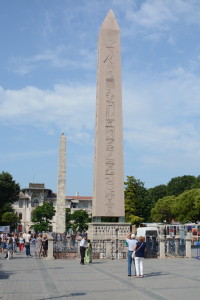
Our guide Ilke was waiting in reception to accompany us to the hippodrome, originally a sports stadium where chariot racing took place under the Romans. The obelisk, a statue which came from Egypt, was erected there by slaves who pulled it up by ropes in AD390 in about 28 days. It still stands today.
Next was the Blue Mosque. Built by one of the Ottoman Sultans in the 1800’s it has 6 minarets. He got in a bit of strife for this as only Mecca is allowed 6 minarets so he had a seventh built and sent it to Mecca – problem solved. This place is huge with large domes and running water at taps outside to allow folk to wash feet, hands and face before entering. There is an upstairs gallery for woman who even now cannot pray with the men. Sorry feminists. The gallery is now closed as people started stealing the Izmit tiles (of which there are thousands), which were the last made by a famous factory. They now sell for upwards of 5k pounds each in London. The women now pray in a screened off area at the back on the ground floor.


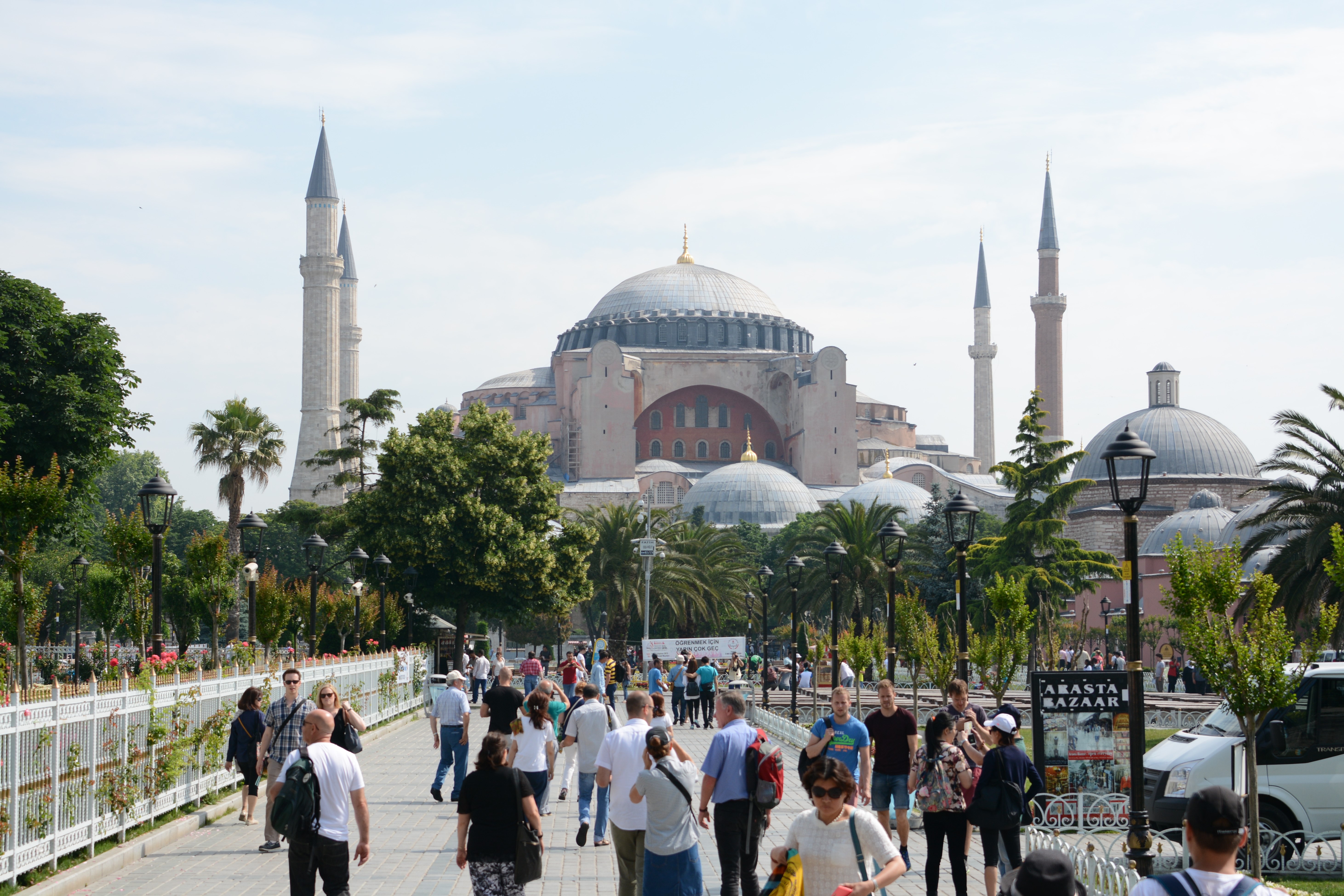
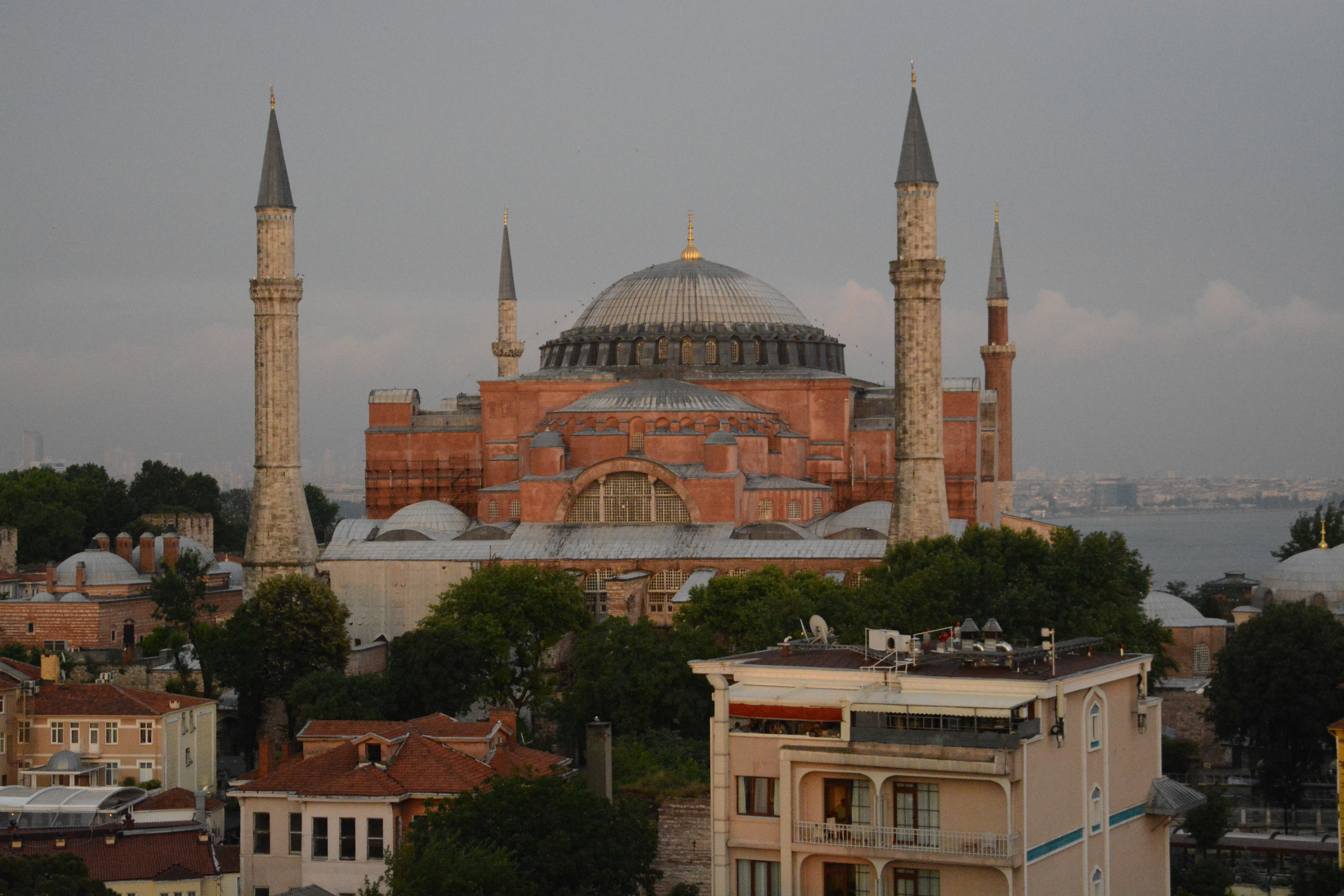
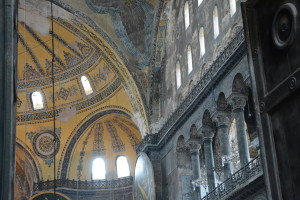
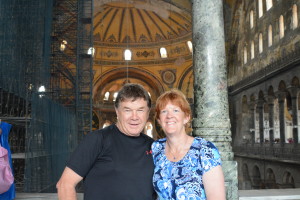
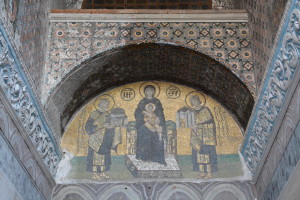
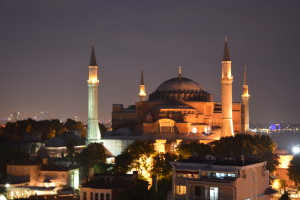
Next stop was the pink mosque or Hagia Sofia. This was originally a Christian church built in the 300’s (even bigger than the blue mosque) and was then converted to a mosque some centuries later. All the paintings and drawings were whitewashed over and later plastered over as they are not permitted in a Mosque. Now a museum, many of the paintings including some impressive mosaics are being uncovered and restored. There are hollows in the marble by the huge doors where guards stood. An impressive cobblestone ramp takes us to the upper balcony where the women prayed as one of the sultan’s wives refused to be carried up stairs.


Next was the cistern (reservoir) built around 400AD. This held 85 thousand tons of water to supply the palace and mosque in case of a siege. The water came by viaduct from a forest 19km out of town. With huge columns and arched ceiling it is a real feat of engineering. In one area columns are stood on large blocks with Medusa’s head carved into them – obviously pulled down from somewhere and reused here.


People lived here in caves back as far as 8000 BC. As Constantinople it was ruled by the Romans for centuries and at one point (the Byzantine era) was the capital of the Roman Empire. The Turks migrated here from East Asia, as far away as India and China, around 600 BC. The Ottoman Empire rose after the demise of the Romans.
They brought in slaves from as far away as Romania and parts of northern Africa, educating them and converting them to Muslims to build their population and empire.
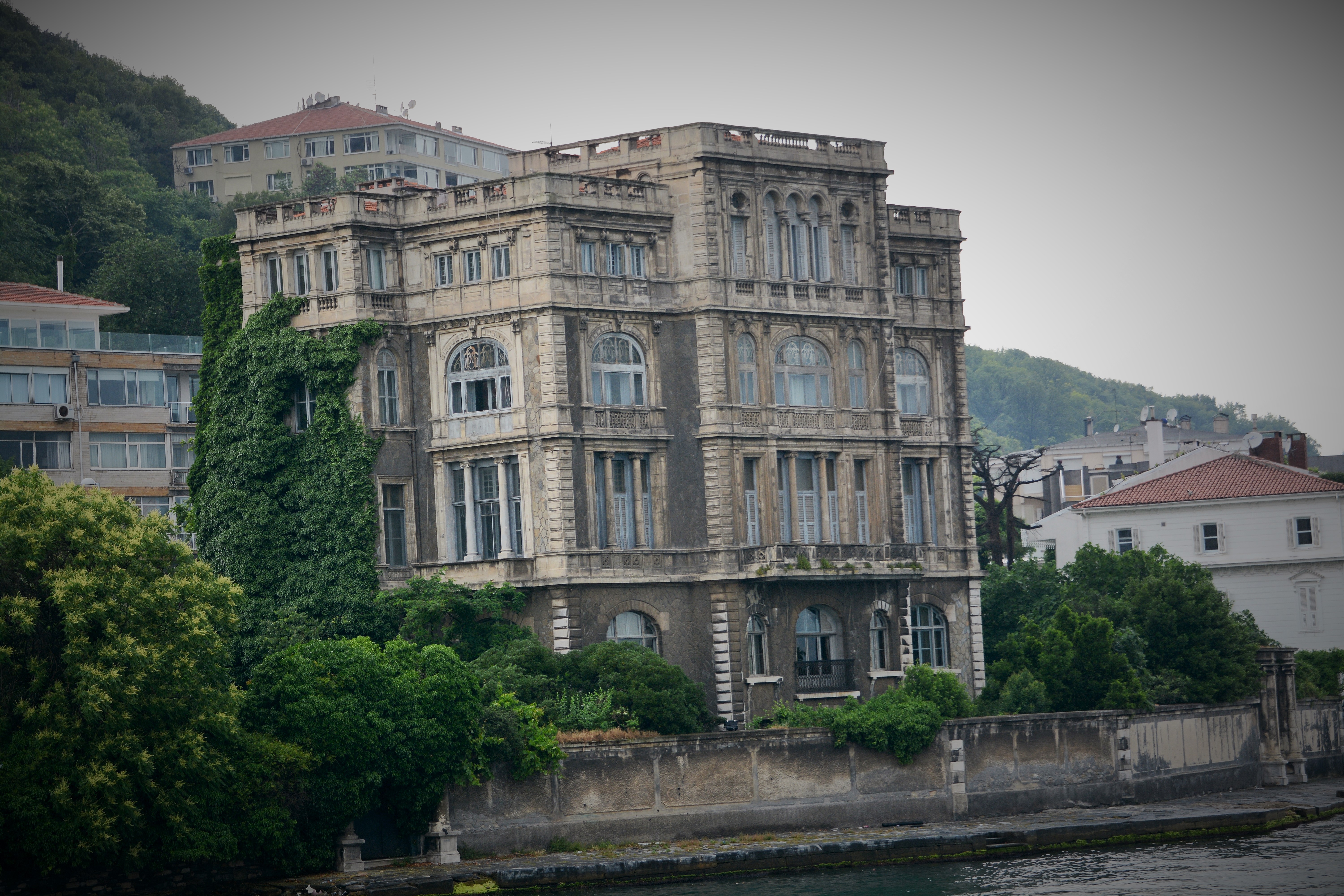
Next we caught a ferry from near the spice markets. What seems like a river is really the Bosporus Strait, 30km long and connecting the Marmaras Sea with the Black Sea. This was a good way to get a bigger feel for this city of 14+ million people. Up on the hills in parts houses and flats look like they are squeezed in. In the distance numerous cranes tower over new 30+ story apartment blocks. Close to the water are many mansions, shops and restaurants. Two large suspension bridges cross the water. This strait is the dividing line between the Asian and European continents.


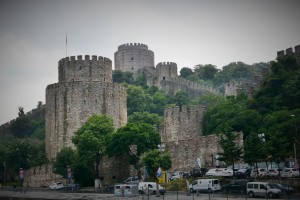

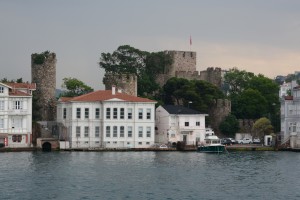

At the second bridge the boat turned back, dropping us off half way back on the Asian side. From there we took a ferry across to the Ottoman Sultan’s summer palace which turned out to be a rather flash pad. Built in the 1860’s it has nearly 300 rooms, 60-odd bathrooms, 40 hallways and huge entertainment areas. Each room or hall we entered had a magnificent chandelier, the biggest weighing over 4 tonnes. Behind the palace is a building that housed around 200 princes and the harem of around 200 want-to-be first ladies. That Sultan must have been a rather busy chap.


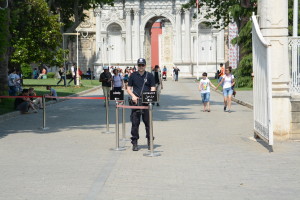


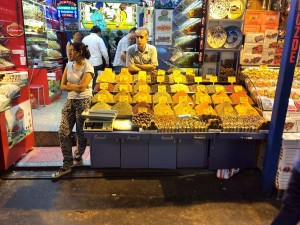
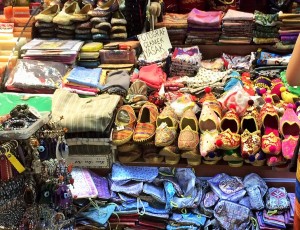
Leaving our guide we took a tram back to the spice markets. Not only do they have piles of colourful spices but gold and silver jewellery and many other products for sale as well.

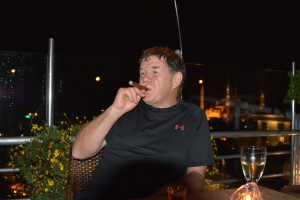
In the evening we headed to the roof top of the Adamar Hotel where we watched the sun go down with a great view over the city while enjoying a romantic dinner for two.




The funniest thing I saw all day was a group of women in a full burkah with only slits for their eyes, one wearing sunglasses and carrying an iPhone and selfie-stick.
Sylvia:
Wednesday 17 June
After another Turkish breakfast this morning we wandered up the hill to visit Topkapi Palace a huge group of buildings that was initially built in the mid-1400’s as the home of Ottoman Sultan Mehmed. There are huge ornate gates, a massive palace where all the official meetings were held and the harem area where the wives and concubines lived, looked over by the black eunuchs. There was also separate housing for the crown princes (sons of the sultan). We opted to wander around on our own and started with the palace kitchens with their huge pots and pans as well as some lavish dishes and platters. Neither of us was overly interested by the room with all the Muslim relics – many swords and things belonging to the prophet including supposedly the staff of Moses. However we both really enjoyed the armoury with its elaborately decorated swords, daggers, bows, quivers, guns and armour.


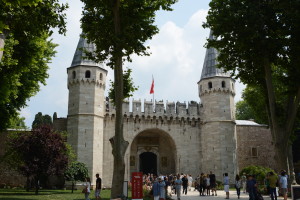

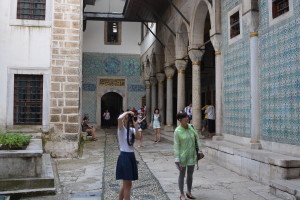

The harem area was also very interesting with loads of coloured tiles on many of the walls and stained glass in some areas. I think I would have got tired of all the detail and longed for something plain after a while. Interestingly, the concubines were some of the only women in Muslim history to be educated as the Sultan did not want his potential offspring to be the children of uneducated women.
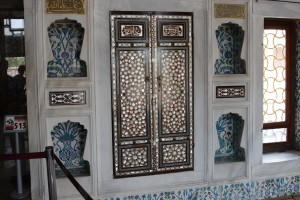


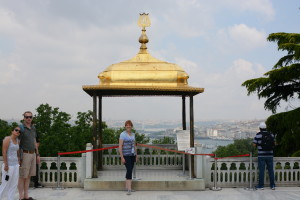

Overall I was just blown away by the obvious wealth and opulence.
Our next activity was to drive the 350-odd kilometres to Gallipoli. I must admit to being quite happy to let Roger do most of the driving, particularly in Istanbul. It is a pretty busy city and the traffic just seems to merge, stop and start with no real sense of order. It took me a few minutes to get the GPS working and there was nowhere for us to stop so Roger just had to drive, deciding to head towards Fatih as it kind of looked like faith. Good call – it ended up being the right road.
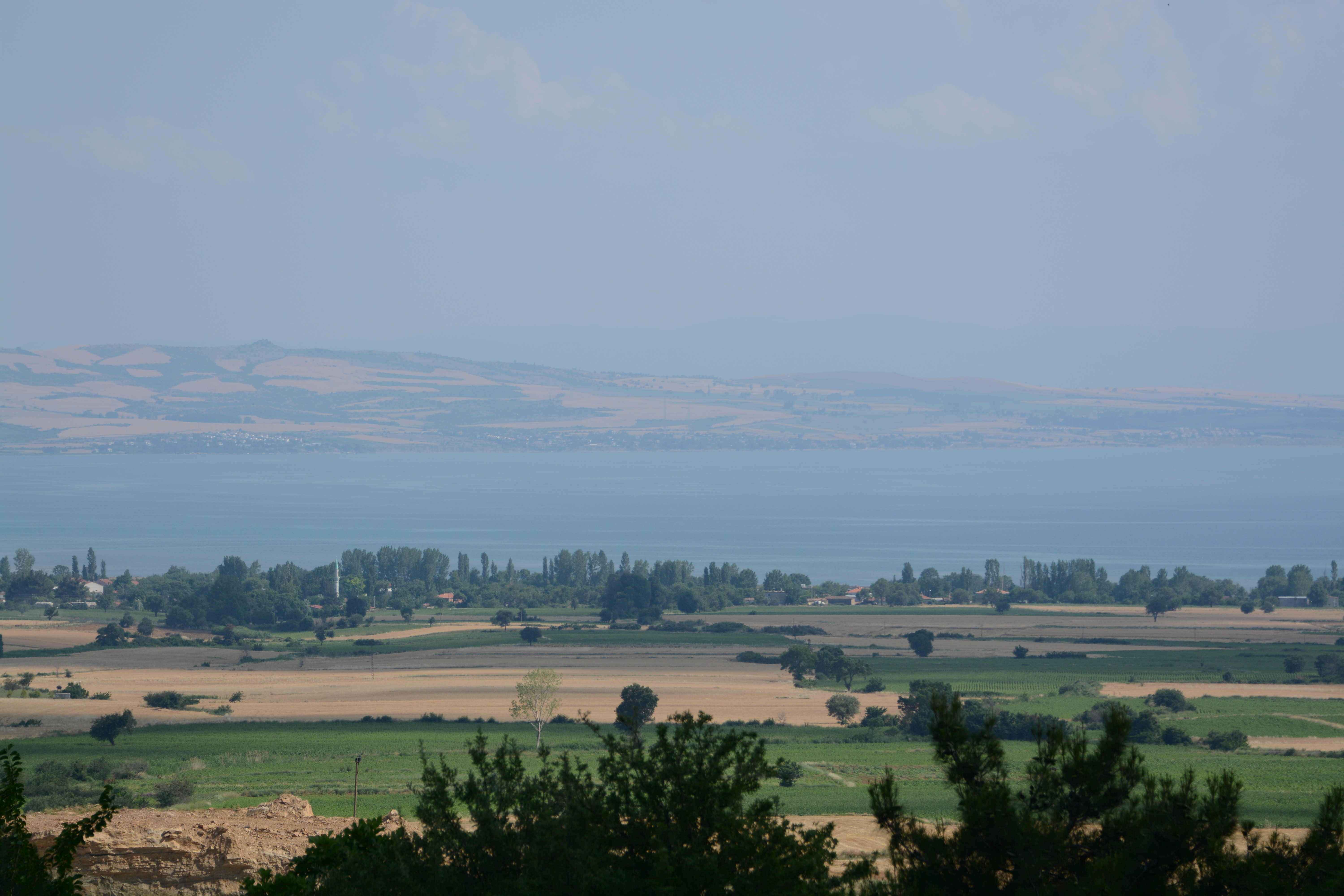
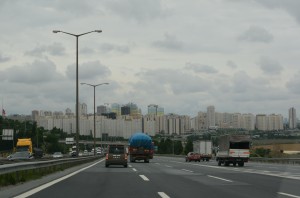
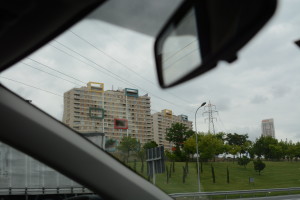
Driving out of Istanbul we passed huge apartment buildings, some still in construction, some painted in rainbow colours and several very plain all looking the same. As we got out of the city I had expected quite dry, barren and somewhat rugged land and was pleasantly surprised to see field after field of golden wheat, interspersed with green fields of what looked to be potatoes and the odd patch of darker green woods. This, with the odd glimpse of the Marmaras Sea or later the Dardanelles made for quite a picturesque journey and once out of the city the traffic eased and we made good time on a four-lane highway.

We stopped just past Tekirdag to try the local specialty, kofte – spicy meatballs that look more like sausages to us and come about 8 to a plate with salad and bread. Very tasty but way too much for lunch! We drove past Gelibolou, which is the town at the beginning of the Gallipoli peninsular and on to our accommodation for the next couple of days, the Gallipoli Houses. This is a small guest house close to the ANZAC cove area run by a Belgian man and his Turkish wife. As it is a fair distance from anywhere they provide breakfast and a four course dinner which provides a good opportunity to meet the other guests, on this occasion a few rather large, loud Aussies and a couple of English people.
Roger:
Thursday 18 June
It’s 3am at the Gallipoli Houses. We are woken by what sounds like a naval barrage. It’s the loudest and longest barrage of thunder I can recall with lightning lighting the whole room while the thunder is continuous.
At 5am Mohammad sparks up on the local mosque speakers. It’s not a song and not a poem and of course I can’t understand a word of it.
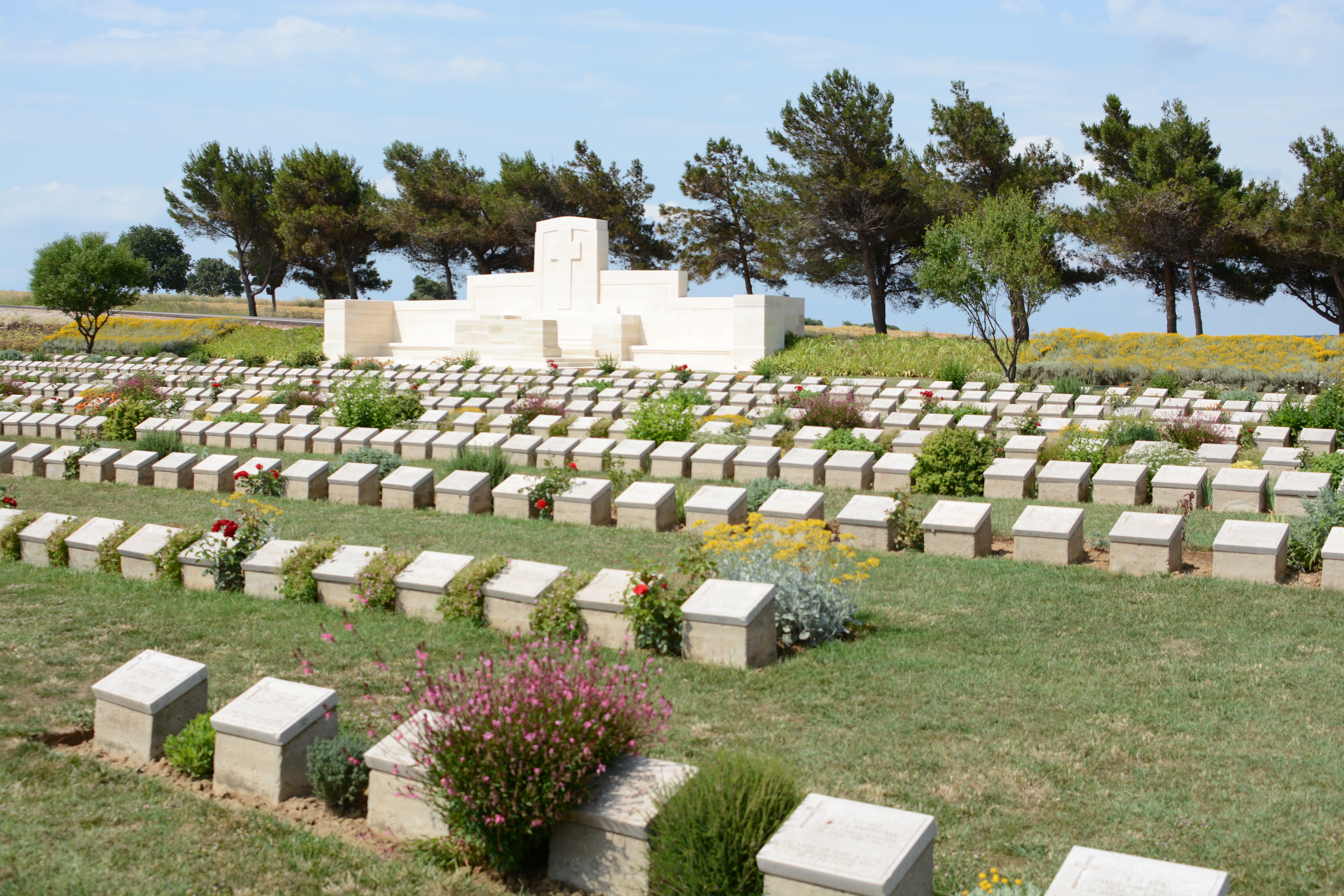
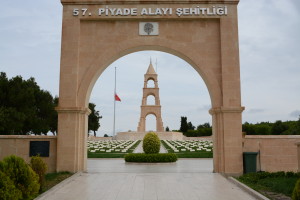
Over 30 cemeteries were built on the Gallipoli peninsular containing the remains of 19,000 commonwealth servicemen, of whom only 6,000 were identified. A further 2,500 who were believed to be buried are commemorated in the cemeteries with Special Memorials. The remainder of those buried in unknown graves, or whose remains were never found make up the 27,000 named on six different memorials in the area. Unlike in Flanders, unnamed burials are not marked so there are large open areas in some of the cemeteries.

Around 9am we headed off to ANZAC Cove. We drove up and back along the shore past the many cemeteries and memorials. Then up the loop road stopping at Lone Pine cemetery where a large monument stands in honour of the fallen. We took a stroll down a track to try and get an appreciation for the ground. Heading further up the loop road we stopped at Johnston’s Jolly and Quinn’s Post where there are still out lines of both Turkish and Anzac trenches only meters apart. There are many Turkish memorials and cemeteries along the road, some of which we stopped at. All the huge Turkish flags are flying at half-mast today in honour of Suleyman Demireal a past leader of Turkey who died yesterday.

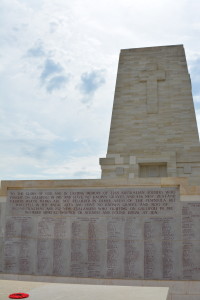
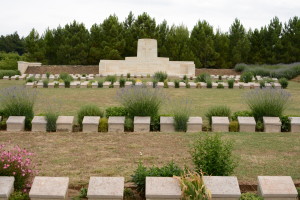
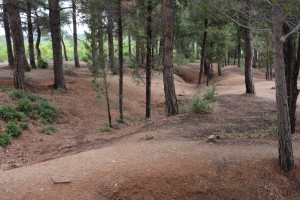
After a few more stops we arrived at Chunuk Bair. Here the New Zealand monument stands, built so it could be seen from the sea as when it was built the powers that were thought no one would visit it. We took a stroll some 500 meters down the hill to Farm Cemetery, a well-kept piece of ground in the middle of this rugged and scrubby land. It is sad to see the head stones, designed by Scottish Architect Sir John Burnet are now starting to show wear from rain and hail. They were designed as a box to cater for the soft ground. Unfortunately I doubt most of the names will be unreadable in another hundred years.
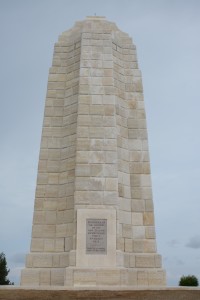

Continuing down the loop road past more Turkish memorials we reached the Kabatepe Museum. It is interesting to note the first Turkish memorial did not appear until the 1990’s. This recently developed museum, although lacking continuity, has some fantastic displays and is well worth a visit.

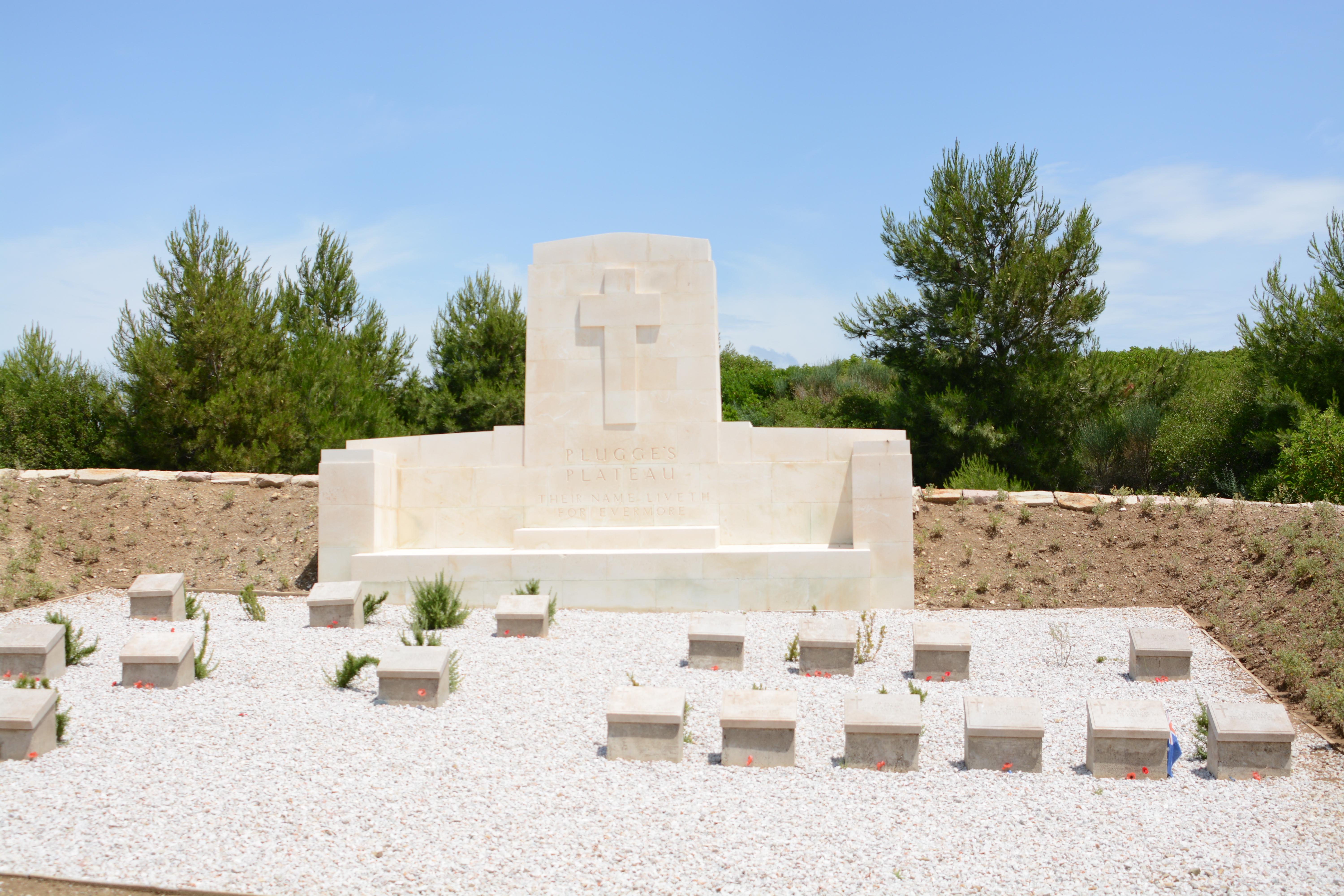
Heading back to the Cove we took a stroll up to Plugges Plateau where more people are buried. Continuing up the ridge some way we dropped down into Shrapnel Valley making our way down the creek through the scrub coming out at the cemetery.
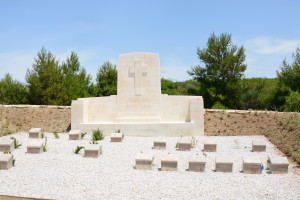

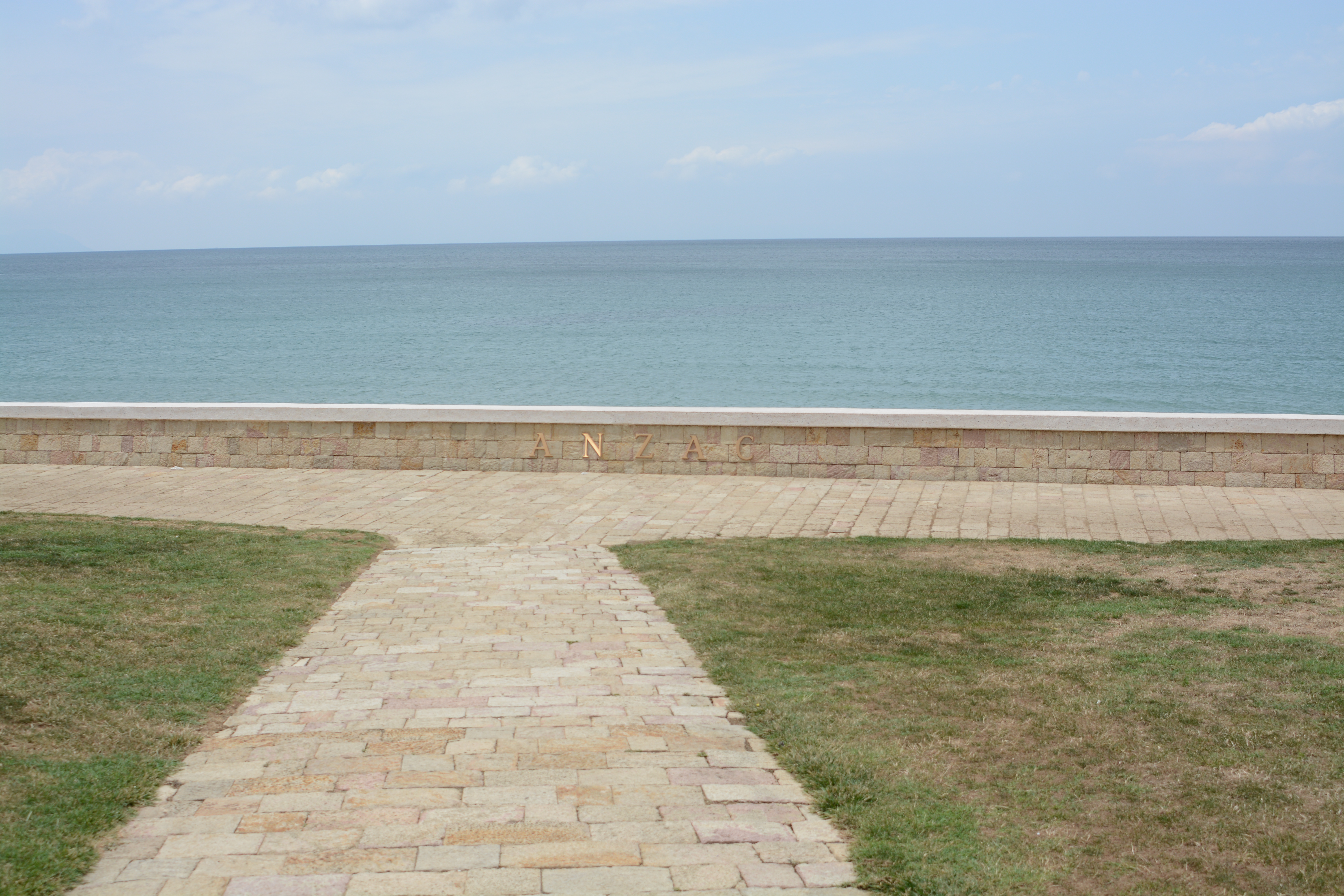
We continued along to the ANZAC commemorative site situated by the beach. Strolling along the beach and looking up into the steep ground above I now have a much greater appreciation of how difficult it must have been to fight up through the gullies onto the ridges behind. This is something that one can never appreciate looking at pictures, watching documentaries or reading books. Furthermore as noted at Flanders we will never really appreciate what those brave men went through.


We then headed south to the Helles area. I understand my grandfather was at the landing at W Beach now named Lancashire Landing. He was commissioned in the field there. Many of the officers were killed during the landing. We parked the car at the west end of the Lancashire area and strolled across the tops of the steep banks rising 30 to 50 meters almost vertically from the sea. There are a number of circular brick structures which may have been gun emplacements. Over a kilometre to the east we were suddenly looking down onto W beach. Approximately 200m wide with high ground on each side – back then layers of barbed wire were stretched across the beach. The men were towed close to shore in row boats and cut loose to row ashore. With heavy machine gun and rifle fire coming from the high ground all around it is astonishing how anyone even made it ashore let alone through the wire.


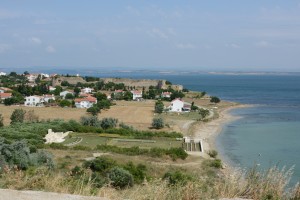
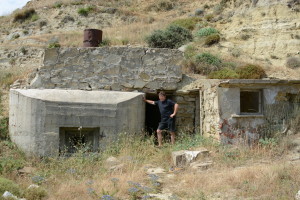

Six Victoria Crosses were awarded at W beach that morning. My grandfather, David Price-Owen survived Gallipoli, going on to Palestine as a British officer in the Bengal Lancers. He rode in a large cavalry attack, apparently with Lawrence of Arabia in 1918. He stayed on in the Bengal Lancers, based at the Khyber Pass, until medically retired from the army and given six months to live in 1922. He lived until he was over 80.
New Zealanders fought and perished from Helles in the south right up to Suvla in the north not just at ANZAC cove as many people perceive. “We must remember them”.
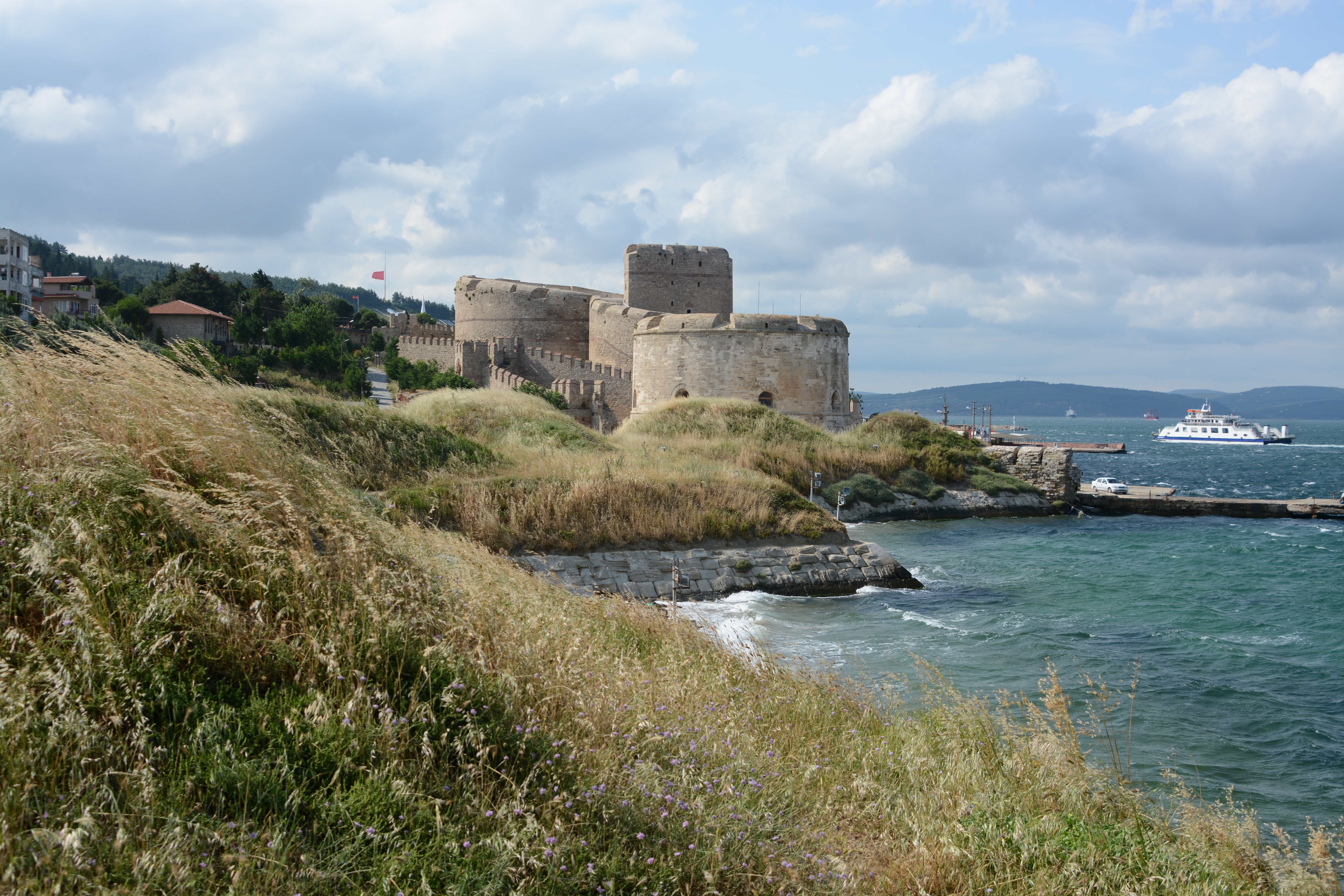
We headed back up the east side of the peninsular watching many large ships heading in and out of the Dardanelles. Along the way there is a fourteenth century fort at the narrowest part of the channel. There are a huge number of statues and cemeteries around the Peninsular commemorating the Turkish involvement as well.



As we walked in for dinner a lady we had met briefly the previous evening and seen breakfasting with Sir Peter Jackson that morning asked us to join her for dinner.
Anita Young, an abstract artist here painting scenes of Anzac cove, is the granddaughter of the legendary Lieutenant Colonel Malone who fought and died at Chunuk Bair. Sir Peter had flown her here in his private jet, we think partly as thank you for sharing her grandfather’s diaries and letters with him and also as he is probably a good bloke who appreciates the sacrifices people have made. We had a very interesting time chatting to Anita about her grandfather’s exploits, the plight of her grandmother, her painting and her contribution to the WWI exhibition now on at Te Papa. Her website is www.anitayoung.co.uk.
Sylvia:
Friday 19 June
I lucked out and got another travel day and am very glad I didn’t have to write about yesterday as I found it quite challenging. I am incredibly glad to have had the opportunity to visit both Gallipoli and the Western front this trip but I am hugely saddened by the seeming waste of healthy young lives. I have also come away with a bit of a passion for the need for more education around the wars. I was woefully ignorant about what went on. Most New Zealanders will have heard of Gallipoli and will know that we lost a lot of men there. We remember the landings every ANZAC day. Even though we talk about commemorating all soldiers on ANZAC day we make very little mention of the Western front and many more of our soldiers died there. I suspect many kiwis have never even heard of Passchendaele and it was there that NZ suffered its highest ever casualty rate in a single day from any disaster. The opportunity to visit these places and experience even in only a small way what our soldiers experienced is a huge privilege.
This morning we had breakfast with Anita again and she was kind enough to show us some of her paintings and some photos dating back to 1915 when the war was underway. We will look forward to seeing more of her work when we get to Te Papa to see Peter Jackson’s exhibition there – she recommends early next year when it should be finished.
We headed back to Istanbul for our flights, first to Zagreb and then on to Dubrovnik, driving first past ANZAC cove again and through the Suvla area. The drive seemed quicker somehow and went very smoothly with only a wee challenge in finding the rental car drop off which required a few circuits of the airport. Perhaps it was the detailed discussion of the workings of hand-grenades that helped pass the time.
The two flights were fairly painless – the first slightly delayed which meant a pretty short layover in Zagreb. We were met at the airport in Dubrovnik and transferred to our hotel for the night. It was dark when we arrived but we could still appreciate the prettiness of the town. Our driver was very enthusiastic and informative. Dubrovnik is apparently a very safe town with tourism being the major industry of Croatia. Unfortunately though, the country has a very high rate of unemployment, which means many of the young people are leaving the country. He also gave us a good run down on the recent home wars and the different makeup of the countries that were once part of the old Yugoslavia: Montenegro, primarily Greek Orthodox; Croatia, primarily Roman Catholic; Bosnia-Herzegovina, primarily Muslim; and Serbia, predominantly Serbs. He said that things seemed to be relatively settled here and expressed hope that the current generation would be more sensible than their parents.
Having moved the clock forward an hour when we hit Turkey we have moved it back again now we are in Croatia – the same time zone as Belgium. This will be the last time on our trip that we put the clocks back. From now on in, any time-zone changes will be forward, closer and closer to home time.