Monday 23 November 2026: South Georgia – Roger
It was around 0900 when we arrived at Saint Andrews Bay. The beach here is a couple of kilometres long with the Cook glacier towards the south end of the beach and the Heaney Glacier well inland towards the north end. Even from the boat, several hundred metres from the shore, the penguin population was very prominent. They reckon this is the largest colony of King Penguins on the island with about a quarter of a million penguins here. As we looked up at the hills beyond the beach there were lots of little brown spots that at a distance almost looked like tussac, but that were in actual fact the young penguins in their warm fluffy coats. Between 10 and 13 months of age, these guys, known as Oakham Boys, will moult, losing their fluffy brown coat and replacing it with their seaworthy sleek black and white coat ready to head to the sea.
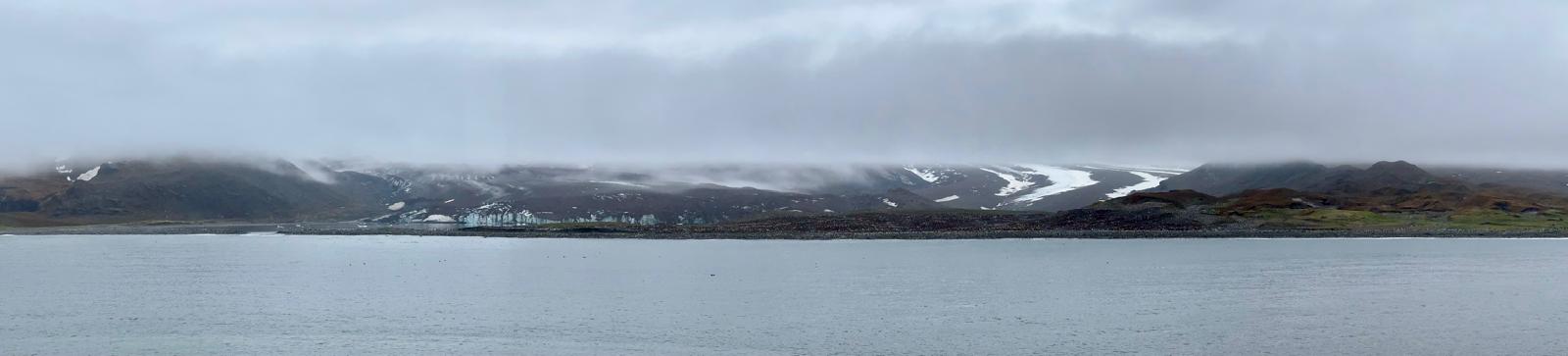
St Andrew’s Bay, Cook glacier to the left of the picture, Heaney glacier to the right. If you zoom in you can see the thousands of tiny dots, each a penguin.
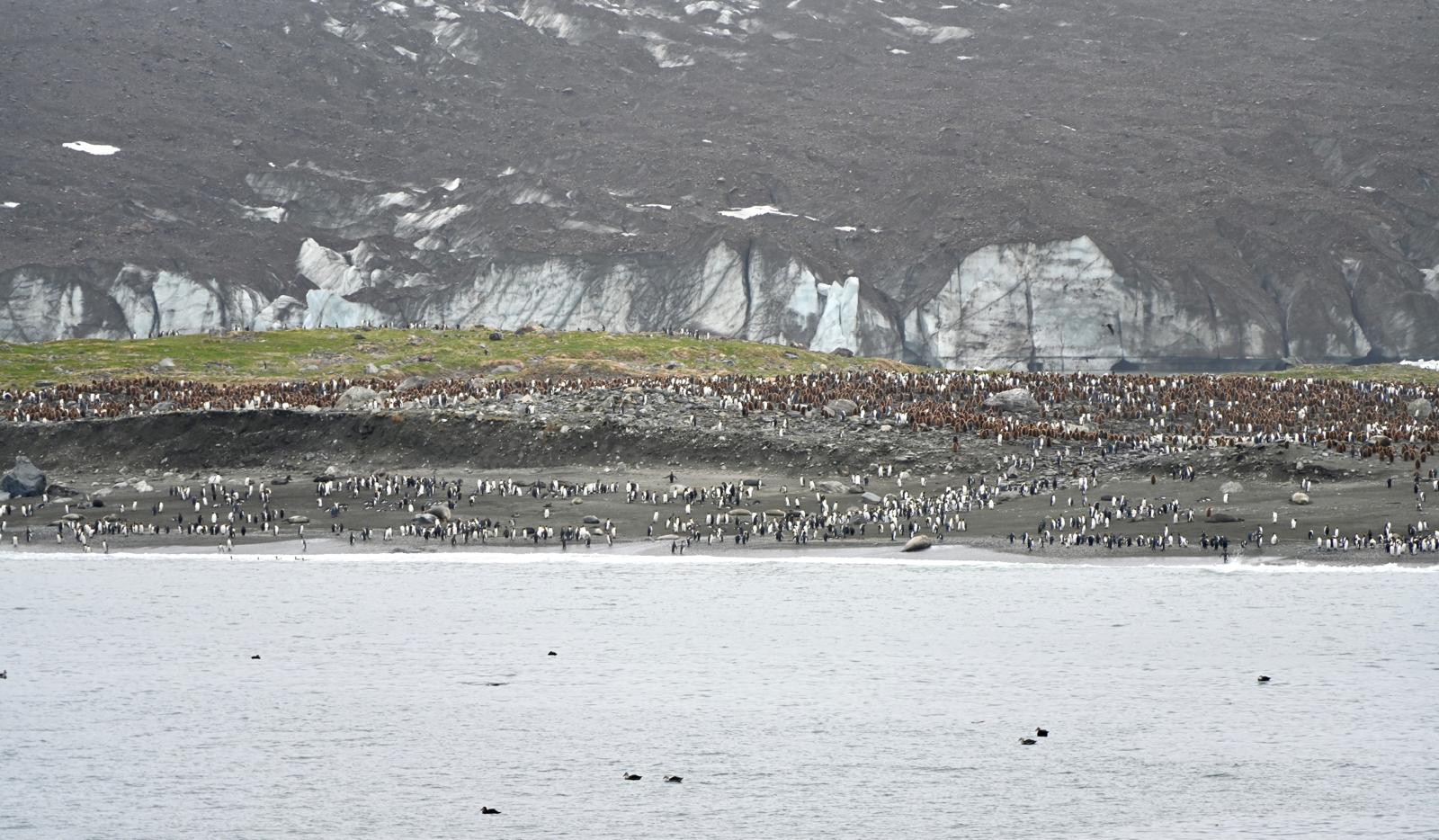
St Andrew’s Bay with Cook glacier behind. The brown dots on the grass are the juvenile King penguins, adults on the beach.
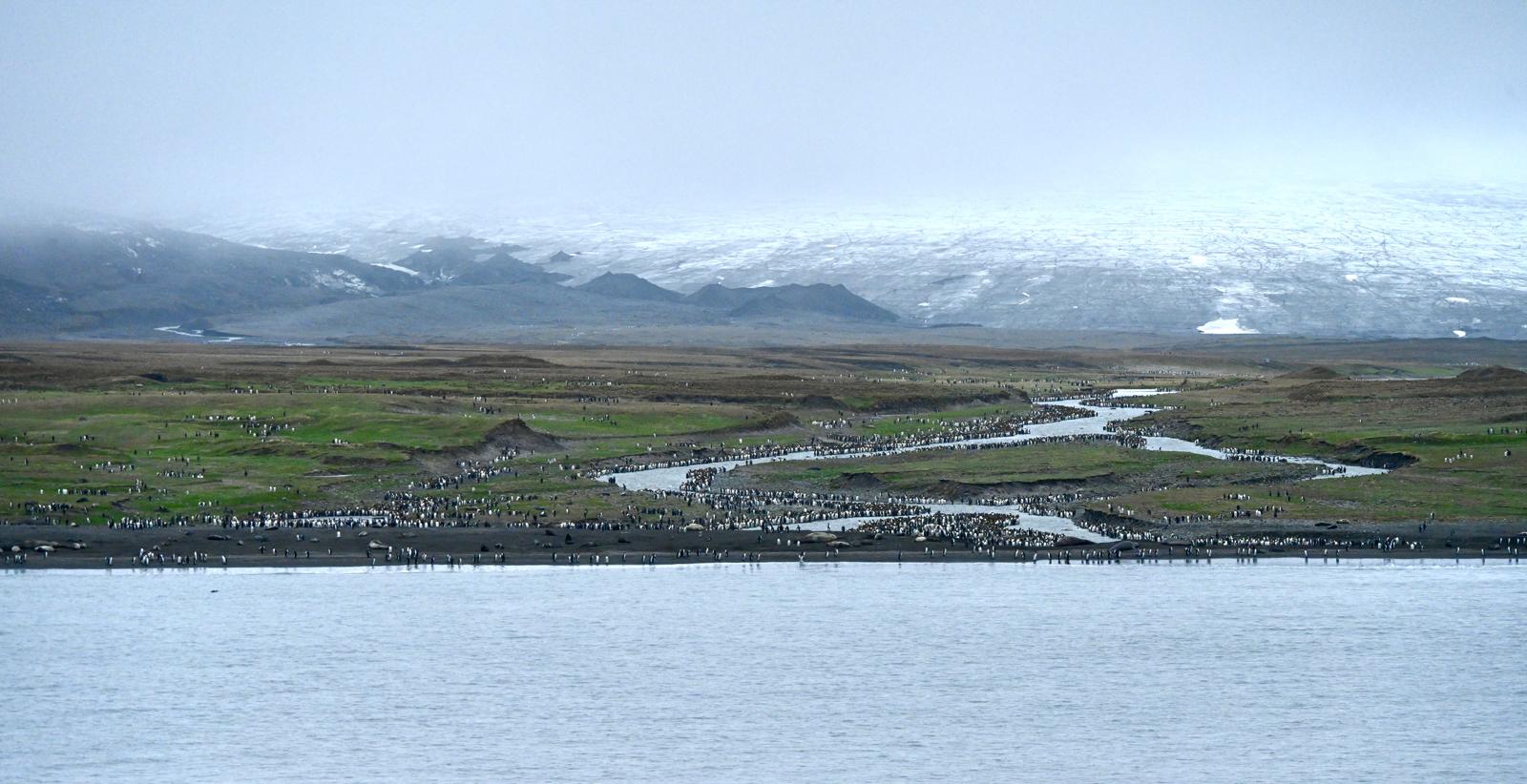
St Andrew’s Bay with Heaney glacier behind.
We were with the last group to go out on the zodiacs, heading towards the beach and then turning left and travelling parallel with the beach, watching hundreds of penguins going in and out of the water. Big fat elephant seals lay stationary on the beach, along with the odd fur seal. After reversing down and back up the beach we went to shore but only for a few minutes. The initial plan had been to spend more time ashore but there was so much wildlife that there really wasn’t space for us as well. We stood kind of in a circle and were quite quickly surrounded by penguins, while elephant seals and fur seals lay all around us. At one stage a massive elephant seal leapt into action. With a lot of noise and a kind of wave motion it propelled itself across the beach landing on top of a female. Yes, you guessed it, this was an act of love, which, at some time in the future, will produce another elephant seal.
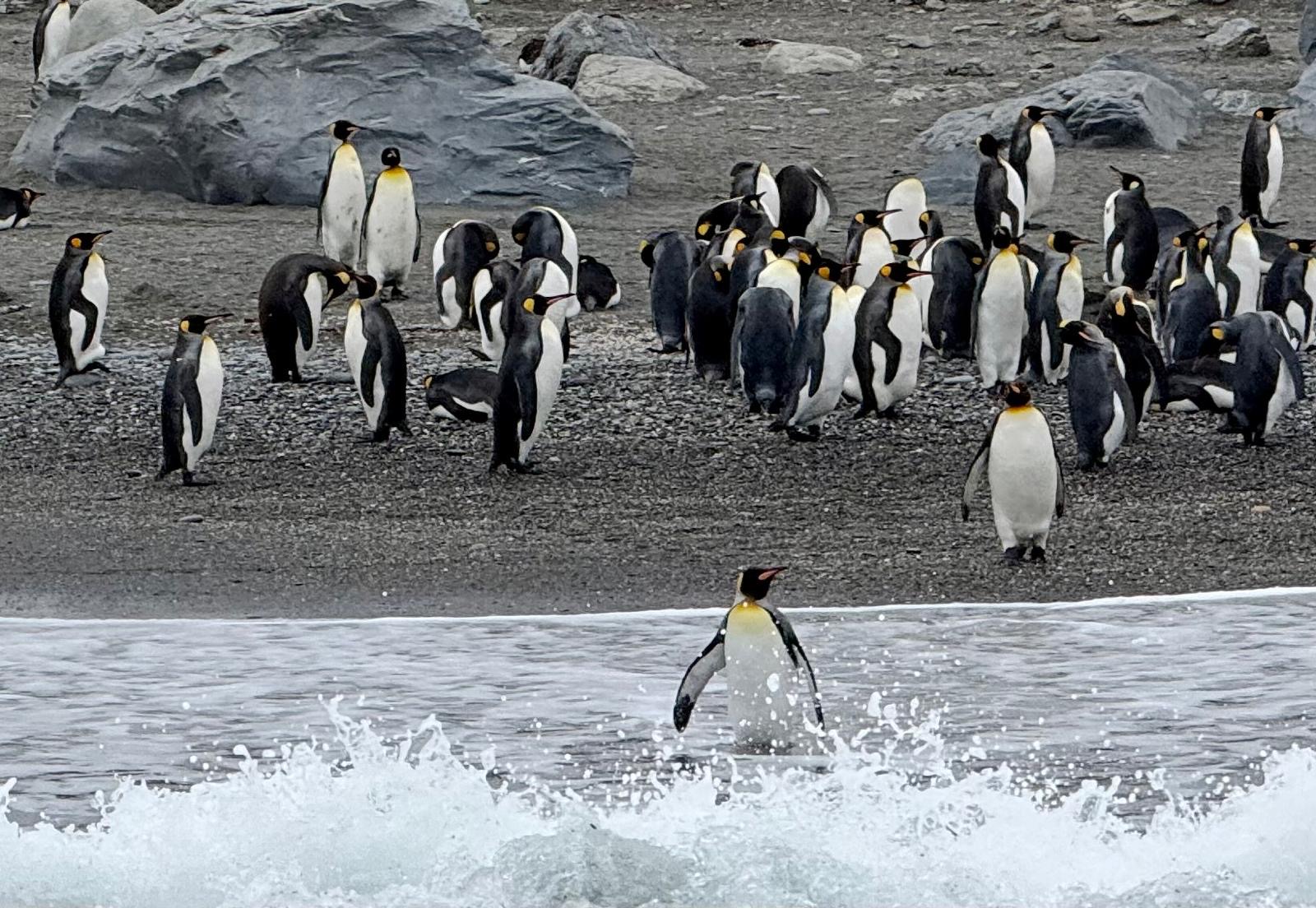
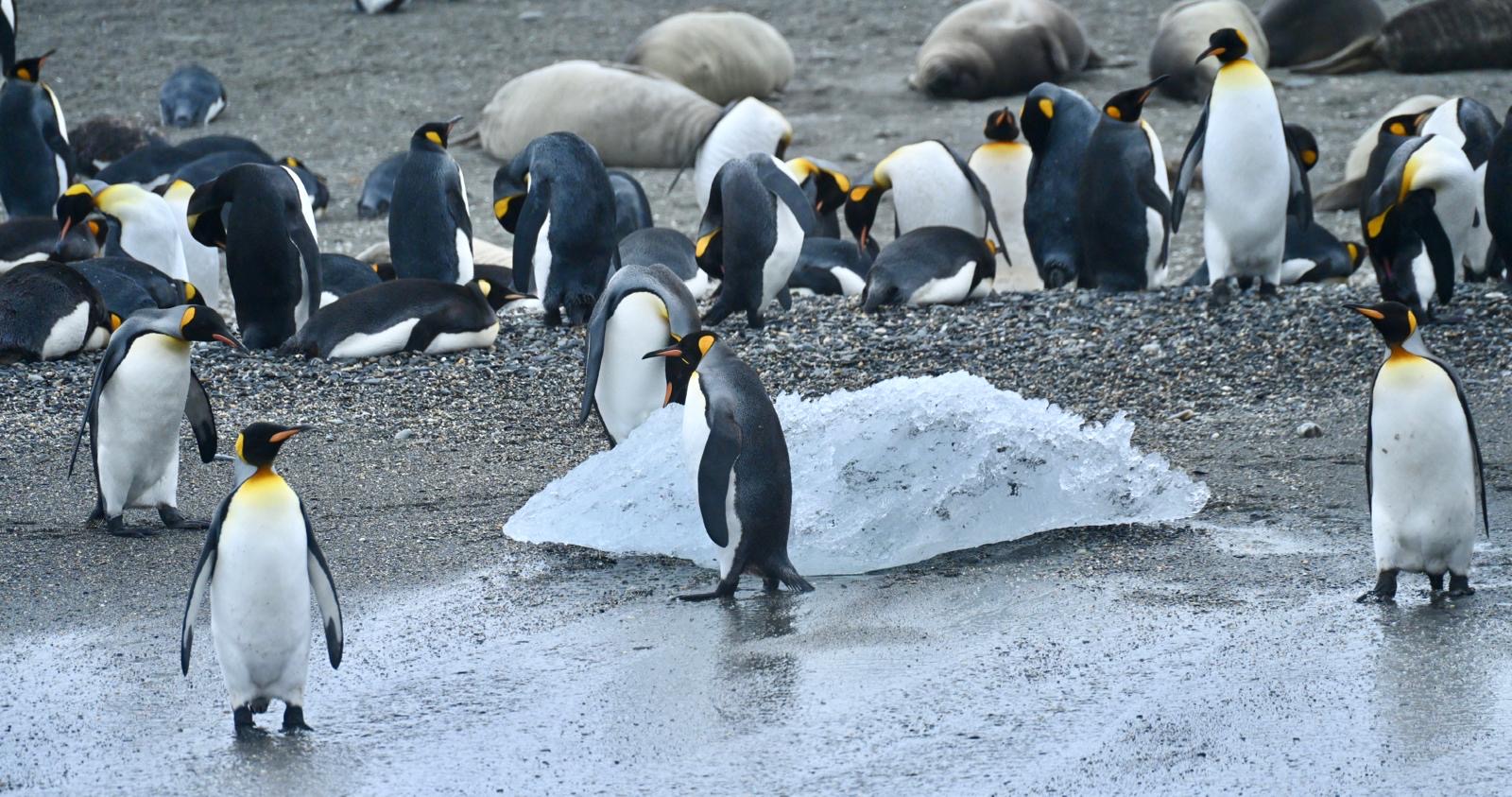
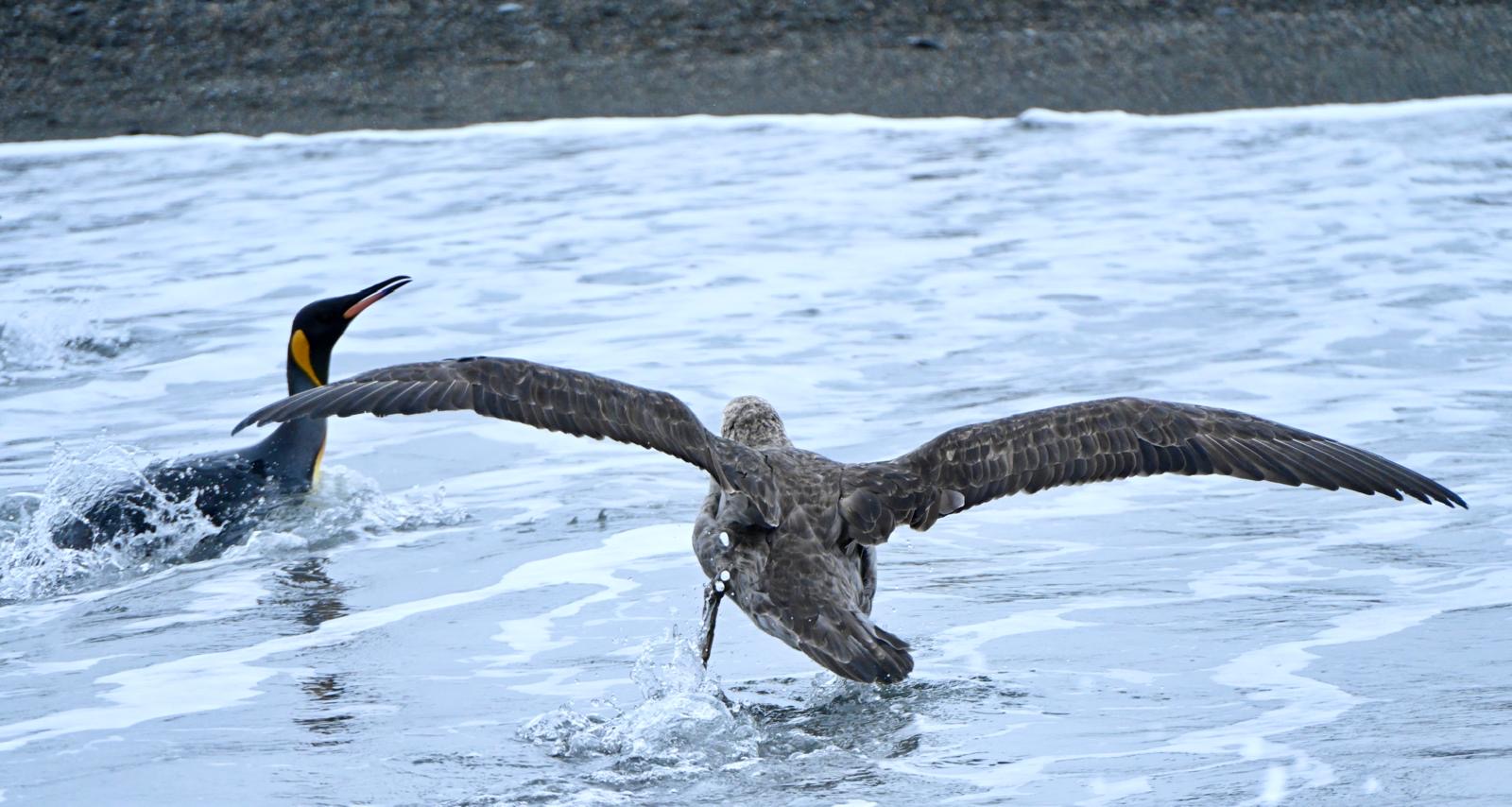
King Penguin and Giant Petrel
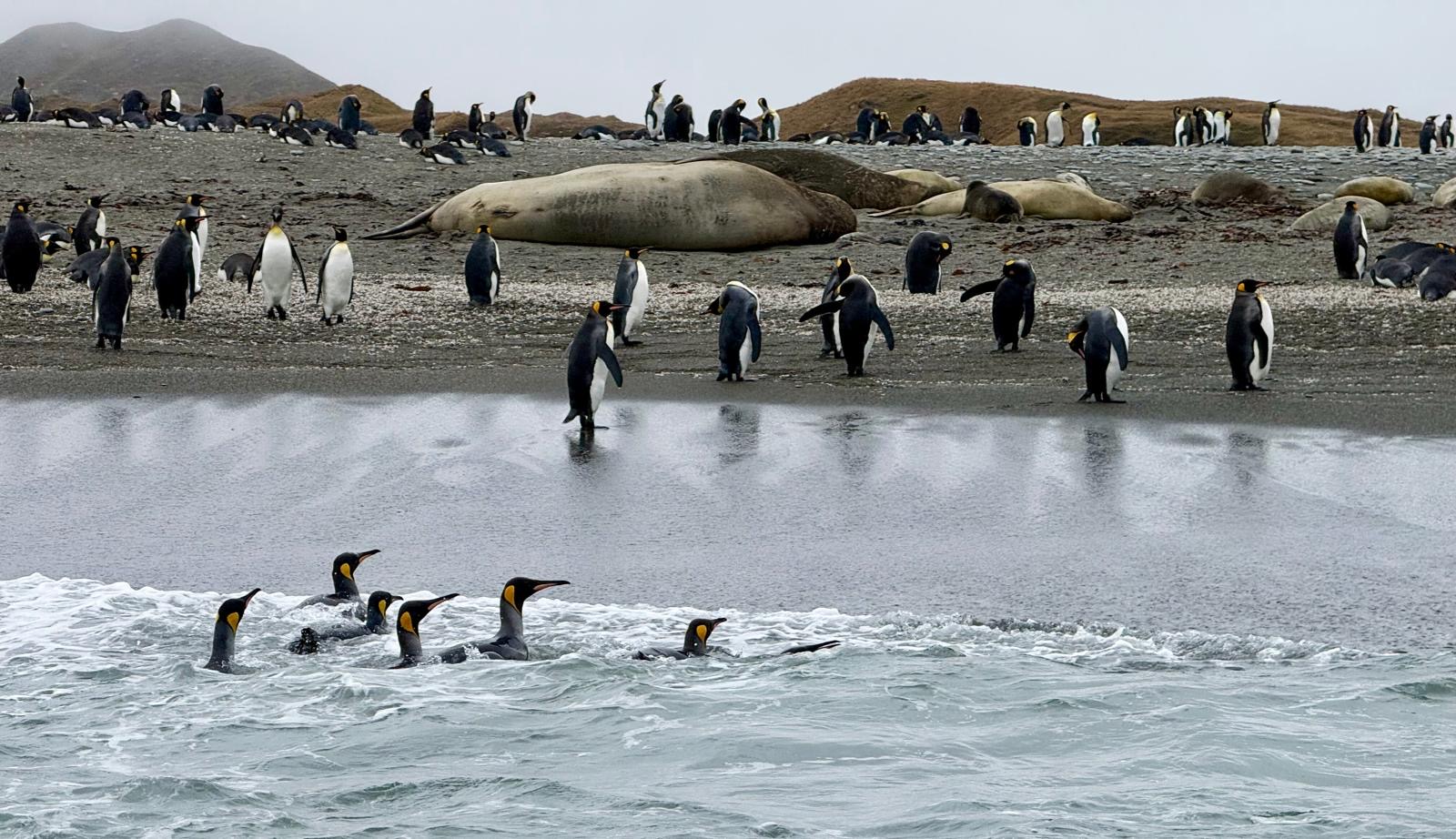
King Penguins and Elephant Seals.
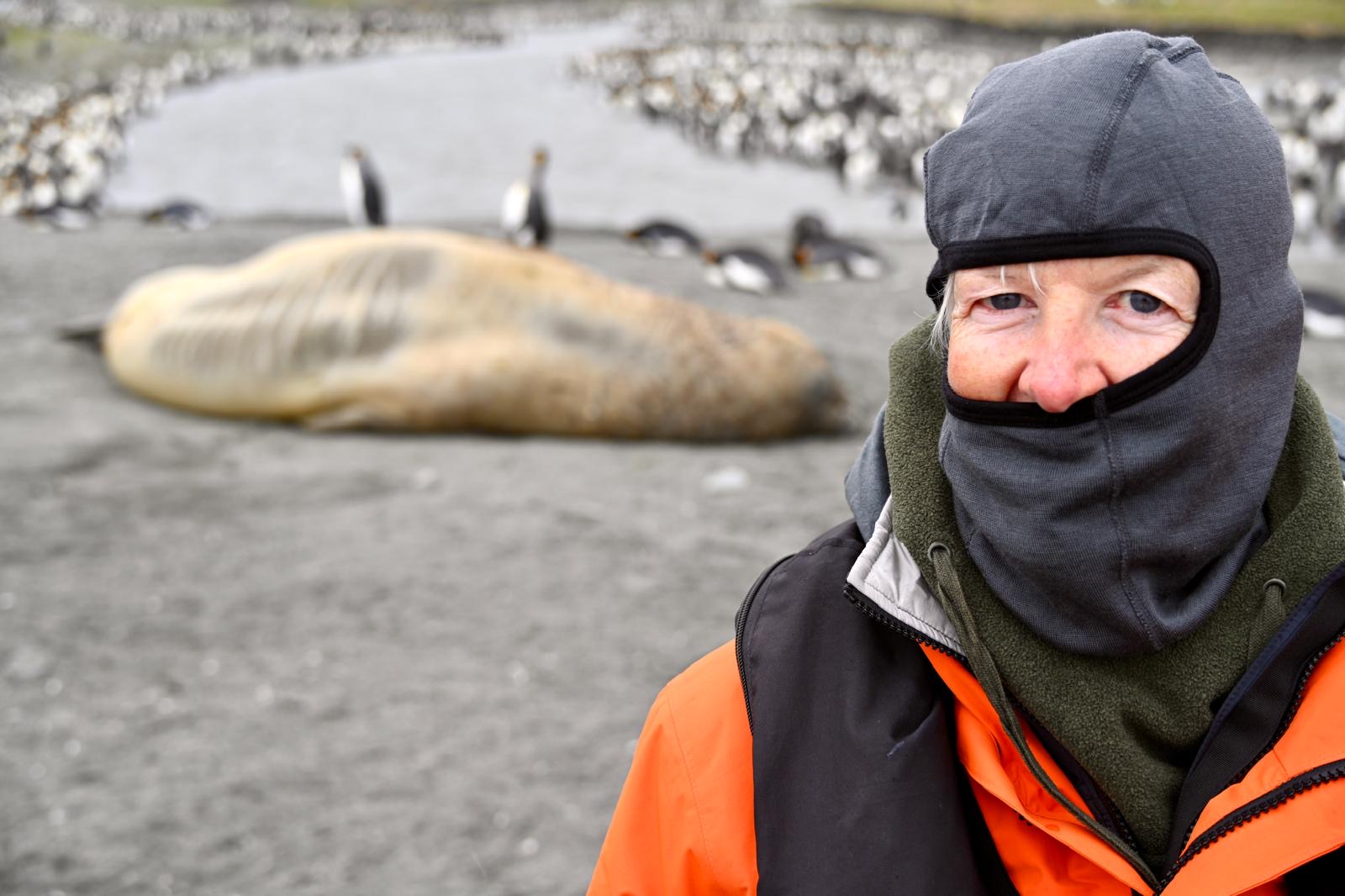
Back on the zodiac we pushed up to the north end of the beach where there were also thousands of penguins. A couple of elephant seals engaged in what I presume was a romantic dance in the water nearby while another big male looked on for a while and then aggressively looked to intervene.
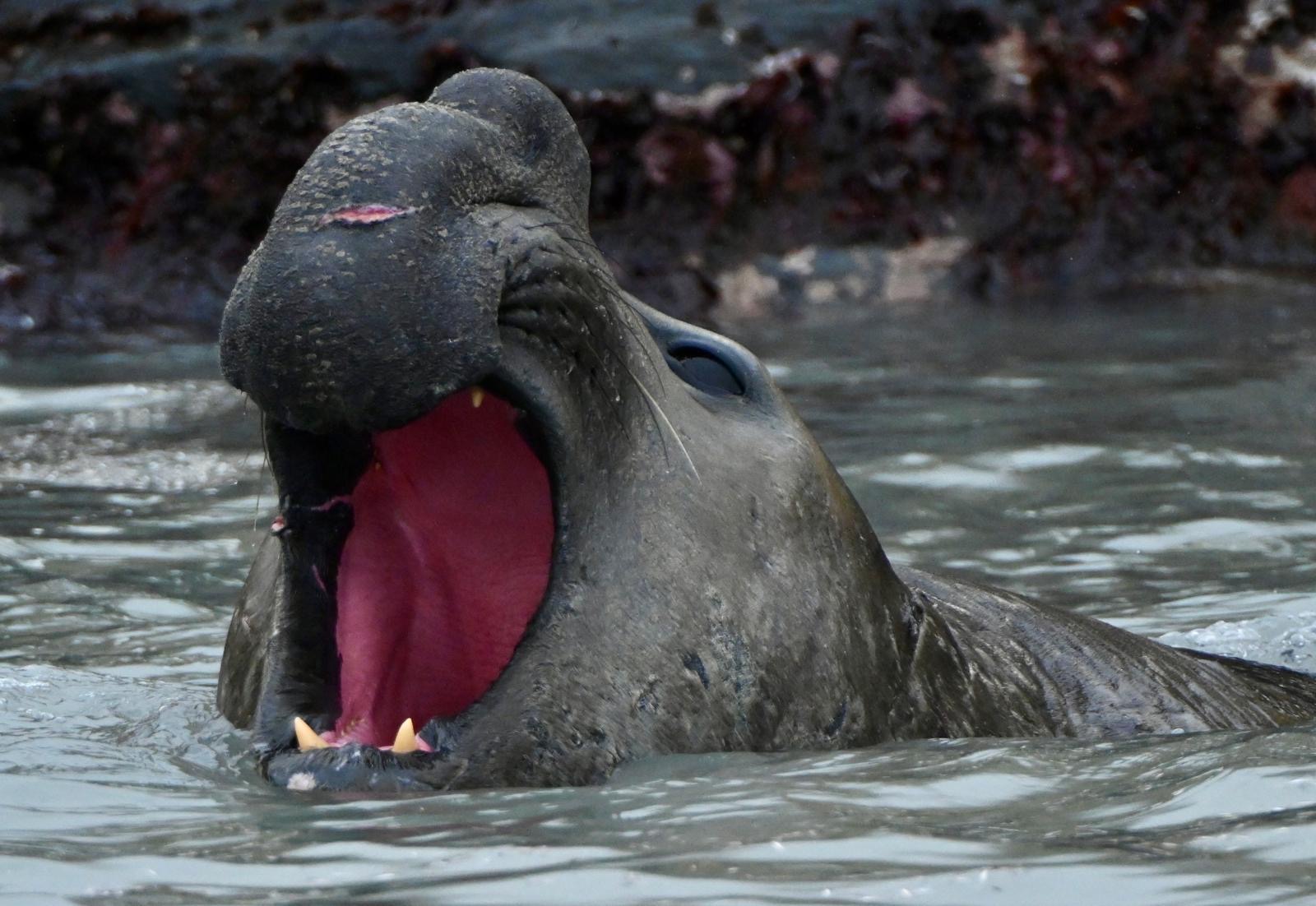
Male Elephant Seal
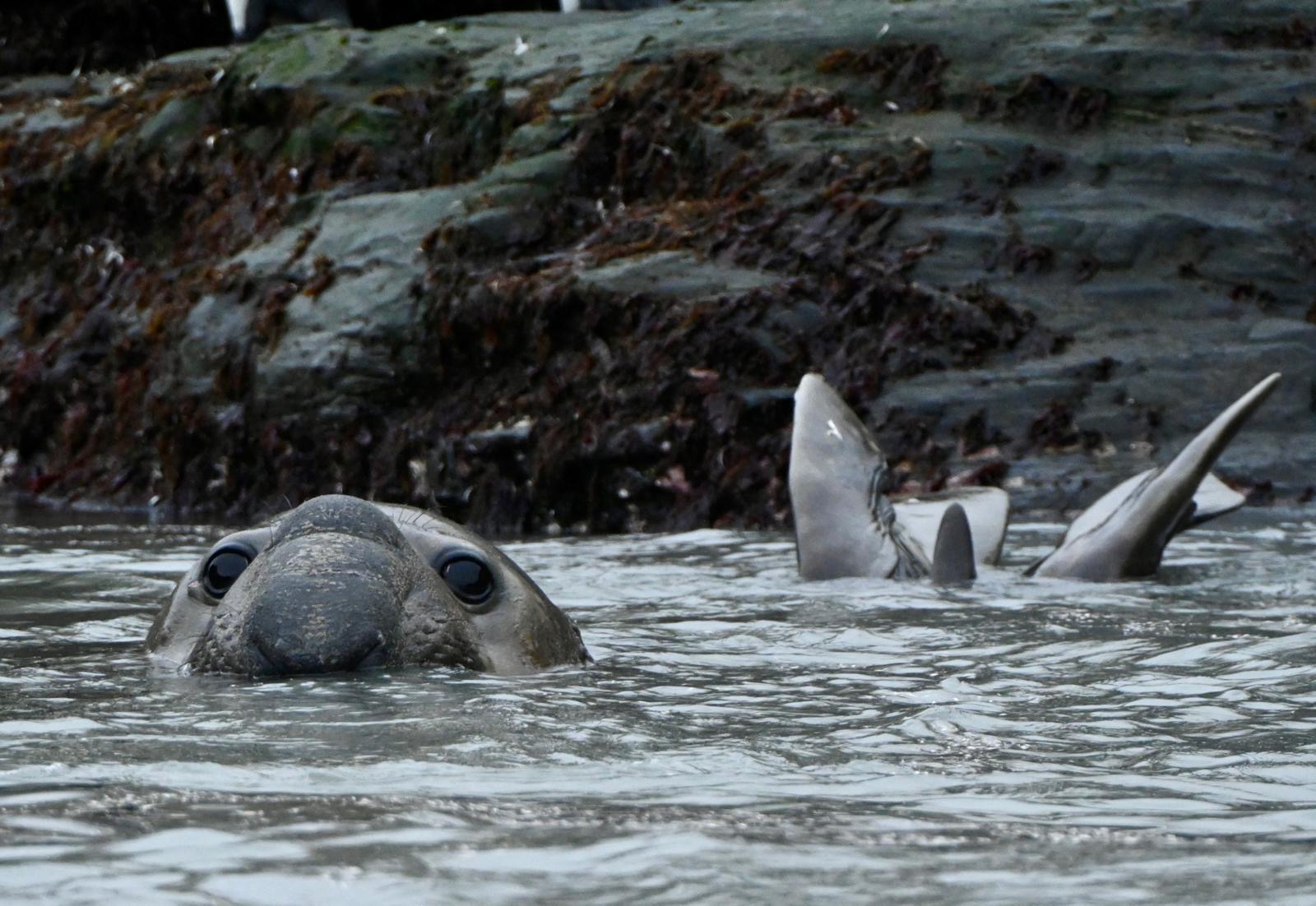
Male Elephant Seal
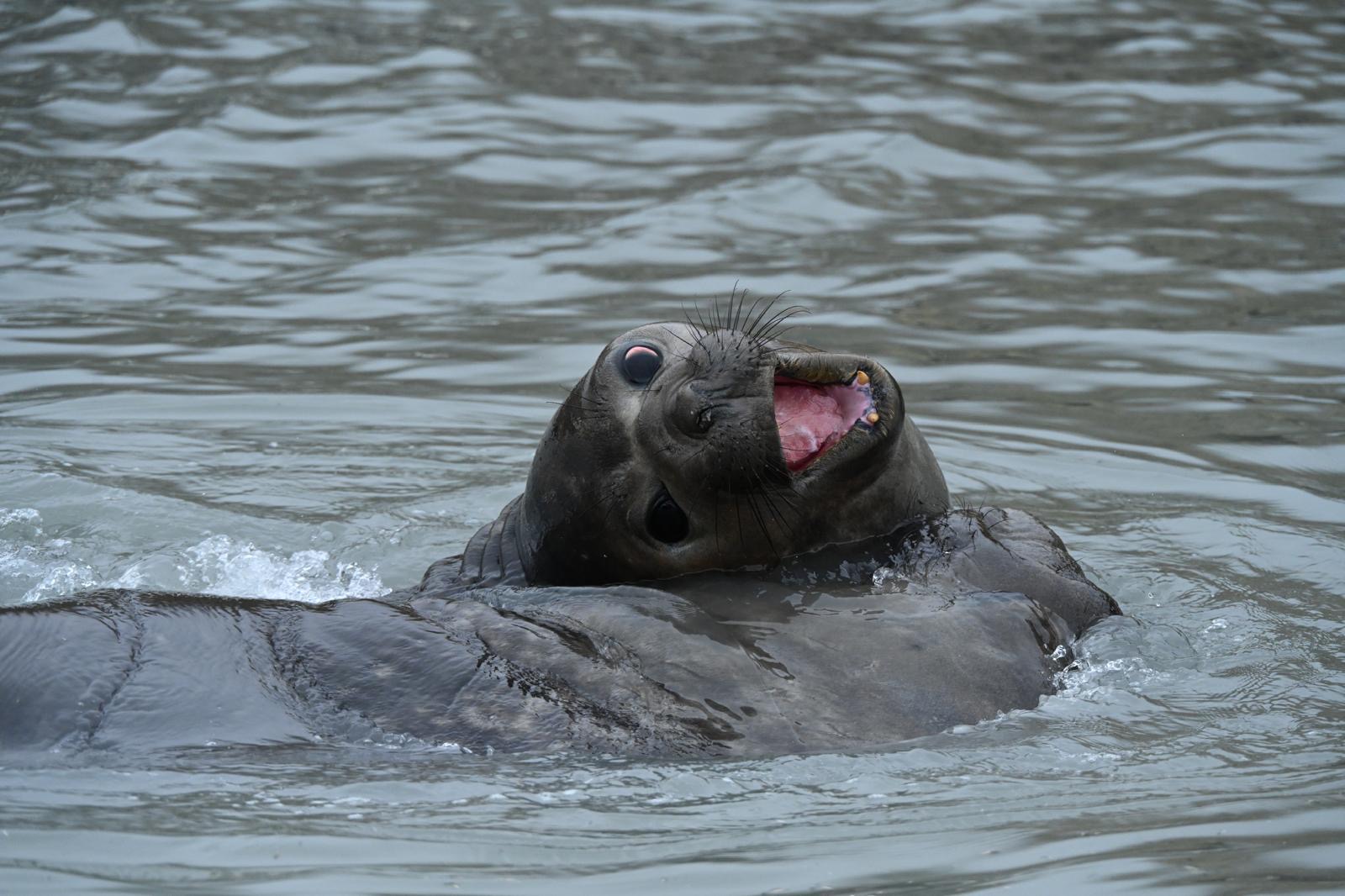
Male and Female Elephant seal making merry. The noises they were making were rather interesting.
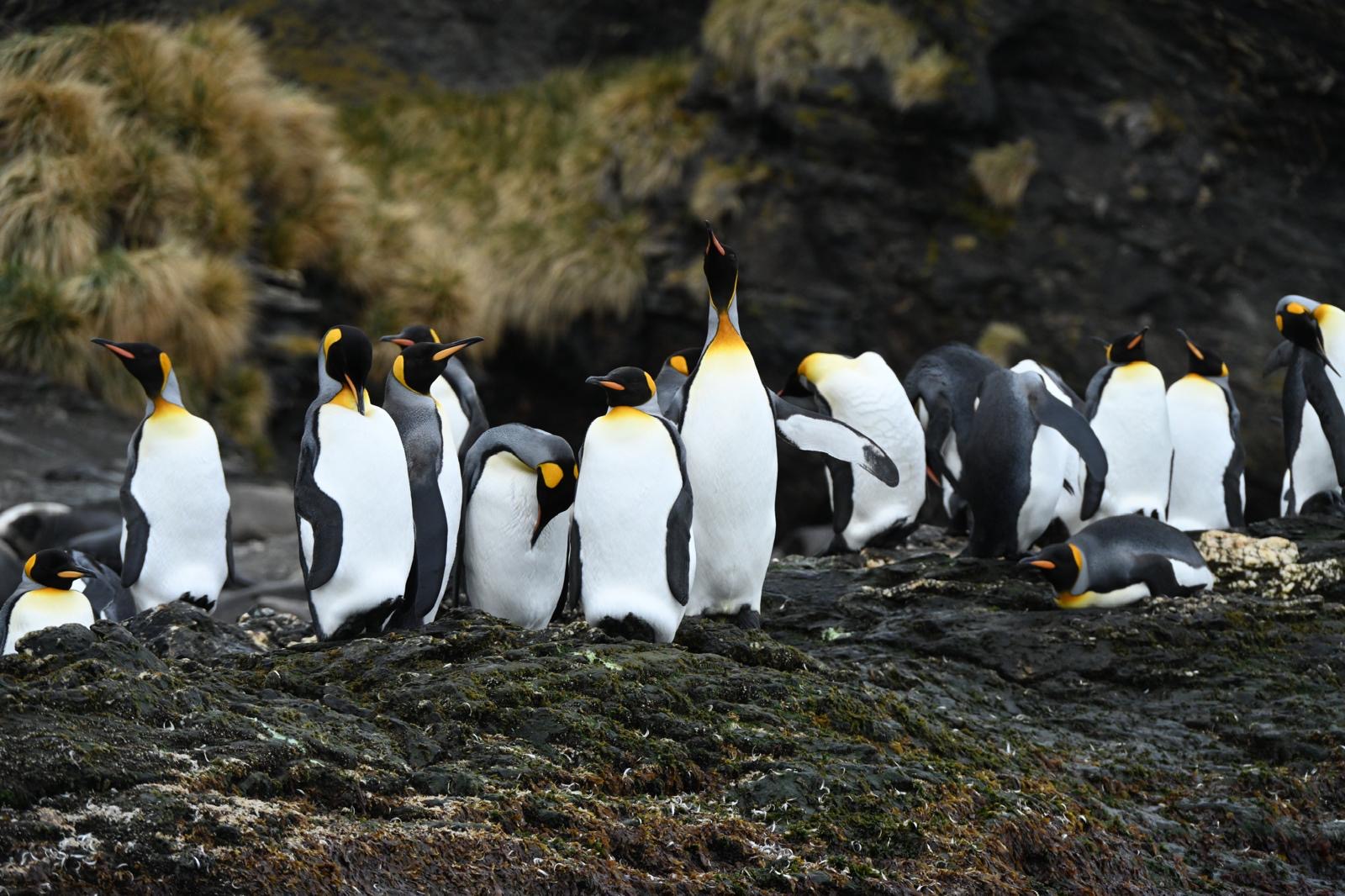
King Penguins
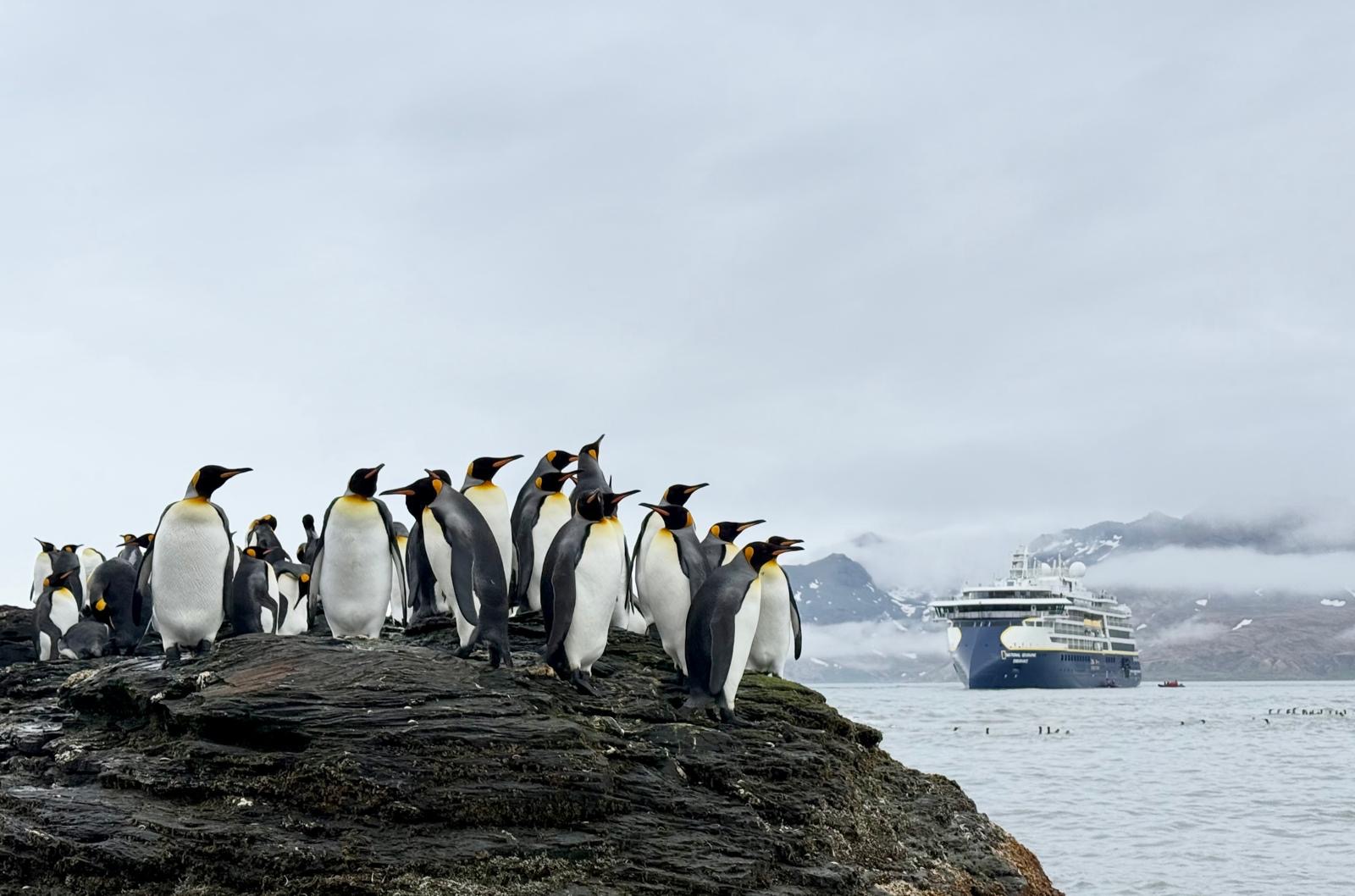
The penguins would haul themselves up onto the rocks only to turn around and decide to go swimming again, often slipping and sliding down the rocks. It was actually quite entertaining to watch. Our time was up and after heading back to the ship we enjoyed another delicious lunch. Soon after, we got a call that there were a number of humpback whales off the bow. We wandered up to have a look to see what must have been close to a dozen whales blowing spouts and splashing around in the water around us.
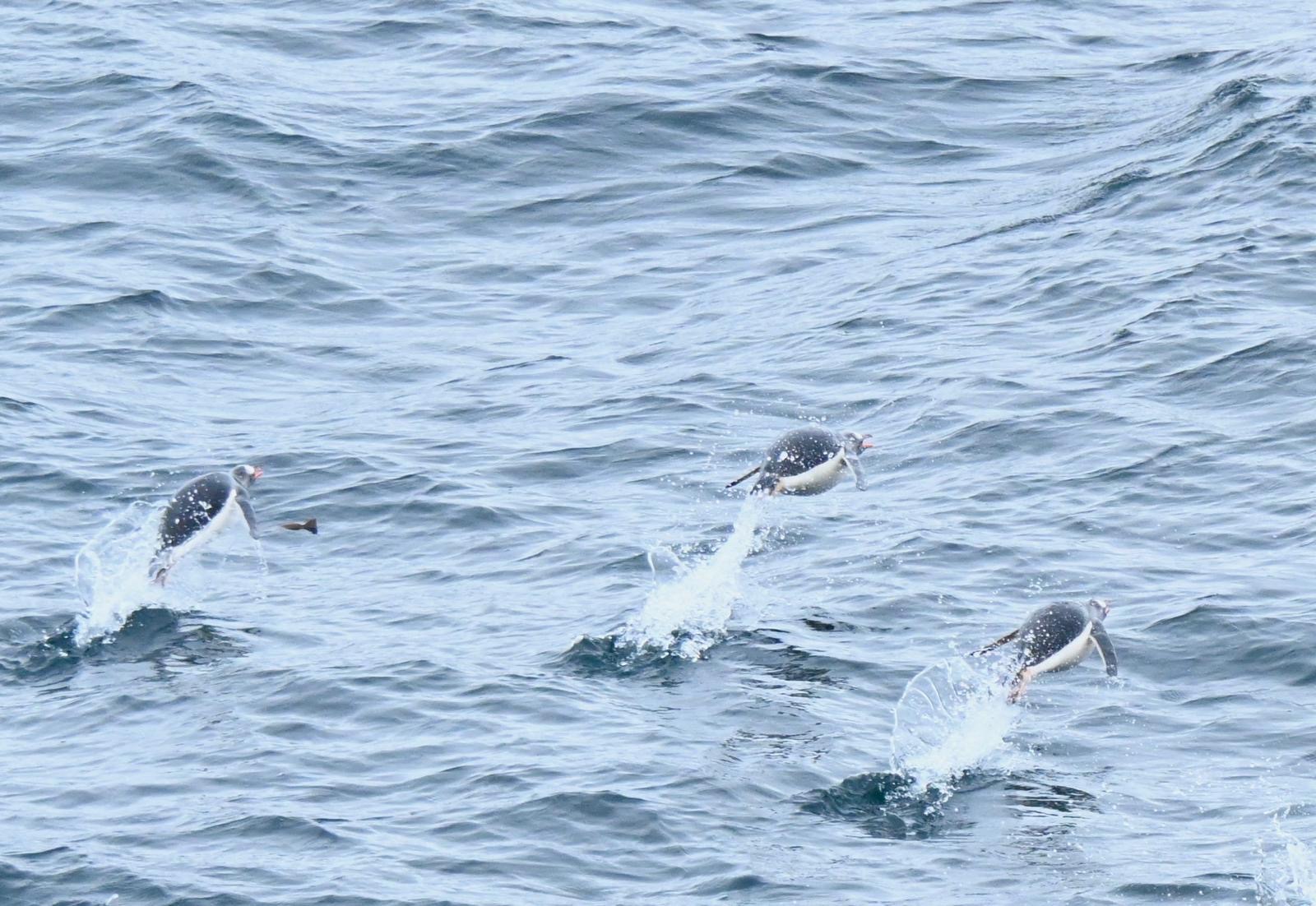
Gentoo Penguins porpoising. Unfortunately our humpback whale photos didn’t really work out.
It was mid afternoon when we arrived at Gold Harbour. The long walk crew, including Sylvia, headed ashore first. They were lead up the valley and then up on to and along a ridge with a really good view back over the beach. Eric, one of the naturalists on board was working on a timelapse camera up there that keeps an eye on Bertrab glacier that terminates on the top of a nearby cliff.
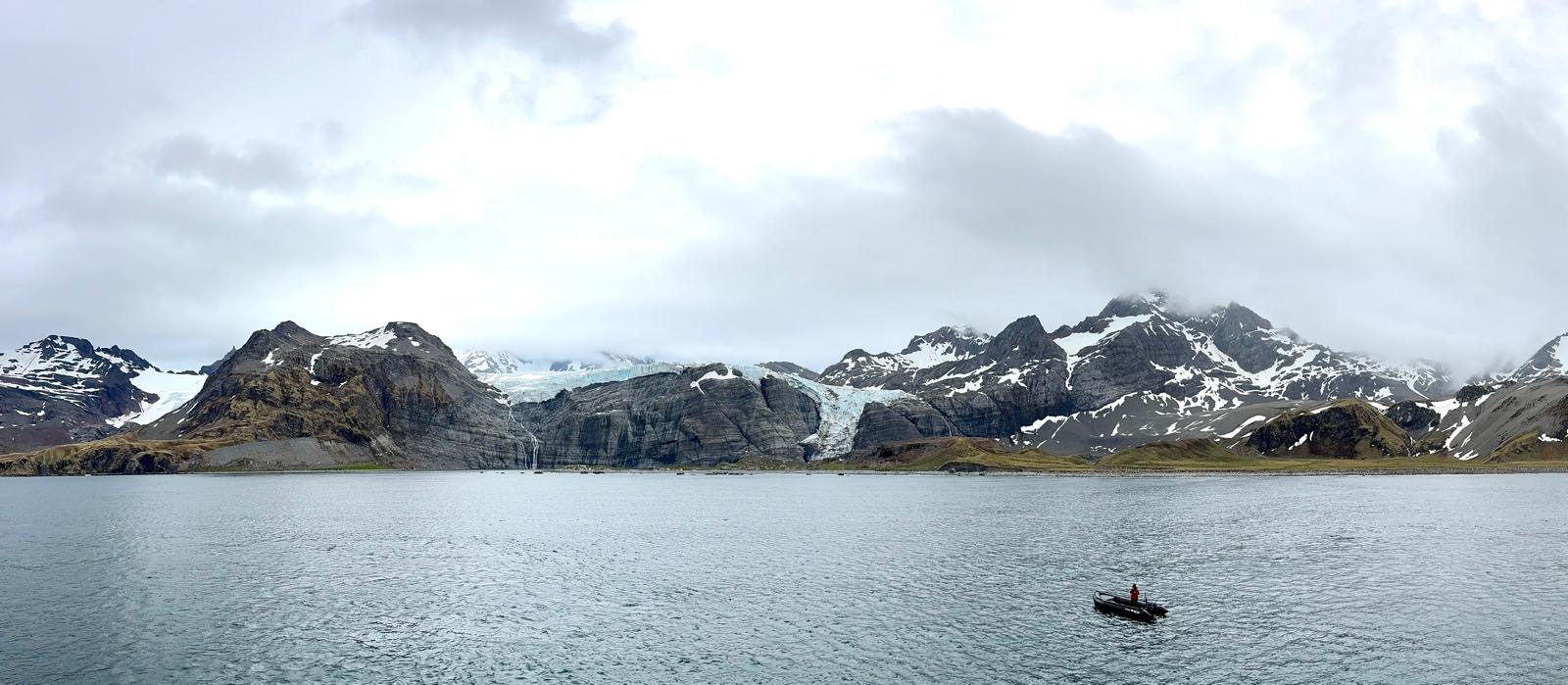
Gold Harbour with Bertrab glacier
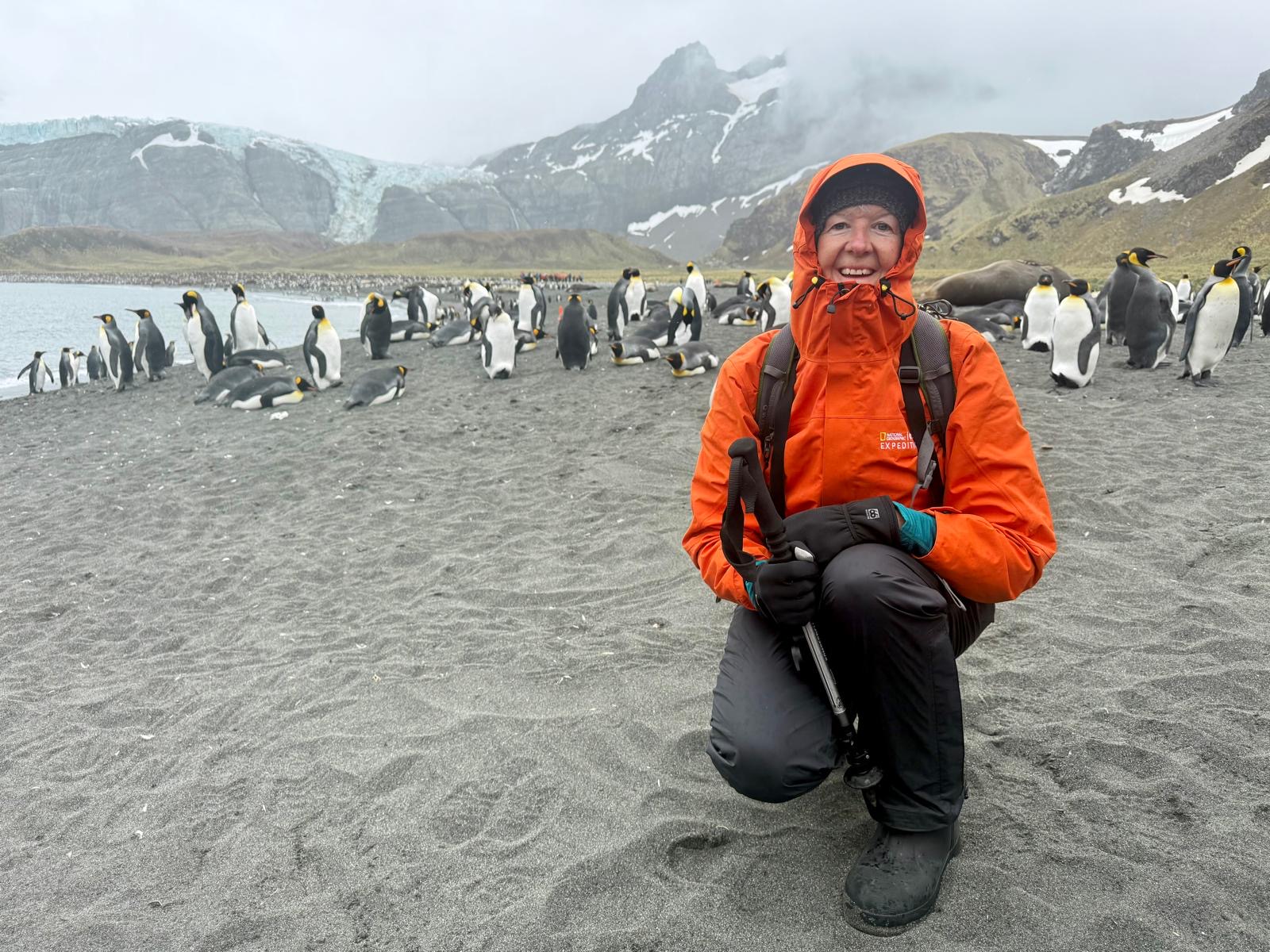
Landing on the beach
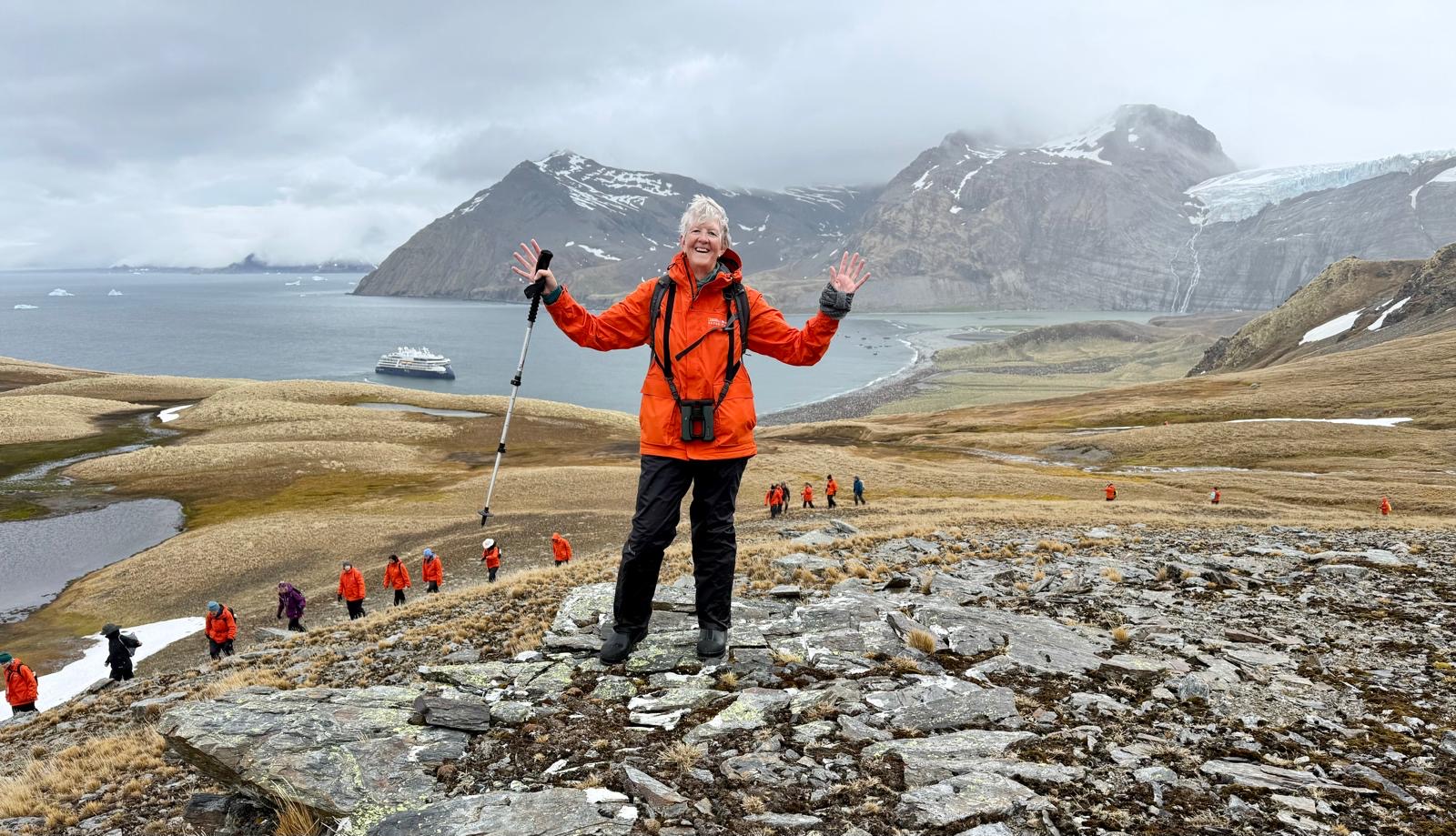
View back down over the beach from the ridge
Among the penguins are thousands of rotund, fluffy brown fledglings. These guys popped out of the egg after about 50 days rotating between mum‘s feet and dad’s feet while the other went away to feed. Arriving into the world in December last year, Ma and Pa fed them up over the summer until the arrival of winter. Then Ma and Pa left them on the beach to fend for themselves and headed out to sea for the winter to feed themselves. Thousands of these chicks are left on the beach with lots of fat and reserves to live on during the winter. They tend to huddle up in a large group keep warm until Ma and Pa return at the beginning of summer. They then cram more food into them over the coming months before they eventually moult and grow the waterproof coat they need to head out to sea to make their way as a fully qualified penguin.
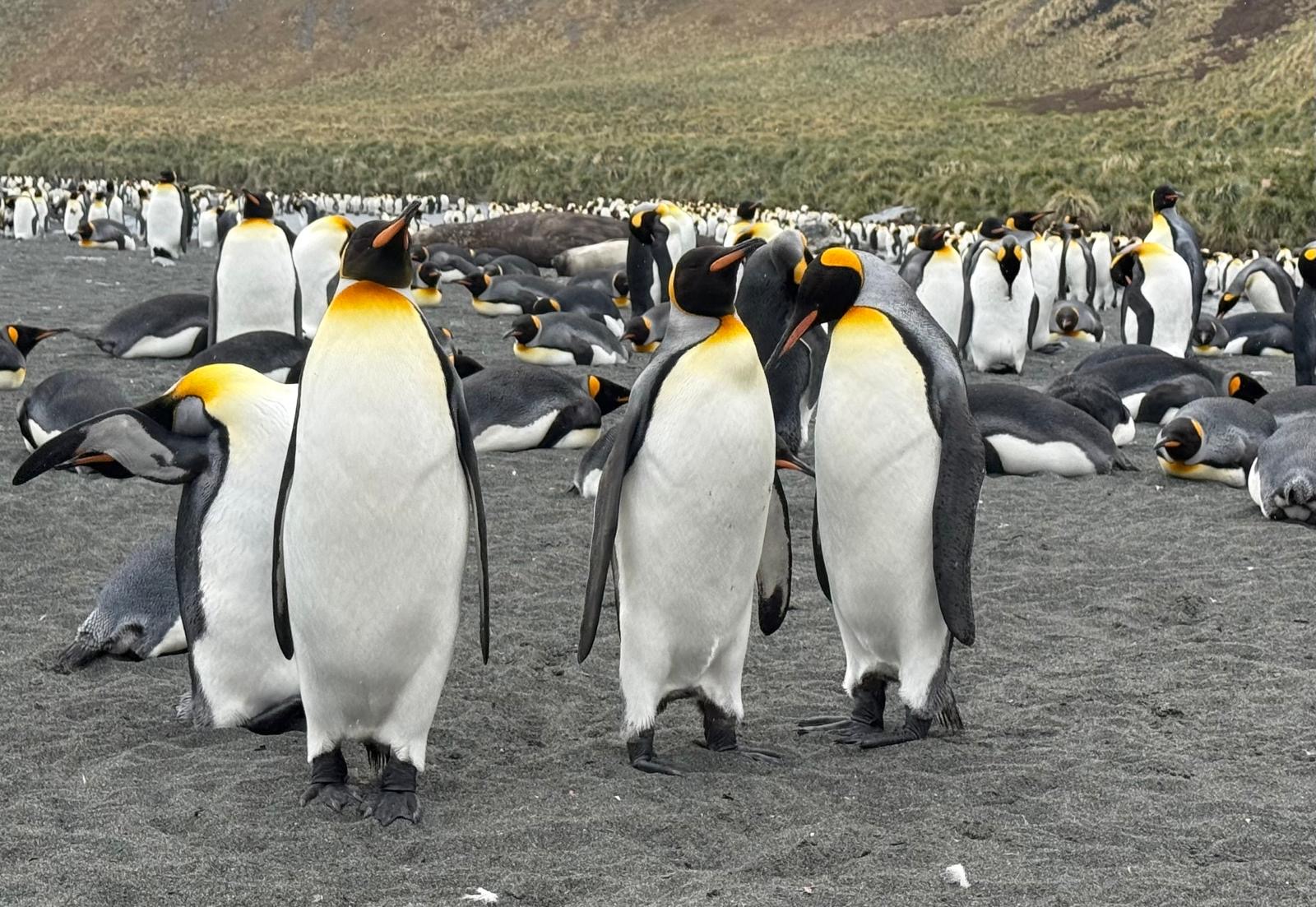
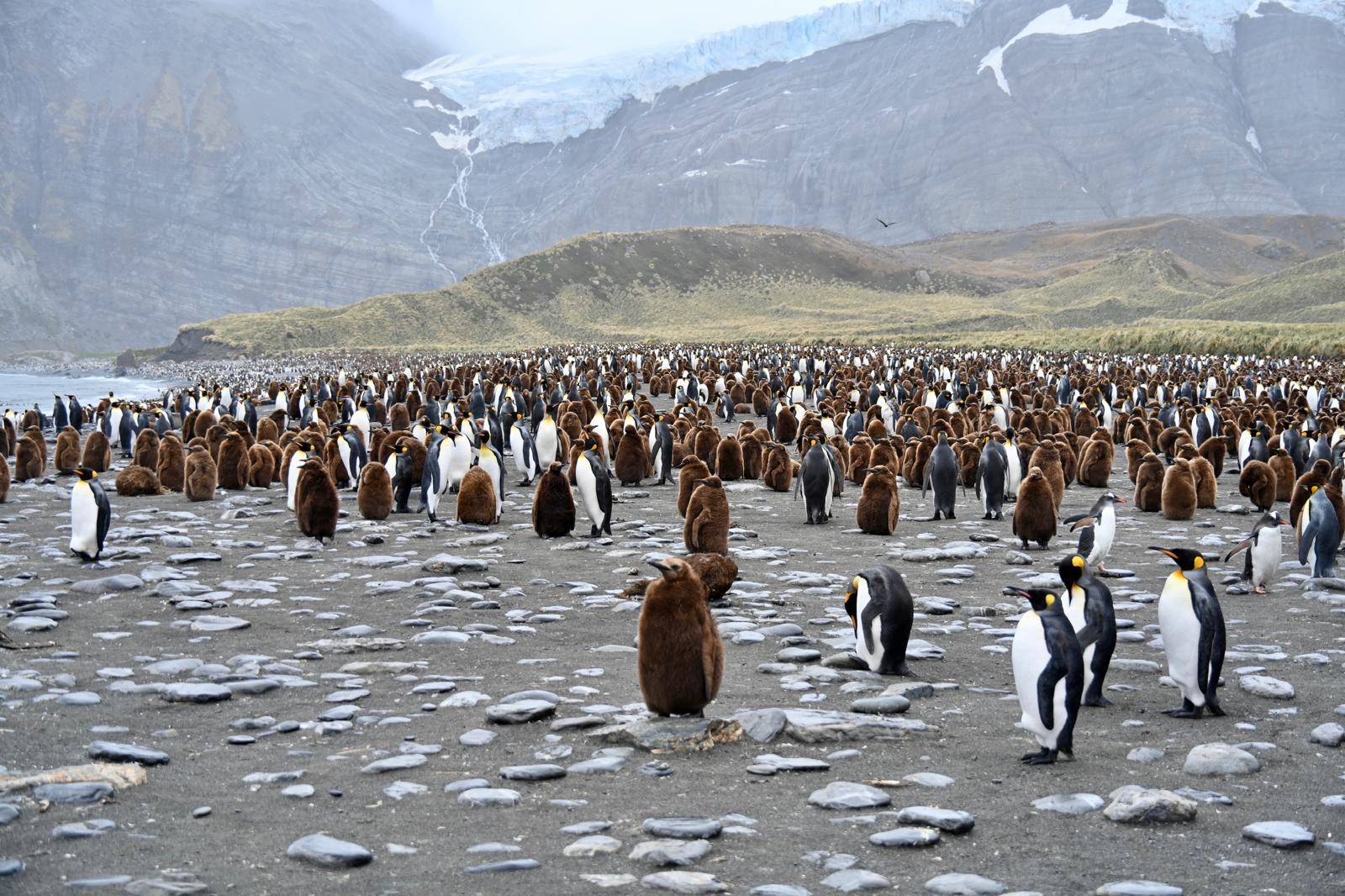
Thousands of Adult and Juvenile King Penguins
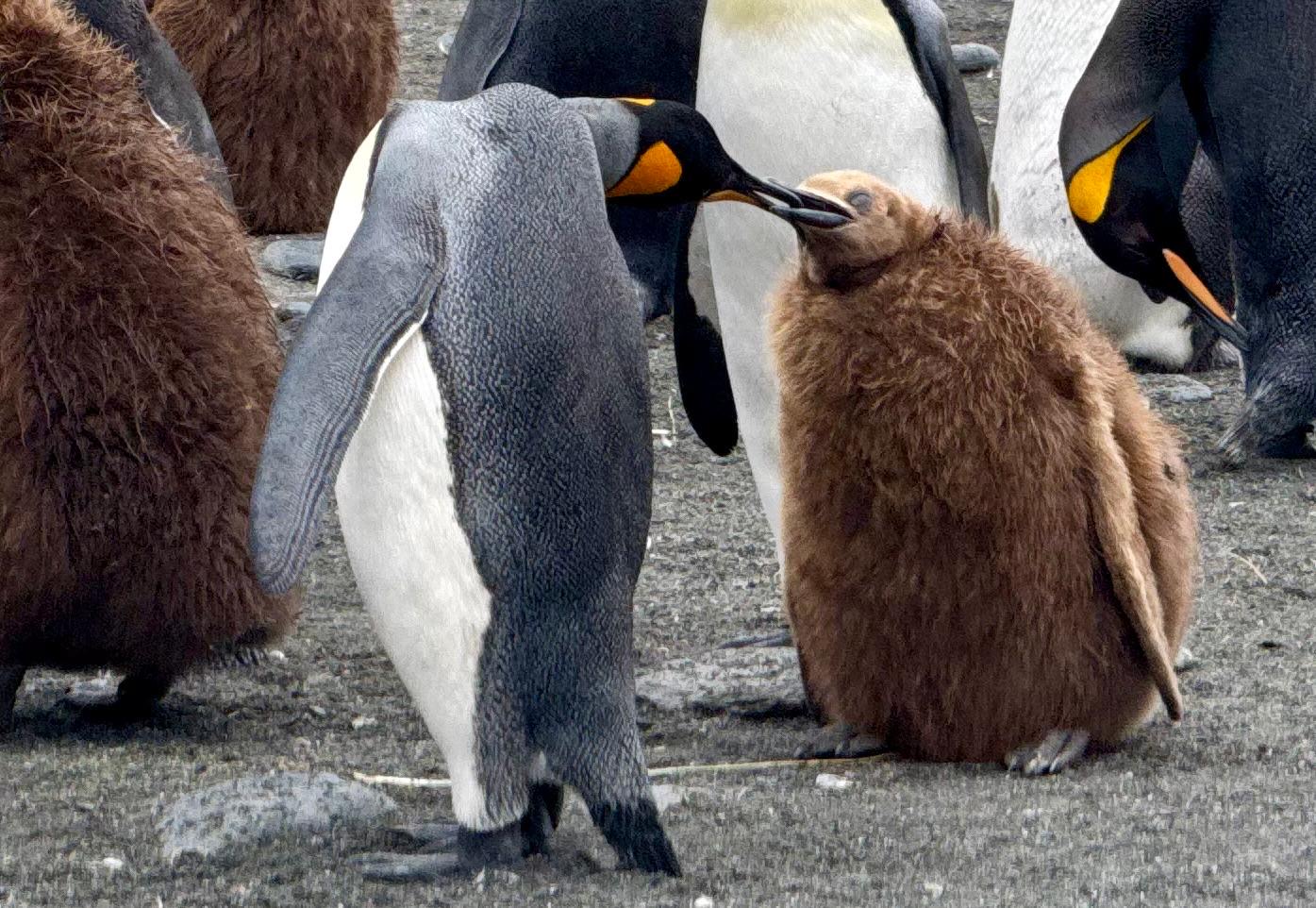
A demanding juvenile being fed regurgitated fish by one of its parents.
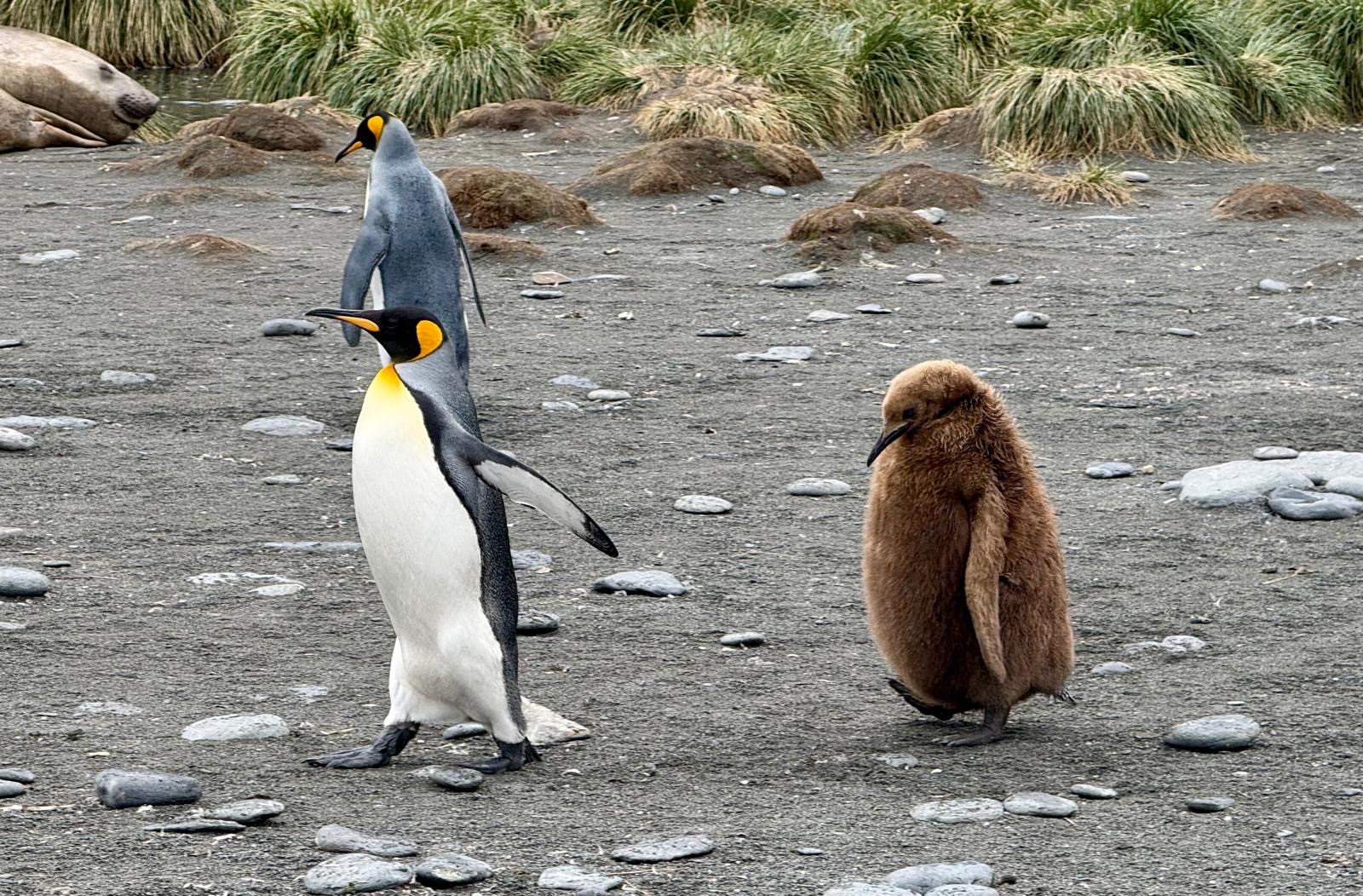
It was quite amusing to watch these fat, fluffy little (or not so little) fur-balls following their parent around demanding food.
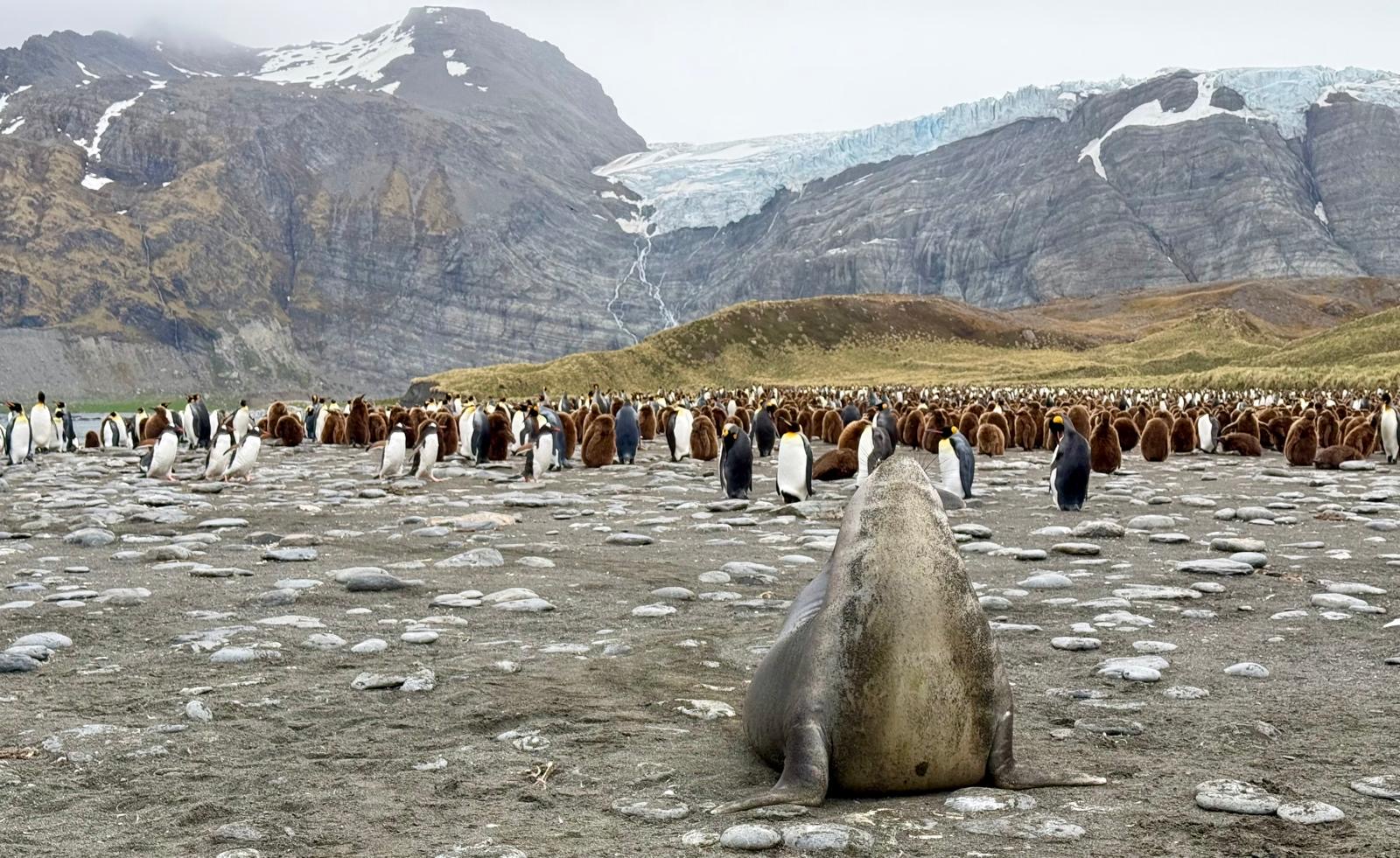
Elephant seal posing in front of the King Penguins with Bertrab glacier in the background.
There’s a rule here that you’re not supposed to go within 15 feet of the penguins and other animals but nobody told the penguins that. Often, especially the fledgelings, would come right up to you.
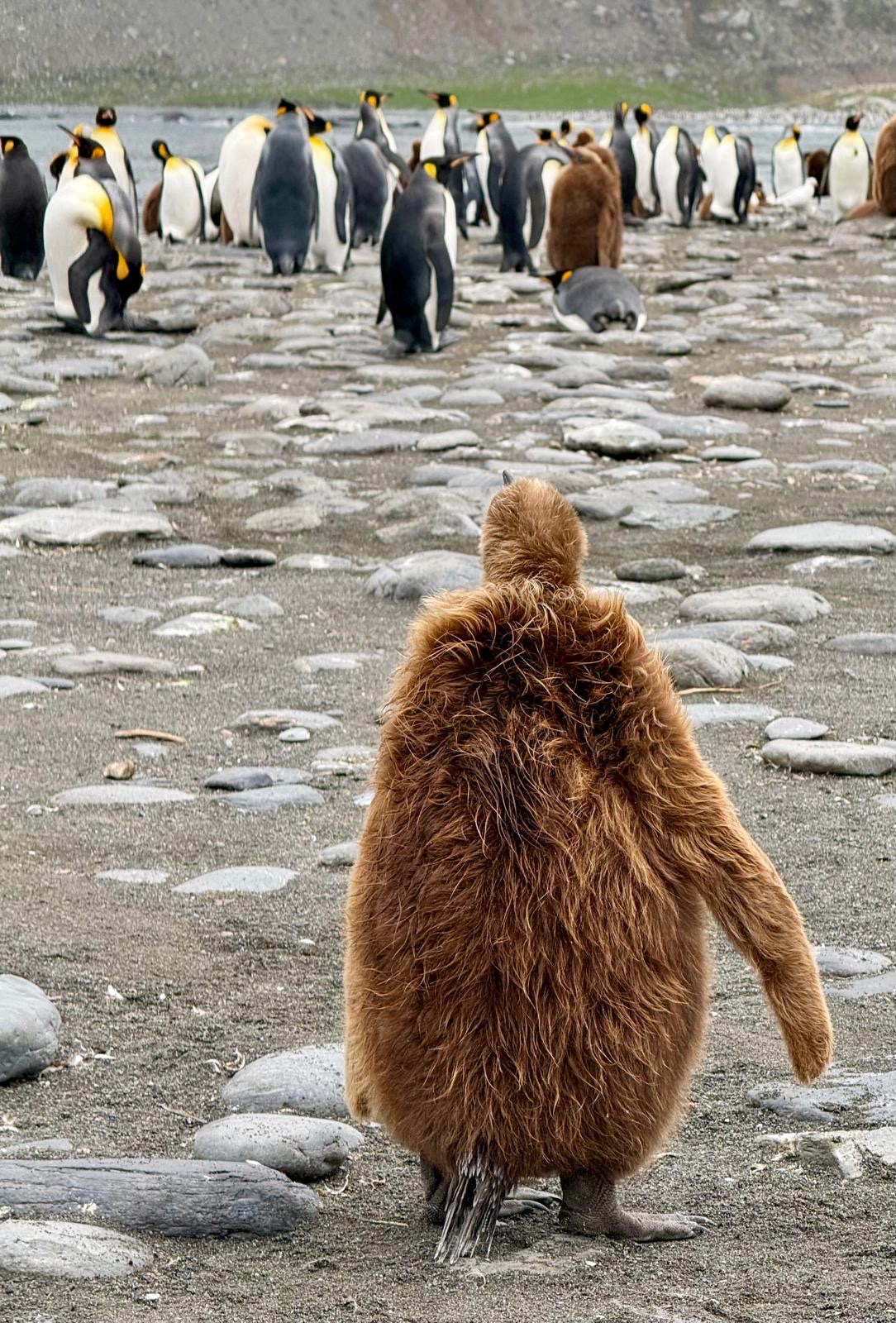
The beach is littered with large elephant seals and mainly male fur seals, who have claimed their space waiting for their 15 or 20 females to turn up, likely sometime in the next few days. At that point the beach is going to be really crowded. It is really hard to capture on camera just how massive this concentration of penguins is as it runs for several kilometres down the beach and also back up the river.
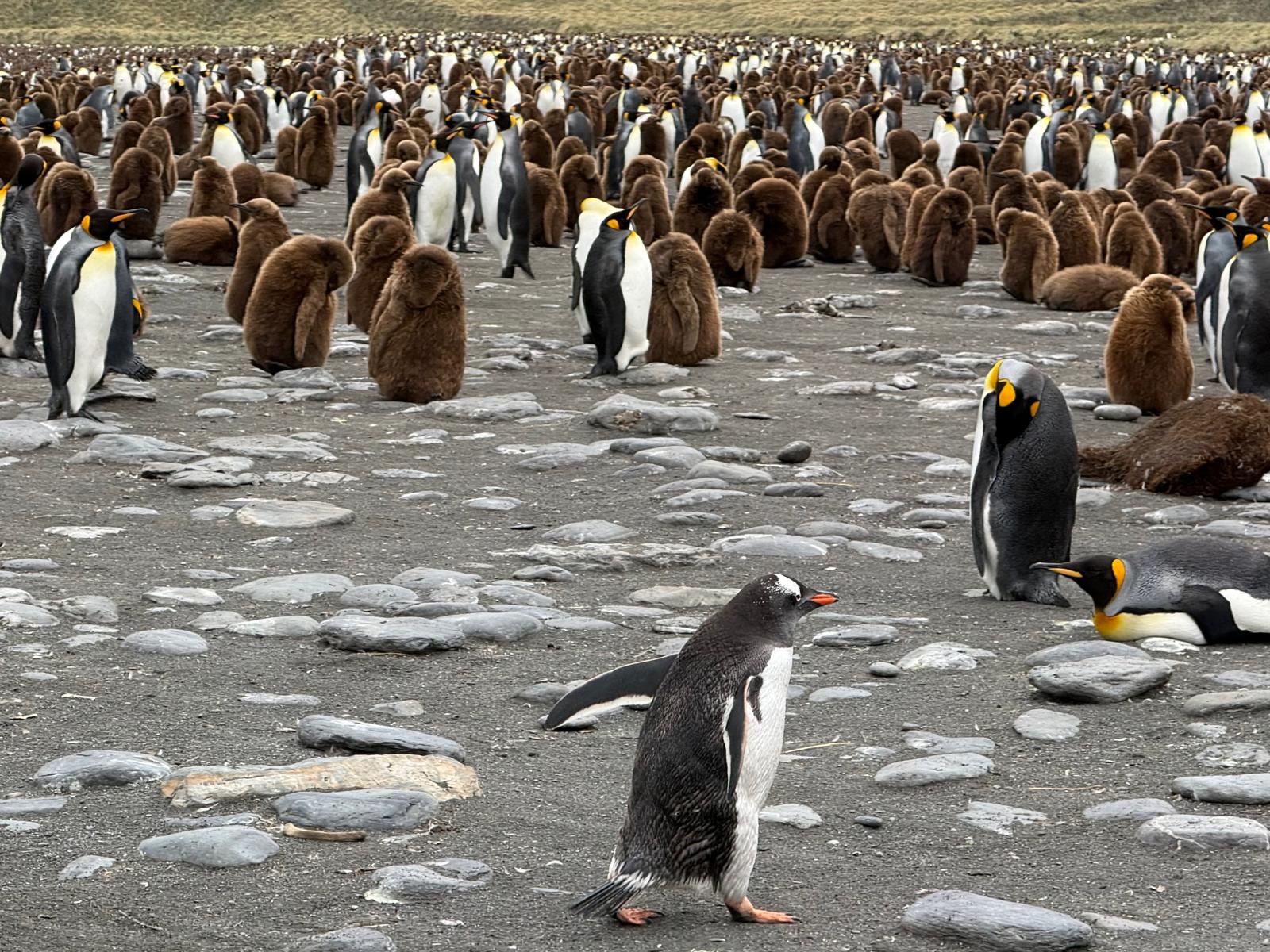
Gentoo penguin crossing over in front of the Kings
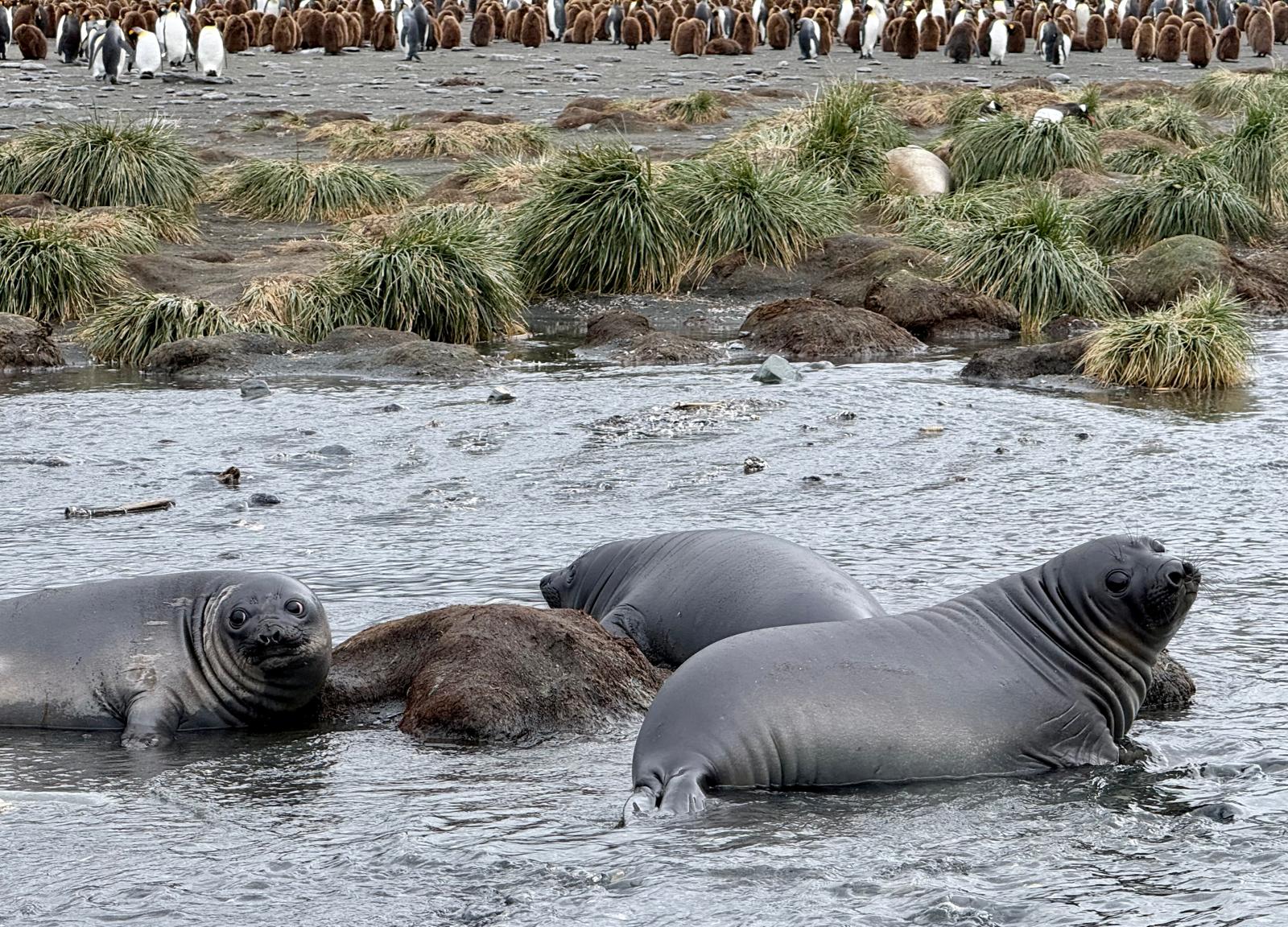
Elephant seal weaners cooling off. You can glimpse the throng of penguins in the background.
It was soon time to be back to the ship. Our normal evening debrief started a little later as the long walk group that Sylvia was with were a bit late getting back on board. During the debrief, Eric showed some pictures from the timelapse camera on the hill showing the movement of the glacier over the last 15 years. Other shots on the camera showed how the penguin colony had expanded and contracted over the years, especially when the adults moved off at the end of summer leaving the fluffy fledglings to fend for themselves.
Tuesday 24 November 2026: At Sea – Sylvia
At recap last night, Peter, our Expedition Leader, advised that because of the exceptionally calm conditions we have been experiencing we have the opportunity to visit the South Orkney Islands. As such we are at sea today on our way there. It has actually been really nice to have a quieter day today to reflect on everything we saw and experienced on South Georgia.
As usual with a sea day, we have also been well-fed and well-educated. Martin gave a very informative and humorous run down on “the Wild Family Life of Penguins”. Suffice it to say the concept of lifetime monogamy is not entirely correct. It seems penguins can be just as depraved as humans….
Later in the morning Macduff shared more on his experiences as a photographer for National Geographic traveller. Every-time I start to think some of our photos are not too bad, I get brought back very quickly to reality when some of the experts on board share their shots.
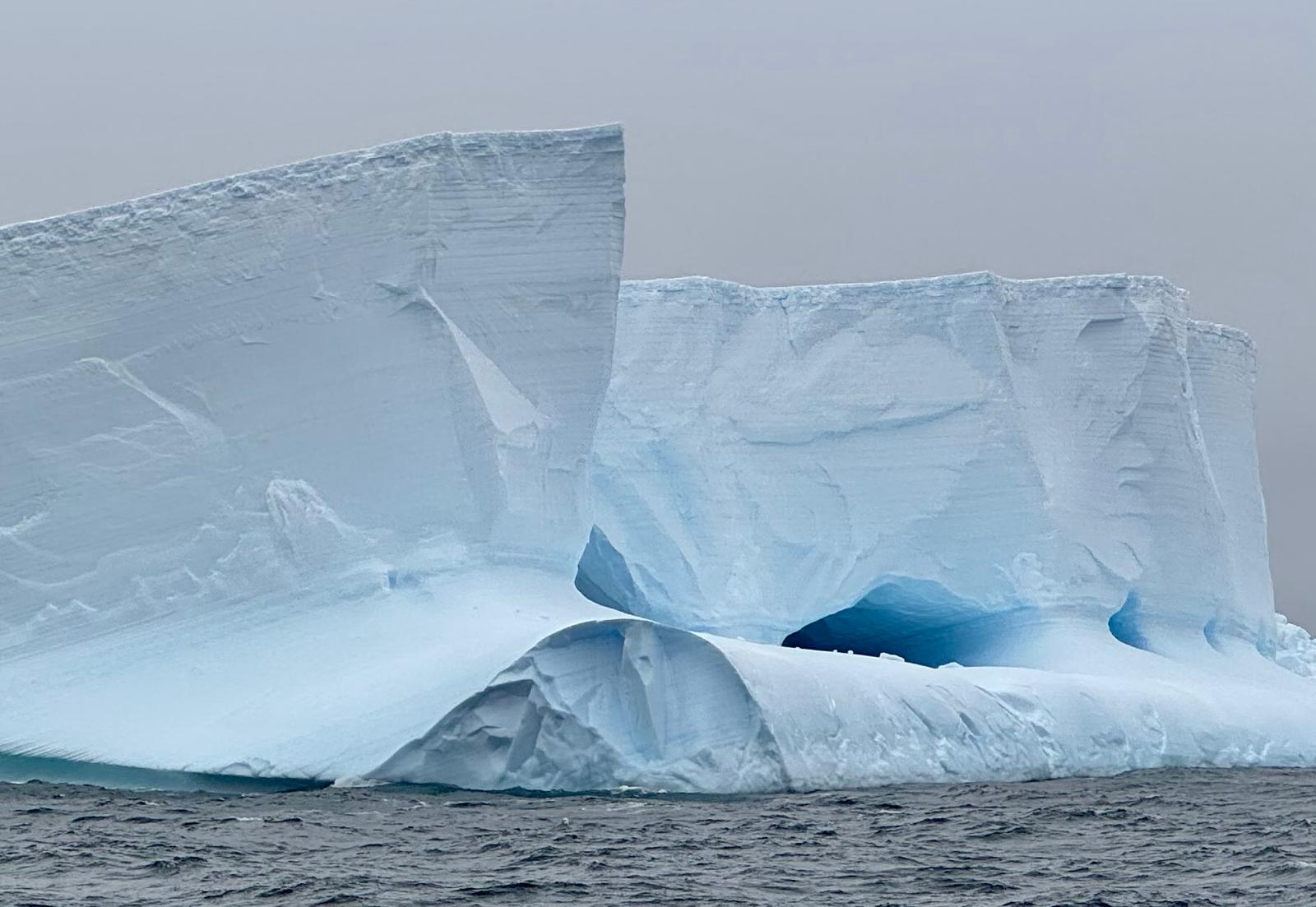
We are heading further and further south and are now regularly encountering icebergs, including some rather large tabular ones. Along with the whale spouts and variety of bird life it makes it hard to peel our eyes away from the windows.
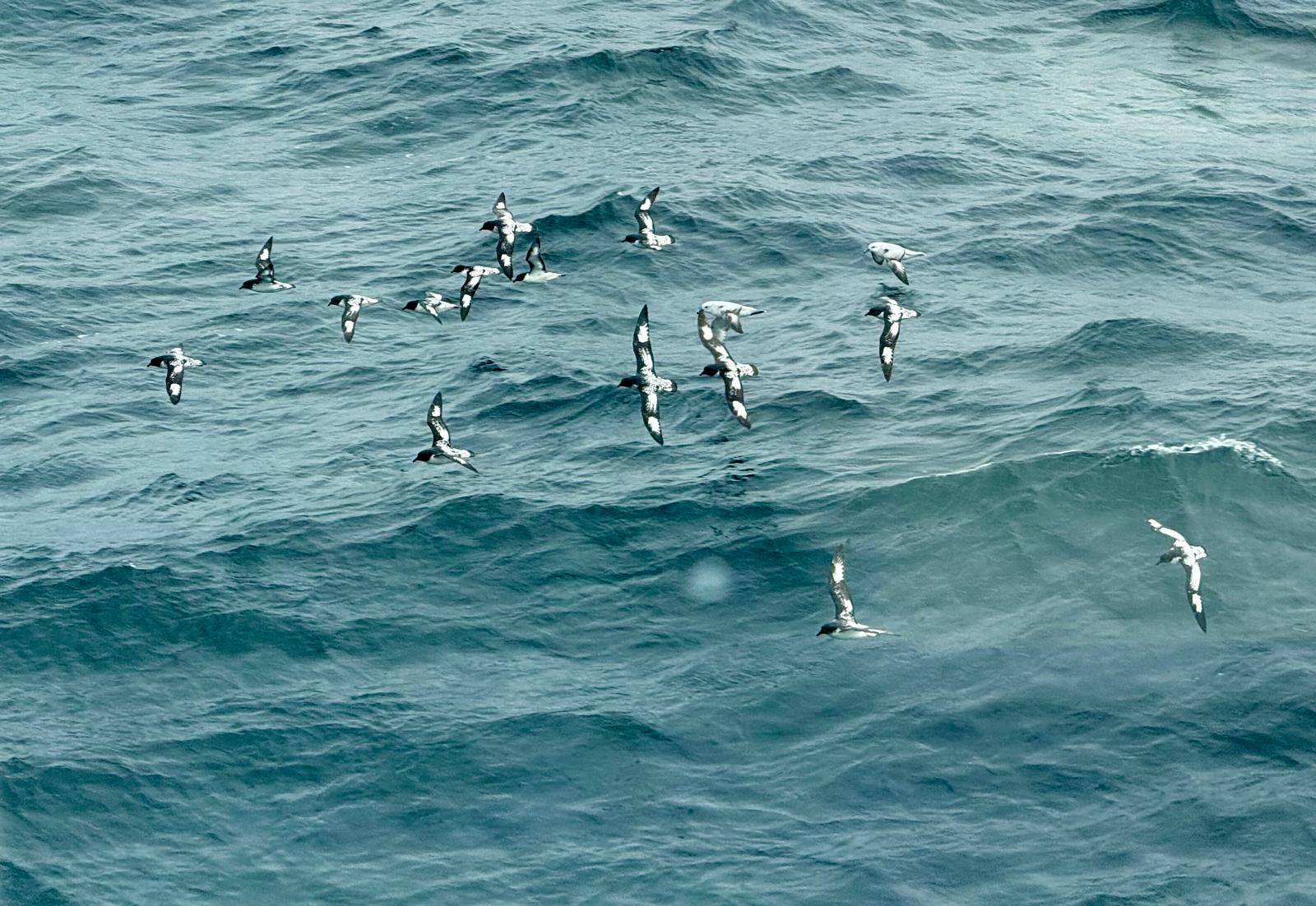
Pintado Petrels
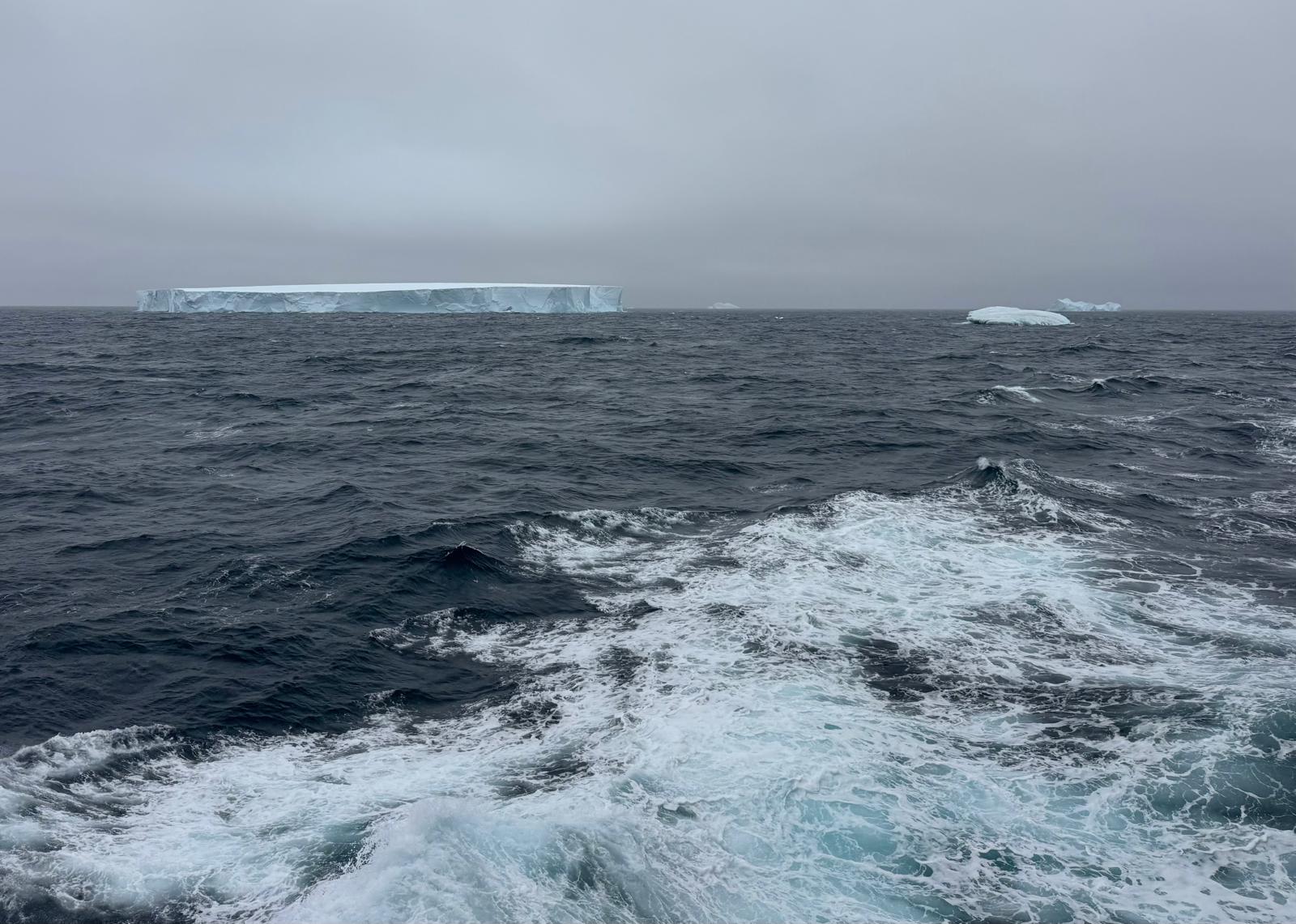
One of the first large tabular icebergs of the trip
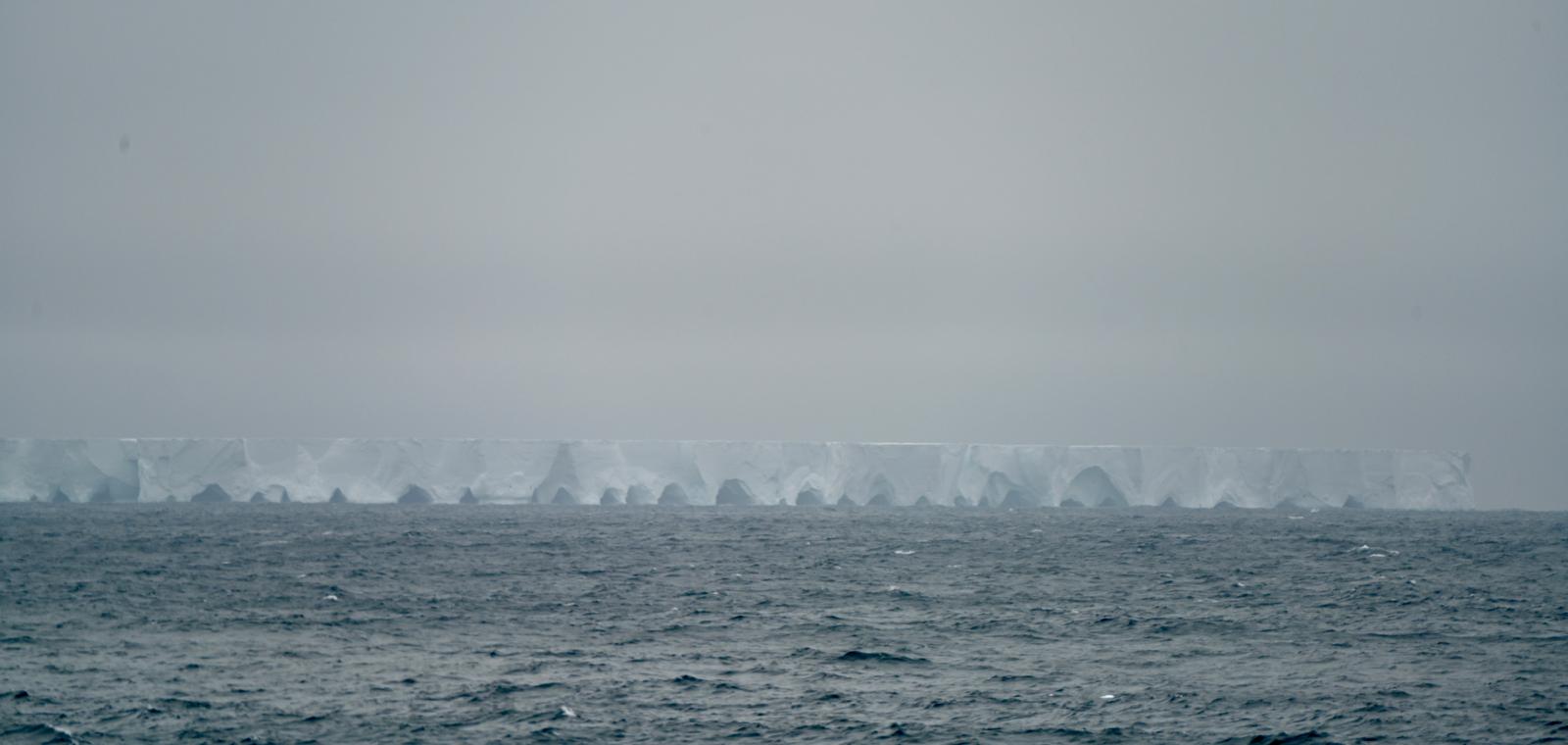
This very large tabular iceberg was some distance from the ship but had amazing arches all along the bottom edge.
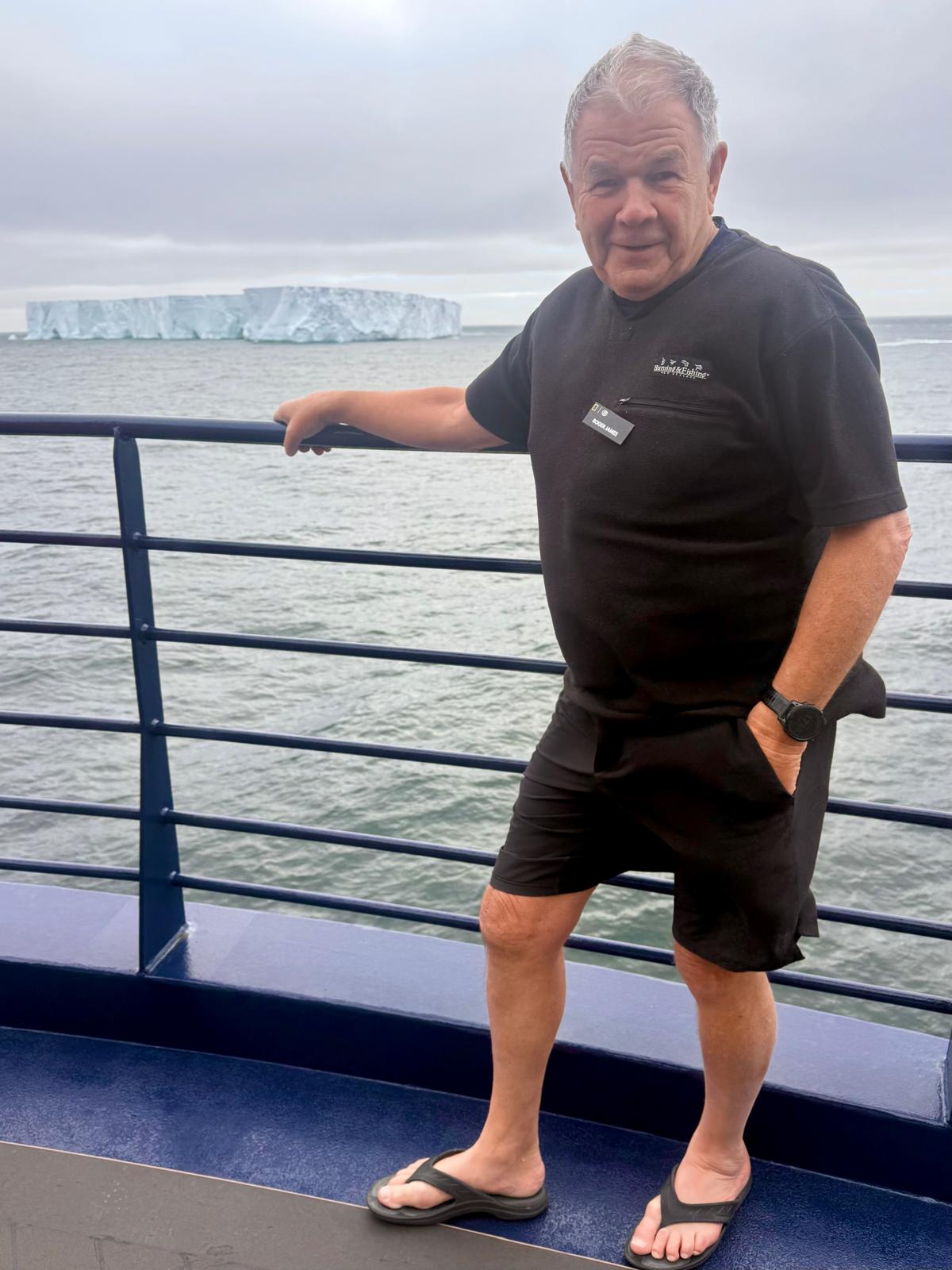
Whilst the swell is still fairly calm, the wind is quite strong. This, combined with the cooler temperatures is making my laps around the deck a little more interesting. I certainly need to rug up warmly.
After lunch, Eric gave a very interesting talk on “The Life History of a Snowflake: Glaciology of Antarctica and South Georgia”. It doesn’t matter how many times I hear lectures on this subject, I always learn something new.
Later in the afternoon, Elise gave a talk on Shackleton. I know this story pretty well as Shackleton has long been a leadership hero of mine. Always good to get a recap though. Just as Elise finished we got a call that there was a large iceberg ahead and the captain had agreed to take the ship closer than normal so we all rugged up (well all except Roger) and headed out to the front deck for a closer look.
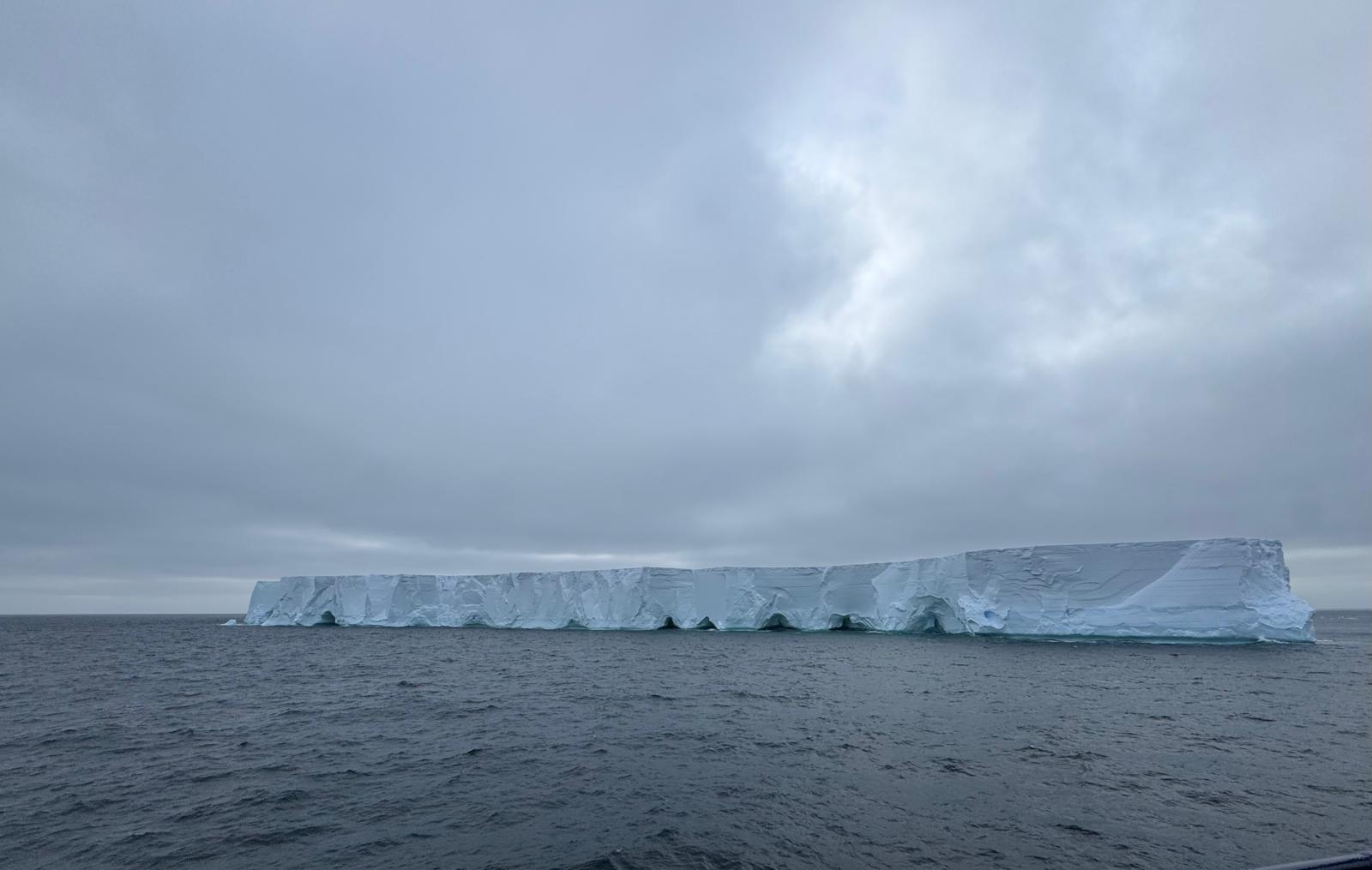
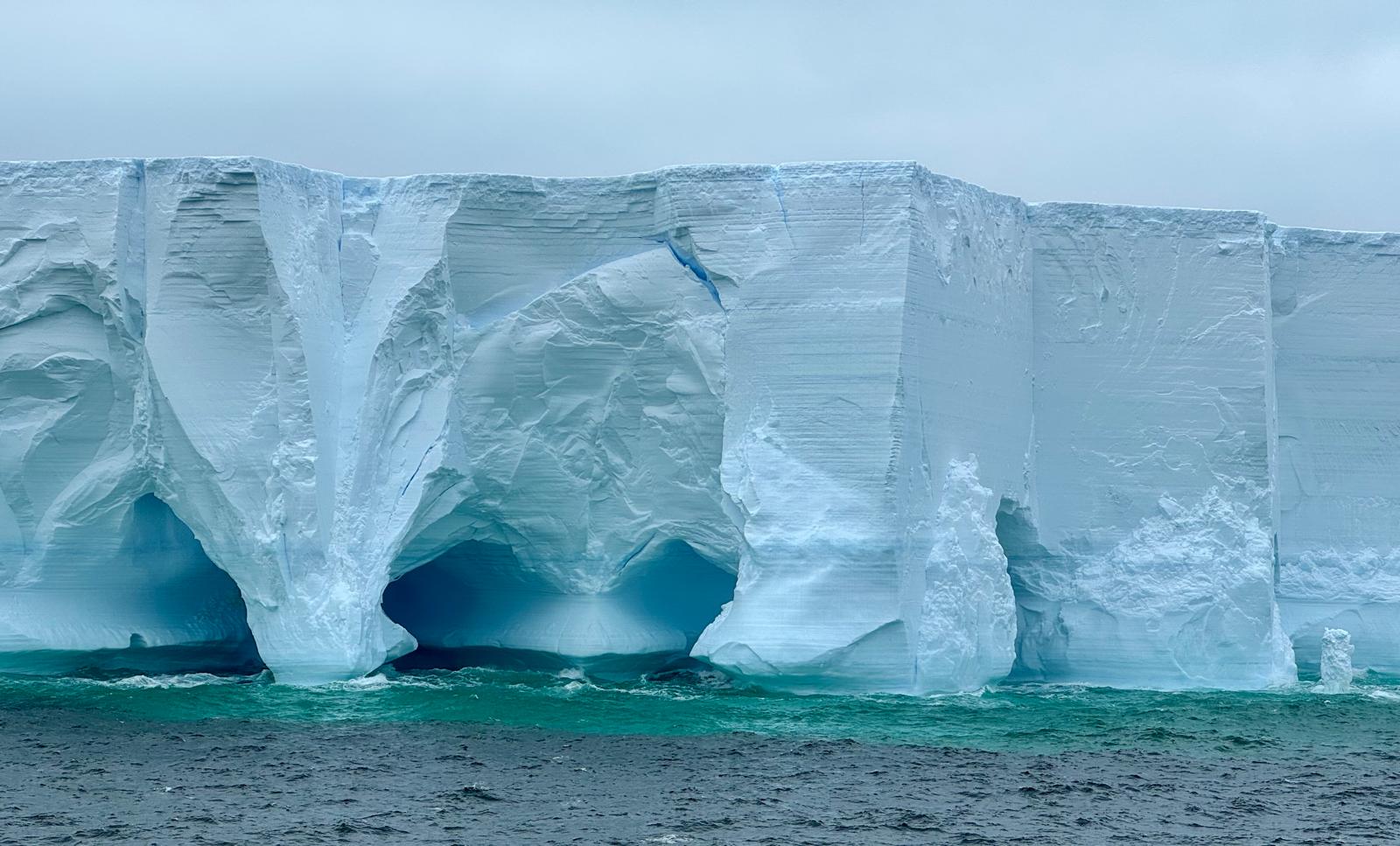
We then headed back to the lounge for the daily cocktail and recap session, which today included a session on some of the plants we had seen on South Georgia from the always highly amusing Dennis.
Wednesday 25 November 2026: South Orkney Islands – Roger
It was around 0800 when we arrived at the South Orkney Islands. We parked up in a bay, surrounded by icebergs, on the south side between Monroe and Coronation Islands. The bay was filled with icebergs and there was even a patch of blue sky.
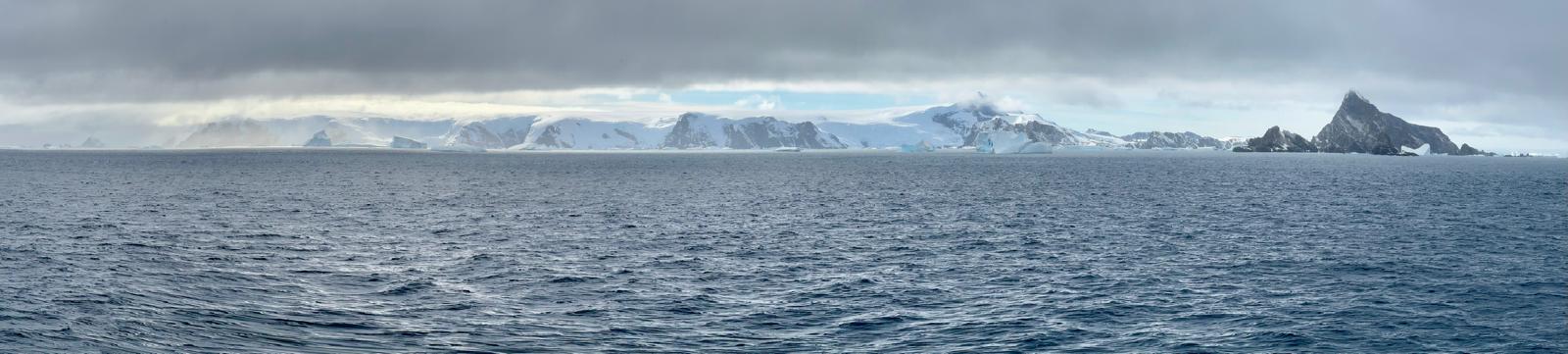
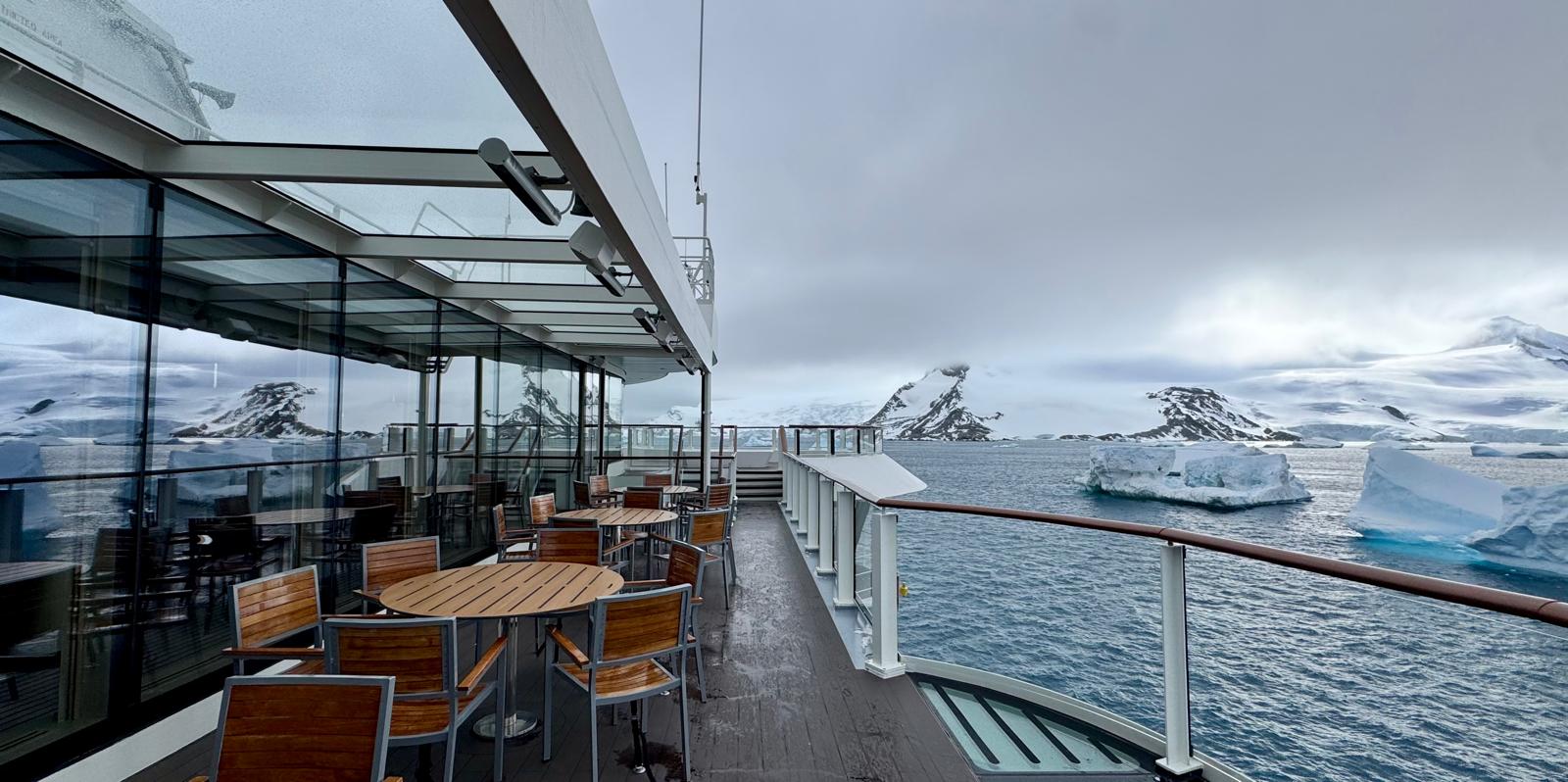
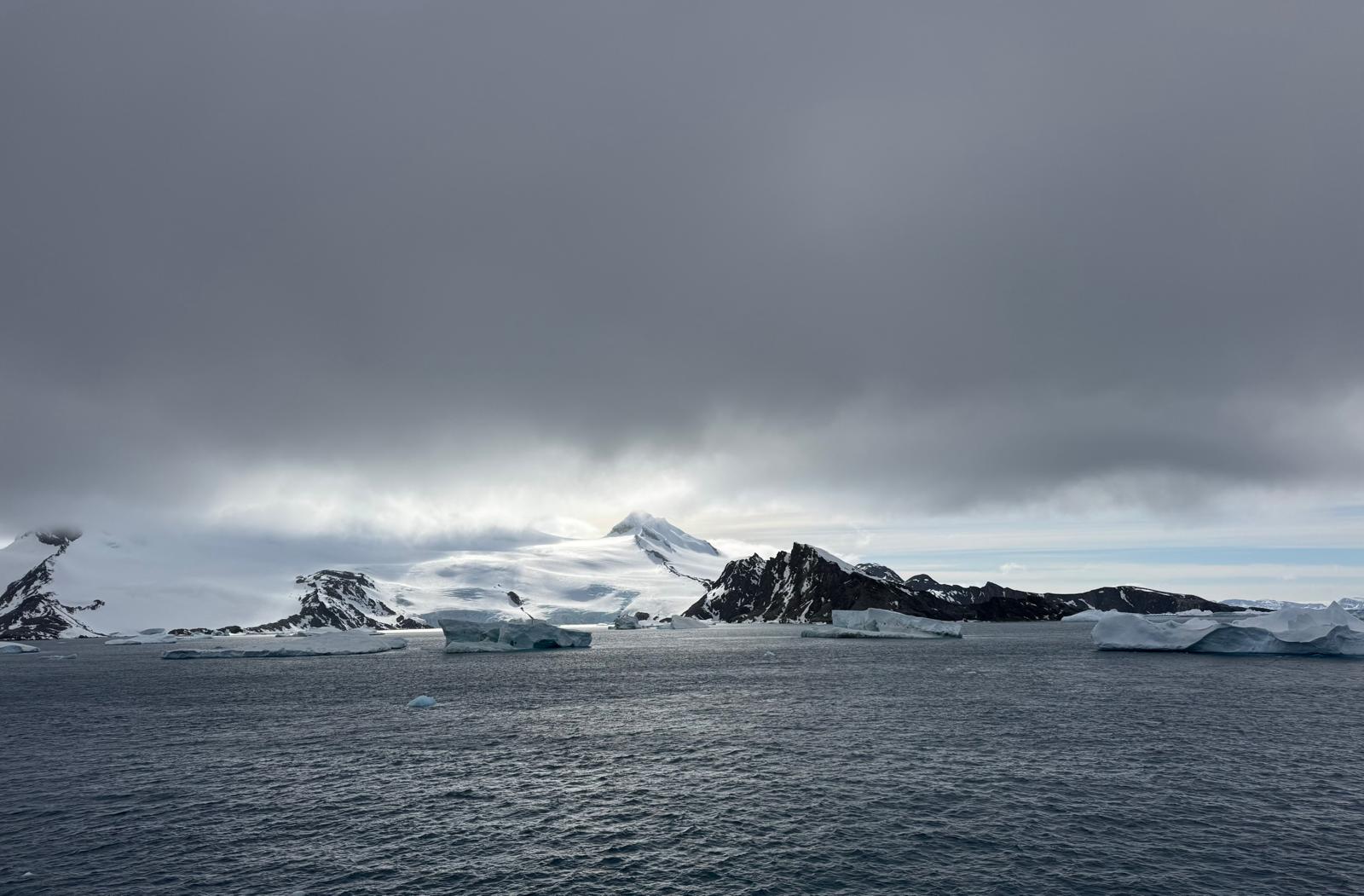
We were in one of the first groups to mount the zodiacs, heading into the rocky coast of Monroe Island. Here there were hundreds of thousands, maybe millions, of Chinstrap penguins, and one Gentoo penguin, which didn’t seem slightly bothered by the fact that everybody around him was a bit different.
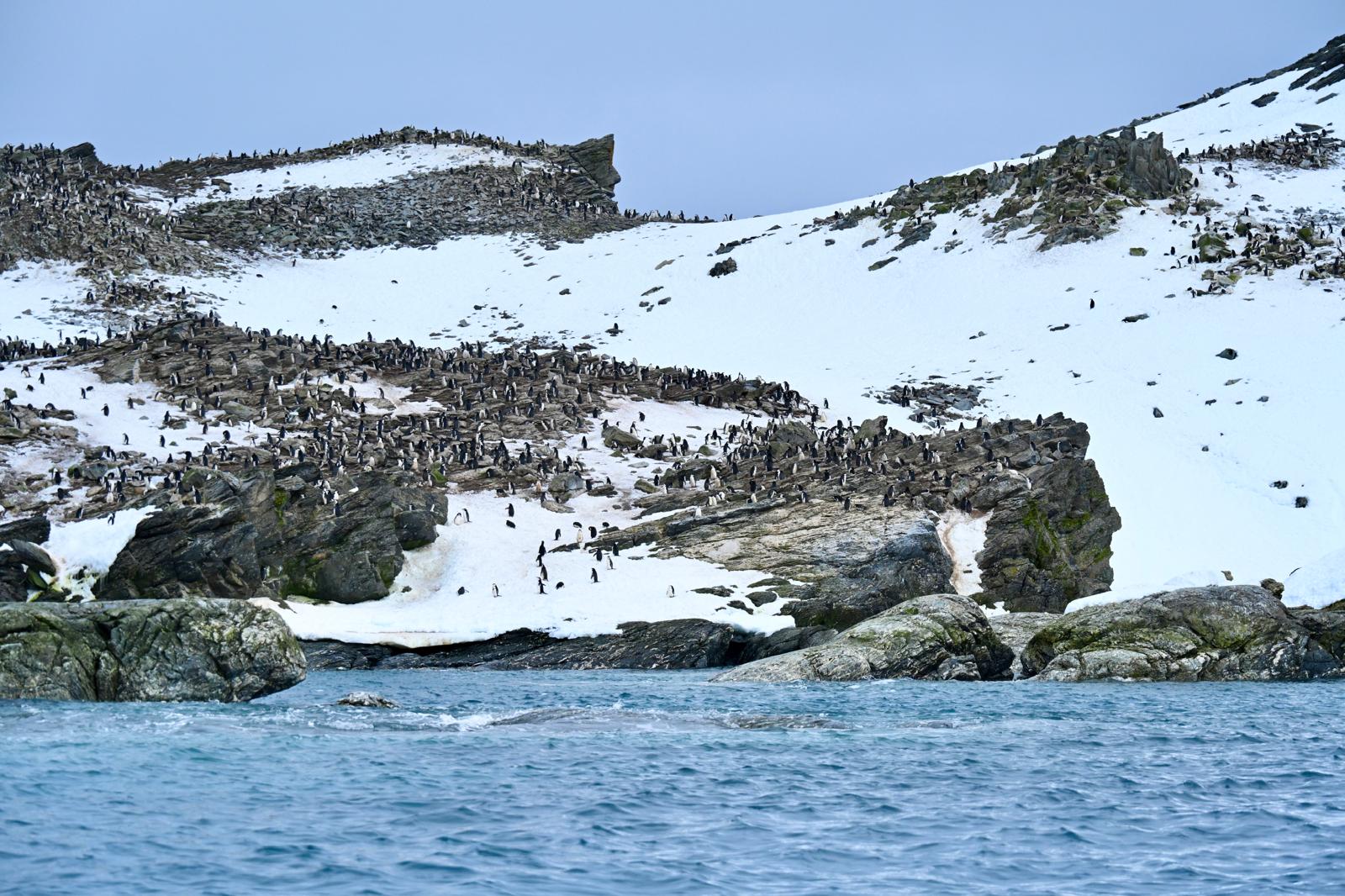
Chinstrap Penguin breeding colony
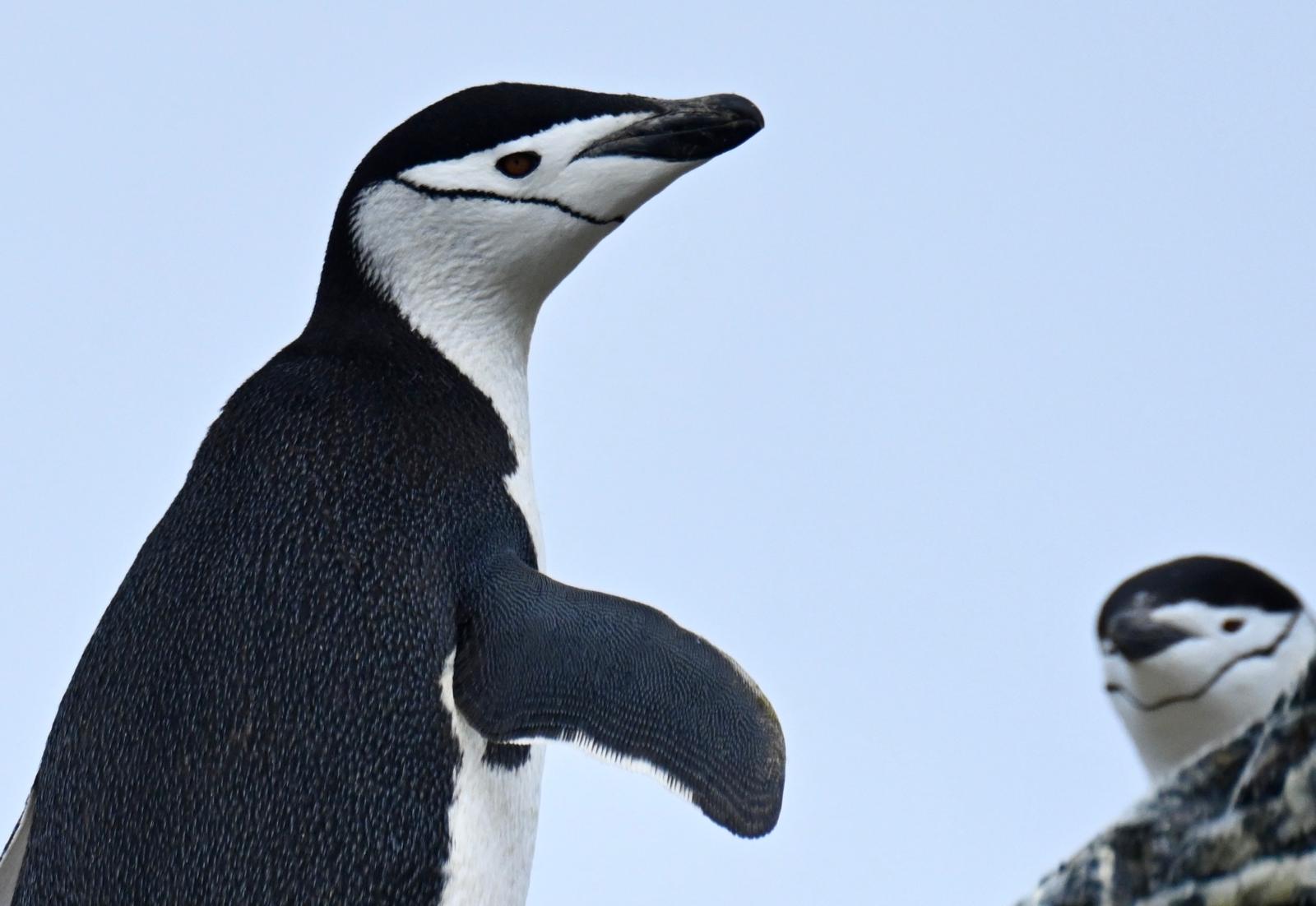
Chinstrap Penguin – aptly named
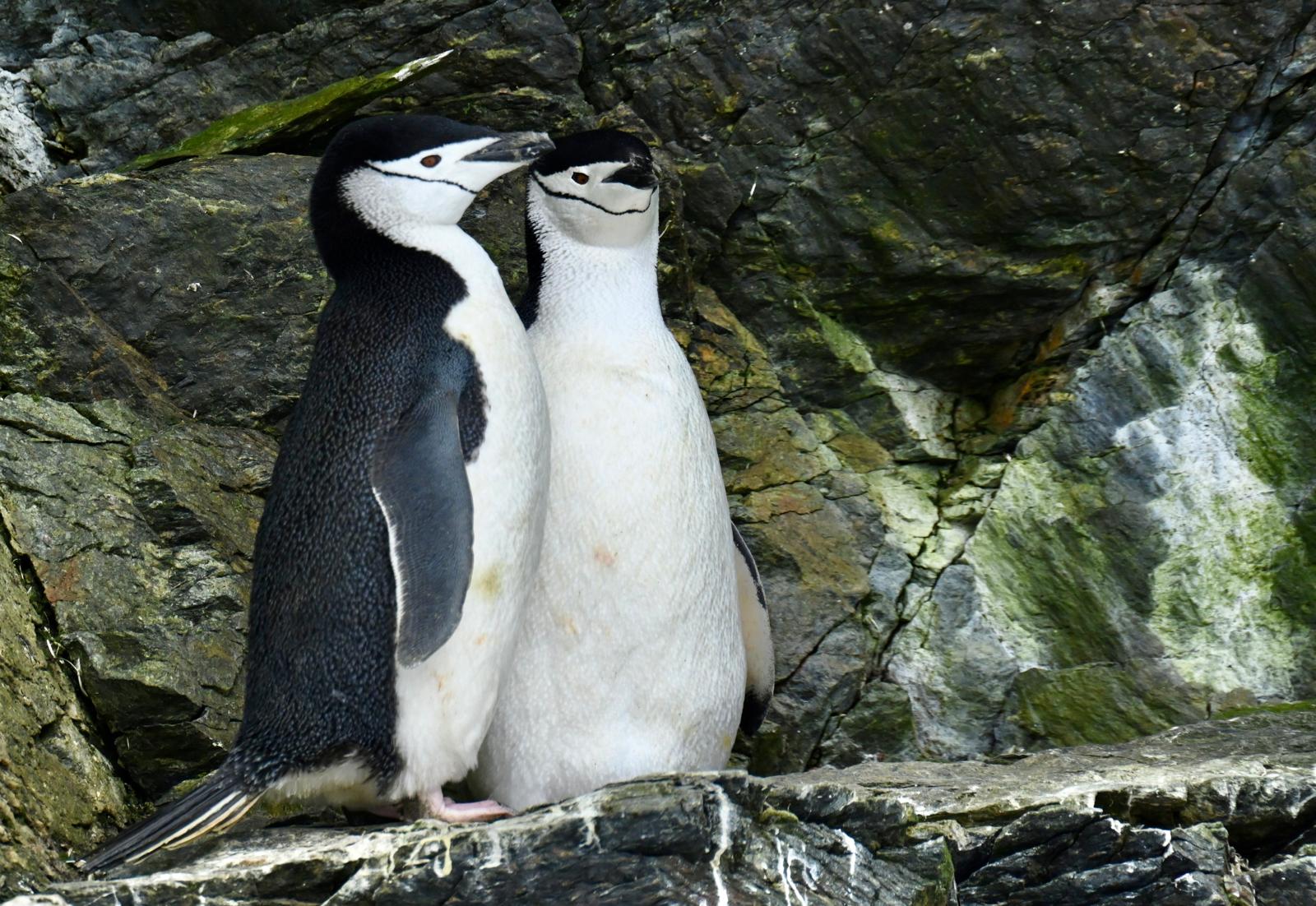
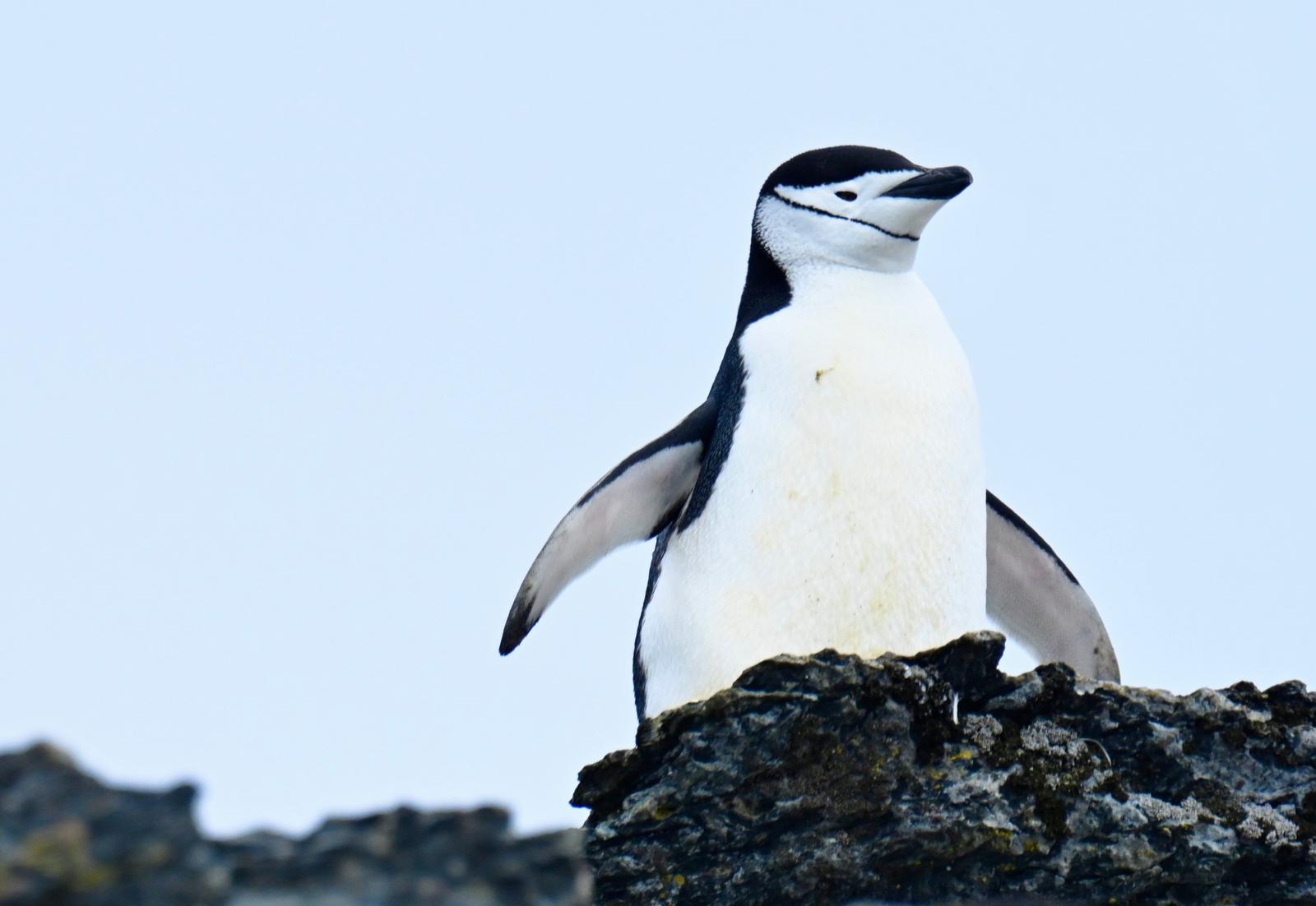
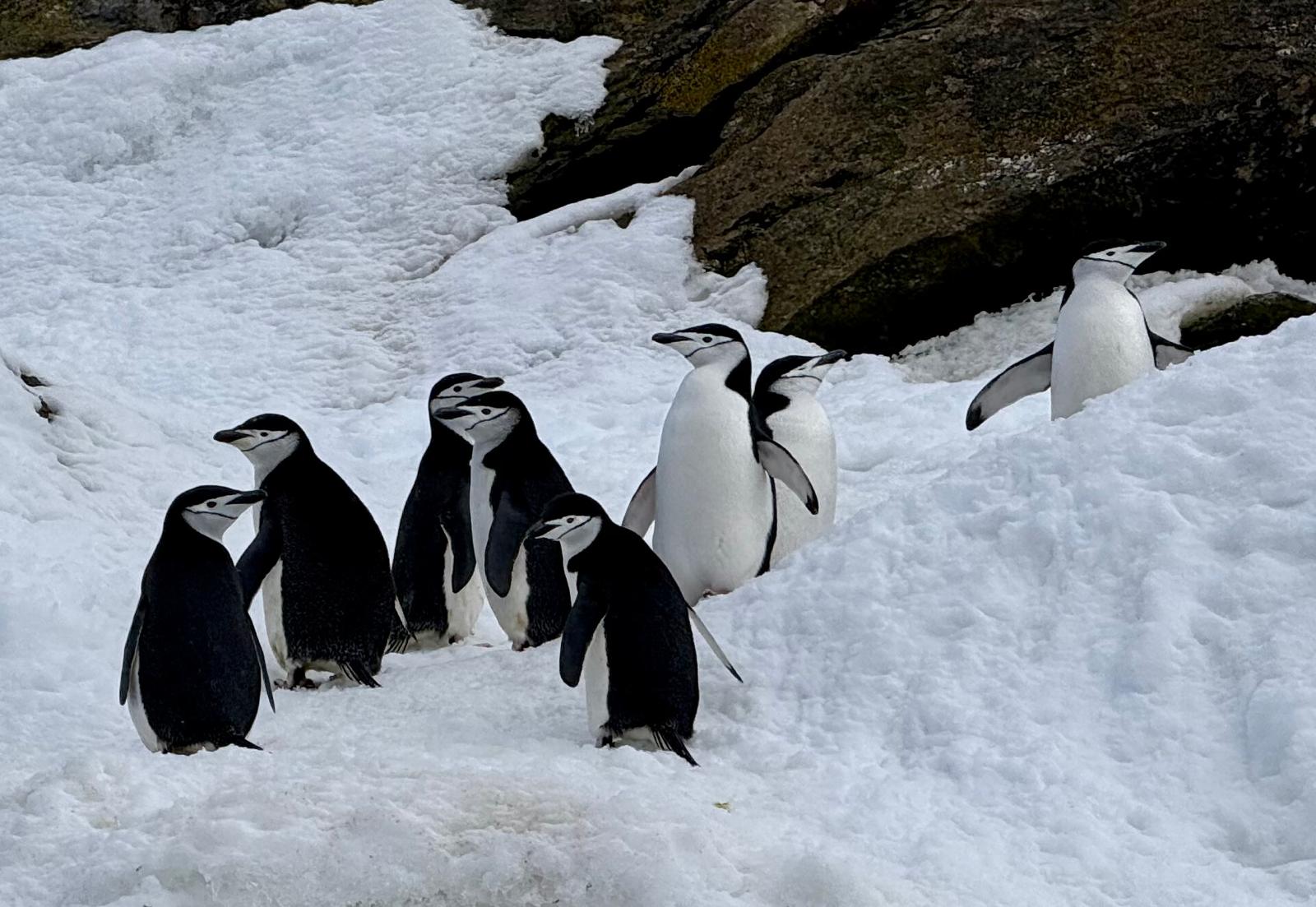
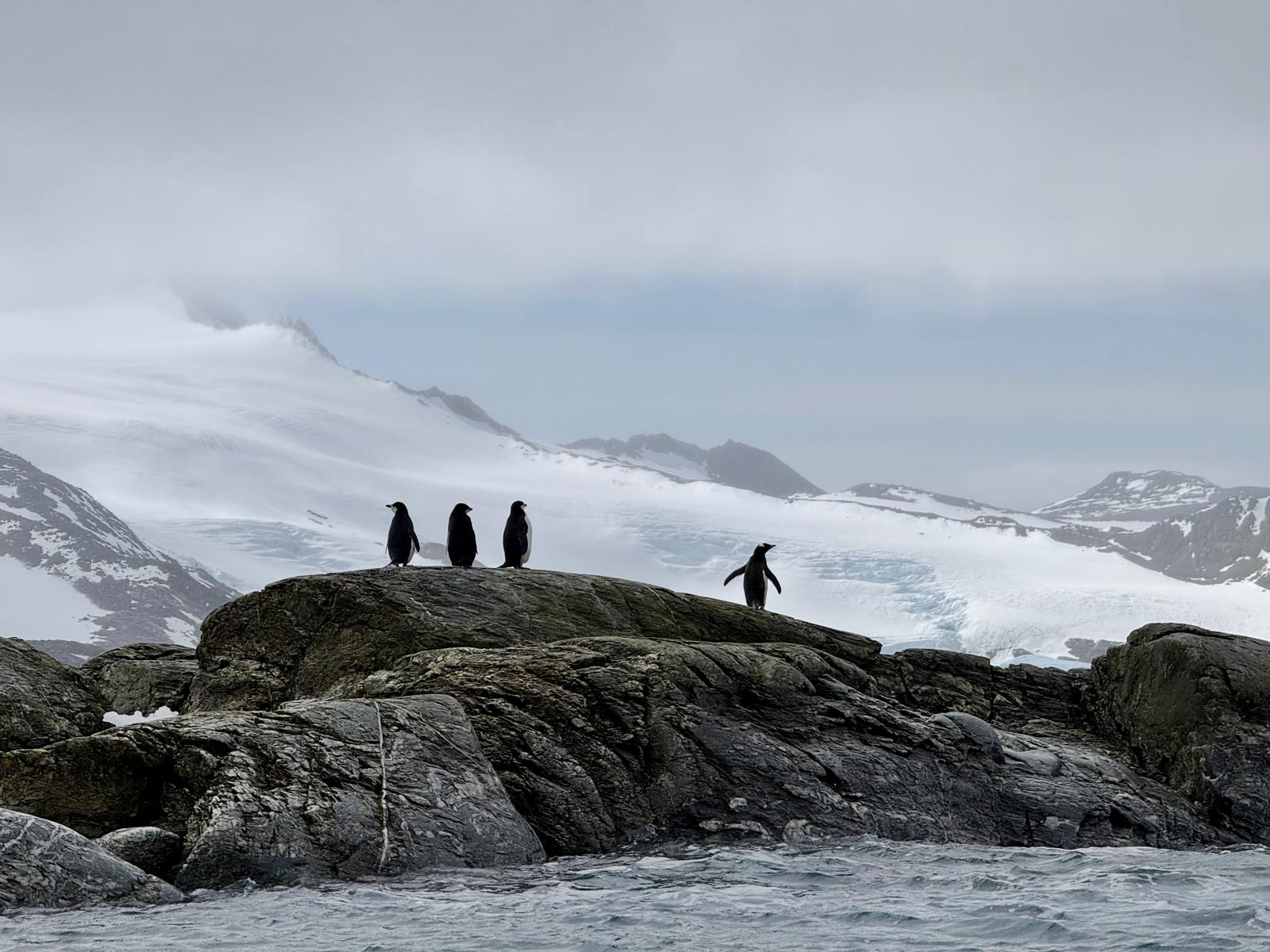
Three Chinstrap penguins on the left and one lone Gentoo penguin
These islands are quite steep and the penguins seem to be able to climb what, in places, look like vertical slopes as all their breeding colonies tend to be gathered on the top of cliffs and ridges. We headed off around the west side of the island with many Snow Petrels patrolling the ocean, swooping at times quite close to the boat.
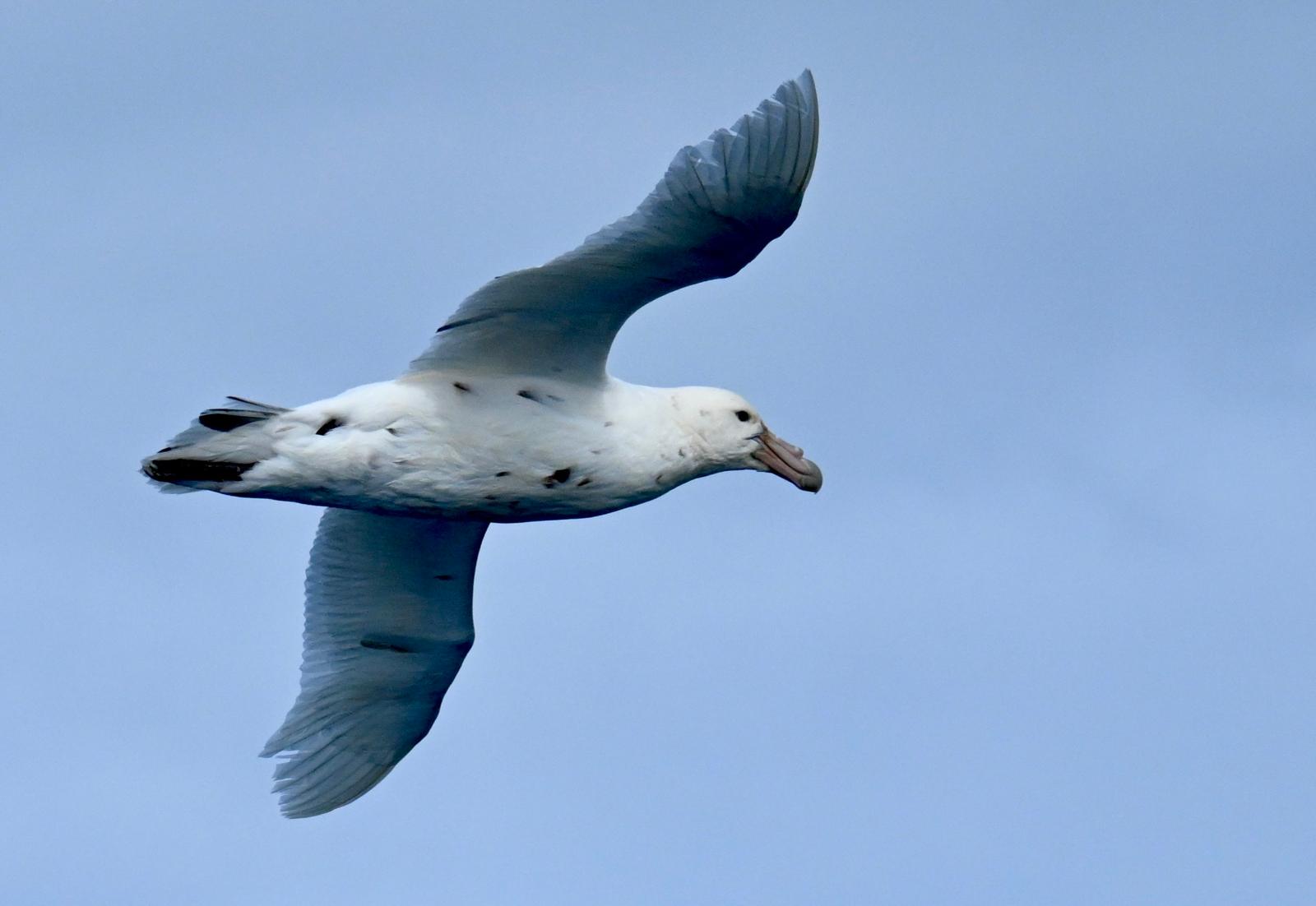
Southern Giant Petrel (White morph or Nellie)
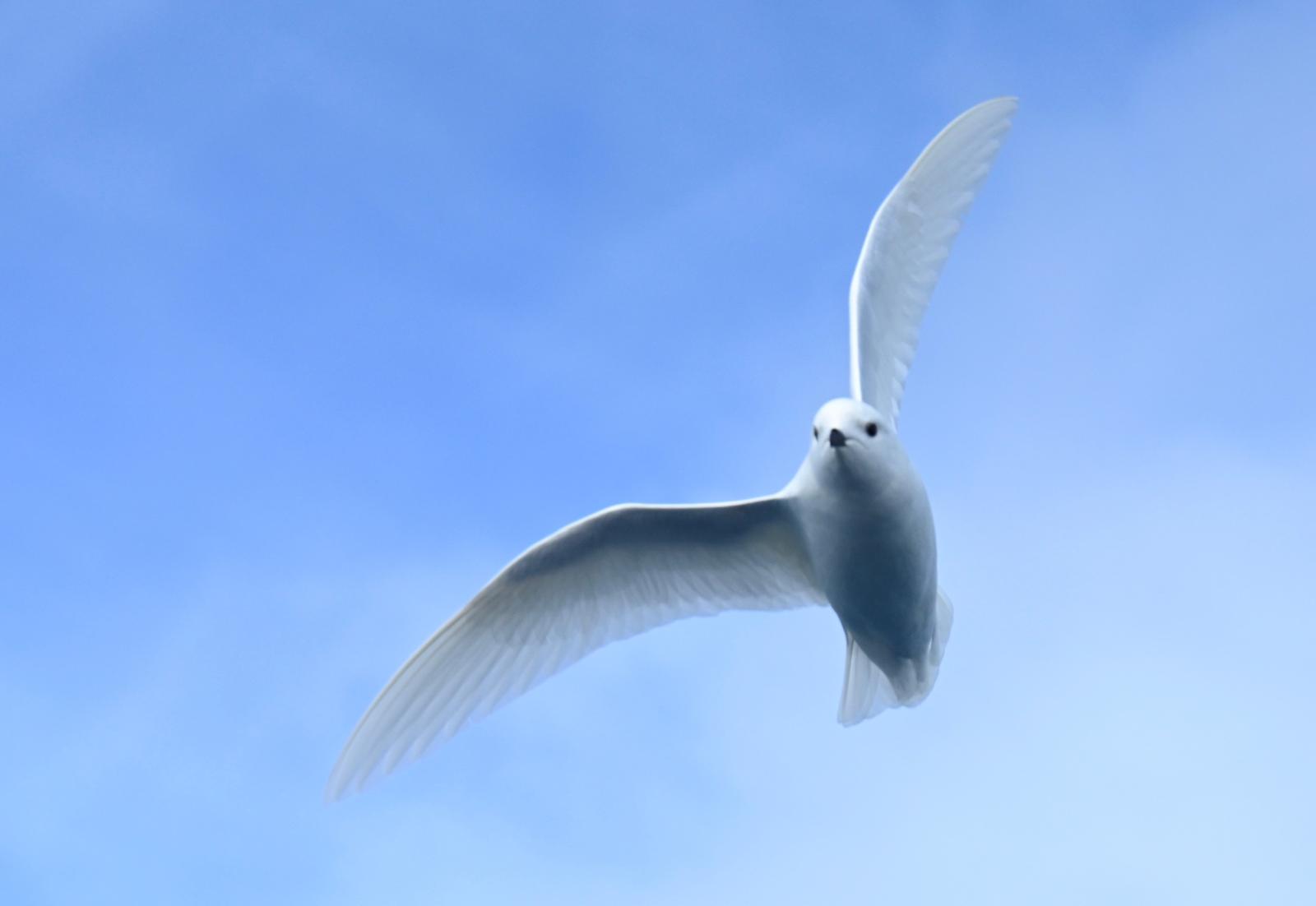
Snow Petrel
There was a bunch of Weddell seals lying on some ice next to the island. Once again the sea was calm with very little wind and the temperature wasn’t too bad at about -1°. As we pushed around to the north side of the island we spotted a leopard seal, It wasn’t hard to work out why he was here because although their main diet is krill, they also happen to like eating penguins. He popped his head up two or three times to have a look at the boat as we went past and then disappeared.
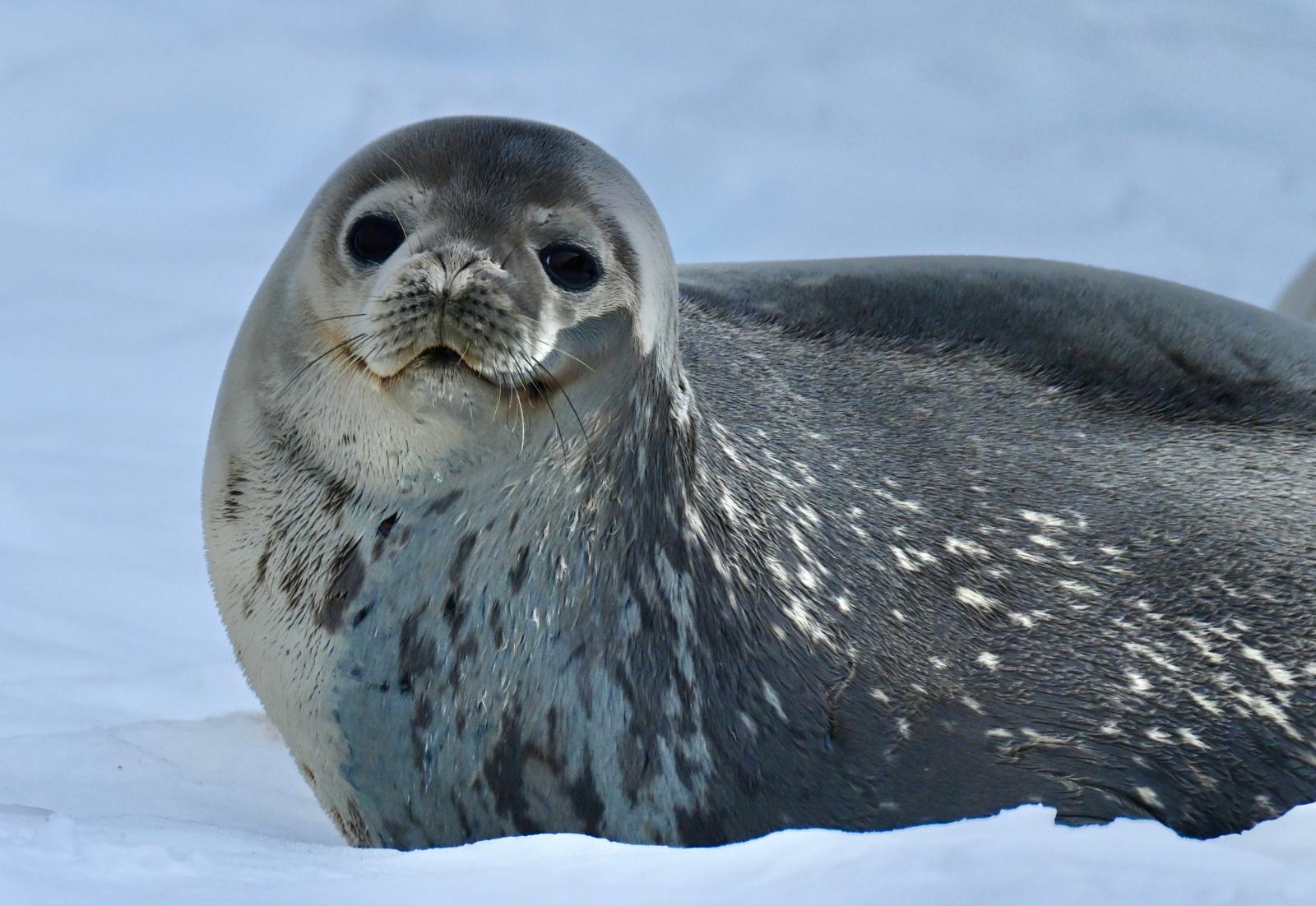
Weddell Seal
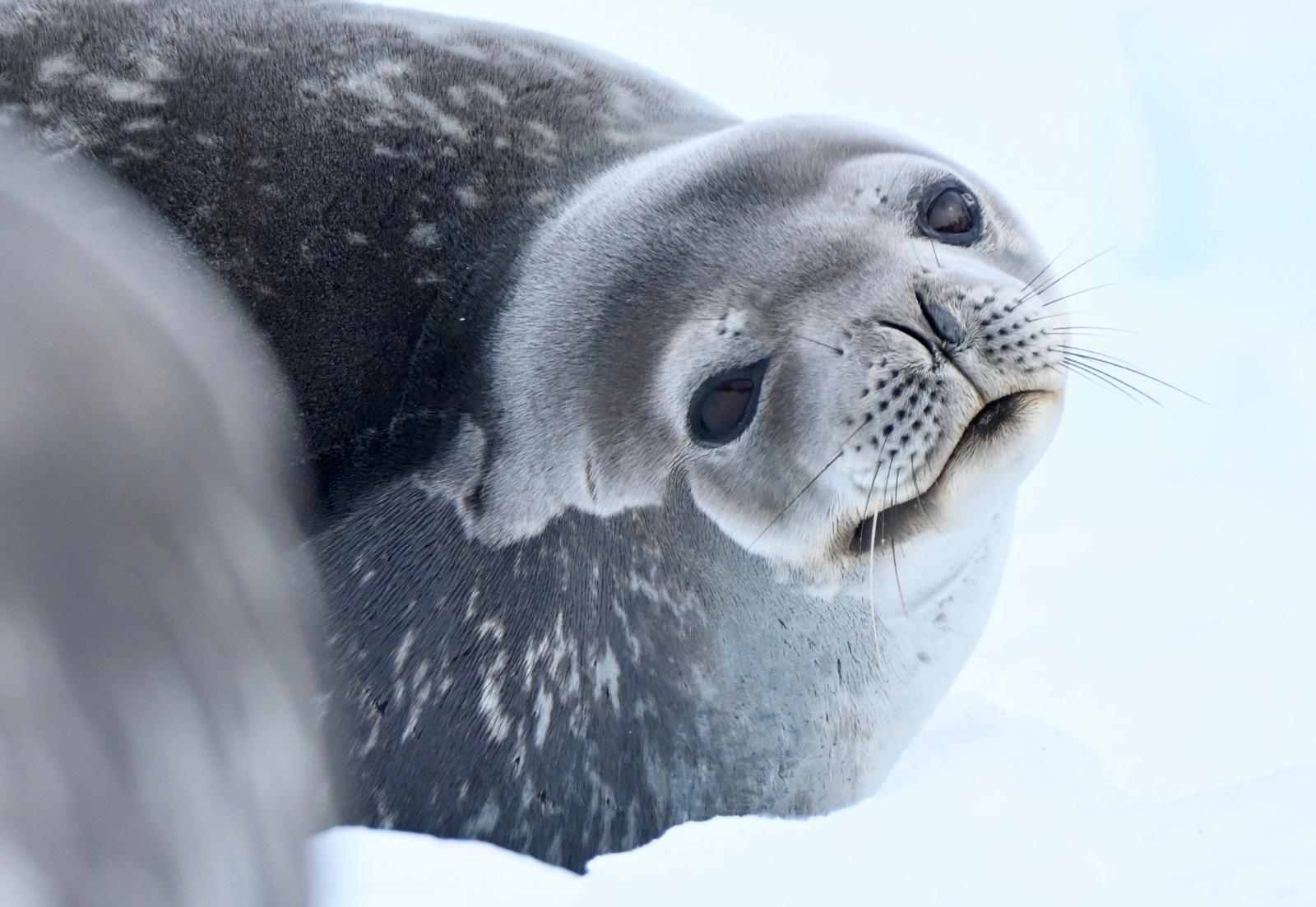
Weddell Seal
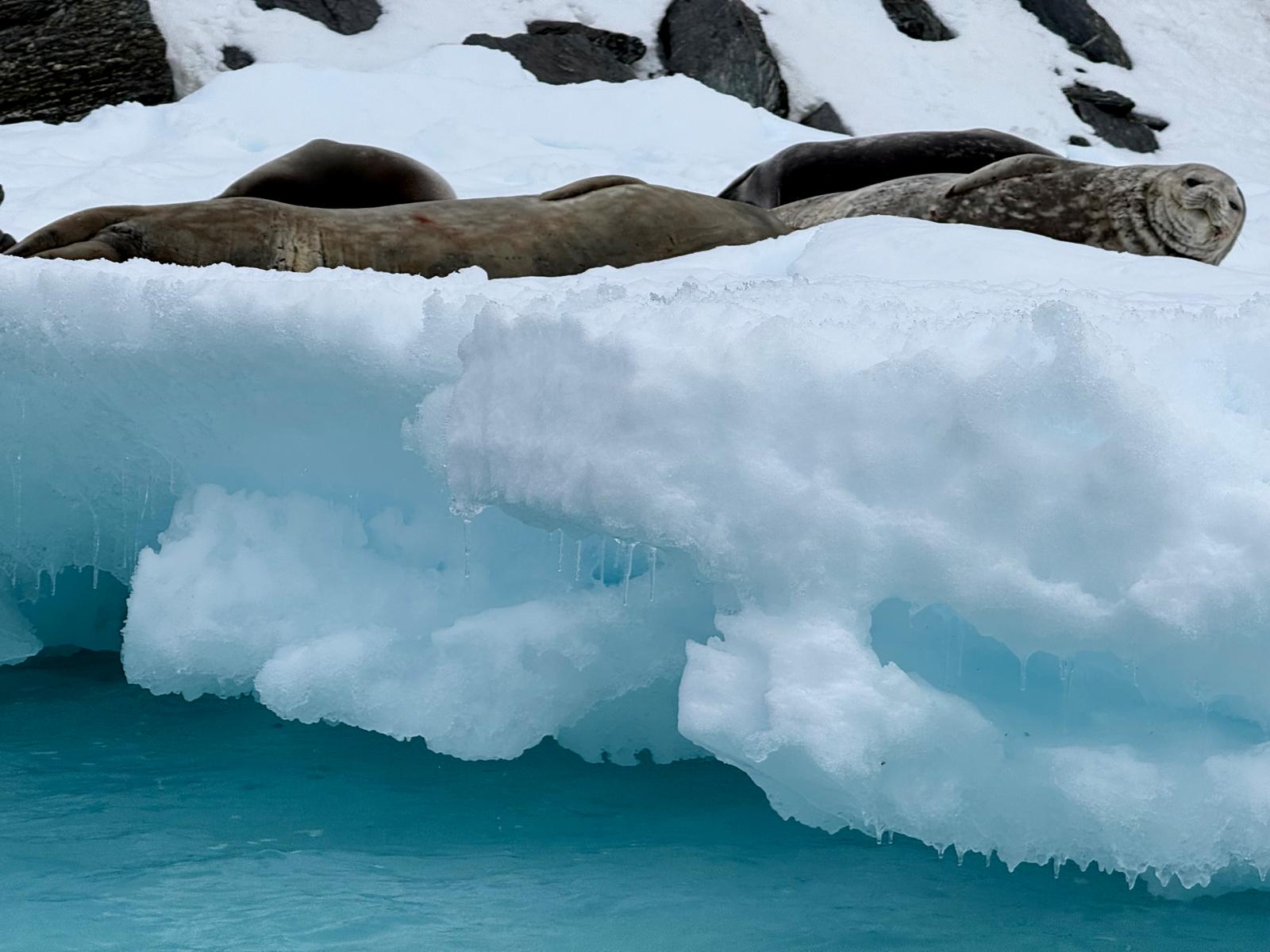
Weddell Seals hauled out on the ice
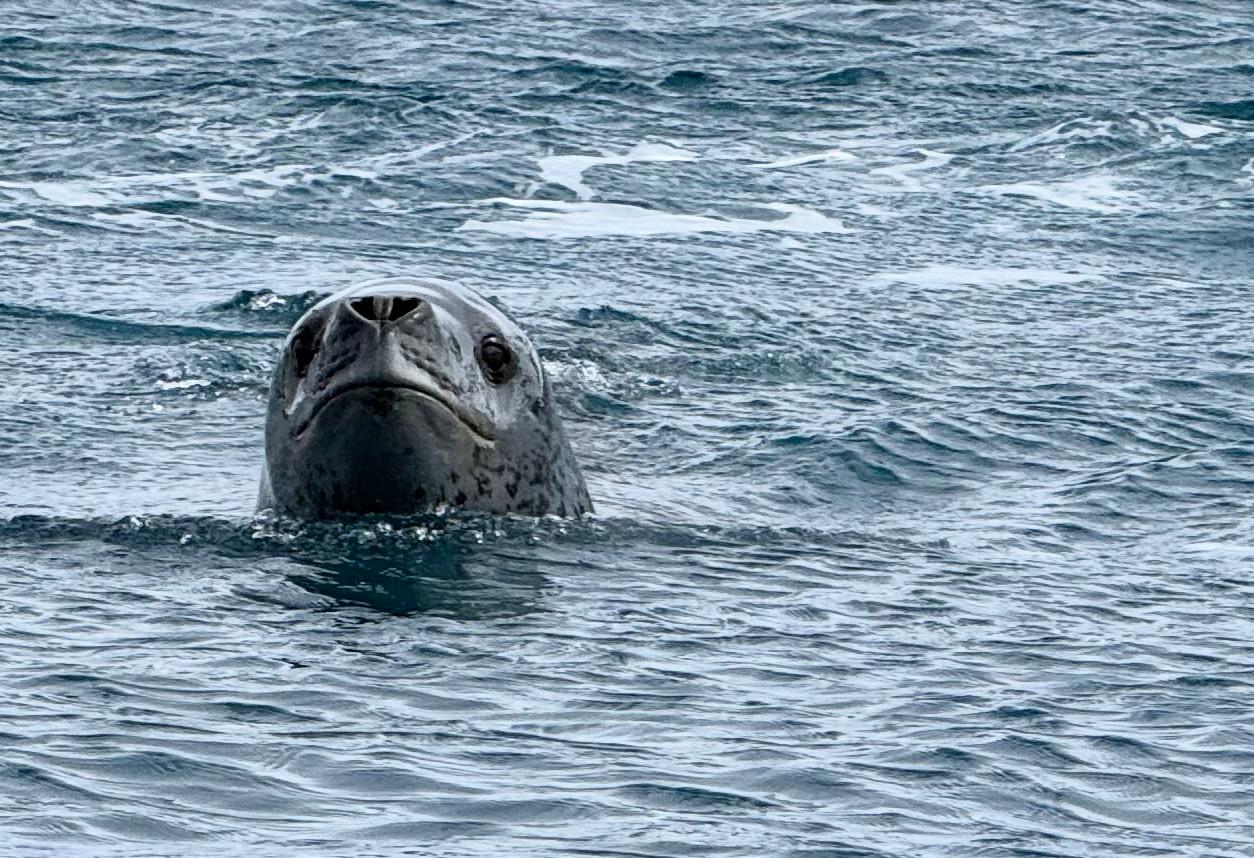
Leopard Seal
We carried on right around the island and as we were heading back to the ship we spotted some penguins porpoising towards the shore, then out popped another leopard seal. He didn’t have a go at these penguins, which means he was either well-fed or waiting for a better opportunity.
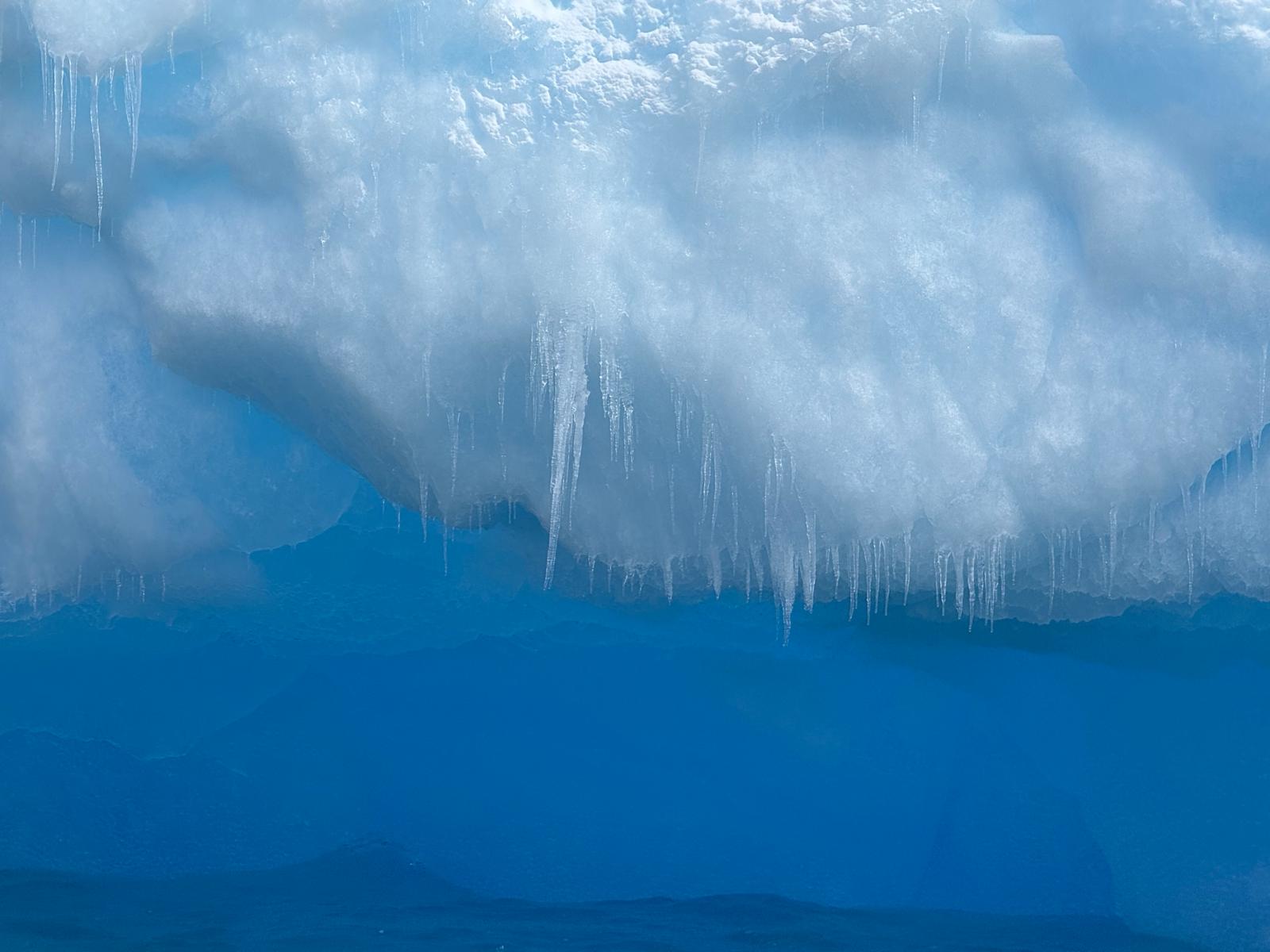
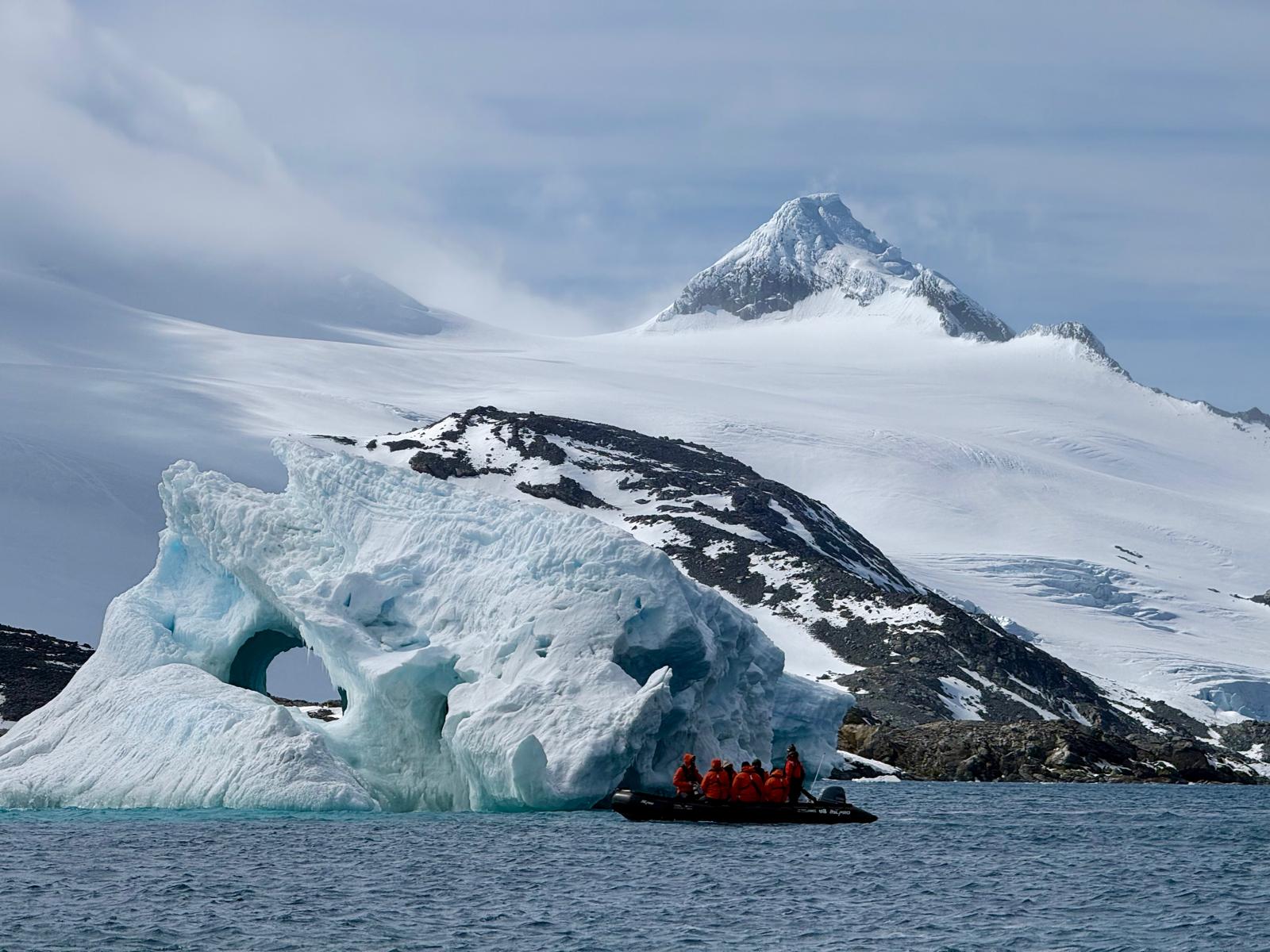
Back on board we moved up to the library while the other half of the guests went out on the zodiacs. We looked out over the hundreds of icebergs that were gathered around us. It was about 1130 when we set sail south, with the Captain on the bridge guiding the ship through the icebergs, almost like he was playing dodge, with the use of a tiny joystick. None of us interrupted them as the navigator took us south. After we passed the trickiest of the icebergs he turned around and said “I know you’ve all been waiting to ask questions so ask away”. He took us over to the charts and explained how they were still using two types of charts: one British, over 20 years old with the land in gray and the depth in fathoms; the more modern one with the land in yellow and the depth in metres. He explained that this area is not that well charted so they tend to use previous tracks they have in their computer to navigate through the area while dodging these massive icebergs. He also explained how south of here is a tectonic plate with the depth being only about 130m. All these icebergs between here and there actually get hung up on the ground and often sit here for years until a large storm breaks them up or they melt to the point that they can float further north. It highlights how much of the iceberg sits below the surface.
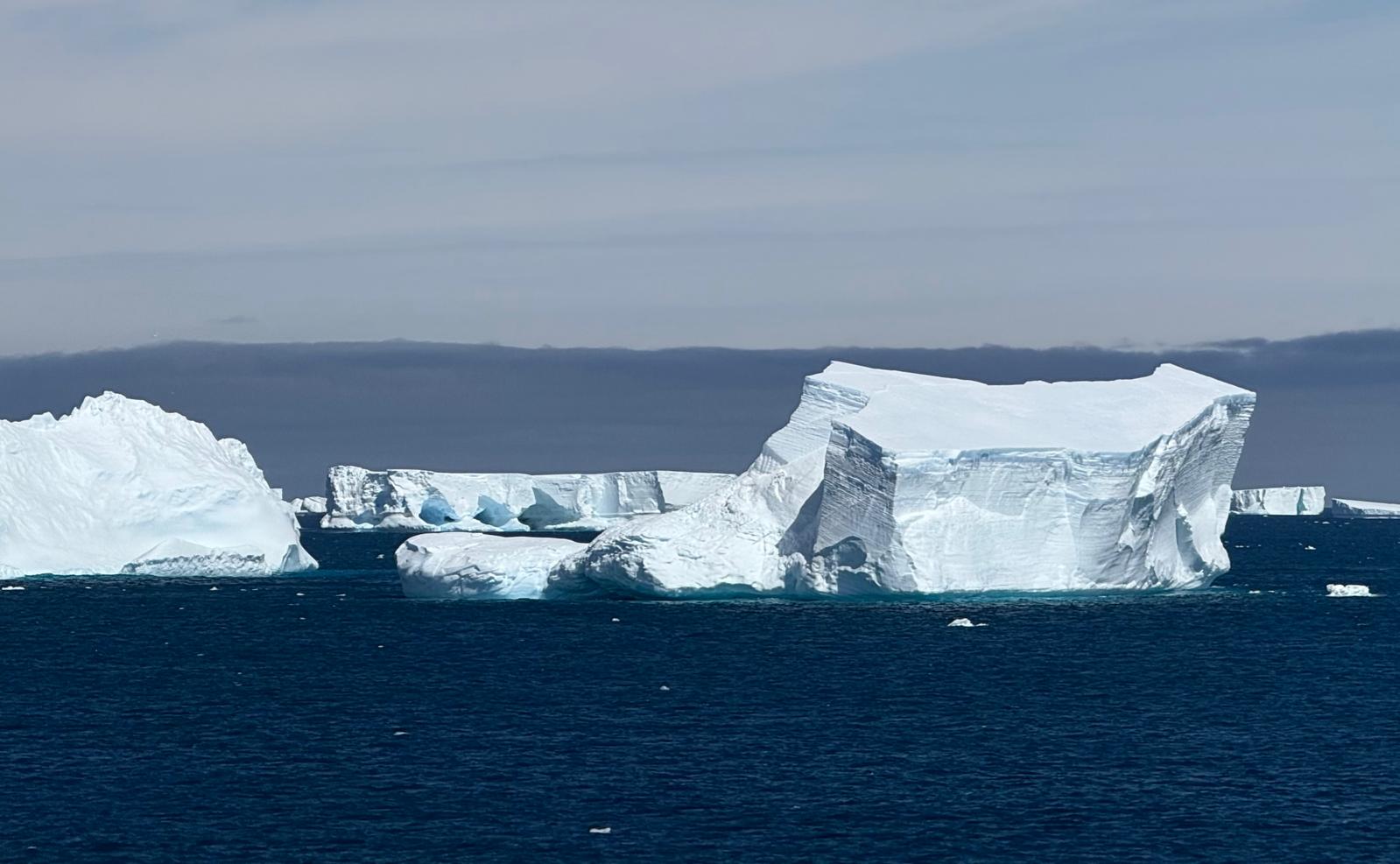
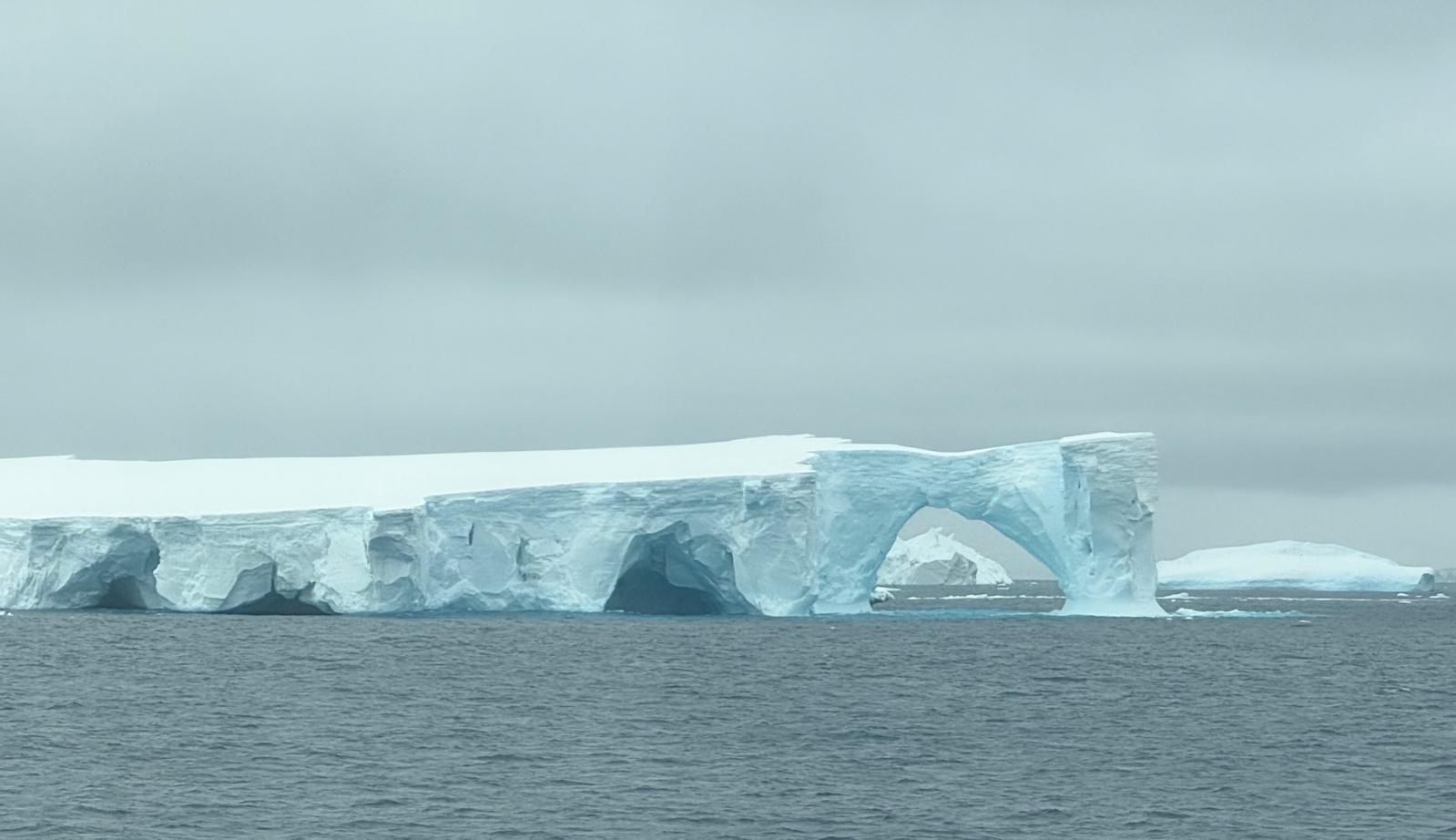
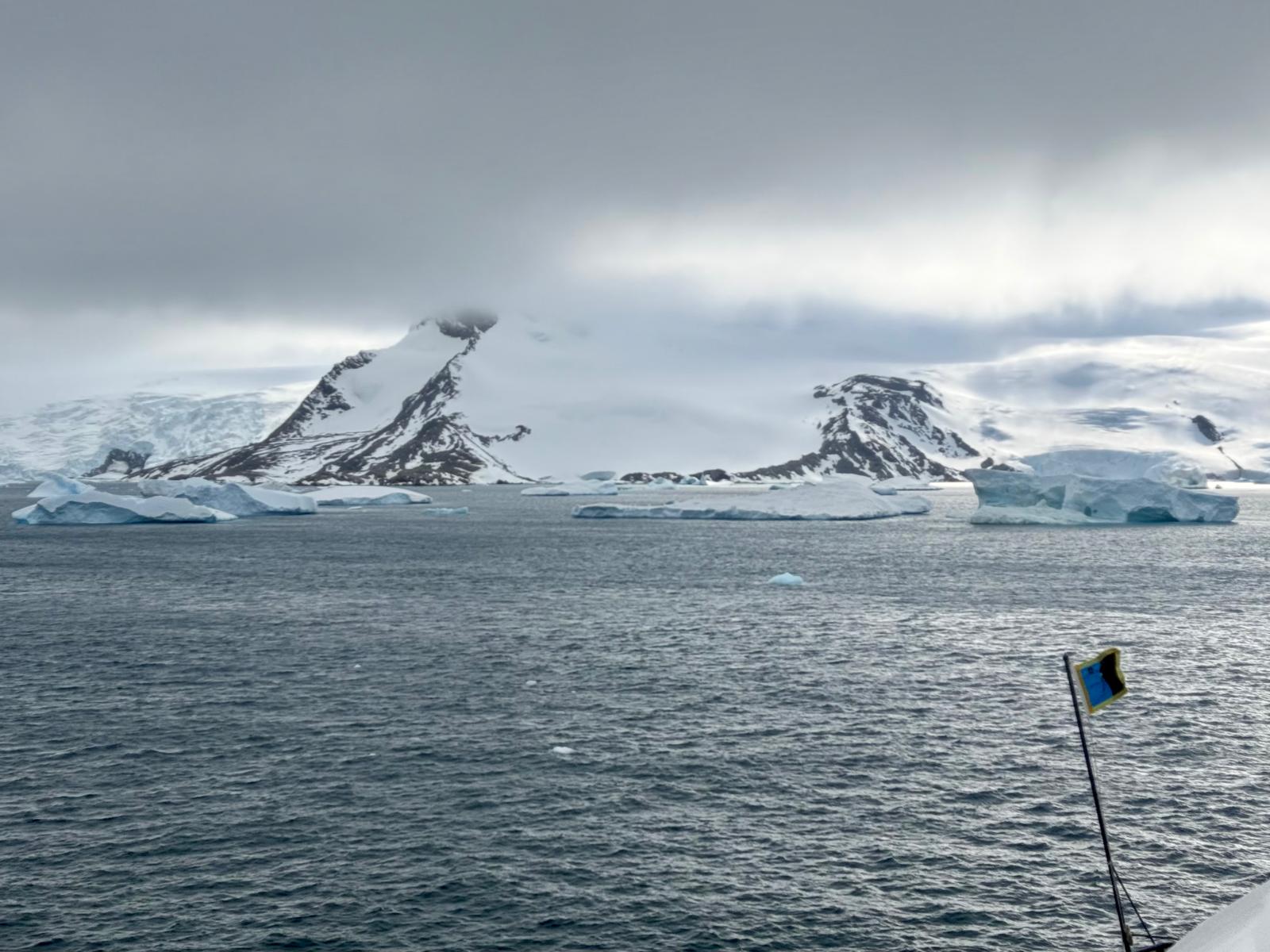
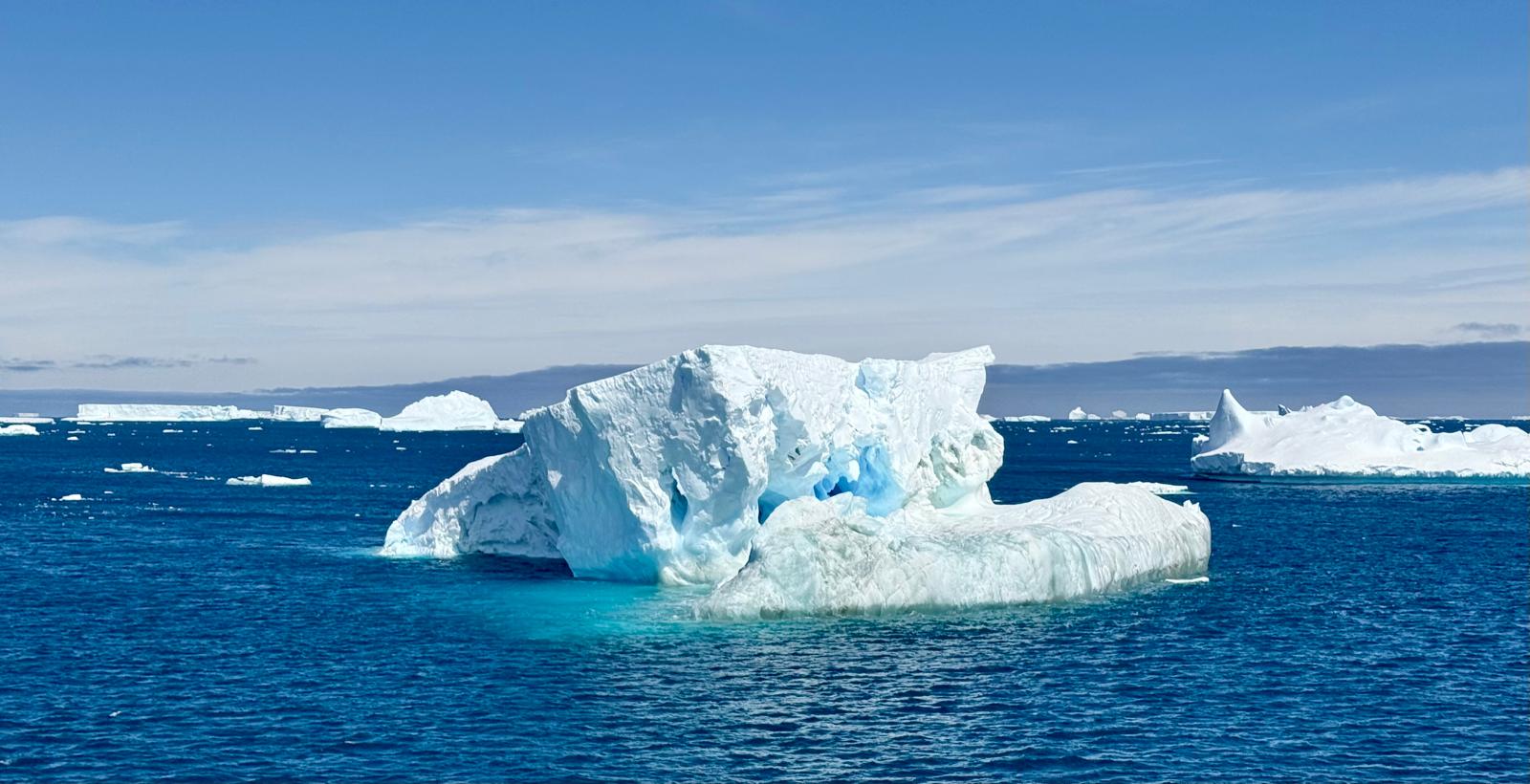
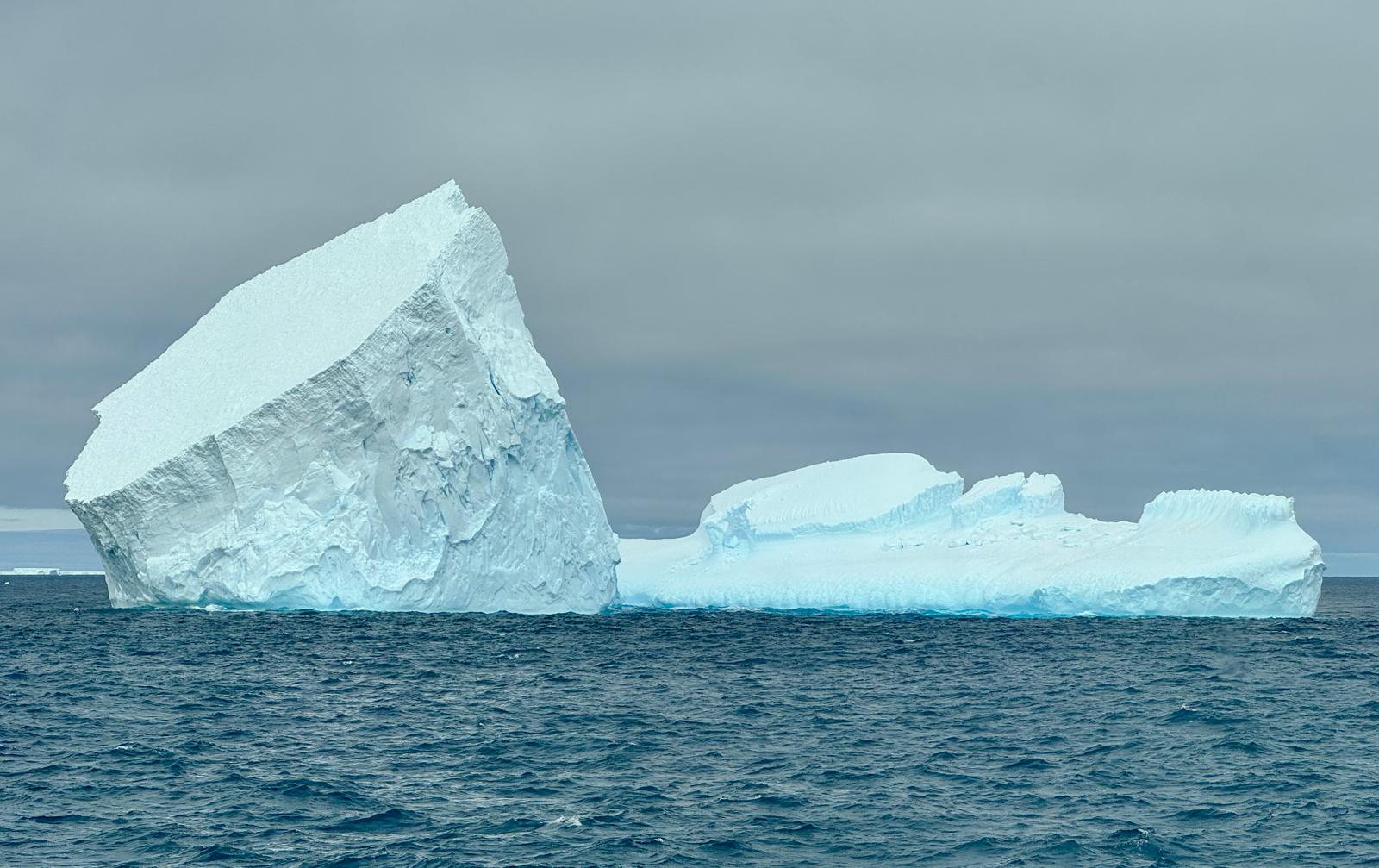
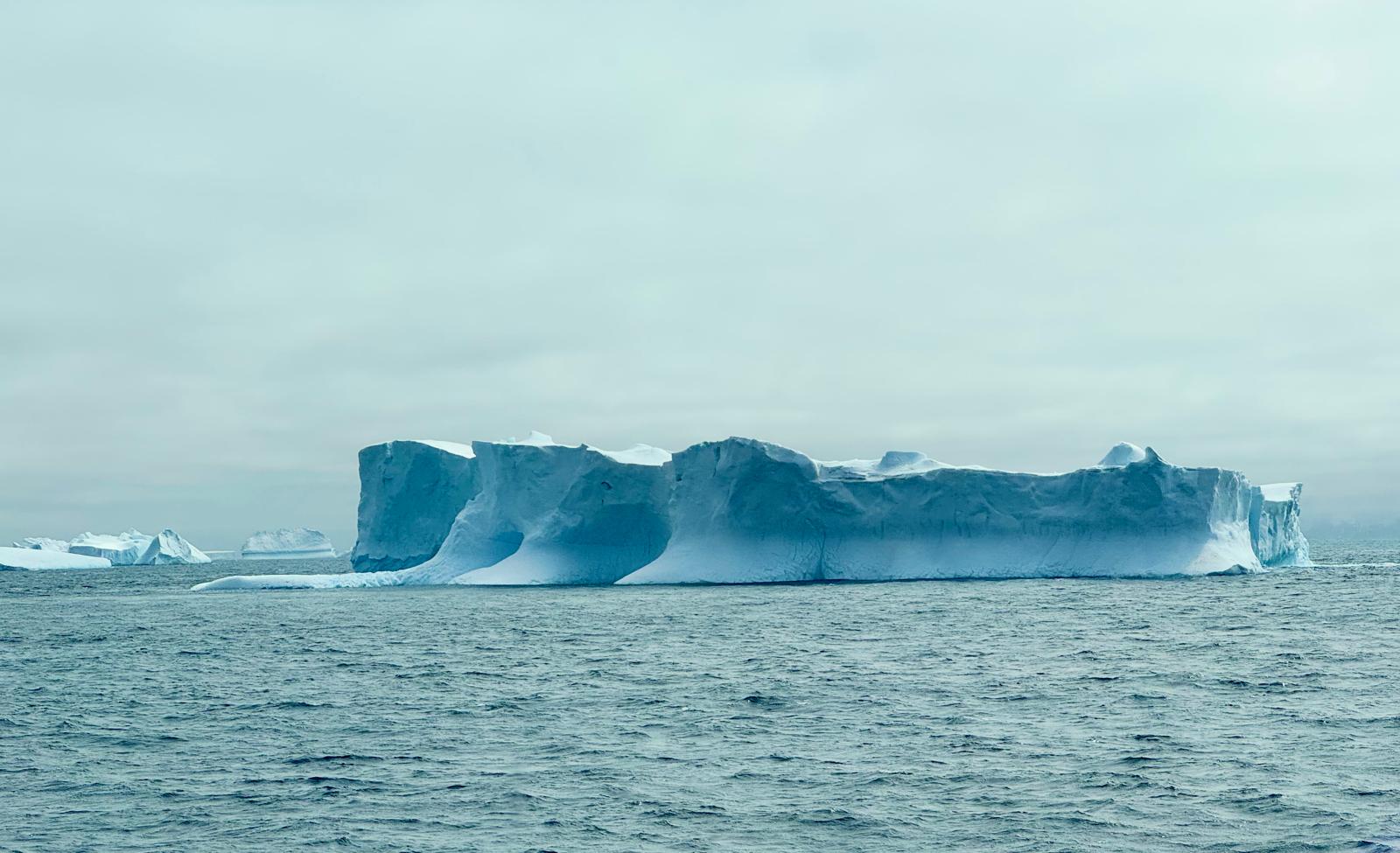
We enjoyed another delicious lunch at noon before moving back to the cabin to catch up on some admin, such as editing and deleting dozens of photos and putting this part of the blog together. Just now we are 60° south and sunrise is at about 2.40 in the morning. Another 6° and we will hit the Antarctic circle where it will be light for 24 hours a day.
Icebergs greater than 10 nautical miles in size are given names and tracked. The largest iceberg to have broken off the Antarctic was 160 miles long and 20 miles wide and was given the name B15 when it broke off in the year 2000. Over time it broke up into smaller pieces and was given more names until it finally dissolved.
At about 1600 we were invited to a below decks tour, which included an afternoon tea laid out in the laundry, a look in the control room and a look at one of the drive units for the starboard engine pod. The captain was in the boat garage answering questions. He explained that they have a unit with a 6000 metre boom on it to restrict any oil slick they may come across. As expected the place is immaculate, the crew are friendly, helpful and highly trained. There are two big generators on the ship, which pretty much run everything, supplying power to the drive pods, the thrusters and everything else on board. As we are cruising south at just over 10 knots, we are using about 30,000 litres of diesel per day. The ship carries over a million litres so I don’t think we’re going to run out before we get back to Ushaia.
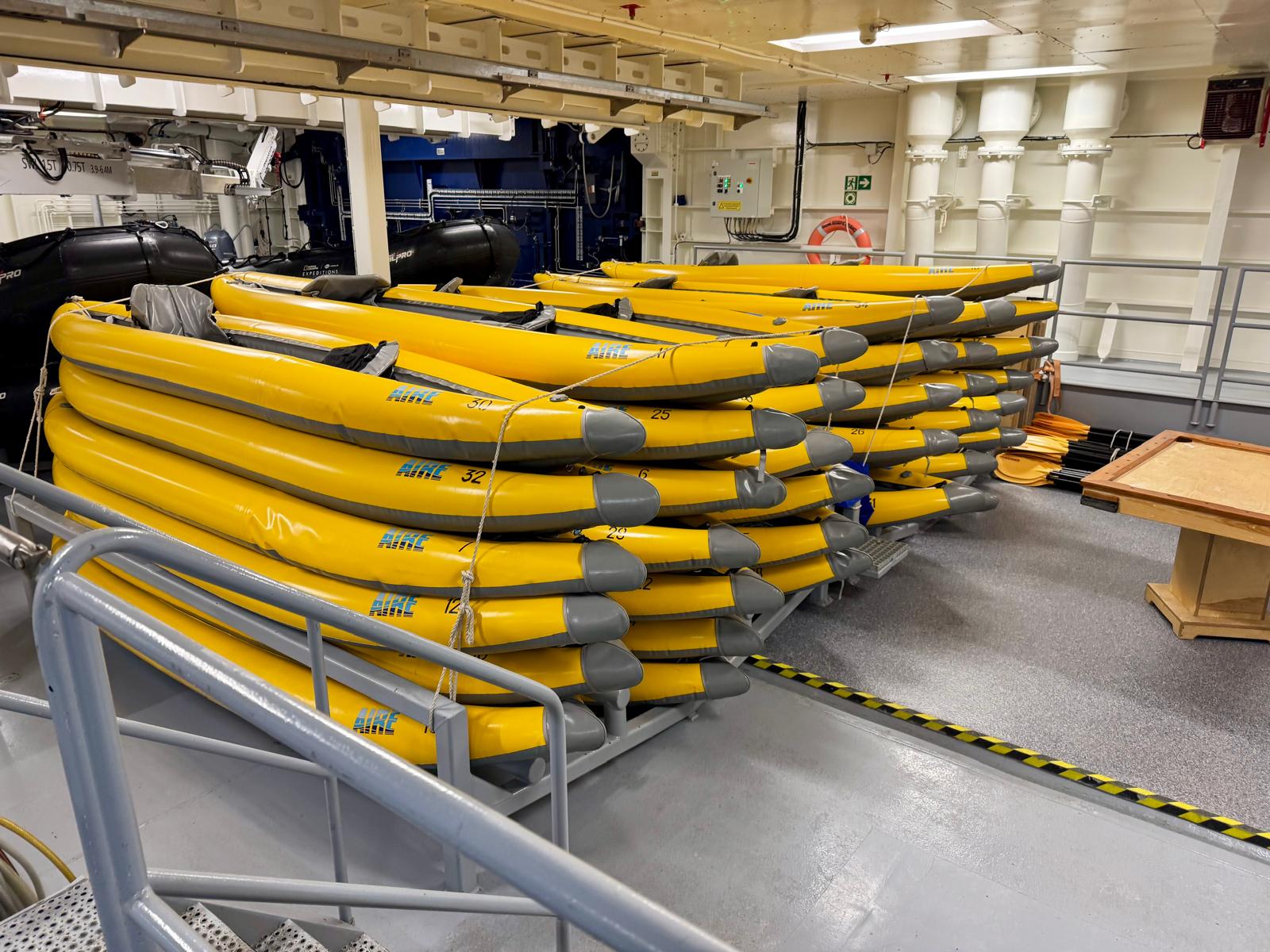
Kayaks lined up in the garage
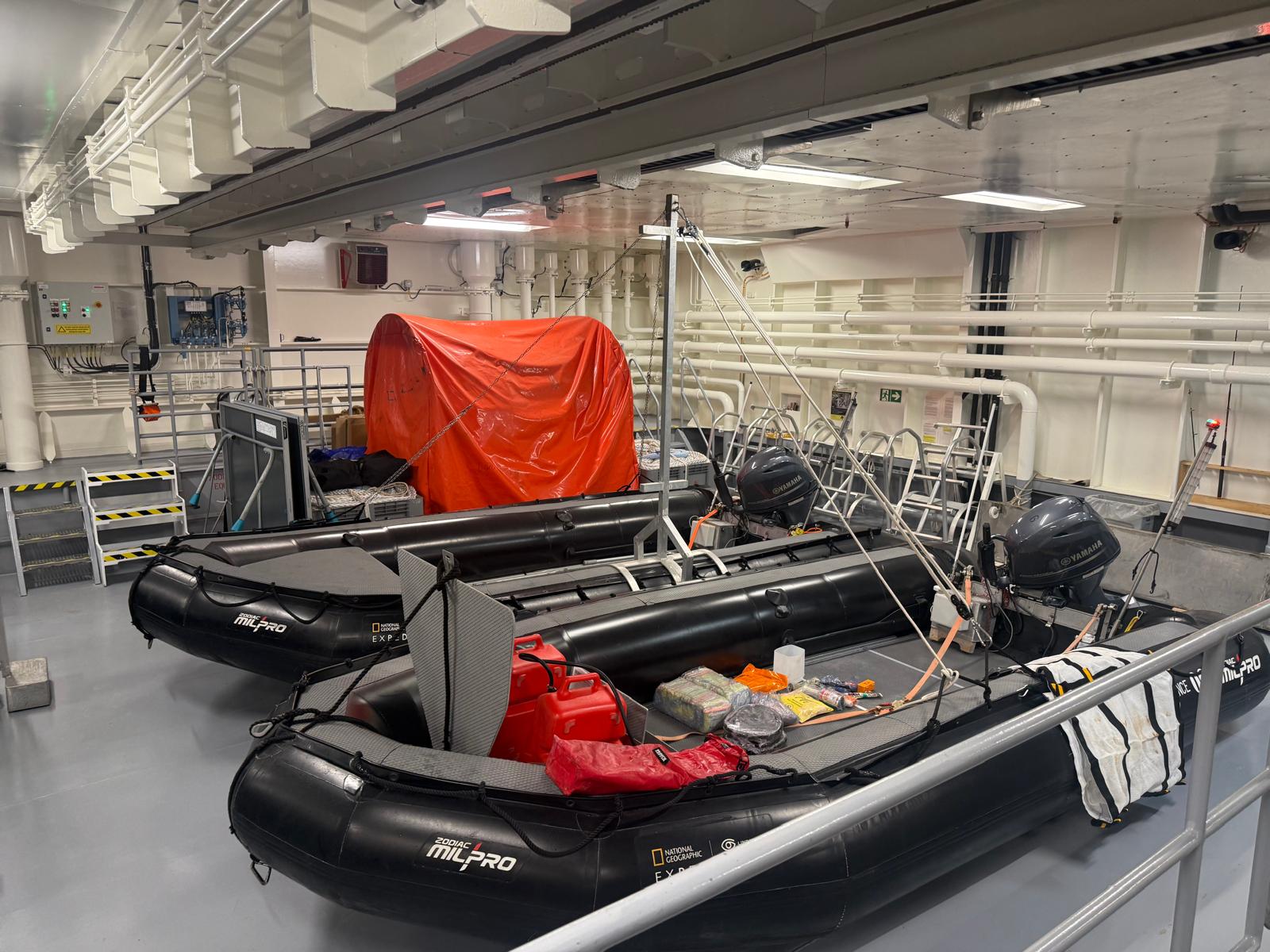
Zodiac in the garage, showing all the emergency equipment carried on each trip
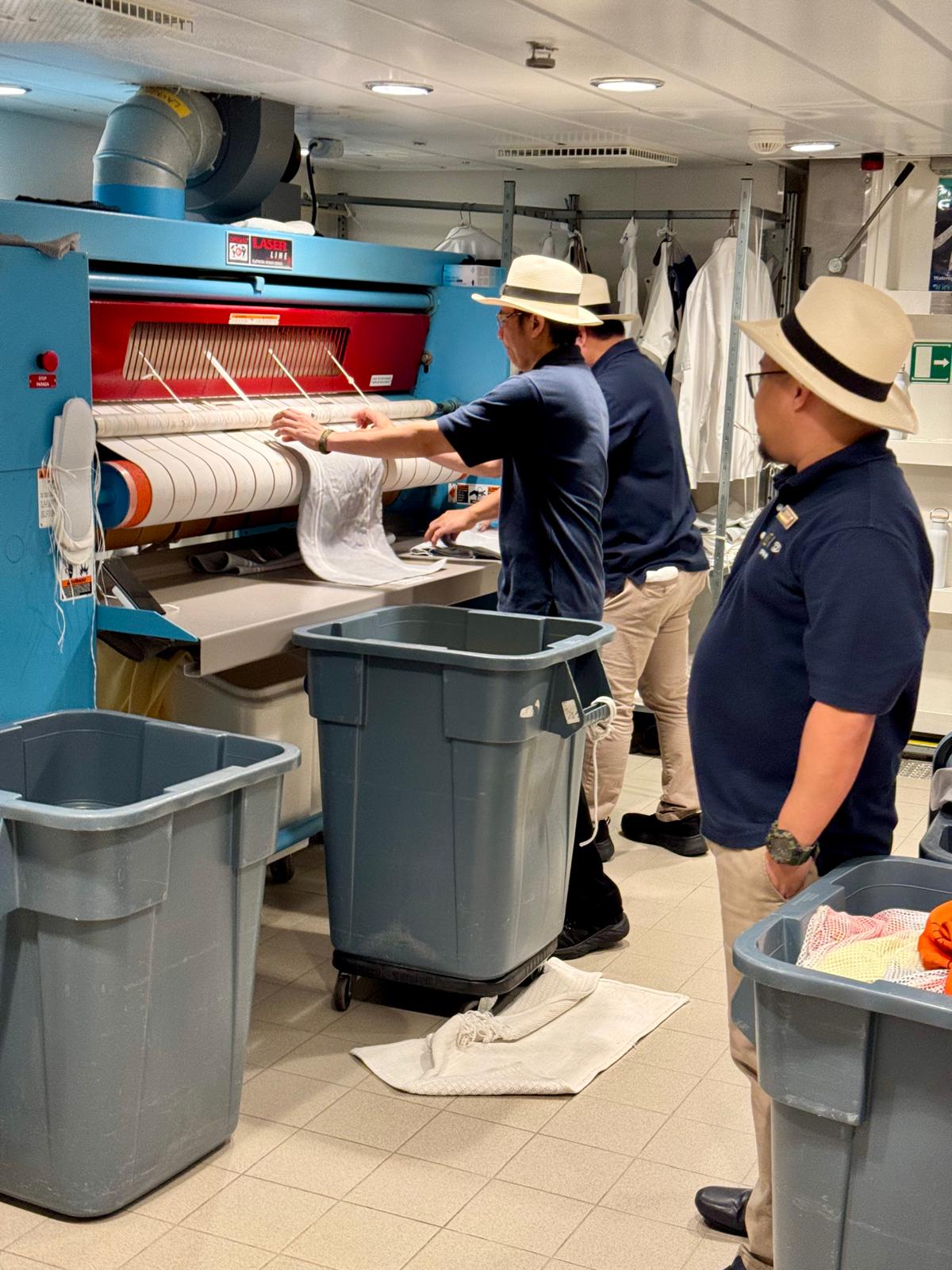
Hard at work in the laundry
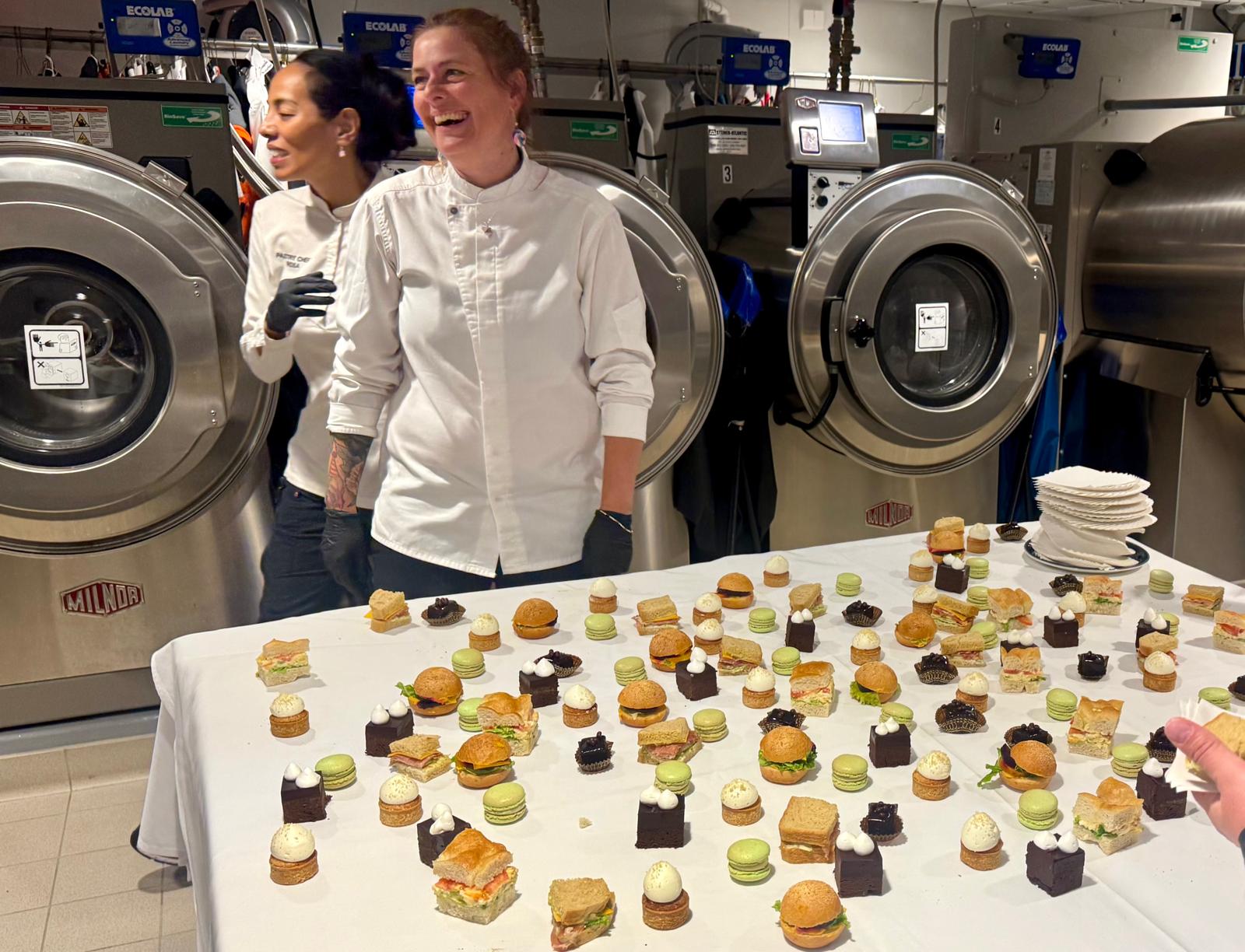
Our executive chef, Sarah with afternoon tea
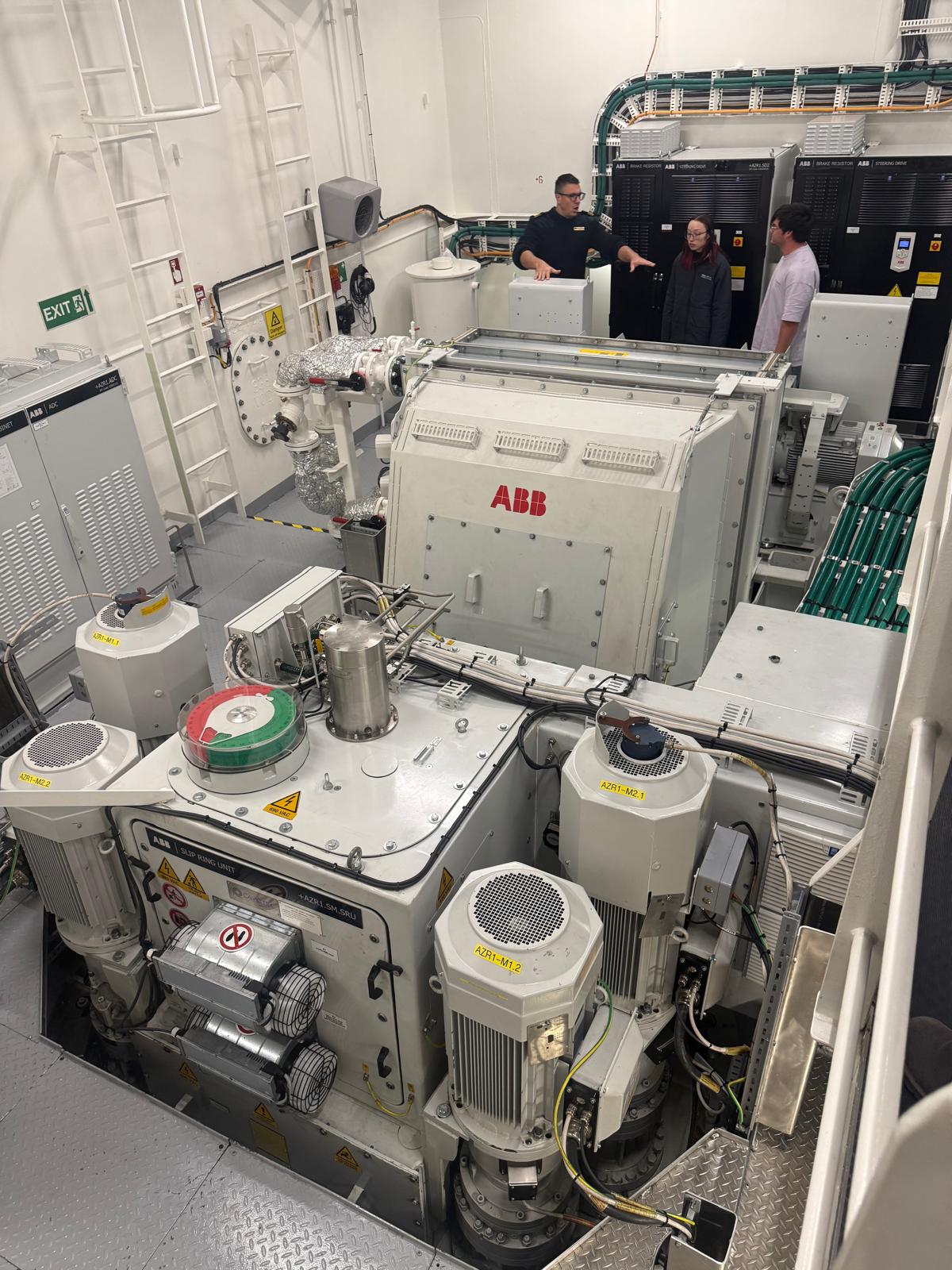
One of the drive pods – drives the 3m propeller on the starboard side
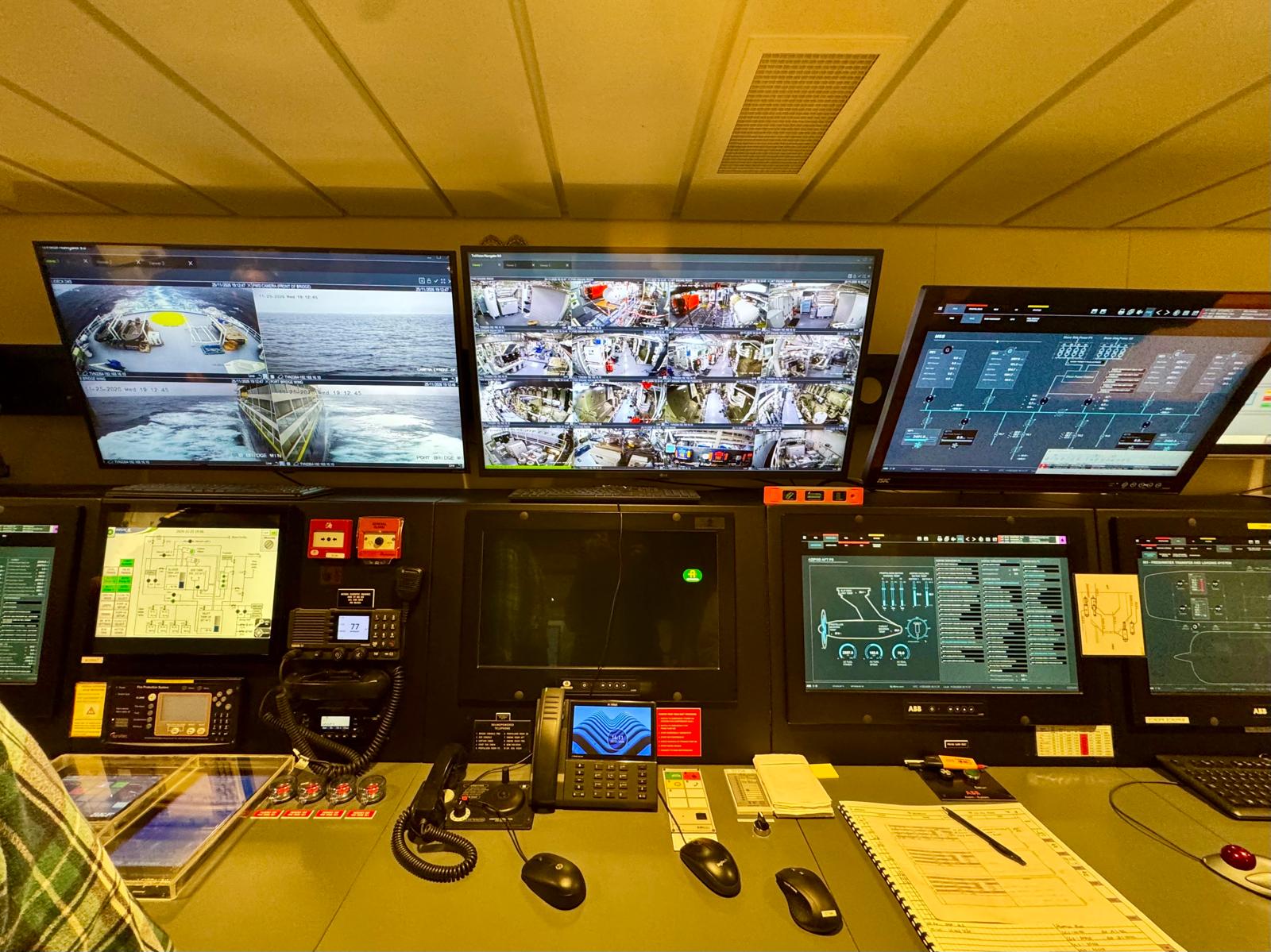
Control center
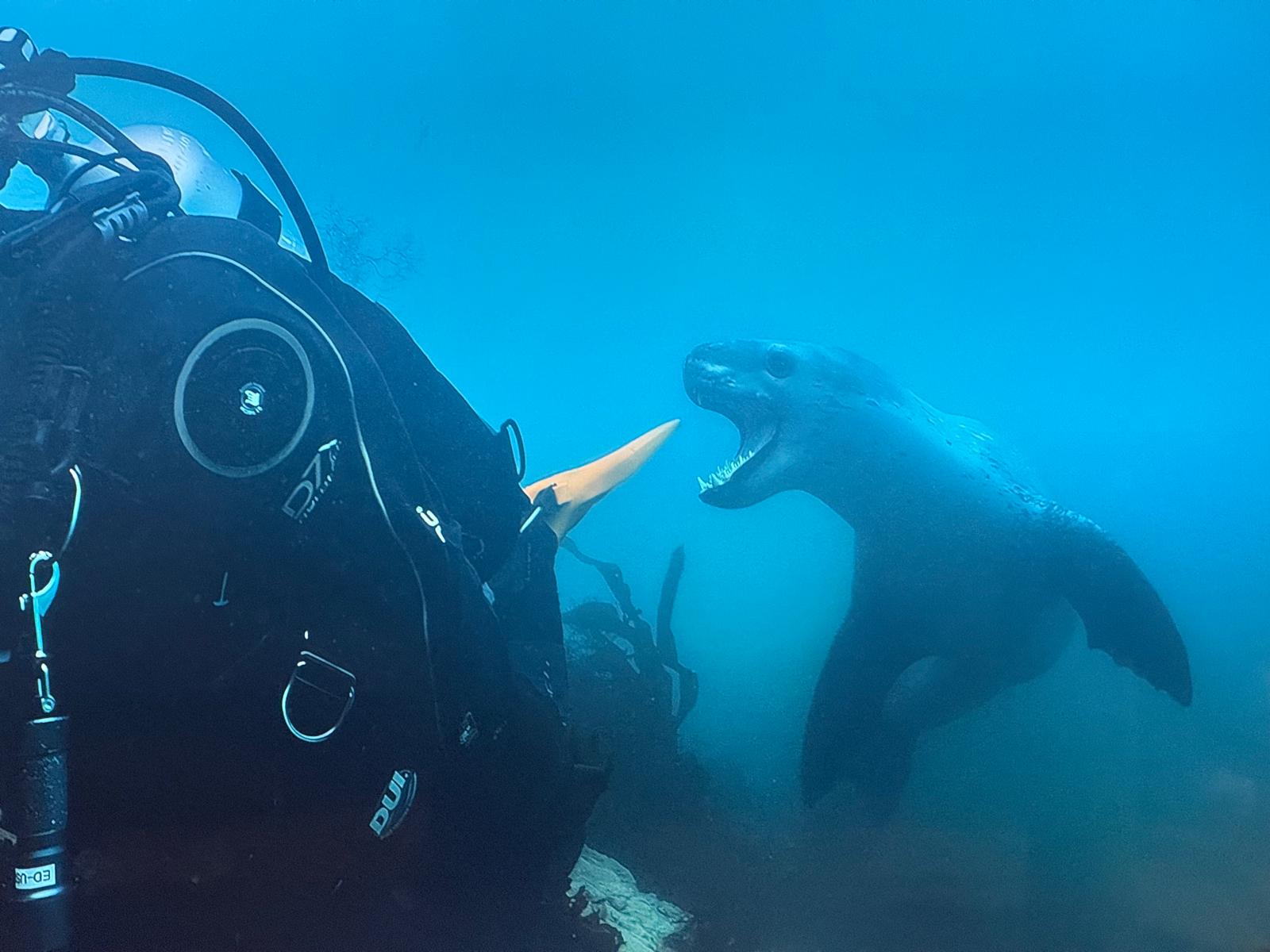
During the evening recap, one of the dive team showed a video of a leopard seal that engaged with them while they were diving today. They can be quite aggressive and have a mouthful of very sharp teeth. He showed one photo where his dive companion was looking at some sponges and the leopard seal went up to her orange flipper, mouth open, looking ready to bite it. Luckily it changed its mind. Every night we have these briefings and we see the photographs that the naturalists and photographers put up. It reinforces the fact that I am very much just an amateur photographer.
After dinner the captain gave a presentation in the Ice Lounge on the construction of the ship. Basically, the company went out to all the captains and senior crew, including the naturalists and photographers etc., and asked them what they would want in a ship. The ship was designed, with all these wishes in mind, in Norway, with its X-Bow and stabilisers designed to give it extra stability in the Arctic and Antarctic Waters. The hull structure of the ship was put together in Poland then towed to Norway, where it was fitted out. There is a second sister ship with the same design, manufactured a year later called the Resolution. Each one cost an excess of $130 million dollars. The captain gave a very good presentation, even explaining how garbage and sewage is dealt with. The ship has a range of about 10,000 miles and in a couple years time it will be doing a 65-day trip circumnavigating Antarctica, stopping once in Hobart for refilling.
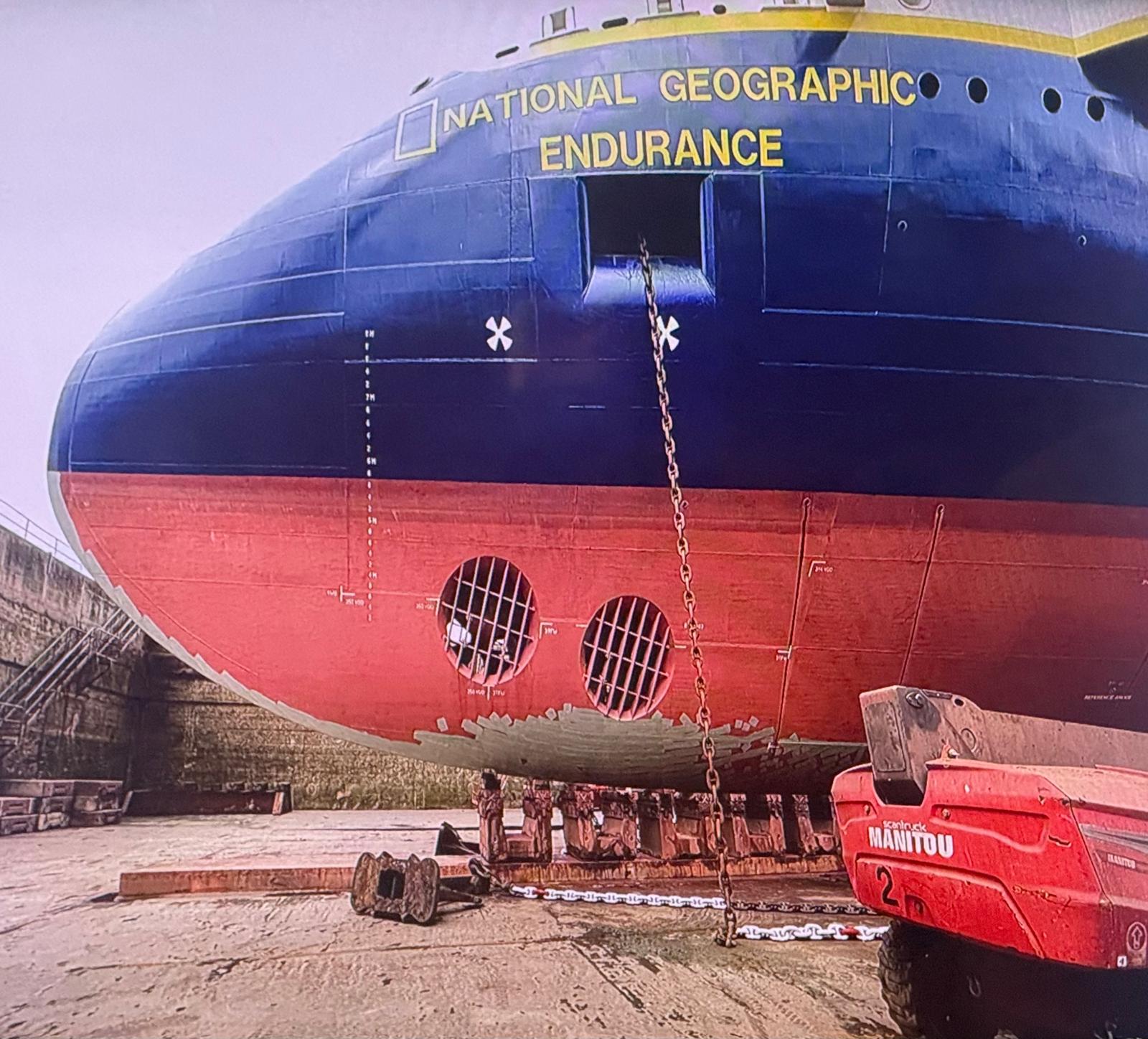
Screenshot from the Captain’s presentation showing X-bow and location of bow trhusters
Thursday 26 November 2026: Antarctic Peninsula – Sylvia
I woke this morning and drew back the curtains before heading up to the Sanctuary for my morning stretch class. Immediately I saw a humpback whale blow and then display its tail fluke, then not far behind another blow. It was an auspicious start to the day.
As we headed further south into the Weddell Sea we passed hundreds of large tabular icebergs. We also passed several smaller growlers and bergy-bits, some with Adélie penguins atop. To be called an iceberg the chunk of ice needs to be at least 5m above the water. Bergy bits are ~2-5m above the water and Growlers are ~half to 2m above the water. Anything smaller is called brash ice. The tip of the iceberg is usually only about 10% of the total iceberg but with the large tabular icebergs can be up to 25% as the top layers are not as compacted.
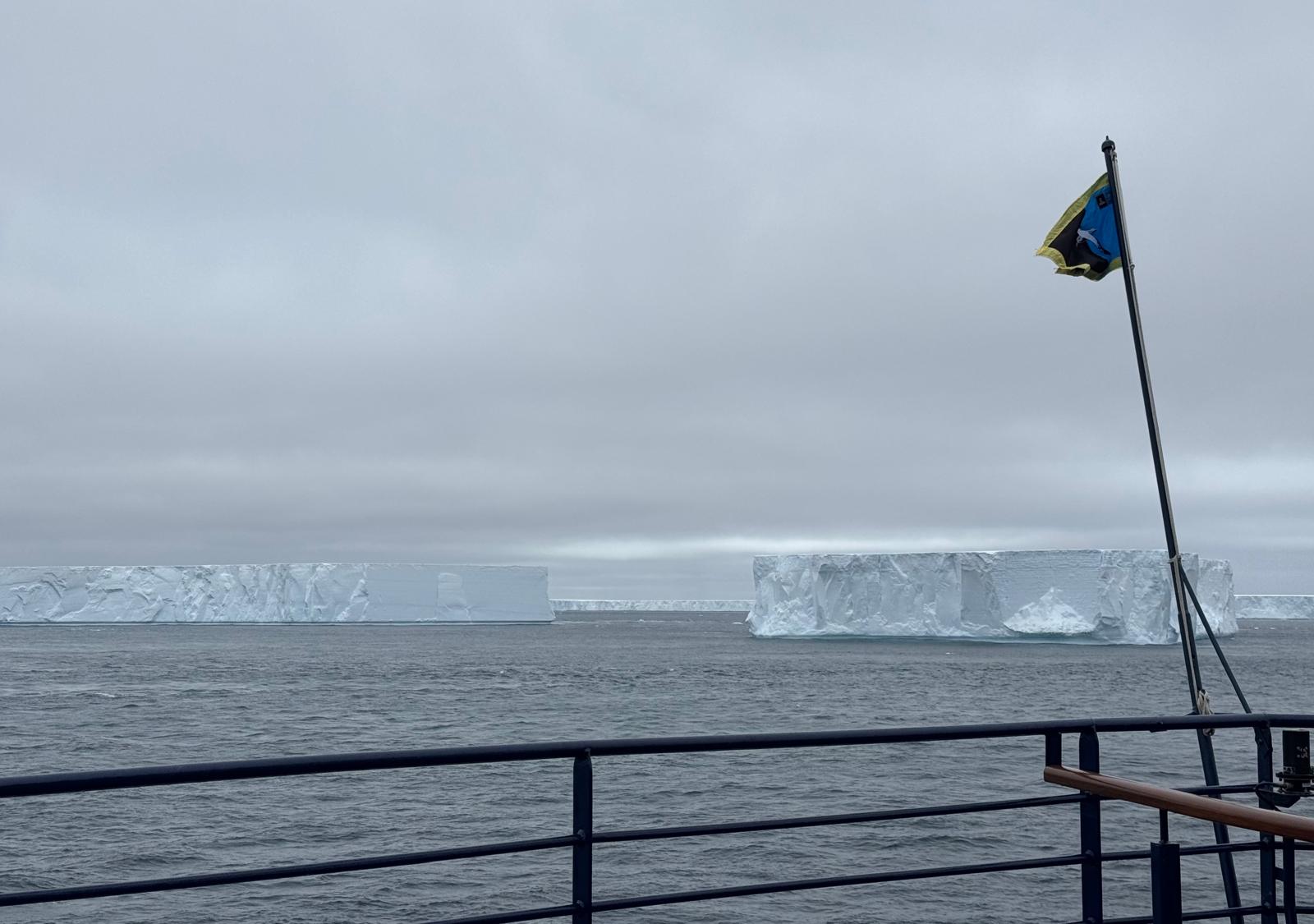
Mid-morning we completed our last biosecurity check before arriving in Antarctica. This is quite a process to ensure we are not taking anything ashore that could contaminate the pristine landscape. It is amazing how even after scrubbing and sanitising every time we get back to the ship, we still manage to find something we have missed during these inspections.
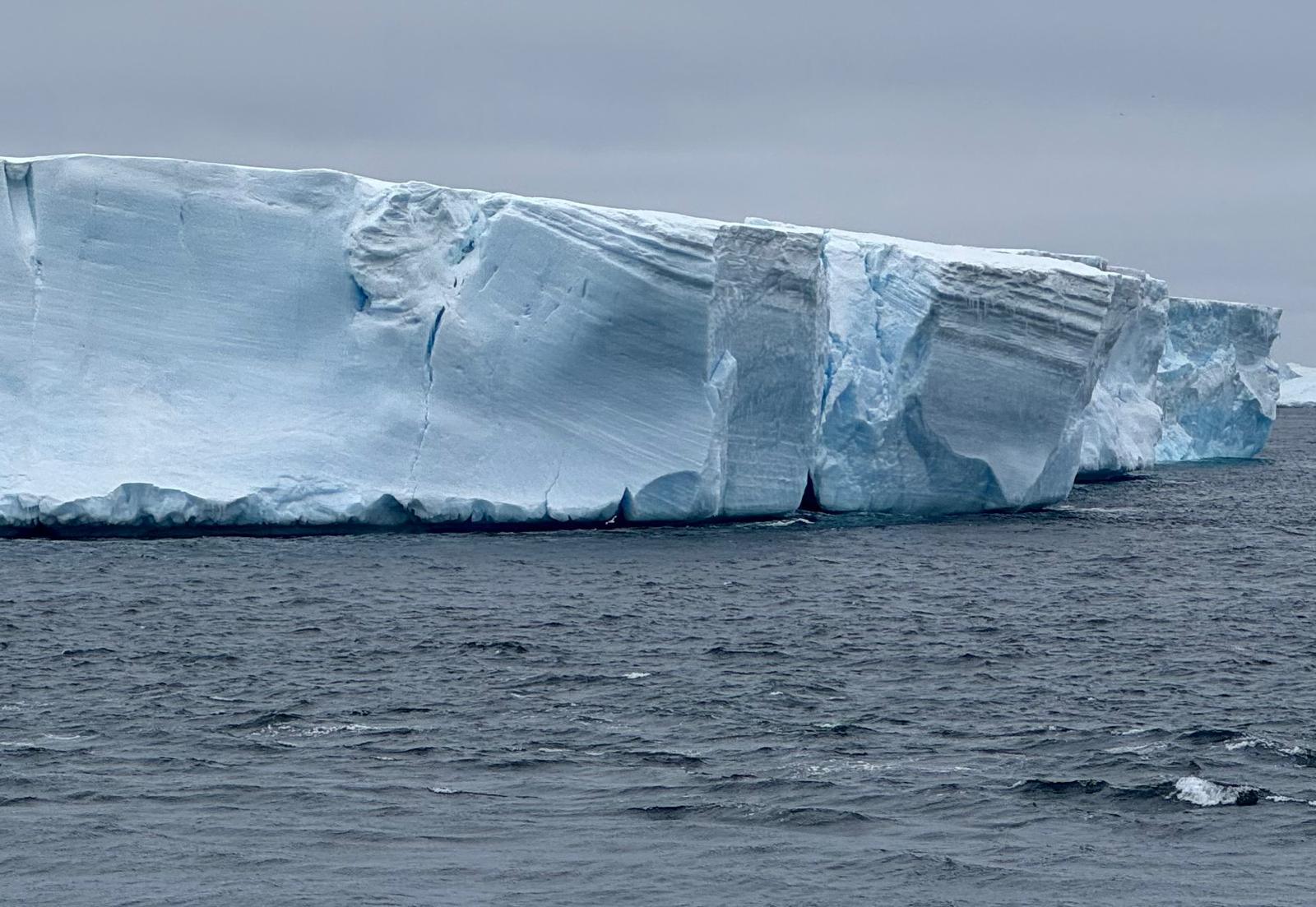
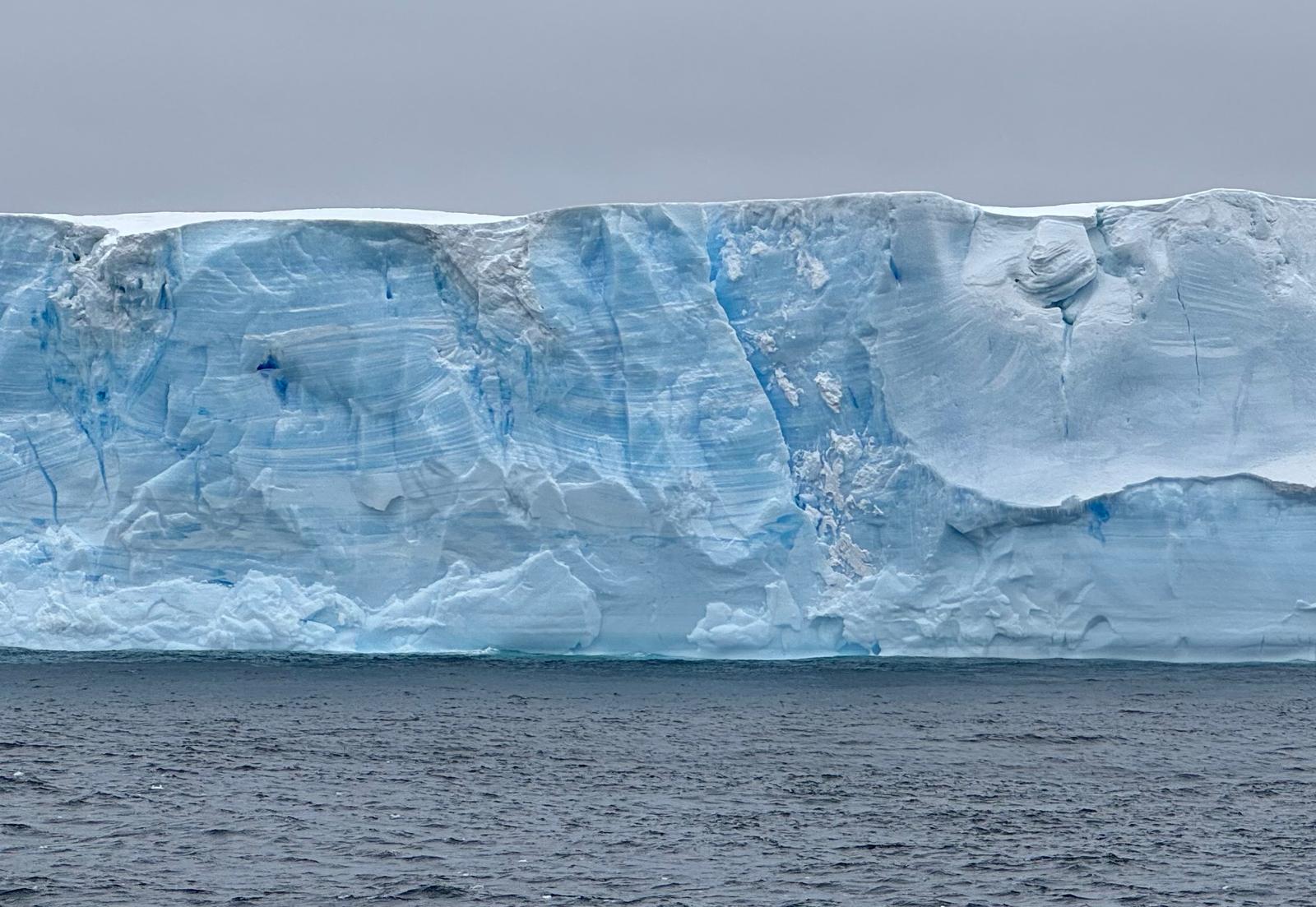
Later in the morning we came across a large iceberg, known as D33D. Icebergs over 10 miles long are named. The first letter stands for the quadrant of Antarctica it first came from, in this case the top, right quadrant if you position Antarctica with the peninsula on the top left. The number indicates how many large icebergs have come from that area since they started this naming convention. The first berg always ends in A, and subsequent splits from that berg get higher numbers. So D33D is part of the 33rd berg to have come from the D quadrant. D33A originally broke away from the Borchgrevink ice shelf in August 2023. It was 34 x 10 nautical miles. It has since split and the one we saw, D33D broke away in August of this year and is now 15 x 10 nautical miles. There are currently between 30 and 35 icebergs over 10 miles long around Antarctica.
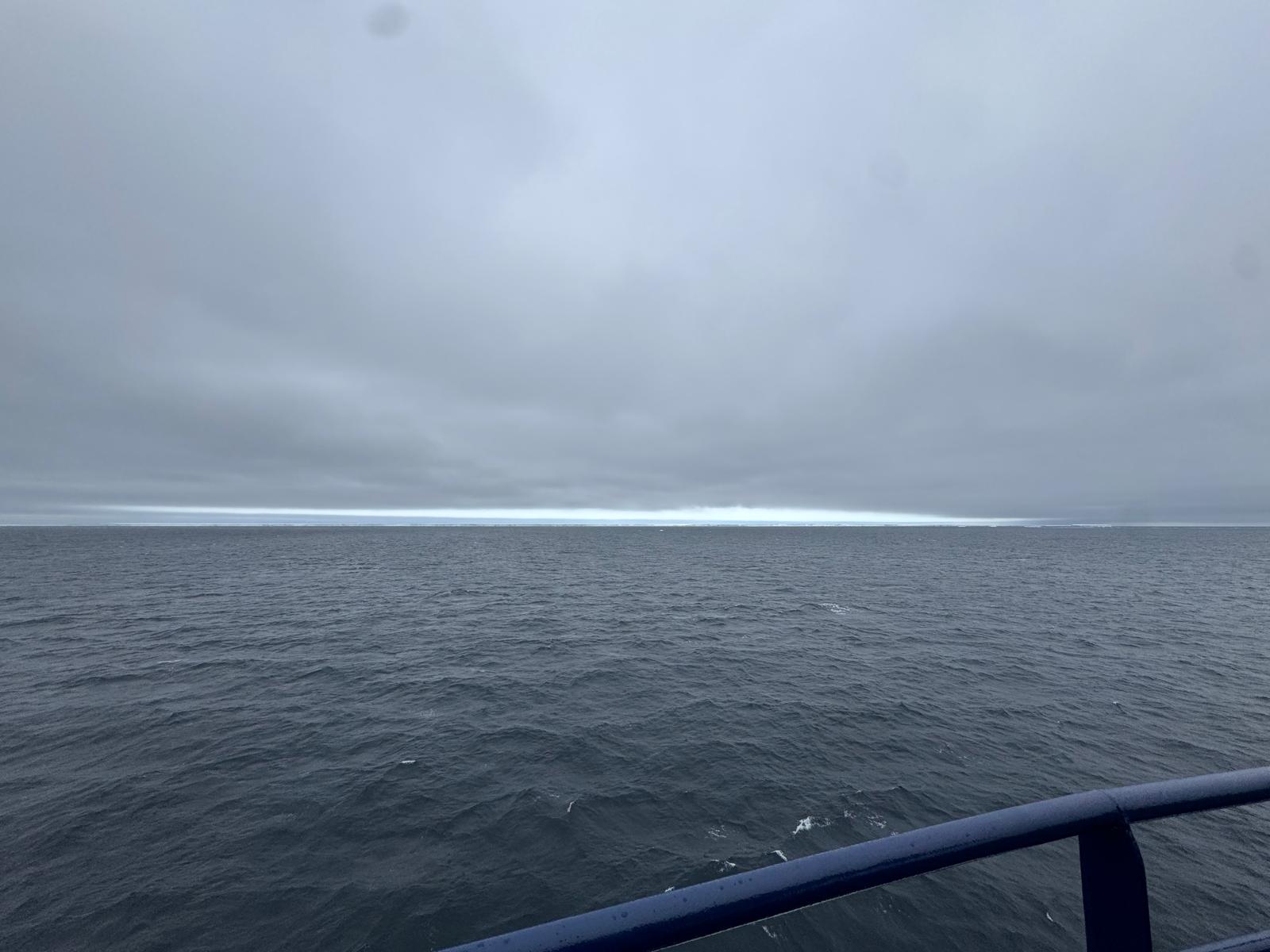
The iceberg is so large it creates its own micro-climate. Very hard to photograph something of this size though.

I could barely fit the whole iceberg into a full panoramic shot on the i-Phone.
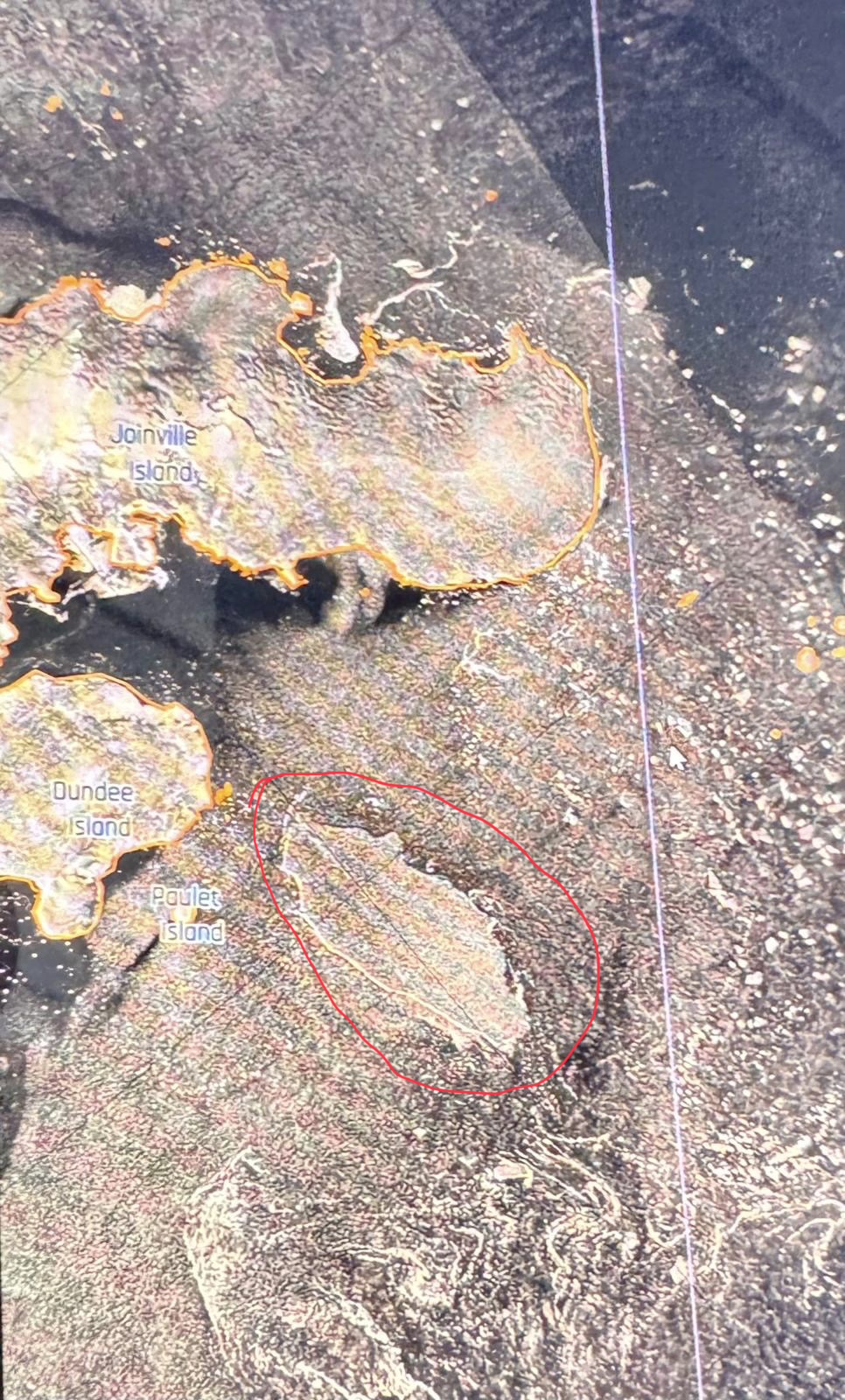
A screenshot of a satellite image showing Joinville Island, where we are planning to land this afternoon, with the iceberg below it (circled in red).
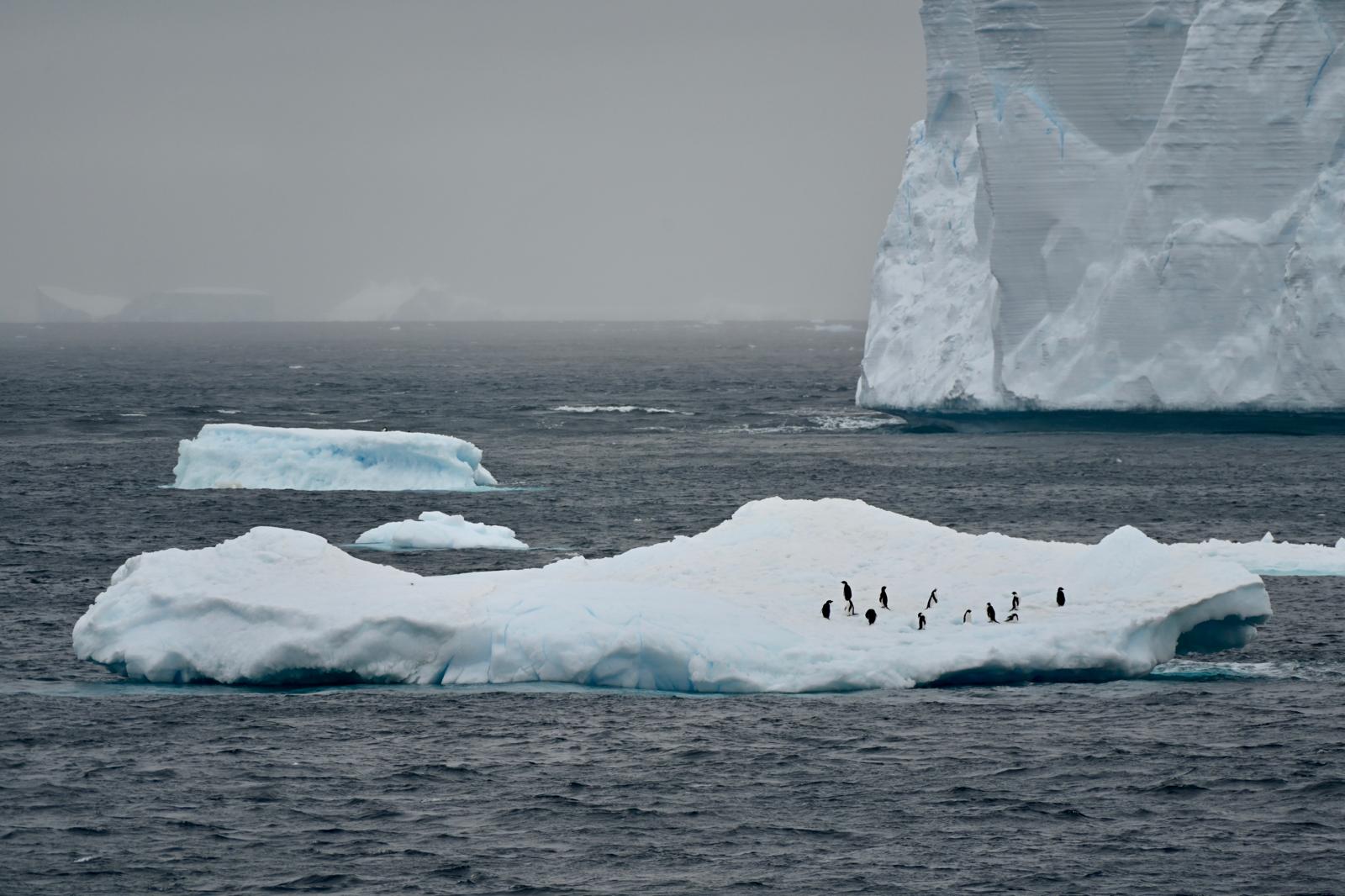
Adelie Penguins on a growler with a large tabular iceberg behind
We arrived at Tay beach on Joinville Island, just off the Antarctic Peninsula mid-afternoon. There was a fair bit of wind and snow was falling making for some interesting conditions for the zodiac crossing. It definitely feels like we have arrived in Antarctica. We were in the second group to go ashore and I joined the ‘long-hike’ group for a ~2mile hike. The area was pretty barren but we saw lots of interesting rocks. Jacqui, the onboard geologist got quite excited.
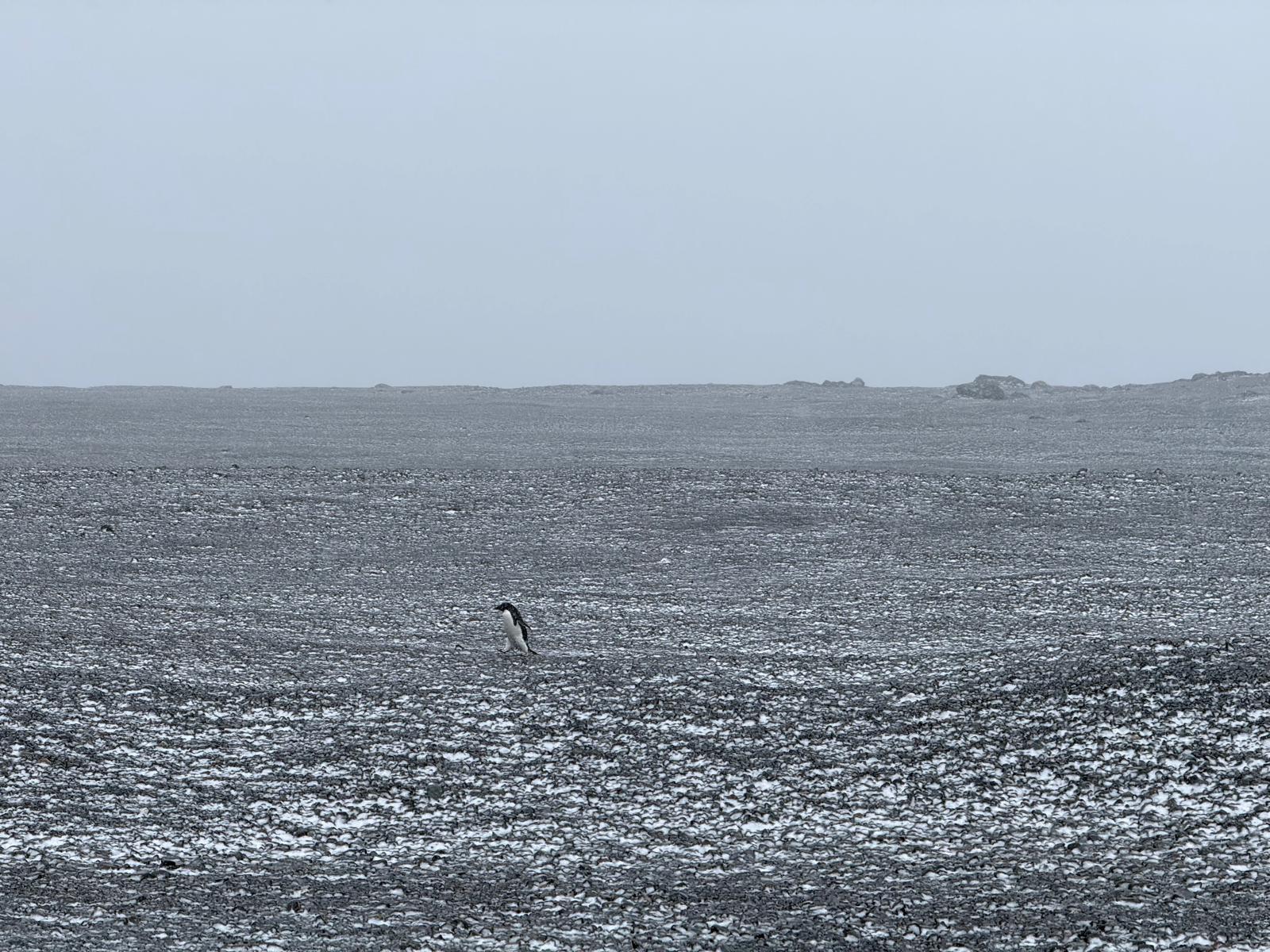
Barren landscape
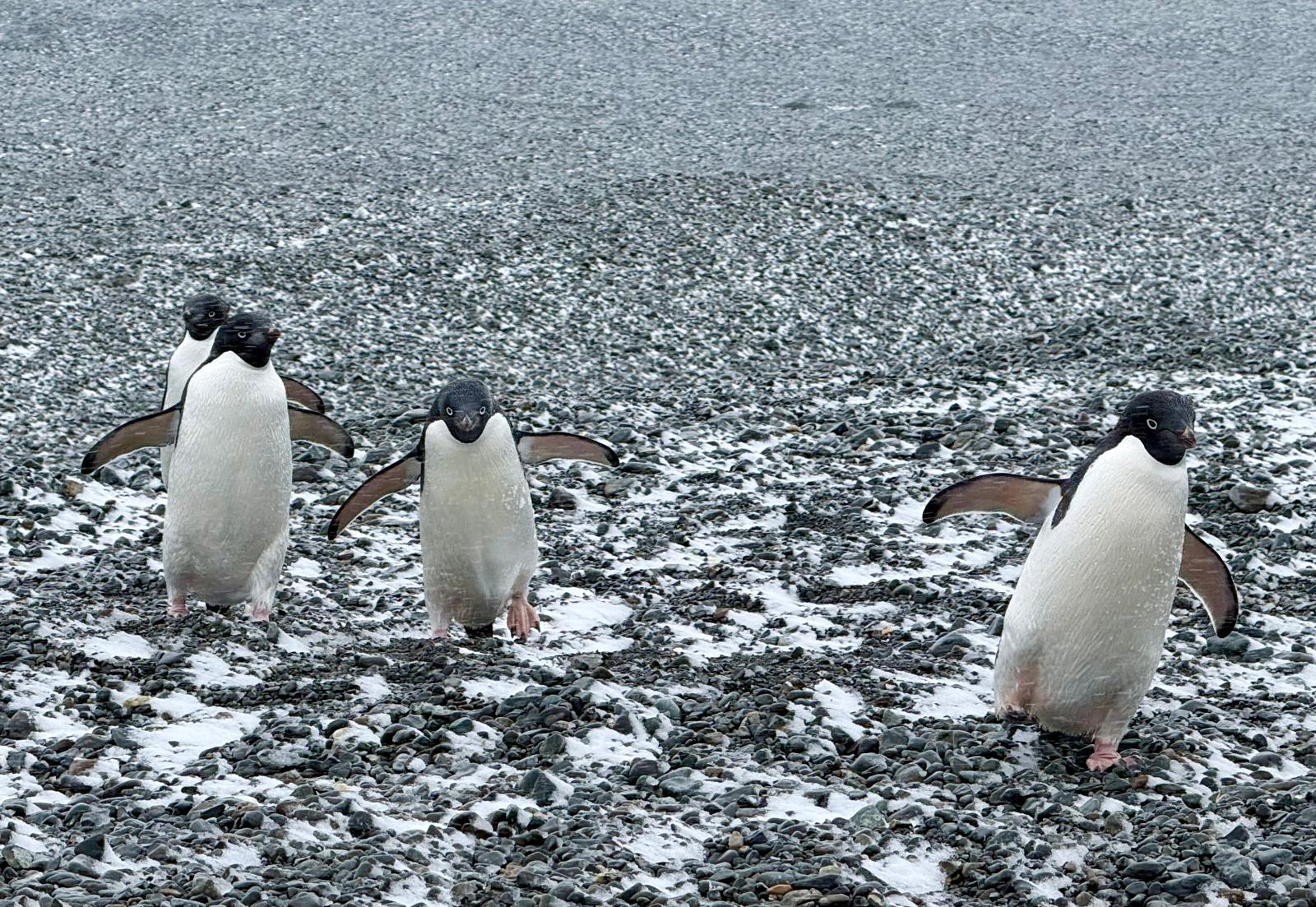
A few Adelie penguins came to greet the zodiacs
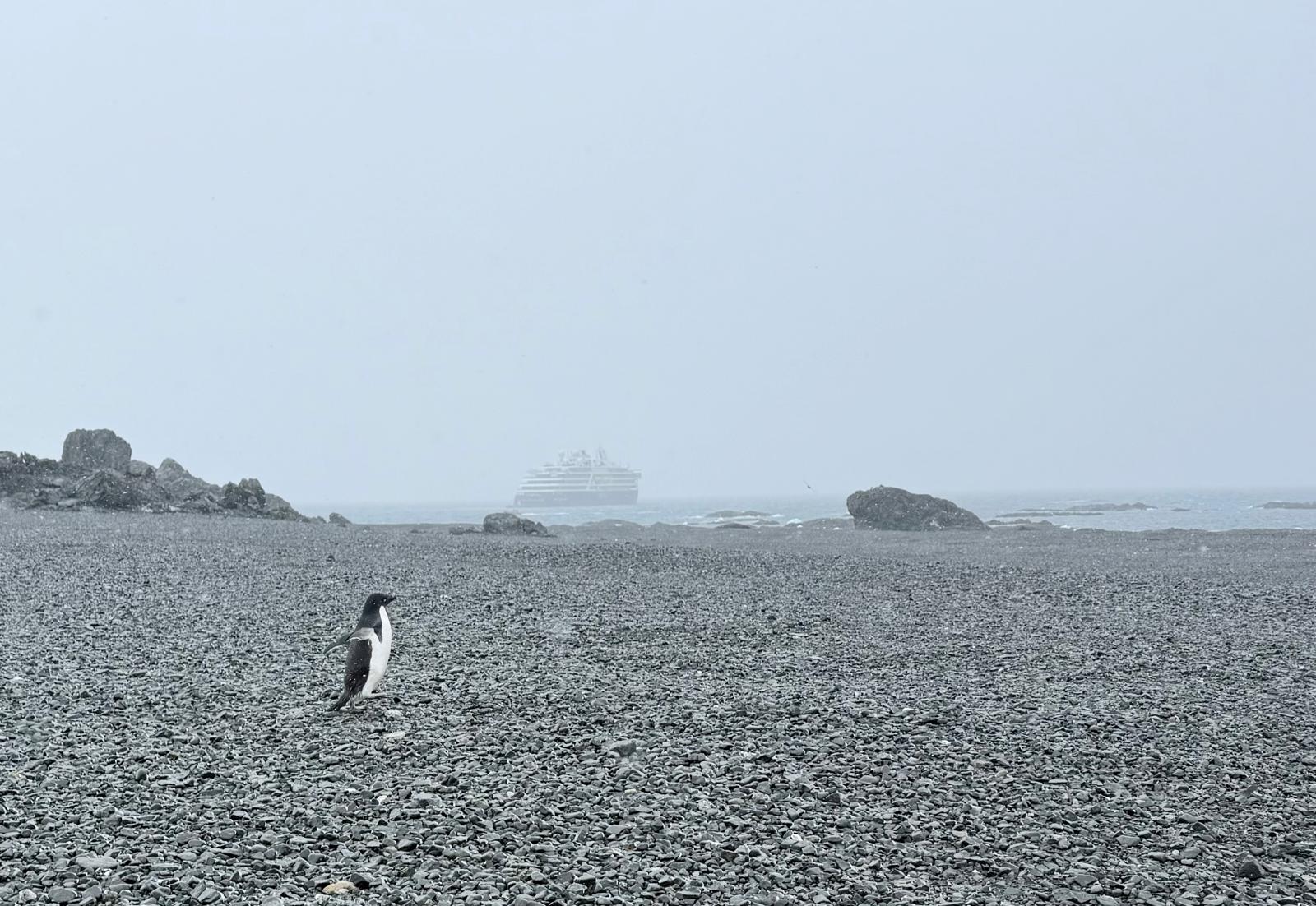
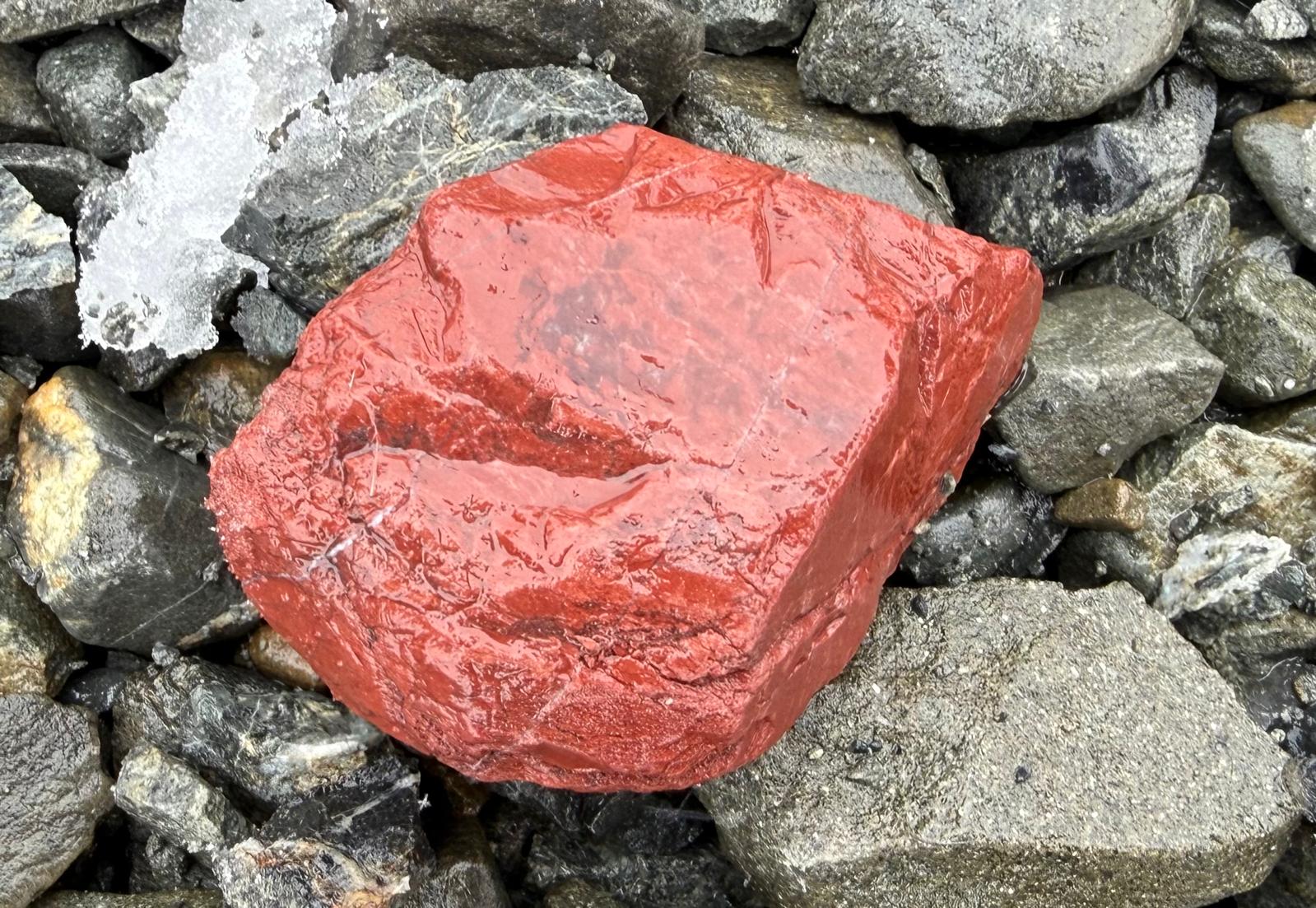
Jasper – these red rocks really stood out among the gray
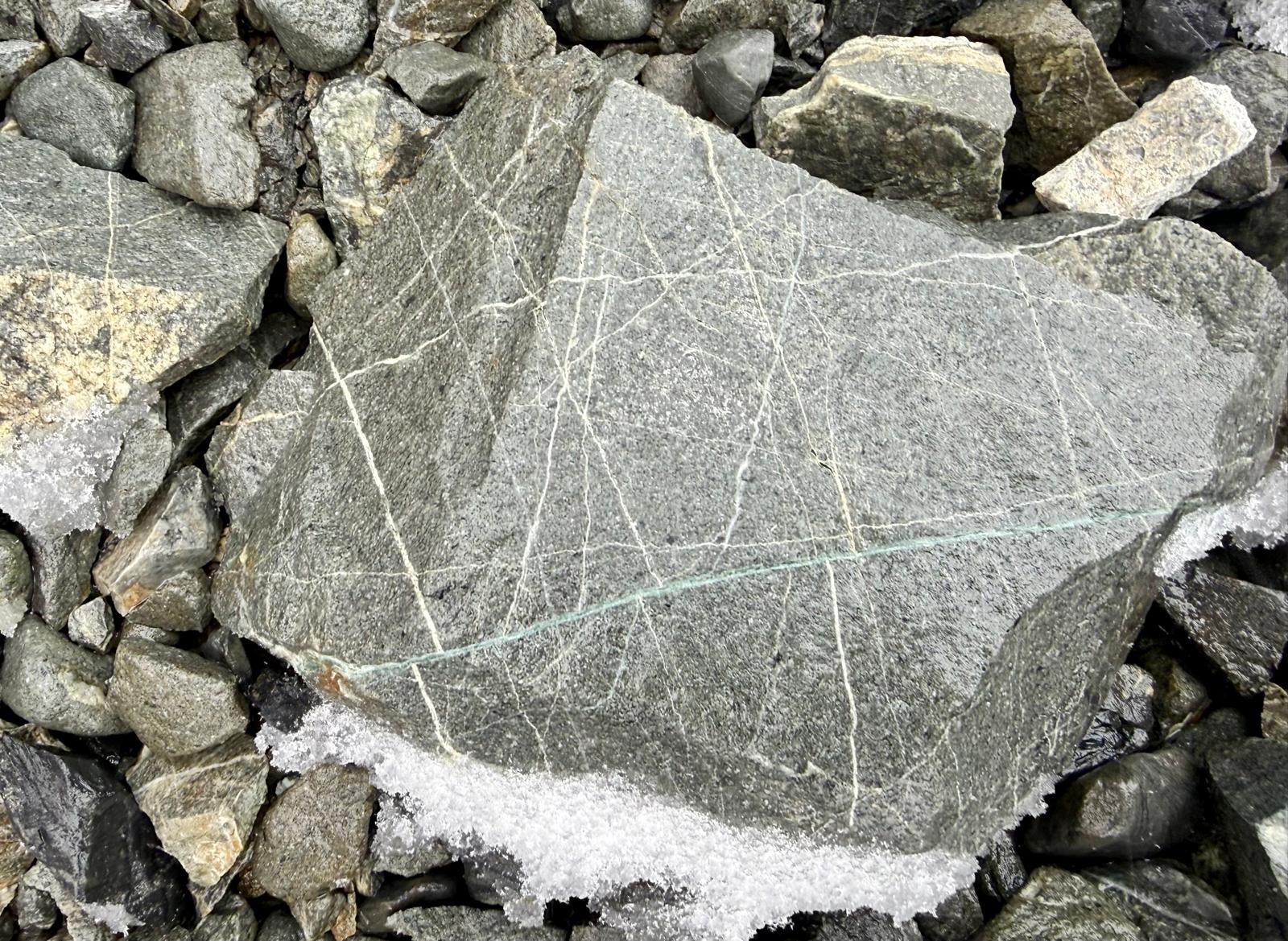
Jacqui got very excited about the lines on this rock. The white are quartz and the greenish one is copper. The lines indicate different periods of history.
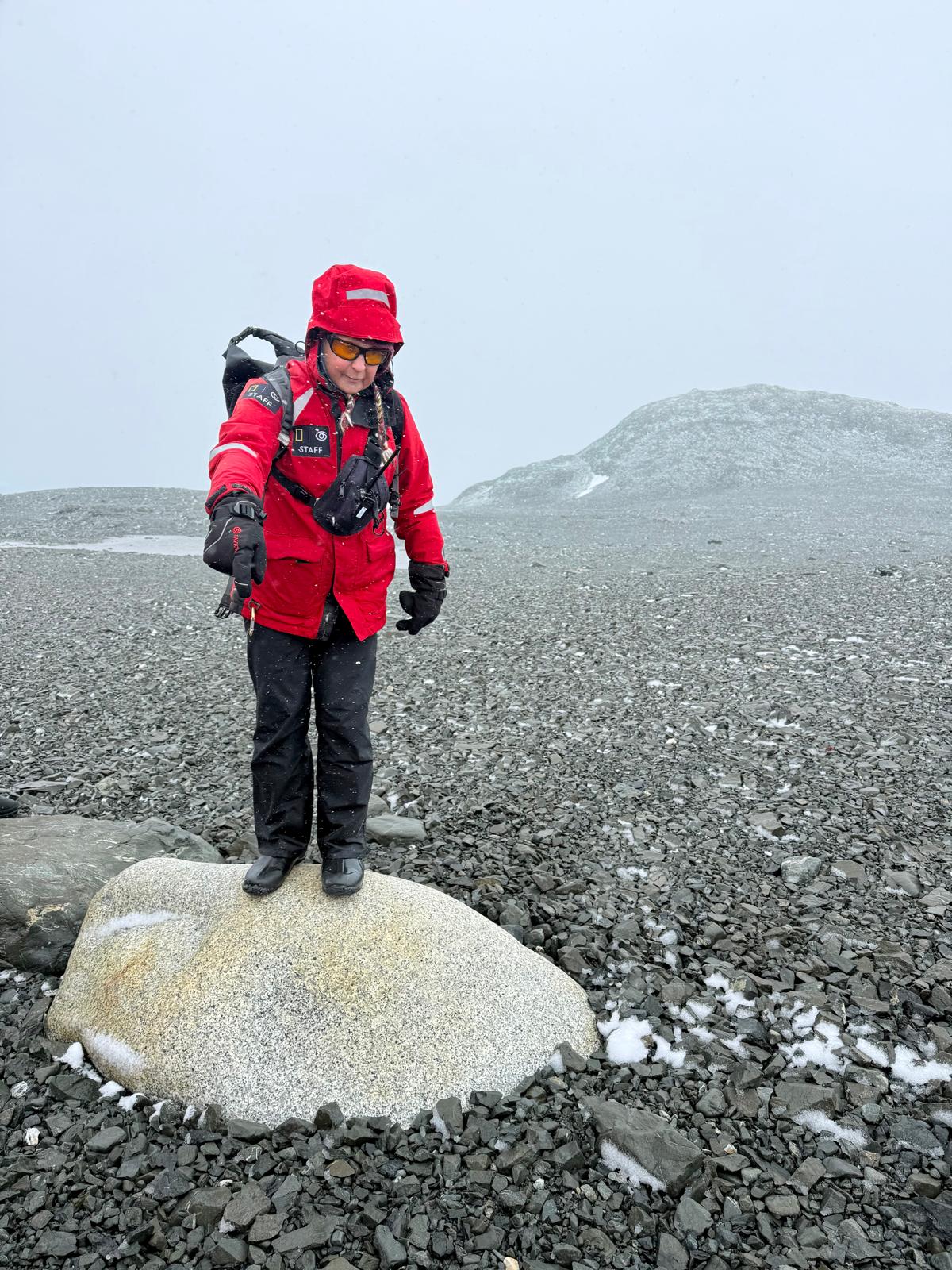
Jacqui getting very excited about a large piece of granite rock.
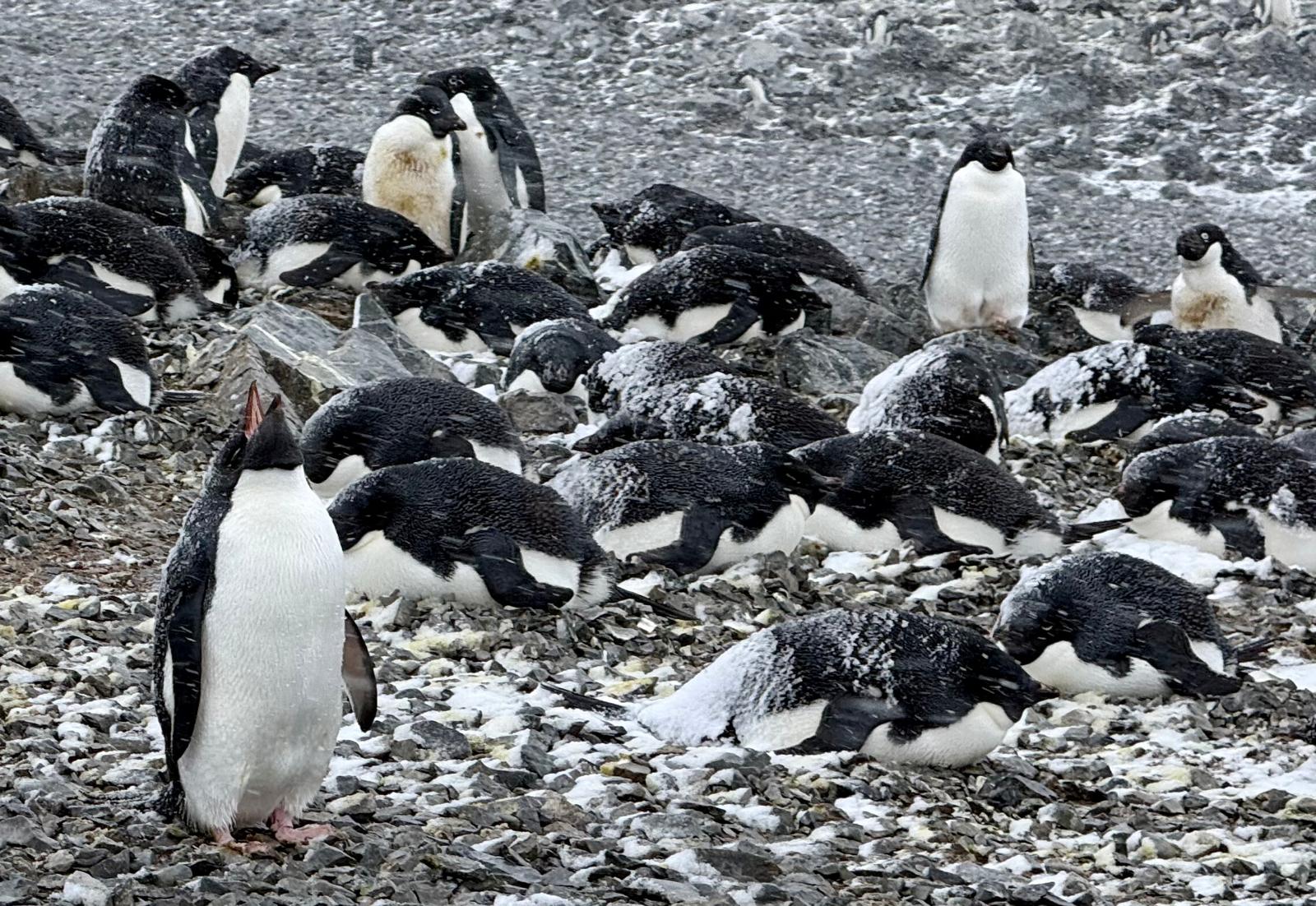
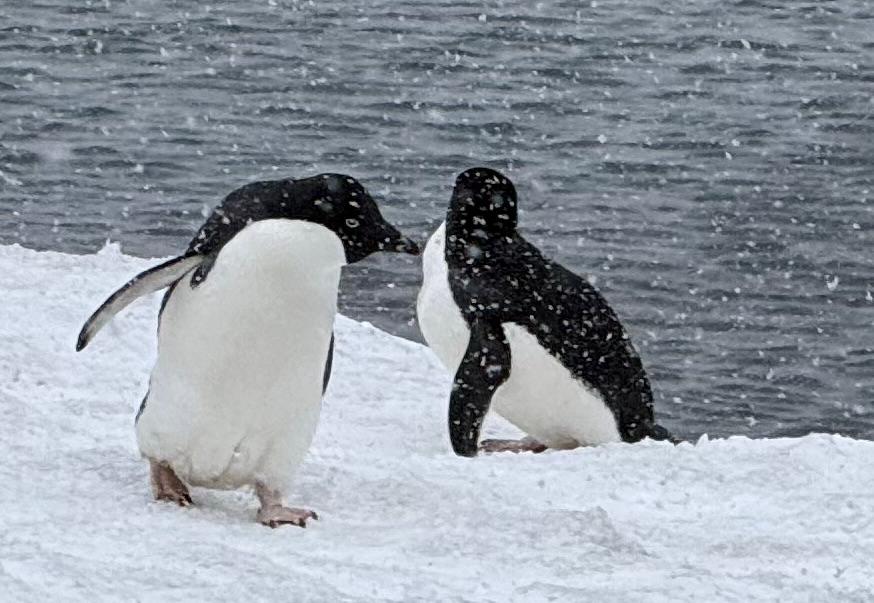
This area is home to many Adelie penguins. These are the archetypical Antarctic penguin and are one of only two species that live and breed exclusively on the continent, the other being the Emperor penguin. Eventually we came to the breeding colony and had time to stop and observe their behaviour before returning to the ship. Roger had joined the group that just visited the colony. A lone elephant seal lay on the beach not far from the colony. I have to say, I am quite glad I am not a penguin. These cold, snowy environments don’t really do much for me and I was glad for the multiple layers keeping me warm.
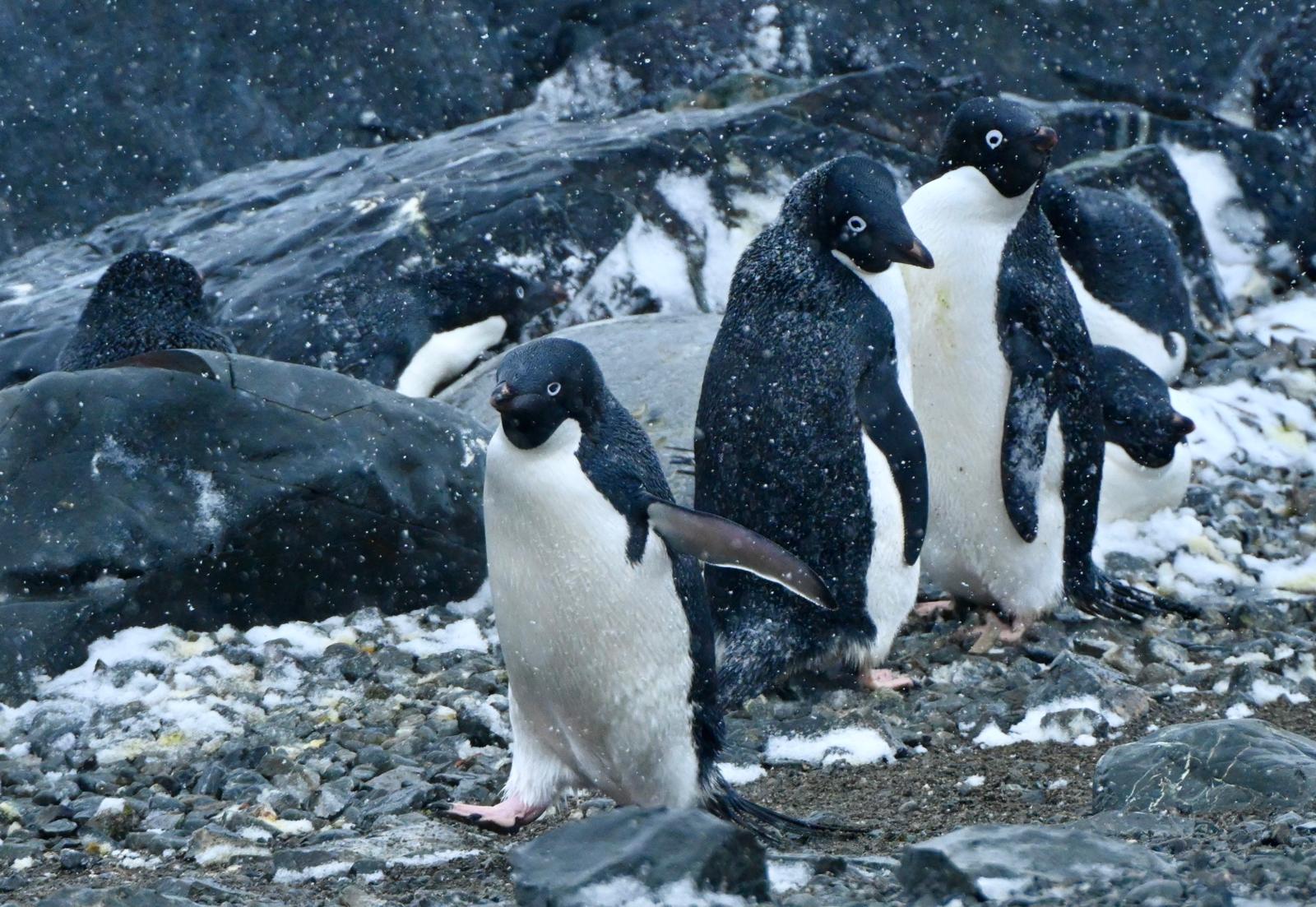
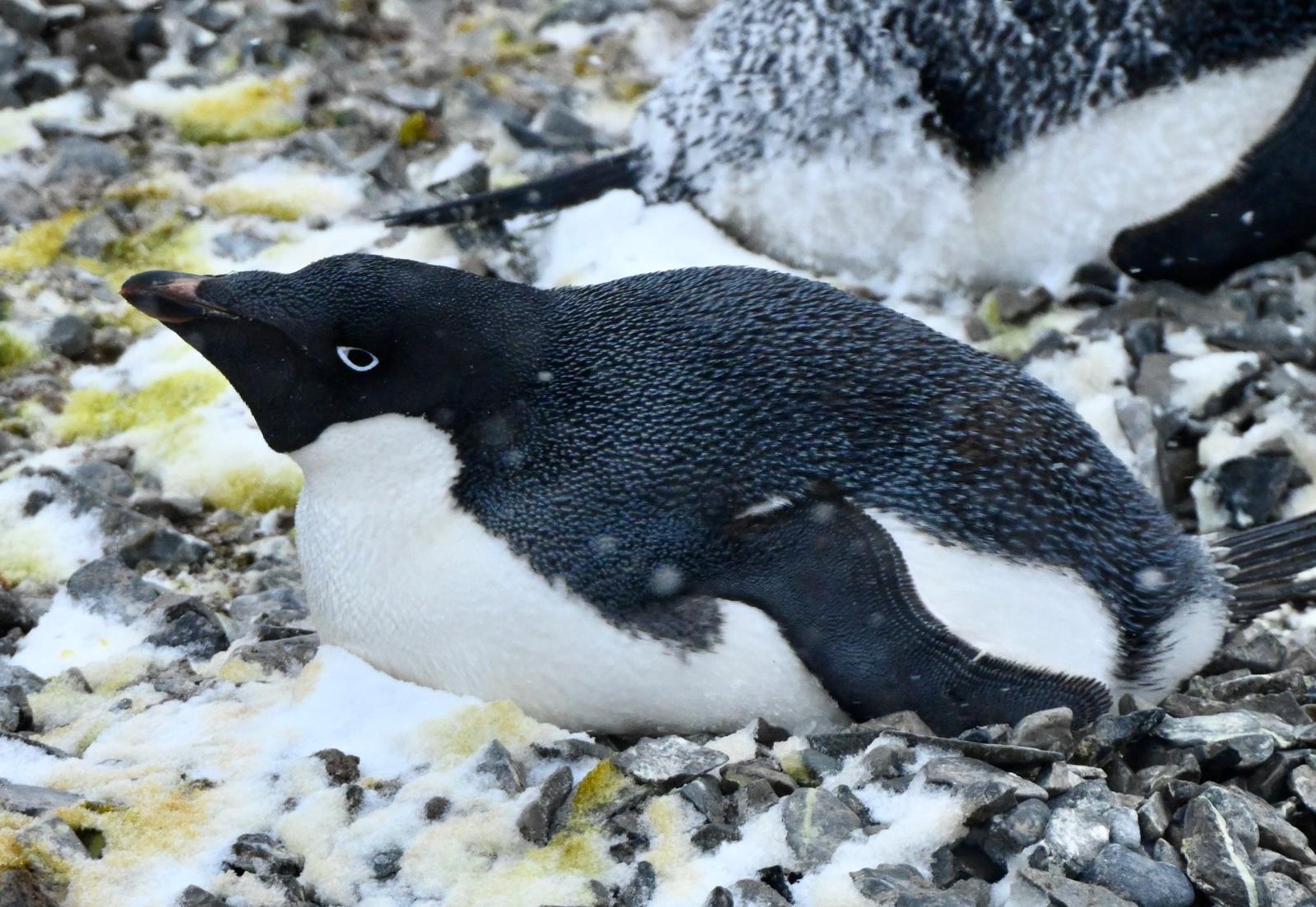
Most of the penguins were lying on their nests, incubating their eggs. The nests are just small piles of pebbles.
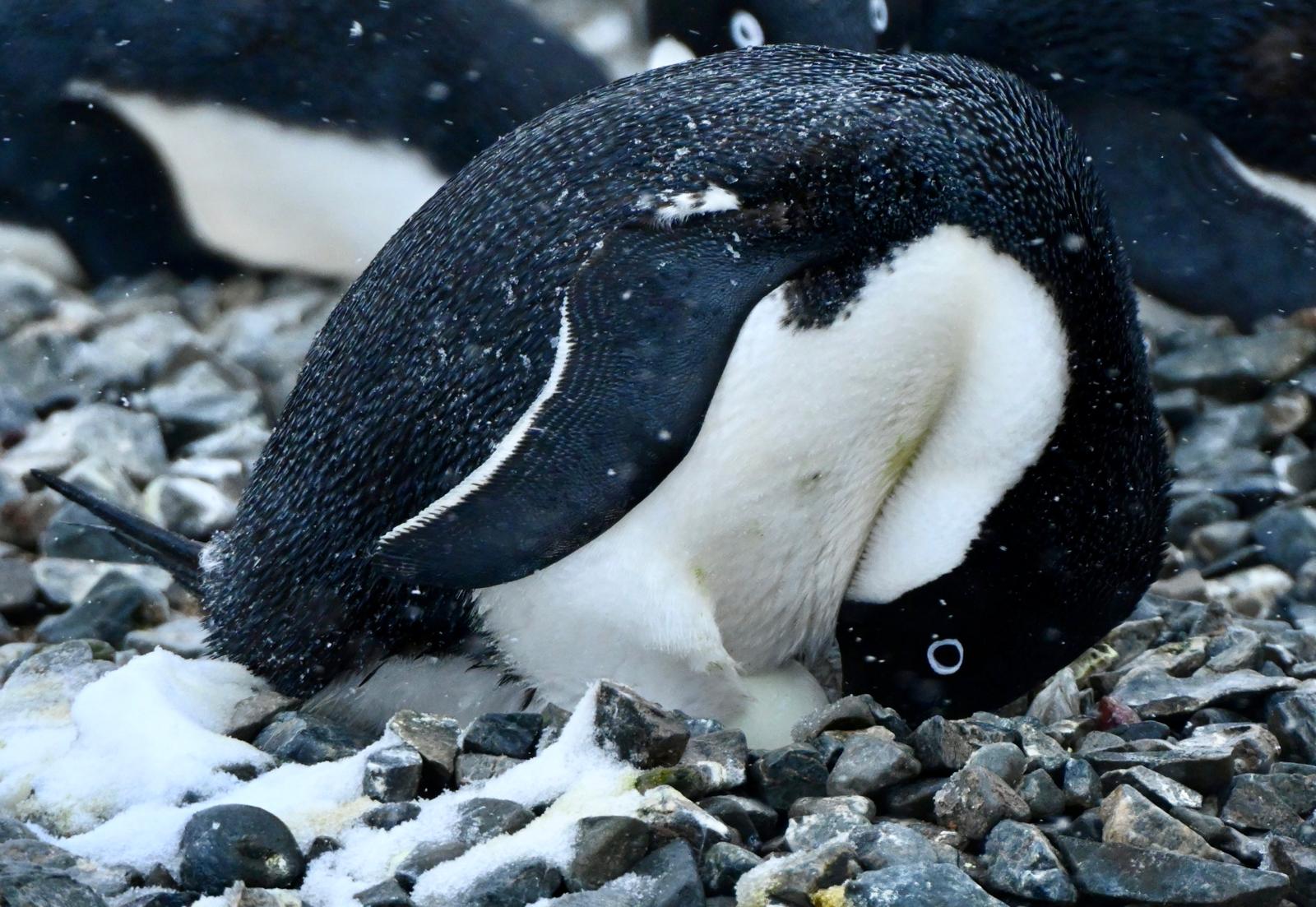
Occasionally a penguin would stand up and we could glimpse the egg.
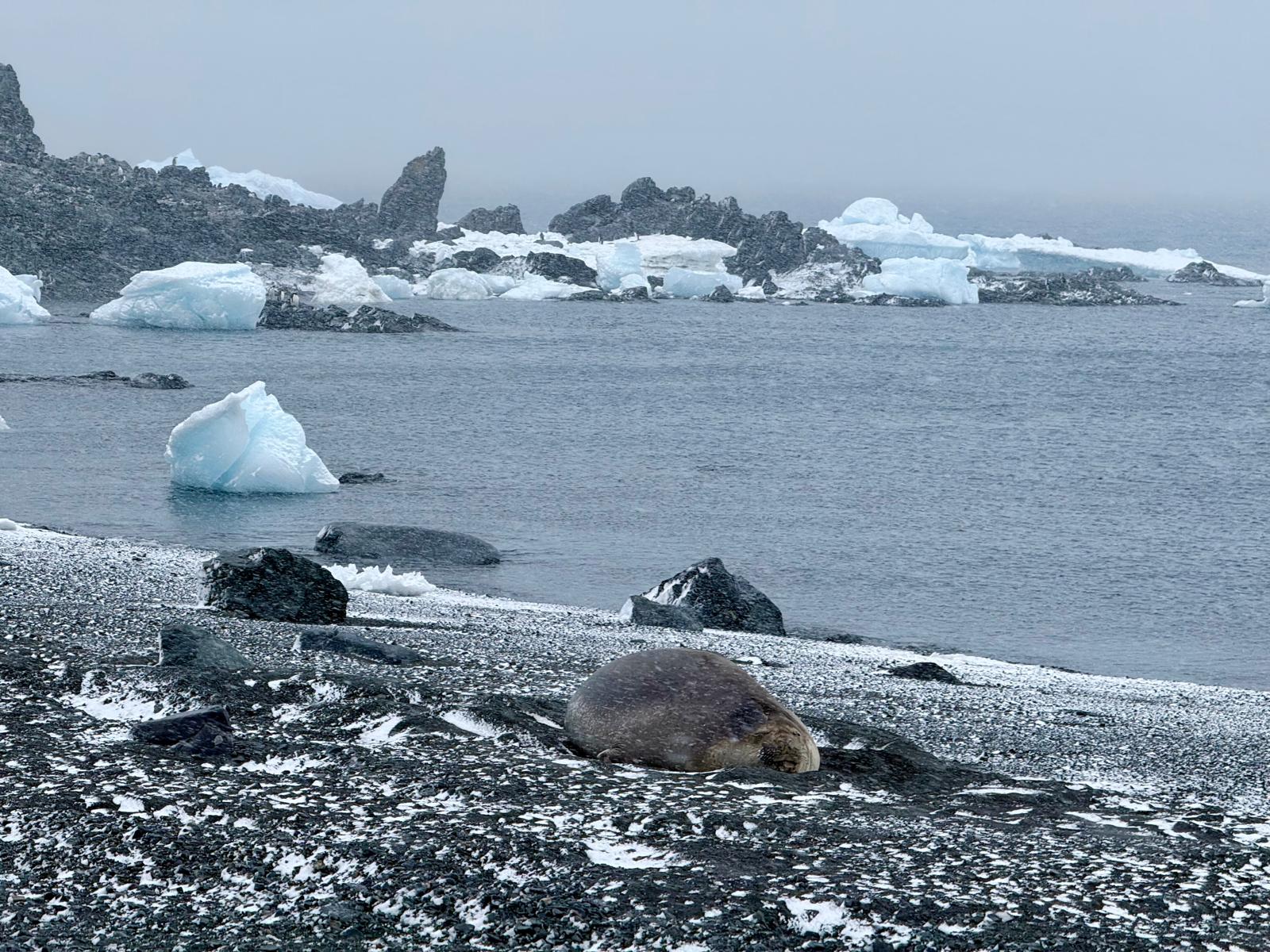
Lone elephant seal
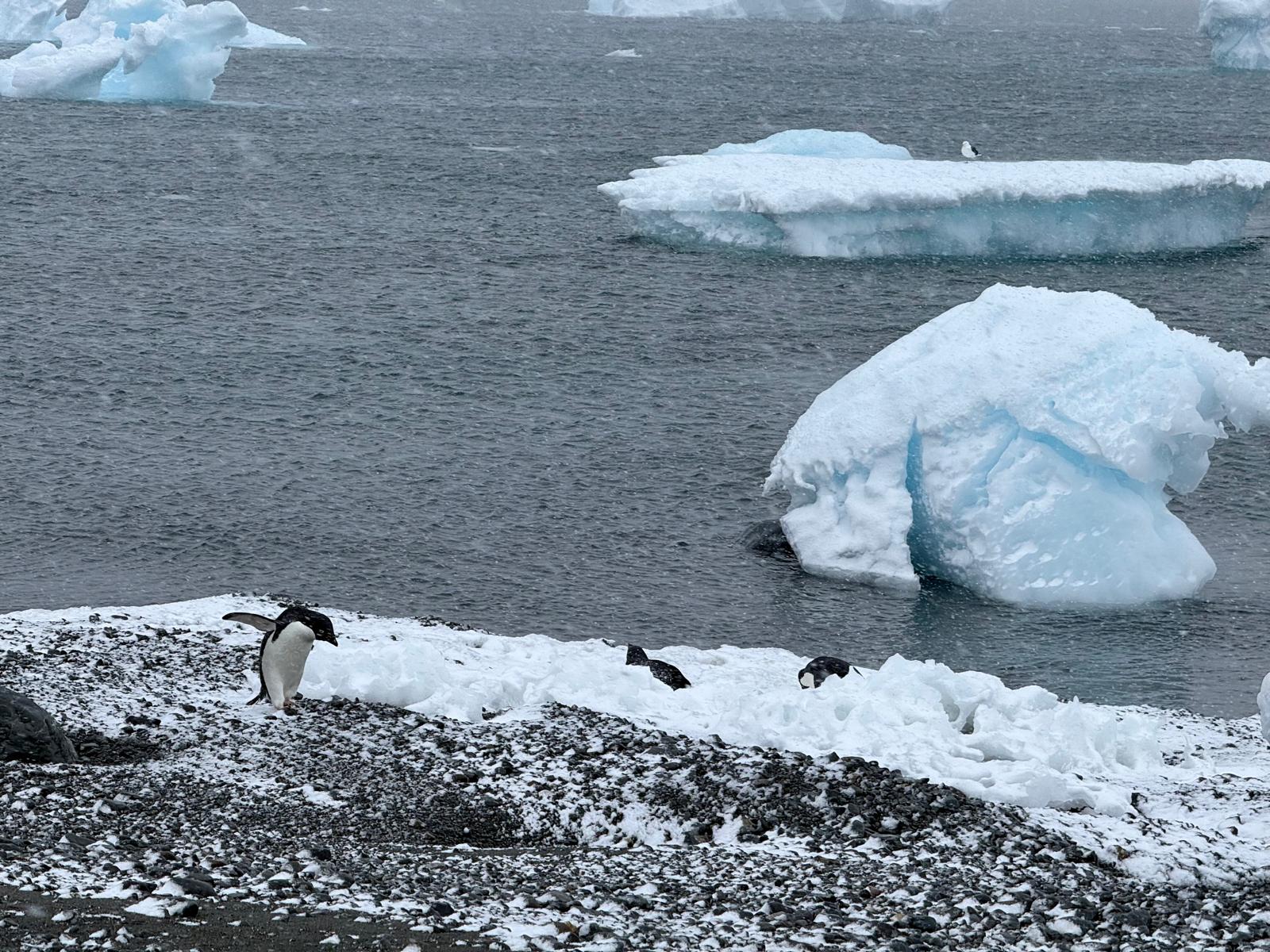
I was also happy to return to the comfortable, warm ship after the walk, although I was completely drenched, not only from the snow, which fell heavier and heavier the longer we were out, but also from the spray as we returned on the zodiac.
Back on board we had another informative recap. The dive team had been out again and shared some interesting photographs. It is amazing what lives in these cold Antarctic waters. Today, being Thanksgiving, there is a special Thanksgiving dinner buffet. As usual, I skipped dinner but Roger joined Steve and Karen for the festivities.
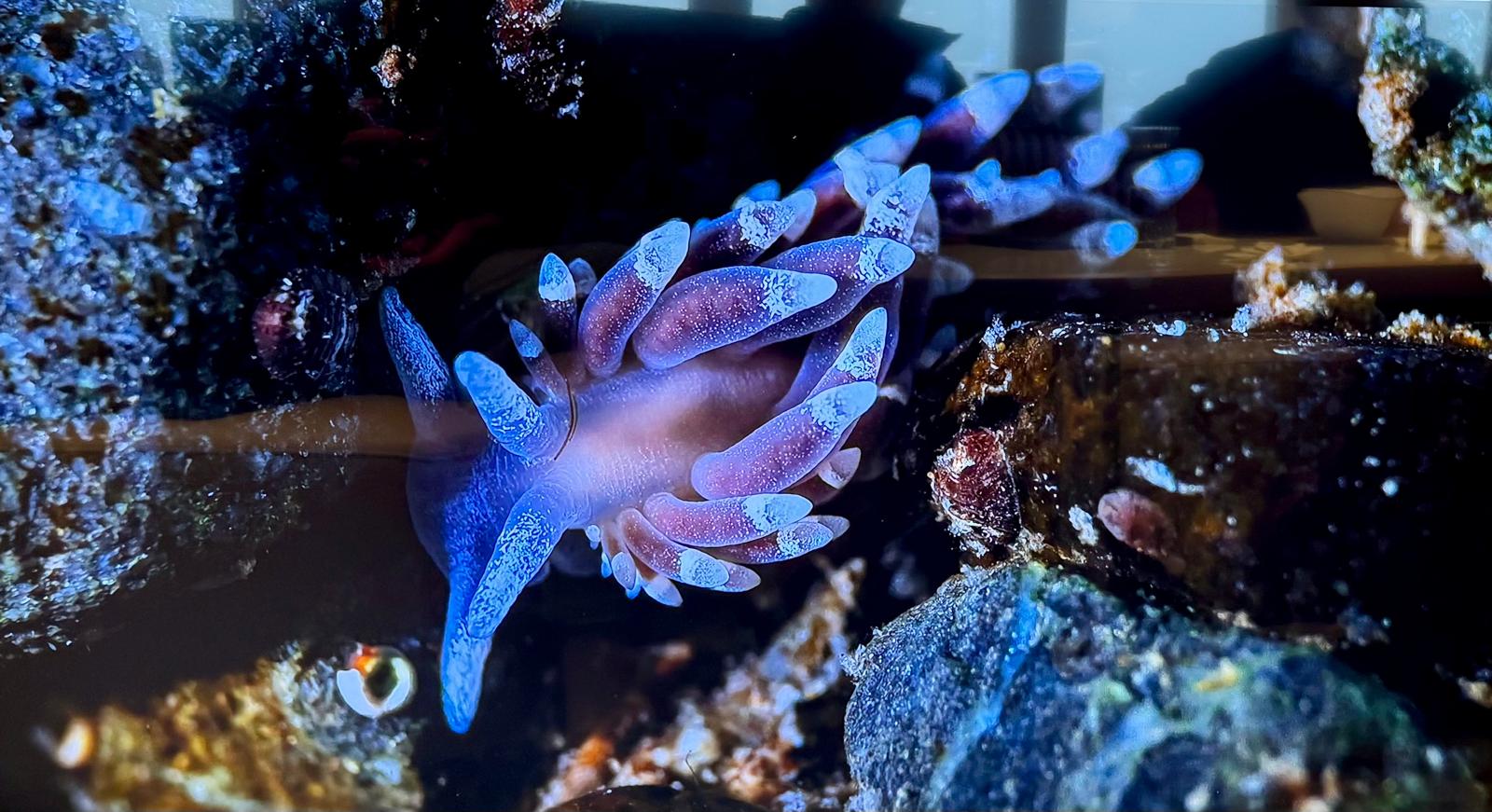
Screenshot of nudibranch
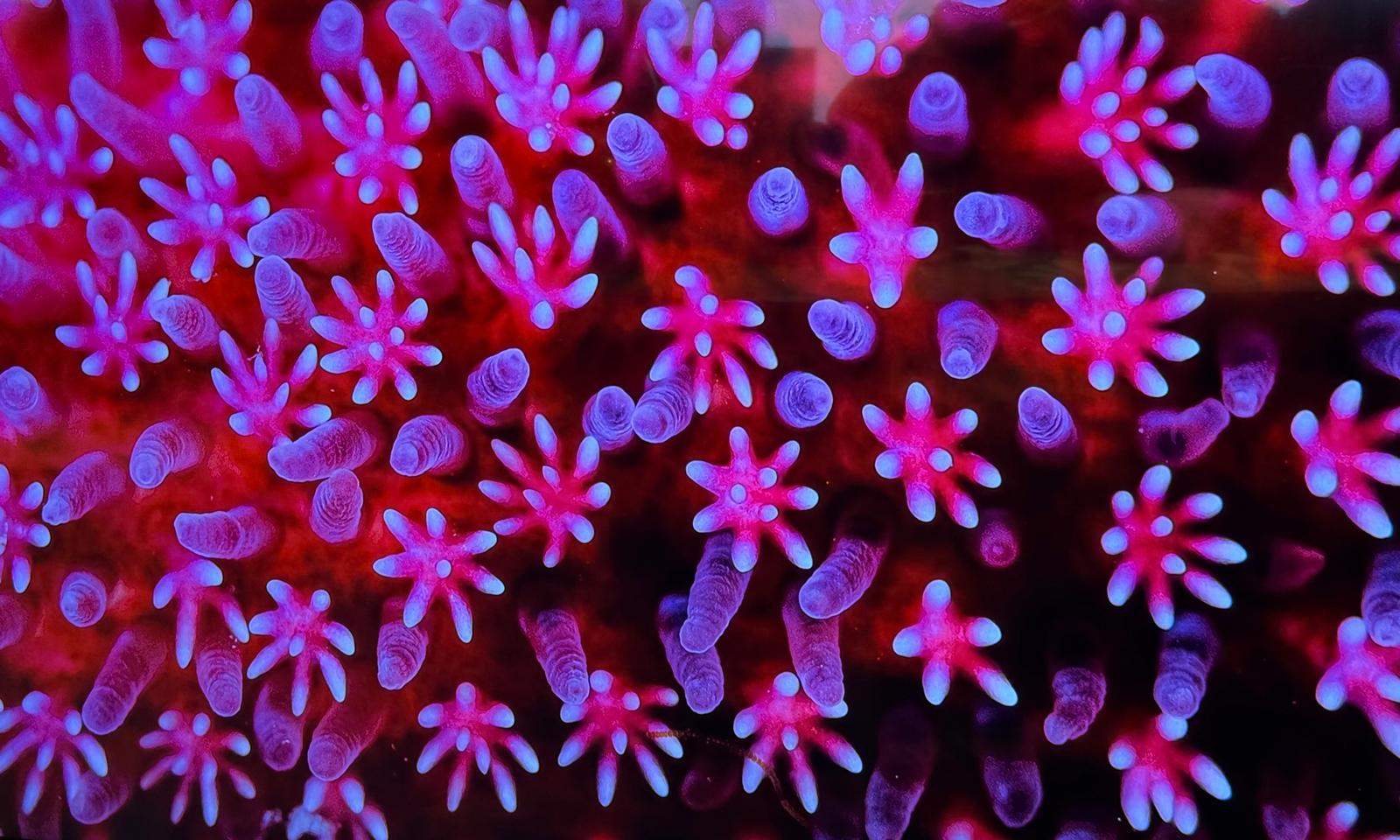
Screenshot of close up of a sea star