Sunday 16 November 2025 – Dakar, Senegal: Roger
It was just after 0600 when we felt the bow thrusters spark up, turning the boat around and sidling us into the Dakar wharf. Senegal was formerly a French colony until 1960 when it became independent. Prior to the French it was owned at various times by the UK, the Netherlands and was first colonised by the Portuguese in 1444. It has a population of 18.9 million, 4.5m of whom live in the Dakar metropolitan area.
Dakar is the busiest port in West Africa and also services Mali, which is land-locked. The main exports are gold, refined petroleum, phosphoric acid and frozen fish. Other important exports include cement, titanium ores, and processed food products like peanut oil and gum. There are dozens of ships at anchor offshore, waiting for a space at the crowded wharves.


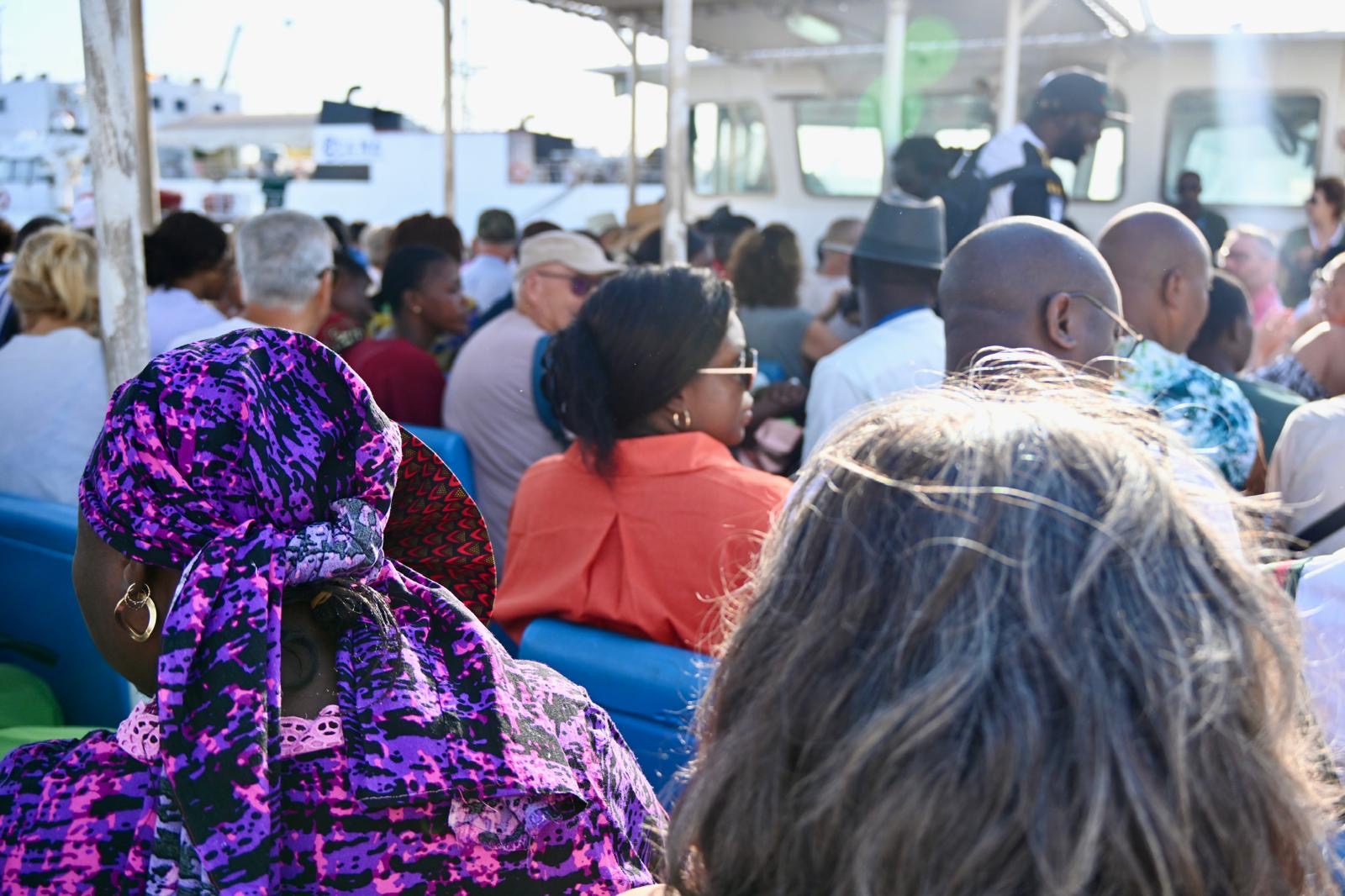
It was 0800 when we disembarked. We had booked a tour for just the two of us but got an email yesterday stating there were now going to be 6 on the tour in a 22-seater bus. They said that was because they only had one English speaking guide available. Yeah right! On the bus we headed not far to another wharf, where we received tickets to catch the ferry to Goree island. Then we sat in the terminal until the 0900 ferry left for the island. Over the next 40-minutes the terminal filled up, mainly with people who worked on the island, many in very colourful costumes. A woman sitting next to me had a long conversation with Sylvia in French during which she suggested we should visit her shop.
Along with 300 plus people, we boarded the ferry (called Beer although it didn’t have a bar). We rode on the top deck for the 30-minute journey. It took some time to disembark, after which our guide, Oumar, gathered the six of us up and began to talk non-stop about the history of the island. There are around 1600 people who live on the island.



It was in 1501 that the Portuguese first started exporting slaves from here to the Americas.
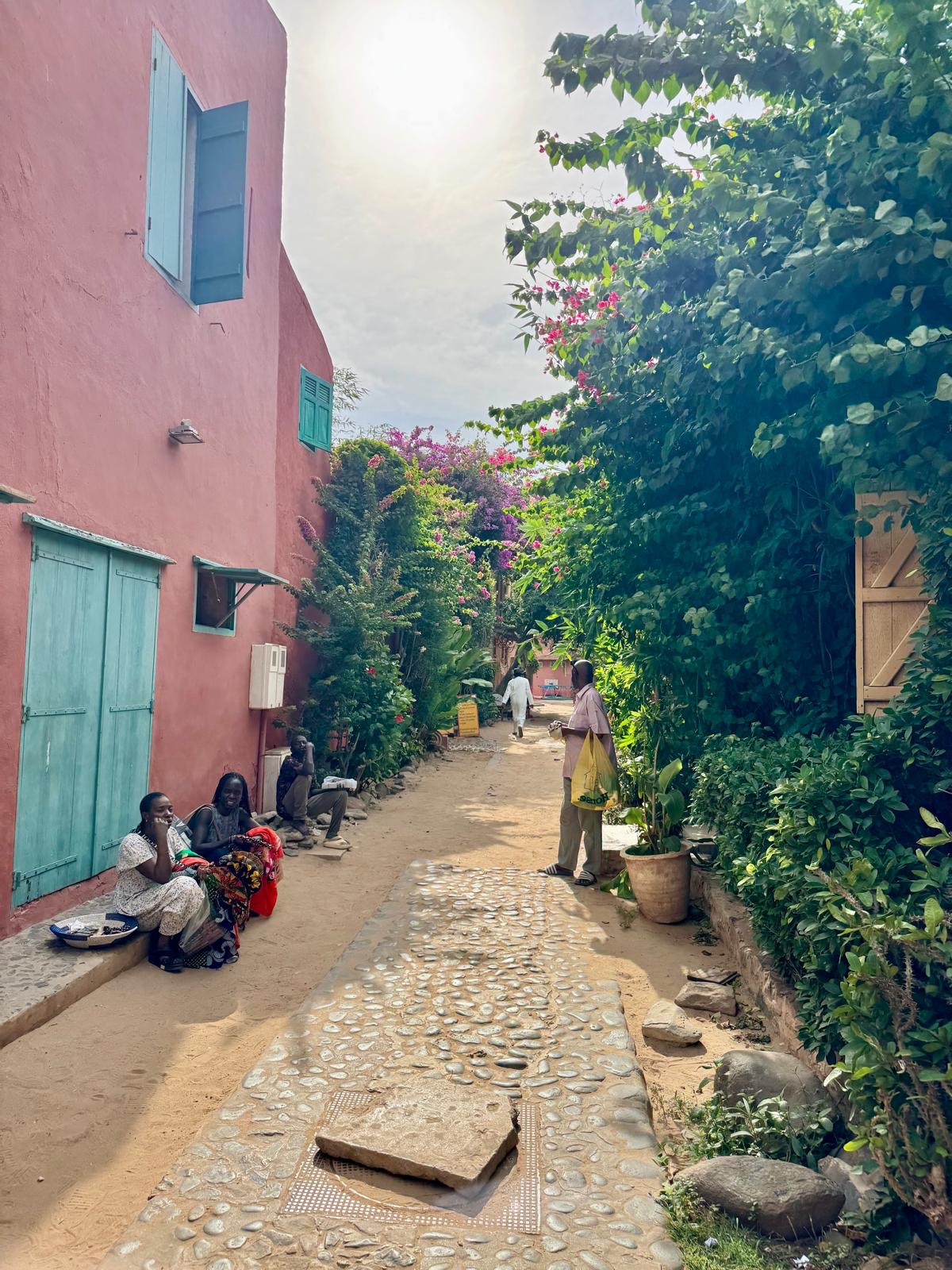
We wandered down an alley, stopping at a slave house that has been restored back to what it was when it was built in the 1800’s. There were around 20 of these in operation back in the day. We waited for some time for the previous group to exit before the entrance opened and dozens of people crowded in. We headed to the ‘door of no return’ where the slaves would head out and down a wooden jetty onto small boats to be rowed out to the waiting ship for transport to the Americas. Guards with rifles stood at the arrow slits to shoot anyone that jumped off. Apparently there was a large shark population here back then as dead slaves were thrown into the sea to feed them.




Oumar proceeded to tell us that 60-million slaves were shipped out of West Africa over 300 years, one third of whom perished along the way. Then he said ten thousand a year passed through Goree island, which was the main exit point. Finding the numbers not stacking up, I did some research. 22% of slaves to the Americas were shipped from here, a total of roughly 256,000, which equates to just over a million over the 300 years of trading. I am often quite cynical of information provided by guides!!
Next we looked around at the rooms that the slaves were kept in. They were pretty draconian with ~20 men in a 2.6×2.6 m room, manacled in twos at their wrists and ankles, with little ventilation and a once a day toilet visit. The same applied to the women’s quarters. Only the girls and young women were kept in a room with a toilet hole in the floor. They were taken at night for the soldiers to have sex with. Those that got pregnant were then released onto the island to bring up their half-cast child and often given their own slaves to assist with the child raising. There was also a room where underweight slaves were kept and given a special diet to get them up to 120lbs, which was the minimum weight for shipment. Above the cells there was accomodation for the slave buyers and guards. The buyers would lean over the balcony and bid on new slaves as they were brought in.


Slavery was not something new to Africa when the Europeans arrived. It had been going on for thousands of years. At some points in the early centuries up to 50% of some African populations were enslaved, particularly after wars and conflicts. Often slaves were used as soldiers, housekeepers, agriculturists and miners. Some, as soldiers, even rose to the rank of general. Slavery was only outlawed in Ethiopia in 1930. In some parts of Africa it is still going on today.
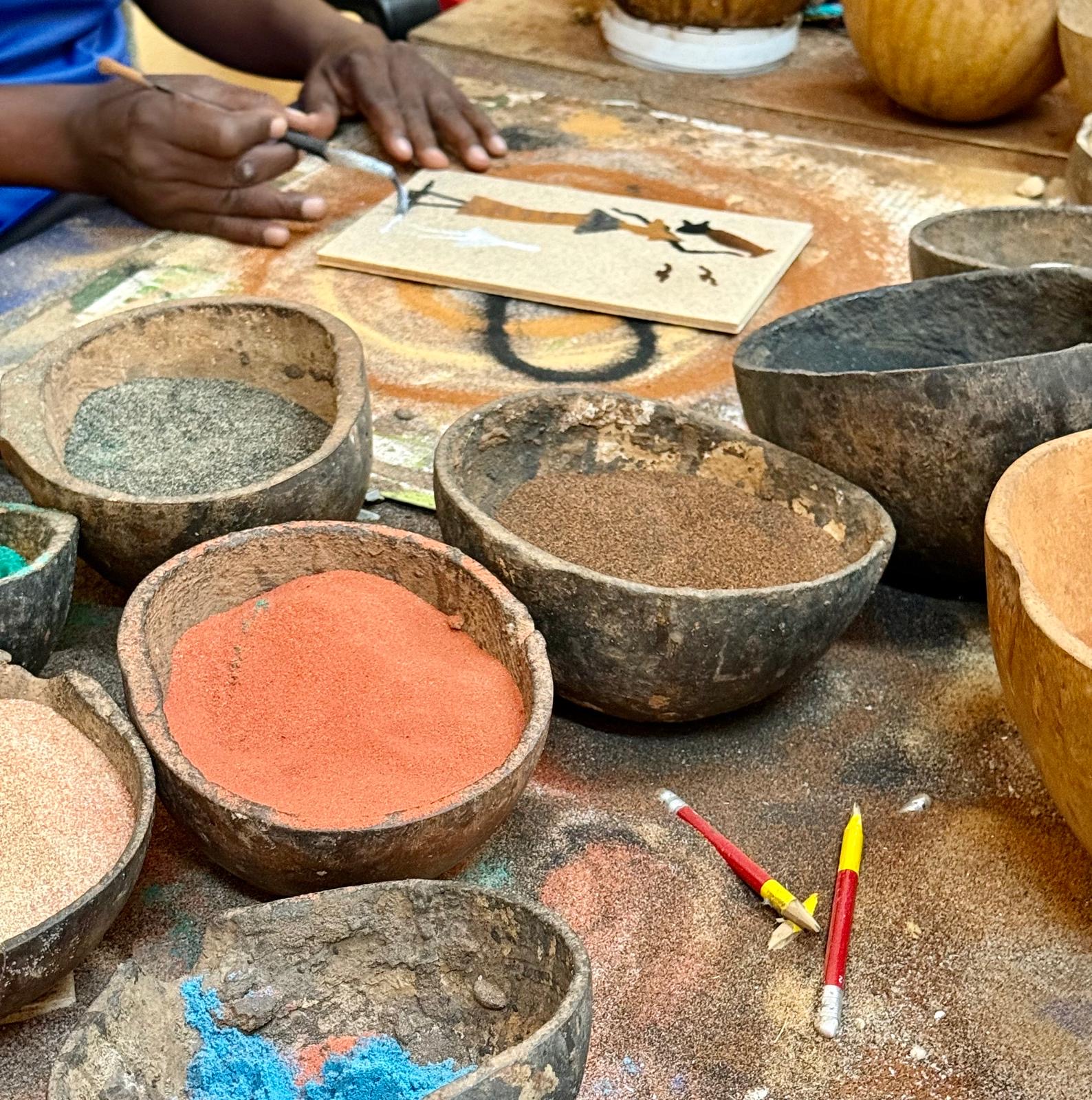
We continued on around the town often being told the same thing several times. One interesting stop was a guy doing sand painting by putting some glue on a board then making a picture by adding different coloured sand.




There is a high achievement girl’s school that takes 25 of the brightest kids from around the country every year.

We wandered slowly (being passed by the local snails) back past the wharf towards the fort at the other end of the island. Apparently this is a museum but we didn’t get time to look inside.
Back at the wharf we waited in the shade for the ferry to come in for the trip back to the mainland. Even though we were told they were very strict about only letting 340 people on the ferry at a time it seemed there were twice that many packed in.


Back on the mainland and in the bus, we took a quick trip around the central part of the town. Oumar pointed out various land marks including the railway station, the high speed train that runs most of the way to the airport, a large museum (apparently the largest in Africa) and alongside it, a large art centre, both built by the Chinese.

Passing the Peace Park, we headed past the Presidential Palace, the headquarters of the Senegal equivalent of the CIA and a large cathedral. With 95% of the population being Muslim it’s hard to fathom how the Catholics fronted the money to build this. The national theatre had a canoe outside to commemorate the story of how Senegal got its name. Apparently it comes from the Wolof word Sunugal, which means all in the same boat.


Next was a stop was at the 12-million dollar Africa monument, which was built by the North Koreans. With over 20% of the population out of work I am not sure of the justification of this monstrosity which is meant to be pointing to a brighter future for Africa.


As we drove back to the boat Oumar told us about how polygamy works here. A bloke is allowed up to four wives as long as he can support them and declares himself as a polygamist, when he marries the first one. Apparently one can tell how many wives a man has by the number of satellite dishes on his roof as each wife has to have her own TV.
Back on the boat we headed to the Horizian lounge for tea and scones. While the violin and cello dragged the tail of a horse over the gut of a dead cat – sounding to me more like someone had put a large weight on the cat and it was screaming to get away. (Note from Sylvia – actually the music was really lovely)
It was after 1700 when the ship pulled away from the wharf as I think the bunkering had taken longer than expected. As we headed away from the town the pilot boat pulled alongside to pick up the pilot. He exited the ship from a door on the lower deck, not down a rope ladder as I was expecting.

The steward came into our suite and made sure the curtains were securely pulled as we are heading into what can be troublesome waters and now have a private armed security party on board. Our lights will be dimmed overnight and the outside decks closed from sunrise to sunset as a security precaution until we get to Namibia.
Monday 17 November – Banjul, Gambia: Sylvia
I was woken by the hum of the bow thrusters just after 6am, indicating we were arriving in Banjul. Gambia is the smallest country in Africa and is just a thin strip of land almost entirely surrounded by Senegal, except for at the coast. Banjul, the capital of The Gambia, sits on a small island in the Gambia river, which runs through the centre of the country. It is very small for a capital city with only 11,000 of the ~2.2 million inhabitants of The Gambia living there.


At 08:30 we disembarked and were met my our guide for the day, Dembo. Enterprising locals had set up market stalls all along the port area. One guy had a sign out saying ‘Welcome to Mr Fix It’. Some local women were dancing and playing drums. As Dembo explained, there is not a lot of unemployment but there is a lot of self-employment. We jumped his Ford Explorer and headed off.


As in many other developing countries there were people everywhere, selling all manner things from stalls or small shacks. Women in bright coloured dresses carry loads on their heads and babies and young children slung across their backs in a sling type contraption. Men in traditional robes or pyjama-type outfits stop and chat to each other. I saw one man, who would not have looked out of place in the business district of any major city, but who looked quite incongruous here. School children wander along in groups, in the different uniforms of their schools. Some of the girls were white veils or shawls, looking quite nun-like.


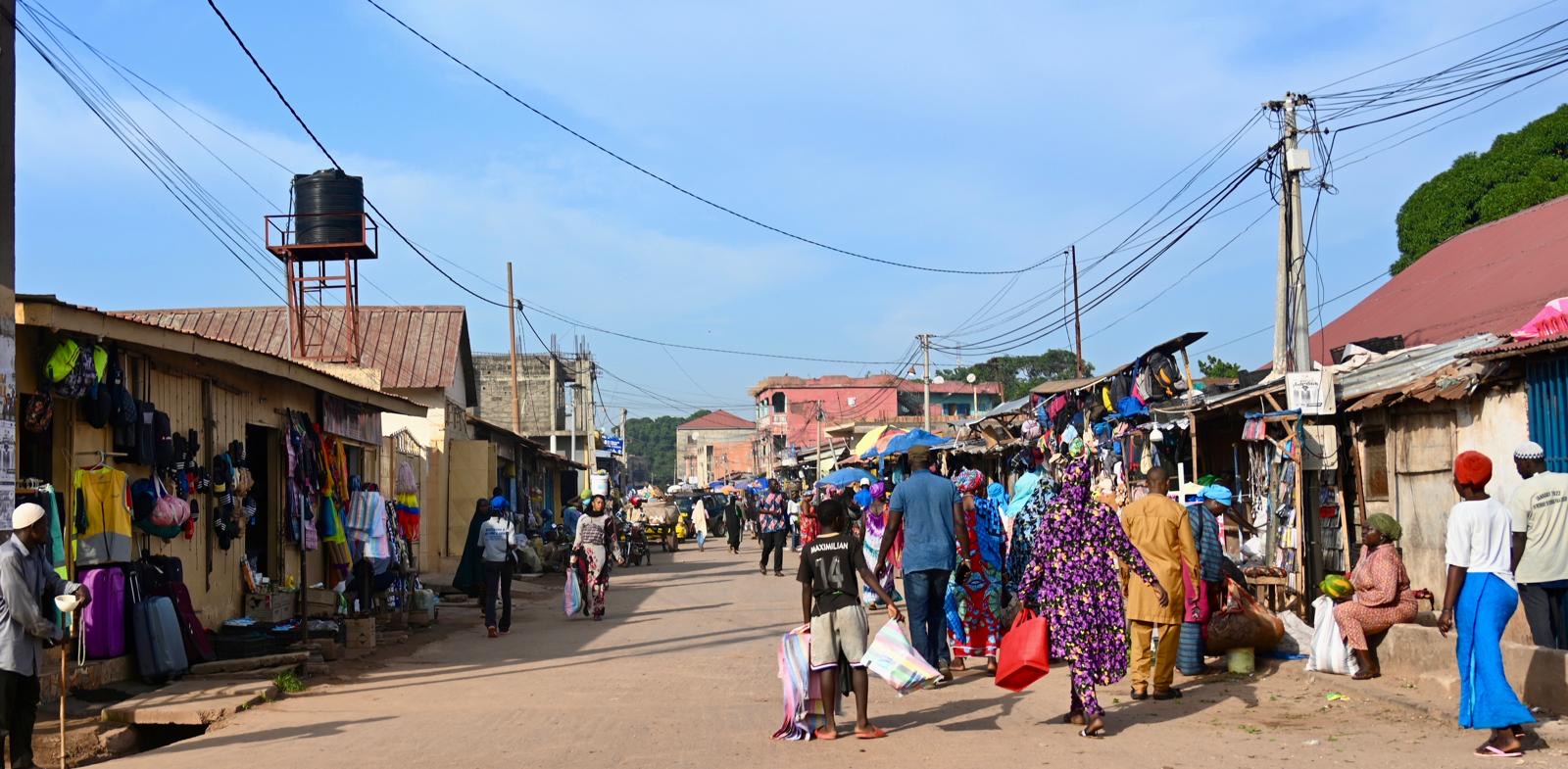


Mini-vans are obviously used as some type of communal transport. Crowds of people stand by the roadside waving them down and they quickly get packed to the gunnels. I am not sure how the driver knows where to let people off.

We drove past the Peace Arch and the National Assembly (Parliament) building as we made our way out of town and headed southeast on a fairly well-maintained, almost 4-lane road. The traffic is crazy with donkey-drawn carts sharing the road with vans, cars, buses, trucks, bicycles, tuktuks and pedestrians. We drove through the town of Serrekunda, the largest town in The Gambia with a population of ~75,000. Women were busy going to the market to buy fresh produce. As we got closer to the edge of town we could smell the animal market, but only caught a glimpse of the animals through the odd doorway.


We soon came to the Abuko Nature Reserve, our destination for the morning. This is a 106-hectare protected area known for its birds and wildlife. A small troop of green vervet monkeys was playing at the gate as we arrived. There are about 5kms of walkways in the park and we wandered along, grateful for the shade in the ~30 degree heat. We stopped every now and then to scan the area for birds. Eventually we arrived at a hide, overlooking a small wetland area that is apparently home to Nile crocodiles. We saw numerous bird species including the very impressive violet turaco, plantain eaters, purple herons and others. I have the full list but wont bore you. Roger is always very patient with my love of birds. He enjoys the challenge of photographing them and does an amazing job. We also saw a Nile Monitor lizard, several Gambian Sun Squirrels, a large millipede and an army of ants.


Speckled Pigeon


Black-headed Heron
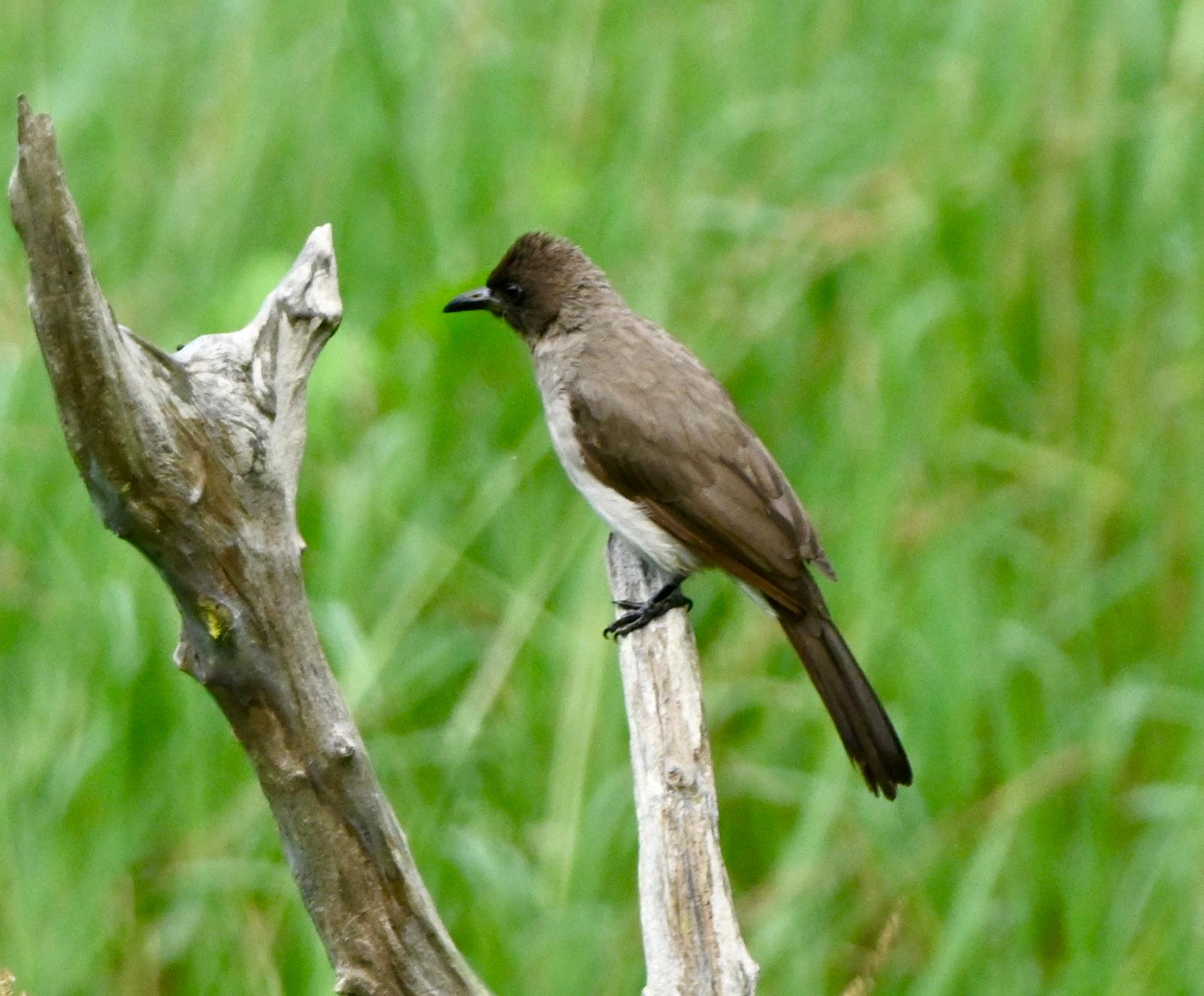
Bulbul

Purple Heron

Senegal Coucal

African Jacana

Violet Turaco


After a few hours we headed back to the vehicle and drove southwest to Lamin Lodge. This rustic shack, built on the edge of the mangrove area was a fabulous place to rest. There were several yachts moored in the river nearby as well as some traditional canoes. Oysters are harvested in the area from December until May and there were huge piles of shells around, which are used to make jewellery and other things.


We ordered drinks and lunch and sat upstairs being entertained by the vervet monkeys. They have learned to steal people’s drinks and they tip them out and lap up the coke or sprite from off the table. They spent a lot of time playing and grooming each other.


Unfortunately I forgot to take photos of our lunch. It was very tasty. I had a chicken dish and Roger had fish yasa, which was flavoured with lime and onions. Both were served with chips. It is thirsty work out walking in this heat and Roger polished off three beers as well. He seems determined to try the local beer in every port.


We headed back through Serrekunda towards the port area, stopping to look at more birds in the waterways including pink backed pelicans, greater flamingo, yellow billed storks, great egrets and western reef herons. Roger spent a lot of time getting some fabulous photos of village weavers (birds).

Pied Kingfisher

Village Weaver

Great Egret, Black-winged Stilt, Western Reef Heron


Back on board we headed to the Horizon Lounge for our customary afternoon tea. It was a fantastic place to sit and watch all the activity as we left the port.
Tuesday 18 November 2025 – At Sea: Roger
Another sea day with, apart from a rather large buffet lunch well displayed in the grand dining room, a visit to the gym and many laps of the deck, not much to report. I did attend another of the photographer’s lectures on how to edit photos on the iPhone but I didn’t learn anything new.


At 1900 we headed to the Red Ginger restaurant to dine, by invitation, with the Food and Beverage manager, Freddy. We were joined by Stephen and Donna, a nice couple from LA. Stephen had been a tax lawyer and they, like us, had traveled to over 100 countries. They were great company.

Freddy, originally from Holland, lives in Croatia with his wife and family. He has been at sea for 20 years and working for Oceania for the last ten. With 4-months on and 2-months off. he enjoys the life style. He explained how all the protein, grains and non perishables are packed in Florida and shipped in containers to the ship. Menus are designed by corporate so the 124 chefs on board just have to produce the food. Fresh fruit and vegetables are normally purchased along the way, although in this part of the world, when they head into town with a bundle of local cash, they often can’t find produce up to standard.
The subject of pirates was raised; Freddy said they have only been chased by one lot in this part of the world, back several years ago, but they couldn’t keep up. He said they are mainly interested in cargo ships as they have stuff that can be flogged off in the local market.
Wednesday 19 November 2025 – At Sea: Sylvia
Another quiet sea day. We have been blessed with incredibly calm sailing conditions and this continued today, even though we passed through several impressive rain squalls. We are nearing the equator and it is consistently warm.

I am enjoying the sea days much more than I had anticipated. The gym is well set up and there are regular classes. The last two days I have attended morning stretch, followed by an abs class and then an HIIT (High Intensity Interval Training) class in the afternoon. Combine depth many laps of deck ten is keeping me pretty active.
I have also been enjoying the bridge lessons. Hopefully by the end of the cruise I will have at least a reasonable grasp of the rules. It is certainly good for keeping the mind active.
We have been trying to manage our food intake, but it is difficult with so many delicious choices. We had lunch in The Terrace buffet restaurant. Later we went to afternoon tea up in the Horizons Lounge and I managed to enjoy my tea without anything to eat.

I knew we would be eating at the Tuscan Steak specialty restaurant for dinner and it was worth waiting for. I had the burrata as a starter followed by a trio of pastas (penne with veal ragu, lobster risotto and gnocchi with pesto sauce) with a spinach salad. Roger had the french onion soup and a filet mignon. Another delicious meal and a great way to finish the day.


Thursday 20 November 2025 – Abidjan, Ivory Coast: Roger
As we sailed late into the river leading into the massive harbour at Abidjan it looked like a prosperous city with hundreds of ships lining the many wharfs. Many more were waiting at sea and also in the large harbour waters. We were late as we had had to wait in the queue to enter the harbour.


French merchant-explorers and missionaries arrived in the 15th and 17th centuries, naming the area “Ivory Coast” due to the abundant ivory trade. Formal colonisation accelerated during the “Scramble for Africa,” leading to the Ivory Coast being declared a French colony in 1893. In 1904, the colony became part of the French West Africa federation. It gained independence in 1960 with a population of about 4 million, and has grown rapidly with the population now around 33 million. According to the IMF The Ivory Coast has sustained a GDP growth of around 6% over the last few years.
Originally we were supposed to disembark at 1330 but it was 1445 when we finally disembarked. There was a line up of police motor scooters on the wharf. Three armed police stood around, one with a FAL (former British military rifle), the other two with AK47s. They seemed more interested in their conversation than in what was going on around the place.
To add to this there were some 50 SAMS and SAWS (stand around men and women), many sitting on chairs under a canopy.


We had arranged to walk to the gate to meet our tour guide. We got to the first gate and were told we were not allowed to walk to the main gate for safety reasons. Sylvia had a long conversation in French with the guards to no avail as they checked rather old trucks leaving and entering this particular wharf area. We walked back to the ship where we were told the only way out was to join the huge queue to get the shuttle bus to the square in town.
Finally we were crammed onto the third lot of shuttle buses and left the wharf at 1545 with a police motorcycle escort, which took us into town rather quickly by driving in one of the oncoming traffic lanes a lot of the way.


Jairus our guide met us there surprisingly quickly. We hopped into a reasonably new Peugeot and headed off as he pointed out various sights. He then explained how Abidjan got its name. Apparently when the early French arrived they met a woman carrying a basket of leaves on her head. They tried to ask her what the name of the place was but she could not understand them and gave the response ‘Abidjan’ (which means I am carrying a basket of leaves). They thaught she was saying the name of the place. There is a monument to her that we drove past.

Next we drove around a large mosque. 45.2% of the population are Muslim, 39.8% Christian and 12.6% have no religion in this country. We drove past the football stadium, then the pyramid which is an ugly derelict building built by the first president in the 1960s.


Next was the Catholic cathedral, where we stopped and went inside. Not only was it a unique shape but had probably some of the best stained glass windows we have seen in a church.


Back in the car we headed alongside a waterway, over a bridge into some local markets. At the entrance was the poultry area with a rather putrid smell. Dozens of people sat around, most not doing anything. We looked at some clothing for the grandkids but it was so badly made we didn’t purchase anything, exiting the markets back through the poultry section just to remind us not to come back.


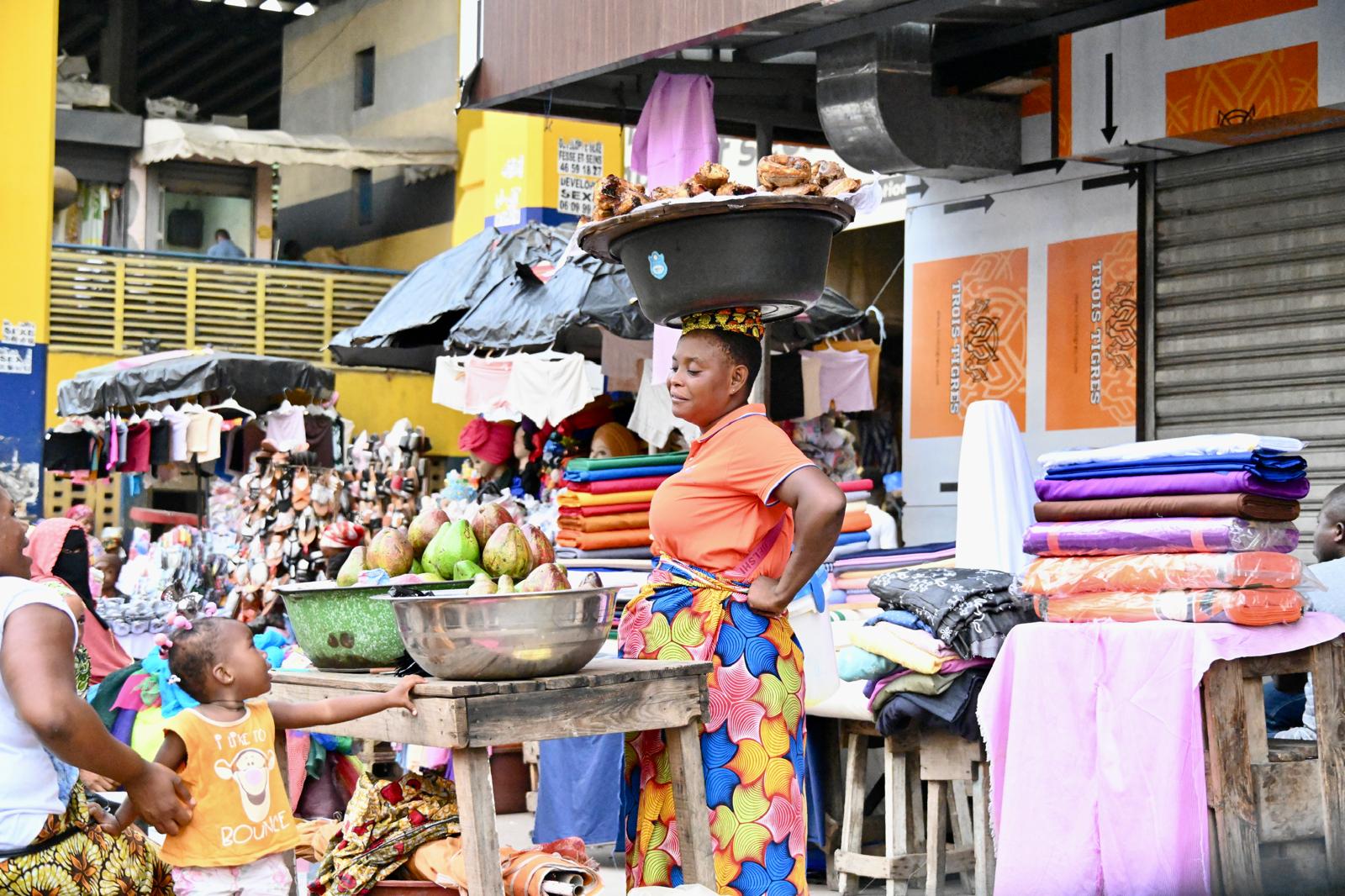


We drove some distance, eventually arriving at the attieke processing centre. This is where the cassava root vegetable is skinned, cut into chunks, cooked, then mixed with 50% raw produce (so it is a little sweet), ground in a portable machine that goes from stall to stall, seived, then sold as part of the staple diet here. It’s all very basic with no food safety observed anywhere in the process.


We were supposed to visit a few more places but they were too far away to get us safely back to the last shuttle bus at 1930. As we arrived back at the bus area thousands of bats were circling the city, leaving the trees they rest in during the day as it turned to dusk. By 1800 we were on the shuttle and back to the ship, not a SAM or a SAW in sight.


Being the world’s largest producer of cocoa, along with coffee, palm oil and cashew nuts, with oil and gas plus some manufacturing, we were expecting to see a much more prosperous city, not the rundown markets and surrounding buildings in large parts of the city. There are a large number of multi-storey buildings under construction including Tour F (F Tower)m a 421 metre building, which will be the tallest building in Africa when completed. In spite of an unemployment rate of under 3%, 40% of the population live below the poverty line. Reality was well short of the expectations we had when we headed into the harbour.


Enjoying your blogs on this amazing trip Sylvia and Roger. Thank you for all the interesting insights and wonderful photos!
Loving the images of the birdlife!
Looks like you are having a very interesting time. I read all your travel blogs.
Michael McIvor
What a history! Thank you Roger and Sylvia. Such great photos and information. Love the bird life. And all the food you’re putting away. What a contrast to what the locals are eating. And such contrasts in the city’s (towns?) buildings. Very colourful blog. Enjoy the next leg. Xx
THANK YOU I SIT WITH MY LEG UP SUFFERING GOUT!
YOUR PHOTOS AND COMMENTARY HAVE DISTRACTED ME NICELY
BEST TO YOU BOTH
ALISTER