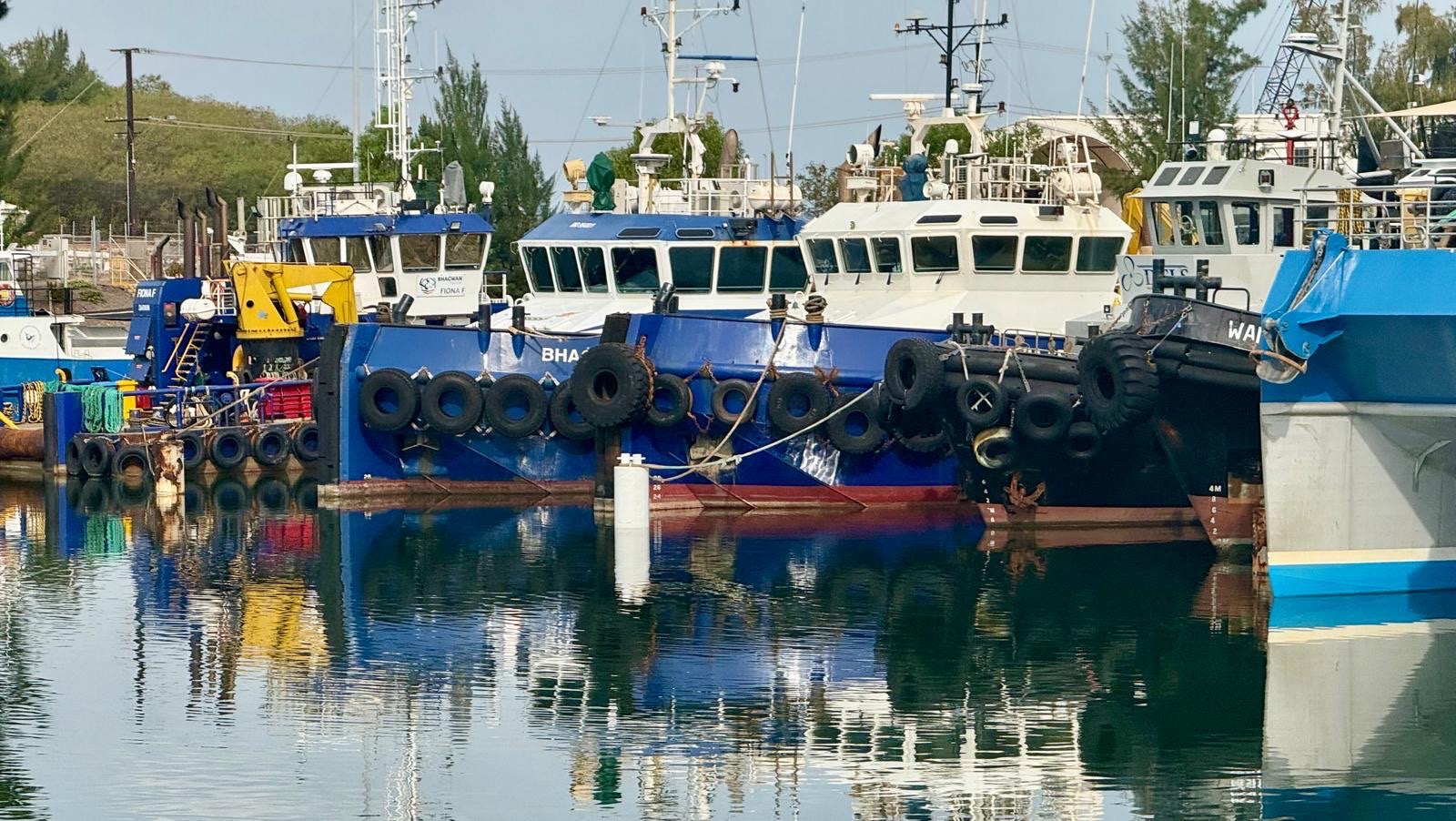
Sunday 22 June 2025
Sylvia dropped Ross and I off at the Queenstown Airport, where, after the normal kerfuffle with security, we passed the time in the lounge before boarding our flight to Brisbane. It was a pretty comfortable flight in Row 8 on the 737-800. Yep, economy class for this 3.50 hour trip. The transfer at Brisbane was pretty easy with a long bus ride from international to the Qantas domestic terminal. The flight was a little late out getting us four and a quarter hours later into Darwin around 0100.
Checking into the Vibe hotel by the waterfront we found there was only a king sized bed in the room we were sharing. Definitely not what I had booked. The bloke that checked us in came up with an extra bed on wheels and we were sorted.
Monday 23 June 2025
About 0800 we headed down to the restaurant for what turned out to be a good breakfast. After a coffee or two, we wandered around the corner and took a lift up to a walkway that took us across to downtown Darwin. Ross headed off for a hair cut. The Greek barber, whose grandfather had fought the Germans in Crete, had some great stories to tell. After another coffee, we took a stroll out to the coast, where a park is set up as a memorial to the February 1942 raid on Darwin by the Japanese. They dropped more bombs, although smaller ones and no torpedos, than were dropped on Pearl harbour in December 1941. Apparently it was the same lead pilot for both raids.

From there we wanted back around the streets to the information centre, where we chatted with a German girl, who was selling World War II tours of the city including a visit to the museum. We boarded a 1940’s Studebaker truck with nice seats and USB charging stations and headed off on the tour. The driver, I think owner, of the tour talked unscripted all the way to the Darwin war museum some 10km away. On arrival he said we would be picked up in 90 min.
After visiting the internal part of the museum and watching a video about the first raid by the ~180 Japanese planes on Darwin, we headed outside. We were both astonished by the number of sheds and buildings, all containing really good displays of relevant history. There are a huge number of old, well-restored relics, including a Centurion tank, and many guns, ranging from 40mm Bofas up to 6-inch naval guns. One display was of floats which were used to drape chains from to prevent submarines entering the harbour. One such sub, with 80 crew, was sunk in the harbour before the first bombing. That year some 70-plus bombing raids were conducted on Darwin by the Japs.


There were two 9inch guns stationed here with a range of 26kms. The large range finders and the plotting charts were on display but the guns were sold off for scrap. The time had passed so quickly that I only just had time to race down the road to get a distant look at the 9” gun emplacement.

As we headed back to town the commentary went on in great detail, including something about some old Jap bombs that were dug up in the recent past.
Back at the hotel we got a new room sorted before wandering to a nearby restaurant, of which there are many, for a great meal of barramundi.
Tuesday 24 June 2025
Mike, from Off Road Dreaming, picked us up at 8.30. We headed southeast through Palmerston on to the Stuart highway. Then we turned onto the Arnham Highway. It’s very big, flat country here with lots of mango trees all squared off and in neat rows. They are quite smart with fire management around here burning off the undergrowth beneath the eucalyptus trees.


First stop after passing a large naval radio transmitter was Fog Dam, which was built in the 1950s to grow rice. Unfortunately the birds came in and ate all the plants. It’s now a nature reserve. We took a stroll along a boardwalk running into the odd large yellow orb spider. A drive over the dam revealed more bird life, including magpie geese.


Back on the highway we stopped at Corroboree Park tavern for a coffee. This combination pub-grocery store had lots of buffalo skulls and horns on the walls. Next we pulled into a place on the Adelaide river with a large croc sculpture outside, where the jumping croc tours leave from. Apparently boats head up river from here well away from the jetty, chickens are held out on sticks and the crocs leap out of the water to grab them.

Next stop was the Wetland Cruise jetty, where we boarded a flat-bottomed boat for a lunch cruise. We pulled out with strict instructions to keep arms in the boat as a jumping croc lurked nearby. We headed up the billabong a few hundred meters, passing several large salties ( saltwater crocodiles) along the way. We pulled into the edge of the waterway where a 5m saltie didn’t want to share the space with us, instead slipping into the water and disappearing.


Lunch was handed out and as we ate it Stuart, the boat driver-guide, gave us a speech on how a few months weeks ago this waterway had been 30kms wide after the spring rains. The water is now only 100m wide allowing all the plants and grasses to grow rapidly.
We then cruised further up the billabong spotting more birds, including some sea eagles perched in a tree above their huge nest, which they apparently hand on to their next generation. We watched a cormorant trying to swallow an eel it had caught.


We then parked up again and Stuart showed us how to peel and eat the seeds from the water lilies, which have red, white and blue flowers. They don’t drop their seeds until after the water has receded. A small bird walked across the lily leaves feeding as it went. Known as the Jesus bird, it has big feet for this purpose.


As we cruised back to the jetty there were a few large crocs along the river edge, warming themselves before the night hunt. A large buffalo grazed not far from the waters edge.


Mike, who had waited onshore, then drove us back to Darwin. We observed a few wallabies along the way and briefly stopped at Leaning Tree lagoon along the way. A beer at a local bar and another meal of barramundi at an Irish bar made for a relaxing evening.
Wednesday 25 June 2025
At 0730 Sab, a friend of Ross, met us at the hotel and drove us out to his house nearby. There he picked up another Land Cruiser and left us with the one he had picked us up in. We headed southeast again to Corroboree, where we visited a rather interesting museum run by an eccentric bloke who had been stabbed, shot, and had a large gash in his leg where a crocodile had bitten him.
Here there was a great collection of various military uniforms and other stuff. including one of the canoes used by Z Special Unit during the second world war. There were also the uniforms of doctors and prisoners held here. Dalac, the owner, was very enthusiastic and gave us a great tour explaining everything to us. He has obviously spent his life putting together this rather amazing collection.


Next stop was the air boat park, not far from where we went on the boat ride yesterday. It was just the two of us, and we jumped on board and the guy took us up the billabong a bit and then out across the wet paddocks. This thing can cruise across basically wet grass, reaching speeds up to about 35 miles an hour. The animals are becoming habituated to it so we were able to get close to crocodiles and a few other things were swimming around in the shallow water. The crocodiles eat fish and also pigs that come down the water for a drink. The salt crocs also eat the odd freshwater crocodile that wanders into the place. A Jabiru stood not far from a salty, not in the least worried. These tall birds can easily kill a croc by driving their beak through the skull into the brain of the croc.


We then headed west, the road running through a military training area that runs right up to the coast, and the scenery stayed pretty much the same with gum trees and grass and few other other species of foliage. We popped into the Mamukala wetlands, which would have been quite spectacular a few weeks ago when all the lotus plants were flowering. Now the flowers have gone and the leaves are drying off, waiting for when the lagoon empties and the seeds can fall onto the ground and germinate for next year.
Next stop was Jabiru, which is an old mining town. There is not much there but we did visit the supermarket and get some bananas and oranges to chew on. Heading south towards Pine Creek, we stopped at Burrungakay rocks, where we witnessed some rock drawings. There are quite outstanding rock features with trees seeming to send the root system right down the side of the rocks into the ground to get whatever moisture is available.


We arrived at Mardukal camp 2, just before 5pm. Sab has a nice camp set up there. We were met by Sab and a great bunch of Aussies. One group of 7, 5 of whom had gone to school with Sab, and a family of 4 from Sydney. A few drinks around the fire got some good conversation and banter going. Soon we were ushered into the dining room for a great steak meal, more good conversation and an apple pie and ice cream desert. We retired to our cabins about 2200 for a good night’s sleep.
Thursday 26 June 2025
After a good breakfast we headed north as a group with Doug and Doug joining us in our vehicle. We toured around Jabiru, once a bustling mining town with a few thousand people. The last shipment of ore from the Ranger Mine was in 2021; the mine is now being decommissioned. Hence Jabiru is now fast becoming a ghost town.
Heading north up to Arnhem land we were soon on wide shingle roads. All the gravel around here seems to have a reddish tinge to it. We crossed the ford at Cahills Crossing, which is only ideal to cross as the tide is going out, as at high tide it is salt water and hard on the vehicles.
We arrived at Gunbalanya where we picked up an Aboriginal guide, who by the smell of him hadn’t been near a shower for a while. We headed down the road to Oenpelli Hill, which had been an Aboriginal gathering place and burial site. Drawings were on lots of the overhanging rock faces. We wandered through small canyons between the rocks, arriving at a the burial site, where caves had once held skeletons. These apparently were removed and taken to the USA to a museum, but have now been brought back and buried locally. There was still the odd scull and bones lying in little crevices.


Just around the corner from there a nice lunch had been laid out for us on the ledge overlooking the countryside, which made for a nice lunch site with views over the surrounding land. After lunch our guide took us through more canyons to another view point with more drawings then back through the Beria cave down to the vehicles. We went back to the town and art shop where the assistant was too busy on the phone to sell to the few that wanted to buy these “seemingly expensive for what they were” art and associated items.

Seb and his team then headed off while Ross and I waited for Sean to turn up and guide us into the ‘just up the road’ hunting lodge. Sean arrived and we followed him thirty odd kms to the turn off, where he stopped and said “it’s just up the road from here, a 100kms to the airstrip then only another 80kms. He jumped in his Toyota and took off while we trailed behind his dust cloud at about 80kph, having to slow to a crawl in some parts of the road. Sean would often stop and wait for us.
The air strip used to be a town of 2000 people before a rule change and people moved on. Apparently the houses were demolished, mostly by termites.
Another 80kms on, some good and some ‘slow down there is a rather large rut to negotiate’ road, we arrived at Walkabout safaris.
We enjoyed a beer and dinner, then headed for out tent, which was set up on a wooden deck with comfortable beds and zip up fly screens to keep the many night time bugs out. Sleep came quickly with the soothing sound of the waves breaking on the nearby beach.
Friday 27 June 2025
We were up at six for a good breakfast before we got on the road to the hunting block. We stopped along the way to check the zero on the Blaser R8 375 H&H magnum rifle we would be using for the hunting. That done, we continued on along roads and tracks, eventually coming out at the wetlands area. This is an area running east-west about 10k and north-south some 2 to 3 kms. It is full of bird life, fish and of course crocodiles. We watched buffalo graze in here also at some distance. A few weeks ago at the end of the wet season this was a lake. By the end of the dry season all the green will have browned off and dried out to the point that one can walk through it. There will still be channels of water for the crocodiles live in.


We headed west along the edge of the wet area a couple of kms, then parked up, loaded rifle magazines, and headed north, up onto what’s called the high ground, only 8-10 meters above the wetland. We walked along with Steve in front, Ross next (he is shooting on this run), followed by me and then Sean (Steve’s brother), who had come for a stroll with us.
Every now and then Steve would stop and scan around with his binoculars as he spotted something through the trees. About 1.5kms into the hike a Banteng is spotted in the scrub about 100m away. Sean and I stay back while Steve, with Ross on his heels, slowly creeps towards the beast. They stop for Ross to take a shot but there is a tree in the way and the beast moves off.
We wait for some time as Steve and Ross follow stealthily. About an hour later we see movement behind us. It’s Steve and Ross having followed the beast in a big circle. We move to within about 30 meters from them. By now they are watching the beast from behind a tree; it is bedded down about 70m from them.

They watch and we wait. Another hour or so passed before a shot rang out. They had to wait for the bull to stand before they could get a clear shot. There is a second shot as the bull ran away. This one knocked it over and a shot between the shoulders from close range with the 416 Rigby made sure it was dead. Steve got stuck in with his knife, removing the head with surgical skill. The head was then skinned and the jaw removed. Then it was on Ross’s shoulders for the 1.5km walk back to the truck.


We drove back to the bay where we had lunch before heading west through the trees for another hunt. Sean drove the truck around and met us on the track an hour or two later. We had walked over 12kms in our hunts for the day.
By then it was late afternoon so we headed back to camp where we showered and enjoyed a nice meal.
Aaron and his father, Ron, were visiting from Melbourne. Friends of Steve’s, they had come up to lay the sewerage lines and septic tank for the showers and toilets being installed behind each guest tent. They are both keen hunters and have become good friends of Steve’s in the nine years they have been coming here.

Saturday 28 June 2025
After breakfast at 0700, we headed off on the long drive to the hunting area. The roads and tracks are tough in places where the rains have washed areas out, leaving holes that buffaloes have turned into a wallow. Trees are across the track which one has to drive around. We stopped on the track before the wetlands, heading into the scrub and trees. We were again up on the high ground and had only been walking for an hour when we spotted a banteng bull. We watched it for some time before Steve got a good look at its horns and decided it was not big enough to shoot. We moved on, the bull facing us, snorting, then running off.
Not long after this Steve spotted a heard of buffalo. We watched and waited as there was no wind. Steve said the wind usually comes up at 0930. At 0928 up came the wind fortunately blowing towards us. There is a lot of luck in hunting as if the wind had come from behind us the mob at a slight whiff of our scent would have been gone. The noise of the wind was enough to cover the crunching of gravel and leaves under our feet. We edged slowly forward. There was a small bull out to our left, likely to scent us, so we froze for a while until he moved on. Eventually, deep in the scrub amongst the herd, we spotted a large old bull with a good head. After watching for a while he lay down. We slowly edged forward to get in a good shooting position. Steve had made the point that the shot had to be placed in a specific point on the shoulder and followed up quickly with a 2nd, third and more as “you can’t kill these large beasts with one shot”.
Finally in position, I placed the first shot in the shoulder and the bugger stood up. Two more quick shots in the shoulder then he ran off. A shot in the back end dropped him but he got up again. Two more shots in his other shoulder put him down. A safety shot between the shoulders ensured he was finished.
Another surgery from Steve removed the large head. It was then skinned. the jaw bone removed and onto my shoulders for the carry out. Soon we stopped for a rest and Steve feeling sorry for the old bloke carried it the rest of the way to the truck. It was now around noon so we headed to the wetlands where we ate lunch in the shade of a tree.


After lunch we drove west through the trees by the wetlands. We came out onto a large open area and Steve spotted a large bull through some trees in the wetlands. We turned back and parked in the shade of some trees about 400m from the buffalo. With a large tree between us and the buffalo we moved in, me at the rear. As we got a couple of hundred metres away I stopped and observed through the binoculars. Soon Steve and Ross were in the wetlands. Steve had told us that as long as the water is less than waist deep only small 1-2 metre crocs will be about and you can normally see them coming through the grass. I watched as the boys sunk deeper into the swamp to mid thigh depth, thinking Ross, who is more than a little nervous about crocs, must be a bit worried. I was a bit concerned he was going to alert the buffalo as he kept extending his right hand out to keep his balance while pulling his booted feet out of the mud. Steve had taken his boots off.
They made it to the tree and onto firm ground. It had a fork in it which made a good shooting rest. Then the waiting started as the beast was lying at such an angle a good shot could not be placed. After about 20 min the large beast got to its feet and the first of 8 shots rang out. I went back and got the truck and drove it around to the closest point on the dry land that I could. Soon the head was on the back of the truck and we headed back to camp.The crocs will devour the carcass within a couple of days. The ones on dry land are eaten by dingos and birds.

Ross was very pleased as we if he hadn’t got a buffalo today we were going to take the Argo (an eight wheeler amphibia buggy) two kilometres across the wetlands to an island, crossing crocodile infested channels along the way.
We enjoyed another evening of good stories, and buffalo back steak sliced very thin – quite tough but very tasty.
Great yarn Roger, you packed a lot into a couple of weeks
Looks like you guys are having a ball Roger! I will make space on my wall for the trophy… 😉
Look foward to seeing that mounted in your house!
Great pics!
great hunts big bulls enjy